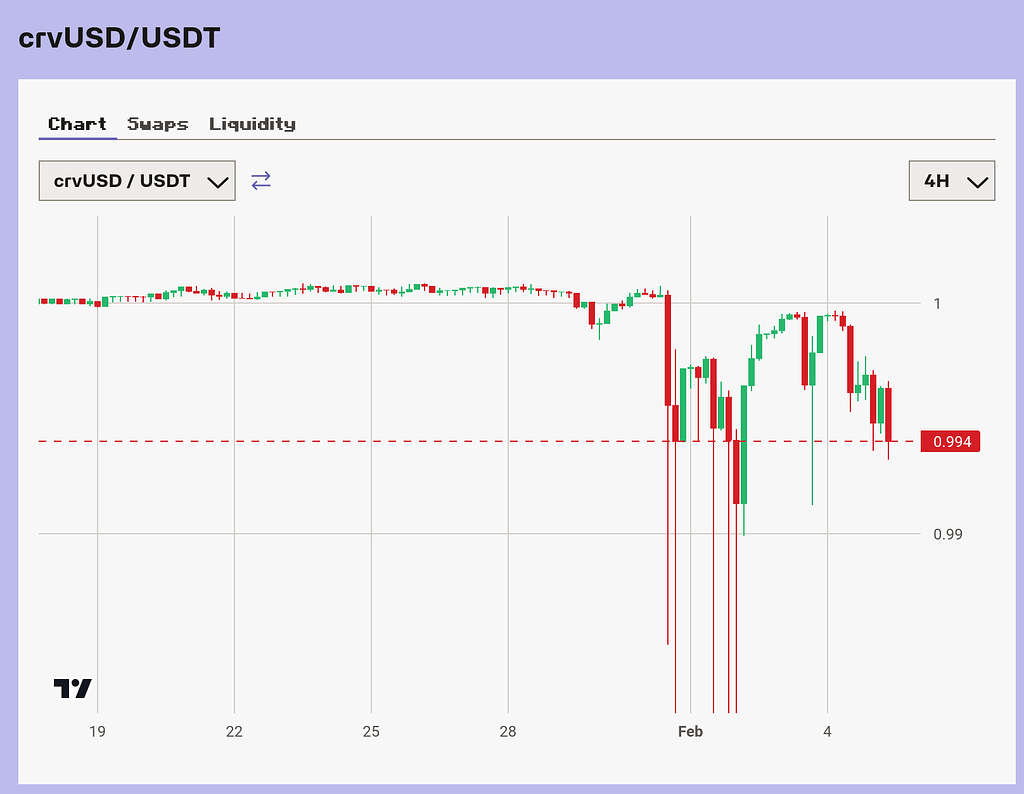
A neutral explainer on Curve Finance founder Michael Egorov: StableSwap, CRV and veCRV, crvUSD and LlamaLend, his 2024 liquidations, and Yield Basis, his protocol aimed at eliminating impermanent loss.
Yield Basis selected Firepan to perform an AI-powered security review of its live mainnet FeeDistributor contract, identifying 18 findings across 22 attack surfaces, including a previously undocumented MEV vector.2026-05
"How to scale yield basis and crvUSD at the same time" - a new forum post by Michael Egorov2026-02
Curve Finance founder Michael Egorov has proposed a $6.6M CRV grant (17.45M CRV) to fund long-term ecosystem development. The funds would go to Swiss Stake AG to support its 2026 roadmap, including Llamalend upgrades, infrastructure, security, and continued R&D, with biannual transparency reports and open-source commitments.2025-12

Michael Egorov, Marc Zeller, and Gabe Shapiro share thoughts on DAOs2026-02
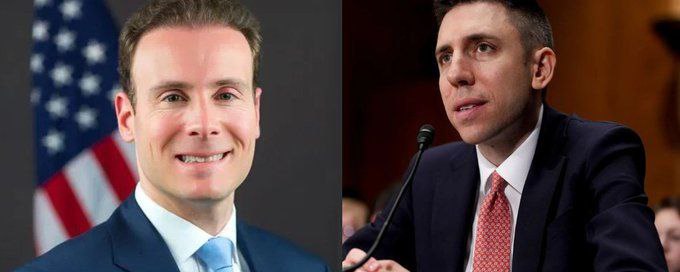
Senate confirms pro-crypto picks Michael Selig (CFTC) and Travis Hill (FDIC), signaling regulatory openness as agencies expand crypto oversight, ease bank participation, and push clarity around digital assets and tokenization.2025-12
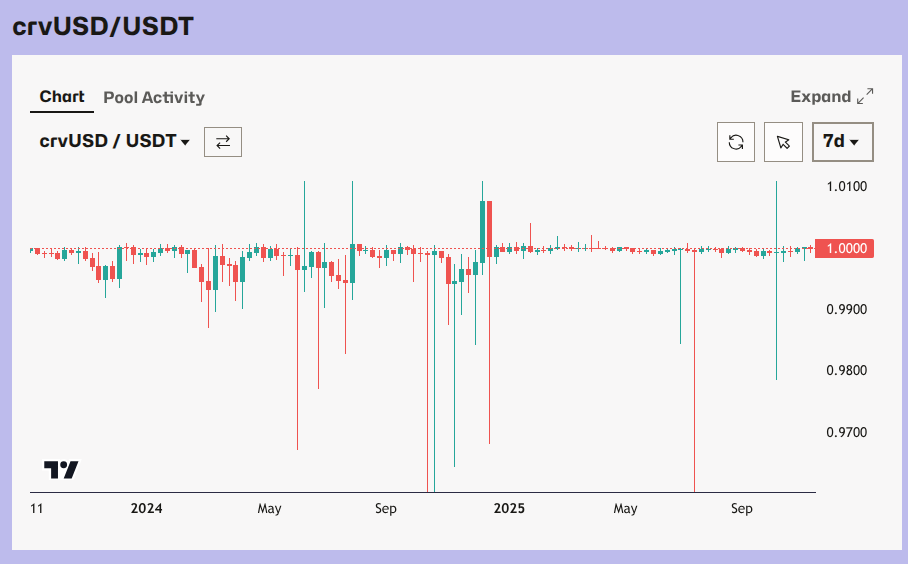
Yield Basis, a new project from Curve founder Michael Egorov, secures $5M to tackle impermanent loss for tokenized Bitcoin and Ether.2025-02
A Russian-born physicist turned DeFi architect, the founder of Curve Finance is one of the most influential and most scrutinized builders in decentralized finance, known for inventing the stablecoin trading model that underpins much of the on-chain economy.
He has spent the better part of a decade designing automated market makers (AMMs), lending systems, and stablecoins, while also becoming a cautionary case study in the risks of leverage. This page explains who he is, what he built, why it matters, and what he is working on now.
From physics to cryptography
Before crypto, Egorov was an experimental physicist. He earned a PhD focused on laser cooling and Bose-Einstein condensates and worked as a postdoctoral researcher at Monash University in Australia, where he built ultracold-atom apparatus (IQ.wiki). That background in algorithm design and mathematics later shaped his approach to financial engineering.
His first major crypto venture was NuCypher, a data-encryption project he co-founded around 2015 and served as CTO, building proxy re-encryption infrastructure (CryptoSlate). The pivot to decentralized finance came at the end of the decade, when he began experimenting with a better way to swap assets that are meant to hold the same value.

"How to scale yield basis and crvUSD at the same time" - a new forum post by Michael Egorov

Interesting proposal from Egorov. Scaling yield basis while growing crvUSD adoption could be a powerful flywheel. On-chain data will be key to tracking its success - watching crvUSD's peg stability, borrowing rates, and liquidity across Curve pools will be crucial. We'll also want to monitor whale activity in crvUSD, as large holders can significantly impact the system's stability.
Readers click Egorov not as a passive risk subject but as an active protagonist — they track him simultaneously as DeFi's largest single-point-of-failure (the CRV debt cascade) and its most prolific builder (crvUSD, Yield Basis), because the same concentrated position that threatened systemic contagion is the capital base funding his next protocol.
Inventing the StableSwap AMM
Egorov's defining contribution is the StableSwap invariant, which he designed in 2019. An AMM is a smart contract that lets users trade against a pooled pool of tokens rather than an order book, with prices set by a mathematical formula. The early standard, popularized by Uniswap, used a constant-product formula (x·y=k) that produced heavy slippage — the gap between expected and executed price — when trading large amounts.
StableSwap blends a constant-sum formula (efficient when assets trade near parity) with a constant-product formula (which guarantees liquidity never fully runs out). The result is dramatically lower slippage for assets pegged to one another, such as USDC, USDT, and DAI. That single design choice made Curve the natural venue for stablecoin and pegged-asset liquidity and an essential piece of DeFi plumbing.
Curve Finance and the CRV token
Egorov launched Curve Finance in 2020. He is its CEO and the protocol is operated through Swiss-based entity Swiss Stake AG (CoinDesk). Curve grew into one of the largest decentralized exchanges by total value locked, at times anchoring tens of billions of dollars in liquidity.
Two governance and incentive mechanisms made Curve influential beyond its order flow:
- CRV, the protocol's token, distributed to liquidity providers as a reward.
- veCRV (vote-escrowed CRV), created when holders lock CRV for up to four years. Locking grants voting power over how CRV emissions ("gauge weights") are distributed across pools, plus a share of fees and boosted rewards.
This vote-locking model triggered the so-called "Curve Wars," in which protocols competed to accumulate veCRV influence to direct liquidity toward their own pools. It became one of the most-copied designs in DeFi governance. That dynamic is still live: Stake DAO has proposed a second OTC veCRV boost delegation from Egorov, aiming to acquire 48.5 million veCRV through 2029 to expand its control toward a quarter of total boost supply — with automated, performance-based CRV fee sharing and a one-time SDT allocation under compliance safeguards. Arrangements like this show how concentrated and tradable governance influence on Curve has become.

Curve Finance founder Michael Egorov has proposed a $6.6M CRV grant (17.45M CRV) to fund long-term ecosystem development. The funds would go to Swiss Stake AG to support its 2026 roadmap, including Llamalend upgrades, infrastructure, security, and continued R&D, with biannual transparency reports and open-source commitments.


If this proposal passes, the CRV community fund would go from ~24.5M CRV to ~7M.
- 01CRV debt crisis and resolution
Egorov's oversized CRV loan on Aave threatened a liquidation cascade across multiple lending markets, making governance votes on his position and his eventual full repayment high-stakes reads for anyone holding exposure to Aave, Curve, or crvUSD.
- 02Yield Basis protocol launch
A $5M raise, a formal white paper, and a DAO proposal to premint 60M crvUSD made Yield Basis the clearest evidence that Egorov was rebuilding post-crisis — readers tracked whether the impermanent-loss elimination thesis could actually attract TVL.
- 03VC lawsuit jurisdictional fight
Two courts ruling in Egorov's favor on Switzerland-residency grounds gave readers a rare DeFi founder legal victory to follow, with his own public commentary sharpening the narrative arc.
- 04Llama Lend self-liquidation theater
Opening a CRV position on his own protocol and publicly daring liquidators to take his mansion turned a routine borrow into a performance, attracting readers who wanted to watch whether the system Egorov built could actually discipline him.
- 05veCRV concentration and OTC deals
OTC sales of $11.7M in CRV with lockups and Stake DAO's delegation of 48.5M veCRV revealed how centralized governance power over Curve actually is, with every Egorov lock extension or delegation resetting the power map.
- 06crvUSD as monetary philosophy
Essays on non-USD stablecoins, the inaugural $1M crvUSD loan, and public writing on DeFi security positioned Egorov not just as a protocol operator but as an ideological voice for DeFi-native monetary design.
crvUSD and LlamaLend
In 2023 Curve expanded from trading into lending and stablecoins. crvUSD is Curve's decentralized, over-collateralized stablecoin. Its signature innovation is the LLAMMA liquidation engine (Lending-Liquidating AMM Algorithm), which converts collateral into the stablecoin gradually as prices fall, rather than dumping it all at a single liquidation threshold. The goal is to soften the impact of sharp drawdowns on borrowers.
LlamaLend is Curve's permissionless lending market built on the same LLAMMA mechanics, letting users borrow crvUSD against a range of collateral. Together, crvUSD and LlamaLend turned Curve from a single-purpose exchange into a broader credit and stablecoin platform — and they remain central to Egorov's current roadmap, including proposed LlamaLend upgrades.
The 2024 liquidations
Egorov's reputation is inseparable from a stark lesson in leverage. In June 2024, his personal borrowing positions were liquidated for roughly $140 million after CRV's price fell sharply. He had borrowed around $95.7 million in stablecoins, primarily crvUSD, against about $141 million of CRV spread across five accounts on lending venues including Inverse, UwU Lend, Fraxlend, and Curve's own LlamaLend (CoinDesk; The Block). Reporting at the time noted he had been paying extraordinary interest — an APY around 120% on one large LlamaLend position — to keep the loans open (Decrypt).
Further smaller liquidations followed later in 2024 as CRV remained volatile (CoinDesk). The episode raised durable questions about founder concentration, the systemic risk of a project leader borrowing heavily against his own token, and whether a protocol's own lending markets should hold so much insider collateral. It is essential context for evaluating both his technical work and the governance proposals he now brings to the Curve DAO.

Michael Egorov, Marc Zeller, and Gabe Shapiro share thoughts on DAOs

TL;DR summary In the "DAO on Trial: Code vs Humans" podcast, Curve Finance founder Michael Egorov emphasizes self-sovereign DAOs with strong incentives like veCRV for alignment and efficiency. Aave's Marc Zeller advocates for upgradable models and service-provider execution to maintain agility. MetaLeX's Gabe Shapiro explores legal wrappers, regulatory challenges, and future jurisdictional competition for DAOs, stressing transparency and balanced governance between code and human oversight
- 2023-05launch
crvUSD launch — Egorov inaugurates with $1M loan
- 2023-08milestone
OTC CRV deals: $11.7M sold with 6-month lockups amid liquidation pressure
- 2023-09governance
Aave DAO unanimously rejects proposal to freeze Egorov's CRV loan
- 2024-06milestone
Egorov fully repays CRV debt position on Aave
- 2024-09regulatory
California court dismisses VC firm lawsuit on jurisdictional grounds
- 2025-01launch
Yield Basis raises $5M; white paper published on impermanent loss elimination
- 2025-03exploit
Egorov partly liquidated on Llama Lend
- 2025-06milestone
Firepan AI security review of Yield Basis FeeDistributor finds 18 issues including novel MEV vector
Yield Basis: targeting impermanent loss
Egorov's most prominent recent project is Yield Basis, which he introduced publicly in 2025 — including talks at EthCC in Cannes and Stable Summit — and backed with a white paper (CoinDesk).
The protocol targets impermanent loss, one of the oldest problems in AMM design. Impermanent loss is the shortfall a liquidity provider suffers, relative to simply holding the assets, when the relative price of pooled tokens moves. It discourages passive liquidity provision in volatile pairs such as BTC/USD.
Yield Basis's approach uses roughly 2× leverage on a liquidity position — borrowing crvUSD to double exposure — combined with continuous rebalancing intended to make the LP position behave more like holding the underlying asset while still collecting trading fees. In presentations, Egorov has described the mechanism as compounding leverage to lift Bitcoin LP returns from low single-digit percentages toward the high teens or twenties, though such figures are projections, not guarantees (Gate Learn).
Yield Basis raised about $5 million at a roughly $50 million token valuation (The Block). Its token (YB) follows a vote-locked model similar to Curve's: holders lock YB into veYB to govern the protocol and earn fees paid in crvUSD or wrapped Bitcoin.
The tie to Curve is deep and deliberate. Egorov has authored forum posts on "how to scale Yield Basis and crvUSD at the same time," and has put several proposals to the Curve DAO: increasing the Yield Basis crvUSD credit line toward 1 billion crvUSD, raising the Yield Basis cap (proposals have referenced both 300 million crvUSD and larger figures), and preminting 60 million crvUSD to seed three Bitcoin pools. He has framed the potential upside for Curve as "realistically getting total value somewhere from 35% to 65% of what veYB holders are getting from fees." These are governance requests that route Curve's own balance-sheet capacity into a second, founder-led protocol — a structure that increases interconnection between the two systems and that DAO voters weigh accordingly.
Security focus and ecosystem advocacy
Egorov has become a vocal commentator on DeFi security amid a wave of exploits. He flagged organized hacker groups targeting multiple platforms in mid-2025 and tied them to roughly $302 million in losses in a single month, commented on the Resupply exploit, and proposed creating a dedicated Curve-specific team to audit community projects. His "war on llamas" framing — "but llamas will win" — captures his combative public posture toward attackers.
That emphasis extends to his own contracts. Yield Basis engaged AI-assisted review of its live mainnet FeeDistributor contract, a process that surfaced 18 findings across 22 attack surfaces, including a previously undocumented MEV (maximal extractable value) vector. The exercise reflects a broader industry shift toward continuous, automated auditing of already-deployed code rather than one-time pre-launch reviews.
Egorov also lends his name to other builders. He joined Ripe, a lending and stablecoin protocol on Base whose codebase is written entirely in Vyper — the Python-like smart-contract language Curve helped popularize — as an advisor. He participates frequently in industry discussion, appearing on podcasts and roundtables and engaging publicly with figures such as Aave's Marc Zeller and lawyer Gabe Shapiro on the future of DAOs.
- Smart-contractMedium
Yield Basis's Firepan audit uncovered 18 findings across 22 attack surfaces including a previously undocumented MEV vector, indicating non-trivial residual risk in Egorov's newest production code.
- CentralizationHigh
Egorov's personal veCRV holdings — supplemented by delegations giving Stake DAO 25% of boost supply — mean a single individual's lock extensions and OTC decisions materially reshape Curve governance outcomes.
- RegulatoryLow
Two successive California court rulings dismissed the VC lawsuit on jurisdictional grounds due to Egorov's Swiss residency, with appeals court language described as 'strong' by Egorov himself.
- LiquidityHigh
Egorov's simultaneous large positions across Aave, Llama Lend, Silo Finance, and UwU Lend created cross-protocol liquidation interdependencies that required coordinated OTC CRV sales to unwind without triggering cascade failures.
- MarketHigh
CRV price remains the master variable for Egorov's collateral health across every lending market he uses; a sustained drawdown would re-expose the same liquidation risk that his 2023–2024 debt repayment only temporarily resolved.
- GovernanceMedium
Egorov's ability to unilaterally initiate onchain proposals — such as the BOLD gauge vote and the Yield Basis crvUSD cap increase — means Curve DAO votes often begin as one-man proposals that the community then ratifies or contests.
Governance and funding proposals
Beyond Yield Basis, Egorov continues to steer Curve's direction through DAO proposals. A notable example is a proposed $6.6 million CRV grant (17.45 million CRV) directed to Swiss Stake AG to fund a 2026 roadmap covering LlamaLend upgrades, infrastructure, security, and ongoing R&D, paired with commitments to biannual transparency reports and open-source code. Such proposals illustrate the recurring tension in founder-led DeFi: the same person proposing protocol funding, requesting stablecoin credit lines for an affiliated project, and holding outsized governance influence. Decentralized governance is the mechanism meant to check that concentration, and these votes are where the community exercises it.
The regulatory backdrop is shifting in parallel. U.S. agencies have moved toward greater openness on digital assets — including Senate confirmations of crypto-friendly officials at the CFTC and FDIC — which could shape how protocols and stablecoins like crvUSD are treated over time, though concrete rules remain in flux.
Outlook
Egorov remains a central, polarizing figure in DeFi. The bull case is straightforward: he has a genuine record of inventing primitives — StableSwap, the veCRV model, LLAMMA-based liquidation, and now Yield Basis's impermanent-loss mechanism — that others copy. The bear case is equally clear: his 2024 liquidations exposed the dangers of founder leverage and token concentration, and his current strategy deepens the coupling between Curve's balance sheet and a second protocol he controls.
The questions to watch are whether Yield Basis can deliver its promised returns without introducing new systemic fragility, how the Curve DAO governs the large crvUSD credit lines being requested, and whether automated security review meaningfully reduces exploit risk. For a reader new to the space, the throughline is simple: much of how stablecoins trade, how on-chain credit is priced, and how DeFi governance is fought over still traces back to designs that originated with this one builder.
Latest Michael Egorov news
"How to scale yield basis and crvUSD at the same time" - a new forum post by Michael Egorov
Curve Finance founder Michael Egorov has proposed a $6.6M CRV grant (17.45M CRV) to fund long-term ecosystem development. The funds would go to Swiss Stake AG to support its 2026 roadmap, including Llamalend upgrades, infrastructure, security, and continued R&D, with biannual transparency reports and open-source commitments.
Michael Egorov, Marc Zeller, and Gabe Shapiro share thoughts on DAOs
Senate confirms pro-crypto picks Michael Selig (CFTC) and Travis Hill (FDIC), signaling regulatory openness as agencies expand crypto oversight, ease bank participation, and push clarity around digital assets and tokenization.
Michael Egorov proposes increasing the Yield Basis credit line to 1 billion $crvUSD
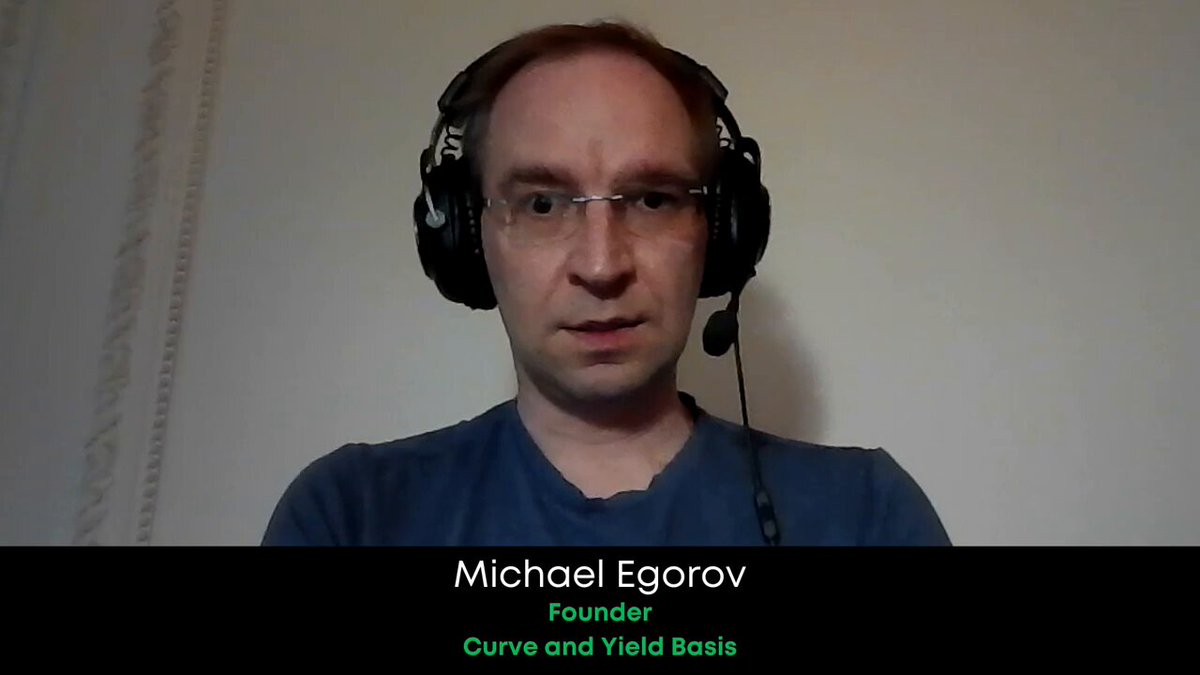
Watch Michael Egorov on the new Edge Pod with DeFi DadCommunity notes
Spot something off or out of date? Drop a note. Editors review topic notes daily and roll accepted fixes into the explainer — contributors are recognized in the monthly $SQUID drop.
Loading notes…