
In crypto, "unlock" covers token vesting releases, DeFi liquidity access against collateral, and reward gating mechanics—each with distinct market implications, risks, and opportunities for participants.
+36 sources across the wider coverage universe
 Alpen Labs: Unlock cheap BTC borrowing with expressive onchain markets recycling loan claims.2026-03
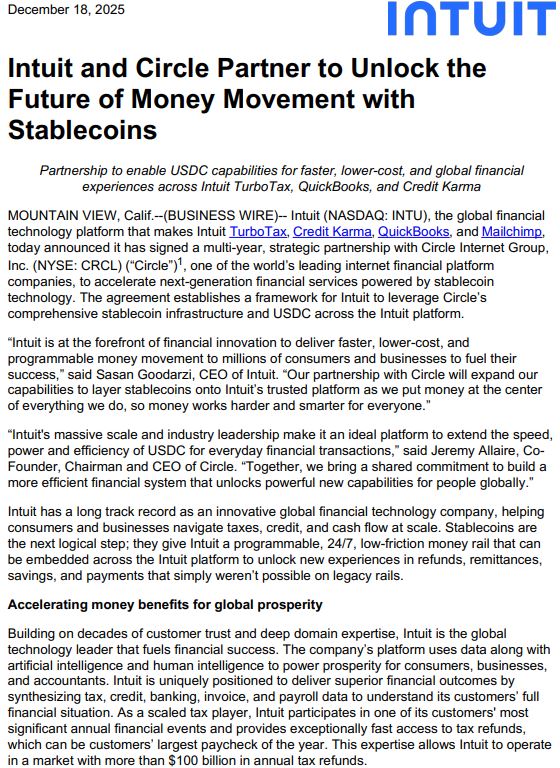 Intuit and Circle partner to unlock the future of money movement with stablecoins.2025-12
 Tokenized gold surges to $4.4B: xAUt dominates chains, PAXG excels in regulations,2026-02
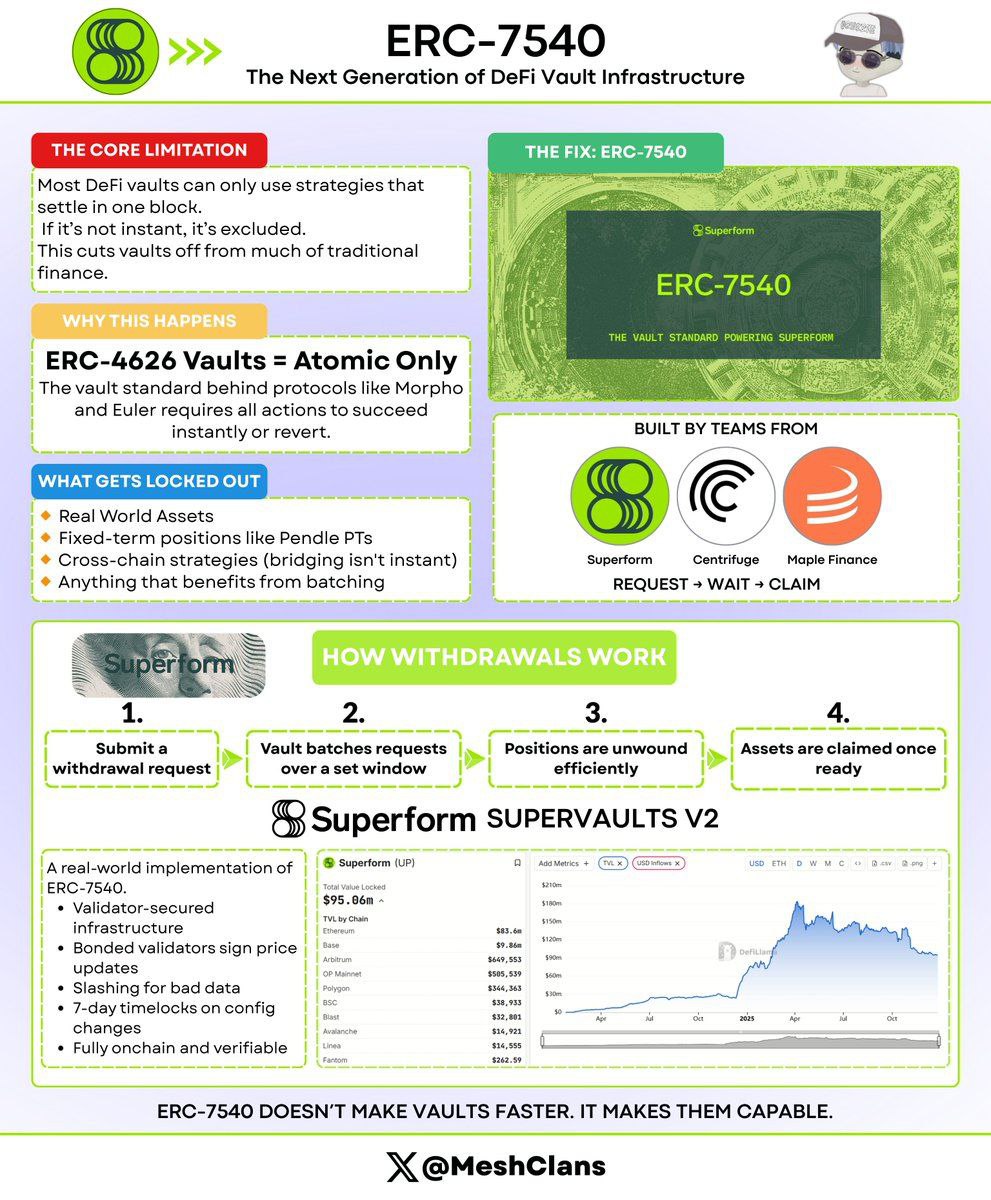 ERC-7540 introduces async vault operations, letting DeFi vaults handle non-instant strategies like RWAs, fixed-term yields, and cross-chain positions through request → wait → claim flows, unlocking new yield sources with 90%+ gas savings via batching.2025-12
 Ant International and HSBC test new cross-border payments solution using tokenised deposits on Swift’s network and powered by ISO 20022. The successful POC marks a key milestone in Ant International, HSBC, and Swift’s efforts to help businesses unlock the full benefits of tokenisation for enhanced liquidity, programmable finance, and 24/7 real-time settlement.2025-12
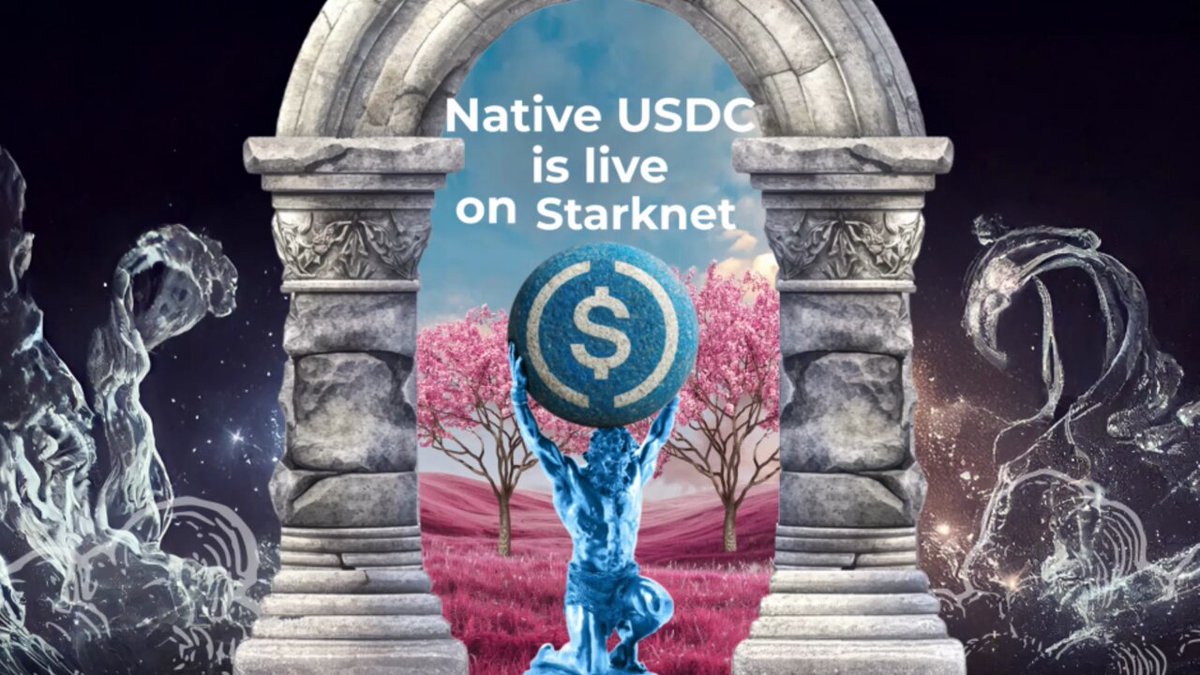 Native USDC and CCTP are now live on Starknet Mainnet. Users and builders can now access the world’s largest regulated stablecoin natively on Starknet, with the benefits of Circle’s burn-and-mint infrastructure. A massive unlock for the stablecoin ecosystem, fixing liquidity fragmentation and greatly improving institutional onboarding.2025-12
In crypto, "unlock" refers to any mechanism that releases previously restricted tokens, liquidity, or access rights—whether that's a vesting cliff releasing team allocations, a DeFi protocol letting you borrow against collateral, or a reward system gating features behind on-chain proof of participation.
The word appears constantly in crypto discourse, but it covers meaningfully different mechanics that carry different risks and opportunities. Confusing a token unlock event with a liquidity unlock, or treating every "unlock rewards" marketing hook as equivalent, leads to bad investment and product decisions. Here is a framework for understanding each category.
Token Vesting Unlocks: Supply Events That Move Markets
The most consequential use of "unlock" in crypto is the scheduled release of tokens that were previously locked under vesting agreements. When a protocol launches, founders, early investors, advisors, and ecosystem funds typically receive tokens subject to a lockup period—often six months to four years—during which those tokens cannot be sold. When the lockup expires or a cliff is reached, those tokens are said to "unlock."
These events matter because they represent a discrete increase in circulating supply. If a token has 30% of its total supply unlocking over a single quarter, and current holders have meaningful unrealized gains, the market has to absorb potential selling pressure. Historically, tokens with large, near-term unlocks have traded at a discount to fundamentally comparable assets, because sophisticated traders price in the expected sell pressure in advance.
Several data services—including Token Unlocks, Vesting.io, and CryptoRank—track upcoming unlock schedules across hundreds of protocols. Before taking a leveraged long position on any token, checking whether a major unlock is approaching is basic risk management.
Not all unlocks are equal, however. A team unlock implies insiders with full knowledge of the project can now exit. An ecosystem or treasury unlock may mean funds move to grants programs rather than to market. A public sale unlock—releasing tokens purchased in ICOs or IDOs—involves a more heterogeneous group whose average cost basis and conviction varies widely. The identity of the unlocking party determines whether the event is likely to be absorbed or disruptive.

Alpen Labs: Unlock cheap BTC borrowing with expressive onchain markets recycling loan claims.
Recycling loan claims onchain sounds like financial jiu-jitsu.....using debt to cancel debt. I just hope tax officers won't get out the best of that in you!
Liquidity Unlocks: Accessing Value Without Selling
A parallel and increasingly important meaning of "unlock" concerns DeFi protocols that allow holders to access liquidity against collateralized assets without triggering a taxable sale or losing their market exposure.
The core mechanism is straightforward: deposit ETH, Bitcoin, or another accepted asset as collateral; borrow a stablecoin—often USDC or a protocol-native stable—against it; spend or invest those proceeds while your collateral continues to appreciate (or depreciate). When you repay the loan, you retrieve your collateral intact.
This is not novel in principle—secured lending has existed for centuries—but crypto makes it permissionless and, increasingly, programmable. Kamino Finance's Credit Mode, for example, offers what it describes as onchain credit against crypto holdings with simultaneous yield generation on the deposited collateral, effectively unlocking spending power while maintaining price exposure. Venus Protocol on BNB Chain offers similar one-click leverage mechanisms. These protocols represent a formalization of what crypto-native wealth management looks like when custodial bank intermediaries are removed from the stack.
The same mechanic is moving into traditional finance. Standard Mortgage Infrastructure recently announced integration of Bitcoin as collateral to unlock U.S. homeownership pathways, allowing holders of significant BTC positions to pledge collateral for mortgage qualification without liquidating their holdings. Coinbase's partnership with Standard Chartered to expand global fiat access is another example of institutions bridging the unlock mechanic to regulated finance—letting users move between crypto and local currency in jurisdictions that previously had limited on-ramps.
Readers click unlock stories not for token economics theory but for the immediate supply-shock signal — the specific date, the specific amount, and which protocol's holders are about to get liquid.
Reward and Feature Unlocks: Gamification and Incentive Design
A third, softer use of "unlock" describes gated access to features, rewards, or tiers, typically as part of retention and engagement mechanics. Binance's Word of the Day quizzes—covering topics ranging from AI safety to bStocks to pre-IPO asset classes—gate BNB voucher rewards behind demonstrated knowledge. These mechanics are not incidental; they are deliberate user education funnels that simultaneously reward engagement and reduce friction for feature adoption.
Reward unlocks also appear in fan engagement contexts: Binance's MENA Nations Cup Fan Points program structures 60,000 USDC in shared rewards and VIP benefit tiers behind participation thresholds. ChainGPT's referral program gates milestone bonuses and five-figure referral fees behind graduated activity. Allora's cognitive independence manifesto frames its entire network as an unlock of human intellectual potential.
The pattern is consistent: in each case, the unlock mechanic creates a psychological and economic incentive to complete a specific action (learning, referring, participating) before a reward is released. For users, the question is whether the locked reward justifies the required effort or data sharing. For protocols, the question is whether the incentive cost generates durable retention or short-lived engagement that exhausts the rewards budget without creating loyal users.

Intuit and Circle partner to unlock the future of money movement with stablecoins.

Intuit (TurboTax, Credit Karma, QuickBooks, and Mailchimp) “Our partnership with Circle will expand our capabilities to layer stablecoins onto Intuit’s trusted platform as we put money at the center of everything we do, so money works harder and smarter for everyone.”
AI and Programmatic Unlocks
The relationship between artificial intelligence and unlock mechanics is still forming, but several meaningful patterns are visible.
AI agents that can hold and manage crypto wallets create new unlock surfaces. When an AI agent is granted wallet access on behalf of a user, it may be authorized to interact with time-locked contracts, trigger reward claims, or execute collateral-management operations autonomously. AI Agent Frameworks that unlock wallets, files, and credentials raise a genuine dual-use concern: the same permissioning that makes AI productive in DeFi also creates new attack surfaces if an agent is compromised or behaves unexpectedly. The productivity gain is real; so is the betrayal risk.
On the infrastructure side, The Graph's decentralized data indexing network positions itself as the unlock layer for on-chain data that AI agents need to function—without readable, structured blockchain data, AI-driven protocols cannot reliably assess market states or trigger contract interactions. Stablecoins like USDC are similarly positioned as the programmable payment rail for AI agent commerce: unlike credit cards, which require centralized authorization flows, stablecoin transfers can be triggered by code directly, making them a natural fit for autonomous agent-to-agent payments. A dedicated analysis of why stablecoins unlock AI agent commerce—specifically because their settlement is programmable while card networks require human-legible authorization flows—reflects a broader thesis that is gaining traction among DeFi protocol designers.
- 01Weekly unlock calendars
Recurring 'top unlocks this week' and '$500M+ next 7 days' formats gave traders an actionable supply-pressure snapshot they returned to repeatedly
- 02Solana supply shock risk
Two separate headlines about Solana's outsized unlock schedule — a 2.2% single-day jump and a staggering Q1 2025 pipeline — made SOL the most-watched unlock story in the feed
- 03Institutional DeFi access unlocks
Headlines pairing unlocks with institutional on-ramps (Ondo/Pyth, Canton Network, RWA vaults) pulled readers interested in TradFi capital entering DeFi
- 04Governance token unlock disputes
SafeDAO's community demand for immediate governance token unlock showed readers are alert to insider lock-up terms being used as power levers
- 05Unlock data infrastructure
Binance/CoinMarketCap vesting data feature and DefiLlama adding unlock info signaled that readers want better tooling to track unlock risk before it hits
- 06Equity and asset tokenization unlocks
Robinhood CEO SEC call, Trust Wallet RWA support, and Intuit/Circle stablecoin partnership framed regulatory and technical unlocks of traditional assets as the next frontier
Institutional and Regulatory Unlocks
Some of the most structurally significant unlocks in crypto happen at the institutional or regulatory layer. When the SEC approved spot Bitcoin and Ethereum ETFs in the United States in 2024, it effectively unlocked access to crypto price exposure for the billions of dollars sitting in brokerage accounts whose mandates preclude direct custody of digital assets. Spot BTC and ETH ETFs now offer 1:1 on-chain exposure via traditional market infrastructure—a meaningful unlock for wealth managers who were previously unable to allocate without separate custody infrastructure.
Governance votes represent another form of institutional unlock. The Arbitrum DAO recently voted to unlock $70 million for Kelp DAO exploit relief, repurposing treasury funds to compensate victims of a protocol failure. This is a politically and economically complex act: it demonstrates that DAOs can mobilize capital for remediation, but it also establishes a precedent that treasury funds can be redirected toward loss coverage, which has implications for how future victims and governance participants think about risk.
Geopolitical developments create their own unlock dynamics. Trump administration engagement with Iran-related sanctions has been described in financial media as potentially unlocking investment flows into the Middle East, and Opportunity Zone legislation in the U.S. has structured real estate and business investment unlocks for qualified investors—illustrating how the concept of unlocking restricted capital is not unique to crypto, but is accelerated by the permissionless nature of blockchain rails.

Tokenized gold surges to $4.4B: xAUt dominates chains, PAXG excels in regulations,
Reading Unlock Events as a Trader or Investor
For investors, the practical question is how to process unlock-related information before it moves prices.
Token vesting unlocks: Monitor unlock calendars for any position of meaningful size. Check the vesting beneficiary type (team vs. ecosystem vs. early investors). Team and early investor unlocks near all-time highs are the highest-risk scenarios. Some tokens trade down into the unlock and recover afterward as sell pressure is absorbed; others reprice structurally lower if the fundamentals don't support the pre-unlock valuation.
Liquidity unlocks via DeFi: Understand the health factor and liquidation mechanics before depositing collateral. Collateralized loans do not eliminate price risk—they amplify it during drawdowns. USDC-denominated debt against a Bitcoin collateral position means that a 40% BTC drawdown may trigger partial liquidation even if you never intended to sell.
Reward unlocks: Treat reward programs as acquisition cost from the protocol's perspective. If a platform is spending heavily on BNB or USDC rewards to acquire users, the question is whether the unit economics work—whether acquired users remain and generate revenue, or churn after exhausting the reward pool. For participants, the economics depend on whether the claimed reward token holds its value long enough to be useful.
Governance unlocks: DAO treasury unlock votes (like Arbitrum's Kelp DAO allocation) affect circulating supply indirectly when treasury tokens are moved to external recipients who may sell. Track governance proposals that involve treasury disbursements as a supply-side consideration alongside traditional token unlock calendars.
- 2024-01launch
Jupiter airdrop goes live; $WLFI token details revealed with 20% early unlock
- 2024-01milestone
Davos week: $150M token unlocks coincide with WEF conference
- 2024-12milestone
DYdX, Optimism, 1inch, Aptos unlock over $750M by December
- 2025-01milestone
Solana Q1 2025 unlock pipeline flagged as staggering by analysts
- 2025-01launch
Binance and CoinMarketCap launch token unlock and vesting data feature
- 2025-01milestone
Solana single-day 2.2% supply unlock — largest to date at time of reporting
- 2025-01milestone
Nearly $200M staked SOL unlocks in one day — largest single-day release until 2028
- 2025-01governance
SafeDAO community demands immediate governance token unlock
Security and Auditing Considerations
Unlock mechanics in smart contracts require careful auditing. Time-locked contracts that release funds at a block height or timestamp are a common source of bugs and exploits. The unlock condition must be unambiguous—exploits have used ambiguous or manipulable conditions to trigger early releases.
The phrase "from ownership to consent" describes an emerging framework in which users should have explicit, revocable authorization over what wallets and contracts can do on their behalf. Auditing and revocation tooling—allowing users to inspect which contracts have approval to spend tokens and to revoke that access—is increasingly recognized as a prerequisite for safe participation in DeFi. Wallet approvals are effectively standing unlocks; old, forgotten approvals to deprecated or compromised contracts represent a persistent attack surface.
Outlook
The concept of unlocking value runs through virtually every layer of the crypto stack, and its importance is growing in all three dimensions described here. Token unlock schedules will remain market-moving events as long as vesting cliffs are part of how new protocols distribute ownership. DeFi liquidity unlocks will expand as institutions recognize that collateralized lending against Bitcoin and other large-cap assets offers a credible alternative to forced liquidation of long-term positions. AI agent architectures will increasingly require programmable unlock mechanics—both for payments and for contract interactions—creating new design challenges around permissioning and revocation.
The most durable insight is structural: in crypto, value that is inaccessible is not the same as value that doesn't exist. The systems that let holders, developers, and institutions access that latent value—without losing their positions or trusting intermediaries—are among the most important pieces of infrastructure being built in this cycle.
Latest Unlock news
Alpen Labs: Unlock cheap BTC borrowing with expressive onchain markets recycling loan claims.Intuit and Circle partner to unlock the future of money movement with stablecoins.Tokenized gold surges to $4.4B: xAUt dominates chains, PAXG excels in regulations,ERC-7540 introduces async vault operations, letting DeFi vaults handle non-instant strategies like RWAs, fixed-term yields, and cross-chain positions through request → wait → claim flows, unlocking new yield sources with 90%+ gas savings via batching.Ant International and HSBC test new cross-border payments solution using tokenised deposits on Swift’s network and powered by ISO 20022. The successful POC marks a key milestone in Ant International, HSBC, and Swift’s efforts to help businesses unlock the full benefits of tokenisation for enhanced liquidity, programmable finance, and 24/7 real-time settlement.Native USDC and CCTP are now live on Starknet Mainnet. Users and builders can now access the world’s largest regulated stablecoin natively on Starknet, with the benefits of Circle’s burn-and-mint infrastructure. A massive unlock for the stablecoin ecosystem, fixing liquidity fragmentation and greatly improving institutional onboarding.Community notes
Spot something off or out of date? Drop a note. Editors review topic notes daily and roll accepted fixes into the explainer — contributors are recognized in the monthly $SQUID drop.
Loading notes…
Help improve this topic
Have a story or tip about this topic? Submit it. See something missing? Leave a note. Editors review daily; accepted submissions and fixes count toward the monthly $SQUID drop.