
Comprehensive explainer on crypto rewards covering staking, DeFi yields, USDC savings, exchange loyalty hubs, cards, competitions and quests, with focus on incentives, risks, transparency and how Binance, Coinbase, Kraken and DeFi protocols design yields.
+42 sources across the wider coverage universe
 Polygon introduces sPOL to boost staking rewards, distributing priority fees to delegators while enabling liquidity and composability across DeFi ecosystem2026-04
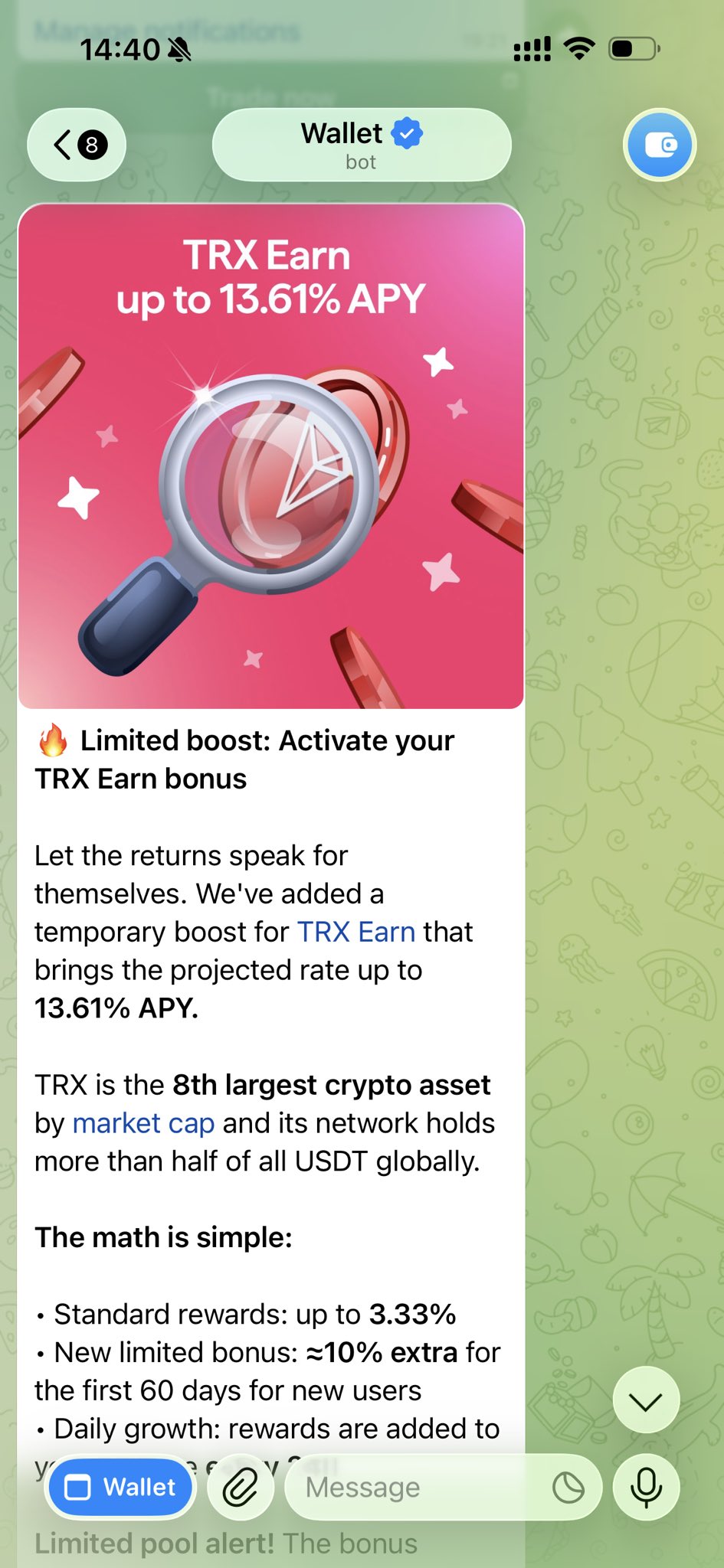 TRON’s Justin Sun launches TRX Earn on Telegram with boosted yields up to 13.61% APY, combining base rewards and a limited 60-day bonus for new users2026-04
 Brave plans BAT buybacks tied to BravePay, Wallet, and Rewards Card revenue in Roadmap 4.02026-07
 Korean QT Campaign Winners Announced: 20 Crewmates Claim 10U $GPS Bounties from Bithumb Korea Voyage, Rewards Ahoist to Submitted Wallets in 72 Hours2026-03
 Paxos launches Partner Rewards Engine, enabling daily, on-chain rewards for enterprises issuing and distributing stablecoins2026-03
 Sony's blockchain partner launches institutional-grade stablecoin as the default settlement currency for Ethereum layer-2 platform Soneium alongside a rewards program called STAR Points that incentivizes transactions through the Startale App. Stablecoin platform M0 is providing the underlying infrastructure for Startale USD (USDSC). The launch follows Japan's financial regulator approving a yen-stablecoin pilot from the country's three megabanks earlier this month.2025-12
Understanding Crypto Rewards: Incentives, Yields, and Risks
In crypto, “rewards” is an umbrella term for all the ways users earn extra value on top of their baseline holdings or activity, from staking yield and liquidity mining to cashback on cards, trading competitions, quests, and airdrops. At a deeper level, these rewards are incentive systems that coordinate behavior, bootstrap liquidity, and secure networks—while exposing users to a mix of market, platform, and regulatory risks that are often less obvious than the advertised annual percentage yield.
What Counts as a “Reward” in Crypto?
The word “rewards” is used unusually broadly in digital-asset markets. In traditional finance, investors might talk about yield, interest, dividends, or cashback, each with a relatively clear economic meaning. In crypto, the same underlying mechanisms exist but are wrapped in marketing language that can blur the boundary between protocol-level income, promotional giveaways, and speculative upside. Rewards might come directly from a blockchain’s consensus mechanism, from a DeFi protocol’s fee pool, from an exchange’s marketing budget, or from a project’s token treasury, yet they are presented to end users as variations of the same promise to “earn more” on their crypto.
From a functional standpoint, it is useful to think of rewards as any incremental value credited to a user that depends on some form of participation beyond passive price exposure. That participation might be as involved as operating a validator or providing liquidity to a decentralized exchange, or as simple as holding a stablecoin on a centralized platform that shares part of its revenues with depositors. Coinbase, for example, advertises an annual percentage yield on USD Coin (USDC) holdings, positioning it as rewards earned simply by storing USDC on the platform. Kraken similarly offers an advertised yield on USDC under its Auto Earn program, framing it as rewards on a dollar-pegged stablecoin. Although both are often described as “rewards,” they have different sources of funding, risk profiles, and legal structures.
This breadth of usage means that “rewards” in crypto spans at least four overlapping categories. First are protocol-native rewards such as proof-of-stake block subsidies and transaction fees, which are fundamental to a network’s security and operation. Second are DeFi rewards like liquidity mining or lending interest, which arise from smart-contract systems that match borrowers and lenders or traders and liquidity providers. Third are centralized platform rewards, including exchange savings products, loyalty points, cards that pay cashback in Bitcoin or platform tokens, referral bonuses, or gamified tasks like quizzes and prediction contests. Finally, there are hybrid or off-chain rewards, such as NFTs granted for early participation, points that later convert into governance tokens, or vouchers that unlock access to fee discounts or other privileges.
Despite the marketing gloss, these systems are not arbitrary giveaways. Crypto markets use rewards as finely tuned incentives to solve coordination problems. A new protocol needs liquidity before it can attract organic volume, so it emits tokens to early liquidity providers. A staking network needs validators to lock capital, so it shares block rewards with delegators. An exchange wants new users to try margin trading, so it issues vouchers via a rewards hub that can be used to offset interest or fees. In each case, rewards are the cost a system willingly pays to shape user behavior, and the sustainability of that cost ultimately determines whether rewards are long-lived yield or short-lived promotional burn.
Because of this, understanding rewards in crypto requires thinking about both economics and engineering. It is not enough to know that an advertised APY is 4 percent, 20 percent, or even triple digits; you need to know where those returns come from, how they are calculated, and what risks sit on the other side of the contract. That analysis begins with the most foundational category of crypto rewards: the protocol-level incentives embedded in proof-of-stake and similar consensus schemes.

Polygon introduces sPOL to boost staking rewards, distributing priority fees to delegators while enabling liquidity and composability across DeFi ecosystem

50% of priority fees redistributed to 33,796 delegators, but Polygon ran a $26M net loss last year with tx revenue that doesn't cover validator costs — so the fees being "shared" are from a network still operating on subsidies. The liquidity unlock is the substance here: $330M in dead staked capital becoming DeFi collateral via Uniswap, seeded by 100M sPOL straight from Polygon Labs' treasury. That kind of bootstrap concentration in the primary LP deserves scrutiny as sPOL scales.
Protocol-Level Rewards: Staking, Restaking, and Mining Incentives
Proof-of-Stake Staking Rewards
In proof-of-stake (PoS) blockchains, staking rewards are not a marketing add-on but the core mechanism by which the network secures itself and processes transactions. Instead of miners expending energy to compete for block rewards, PoS networks select validators to propose and attest to new blocks based on the amount of the network’s native token they have staked as collateral. Token holders either run validator infrastructure themselves or delegate their stake to professional validators, and in return they receive a share of newly issued tokens and transaction fees.
Economically, staking rewards are compensation for two things: the opportunity cost of locking capital and the risk of penalties. Validators in many PoS systems can be “slashed” if they misbehave or fail to remain online, losing part of their staked tokens. To offset these risks and to give participants a reason to stake rather than simply hold, networks allocate a portion of inflation and fees to stakers. In practice, this often results in annual percentage yields in the low to mid-single digits for large, mature networks, with CoinTracker citing a general range of roughly 3 to 10 percent APY for common staking assets depending on network conditions and validator performance.
Centralized platforms have layered custodial staking products on top of this base-layer mechanism. Kraken, for example, allows users to stake supported assets and takes a commission on the rewards it collects from the network on behalf of clients. The platform notes that it charges a 30 percent fee on staking rewards earned through both its Flexible Staking service and its Auto Earn program, meaning end users see the net yield after this commission. Staking payouts are typically batched and distributed to users on a regular cadence, such as once per week, with some variance around upgrades or network events. This structure simplifies participation for retail users who do not want to manage validators, but it also introduces platform risk and concentrates governance power in the hands of large intermediaries.
From an investor’s perspective, staking rewards raise several analytical questions. The headline APY is partially funded by token inflation, which dilutes non-stakers. That means staking may be necessary just to avoid dilution, rather than a free lunch. The real economic return depends on token price, compounding, and operational risks. Metrics such as the staking ratio (the percentage of circulating supply staked) and the distribution of stake across validators determine how secure and decentralized the network is, and thus how robust those rewards may be over time. Understanding staking rewards therefore requires reading them as both an income stream and a signal about network health.
Restaking and Auditable Reward Flows
As staking markets mature, more complex reward structures have emerged. Restaking allows a single pool of staked assets to secure multiple services or networks, with rewards from each layered on top of one another. This can increase capital efficiency but also complicates the accounting of where each unit of yield comes from. For institutional allocators, it becomes important not only to know the headline rate but to disaggregate each component: base-layer staking yield, additional restaking incentives, protocol bribes, and any bonus tokens.
Efforts like the CLARITY framework discussed by infrastructure providers aim to make these stacked reward flows provable and auditable on-chain. The concept is that “every reward [is] provable against the activity that earned it,” with distributions to validators and delegators exposed in a way that can be traced and verified programmatically. For an asset manager holding a liquid restaking position, that audit trail should answer three questions: how much the position earned over a period, what the components of that yield are, and how each component’s calculation can be independently recomputed from on-chain data. In effect, the ambition is to turn what has often been opaque and spreadsheet-driven reporting into transparent, cryptographically verifiable accounting.
This move toward auditable staking and restaking rewards mirrors a broader institutionalization of crypto yields. As restaking protocols launch and expand, they often rely on reward campaigns to attract early capital, promising boosted yields that decay over time as more stake arrives. The ability to prove that these rewards were correctly distributed, and to reconcile them with an allocator’s internal records, becomes a precondition for regulatory compliance and fiduciary oversight. Over time, one can expect on-chain reward accounting standards to converge on schemas that allow automated reconciliation, stress testing, and risk attribution, much as traditional finance standardized performance reporting.
Mining Rewards and Hashrate Campaigns
While proof-of-stake has grown rapidly, proof-of-work (PoW) mining remains central for networks like Bitcoin. In PoW, miners contribute hashing power to solve cryptographic puzzles, and successful blocks earn a fixed subsidy plus transaction fees. Most miners pool their resources in mining pools that aggregate hash rate and distribute rewards proportionally to participants’ contribution. The baseline mining reward is purely protocol-native: it is governed by the network’s monetary policy and difficulty adjustment, not by a promotional budget.
However, centralized platforms that operate mining pools often supplement protocol rewards with their own incentive campaigns to capture market share in hash rate. Binance Pool, for instance, has run regional promotions in which miners in the Middle East, North Africa, and select CIS countries can earn additional USDC rewards for increasing their average Bitcoin hash rate over a specified campaign period. Under such a campaign, miners might be ranked by the growth in their average daily hash rate relative to a baseline period, with the top performers sharing a fixed USDC prize pool distributed to their spot accounts after the promotion. New miners that connect equipment for the first time during the promotion may also be eligible for separate bonuses if they meet certain minimum hash rate thresholds.
These campaigns illustrate how platform-level rewards layer on top of protocol-level earnings. Miners continue to receive their normal share of Bitcoin block rewards and fees via the pool, while the platform uses USDC-denominated bonuses as a lever to incentivize additional hash rate and attract new participants. The campaigns are tightly scoped, with detailed eligibility criteria, required identity verification, and minimum hash rate thresholds, and they often state that the platform charges a standard pool fee on mining payouts, such as 4 percent. This reinforces a key theme in crypto rewards: even when the underlying protocol is permissionless, the interface through which many users participate is governed by centralized terms and conditions that heavily shape the effective reward landscape.
The interplay between protocol-native rewards and platform incentives is also visible in other contexts. As staking providers compete, they adjust commission rates and launch promotional “boosts” or fee holidays. As new proof-of-stake chains come online, they might allocate extra rewards at launch to bootstrap validator participation. The result is a dynamic environment in which the notion of “staking rewards” or “mining rewards” at any given moment is the sum of multiple layers of incentives, each with its own sustainability and risk properties.
Readers click rewards stories not for the yield number but for the moment a protocol changes who captures value — a fee switch activating, a buyback loop hitting a record rate, or a wrapper automating what users previously had to do manually.
DeFi Rewards: Yield, Liquidity Mining, and Supply Mining
Yield Farming and Lending Rewards
Decentralized finance introduced a different class of rewards under the umbrella of yield farming. In yield farming, users deposit tokens into smart contracts that power lending platforms, automated market makers, or other financial primitives, and receive yield in return. On lending and borrowing platforms such as Compound or Aave, depositors earn interest when borrowers pay to borrow their assets. On automated market maker (AMM) decentralized exchanges, liquidity providers earn a share of trading fees generated when users swap tokens against the pools. In many cases, these fee-based yields are supplemented with additional reward tokens to incentivize early participation.
CoinTracker notes that annual percentage yields in yield farming can vary widely depending on the protocol and market conditions, often ranging from a few percent to well over 100 percent in new or high-risk pools. High headline APYs typically arise when a protocol distributes a large amount of its native or governance token over a relatively small pool of capital, creating substantial short-term yield that compresses as more liquidity arrives or as the token’s price declines. This dynamic makes yield farming inherently path-dependent and time-sensitive; early adopters may earn outsized rewards, but late entrants can face deteriorating returns and higher price risk.
Yield farming differs from staking in several important ways. Whereas staking rewards flow from a network’s consensus mechanism and are relatively predictable once validator performance is stable, yield farming rewards depend on user behavior, protocol parameters, and the balance of supply and demand in specific markets. Lending yields move with borrow demand; AMM fee yields depend on trading volume and volatility. There is no guarantee that the reward token itself will retain value, and in some cases reward tokens can become heavily inflationary. In addition, yield-farming strategies often involve multiple protocols and layers of composability, amplifying smart-contract risk and making it more difficult for retail users to track their true exposure.
Liquidity Mining and AMM Incentives
Liquidity mining is a specific type of yield farming in which protocols distribute new tokens to users who supply liquidity to their pools. On decentralized exchanges and DeFi platforms, liquidity providers deposit token pairs, or in some designs single tokens, into liquidity pools that market makers use to facilitate swaps. In return, providers receive liquidity pool (LP) tokens that represent their share of the pool’s assets. These LP tokens entitle holders to a proportional share of trading fees and can often be staked in additional contracts to earn yet more rewards, such as governance tokens or newly minted protocol tokens.
FinchTrade describes liquidity mining rewards as a mechanism to incentivize users to contribute liquidity, thereby facilitating trading and enhancing market efficiency. When users trade on a decentralized exchange, they pay transaction fees that are distributed among liquidity providers based on their share of the pool. On top of those fee revenues, the protocol can allocate extra emissions of its own token to LPs to attract deeper liquidity during strategic phases, such as the launch of a new pool, a migration to a new version of the protocol, or a cross-chain expansion. This coupling of fee income and token incentives is a hallmark of DeFi design, allowing protocols to tune the mix of organic and subsidized yield as needed.
However, liquidity mining rewards come with several notable risks. Because liquidity providers hold a portfolio of assets in a pool, they are exposed to impermanent loss, the divergence between the value of holding the assets in the pool versus holding them outside if relative prices move. Severe market volatility can cause LPs to end up with more of the underperforming token and less of the outperforming one, eroding their net position despite earning fees and reward tokens. In addition, liquidity mining contracts rely on smart contracts that can contain bugs or vulnerabilities; if exploited, providers can lose their deposited funds. These risks, combined with token price volatility, mean that the nominal APY of a liquidity mining program often overstates the risk-adjusted return.
Supply Mining and Gauge-Based Reward Systems
Supply mining extends the liquidity mining concept to lending markets and other capital-intensive protocols. Instead of rewarding liquidity in trading pools, supply mining rewards users for supplying assets to lending pools or other collateralized systems, often in the form of the protocol’s native stablecoin or governance token. For example, stablecoin-focused protocols may run “supply mining” campaigns in which users who deposit a stablecoin such as USDD into a lending market receive additional USDD rewards over time, boosting their effective yield for the duration of the campaign. In practice, these supply APYs are dynamically adjusted based on the amount of capital participating and other parameters, and rewards are frequently distributed on a weekly cadence.
On ve-token-based AMM platforms like Aerodrome, reward rates for different pools are mediated by gauge systems that allocate emissions based on governance voting and sometimes hard caps. Gauges represent configurable emission targets for specific liquidity pools, and token holders with voting-escrowed governance tokens can direct more rewards to the pools they favor. Gauge caps, in turn, limit the maximum proportion of emissions any single pool can receive, preventing governance capture or extreme concentration in a narrow set of pairs. At launch, such protocols often publish extensive FAQs explaining how reward rates are set, how gauges and caps interact, and how upgrades adjust the emission logic over time. This reflects the fact that, as reward systems become more complex, understanding their mechanics becomes critical for liquidity providers and traders alike.
Supply mining can be seen as an attempt to shape the composition and duration of liquidity in a more precise way. By targeting rewards to specific asset pairs, maturities, or strategies, protocols try to align external incentives with their internal risk management needs. For users, however, this complexity means that reading a simple APY number on a dashboard may hide underlying governance dynamics. Voting, bribe markets, and changes to gauge parameters can all materially alter future rewards, turning the yield landscape into a political as well as financial arena.
Prediction Markets and Rewards for Accurate Forecasts
Another corner of DeFi where rewards play a central role is prediction markets. In these systems, participants buy and sell contracts tied to the outcome of future events, such as elections, sports results, or economic data releases. Each contract typically pays a fixed amount, often set at a nominal value like \(1\) unit of currency, if the specified event occurs, and zero otherwise. The price at which a contract trades reflects the market’s implied probability of the event; a contract priced at \(0.63\) suggests a 63 percent chance of the outcome happening according to the collective beliefs of traders.
The “reward” in prediction markets is the profit earned by those who hold contracts that correspond to ultimately correct outcomes. Because contracts settle at their terminal value when the event resolves, traders who bought underpriced outcomes or sold overpriced ones earn returns proportional to the difference between the purchase price and the settlement price. This creates strong incentives for participants to gather information and make accurate forecasts, with research suggesting that when designed well, prediction markets can aggregate dispersed information and reduce systematic bias. Unlike staking or liquidity mining, rewards here are not externally funded emissions but zero-sum redistributions among traders, mediated by the accuracy of their predictions.
Resolution and verification of outcomes are critical to the integrity of these rewards. The event outcome must be established in a way that is credible and resistant to manipulation, typically through oracles or decentralized resolution mechanisms. If the rules are ambiguous or if resolution is disputed, perceived reward fairness suffers, and participation may decline. Conversely, clear rules and reliable resolution can make prediction market rewards a powerful tool for price discovery and risk transfer, even if they lack the headline APYs associated with yield farming campaigns.
TRON’s Justin Sun launches TRX Earn on Telegram with boosted yields up to 13.61% APY, combining base rewards and a limited 60-day bonus for new users
13.61% APY on TRX when base staking yields sit around 3-4% — that ~10% delta is pure user acquisition subsidy that burns off after 60 days. Sun's running three parallel demand sinks right now: Telegram Earn, the Canary Capital staked TRX ETF filing (advertising 4.5% yield), and the sTRX→USDD dual-profit loop. All designed to lock up circulating supply while TRX price action stays flat despite growing network activity. Convenient timing too — this drops weeks after the $10M SEC settlement cleared Rainberry's regulatory overhang.
Centralized Platform Rewards: Savings, Loyalty, and Quests
Savings Products and Stablecoin Rewards
Centralized exchanges and brokerages have built substantial businesses around offering yield-like rewards on user balances, especially in stablecoins. Coinbase, for example, advertises that users can earn an APY on USDC simply by holding the stablecoin in their Coinbase account, with marketing materials highlighting a rate such as 3.85 percent APY and emphasizing that USDC is designed to be redeemable 1:1 for U.S. dollars. The platform notes that users can convert between USD and USDC at a one-to-one ratio with no fees and no lockups, and that USDC rewards are calculated and paid out periodically, though availability is subject to the user’s jurisdiction.
Kraken similarly promotes USDC rewards under its Auto Earn or savings-like products, advertising a rate up to 1.75 percent APY on USDC balances in eligible regions. The process is framed as straightforward: create a free Kraken account, purchase or deposit USDC, and opt in to earn rewards on those holdings. As with Coinbase, Kraken makes clear that rates can change over time and that eligibility depends on regulatory factors in the user’s location. These offerings package underlying lending, staking, or other yield strategies into a simplified consumer-facing product, absorbing complexity into the platform’s balance sheet.
Comparing such USDC reward products highlights key structural differences. A simple illustration can be given in a table that compares headline yields and basic features as advertised:
| Platform | Asset | Advertised APY (illustrative) | Lockup Requirement | Notes on Availability |
|---|---|---|---|---|
| Coinbase | USDC | Around 3.85% APY | No lockup | Subject to location and eligibility |
| Kraken | USDC | Up to 1.75% APY | No lockup | Subject to location and product terms |
These figures are snapshots, and platforms explicitly warn that reward rates are variable and can be altered or discontinued. The underlying economic engine might be institutional lending, participation in short-term money markets, on-chain strategies, or a combination. Users effectively take on counterparty risk to the platform in exchange for convenience and a stable, easy-to-understand yield on a dollar-pegged asset. Understanding this trade-off is especially important when large sums or leverage are involved.
Loyalty Programs and Rewards Hubs
Beyond simple savings yields, many exchanges have rolled out multi-faceted loyalty and incentive programs. CCN describes crypto loyalty programs as systems in which customers are rewarded with digital assets—cryptocurrencies or blockchain-based tokens—for their engagement, spending, or adherence to specific behaviors, much like airline miles or credit card points but denominated in crypto. These programs can span tiers, referral bonuses, task-based missions, and event-based campaigns, with rewards redeemable for trading fee discounts, token vouchers, or other benefits.
Binance’s Rewards Center is a prominent example of this category. It functions as a centralized portal where users can view available tasks and the vouchers or points offered as rewards, as well as see and redeem rewards they have already earned. Tasks can range from simple actions like completing identity verification or making a first trade to more complex campaigns tied to specific product launches, promotional events, or educational initiatives. Rewards take varied forms, including token vouchers, VIP level upgrades that confer lower fees, and interest-free loans for margin trading, all of which are accessed and managed through the Rewards Center interface.
Specific campaigns illustrate how such loyalty systems operate in practice. For example, Binance has launched leaderboard-style promotions under its Binance Earn suite where users who subscribe to certain products—such as “Discount Buy” structured products—are ranked by their average subscription amount over a promotion period, with the top participants receiving additional subscriptions as rewards. In that particular design, rewards are not paid out as direct USDC deposits but as extra Discount Buy subscriptions of predefined duration, with a nominal value up to a stated USDC amount. Similarly, content-driven activities like football-themed challenges may invite users to post on social platforms with designated hashtags and branding, complete a survey, and pass identity checks in order to earn a share of a token voucher reward pool credited to their Rewards Hub.
These loyalty and rewards-hub structures blur the line between marketing and user compensation. They serve to onboard users to new features, deepen engagement, and gather data, while offering modest financial or experiential upside. Because the rewards are often denominated in the platform’s own tokens or in non-cash vouchers with expiry dates and usage restrictions, their realized value depends heavily on how and when users redeem them, and whether they fit into an overall investment or trading strategy.
Airdrop Tracking, Points, and Potential Rewards
Another visible category of crypto rewards centers on airdrops and “points” systems that promise potential future distributions. Airdrops allocate tokens to wallets that meet certain criteria, such as holding or using a particular protocol, providing liquidity, or participating in governance. Platforms like CryptoRank offer dashboards for “drophunting,” allowing users to track potential airdrops, Web3 incentives, and blockchain events that may lead to token rewards. Such dashboards highlight estimated reward values, campaign timelines, and qualifying actions, effectively gamifying early adoption.
Increasingly, protocols also issue off-chain or on-chain “points” to quantify user engagement, with the understanding—sometimes explicit, sometimes implied—that these points may convert into token rewards later. Users accumulate points by supplying liquidity, trading, referring others, or participating in testnets and beta programs. Campaigns like Ondo’s points program, which later opened claims for rewards based on points earned before a given cutoff date, exemplify the pattern of retroactive rewards for past participation. While specific details vary across projects, the common thread is that points introduce a probabilistic, forward-looking element to rewards: today’s activity might unlock tomorrow’s airdrop.
Airdrops and points-based rewards raise distinct considerations. Because they are often discretionary and governed by project teams, users cannot be certain ex ante about the conversion rate between activity and eventual tokens. Sybil resistance, anti-bot measures, and criteria for “real” users become important for fairness. From a regulatory standpoint, the line between promotional giveaways and unregistered securities distributions may be scrutinized, especially when rewards have significant monetary value. For users, a disciplined approach is needed to distinguish between genuine participation in protocols they find valuable and purely speculative farming of points that may never crystallize into meaningful rewards.
Educational Quests and “Learn and Earn” Programs
Educational rewards programs aim to bridge the gap between user acquisition and literacy. Coinbase Wallet’s Quest feature, for instance, invites users to learn on-chain skills such as swapping tokens, delegating stake, or interacting with decentralized applications, and to earn rewards for completing these tasks. The program positions itself as a way to “learn new skills and earn crypto,” emphasizing that participants both gain practical experience using Web3 tools and receive token incentives for doing so. This dual objective aligns user education with the platform’s growth, as trained users are more likely to adopt new features and protocols.
Exchange-based quizzes and games extend this concept. Binance’s Word of the Day (WOTD) game, for example, allows users to play daily word puzzles on a specific theme, such as “bStocks,” and earn a share of a BNB reward pool if they answer correctly on enough days. The activity’s rules specify that users can play up to two games per day, with rewards allocated based on the proportion of correct answers and an additional bonus pool for those who participate on multiple days. Rewards are distributed as token vouchers via the Rewards Hub, with clarity around claim deadlines, maximum per-user caps, and eligibility conditions including account verification. The net effect is to turn learning about new products or concepts into an interactive, gamified experience with tangible, if modest, financial upside.
Educational reward programs serve multiple purposes. They reduce the friction of trying new DeFi functionalities, help users understand the risks and mechanics of staking or swapping, and create marketing narratives around being “rewarded for learning.” At the same time, they require careful design to avoid incentivizing rote participation without comprehension. Quizzes that can be answered via simple copy-paste from forums or automated scripts risk turning “learn and earn” into “click and earn,” diluting educational value. Platforms increasingly mitigate this by combining knowledge checks with on-chain actions that require real engagement.
Card Cashback and Hybrid Rewards
Crypto cards bring traditional-style reward mechanisms into the digital-asset realm. Crypto.com, for instance, offers a Visa Signature credit card that allows users to earn up to 6 percent back in Bitcoin or its native CRO token for every dollar spent on purchases, with tiered rewards based on card level and staking or holding requirements. The offering is presented as analogous to a conventional credit card rewards program, but with cashback paid in crypto rather than airline miles or fiat. For users who prefer not to use credit, Crypto.com also offers a prepaid card variant, showing how crypto rewards can be layered onto both credit and debit spending rails.
These card rewards function at the intersection of payments, loyalty, and investment. Cashback in volatile tokens is not just a discount; it is an immediate speculative position. If the token appreciates, the effective value of past rewards increases; if it falls, the value erodes. Card issuers often fund these rewards from interchange revenue, token treasuries, and marketing budgets, balancing customer acquisition costs against long-term profitability. From a user’s vantage point, the key questions become whether the underlying fees and interest rates justify the rewards, how flexible redemption options are, and what credit or regulatory protections apply.
Crypto cards also illustrate the integration of Web2-style UX with Web3 incentives. Users can spend in fiat at merchants while accumulating crypto rewards without directly handling wallets or private keys, lowering the barrier to entry. Yet the underlying custodial arrangements and counterparty risks mirror those of exchange-based rewards: users rely on the issuer’s solvency and legal compliance. As regulators scrutinize “buy now, pay later” and other novel credit products, crypto cards with outsized rewards may face increasing attention, especially when reward programs are used to encourage higher-risk borrowing behavior.
Reward Design, Math, and Transparency
APY, APR, and Compounding
Crypto reward programs frequently advertise returns using annualized metrics like APY (annual percentage yield) or APR (annual percentage rate), but the underlying math is often poorly understood by users. APR typically refers to a simple annual rate that does not account for compounding, while APY reflects the effective annual return assuming that earnings are reinvested at a given frequency. If \(r\) is the nominal periodic rate and \(n\) is the number of compounding periods per year, then the APY can be expressed as
\[ \text{APY} = \left(1 + \frac{r}{n}\right)^{n} - 1. \]
In staking and yield farming, many protocols quote APYs based on the assumption that rewards are continuously or periodically restaked. For example, if a protocol distributes a fixed share of its token supply per block, dashboards may compute an implied APY by extrapolating current rewards and assuming that they are redeposited to increase the base on which future rewards are calculated. In reality, users may not compound rewards, fees may erode returns, and reward rates themselves often change as more capital joins the pool. Thus, advertised APYs can differ significantly from realized returns.
The ranges reported in the market underscore this variability. CoinTracker notes that staking rewards for common PoS networks often fall in the 3 to 10 percent APY range, while yield farming APYs may span from low single digits to triple digits, especially in newer or riskier pools. Platforms like Coinbase and Kraken publish relatively modest APYs on USDC holdings—on the order of 1.75 to 3.85 percent—as they target a lower risk profile and more stable revenue sources. To interpret these numbers, users must understand whether the quoted rate is before or after platform fees, whether it assumes compounding, and how frequently rewards are credited.
Compounding frequency matters particularly for DeFi rewards, where manual claiming and restaking can be costly due to transaction fees. Some protocols and platforms offer “auto-compounding” vaults that automatically harvest and reinvest rewards on behalf of users, effectively increasing the number of compounding periods \(n\) and pushing realized returns closer to the advertised APY, net of vault fees. In contrast, centralized platforms usually handle compounding internally, crediting rewards to user balances on a daily, weekly, or monthly basis, and disclosing the methodology in product documentation. Kraken, for instance, notes that staking rewards are generally distributed weekly, though timing can vary around platform upgrades.
Unlock Schedules, Vesting, and Emissions
Beyond the nominal rate, the temporal structure of rewards is crucial. Many reward programs involve unlock schedules or vesting periods that delay when users can fully realize their earnings. In liquidity mining campaigns, the protocol may issue reward tokens that are locked for a period and gradually vest, or that can be claimed only after a certain epoch ends. Token unlock schedules often interact with broader tokenomics: if a large portion of the total supply is allocated to rewards and is scheduled to unlock over a particular timeframe, this can exert selling pressure and affect prices, changing the real value of rewards.
Gauge-based systems add another layer of time sensitivity. When protocols like Aerodrome introduce gauge caps and dynamic emission schedules, the amount of rewards directed to a given pool in each epoch can change based on governance votes and shifting caps. Liquidity providers must track not only the current APY but also the likely trajectory of future emissions as gauges evolve. Similarly, supply mining campaigns such as USDD supply mining phases run over defined windows, with APYs recalibrated weekly or dynamically based on participation, and with clear start and end dates for each phase. Users who join mid-phase may earn rewards only for the remaining period, and those who withdraw early may forgo a portion of their anticipated yield.
Centralized exchange promotions also embed complex timing rules. Binance’s Discount Buy leaderboard campaign, for example, defines a promotion period during which users’ average subscription amounts across eligible products are calculated using a formula that multiplies total subscription by duration divided by 30 days. Only subscriptions of more than one day qualify, and rewards are distributed as new Discount Buy subscriptions with a fixed duration, typically within a specified number of days after the promotion ends. Likewise, content challenges and games like WOTD specify activity periods, reward distribution dates, and voucher validity windows, after which unclaimed or unused rewards expire. For users seeking to maximize rewards, paying attention to these temporal constraints is as important as focusing on headline numbers.
Risk-Adjusted Yield and Sustainability
A recurring theme across all these reward mechanisms is the trade-off between yield and risk. Higher advertised APYs tend to accompany strategies with greater market risk, smart contract risk, or platform risk. Liquidity mining campaigns that promise triple-digit returns usually do so by emitting large quantities of a volatile governance token into a relatively illiquid market, exposing providers to price crashes and impermanent loss. Prediction markets and leveraged yield strategies can offer compelling returns in certain conditions, but losses can be swift and severe when forecasts or assumptions prove wrong.
Even ostensibly low-risk rewards on stablecoins like USDC are not riskless. Platforms like Coinbase and Kraken provide USDC rewards based on their own revenue-generating activities, including lending and other institutional operations, and explicitly note that availability is subject to location and product terms, which can change. In extreme stress scenarios, such as depegging events or counterparty failures, the safety of these rewards depends on legal structures, reserves, and bankruptcy protections, which vary across jurisdictions and platforms. Users who treat stablecoin rewards as equivalent to insured bank interest may underestimate tail risks.
Sustainability is another key dimension. Protocols can temporarily support high emissions by diluting token supply, but over the long term, rewards must be funded by durable sources of value: transaction fees, spreads, core business revenues, or real-world income streams. When rewards significantly exceed organic cash flows, they may resemble customer acquisition subsidies rather than steady-state yields. Recognizing whether a given reward is a launch incentive, a time-limited campaign, or a structural return is critical in avoiding Ponzi-like dynamics where new users’ capital effectively funds earlier participants’ rewards.
On-Chain Accounting and Auditable Rewards
Given the complexity and diversity of reward systems, transparency becomes crucial. On-chain accounting frameworks like the CLARITY model in the context of restaking aim to make reward flows provable against underlying activities. The goal is that every unit of reward distributed to a validator, delegator, or protocol participant can be traced to specific blocks validated, services provided, or positions held, using publicly verifiable data rather than opaque spreadsheets. This allows external auditors, investors, and even regulators to independently verify that reward allocations match stated rules and do not hide hidden subsidization or misappropriation.
In DeFi, protocol-level transparency is generally strong, as all reward emissions and claims occur on-chain. However, interpreting the raw data requires sophisticated analytics. Emission schedules, gauge votes, and token holder distributions may be scattered across multiple contracts and chains. Third-party dashboards and indexers fill this gap but introduce their own assumptions and potential inaccuracies. In CeFi, transparency is more limited; users depend on disclosures in help-center articles and terms of service. Kraken, for instance, discloses that it takes a 30 percent commission on staking rewards and that there are no transaction fees for staking or unstaking, but users must trust that reported figures match internal accounting.
Over time, one likely direction is convergence between CeFi and DeFi in terms of reward transparency. CeFi platforms may increasingly publish proof-of-reserves-style attestations that link reward liabilities to underlyings, while DeFi protocols refine on-chain metadata that describes reward rules in machine-readable form. This would allow institutional tools to make sense of complex reward portfolios and could support more sophisticated products, such as tokenized reward streams or securitized future yields.
Regulatory and Tax Considerations
Rewards sit at the intersection of multiple regulatory domains, including securities law, banking regulation, consumer protection, and taxation. In many jurisdictions, staking rewards, yield farming income, and promotional tokens are treated as taxable income at the time they are received, based on the fair market value of the tokens, with subsequent gains or losses taxed as capital gains or losses when the tokens are disposed of. While specific rules vary, this general pattern means that users may face tax liabilities even if token prices subsequently decline, a risk particularly salient in campaigns with volatile reward tokens.
Regulators also scrutinize whether certain reward-bearing products constitute unregistered securities or investment contracts. High-yield centralized lending products that pool user funds and promise returns from a common enterprise have already drawn enforcement actions in several cases, leading some platforms to restrict or discontinue offerings in particular regions. Stablecoin reward programs can attract questions about whether they resemble interest-bearing bank accounts, which in many jurisdictions can be offered only by licensed institutions. Loyalty programs and promotional vouchers that carry monetary value may similarly fall under marketing and consumer-protection rules.
For users, the takeaway is that reward mechanics cannot be evaluated in isolation from the surrounding legal context. Platform disclosures about eligibility, geographic restrictions, identity verification requirements, and risk statements are signals of how a product has been structured to fit within or around regulatory frameworks. Campaigns that explicitly exclude users in certain countries, require stringent KYC, or position rewards as limited-time promotions rather than ongoing yields are responding to these constraints. Staying informed about local regulations and seeking professional advice where necessary is part of responsible participation in reward-bearing crypto products.
Brave plans BAT buybacks tied to BravePay, Wallet, and Rewards Card revenue in Roadmap 4.0
User Experience: Marketing, Segmentation, and Gamification
The Language of “Earn,” “Unlock,” and “Boost”
The way rewards are marketed shapes user perception as much as the underlying mechanics. Crypto platforms frequently use verbs like “earn,” “unlock,” and “boost” to describe reward opportunities, framing participation as an active, empowering choice. Coinbase encourages users to “earn rewards by holding USDC,” emphasizing simplicity and the absence of lockups. Kraken invites customers to “start earning” on USDC or staking assets with a few clicks in its app. DeFi dashboards highlight opportunities to “boost” yields by staking LP tokens or voting with governance tokens, while restaking protocols advertise stacked yields that can be “unlocked” by opting into additional services.
This language evokes a sense of control and opportunity but can obscure that, in many cases, the underlying risk profile is changing even more than the reward profile. “Boosting” yield might involve taking on additional smart-contract risk or governance risk. “Unlocking” rewards may require locking up capital or accepting complex vesting schedules. The framing of reward campaigns as “seasons” or “phases,” with phrases like “Phase 19 of supply mining,” also creates narrative arcs that encourage users to participate before a window closes, tapping into FOMO dynamics.
Promotions like Binance’s WOTD games and football-themed content challenges similarly deploy emotionally resonant motifs around competition, fandom, and knowledge, using modest reward pools in BNB or USDC vouchers as extrinsic motivators. Marketing copy emphasizes fun and community—“show your spirit,” “test your knowledge”—which can be positive in fostering engagement but may distract from the fact that participants are performing tasks that generate attention, traffic, or content value for the platform. Recognizing this duality helps users make more intentional choices about where to direct their time and capital.
Regional Segmentation and Eligibility
Crypto reward programs are rarely globally uniform. Platforms segment campaigns by region, user type, and product eligibility, reflecting both regulatory constraints and strategic priorities. Binance’s mining pool promotion explicitly targets miners in the MENA and CIS regions, listing specific countries such as Armenia, Azerbaijan, Egypt, Saudi Arabia, and others as eligible, and restricting participation in certain jurisdictions to existing verified users. The campaign further distinguishes between existing users and “new miners,” defined as those who had no registered mining account before a specified date, and allocates different reward pools accordingly.
Similarly, MENA-exclusive “invite and earn” campaigns that share sizable USDC reward pools with participants, or Pakistan-targeted referral contests denominated in USDT, signal regional growth strategies and tailored compliance. Content challenges and educational games often include detailed eligibility terms, requiring participants to complete identity verification during the activity period, reside in certain regions, and comply with local laws. The products or features used in these promotions may also not be available in all jurisdictions, a point frequently emphasized in disclaimers.
For users, regional segmentation means that the reward landscape they see is not necessarily the same as that seen by peers in other countries. Some may have access to higher yields or more generous bonuses; others may be barred from entire categories of products. This segmentation can affect not only individual choices but also protocol and platform dynamics, as liquidity and activity concentrate where rewards are richest and regulations most permissive. It also underscores why generic advice about “best yields” can be misleading without considering geographic context.
Gamification, Competitions, and Social Rewards
Gamification is a pervasive design pattern in crypto reward systems. Trading competitions, prediction tournaments, and builder hackathons all use reward pools to create game-like experiences. Binance’s trading competitions and Traders League seasons, with multi-track challenges and multi-million-dollar reward pools, encourage high-volume trading and strategy experimentation. Alpha trading contests for niche tokens and bStocks products offer token rewards to top performers, often ranked by trading volume or returns, reinforcing a competitive ethos.
Social and content-based challenges extend this gamification into community spaces. Football-themed campaigns that invite users to post photos in Binance-branded swag, answer questions about skills that apply to both football and crypto, and use event-specific hashtags reward creativity and brand alignment alongside financial participation. Prediction cups around major sporting events, offering large USDT prize pools and in-platform “points,” blend prediction markets with entertainment. Builder competitions like MapleStory-themed hackathons with NXPC reward pools demonstrate how rewards can be used to incentivize creative labor and ecosystem development.
Gamified rewards can be powerful onboarding tools but also raise concerns. Leaderboard structures often allocate a disproportionate share of rewards to a small number of top performers, leaving casual participants with little to show for their efforts. Incentives to trade more can translate into excessive risk-taking or fee spending. Social competitions may privilege users with more time, resources, or social media reach. Recognizing these dynamics allows users to approach gamified rewards with clear expectations, treating them as entertainment, practice, or marketing rather than guaranteed profit.
- 01veToken buyback-and-lock loops↗
Aerodrome's Flight School hitting a 60% bonus rate made the mechanical link between protocol revenue, AERO buybacks, and veAERO locker rewards concrete and immediately actionable for holders.
- 02Protocol fee switches activating
Stake DAO's sdYFI fee switch turning on — with rewards flowing directly to holders — represents the moment tokenomics shift from promise to verifiable cash flow, which is exactly what sophisticated readers track.
- 03Auto-compounding yield wrappers↗
yBOLD's proposition — zero withdrawal fees, auto-compounding liquidation rewards, 1:1 redeemability — attracted two separate high-click headlines because it collapses manual DeFi management into a single composable primitive.
- 04Restaking and AVS reward plumbing
EigenLayer's new UI enabling AVSs to reward stakers and operators directly signaled that the restaking reward layer was maturing from theory into a claimable, trackable system.
- 05Stablecoin reward integration↗
Multiple high-click stories — Sky/Maker incentivizing USDS+SPK on Aave, Ethena's sUSDe yields via Spark, Bridge's USDB with built-in rewards — reflect reader appetite for stablecoins that yield without surrendering liquidity.
- 06Incentive program lifecycle risk↗
Base's strategy to combat post-campaign activity collapse, alongside Blast's 10B-token phase-2 allocation, drew clicks because readers recognize that rewards programs create mercenary capital that exits at conclusion.
Case Studies: USDC Yields, Staking, Competitions, and Prediction Rewards
Stablecoin Rewards: USDC on Major Platforms
USDC occupies a central place in many reward programs because of its dollar peg and broad adoption. On centralized platforms, USDC rewards often serve as a gateway for users wary of volatility but seeking better returns than traditional savings accounts. Coinbase’s USDC rewards program positions USDC as a “trusted stablecoin” designed to be redeemable 1:1 for U.S. dollars and offers an advertised APY, with the pitch that users can earn yield simply by holding USDC on the exchange. There are no explicit lockups, and conversions between USD and USDC are presented as fee-free, though the fine print notes that rewards and even USDC support are subject to local regulations.
Kraken’s USDC reward offering similarly emphasizes ease of access. Users create an account, buy or transfer USDC, and opt into Auto Earn or a similar feature to begin accruing rewards at an advertised rate. As with Coinbase, Kraken specifies that rates can change and that reward availability depends on location and product eligibility. Both platforms effectively abstract away what happens under the hood, leaving users to decide whether the advertised yield compensates them for platform risk and any potential restrictions on withdrawals during stress events.
At the same time, USDC often appears as the unit of account in promotional reward pools. Binance’s Discount Buy leaderboard campaign denominates prizes in USDC terms, granting winners Discount Buy subscriptions “worth up to” 888 USDC, even though rewards are delivered as product subscriptions rather than actual USDC deposits. Mining pool campaigns distribute USDC directly to top miners’ spot accounts as bonuses for hash rate growth. Regional referral campaigns and contests in MENA and other regions advertise pooled USDC rewards to attract new users and trading activity. In all these cases, USDC’s dollar peg makes it an appealing marketing asset, as users can readily understand the nominal value of rewards without grappling with token volatility.
Staking on Kraken and Similar Exchanges
Kraken’s staking program is representative of custodial staking services that bundle protocol-level rewards into user-friendly products. The platform allows users to stake supported cryptocurrencies and emphasizes that there are currently no transaction fees for staking or unstaking, a contrast with potential network fees if users were to manage staking directly on-chain. Instead, Kraken monetizes the service by taking a commission on the rewards generated, currently set at 30 percent for both Flexible Staking and its Auto Earn program. Users see net rewards after this commission, which are calculated based on the rewards the platform receives from participating in the network as a validator or via trusted partners.
Payout cadence is another aspect of user experience. Kraken notes that staking rewards are typically paid out once per week, although timing may vary due to platform upgrades or other operational factors. This weekly schedule simplifies accounting for many users compared with the continuous or epoch-based accrual on-chain, even if it slightly lags real-time accrual. Kraken’s documentation also emphasizes that staking rewards depend on network conditions and are not guaranteed, reflecting underlying protocol variability and slashing risk. Similar custodial staking offerings from other exchanges follow this pattern: no explicit staking fees at the transaction level, but commissions on rewards and batched distributions.
For users comparing custodial and native staking, the calculus involves trade-offs between control, convenience, and fees. Running one’s own validator or delegating directly can avoid platform commissions but requires more technical competence and may involve higher minimum stake amounts or greater monitoring. Using an exchange compresses operational complexity but introduces custodial risk and potential lockups or internal policies around withdrawals and unbonding. Evaluating staking rewards in this context means looking beyond APY to understand who controls the staked assets, how rewards are sourced and shared, and what happens under various failure modes.
Rewards in Trading and Mining Competitions
Trading and mining competitions showcase how platforms use variable reward structures to drive specific behaviors. In leaderboard-style campaigns tied to products like Binance’s Discount Buy, users are ranked based on metrics such as average subscription amount across eligible products during a contest period. The formula may multiply total subscribed amount by the ratio of subscription duration to a standard time unit, yielding an “average subscription” figure that determines ranking. Top-ranked users receive additional product subscriptions as rewards, with prizes tiered by position—for instance, first place receiving a subscription nominally valued at 888 USDC, and lower ranks receiving smaller allocations. Rewards are often subject to their own lockups or duration constraints, such as 14-day product tenors, and are distributed within a defined period after the competition concludes.
Mining competitions, such as Binance Pool’s regional campaigns, rank participants by the growth of their average hash rate relative to a baseline period, rewarding those who increase their contribution the most. Eligibility criteria include completion of identity verification, minimum average hash rate thresholds, and residence in designated countries. Top miners share a fixed USDC reward pool, with per-rank allocations published in tables that specify, for example, that the top three miners receive progressively smaller but still substantial USDC amounts, and ranks further down receiving smaller fixed sums. New miners may have separate reward pools, structured to encourage fresh participation and higher sustained hash rate contributions.
These competitions often coexist with ongoing fee discounts, referral bonuses, and other promotions, creating a layered incentive environment that can push active traders and miners to cluster on platforms that offer the richest composite reward packages. However, the concentration of rewards at the top of leaderboards means that many participants may receive little or nothing, especially if they cannot commit large capital or equipment. Understanding the difference between average and marginal participant outcomes is key: while headline figures about total reward pools can be impressive, the median user’s experience may be much more modest.
Prediction Rewards and No-Winner Scenarios
Prediction and outcome-based rewards introduce an additional dimension: not every contest yields winners. In prediction markets, rewards accrue only to those whose positions align with eventual outcomes, and if markets are thin or events are highly unpredictable, many participants may lose their entire stake. DeFi prediction platforms typically rely on transparent, on-chain resolution and settlement based on well-defined event criteria, but edge cases and oracle failures can complicate matters. The conceptual promise is that the rewards for accurate predictions will compensate for losses on incorrect ones over time, for those with an informational edge.
More traditional promotional prediction contests run by exchanges or games can mirror this zero-sum dynamic. When event outcomes are highly unlikely or surprising, it is possible that no participant meets the criteria for a winning prediction. In such cases, pre-announced rules determine whether rewards roll over, are redistributed across other rounds, or simply remain unawarded. This underscores that reward programs tied to probabilistic outcomes, whether market-based or promotional, offer no guarantee of participation-based compensation. The absence of winners does not necessarily imply unfairness; it may simply reflect the event’s outcome relative to participants’ expectations.
For users, the lesson is that reward systems are not monolithic. Some, like stablecoin savings yields, function more like predictable interest streams. Others, like liquidity mining or trading competitions, are more like tournaments with skewed payoff distributions. Still others, like prediction markets, are inherently speculative and zero-sum. Successfully navigating the crypto reward landscape requires recognizing these distinctions and aligning participation with one’s risk tolerance and objectives.
Best Practices for Evaluating Crypto Rewards
Given the proliferation of reward schemes, a structured approach to evaluation becomes essential. The first step is to identify the source of the reward. Protocol-native rewards from staking, validation, or mining are governed by transparent, usually immutable rules and are often more durable, though not necessarily risk-free. Platform-level rewards, such as USDC yields on centralized exchanges or card cashback, depend on business decisions and can be adjusted or withdrawn at any time based on profitability or regulation. Promotional and loyalty rewards, including vouchers, points, and gaming contests, are primarily marketing tools and should be viewed as opportunistic bonuses rather than core income streams.
The second step is to understand the risk vectors associated with earning the reward. Smart-contract risk is central in DeFi: liquidity providers and yield farmers must consider the possibility of bugs, exploits, or governance attacks in protocols that hold their deposits. Market risk arises from token price volatility, impermanent loss, and changing borrow demand or trading volumes. Platform risk and regulatory risk dominate in CeFi, where users rely on centralized custodians and are exposed to changes in policy, solvency, or legal status. Some reward strategies layer multiple risk types, such as restaking positions that combine base-layer staking risk with additional smart-contract or slashing exposures.
Third, users should consider the time structure and liquidity of rewards. Are tokens immediately claimable and transferable, or subject to vesting and lockups? Are there cooldown periods for unstaking or withdrawing principal? Do vouchers carry expiry dates or usage conditions, such as minimum trade volumes or product-specific restrictions? Promotions that provide rewards in the form of time-limited subscriptions or product credits, rather than direct tokens, effectively earmark value for future specific behaviors, which may or may not align with a user’s preferences.
Fourth, users should reflect on tax and accounting implications. Even small, frequent reward distributions can create tracking burdens, especially when denominated in volatile tokens. Protocols and platforms often provide transaction histories and, in some cases, tax reports, but the onus remains on the user to ensure compliance. For institutional participants, tools that integrate on-chain and off-chain data to compute realized and unrealized returns, classify income and capital gains, and reconcile positions with internal books can be critical. Frameworks like CLARITY’s on-chain provability of reward flows are steps toward making this process more robust.
Finally, users should consider their own behavioral responses to rewards. Gamified systems can encourage overtrading, chasing of ephemeral high APYs, or participation in contests with very low expected value. Recognizing when one is engaging in an activity primarily for entertainment, education, or community, rather than for risk-adjusted financial return, can prevent misaligned expectations. In many cases, a measured approach that focuses on simple, transparent reward mechanisms—such as modest USDC yields on regulated platforms or plain vanilla staking on major PoS networks—may better suit long-term investors than complex, stacked-yield strategies that require constant attention and sophisticated risk management.
Aerodrome launches on Base with veAERO vote-escrow rewards model
- 2023-11launch
dYdX Chain v4 launches; trading rewards governance vote follows
- 2024-02launch
Ether.fi opens eETH minting with ETH rewards and EigenLayer points
- 2024-06milestone
Blast allocates 10 billion tokens in phase-2 rewards program
- 2024-09milestone
EigenLayer enables AVS direct staker and operator reward claims with new UI
- 2025-01regulatory
Trump administration signals crypto-friendly executive orders including potential Bitcoin reserve
- 2025-03launch
Yearn launches yBOLD auto-compounding liquidation rewards wrapper on Liquity V2
Outlook
Crypto rewards are likely to become more, not less, central to how digital-asset ecosystems evolve. As new protocols launch, they will continue to use token incentives to bootstrap liquidity, secure networks, and attract builders. Stablecoin rewards on platforms like Coinbase and Kraken illustrate how CeFi can package underlying yield into accessible products, while DeFi’s liquidity mining, supply mining, and gauge-based systems showcase how governance and incentives can be tightly coupled on-chain. The distinction between “yield,” “points,” and “rewards” will blur further as projects experiment with non-transferable points, NFT-based badges, and multi-season loyalty arcs that promise future unlocks.
At the same time, sustainability and transparency pressures will intensify. Institutional restaking and staking products will demand auditable reward flows, building on frameworks like CLARITY to offer cryptographically provable accounting for every component of yield. Regulators will continue to examine high-yield offerings, stablecoin rewards, and complex structured products, pushing platforms toward clearer disclosures, tighter eligibility controls, and, in some cases, reduced headline APYs. DeFi protocols will refine emission models, gauge caps, and vesting schedules in search of equilibria that attract sufficient liquidity without over-subsidizing mercenary capital.
User expectations will also mature. Early enthusiasm for triple-digit APYs has already given way, in many circles, to a focus on risk-adjusted returns, real-world cash flows, and institutional-grade security. Gamified promotions, trading competitions, and social challenges will remain important tools for onboarding and engagement, but users will increasingly differentiate between entertainment-driven rewards and core yield strategies. Stablecoins like USDC will continue to play a key role as both yield-bearing assets and denominators for reward pools, aligning crypto incentives with familiar fiat reference points.
Over the longer term, the most enduring reward systems are likely to be those that are deeply integrated into protocol and business fundamentals rather than bolted on as ephemeral marketing campaigns. Proof-of-stake staking, secure restaking, modest but transparent stablecoin yields, and builder-focused reward programs tied to genuine value creation all fit this pattern. As infrastructure, regulation, and user sophistication advance, crypto rewards may increasingly resemble the structured, audited income streams of traditional finance—yet retain the flexibility, composability, and global accessibility that make on-chain incentives uniquely powerful.
Latest Rewards news
Polygon introduces sPOL to boost staking rewards, distributing priority fees to delegators while enabling liquidity and composability across DeFi ecosystemTRON’s Justin Sun launches TRX Earn on Telegram with boosted yields up to 13.61% APY, combining base rewards and a limited 60-day bonus for new usersBrave plans BAT buybacks tied to BravePay, Wallet, and Rewards Card revenue in Roadmap 4.0Korean QT Campaign Winners Announced: 20 Crewmates Claim 10U $GPS Bounties from Bithumb Korea Voyage, Rewards Ahoist to Submitted Wallets in 72 HoursPaxos launches Partner Rewards Engine, enabling daily, on-chain rewards for enterprises issuing and distributing stablecoinsSony's blockchain partner launches institutional-grade stablecoin as the default settlement currency for Ethereum layer-2 platform Soneium alongside a rewards program called STAR Points that incentivizes transactions through the Startale App. Stablecoin platform M0 is providing the underlying infrastructure for Startale USD (USDSC). The launch follows Japan's financial regulator approving a yen-stablecoin pilot from the country's three megabanks earlier this month.Sources
20 records from 12 domains
support.kraken.com
ccn.com
investopedia.com
finchtrade.com
cryptorank.io
binance.com
- binance.com· en / square / post / 24808443628601
- binance.com· en / support / announcement / detail / 2526d2ed10c14a34a4fa467b34c47ba2
- binance.com· en / support / announcement / detail / ce15da8a3a6647ecbbf1a1e45e8dcee5
- binance.com· en / square / post / 334946366602594
- binance.com· en / support / announcement / detail / ff84d61931b44acabd8e6b3011c51ad8
coinbase.com
kraken.com
crypto.com
cointracker.io
x.com
metamask.io
Community notes
Spot something off or out of date? Drop a note. Editors review topic notes daily and roll accepted fixes into the explainer — contributors are recognized in the monthly $SQUID drop.
Loading notes…
Help improve this topic
Have a story or tip about this topic? Submit it. See something missing? Leave a note. Editors review daily; accepted submissions and fixes count toward the monthly $SQUID drop.