
Deep dive explainer on crypto points: how loyalty-style scores power airdrops, launchpads, restaking and gaming, with examples from Binance, Blast, EigenLayer and more, plus key risks and frameworks for smarter points farming.
+28 sources across the wider coverage universe
 Kraken unveils Ink Points with Season 1 rollout, marking major shift toward gamified trading and long-term user retention strategy2026-04
 Kansai Electric's MOACT lets users swap NORM Points 1:1 for yen-backed JPYC on Polygon2026-07
 The Solana VM-based Layer 1 ditched its planned presale, choosing to airdrop tokens instead to reward early users and points farmers ahead of its January mainnet launch.2025-12
 Pineapple Financial starts migrating its $10B mortgage portfolio onchain via Injective. The Canadian fintech has already put data tied to about $412 million in funded mortgages onchain, and aims to migrate more than 29,000 loans over time. Each tokenized mortgage record includes more than 500 data points and will underpin a permissioned data marketplace and a planned product offering onchain mortgage-backed yields.2025-12
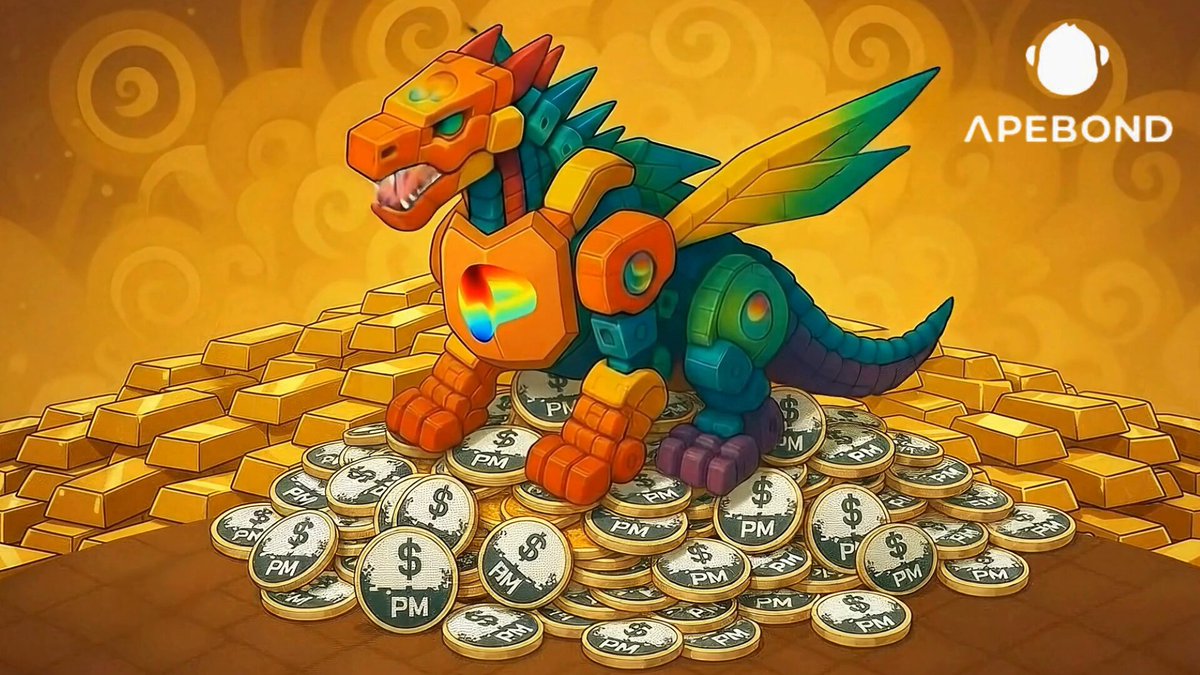 This Thursday December 18th, RAAC is officially launching its gold-backed stablecoin $pmUSD!
The launch is via a bond sale on Apebond, where $1M pmUSD will be available with a reward going from 2 to 5%!
This means: for every $1 USDT / USDC you deposit, you receive up to $1.05 pmUSD after the locking period. On top of that, this sale also marks the start of the RAAC points program, and participating in this sale will grant the biggest point multiplier of the program!
Finally, this sale is private for the RAAC Bots holder, the Llamas and the ApeBond premium users!
Follow RAAC on X for additional details!2025-12
This Thursday December 18th, RAAC is officially launching its gold-backed stablecoin $pmUSD!
The launch is via a bond sale on Apebond, where $1M pmUSD will be available with a reward going from 2 to 5%!
This means: for every $1 USDT / USDC you deposit, you receive up to $1.05 pmUSD after the locking period. On top of that, this sale also marks the start of the RAAC points program, and participating in this sale will grant the biggest point multiplier of the program!
Finally, this sale is private for the RAAC Bots holder, the Llamas and the ApeBond premium users!
Follow RAAC on X for additional details!2025-12 Sony's blockchain partner launches institutional-grade stablecoin as the default settlement currency for Ethereum layer-2 platform Soneium alongside a rewards program called STAR Points that incentivizes transactions through the Startale App. Stablecoin platform M0 is providing the underlying infrastructure for Startale USD (USDSC). The launch follows Japan's financial regulator approving a yen-stablecoin pilot from the country's three megabanks earlier this month.2025-12
Programmable loyalty scores have evolved into one of crypto’s most important building blocks, sitting between users and tokens as a sort of pre-asset scoreboard that decides who gets access, rewards, and future airdrops. In this explainer, we unpack how these “points” systems work, why they dominate the current cycle, and how to approach them with clear-eyed expectations rather than hype.
What are crypto points?
In the broadest sense, crypto points are numerical scores assigned to wallets or user accounts to measure activity, loyalty, or contribution to a protocol, platform, or ecosystem. They usually track what a user has done—traded, staked, bridged, played, or participated in governance—rather than what they hold in a transferable asset like a fungible token or NFT. In many designs, these scores are non-transferable and exist off-chain or in application databases, meaning they cannot simply be bought and sold like tokens on an open market. That separation gives project teams flexibility to experiment with incentives and retroactive rewards without immediately creating a liquid, regulated asset.
From a user’s point of view, points feel familiar: they resemble airline miles, credit-card rewards, or in-game experience points more than they resemble Bitcoin or Ether. A centralized exchange like Binance uses Binance Points to reward daily app usage and engagement, which users can later redeem for coupons and platform perks through a Rewards Hub. A DeFi protocol like Ondo uses Ondo Points to track and reward on-chain users who adopted products early and interacted with the ecosystem before its token distribution. A restaking platform like EigenLayer uses EigenLayer points as a measure of how much restaked collateral a user has contributed over time, measured in units like ETH-hours rather than token balances alone. In each case, the score is a way of encoding a narrative of participation, which the project can later translate into economic or governance rights.
Crucially, points have become the connective tissue between user behavior and airdrop eligibility in this cycle. Many of the biggest potential token launches—spanning restaking protocols, prediction markets, wallets, and new layer-2 networks—now run long-lived points programs that convert to a share of future tokens or give priority access to launchpad events. As a result, “points farming”—systematically completing tasks in pursuit of these scores—has become a dominant behavior pattern for power users and professional airdrop hunters. Whether one sees points as a fairer, more flexible alternative to ICOs and yield farming or as a new form of speculative grind depends on how these systems are designed and communicated.

Kraken unveils Ink Points with Season 1 rollout, marking major shift toward gamified trading and long-term user retention strategy

Ink crossed $500M TVL but daily active users dropped from 157K to 49K — that's a textbook capital-without-users divergence where whales park liquidity for the airdrop while retail bounces. Tydro alone holds ~$447M of that, roughly 89% concentration in a single Aave v3 fork, which makes the "ecosystem" framing generous. Points programs tied to Kraken accounts do solve the sybil problem better than most L2 airdrops, but the real test is whether anyone sticks around post-TGE or if this becomes another OP Stack ghost chain once the INK token hits the market and mercenary capital rotates out.
Why points took over this cycle
From ICOs and yield farming to “points meta”
The rise of points programs is inseparable from the industry’s previous experiments with ICOs, liquidity mining, and retroactive airdrops. During the 2017 ICO boom, teams sold tokens directly to the public, often before a working product existed, raising regulatory and investor-protection concerns. The 2020–2021 DeFi cycle shifted toward yield farming, where users earned tokens for providing liquidity or collateral, but that model still created immediately-tradable assets that could be dumped by mercenary farmers. Many projects struggled to balance the need for rapid user growth with the desire for long-term aligned communities.
In a widely discussed essay titled “Points Guard,” former BitMEX CEO Arthur Hayes argued that points represent a more flexible alternative to both ICOs and yield farming as a user acquisition and fundraising tool. Because points are not, by design, immediately tradable or explicitly financial instruments, teams can experiment with different earning rules and conversion ratios before committing to a fixed token distribution. Hayes described points programs as a kind of “pseudo-ICO” that lets founders gauge organic demand and community engagement before launching a fully liquid token, while also giving investors a way to participate in upside through future airdrops rather than up-front token sales. That framing has resonated across the industry and influenced how both centralized platforms and DeFi protocols structure their launches.
Crypto-specific media and analytics platforms have reinforced this trend by treating points as a core primitive of airdrop hunting. Research from CoinGecko notes that most large airdrop campaigns in the current cycle rely on a points system in which users accumulate scores by early testnet or mainnet use, liquidity provision, and social engagement, with points later converting to a share of the token airdrop. CoinMarketCap’s deep dive into crypto points farming echoes this picture, defining the practice as completing tasks or on-chain actions on Web3 protocols in order to farm points that may translate into future token rewards. In other words, the points meta has become the default funnel by which new projects bootstrap user bases and distribute ownership.
Fitting into a broader loyalty and gamification trend
Points also reflect a broader shift toward gamified loyalty in both Web2 and Web3. In traditional finance and consumer apps, points and rewards already shape user behavior: airline miles influence travel choices, credit card points shift spending, and “levels” in games keep players engaged. A Variant Fund analysis of the “points meta” emphasizes that Web3 projects are now borrowing these techniques at scale, turning loyalty programs into programmable systems that can directly target on-chain behaviors like liquidity provision or bridging. Crypto expands the design space because participation is often pseudonymous, composable, and measurable on-chain.
This pattern is especially visible in crypto gaming and quest platforms. Our newsroom’s coverage of YGG Play’s “Quest of the Day” series, for example, shows how players are encouraged to enroll via a Launchpad, jump into specific games like GIGACHADBAT or LOLLand, purchase in-game bundles, and then receive YGG Play Points that are automatically credited on a daily schedule. Similar structures appear in Startale’s Mini Apps Carnival on Soneium, where users complete quests across 17 mini apps to stack STAR Points that feed into a broader ecosystem incentive program. Even prediction markets and sports apps are adopting this model: Tria’s football campaigns reward users with Tria Points, while platforms like Predict.fun accumulate Predict Points based on market-making and trading behavior that can then be tied into major events like the $2M Predict Cup hosted via Binance Wallet.
In this context, points are not merely a transitional stage before a token launch; they are also a long-term loyalty layer in their own right. Binance’s general Rewards ecosystem illustrates this duality. The company runs a broad Binance Points loyalty program where users earn points by solving word puzzles, checking into the social feed, reading articles, and engaging with content, then redeem those points in the Rewards Hub for vouchers and other benefits. At the same time, it runs a more specialized Binance Alpha Points system tightly integrated with Binance Wallet and the Binance Alpha platform, where points directly gate access to token generation events, pre-TGE sales, and first-come airdrops of new listings like Sealcoin or o1 Exchange. Taken together, these examples show that points have become a flexible instrument that can serve both everyday retention and high-stakes capital formation.
Readers click points stories not for yield mechanics but for legitimacy signals — airdrops confirmed, contracts deployed, insider scandals, and legal opinions reveal an audience stress-testing whether points are real money or regulatory theater.
The mechanics of points programs
How users earn points
Although implementations differ, most crypto points programs revolve around a few familiar categories of activity: trading and volume, capital provision and staking, protocol usage and bridging, and social or off-chain tasks. On centralized exchanges, the emphasis often falls on trading and platform engagement. Binance’s general loyalty program, for instance, grants Binance Points when users complete daily word puzzles, check in to Binance Square, read a specified number of articles, and interact with posts, with weekly bonuses for consistent activity. These tasks are entirely off-chain but still linked to a user’s identity within the Binance platform, and the points can later be redeemed for discounts or vouchers through the Rewards Hub.
By contrast, Binance Alpha Points explicitly reward wallet-level asset holdings and trading volume in so-called Alpha tokens across both the Binance Exchange and Binance Wallet. The Alpha Points formula combines daily Balance Points, derived from the USD value of eligible assets in a user’s accounts, with Volume Points that scale with the dollar value of Alpha token purchases. Balance Points follow tiers, where holding between 100 and 1,000 USD in eligible assets yields one point per day, with higher tiers up to four points per day for larger balances. Volume Points follow a logarithmic pattern in which every doubling of purchase volume adds one additional point—for example, 2 USD in Alpha volume earns one point, 4 USD earns two points, 8 USD earns three, and so on. Binance also runs targeted campaigns, such as offering extra Alpha Points to users who complete specific swaps of Alpha tokens using a keyless wallet in the Binance Wallet Extension, reinforcing both wallet adoption and token liquidity.
Decentralized protocols use similar structures but generally emphasize on-chain behavior and capital commitment. EigenLayer’s points system measures participation as the time-integrated amount of tokens restaked, effectively computing an ETH-hours metric across a user’s positions. In practical terms, the longer and larger a user’s restaked balance, the more EigenLayer points they accumulate, regardless of which supported liquid staking token they hold. Liquid restaking token (LRT) providers built on EigenLayer mirror this logic: ether.fi’s loyalty points grant one point per day for every 0.001 ETH staked in its first season, with later seasons introducing multipliers, while Renzo’s ezPoints award one point per hour per ezETH held. This continuous accrual model closely aligns points with the security contribution users provide to the ecosystem.
Bridging and protocol usage are particularly important in layer-2 and infrastructure projects. The Blast network, for instance, incentivized users to bridge ETH or WETH to its L2 and hold assets like USDB, its native stablecoin, by issuing Blast Points that later converted into BLAST tokens. Users needed to bridge at least 0.05 ETH to start earning points, and early participants received a 10x points multiplier, while additional bonuses came from interacting with highlighted DApps and inviting friends. Social and referral components added yet another layer, where inviting others to the Blast Airdrop portal increased a user’s points by a percentage of the invitee’s points, in a structure reminiscent of classic referral programs.
Finally, many gaming and quest platforms emphasize specific in-app actions and in-game purchases. YGG Play’s quests typically require enrolling via its Launchpad, entering a featured game, and purchasing specific item bundles or passes, with YGG Play Points credited once the objectives are met. Similar logic underpins Startale’s Mini Apps Carnival, where each mini app on the Soneium network offers a tailored quest and associated STAR Points, effectively turning the entire ecosystem into a unified mission board where every app can host its own micro-incentive program. Prediction markets like Predict.fun tie their Predict Points to trading quality: users accumulate points by making markets around the mid-point between bids and asks and by maintaining conviction positions over time, turning the points tally into a proxy for liquidity provision and informed trading.
What points unlock: rewards, airdrops, and access
The value proposition of points emerges not when they are earned, but when they are redeemed. Redeemability takes several forms. At one end of the spectrum, points function purely as a loyalty currency that can be exchanged for platform perks. Binance’s general Points system fits this model: once users accumulate enough points, they can go to the Rewards Hub, choose items from the Rewards Shop, and redeem points for benefits such as vouchers, fee discounts, or promotional entries. In these designs, points have clear and stable “reward tables” akin to airline miles or retail rewards, and there may be no direct connection to token launches or governance.
At the other end, points serve as a pre-token allocation mechanism or eligibility score for airdrops and launch events. Blast Points directly converted into BLAST tokens, with accrual based on the amount and duration of assets bridged and used on the network. CoinGecko’s review of top upcoming airdrops emphasizes that many of the most anticipated distributions, including those rumored or announced for platforms like Polymarket, Backpack, MetaMask, and Base, allocate shares based on points that track early mainnet or testnet usage, liquidity provision, and social tasks. In these campaigns, points are rarely redeemable for fixed items; rather, they determine relative slices of a fixed token pool at the moment of launch.
Binance Alpha Points occupy a hybrid role, anchoring both ongoing campaigns and specific token events. The Alpha Points FAQ states that these scores are used to evaluate user activity across Binance Alpha and Binance Wallet, determining eligibility for campaigns such as token generation event participation and Alpha token airdrops. In practice, this has meant that users need a minimum Alpha Points balance to participate in pre-TGE Prime Sale editions hosted through Binance’s integrated Wallet interface, and that certain token airdrops—such as those for new listings like Sealcoin (QAIT) or o1 Exchange (O)—are claimable only by users who meet a points threshold and act within a limited time window. Campaign-specific tasks, such as completing a swap of Alpha tokens with a keyless wallet to earn extra Alpha Points, tie wallet product adoption directly into eligibility for future launch events.
DeFi protocols such as Ondo and RXUSD use points to build early adopter sets and shape governance or reward distribution. Ondo Points accumulate when users engage with the ecosystem’s early campaigns, and the foundation describes them as a way to reward community members and increase awareness of products across the Ondo ecosystem. When rewards for Ondo Points earned before a specified cutoff became claimable, it validated the widely held expectation that these points would turn into tangible benefits, even if the exact details had been discretionary up to that point. Similarly, the RXUSD Genesis Points Program allows users who register their wallets before mainnet launch to earn Genesis Points, which will convert into rewards within the RXUSD ecosystem, while also unlocking testnet access and early bonus points for pre-registration. Here, points function not just as a channel for economic upside but as a gatekeeping mechanism for testnet participation and “founding member” status.
Where points live: wallets, dashboards, and databases
Points complicate the usual story of on-chain ownership because they are often stored off-chain, even when they reflect on-chain actions. Many teams maintain points as entries in a centralized database tied to wallet addresses, updating them periodically based on on-chain snapshots or API feeds. EigenLayer’s points, for example, are computed as a time-integrated function of staked amounts, aggregating ETH-hours across all of a user’s deposits, and the system then compares each staker’s participation measure against the aggregate to determine restaked ratios. The resulting scores are displayed through project dashboards rather than encoded in tradable tokens. Blast’s airdrop portal similarly analyzed user wallets and displayed points balances and eligibility, but explicitly prevented transferring Blast Airdrop Points, emphasizing their nature as internal accounting rather than on-chain assets.
Wallets play an increasingly central role as both interfaces and incentive targets. Self-custodial wallets like MetaMask or WalletConnect-compatible clients are needed to bridge funds and interact with DeFi points programs such as Blast, EigenLayer, or RXUSD. Centralized app-based wallets like Binance Wallet integrate points directly into user flows, allowing people to trade, participate in prediction tournaments like the Predict Cup, and claim airdrops within a single interface, while their Alpha Points are calculated behind the scenes based on holdings and volume across exchange and wallet accounts. Our newsroom’s coverage of Binance Wallet-based events, including the $2M Predict Cup with 3,000,000 Predict Points on offer, illustrates how points reinforce that wallet as the gateway to both trading and campaign access.
Because points are scattered across many platforms, analytics and research groups have begun to track them as a distinct data layer. LlamaRisk, for instance, has published detailed breakdowns of EigenLayer and LRT points, explaining the formulas, accrual rates, and relative participation measures for protocols like ether.fi and Renzo. Market intelligence sites have also started to list “points tokens” where projects choose to tokenize their points as tradable assets. Coinbase, for example, tracks the price and supply of Leviathan Points (SQUID), noting a circulating supply of 25 million and a live market price with associated trading volume. This blurs the line between off-chain score and on-chain asset, raising new design and regulatory questions.
Kansai Electric's MOACT lets users swap NORM Points 1:1 for yen-backed JPYC on Polygon
Types of points programs across crypto
Centralized exchange loyalty and alpha programs
Centralized exchanges sit at the intersection of traditional loyalty marketing and crypto-native launch mechanics, making them a natural home for multi-layered points systems. Binance’s approach is instructive because it maintains at least two conceptually distinct programs. The general Binance Points scheme operates like a classic engagement-based loyalty program. Users earn points by solving daily word puzzles, checking in to the Binance Square social feed, reading a threshold number of articles, and interacting with posts, often with weekly bonus structures for consistent behavior. These points accrue in a dashboard and can be redeemed in the Rewards Hub for platform-specific benefits such as trading fee vouchers, trial funds, or participation in promotional events. The design targets everyday users and treats points as a kind of internal currency.
Binance Alpha Points, by contrast, target more advanced users who are active in the Binance Alpha and Binance Wallet ecosystems and interested in early-stage token opportunities. Alpha Points are calculated daily based on two components: Balance Points, which depend on the user’s total eligible asset holdings across exchange accounts and Binance Wallet, and Volume Points, which reflect the user’s trading volume in designated Alpha tokens. Balance Points use a tiered structure based on USD-equivalent asset balances, while Volume Points scale logarithmically with Alpha token purchase volume, adding one point for each doubling of trade size. The total score equals the sum of daily points over the past 15 days, creating a rolling horizon that rewards sustained activity rather than one-off spikes.
These Alpha Points directly influence eligibility for privileged events, including token generation events, pre-TGE Prime Sale subscriptions, and airdrop claims for tokens like Sealcoin (QAIT) and o1 Exchange (O), often on a first-come, first-served basis once trading opens. Special campaigns, such as offering extra Alpha Points to users who complete specific token swaps through the Binance Wallet Extension using a keyless wallet, align incentives for adopting new wallet features and trading pairs. In short, the general Binance Points program optimizes for retention and education, while Alpha Points optimize for capital formation and early access, even though both ultimately sit under the Binance brand.
DeFi and restaking points
In decentralized finance, points often serve as a way to reward users who take on smart contract or protocol risk before tokens exist or are widely distributed. EigenLayer’s points model exemplifies this pattern. The protocol allows users to “restake” ETH or liquid staking tokens to extend Ethereum’s security to additional services. To measure contributions, EigenLayer computes points as the time-integrated amount of tokens restaked, effectively calculating an ETH-hours score for each participant. Tokens are treated equivalently in the calculation, and a user’s restaked ratio reflects their share of the aggregate participation measure across all stakers. This abstraction allows EigenLayer to later use points as a basis for allocating tokens or other rewards in proportion to actual security contribution rather than crude snapshots.
Liquid restaking token providers built on EigenLayer layer their own points systems on top. Ether.fi’s loyalty points, for example, grant users a number of points per day based on how much ETH they have staked, with Season 1 offering one point per day for every 0.001 ETH and Season 2 introducing a 10x boost. Renzo’s ezPoints accrue on an hourly basis, with holders of the ezETH token earning one point per hour per token, tightly coupling loyalty metrics with the duration and size of user positions. Because these points often feed back into both the protocol’s own token distribution and any upstream EigenLayer-based rewards, they become multi-layered claims on future value, even though they are not themselves on-chain assets.
Other DeFi protocols use points to seed communities around specialized products. Ondo’s points campaigns aim to reward community members and increase awareness of products like tokenized treasuries or on-chain cash equivalents, with users earning Ondo Points through early campaigns and product usage. When the foundation opened claims for rewards tied to Ondo Points earned before April 1, 2026, it effectively closed the loop on the expectation that early participants would share in some form of retroactive benefit. Similarly, the RXUSD Genesis Points Program for a new stablecoin ecosystem allows users who pre-register and interact with the testnet to accumulate Genesis Points that will later convert into rewards within the RXUSD ecosystem, alongside bonuses for early participation and unique access codes that grant testnet and pre-launch privileges. In these cases, points blur into on-chain governance and economic rights, even though teams often emphasize that they do not guarantee specific token allocations.
Layer-2, infrastructure, and airdrop points
Layer-2 networks and infrastructure projects have embraced points as a central mechanism for orchestrating phased airdrops. Blast’s campaign provides one of the clearest templates. Users were encouraged to bridge ETH or WETH from Ethereum mainnet to Blast, where their assets would earn both native yield and Blast Points over time. The number of points accrued depended on the amount bridged and how long it remained on the network, with early bridgers receiving a 10x multiplier, reinforcing first-mover behavior. Users could further increase their points by holding USDB, Blast’s native stablecoin, and engaging with highlighted DApps on the network, while an invitation system allowed them to earn additional points based on the activity of friends they onboarded. Blast Airdrop Points were explicitly non-transferable, and the project warned users to rely only on official channels to avoid scammers, underscoring the sensitive role of points as representations of future value.
Analytics and research firms note that many of the most anticipated airdrops in the current cycle follow similar patterns, including protocols on emerging L2s, non-custodial wallets, and prediction markets. Users are often asked to use testnets or mainnets early, provide liquidity, complete on-chain tasks, and interact with community channels, with each action feeding into a points tally that will determine a share of the eventual token airdrop. For example, speculation around potential airdrops for platforms like Polymarket or Base often centers on how points might track user activity and how fairly they might translate into token allocations relative to whales and sybil farmers. Because these projects do not always commit to specific conversion ratios upfront, points remain a discretionary, yet highly salient, instrument for distributing ownership.
Firms like Jump Crypto, which build and invest in underlying blockchain infrastructure, often sit behind the scenes of such points-heavy ecosystems. Jump Crypto describes itself as a builder of open-source infrastructure and a provider of liquidity across major networks and protocols. While it typically does not operate the consumer-facing points programs directly, its infrastructure helps sustain the on-chain activity that those programs aim to incentivize, from L2 bridges to high-performance trading venues. In this sense, points can be seen as a user-interface layer on top of market-making and infrastructure that firms like Jump help provide, connecting low-level capital flows to high-level loyalty and governance narratives.
Gaming, quests, and prediction markets
In gaming and quest-based ecosystems, points take on a more overtly gamified character, blending progression systems with real or expected economic rewards. Our reporting on YGG Play’s Quest of the Day campaigns shows how each quest defines a concrete objective—such as buying a CHAD Pass in GIGACHADBAT, purchasing large premium bundles in LOLLandGame, upgrading pets in RagnarokBreaker, or triggering a specific “big win” event—and rewards completion with YGG Play Points credited at a regular daily time.[YGG newsroom coverage] These points can then feed into leaderboards, unlock access to additional features, or become criteria for any future token airdrops, effectively turning in-game spend and engagement into a quasi-financial reputation.
Startale’s Mini Apps Carnival similarly stitches together multiple mini apps across the Soneium network into a single campaign hub where users complete quests, accumulate STAR Points, and compete for a reward pool. The design mirrors traditional mobile game events but with a crypto-native twist: each mini app can introduce its own quest and reward structure, yet points are aggregated at the Startale App level, turning the app into a de facto Launchpad for ecosystem-wide incentives. Projects like Craft World on Ronin, which appear on Proof-of-Distribution leaderboards, show a related model where distribution seasons define how points convert into token rewards, as in Prophecy Points programs where top leaderboard participants share token allocations in periodic seasons.
Prediction markets and competition platforms add performance-based nuance. Predict.fun’s Predict Points reward users not merely for transacting but for making markets at the mid-point between the best bid and ask, holding positions with conviction, and keeping meaningful exposure across a broader set of markets. These points then power leaderboards and tournaments, such as massive prize pool events like the $2M Predict Cup accessible through Binance Wallet, where users compete for both USDT rewards and additional Predict Points. Sports-oriented platforms like Tria run seasonal events where users predict football matches and earn Tria Points that determine their share of a final prize pool, embedding points into familiar sporting narratives. In all of these cases, points encode both skill and activity, differentiating them from purely volume-based or spend-based loyalty programs.
Tokenized points and the Leviathan case
Although most points systems are designed as non-transferable scores, some projects choose to tokenize their points, effectively turning them into standard fungible tokens. Coinbase lists Leviathan Points (SQUID) as a tradable asset, noting a circulating supply of 25 million tokens and providing live price and volume data. Despite the name “Points,” SQUID behaves like any other ERC-20-style asset: users can buy, sell, and hold it, and its value fluctuates with market demand. Tokenizing points simplifies certain aspects of distribution and composability, allowing them to plug into DeFi primitives like liquidity pools and lending markets, but it also eliminates the flexibility and regulatory buffer that non-transferable points provide.
The Leviathan example highlights a key design choice for teams: whether to keep points as off-chain, non-transferable reputational metrics or to treat them as proto-tokens that will eventually circulate. Non-transferable points better capture true engagement and are harder to game through simple purchasing, but they require bespoke dashboards and cannot be easily integrated into third-party protocols. Tokenized points inherit the full complexity of token economics and regulation but can become deeply embedded in DeFi. Many teams now compromise by keeping points non-transferable during the bootstrapping phase and then mapping them to tradable tokens at launch, rather than tokenizing the points themselves.
- 01Native protocol points launches↗
Leviathan's own $SQUID airdrop and contract deployment drew the highest clicks, showing readers track first-mover eligibility windows obsessively.
- 02Points-to-token conversion↗
Kelp DAO tokenizing EigenLayer points into $KEP and HyperLiquid's final distribution before TGE captured readers hungry for the moment points become liquid assets.
- 03Points inflation and sustainability doubts↗
The 40 billion points issuance story and Leviathan's satirical 960 billion self-issue reflected reader anxiety that points are dilutive and worthless by design.
- 04Gamified quest and program launches↗
Convergence, Rabby Season 2, Sonic Labs, and Ostium launches show readers actively hunting new earning opportunities across ecosystems.
- 05Points replacing compensation↗
The tech company salary-for-points story and crypto lawyers' opinions signal readers questioning the legal and financial legitimacy of points as value instruments.
- 06Insider premining and scandal
The Leviathan insider premine story shows readers are alert to fairness failures and insider capture in points distribution.
Comparing major points designs
To clarify how different approaches fit together, it is helpful to contrast a few representative programs along dimensions such as operator, earning mechanics, and what points actually unlock.
| Program | Operator / Domain | How you earn points | What points unlock | Transferable? |
|---|---|---|---|---|
| Binance Points | Binance (CeFi loyalty) | Daily puzzles, Square check-ins, reading and engaging with content on Binance Square | Rewards Hub vouchers, promotions, internal perks | No (off-chain score) |
| Binance Alpha Points | Binance Alpha / Wallet | Asset balances across accounts, Alpha token trading volume, campaign-specific tasks | Eligibility for TGEs, pre-TGE sales, Alpha airdrops, token claim events | No (off-chain score) |
| EigenLayer Points | EigenLayer (restaking) | Time-integrated amount of restaked ETH and LSTs (ETH-hours) | Basis for future rewards and governance allocation (discretionary) | No (off-chain score) |
| Blast Points | Blast L2 | Bridging ETH/WETH to Blast, holding USDB, DApp usage, referrals | Conversion into BLAST tokens via airdrop portal | No (non-transferable) |
| Ondo Points | Ondo ecosystem | Participation in Ondo product campaigns and usage | Retroactive rewards for early participants once claims open | No (off-chain score) |
| RXUSD Genesis Points | RXUSD ecosystem | Wallet pre-registration, testnet usage, early campaign participation | Future RXUSD ecosystem rewards, testnet access, early bonuses | No (off-chain score) |
| Leviathan Points (SQUID) | Leviathan | Purchase or earn in-project; then trade on exchanges | Market-determined; tradable token with speculative value | Yes (tradable token) |
| Predict Points | Predict.fun / Predict Cup | Market making at mid-point, holding positions, trading across markets | Leaderboard status, access to competitions, additional reward pools | No (off-chain score) |
| YGG Play Points | YGG Play | Completing game quests via Launchpad and in-game purchases (bundles, passes) | Leaderboards, potential future token or ecosystem benefits, access to new quests | No (off-chain score) |
| STAR Points | Startale / Soneium mini apps | Completing quests across multiple mini apps during campaigns | Reward pools, ecosystem incentives, potential future allocations | No (off-chain score) |
While details differ, a few patterns stand out. Centralized platforms emphasize engagement and trading, DeFi protocols emphasize capital provision and risk-bearing, gaming and prediction apps emphasize performance and in-app actions, and only a minority of projects tokenize their points from the outset. For users, this diversity means that not all points are created equal; evaluating their potential value requires careful attention to the underlying mechanics and the operator’s track record.
The Solana VM-based Layer 1 ditched its planned presale, choosing to airdrop tokens instead to reward early users and points farmers ahead of its January mainnet launch.

"“The original goal of the presale was broad distribution to the current users and loyalists, but we determined there are better ways to do that while we focus on the launch of public mainnet,” Fogo Foundation Director Robert Sagurton told The Block in a direct message. Fogo will now instead airdrop that 2% allocation, a project representative confirmed in a message to The Block. "
Design considerations and best practices
Aligning points with protocol goals
Well-designed points programs start from clear objectives. Variant’s analysis of the points meta argues that the most effective systems borrow from web2 loyalty best practices: they reward behaviors that genuinely improve the product, they segment users rather than treating all engagement as equal, and they avoid making points too abundant or too opaque. In Web3, that translates into rewarding behaviors like providing deep, long-term liquidity rather than just wash-trading volume, using the protocol in realistic ways rather than spamming transactions, and contributing to security or governance rather than low-value social tasks.
EigenLayer’s ETH-hours metric illustrates how a points system can tightly align with a protocol’s core goal, which is to secure additional services by locking up restaked collateral. By basing points on the time-integrated amount of tokens restaked, the system ensures that users who commit large amounts of capital for long periods are recognized, while discouraging short-term in-and-out behavior that does little to enhance security. Similarly, Predict Points encourage market quality by rewarding users who quote near the mid-point and hold meaningful positions, which improves liquidity and price discovery instead of just inflating total volume. These examples contrast with poorly aligned systems where points simply mirror raw transaction counts, inviting spam.
Borrowing from Web2 loyalty without copying it
Web2 loyalty programs offer decades of experimentation with points but also cautionary tales. Airlines and credit card companies have frequently devalued points, changed earning rules, and introduced complex tier structures, sometimes eroding user trust. Variant’s research suggests that Web3 teams should cross-pollinate best practices rather than blindly copying web2 models. That means prioritizing transparent and stable earning rules, communicating how and when points might convert into rewards, and avoiding sudden, retroactive changes that make users feel rugged.
At the same time, Web3 allows for more programmability and composability than traditional systems. Points can be updated based on on-chain data, integrated into DAO governance, and potentially bridged across ecosystems. Startale’s approach, where multiple mini apps each host their own quests but report STAR Points to a shared hub, exemplifies this composable design. YGG Play’s integration of game-specific purchases into a unified points and Launchpad framework shows how multiple games can piggyback on a shared quest infrastructure, reducing friction for both developers and players. The challenge is to maintain clarity so users understand how their activity in one corner of an ecosystem translates into points and privileges in another.
Fairness, whales, and Sybil resistance
Points systems sit on the fault line between broad community participation and whale dominance. If points scale linearly with capital or volume, large players can easily overshadow smaller users, turning points programs into de facto private sales. EigenLayer’s use of ETH-hours, while economically rational, still disproportionately rewards large restakers, and LRT loyalty points similarly favor those who can stake more ETH for longer. On centralized platforms, volume-based scoring can encourage wash trading and bot activity unless carefully monitored. Binance’s Alpha Points attempt to mitigate some of these effects by using a rolling 15-day window and tiered balance bands, but the fundamental tension between whales and smaller participants remains.
Sybil resistance is the mirror image problem: if points are too easy to earn across multiple wallets, farmers can split their activity to claim outsized shares of future airdrops. Many projects attempt to counter this through on-chain heuristics, IP or device-level checks, or by linking points to off-chain identity signals, but effective Sybil resistance remains a hard problem. Blast, for example, restricted Blast Airdrop Points transferability and relied on invite codes and official portals to limit some vectors of abuse, while also warning users to avoid unofficial links and phishing attempts. Projects that do not invest in Sybil defenses risk concentrating rewards in the hands of organized farming operations, which can undermine the intended community-building goal.
Transparency and expectation management
One of the most contentious aspects of points programs is the gray area between loyalty score and financial claim. Many teams explicitly state that points have no monetary value and do not guarantee any token or reward, yet they simultaneously market points campaigns as ways to participate in future upside. CoinMarketCap notes that points farming is often pursued by users who hope their points will convert into valuable airdrops, even though that outcome is never fully certain. CoinGecko similarly emphasizes that points accumulate toward a likely, but not contractually guaranteed, share of upcoming airdrops. This ambiguity can become a source of frustration if users feel that conversion ratios are unfair or that undisclosed criteria override raw points balances.
Best practices therefore include setting realistic expectations, documenting how points are calculated, and, where possible, sharing at least the broad contours of how they will map to rewards. When Ondo opened claims for rewards tied to Ondo Points accrued before a known cutoff date, it gave early participants a clear endpoint and retroactively validated their efforts. RXUSD’s Genesis program spells out that Genesis Points will convert into rewards within the ecosystem and that early registrants receive specific bonus allocations, even if the exact token mechanics remain flexible. By contrast, projects that remain entirely vague about points usage until the last moment, or that retroactively change the rules, risk reputational damage.
EigenLayer LRT points programs proliferate
- 2024-02launch
Napier Finance Llama Race launch announced for April 10
Ether.fi opens eETH minting with EigenLayer points rewards
- 2024-04governance
Napier suspends Llama Race due to v1 technical difficulties
Mass validator slashing hits Allnodes, SSV, StakeFi
Kelp DAO tokenizes EigenLayer points into $KEP, $340M market created
- 2024-12milestone
HyperLiquid final points distribution before TGE
Leviathan $SQUID contract deployed to Fraxtal; first airdrop goes live
Risks and trade-offs for users
Uncertain rewards and opportunity cost
From a user perspective, the primary risk of points farming is uncertainty. CoinMarketCap’s analysis highlights that while points programs can be lucrative for early participants in successful projects, many campaigns either never launch a token, allocate only a small share of supply to points-based airdrops, or fragment rewards across so many users that individual payouts are negligible. Because points are typically non-transferable and cannot be directly monetized, the only way to realize value is for the project to convert them into tokens or other rewards on terms that remain largely at the team’s discretion.
This leads to a clear opportunity cost: time, gas fees, and capital deployed in pursuit of points could have been used elsewhere. In campaigns like Blast’s, users needed to bridge and lock up ETH on a new L2 for extended periods to maximize points, exposing themselves to smart contract and bridge risks as well as foregone yield elsewhere. In restaking systems like EigenLayer and LRT platforms, users accept the additional risk that new protocols built on top of restaked ETH might fail, all while relying on the expectation that points will translate into generous token allocations. For many participants, points farming has become a probabilistic investment of effort and risk into a portfolio of potential future airdrops, with no guarantee that the eventual rewards will justify the cost.
Smart contract, custodial, and bridge risks
Points programs often require users to interact with new smart contracts, bridges, or custodial platforms they might otherwise avoid. Blast’s airdrop, for instance, required bridging assets to a brand-new L2, setting up RPC connections in wallets such as MetaMask, and using DApps that might not yet have extensive security audits. Similarly, EigenLayer’s restaking model adds another layer of smart contract risk on top of existing staking protocols, while LRTs introduce complexities around redemption and slashing, all of which users accept in pursuit of points and future tokens.
Centralized platforms bring different risks. While Binance is a well-established exchange, accumulating points there still requires users to custody assets, trade, and link account activity to an identity that can be affected by regulatory changes or account freezes. Alpha Points campaigns that require specific wallet upgrades or keyless wallet usage depend on the security of those wallet implementations and the integrity of the exchange’s internal accounting. In both CeFi and DeFi contexts, users need to weigh whether the incremental prospect of points-based rewards justifies exposing assets to new attack surfaces or custodial arrangements.
Economic concentration and social dynamics
Points can also shape the social dynamics of crypto communities. Systems that heavily reward large capital commitments or high-frequency trading can reinforce perceptions that early access and airdrops are primarily for whales and insiders. Restaking points and LRT loyalty systems are particularly prone to this effect, since they naturally favor users who can stake large amounts of ETH for long periods. Conversely, points programs built around high-friction or expensive tasks—such as large in-game purchases in quest platforms—may skew participation toward users who can afford to spend more, even if the underlying games are nominally free-to-play.
On the other hand, points can also empower smaller users when designed with skill or activity-weighted metrics. Predict Points, for example, reward strategic market making and conviction rather than simple volume, potentially allowing smaller but savvy traders to climb leaderboards and access tournaments. YGG Play’s quest design encourages consistent, focused engagement rather than raw spending alone, rewarding players for completing specific objectives in featured games. The social narrative around points—leaderboards, seasonal resets, and community recognition—can be as important as the eventual financial rewards in determining whether users view a program as inclusive or extractive.
Legal and regulatory gray zones
Points occupy an uncertain regulatory space. Because they are typically non-transferable, lack explicit claims on cash flows or governance, and are framed as loyalty or engagement metrics, they often fall outside the traditional definitions of securities or commodities. Arthur Hayes argues that this makes points a more flexible and arguably safer alternative to ICOs or yield farming from a regulatory perspective, since teams can observe user behavior before deciding how, or whether, to map points to tokens. However, that flexibility cuts both ways: regulators may eventually look through points programs if they appear to be de facto fundraising tools that promise future token allocations to participants.
Projects often attempt to mitigate this risk by emphasizing in documentation that points have no monetary value, cannot be sold, and do not guarantee any particular reward, even as marketing materials and community narratives highlight the likelihood of airdrops or token launches. The line between a loyalty program and a pre-sale can become blurry when points provide the primary path to obtaining scarce tokens at launch. While this explainer cannot provide legal advice, it is clear that both users and projects benefit from conservative expectations and careful language, especially as regulators around the world continue to refine their approaches to crypto assets and related incentives.
Points contracts like Leviathan's $SQUID on Fraxtal and Kelp DAO's tokenized EigenLayer points introduce fresh attack surfaces at deployment; Napier's Llama Race was suspended due to technical implementation failures.
Points allocation rules are set unilaterally by project teams with no on-chain enforcement, enabling insider premine scandals and opaque multiplier schemes as seen across multiple launched programs.
Crypto lawyers are actively debating whether points constitute securities or wages, and the salary-for-points model at tech companies heightens regulatory scrutiny of points as compensation instruments.
Kelp DAO's $KEP launched a $340M market but at $0.17 per token, illustrating that tokenized points face severe price discovery risk and thin liquidity at launch.
The September mass slashing event affecting Allnodes, SSV, and StakeFi validators demonstrates that LRT-backed points programs carry downstream slashing exposure that can erode the collateral underpinning yield and points.
With 40 billion points issued across crypto projects, inflation risk is structural; there is no mechanism preventing projects from issuing unlimited points, undermining redemption value at token generation events.
How to approach points farming as a user
Building a personal framework
Given the proliferation of points programs, users benefit from a structured framework for deciding where to allocate their time and capital. CoinMarketCap argues that the key question is whether points farming is “pointless or worth it,” highlighting that the answer depends on the quality of the project, the clarity of the points rules, and the scale of potential rewards relative to effort. CoinGecko’s overview of upcoming airdrops reinforces that many of the most promising opportunities require meaningful engagement—using testnet or mainnet early, providing liquidity, and completing on-chain tasks—rather than simply clicking through social bounties. A sensible framework therefore weighs not only the nominal earning rate of points but also the fundamentals of the protocol or platform.
One way to think about this is to distinguish between loyalty points and pre-token points. Loyalty points, such as Binance’s general Points program, often have clearly defined redemption options and are tied to ongoing platform use. Pre-token points, such as EigenLayer points, Blast Points, or Genesis programs like RXUSD’s, are primarily pathways to future token allocations with uncertain terms. Users may reasonably assign higher speculative value to pre-token points in credible, well-funded protocols, but they should also assign higher risk and be cautious about overcommitting capital or effort. Assessing the team’s track record, investor backing, security practices, and community sentiment can help filter out lower-quality campaigns.
Evaluating specific programs: CeFi vs DeFi vs gaming
Different points ecosystems carry distinct risk and reward profiles. On centralized platforms like Binance, points are relatively straightforward to earn and redeem, and users may already be trading or holding assets there regardless of points incentives. The incremental cost of participating in a Binance Alpha Points campaign, for example, might be simply upgrading a wallet extension, completing a qualifying swap, or maintaining a certain asset balance. In return, users might gain eligibility for pre-TGE sales hosted directly in the Binance Wallet interface or preferential access to airdrops of high-profile tokens. The trade-off is trust in the centralized operator and exposure to regulatory changes affecting the platform.
In DeFi and infrastructure, points often demand more specialized actions and deeper familiarity with on-chain tools. Participating in EigenLayer or LRT loyalty programs requires staking or restaking ETH, understanding the additional risks of new contracts, and potentially managing complex positions across multiple protocols. Joining a Blast-style airdrop program may involve bridging funds to a new L2, configuring RPC settings in MetaMask or other EVM wallets, and carefully verifying URLs to avoid phishing. Genesis-style programs like RXUSD’s are somewhat lighter-touch, focusing on wallet registration and testnet usage, but still require users to manage self-custodial wallets securely. In these contexts, the main risk is operational: mistakes in wallet management or contract interactions can result in permanent loss.
Gaming and quest-based points, such as YGG Play Points or STAR Points, often demand smaller financial commitments but higher ongoing engagement. Quests may require specific in-game purchases, but the cost is typically bounded, and the primary investment is time spent playing and completing objectives. For players who enjoy the underlying games, points can feel like a bonus overlay; for those purely motivated by airdrops, the grind may not be worthwhile unless the project clearly signals a generous conversion to tokens or other rewards. In all segments, the presence of well-designed wallets—whether centralized like Binance Wallet or self-custodial like MetaMask—makes the difference between a smooth experience and an error-prone one.
Record-keeping, taxes, and long-term thinking
Although points themselves are often non-monetary, record-keeping becomes important once they convert into tokens or other financial rewards. When Blast Points turned into BLAST tokens, or when Ondo Points claims opened, users effectively received income that might be taxable depending on jurisdiction. The same applies when Binance Alpha Points lead to airdropped tokens or preferential TGE allocations, or when gaming points convert into tradeable assets. Keeping track of which campaigns one participated in, what actions were taken, and when rewards were received can simplify future reporting and personal performance analysis, even if formal tax advice is beyond the scope of this article.
Long-term, users may wish to view points as options rather than guaranteed payouts: they represent a probabilistic claim on future rewards whose value depends on both the protocol’s success and the generosity of its distribution. Spreading effort across several high-quality programs, rather than concentrating entirely on a single speculative campaign, can manage risk in much the same way that diversifying an investment portfolio does. At the same time, users should be wary of burnout; the marginal benefit of chasing every minor points campaign is unlikely to compensate for the time and attention diverted from more productive activities or from simply using crypto in ways that are intrinsically valuable.
Outlook
Points have emerged as a defining feature of this market cycle, bridging the gap between raw on-chain activity and formal token ownership. From Binance’s dual-layer points ecosystem to EigenLayer’s restaking scores, from Blast’s bridging incentives to game-centric quests on YGG Play and Startale, points now shape who gets early access, who shares in airdrops, and how wallets become gateways into complex ecosystems. They have proven to be a flexible tool for teams to experiment with incentive design while deferring some of the regulatory and economic constraints of token launches.
Looking ahead, the points meta is likely to evolve along several axes. On one side, we can expect more professionalization, with specialized analytics, risk frameworks, and perhaps even reputation layers that aggregate points across protocols into richer user profiles. On another, we may see regulatory and community pushback if points are perceived as opaque or exploitative, especially when conversion terms are unclear or distributions favor insiders. Infrastructure builders like Jump Crypto will continue to provide the underlying rails, while wallets and launchpads will increasingly compete on how seamlessly they integrate multi-protocol points into a single user experience. For now, the most prudent stance for users is to treat points as powerful but uncertain instruments—worth understanding deeply, engaging with selectively, and approaching with the same critical thinking applied to any other crypto asset or incentive.
Latest Points news
Kraken unveils Ink Points with Season 1 rollout, marking major shift toward gamified trading and long-term user retention strategyKansai Electric's MOACT lets users swap NORM Points 1:1 for yen-backed JPYC on PolygonThe Solana VM-based Layer 1 ditched its planned presale, choosing to airdrop tokens instead to reward early users and points farmers ahead of its January mainnet launch.Pineapple Financial starts migrating its $10B mortgage portfolio onchain via Injective. The Canadian fintech has already put data tied to about $412 million in funded mortgages onchain, and aims to migrate more than 29,000 loans over time. Each tokenized mortgage record includes more than 500 data points and will underpin a permissioned data marketplace and a planned product offering onchain mortgage-backed yields.This Thursday December 18th, RAAC is officially launching its gold-backed stablecoin $pmUSD!
The launch is via a bond sale on Apebond, where $1M pmUSD will be available with a reward going from 2 to 5%!
This means: for every $1 USDT / USDC you deposit, you receive up to $1.05 pmUSD after the locking period. On top of that, this sale also marks the start of the RAAC points program, and participating in this sale will grant the biggest point multiplier of the program!
Finally, this sale is private for the RAAC Bots holder, the Llamas and the ApeBond premium users!
Follow RAAC on X for additional details!Sony's blockchain partner launches institutional-grade stablecoin as the default settlement currency for Ethereum layer-2 platform Soneium alongside a rewards program called STAR Points that incentivizes transactions through the Startale App. Stablecoin platform M0 is providing the underlying infrastructure for Startale USD (USDSC). The launch follows Japan's financial regulator approving a yen-stablecoin pilot from the country's three megabanks earlier this month.Sources
20 records from 13 domains
variant.fund
coinmarketcap.com
binance.com
x.com
startale.com
coinbase.com
tradingview.com
symbiosis.finance
llamarisk.com
coingecko.com
ondo.foundation
predict.fun
jumpcrypto.com
Community notes
Spot something off or out of date? Drop a note. Editors review topic notes daily and roll accepted fixes into the explainer — contributors are recognized in the monthly $SQUID drop.
Loading notes…
Help improve this topic
Have a story or tip about this topic? Submit it. See something missing? Leave a note. Editors review daily; accepted submissions and fixes count toward the monthly $SQUID drop.