
A crypto exchange is where digital assets are bought, sold, and traded. This explainer covers CEX vs DEX models, custody risk, derivatives, regulation, and how to evaluate a venue — from Mt. Gox to Binance and Coinbase today.
+78 sources across the wider coverage universe
 Coinbase aims to become Canada's "everything exchange," pushing into derivatives, tokenized assets, and DeFi while calling for permanent crypto regulations2026-07
 Nigeria's first SEC-licensed exchange Quidax expands stablecoin payment infrastructure to 21 countries, aims to make cross-border payments faster and cheaper for businesses.2026-07
 South Korean lawmakers propose letting regulators request crypto exchange account freezes over illicit transfers2026-07
 Crypto exchange Luno is cutting 20% of its workforce as automation reshapes operations and weaker retail trading volumes pressure the DCG-owned platform2026-07
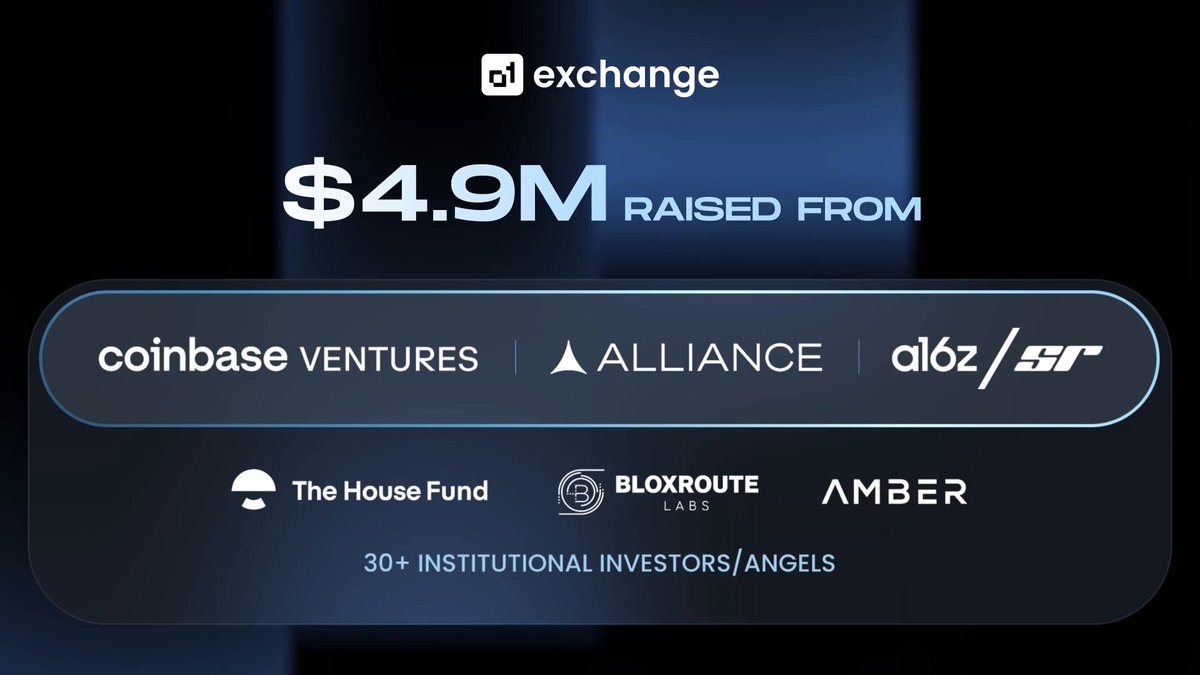 o1.exchange secures $4.8m seed from Coinbase Ventures and a16z to bring AI trading terminal to Base.2026-06
 Tether, Nairobi Securities Exchange sign pact to explore tokenized securities and instant settlement via Hadron2026-07
A crypto exchange is a platform where users buy, sell, and trade digital assets — the central infrastructure layer that converts cryptocurrency from a theoretical asset class into a liquid, accessible market.
Exchanges sit at the intersection of every major force shaping digital finance: regulatory pressure, institutional capital, retail speculation, and technical innovation. Understanding how they work — and where they fail — is foundational knowledge for anyone operating in crypto markets.
What Exchanges Actually Do
At their core, exchanges perform three functions: price discovery, order matching, and custody (or, in the decentralized case, custody abstraction). A centralized exchange (CEX) like Binance or Coinbase holds user funds in pooled wallets, operates an internal order book, and matches buyers with sellers. A decentralized exchange (DEX) like Aerodrome or Uniswap executes trades through smart contracts, with users retaining control of their private keys throughout.
The distinction matters enormously in practice. CEXs offer faster execution, fiat on-ramps, and richer product suites. DEXs offer non-custodial settlement and censorship resistance, but require users to manage wallets and pay gas fees on every interaction.

Bitget begins phased withdrawal resumption after $388M exploit as the exchange restores assets across networks
The Order Book and How Prices Form
Traditional exchanges — crypto and otherwise — rely on limit order books: a real-time record of every outstanding buy (bid) and sell (ask) order at each price level. When a buyer's bid meets a seller's ask, a match occurs and the trade settles.
Coinbase's recent adjustment to INDEX-USD quote increments — tightening price precision from $0.01 to $0.0001 — illustrates how even minor order book parameters shape market quality. Tighter increments allow more granular price discovery and reduce the spread cost for traders, particularly in lower-liquidity markets.
Cboe Exchange's parallel work on Bitcoin U.S. ETF Index Options (CBTX and MBTX) transaction fee structures, and Cboe EDGX's proposal to allow intermarket sweep orders as non-displayed orders, show that the regulatory and technical scaffolding of exchange infrastructure is perpetually evolving — even in traditional finance venues now integrating Bitcoin exposure.
Readers' clicks reveal they treat exchanges not as neutral trading infrastructure but as geopolitical actors — the dominant signal is who exchanges enable, who licenses them, and who is buying them, not what they trade.
Centralized Exchanges: Scale, Trust, and Risk
Binance remains the world's largest crypto exchange by trading volume and user count. Its 43rd Proof of Reserves report, with a June 1, 2026 snapshot, showed user Bitcoin holdings at approximately 630,000 BTC — up roughly 25,800 BTC from the prior month. Proof of Reserves (PoR) reports are cryptographic attestations that an exchange holds sufficient assets to cover user balances, a mechanism that gained urgency after the FTX collapse in 2022.
Yet scale and transparency do not guarantee regulatory acceptance. Binance is facing rejection of its MiCA (Markets in Crypto-Assets) license application in the EU, with Greece's regulator expected to deny the application by end-June 2026, effectively blocking Binance from operating legally across the bloc from July 1 onward. Binance disputes the finding, asserting it met all requirements. The episode underscores a persistent tension: exchanges that grew to global scale under permissive or absent regulation now face fragmented, sometimes contradictory compliance demands across jurisdictions.
Singapore's Monetary Authority (MAS) placed Bybit on its investor alert list after the exchange continued operating without a local license — another data point in the same pattern.
Coinbase, by contrast, has leaned into regulatory engagement as a competitive moat. Its announcement of an AI-powered, SEC-registered investment advisor, alongside plans for tokenized stocks for non-U.S. users, unified global liquidity across spot and derivatives, and options trading, signals an ambition to become what the company calls an "Everything Exchange" — a single venue for equities, derivatives, crypto, and yield products. The RE-USD and O-USD trading pairs entering different trading modes on Coinbase Exchange in quick succession illustrate the continuous operational work behind that expansion.
The Mt. Gox Lesson: Custody Is the Critical Failure Mode
In June 2011, a hacker used a single stolen auditor password to crash Bitcoin's price on Mt. Gox from $17 to $0.01 in minutes. The exchange rolled back every transaction. Days before that incident, the entire Mt. Gox user database had appeared for sale on Pastebin. The episode was crypto's first major lesson in exchange counterparty risk: when an exchange holds your funds, its operational security is your security.
Mt. Gox eventually processed roughly 70% of all Bitcoin transactions globally before it collapsed entirely in 2014, losing approximately 850,000 BTC. The custodial model — where exchanges hold private keys on users' behalf — remains the dominant design because it enables user experience comparable to traditional brokerages. But it concentrates risk.
Every major exchange hack, from Bitfinex in 2016 to FTX in 2022, traces back to either key management failures, internal fraud, or both. Proof of Reserves, multi-party computation (MPC) custody, and on-chain attestations are the industry's current best answers, but none fully eliminates the trust assumption embedded in a custodial model.
OnRe expands ONyc liquidity infrastructure with Titan Exchange integration to improve RWA execution across DeFi

Decentralized Exchanges and the Liquidity Problem
DEXs solve custody risk by eliminating it: trades settle on-chain between user wallets, with smart contracts acting as the counterparty. Automated market makers (AMMs) like those pioneered by Uniswap replaced order books with liquidity pools — reserves of two assets whose ratio determines price via a constant-product formula (x × y = k).
Aerodrome, a major AMM on the Base blockchain (Coinbase's L2 network), is now expanding to Ethereum mainnet. Analysts note the expansion could transform AERO into cross-chain exchange infrastructure, but flag that sustainable growth depends on reducing subsidy-driven liquidity — a perennial DEX challenge where high token emissions attract mercenary capital that exits when yields compress.
Cross-exchange funding rate arbitrage represents a more sophisticated use of this infrastructure. Platforms like Boros facilitate fixed-yield strategies by capturing the spread between funding rates on different perpetual futures exchanges — a repeatable, market-neutral return that can reach claimed annualized yields of up to 30%, though actual returns depend heavily on capital deployment timing and rate regime.
- 01Sanctions exposure via exchange allies
The Iran/World Liberty story drew 2x more clicks than any other headline, signaling readers want accountability for who enabled flows through industry relationships, not just the mechanics of the sanction breach.
- 02Asian exchange consolidation race
OKX's Coinone stake, Korean institutions racing to lock up exchange infrastructure, and regulatory walls around South Korea's market pulled readers tracking who controls Asia's crypto on-ramps before regulation closes the window.
- 03Tokenized stocks on exchange rails
Backpack's regulated perpetuals, Coinbase's 'Everything Exchange', Binance bStocks, and MEXC's zero-fee stock trading collectively show readers are watching exchanges colonize traditional equities infrastructure.
- 04Regulatory licensing battles
Binance's MiCA rejection in Greece, the Philippines central bank denial, MAS alerting on Bybit, and Aave's FCA approval show readers tracking which exchanges survive the licensing gauntlet and which get blocked from major markets.
- 05AI inside exchange operations
Binance's 10x workforce efficiency claim, MNX's AI-valuation futures, and China's AI token hedging on Shanghai exchange pulled readers watching AI transform both how exchanges run and what they list.
- 06ETF and institutional product wrapping
VanEck's BNB ETF, Bitwise's HYPE ETF pitch, and Grayscale's Canton S-1 show readers tracking how exchanges get repackaged into regulated instruments that institutional capital can hold.
Derivatives Exchanges: The Fastest-Growing Segment
Perpetual futures — contracts with no expiry date that track spot prices via a funding rate mechanism — now account for the majority of crypto trading volume globally. Their appeal is straightforward: leverage, short exposure, and 24/7 markets without the complexity of contract rolls.
The derivatives segment is attracting new entrants with institutional backing. Satori Finance, a Coinbase-backed crypto perps exchange, announced it is shutting down — a reminder that even well-funded venues face execution risk in a crowded market. Simultaneously, the son of New York Senator Kirsten Gillibrand raised $30 million to launch a new derivatives exchange, reflecting continued institutional confidence in the segment despite recent failures.
Cboe's ongoing fee structure work on Bitcoin ETF index options (CBTX/MBTX) situates these products at the convergence of traditional finance derivatives infrastructure and crypto — a space that has expanded rapidly since the SEC approved spot Bitcoin ETFs in January 2024.
Regional Exchanges and Market Dynamics
South Korean exchanges Upbit and Bithumb consistently rank among the world's highest-volume venues relative to their domestic market size. Upbit recently listed PEAQ, LIT, KMNO, MORPHO, GRAM, LDO, PAXG, OSMO, and AMP across its BTC and USDT markets, while both exchanges added SPX6900 — illustrating how regional venues drive liquidity for mid- and small-cap tokens that major global exchanges haven't yet listed.
South Korea's "kimchi premium" — the historical tendency for crypto prices to trade higher on Korean exchanges than globally — reflects capital controls and local demand dynamics that make regional exchange behavior a useful market signal.
BTCC's announcement of zero fees across all trading layers represents a different competitive strategy: fee compression as a user acquisition tool. While zero-fee models have precedent in equity trading (Robinhood, Webull), sustaining them in crypto requires either high volume to capture spread, or ancillary revenue from lending, staking, or data products.
BitMEX officially ends exchange operations on Sept. 23, urges users to withdraw funds as fees now apply

Exchanges and Geopolitics
Iran represents one of the starkest cases of how geopolitical pressure shapes exchange access. U.S. sanctions prohibit American exchanges — including Coinbase and Binance's U.S. entity — from serving Iranian users. Iranians have historically accessed Bitcoin and other crypto assets through peer-to-peer markets and non-KYC exchanges precisely because sanctioned populations cannot use regulated venues.
This dynamic plays out across multiple jurisdictions: Nigeria, Russia, and Argentina all have large P2P crypto markets partly as a function of exchange access restrictions or currency controls. The persistence of P2P as a dominant channel in stablecoin payments — even as app-based stablecoin products proliferate — reflects user preference for exchange rates over convenience when formal channels are inaccessible or unfavorable.
Exchanges that seek global licenses must navigate these restrictions explicitly. The Binance MiCA rejection and the MAS alert on Bybit both demonstrate that regulatory fragmentation is accelerating, not consolidating — forcing exchanges to make hard choices about which markets to serve.
- 2026-05milestone
Kraken named FIFA World Cup 2026 official crypto exchange partner
- 2026-05launch
VanEck launches first US spot BNB ETF
- 2026-05launch
Coinbase unveils 'Everything Exchange' vision with tokenized stocks and AI advisor
- 2026-06launch
Binance bStocks tokenized securities launched with 24/7 trading
- 2026-06milestone
OKX acquires $53M stake in South Korea's Coinone exchange
- 2026-06regulatory
Greece's regulator set to reject Binance MiCA application, blocking EU operations from July 1
- 2026-06regulatory
Philippines central bank rules Binance and local partner unlicensed
- 2026-06regulatory
Trump-backed World Liberty allies linked to $2.3B in Iran exchange flows reported
Investment in Exchange Infrastructure
Exchange tokens — native assets issued by centralized exchanges (BNB by Binance, CRO by Crypto.com) — function as a hybrid between utility tokens and equity proxies, giving holders fee discounts, airdrop eligibility, and implicit exposure to the exchange's revenue. Binance Alpha's use of Alpha Points to gate access to new token launches like o1 exchange (O) exemplifies how exchange tokens are evolving into access and governance instruments.
The HUI token listing on a major global exchange after commencing continuous trading in Vienna with a designated market maker illustrates the ongoing merger between traditional securities infrastructure and crypto exchange rails — a trend Coinbase's tokenized stocks initiative is accelerating from the opposite direction.
Evaluating an exchange as an investment target — whether via its token, equity stake, or infrastructure — requires examining trading volume stability, geographic revenue concentration, regulatory exposure, and fee trajectory. Volume numbers alone are unreliable; wash trading remains endemic on unregulated venues, and even PoR reports are snapshots, not continuous audits.
How to Evaluate an Exchange
For traders choosing a venue, the relevant variables include:
- Liquidity depth: Tight bid-ask spreads and large order books reduce slippage on large trades
- Custody model: CEX vs. DEX; if CEX, what is the cold storage policy and PoR attestation cadence?
- Regulatory status: Is the exchange licensed in your jurisdiction? MAS, FCA, EU MiCA, and FinCEN registration each carry different implications
- Fee structure: Maker/taker fees, withdrawal fees, and whether fee tiers reward volume
- Product range: Spot, perpetuals, options, tokenized assets, staking — breadth matters for active portfolio managers
- Track record: How did the exchange handle past technical failures, market stress events, or regulatory actions?
The Mt. Gox lesson remains the baseline: an exchange is as safe as its weakest security assumption.
Outlook
The exchange landscape in 2026 is bifurcating. Regulated CEXs — Coinbase most explicitly — are converging with traditional financial infrastructure, adding SEC-registered advisors, tokenized equities, and derivatives products that compete directly with legacy brokerages. Binance is fighting for regulatory survival in its largest markets while maintaining dominance in volume. DEXs are maturing from speculative novelties into serious liquidity venues, particularly as cross-chain infrastructure improves.
The unresolved questions are regulatory: whether MiCA creates a stable EU framework or simply pushes volume offshore; whether the SEC's posture toward crypto exchanges hardens or softens under current administration policy; and whether proof of reserves evolves into something approaching real-time auditing. How those questions resolve will determine which exchange models survive the next market cycle — and which repeat the errors of Mt. Gox.
Latest Exchange news
Bitget begins phased withdrawal resumption after $388M exploit as the exchange restores assets across networksOnRe expands ONyc liquidity infrastructure with Titan Exchange integration to improve RWA execution across DeFiBitMEX officially ends exchange operations on Sept. 23, urges users to withdraw funds as fees now apply Animoca Brands suspends Currenc Group reverse merger over market conditions, but remains committed to relisting on a major public exchange
 Titan opens waitlist for its privacy-focused exchange
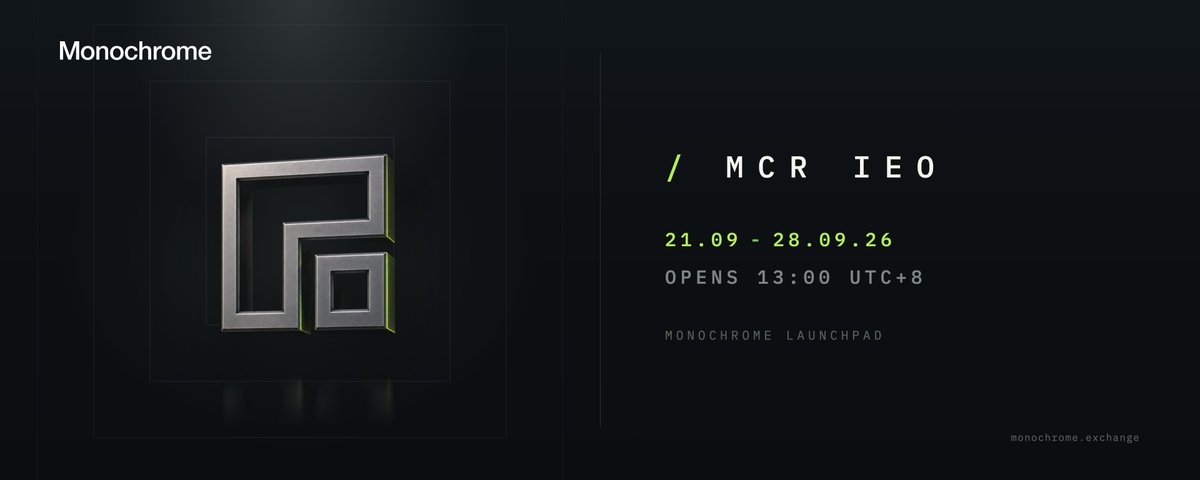 Monochrome Exchange to hold public IEO of native token MCR at $0.88 from September 21 to 28
Community notes
Spot something off or out of date? Drop a note. Editors review topic notes daily and roll accepted fixes into the explainer — contributors are recognized in the monthly $SQUID drop.
Loading notes…
Help improve this topic
Have a story or tip about this topic? Submit it. See something missing? Leave a note. Editors review daily; accepted submissions and fixes count toward the monthly $SQUID drop.