
Deep explainer on how innovation works in crypto, from DeFi vaults and stablecoins to AI and prediction markets, and how SEC, CFTC, ESMA and global hubs shape where and how new blockchain ideas launch and scale.
+23 sources across the wider coverage universe
 Perplexity launches “Billion Dollar Build,” an 8-week competition challenging teams to create startups with $1B potential using its AI tools, offering up to $2M in funding and credits2026-04
 CFTC Chair Michael Selig says prediction markets like Polymarket outperform polls and help fight fake news, urging US rules to support innovation and keep jobs onshore2026-04
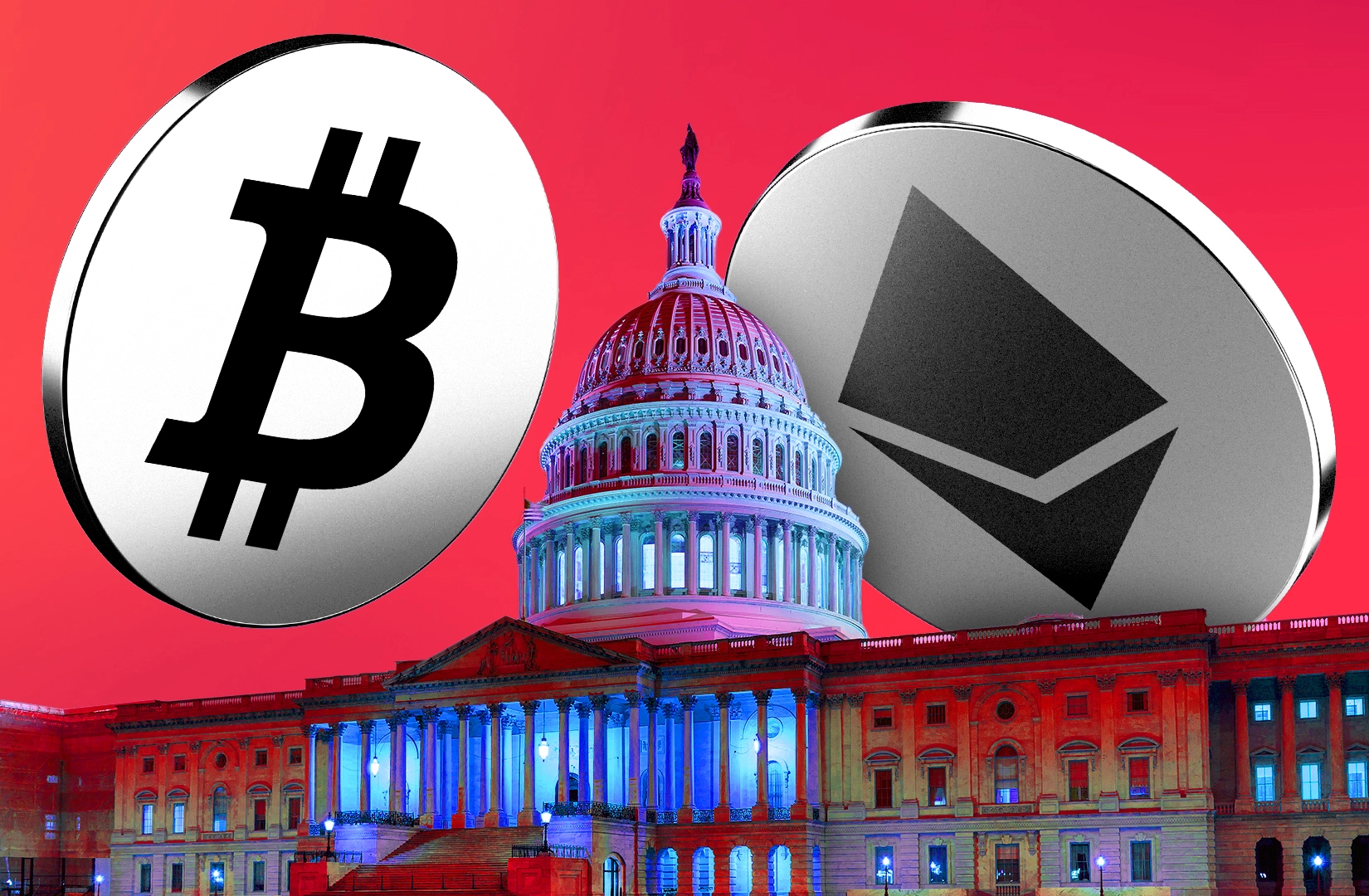 Clarity Act vote, SEC innovation exemption, and MiCA expiry converge in Q2 to test crypto's regulatory future2026-04
 William Mougayar says Ethereum has outgrown the Ethereum Foundation, arguing future innovation, coordination, and growth will increasingly emerge from the network's periphery2026-07
 CFTC appoints five senior advisors to Innovation Task Force drafting crypto, AI, and prediction market rules2026-04
 Binance founder CZ backs efforts to make the U.S. the global crypto capital, sharing his outlook on regulation, innovation, and digital asset adoption2026-06
Innovation in Crypto: How New Ideas Move From Code to Markets
In crypto and digital finance, innovation describes the process of turning new technical, economic, or regulatory ideas into working products, markets, and institutions that people actually use. It is at once a buzzword, a policy objective, and a source of tension between open-source builders, global investors, and regulators charged with protecting consumers and the financial system.
Defining Innovation in a Crypto Context
Innovation is an old concept in economics, usually associated with introducing new combinations of technology, capital, and organization that reshape how value is created and exchanged. In traditional finance, that might mean an options contract or an electronic trading venue; in crypto, it often means a smart contract, a protocol, or a new pattern of coordination enabled by blockchains. At a high level, innovation in this sector can be understood as the deployment of novel cryptography, network architectures, incentive mechanisms, and regulatory approaches that change how people hold, transfer, and invest value. Crucially, these changes are not purely technical; they operate within legal systems, political debates, and social expectations that determine what counts as progress rather than mere speculation.
The crypto ecosystem amplifies certain features of innovation that were present but muted in earlier waves of financial technology. Because blockchains are globally accessible and permissionless, a new protocol can go from a code repository to handling billions in daily volume in a matter of months, with users from dozens of jurisdictions. Tokens give builders new ways to fund development and bootstrap liquidity, but they also blur the boundary between customers, investors, and owners. Education platforms and trading apps targeted at retail users promise to democratize access to markets, offering courses on cryptocurrency investing and “best trading strategies” across both crypto and forex, a trend illustrated by platforms that explicitly brand themselves around innovation in markets education. This acceleration makes crypto an unusually vivid laboratory for observing how innovation unfolds, succeeds, and sometimes fails.
It is also increasingly clear that innovation in crypto does not occur in a vacuum; it is shaped by regulatory signals and macroeconomic conditions just as much as by new ideas in cryptography or distributed systems. Agencies like the U.S. Securities and Exchange Commission (SEC), the Commodity Futures Trading Commission (CFTC), and the European Securities and Markets Authority (ESMA) now explicitly discuss innovation in their strategic plans and annual reports, framing it as something to foster, steer, and contain. At the same time, city-level initiatives in Dubai, Hong Kong, and Swiss “Crypto Valley,” as well as U.S. states like Wyoming and Illinois, illustrate how tax rules, licensing regimes, and official experimentation can either attract or repel the next generation of projects. Understanding innovation in crypto therefore requires looking not only at new products onchain, but also at the regulatory and geographic environments that determine where those products can safely launch and scale.
Technological, financial, and institutional layers
One useful way to think about innovation in crypto is to separate it into technological, financial, and institutional layers, while remembering that in practice these layers are tightly interwoven. Technological innovation refers to the raw tools: blockchains, consensus mechanisms, zero-knowledge proofs, and the software that implements them. The move from proof-of-work to proof-of-stake, the rise of modular architectures, and the use of advanced cryptography to enable private or scalable transactions are all examples of this kind of innovation. These technologies are not valuable in themselves; they matter because they enable new financial contracts and new governance structures that were difficult or impossible to implement before.
Financial innovation in crypto builds on these tools to create new market structures and instruments. Decentralized exchanges, automated market makers, collateralized stablecoins, and perpetual futures on digital assets are now familiar examples. Newer developments include yield-generating “vaults” that aggregate user funds into automated strategies, cross-margin systems that span multiple asset classes, and tokenized representations of offchain assets ranging from government securities to commodities. Industry coalitions like the Crypto Council for Innovation have formed specifically to address regulatory uncertainty around such yield-generating vaults, arguing that their treatment should depend on how they actually function rather than on superficial analogies to traditional products. In all these cases, innovation is less about inventing entirely new types of risk and more about reconfiguring who bears those risks, how they are priced, and how quickly contracts can be created, settled, and unwound.
Institutional innovation, finally, concerns the rules and organizations that govern these technologies and markets. That includes onchain mechanisms like decentralized autonomous organizations (DAOs) and protocol treasuries, but also offchain institutions such as regulators, courts, industry associations, and self-regulatory bodies. When ESMA coordinates with national authorities on the implementation of the Markets in Crypto-Assets Regulation (MiCA), or when the Wyoming Stable Token Commission is created to issue a state-backed stablecoin, these are institutional innovations that define the permissible space for technical and financial experimentation. Similarly, the SEC’s decision to emphasize innovation and capital formation in its strategic plan, or the CFTC’s choice to organize its innovation work around specific themes like crypto assets, artificial intelligence, and prediction markets, signal how these agencies expect the boundaries of their markets to evolve.
Why crypto innovation feels different
While every wave of financial technology claims to be transformative, crypto has some genuinely distinctive features that make its innovation cycle feel different. First, the core infrastructure is open-source and composable, so new projects can rapidly assemble powerful systems by combining existing smart contracts and libraries rather than building everything from scratch. That composability is particularly evident in decentralized finance (DeFi), where lending markets, decentralized exchanges, and vaults are often stacked together, allowing a single new primitive to ripple through dozens of applications.
Second, crypto markets operate around the clock and across borders, meaning that new ideas are immediately exposed to a global user base, including sophisticated institutions and retail traders. Exchanges and protocols that list a new token or launch a new feature can see real-time feedback in the form of price discovery, liquidity flows, and governance participation. This intensity both accelerates learning and increases the cost of mistakes, as poorly designed contracts can lose user funds at scale.
Third, innovation in crypto is unusually intertwined with narrative and ideology. Projects often position themselves not just as products but as embodiments of values such as decentralization, censorship resistance, or financial inclusion. Events like global hackathons and developer conferences, including gatherings like ETHGlobal and Devcon, serve as focal points where builders, researchers, and investors collectively explore the “future of onchain innovation,” blending technical workshops with discussions about governance, regulation, and ethics. These communities, buttressed by educational initiatives and scholarships for emerging developers from teams like Orochi Network and its partners, play a crucial role in diffusing knowledge and norms around responsible experimentation.
The result is an environment where innovation is rapid, contested, and constantly negotiated among code, markets, and law. For a crypto news audience, understanding this landscape means tracking not only which new protocols launch and which tokens rally, but also how regulators articulate their tolerance for risk and how different jurisdictions compete to attract or discipline the next wave of builders.

SEC's new innovation exemption gives tokenized US stocks a five-year path through permissioned AMMs, with volume caps and guardrails

Regulators as Innovation Gatekeepers: SEC, CFTC, and ESMA
Regulators have always shaped financial innovation, but the degree to which agencies now explicitly frame themselves as stewards of innovation in crypto is notable. In the United States, the SEC and CFTC share primary responsibility for securities and derivatives markets, respectively, while in Europe ESMA coordinates securities regulation and market supervision across the European Union. Each has begun to treat digital assets and related technologies as core parts of their future mandate rather than as marginal curiosities.
The SEC and strategic planning for digital markets
The U.S. Securities and Exchange Commission’s mission is to protect investors, maintain fair and efficient markets, and facilitate capital formation. In its draft strategic plan for fiscal years 2026–2030, the SEC emphasizes three broad goals, beginning with a commitment to renew its regulatory policy focus in ways that support innovation, capital formation, and well-functioning markets. While the document is not crypto-specific, its language reflects an awareness that new technologies, including digital assets and artificial intelligence, are reshaping how securities are issued, traded, and held. For crypto firms that have often criticized the SEC for “regulation by enforcement,” a strategic plan that highlights innovation and reduced regulatory friction is a signal that the agency recognizes the need to adapt its rulebook and supervisory practices.
The politics of this shift are contentious. High-profile enforcement cases against exchanges and token issuers, as well as disputes over whether certain digital asset products qualify as securities, have made the SEC a central character in debates about whether the United States is welcoming or hostile to crypto innovation. Litigation involving prediction markets, onchain derivatives, and novel governance tokens has forced the Commission and the courts to revisit long-standing definitions of investment contracts and swaps in light of decentralized architectures. At the same time, crypto companies are investing more in policy engagement, as illustrated by firms like Ripple expanding their presence in Washington, D.C. to deepen constructive dialogue around “clear rules of the road” and responsible financial innovation. This institutionalization of advocacy reflects an understanding that innovation will increasingly be negotiated in conference rooms and comment letters, not only in code repositories.
The CFTC, prediction markets, and responsible innovation
The Commodity Futures Trading Commission oversees U.S. derivatives markets, including futures, options, and many swaps. The agency has explicitly organized its innovation agenda around three themes: crypto assets and blockchain technologies, artificial intelligence and autonomous systems, and prediction markets and event contracts. This framing is telling because it places crypto and AI alongside the newer class of markets that price the likelihood of future events, highlighting the CFTC’s view that innovation is not limited to new instruments but also involves new underlying data and mechanisms of price discovery.
The CFTC has long promoted a principles-based regulatory regime, arguing that this approach allows responsible innovation while preserving core protections against fraud, manipulation, and systemic risk. In practice, that means focusing on outcomes—such as market integrity, transparency, and customer asset protection—rather than prescribing specific technologies. The agency’s recent attention to prediction markets illustrates how difficult this balance can be. A Senate Commerce subcommittee hearing on the rise of sports betting and prediction markets underscored the central question of whether emerging market-based products should operate within a transparent, federally regulated onshore framework with robust consumer protections and oversight, or be pushed offshore where risks may be harder to monitor. Witnesses and lawmakers debated whether contracts on sports outcomes serve a legitimate hedging or price discovery function, or whether they are simply a form of gaming that falls outside the CFTC’s mandate.
This debate has legal teeth. The U.S. Court of Appeals for the Third Circuit has emphasized that certain sports-event contracts fall under the Commodity Exchange Act and Dodd-Frank Act, giving the CFTC authority to prohibit registered entities from listing trades or contracts that amount to gaming. Former CFTC officials have argued that while innovative markets can bring valuable information into prices, regulators must distinguish between contracts that support real economic activity and those that encourage pure speculation detached from underlying risks. For crypto builders experimenting with prediction markets, this is a crucial line: innovation is tolerated, even welcomed, when it aligns with the CFTC’s view of economically useful risk management, but not when it resembles unregulated gambling.
ESMA, MiCA, and Europe’s structured approach to innovation
In the European Union, the European Securities and Markets Authority plays a central role in shaping how innovation in capital markets, including crypto, is harnessed and supervised. ESMA’s 2025 Annual Report highlights a year of work aimed at strengthening EU financial markets through enhanced supervision, regulatory simplification, and innovation. Set against a backdrop of global uncertainty and ongoing discussions around a Savings and Investments Union, the report positions innovation as a means of creating more integrated, transparent, and competitive capital markets, rather than as a threat to be contained.
For crypto specifically, 2025 was a pivotal year in the implementation of the Markets in Crypto-Assets Regulation, the EU’s comprehensive framework for crypto-asset issuance and service provision. ESMA worked closely with national competent authorities on licensing and supervising crypto-asset service providers, with the aim of fostering supervisory convergence across member states. It also advanced the Digital Operational Resilience Act (DORA) and the revised European Market Infrastructure Regulation (EMIR 3), reinforcing the digital and clearing infrastructure that underpins both traditional and crypto markets. These efforts, coupled with a risk-based supervisory approach leveraging granular data, are intended to make the EU a more resilient and attractive environment for both incumbents and new entrants.
Importantly, ESMA has not treated innovation as a purely technical matter. The authority’s work on sustainable finance, including improved ESG disclosures and new frameworks like the Green Bond Regulation and an ESG Rating Regulation, shows how it links innovation to broader policy goals such as transparency, investor protection, and trust. In parallel, ESMA has intensified its focus on digitalisation, including artificial intelligence, distributed ledger technology, and decentralized finance, with the explicit aim of harnessing innovation while safeguarding market integrity. For crypto projects, this sends a clear message: experimentation is welcome, but only within a supervised environment that prioritizes clear disclosures, operational resilience, and fair treatment of retail investors.
Readers click 'innovation' stories not for technical breakthroughs but for the permission structure around building — the top stories are about who funds it, who regulates it, and who couldn't survive long enough to ship it, revealing that regulatory jurisdiction is the true innovation bottleneck in 2026 crypto.
Geography and Policy: Where Innovation Happens
Innovation in crypto does not map neatly onto national borders, but legal and tax regimes still matter. Jurisdictions that create clear, proportionate rules and avoid accidental frictions tend to attract talent, capital, and infrastructure, while those that treat digital assets primarily as revenue sources or political targets risk pushing activity elsewhere. Recent developments in U.S. states like Illinois and Wyoming, as well as in hubs like Dubai and Swiss “Crypto Valley,” illustrate this dynamic vividly.
Illinois’ crypto transaction tax and the “punitive innovation” debate
Illinois has become a test case for how tax policy can be perceived as either enabling or punishing innovation. The state enacted a 0.2% tax on crypto transactions, applied broadly to the exchange, transfer, or even storage of digital assets. In practical terms, that means a retail customer who buys bitcoin would pay an extra tax on top of any trading fees, and the same would apply to other routine onchain transfers. Critics argue that this effectively taxes the underlying infrastructure of digital markets rather than their economic output, creating friction at every layer of the transaction stack.
Industry reaction has been swift. Coinbase CEO Brian Armstrong called the law “remarkably bad,” describing it as one of the most anti-crypto measures in the United States and warning that it would kill jobs and push innovation out of the state. Policy organizations like the Market Institute have echoed this sentiment, arguing that the best way to encourage innovation is not to “tax it into oblivion,” and warning that the Illinois tax will discourage investment and undermine the state’s competitiveness in a rapidly growing sector. The Crypto Council for Innovation has gone further, labeling the measure “the most punitive digital asset tax in the country,” highlighting concerns that a transaction-level tax is both opaque to users and difficult to reconcile with the borderless nature of blockchain transfers.
From a policy perspective, the Illinois example underscores how fragile local advantages in innovation can be. Crypto firms can often relocate more easily than traditional manufacturers, and developers can work remotely from any jurisdiction that offers internet access and legal clarity. If activity migrates to states or countries with more predictable tax and regulatory regimes, Illinois may collect less revenue than expected while losing high-value jobs and investments. At the same time, the debate reveals deeper disagreements about how to measure the benefits and costs of innovation: proponents of the tax may see it as a way to capture public value from a new industry, while critics view it as a blunt instrument that cannot distinguish between productive experimentation and speculative churn.
Wyoming’s Frontier Stable Token and state-level experimentation
At the other end of the spectrum, Wyoming has positioned itself as a laboratory for crypto-friendly regulation, culminating in the creation of the Wyoming Stable Token Commission and the issuance of the Frontier Stable Token (FRNT). FRNT is a state-issued stable token designed to function as a digital representation of the U.S. dollar, fully reserved and overseen by a dedicated commission. Unlike private stablecoins issued by corporations or decentralized protocols, FRNT embeds public governance into the token’s design, reflecting a deliberate strategy by Wyoming to show that state-level institutions can innovate within the existing monetary system rather than merely regulate from the sidelines.
The Wyoming Stable Token Commission’s public materials emphasize its mission, governance structure, and the mechanics of acquiring and using FRNT, positioning the token as a practical example of responsible innovation rather than a speculative pilot. This approach has attracted attention from other states and policymakers who see in FRNT a template for bridging traditional public finance and blockchain-based transactions. It suggests that innovation in money does not have to mean ceding all control to private issuers; instead, states can experiment with tokenized representations of cash that operate under clear legal mandates and conservative reserve management.
This experiment unfolds alongside efforts at the federal level to build a comprehensive framework for payment stablecoins. The Guiding and Establishing National Innovation for U.S. Stablecoins Act (GENIUS Act) provides such a framework, directing the U.S. Treasury to treat permitted payment stablecoin issuers as financial institutions under the Bank Secrecy Act and to impose anti-money laundering and sanctions compliance obligations on them. A joint proposed rule from FinCEN and the Office of Foreign Assets Control aims to implement these provisions in a way that encourages innovation in payment stablecoins while mitigating illicit finance risks through appropriately tailored requirements. The tension between state-level initiatives like FRNT and federal oversight under the GENIUS Act has prompted bipartisan interest in preserving some room for state supervision, reflecting a desire to avoid a one-size-fits-all model that might inadvertently stifle useful experimentation.
Dubai, Crypto Valley, and the global competition for hubs
Beyond the United States, cities and regions around the world are competing to become centers of blockchain innovation. In Dubai, for example, the government-backed Dubai Multi Commodities Centre has positioned itself as a hub for digital assets and tokenized commodities. A recent memorandum of understanding between Tether and the DMCC focuses on advancing blockchain education, tokenization, and innovation in the emirate, signaling an official interest in combining private stablecoin expertise with public-sector infrastructure and policy support. By offering a favorable regulatory environment and explicit support for education and ecosystem development, Dubai aims to signal that it is open to both established companies and experimental projects.
In Europe, the Swiss canton of Zug—often referred to as “Crypto Valley”—has become a flagship example of how a small jurisdiction can punch above its weight in blockchain innovation. A global report on the blockchain ecosystem highlights Crypto Valley as one of several hubs that have emerged around the world, each leveraging its own mix of regulatory clarity, talent, and access to capital. These hubs coexist and compete, creating a geographic mosaic rather than a single dominant center. Some, like Zurich or Singapore, lean on their traditional financial sectors; others, like Berlin or Lisbon, emphasize grassroots developer communities and relatively low cost of living.
Asia’s financial centers are also leaning into the narrative of innovation. Hong Kong, for instance, has used high-profile events that blend culture, strategy, and finance to signal its ambitions. A business leaders’ luncheon held ahead of a major international chess championship brought together figures from business, finance, and innovation alongside five-time world chess champion Magnus Carlsen, underscoring the city’s interest in positioning strategic thinking and technological adoption as part of its broader brand. Similarly, coverage of “crypto hub cities” often emphasizes how local regulators, infrastructure providers, and cultural institutions work together to make experimentation with blockchain and digital assets both visible and legitimate.
These initiatives highlight a central fact: innovation in crypto is path-dependent and responsive to policy. Hubs that create clear licensing regimes, support education, and maintain open channels between builders and regulators tend to attract long-term investment. Those that oscillate between hype and crackdown, or that rely on blunt instruments like transaction taxes, risk seeing innovation migrate elsewhere.

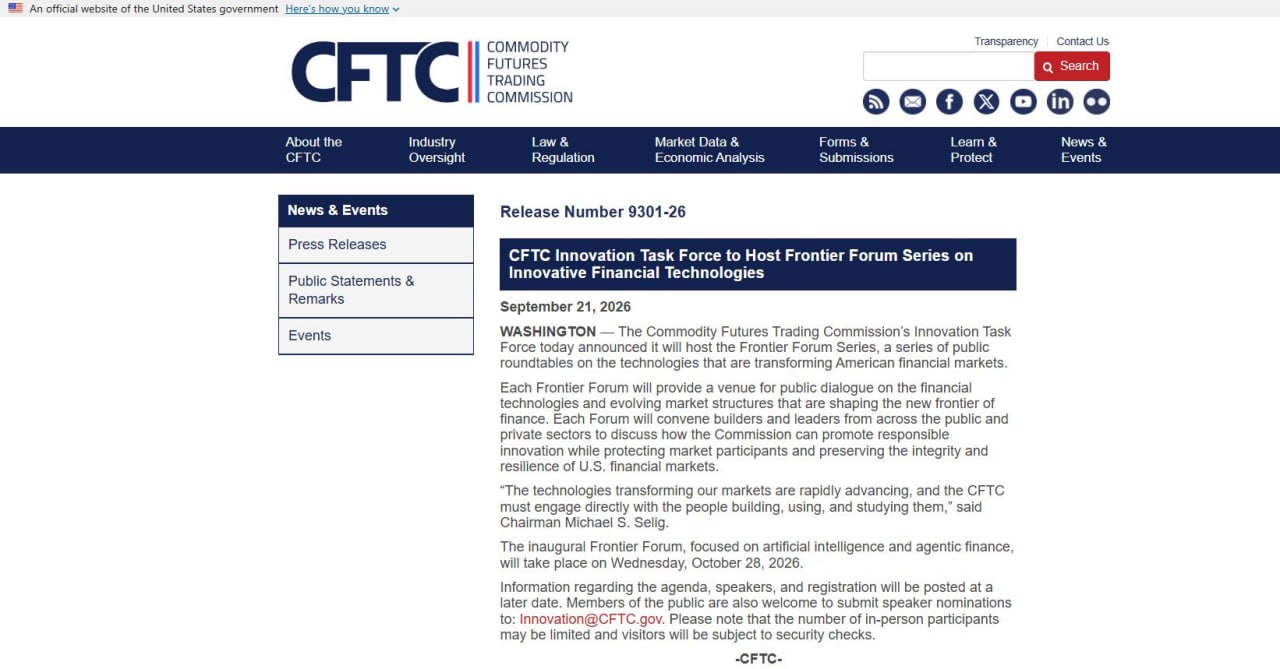
CFTC innovation task force to launch Frontier Forum series on financial technologies
Product and Market Innovation: From Derivatives to Vaults
While regulatory and geographic conditions set the stage, innovation ultimately has to show up in concrete products and market structures. Over the past several years, that has meant new forms of trading venues, derivatives, yield strategies, and stable-value instruments that blur conventional boundaries between crypto and traditional finance.
Trading venues and the evolution of perpetual markets
Perpetual futures and other leveraged derivatives have become one of the most active arenas for innovation in crypto markets. Centralized exchanges pioneered perpetual swaps on bitcoin and major altcoins, offering high leverage and continuous funding mechanisms. More recently, platforms have experimented with cross-margin systems that allow users to trade multiple asset classes from a unified account, including both crypto and traditional instruments. CoinW’s “TradFi” product, for example, integrates core traditional assets like gold, crude oil, major commodities, U.S. stocks, and international equities into perpetual contracts, allowing traders to access both cryptocurrency and traditional financial markets through a single interface. By offering additional exposure options in a crypto-native derivatives format, such platforms exemplify the convergence of digital and legacy markets.
Innovation is not limited to asset menus; it also encompasses business models and regulatory postures. Binance founder Changpeng Zhao (CZ) has publicly praised the design and technology of derivative venues like Hyperliquid, describing its innovation as “actually awesome” in an upcoming podcast appearance. At the same time, he has indicated that the way such platforms operate puts them in a niche that large, heavily scrutinized firms like Binance cannot or will not enter. This dichotomy highlights a recurring pattern: smaller or offshore platforms may push the envelope technologically and in terms of leverage or listing policies, while larger exchanges that serve mainstream users and engage deeply with regulators tend to emphasize compliance and risk management.
Decentralized derivatives protocols add another dimension. By moving order books and margining logic into smart contracts and using oracles to obtain price feeds, these systems aim to offer non-custodial alternatives to centralized exchanges. They often replicate complex features, such as cross-collateralization and portfolio margin, directly in code. The sunsetting of specific projects in this space, as seen when some early DeFi derivatives protocols wound down operations, has created openings for newer designs with improved risk controls and more efficient use of capital. Each iteration reveals new attack surfaces and failure modes, but it also refines the toolkit available to future builders.
To make sense of the diversity of trading venues, it is useful to compare some of their key characteristics. The following table provides a simplified snapshot of how centralized exchanges, offshore or lightly regulated venues, and decentralized protocols differ along dimensions that matter for innovation and risk.
| Venue type | Custody model | Regulatory posture | Innovation levers |
|---|---|---|---|
| Regulated centralized exchange | Exchange holds user assets | Subject to securities/derivatives and AML rules | Product listing, UX, market structure |
| Offshore or lightly regulated | Exchange holds user assets | Operates outside major regulatory jurisdictions | Aggressive leverage, experimental products |
| Decentralized derivatives protocol | Smart contracts hold assets | Governance via tokens, unclear in many jurisdictions | Composability, onchain automation, open access |
This comparison underscores why innovation and regulation are so tightly linked. Features that are easy to implement in code—such as very high leverage or novel payoff structures—may be difficult to reconcile with investor protection rules or capital requirements. As a result, some innovations first appear on platforms that operate at the edge of, or outside, traditional regulatory perimeters. Over time, successful patterns may migrate into more regulated environments, adapted to fit the applicable legal constraints.
DeFi vaults and the need for regulatory clarity
Within decentralized finance, one of the clearest examples of ongoing innovation is the emergence of “vaults,” smart contracts that aggregate user funds and execute automated strategies. Vaults can farm protocol rewards, rebalance positions across yield opportunities, or implement sophisticated hedging and leverage strategies that would be difficult for individual users to manage manually. Because they are composable with other DeFi primitives, vaults can act as building blocks for even more complex products, serving as collateral in lending markets or liquidity providers in decentralized exchanges.
However, vaults also pose difficult regulatory questions. Depending on their design, they can resemble investment funds, structured products, or even unregistered collective investment schemes. The Crypto Council for Innovation has launched what it calls the Vault Coalition, anchored by firms like Galaxy and Morpho, with the explicit goal of advancing policy clarity and workable regulatory frameworks for these emerging structures. The coalition emphasizes three propositions: that regulatory treatment of vaults should be grounded in how they actually function rather than in analogies to incumbent products; that the open legal questions are answerable but require careful, technically informed analysis; and that a shared, well-reasoned industry position will help policymakers more than scattered lobbying.
These efforts reflect recognition that innovation without clarity can be fragile. Projects can attract substantial assets under management only to find themselves constrained by enforcement actions or regulatory guidance that treats them as investment companies or unregistered securities offerings. Conversely, overly strict interpretations that treat every automated strategy as a regulated fund could chill experimentation and entrench incumbents. By engaging proactively with regulators and articulating concrete models for disclosure, risk management, and governance, initiatives like the Vault Coalition aim to turn vaults from a gray-area innovation into a recognized part of the financial toolkit.
Stablecoins, tokenization, and public-sector use cases
Stablecoins and tokenized assets remain central to innovation in crypto because they bridge blockchain-native systems with real-world value. Private issuers like Tether offer dollar-linked tokens that function as digital cash in trading and cross-border transfers, while projects like Wyoming’s FRNT demonstrate how public institutions can enter the same space with state-sanctioned stable tokens. The GENIUS Act’s framework for payment stablecoins and the associated Treasury rulemaking aim to give this sector a clearer regulatory perimeter, treating permitted issuers as financial institutions subject to anti-money laundering and sanctions obligations under the Bank Secrecy Act. The official messaging emphasizes that the goal is to encourage innovation in payment stablecoins while mitigating illicit finance risks through tailored compliance requirements.
Public-sector bodies outside the United States are also exploring tokenization as a tool for governance and service delivery. The Arbitrum Foundation’s collaboration with the United Nations Development Programme on blockchain’s role in public-sector innovation and digital governance is one example, culminating in the launch of a Blockchain Advisory Group focused on these themes. Such initiatives reflect growing interest in using blockchain for applications ranging from social assistance distribution to land registries, where transparency and auditability are particularly valuable. Meanwhile, Tether’s partnership with the Dubai Multi Commodities Centre to advance blockchain education and tokenization in Dubai illustrates how public-private collaborations can seed local ecosystems, combining regulatory support with technical expertise and market access.
Taken together, these developments show that stablecoins and tokenized assets are no longer fringe experiments. They are becoming infrastructure for both private markets and public programmes, which in turn raises the stakes for designing them in ways that are robust, interoperable, and compliant. Innovation in this domain is less about inventing entirely new asset classes than about integrating blockchain rails into existing monetary and legal systems.
- 01AI-backed startup competition
Perplexity's $1B build challenge fused AI tooling with crypto-native startup ambitions, pulling readers who see AI infrastructure as the next DeFi funding frontier.
- 02Crypto product feature gap
The analyst takedown of crypto cards as Visa wrappers crystallized a reader frustration: self-custody, DeFi yield, and private payments still don't exist at card-swipe UX.
- 03Vault Coalition regulatory push↗
Galaxy, Morpho, and a16z co-signing a formal lobbying coalition for yield-vault rules signaled that institutional DeFi operators are done waiting for informal SEC guidance.
- 04Innovation project shutdowns
Three ZK, SocialFi, and derivatives projects closing in the same news cycle — Hyli, Fantasy Top, Ventuals — read as a cohort stress test for underfunded protocol bets.
- 05Geopolitical innovation arbitrage↗
UK courting Bybit and CFTC warnings about driving innovation offshore exposed a live race between jurisdictions to capture Web3 headcount and liquidity.
- 06SEC and CFTC rule-making convergence↗
Simultaneous Clarity Act vote, SEC innovation exemption signals, and CFTC task force appointments made Q2 2026 the clearest US regulatory inflection point in years.
Crypto, Artificial Intelligence, and the Next Frontier of Innovation
The intersection of crypto and artificial intelligence is emerging as a major frontier for innovation, and regulators have begun to notice. Both technologies challenge existing frameworks for accountability, transparency, and risk management, but they also offer powerful tools for improving market efficiency and regulatory oversight.
Regulators’ view: AI as both enabler and risk
The CFTC’s innovation agenda explicitly lists artificial intelligence and autonomous systems alongside crypto assets and prediction markets as core themes. This reflects recognition that AI-driven trading strategies, surveillance tools, and risk models are changing how derivatives markets function. On one hand, AI can help identify market manipulation, detect anomalies, and manage complex portfolios more effectively. On the other, it can amplify feedback loops, create opaque decision-making processes, and generate new types of systemic risk if many participants rely on similar models.
ESMA’s 2025 Annual Report similarly highlights digitalisation, including artificial intelligence, as a key area of focus. The authority’s risk-based supervisory approach increasingly leverages data and analytics to support intelligence-led oversight across EU financial markets. For crypto markets, where onchain data is often highly granular and publicly accessible, AI-driven analytics can provide regulators with near real-time insights into flows, concentration risks, and potential misconduct. At the same time, the use of AI tools by market participants raises questions about fairness and explainability, particularly when algorithms influence retail trading recommendations or automated lending decisions.
In this context, innovation in AI and crypto is as much about governance as it is about technology. Agencies are experimenting with internal use of machine learning for surveillance, while also considering whether existing disclosure and suitability frameworks adequately cover AI-enhanced products. Crypto projects that incorporate AI into their protocols or interfaces—such as automated strategy selection in vaults or AI-based scoring for undercollateralized lending—will likely face increasing scrutiny about how their models are trained, what data they use, and how they handle bias and error.
Builders’ view: ZK, hardware, and ComputeFi
For builders, the convergence of AI and crypto manifests in several concrete domains. One is privacy-preserving machine learning, where zero-knowledge proofs (ZK) are used to verify computations on private data without revealing the inputs. Projects that spent years advancing ZK technology have shown both the promise and the difficulty of this path; some chains focused on ZK innovation have ultimately shut down despite raising significant funding, illustrating that technical advances do not guarantee sustainable ecosystems. Yet the research and tooling they leave behind often seed subsequent efforts, contributing to a cumulative innovation process even when individual ventures do not survive.
Another domain is specialized hardware for both AI and cryptographic workloads. Partnerships such as those between chip design teams and crypto-focused firms, which aim to push ZK and AI hardware “to the next level” through AI-native chip design, illustrate a bet that compute-intensive tasks like proof generation and model inference can benefit from co-optimized silicon. The idea of “ComputeFi” captures this vision: treating compute resources as financial primitives that can be tokenized, traded, and allocated via crypto-economic mechanisms. While much of this work is still early, it highlights how innovation in crypto increasingly depends on developments in semiconductors and machine learning, not just in software.
Developer education and support also play a crucial role in bridging AI and crypto. Orochi Network’s scholarship programmes around major developer conferences, coupled with its work on randomness beacons and other cryptographic primitives, reflect an understanding that the frontier between AI, security, and blockchain requires new skills and mental models. Initiatives that lower the barrier to entry for developers, provide open-source tooling, and foster cross-disciplinary learning are likely to be important catalysts for future innovation at this intersection.
MUFG Innovation Partners backs Footprint's $25M Series B for AI-driven financial crime compliance

Innovation, Risk, and Consumer Protection
Innovation in finance has always been two-sided: it can reduce costs, spread risk more efficiently, and expand access, but it can also create new vulnerabilities and amplify speculation. Crypto’s rapid pace of change makes these trade-offs particularly visible, and regulators, builders, and investors are still working out how best to manage them.
When innovation becomes speculation
One of the recurring challenges in crypto is distinguishing between innovation that serves real economic purposes and products that primarily enable speculative trading. The debate over prediction markets and sports betting provides a clear example. In the Senate hearing on the rise of sports betting and prediction markets, lawmakers and experts grappled with whether event-based contracts should be treated as commodities derivatives subject to the Commodity Exchange Act and the Dodd-Frank Act, or whether certain products are essentially gaming and should be prohibited. The CFTC has authority to prevent registered entities from listing trades or contracts that amount to gaming activities, and recent appellate court decisions have reinforced that boundary for sports events.
For crypto-native prediction markets and onchain betting platforms, this legal environment creates uncertainty. Innovative mechanisms for aggregating information about future events can, in principle, improve forecasting for everything from election outcomes to macroeconomic indicators. However, if the bulk of volume comes from retail users wagering on sports or meme events, regulators may reasonably question whether these markets serve a broader economic function. Former officials like Dan Berkovitz have suggested that the derivatives industry should focus on contracts that help real businesses manage risk rather than on products that encourage speculative gambling, framing this as an opportunity for innovation to support the real economy rather than diverting attention and capital into games.
Similar concerns arise in more familiar corners of crypto. Meme tokens, extremely high-leverage derivatives, and complex yield strategies marketed to unsophisticated users can all cross the line from innovation to exploitation. The challenge for regulators is to curb the most harmful practices without shutting down experimentation wholesale. For builders and investors, the challenge is to design products that deliver genuine utility and transparent risk disclosures, even when those products tap into speculative demand.
Tools for safer innovation
There is increasing recognition across major jurisdictions that outright bans or laissez-faire approaches are both suboptimal. Instead, regulators are experimenting with tools that allow innovation to proceed within defined safeguards. ESMA’s work on simplifying the rulebook and reducing unnecessary burdens for market participants, while simultaneously enhancing supervision and retail investor protection, is one example of this approach. By streamlining reporting and clarifying obligations under frameworks like MiCA and DORA, the EU aims to make it easier for compliant firms to innovate while focusing supervisory resources on higher-risk activities.
In the United States, the SEC’s strategic emphasis on supporting innovation and capital formation, combined with the CFTC’s principles-based regime for responsible innovation, hints at a possible recalibration away from purely punitive oversight. Treasury’s implementation of the GENIUS Act, with its goal of encouraging innovation in payment stablecoins while imposing tailored anti-money laundering and sanctions compliance obligations, similarly reflects a belief that clear, proportionate rules can foster safer experimentation. Industry groups like the Crypto Council for Innovation, which are proactively developing technically informed proposals for how vaults and other DeFi structures should be regulated, can be seen as partners in this process rather than adversaries.
At the project level, best practices for safer innovation include staged rollouts, formal verification of smart contracts, bug bounty programmes, and transparent governance processes. While these practices are often voluntary today, regulators and institutional investors are increasingly treating them as baseline expectations. Over time, it is plausible that certain forms of assurance—such as third-party audits for core protocols or standardized disclosure templates for yield products—will become de facto requirements for access to major markets and onramps.
Crypto Council for Innovation launches Vault Coalition with Galaxy, Morpho, a16z
CFTC appoints five senior Innovation Task Force advisors for crypto, AI, and prediction market rules
- 2026-04milestone
Hyli blockchain shuts down after two years of ZK innovation and $3.4M raised
- 2026-05milestone
a16z closes $2.2B fifth crypto fund targeting next-gen blockchain startups
- 2026-05launch
Naoris Protocol launches mainnet as industry transition accelerates
Clarity Act vote, SEC innovation exemption signals, and MiCA expiry converge in Q2
- 2026-06launch
Perplexity launches Billion Dollar Build competition with up to $2M in AI startup funding
- 2026-06launch
UAE Innovation City deploys blockchain-based business ID system on OPN Chain for 1,000+ companies
Outlook
Innovation in crypto is moving from adolescence into a more institutionalized phase. Regulators like the SEC, CFTC, and ESMA now frame innovation as an explicit policy objective, balancing support for new technologies and market structures with concerns about investor protection, financial stability, and illicit finance. Jurisdictions that couple clear, proportionate rules with openness to experimentation—whether through public-sector pilots like Wyoming’s FRNT, public‑private partnerships in hubs like Dubai, or comprehensive frameworks like MiCA—are positioning themselves to attract the next generation of builders.
For market participants, the lesson is that innovation is no longer just about being first to launch a new protocol or token. It is about integrating technical creativity with regulatory literacy, governance design, and long-term resilience. The most durable innovations are likely to be those that solve real problems—improving payment rails, expanding access to capital, enabling more efficient risk management—while fitting into a legal and social environment that demands accountability. As crypto, AI, and traditional markets continue to converge, the conversation about innovation will increasingly revolve around how to share the gains from new technologies without offloading the risks onto the least informed participants.
Latest Innovation news
SEC's new innovation exemption gives tokenized US stocks a five-year path through permissioned AMMs, with volume caps and guardrailsCFTC innovation task force to launch Frontier Forum series on financial technologiesMUFG Innovation Partners backs Footprint's $25M Series B for AI-driven financial crime compliance UsePaid routes $1.44M in creator fees to X handles, burning 20% as $PAID hits $50M. $PAID drew both praise for innovation and concerns over spam and opt-outs.
Sources
20 records from 14 domains
innovationmarkets.com
sec.gov
cftc.gov
x.com
stabletoken.wyo.gov
home.treasury.gov
kucoin.com
esma.europa.eu
cvvc.com
investing.com
cryptoforinnovation.org
ripple.com
orochi.network
youtube.com
Community notes
Spot something off or out of date? Drop a note. Editors review topic notes daily and roll accepted fixes into the explainer — contributors are recognized in the monthly $SQUID drop.
Loading notes…
Help improve this topic
Have a story or tip about this topic? Submit it. See something missing? Leave a note. Editors review daily; accepted submissions and fixes count toward the monthly $SQUID drop.