
Deep explainer on how law shapes crypto: from SEC vs CFTC battles and MiCA to stablecoin freezes, DeFi hacks, prediction markets, AI agents and tokenization. A guide to the legal risks and frameworks behind Bitcoin and Web3.
+37 sources across the wider coverage universe
 Circle declines to freeze USDC in Drift exploit as CEO Allaire warns of legal risks and ethical concerns, while expanding partnerships with major South Korean exchanges2026-04
 AI chats ruled admissible in court as US judge denies legal privilege, prompting law firms to warn clients their conversations with tools like Claude can be seized2026-04
 Legal & General tokenizes £50B liquidity fund suite on Ethereum via Calastone network2026-04
 Samourai Wallet co-founder Keonne Rodriguez seeks donations after racking up $2M in legal debt tied to crypto mixer charges, warning he expects to serve his full prison sentence2026-05
 Whitehat hacker returns $190K out for $209K to Renegade protocol after exploiting flawed Arbitrum dark pool contract, keeping 10% bounty to avoid legal action2026-05
 Coinbase legal chief says SEC can already support tokenized equities, with Clarity Act set to unlock broader crypto rulemaking2026-05
The Legal Layer Of Crypto: How Law Shapes Bitcoin, DeFi, Markets And AI
Law has quietly become crypto’s most important second layer, defining what counts as property or securities, who can run exchanges, and how far code can go before courts step in. For traders, builders, and institutions, understanding the legal dimension of crypto is now as critical as understanding blockchains themselves.
Why “Legal” Matters So Much In Crypto
Crypto began as a technical experiment and a political statement, but it has matured into regulated financial infrastructure that sits squarely inside legal systems, not outside them. As jurisdictions from the United States to the European Union to East Asia adopt comprehensive crypto legislation, digital assets increasingly inherit the same legal expectations that apply to banks, broker‑dealers, payment processors and securities issuers. That shift is changing how exchanges operate, how tokens are issued, how DeFi is built, and how regulators think about systemic risk.
For market participants, the legal environment affects almost every practical decision. Whether a token is treated as a security or commodity determines which regulator has jurisdiction and what disclosures are required. Whether a stablecoin is fully reserved, ring‑fenced from an issuer’s balance sheet, and subject to prudential oversight determines how safe it really is in a crisis. Whether a decentralized protocol is deemed to be providing a regulated service affects not only its founding team, but also its DAO token holders, front‑end operators, and even governance delegates. These are not abstract questions: they shape liquidity, valuations, and access for everyday users.
The legal layer has also become a key driver of macro narratives. In the United States, the return of the Trump administration in 2025 coincided with what the Treasury Secretary described as “America’s hard fork” on digital assets, marked by the dismissal of high‑profile enforcement actions and the introduction of sweeping legislation like the GENIUS and CLARITY Acts. In Europe, the full roll‑out of the Markets in Crypto‑Assets Regulation (MiCA) promised a single passported regime across the EU, but with strict licensing and asset‑segregation requirements that forced many firms to rethink their business models. Meanwhile, countries such as Japan and El Salvador have pursued their own distinctive paths, from legal tender experiments to proposals for yen‑based stablecoins and crypto exchange‑traded funds.
At the same time, law is trying to keep pace with new technical frontiers. The rise of tokenized real‑world assets raises questions about whether blockchains can or should serve as the legal ledger for securities ownership. The growth of autonomous AI agents that can deploy capital, interact with DeFi protocols, or launder funds at machine speed is stretching existing concepts of liability and compliance. Events such as the Drift Protocol exploit on Solana, which allegedly saw attackers drain hundreds of millions of dollars in minutes and prompted one of the largest DeFi hack class actions to date, demonstrate how quickly smart‑contract risk can spill into courtrooms.
For a crypto news audience, then, “legal” is not a peripheral topic. It is the connective tissue between code, markets, and public policy. Understanding it means following not only token prices and protocol upgrades, but also court decisions, enforcement actions, regulatory guidance, and legislation that will decide which parts of the industry flourish and which are forced to retool or exit.

Circle declines to freeze USDC in Drift exploit as CEO Allaire warns of legal risks and ethical concerns, while expanding partnerships with major South Korean exchanges

$232M in USDC bridged through Circle's own CCTP across 100+ transactions over six hours during US business hours, and nobody pulled the lever. Weeks earlier, Circle froze 16 legitimate wallets — including DFINITY's ckETH Minter contract — in a routine civil case with no exploit involved. Allaire's "rule of law" framing falls apart once you factor in TRM and Elliptic's DPRK attribution: OFAC sanctions compliance doesn't require a court order, it requires not facilitating transfers for designated threat actors.
Core Legal Concepts In Crypto
Legal Status: Money, Property, Commodity, Or Security?
The most basic legal question about any crypto asset is what, legally, it is. Courts and regulators may treat the same token differently depending on context, and those classifications have profound consequences. In many jurisdictions, including the United States, cryptocurrencies such as Bitcoin are generally treated as a form of property for tax and civil‑law purposes, rather than as legal tender. That means gains and losses are often subject to capital‑gains tax, and private parties are typically free to choose whether or not to accept them in payment, unless specific consumer‑protection rules say otherwise.
El Salvador represents an important counterexample, having made bitcoin legal tender in 2021, which required businesses to accept it alongside the U.S. dollar. Researchers examining that experiment have found that while the legal move was historic, adoption in practice has been uneven, demonstrating that legislating legal tender status does not automatically guarantee widespread use. Elsewhere, legislators have largely stopped short of declaring crypto to be legal tender, but some have recognized it as a lawful means of payment or as a regulated digital asset class, particularly in countries aiming to attract Web3 investment.
Another crucial distinction is between commodities and securities. In U.S. law, a commodity can include a broad range of goods and financial instruments, and derivatives based on them fall under the Commodity Futures Trading Commission (CFTC). Many spot crypto markets, especially for Bitcoin and ether, have been treated as commodity‑like, which is why major futures products trade on venues such as the CME. By contrast, a token that meets the criteria of an “investment contract” under the Howey test is treated as a security, bringing it under the Securities and Exchange Commission (SEC) and triggering disclosure, registration, and anti‑fraud obligations.
Courts have generally upheld the SEC’s jurisdiction over crypto assets that fit traditional securities‑law patterns, even when delivered through novel technology. In litigation involving a leading U.S. exchange, a federal court accepted that many of the tokens at issue could fall within existing securities frameworks, emphasizing that applying longstanding tests to new instruments is part of how securities law evolves. That line of reasoning underpins both past enforcement actions and future debates over which tokens can be traded on regulated platforms, and under what conditions.
Stablecoins And Contractual Rights
Stablecoins sit at the intersection of payments, banking, and securities law, and their legal treatment is evolving fast. In the U.S., the 2025 GENIUS Act established the first comprehensive federal framework for stablecoins, mandating 100% reserve backing and creating licensing routes under both federal and state oversight for issuers of payment stablecoins. This legislation aimed to address concerns that some stablecoins might be backed by opaque reserves, or could pose run risks if treated as shadow bank deposits without equivalent safeguards.
In the EU, MiCA treats many fiat‑backed stablecoins as asset‑referenced tokens or e‑money tokens, requiring issuers to hold segregated reserves, comply with capital and governance standards, and offer clear redemption rights to holders. Under MiCA, exchanges that list such tokens must also meet custody and segregation obligations, ensuring that customer assets remain distinct from the exchange’s own funds and are protected in insolvency. This is why some large exchanges have begun to emphasize their MiCA‑regulated status as a selling point for European users, highlighting the legal protections and asset‑segregation rules that now apply to their operations.
USDC, one of the largest dollar stablecoins, illustrates the importance of contractual terms. According to its issuer’s published terms, USDC can be frozen at addresses that are sanctioned or otherwise designated as “blocked,” and funds associated with such addresses may be immobilized. In practice, this has led to complex situations where compliance tools flagged an external depositor’s wallet that interacted with a DeFi protocol’s contract, resulting in the freezing of the entire contract balance rather than just the suspicious user’s funds. In one case involving the Zama protocol’s cUSDC contract, blockchain analysts reported that roughly 12.6 million USDC remained frozen, prompting the protocol’s legal team to work with the issuer to isolate the affected address and restore access for other participants.
These episodes underline that stablecoins are not simply neutral bearer instruments; they are governed by off‑chain legal agreements and compliance obligations. Holders must therefore consider not only smart‑contract risk but also issuer risk, regulatory risk, and the exact scope of their contractual rights. Under some regimes, such as MiCA, regulators may scrutinize whether terms like blacklisting are transparent, proportionate, and accompanied by due process, especially when large user populations are affected unintentionally.
Securities, Tokens, And The Howey Test
The central question for many tokens is whether they are securities. U.S. law typically looks to the Howey test, which asks whether there is an investment of money in a common enterprise with a reasonable expectation of profits from the efforts of others. Many token distributions, especially those involving presales, active marketing by a founding team, and promises of future ecosystem development, have been deemed to satisfy this test. That classification carries consequences for both issuers and secondary markets, including registration requirements, ongoing disclosure, and restrictions on who can buy and trade certain instruments.
For years, the SEC pursued a strategy often described by critics as “regulation by enforcement,” bringing individual cases against issuers and platforms rather than adopting bespoke rules for crypto. Courts generally upheld the Commission’s interpretations in these cases, reinforcing the idea that technology‑neutral principles could apply to token offerings. However, this approach drew growing criticism from industry and some lawmakers, who argued that it created regulatory uncertainty and imposed excessive costs on compliant firms while doing little to curb offshore or rogue actors.
A sharp shift occurred in 2025, when political changes in Washington led to new SEC leadership and the dismissal, with prejudice, of several high‑profile enforcement actions against major exchanges. One SEC commissioner publicly criticized this retreat, warning that abandoning cases that courts had already found to be well‑pleaded undermined decades of securities law precedent and generated “regulatory whiplash.” At the same time, Congress advanced the CLARITY Act, which seeks to clarify the jurisdictional boundaries between the SEC and CFTC, and to define categories of digital assets that fall primarily under commodities regulation rather than securities law. For market participants, these developments underscore both the malleability of legal interpretations and the importance of watching not only court rulings, but also the political winds that shape enforcement priorities.
Readers treat crypto legal coverage as a live accountability ledger — they click hardest to track which founders face extradition, whether regulators have the statutory authority they claim, and whether a courtroom will finally rule that 'code is law' is a legal defense or a fairy tale.
The Regulatory Map: Who Oversees Crypto And How
The United States: From Enforcement To Frameworks
In the United States, crypto regulation is split among multiple agencies and layers of government. At the federal level, the SEC oversees securities and securities markets; the CFTC regulates derivatives and some spot commodity markets; the Treasury Department, through offices like FinCEN and OFAC, oversees anti‑money laundering (AML) and sanctions compliance; and banking regulators supervise institutions that custody or issue digital assets. State regulators also play a major role, especially in licensing exchanges and money transmitters, and in enforcing gambling and consumer‑protection laws that affect areas such as prediction markets.
From roughly 2017 through early 2025, the SEC was widely perceived as the dominant crypto regulator, using enforcement to push its view that many tokens and platforms fell within the securities perimeter. This included actions against large centralized exchanges and smaller token projects, often hinging on alleged unregistered offerings or the operation of unregistered broker‑dealer and exchange services. Many in the industry complained that the Commission refused to provide clear registration paths or rulemaking tailored to crypto, even as it demanded compliance with frameworks designed for traditional securities markets.
The change of administration in 2025 marked a turning point. The resignation of Gary Gensler as SEC Chair, the appointment of Mark Uyeda as acting Chair, and the later confirmation of Paul Atkins were widely interpreted as a pivot toward a more crypto‑friendly regulatory stance. The SEC’s subsequent move to dismiss enforcement actions against major exchanges such as Coinbase and Binance, along with the decision to rescind the controversial Staff Accounting Bulletin 121 (which had made it costly for banks to custody crypto on balance sheet), signaled a broader shift away from aggressive enforcement and toward legislative solutions. Congress reinforced that shift by passing the GENIUS Act and advancing the CLARITY Act, providing statutory frameworks for stablecoins and for dividing crypto oversight between the SEC and CFTC.
At the same time, not all federal agencies have relaxed their focus. The Treasury Department’s illicit finance risk assessment of DeFi underscored ongoing concerns that decentralized services are being exploited by North Korean hackers, ransomware gangs, and other illicit actors, and recommended that U.S. regulators close gaps in AML coverage. The Department of Justice had previously created a specialized National Cryptocurrency Enforcement Team, though its remit has since been narrowed as the administration now requires stronger evidence of willful violations before bringing certain regulatory charges. These dynamics mean that while securities‑law pressure may have eased, compliance with AML, sanctions, and fraud laws remains a major axis of legal risk.
Europe: MiCA And A Single Rulebook
The European Union has taken a more top‑down approach by adopting the Markets in Crypto‑Assets Regulation, or MiCA, which establishes a unified framework for crypto‑asset service providers (CASPs) and issuers across the bloc. MiCA was designed to reduce fragmentation among member states, many of which had developed their own registration regimes, and to provide legal certainty for businesses and consumers. Its full implementation, phased in through the mid‑2020s, created arguably the world’s most comprehensive crypto regulatory regime, covering licensing, capital requirements, reserve management for stablecoins, marketing, disclosure, and governance.
Under MiCA, exchanges and custodians must segregate client assets from their own, maintain adequate organizational safeguards, and provide detailed information about the risks of crypto‑asset services. If an exchange becomes insolvent, MiCA’s segregation rules aim to ensure that users’ crypto holdings are not available to general creditors, but rather are returned to clients or managed under special insolvency procedures. Some large centralized exchanges have begun emphasizing their MiCA compliance as proof that they now operate under protections similar to those that apply to banks and investment firms in Europe. However, the regulation has also led some firms to withdraw or restructure certain offerings due to the cost and complexity of compliance.
National regulators within the EU continue to play important roles in enforcement. France’s financial markets watchdog has warned that crypto firms lacking the appropriate EU licenses could be blacklisted and prosecuted if they keep serving EU customers in defiance of MiCA and domestic law. Such warnings underscore that while MiCA provides a passported license for compliant firms, it also stiffens the penalties for those that remain outside the new regime. For sports teams, media properties, and other potential partners, this means that sponsorship deals with unauthorized crypto firms carry heightened legal risk, as they may be seen as facilitating unlicensed activity and misleading consumers.
The United Kingdom: Marketing, Sponsorship, And Prudential Focus
The United Kingdom, having left the EU, is developing its own approach to digital assets. Policymakers have signaled an intention to bring certain crypto activities into the existing regulatory perimeter for financial services, with detailed rules expected to fully take effect around 2026. In the meantime, the Financial Conduct Authority (FCA) has focused heavily on marketing standards, consumer protection, and the policing of unauthorized firms. It requires that most crypto promotions be fair, clear, and not misleading, and that they include appropriate risk warnings.
The FCA’s emphasis on marketing risk has spilled over into the world of sports sponsorships. Ahead of stricter rules, the regulator wrote to Premier League clubs and other teams, warning that partnerships with unlicensed or questionable crypto firms could expose them to legal action and reputational damage. The FCA noted an increase in club deals with unauthorized firms, some of which appeared to be operating unlawfully in the UK, and cautioned teams that they were not exempt from financial‑services law simply because they were sports organizations. This illustrates a broader trend: legal risk in crypto extends beyond exchanges and token issuers to include any entity that promotes or benefits from crypto products, especially when retail investors are involved.
Japan, Asia, And Other Key Jurisdictions
Japan has long been one of the more mature crypto regulatory environments, having responded to the Mt. Gox collapse with robust licensing and custody rules for exchanges. In recent policy debates, the ruling Liberal Democratic Party has called for a legal framework to support crypto ETF trading and to promote yen‑denominated stablecoins, framing these steps as part of Japan’s broader “onchain” economic strategy. Proposals submitted to the Finance Minister seek to clarify the status of such products within existing financial‑services law, enabling domestic investors to access crypto exposure through familiar structures while keeping activity within regulated channels.
Across Asia and the Middle East, approaches vary. According to comparative legal analyses, Singapore has expanded its oversight to cover a broad range of local crypto firms, applying AML, licensing, and technology‑risk rules, while Hong Kong has launched a licensing regime aimed at becoming a regulated digital asset hub. The United Arab Emirates, particularly Dubai, has pursued a specialized virtual asset regulator and a national framework that positions the country as a global crypto center, though with substantial expectations around compliance and governance. These jurisdictions generally compete on clarity and speed, seeking to attract high‑quality projects while deterring illicit flows, but differences in detail can create complex cross‑border issues for firms operating regionally or globally.
El Salvador’s bitcoin legal tender experiment stands out as a unique legal configuration rather than a template others have rushed to copy. While some countries have studied its experience, most have preferred to treat cryptocurrencies as taxable property, speculative assets, or regulated payment instruments, rather than embedding them into legal tender statutes. Researchers at the National Bureau of Economic Research have found that El Salvador’s legislative move did not automatically lead to mass bitcoin adoption, underscoring the limits of law when it runs far ahead of market preferences and infrastructure.
AI chats ruled admissible in court as US judge denies legal privilege, prompting law firms to warn clients their conversations with tools like Claude can be seized
Key Legal Battlegrounds And Case Studies
Regulation By Enforcement Versus Rulemaking
One of the most contested legal questions in crypto is how much regulators should rely on case‑by‑case enforcement versus tailored rulemaking. Under previous SEC leadership, the Commission brought numerous enforcement actions against crypto issuers and trading platforms, arguing that this iterative approach was consistent with how securities law had historically been applied to new technologies. Courts often agreed, noting that the SEC has long used enforcement to clarify the meaning of statutes and to address novel financial instruments within its authority.
However, as enforcement escalated into large cases against household‑name exchanges, critics argued that the SEC was stretching legacy definitions without offering clear compliance paths. When the Commission abruptly dismissed its enforcement action against Coinbase in 2025, after a court had already found that its complaint adequately alleged securities‑law violations, one commissioner decried the reversal as ignoring eighty years of precedent and generating confusion. The episode, together with similar retreats in other litigations, has been described as “regulatory whiplash,” leaving both industry and investors uncertain about what rules actually apply.
Congress’s move to legislate directly through instruments like the GENIUS and CLARITY Acts can be seen as an attempt to replace de facto rulemaking via enforcement with de jure rulemaking via statute. At the same time, some policymakers are exploring more flexible tools, such as exemptive orders or sandbox‑style tokenization exemptions that would allow limited experiments under controlled conditions. Such exemptions can move faster than full rulemaking but often carry less legal durability, because they can be revoked or narrowed by future regulators or courts. For projects considering whether to rely on exemptive relief, the trade‑off between speed and long‑term certainty is becoming a central strategic question.
Stablecoin Freezes, USDC, And Collateral Damage
The ability of stablecoin issuers to freeze addresses is both a compliance tool and a legal flashpoint. USDC’s issuer, for example, reserves the right to blacklist addresses associated with sanctions, law enforcement actions, or other blocked categories, and to freeze USDC that is sent to or received from such addresses. In practice, these features have become essential for responding to court orders, hacking incidents, and sanctions designations, aligning stablecoins with traditional financial‑crime controls.
Yet the operation of blacklists in a composable DeFi environment can produce unintended consequences. In the Zama cUSDC incident, an external wallet flagged by the issuer’s compliance systems had deposited into a smart contract that pooled funds from many users. When the contract address itself was blacklisted, approximately 12.6 million USDC held in the contract were frozen, even though most of those funds belonged to uninvolved users. The protocol’s legal team publicly stated that they were working to isolate the specific flagged address and restore access for other participants, highlighting the complex coordination required between smart‑contract developers, off‑chain compliance teams, and issuers to correct such overshoots.
From a legal perspective, these episodes raise questions about the scope of contractual rights and remedies available to stablecoin holders. Users typically agree, through terms of service, that they bear the risk of freezes under certain conditions. However, when design choices cause widespread collateral damage, regulators may examine whether issuers’ controls are proportionate and whether affected users have adequate recourse. Under MiCA, for instance, supervisors could scrutinize whether issuers’ governance and risk‑management frameworks adequately address the interaction between blacklist logic and DeFi composability. For DeFi protocols, the lesson is that incorporating issuer‑controlled assets introduces a second layer of centralized legal risk that can be triggered unexpectedly.
DeFi Exploits, Hacks, And Liability
DeFi has long marketed itself as “code is law,” but real‑world exploits have shown that courts are often the final arbiter of losses. In April 2026, attackers allegedly exploited Drift Protocol, a major Solana‑based decentralized exchange, draining an estimated 280–285 million dollars from trading, lending, and vault deposits in under twelve minutes. Investigators suggest the attackers used a legitimate Solana feature to pre‑sign administrative transactions weeks in advance as part of a social engineering campaign that ultimately compromised the protocol’s administrative controls and governance. The exploit caused Drift’s total value locked to collapse from around 550 million dollars to under 250 million, forced the suspension of deposits and withdrawals, and triggered spillover losses at more than twenty other DeFi protocols with Drift exposure.
In response, law firms have launched class‑action lawsuits on behalf of affected users, alleging failures in security, governance, and disclosure. One such suit, filed in federal court in Massachusetts, contends that the protocol’s operators and associated entities bear responsibility for inadequate safeguards and for representing the system as safer than it was. At the same time, blockchain analytics firms have suggested that the attack may be linked to North Korean state‑sponsored hackers, raising questions about the intersection of DeFi security with international sanctions and national security law. For regulators and courts, the Drift case provides a concrete test of how liability should be allocated among protocol developers, governance participants, and possibly third‑party infrastructure providers.
More broadly, the U.S. Treasury’s risk assessment of DeFi has highlighted that decentralized services can facilitate illicit finance when they lack robust AML controls, even if no single entity has full control. It notes that criminals can exploit non‑custodial exchanges, lending pools, and mixers to launder funds, particularly when interfaces allow them to interact with protocols without any identity checks. Law firms specializing in securities and consumer‑protection law report rising demand from victims of DeFi “rug pulls” and frauds, and have begun exploring legal theories that treat protocol tokens as securities or investment contracts, thereby enabling traditional securities‑fraud claims. These developments suggest that even systems designed to minimize human discretion are being reinserted into legal frameworks based on how they are marketed and used.
Prediction Markets, Gambling Law, And The CFTC
Prediction markets occupy a gray area between derivatives, information markets, and gambling, making them a focal point of legal disputes. In the U.S., the CFTC has authority over event contracts that function like derivatives, and it has wrestled with whether to permit markets on political outcomes, economic indicators, and sports events. Platforms such as Kalshi and Polymarket have pushed the boundaries by offering markets on elections and other real‑world events, while seeking to operate within or adjacent to regulated frameworks.
The CFTC recently proposed a detailed set of rules that would more carefully define which event contracts are permissible, and which are “contrary to the public interest.” The proposal suggests that contracts involving the occurrence or severity of injuries, refereeing decisions, physical altercations during games, and youth sporting events are likely to be prohibited, as are “discrete action” in‑game prop bets. It would also bar contracts on events such as war, assassinations, or acts of terrorism. While the agency indicates that each contract would be reviewed individually, the thrust of the proposal is to limit markets that might incentivize harmful behavior, manipulative conduct, or morally objectionable bets.
At the state level, prediction markets have encountered separate challenges under gambling and consumer‑protection laws. The state of Kentucky, for instance, has sued Kalshi and Polymarket, alleging that they are effectively running illegal sportsbooks without required state gambling licenses. These actions reflect a broader trend of states moving to ban or restrict unlicensed prediction markets even as some federal regulators explore ways to channel them into more formal derivatives frameworks. Meanwhile, some prediction platforms have begun requiring know‑your‑customer (KYC) checks and enhanced sanctions screening, recognizing that compliance with AML and sanctions rules is essential to long‑term viability, even if it undermines early narratives about full anonymity.
The politics around prediction markets are equally contested. At times, federal officials have signaled openness to such markets as sources of information and financial innovation, while other policymakers and commentators have condemned them as thinly veiled gambling that could corrode public trust. Analysts point out that even supportive statements from political leaders, such as social‑media posts favoring certain platforms, may not meaningfully alter the trajectory of ongoing regulatory and legal fights, which are grounded in statutory mandates and administrative law rather than rhetoric. For crypto markets more broadly, the lesson is that the legal classification of a product often depends as much on its social and political optics as on its technical structure.
Sponsorships, Marketing, And “Legal Reefs”
Marketing and sponsorships have emerged as underappreciated sources of legal risk. Sports teams, influencers, and media outlets that partner with crypto firms can find themselves entangled in regulatory actions if their counterparties are unlicensed or engage in misconduct. In Europe, France’s markets regulator has warned that crypto firms serving EU clients without appropriate MiCA‑aligned licenses may be blacklisted and prosecuted, and has implicitly cautioned partners that they could be seen as facilitating unlawful activity. In the UK, the FCA’s letter to Premier League clubs explicitly warned that deals with unauthorized crypto sponsors could expose clubs to enforcement for promoting unregulated investments to retail audiences.
These warnings reflect a broader crackdown on aggressive or misleading crypto promotions, especially those that target unsophisticated consumers. Regulators have become wary of marketing that downplays volatility and risks, or that associates speculative products with trusted brands and celebrities in ways that may create a false sense of security. They have also raised concerns about “legal reefs,” where firms exploit jurisdictional gaps or regulatory lag to operate in gray areas, using sponsorships to build user bases before rules fully catch up. For rights holders and influencers, due diligence on partners’ regulatory status and product design is therefore becoming a crucial legal safeguard.
MiCA and similar regimes magnify the importance of marketing oversight by tying license status to cross‑border passporting rights. A firm that secures a MiCA license can promote its services across the EU with a relatively high degree of legal certainty, whereas firms that remain outside the regime face an increasingly hostile landscape of enforcement and blacklisting. Exchanges such as OKX have responded by emphasizing their regulated status in Europe, pitching MiCA‑compliant custody and asset segregation as evidence of safer user protections. While such claims can be grounded in real regulatory obligations, they also invite closer scrutiny from supervisors keen to ensure that “regulated” is not used as an empty marketing label.
Data, Privacy, AI Agents, And Self‑Driving Markets
As crypto intersects with artificial intelligence, new legal questions are emerging around data protection, privacy, and automated conduct. On one side, users increasingly feed sensitive information—salary histories, employment details, medical records—into AI systems that may be connected to or integrated with crypto wallets and on‑chain services. On the other, autonomous AI agents capable of initiating transactions, trading in DeFi markets, or moving assets across chains blur traditional notions of who is responsible for financial crime or regulatory breaches.
A recent analysis by TRM Labs warned that autonomous agents can amplify the speed of blockchain settlement and compress the time available for law enforcement and compliance teams to detect and respond to suspicious transactions. Because these agents can interact with DeFi protocols, mixers, and bridges rapidly and across time zones, they may be used to orchestrate complex laundering or market‑manipulation schemes that are difficult to unwind after the fact. This raises practical challenges for AML frameworks that assume humans are the primary decision‑makers and can be identified, monitored, and sanctioned.
At the same time, there is growing interest in private AI—systems designed to process sensitive data without exposing it to centralized servers or surveillance, often using techniques like homomorphic encryption, secure enclaves, or zero‑knowledge proofs. Legal debates at the intersection of DeSci (decentralized science) and “self‑driving science” highlight the tension between enabling encrypted analysis of medical or genomic data and complying with health‑privacy, data‑protection, and research‑ethics rules. Conferences and workshops now routinely include sessions on the “legal side” of autonomous experimentation and AI‑driven discovery, reflecting recognition that technical capabilities must be matched by governance, consent, and liability frameworks.
For crypto markets, whether AI agents act as compliant intermediaries or rogue actors will depend heavily on how legal incentives and duties are structured. If developers of AI‑powered wallets or trading bots can be held liable for facilitating sanctions violations or market abuse, they may build in more robust compliance filters, logging, and human‑override mechanisms. If, instead, agents are treated as neutral tools with no special obligations, regulators may respond by tightening rules on the infrastructure layers they use, such as DeFi protocols, bridges, and oracles. Either way, the convergence of AI and crypto is forcing regulators to reconsider assumptions about who—or what—can be a “market participant.”
- 01SEC authority limits↗
Headlines questioning Gensler's statutory reach, the Howey test's durability, and potential Trump-era SEC leadership drew strong clicks from readers watching for the regulatory ceiling to crack.
- 02Founder criminal exposure↗
Extraditions, show cancellations under legal pressure, and CEO detentions made readers click to track which names were next on the enforcement roster.
- 03DeFi 'code is law' precedent↗
The Avi Eisenberg trial and Tornado Cash developer prosecution set up a live test of whether on-chain actions can escape legal liability, pulling in readers watching for the defining ruling.
- 04Exchange collapse legal fallout
LayerZero's FTX estate settlement and post-crash class-action discussions gave readers a concrete damages story after abstract losses.
- 05Global regulatory patchwork↗
France, South Korea, Estonia, UAE, and Argentina each moving on different legal vectors in the same news cycle signaled that jurisdiction-shopping was becoming a survival strategy, not an edge case.
- 06DAO and protocol legal structure↗
UAE's DAO legal framework announcement and Abracadabra's IP protection discussion showed readers a nascent path from regulatory gray zone to recognized legal entity.
Legal Risks For Users, Builders, And Markets
Property Rights, Lost Wallets, And Custody Disputes
Crypto’s self‑custody ethos has collided with traditional property law in cases involving lost or dormant wallets. In New York, for example, a lawsuit has sought to treat nearly 40,000 dormant bitcoin wallets as lost property subject to escheat laws, which allow the state to claim abandoned assets under certain conditions. A judge has paused the case and set a hearing to examine whether the state’s lost‑and‑found statutes can properly be applied to crypto holdings, underscoring the novelty of applying analog rules to digital assets. The outcome may influence how other jurisdictions think about wallet dormancy, inheritance, and the rights of intermediaries that hold keys on behalf of users.
Custody arrangements also pose legal risk. Under MiCA and similar regimes, exchanges must segregate client assets and maintain clear records of ownership, which can help protect users in the event of insolvency. In other jurisdictions, legal outcomes can turn on how custodial arrangements are structured and documented. If users’ crypto is commingled with an exchange’s own assets or pledged as collateral for its own borrowing, courts may treat them as unsecured creditors rather than beneficiaries of a trust or bailment. The rescission of SAB 121 in the U.S. removed one accounting barrier to banks offering custody services, potentially opening the door to more traditional institutions holding crypto, but it does not eliminate the need for careful legal structuring of those relationships.
For individuals, understanding how their assets are held—on‑chain in self‑custody, in omnibus accounts at an exchange, in segregated custody with a bank, or in tokenized form representing off‑chain claims—has become critical to assessing legal protections. High‑profile collapses and hacks have led courts to parse the fine print of user agreements, whitepapers, and marketing materials to determine whether platforms assumed fiduciary or contractual duties beyond basic execution. This is why even seasoned traders increasingly pay attention not only to a platform’s technical security, but also to its jurisdiction, license status, and legal disclosures.
DeFi Fraud, Rug Pulls, And Investor Recourse
DeFi projects often present themselves as fully decentralized and immune to traditional legal recourse, but investors have nonetheless begun to bring cases against project teams and promoters. Law firms specializing in crypto fraud report representing investors who lost funds in rug pulls, misleading token sales, or protocols that promised but did not deliver decentralization. Their legal strategies typically hinge on showing that defendants offered or sold securities, made materially false statements, or breached duties akin to those of corporate directors or fund managers.
Because many DeFi protocols lack traditional corporate forms, plaintiffs have sometimes argued that DAOs or token‑holder groups constitute unincorporated associations that can be sued collectively. Others have targeted identifiable developers, founders, and venture backers, especially when public communications suggest they exercised significant control over the protocol. Regulators, meanwhile, have occasionally treated governance tokens as securities or commodities, depending on their design and marketing, bringing enforcement actions that can bolster private suits.
Even where protocols are genuinely decentralized, legal accountability can attach to front‑end operators who provide user interfaces, to oracles that feed in external data, or to key custodial or bridging services that link systems together. Treasury’s DeFi risk assessment notes that some services market themselves as decentralized while retaining centralized components that may fall under existing AML and sanctions rules, creating both compliance obligations and enforcement vulnerabilities. For users, the practical takeaway is that inverse correlation often exists between yield and legal protection: highly experimental, high‑yield DeFi strategies often reside far from the safety net of established law.
Institutional Adoption, Tokenization, And Regulatory Expectations
Institutional players entering crypto markets face a different mix of legal risks, particularly around tokenization and market infrastructure. Real‑world asset (RWA) tokenization surged in 2025, with legal frameworks starting to catch up by clarifying how tokenized claims on securities, funds, or physical assets should be treated. Some analysts argue that native tokenization—in which a blockchain serves as the legal stock or bond ledger itself, not just an overlay—offers the most robust model, but it also requires regulators and courts to accept on‑chain records as authoritative. This, in turn, implicates rules on transfer, settlement finality, and corporate governance.
In the U.S., debates continue over whether the SEC should provide tailored exemptions or guidance for tokenized securities. Some industry legal officers contend that the Commission already has sufficient authority to permit tokenized equities within existing frameworks, provided intermediaries meet custody, clearing, and disclosure requirements. Others advocate for new rules or legislative changes to recognize tokenized security infrastructures more explicitly. Proposals for “tokenization exemptions” that would allow experimental regimes under strict conditions highlight the tension between innovation and the need for durable legal certainty.
The White House’s establishment of a Strategic Bitcoin Reserve and a broader U.S. Digital Asset Stockpile illustrates a different facet of institutional adoption. Under an executive order issued in 2025, the Treasury was directed to consolidate bitcoin holdings acquired through seizures and forfeitures into a Strategic Bitcoin Reserve, administered through dedicated custodial accounts. This signaled not only a willingness to hold bitcoin on the federal balance sheet, but also a need to develop legal frameworks for custody, accounting, and disposition of state‑owned digital assets. As policymakers signal updates to the Reserve’s legal basis and custody arrangements, institutional investors watch closely for clues about how sovereigns may act in crypto markets.
Cross‑Border Enforcement And “Legal Arbitrage”
Because blockchains are global, jurisdictional conflicts and overlaps are inevitable. A protocol launched from one country can quickly attract users from dozens of others, each with their own securities, commodities, gambling, tax, and consumer‑protection laws. This has given rise to “legal arbitrage,” where projects pick favorable jurisdictions or regulatory categories to minimize obligations, sometimes at the cost of leaving users in other countries without clear protections. MiCA’s passporting regime is one attempt to counteract this by providing a single license for access to the entire EU, but it does not solve cross‑border questions beyond the bloc.
Enforcement agencies now routinely coordinate across borders when dealing with major hacks, frauds, or sanctions violations. The alleged involvement of North Korean actors in the Drift Protocol exploit, for instance, places the case squarely at the intersection of DeFi security and international sanctions enforcement. AML watchdogs increasingly expect exchanges and large DeFi gateways to implement travel rule compliance, sanctions screening, and other controls, regardless of where they are incorporated, if they serve users from major jurisdictions.
At the same time, courts and regulators must respect due process and legal differences. An exchange licensed under MiCA may find itself caught between EU expectations and more permissive or restrictive rules in other regions. Similarly, a U.S. platform compliant with SEC and CFTC rules may still breach local laws if it onboards users from countries with strict capital controls or bans on certain crypto activity. Navigating this patchwork requires significant legal resources, and has led many firms to narrow their target markets or geo‑block certain jurisdictions.
Legal & General tokenizes £50B liquidity fund suite on Ethereum via Calastone network
Tokenization, Stock Ledgers, And “On‑Chain Law”
Real‑World Assets And Legal Embedding
Tokenization has become one of the industry’s most hyped themes, but its legal implications are still being worked out. When a real‑world asset such as a treasury bond, private fund interest, or piece of real estate is tokenized, the token is typically designed to represent a claim on an underlying asset held by a custodian or issuer. For that structure to be legally robust, several elements must align: the issuer’s contractual commitments, the custodian’s obligations, the regulatory classification of the token, and the recognition of on‑chain ownership records by courts and regulators.
Early RWA tokenization often treated tokens as wrappers around existing instruments, with off‑chain registries remaining the legal system of record. More recent efforts, aided by clearer legislation in jurisdictions like the U.S. and the EU, explore integrating tokenization into core legal infrastructure. Some proposals envision blockchains serving as the definitive stock ledger for corporate shares, with on‑chain transfers determinative of legal ownership and voting rights. Analysts argue that such native tokenization could reduce settlement risk, shorten post‑trade processes, and enable more programmable corporate actions, but it also requires significant changes to company law, transfer statutes, and record‑keeping rules.
SEC, CFTC, And The CLARITY Act
In the U.S., the CLARITY Act seeks to delineate when a digital asset falls primarily under SEC oversight as a security and when it falls under CFTC oversight as a commodity, with tokenization of traditionally regulated instruments sitting squarely in the middle. The Act’s proponents argue that clearer boundaries will encourage responsible tokenization of equities, bonds, and funds, because issuers and intermediaries will know which rulebook governs their activities. Opponents worry that carving too much out of the securities perimeter could weaken investor protections or create regulatory gaps that sophisticated actors could exploit.
Some in the industry have urged the SEC to use its existing exemptive authority and no‑action processes to support tokenization pilots, rather than waiting for comprehensive rulemaking. They contend that the Commission could treat tokenized securities as equivalent to their book‑entry counterparts so long as intermediaries satisfy comparable custody, disclosure, and surveillance standards. However, as observers have noted, such informal or case‑specific exemptions may lack the legal durability of formal rules, especially if future Commissions adopt a more skeptical stance. This uncertainty has led many large financial institutions to proceed cautiously, focusing on limited private offerings or sandbox jurisdictions rather than full‑scale tokenized public markets.
MiCA, ETFs, And Global Tokenized Markets
Outside the U.S., regulators are exploring their own pathways. MiCA does not directly govern traditional securities, but it does lay the groundwork for tokenized versions of other assets by clarifying the treatment of crypto‑asset service providers and stablecoins in the EU. National securities regulators, meanwhile, have begun approving crypto‑backed exchange‑traded products and considering proposals for tokenized funds and debt instruments. In Japan, the ruling party’s call for a legal framework for crypto ETFs and yen‑based stablecoins highlights the desire to integrate digital assets into mainstream investment and payment systems under established financial‑services laws.
The rapid growth of spot bitcoin exchange‑traded funds in the U.S. provides another template for how token exposure can be packaged into traditional structures. By late 2025, U.S. spot bitcoin ETFs collectively managed between 150 and 170 billion dollars in assets, with the largest fund alone controlling over 80 billion dollars. While these products are not tokenized securities in the strict sense, they illustrate how regulators can allow broad access to crypto exposure through familiar legal vehicles without overhauling their fundamental frameworks. The next frontier is whether those same regulators will accept tokenized forms of traditional instruments that trade and settle on public blockchains.
“On‑Chain Law” And Automated Compliance
As more financial contracts move on‑chain, there is growing interest in embedding legal logic into smart contracts themselves. This can include automated enforcement of transfer restrictions, whitelisting and blacklisting based on KYC status, and programmable compliance with jurisdiction‑specific rules. Stablecoins with built‑in freeze functions, whitelisted security tokens that only trade among verified counterparties, and tokenized funds that enforce investor caps or lock‑up periods are all early examples of such “on‑chain law.”
However, automating legal rules raises complex design questions. Code must reflect legal obligations that may change over time, differ by jurisdiction, or require human judgment in edge cases. Overly rigid logic can create systemic risk when it interacts with the composability of DeFi, as seen in incidents where blacklist triggers affected entire pools or protocols. Conversely, leaving too much discretion to centralized administrators undermines decentralization and can increase single‑point‑of‑failure risk. Regulators and courts may also need to discern whether certain automated features constitute adequate compliance or mere “check the box” gestures.
Some legal scholars and practitioners advocate for lex cryptographica, a concept where certain rules are enforced directly by cryptographic protocols rather than by courts. In practice, most serious projects recognize that off‑chain legal systems remain indispensable for resolving disputes, interpreting contracts, and allocating liability when things go wrong. The likely future is a hybrid model in which on‑chain mechanisms handle routine compliance and settlement, while courts and regulators oversee the design of those mechanisms and intervene in exceptional cases. For market participants, understanding where that boundary lies will be key to assessing both the resilience and the regulatory exposure of tokenized systems.
SEC sues Coinbase over unregistered exchange and broker operations
- 2024-01regulatory
Telegram CEO Pavel Durov detained by French authorities over platform moderation failures
- 2024-03regulatory
UK court rules Craig Wright is not Satoshi Nakamoto; ordered to pay legal costs
Avi Eisenberg convicted in Mango Markets manipulation trial — first major 'code is law' DeFi case
- 2024-05regulatory
Tornado Cash developer Alexey Pertsev sentenced; Vitalik donates 50 ETH to legal defense fund
- 2024-10regulatory
Estonia approves HashFlare founders' extradition despite prior court ruling blocking transfer
US Strategic Bitcoin Reserve established by executive order
UAE Ras Al Khaimah launches DAO Legal Clinic to establish formal DAO legal framework
Outlook
Legal developments now shape the trajectory of crypto as much as technical innovation or macroeconomic cycles. In the near term, the industry will be navigating the implementation of MiCA in Europe, the bedding‑in of GENIUS and the CLARITY Act in the United States, and evolving frameworks in markets like Japan, the UK, and the UAE. These regimes will determine which business models are viable, how stablecoins and tokenized assets are structured, and what safeguards users can expect when things go wrong.
At the same time, enforcement will continue to target the sector’s weakest points: illicit finance through DeFi, unlicensed prediction markets that blur into gambling, mis‑sold or aggressively marketed products aimed at retail users, and hacks that expose governance and security failures. Litigation over hacks, lost wallets, and DeFi fraud will gradually produce a body of case law that clarifies responsibilities for developers, DAOs, custodians, and intermediaries. As court transcripts and regulatory filings accumulate, savvy observers will gain deeper insight into how judges and agencies actually understand crypto, beyond public statements.
Longer term, the convergence of AI and crypto, the rise of autonomous agents, and the spread of tokenized real‑world assets will force legal systems to revisit core concepts of agency, property, and market structure. The key question will not be whether crypto is “legal” in a binary sense—most major jurisdictions now accept that it is—but how its legal embedding should work in detail, and how the benefits of open, programmable finance can be reconciled with the demands of consumer protection, financial stability, and the rule of law. For participants across Bitcoin, DeFi, prediction markets, and AI‑driven trading, staying ahead of these legal currents will be as important as reading any price chart.
Latest legal news
Circle declines to freeze USDC in Drift exploit as CEO Allaire warns of legal risks and ethical concerns, while expanding partnerships with major South Korean exchangesAI chats ruled admissible in court as US judge denies legal privilege, prompting law firms to warn clients their conversations with tools like Claude can be seizedLegal & General tokenizes £50B liquidity fund suite on Ethereum via Calastone network BNB Chain says former employee reused a tutorial wallet to launch an unauthorized meme token, denying any involvement and pursuing legal action
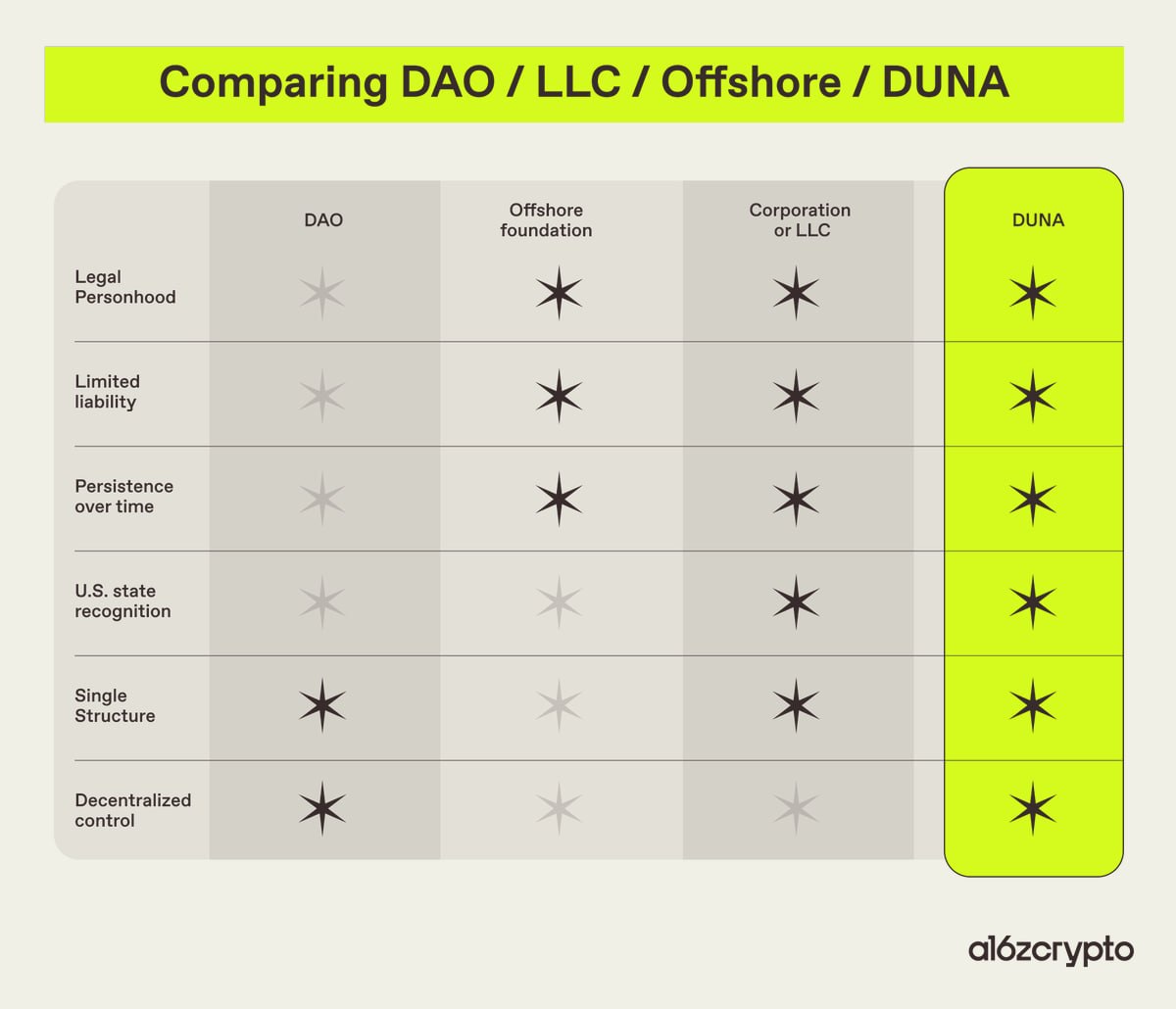 From corporation to crowd: How organizations evolved through time and technology. The DUNA offers another path: a U.S.-recognized legal entity built for decentralized control.
 New Jersey asks Supreme Court to review Kalshi case, bringing prediction markets closer to a major legal showdown over state gambling laws
Sources
20 records from 16 domains
globallegalinsights.com
sec.gov
courthousenews.com
es.tradingview.com
x.com
nber.org
varnavideslaw.com
trmlabs.com
bitcoinfoundation.org
espn.com
sportspro.com
whitehouse.gov
classlawgroup.com
facebook.com
circle.com
home.treasury.gov
Community notes
Spot something off or out of date? Drop a note. Editors review topic notes daily and roll accepted fixes into the explainer — contributors are recognized in the monthly $SQUID drop.
Loading notes…
Help improve this topic
Have a story or tip about this topic? Submit it. See something missing? Leave a note. Editors review daily; accepted submissions and fixes count toward the monthly $SQUID drop.