
Japan is integrating crypto into mainstream finance via securities reclassification, a 20% flat tax, pension allocations, bank stablecoin launches, and Bitcoin-linked products — a coordinated regulatory and institutional shift.
+36 sources across the wider coverage universe
 Japan approves bill reclassifying crypto as financial products, slashing tax from 55% to flat 20%2026-04
 Rakuten Wallet integrates XRP for 44M users, enabling spending at 5M merchants across Japan2026-04
 eole becomes first Japan-listed company to buy HYPE, acquiring 1,078 tokens and planning ¥100 million allocation2026-07
 Pyth Pro launches 100+ equity feeds across Hong Kong, mainland China, South Korea and Japan, targeting 450+2026-07
 Nomura finds 65% of Japanese institutional investors see crypto as vital portfolio diversifier, 80% plan to invest2026-04
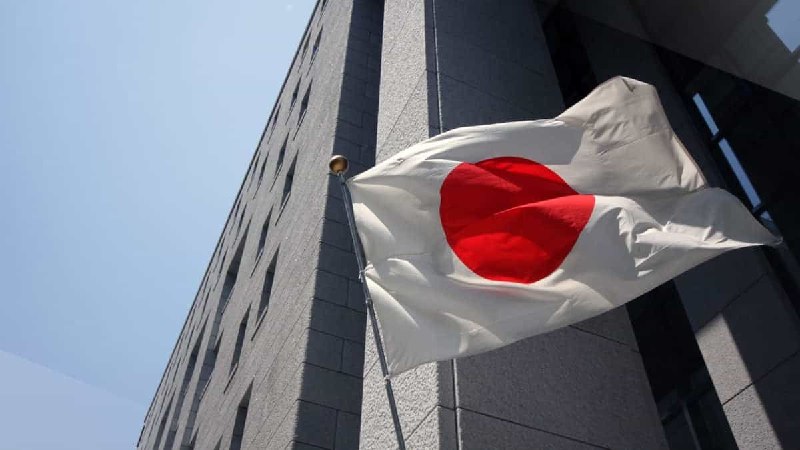 Japan’s JSCC teams up with Mizuho and Nomura to pilot blockchain-based government bond collateral, testing real-time settlement with compliance safeguards2026-04
One of the world's third-largest economies is undergoing a quiet but consequential shift: Japan is systematically moving to integrate digital assets into its mainstream financial architecture, from pension allocation to stablecoin issuance to securities law overhaul.
The Regulatory Turning Point: Crypto as a Financial Instrument
For most of the past decade, Japan regulated cryptocurrencies as a distinct category under the Payment Services Act — useful for consumer protection, but structurally separate from the securities framework governing stocks and bonds. That separation is now ending.
In mid-2026, Japan's parliament advanced and passed through the lower house a sweeping bill to reclassify crypto assets as financial instruments under the Financial Instruments and Exchange Act, the same legal framework that governs equities and derivatives. The practical consequences are significant:
- Tax reform: The maximum effective tax rate on crypto gains drops from 55% (a combined marginal income tax rate that applied under the old classification) to a flat 20%, aligning crypto with capital gains treatment for listed securities. The new rate is expected to take effect in 2028.
- Insider trading rules: For the first time, Japan will apply insider trading prohibitions to crypto markets — a step that institutional investors and regulated exchanges have long sought as a prerequisite for serious capital allocation.
- ETF pathway: Reclassification opens a legal route to crypto exchange-traded funds on the Tokyo Stock Exchange, with analysts and exchange operators anticipating crypto ETF launches as early as 2027.
The bill has cleared the Lower House and was advancing to the Upper House as of mid-2026. Bitbank CEO Sota Watanabe publicly welcomed the direction, noting that reform pressure had grown alongside both global regulatory precedents and surging domestic investor demand.

Japan approves bill reclassifying crypto as financial products, slashing tax from 55% to flat 20%
55% → 20% gets all the attention, but ~90% of Japanese exchanges already operate at a loss. Layering FIEA-grade disclosure requirements and insider trading compliance across 105 approved tokens doesn't just regulate the market — it consolidates it. Smaller exchanges get priced out by compliance costs, megabanks finally get the green light to offer crypto-linked products, and Japan ends up with a TradFi-captured crypto market wearing a DeFi hat. The tax cut is the carrot; the FIEA reclassification is the leash.
Monetary Policy Context: The BOJ's Historic Rate Shift
Understanding Japan's crypto market dynamics requires understanding what the Bank of Japan is doing with interest rates — because Japan's ultra-loose monetary policy for decades shaped its capital flows in ways that ripple into risk asset markets globally.
On June 16, 2026, the BOJ's Policy Board voted 7–1 to raise its policy rate by 25 basis points to 1.0%, effective June 17. This marks the highest policy rate since 1995 — the first time in over three decades that Japan's benchmark rate has reached this level. The move was driven by a weak yen (touching approximately 160 against the US dollar), rising producer price inflation (climbing 6.3% year-over-year in May, led by energy costs), and a broader normalization mandate from the BOJ under Governor Kazuo Ueda.
For crypto markets, the immediate reaction was muted. Analysis in the aftermath found no "meaningful disruption" to Bitcoin prices or broader digital asset markets following the rate decision — a notable contrast to the volatility spikes that had sometimes accompanied earlier BOJ policy surprises in 2024. This relative stability may reflect a maturing relationship between macro rates and crypto pricing, or simply that the 25bp move had been sufficiently telegraphed.
The longer-term question is different. As Japanese government bond yields rise and the yen stabilizes, the famous "yen carry trade" — in which investors borrow cheaply in yen to buy higher-yielding assets globally — unwinds. Partial carry trade unwinds have historically corresponded with broad risk-asset selling. Traders were watching closely ahead of the June rate decision for exactly this reason, and the absence of a disruptive outcome was treated as broadly constructive for risk assets including crypto.
Readers are tracking Japan not as a crypto laggard catching up, but as the jurisdiction where legacy financial giants — megabanks, post offices, Sony — are racing to own the yen-denominated settlement layer before the FSA locks in the rulebook.
Institutional Allocation: Pensions Enter the Market
The most structurally significant development for long-term crypto market depth in Japan may not be the tax reform or the rate decision — it may be pension money.
Japan's National Business Corporate Pension Fund is planning to allocate approximately 1% of its total assets under management to cryptocurrencies within fiscal year 2026, investing via passive funds. A separate Japan SME pension fund is exploring a similar 1% allocation by FY2026, described internally as a cautious, exploratory position.
These allocations are small in percentage terms but large in absolute context. Japan's corporate pension system manages trillions of yen in assets; even a 1% reallocation toward crypto passive products moves meaningful capital. More importantly, it sets precedent. Japanese institutional investors are famously conservative and consensus-driven: when pension committees approve a new asset class, it often signals that broader institutional adoption across insurance companies, endowments, and trust banks becomes socially and fiduciarily acceptable.
The passive fund structure is deliberate. Pension allocators are not making directional bets on individual tokens; they are treating digital assets as a new asset class deserving a modest diversification allocation, similar to how global infrastructure or timber entered institutional portfolios in earlier decades.
Rakuten Wallet integrates XRP for 44M users, enabling spending at 5M merchants across Japan
Rakuten Wallet listed XRP as a tradable asset and payment method starting April 15, connecting it to the 44 million-user Rakuten Pay network and over 5 million merchant locations in Japan. Users can convert Rakuten Points — worth roughly $23B across 3+ trillion points issued — into XRP via the FSA-licensed exchange, then load balances into Rakuten Cash for spending. The catch: users never hold XRP at point of sale and merchants receive yen, making this more of a crypto-rail payments upgrade than direct adoption. A planned Rakuten Bank integration by Q3 2026 could add fiat-to-XRP conversion for another 17 million banking accounts.
Metaplanet and the Bitcoin Treasury Strategy
Japan has its own MicroStrategy-equivalent in Metaplanet, a Tokyo-listed firm that has adopted an aggressive Bitcoin accumulation strategy as its primary corporate mandate. In 2026, Metaplanet announced the acquisition of Siiibo Securities for approximately JPY 2.1 billion (roughly $13 million), gaining a regulated securities license and a distribution platform.
The Siiibo acquisition is strategically important because it gives Metaplanet the infrastructure to launch Bitcoin-linked bond products — financial instruments that allow retail and institutional investors to gain BTC exposure through a familiar fixed-income wrapper. Japan has a deep bond culture; structured products tied to Bitcoin return profiles could reach domestic investors who would not directly custody crypto.
This mirrors the broader global pattern, pioneered by MicroStrategy in the US, of using corporate balance sheets and capital markets infrastructure to create leveraged Bitcoin exposure vehicles. Japan's regulatory evolution — particularly the forthcoming ETF pathway and the securities reclassification — provides a more hospitable environment for these products than existed even two years ago.
Stablecoins: The Big Three Banks Move Together
Japan's three largest commercial banks — MUFG, SMBC, and Mizuho — announced plans to jointly issue a yen-denominated stablecoin by March 2027. This is not a startup initiative or a fintech experiment; it is the core of the Japanese banking establishment coordinating on programmable money infrastructure.
The joint stablecoin effort sits alongside parallel private-sector work. SMBC Nikko and Hatapro, operating under a joint venture called "Proof of Japan," have demonstrated agentic payments for travel — a system in which AI agents can discover, reserve, and pay for local Japanese experiences within user-defined spending rules, using payment infrastructure from Kite. This type of application illustrates why stablecoins matter beyond speculation: programmable, rule-bound payment rails enable autonomous agent-to-business settlement in ways that traditional bank transfers cannot.
Japan's stablecoin regulatory framework, updated in 2023 to permit trust bank issuance, is among the most developed in the G7. The MUFG/SMBC/Mizuho initiative would represent the largest bank-issued stablecoin consortium anywhere in the developed world if it launches on schedule.
Nomura finds 65% of Japanese institutional investors see crypto as vital portfolio diversifier, 80% plan to invest
Japan's Repo and Settlement Infrastructure
Japan's financial plumbing is already substantial at scale. The country's repo market processes approximately $1.5 trillion in transactions daily, making it the second-largest in the world after the United States. Major infrastructure providers like Broadridge are processing $340–400 billion in repo transactions daily on the Canton Network, a permissioned blockchain for institutional financial markets.
This matters for crypto's institutional future in Japan because repo markets are a bellwether for how seriously traditional finance is engaging with distributed ledger technology. When the second-largest repo market in the world is running meaningful daily volume on blockchain-based settlement infrastructure, the "crypto vs. TradFi" framing becomes increasingly obsolete. The question shifts to which blockchain infrastructure standards will dominate institutional settlement — and Japan is positioned as a key proving ground.
That question now has a concrete answer in progress. In August 2026, MUFG — through four group companies including MUFG Bank and Mitsubishi UFJ Trust and Banking — launched a proof-of-concept with Digital Asset and Progmat to settle Japanese government bond repo transactions on Canton, pairing onchain delivery-versus-payment of bonds and digital money with a lending protocol from Secured Finance that automates the rest of the trade lifecycle. The pilot was selected under the FSA's Payment Innovation Project back in February 2026, so it carries regulatory sponsorship rather than running as an unsanctioned bank experiment. It is still a proof-of-concept, not production volume — the gap between Broadridge's daily hundreds of billions and a bank consortium testing DvP mechanics is the gap between infrastructure already running and infrastructure being proven safe to run at Japan's actual $1.5 trillion repo scale. Whether MUFG converts this into live settlement, and how fast, is the number that would confirm Japan's largest bank is willing to move real JGB collateral onchain rather than just prototype it.
SBI Group, Japan's largest online financial conglomerate, has been a consistent institutional backer of XRP and Ripple's payment network for cross-border settlement, and continues to operate one of the largest crypto exchange ecosystems in Japan through SBI VC Trade.
- 01Yen stablecoin infrastructure race
Multiple clicks on JPYC, Project Pax (MUFG/SMBC/Mizuho), Sony Bank's Soneium stablecoin, and Japan Post Bank's 2026 digital currency reveal readers tracking which institution seizes the onchain yen settlement standard.
- 02FSA regulatory overhaul timeline
Readers repeatedly clicked reclassification-as-financial-product stories, tax reform blueprints, and the DAO token amendment — signaling close attention to the FSA's multi-year effort to rewrite Japan's entire crypto legal framework.
- 03Metaplanet Bitcoin accumulation
Japan's MicroStrategy proxy attracted clicks across bond-issuance and BTC-purchase announcements, reflecting reader appetite for a locally listed, yen-denominated vehicle for institutional Bitcoin exposure.
- 04Corporate exchange consolidation
Sony's WhaleFin relaunch, Gate group's Coin Master acquisition, and SoftBank/PayPay's stake in Binance Japan show readers watching which conglomerate controls Japanese retail crypto distribution.
- 05Macro debt and bond market risk
Headlines linking Japan's record 30-year bond yields and $307T global debt to Fed money-printing and Bitcoin uplift drew clicks from readers treating Japan's JGB market as a macro trigger for crypto.
- 06Emerging-market Bitcoin adoption framing
The top-clicked headline grouped Japan with Pakistan, Nigeria, and Turkey, revealing that readers view Japan's crypto pivot through a currency-risk and capital-flight lens, not purely as a tech story.
Regulatory Guardrails: Bitbank and Offshore Restrictions
Not all of Japan's crypto regulatory movement is permissive. Bitbank, one of Japan's licensed exchanges, moved in 2026 to restrict transfers linked to Polymarket — the US-based prediction market platform — warning users that accounts conducting such flows risk being frozen.
This reflects a persistent tension in Japan's regulatory approach: the Financial Services Agency (FSA) has been methodical about licensing domestic exchanges and holding them to strict AML and know-your-customer standards, while remaining skeptical of offshore platforms that fall outside Japanese jurisdiction. Japanese users transacting with unlicensed foreign platforms expose themselves to account restrictions at the domestic exchange layer.
The Bitbank action is consistent with FSA enforcement posture and signals that Japan's regulatory sophistication cuts both ways: the same rigor that enables pension funds to allocate to crypto also enforces hard perimeters around unlicensed offshore activity.
That domestic rigor tightened again in August 2026, when the FSA and Japan's National Police Agency jointly requested that licensed exchanges adopt 11 fraud-prevention measures, citing an escalation in scam sophistication and cases where fraud proceeds were being routed through crypto-exchange accounts. Two of the eleven target the mechanism scammers actually exploit: a mandatory delay before withdrawal after a fiat deposit or crypto purchase, and a separate delay after registering a new withdrawal address — both aimed at the narrow window between a victim being persuaded to fund an account and the money leaving Japan's jurisdiction for good. That window is where crypto fraud diverges from ordinary bank fraud: a wire can sometimes be recalled or frozen mid-transfer, but a completed blockchain transfer to an offshore wallet is final, so the FSA is engineering friction into the one step it can still control. The directive is a request routed through the exchange industry association rather than a legislated rule — a softer instrument than the securities reclassification bill, but aimed at the same underlying goal: treating crypto exchanges as regulated financial infrastructure with obligations that scale alongside the money now moving through them.
Tax Reform: What the 20% Flat Rate Means in Practice
Japan's current crypto taxation under income tax rules creates a severe disincentive for active trading or long-term holding by high-income earners. Gains are added to ordinary income, pushing effective rates to 55% at the top marginal bracket — compared to the 20% applied to stocks and futures.
The proposed 20% flat capital gains tax, expected from 2028, eliminates this asymmetry. For context, Japan has a substantial retail crypto trading population; the previous tax regime was widely credited with suppressing domestic market activity and pushing sophisticated Japanese traders toward offshore platforms or into tax structuring.
The insider trading framework introduced alongside the tax reform is arguably equally important for institutional confidence. Without insider trading rules, institutional investors face reputational and compliance risks around information asymmetry in crypto markets. The new framework — modeled on securities law precedents — extends familiar compliance obligations to crypto, making it easier for regulated institutions to participate without carve-outs or exceptions.
- 2023-09milestone
SoftBank & PayPay acquire 40% stake in Binance Japan
- 2024-04milestone
Metaplanet pivots to Bitcoin treasury strategy, begins bond-funded BTC purchases
- 2024-07regulatory
FSA grants limited rights to DAO member tokens, proposes legal-nature amendment
- 2024-12regulatory
Japan ruling coalition releases 2026 tax reform blueprint proposing crypto reclassification
- 2025-03launch
MUFG, SMBC, Mizuho announce Project Pax cross-border stablecoin trial via SWIFT API
- 2025-06launch
Japan launches JPYC, first globally tradable deposit-backed yen stablecoin
- 2025-09milestone
SBI issues 10 billion yen onchain bond with XRP rewards for retail investors
- 2026-01launch
Japan Post Bank announces 2026 digital currency linking ¥190T in deposits to blockchain rails
Outlook
Japan is executing a coherent, if slow-moving, integration of digital assets into its established financial architecture. The pieces — reclassification legislation, pension allocation, bank stablecoin issuance, securities licensing for Bitcoin-linked products, and a forthcoming ETF pathway — are mutually reinforcing rather than isolated initiatives.
The BOJ's rate normalization adds a macro variable worth watching: further rate hikes could pressure yen carry trades and introduce volatility in global risk assets, but Japan's own domestic crypto market may deepen regardless, insulated by local structural demand from pension reform and the regulatory tailwind. The 2027–2028 window, when ETFs and the flat tax rate are both expected to be live, may mark the moment Japan transitions from an interesting jurisdiction to a structurally important one for global crypto capital flows.
Latest Japan news
Japan approves bill reclassifying crypto as financial products, slashing tax from 55% to flat 20%Rakuten Wallet integrates XRP for 44M users, enabling spending at 5M merchants across JapanNomura finds 65% of Japanese institutional investors see crypto as vital portfolio diversifier, 80% plan to invest Coincheck Group partners with DFNS to build institutional-grade digital asset custody in Japan
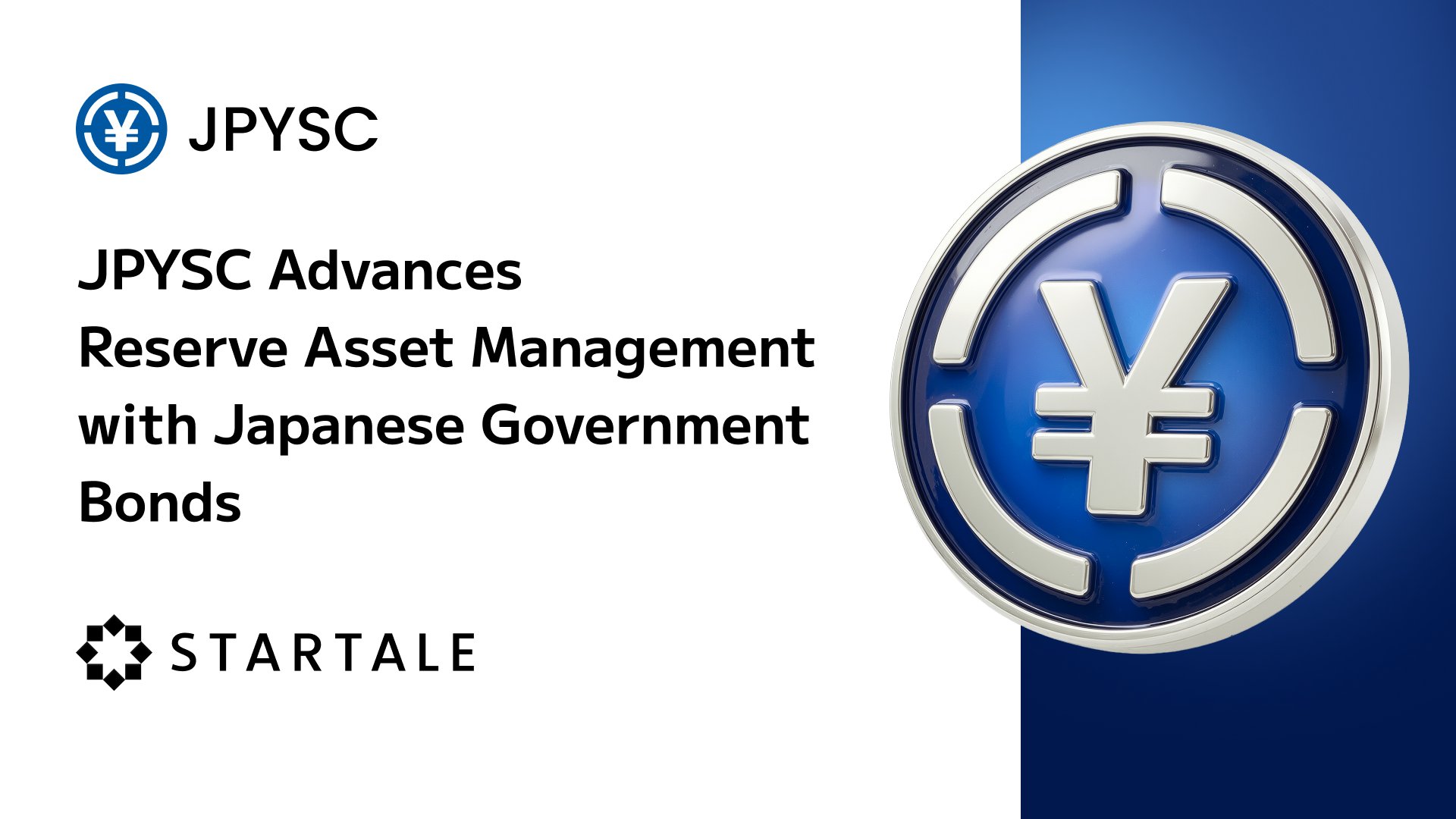 SBI Shinsei Trust Bank and SBI VC Trade commit ¥1B to JPYSC, advancing stablecoin use cases through reserve asset management with Japanese Government Bonds
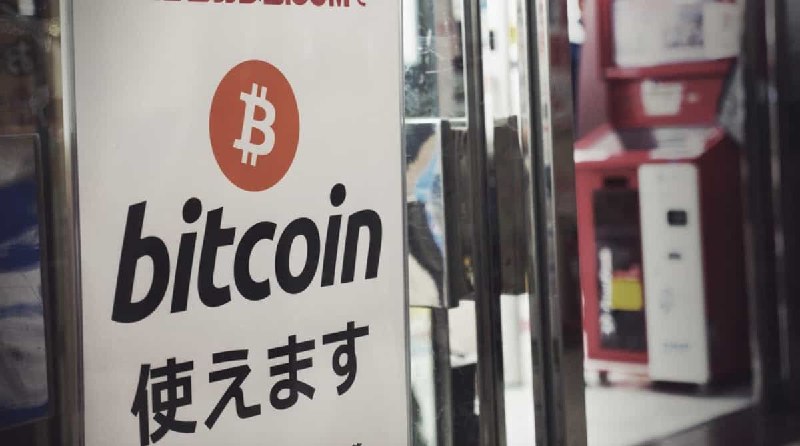 Japan-listed Remixpoint sells all ETH, SOL, XRP and DOGE holdings for $5.5M, shifting to a bitcoin-only strategy with roughly 1,506 BTC worth $115M
Sources
2 records from 2 domains
Community notes
Spot something off or out of date? Drop a note. Editors review topic notes daily and roll accepted fixes into the explainer — contributors are recognized in the monthly $SQUID drop.
Loading notes…
Help improve this topic
Have a story or tip about this topic? Submit it. See something missing? Leave a note. Editors review daily; accepted submissions and fixes count toward the monthly $SQUID drop.