
Deep explainer on equities for crypto natives, covering how stocks work, ETFs, tokenized equities, onchain RWA infrastructure, SEC rules, and how Binance, Coinbase, Securitize, Nasdaq–Kraken and others are merging TradFi and DeFi.
+22 sources across the wider coverage universe
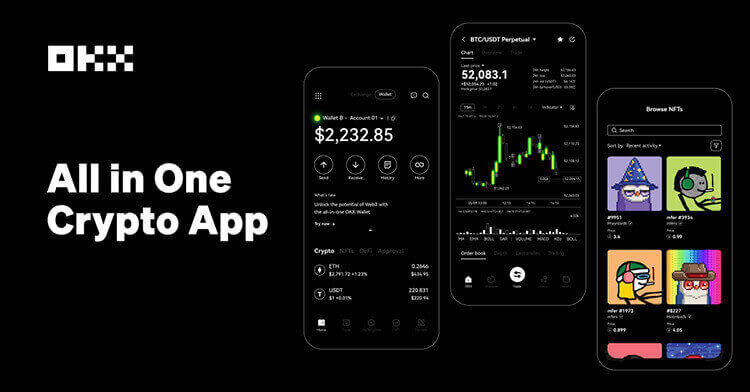 OKX launches perpetual futures for equities including NVDA, AAPL, and META with up to 5x leverage, blurring crypto-TradFi lines2026-03
 Securitize partners NYSE to bring equities onchain, leveraging Avalanche to enable regulated tokenized stocks with faster settlement and growing institutional adoption2026-04
 Uniswap’s Hayden Adams blasted Citadel for urging the SEC to regulate DeFi developers like Wall Street intermediaries, mocking its claim that open protocols lack “fair access.” The clash highlights rising tension over tokenized equities and DeFi oversight.2025-12
 Vitalik Buterin said prediction markets feel healthier than traditional markets because they attach money to beliefs, enforce accountability, and use bounded prices that reduce hype, reflexivity, and pump-and-dump dynamics common in equities and social media.2025-12
 Nasdaq and Kraken team up to tokenize listed equities for 24/7 blockchain-based stock trading, eyeing early 2027 launch pending SEC nod2026-03
 Tokenized equities may reduce intermediaries, cut settlement friction and unlock billions in savings while expanding access to private markets2026-03
Equities in the Crypto Era: A Comprehensive Guide
Shares in companies, often called equities, represent an ownership claim on a business and a residual right to whatever is left after debts are paid. As crypto exchanges, DeFi protocols, and real‑world asset tokenization mature, those same ownership claims are increasingly being bridged onchain, blurring the line between traditional stock markets and blockchain‑based finance.
What Equities Are and Why They Matter
At its core, equity is a simple concept: it is the value that remains when you subtract what is owed from what is owned. For an individual, home equity is the value of the property minus the mortgage and other liens; for a company, shareholder equity is the difference between total assets and total liabilities, and it is this residual interest that is split into shares and sold to investors. Owning equity in a company gives investors an economic stake in its future, aligning their incentives with long‑term performance and growth. In the public markets, those shares are standardized, freely transferable instruments that can be traded on exchanges throughout the trading day, turning corporate ownership into a highly liquid asset class. Over decades, equities have become one of the primary vehicles for long‑term wealth creation and capital formation.
The term equities is often used interchangeably with stocks, but it is slightly broader, encompassing both publicly listed shares and privately held ownership in companies. Public equities are shares listed on regulated stock exchanges and accessible to a wide pool of investors, whereas private equity refers to ownership in firms that are not listed, often limited to institutional investors or accredited individuals. Equities also differ fundamentally from debt: bondholders and lenders are entitled to fixed repayments and stand ahead of shareholders in liquidation, while equity holders receive variable returns in the form of price appreciation and dividends but bear the first losses if the company underperforms. Because of this residual nature, equities sit at the riskier end of the corporate capital structure, but they also capture most of the upside when firms succeed.
The mechanics of equity ownership carry important legal and economic implications. Shareholders typically enjoy voting rights on key corporate decisions such as electing directors, approving mergers, and authorizing new share issuance, although the strength of these rights varies across jurisdictions and share classes. They may also receive dividends, which are discretionary distributions of profits decided by the board, and they benefit from limited liability, meaning they cannot lose more than the value of their investment. The combination of economic upside, voting power, and limited liability has made equities the dominant instrument for aligning the interests of founders, employees, and outside investors in modern corporations.
For a crypto‑native audience, equities represent something quite different from the permissionless tokens that dominate onchain markets. Whereas anyone can typically create and list a token on a decentralized exchange with minimal oversight, issuing equity is a heavily regulated process embedded in a broader legal framework that governs corporate law, securities regulation, and investor protection. This legal scaffolding is precisely what tokenization efforts now seek to bridge to blockchains: the idea is not to replace the underlying legal claim, but to represent it digitally in a way that can interoperate with smart contracts while preserving the rights and protections attached to the original security.
Equities, ETFs, and Crypto Assets: Conceptual Distinctions
To understand how equities intersect with crypto, it is useful to distinguish them from two other key instruments: exchange‑traded funds (ETFs) and cryptocurrencies. An ETF is a pooled investment vehicle that holds a basket of assets, such as stocks, bonds, or commodities, and issues shares that trade on an exchange like a stock. Investors in an ETF do not directly own the underlying securities; rather, they own shares of the fund, which in turn owns the assets in the basket. This structure allows for diversified exposure to entire sectors or indices through a single tradable instrument.
Cryptocurrencies, by contrast, are digital assets native to blockchains rather than claims on off‑chain corporate entities. A cryptocurrency like bitcoin or ether exists solely as a record on a distributed ledger maintained by a network of nodes rather than being issued by a corporation or backed by traditional assets. Holders do not own a share of a firm’s balance sheet; instead, they own a token that may confer economic rights (such as protocol fees), governance powers, or simply speculative value depending on the design. While some governance tokens resemble equity in that they grant voting rights and exposure to a project’s success, they typically lack the legal protections, disclosure obligations, and enforcement mechanisms that come with regulated securities.
ETFs sit between these categories, offering stock‑like trading on centralized exchanges but fund‑like exposure and governance. In practice, equity ETFs have become a core building block for both traditional portfolios and, increasingly, multi‑asset crypto platforms that are adding access to stocks and ETFs alongside digital assets. The convergence of equities, ETFs, and cryptocurrencies on the same platforms is one of the defining trends in today’s market structure, setting the stage for tokenized and onchain versions of all three.

OKX launches perpetual futures for equities including NVDA, AAPL, and META with up to 5x leverage, blurring crypto-TradFi lines

This is good More money to be spent 😕
How Traditional Equity Markets Work
Traditional equity markets evolved to solve two fundamental problems: helping companies raise capital and allowing investors to buy and sell ownership stakes efficiently. Companies typically issue shares through initial public offerings (IPOs) or direct listings, in which new or existing shares are sold to the public via underwriters and exchanges. Once listed, those shares trade in secondary markets where prices are determined by supply and demand, incorporating information about earnings, growth prospects, macroeconomic conditions, and investor sentiment.
The infrastructure that underpins this trading is complex and highly intermediated. When an investor places a stock order through a broker, that order is routed to an exchange or alternative trading venue, where it is matched against other orders in a central limit order book or internalized by a market maker. Trades are then reported, cleared, and settled through clearinghouses and custodians, a process that historically could take several days but has gradually shortened as markets modernize. Despite improvements, the system still involves multiple reconciliations between broker‑dealers, clearing brokers, custodians, and central securities depositories, each maintaining their own ledgers and risk controls.
From a regulatory perspective, equity markets are heavily supervised to ensure fair dealing, transparency, and investor protection. Regulators impose listing standards, disclosure requirements, and ongoing reporting obligations on issuers, and they license and oversee intermediaries such as exchanges, brokers, and investment advisers. Market abuse, insider trading, and manipulation are subject to civil and criminal penalties, and rules govern best execution, order handling, and conflicts of interest. This framework is more prescriptive and enforcement‑oriented than the regulatory regimes that historically applied to crypto, although the gap is narrowing as digital assets fall under securities and market‑abuse rules in more jurisdictions.
Stock exchanges themselves function as regulated marketplaces where listed equities are traded during defined hours. While some venues offer extended or after‑hours trading, equities do not yet trade continuously around the clock in the way crypto assets do on global exchanges. This temporal mismatch is one reason tokenized equity initiatives are carefully designed: when a token trades 24/7 but the underlying stock trades only during local market hours, any price dislocations and volatility gaps must be managed to preserve market integrity and avoid creating misleading or unhedgeable exposures.
Equity ETFs and derivatives expand this ecosystem further. ETFs track indices such as the S&P 500 by holding the underlying stocks or synthetic exposures, while options and futures allow investors to hedge, speculate, or express views on volatility. Crypto exchanges have begun offering perpetual futures on leading stocks such as Nvidia, Tesla, Apple, and Meta, marketed as “X‑Perps” that trade 24/7 with leverage and without traditional brokerage accounts, often under a European regulatory wrapper. These products illustrate how equity exposure can be repackaged in derivative form and delivered through crypto‑native interfaces, even before tokenization of the underlying shares takes hold.
Readers click tokenized-equity stories not for the technology but for institutional legitimacy signals — every top-clicked headline names a recognizable TradFi counterparty (Nasdaq, NYSE, Robinhood, BlackRock), revealing that the audience is tracking *who* is validating the thesis, not how the rails work.
The Convergence of Equities and Crypto Markets
As crypto matured, many retail traders and institutions began treating digital assets and equities as part of a single opportunity set rather than separate universes. Capital flows have rotated between the two depending on volatility, macro conditions, and regulatory clarity, with periods in which retail interest has shifted from crypto to equities and back again as narratives and risk appetites change. For exchanges, the strategic response has been clear: build multi‑asset platforms where users can trade both traditional securities and crypto within a unified interface, using the same wallets, collateral, and funding rails.
One of the most significant moves in this direction has come from Binance, the world’s largest crypto exchange by volume, which partnered with brokerage infrastructure provider Alpaca to launch trading in U.S. equities and ETFs for non‑U.S. users. Through Alpaca’s broker‑dealer and custody stack, Binance users can access more than 7,000 U.S. stocks and ETFs with zero commissions and fractional share purchases starting at around five dollars, funded in stablecoins like USDC or USDT as well as BNB and certain other digital assets. Binance offers extended trading hours, with near around‑the‑clock availability for select equities, essentially bringing the always‑on feel of crypto markets to U.S. stocks within a regulatory structure provided by Alpaca and a New York‑based broker‑dealer called Nest Trading.
Early data suggest substantial demand for such integrated products. Research cited in industry reporting indicates that Binance’s U.S. equities product averaged roughly 143 million dollars in daily trading volume during its first nine days, a level that reportedly exceeded the peak week for the entire tokenized equity spot market over the same period. While these numbers may evolve as liquidity and user familiarity grow, they underscore how quickly a large crypto venue can bootstrap meaningful volumes once it offers direct access to regulated equities within a familiar trading interface.
Other major players are pursuing their own convergence strategies. Coinbase announced the acquisition of The Clearing Company, a regulated prediction markets startup, as part of a broader plan to build an “Everything Exchange” that would eventually support crypto, equities, derivatives, and event‑based markets within a single, compliant platform. The idea is that users will be able to trade not only tokens and stocks but also futures linked to macroeconomic or political outcomes, with a clearing infrastructure tailored to event‑based contracts. Thought leaders such as Vitalik Buterin have argued that prediction markets can, in some respects, be healthier than traditional equity markets because they tie capital to explicit beliefs and bounded payoffs, reducing some of the reflexivity and pump‑and‑dump dynamics that plague both meme stocks and speculative tokens. Although these views are debated, they highlight how crypto‑native design patterns might influence the future of equity and event trading.
Crypto derivatives platforms are also leaning into equities. OKX, for example, has introduced perpetual swaps on a basket of leading technology stocks—branded as “Magnificent 7 X‑Perps”—that allow users to gain leveraged, 24/7 synthetic exposure to companies like Nvidia, Tesla, Apple, and Meta, offered as a regulated product for European Economic Area users and marketed as requiring no conventional brokerage account. These contracts do not involve direct ownership of the underlying equities but instead track their prices synthetically, illustrating another vector through which crypto venues can bring equity‑like risk into their ecosystems without yet tokenizing the underlying shares.
The convergence between equities and crypto is not purely speculative. Stablecoin vaults, private credit protocols, and real‑world asset (RWA) platforms increasingly reference yields and collateral drawn from public equities, whether via tokenized baskets or traditional exposure within off‑chain structures. From the perspective of sophisticated crypto users, equities are becoming one more building block in a broader onchain portfolio strategy, used for diversification, yield enhancement, or hedging against macro shocks.
Tokenized Equities: Concepts and Design Choices
A central development at the intersection of equities and crypto is the emergence of tokenized equities, sometimes called tokenized stocks or tokenized securities. Chainlink defines tokenized stocks and equities as digital representations of company shares on a blockchain, where the token mirrors the price and economic rights of the underlying security. Tokenized stocks typically refer to publicly traded shares like those in major indices, while tokenized equity broadens the scope to include private company shares and other forms of ownership that are not listed on traditional exchanges. The goal is to move the record of ownership and the mechanics of settlement onto distributed ledgers while preserving the legal claims that make equities valuable.
Legal practitioners describe tokenization of real‑world assets as the process of representing legal or beneficial ownership rights through cryptographically secured digital tokens recorded on a distributed ledger. In this view, tokenized equities are one category within a broader RWA tokenization trend that also encompasses real estate, art, private credit, and fund interests. Tokens can represent on‑chain ownership directly, off‑chain claims linked through legal contracts, or hybrid arrangements in which certain features remain in traditional registries while others are managed onchain. The token is not the equity itself but a digital wrapper or recorded claim that points back to the underlying security and its legal documentation.
Design choices in tokenized equity systems vary along several dimensions. One key distinction is between fully backed and synthetic tokens. Fully backed tokenized stocks are issued on the basis of actual shares held in custody by a regulated entity; for each token outstanding, there is a corresponding share held off‑chain, and mechanisms exist for redemption or conversion between the token and the traditional security. By contrast, synthetic equity tokens and perpetual futures reference a stock’s price without necessarily being backed one‑for‑one by the underlying shares; instead, they rely on collateralized positions, liquidity providers, or hedging strategies to maintain price parity. Each approach carries different risks and regulatory implications, particularly around investor rights and the ability to exercise voting or redemption privileges.
Another design axis concerns where key functions occur: onchain, off‑chain, or in a hybrid model. A fully onchain system might encode issuance, transfer, compliance checks, and settlement entirely in smart contracts on a public blockchain, as seen in some regulated tokenized equity platforms built on networks like Solana or Avalanche. Off‑chain or hybrid systems may retain traditional share registries and only tokenize beneficial interests or derivatives, using blockchain primarily as a record‑keeping layer or settlement rail. The choice often depends on regulatory requirements, scalability needs, and the comfort level of issuers and intermediaries with public blockchain infrastructure.
A third dimension is the degree of programmability and composability. Tokenized equities that conform to common token standards and integrate with oracle networks can be used as collateral in DeFi lending protocols, included in automated portfolio strategies, or plugged into onchain derivatives and structured products. By making equities machine‑readable and interoperable with smart contracts, tokenization aims to unlock new forms of financial engineering and continuous portfolio management that are difficult to implement in traditional brokerage systems. However, this same composability can amplify risks if not carefully governed, particularly when leverage, rehypothecation, and cross‑protocol dependencies proliferate.
Comparing Traditional and Tokenized Equity Exposures
To clarify these distinctions, it is useful to contrast traditional equities, ETFs, tokenized equities, and equity‑linked crypto derivatives in conceptual terms.
| Instrument type | Underlying claim | Trading venue | Rights and protections |
|---|---|---|---|
| Listed stock | Direct share in a corporation | Stock exchange or broker | Voting, dividends, legal shareholder rights |
| Equity ETF | Share in a fund that holds a stock basket | Stock exchange or broker | Indirect exposure, fund governance, no direct votes in holdings |
| Fully backed tokenized stock | Token representing a custodied share | Onchain or hybrid platform | Depends on legal structure; may include dividends and voting via intermediary |
| Synthetic equity perpetual swap | Derivative referencing stock price | Derivatives or crypto exchange | No ownership, no voting or dividends; pure price exposure |
| Native crypto governance token | Rights in a protocol, not a company | Crypto exchanges and DEXs | Onchain governance, fee rights; generally not legal equity |
In traditional stocks and ETFs, investor protections are anchored in securities laws, exchange rules, and fund regulations, enforced by courts and regulators. In tokenized equities, the picture is more nuanced: legal rights still exist, but the enforcement path may run through specialized issuers, trust structures, or digital transfer agents rather than directly through the blockchain. Synthetic products, whether perpetual swaps or contracts for difference, provide economic exposure but not ownership; for crypto‑native users, understanding which category a given product belongs to is critical for assessing risk, counterparty dependence, and recourse in adverse scenarios.
Securitize partners NYSE to bring equities onchain, leveraging Avalanche to enable regulated tokenized stocks with faster settlement and growing institutional adoption

Nasdaq got SEC approval for tokenized Russell 1000 settlement on March 18, NYSE dropped this Securitize MOU six days later — Wall Street's tokenization race just compressed from years to weeks. Domingo's distinction between native blockchain issuance vs derivative wrappers (looking at you, every synthetic tokenized equity protocol) is the part that matters — NYSE is designating Securitize as the actual transfer agent, not just bolting tokens onto existing DTCC rails. If 24/7 stablecoin-settled markets kill T+1 pre-funding requirements, the capital efficiency unlock for institutions dwarfs the $18.9T BCG projection everyone keeps citing.
Major Tokenization Initiatives and Infrastructure
The tokenization of equities is no longer a theoretical concept; it is being piloted and deployed by both crypto‑native firms and some of the world’s largest traditional exchanges. On the regulated equity side, Securitize has emerged as a key infrastructure provider, building an end‑to‑end platform for issuing, managing, and trading tokenized securities under existing securities regulations. In collaboration with Jump Trading Group and Jupiter, Securitize launched fully onchain, regulated trading of tokenized equities on Solana, leveraging Jump’s liquidity provision via a proprietary automated market maker and Jupiter’s interface and routing for retail and institutional users. This stack aims to deliver institutional‑grade performance and real‑equity exposure in a fully onchain format, with KYC, transfer restrictions, and reporting embedded into the token and smart contracts.
Securitize has also partnered with the New York Stock Exchange through a memorandum of understanding to support tokenized securities, with Avalanche publicizing its role as a blockchain layer for NYSE‑linked tokenization initiatives. While the details are evolving, the intent is to explore how NYSE‑listed equities and other securities can be represented onchain with faster settlement and expanded access, potentially creating a bridge between one of the world’s most prominent stock exchanges and public blockchain infrastructure. This marks a significant shift from earlier tokenized stock experiments, which were often offered by offshore platforms with tenuous regulatory footing, toward initiatives that originate within the regulated core of traditional markets.
In parallel, Nasdaq is collaborating with Kraken to build a platform for 24/7 trading of blockchain‑based versions of listed equities, with an initial launch targeted around early 2027 subject to approval by the U.S. Securities and Exchange Commission (SEC). According to reporting on the partnership, Nasdaq will supply its market technology and experience with listed equities, while Kraken will contribute crypto‑native infrastructure and access to a global user base, creating a venue where tokenized versions of traditional stocks can trade continuously. If approved, this initiative could be a watershed moment, signaling that major exchanges see tokenized equities not as a threat to their core business but as an evolutionary step in market structure.
Market data and oracle infrastructure are another pillar of tokenized equities. SIX, the operator of the Swiss stock exchange, and BME, which runs Spanish exchanges, have partnered with Chainlink to bring data for Swiss and Spanish equities with a combined market capitalization of about two trillion euros onchain for the first time. This initiative delivers high‑quality reference prices and other data from regulated markets into blockchain applications through Chainlink’s oracle network, enabling DeFi protocols and tokenization platforms to reference accurate, tamper‑resistant equity data. Chainlink positions its infrastructure as a foundation for tokenization use cases more broadly, providing secure data feeds, compliance services, and interoperability tools that help connect traditional financial systems with onchain environments.
Crypto‑native chains and exchanges are also experimenting with tokenized equities directly. Mantle, an Ethereum Layer 2 network, has integrated xStocks tokenized equities in partnership with Bybit, BackedFi, and Flowdesk, enabling 24/7 trading of blockchain‑based versions of public stocks on an L2 with lower fees than mainnet Ethereum. This setup combines Bybit’s exchange expertise, BackedFi’s tokenization capability, and Flowdesk’s market‑making to deliver a tokenized equity market that runs on Mantle’s rollup infrastructure. Early commentary has emphasized both the promise of such L2‑based tokenization—lower costs, composability, and accessibility—and the challenges around liquidity depth, regulatory clarity, and security models that still depend on centralized issuers and custodians.
On the Sui blockchain, the AF100 Equities market has launched with an emphasis on user experience and low‑friction trading, including so‑called one‑click trading and dynamic gas that allows users to pay transaction fees in various assets rather than only the native token. Promoters highlight the ability to trade a mix of assets, including equities and commodities like oil, through a unified, high‑performance DeFi interface. While details about regulatory structure and asset backing are still emerging, this type of product underscores how new L1 ecosystems see tokenized equities as a flagship RWA use case alongside stablecoins and tokenized Treasuries.
Centralized exchanges are also pushing deeper into tokenized equities. MEXC, a global crypto exchange, has partnered with Ondo Finance to expand its tokenized equities offering by listing 17 additional tokenized U.S. stocks onchain, available through crypto trading pairs. To jump‑start liquidity, MEXC offered zero trading fees for the first thirty days on the new tokenized stock pairs, encouraging user adoption and market‑maker participation. Through this partnership, investors can gain exposure to select U.S. stocks via tokens that trade on MEXC’s crypto infrastructure instead of through traditional brokerage accounts. Such offerings illustrate the commercial appeal of tokenized equities for exchanges seeking to differentiate themselves and deepen user engagement with real‑world assets.
These efforts coexist with more derivative‑oriented approaches like OKX’s equity perpetuals, which do not tokenize shares but provide synthetic exposure, and with broader data initiatives like SIX–Chainlink that focus on feeding high‑quality equity information into onchain applications. Together, they form a growing ecosystem of tokenization, trading, and data verification infrastructure that is gradually making equities a first‑class citizen in the onchain world.
- 01tokenized equity infrastructure race↗
The Superstate Opening Bell launch and Kraken xStocks rollout show competing protocols building regulated onchain stock issuance, and readers want to know which stack wins.
- 02TradFi giants onchain validation↗
Nasdaq partnering with Kraken, NYSE partnering with Securitize, and BlackRock/Robinhood/Deutsche Bank appearing at EthCC gave readers credible signals that institutional adoption is structural, not speculative.
- 03crypto-equity macro correlation
The Black Monday story — simultaneous crashes in Nikkei, KOSPI, S&P futures, and BTC — and the inverse BTC-surge-while-equities-falter story together revealed that readers are actively watching whether crypto is a hedge or a correlated risk.
- 04regulatory pathway for tokenized stocks↗
The SEC DTC pilot, the Citadel-vs-DeFi clash, and Superstate's SEC-registered equity launch showed readers a real legal corridor forming, making the regulatory angle concrete rather than theoretical.
- 0524/7 global retail access↗
Robinhood on Arbitrum for European traders and OKX equity perps for NVDA/AAPL/META directly addressed the access gap that traditional exchanges enforce via market hours and geography.
- 06DeFi composability for tokenized equities↗
Stories on leveraged exposure, shorting, and liquidity provision for tokenized equities attracted readers curious whether onchain equities can do things impossible in TradFi.
Regulatory and Market Structure Implications
From the perspective of regulators, the key message has been that tokenization does not change the fundamental nature of securities. In a formal statement on tokenized securities, the U.S. SEC emphasized that it is possible to tokenize virtually any type of security, including stocks, bonds, notes, investment contracts, options on securities, and other instruments, but that doing so does not exempt these tokens from existing securities laws. Whether represented in traditional book‑entry form or as blockchain tokens, these instruments remain subject to registration requirements, disclosure obligations, and trading rules, unless a valid exemption applies. This position reinforces that tokenized equities, if they truly represent shares in companies, are squarely within the securities regulatory perimeter.
The SEC and other regulators have also made clear that intermediaries involved in tokenized securities—such as broker‑dealers, alternative trading systems, and custodians—must comply with the same licensing, custody, and investor protection rules that apply to traditional securities activity. This is why many tokenized equity initiatives partner with regulated entities like Securitize, Alpaca, or registered broker‑dealers, layering blockchain technology on top of existing regulatory permissions rather than bypassing them. For example, Binance’s U.S. equities trading for non‑U.S. users is powered by Alpaca’s broker API and custody, ensuring that the underlying stock transactions are executed and settled within a regulated market infrastructure even though the user experience is delivered through a crypto exchange interface.
Jurisdictional nuances also shape how tokenized equities are rolled out. Many early tokenized stock products were offered by platforms located outside the United States, targeting non‑U.S. users and operating under relatively permissive local regimes. Today, even as global exchanges like MEXC list tokenized U.S. stocks, they often restrict access for U.S. persons and incorporate compliance checks to satisfy both home‑country and U.S. securities rules. OKX’s equity perpetuals are marketed as a regulated product for European users, demonstrating that crypto exchanges are increasingly willing to work within local derivatives and securities frameworks when offering equity‑linked exposure. As major venues like Nasdaq and NYSE explore tokenization, they must secure explicit regulatory approval, as evidenced by the Nasdaq–Kraken plan being contingent on the SEC’s sign‑off.
Beyond legal classification, tokenized equities raise market structure questions. One issue is how to reconcile 24/7 onchain trading with limited underlying market hours. When tokenized shares or synthetic equity tokens trade around the clock, their prices can deviate from the underlying stock’s close during periods when the underlying market is shut. Market makers may bridge these gaps using futures, options, or correlated assets, but extreme volatility or illiquidity can create persistent dislocations. Regulators and exchanges must consider whether such off‑hours trading could confuse investors or undermine price discovery in the primary market.
Another issue is settlement finality and rehypothecation. In traditional markets, central counterparties and settlement systems manage counterparty risk and ensure that ownership records are updated correctly, albeit with some delay. Tokenized equities promise faster or even instantaneous settlement by recording transfers onchain, but if the underlying shares reside in omnibus accounts or complex custodian chains, the finality of onchain transactions may not perfectly match legal ownership. Legal frameworks for digital securities registries and transfer agents will play a crucial role in resolving these questions.
Large financial institutions are watching these developments closely. Leaders such as JPMorgan’s CEO have publicly endorsed tokenization of real‑world assets, including Treasuries and equities, as a way to improve efficiency and client experience, provided that appropriate safeguards like anti‑money‑laundering and know‑your‑customer controls are in place. Global regulators are likewise exploring how tokenized securities can coexist with existing rules, with some jurisdictions piloting sandboxes or specific digital asset regimes to accommodate onchain issuance and trading. Over time, the convergence of regulatory frameworks and technical standards will determine how far and how fast tokenized equities can scale.
Use Cases in DeFi and Onchain Finance
Once equities exist in tokenized form on public blockchains or permissioned ledgers that interoperate with them, they can be integrated into the broader DeFi and onchain finance ecosystem in numerous ways. One primary use case is as collateral in lending protocols. Tokenized equities can be deposited into smart contracts as overcollateralized backing for loans, stablecoins, or margin positions, much like ether, bitcoin, or liquid‑staking tokens are used today. The advantage is that borrowers can unlock liquidity against familiar off‑chain assets while still retaining economic exposure to the underlying stocks.
Another application lies in yield‑bearing strategies and structured products. DeFi vaults and RWA platforms already offer exposure to real‑world yields from assets such as U.S. Treasuries and private credit, and similar structures can be built around baskets of tokenized equities or equity ETFs. By wrapping tokenized equities into programmable vaults, protocols can implement automated rebalancing, covered call writing, or risk‑managed leverage strategies that pay out in stablecoins or other tokens. Such products can provide crypto users with equity‑linked returns without requiring traditional brokerage accounts, while still depending on regulated custodians and transfer agents beneath the surface.
Tokenized equities also enable more granular and transparent corporate actions. In theory, dividends could be paid automatically via onchain transfers to token holders, with smart contracts ensuring accurate record dates and payout calculations. Voting rights could be exercised through secure digital ballots tied to tokenized share balances, increasing participation in corporate governance and reducing reliance on intermediated proxy systems. These possibilities align with the idea of a “programmable cap table,” where all ownership and corporate actions are managed via code, although realizing this vision at scale will require legal recognition of blockchain‑based registries and robust digital identity solutions.
Several of the initiatives discussed earlier are already experimenting with such integrations. Securitize’s onchain equities on Solana are designed to plug directly into DeFi ecosystems, with Jump providing liquidity and Jupiter aggregating order flow to create deep markets where tokenized equities can trade alongside native tokens. By ensuring that these tokens are fully compliant securities, Securitize aims to make them suitable for institutional use while still unlocking onchain composability. Similarly, the SIX–Chainlink project provides the data backbone for DeFi protocols that may wish to build synthetic or collateralized products referencing Swiss and Spanish equities, knowing that price feeds are sourced from regulated exchanges.
On newer platforms like Mantle and Sui, tokenized equities are envisioned as part of broader DeFi ecosystems where users can move seamlessly between spot equity exposure, derivatives, lending, and other protocols. One‑click trading and dynamic gas payment on Sui, for instance, are meant to lower friction and make trading tokenized equities feel as smooth as swapping tokens on a DEX. Mantle’s integration of xStocks with Bybit and BackedFi illustrates how equity tokens can be plugged into existing centralized order books while also being usable within L2‑based DeFi protocols. Over time, such integrations might expand to include equity‑backed stablecoins, tokenized index funds, or cross‑margining systems that treat equities and crypto assets as part of a unified collateral pool.
From a portfolio‑construction standpoint, tokenized equities could help crypto‑native investors diversify their holdings without leaving onchain environments. Instead of converting tokens to fiat, wiring funds to a broker, and managing a separate account, users could allocate a portion of their crypto collateral to tokenized equity vaults or indices within the same wallet. Similarly, DAO treasuries that currently hold only cryptocurrencies and stablecoins could incorporate tokenized equity exposure as a hedge against crypto‑specific risk, subject to governance decisions and risk frameworks. These use cases are still nascent but align with the broader vision of an onchain financial system that interfaces seamlessly with traditional assets.
Uniswap’s Hayden Adams blasted Citadel for urging the SEC to regulate DeFi developers like Wall Street intermediaries, mocking its claim that open protocols lack “fair access.” The clash highlights rising tension over tokenized equities and DeFi oversight.

“First Ken Griffin screwed over Constitution DAO,” he wrote, before adding, “Now he’s coming for DeFi, asking the SEC to treat software developers of decentralized protocols like centralized intermediaries.” He linked directly to Citadel’s submission to the SEC and added, “Bet Citadel has been lobbying behind closed doors on this for years.”
Risks, Challenges, and Open Questions
Despite the promise of tokenized equities and multi‑asset crypto platforms, substantial risks and challenges remain. Legal uncertainty is a primary concern. In some jurisdictions, the legal status of blockchain‑based share registries and transfers is still unsettled, raising questions about whether an onchain transfer actually effects a change in legal ownership or whether off‑chain records remain controlling. Until corporate and securities laws explicitly recognize tokenized shares as equivalent to traditional forms, many issuers may be reluctant to rely solely on blockchain records for cap table management.
Regulatory fragmentation is another challenge. Tokenized equities often involve cross‑border flows, with custodians, exchanges, and investors spread across multiple jurisdictions. A tokenized share of a U.S. company traded on a European or Asian crypto exchange may implicate U.S. securities law, EU financial regulations, and local digital asset frameworks, all at once. Ensuring compliance across these regimes without undermining the speed and composability that make tokenization attractive is a non‑trivial task. Platforms like Securitize address this by building comprehensive compliance layers, but doing so increases complexity and raises barriers to entry.
Technical and operational risks also loom large. Tokenized equities depend on secure custody of the underlying shares, robust smart contracts, and reliable oracle infrastructure. A failure at any layer—such as a custodian default, contract exploit, or oracle manipulation—could break the link between tokens and underlying assets or cause severe market disruptions. Initiatives like the SIX–Chainlink collaboration and broader work on tokenized equities data verification infrastructure aim to mitigate oracle and data risks by sourcing information directly from regulated exchanges and delivering it via decentralized networks, but no system is entirely immune to bugs or adversarial behavior.
Liquidity and market‑structure risks are particularly salient in early tokenized equity markets. Compared to deep, decades‑old stock exchanges, most tokenized equity venues are small and fragmented, with limited order book depth and potential for sharp price moves during stress. Synthetic products like equity perpetuals on crypto exchanges can amplify volatility due to leverage, especially in the absence of robust circuit breakers. The experience of newer tokenization efforts on platforms like Mantle underscores that liquidity, regulatory clarity, and security must evolve in tandem; tokenized equities that are technically available but thinly traded or legally constrained may offer more theoretical than practical value.
There are also more subtle questions around investor understanding and disclosure. When equities are accessed through crypto exchanges or wrapped into tokenized products, users may not fully appreciate whether they are holding actual shares, fund interests, or synthetic exposures. Misunderstandings around rights to dividends, voting, and recourse in the event of default could lead to disputes or regulatory interventions. Clear, standardized disclosures and labeling will be critical to ensure that crypto‑native investors understand what kind of equity exposure they are actually getting.
Finally, there is an open question about how far tokenization will penetrate into the equity markets themselves versus remaining a wrapper on top of existing systems. Academic research suggests that tokenized stocks can streamline complex financial market infrastructure, replacing fragmented intermediary networks and cumbersome reconciliation with more direct, ledger‑based settlement, potentially unlocking significant cost savings and new forms of capital raising. However, incumbents may be slow to re‑architect core systems, preferring to deploy tokenization at the edge rather than in central registries. The balance between incremental, wrapper‑based tokenization and deep, native integration into capital markets will shape the long‑term trajectory of this space.
- 2024-08milestone
Black Monday: Nikkei -12%, NASDAQ futures -6%, BTC -15%, $900M crypto liquidated
SEC Corp Fin issues statement on tokenized securities, signaling regulatory framework intent
NYSE and Securitize sign MOU to bring tokenized equities onchain via Avalanche
Securitize, Jump Trading, and Jupiter launch fully onchain regulated trading for tokenized equities
Nasdaq and Kraken announce tokenized equity partnership targeting 24/7 trading, early-2027 launch pending SEC approval
Binance launches U.S. stocks and ETFs trading via Alpaca in super-app push
Kraken and Backed expand xStocks to Ethereum Mainnet as ERC-20 tokens, building on $3.5B prior volume
- 2026-06regulatory
SEC approves DTC three-year pilot to convert eligible equities and index ETFs into digital tokens on approved blockchains
Practical Considerations for Crypto‑Native Investors
For crypto‑native users, the growing menu of equity exposures—traditional brokerage accounts, ETFs, tokenized stocks, equity perpetuals, and RWA vaults—can be both an opportunity and a source of confusion. Deciding how to interact with equities begins with clarifying one’s goals. Investors seeking long‑term ownership in specific companies, including voting rights and direct claim on dividends, may prefer traditional stocks or fully backed tokenized equities structured as direct share proxies. Those who care primarily about price exposure and short‑term trading may be more open to synthetic products like equity perps or CFDs on crypto exchanges, recognizing that these instruments do not confer ownership or governance rights.
The choice of platform also matters. Using a traditional broker provides access to well‑developed investor protections, clear custody arrangements, and established tax reporting, but it keeps assets offchain and outside DeFi composability. Using a crypto exchange for spot equities—as with Binance’s U.S. stocks and ETFs offering for non‑U.S. users—can be convenient for users who fund accounts with stablecoins and prefer a unified interface, but it introduces counterparty risk to the exchange and relies on its broker partners and custodians for execution and settlement. Tokenized equities on public chains may, in theory, provide the best of both worlds—onchain composability with regulated backing—but the ecosystem is still emerging, and products vary widely in quality and oversight.
Due diligence is essential. Investors should seek to understand whether a tokenized equity product is fully collateralized by actual shares, who the custodian is, how redemption works, and what legal agreements govern the relationship between token holders, issuers, and underlying securities. They should also assess liquidity, both on the tokenized venue and in the underlying market, particularly if using leverage or strategies that require timely exits. In the case of synthetic products like OKX’s X‑Perps, understanding funding rates, margin requirements, and liquidation mechanics is as important as understanding the reference stock.
Diversification and risk management remain relevant regardless of the access path. Equities carry their own idiosyncratic and market‑wide risks, distinct from those of crypto assets but often correlated during macro shocks. Incorporating equity exposure into a crypto‑heavy portfolio can reduce concentration risk in digital assets, but it can also introduce new vulnerabilities to corporate earnings cycles, sector‑specific shocks, and regulatory changes in the securities markets. Meanwhile, using equities as collateral in DeFi protocols exposes investors to the combined risks of both traditional and onchain systems.
Finally, investors must consider tax and reporting obligations, which can be complex when dealing with cross‑border tokenized securities, synthetic exposures, and multi‑jurisdictional platforms. While tokenization can streamline settlement and record‑keeping, it does not eliminate tax liabilities or reporting requirements, and regulators are increasingly focused on ensuring that digital asset and tokenized securities activity is properly disclosed. As with all financial decisions, nothing in this discussion should be taken as investment, tax, or legal advice; rather, it is a framework for thinking about how equities and crypto are converging and what that might mean for sophisticated participants in digital markets.
Conclusion
Equities have long been the cornerstone of modern finance, providing a mechanism for companies to raise capital and for investors to share in corporate growth. As crypto markets have matured and onchain finance has expanded, these legacy instruments are being reimagined through the lens of tokenization, DeFi, and multi‑asset platforms. For crypto‑native audiences, equities are no longer distant instruments accessed only through traditional brokers; they are increasingly available through crypto exchanges, onchain tokens, and hybrid infrastructures that bridge regulated markets and public blockchains.
Tokenized equities sit at the heart of this transformation. By representing shares digitally on blockchains, they promise faster settlement, greater programmability, and broader access, while research suggests they can streamline complex financial plumbing and reduce reliance on fragmented intermediary chains. Initiatives involving Securitize, NYSE, Nasdaq, Kraken, SIX, Chainlink, Mantle, Sui, MEXC, and others illustrate a wide range of approaches, from fully regulated onchain venues to experimental L1 and L2 ecosystems integrating tokenized stocks into DeFi protocols. At the same time, centralized exchanges like Binance and OKX are building bridges by offering direct stock trading, ETFs, and equity derivatives within crypto‑native interfaces, bringing traditional and digital assets under one roof.
Regulators have made clear that tokenization does not alter the fundamental nature of securities, and that tokenized equities must comply with existing laws and investor protection standards. This has spurred a wave of innovation in compliance‑aware tokenization platforms and data verification infrastructure, where firms like Chainlink and regulated intermediaries work together to ensure that onchain representations of equities remain tightly linked to their off‑chain legal and economic reality. At the same time, persistent challenges around legal recognition, cross‑border regulation, liquidity, security, and investor understanding must be addressed before tokenized equities can scale to a level comparable to traditional stock markets.
For crypto‑native investors and builders, the convergence of equities and onchain finance is both an opportunity and a responsibility. It offers the prospect of richer, more diversified portfolios, new yield and collateral strategies, and more transparent, programmable corporate actions. Yet it also demands rigorous attention to product design, legal structure, risk management, and user education. The choices made in the coming years by exchanges, protocols, regulators, and market participants will determine whether tokenized equities realize their potential as a foundational bridge between TradFi and DeFi, or remain a niche overlay on existing systems.
Outlook
The trajectory for equities in the crypto era points toward deeper integration, broader tokenization, and more sophisticated multi‑asset platforms. Major exchanges such as NYSE and Nasdaq are actively piloting tokenized securities, while collaborations like Nasdaq–Kraken’s planned 24/7 tokenized equity trading venue and SIX–Chainlink’s onchain data feeds suggest that the core infrastructure of global equity markets is beginning to interface directly with public blockchains. Crypto exchanges are evolving into “super apps” and “everything exchanges” where users can trade cryptocurrencies, tokenized real‑world assets, stocks, ETFs, derivatives, and even event‑based contracts in a unified environment, as exemplified by Binance’s equities and ETF rollout with Alpaca and Coinbase’s acquisition of The Clearing Company.
At the same time, large banks and institutional players are endorsing tokenization as a practical tool to improve settlement, unlock new forms of collateral, and expand investor access, provided that strong AML, KYC, and investor protection frameworks are in place. As regulatory regimes for digital assets mature and more jurisdictions clarify the status of tokenized securities, it is reasonable to expect that a growing share of global equity ownership and trading will migrate, in some form, onto distributed ledgers. For crypto‑native users and builders, staying informed about these developments—and understanding the nuances between traditional, synthetic, and tokenized equity exposures—will be essential to navigating and shaping the next chapter of global market infrastructure.
Latest Equities news
OKX launches perpetual futures for equities including NVDA, AAPL, and META with up to 5x leverage, blurring crypto-TradFi linesSecuritize partners NYSE to bring equities onchain, leveraging Avalanche to enable regulated tokenized stocks with faster settlement and growing institutional adoptionUniswap’s Hayden Adams blasted Citadel for urging the SEC to regulate DeFi developers like Wall Street intermediaries, mocking its claim that open protocols lack “fair access.” The clash highlights rising tension over tokenized equities and DeFi oversight.Vitalik Buterin said prediction markets feel healthier than traditional markets because they attach money to beliefs, enforce accountability, and use bounded prices that reduce hype, reflexivity, and pump-and-dump dynamics common in equities and social media.Nasdaq and Kraken team up to tokenize listed equities for 24/7 blockchain-based stock trading, eyeing early 2027 launch pending SEC nodTokenized equities may reduce intermediaries, cut settlement friction and unlock billions in savings while expanding access to private marketsSources
20 records from 16 domains
x.com
ir.theice.com
six-group.com
app.dealroom.co
chain.link
prnewswire.com
katten.com
alpaca.markets
mexc.com
okx.com
kavout.com
sciencedirect.com
fortune.com
coinbase.com
investopedia.com
sec.gov
Community notes
Spot something off or out of date? Drop a note. Editors review topic notes daily and roll accepted fixes into the explainer — contributors are recognized in the monthly $SQUID drop.
Loading notes…
Help improve this topic
Have a story or tip about this topic? Submit it. See something missing? Leave a note. Editors review daily; accepted submissions and fixes count toward the monthly $SQUID drop.