
Explains what stocks are, how equity markets work, and why they matter to crypto investors, then dives into tokenized stocks, DeFi collateral, Coinbase and Binance offerings, ETFs, regulation and the growing overlap between traditional equities and onchain markets.
+48 sources across the wider coverage universe
 Spreads is live, offering users to trade tokenized stocks, and copy trade politicians, funds, and social media equities portfolio in one click2026-03
 Ondo brings 260+ tokenized stocks to Hyperliquid via Felix, adding spot equities to the perps-dominant ecosystem2026-03
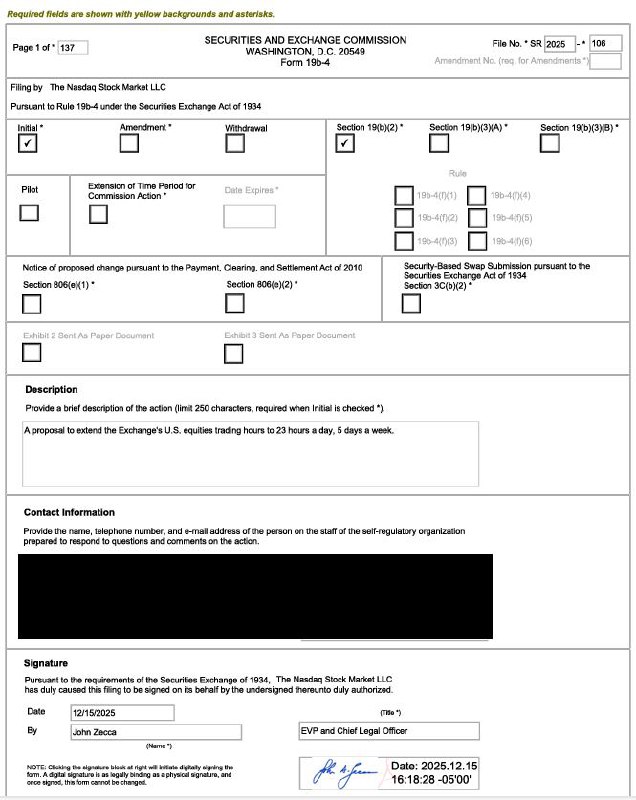 Nasdaq, home of Coinbase, Strategy stocks, seeks 23-hour trading amid investor demand. Crypto's 24/7 trading has influenced investor expectations, with Nasdaq acknowledging that many of its clients are already active overnight.2025-12
 Securitize to offer first fully onchain trading for real public stocks in early 2026. The platform offers full legal ownership, with shares issued and recorded onchain, and provides real shareholder rights and self-custody.2025-12
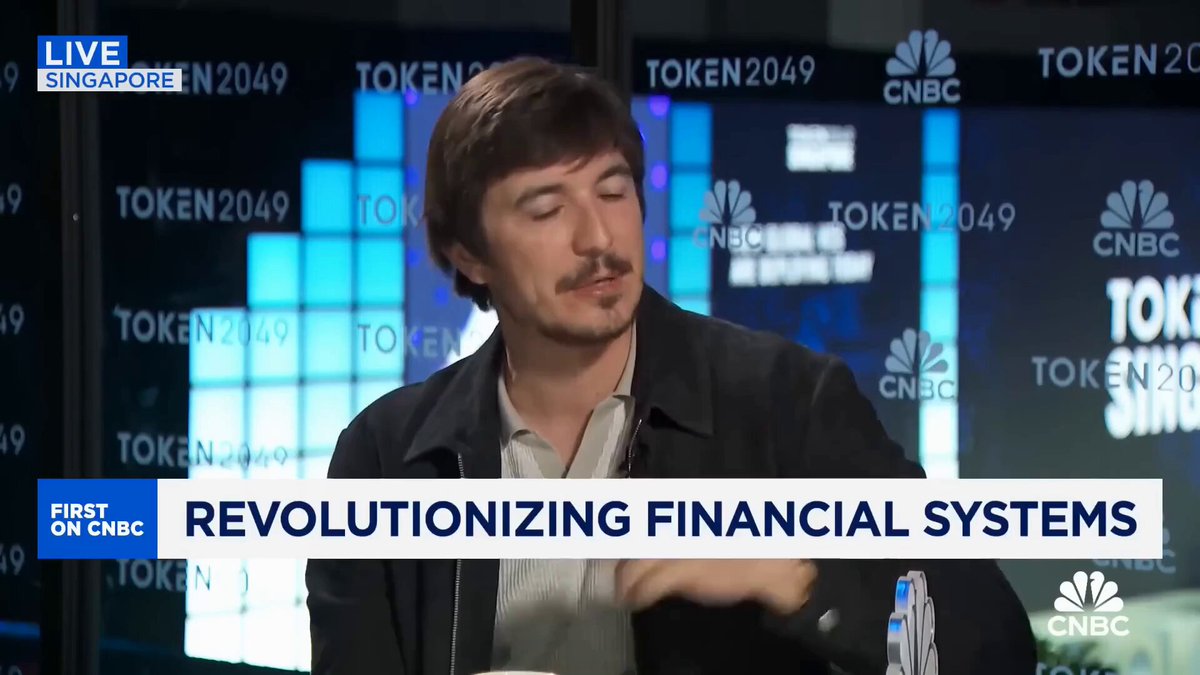
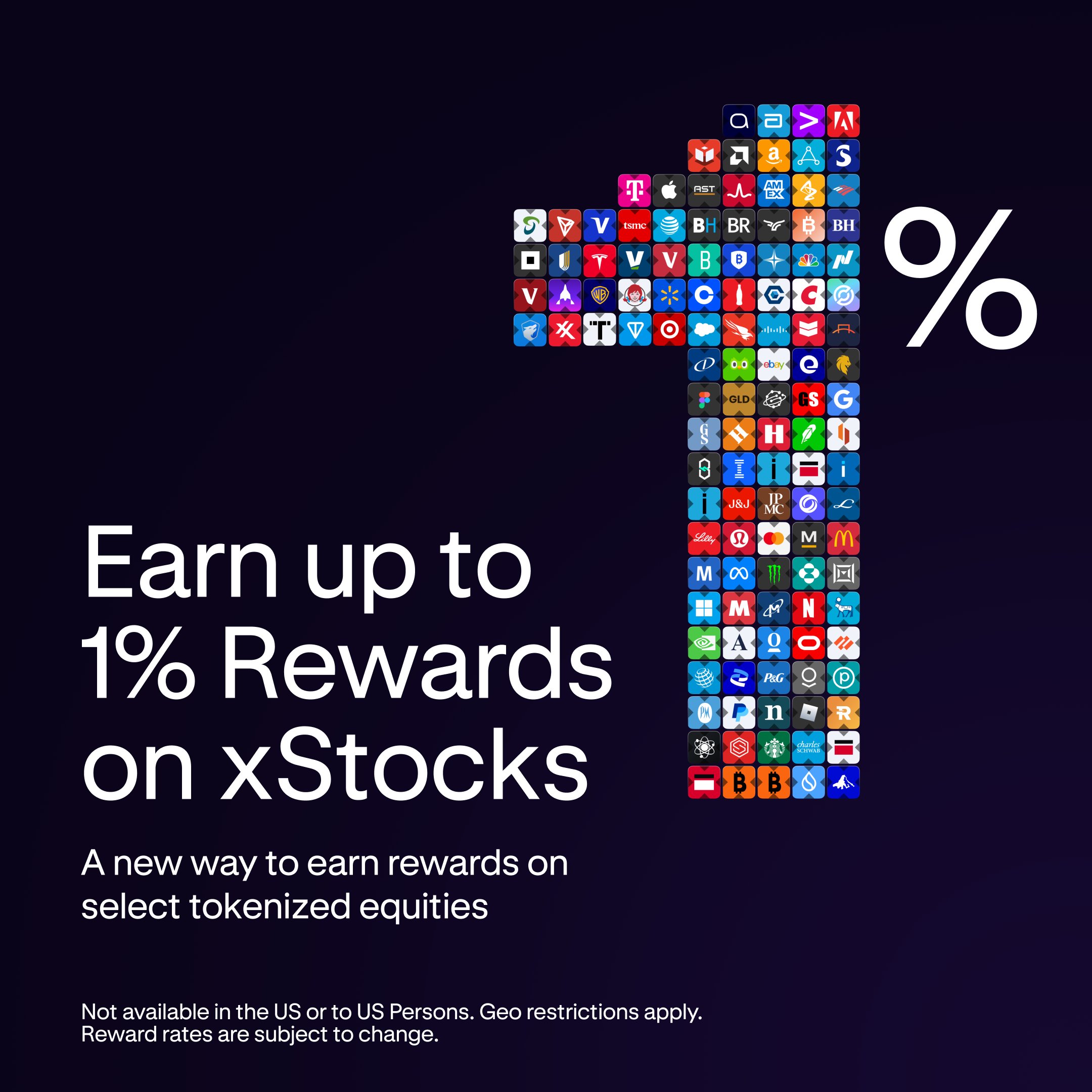 Kraken introduces tokenized equities with up to 1% rewards, allowing users to earn yield while maintaining exposure to traditional stocks in a new onchain investing model2026-04
 Kraken is acquiring Backed Finance to deepen its push into tokenized stocks and ETFs, with Co-CEO Arjun Sethi saying the exchange is “doing it, not hyping it” as it integrates real-world asset tokens directly into its platform.2025-12
Understanding Stocks in a Crypto-Native World
Shares in publicly traded companies represent fractional ownership in real businesses, giving investors a claim on corporate earnings, assets, and sometimes governance. As these businesses succeed or struggle, their share prices move, making stocks a central pillar of modern capital markets and an increasingly important reference point for crypto investors as the two worlds converge.
Stocks sit at the heart of global finance, but over the past decade they have also become an important benchmark and building block for the digital asset ecosystem. Traditional equity markets help companies raise capital and give investors a way to own slices of corporate value, while cryptocurrencies like Bitcoin introduced 24/7, programmable assets native to the internet. As major exchanges such as Coinbase, Binance, OKX and DeFi protocols like Venus and Ondo Finance start offering tokenized stocks and equity-linked products, the practical distinction between “stock investor” and “crypto investor” is starting to blur. This explainer traces what a stock actually is, how stock markets work, how stocks compare with crypto, and how tokenization and new regulatory approaches are pulling equities onto blockchains, reshaping both markets in the process.
What Stocks Are, Economically and Legally
At its core, a stock is a security that represents partial ownership in a corporation, entitling the holder to a share of the company’s earnings and assets. When a business issues common stock, it is effectively slicing its ownership into units called shares and selling those units to outside investors who then participate in the upside and downside of the firm’s performance. If the company grows, generates profits, and convinces markets that its future cash flows will be strong, the aggregate value of all its shares tends to rise; if revenues shrink, costs rise, or risks increase, the market value of those shares tends to fall. This link between enterprise fundamentals and share price behavior is at the core of equity valuation and explains why stocks are often described as claims on the discounted value of a firm’s future profits, even though they can also be driven by sentiment, liquidity conditions, and macroeconomic factors.
Legally, shares of stock embody a bundle of rights that are defined by corporate law, securities regulations, and the company’s own charter documents. These rights typically include residual claims on assets in the event of liquidation, rights to receive dividends if declared, and, in most common-stock structures, voting rights in shareholder meetings on issues such as electing directors or approving major corporate actions. Preferred stock may have priority claims to dividends or assets but limited or no voting power, illustrating that “stock” is an umbrella term covering multiple classes of equity with distinct legal and economic characteristics. In contrast, most cryptocurrencies confer no direct legal claim on a company’s assets or cash flows, highlighting a fundamental difference between holding a stock certificate and holding a token, even when both appear as digital entries in a brokerage account or crypto wallet.
From a financial perspective, stocks are categorized as equity instruments, standing behind creditors in a firm’s capital structure but ahead of common token holders or other non-contractual claimants. This junior position relative to debt means that equity holders face more risk in a bankruptcy scenario, but it also gives them unlimited upside if the company grows dramatically in value because their payoff is not capped the way bond interest is. In return for bearing this residual risk, equity investors generally expect higher long-term returns than holders of safer assets like government bonds, which is why stocks have historically been a primary engine of wealth accumulation for households and institutions. For crypto-native investors accustomed to holding volatile tokens like Bitcoin, it is helpful to see stocks as “programmable claims on companies” defined by law and regulation, whereas most crypto tokens are currently “programmable claims on networks” defined primarily by code and, increasingly, by evolving regulatory interpretations.
In practice, individual investors almost never take physical possession of paper stock certificates; ownership is recorded electronically through brokers, central securities depositories, and transfer agents. This system ensures that trades can settle reliably while preserving a clear record of who owns what, but it also means that most equity investors rely on financial intermediaries to exercise their rights and safeguard their positions. The shift toward tokenized stocks attempts to reimagine this infrastructure, using blockchains as ledgers of record and smart contracts as transfer agents, while still keeping the legal notion of stock as a regulated claim on a corporate issuer. Understanding this legal and economic foundation is essential before evaluating how stocks are being replicated, wrapped, or re-issued in the crypto ecosystem.

MEXC launches Real Stocks, Real Friends referral event with rewards for inviting friends to trade U.S. stocks

How Stock Markets Work in Contrast to Crypto Markets
Stock markets exist to connect companies that need capital with investors who are willing to supply it, and they accomplish this through a combination of primary and secondary market functions. In a primary offering—such as an initial public offering (IPO) or a follow-on offering—a company issues new shares to investors, raising cash it can use for expansion, debt repayment, or other corporate projects. Once those shares are outstanding, they trade in the secondary market on stock exchanges, where existing shareholders sell to new buyers, and the company itself usually does not receive additional funds from those transactions. This separation between capital-raising and trading ensures that companies can tap broad pools of public capital while investors retain liquidity, meaning they can exit their positions by selling shares rather than having to wait for dividends or a buyout.
In the United States, the New York Stock Exchange (NYSE) and the Nasdaq Stock Market are the two primary venues where publicly traded stocks change hands, with trading now almost entirely electronic. Investors typically access these exchanges via broker-dealers, which may operate as full-service advisory firms or low-cost online platforms providing direct investing tools. While some companies offer direct stock purchase plans to investors, most trading in public equities still flows through regulated intermediaries subject to stringent capital, conduct, and reporting requirements. Order-matching engines at exchanges pair buy and sell orders based on price and time priority, generating continuous price discovery during regular market hours and, increasingly, during extended trading sessions. This infrastructure is mature, heavily regulated, and designed to balance liquidity, transparency, and investor protection, a stark contrast to the permissionless and often experimental nature of many crypto trading venues.
The stock market’s broader purpose is twofold: it facilitates capital formation by enabling companies to raise money from the public, and it provides a marketplace for investors to buy and sell ownership stakes, reallocating capital to its most productive uses. By allowing millions of investors to express views on corporate prospects through trading, stock markets generate prices that embed information about expected earnings, risk, and the opportunity cost of capital. These prices influence corporate decisions on investment and hiring, household decisions on saving and retirement, and policy decisions on interest rates and regulation. In this respect, stock markets do not simply reflect the economy; they are also key mechanisms through which economic expectations are aggregated and fed back into real activity. Crypto markets now play a similar role for digital assets and blockchain networks, but their institutional and regulatory foundations are much younger and more heterogeneous.
One of the most visible differences between traditional stock markets and crypto markets is the trading schedule. Equity exchanges like the NYSE and Nasdaq operate primarily during set hours on business days, with pre-market and after-hours sessions offering limited additional liquidity, whereas crypto markets trade globally, permissionlessly, and continuously, 24/7. This discrepancy matters increasingly as tokenized stocks and equity-linked derivatives become available on crypto exchanges, enabling investors to obtain around-the-clock synthetic or wrapped exposure to assets that only trade natively during limited windows. Platforms like OKX, for example, offer perpetual futures tied to major U.S. technology stocks and equity indices that can be traded at any time, effectively extending the temporal reach of stock-related trading into the crypto domain. As centralized exchanges like Coinbase and Binance launch 24/7 tokenized stock markets, the traditional boundaries around when “stocks” can trade begin to erode, though the underlying shares still settle within conventional market infrastructure and hours.
Another important contrast lies in infrastructure and settlement finality. Equity trades generally settle on a T+2 or T+1 basis, meaning ownership changes are finalized one or two business days after the trade date, facilitated by clearinghouses and central depositories. Crypto transactions, by contrast, settle natively on blockchains according to protocol-specific confirmation rules, often within minutes or seconds, without a centralized clearing intermediary. Tokenized stocks sit between these worlds: onchain transfers of tokenized representations may be near-instant and irreversible, but these tokens typically reference offchain shares held by custodians in traditional systems, meaning full legal settlement involves bridging between onchain and offchain records. For crypto-native investors, understanding these hybrid settlement models is critical, because the risk profile of a tokenized stock depends not just on smart contract security but also on the robustness of custodians, trustees, and regulatory oversight in the underlying equity markets.
Readers are drawn to tokenized stocks not as a curiosity but as an infrastructure race — the dominant click signal is who is building the legal, custodial, and chain-level plumbing to make stocks genuinely tradeable on-chain, with the skeptical counterweight ('Tokenized stocks aren't working (yet)') confirming readers want receipts, not promises.
Why Stocks Matter for Portfolios and the Broader Financial System
Stocks are a central building block of long-term investment portfolios because they offer the potential for capital appreciation and, in many cases, dividend income. When an investor buys shares in a company, they are effectively purchasing a claim on that firm’s future earnings and on any assets that remain after creditors are paid, which historically has produced higher returns over long horizons than safer assets like government bonds or cash equivalents. Dividends, when paid, provide a stream of cash flows that can be reinvested or used as income, while price gains compound as companies reinvest profits, expand operations, or benefit from technological and market tailwinds. Of course, this upside comes with meaningful risk: individual stocks can suffer large drawdowns or even become worthless if a company fails, and even diversified stock portfolios can experience multi-year periods of weak or negative returns when economic conditions deteriorate. For crypto investors used to extreme volatility, stock markets may seem comparatively tame, but they still carry significant risk and should be approached with appropriate time horizons and diversification strategies.
Beyond individual portfolios, stock markets play crucial roles in corporate finance and economic growth. By issuing shares to the public, companies can raise capital without taking on additional debt, improving their balance sheet flexibility and spreading risk across a broad shareholder base. This access to equity capital supports investment in research and development, infrastructure, acquisitions, and workforce expansion, all of which feed into productivity and GDP growth over time. The ability to go public also creates exit opportunities for early-stage investors and employees, recycling capital into new ventures and deepening the innovation ecosystem. Stock prices, in turn, influence corporate behavior: high valuations make it easier to issue new shares or use stock as acquisition currency, while depressed valuations can pressure management teams to cut costs or pursue strategic alternatives. In this way, equity markets form a feedback loop between investor expectations and corporate decision-making.
Stock indices and related products further extend the influence of equities throughout the financial system. Market capitalization-weighted indices like the S&P 500 and Nasdaq 100 serve as barometers of overall market health and benchmarks against which fund managers and individual investors gauge performance. Exchange-traded funds (ETFs), which pool baskets of securities into a single vehicle that can be traded like a stock on an exchange, have become particularly important conduits for equity exposure. Investors can buy shares of a stock ETF to gain diversified exposure to entire sectors, geographies, or strategies without selecting individual companies, and these vehicles trade intraday just like single-name stocks. The rise of ETFs has democratized access to broad market exposure while also deepening liquidity in underlying stocks, reinforcing the centrality of equities in both retail and institutional portfolios.
For crypto market participants, stocks and stock indices increasingly function as macro reference points and competing destinations for capital. When interest rates are low and growth expectations are strong, both equities and risk-on crypto assets often benefit, whereas in risk-off environments investors may rotate out of both into cash, bonds, or other perceived safe havens. Recent research and market commentary have highlighted how U.S. equities can sometimes siphon capital away from crypto, especially when high-profile stock rallies in sectors such as semiconductors or artificial intelligence absorb investor attention and risk budgets. Crypto exchanges themselves now recognize this dynamic and are positioning to intermediate not just digital asset trading but also flows into tokenized stocks and stock-linked derivatives, effectively acknowledging that, from a user’s perspective, “markets” are increasingly multi-asset rather than siloed into “crypto” versus “stocks.”
Stocks vs. Crypto: Similarities, Differences, and Cross-Market Flows
For investors who started in crypto, the first step in understanding stocks is appreciating both the similarities and the differences between these asset classes. Like cryptocurrencies, stocks have prices that are set in markets through the interaction of buyers and sellers, and those prices respond to news, macroeconomic data, and shifts in investor risk appetite. Both asset classes exhibit volatility, sometimes in sharp bursts around events such as earnings announcements for stocks or protocol upgrades and regulatory developments for crypto. In recent years, correlations between broad equity indices and major cryptoassets like Bitcoin and Ethereum have sometimes risen during periods of macro stress, reflecting their shared sensitivity to factors such as interest rate expectations, liquidity conditions, and geopolitical risk. However, the underlying drivers of long-term value creation differ markedly: stocks are tied to corporate cash flows and competitive dynamics, while crypto tokens are tied to network usage, tokenomics, and often speculative expectations about future adoption.
An important distinction lies in the regulatory framework and investor protections. In most jurisdictions, stocks are heavily regulated as securities, with disclosure requirements for issuers, licensing and conduct standards for intermediaries, and enforcement agencies such as the U.S. Securities and Exchange Commission (SEC) tasked with protecting investors and maintaining fair, orderly, and efficient markets. These regimes impose obligations on companies to publish audited financial statements, material risk disclosures, and ongoing updates, enabling investors to perform fundamental analysis and hold management accountable. Crypto markets, by contrast, have historically operated in a more lightly regulated environment, particularly in offshore jurisdictions, with many tokens not registered as securities and exchanges facing fewer standardized disclosure obligations. This does not mean that stock markets are risk-free—fraud, mismanagement, and market manipulation can and do occur—but it does mean that there is a more established legal infrastructure for seeking recourse and for deterring misconduct.
Volatility and risk profiles also differ in important ways. While individual stocks can be extremely volatile, broad equity indices usually exhibit lower long-term volatility than major cryptoassets, and drawdowns, though painful, tend to be less extreme than the 70–80 percent peak-to-trough declines that crypto veterans have witnessed in multiple cycles. Crypto assets also tend to be more sensitive to idiosyncratic technical risks such as smart contract exploits, consensus failures, or governance attacks, whereas stock investors are more exposed to business risks such as demand shocks, margin compression, or regulatory changes affecting specific sectors. A University of Illinois financial education guide, for instance, frames the stocks-versus-crypto decision in terms of regulatory protections, volatility, and the nature of what investors are signing up for, aiming to help individuals understand that owning a share of a company and owning a crypto token involve materially different rights and risk exposures. For portfolio construction, this means that combining stocks and crypto can offer diversification benefits, but only if investors understand the distinct drivers of each asset class and do not assume they will always move in the same direction.
Cross-market flows between stocks and crypto have become a focal point for analysts as both markets mature. On some days, Bitcoin, Ethereum, and Solana prices drop alongside U.S. stocks amid macro news such as shifting expectations for interest rates or commodity price swings, underscoring their shared role as risk assets in global portfolios. On other occasions, strong performance in high-profile equity sectors like technology or chips coincides with relative weakness in crypto, suggesting that investors may be reallocating capital between the two domains based on perceived opportunity. Binance’s research arm, for example, has argued that recent crypto underperformance in certain periods may be driven less by crypto-specific factors and more by capital being pulled into U.S. equities, as reflected in dispersion metrics and flows into stock-focused instruments. At the same time, Binance Research has estimated that by the early 2030s, crypto exchanges could channel trillions of dollars of incremental capital and hundreds of millions of new investors into tokenized stocks and related products, highlighting the bidirectional nature of these capital flows. For crypto-native investors, understanding stocks is no longer optional; it is increasingly necessary to interpret the drivers of digital asset markets themselves.
- 01Tokenized stock infrastructure buildout↗
Multiple high-click stories covered competing platforms — Securitize, Kraken xStocks, Trust Wallet, Ondo — each claiming a novel legal or custody structure, signaling readers tracking who will own this stack.
- 0224/7 trading hour convergence↗
Nasdaq's move toward 23-hour trading, directly credited to crypto's always-on markets, showed readers that crypto is actively reshaping legacy market structure rather than just mirroring it.
- 03Crypto-macro correlation shocks↗
Black Monday and the Trump tariff liquidation event both triggered massive crypto drawdowns alongside stocks, confirming readers monitor cross-market contagion as a real portfolio risk.
- 04Regulatory clarity and legal ownership↗
The ESMA warning that retail investors may not actually hold shares, paired with SEC and GENIUS Act coverage, pulled readers who need to understand whether tokenized equity has genuine legal standing.
- 05DeFi platform stock trading access↗
Spreads, MetaMask equity perps, and Bybit stock trading represent readers tracking whether DeFi-native interfaces can replace brokers for equity exposure without leaving crypto rails.
- 06Stablecoin legislation equity spillover↗
The GENIUS Act headline framed stablecoin legislation as a direct catalyst for specific stocks, showing readers connect regulatory milestones to investable equity plays.
ETFs, Index Exposure, and the Role of Bitcoin and Crypto ETFs
Exchange-traded funds (ETFs) are collective investment vehicles that hold baskets of assets—such as stocks, bonds, or commodities—and issue shares that trade on exchanges like individual stocks. Unlike traditional mutual funds, which are typically priced once per day, ETFs can be bought and sold throughout the trading day at market-determined prices, offering investors both diversification and intraday liquidity. A stock ETF might hold shares of hundreds of companies according to a defined index methodology, enabling investors to obtain broad exposure to a market segment without purchasing each constituent stock individually. In the equity realm, well-known ETFs track major benchmarks like the S&P 500 or the Nasdaq 100, and derivatives or synthetic products can then be linked to those ETF prices, as seen in OKX’s perpetual futures tied to SPY- and QQQ-linked exposures. This layered architecture—indices, ETFs, and derivatives—has become a cornerstone of modern equity investing and risk management.
Crypto has increasingly adopted similar structures. Spot cryptocurrency ETFs, such as those holding Bitcoin directly, provide regulated wrappers that allow investors to gain price exposure to cryptoassets through traditional brokerage accounts without having to manage private keys or navigate crypto exchanges. A recent academic study on U.S. spot Bitcoin ETFs finds that their approval by the SEC elevates Bitcoin and, by extension, other cryptocurrencies to a more legitimate asset class in the eyes of many market participants, boosting Bitcoin’s price and liquidity. The research emphasizes that the SEC’s endorsement of such ETFs does not constitute an endorsement of Bitcoin itself, but the practical effect is an increase in perceived credibility and a reduction in frictions for institutional and retail investors who prefer established securities channels. In this sense, cryptocurrency ETFs make crypto look more like stocks from an access perspective, even though the underlying assets and legal frameworks remain different.
Interestingly, the same study concludes that the market does not interpret the approval of spot Bitcoin ETFs as a signal that the SEC is poised to facilitate tokenization of a wide range of other financial assets. In other words, while Bitcoin ETFs bridge crypto into the world of stock-like investment products, they do not automatically herald a broader regulatory endorsement of onchain representations of stocks, bonds, or other traditional assets. This finding is important for crypto investors who imagine a linear progression from Bitcoin ETFs to comprehensive tokenization of capital markets: regulatory trajectories are more nuanced, with separate policy considerations for ETFs that hold crypto and for tokenized versions of regulated securities like stocks.
At the same time, equity ETFs themselves are becoming building blocks in the tokenization experiments happening on crypto rails. Venus Protocol’s tokenized stock market on BNB Chain, for example, includes onchain representations of popular equities such as Tesla and Nvidia as well as an S&P 500 index-tracking ETF, allowing users to deposit these tokens as collateral. OKX’s X-Perps provide leveraged perpetual exposure not only to individual tech stocks but also to synthetic S&P 500 and Nasdaq 100 exposure via SPY- and QQQ-linked products, enabling crypto traders to express views on broad equity indices using familiar perpetual futures structures. Coinbase’s multi-asset strategy further illustrates this convergence: beyond offering crypto spot and derivatives trading, the platform has rolled out the ability for users to trade nearly every major U.S. stock, index, and ETF alongside digital assets, and it is planning tokenized stocks that can coexist with traditional equity exposures in a single interface. For investors steeped in Bitcoin and DeFi, ETFs are thus not only a template for how crypto can be packaged for traditional markets but also a component of the equity universe now being pulled into crypto-native trading environments.
Tokenized Stocks: Bringing Equities Onchain
Tokenized equity refers to the process of transforming traditional shares into digital tokens on a blockchain, in a way that preserves key economic and legal characteristics while enabling new modes of transfer, trading, and composability. In a typical structure, a regulated entity holds a pool of underlying shares in custody and issues blockchain-based tokens that represent claims on those shares, often on a one-to-one basis. These tokens can then be traded on crypto exchanges or used within DeFi protocols, while a combination of legal agreements and technical controls ensures that the token supply matches the underlying share inventory, ideally with transparent proof-of-reserves mechanisms. The promise of tokenized stocks is to combine the regulatory protections and economic substance of traditional equities with the programmability, 24/7 availability, and global transferability of cryptoassets.
Regulators have made clear, however, that changing the format of a security—putting it “onchain”—does not change its legal nature. In a widely discussed statement, SEC Commissioner Hester Peirce emphasized that blockchain technology has enabled innovative models for distributing and trading securities in tokenized form, potentially enhancing capital formation and collateral usage, but that tokenized securities remain securities subject to federal securities laws. Peirce stressed that, as powerful as blockchain technology is, it does not magically transform the underlying asset; market participants dealing in tokenized stocks must still adhere to registration requirements, disclosure obligations, and other regulatory provisions that apply to conventional stock offerings and trading venues. This view aligns with the SEC’s broader mandate to protect investors, maintain fair, orderly, and efficient markets, and facilitate capital formation, regardless of the specific technology used to record ownership and transfer rights. For crypto-native users, this means that tokenized stocks occupy a different regulatory zone from purely crypto-native tokens with uncertain or contested status, even if they look similar in a wallet interface.
Multiple architectures for tokenized stocks have emerged. Some platforms, like Ondo Finance, focus on fully backed tokenized securities where each token corresponds to a specific set of underlying assets held by a regulated custodian, making the platform effectively a bridge between traditional securities and onchain liquidity. Others, like Binance’s bStocks or Coinbase’s planned tokenized stock offerings, issue tokens backed one-to-one by real stocks held by affiliated entities or custodians, sometimes structured as certificates that represent rights to the underlying securities rather than direct share ownership. Still others offer synthetic or derivative exposure that tracks stock prices without being directly backed by the equities themselves, instead using hedging strategies or collateral pools to maintain peg-like behavior. The legal rights, risks, and regulatory regimes differ across these models, so understanding which structure underlies a given “tokenized stock” is crucial before allocating capital.
From a DeFi perspective, tokenized stocks enable equities to function as programmable building blocks in onchain financial systems. Once a stock is represented as an ERC-20–like token, for example, it can be supplied as collateral to lending protocols, pooled in automated market makers, or included in onchain index products alongside cryptoassets. Smart contracts can enforce collateralization ratios, margin calls, and liquidation logic, bringing concepts from traditional margin lending into a transparent and composable environment. The key challenge is that these protocol-level mechanics rest on layered risks: the solidity of the smart contracts themselves, the reliability of price oracles linking onchain tokens to offchain stock markets, and the legal enforceability of the token’s claims on underlying securities. Nevertheless, the rapid growth of tokenized stocks from 2024 to 2026 suggests that many market participants see enough value in these structures to tolerate the complexity and risk, especially in a world where crypto exchanges are evolving into multi-asset platforms.
Venus Protocol’s bStocks: Onchain Collateral for Equity Exposure
Venus Protocol, a leading DeFi lending platform on BNB Chain, has been at the forefront of integrating tokenized stocks into onchain money markets. In its tokenized stock lending market, Venus allows users to deposit onchain representations of popular U.S. equities—such as Tesla and Nvidia—as well as an S&P 500 index-tracking ETF, in the form of so-called bStocks. Each bStock token tracks the price of its underlying asset, providing holders with exposure to the stock’s price movements while existing entirely on BNB Chain. By depositing these bStocks into the Venus Core Pool, users can borrow stablecoins such as USDT and USDC, effectively obtaining liquidity without selling their stock exposure, akin to traditional margin loans but executed programmatically via smart contracts. Users can withdraw their collateral at any time by repaying borrowed stablecoins plus accrued interest, mirroring the flexible collateralized borrowing model that DeFi has popularized for crypto-native tokens.
This structure provides several benefits for crypto-native investors who also hold equity exposure. First, it allows them to maintain upside exposure to stock price appreciation while unlocking liquidity for other purposes, such as trading, yield farming, or real-world expenses, without triggering a taxable sale event in some jurisdictions. Second, it extends the use of familiar DeFi primitives—overcollateralized borrowing, algorithmic interest rates, and onchain liquidations—to a new collateral class, creating opportunities for more complex cross-asset strategies spanning both stocks and crypto. Third, by integrating tokenized stocks into a major DeFi lending protocol, Venus helps normalize equities as onchain assets, potentially encouraging further innovation in areas like onchain structured products and tokenized asset management. From the protocol’s perspective, adding bStocks diversifies its collateral base beyond cryptoassets alone, potentially stabilizing the system if shocks hit one asset class but not the other.
However, the Venus bStocks model also illustrates the layered risks of tokenized stock DeFi. The protocol itself is subject to standard smart contract risks: bugs, governance vulnerabilities, or oracle manipulation could lead to unexpected liquidations or loss of funds. The bStocks tokens depend on external providers to maintain accurate price tracking and sufficient liquidity so that deviations from the underlying shares remain minimal. The collateral value is sensitive to both stock market volatility and the behavior of associated stablecoins, meaning that adverse moves in either can trigger liquidations, sometimes in illiquid market conditions. Finally, tokenized stocks face regulatory uncertainty, particularly if regulators determine that certain tokenization structures are not compliant with securities laws, which could force changes in how these tokens are issued, traded, or used as collateral. Venus explicitly flags risks such as smart contract bugs, price volatility, and regulatory changes in its documentation, emphasizing that users should understand protocol risk parameters before participating.
Binance bStocks and SPCXB: Certificates Backed by Real Shares
Binance has launched its own tokenized securities platform called bStocks, designed to offer 24/7 trading in stock-linked instruments backed by actual shares held by a regulated custodian. Each bStock is issued on a one-to-one basis against specific underlying stocks, with publicly verifiable proof-of-reserves mechanisms intended to reassure users that the token supply is fully collateralized. An example is SPCXB, a tokenized security linked to SpaceX shares: bStocks for SPCXB are fully backed by real SpaceX stock held by an affiliate, and they will be tradable on Binance’s spot market. This structure promises to give users a way to obtain economic exposure to high-profile private companies through tokenized instruments, even if they lack access to traditional pre-IPO equity allocations. By listing bStocks around corporate milestones such as anticipated IPOs, Binance can tap investor demand for speculative exposure to eagerly watched firms.
Critically, Binance clarifies that its bStocks are classified as certificates representing specific financial instruments under applicable financial regulations, and they do not confer direct ownership of the underlying shares. Holding a bStock grants rights to the securities held by the issuer, but not direct shareholder status in the listed companies themselves, which affects voting, corporate action participation, and potential recourse in the event of corporate disputes. This is a key difference from Coinbase’s planned tokenized stocks, which are promoted as representing “true equity ownership” including dividend payouts and full shareholder rights, at least for non-U.S. customers operating within particular regulatory frameworks. For users, the practical experience of trading bStocks may resemble trading actual shares—especially if dividend-like payments are passed through—but the legal reality is closer to owning a depository receipt or structured certificate than holding a direct entry in a company’s share register.
Binance positions bStocks as 24/7 tradable instruments, leveraging crypto exchange infrastructure to remove traditional constraints on trading hours. Users can place limit orders and manage positions in bStocks alongside their crypto holdings, benefiting from unified collateral and margin management systems. Binance’s research division has argued that by offering stock-linked products, crypto exchanges can attract new capital and users who are primarily interested in equities but are drawn by the convenience and extended trading hours of crypto platforms. At the same time, Binance has also announced the cessation of support for certain stock-linked products at various times, underscoring the experimental and evolving nature of tokenized stock offerings on large exchanges. For investors, the key takeaway is that bStocks provide a form of equity exposure that is deeply intertwined with both traditional securities law and the fast-moving world of crypto product design.
Ondo Finance and Institutional-Grade Tokenized Securities
Ondo Finance illustrates another approach to tokenized stocks and securities, focused on institutional-grade structuring and integration with mainstream digital asset infrastructure. The platform describes itself as the world’s largest tokenized securities platform, with over one billion dollars in total value locked (TVL) and tens of thousands of asset holders across its offerings. Ondo’s products include tokenized representations of traditional financial instruments such as U.S. Treasuries and corporate credit, and more recently, tokenized stocks that allow investors to gain equity exposure through onchain vehicles. In this model, a regulated entity holds the underlying securities, and tokens are issued under legal frameworks designed to meet compliance requirements for various jurisdictions and investor types. The focus is on creating secure, audited, and institutionally acceptable bridges from traditional markets to blockchain networks, rather than on high-leverage retail trading alone.
A notable development is the integration of Ondo’s tokenized stocks with Ledger, a leading hardware wallet provider. Ledger has announced in-app swap support for Ondo’s tokenized securities, enabling users to manage and exchange these assets directly from their hardware wallets. This integration points toward a future in which tokenized stocks are treated by infrastructure providers much like other onchain tokens, with support for secure custody, swaps, and potentially staking-like yield products backed by underlying securities. For institutions, the combination of compliant tokenization structures and institutional-grade self-custody tools offers an attractive path to experiment with onchain assets while maintaining familiar risk controls. For retail users, it signals that tokenized stocks may become as easy to store and transact as mainstream cryptocurrencies, even if access is subject to know-your-customer (KYC) and other regulatory checks.
Ondo’s rapid growth underscores a broader trend documented by Crowdfundinsider and other observers: tokenized stocks and securities have emerged as one of the fastest-growing sectors in the crypto ecosystem from 2024 to 2026, with the number of tokenized stock-related coins rising by over 300 percent to more than two thousand distinct instruments. This proliferation is driven by both top-down initiatives from established financial institutions and bottom-up experimentation in DeFi, suggesting that tokenization is not merely a niche DeFi experiment but a structural shift in how financial assets can be represented and transacted. At the same time, the sheer number of tokenized instruments, varying in quality and design, reinforces the need for careful due diligence: not all tokenized stocks are created equal, and some may provide only synthetic exposure with limited legal recourse, whereas others confer robust rights backed by regulated custodians and clear legal frameworks.
Coinbase, OKX, and the Rise of Multi-Asset Crypto Exchanges
Coinbase’s strategic evolution illustrates how major crypto exchanges are repositioning themselves as multi-asset, multi-market platforms rather than pure crypto spot venues. In a recent system update, Coinbase announced plans to launch tokenized stocks for non-U.S. customers, backed one-to-one by underlying assets and designed to represent true equity ownership, including dividend payouts and complete shareholder rights. These tokenized stocks will be tradable 24/7, can be lent out to earn yield, used as collateral for loans, or even transferred as easily as sending a text message, according to Coinbase’s communications. At the same time, Coinbase has added the ability for users to transfer existing stock portfolios from other platforms and to trade nearly every major U.S. stock, index, and ETF through Coinbase Advanced, alongside crypto assets, with features such as zero-commission trading, integrated charting, and rewards on USDC balances. The company frames this shift as moving from being simply a place to buy Bitcoin to a platform that can power a user’s entire financial life, spanning stocks, options, prediction markets, and crypto derivatives.
OKX has pursued a complementary strategy with its launch of “X-Perps,” perpetual futures tied to major U.S. technology stocks, commodities like gold and oil, and equity indices such as those tracking the S&P 500 and Nasdaq 100. These products give European retail traders 24/7 leveraged exposure to assets like Apple, Amazon, Alphabet, Meta, Microsoft, Nvidia, and Tesla, all from the same account they use for crypto trading. The X-Perps trade continuously with up to ten times leverage, highlighting the exchange’s ambition to compete directly with traditional brokerages and multi-asset trading platforms. By offering synthetic, derivative-based exposure rather than tokenized spot equity, OKX can sidestep some of the custodial and legal complexities of tokenized stocks, while still tapping demand for stock-linked trading opportunities in the crypto user base. For traders, the choice between tokenized spot stocks (as Coinbase plans) and perpetual stock derivatives (as OKX offers) will depend on preferences around leverage, holding periods, and the importance of owning the underlying asset versus trading its price.
Binance, Coinbase, OKX, and other platforms are also layering AI tools, options markets, and prediction markets on top of their spot and derivatives offerings, creating increasingly complex but integrated market environments. Coinbase, for instance, has discussed AI advisors and agent-like systems that can help users manage positions across stocks, options, and crypto, hinting at a future where a single interface orchestrates multi-asset strategies automatically. Binance’s research highlighting the potential for crypto exchanges to channel two trillion dollars of new capital and hundreds of millions of investors into stocks by the early 2030s underscores why these firms are investing in stock-related offerings. For the crypto news audience, the message is clear: understanding stocks is no longer just about understanding a parallel financial system; it is about understanding what will increasingly be available—and tradable—within the same apps and wallets that today are used primarily for Bitcoin and altcoins.
The Growth Trajectory and Global Regulatory Backdrop
The data on tokenized stocks’ growth suggest that the convergence of stock and crypto markets is not a passing trend. Crowdfundinsider reports that from 2024 to 2026, tokenized stocks became the fastest-growing sector of the crypto ecosystem, reaching 2,328 coins, a 324 percent increase over the period. This explosive proliferation reflects both investor interest and technological progress in building tokenization platforms that can interface with traditional custodians and regulatory regimes. Binance Research’s projection that crypto exchanges could intermediate two trillion dollars of incremental capital into stock markets and nearly three hundred million new investors over the rest of the decade adds to the sense that tokenized equities and stock-linked products are set to become core pillars of the crypto exchange business model, not peripheral experiments. Tokenized stocks thus move from being a niche DeFi curiosity to a potential cornerstone of the next phase of crypto’s evolution as a general-purpose financial infrastructure layer.
Regulatory developments are both enabling and constraining this growth. In Japan, for example, legislators have advanced a digital assets bill that aligns crypto more closely with traditional securities such as stocks, reclassifying digital currencies as financial instruments under the country’s Financial Instruments and Exchange Act (FIEA). This move seeks to harmonize the regulatory treatment of digital assets and conventional securities, enhancing investor protections and creating a clearer framework for integrated digital asset markets. By bringing crypto under the same umbrella as stocks in key areas such as licensing, disclosure, and market conduct, Japan aims to foster market growth while mitigating systemic and investor risks. Such developments suggest that, over time, the legal distinction between “stocks” and “crypto” may narrow in terms of regulatory oversight, even if the economic nature of the assets remains distinct.
At the same time, U.S. regulators like the SEC continue to stress that tokenized securities are still securities and must comply with existing laws, regardless of the technological wrapper. This creates complexities for platforms that wish to serve both U.S. and non-U.S. customers with tokenized stock products, as evidenced by Coinbase’s decision to initially limit its tokenized stock offerings to non-U.S. users. It also means that purely decentralized tokenization schemes that attempt to bypass regulatory frameworks by dispersing control or anonymizing issuers may face enforcement actions if they fall within the definition of securities offerings or unregistered trading venues. The regulatory trajectory is therefore uneven: jurisdictions like Japan may be proactive in aligning crypto and stock regulation, while others may act more cautiously, distinguishing between wrapping stocks in regulated tokenized forms and allowing unregulated onchain equity products to proliferate.
Black Monday: Nikkei −15%, BTC −15%, $900M crypto liquidated in 24h
- 2024-11milestone
Celsius distributes $3B to creditors including Ionic Digital stock
SEC Commissioner Peirce issues statement on tokenized securities frameworks
Kraken launches 50+ tokenized stocks and ETFs with up to 1% yield
Securitize launches first fully onchain trading for real public stocks
GENIUS Act clears U.S. Senate, boosting tokenized-asset legal outlook
Kraken and Solana Foundation launch xStocks tokenized equities on Solana
Regulation, Investor Protection, and the Evolving Legal Perimeter
Regulation is not an afterthought when discussing stocks in a crypto context; it is central to what makes a stock a stock rather than just another price-tracking token. In the United States, the SEC’s mission is to protect investors, maintain fair, orderly, and efficient markets, and facilitate capital formation, and this mandate applies to the entire securities industry. Federal securities laws give the SEC broad authority over key aspects of stock issuance, trading, and market infrastructure, including registration of exchanges and broker-dealers, disclosure requirements for public companies, and oversight of clearing and settlement systems. These frameworks are what compel listed companies to publish audited financial statements, file regular reports on material events, and abide by rules designed to prevent insider trading and market manipulation. For investors, these regulations provide a measure of transparency and recourse that is often lacking in unregulated or lightly regulated crypto markets.
When stocks are tokenized, the legal analysis does not reset; instead, the SEC and other regulators view tokenized securities as falling squarely within their jurisdiction. Commissioner Peirce’s statement on tokenization underscores that blockchain technology may change how securities are recorded and traded, but it does not change what they are or the regulatory obligations that attach to them. Tokenization might facilitate capital formation by lowering transaction costs and enabling new forms of collateralization, and it might enhance investors’ ability to use their assets in programmable ways, but issuers and intermediaries must still consider and comply with securities registration, antifraud provisions, and other legal requirements. This means that a tokenized stock offered to the public in the U.S. or to U.S. persons would generally need to be registered or qualify for an exemption, and the platforms enabling secondary trading would need to operate as regulated exchanges or alternative trading systems. For DeFi projects and offshore exchanges, this creates tension between the desire to offer global, permissionless tokenized stock markets and the reality of jurisdiction-specific securities laws.
Investor protection considerations also differ between traditional stock accounts and crypto platforms offering stock-linked products. In conventional brokerage accounts, investors may benefit from investor protection schemes, segregation of client assets, and clear avenues for dispute resolution through regulated firms and courts. With tokenized stocks on crypto exchanges, investors are often exposed to additional layers of risk, including the solvency of the exchange, the integrity of smart contracts, the quality of custodians holding the underlying shares, and the possibility of regulatory clampdowns affecting the legality or operability of the products. University of Illinois financial education materials comparing stocks and crypto highlight that many crypto platforms do not offer the same level of regulatory protection, suggesting that investors should be particularly cautious about understanding counterparty risk and the legal status of their holdings. Binance’s disclaimers for bStocks, for example, make clear that holders of bStocks do not enjoy direct shareholder rights and that the instruments are structured as certificates under specific financial regulations, underscoring how product design and legal structuring shape the rights investors actually hold.
Global regulatory developments like Japan’s digital asset bill show that convergence is possible, with digital currencies and stock-like instruments being brought under harmonized financial regulatory frameworks. Such moves can increase clarity for both issuers and investors, potentially accelerating the integration of stocks and crypto by providing a stable legal environment for innovation. At the same time, the lack of uniform global standards means that tokenized stock offerings may be accessible in some jurisdictions but off-limits in others, creating a patchwork of availability and legal risk. Exchanges and DeFi protocols are responding by geo-fencing access, designing separate products for different markets, and sometimes withdrawing or limiting stock-linked offerings in response to regulatory pressure. For investors, keeping abreast of regulatory changes and understanding how they affect specific products is as important as tracking price charts or studying onchain analytics.
Market Structure, Liquidity, and Risk Across Stocks, Crypto, and Tokenized Equities
Market structure shapes how prices form, how liquidity is provided, and how risk propagates across stocks and crypto. In traditional equity markets, centralized exchanges, high-frequency market makers, institutional block trading, and regulated clearinghouses create a relatively stable environment for price discovery, though fragilities can surface during extreme stress. In crypto markets, decentralized exchanges, automated market makers, peer-to-peer platforms, and unregulated centralized exchanges coexist, often with fragmented liquidity and varying degrees of transparency. Tokenized stocks straddle these worlds: they may trade on centralized crypto exchanges with order books similar to those of stock markets, or on decentralized exchanges using liquidity pools and algorithmic pricing, but their economic value is ultimately anchored to prices in the underlying stock markets. This layered structure introduces basis risk, where tokenized stock prices temporarily diverge from their underlying equities due to liquidity constraints, oracle lags, or market segmentation.
Cross-asset correlations and macro drivers further complicate the picture. Macroeconomic factors such as interest rates, inflation, and growth expectations are central drivers of both stock and crypto markets, though the channels and magnitudes differ. Charles Schwab’s analysis of Bitcoin’s price drivers, for example, highlights how macroeconomic conditions and crypto-specific themes interact to influence cryptocurrency performance, indicating that Bitcoin is not isolated from broader risk sentiment. When central banks signal tighter monetary policy or markets reassess recession risk, both equities and crypto can sell off, and tokenized stocks sitting on crypto rails can experience amplified volatility if DeFi protocols trigger collateral liquidations in response to price declines. Conversely, when macro conditions are supportive and risk appetite is strong, flows into U.S. equities—particularly high-growth sectors—can coincide with increased speculation in crypto, though Binance Research has argued that, at times, equities may draw capital away from crypto rather than moving up in lockstep.
Risk management for tokenized stocks involves both familiar and novel components. Traditional stock investors worry about business risk, valuation risk, and market risk, and they may use diversification, hedging, and position sizing to manage these exposures. Crypto investors add concerns about protocol risk, custodial risk, and regulatory uncertainty, often relying on cold storage, decentralized custody, and careful exchange selection to mitigate threats. For tokenized stocks, both sets of risks apply, plus additional concerns about peg stability, oracle reliability, and the legal robustness of tokenization structures. A tokenized Tesla stock might track the TSLA share price closely under normal conditions, but if the custodian holding the underlying shares encounters trouble, or if regulators question the legality of the token’s issuance, the instrument could lose its link to the underlying asset or become non-transferable. Similarly, if a DeFi lending protocol like Venus suffers a smart contract bug or oracle attack, tokenized stocks used as collateral could be liquidated or trapped, even if the underlying equities continue trading normally on traditional exchanges.
To make the differences concrete, it is helpful to compare traditional stocks, cryptoassets like Bitcoin, and tokenized stocks along several dimensions. The table below summarizes some key contrasts.
| Feature | Traditional Stocks | Cryptoassets (e.g., Bitcoin) | Tokenized Stocks |
|---|---|---|---|
| Underlying claim | Equity ownership in a corporation with legal rights | No direct claim on a company; network participation or utility | Equity or certificate claim on underlying shares held by a custodian |
| Trading hours | Primarily business days during set exchange sessions | 24/7 globally on crypto exchanges and networks | Often 24/7 on crypto rails, anchored to offchain stock market prices |
| Regulatory regime | Mature securities laws, SEC-style oversight | Mixed; commodities, securities, or unregulated depending on asset | Treated as securities; subject to securities laws despite onchain representation |
| Settlement infrastructure | Centralized depositories and clearinghouses (T+1/T+2) | Onchain settlement via consensus and smart contracts | Hybrid: onchain token transfers plus offchain updates to custodial share records |
| Custody | Brokers, banks, registered custodians | Self-custody (wallets) or exchange custody | Custodian holds underlying shares; tokens held in wallets or exchange accounts |
| Typical use in DeFi | Limited, via synthetic products or tokenized wrappers | Native collateral, governance, yield strategies | Collateral in lending protocols, 24/7 trading, integrated with crypto strategies |
This comparison underscores that tokenized stocks inherit features from both stocks and crypto, but they are not identical to either. They retain the legal and economic characteristics of equities, including dependence on corporate fundamentals and securities law, while adopting the programmability and always-on nature of cryptoassets. For market participants, this dual nature offers opportunities for novel cross-asset strategies but also demands a more complex risk framework than that used for either traditional stocks or pure crypto tokens.
ESMA formally warned that tokenized stock wrappers may mislead retail investors about actual share ownership, and U.S. legal status remains unresolved pending SEC guidance on tokenized securities.
Most tokenized equity products rely on a centralized custodian holding the underlying shares, meaning token holders absorb both smart-contract risk and the operational risk of a single off-chain intermediary.
Tokenized stock issuance contracts handle real-asset settlement logic; bugs or upgrade-key exploits could sever the link between the on-chain token and the underlying share.
On-chain order books for tokenized equities remain thin relative to traditional venues, creating wider spreads and potential exit slippage especially during correlated market stress.
The August 2024 Black Monday event and Trump tariff shock each produced simultaneous equity and crypto drawdowns exceeding 10–15%, eroding the diversification argument for holding both asset classes.
Whether a tokenized stock confers actual shareholder voting rights, dividend entitlement, and bankruptcy claim priority varies by issuer structure and jurisdiction, with no uniform standard yet established.
Practical Considerations for Crypto-Native Investors Exploring Stocks
For crypto investors looking to engage with stocks—whether through traditional brokerage channels, tokenized stocks, or stock-linked derivatives—there are several practical considerations. The first is clarifying investment objectives and time horizons. Stocks are generally suited for medium- to long-term investment horizons, where the compounding of corporate earnings and dividends can outweigh interim volatility. Crypto investments can also be long-term, particularly for assets like Bitcoin that some view as digital gold, but many crypto trading strategies remain short-term and speculative. Aligning the asset choice with the intended time horizon and risk tolerance is crucial: using highly leveraged stock derivatives for long-term retirement savings is as mismatched as relying solely on illiquid altcoins for near-term liquidity needs. Tokenized stocks can bridge these worlds by allowing equity exposure to be managed in onchain portfolios alongside crypto, but they do not change the fundamental risk/return profile of the underlying shares.
A second consideration is understanding exactly what legal and economic rights a given product provides. Buying shares of a stock through a regulated broker generally confers direct or beneficial ownership, with entitlements to voting and dividends as specified by the issuer. Buying a tokenized stock on a platform like Coinbase may, according to its plans, confer similar rights, including dividend payouts and full shareholder rights, at least for eligible non-U.S. users. Purchasing bStocks on Binance, by contrast, involves acquiring certificates that represent rights to securities held by the issuer but not direct share ownership, potentially limiting voting and other corporate participation rights. Synthetic stock exposures via perpetual futures on OKX or other exchanges provide no ownership rights at all; they are purely financial bets on price movements, with leverage and funding rates adding layers of risk. For DeFi-based tokenized stocks like Venus bStocks, users should understand whether dividends are passed through, how governance works, and what recourse exists if the token deviates from the underlying share price.
A third consideration is the regulatory context and investor protection profile. Stock brokerage accounts and regulated ETF platforms operate under securities laws that mandate disclosure, capital adequacy, and customer asset protections, whereas many crypto exchanges and DeFi protocols do not provide the same assurances. When investing in tokenized stocks, crypto users should ask where the custodian is located, what regulations it is subject to, and whether the tokenization structure has been designed in compliance with applicable securities laws. They should also consider jurisdictional restrictions that may limit access or legal recourse: Coinbase’s decision to offer tokenized stocks only to non-U.S. users illustrates how regulatory fragmentation can shape product availability. In markets like Japan that are moving to regulate crypto similarly to stocks, the convergence may simplify some of these questions, but global harmony is far from complete. Until more consistent rules emerge, savvy investors will treat tokenized stocks and stock-linked crypto products as higher-risk instruments from a legal standpoint than conventional stock holdings, even if the economic exposure seems equivalent.
Finally, portfolio construction and risk management should reflect the realities of cross-asset correlations and capital flows. Combining stocks and crypto can provide diversification benefits, but only if investors avoid overexposure to correlated risk factors such as high-growth tech equities and speculative altcoins that may both suffer in risk-off regimes. The presence of tokenized stocks in DeFi protocols means that shocks in equity markets can now trigger deleveraging in onchain money markets, while crypto drawdowns can force sales or liquidations of tokenized equities used as collateral. For investors managing positions across centralized exchanges, DeFi protocols, and traditional brokerages, this interconnectedness argues for holistic risk monitoring, including attention to leverage, collateral quality, and liquidity conditions in both stock and crypto markets. The emerging toolkit of AI advisors, onchain analytics, and integrated multi-asset platforms may help, but ultimately responsibility for understanding and managing these risks still lies with the investor.
Outlook
Stocks have been the backbone of modern capital markets for more than a century, and cryptocurrencies like Bitcoin are only a little over a decade old, yet the two asset classes are rapidly becoming intertwined. Stocks continue to play their traditional roles as vehicles for capital formation and long-term wealth building, but they are also increasingly being drawn into the orbit of crypto through tokenization, stock-linked derivatives, and the evolution of major exchanges into 24/7 multi-asset trading platforms. Tokenized stocks and equity ETFs on blockchains offer the prospect of programmable, globally accessible equity exposure, with DeFi protocols like Venus and platforms like Ondo demonstrating how stocks can function as onchain collateral and yield-bearing components in decentralized financial systems. At the same time, regulatory agencies such as the SEC and forward-looking jurisdictions like Japan are working to ensure that technological innovation does not erode the investor protections and market integrity safeguards that have long underpinned stock markets.
For the crypto news audience, the implication is that fluency in stocks is increasingly as important as fluency in Bitcoin, Ethereum, or DeFi. Understanding how equities are structured, regulated, and valued helps interpret flows between crypto and traditional markets, evaluate tokenized stock products, and anticipate the impact of macroeconomic shifts on digital assets. The future likely holds more convergence: more jurisdictions harmonizing the treatment of digital assets and securities, more exchanges offering integrated stock and crypto trading, and more sophisticated tokenization schemes that blur the boundary between onchain and offchain capital markets. Yet convergence does not mean equivalence; stocks will remain anchored in corporate fundamentals and securities law, while crypto will continue to evolve as a heterogeneous set of network-based assets and protocols. Navigating this landscape will require investors, builders, and regulators to be literate in both languages—equity and crypto—recognizing that the most interesting opportunities and risks may increasingly arise at their intersection.
Latest Stocks news
Sources
20 records from 16 domains
schwab.com
td.com
investopedia.com
sec.gov
blogs.uofi.uillinois.edu
intellectia.ai
beincrypto.com
cryptonews.net
coinbase.com
marketsmedia.com
ondo.finance
crowdfundinsider.com
financefeeds.com
x.com
binance.com
sciencedirect.com
Community notes
Spot something off or out of date? Drop a note. Editors review topic notes daily and roll accepted fixes into the explainer — contributors are recognized in the monthly $SQUID drop.
Loading notes…
Help improve this topic
Have a story or tip about this topic? Submit it. See something missing? Leave a note. Editors review daily; accepted submissions and fixes count toward the monthly $SQUID drop.