
Deep dive on Coinbase CEO Brian Armstrong, covering his path from Bitcoin engineer to policy power broker, his AI and RWA bets, clashes with Jamie Dimon and U.S. regulators, and what his leadership means for crypto’s next decade.
+12 sources across the wider coverage universe
 Coinbase cuts 14% of workforce, slashing ~700 jobs as Brian Armstrong pivots to AI-native teams, flattening management and reshaping operations amid market pressure2026-05
 “Finding Satoshi” documentary gets early release via Coinbase app for US users, as Brian Armstrong praises its deep exploration of Bitcoin’s mysterious creator2026-04
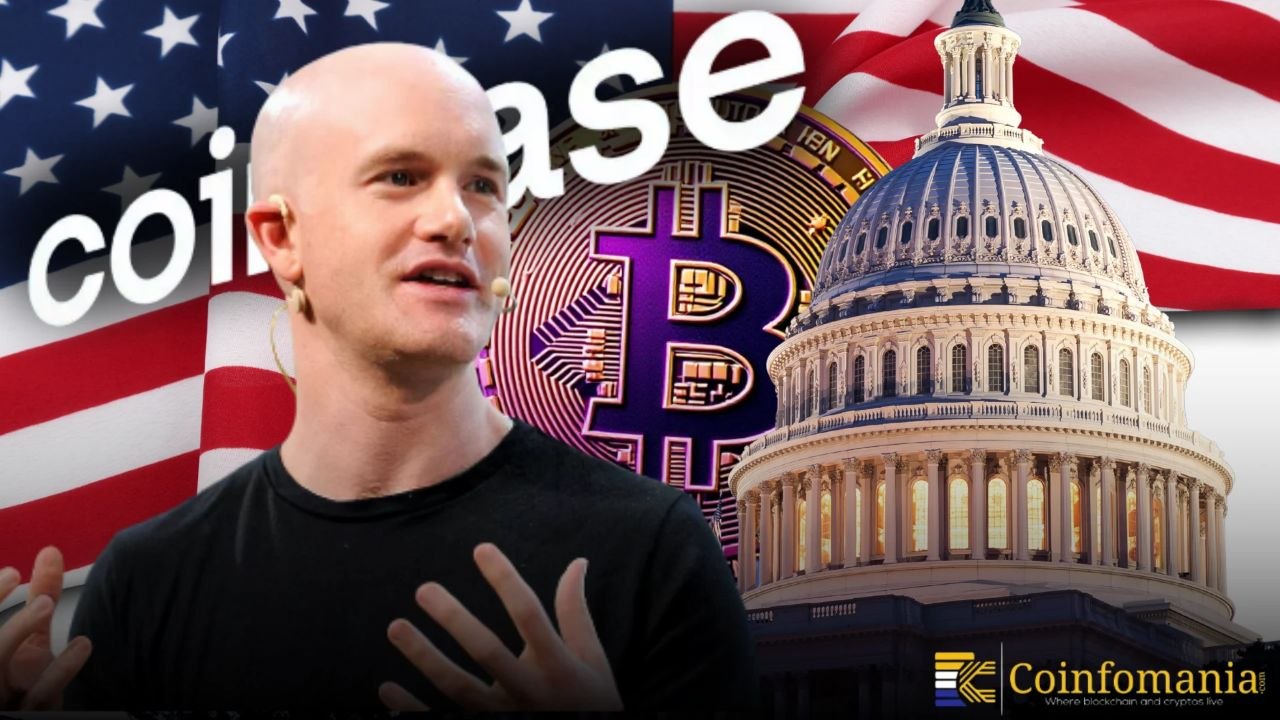 Brian Armstrong faces backlash as critic accuses Coinbase of prioritizing yield over real blockchain adoption, warning delays could stall industry growth to 2030 per Cynthia Lummis2026-03
 JPMorgan’s Jamie Dimon Tells Coinbase CEO Brian Armstrong “You Are Full of Sh*t” in Davos Clash Over Claims Banks Are Undermining US Crypto Market Structure Bill [cryptonews](2026-01
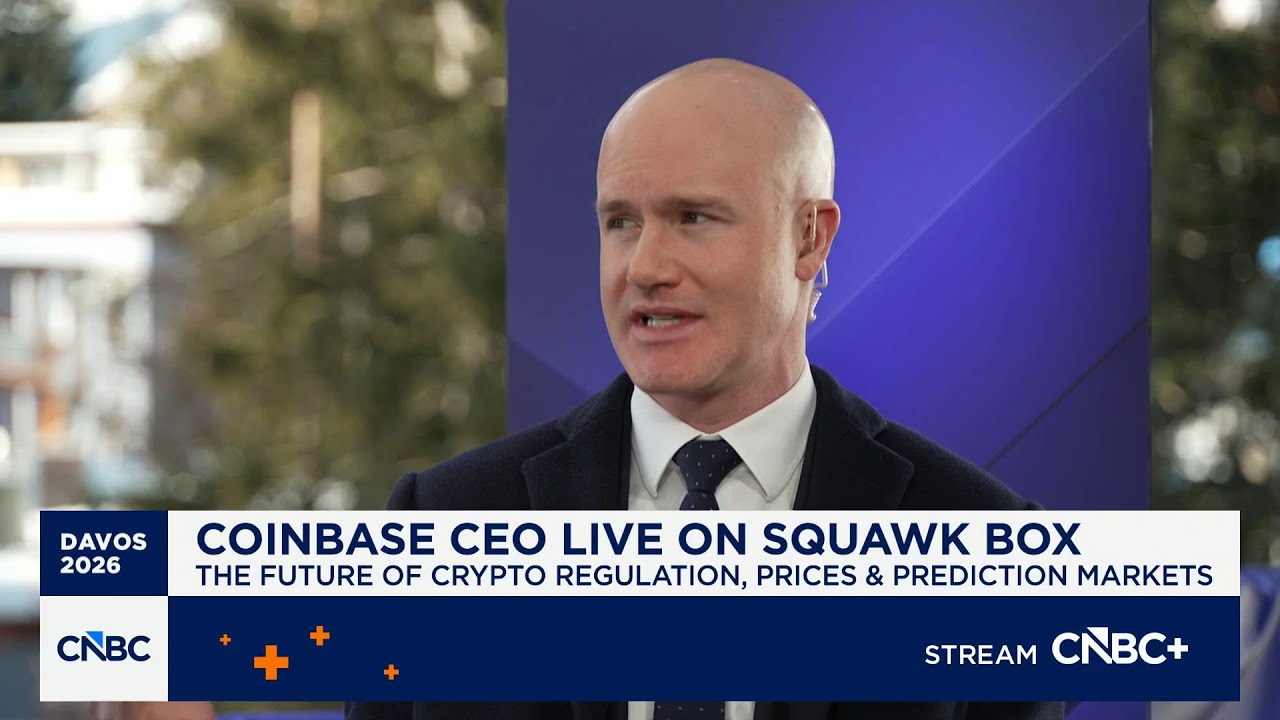 Coinbase CEO Brian Armstrong on crypto regulation: Banks should compete on a level playing field2026-01
 "Bitcoin is a decentralized protocol. There's actually no issuer of it. So in the sense that central banks have independence, Bitcoin is even more independent. There's no country or company or individual who controls it in the world" - Brian Armstrong answers critics from central bankers at the World Economic Forum in Davos2026-01
Brian Armstrong: Crypto’s Reluctant Politician and Experimenter-in-Chief
Brian Armstrong is the co‑founder and CEO of Coinbase, one of the largest and most politically influential cryptocurrency platforms in the world, and a prominent voice shaping debates over Bitcoin, regulation, and the future of finance. Under his leadership, Coinbase has evolved from a simple Bitcoin brokerage into a publicly listed, policy‑active, increasingly AI‑driven company at the center of tensions between the crypto industry, Wall Street banks, and U.S. policymakers.
Who is Brian Armstrong?
Brian Armstrong is an American entrepreneur and investor best known for co‑founding Coinbase, where he has served as chief executive since its early days and through its direct listing on Nasdaq. Coinbase itself has become a core piece of crypto market infrastructure, providing trading, custody, and developer services to tens of millions of retail users and thousands of institutions worldwide, which makes Armstrong’s personal views on Bitcoin, regulation, and technology unusually market‑moving. Before entering crypto, he worked as a software developer at IBM and later as a consultant at Deloitte, an experience that grounded him in both large‑scale enterprise technology and traditional corporate structures. Those roles helped shape his dual identity as a technologist and an operator, a combination that has proved critical as Coinbase navigates both engineering challenges and public‑company scrutiny.
Armstrong is also a co‑founder of NewLimit, a biotechnology company focused on extending human healthspan using epigenetic reprogramming therapies. This parallel interest in longevity science illustrates a broader pattern in his career: an inclination toward technologies that promise to alter long‑run human trajectories, whether by redesigning financial systems or reprogramming cellular aging. While NewLimit remains separate from Coinbase’s core business, it reinforces Armstrong’s self‑image as a mission‑driven founder pursuing what he sees as civilization‑scale problems, and it has contributed to a public persona that straddles the tech, biotech, and crypto worlds. For a crypto audience, this matters because it informs how he frames digital assets: not merely as speculative instruments, but as tools in a larger project to upgrade basic societal infrastructure.
Within the crypto ecosystem, Armstrong is often cast in a dual role as both an industry builder and a de facto political actor. On one hand, he frequently emphasizes Coinbase’s mission to create an open financial system and expand economic freedom, speaking to a long‑term vision of permissionless, global capital markets. On the other, his decision to base Coinbase in the United States, list it on a U.S. exchange, and seek regulatory clarity from lawmakers has pulled him into Washington’s legislative battles and into direct conflict with some of Wall Street’s most powerful banks. That combination – a regulated, public crypto company led by a CEO willing to confront traditional finance – explains why Armstrong increasingly operates less as a purely private founder and more as a public figure whose statements can influence policy debates and market sentiment simultaneously.
Armstrong’s public communications, particularly on social media and in long‑form essays, underscore his attempt to balance ideological commitment with institutional pragmatism. He has written at length about Coinbase’s decision to avoid conventional partisan politics inside the company, arguing that a focus on mission and product is the best way to have long‑term impact. At the same time, he has become one of the most aggressive corporate advocates for pro‑crypto legislation, specifically the CLARITY Act and related market‑structure bills, positioning himself and Coinbase as counterweights to the lobbying power of traditional banks and skeptical regulators. This tension between internal “no politics” culture and external political activism has become one of the defining features of his leadership.

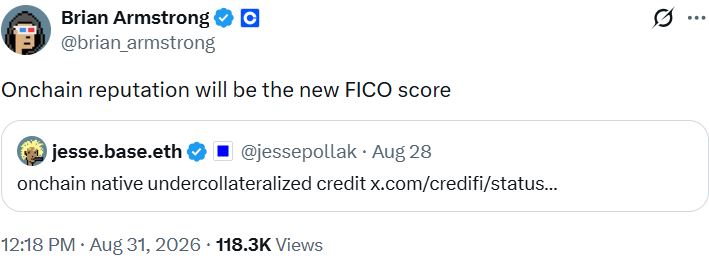
Coinbase CEO Brian Armstrong says on-chain reputation could replace FICO scores for creditworthiness.
Early Career and the Road to Coinbase
Armstrong’s formative years in technology started well before Bitcoin entered the popular imagination. After studying computer science and economics, he joined IBM as a software developer, working on systems that exposed him to the complexity of large‑scale computing environments. This experience gave him practical insight into how mission‑critical infrastructure is built and maintained, a perspective that later informed Coinbase’s focus on security, uptime, and regulated custody. His move to Deloitte as a consultant introduced him to the inner workings of corporate clients and the financial system, deepening his understanding of the frictions and inefficiencies of legacy banking rails. Together, these roles provided a kind of dual apprenticeship in both code and corporate process, which would become crucial as he tried to translate an open‑source money experiment into a compliant, mainstream product.
According to speaker biographies and his own public accounts, Armstrong first encountered Bitcoin around 2010 when reading the original white paper published under the Satoshi Nakamoto pseudonym. The white paper’s vision of a peer‑to‑peer electronic cash system, secured by cryptographic proof rather than centralized intermediaries, resonated with his frustrations about the slow, expensive, and fragmented nature of cross‑border payments. As an engineer, he was drawn to the elegance of Bitcoin’s design; as someone familiar with financial services, he saw the potential for a more open and interoperable system than the closed networks he had observed in traditional banking. This combination of intuitive technical appeal and practical dissatisfaction with the status quo is a recurring theme in his later advocacy for crypto‑based financial infrastructure.
The idea that would become Coinbase emerged from a straightforward but powerful insight: ordinary users lacked a safe, regulated, and easy‑to‑use on‑ramp into Bitcoin. Early exchanges were clunky, sometimes opaque about custody, and often operated in regulatory gray zones. Armstrong concluded that widespread adoption required an interface that abstracted away wallets, private keys, and complex trading interfaces, while still honoring the underlying ethos of user control and transparency. In 2012, he teamed up with Fred Ehrsam, a former Goldman Sachs trader, to build exactly that: a consumer‑focused service where users could buy, sell, and hold Bitcoin through familiar payment methods, with the company handling security and compliance on the backend. Coinbase’s founding thus sat at the intersection of Armstrong’s engineering background, Ehrsam’s market experience, and a shared belief that crypto would only go mainstream if it felt as intuitive as a mainstream fintech app.
Armstrong assumed the CEO role from the outset, and his leadership style reflected the constraints and aspirations of building a crypto company in the United States. Rather than avoiding regulators, he pursued licenses and registrations, positioning Coinbase as a compliant alternative to offshore exchanges that prioritized speed over oversight. This approach required him to translate between radically different cultures: the open‑source crypto community wary of KYC and surveillance, and financial regulators tasked with preventing money laundering and protecting consumers. In public interviews and blog posts, Armstrong has often argued that working within regulatory frameworks is necessary to bring trillions of dollars of institutional capital into crypto markets and to legitimize digital assets in the eyes of governments and mainstream investors. That conviction has shaped not only Coinbase’s corporate strategy but also the personal trajectory of Armstrong as a CEO whose job increasingly involves policy advocacy.
At the same time, Armstrong’s career path diverged from many crypto founders who remained anonymous or deliberately offshore. By being a named executive of a U.S.‑based company, subject to securities law, discovery, and shareholder scrutiny, he accepted a level of personal exposure uncommon in early crypto. This visibility brings both advantages and risks. It has allowed him to serve as a recognizable spokesperson for the industry, giving testimony, writing op‑eds, and appearing on major financial networks. But it has also made him a target for lawsuits, political criticism, and personal attacks from both crypto skeptics and some decentralization purists. Over time, Armstrong’s biography and the history of Coinbase have become deeply entangled, so that analyzing his role in crypto requires tracking how personal convictions, regulatory realities, and market cycles have interacted over more than a decade.
Readers click Armstrong not for crypto mechanics but for power-map updates — his access to Trump, his clashes with Dimon, and his SEC standoff reveal that Leviathan's audience understands Coinbase's fate is decided in Washington and on Wall Street, not in code.
Building Coinbase: From Bitcoin Brokerage to AI‑Native Platform
Under Armstrong’s guidance, Coinbase evolved rapidly from a single‑asset brokerage into a multifaceted crypto company spanning exchange, custody, staking, and developer infrastructure. In its early years, the core focus was making it safe and simple for retail users to buy and hold Bitcoin, using bank transfers and cards that felt familiar to mainstream consumers. As new assets such as Ether and later a long tail of tokens emerged, Coinbase gradually expanded its listings and built out more sophisticated trading interfaces, including Coinbase Pro for advanced users. From Armstrong’s perspective, this progression was not merely about adding trading pairs, but about progressively lowering the barriers for participation in an open financial system, while maintaining a conservative posture on security and regulatory compliance.
Going public via a direct listing intensified the tension between growth, profitability, and regulatory risk. As CEO of a listed company, Armstrong had to answer to shareholders and analysts while still navigating an environment where token listings, staking services, and yield products attracted increasing scrutiny from securities regulators. Coinbase’s financial results swung with crypto cycles, and at one point it posted a quarterly loss approaching $400 million, prompting Armstrong to talk openly about diversifying revenue away from pure spot trading fees toward subscription‑like products and services less tied to short‑term market volatility. That strategic pivot included emphasizing custody for institutions, blockchain infrastructure for developers, and a broader “super‑app” vision that integrates payments, DeFi access, and onchain experiences within the Coinbase app itself.
A major element of Armstrong’s recent strategy has been the push to build Coinbase into an AI‑native company, both in its internal operations and in the products it ships. In a widely discussed internal memo, he announced that Coinbase would cut roughly 14% of its workforce, eliminating about 700 jobs, and simultaneously flatten the organizational structure to no more than five layers below the CEO and COO. Armstrong argued that two forces justified this aggressive restructuring: a prolonged crypto down‑market that required cost discipline, and the transformative impact of AI on how software is built and how back‑office functions are run. He cited internal examples of engineers using AI tools to deliver in days what previously took teams weeks, and non‑technical staff shipping production‑level code with AI assistance, framing this as evidence that conventional management hierarchies were becoming obsolete.
The new operating model centered on small, AI‑native teams and what Armstrong described as “player‑coaches” rather than pure managers. Leaders would be expected to both manage and contribute individual work, overseeing as many as fifteen or more direct reports, while the company experimented with one‑person pods that effectively combined engineering, product, and design roles supported by fleets of AI agents. In Armstrong’s telling, Coinbase was being “re‑architected” as a kind of centralized intelligence, with humans at the edge directing and correcting AI‑driven processes. For a crypto audience, this is notable not only as a management experiment, but as a signal of how he expects AI and crypto to converge in the next phase: leaner organizations, machine‑driven workflows, and agentic systems capable of interacting directly with blockchains.
Armstrong’s willingness to make bold structural changes extended to Coinbase’s product bets. One example is the Base ecosystem, Coinbase’s Layer‑2 network built on Ethereum, which is intended to provide a low‑cost, developer‑friendly platform for onchain applications. As part of this strategy, Coinbase launched the Base App with SocialFi‑style features designed to encourage social interactions and user‑generated content onchain. However, Armstrong later acknowledged that this SocialFi experiment did not work as expected, and that Coinbase had decided to shift the Base App’s focus away from those features toward areas with clearer product‑market fit. He described the SocialFi push as a learning experience rather than a failure, emphasizing that the company would continue to iterate on how best to introduce millions of users to onchain experiences through its app ecosystem.
The broader Coinbase product strategy under Armstrong increasingly revolves around integrating different layers of the stack – exchange, custody, wallet, Layer‑2 infrastructure, and now AI‑driven services – into what he hopes will feel like a unified user experience. This includes supporting self‑custody wallets that keep users’ keys under their control, while also offering institutional‑grade custody for large funds, and integrating educational content such as early access to crypto‑themed documentaries like the “Finding Satoshi” film for U.S. app users. By curating content about Bitcoin’s origins and making it accessible within the app, Armstrong positions Coinbase not just as a trading venue but as a gateway into the culture and history of crypto itself. The aim is to turn the Coinbase app into a default portal for interacting with digital assets, whether for investing, payments, or participation in onchain communities.
Taken together, these moves reveal a CEO trying to future‑proof his company by betting on three converging trends: the continued institutionalization of crypto markets, the migration of applications and payments onto Layer‑2 networks, and the integration of AI into both back‑office operations and customer‑facing products. For Armstrong, the risk of such an aggressive strategy is clear: reorganizing around AI, experimenting with SocialFi, and investing heavily in new networks like Base could distract from Coinbase’s core exchange business or unsettle employees and regulators. But the upside, if successful, is a structurally leaner, more defensible platform well‑positioned for the next decade of digital assets, where crypto rails and AI‑driven agents might handle much of the world’s financial plumbing.

Coinbase CEO Brian Armstrong says Bitcoin has likely bottomed for this cycle, expecting BTC to trend higher over the next 1–2 years toward its next halving

Bitcoin, Markets, and Armstrong’s Technology Theses
Armstrong built his career on Bitcoin, and he continues to frame many of his market views around its long‑term trajectory. In June 2026, he suggested in an interview that his “instinct” was that Bitcoin had likely found a bottom around the psychologically important level of \( \$60{,}000 \), after a brief drop to about \( \$59{,}743 \) on June 5 and a subsequent rebound above \( \$66{,}000 \) within days. He emphasized that this was not a formal prediction or trading signal, and that no one can know with certainty where market bottoms occur, but pointed to Bitcoin’s historical four‑year halving cycles as a rough guide for understanding its boom‑and‑bust dynamics. The remark drew attention precisely because major exchange CEOs rarely offer explicit short‑term market calls, and because Armstrong framed his view as driven by a mix of on‑platform flow data and long‑term pattern recognition.
In other commentary, Armstrong and analysts close to him have stressed that bottom‑calling is inherently risky, even with privileged data. On‑chain and exchange metrics such as realized price, long‑term holder behavior, and funding rates can suggest areas of strong support or capitulation, but macro conditions, regulatory shocks, and leverage dynamics can still push prices lower than seems rational in hindsight. Outside commentators highlighted that blockchain analytics firms continued to flag levels closer to \( \$53{,}000 \) as key support, and that ETF flows had not yet fully stabilized, underscoring the uncertainty of treating Armstrong’s instinct as a hard floor. The episode encapsulates his broader stance: openly optimistic about Bitcoin’s long‑term role as “digital gold” and as collateral for the crypto financial system, but cautious about presenting himself as a short‑term forecaster.
Beyond price commentary, Armstrong has consistently argued that the financial system requires a series of structural upgrades that crypto can help deliver. In a public thread summarized by industry observers, he outlined eight major upgrades the global financial system still needs, including 24/7 global trading, pooled global liquidity instead of fragmented national silos, real‑time settlement, and broad adoption of tokenized real‑world assets (RWAs). The idea is that by representing assets such as real estate, stocks, or bonds as tokens on public or permissioned blockchains, markets can move away from batch settlement and patchwork registries toward continuous, programmable, and globally accessible infrastructure. Armstrong has linked this thesis to Coinbase’s own RWA initiatives, arguing that tokenization could streamline the trading and transfer of traditionally illiquid or highly intermediated assets like property and private equity stakes.
Armstrong’s vision extends beyond tokenization to a broader integration of crypto rails with AI‑driven financial services. He has spoken about “AI‑driven” or “agentic” payments, in which software agents can hold wallets, sign transactions, and interact with blockchains autonomously, enabling new forms of machine‑to‑machine commerce. In podcast conversations, he has discussed the possibility that agents will eventually replace many human‑initiated payments, from subscriptions to micro‑transactions, as they negotiate and settle value flows on behalf of users or organizations. This dovetails with the AI‑native operating model he is implementing at Coinbase, and with broader industry experiments in “agentic payments” protocols that allow autonomous systems to pay each other for data, computation, or services using crypto rails. For Armstrong, Bitcoin and other digital assets thus function not only as speculative stores of value but as the fuel for a machine‑native financial layer.
Security remains a central concern in this future. In 2026, Armstrong publicly addressed what he called the “quantum threat” to cryptocurrencies, following a research paper from Google’s Quantum AI group that described a hypothetical 500,000‑qubit system capable of breaking the elliptic curve cryptography that underpins Bitcoin’s signatures. While such a machine does not yet exist, the paper argued that it might be feasible within a multi‑decade horizon, raising the specter of quantum computers being able to forge signatures and steal funds if protocols remain unchanged. In response, Armstrong announced that he would personally lead a new industry coalition focused on accelerating Bitcoin’s transition to quantum‑resistant cryptography, signaling a shift from treating quantum risk as a distant concern to framing it as a near‑term engineering priority. His stance highlights the paradox of building a long‑term financial system atop cryptographic assumptions that may not hold indefinitely, and the need for proactive governance and coordination in open networks.
Armstrong’s technology theses also encompass the role of stablecoins and self‑custody in mainstream adoption. He has repeatedly stressed that fiat‑pegged stablecoins can serve as a gateway for billions of users into crypto, enabling low‑cost cross‑border payments, remittances, and onchain savings without forcing users to take on the volatility of Bitcoin or Ether. This complements his push for self‑custody wallets integrated with Coinbase’s services, which he sees as essential to ensuring that crypto does not simply recreate the intermediated structure of traditional finance with new actors. In his vision, users and institutions can choose between custodial and non‑custodial setups, but the underlying infrastructure remains open, programmable, and interoperable. The tension lies in reconciling that ideal with the constraints of compliance, risk management, and user experience that a company like Coinbase must navigate.
For a crypto‑native audience, Armstrong’s market and technology views can be read in two ways. Optimists see a CEO who deeply understands the technical foundations of Bitcoin and blockchains, recognizes emergent threats like quantum computing, and is actively investing in infrastructure – from Base to RWA tokenization – that may underpin the next decade of onchain activity. Skeptics argue that some of these theses, particularly around RWAs and agentic payments, have been circulating in crypto circles for years, and that realizing them at scale will require not just technology but complex regulatory and legal work. Either way, Armstrong has positioned Coinbase as both a beneficiary and a driver of these trends, making his personal convictions a key input into how quickly they may be realized in practice.
- 01SEC fight, Armstrong as industry defender↗
The top-clicked headline frames Armstrong as the last man standing against the SEC, casting regulatory combat as an existential industry battle rather than a company-specific legal dispute.
- 02Trump access and Washington influence↗
A pre-inauguration Trump meeting and subsequent congressional outreach signaled that Armstrong had converted crypto's political moment into direct executive access, which readers tracked as a watershed shift.
- 03Token listing standards, meme coin backlash
Armstrong calling for a listing overhaul amid the TRUMP and MELANIA token controversy forced readers to confront whether Coinbase could police token quality while profiting from speculative listing volume.
- 04Wall Street rivalry, Dimon clash↗
A public expletive exchange with JPMorgan's CEO at Davos crystallized Armstrong as the face of crypto's challenge to legacy banking, making the rivalry personal and quotable.
- 05Super app and DeFi banking replacement vision
Armstrong's stated goal of replacing banks with a crypto-native super app offering Bitcoin rewards and DeFi yields gave readers a concrete product frame for an otherwise abstract decentralization thesis.
- 06Personal brand and public life
The wedding announcement drove 145 clicks, indicating a segment of the audience follows Armstrong as a founder-celebrity, not purely as a policy or markets figure.
Regulation, Politics, and the CLARITY Act
If Armstrong’s first decade in crypto was defined by building a compliant exchange, the last several years have been defined by an increasingly overt political role. Coinbase’s choice to pursue full regulatory compliance in the United States inevitably drew it into disputes over how digital assets should be classified, taxed, and supervised. As regulatory enforcement actions and legislative proposals multiplied, Armstrong began speaking more directly about the need for clear, comprehensive rules for crypto markets, framing regulatory uncertainty as a drag on innovation and as a national competitiveness issue. This culminated in his vocal support for, and sometimes criticism of, specific bills, most notably the CLARITY Act and broader market structure legislation in Congress.
Armstrong’s relationship with legislative proposals has not been straightforwardly supportive. In one high‑profile instance, Coinbase reviewed a draft bill from the Senate Banking Committee and concluded that it could not support the text as written, prompting Armstrong and the company to publicly withdraw their backing. Legal commentators described this as a significant blow to the bill’s prospects, with Coinbase arguing that the draft failed to provide the kind of workable, innovation‑friendly framework needed for crypto markets to thrive in the United States. Around the same period, Armstrong appeared on financial news programs to explain why he believed certain market‑structure provisions risked entrenching incumbent financial institutions and pushing crypto activity offshore, rather than bringing it into a well‑regulated, competitive U.S. environment.
The CLARITY Act became the focal point of these debates. The Act, supported by pro‑crypto lawmakers and industry advocates, aims to delineate more clearly which digital assets are commodities, which are securities, and which fall under bespoke regimes such as payment stablecoins. Armstrong emerged as one of its most prominent corporate backers, tweeting that “it’s time to pass the CLARITY Act” and thanking regulators and policymakers who supported the bill’s advancement. He framed the Act as a way to protect consumers while providing predictable rules for companies, arguing that without such clarity, the U.S. risks ceding leadership to jurisdictions with more accommodating frameworks. This framing situates Armstrong not just as a CEO protecting his firm’s interests, but as a spokesperson for a broader U.S. crypto ecosystem worried about regulatory fragmentation.
The political stakes around the CLARITY Act and related bills drew in powerful opponents, especially from traditional banking. JPMorgan CEO Jamie Dimon emerged as one of Armstrong’s fiercest public critics, dismissing crypto and challenging Coinbase’s policy positions in interviews and at high‑profile events. In one now‑famous exchange, Dimon reportedly told Armstrong he was “full of” expletive in the context of a dispute over whether banks were undermining a U.S. crypto market‑structure bill. Dimon also signaled his intent to fight the CLARITY Act and similar legislation he viewed as too favorable to digital asset platforms at the expense of established financial institutions. Armstrong’s response was to adopt a posture of combative openness, saying in media appearances that his door was open to discuss the bill with Dimon and other banking executives, and inviting them to engage substantively rather than through media soundbites.
The clash with Dimon reflects a deeper structural conflict between a crypto‑centric model of finance and a bank‑centric one. Armstrong has argued that the existing financial system suffers from limited hours, high fees, and exclusionary practices that crypto rails can help alleviate, while banks worry about compliance gaps, financial stability risks, and disintermediation. The legislative fights around the CLARITY Act and market‑structure bills have thus become proxies for a broader battle over who will control the future plumbing of money and capital markets. Armstrong’s willingness to position himself as “Wall Street’s chief crypto antagonist” – pushing for a parallel digital‑asset financial system – has made him a lightning rod for both praise and criticism.
Armstrong’s political engagement has extended beyond clashes with bankers to direct interactions with top U.S. political leaders. In one instance reported by political media, President Donald Trump met privately with Armstrong before publicly criticizing banks over a crypto market‑structure bill and voicing support for Coinbase’s position. The meeting underscored how central Armstrong and Coinbase have become in Washington’s deliberations over digital asset legislation, and how crypto policy has increasingly intersected with broader partisan and geopolitical considerations. For crypto market participants, the episode highlighted both the opportunities and risks of having their industry represented by a handful of large platforms whose interests may not always align perfectly with those of decentralized projects or smaller firms.
Tax policy has provided another arena where Armstrong and Coinbase have been drawn into political controversy. In a recent debate over a proposed Bitcoin‑specific tax break, a prominent investor alleged that Coinbase lobbyists were working behind the scenes to oppose the measure, arguing that the company favored benefits for stablecoins and other tokens over Bitcoin itself. Coinbase executives swiftly rejected the accusation as categorically false, stating that since 2017 the company had advocated for tax exemptions covering all digital assets, including Bitcoin. They pointed to a bipartisan discussion draft of the Parity Act, sponsored by Representatives Max Miller and Steven Horsford, which would limit exemptions to “regulated payment stablecoins” and thereby exclude Bitcoin, as an example of legislative language that did not reflect Coinbase’s preference for asset‑neutral treatment. The episode exposed fault lines even within the pro‑crypto camp, as some Bitcoin‑focused advocates accused broader crypto firms of diluting or diverting Bitcoin‑specific policy wins.
For Armstrong personally, these tax and regulatory battles have reinforced his position as a central negotiator between lawmakers, regulators, and a fragmented industry. Supporters see his engagement as a necessary counterweight to the lobbying power of major banks and skeptical officials, arguing that without such efforts, the U.S. might default to a restrictive regime by inertia. Critics worry that heavy reliance on one large, centralized exchange to shape rules risks entrenching that exchange’s business model in law, potentially at the expense of smaller players, DeFi projects, or privacy‑preserving technologies. The CLARITY Act, Parity Act, and other bills thus serve not only as policy texts but as barometers of how far Armstrong’s vision of a regulated yet open crypto ecosystem can be reconciled with the interests of traditional finance and state actors.
Brian Armstrong says tokenized assets could spark a new wave of finance companies, just as the iPhone enabled Uber, TikTok and Coinbase

Leadership, Culture, and Corporate Governance
Armstrong’s leadership style has been as controversial as his policy activism, particularly in how he has handled internal culture and corporate governance. One of the most debated decisions at Coinbase was his introduction of a “no politics” doctrine within the company, under which employees were discouraged from engaging in broader social or political debates at work that were not directly related to the firm’s mission of building an open financial system. In a lengthy essay, Armstrong argued that political distractions could fragment teams, slow execution, and reduce Coinbase’s ability to focus on its core objectives, and he offered exit packages to employees who strongly disagreed with the new stance. The move sparked intense public debate, with some praising his clarity and others criticizing what they saw as an attempt to suppress legitimate concerns about social issues.
In subsequent commentary, Armstrong addressed reports that as many as half of Coinbase’s employees might resign over the policy, saying he was prepared to accept that level of turnover if necessary to preserve what he viewed as mission alignment. He compared the situation to difficult reforms undertaken by leaders such as Singapore’s Lee Kuan Yew, suggesting that true leadership sometimes requires making unpopular decisions and enduring short‑term pain for long‑term institutional health. This analogy drew its own criticism, but it illustrates Armstrong’s belief that a high‑performing, apolitical workplace is a competitive advantage in a sector as fast‑moving as crypto. The controversy also underscored the tension between Coinbase’s external role as a political actor and its internal desire to minimize partisan conflict.
Armstrong has tried to reconcile this tension by drawing a distinction between what he sees as “mission‑aligned” policy engagement and broader social activism. In his view, lobbying for crypto‑friendly legislation, litigating against overreaching regulators, or pushing for clear tax rules directly advances Coinbase’s mission and thus warrants company resources and employee attention. By contrast, taking positions on unrelated social issues might divide staff without materially advancing the firm’s goals. Critics argue that these categories are not so easily separated, particularly when financial policy intersects with issues of privacy, surveillance, and civil liberties. Nonetheless, Armstrong’s stance provides a framework for understanding why he is comfortable being highly political externally while urging neutrality internally.
Corporate governance has been another area of scrutiny. As a public company CEO, Armstrong answers to a board of directors and to shareholders, some of whom have brought legal challenges over disclosures and oversight. In one derivative lawsuit, a Coinbase shareholder accused Armstrong and other executives of misleading investors about risks tied to the company’s custody of digital assets. The suit alleged that disclosures downplayed exposure to potential regulatory actions or security incidents, although Coinbase has defended its risk management and transparency practices. Separately, a Delaware judge recently allowed an insider‑trading related lawsuit against Coinbase directors, including Armstrong and venture capitalist Marc Andreessen, to proceed, after raising concerns about the independence of a special litigation committee that had recommended dismissing the case. The suit centers on allegations that directors sold roughly \( \$2.9 \) billion of stock at inflated prices around the time of Coinbase’s 2021 direct listing, before regulatory and market risks fully materialized.
These cases do not imply wrongdoing by Armstrong, but they illustrate the heightened expectations placed on a CEO who operates at the intersection of emerging technology and public markets. Shareholders and courts are probing whether governance structures at Coinbase have kept pace with the complexity and speed of the crypto sector, and whether insiders have adequately balanced their own interests with those of public investors. For Armstrong, the legal process is both a cost of being public and a test of his commitment to transparency in an industry long criticized for opacity.
Workforce decisions during downturns have also shaped perceptions of Armstrong’s leadership. The AI‑driven reorganization that cut 14% of staff, eliminating pure management roles and flattening the hierarchy, was praised by some as a bold adaptation to new technology and condemned by others as an experiment conducted at employees’ expense. Armstrong framed the layoffs as both a response to crypto’s cyclical nature and as an opportunity to rebuild Coinbase around AI‑native skills, arguing that traditional middle management layers were no longer necessary in an era where AI tools could scale individual contributors’ output. Critics questioned whether such a lean structure is sustainable for a heavily regulated financial entity that must maintain robust compliance, legal, and risk functions. The long‑term results of this restructuring remain an open question, but it has already influenced how other tech and crypto firms think about integrating AI into their organizations.
Through these controversies, Armstrong’s public persona has oscillated between that of a principled technocrat and a combative founder. Supporters highlight his willingness to make tough decisions, accept reputational costs, and publicly defend his views on culture, governance, and policy. Detractors see a pattern of top‑down decrees that can alienate employees, partners, and parts of the crypto community. For market participants, the key practical question is whether Armstrong’s leadership choices enhance or undermine Coinbase’s ability to execute on its roadmap, maintain regulatory relationships, and attract the talent needed to compete in an increasingly crowded landscape.
Coinbase founded by Armstrong and Fred Ehrsam
Coinbase direct listing on Nasdaq
SEC files suit against Coinbase; Armstrong vows to fight
Bitcoin spot ETFs approved; Coinbase named as custodian
Armstrong meets President-elect Trump before inauguration
Davos clash with JPMorgan CEO Jamie Dimon over crypto bill
Armstrong pledges personal focus on Bitcoin quantum resistance
Criticisms, Community Backlash, and Open Questions
As Coinbase’s profile and Armstrong’s influence have grown, so too have the criticisms from both inside and outside the crypto ecosystem. One recurring line of critique comes from Bitcoin‑focused advocates who worry that Coinbase’s business model and lobbying priorities favor yield‑bearing products, alternative tokens, or stablecoins over Bitcoin’s original vision. In one notable commentary, a critic accused Armstrong and Coinbase of prioritizing yield over “real” blockchain adoption, warning that such choices could delay the industry’s maturation and undercut Bitcoin’s role as the foundational asset of the ecosystem. U.S. Senator Cynthia Lummis, a prominent Bitcoin proponent, has likewise cautioned that over‑emphasis on short‑term returns and complex financial products could slow progress toward a more decentralized, resilient financial system.
These critiques intersect with policy debates such as the Bitcoin tax controversy, where Coinbase was accused of quietly working against a proposed tax break specific to Bitcoin. Although Coinbase executives strongly denied this and pointed to their long‑standing support for tax exemptions that apply to all digital assets, the perception among some Bitcoiners is that large exchanges may have incentives to promote a broader multi‑asset environment in which Bitcoin is just one of many trading pairs. Armstrong’s response has been to emphasize a pluralistic vision of crypto, where Bitcoin, stablecoins, and a range of protocol tokens coexist, each serving different use cases. For Bitcoin‑maximalist communities, however, this can read as a dilution of focus.
Another source of criticism is the concern that Coinbase’s success, combined with Armstrong’s political clout, could lead to a kind of soft centralization of crypto infrastructure. As Coinbase becomes a default gateway for many users and institutions, its policies on listing, custody, staking, and compliance effectively shape what parts of the crypto universe are easily accessible. Some DeFi and privacy‑focused projects fear that regulatory pressures, combined with Armstrong’s preference for engagement over confrontation, could push Coinbase to favor assets and protocols that fit neatly into existing regulatory frameworks, sidelining more radical or privacy‑preserving innovations. From this angle, Armstrong’s role as a “responsible” face of crypto is double‑edged: it may win legislative battles but at the cost of normalizing a version of crypto that looks more like a new layer of Wall Street than a decentralized alternative.
Legal challenges and shareholder suits add to the overall picture of contested legitimacy. The derivative lawsuit over custody‑related disclosures and the Delaware insider‑trading case have raised questions about whether Coinbase’s governance has fully internalized the risks of operating at the frontier of financial innovation. Even if Armstrong and his colleagues ultimately prevail in court, the existence of such suits feeds a narrative among skeptics that insiders may have profited disproportionately from crypto’s boom years while leaving retail investors more exposed to subsequent downturns. Armstrong counters this narrative by pointing to Coinbase’s continued investment in security, compliance, and product development through multiple bear markets, and by arguing that the company’s public listing itself was a step toward transparency.
Armstrong’s “no politics” policy and cultural choices have also drawn fire from parts of the broader tech community. Critics argue that in sectors like fintech and crypto, issues such as financial inclusion, surveillance, and censorship resistance are inherently political, and that trying to cordon off “politics” from product work is both unrealistic and potentially harmful. The comparison to leaders like Lee Kuan Yew has been read by some as an endorsement of technocratic, top‑down governance models that may not sit comfortably with the decentralized ethos of crypto. Armstrong, in turn, has insisted that focusing the company on its mission is the most effective way to achieve any broader social impact, and that employees remain free to engage in activism outside work.
Finally, Armstrong’s aggressive embrace of AI raises questions about concentration of power and long‑term risk. By re‑architecting Coinbase as an AI‑centric organization and championing agentic payments, he is betting that AI and crypto will converge in ways that increase efficiency and open new markets. Yet this also creates new attack surfaces, dependencies on proprietary AI models, and ethical questions about autonomous agents’ control over financial assets. Armstrong’s move to spearhead an industry response to quantum threats to Bitcoin’s cryptography underscores his awareness of systemic risks, but it remains to be seen whether similar foresight will be applied to AI‑related vulnerabilities.
For the crypto news audience, the key takeaway is that Armstrong embodies many of the unresolved tensions of the industry itself: between decentralization and centralization, ideology and pragmatism, innovation and regulation, human judgment and machine intelligence. His decisions and the criticisms they elicit offer a lens through which to examine how the crypto space will navigate these tradeoffs in the years ahead.
Outlook
Looking forward, Brian Armstrong is likely to remain one of the most influential figures in crypto, not only because of Coinbase’s market share but because of his willingness to stake out strong positions on regulation, technology, and corporate culture. On the policy front, the fate of the CLARITY Act and related market‑structure bills will be an important measure of how effectively Armstrong’s lobbying and public campaigning can reshape the U.S. regulatory environment. Success would validate his strategy of engagement and could cement Coinbase as a primary conduit between lawmakers and the crypto industry. Failure or significant dilution of these bills could push Armstrong to further internationalize Coinbase’s operations or to recalibrate his approach to Washington.
In markets and technology, Armstrong’s bets on Bitcoin’s long‑term resilience, RWA tokenization, Layer‑2 networks like Base, and AI‑driven agentic payments will either converge into a coherent next‑generation financial platform or expose the limits of even a well‑resourced company’s ability to be everywhere at once. His proactive stance on quantum resilience suggests a capacity to take existential risks seriously and to organize collective responses across the industry. Yet the success of those efforts will depend on coordination with Bitcoin core developers, miners, and other stakeholders who do not answer to Coinbase or any single CEO. The same holds for broader ambitions to standardize RWA tokenization or machine‑to‑machine commerce: they will require legal, technical, and market alignment far beyond any one firm.
For now, Armstrong’s story remains tightly coupled to that of Coinbase and, by extension, to the institutionalization of crypto in the United States. Whether he is remembered primarily as the builder of the first major regulated crypto “super‑app,” as the architect of a new AI‑native financial company, as a polarizing political actor, or as a transitional figure eclipsed by more decentralized models will depend on how the next decade of crypto and AI unfolds. What is clear is that for anyone seeking to understand the evolving relationship between Bitcoin, Wall Street, Washington, and frontier technologies, following Brian Armstrong’s moves – and the reactions they provoke – will remain essential.
Latest Brian Armstrong news
Coinbase CEO Brian Armstrong says on-chain reputation could replace FICO scores for creditworthiness.Coinbase CEO Brian Armstrong says Bitcoin has likely bottomed for this cycle, expecting BTC to trend higher over the next 1–2 years toward its next halvingBrian Armstrong says tokenized assets could spark a new wave of finance companies, just as the iPhone enabled Uber, TikTok and CoinbaseCoinbase cuts 14% of workforce, slashing ~700 jobs as Brian Armstrong pivots to AI-native teams, flattening management and reshaping operations amid market pressure Coinbase CEO Brian Armstrong pushes back on WSJ claims over CLARITY Act, saying key concerns were fixed before he strongly backed the Senate draft“Finding Satoshi” documentary gets early release via Coinbase app for US users, as Brian Armstrong praises its deep exploration of Bitcoin’s mysterious creator
Sources
19 records from 14 domains
en.wikipedia.org
aaespeakers.com
facebook.com
- facebook.com· cryptosrus / posts / brian-armstrong-thinks-bitcoin-has-already-bottomedthe-coinb…
- facebook.com· yahoofinance / videos / brian-armstrongs-door-is-open-to-discuss-the-clarity-act-…
- facebook.com· yahoofinance / posts / coinbase-ceo-brian-armstrong-says-his-door-is-open-to-disc…
- facebook.com· nxthompson / posts / the-most-interesting-thing-in-tech-brian-armstrong-the-ceo-o…
journals.library.columbia.edu
politico.com
smarterx.ai
mexc.com
thequantuminsider.com
podcasts.apple.com
binance.com
x.com
dlnews.com
phemex.com
youtube.com
Community notes
Spot something off or out of date? Drop a note. Editors review topic notes daily and roll accepted fixes into the explainer — contributors are recognized in the monthly $SQUID drop.
Loading notes…
Help improve this topic
Have a story or tip about this topic? Submit it. See something missing? Leave a note. Editors review daily; accepted submissions and fixes count toward the monthly $SQUID drop.