
An authoritative explainer on crypto policy covering U.S. legislation, stablecoin regulation, global divergence from Japan to Hungary, AI privacy rules, and what the emerging compliance infrastructure means for digital asset markets.
+31 sources across the wider coverage universe
 Tether opens two roles: research analyst and economic policy analyst to quantify stablecoin impact2026-04
 Coinbase international policy VP Tom Duff Gordon departs for OpenAI to lead EMEA policy2026-04
 Solana Policy Institute bankrolls PACs with $3.5M as crypto targets Sherrod Brown's Ohio Senate comeback2026-04
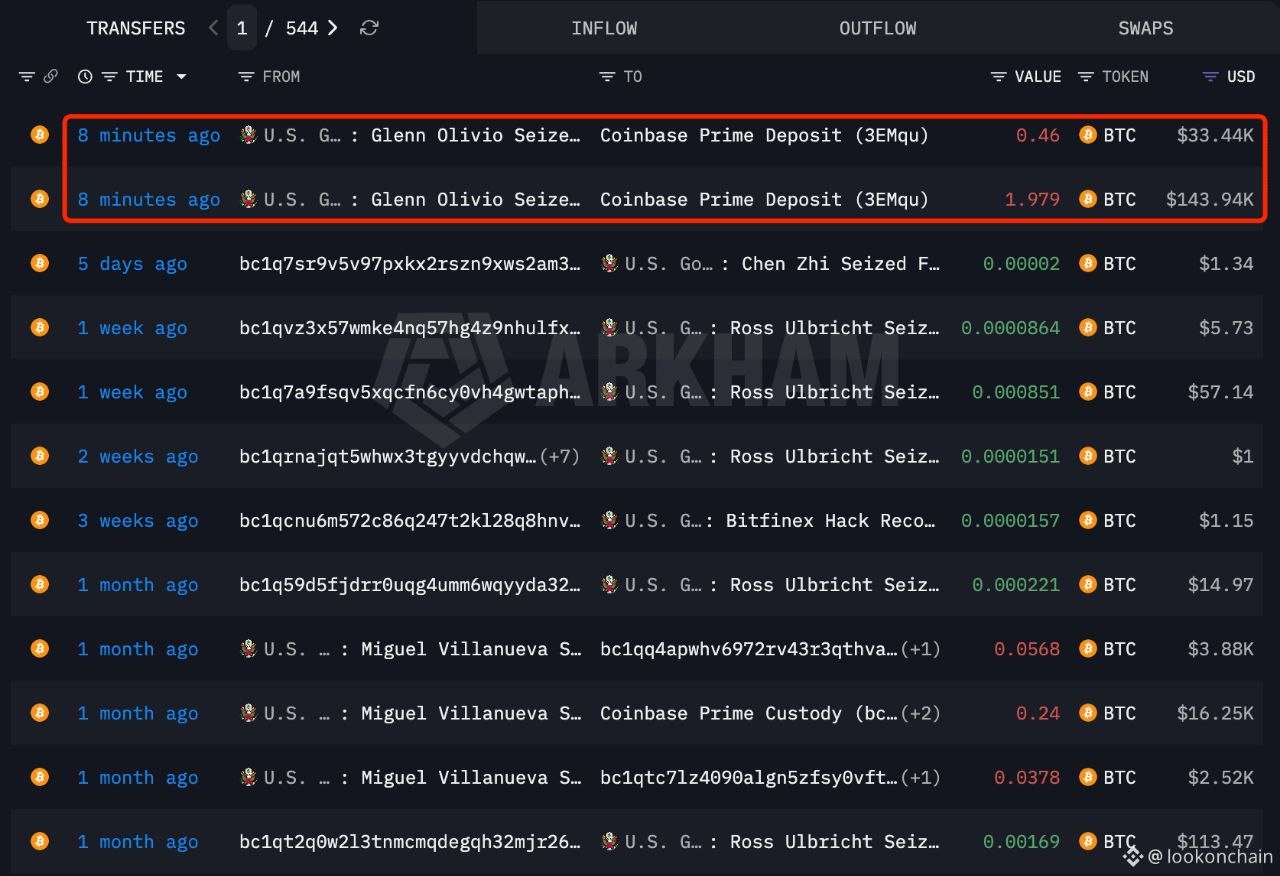 Bitcoin linked to suspected steroid distribution conspiracy moved by U.S. authorities to Coinbase Prime, highlighting continued handling of seized crypto assets2026-04
 The Solana Policy Institute urges the U.S. Senate to advance the Clarity Act before Congress shifts to election season, calling regulatory certainty critical for crypto innovation2026-07
 Crypto Council for Innovation adds Digital Energy Council as first energy-focused member, boosting policy efforts on grid resilience and crypto competitiveness2026-04
Crypto policy encompasses the laws, regulations, and official guidance that govern how digital assets are issued, traded, and integrated into the broader financial system — shaping everything from which coins can legally trade in a given jurisdiction to how a stablecoin must hold its reserves.
Governments worldwide spent years treating cryptocurrency as a curiosity. That era is over. From Washington's Capitol Hill to Tokyo's central bank board rooms and Budapest's parliament, policymakers are now actively writing the rules that will define digital finance for the next generation. The stakes are high: get regulation wrong, and innovation migrates offshore or collapses under compliance costs; get it right, and digital assets could genuinely modernize how money moves across the global economy.
Why Crypto Policy Matters Now
Digital assets have crossed the threshold from niche speculation into mainstream finance. Bitcoin ETFs trade on U.S. exchanges. Stablecoins settle billions in daily transaction volume. Tokenized government bonds are being piloted in Hong Kong. At each of these inflection points, policy decisions — not technology alone — determine whether the infrastructure scales or stalls.
A 2026 poll conducted by Digital Currency Group and HarrisPoll found that 81% of Americans support legislation creating a clear regulatory framework for digital assets, and 60% want Congress to act immediately, even if the rules need refinement over time. That level of public demand for regulatory clarity is unusual for a technology sector, and it reflects how deeply crypto has penetrated everyday financial awareness.

x402 lets AI agents pay per request, but idle balances still lack treasury policy controls

The United States: A Patchwork in Motion
For most of Bitcoin's existence, U.S. regulatory jurisdiction over crypto was contested terrain. The Securities and Exchange Commission (SEC) claimed authority over tokens it deemed securities; the Commodity Futures Trading Commission (CFTC) asserted jurisdiction over derivatives and certain spot markets; banking regulators circled stablecoins. The result was expensive legal ambiguity that pushed some projects and exchanges offshore.
The political winds shifted materially after the 2024 election. The Trump administration entered office with an explicitly pro-crypto posture, establishing a Strategic Bitcoin Reserve by executive order and signaling that the SEC would adopt a more accommodating stance toward digital asset listings. Coinbase, which had been embroiled in a high-profile SEC enforcement action, saw its legal exposure ease considerably as the agency's enforcement philosophy pivoted.
On Capitol Hill, the most consequential active legislation is the GENIUS Act, which would create a federal framework for stablecoin issuers. The bill has drawn support from a broad coalition — more than 60 crypto CEOs signed an industry letter backing the BRCA (Blockchain Regulatory Certainty Act) — but it has also surfaced genuine disagreements. Paradigm and the Hyperliquid Policy Center have pushed back specifically on an anti-money-laundering provision in the GENIUS Act that they argue would impose overly broad compliance requirements on on-chain stablecoin transactions, potentially treating decentralized protocols as if they were regulated financial intermediaries. Their argument is that AML rules designed for custodial exchanges should not apply identically to non-custodial smart contracts.
The debate over derivatives classification is also live. CoinDesk's Policy Protocol has examined whether crypto perpetual contracts — synthetic instruments with no expiry that dominate offshore trading volume — should be legally classified as futures, which would bring them under CFTC jurisdiction and standardized margin rules.
Position limits are tightening elsewhere in the derivatives ecosystem: the CBOE filed a rule change with the SEC to raise position and exercise limits for options on the iShares Bitcoin Trust ETF, reflecting growing institutional demand for Bitcoin exposure through regulated vehicles.
Readers click crypto policy stories not for regulatory theory but for power dynamics — specifically who controls the legislative agenda on stablecoins and whether pro-crypto political momentum can survive contact with Congress.
Stablecoins: The Policy Flashpoint
No segment of crypto has attracted more focused regulatory attention than stablecoins. They function as the settlement layer for decentralized finance, the payment rail for cross-border remittances, and increasingly as a potential substitute for bank deposits — which is exactly what makes them politically sensitive.
Research from the Bank for International Settlements (BIS Bulletin 125) examined how centralized exchanges compensate stablecoin holders. The finding is structurally important: reserve-based yields on stablecoins track central bank policy rates closely, while activity-based yields — derived from lending and trading fees — are highly volatile. As policy rates rise (as they have across the G10 since 2022), stablecoin reserves parked in short-term government debt generate meaningful income that currently accrues to issuers, not holders. That asymmetry is one driver behind legislative proposals requiring yield-bearing stablecoin disclosures or outright restrictions.
The macrofinancial implication the BIS flags is significant: if stablecoins grow to the scale where they meaningfully substitute for bank deposits, the transmission of monetary policy could be altered. Central banks set interest rates partly to influence deposit costs and therefore credit supply; a large stablecoin sector that responds differently to rate changes could complicate that transmission.
Sanctions compliance is another stablecoin policy dimension. WalletConnect Pay has developed pre-settlement sanctions screening for stablecoin payments — a technical acknowledgment that governments use financial sanctions as a primary instrument of foreign policy. Stablecoin issuers and payment processors are now building this infrastructure proactively, anticipating that regulators will require it. The Iran policy signals coming from the Trump administration, including statements about the Strait of Hormuz trade flows, make it clear that U.S. foreign policy priorities will continue to intersect with crypto payment rails.
Banking Integration and the "Bankless" Illusion
One underappreciated policy risk is the degree to which crypto neobanks remain dependent on traditional financial infrastructure. Despite marketing language about decentralization and financial sovereignty, most crypto banking apps still rely on chartered banks for deposit insurance, card networks like Visa and Mastercard for payment rails, and state or federal money-transmitter licenses for legal operation. This means they are fully exposed to policy shifts at the banking layer — a lesson driven home during 2023's debanking wave, when multiple crypto-friendly banks failed or were pressured by regulators to exit the sector.
The structural implication is that genuinely "bankless" finance requires on-chain settlement infrastructure that bypasses these dependencies. That infrastructure is still maturing, and until it achieves scale, crypto applications will remain vulnerable to policy decisions made in traditional banking supervision.
- 01Stablecoin legislation standoffs
The GENIUS Act failure, White House compromise talks, and Paradigm's policy paper collectively showed readers a single high-stakes legislative fight with real money at stake.
- 02US regulatory regime change
Trump's pro-crypto pivot, the anticipated SEC chair swap, and Coinbase's optimism framed a concrete before/after shift in who enforces the rules.
- 03Tokenization vs central bank control
The BIS G20 report gave readers a credible institutional warning that tokenized money could erode central bank monetary levers — a systemic stakes angle.
- 04Crypto's electoral political leverage
The framing that a small voter bloc is scrambling US politics, combined with Coin Center's combative stance toward Warren, gave readers a conflict-driven political narrative.
- 05Global standards fragmentation
IOSCO guidelines, CFTC's admission the US lags globally, UK DeFi tax consultation, and Hong Kong stablecoin proposals showed readers a patchwork regulatory world with real arbitrage consequences.
- 06Developer liability line shift
The DOJ's post-Tornado Cash stance that writing code without ill intent is not a crime signaled a meaningful enforcement boundary change for DeFi builders.
Global Divergence: Japan, Hong Kong, and Hungary
Policy is not monolithic. Different jurisdictions are making sharply different choices, and those choices create arbitrage opportunities — and risks.
Japan made a significant move in June 2026 when the Bank of Japan raised its policy rate by 25 basis points to 1.0%, the highest level since 1995 and the first such reading in over 30 years. The BOJ cited weak-yen concerns — the yen touching 160 against the dollar — and rising producer price inflation driven by energy costs. For crypto markets, a rising-rate Japan matters because it reduces the carry-trade incentive to borrow cheap yen and invest in risk assets, including Bitcoin. The BOJ's normalization path, if it continues, could gradually remove one source of liquidity that has historically supported speculative markets.
Hong Kong has taken a deliberately pro-innovation stance on tokenized assets, pushing forward with policy frameworks for tokenized bonds as part of a broader effort to position the city as a digital asset hub. The regulatory clarity being provided to institutional issuers of tokenized securities represents the kind of specific, actionable policy that institutional capital requires before committing.
Hungary offers a dramatic reversal case. The Orbán government had imposed prison terms for unlicensed crypto transactions — a punitive approach that suppressed legitimate activity. New legislation is set to decriminalize crypto trading and repeal those laws, marking a major shift in Hungary's digital asset policy and signaling that even governments that adopted hostile postures are reassessing.

Privy expands TRON support with new transaction, webhook, policy control and transfer capabilities, making stablecoin products easier to build

AI Policy and Data Privacy: A Parallel Frontier
The intersection of AI and crypto policy is emerging as its own discrete area. Anthropic — the AI company behind Claude — updated its privacy policy to reserve the right to request government-issued ID, facial photographs, and biometric data from users, effective July 8, 2026. This development matters to the crypto audience for two reasons: first, it illustrates the broader regulatory pressure on digital platforms to implement identity verification; second, it signals that the KYC (know your customer) infrastructure being built for financial compliance is bleeding into consumer tech in ways that users may not anticipate.
The DCG Fly-In in Washington in June 2026 highlighted data privacy and digital asset regulation as the two dominant policy themes occupying blockchain founders' conversations with lawmakers. Those two issues are not independent — identity verification requirements for crypto users, on-chain analytics mandates, and travel rule enforcement for wallet addresses are all policy decisions that touch data privacy directly.
Advocacy, Lobbying, and Industry Coordination
The policy landscape is being shaped not just by legislators and regulators but by an increasingly sophisticated crypto advocacy apparatus. Former congressman Kendrick Meek joining Lumia's advisory board as a public policy advisor is one data point; the 60+ CEO signatures on the BRCA letter is another. DCG's Fly-In brought blockchain founders directly to Capitol Hill for meetings with lawmakers.
The Policy Protocol podcast and similar venues are doing substantive work explaining regulatory tradeoffs — covering topics like GENIUS Act AML provisions, perpetuals classification, and industry self-regulatory frameworks — to audiences of founders, investors, and policy professionals who are actively shaping the outcome.
Maine's 2026 primary races illustrate how crypto has become a factor in down-ballot Senate contests: prediction markets were tracking the Democratic Senate primary specifically because of its implications for federal crypto policy in the fall.
- 2023-11regulatory
IOSCO releases global crypto markets policy recommendations
- 2024-06regulatory
BIS tokenization report submitted to G20 Brasil
- 2024-09governance
Aave, Lido, Uniswap launch Ethereum policy group
- 2025-01regulatory
Trump pro-crypto administration inaugurated
- 2025-05regulatory
Senate rejects GENIUS Act in procedural vote
- 2025-06regulatory
White House and industry near stablecoin rewards compromise
- 2026-03milestone
Stable Summit 2026 convenes in Cannes on stablecoins in payments and policy
The Compliance Infrastructure Layer
Underneath the legislative debates, a compliance infrastructure layer is being built in real time. Sanctions screening tools, AML compliance modules for on-chain stablecoin transfers, KYC integrations for DEX front-ends, and travel rule implementations for cross-border transfers are all live products. This infrastructure exists because regulated entities — exchanges, stablecoin issuers, payment processors — cannot wait for legislation to be finalized before building compliance capability.
That infrastructure also creates path dependency. Once exchanges and payment processors have invested in particular compliance architectures, those architectures tend to become the de facto standard that legislation then codifies. Industry is not simply reacting to policy; it is partially authoring it through the compliance choices made before legislation passes.
Outlook
The central policy narrative of the next 24 months will be legislative crystallization in the United States. The GENIUS Act stablecoin framework and some version of a market structure bill are the two most consequential items. If both pass and are signed, they will establish the first comprehensive federal framework for digital assets, removing the jurisdictional ambiguity that has plagued the industry and providing the legal certainty that institutional capital has said it requires to deploy fully.
Outside the U.S., the divergence between jurisdictions will continue. Hong Kong's tokenized asset push, Japan's rate normalization, and Hungary's policy reversal all point to a world where digital asset regulation varies meaningfully by geography — which means regulatory arbitrage will remain a real phenomenon even after the U.S. acts. The BIS's work on stablecoin macro-financial implications suggests that central banks are watching the growth of stablecoin reserves closely, and monetary policy transmission concerns could accelerate the push for central bank digital currencies as a policy response.
For participants in the crypto economy, the practical implication is clear: policy is no longer background noise. It is a primary risk factor and, for those positioned correctly, a primary opportunity. The projects, protocols, and platforms that engage proactively with the policy process — building compliant infrastructure, participating in advocacy, and structuring themselves to operate across multiple regulatory regimes — are the ones most likely to be operating at scale five years from now.
Latest policy news
Community notes
Spot something off or out of date? Drop a note. Editors review topic notes daily and roll accepted fixes into the explainer — contributors are recognized in the monthly $SQUID drop.
Loading notes…
Help improve this topic
Have a story or tip about this topic? Submit it. See something missing? Leave a note. Editors review daily; accepted submissions and fixes count toward the monthly $SQUID drop.