
In-depth explainer on how central bank rate cuts work, why the Fed, ECB and others move, and how shifting rate-cut odds shape Bitcoin, stablecoins, DeFi and wider crypto markets through liquidity, risk appetite and macro narratives.
+4 sources across the wider coverage universe
 Bitcoin taps $73K as March CPI beats expectations at 3.3%, April rate cut odds still at zero2026-04
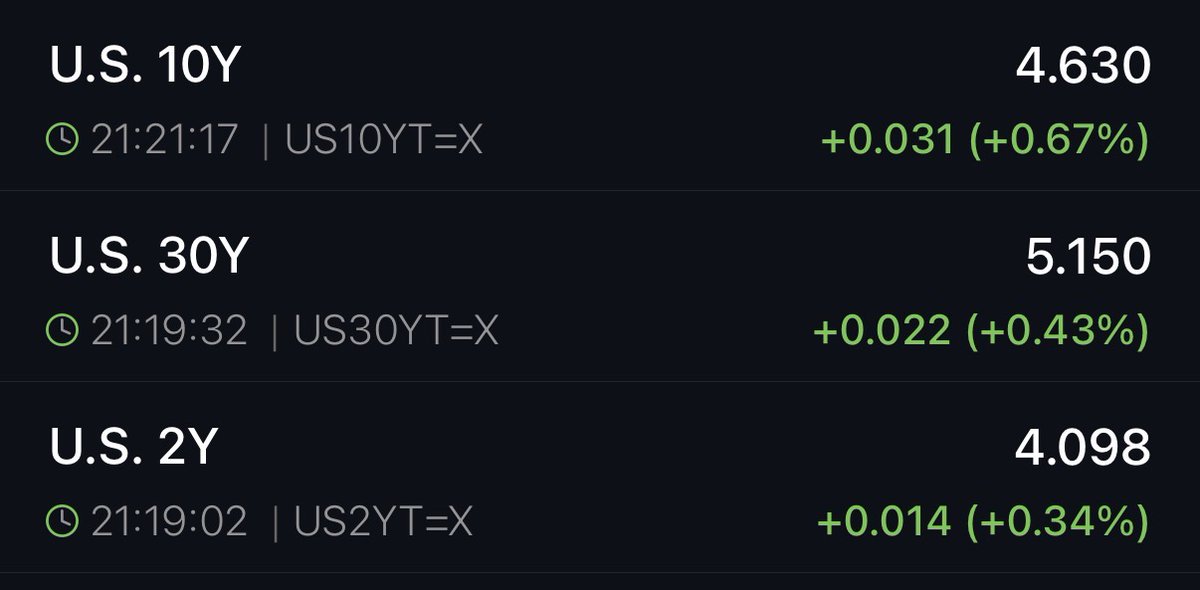 US 10Y yield hit 4.63%, highest since Feb 2025, surpassing the level that triggered Trump's tariff pause, with mortgage rates near 7% and Fed rate cut odds collapsing to 2%2026-05
 Rate cut bets collapse to 2.9% as markets price 30% chance of Fed hikes amid oil-fueled inflation surge2026-03
 Insiders are selling at the fastest pace since COVID, macro data keeps missing, and rate cut odds fade as markets flirt with peak fear again.2026-02
 Market week ahead: Fed’s Expected December Rate Cut Poised to Set the Tone for Global Central Banks in a Pivotal Week for Monetary Policy.2025-12
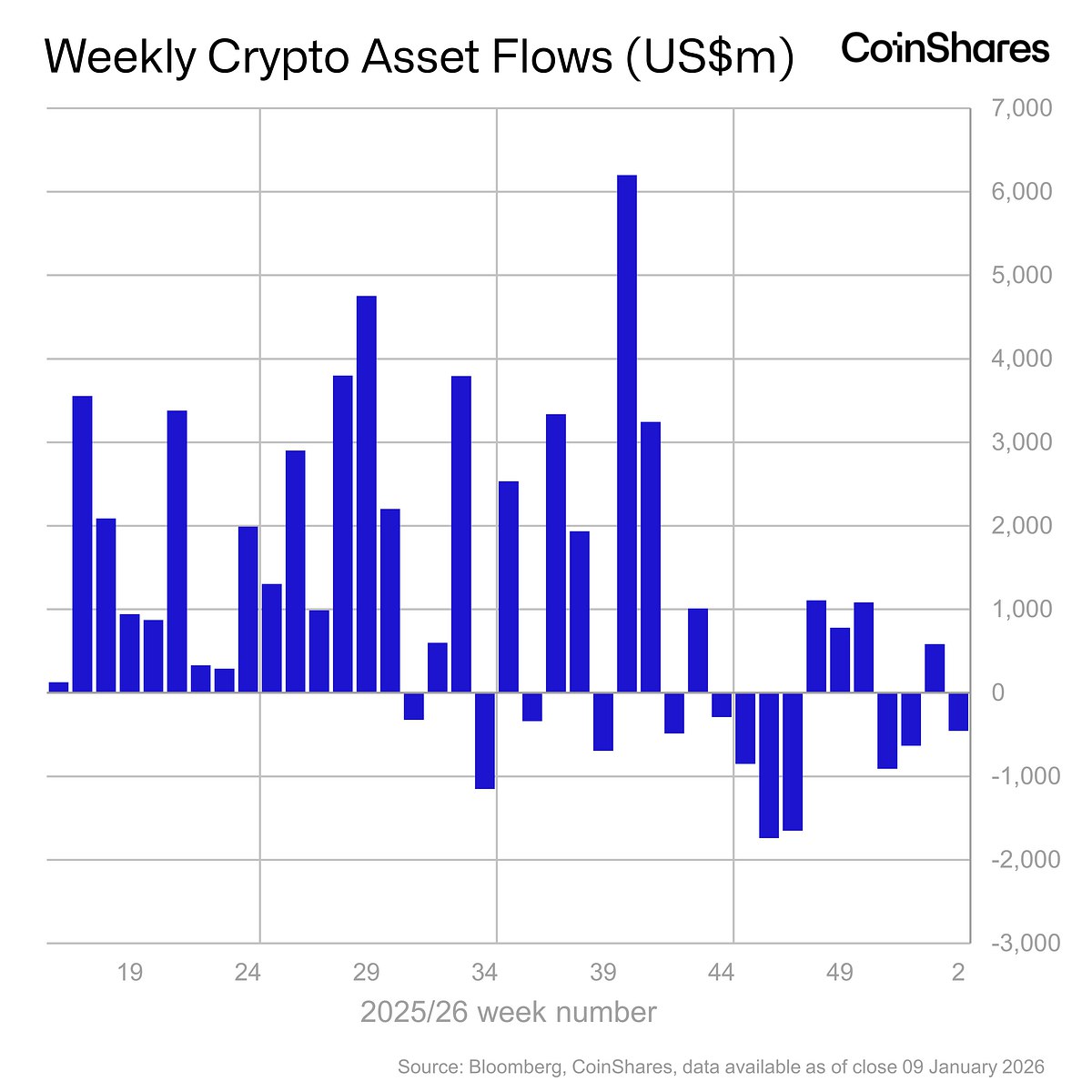 Digital asset funds saw $454 million in weekly outflows, extending a four-day $1.3 billion withdrawal streak that nearly erased $1.5 billion in year-to-date inflows as expectations for a March Federal Reserve rate cut faded.2026-01
Rate Cuts and Crypto: How Monetary Policy Moves Digital Assets
A rate cut is a central bank decision to lower its key policy interest rate, typically to support economic growth or prevent inflation from falling too far below target. In an increasingly macro-driven crypto market, shifts in rate cut expectations often ripple through Bitcoin, altcoins, stablecoins and DeFi long before policymakers actually move.
What is a Rate Cut?
In modern monetary systems, the most important interest rate is not a market price discovered on an exchange but a policy variable set by a country’s central bank. For the United States, that benchmark is the federal funds rate, the overnight rate at which banks lend reserves to one another. The Federal Open Market Committee (FOMC) sets a target range for this rate and then uses tools such as paying interest on reserve balances and operating an overnight reverse repo facility to keep actual market rates close to its target. When the FOMC decides to lower this target range, it is implementing what markets call a rate cut: an easing of monetary policy aimed at loosening financial conditions, lowering borrowing costs and nudging the economy toward the Federal Reserve’s dual mandate of maximum employment and stable prices.
A rate cut is usually expressed in basis points, where one basis point is one hundredth of a percentage point. If the policy rate falls from \(3.75\%\) to \(3.50\%\), for example, that is a cut of \(25\) basis points. In its June 2026 decision, the Federal Reserve under Chair Kevin Warsh held the federal funds rate at a range of \(3.50\%\)–\(3.75\%\), but markets immediately began speculating about whether the next move would be a \(25\)- or \(50\)-basis-point change later in the year as inflation dynamics evolved. Similar increments are standard in other jurisdictions: the European Central Bank (ECB) often moves its key rates in steps of \(25\) basis points, as does the Reserve Bank of India (RBI) and the Swiss National Bank (SNB), though they can move more aggressively in times of stress.
Although the financial press often talks about “the interest rate” as if it were a single number, each central bank maintains a small set of key policy rates that define its monetary stance. The Fed centers its framework on the federal funds rate corridor; the ECB steers conditions primarily through its deposit facility rate, along with the main refinancing operations and marginal lending facility; the RBI uses the repo rate at which it lends to banks; the SNB defines a policy rate that guides short-term money market conditions. A rate cut in any of these systems involves lowering the relevant benchmark, but the institutional details and transmission channels differ across jurisdictions.
Despite these differences, the conceptual logic is similar. A lower policy rate pulls down short-term money market yields and influences a wide range of borrowing costs, from corporate loans to credit cards and mortgages. As banks and capital markets adjust, lower rates tend to reduce debt service burdens, encourage new borrowing, and, over time, stimulate consumption and investment. Conversely, when central banks raise rates, they aim to cool demand, moderate inflationary pressures and signal a more restrictive stance. Rate cuts and hikes are therefore the basic tools with which central banks seek to stabilize the macroeconomy, and they form the backdrop against which all risk assets, including Bitcoin and other digital assets, are valued.
Beyond the Fed: Comparing Key Policy Rates
For crypto investors who often focus on the Federal Reserve, it is easy to forget that the global rate environment is set by a web of central banks whose decisions interact. The ECB, for instance, announced in 2025 that it would lower its three key rates—the deposit facility, main refinancing operations and marginal lending facility—by \(25\) basis points, taking the deposit rate down to \(2.00\%\) in June after a similar cut to \(2.50\%\) in March. The ECB explicitly framed these moves as a response to an inflation outlook converging toward its medium-term target of around \(2\%\), with staff projections showing headline inflation hovering close to that level between 2025 and 2027.
In India, the RBI ended 2025 with what was described as its most aggressive easing cycle in six years, cutting the benchmark repo rate by a cumulative \(125\) basis points from \(6.50\%\) in February to \(5.25\%\) in December. This shift reflected a sharp fall in retail inflation, which dropped to just \(0.25\%\) in October, and an economy that was expanding at roughly \(8.2\%\) on the back of robust growth. The SNB, by contrast, took its key rate down by \(25\) basis points to \(0\%\) after Swiss inflation fell back into negative territory, raising the specter of renewed deflation and prompting forecasters to anticipate a possible return to negative policy rates if conditions did not change.
These examples highlight an important point for a crypto audience: when analysts talk about “rate cuts” driving global liquidity, they are referring not only to the Fed but to a synchronized or staggered easing cycle across multiple major central banks. The following table summarizes a few recent illustrative cuts and their contexts as described in the cited sources.
| Central bank | Policy rate before cut | Policy rate after cut | Stated inflation context | Primary stated motivation |
|---|---|---|---|---|
| Federal Reserve (US) | Held at \(3.50\%\)–\(3.75\%\) in June 2026 | No cut at that meeting | Core PCE rising from \(3.0\%\) to \(3.3\%\), with energy-driven inflation pressures | Maintain restrictive stance amid elevated inflation; future cuts or hikes data-dependent |
| European Central Bank (Eurozone) – March 2025 | Deposit facility \(2.75\%\) | Deposit facility \(2.50\%\) | Disinflation “well on track”; projections around \(2.3\%\) in 2025, \(1.9\%\) in 2026 | Adjust stance as inflation converges toward \(2\%\) target while ensuring transmission |
| European Central Bank – June 2025 | Deposit facility \(2.25\%\) | Deposit facility \(2.00\%\) | Inflation around \(2\%\) target; projections \(2.0\%\) in 2025, \(1.6\%\) in 2026 | Reflect updated inflation outlook and lower energy price assumptions |
| Reserve Bank of India | Repo rate \(6.50\%\) (Feb 2025) | Repo rate \(5.25\%\) (Dec 2025) | Retail inflation fell to \(0.25\%\) in October; strong growth at \(8.2\%\) | Pivot to growth support after disinflation, via most aggressive cuts since 2019 |
| Swiss National Bank | Key rate \(0.25\%\) | Key rate \(0\%\) | CPI fell \(0.1\%\) year-on-year, returning to deflation; inflation forecasts revised lower | Counter deflation risk; prepare markets for possible further easing, even negative rates |
This diversity in rate paths matters for digital assets that trade globally, are quoted in multiple fiat currencies and are increasingly held by investors who allocate across regions. Global rate cuts can amplify or offset the Fed’s influence on dollar liquidity, risk appetite and demand for Bitcoin, stablecoins and tokenized assets.

Bitcoin taps $73K as March CPI beats expectations at 3.3%, April rate cut odds still at zero
Core at 0.2% MoM came in below consensus — that's the print that matters, not the energy-juiced 3.3% headline. BTC still sitting 43% below the $126K ATH with the Fed pinned at 3.50-3.75% and one lonely dot-plot cut penciled for all of 2026. Iran ceasefire bought some CPI relief by pushing oil sub-$90, but $73K looks like a local range top until core strings together multiple clean prints and actually forces the Fed's hand.
Why Central Banks Cut Rates
Central banks do not cut rates arbitrarily; they act in response to evolving economic conditions, their legal mandates and their own frameworks for how monetary policy affects output and inflation. In the United States, Congress has given the Fed a dual mandate to promote maximum employment and stable prices, which the Fed interprets as keeping inflation around a symmetric target, often described in practice as roughly \(2\%\) over the longer run. When inflation is running persistently below that objective or when unemployment is substantially above what policymakers view as sustainable, the FOMC may judge that its policy stance is too tight and begin lowering the federal funds rate. Similar logic underpins decisions at the ECB, which has formalized a \(2\%\) inflation target, and at many other central banks.
Inflation, Employment and the Policy Trade-off
The classic logic of rate cuts arises from a trade-off between inflation and unemployment in the short run. When demand in the economy is weak, unemployment tends to rise and inflation pressures abate. By cutting rates, the central bank reduces borrowing costs, making it cheaper for households to finance durable purchases and for firms to invest in new projects, hire workers or expand capacity. Consumers benefit from lower interest payments on variable-rate debt such as credit cards and some mortgages; over time, this frees up disposable income and supports higher spending. As spending rises, businesses experience higher sales, prompting them to hire more, which brings unemployment down toward its sustainable level.
If inflation is below target, this increase in demand can help push price growth back up to the desired path. Many central banks therefore aim for a moderate positive rate of inflation—commonly around \(2\%\)—that is far enough from zero to provide a buffer against deflation but low enough to preserve purchasing power. When inflation drifts below that range, as it has at various points in the euro area and Switzerland, policymakers worry about a deflationary spiral in which expectations of falling prices cause households and firms to postpone spending, weakening demand further. Rate cuts in such circumstances are intended to counteract this dynamic by making money cheaper to borrow and less attractive to hoard.
However, inflation and unemployment do not always move in opposite directions, especially when supply shocks such as surging energy prices hit the economy. For instance, in 2026 the Fed faced an environment of solid growth and stable unemployment but renewed inflation pressures stemming primarily from higher oil prices. Core PCE inflation, the Fed’s preferred underlying gauge, rose from \(3.0\%\) at the end of 2025 to \(3.3\%\) in April 2026, even as energy prices had spiked amid geopolitical tensions in the Middle East. In such a scenario, cutting rates could risk further stoking inflation, so central banks may instead hold or even raise rates despite political or market pressure for easing. Crypto traders following rate-cut bets need to understand these nuances rather than assuming that weak data automatically translate into lower rates.
Global Examples: From Disinflation to Deflation
The ECB’s 2025 rate cuts illustrate how central banks respond when disinflation proceeds largely as planned. After a period of elevated inflation, eurozone price growth eased back toward the ECB’s \(2\%\) medium-term target, with staff projections suggesting headline inflation would average around \(2.3\%\) in 2025 and just under \(2\%\) in 2026 and 2027. Measures of underlying inflation, excluding volatile items such as energy and food, also pointed to a normalization process that was “well on track.” In this environment, the Governing Council judged that a modest \(25\)-basis-point reduction in each of its three key rates was appropriate, bringing the deposit facility to \(2.50\%\) in March and then \(2.00\%\) in June. The ECB emphasized that its decisions were data-dependent and aimed at ensuring inflation would settle at around \(2\%\) on a sustained basis.
Switzerland’s situation was more extreme. After peaking at \(3.5\%\) in August 2022, Swiss inflation fell steadily, reaching \(0\%\) in April 2025 and then slipping into slight deflation with a \(0.1\%\) annual decline in consumer prices in May. This drop was driven largely by external factors, notably an \(8.3\%\) plunge in energy prices year-on-year, but the SNB’s inflation forecasts also moved lower, with projections of just \(0.2\%\), \(0.5\%\) and \(0.7\%\) for 2025, 2026 and 2027 if the policy rate remained at \(0\%\). Concerned about a possible return to sustained deflation, the SNB cut its key rate by \(25\) basis points to \(0\%\) and indicated that, absent a major change in conditions—such as a sharp weakening of the Swiss franc or a surge in oil prices—it might cut further and reenter negative territory. For investors in crypto assets denominated in Swiss francs or held by Swiss institutions, such moves can dramatically alter the relative attractiveness of holding cash versus risk assets.
India offers another perspective. There, retail inflation fell to a record low of \(0.25\%\) in October 2025, giving the RBI ample room to prioritize growth. With the economy expanding at about \(8.2\%\), the central bank executed four rate cuts over the year, reducing the policy repo rate by \(125\) basis points from \(6.50\%\) to \(5.25\%\). This marked its most aggressive easing since 2019 and represented a deliberate “growth pivot” away from the inflation-fighting mindset that had dominated previous years. For India’s burgeoning crypto user base and the exchanges that serve them, lower domestic interest rates can influence everything from retail risk appetite to the cost of leverage for local trading firms.
Side Effects, Constraints and Political Pressures
Even when macro data point toward a need for easing, central banks must weigh potential side effects of rate cuts. Lower rates can spur credit growth and boost asset prices, which may be desirable to a point but can also fuel bubbles in housing, equities or speculative markets. For example, when rates fall sharply, mortgage costs typically drop, supporting housing demand and potentially reigniting rapid home-price appreciation, with mixed consequences for affordability. Cheaper corporate borrowing can encourage prudent investment but can also sustain unproductive “zombie” firms that survive only on low-cost credit, reducing overall economic dynamism.
Central banks also face political constraints. Elected officials may call for aggressive rate cuts to boost growth ahead of elections or to support specific policy agendas, as seen in recurring episodes where political leaders publicly pressure central banks to ease more rapidly. In recent cycles, high-profile figures such as former U.S. President Donald Trump have openly urged the Fed to cut rates far more than policymakers deemed appropriate, with proposals for cumulative cuts on the order of hundreds of basis points that would dramatically change the real value of debt and the exchange rate of the dollar. While the Fed is formally independent, such pressure affects market narratives and can be priced into rate-cut bets, which in turn influence crypto markets that trade on macro headlines.
At the same time, central bankers themselves can be divided. The Fed has periodically been split over whether to deliver an anticipated rate cut, with some officials warning that inflation remains “sticky” due to factors like tariffs and energy costs, while others point to weakening employment and slowing demand as reasons to ease more quickly. In such debates, a compromise rate cut—perhaps smaller than markets hoped or accompanied by cautious forward guidance—can lead to disappointment in risk assets, as seen in episodes where crypto and equities sold off despite a delivered cut because investors focused on signals that future easing might be limited.
Finally, there is the “effective lower bound” constraint. When policy rates approach zero or become negative, the marginal benefit of further cuts diminishes and central banks turn to unconventional tools such as quantitative easing (large-scale asset purchases) and forward guidance to influence financial conditions. This matters for digital assets because the most dramatic bull runs in the 2010s and early 2020s occurred in regimes of both low rates and massive central bank balance-sheet expansion, rather than rate cuts alone.
Leviathan readers click rate-cut stories not for macroeconomic theory but for crypto's structural exposure: the top headline is stablecoin revenue math, revealing that readers understand rate cuts simultaneously juice Bitcoin while destroying the income model of the two largest dollar-pegged issuers.
How Markets Price In Rate Cuts
Crypto markets do not react only to actual rate cuts; they respond continuously to changes in expectations about the future path of policy. These expectations are formed in a complex dance between macroeconomic data releases, central bank communications, and the signals embedded in bond, futures and derivatives markets.
Data, Guidance and Implied Probabilities
Most developed-economy central banks meet on a regular schedule to review policy—every six weeks for the ECB, roughly every six to eight weeks for the Fed’s FOMC. In between meetings, investors track high-frequency indicators such as inflation (CPI and PCE), employment reports, wage data and purchasing managers’ indices, as well as central bank speeches and minutes. When inflation data come in hotter than expected or job growth beats consensus, markets may push out the timing of rate cuts or even price in additional hikes. Conversely, weak data or downside inflation surprises pull forward expected cuts.
These shifts in expectations are visible in interest-rate derivatives and futures. In the United States, traders use federal funds futures to bet on the average level of the policy rate over a given month, and tools such as the CME FedWatch translate those prices into implied probabilities of rate hikes, holds or cuts at upcoming meetings. The FedWatch tool, for example, aggregates futures prices to estimate the odds of outcomes like a \(25\)-basis-point cut or a \(50\)-basis-point cut at the next FOMC decision. Ahead of a widely anticipated easing move—the first since the COVID-19 shock, for instance—markets may toggle between assigning higher probability to a \(25\)- or \(50\)-basis-point cut, with those probabilities updating continuously as data arrive.
Crypto traders have increasingly adopted on-chain and off-chain prediction markets to refine their own expectations. Platforms like Polymarket host contracts that pay out based on whether the Fed cuts rates by a given month, allowing a wide range of participants to trade on their macro views. At times, these markets have gone from pricing substantial odds of imminent cuts to almost no chance at all, as when Polymarket odds for a March Fed cut collapsed to single digits and eventually near zero as inflation data stayed firm and Fed officials signaled patience. Similar dynamics play out in tokenized markets where specific stocks or crypto derivatives “pair” the probability of a near-term rate cut to zero, reflecting a consensus that easing is off the table for the moment.
Yield Curves, Bonds and Mortgages
Beyond such discrete probabilities, the entire term structure of interest rates encodes the market’s view of the policy path. Shorter-term yields, such as two-year Treasury notes in the United States, tend to be highly sensitive to expected policy rates over the next few meetings, while longer-term yields, such as ten-year Treasuries, reflect a blend of longer-run rate expectations and term premia related to inflation and risk. When investors conclude that the Fed will keep rates higher for longer, two-year yields often spike, and the yield curve may steepen or invert depending on how longer-term outlooks shift.
For instance, after the June 2026 Fed meeting at which Chair Warsh held rates steady at \(3.50\%\)–\(3.75\%\) but struck a tone that markets interpreted as opening the door to possible future hikes, two-year Treasury yields rose by about \(0.16\%\) and ten-year yields by roughly \(0.06\%\). This move reflected a modest but meaningful repricing of the expected path of policy: fewer cuts and a slightly higher probability of renewed tightening. In other episodes, stronger-than-expected disinflation has driven yields sharply lower, as seen when a softer CPI report sent the ten-year yield down from \(4.80\%\) to \(4.60\%\), easing financial conditions and supporting both bonds and equities.
Long-term yields also matter directly for real economy sectors. Mortgage rates are tightly linked to Treasury yields, and when ten-year yields climb, mortgage rates tend to follow, pressuring housing affordability. Analyses from U.S. banks have noted that mortgage rates above roughly \(6\%\) have weighed on housing demand, particularly for first-time buyers, even as price growth slows and regional variation increases. When markets believe rate cuts are coming, long-term yields may fall in anticipation, lowering mortgage rates and supporting the housing sector. Conversely, when rate-cut odds “collapse” and yields rise—such as when the U.S. ten-year yield pushed to around \(4.63\%\), the highest level in months—mortgage rates near \(7\%\) can chill both real estate and consumption, reinforcing a cautious environment for risk assets, including crypto.
These bond-market dynamics interact with equities and digital assets through valuation models. Higher rates increase the discount factor applied to future cash flows, compressing equity multiples and, by analogy, reducing the appeal of speculative assets whose value is far in the future or highly uncertain. The famous “TINA” era—when “There Is No Alternative” to equities and risk assets because rates are near zero—flips into an environment where cash and short-term bonds yield appealing returns, drawing capital away from volatile assets. Crypto is deeply exposed to this swing in narratives.
Equities, Risk Assets and Crypto
Stock markets often respond sharply to changes in rate expectations. When the Fed raises rates, particularly in a surprise move, sectors with long-duration cash flows such as big tech have tended to sell off first, dragging broader indices lower. One notable example saw the stock market endure its worst day in months after a combination of a strong jobs report, which boosted expectations for more Fed hikes, and an actual rate increase prompted a sharp sell-off in the largest technology names. Conversely, expectations of rate cuts, especially after a prolonged hiking cycle, can spark powerful rallies in equities as investors anticipate lower financing costs and higher valuations.
Crypto assets, and Bitcoin in particular, have increasingly traded in tandem with this macro risk cycle. When markets priced in rapid Fed easing after a period of aggressive hikes, Bitcoin and other digital assets often rallied as part of a broader “risk-on” move. Yet the relationship is not mechanical. Research from crypto firms has documented episodes where forward rate expectations declined—implying more or earlier cuts—without a corresponding rise in Bitcoin prices, suggesting that other factors such as positioning, regulatory news or idiosyncratic crypto events can dominate. In one such period, Bitcoin investors grew frustrated that falling implied policy rates were not translating into higher crypto prices, raising the possibility that Bitcoin itself was signaling skepticism about the depth and duration of the coming rate-cut cycle.
Market reactions around specific rate decisions also underscore the complexity. Ahead of a widely anticipated first Fed rate cut after years of tightening, Bitcoin rallied alongside equities as traders positioned for easier policy. But when the cut arrived, some digital assets sold off despite the ostensibly bullish macro backdrop, in part because the accompanying Fed guidance sounded cautious about further easing and in part because the move had been heavily priced into markets already. Similarly, there have been episodes where despite a Fed rate cut and even a pause in quantitative tightening, crypto markets fell as participants focused on the central bank’s warnings about persistent inflation and uncertainty over how many additional cuts were likely.
For crypto traders, this means that watching rate-cut odds is necessary but not sufficient. The surrounding macro narrative—whether cuts are seen as pre-emptive adjustments in a soft-landing scenario or emergency responses to a looming recession—shapes whether risk assets respond positively or negatively. A rate cut delivered into a backdrop of rising unemployment and deteriorating earnings can be interpreted as confirmation that growth is faltering, prompting risk-off behavior even as yields fall.

US 10Y yield hit 4.63%, highest since Feb 2025, surpassing the level that triggered Trump's tariff pause, with mortgage rates near 7% and Fed rate cut odds collapsing to 2%
Why Rate Cuts Matter for Bitcoin and Crypto
From a high-level macro perspective, rate cuts influence crypto through three main channels: liquidity and leverage; relative attractiveness versus traditional assets; and the specific business models of stablecoins and DeFi protocols. Each of these channels is nuanced, and their combined effect can shift over time.
Liquidity, Leverage and the “Search for Yield”
Lower policy rates tend to increase system-wide liquidity and lower the cost of leverage, both in traditional finance and in crypto markets that are tightly linked to the broader dollar funding system. When central banks cut rates, short-term yields on instruments such as Treasury bills and money market funds decline, reducing the return to holding safe assets in cash-like instruments. Banks and institutional investors may become more willing to extend credit or allocate to higher-yielding, higher-risk assets to meet return targets, a dynamic often described as the “search for yield.”
Analyses focused on crypto have noted that over the long run, such easing environments are generally favorable for digital assets like Bitcoin. Lower interest rates increase liquidity in financial markets, providing more capital for riskier investments, including cryptocurrencies. When the Fed announces a rate cut, crypto markets often respond with increased short-term volatility and, historically, a tendency for prices to rise in the weeks that follow—though this pattern is far from guaranteed and can be overwhelmed by other factors.
This liquidity channel also operates via leveraged trading. As off-chain funding costs for market makers and hedge funds fall, the economics of running basis trades, carry trades and other strategies that require borrowing become more attractive. On centralized exchanges, margin interest rates may be influenced by broader funding conditions, making it cheaper for traders to hold leveraged positions in Bitcoin, Ether and altcoins. On-chain, DeFi lending protocols often anchor their base rates to expected returns in traditional money markets; when those fall, the hurdle rate for on-chain borrowing declines, potentially supporting greater activity in DeFi as long as risk-adjusted yields remain competitive.
However, higher-for-longer rate regimes can reverse these dynamics. When the Fed signals that it intends to keep policy rates elevated amid stubborn inflation, as in the Warsh era, cash and short-term bonds can deliver attractive yields with essentially no credit or market risk. In such an environment, some institutional investors pull capital from crypto or reduce exposure, preferring the certainty of \(4\%\)–\(5\%\) yields in government paper to the volatility of digital assets. That shift can be seen in episodes where digital asset investment funds experienced significant weekly outflows—hundreds of millions of dollars in some weeks—as expectations for imminent rate cuts faded and safer yields remained appealing.
Bitcoin: “Digital Gold” or High-Beta Tech?
One of the central debates in crypto macro is whether Bitcoin behaves more like “digital gold” or like a high-beta technology stock. From a narrative standpoint, Bitcoin’s fixed supply and halving schedule lend themselves to a hard-money story: as central banks cut rates and expand balance sheets, fiat currencies are debased, and scarce assets such as gold and Bitcoin should appreciate. From an empirical standpoint, however, Bitcoin’s correlation with real yields, inflation and equity markets has been inconsistent over time.
There are periods when gold and Bitcoin have moved together on rate-cut bets. For example, in cycles where markets expected aggressive Fed easing amid rising geopolitical risk, gold prices surged to record highs, reaching levels above \(3,700\) dollars per ounce in futures markets as investors sought safe havens and anticipated a weaker dollar. In such environments, Bitcoin has sometimes rallied in parallel, with proponents arguing that it is capturing both the inflation-hedging and the censorship-resistant dimensions of the macro story. Central bank gold buying, which itself can be influenced by rate levels and currency considerations, adds another layer to this narrative, as some Bitcoin advocates frame BTC as a potential future reserve asset for institutions and even sovereigns.
At other times, Bitcoin has traded more like a high-growth tech stock, responding primarily to changes in the discount rate and risk sentiment rather than to inflation per se. When long-term real yields rose and equity valuations compressed, Bitcoin often declined even in the absence of major inflation data surprises. Episodes where stronger-than-expected CPI readings pushed back rate-cut timelines and triggered broad risk-off moves have likewise seen Bitcoin sell off alongside equities, despite the theoretical argument that persistent inflation should support demand for scarce assets. For instance, when a March CPI print around \(3.3\%\) came in above expectations, markets rapidly priced out the odds of an April Fed cut, and Bitcoin’s attempt to sustain levels above \(70,000\) dollars met with headwinds as macro-sensitive buyers stepped back.
This dual identity means that rate cuts can be bullish for Bitcoin through either or both channels. If cuts are perceived as the start of an easing cycle that will boost liquidity while keeping inflation anchored near target, BTC may benefit as a high-beta risk asset in a broad rally. If cuts are perceived as falling “behind the curve” on inflation or as politically driven, they may feed a digital-gold narrative in which Bitcoin is a hedge against ongoing currency debasement. Crypto investors need to evaluate which narrative is dominant in a given macro environment.
Stablecoins, Treasury Yields and Rate Cuts
Stablecoins like Tether’s USDT and Circle’s USDC are typically backed by reserves heavily invested in short-dated U.S. government securities and other high-quality liquid assets. When policy rates are high, yields on these instruments can be substantial, generating large interest income streams for issuers. As short-term rates rise, stablecoin firms see their revenue grow; when rates fall due to central bank cuts, those revenues decline in step.
The sensitivity is not trivial. Internal analyses have suggested that for every \(50\)-basis-point rate cut by the Fed, Tether might lose on the order of hundreds of millions of dollars in annualized interest income, while Circle’s revenue could fall by well over a hundred million, based on typical reserve compositions and market interest rates. This creates a direct link between Fed policy and the profitability of major stablecoin issuers. In high-rate environments, these firms may be extremely profitable even if they do not share yield with users; in low-rate environments, their margins compress and incentives emerge to introduce yield-sharing schemes, expand into riskier assets or seek alternative business lines.
For crypto markets, this matters in at least three ways. First, stablecoin supply growth can be influenced by rate-driven profitability: high interest income may encourage issuers to expand aggressively, promoting more on-chain liquidity, while low rates may slow issuance. Second, regulatory and political scrutiny of stablecoin profits—especially when tied to central bank rate decisions—can increase as rate cycles shift. Third, the relative appeal of on-chain versus off-chain dollar yields changes. When U.S. T-bills pay \(5\%\), parking dollars in a non-yield-bearing stablecoin looks less attractive than holding a money market fund; when rate cuts push those yields back toward zero, stablecoins regain relative appeal as frictionless settlement instruments, and DeFi protocols offering modest yields above cash become more competitive.
DeFi Lending, On-Chain Rates and Off-Chain Anchors
Decentralized lending markets such as Aave, Compound and others effectively create their own interest rate curves for borrowing and lending crypto assets. These on-chain rates are determined algorithmically by supply and demand, but they are not independent of off-chain monetary conditions. When central banks cut rates, lower yields in traditional markets may cause some investors to seek higher returns in DeFi, supplying stablecoins to lending pools and pushing on-chain borrow rates down even as utilization rises. Conversely, when Fed rates are high, risk-adjusted yields in DeFi must be correspondingly higher to attract capital from sophisticated investors who can earn solid returns in Treasury bills or repo markets.
Rate cuts can therefore compress DeFi yields over time, even if nominal rates fall more slowly in crypto than in fiat markets. As institutional players become more active in DeFi, their hurdle rates for deploying capital are increasingly influenced by central bank policy. A \(25\)- or \(50\)-basis-point policy move may not immediately change DeFi rates, but a sustained easing cycle that takes policy from \(5\%\) back toward \(2\%\) could significantly reshape demand for on-chain lending and borrowing, stablecoin liquidity pools and structured products.
Altcoins and DeFi tokens themselves can be sensitive to these shifts. A governance token whose value is tied to protocol fee income, much of which may derive from lending spreads or trading volumes that are influenced by macro volatility, will be repriced as investors update their expectations for long-run on-chain activity under different rate regimes. Instances where altcoins have crashed despite positive idiosyncratic news—such as a high-profile listing on a major exchange—during periods of heightened Fed uncertainty underscore how macro rate narratives can dominate local token stories.
- 01Stablecoin yield revenue cliff
The highest-clicked headline quantified exactly how much T-bill income Tether and Circle forfeit per 50bps cut, making rate policy feel like an existential stablecoin business story, not just a macro one.
- 02Fed cut odds collapse↗
Readers tracked the probability dial — rate cut bets swinging from near-certainty to sub-3% odds, with oil-driven inflation and potential hikes back on the table — because those odds directly gate Bitcoin's next leg.
- 03Bitcoin price vs rate expectations↗
Multiple clicked headlines tied BTC's $73K peak, fund outflows, and all-time-high proximity directly to shifting Fed cut probability, confirming readers treat FedWatch as a leading BTC indicator.
- 04Global central bank divergence↗
The Swiss National Bank cutting to zero, the ECB dropping below its 2% target, and India's steepest cut in five years showed readers that rate easing is a global phenomenon with uneven crypto implications.
- 05Crypto fund flow sensitivity
A four-day $1.3B withdrawal streak erasing year-to-date inflows when March Fed cut hopes faded illustrated that institutional positioning in crypto is tightly coupled to rate-cut calendar bets.
- 06MicroStrategy accumulation on cuts↗
Saylor's post-cut BTC purchase tied corporate Bitcoin treasury strategy to rate decisions, framing each Fed easing as a procurement signal for leveraged BTC buyers.
Cycles, Narratives and Misconceptions
Because rate cuts sit at the intersection of macroeconomics and market psychology, they are fertile ground for narratives that can oversimplify or mislead. For a crypto audience, it is important to disentangle correlation from causation and to understand the temporal sequence through which macro shocks transmit to digital assets.
Correlation is Not Causation
Looking at historical charts of the federal funds rate and Bitcoin’s price, it is tempting to draw straightforward conclusions: Bitcoin rallied in low-rate environments and struggled when rates were rising, suggesting a simple inverse relationship. However, closer inspection reveals that Bitcoin’s major bull and bear cycles have coincided with a host of other factors, including halving events, structural growth in adoption, shifts in regulatory regimes, and crypto-native boom-bust patterns such as the ICO and DeFi summers.
Research comparing the Fed funds rate with Bitcoin’s price over time has shown periods where they moved broadly in opposite directions as well as periods where Bitcoin rallied or crashed largely independently of rate changes. For example, in the lead-up to a much-anticipated easing cycle, markets aggressively priced in future Fed cuts, but Bitcoin’s price stagnated or declined, possibly signaling that the crypto market was more focused on regulatory risks or reacting to overextended positioning. In other periods, Bitcoin surged even as rates were still rising, driven by specific catalysts such as ETF approvals or major corporate treasury allocations.
These patterns caution against simplistic assumptions like “rate cuts are always bullish for Bitcoin.” It is more accurate to view rate cuts as one important macro variable whose impact depends on the surrounding context: whether cuts are perceived as proactive fine-tuning or reactive emergency measures; whether they coincide with improving or deteriorating risk sentiment; and how they interact with crypto-specific developments such as protocol upgrades, security incidents or major legal outcomes.
The Lagged Effect of Monetary Policy
Another misconception is that markets, including crypto, respond only when a rate cut is actually announced. In reality, financial markets are forward-looking and adjust as soon as expectations change. By the time a central bank delivers a widely telegraphed cut, much of the effect on yields, equity valuations and crypto prices may already be in the rear-view mirror. The more surprising the decision relative to expectations—as captured in tools like CME FedWatch probabilities—the larger the immediate price response tends to be.
Monetary policy also operates with “long and variable lags” in the real economy, meaning that the full effect of a rate cut on growth and inflation can take many months to materialize. Crypto markets, however, can re-price in seconds. This difference in time scale creates opportunities and risks. On the one hand, traders can attempt to position ahead of macro shifts, using prediction markets, Fed communications and macro data to anticipate rate-cut cycles before they fully play out. On the other hand, prematurely betting on cuts that are repeatedly delayed—as seen in cycles where the odds of a near-term cut collapsed from high levels to nearly zero—can lead to sustained drawdowns in risk assets and forced liquidations in leveraged positions.
In recent years, crypto markets have lived through multiple such cycles of hope and disappointment. Rate-cut bets that were once concentrated on a particular month—March or December, for instance—fell steadily as inflation data, oil prices and central bank rhetoric signaled a slower easing trajectory. As those hopes faded, digital asset funds experienced heavy outflows, insiders sold risk assets at the fastest pace since major crisis periods, and markets flirted with “peak fear” as macro data repeatedly missed expectations. Understanding these cycles helps crypto participants manage their own exposure to the rate-cut narrative.
Elections, Trump and the Politics of Rate Cuts
Elections add another layer of complexity. In the United States, the Fed is legally independent but operates in a political environment where rate decisions have significant distributional and electoral consequences. Election years often see heightened public commentary about monetary policy, with candidates and incumbents scrutinizing or criticizing central bank actions. During such periods, any hint that the Fed might cut (or delay cutting) in a way that appears politically convenient can trigger debates about central bank independence and the neutrality of policy.
Donald Trump’s relationship with the Fed is emblematic. During his previous term, he regularly criticized the central bank for keeping rates “too high” and, at times, publicly demanded aggressive cuts to support growth and markets. In subsequent cycles, Trump and his allies floated the idea of very large cumulative cuts—on the order of \(350\) basis points—to rapidly lower borrowing costs and, in their view, stimulate the economy. Such rhetoric has occasionally influenced rate-cut bets, with trading desks and prediction markets incorporating the risk that political pressure could sway the timing or magnitude of easing, even if professional Fed watchers believed the central bank would resist.
These political dynamics resonate strongly in crypto communities that are skeptical of central bank power and fiat money. For some, the spectacle of politicians urging unelected officials to manipulate the price of money reinforces the case for a rules-based, algorithmic monetary system like Bitcoin’s fixed issuance schedule. For others, the interplay of politics and rates is just another macro variable to trade, with Trump’s statements considered alongside CPI prints and FOMC minutes in shaping expectations. Regardless of one’s normative views, the reality is that rate-cut narratives in election years are rarely purely technocratic.
International Cycles and Crypto Liquidity
Crypto is global by design, but the dollar remains the dominant funding currency for digital asset markets. Even so, the rate decisions of non-U.S. central banks such as the ECB, RBI and SNB matter for regional liquidity, exchange flows and cross-currency arbitrage. For European traders, an ECB rate cut that brings the deposit facility from \(2.50\%\) to \(2.00\%\) can influence EUR funding costs and the attractiveness of euro-denominated stablecoins or tokenized deposits. For Indian exchanges, RBI cuts that lower the repo rate from \(6.50\%\) to \(5.25\%\) can change the economics of local leverage and the risk appetite of domestic investors. Swiss rate cuts to \(0\%\) or even negative levels can spur flows out of CHF cash into higher-yielding or higher-growth assets, potentially including crypto, especially given Switzerland’s deep integration into the digital asset ecosystem.
Moreover, asynchronous rate cycles across central banks create opportunities for carry trades in foreign exchange, which can indirectly affect crypto. When the Fed cuts more aggressively than the ECB, for example, the dollar may weaken against the euro, altering the global price of dollar-denominated assets and making BTC appear cheaper or more expensive in non-dollar terms. Some macro funds active in both FX and crypto explicitly trade such cross-asset relationships, treating Bitcoin and major altcoins as part of a broader macro portfolio whose weights respond to relative rate differentials across currencies.
Finally, global central bank moves can validate or challenge the idea that the world is returning to ultra-low or even negative interest rates. When the SNB cut to \(0\%\) and analysts speculated about a possible return to negative territory, it revived memories of the pre-pandemic era when trillions of dollars of bonds traded at negative yields. For crypto advocates who argue that such monetary experiments undermine the value of fiat, the prospect of a renewed negative-rate regime bolsters the case for alternative stores of value. At the same time, for leveraged traders, negative or very low rates can unleash powerful risk-on waves across assets, with crypto often a prime beneficiary.
Rate cut bets collapse to 2.9% as markets price 30% chance of Fed hikes amid oil-fueled inflation surge
Practical Playbook: Using Rate Cuts in a Crypto Strategy
For active participants in digital asset markets, rate cuts and their expectations are not abstract macro trivia; they are inputs into trading strategies, risk management frameworks and long-term thesis development. While no single approach fits every investor, there are common elements in a thoughtful macro-aware crypto playbook.
Reading Central Bank Signals
The first step is to understand how central banks communicate. The Fed’s FOMC issues a statement after each meeting, holds a press conference with the chair, and periodically releases a Summary of Economic Projections (SEP) that includes policymakers’ forecasts for growth, inflation, unemployment and the path of the policy rate. Under Chair Warsh, for example, the Fed shortened its post-meeting statement and removed explicit forward guidance, signaling a desire to be more data-dependent while simultaneously launching task forces to explore potential changes in policy frameworks and processes. Markets parsed these changes closely, with investors debating whether the streamlined communication made future cuts more or less likely.
For crypto market participants, it is crucial to track not only headline rate decisions but also the tone and content of such communications. Phrases like “the Committee judges that the stance of monetary policy is appropriate” or “risks to the outlook are roughly balanced” can indicate a pause, while language emphasizing “elevated inflation” and “solid economic activity” often signals a bias toward keeping rates higher for longer. Conversely, repeated references to “slowing demand,” “tighter credit conditions” and “progress toward the inflation objective” can foreshadow an easing cycle.
Similar patterns exist at the ECB, which issues detailed monetary policy accounts and holds press conferences where the president answers questions about the rationale for rate moves. The RBI and SNB also release statements and, in some cases, projections that illuminate how they view the trade-off between inflation and growth. Crypto traders with exposure to regional markets benefit from following these communications in the same way they follow major protocol announcements or regulatory news.
Watching Macro Indicators Alongside On-Chain Data
Second, macro indicators should be monitored alongside on-chain and market microstructure data. Inflation metrics such as CPI and the Fed’s preferred PCE measure determine how close central banks are to their targets and thus how much room they have to cut. Labor market data influence concerns about overheating or recession. Energy prices, particularly oil, play a large role in headline inflation and have recently complicated rate-cut decisions, as the Fed balanced higher energy-driven inflation against earlier gains in disinflation.
At the same time, crypto-native indicators such as realized volatility, on-chain transaction volumes, exchange balances, funding rates and stablecoin supply provide a real-time picture of the ecosystem’s health. During periods when rate-cut odds rise but on-chain metrics deteriorate—perhaps because of regulatory pressure or internal market imbalances—crypto may not respond to macro easing as expected. Conversely, a robust on-chain backdrop can magnify the impact of a favorable macro shift, as seen in bull runs where improving liquidity from central banks coincided with structural increases in Bitcoin adoption or major protocol upgrades.
Integrated analysis might look like this: a stronger-than-expected CPI print pushes out rate-cut expectations, two-year yields jump, and FedWatch probabilities for a cut at the next meeting fall to single digits. At the same time, Bitcoin’s funding rates on major futures exchanges are elevated, indicating crowded long positioning, and stablecoin inflows have slowed. In such a scenario, a macro hawkish surprise and fragile positioning in crypto could combine to trigger an outsized drawdown. By contrast, if CPI undershoots, Fed officials adopt a more dovish tone, and on-chain metrics show growing organic demand, a similar set of rate-cut odds could underpin a sustainable rally.
Risk Management Around Rate Decisions
Finally, risk management is essential around key macro dates. Fed meetings, ECB decisions and major data releases such as CPI, PCE and jobs reports are often followed by sharp moves in both traditional and digital assets. Crypto markets, which trade \(24/7\), can be particularly volatile as they digest news while some traditional markets are closed. Historical patterns have shown that when the Fed announces a rate cut, Bitcoin and other cryptocurrencies frequently experience heightened volatility in the hours and days surrounding the decision, with price spikes in both directions before a new trend emerges.
Traders may choose to reduce leverage going into high-risk events, widen stops, or hedge directional exposure using options. Longer-term investors might focus less on the immediate reaction and more on how the decision and guidance shift the medium-term trajectory of policy. For example, a small rate cut accompanied by a hawkish statement about limited room for further easing—a stance echoed by officials cautioning against becoming “overly accommodative”—may be less bullish than a larger cut framed as the start of a data-driven easing cycle with room to adjust as inflation falls.
It is also worth stressing that not all rate cuts are created equal. A cut delivered from a position of strength, where inflation is near target and growth is solid, can be interpreted as a fine-tuning move supportive of risk assets. A cut delivered in the midst of financial stress or recession fears may be seen as confirmation that the situation is worse than thought. In recent cycles, markets have oscillated between these interpretations, with some rate cuts greeted by rallies and others by sell-offs, depending on the underlying narrative.
For crypto investors, this underscores the importance of pairing macro views with a robust understanding of crypto-specific drivers and maintaining a diversified, risk-aware approach rather than betting the farm on any single rate-cut outcome.
BTC near $73K; March CPI at 3.3% kills April cut odds
Fed 25bps cut; QT pause; crypto sells off on Powell caution
ECB cuts rates; eurozone inflation drops below 2% target
ECB cuts deposit facility rate to 2%
Swiss National Bank cuts key rate to zero
RBI delivers steepest rate cuts since 2019 amid low inflation
Outlook
Rate cuts will remain a central narrative driver for crypto as long as digital assets are intertwined with global liquidity cycles, and that linkage is unlikely to fade. The post-pandemic era has already seen one of the fastest hiking cycles in modern history, followed by persistent debates over when, how quickly and how far central banks should ease back toward more neutral settings. Inflation dynamics, especially around energy prices and supply shocks, have made the timing of Fed and ECB cuts particularly hard to forecast, contributing to repeated repricing of rate expectations and corresponding swings in Bitcoin and altcoins.
In the years ahead, crypto participants should expect more of this push and pull. On one side are structural forces that could favor easier policy: aging populations, high debt levels, political pressure for growth and the lingering deflationary influence of technology. On the other side are potential sources of persistent inflation, including supply-chain realignments, energy transitions, geopolitical tensions and policy experimentation. Central banks will navigate this landscape with varying degrees of caution, sometimes moving in sync, sometimes diverging, and their rate-cut decisions will send ripples through both traditional and digital markets.
For Bitcoin, the intersection of its programmed supply schedule—including periodic halvings—with the ebb and flow of rate cycles and major political events such as U.S. elections will continue to shape its macro narrative. Whether it behaves more like digital gold or a high-beta tech proxy in any given period will depend on which aspect of the macro story dominates: concerns about currency debasement and real yields, or shifts in risk appetite and liquidity. Stablecoins and DeFi protocols, meanwhile, will see their business models tested across environments of high and low rates, forcing adaptation as the “risk-free rate” underpinning much of their economics moves.
Ultimately, rate cuts are neither a guaranteed blessing nor an automatic curse for crypto. They are one piece of a broader mosaic of macro, regulatory and technological forces. For a crypto news audience, the challenge and opportunity lie in interpreting rate moves not in isolation but within that full context—tracking how central bank decisions interact with on-chain realities, investor positioning, and the evolving role of digital assets in the global financial system.
Latest Rate Cut news
Bitcoin taps $73K as March CPI beats expectations at 3.3%, April rate cut odds still at zeroUS 10Y yield hit 4.63%, highest since Feb 2025, surpassing the level that triggered Trump's tariff pause, with mortgage rates near 7% and Fed rate cut odds collapsing to 2%Rate cut bets collapse to 2.9% as markets price 30% chance of Fed hikes amid oil-fueled inflation surgeInsiders are selling at the fastest pace since COVID, macro data keeps missing, and rate cut odds fade as markets flirt with peak fear again.Market week ahead: Fed’s Expected December Rate Cut Poised to Set the Tone for Global Central Banks in a Pivotal Week for Monetary Policy.Digital asset funds saw $454 million in weekly outflows, extending a four-day $1.3 billion withdrawal streak that nearly erased $1.5 billion in year-to-date inflows as expectations for a March Federal Reserve rate cut faded.Sources
20 records from 12 domains
federalreserve.gov
usbank.com
- usbank.com· investing / financial-perspectives / market-news / federal-reserve-interest-rate.…
- usbank.com· investing / financial-perspectives / market-news / how-do-rising-interest-rates-a…
- usbank.com· investing / financial-perspectives / market-news / interest-rates-affect-bonds.html
- usbank.com· investing / financial-perspectives / investing-insights / interest-rates-impact-o…
investopedia.com
coinledger.io
charts.bitbo.io
ecb.europa.eu
indbiz.gov.in
think.ing.com
facebook.com
- facebook.com· financialtimes / posts / eurozone-inflation-rises-to-32-in-may-as-ecb-prepares-to…
- facebook.com· cnbcinternational / posts / the-10-year-treasury-yield-inched-lower-as-investors-…
- facebook.com· cointelegraph / posts / -now-polymarket-users-predict-a-92-chance-the-fed-keeps-r…
- facebook.com· CBS6News / posts / the-stock-market-had-its-worst-day-since-october-as-a-sell-off…
nydig.com
bitcoinsuisse.com
cmegroup.com
Community notes
Spot something off or out of date? Drop a note. Editors review topic notes daily and roll accepted fixes into the explainer — contributors are recognized in the monthly $SQUID drop.
Loading notes…
Help improve this topic
Have a story or tip about this topic? Submit it. See something missing? Leave a note. Editors review daily; accepted submissions and fixes count toward the monthly $SQUID drop.