
Deep explainer on crypto market rallies: how Bitcoin, Ethereum and altcoins surge, the macro, ETF, on-chain and leverage forces behind them, and how to judge whether a move is a durable bull run or a fragile short squeeze.
+20 sources across the wider coverage universe
 Bitcoin and Ether Slide to Multi‑Day Lows as Crypto Markets Sink Despite Record‑Setting Global Stocks Rally (2026-02
 Aave's fee switch proposal sparks major rally in AAVE token, adding $188 million to its market cap after Mark Zeller's "temp check."2024-07
 Arkham customers rally behind crypto bounty initiative to expose culprits behind FTX, Wintermute hacks and meme-coin rug pull2023-07
- Arthur Hayes Blog: Bitcoin and Gold rally amidst aggressive selloff in long-end US Treasuries, foreseeing an inflationary world war situation2023-10
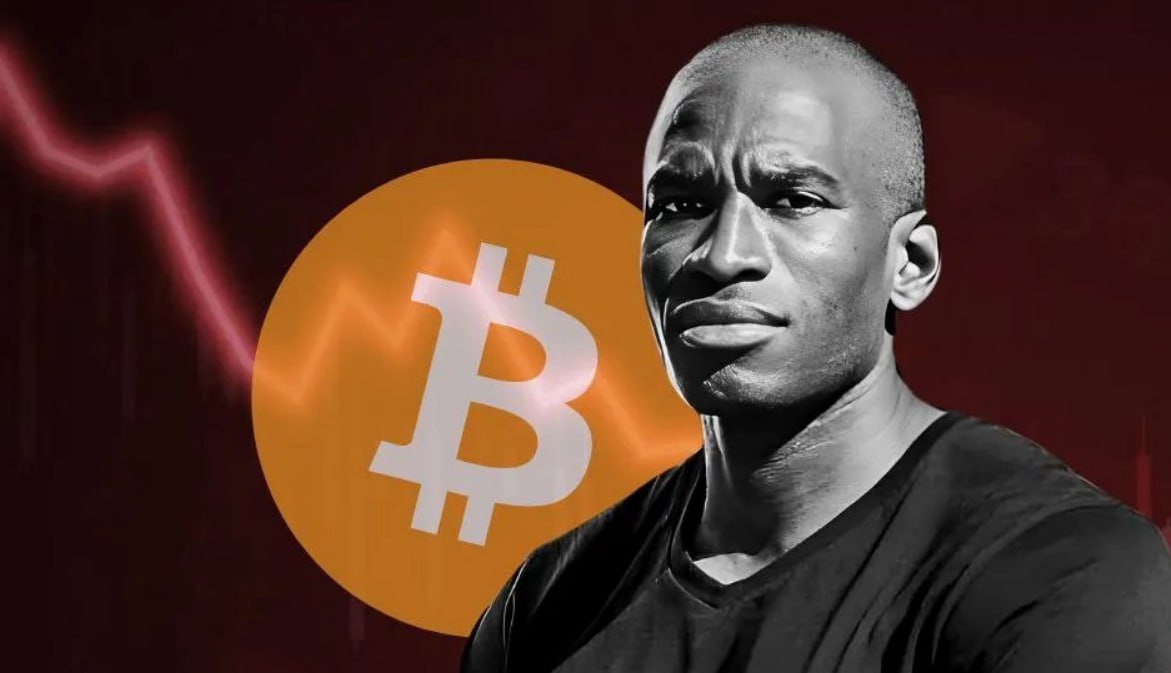 Arthur Hayes flips bearish, predicting Bitcoin could plunge to $70K, citing macro risks, treasury trends, and the volatile $TRUMP memecoin rally.2025-01
 Stablecoins hit $190B record as Bitcoin and Solana surge.
Stablecoin market value reached an all-time high of $190 billion, fueled by Bitcoin’s rally and increased adoption. Tether dominates with over 70% share, while Circle and Ethena stablecoins saw double-digit growth this month.2024-11
Stablecoins hit $190B record as Bitcoin and Solana surge.
Stablecoin market value reached an all-time high of $190 billion, fueled by Bitcoin’s rally and increased adoption. Tether dominates with over 70% share, while Circle and Ethena stablecoins saw double-digit growth this month.2024-11
Rallies in Crypto Markets: An Evergreen Guide to Bitcoin, Ethereum, and Beyond
A rally in financial markets is a period of sustained price increases, typically sharp and relatively short-term, that often follows a phase of flat or declining prices. In crypto, the term has become shorthand for sudden bursts of upside in assets like Bitcoin, Ethereum, and altcoins, driven by shifting macro conditions, regulatory news, on-chain flows, leverage, and fast-moving narratives that can reverse just as quickly as they appear.
From Street Rallies to Market Rallies: What the Word Means
The word “rally” did not originate in markets, and its wider meaning shapes how investors intuitively understand it. In everyday and political language, a rally is a gathering of people to express support, protest, or enthusiasm around a cause or leader. Campaign events by figures such as Donald Trump, often framed as “the greatest rally ever,” use the term to emphasize momentum, mass participation, and a sense of turning tide. In this context, the word connotes not only size but emotional intensity and a belief that a group is on the upswing. That same connotation—momentum, crowd energy, and the idea of a comeback—carries over when traders talk about a market “rallying,” even though the subject shifts from people to prices.
When finance adopted the term, it acquired a more technical meaning while preserving that core sense of a vigorous rebound. In the stock and bond markets, a rally is generally defined as a period of sustained price increases across a security, index, or sector, often following a prior decline or stretch of stagnation. This moves beyond a single strong trading day: analysts usually look for a sequence of higher closes over several sessions or weeks, often accompanied by rising trading volumes as more participants join the move. The idea of accumulation—more and more buyers coming in and pushing prices higher—is central to this definition, just as participation is central to political rallies.
There is no single universal threshold for how large or long a move must be to qualify as a rally, which is why the term is often used loosely. Some market commentators use rough rules of thumb. For example, one common framing in equity markets is that a stock market rally often involves a gain of roughly 10% to 20% from recent lows, reflecting a meaningful change in sentiment rather than a mere fluctuation. Others talk about bear market rallies when prices rise 5% or more within a broader downtrend, highlighting that not every rally signals a durable new bull market. This fuzziness around hard thresholds carries over to crypto, where volatility is much higher and price swings of 10% in a single day are not unusual.
Crypto markets import this traditional financial vocabulary but adapt it to a 24/7, global, highly leveraged trading environment. Bitcoin, Ethereum, and altcoins regularly experience moves that would be considered extraordinary in equities or bonds, which forces traders to contextualize rallies not only by percentage moves but by duration, market structure, and whether the move is broad-based across the sector. A 20% rise in a small-cap altcoin over a week may amount to little more than noise, whereas a 20% rise in Bitcoin itself, especially when accompanied by heavy futures liquidations or large ETF inflows, is likely to be interpreted as a major rally with systemic implications. In this sense, the definition of a rally in crypto is inherently relative: it depends on the asset’s volatility regime and its place in the market hierarchy.
Because digital assets sit at the intersection of macro speculation, technological development, and regulatory uncertainty, their rallies are often explicitly narrative-driven. When Bitcoin rebounds after a geopolitical breakthrough that cools fears of conflict in regions like the Middle East, or after an improvement in macro data such as a softening inflation print, coverage may frame the move as a “risk-on rally” that reflects changing expectations for interest rates and global liquidity conditions. Similarly, when an on-chain discovery, a protocol upgrade, or a regulatory milestone sets off a wave of buying in a particular coin or sector, participants talk about an “AI token rally,” a “DeFi rally,” or a “post-quantum rally,” using the term to condense a complex story into a single word that captures both price action and sentiment.

Bitcoin and Ether Slide to Multi‑Day Lows as Crypto Markets Sink Despite Record‑Setting Global Stocks Rally (

Let the down ride go on
Types of Market Rallies in Crypto and Traditional Finance
Market participants routinely distinguish among different kinds of rallies, even when they use the same word in headlines. In both traditional and crypto markets, the two most basic categories are bull market rallies and bear market rallies, with further nuance added by terms like “relief rally,” “short squeeze,” and sector-specific rallies. Understanding these distinctions is essential for interpreting what a given move might mean for longer-term trends in Bitcoin, Ethereum, or altcoins.
Bull Market Rallies
A bull market rally is an upward move that occurs within a larger, ongoing uptrend. In equities, this typically refers to a phase in which prices are rising, sentiment is optimistic, and investors expect the trend to persist for a long period. The rally is thus not merely a countertrend bounce but part of the dominant direction of travel. In crypto, bull market rallies are the phases that tend to capture mainstream attention: Bitcoin surging toward or through prior all-time highs, Ethereum reclaiming major psychological levels, and large-cap altcoins posting double- or triple-digit percentage gains over weeks or months.
During such periods, macro conditions often support risk-taking: central banks may be perceived as closer to easing than tightening, inflation fears may have moderated, and equity indices like the S&P 500 or Nasdaq might themselves be rallying, reinforcing a global “risk-on” mood. For example, some recent Bitcoin rallies have occurred alongside extended gains in U.S. equity benchmarks, which hit fresh highs as investors embraced technology stocks and speculative growth names, creating a feedback loop where strong performance in one risk asset class validates risk-taking in another. In this environment, ETF inflows, institutional accumulation, and retail enthusiasm can align to generate persistent demand for BTC and ETH.
Bull market rallies in crypto are also often associated with structural narratives, such as post-halving supply dynamics in Bitcoin, the scaling and fee-reduction roadmap of Ethereum, or expectations of expanding institutional demand through spot ETFs and regulated derivatives. The approval of spot Bitcoin exchange-traded products (ETPs) in the United States, for instance, was widely framed as a major catalyst that could channel traditional capital into BTC, supporting a longer-term bullish thesis beyond any single short-term move. Even as some analysts argue that ETFs are not always the dominant narrative behind each rally, the perception that such vehicles structurally widen the buyer base contributes to bullish sentiment and supports the idea of more durable bull market phases.
Bear Market Rallies and Relief Rallies
In contrast, a bear market rally is an upward swing in prices that takes place within a broader downtrend. In equities, this might involve a 5% or more rise in a major index like the S&P 500 after a steep sell-off, which then ultimately fails as the larger bearish trend resumes. The same logic applies to crypto: Bitcoin might jump 15% or 20% off capitulation lows, prompting headlines about a “strong rally,” only to roll over weeks later as macro headwinds or structural selling pressures reassert themselves. These moves can be especially treacherous for traders because they mimic the strength and velocity of bull market rallies but lack staying power.
Relief rallies are a closely related concept. They occur when prices bounce after the resolution—or at least the temporary easing—of a specific source of stress. For example, when geopolitical tensions around Iran or shipping disruptions in the Strait of Hormuz temporarily ease, risk assets can rally as markets adjust to lower perceived tail risks and improved expectations for oil prices and inflation. In one notable instance, the reopening of the Strait of Hormuz reduced concerns about energy supply, depressurized global oil prices, and thus lowered inflation expectations, contributing to a rally in Bitcoin and other risk assets as traders priced in a more dovish path for central banks. Yet such relief rallies can fade quickly if the underlying structural issues, such as high interest rates or persistent regulatory uncertainty, remain unresolved.
Crypto’s history is replete with bear market rallies that, in hindsight, were merely pauses in prolonged downtrends. Headlines that celebrate Bitcoin “rebounding” from a sharp sell-off or altcoins “surging” after a brutal drawdown can foster hope that a bottom has been set, even when on-chain data, ETF flows, or derivatives positioning suggest that the move is driven more by short covering than by new long-term demand. Distinguishing between relief from acute stress and genuine trend reversals is one of the central challenges in interpreting any rally in digital asset markets.
Short Squeeze Rallies
Short squeeze rallies deserve special attention because they have become increasingly common in a derivatives-heavy crypto ecosystem. A short squeeze occurs when traders who have bet against an asset via short positions are forced to buy back the asset as prices rise, thereby adding fuel to the rally. In Bitcoin and Ethereum futures, this dynamic can be extreme because of the widespread use of leverage and the 24/7 nature of crypto derivatives exchanges.
Market makers and trading firms have repeatedly warned that some rallies in BTC appear to be driven primarily by short covering rather than fresh spot demand. For instance, when Bitcoin recovered above key psychological levels like \(75{,}000\) U.S. dollars after a period of weakness, on-chain and derivatives data showed that open interest in futures had risen substantially, indicating that highly leveraged traders were still skeptical of the move. As prices climbed, these traders faced increasing pressure from margin calls and liquidation thresholds, creating the conditions for a short squeeze that could push BTC sharply higher over a very short period.
This sort of rally can be powerful yet fragile. Analysts have described some Bitcoin moves as resembling short squeezes more than “healthy” breakouts, emphasizing that they are driven by forced buying in the derivatives market rather than sustained accumulation in spot markets or ETFs. Crypto-specific indicators such as funding rates, which reflect the cost of holding leveraged long or short positions, often turn sharply positive during such squeezes and can spike as shorts are liquidated. When the squeeze exhausts itself and new spot buyers fail to materialize, prices may retrace quickly, leaving late entrants exposed to sudden reversals and reinforcing the perception of a “rally without conviction.”
Sector and Narrative-Driven Rallies
Beyond broad market moves, crypto frequently experiences sector-specific rallies keyed to narratives such as artificial intelligence, layer-2 scaling, post-quantum security, or new DeFi primitives. In these cases, a catalyst such as a research breakthrough, a high-profile partnership, or an ETF listing can trigger intense buying in a cluster of related tokens. For example, AI-themed coins have staged powerful rallies when markets linked their growth to broader enthusiasm around AI equities, while some networks promoting post-quantum secure cryptography have enjoyed “post-quantum rallies” when that narrative captured traders’ imagination.
One recent illustration comes from the perpetual futures and derivatives space, where the Hyperliquid platform’s native HYPE token surged to a record price of about 75 U.S. dollars in early June 2026, briefly surpassing even Solana’s valuation in some metrics as traders bet heavily on a continued rally. Coverage highlighted that speculative “June rally” bets in HYPE were fueled by whale accumulation and rising derivatives open interest, suggesting a mix of narrative momentum and leverage rather than purely fundamental adoption. Similarly, when particular DeFi protocols suffer hacks but manage rapid recovery—such as after a large exploit at KelpDAO—investors sometimes speak of a “resilience rally” in DeFi tokens as markets reassess the sector’s durability and hunt for undervalued opportunities.
Altcoin-specific rallies can also be directly linked to broader market events. When Bitcoin breaks to fresh local highs on strong ETF inflows, secondary coins often follow in what is commonly described as an “altcoin rally.” For example, Bitcoin surging above 74,000 U.S. dollars on the back of record ETF demand coincided with a wave of gains across altcoins and contributed to presale booms in new tokens riding the same sentiment. Yet these sector or narrative rallies can fade abruptly when the underlying catalyst is called into question, when broader market conditions worsen, or when traders rotate back into Bitcoin and Ethereum for perceived safety.
The recurring lesson is that not all rallies are created equal. Whether the move is a bull market continuation, a bear market bounce, a short squeeze, or a sector-specific surge, the label “rally” captures only the direction and speed of price changes, not their underlying quality or durability. For crypto investors, the key is to analyze what is actually driving the move.
Readers click rally coverage not for price charts but for causation: the #1 story was a single governance proposal (Aave fee switch) adding $188M in market cap, revealing that readers are hunting for the specific mechanism — a vote, a macro call, a whale accumulation signal — that explains why a rally started.
What Drives Crypto Rallies? Fundamental, Macro, and Narrative Forces
While a rally is ultimately defined by price action, understanding what drives that price action helps market participants gauge whether the move is likely to persist. In digital assets, rallies typically emerge from a confluence of macroeconomic conditions, regulatory and policy developments, crypto-native fundamentals, and market microstructure dynamics.
Macro and Geopolitics: Risk-On, Risk-Off, and Iran
Macro variables such as interest rates, inflation, economic growth, and geopolitical tensions set the backdrop against which crypto rallies unfold. Bitcoin is often described as a “macro asset” because its largest moves frequently coincide with shifts in expectations about central bank policy or global risk appetite. When data such as U.S. jobs reports or inflation indicators surprise to the downside, expectations for rate cuts can rise, lowering the perceived opportunity cost of holding non-yielding assets like BTC and ETH and encouraging a risk-on rally in both equities and crypto.
Geopolitical developments add another layer of complexity. Events in regions critical to energy supply and global trade can profoundly shape markets’ inflation outlook, which in turn affects expectations for monetary policy and risk assets. One concrete example is the reopening of the Strait of Hormuz after heightened tensions and partial shutdowns in the region. This chokepoint handles a significant portion of the world’s seaborne oil, so its reopening eased concerns about supply disruptions, contributed to lower oil prices, and softened inflation expectations. In response, traders speculated that central banks might face less pressure to remain hawkish, helping to spark a rally in Bitcoin and other risk assets as markets shifted back toward a risk-on posture.
By contrast, renewed tensions or conflict in the same region can weigh on crypto rallies by driving investors toward safe havens like U.S. Treasuries or the dollar. Around times of escalating Iran tensions, for example, Bitcoin rallies have hit “speed bumps” as traders monitored not only the geopolitical risks themselves but their interplay with robust economic data and ETF outflows. When nonfarm payrolls beat expectations, signaling a strong labor market, markets sometimes infer that central banks will stay restrictive for longer, pressuring risk assets even if short-term rallies push Bitcoin toward round-number levels such as 80,000 U.S. dollars. These episodes underscore that crypto rallies do not occur in isolation; they are embedded in a constantly evolving macro and geopolitical landscape.
Regulation, ETFs, and Institutional Flows
Regulatory developments and the growth of institutional-grade investment vehicles have become critical drivers of crypto rallies. The approval of spot Bitcoin exchange-traded products by the U.S. Securities and Exchange Commission (SEC) marked a pivotal moment, enabling mainstream investors to gain BTC exposure within traditional brokerage and retirement accounts. In the SEC’s own framing, these products were approved under existing frameworks for commodity-based ETPs, subject to exchange listing standards and surveillance-sharing agreements designed to mitigate market manipulation concerns. The prospect and eventual reality of these approvals were widely cited as catalysts for substantial Bitcoin rallies as markets anticipated a structural increase in demand.
ETF flows subsequently emerged as a key metric for assessing the quality of Bitcoin rallies. Periods of strong inflows into spot BTC ETFs—such as months in which crypto ETPs recorded nearly 2 billion U.S. dollars of net inflows—have coincided with powerful rallies as the funds had to purchase large amounts of Bitcoin to back their shares. These flows offered a transparent window into institutional and advisor-driven demand, and positive inflows were often interpreted as evidence of a rally supported by “real money” rather than purely speculative leverage.
Yet the relationship between ETF flows and price action is not always straightforward. There have been episodes in which Bitcoin prices rallied even as ETFs recorded significant net outflows, prompting some analysts to describe the move as a “rally without conviction.” In one such instance, spot BTC ETFs saw roughly 630 million U.S. dollars in outflows, corporate treasury demand for Bitcoin appeared to be weakening, and technical resistance levels loomed, even as BTC prices pushed higher. This divergence raised questions about whether the rally was driven by short-term derivatives activity and offshore spot buying rather than by sustained institutional accumulation.
Moreover, not all industry participants agree that ETFs are the primary driver of Bitcoin’s price trajectory. VanEck’s CEO, whose firm sponsors a spot BTC ETF, has argued that while these products are important, they are not the “dominant narrative” behind every Bitcoin rally, especially in 2024 and beyond. From this perspective, ETFs are one of several channels through which macro and micro forces express themselves, and their flow data must be interpreted alongside on-chain movements, derivatives positioning, and broader risk sentiment. Still, ETF inflows and outflows offer a uniquely transparent and regulated indicator of how traditional capital is responding to crypto narratives.
On-Chain Data and Crypto-Native Narratives
Unlike traditional asset classes, crypto assets live on open, programmable ledgers, enabling analysts to track wallet balances, flows between exchanges and self-custody, and the behavior of large holders in real time. On-chain data thus plays a crucial role in diagnosing crypto rallies. For instance, if Bitcoin’s price is rising while on-chain realized profit metrics show an increasing share of coins moving at a profit and large holders are sending BTC to exchanges, analysts may interpret the rally as driven by profit-taking and distribution rather than fresh accumulation. Indeed, some rallies have stalled when on-chain data indicated rising profit-taking and a drop in demand from key regions such as the United States, even as spot prices hovered near new highs.
Conversely, a rally supported by on-chain accumulation—such as increasing balances in long-term holder wallets, declining exchange reserves, or evidence that large investors are dollar-cost averaging into dips—tends to be seen as healthier. Ethereum’s trajectory offers a parallel example: rising balances in wallets associated with accumulation, whether by staking services, institutional custodians, or large independent holders, can signal growing conviction that supports rallies toward levels like 3,000 U.S. dollars and beyond. While specific accumulation campaigns, such as those by mining or infrastructure firms seeking to control a certain percentage of ETH’s supply, are not always publicly disclosed, on-chain metrics can reveal their footprint and help observers distinguish between leveraged hype and structural positioning.
Crypto-native narratives further shape the context in which rallies occur. Stories about the search for Satoshi Nakamoto, new ETF applications, favorable court rulings against regulators, or breakthroughs in scaling technologies can all ignite speculative flows. When markets perceive a confluence of positive regulatory “wins” and institutional endorsements—for instance, a wave of ETF filings coupled with statements by major asset managers—they may interpret this as validation of crypto’s staying power, driving multi-asset rallies that encompass Bitcoin, Ethereum, and select altcoins. Similarly, claims that key founders or early insiders sold large stakes during past bull markets, as in on-chain analyses suggesting that a prominent Cardano co-founder may have sold around 1.5 billion ADA during the 2021 rally to a 3.09 U.S. dollar all-time high, highlight how insider behavior can shape perceptions of rally sustainability and future supply overhang.
In sum, rallies in crypto are rarely driven by a single factor. Instead, they reflect the interaction of macro risk appetite, regulatory developments, institutional flows, on-chain signals, and evolving narratives about the technology and its role in the financial system.
Global crypto exchanges rally behind Saudi Arabia’s plans to launch regulated stablecoins, as the Kingdom accelerates its broader digital asset strategy with support from top officials.


"For years, the Kingdom has invested in cashless payment rails, she noted, adding that the minister’s recent remarks signal that stablecoins may now move from research to implementation within a supervised policy framework aligned with the Saudi Central Bank (SAMA) and the Capital Market Authority (CMA). The approach is “progressive and risk-aware,” Lin said, since it allows stablecoins to operate within already existing regulation for “instant settlement and greater liquidity efficiency.”"
The Anatomy of a Crypto Rally: From Spark to Exhaustion
Although every rally is unique, they often follow a recognizable progression from initial spark to potential exhaustion. Understanding these phases can help traders and observers interpret whether a move is broadening or merely setting up for reversal.
Ignition: The Catalyst and the First Movers
A rally typically begins with a catalyst that shifts expectations. This might be a macro event—such as a softer-than-expected inflation report, a central bank hinting at future rate cuts, or a geopolitical breakthrough reducing tail risk—or a crypto-specific trigger like ETF approval news, a major protocol upgrade, or a significant on-chain discovery. When the Strait of Hormuz reopened after a period of heightened tension, for example, traders quickly recalibrated their inflation and risk assessments, leading to increased demand for risk assets including Bitcoin. Similarly, announcements or rumors regarding regulatory green lights for spot Bitcoin ETFs have historically served as ignition points for rallies, as markets anticipate new sources of demand.
In the earliest phase, the rally is often led by informed or nimble traders who react quickly to the new information. In Bitcoin and Ethereum, this may be visible as a burst of buying on major exchanges and derivatives platforms, with price moving sharply higher on relatively modest volumes. Short-term speculators playing on high leverage often help accelerate this move, especially if funding rates were negative and short positioning was crowded before the news. As early shorts are forced to cover and momentum algorithms detect the change in trend, buying pressure can intensify, reinforcing the initial impulse.
Expansion: Momentum, FOMO, and Altcoin Catch-Up
Once the rally gains traction, a broader cohort of traders and investors begins to participate. Momentum funds, trend-following algorithms, and discretionary traders who had been waiting on the sidelines enter long positions as technical levels are reclaimed and narrative momentum builds. Media coverage amplifies this dynamic: headlines highlighting Bitcoin “breaking past” key thresholds or “rebounding” from macro shocks draw attention from retail traders and institutional desks alike, creating a sense that a new phase of the market cycle may be underway.
During this expansion phase, altcoins often start to catch up. Historically, Bitcoin tends to lead major crypto rallies as it is the most liquid and institutionally accessible asset, while Ethereum and large-cap altcoins follow as traders rotate into higher-beta exposure. ETF-driven Bitcoin rallies, for instance, have been followed by broader “altcoin rallies” in which AI-related projects, DeFi tokens, and new derivatives platforms post outsized gains. The Hyperliquid HYPE token’s surge to a record high amid speculative “June rally” bets exemplifies this dynamic: as traders grew confident in the overall risk-on environment, they sought higher returns in more volatile assets, driving HYPE’s price sharply higher alongside rising open interest.
FOMO—fear of missing out—becomes a dominant psychological factor in this stage. Social media feeds fill with celebratory posts about gains, on-chain data shows increased interaction from previously dormant addresses, and retail trading volumes rise. In some rallies, this manifests in sudden inflows into spot and leveraged ETPs, with data showing that crypto-linked ETFs can attract nearly 2 billion U.S. dollars of inflows in a single month when sentiment is particularly strong. This broadening participation helps to sustain the rally, but it also seeds the conditions for future fragility as leverage builds and late entrants crowd into overheated trades.
Distribution and Profit-Taking: Signs of Fatigue
As a rally matures, early buyers increasingly shift from accumulation to profit-taking. On-chain data can reveal this transition through metrics such as the realized profit ratio, which measures whether coins moving on-chain are generally doing so at a profit or a loss. When Bitcoin rallies toward or beyond previous highs, analysts often observe a rise in profit-taking as long-term holders send coins to exchanges or move them between wallets, crystallizing gains. CryptoQuant and other analytics firms have highlighted that some Bitcoin rallies have been cut short precisely when profit-taking intensified and demand from key regions, especially the United States, began to wane.
This distribution phase can be subtle. Prices may continue rising or plateau even as selling pressure increases, because new buyers absorb the supply. However, certain indicators start to flash caution. ETF flows may slow or flip into mild outflows, suggesting that institutional buyers are less eager at elevated price levels. Funding rates may become persistently positive, indicating that leveraged long positions are paying to maintain their exposure, while open interest in futures climbs to elevated levels. Market commentary turns more cautious, with analysts noting that valuations are stretched, resistance levels are near, or that rallies look “tired” or “without conviction.”
Furthermore, this distribution is rarely uniform across the crypto landscape. While Bitcoin and Ethereum may stall or consolidate, speculative capital often rotates into smaller altcoins in search of higher returns, leading to late-stage sector rallies that can appear disconnected from fundamentals. AI tokens, post-quantum projects, or newly launched governance tokens may spike dramatically even as blue-chip assets trade sideways. These divergences can be a precursor to broader market corrections, as they reflect speculative excess rather than steady, broad-based accumulation.
Exhaustion, Reversal, and the Aftermath of Failed Rallies
Eventually, many rallies reach an exhaustion point where marginal buyers are no longer willing to pay ever higher prices. At this stage, even modest negative news—a disappointing macro data point, a flare-up in geopolitical tensions, a regulatory setback, or a high-profile hack—can trigger outsized reactions. When Bitcoin hovers near elevated levels such as 80,000 U.S. dollars and then faces stronger-than-expected U.S. jobs data, rising Iran tensions, and substantial ETF outflows, the combination can abruptly halt its upward momentum and push it into a corrective phase.
Analysts often describe such episodes as “fragile rallies,” where price gains are not underpinned by solid fundamentals or long-term flows but by leverage and sentiment that can swing quickly. If the rally has been driven in part by a short squeeze, once shorts are largely cleared out and open interest starts to decline, one of the primary sources of forced buying disappears. As prices slip, long positions with high leverage can themselves come under pressure, leading to cascading liquidations on the long side that accelerate the downturn. Funding rates, which had been positive, may fall toward neutral or negative as the market shifts from long dominance to a more balanced or short-skewed structure.
The aftermath of a failed rally is often characterized by disillusionment and narrative shifts. Commentators who had previously celebrated the rally may reframe it as a “bear market bounce,” a “relief rally,” or a “short squeeze,” emphasizing in hindsight that it lacked the hallmarks of a durable trend change. For example, analysts have warned that some Bitcoin rallies are already “99.3% complete” based on historical cycle analysis, suggesting that a dip to levels as low as 50,000 U.S. dollars could occur before the next major bull run. Similarly, altcoins that participated in late-stage rallies—such as XRP, which saw a sharp move toward 1.29 U.S. dollars only to be rejected and fall back toward 1.20 U.S. dollars amid macro headwinds—can retrace a large portion of their gains, leaving late buyers holding losses.
Even in these downturns, however, new opportunities and narratives emerge. DeFi’s response to major exploits, such as the KelpDAO hack, has sometimes sparked “resilience rallies” as protocols patch vulnerabilities, communities coordinate recovery efforts, and traders reposition into projects perceived as oversold. These cyclical patterns reinforce the idea that rallies are not isolated phenomena but chapters in an ongoing market narrative shaped by macro forces, technology, regulation, and human behavior.
Measuring the Strength and Quality of a Rally
Because rallies can stem from different underlying drivers, analysts focus on a range of indicators to assess their strength and quality. For a crypto news audience, understanding these metrics is essential for interpreting headlines about Bitcoin breaking new highs or altcoins surging in sector-specific rallies.
At the most basic level, price and volume remain the primary markers of a rally. A sustained sequence of higher highs and higher lows, accompanied by rising trading volumes across major exchanges, signals broad participation and strong momentum. Traditional market references define a rally as a period of sustained price increases, often on the order of 10% to 20% in equities, though this threshold is both fuzzy and asset-dependent. In crypto, where daily volatility is higher, analysts focus more on duration and breadth than on a fixed percentage: a multi-week climb in Bitcoin from a local low, with consistent positive closes and few deep pullbacks, is generally treated as a rally even if the total percentage gain exceeds traditional thresholds by a wide margin.
Market breadth is another important dimension. In equities, breadth refers to how many individual stocks participate in an index’s move; in crypto, it can be approximated by the share of total market capitalization that is rising, or by shifts in dominance between Bitcoin and altcoins. A rally confined to a handful of speculative tokens with thin liquidity is less likely to signal a broad change in sentiment than a rally that lifts BTC, ETH, and a wide array of altcoins across sectors. Sector-specific rallies—such as those centered on AI tokens, derivatives platforms like HYPE, or DeFi protocols recovering from hacks—can have strong breadth within their niche while still leaving the broader market relatively unaffected.
ETF flows and institutional positioning offer a window into the higher end of the investor spectrum. Net inflows into spot Bitcoin ETFs, measured daily and monthly, provide a transparent gauge of demand from advisors, family offices, and institutions operating within regulated frameworks. Periods in which crypto ETPs record record inflows, such as nearly 2 billion U.S. dollars in a single month, are usually associated with strong, high-conviction rallies anchored by structural buying. In contrast, when Bitcoin rallies even as ETFs record hundreds of millions of dollars in net outflows, observers question the sustainability of the move and may characterize it as a rally lacking institutional conviction.
Derivatives metrics further enrich this picture. Open interest in futures and perpetual swaps reveals how much leverage is in the system, while funding rates show whether longs or shorts are paying a premium to maintain their positions. When open interest rises sharply during a rally and funding turns strongly positive, the market is often crowded with leveraged longs, increasing the risk of a sudden flush if prices stall or reverse. By contrast, rallies that occur despite negative funding rates—suggesting that shorts remain dominant—may have more room to run if a short squeeze materializes. Analysts assessing Ethereum’s rallies, for example, have highlighted double-digit percentage increases in open interest during price surges, noting that this combination can both amplify upside and heighten liquidation risk.
On-chain indicators such as exchange inflows, realized profits, and the behavior of long-term holders help distinguish between speculative frenzies and accumulation-driven rallies. When Bitcoin rallies as coins flow off exchanges into cold storage and long-term holder supply reaches new highs, the move is often interpreted as healthy and structurally bullish. Conversely, if exchange inflows spike and realized profit metrics show large cohorts selling into strength, the rally may be nearing exhaustion. The geographic distribution of flows also matters: declines in U.S.-based demand during rallies, as inferred from ETF data and exchange activity, have been cited as reasons why some Bitcoin moves failed to sustain higher levels.
The table below summarizes some of these indicators and how they relate to the quality of a rally:
| Indicator | What It Measures | Interpretation in a Rally |
|---|---|---|
| Price trend and duration | Direction and length of price move | Longer, smoother uptrends suggest stronger rallies than brief spikes |
| Volume and breadth | Trading activity and number of assets rising | High volume and broad participation indicate higher conviction |
| ETF flows | Net inflows/outflows to regulated BTC vehicles | Strong inflows support durable rallies; outflows during rallies raise doubts |
| Futures open interest & funding | Leverage and long/short balance | Rising OI and extreme funding increase risk of squeezes and reversals |
| On-chain realized profits & flows | Profit-taking and exchange deposits/withdrawals | Heavy profit-taking and exchange inflows can signal distribution |
By combining these measures, observers can move beyond headline price changes and form a more nuanced view of whether a rally reflects enduring shifts in demand or temporary imbalances in positioning and sentiment.
Bitcoin Volatility Triggers $657M in Liquidations as BTC Swings Between $107K-$113K While U.S. Government Shutdown Stalls Crypto Regulation and Top Gainers River (+85%) and ChainOpera AI (+69%) Lead Market Rally
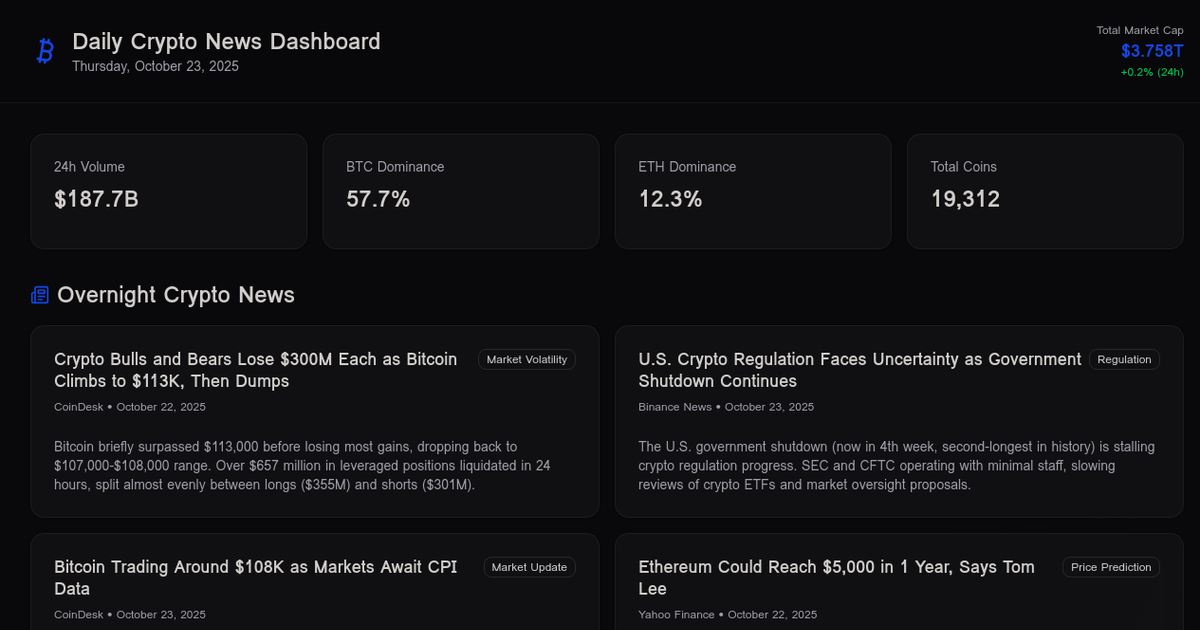

News these days are just bearish asf
Case Studies: Bitcoin, Ethereum, and Altcoin Rallies
Examining specific rallies in Bitcoin, Ethereum, and altcoins helps illustrate how these dynamics play out in practice. While exact price levels and dates will change over time, the underlying patterns remain instructive.
Bitcoin: ETF Booms, Geopolitical Squalls, and Short Squeezes
Bitcoin’s rally patterns in the era of spot ETFs and heightened macro linkages offer a rich case study. After the SEC approved spot Bitcoin ETPs in the United States, markets anticipated and then realized substantial new sources of demand. Months with nearly 2 billion U.S. dollars of inflows into crypto ETFs saw BTC break through previous resistance levels and approach or exceed prior all-time highs, reinforcing the narrative that institutional adoption was entering a new phase. These rallies were marked by strong volumes, rising open interest, and significant coverage framing them as milestones for Bitcoin’s integration into mainstream finance.
Yet not all ETF-era rallies have been equally robust. In some episodes, Bitcoin’s price climbed even as ETF data showed sizable net outflows, such as an instance where roughly 630 million U.S. dollars left BTC ETFs amid weakening corporate treasury demand and growing technical resistance overhead. Market commentators described this as a “rally without conviction,” pointing to the divergence between price action and institutional flows. At the same time, derivatives data indicated that speculative traders were still highly active, with open interest in futures elevated and funding rates reflecting aggressive long positioning. The combination suggested that while price was rising, the foundation of the rally might be fragile.
Geopolitics has periodically cut across these flows. Bitcoin has rallied on perceptions of easing geopolitical risk, such as when Iran-related tensions subsided or key shipping lanes like the Strait of Hormuz reopened. In these instances, traders framed the move as part of a broader risk-on rally spanning equities, crypto stocks, and digital assets. Conversely, renewed tensions and war scares have coincided with Bitcoin rallies stalling or reversing, particularly when combined with macro surprises such as stronger-than-expected U.S. jobs data and ongoing ETF outflows. Analysts have noted that in such periods, Bitcoin’s “safe haven” reputation is contested; at times it trades more like a high-beta risk asset than a hedge, linking its rallies and sell-offs closely to equity market performance and speculative positioning.
Short squeezes have further complicated the picture. In one widely discussed episode, Bitcoin’s recovery above 75,000 U.S. dollars was accompanied by marked skepticism from leveraged traders, with open interest surging as they bet against the move. Market-making firm Wintermute cautioned that the rally looked more like a short squeeze than a healthy breakout, pointing out that open interest had risen from roughly 48 billion U.S. dollars to higher levels as shorts added exposure even while prices rose. Such structures set the stage for violent rallies if shorts are forced to cover, but they also leave the market vulnerable if the squeeze fails to attract genuine long-term buyers. Analysts therefore monitor both ETF and futures data closely when evaluating whether a Bitcoin rally is likely to be sustained.
Ethereum: Leverage, Accumulation, and Sector Correlations
Ethereum’s rallies often share drivers with Bitcoin’s—macro conditions, regulatory news, and overall crypto sentiment—but they also reflect ETH’s unique role as the backbone of DeFi, NFTs, and many layer-2 ecosystems. During some bullish phases, traders observed a notable rise in Ethereum open interest as prices climbed, with double-digit percentage increases in derivatives exposure signaling that both hedge funds and retail speculators were using leverage to participate in the rally. While this increased upward pressure in the short term, it raised concerns about liquidation cascades if prices turned, similar to the patterns seen in leveraged Bitcoin rallies.
On the spot side, Ethereum rallies are sometimes underpinned by visible accumulation in large wallets, including staking providers, DeFi treasuries, and long-term investors shifting ETH off exchanges into self-custody. Such accumulation has been cited as a potential driver behind expectations that ETH could sustain advances toward round-number targets like 3,000 U.S. dollars during favorable macro windows. In these scenarios, the combination of on-chain accumulation and rising open interest signals both conviction and risk, as the same leverage that amplifies gains can magnify drawdowns.
Ethereum also frequently participates in sector-wide rallies tied to narratives like modular scaling, restaking, and liquid staking derivatives. For instance, when DeFi protocols demonstrate resilience after major security incidents—such as the swift response to a 290 million U.S. dollar exploit at KelpDAO and the subsequent recovery of staking-related activity—ETH can benefit indirectly as confidence in the broader ecosystem improves. Traders may reallocate capital from sidelined stablecoins into ETH and DeFi governance tokens, creating a secondary rally anchored by Ethereum’s central role as collateral and gas for these platforms.
Altcoins: Speculation, Narratives, and the Limits of Liquidity
Altcoin rallies illustrate the interplay between narrative, liquidity, and insider behavior. AI-linked projects like NEAR Protocol have experienced surges exceeding 50% in weekly gains during AI token rallies, as traders extrapolate growth in the AI sector to demand for blockchain infrastructure and middleware. At the same time, tokens associated with novel derivatives platforms, such as HYPE on Hyperliquid, have staged aggressive rallies to new all-time highs when ETF inflows into crypto and whale demand for high-beta exposure converge. These moves underscore how altcoins can provide leveraged exposure to broader crypto sentiment, but also how quickly they can reverse if narratives shift or liquidity dries up.
XRP offers an instructive counterpoint. In one episode, XRP rallied to about 1.29 U.S. dollars before facing rejection and falling back toward 1.20 U.S. dollars in subsequent sessions, with analysts attributing the slide primarily to macro headwinds rather than project-specific failures. The move was interpreted by some as evidence that the rally may have stalled, with technical indicators pointing to a possible 30% downside target if support levels failed. This pattern mirrors many altcoin rallies: a sharp initial move on improved sentiment or legal news, followed by a retracement when macro conditions or Bitcoin’s own rally fade.
Historical on-chain analyses of ADA’s 2021 bull market, in which NFT creator Masato Alexander claimed Cardano co-founder Charles Hoskinson may have sold about 1.5 billion ADA as prices approached an all-time high of 3.09 U.S. dollars, also highlight another dimension of altcoin rallies. If major insiders substantially reduce their holdings during a rally, it may create an overhang that depresses future price appreciation or sow doubts among later buyers about equitable distribution. Even if such sales are legal and within the norms of venture-style investing, they can feed narratives that altcoin rallies disproportionately benefit early insiders at the expense of retail participants.
These case studies collectively illustrate that rallies in Bitcoin, Ethereum, and altcoins are shaped by a combination of macro forces, regulatory and ETF dynamics, derivatives positioning, on-chain behavior, and project-specific narratives. For observers and participants alike, the challenge is to disentangle these strands rather than treating “rally” as a monolithic concept.
- 01Protocol governance as price catalyst↗
The Aave fee-switch 'temp check' generated the most clicks by far, showing readers want to understand how a governance vote can directly move a token's market cap by hundreds of millions overnight.
- 02Bitcoin ATH milestone chasing↗
Multiple stories around $100K, $122K, and $124K price records drew strong repeat engagement, with readers tracking each new all-time high as a discrete event worth examining.
- 03ETH vs BTC rally divergence
Three separate headlines covering Ethereum lagging Bitcoin, its 'most hated' rally near $4K, and whale accumulation patterns collectively drew heavy clicks — readers wanted to understand why ETH underperformed in the same bull cycle.
- 04Macro triggers and Arthur Hayes calls
Two Arthur Hayes blog posts — one bullish (gold/BTC amid Treasury selloff) and one bearish (predicting $70K) — both ranked highly, suggesting readers treat Hayes's macro framing as a primary signal for rally timing.
- 05Institutional and pension accumulation signals
Stories on Wisconsin and Michigan pension funds eyeing Bitcoin, ETH whale doubling of holdings, and stablecoins hitting $190B drew clicks as readers searched for on-chain and institutional confirmation that a rally had structural backing.
- 06Short squeeze and liquidation risk↗
The ETH rally story flagging $331M in shorts at liquidation risk and the BTC drop triggering $1.35B in liquidations both performed well, showing readers are watching leverage positioning as a rally amplifier.
Trading and Investing Around Rallies: Strategy, Risk, and Behavior
For both retail and institutional participants, rallies are moments of opportunity and risk. While this explainer does not provide investment advice, it is useful to outline some of the ways in which rallies intersect with strategy, risk management, and investor psychology.
One recurring theme is the tension between momentum and mean reversion. Rallies often exhibit strong momentum: assets that have been going up tend to keep going up in the short term, drawing in trend-following strategies and discretionary traders who do not want to fight the tape. In Bitcoin, for example, the combination of ETF inflows, improving macro conditions, and growing institutional adoption can create a powerful feedback loop in which higher prices validate the bullish thesis, attracting new buyers and sustaining the rally. However, this same momentum can overshoot fundamentals, creating pockets of overvaluation and increasing the probability of sharp corrections when catalysts fade or data disappoints.
Risk management becomes particularly important in leveraged environments. Crypto derivatives exchanges offer high leverage on BTC, ETH, and many altcoins, enabling traders to amplify gains but also magnifying losses and liquidation risk. When rallies coincide with rapidly rising open interest and positive funding rates, as seen in some Bitcoin and Ethereum surges, the market can become crowded with leveraged longs. In such conditions, even modest pullbacks can trigger liquidations that cascade through the system, leading to abrupt drawdowns that catch overextended participants off guard. Observers therefore monitor funding and open interest not only to gauge sentiment but to assess the structural risk embedded in the rally.
Investor psychology plays a central role. During the expansion phase of a rally, FOMO can push participants to abandon cautious strategies and chase returns in increasingly speculative assets. Late-stage altcoin rallies, AI token manias, and “post-quantum” surges often feature this behavior, with social media amplifying narratives of easy gains and underplaying the downside of illiquid exits. At the same time, concerns about speculative mania are not limited to crypto; commentators have pointed to episodes in traditional markets, such as overheating in S&P 500 options, as potential sources of cross-market volatility that could spill over into Bitcoin’s rally dynamics. When speculative pressure builds in multiple asset classes simultaneously, risk can be both magnified and correlated.
Political and regulatory events further complicate decision-making. Political rallies and campaign promises—from Trump or other major figures—may signal future orientations toward crypto regulation, taxation, or central bank digital currencies. While the direct impact of such events on short-term price action can be hard to isolate, they shape the backdrop against which rallies are interpreted. A Bitcoin rally that occurs amid expectations of more crypto-friendly regulatory appointments, for example, may be framed differently than one that emerges in the shadow of aggressive enforcement actions or legislative crackdowns.
Finally, the cyclical nature of crypto markets means that rallies and crashes are part of broader boom-bust dynamics. Bull market rallies often follow halving events, regulatory breakthroughs, or macro shifts, while bear market rallies punctuate prolonged downturns. Recognizing where a particular rally sits within this longer cycle—whether it resembles the early innings of a new adoption wave or the late-stage blow-off of a speculative mania—is inherently uncertain but remains a central preoccupation of market analysis. Historical patterns, such as Bitcoin dipping significantly (for instance, toward 50,000 U.S. dollars) before launching into a new bull run, are often cited by veteran traders to contextualize current rallies. Whether these analogies hold in future cycles will depend on how the interplay of macro, regulation, and adoption evolves.
Conclusion
The term “rally” is deceptively simple. In everyday language, it evokes crowds, enthusiasm, and a sense of collective momentum; in markets, it denotes a period of sustained price increases following flat or declining phases. In crypto, where volatility is elevated and markets operate continuously across borders and time zones, rallies have taken on a particularly dramatic character, encompassing everything from ETF-fueled surges in Bitcoin to sector-specific booms in AI tokens, DeFi protocols, and derivatives platforms like Hyperliquid’s HYPE.
Beneath the surface of any given rally lies a complex weave of drivers. Macro and geopolitical developments—such as inflation data, central bank signaling, and crises or breakthroughs involving countries like Iran—can shift global risk appetite and set the stage for risk-on or risk-off moves that sweep across equities and crypto alike. Regulatory milestones, especially the approval and growth of spot Bitcoin ETFs, have opened new channels of institutional demand while also providing transparent data on inflows and outflows that help gauge the conviction behind rallies. On-chain analytics and derivatives indicators offer further insight into whether moves are driven by accumulation, profit-taking, or leverage-heavy short squeezes.
Empirically, rallies in Bitcoin, Ethereum, and altcoins have exhibited patterns of ignition, expansion, distribution, and often exhaustion, with each phase displaying distinct signatures in terms of price action, volume, breadth, ETF flows, open interest, and on-chain behavior. Some rallies evolve into durable bull market phases supported by structural adoption and favorable macro conditions, while others resolve into bear market rallies, relief bounces, or short squeezes that ultimately retrace. Case studies from ADA’s 2021 bull run to XRP’s stalled climbs, KelpDAO’s resilience rally, and HYPE’s speculative surge underscore the diversity of rally types and their implications for different segments of the crypto ecosystem.
For a crypto news audience, treating “rally” not as a monolithic label but as a starting point for deeper analysis is essential. The same word can describe a Bitcoin move powered by ETF inflows and broad participation, a fragile recovery at risk of short squeeze or reversal, or a narrow speculative frenzy in illiquid altcoins. Understanding what kind of rally is underway—and what is driving it—can inform more grounded interpretations of market headlines, even if it cannot eliminate uncertainty or risk. As crypto matures and intertwines more deeply with traditional finance, the anatomy of rallies will likely continue to evolve, but the need to look beneath the surface of price spikes will remain.
SEC approves U.S. spot Bitcoin ETFs
- 2024-04milestone
Bitcoin halving cuts block reward to 3.125 BTC
- 2024-12milestone
Bitcoin crosses $100,000 for the first time
- 2025-01launch
TRUMP memecoin launches, fueling volatile altcoin rally
- 2025-02milestone
Stablecoin market cap hits record $190B amid BTC and SOL surge
Bitcoin drops below $89K on yen rally and stock risk aversion, $1.35B liquidated
- 2026-01governance
Aave fee-switch temp check sparks $188M AAVE market cap rally
- 2026-06milestone
Bitcoin tops $124K on Fed rate-cut bets and Trump-era crypto reform momentum
Outlook
Looking ahead, crypto rallies are likely to be shaped by the interplay of three broad forces: macroeconomic conditions, regulatory trajectories, and the evolution of on-chain and off-chain market infrastructure. On the macro front, the path of interest rates, inflation, and growth will continue to influence whether investors treat Bitcoin and Ethereum as attractive diversifiers or high-beta risk assets, with geopolitical hotspots—from the Middle East to major elections involving figures like Trump—adding episodic volatility and narrative shifts. As long as uncertainty remains high, rallies may oscillate between being framed as safe-haven flows and as speculative risk-on bursts, depending on context and correlation with equities.
Regulation and institutionalization are poised to deepen their influence. As more jurisdictions refine their approaches to spot crypto ETFs, stablecoins, and exchange oversight, the channels through which capital enters and exits the sector will become more structured and transparent. This could temper some of the wildest excesses of retail-driven speculation while simultaneously enabling larger, slower-moving pools of capital to shape the amplitude and duration of rallies. At the same time, enforcement actions, tax changes, or restrictive policies could periodically short-circuit rallies or redirect flows from one asset class to another, underscoring the importance of political and legal developments.
Finally, the growth of on-chain finance, restaking, modular architectures, and tokenized real-world assets will continually generate new narratives and sectors capable of their own localized rallies. DeFi’s demonstrated capacity to bounce back from major hacks, AI-related protocols’ sensitivity to developments in machine learning, and novel derivatives platforms’ appeal to sophisticated traders all point to a future in which crypto rallies are increasingly multi-dimensional and asynchronous. For observers and participants, the challenge will not be to predict every rally, but to develop frameworks for distinguishing their types, drivers, and likely durability in a landscape where the only constant is change.
Latest Rally news
Bitcoin and Ether Slide to Multi‑Day Lows as Crypto Markets Sink Despite Record‑Setting Global Stocks Rally (Global crypto exchanges rally behind Saudi Arabia’s plans to launch regulated stablecoins, as the Kingdom accelerates its broader digital asset strategy with support from top officials.Bitcoin Volatility Triggers $657M in Liquidations as BTC Swings Between $107K-$113K While U.S. Government Shutdown Stalls Crypto Regulation and Top Gainers River (+85%) and ChainOpera AI (+69%) Lead Market Rally Ethereum whales have doubled their holdings to nearly 28M ETH in four months, signaling the biggest accumulation wave since 2018.Analysts say this aggressive buying could tighten supply and set the stage for a major price rally.
 Bitcoin traders are bracing for Wednesday’s Fed rate decision, with a 25bps cut already 96% priced in—leaving markets focused on Powell’s comments rather than the move itself. Analysts warn that dovish signals could fuel a crypto rally, while hawkish tones risk flattening or reversing Bitcoin’s recent climb toward $117K.
 BNB reached a new all-time high of $907.38 on Sept. 10, marking the token’s second major milestone in less than three weeks.The record comes as crypto markets surged past $4 trillion in total market capitalization, after a broader rally that added $100 billion in 24 hours.
Sources
19 records from 16 domains
investopedia.com
en.wikipedia.org
youtube.com
kucoin.com
x.com
bitcoinfoundation.org
facebook.com
ig.com
direxion.com
bloomberg.com
financemagnates.com
tradingview.com
sec.gov
coca.xyz
mexc.com
financefeeds.com
Community notes
Spot something off or out of date? Drop a note. Editors review topic notes daily and roll accepted fixes into the explainer — contributors are recognized in the monthly $SQUID drop.
Loading notes…
Help improve this topic
Have a story or tip about this topic? Submit it. See something missing? Leave a note. Editors review daily; accepted submissions and fixes count toward the monthly $SQUID drop.