
Iran's nuclear standoff, Hormuz chokepoint control, and 2026 ceasefire deal have made it a live macro driver for Bitcoin and crypto markets, intertwined with oil prices, Polymarket disputes, and US sanctions policy.
+77 sources across the wider coverage universe
 Binance senior compliance staff flee financial crime roles as CCO Perlman eyes exit amid DOJ Iran probe2026-04
 White House warns staff against Iran war bets after Polymarket traders net $600K on ceasefire timing2026-04
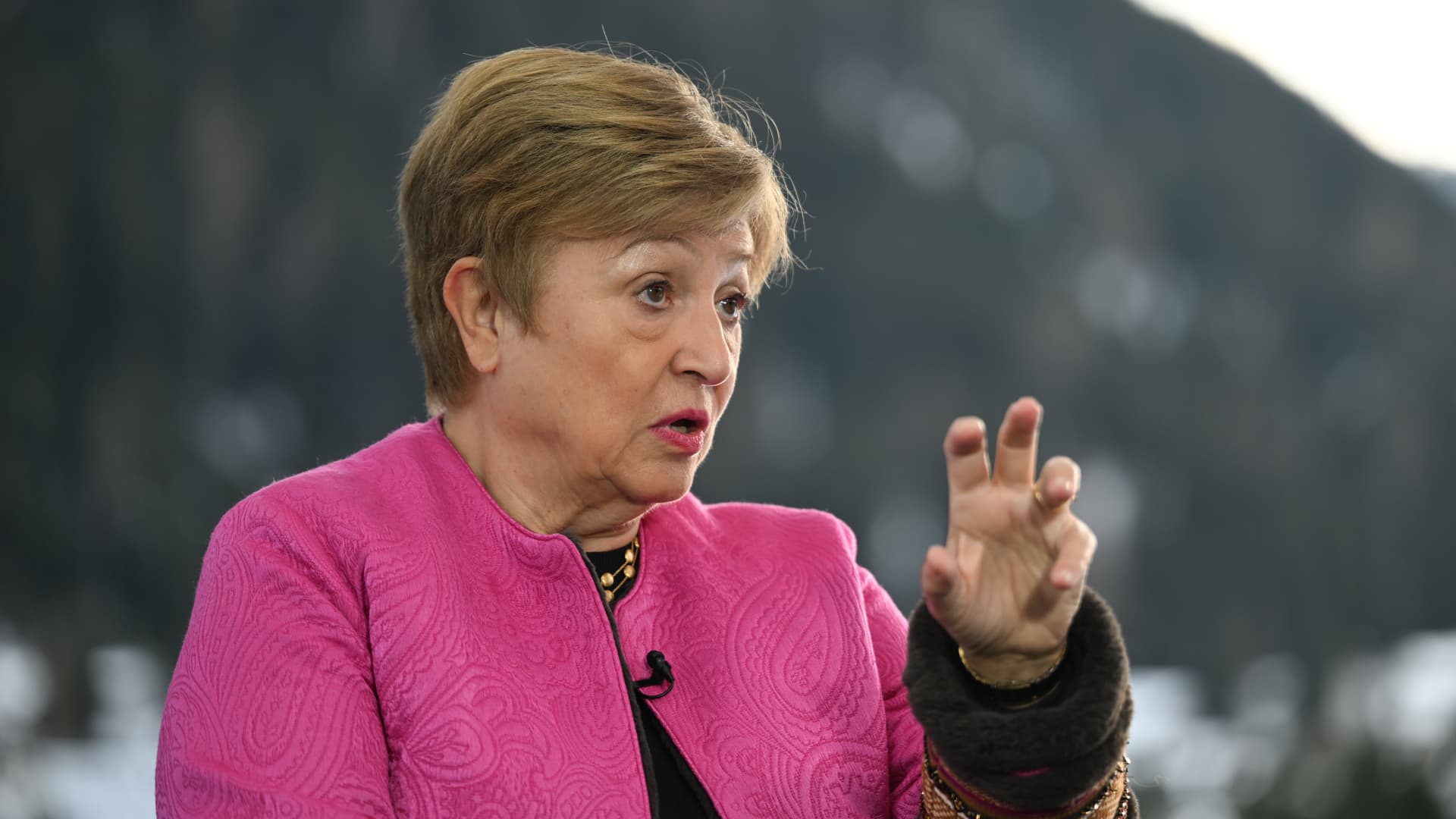 IMF warns Iran war acts as 'sudden tax' on global economy, shrinks oil supply 13%2026-04
 Bitwise CIO: Bitcoin's addressable market could surpass gold's $34T as Iran conflict cements its dual currency role2026-04
 Iran oil shock reignites inflation trade as USDi stablecoin pitches CPI-indexing over dollar pegs2026-04
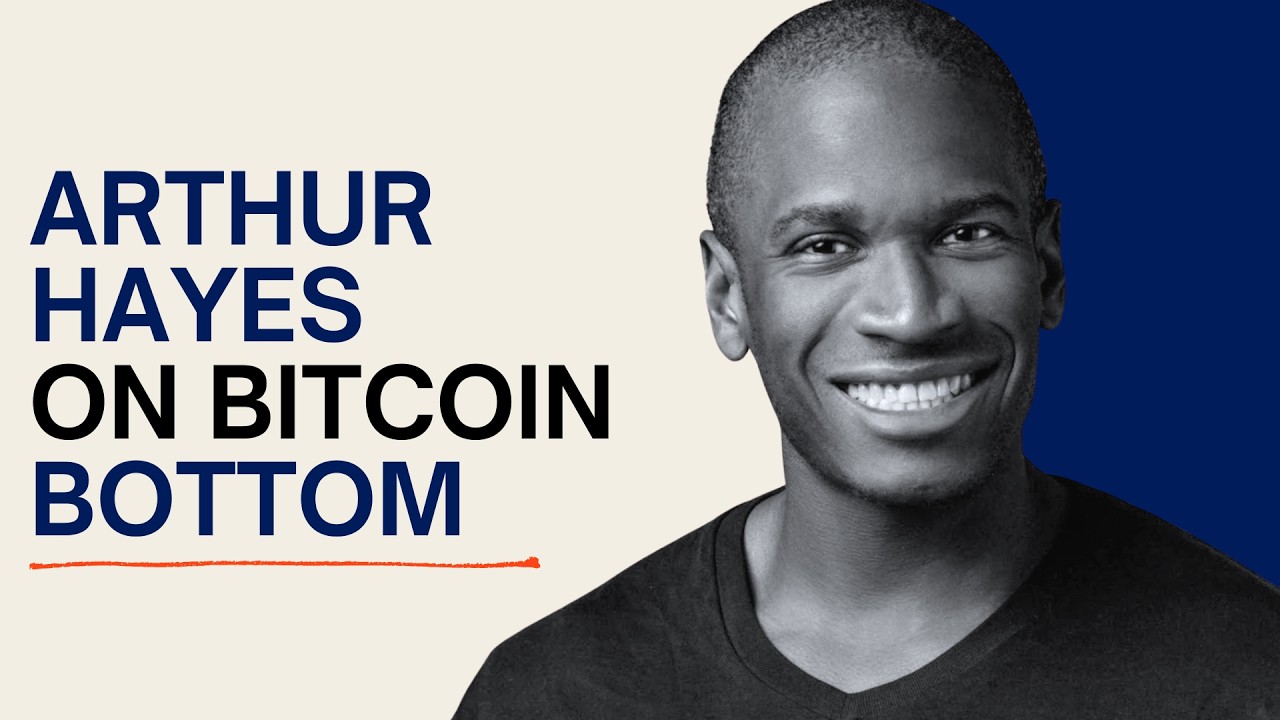 Bitcoin’s Biggest Risk Isn’t Iran, It’s AI: Arthur Hayes2026-04
A Persian Gulf petrostate of 88 million people, Iran sits at the intersection of nuclear geopolitics, global energy chokepoints, and an accelerating experiment with crypto-denominated sanctions evasion — making it one of the most consequential macro variables for digital asset markets in 2026.
Why Iran Matters to Crypto Markets
The connection between Tehran's political decisions and Bitcoin's price may seem indirect, but 2026 has made it impossible to ignore. Iran controls roughly 2,100 kilometres of coastline along the Strait of Hormuz, a narrow waterway through which approximately 20% of the world's oil and liquefied natural gas transits daily (Congress.gov). When that chokepoint is threatened, energy prices spike, risk sentiment sours, and capital flows shift across every asset class — including crypto.
Beyond geography, Iran has been a live test case for crypto as a sanctions-evasion tool since at least 2018, when the Trump administration's first-term "maximum pressure" campaign cut the country off from SWIFT and the dollar system. That pressure pushed Iranian entities toward peer-to-peer Bitcoin trading, stablecoin settlement, and eventually state-level experimentation with digital asset payments. In 2026, those experiments moved from the margins to the headlines.

Binance senior compliance staff flee financial crime roles as CCO Perlman eyes exit amid DOJ Iran probe
$1B+ in Tether routed to Iran-linked wallets via Tron between March 2024 and August 2025 — entirely within the post-$4.3B settlement monitoring period. Binance fired the investigators who surfaced it, Senator Blumenthal opened an inquiry flagging $1.7B across Iran proxies and Russia's shadow fleet, and now the remaining compliance team is sprinting for the door. Perlman was the "we're reformed" hire brought in after CZ's guilty plea; him leaving while Binance simultaneously claims it's "unaware of any investigation" is compliance theater closing night.
The Hormuz Chokepoint: Energy Risk in Real Time
The Strait of Hormuz is the world's single most important oil transit corridor. Roughly 21 million barrels of crude, condensate, and refined products pass through it every day, along with significant volumes of LNG destined for Asia and Europe. Iran has long held the legal right — under its interpretation of territorial waters — to block or toll transit through the strait in retaliation for what it deems hostile acts.
During the 2026 US-Israel military campaign against Iran, Tehran repeatedly threatened, partially enforced, and then suspended Hormuz closures as a diplomatic lever. At peak tension in late May and early June 2026, Brent crude briefly traded above $126 per barrel as markets priced in genuine supply disruption, while WTI challenged $100 (Value The Markets). When the ceasefire framework took hold in mid-June and the strait reopened, WTI reversed sharply toward $81 and Brent slid to multi-month lows — one of the fastest crude reversals in recent memory.
For crypto, oil's role is indirect but meaningful: higher energy costs tighten monetary conditions globally, reduce liquidity available for risk assets, and strengthen the dollar — all headwinds for Bitcoin. The inverse is also true. When Hormuz risk recedes and oil falls, risk appetite recovers, and speculative capital rotates back into digital assets.
Readers click Iran not as a sanctions compliance story but as a geopolitical volatility trigger — the click distribution shows crypto audiences understand Iran events (strikes, Hormuz threats, ceasefires) now move prediction markets, oil-linked DeFi liquidations, and macro positioning faster than any protocol-level risk, making Iran the clearest live proof that crypto is embedded in kinetic geopolitics.
Iran's Crypto Toll System: Sanctions Evasion Goes Institutional
One of the most structurally significant developments of 2026 was Iran's decision to demand crypto payments as transit fees from oil tankers passing through the Strait of Hormuz. Reports from April 2026 revealed that Iran was seeking approximately $1 per barrel of oil, payable in Bitcoin or stablecoins, from vessels transiting the waterway (The Hill). In May 2026, Iran went further, launching a Bitcoin-backed insurance product for shipping companies seeking transit assurance (Coindesk).
The move is strategically coherent. Dollar-denominated payments are easily frozen by US Treasury action; Bitcoin and stablecoin transfers are not. By routing toll revenue through on-chain channels, Iran creates a parallel revenue stream that bypasses the sanctions architecture that has constrained its foreign-exchange earnings since 2018. Blockchain analysts noted the development immediately — Chainalysis published analysis of the toll system's on-chain flows within weeks of its launch (Chainalysis).
The practical scale remains small relative to Iran's broader economy, but the symbolic and structural implications are large. It establishes a precedent that state-level entities facing sanctions can operationalize crypto payments for real-world commercial activity — not just informal peer-to-peer workarounds.
White House warns staff against Iran war bets after Polymarket traders net $600K on ceasefire timing
Fifty fresh accounts hitting Polymarket minutes before a ceasefire drop is suspicious enough, but the $760M in oil futures that moved 15 minutes before Trump's Truth Social post is the real scale of this — prediction markets just made the information asymmetry visible in a way dark pool futures never do. Trump Jr. sitting on both the Polymarket and Kalshi cap tables while his father's war policy whipsaws these contracts is the kind of conflict-of-interest structure that would get a DeFi protocol's multisig signers doxxed and dragged on CT within hours.
The 2026 War and Peace Process
The military confrontation between the US-Israeli coalition and Iran that escalated through spring 2026 reshaped the geopolitical backdrop for markets. US and Israeli strikes targeted Iranian nuclear facilities and Revolutionary Guard infrastructure; Iran responded with missile salvos and proxy operations across Lebanon, Syria, and the Gulf. The conflict pulled in regional actors, drove refugee flows, and created the most acute Middle East energy crisis since 2022.
The diplomatic track ran in parallel. Switzerland agreed to host indirect US-Iran negotiations. JD Vance was dispatched to Geneva before his trip was abruptly postponed when talks collapsed on June 18 after Switzerland confirmed cancellation, following a Trump post demanding "unconditional surrender" and the Iranian Revolutionary Guard issuing warnings of "devastating historical defeat" (Al Jazeera).
A breakthrough appeared to arrive on June 15, 2026, when the US and Iran announced a preliminary ceasefire framework — a memorandum of understanding providing for a 60-day cessation of hostilities, reopening of the Strait of Hormuz, and a commitment by Iran never to develop nuclear weapons (NPR). The agreement included language about a $300 billion reconstruction fund for Iran, a figure Trump publicly denied or heavily qualified in subsequent social media posts, calling the characterization "Fake News." Iran agreed to a moratorium on uranium enrichment beyond agreed levels, with IAEA supervision of existing stockpiles.
The deal, however, remained fragile. Renewed Israeli strikes on Lebanon in the days following strained compliance, and Iran again threatened Hormuz closure over the Lebanon conflict. Pope Leo XIV commended the peace framework, and global markets priced in guarded optimism — but the path to a permanent, ratified agreement remained contested.
Bitcoin as a Geopolitical Barometer
The Iran situation crystallized something important about Bitcoin's current market structure: it functions as a near-real-time geopolitical risk barometer, at least in the short term. The price trajectory through June 2026 tracked the peace process almost tick-for-tick.
Bitcoin fell toward a multi-week low near $59,375 on June 5 as military tensions peaked and Hormuz closure risk was highest. As Pakistan's Prime Minister Shehbaz Sharif publicly described a 24-hour peace deal timeline, BTC climbed back above $64,000. When the June 15 ceasefire framework was announced, Bitcoin topped $65,000 then pushed toward $67,000 as risk sentiment improved and oil prices fell (crypto.news). XRP and broader altcoins surged in tandem with BTC.
However, the rally hit friction. Bitcoin's push toward $67,000 coincided with the Federal Reserve's FOMC meeting chaired by Kevin Warsh, where the Fed's updated dot plot and rate guidance took on at least as much market significance as the geopolitical news. Analysts noted the real macro catalyst was the Fed, not the ceasefire — and when peace talks wobbled again and the formal signing was postponed, Bitcoin gave back gains, pulling back from the $67,000 area as the one macro tailwind that crypto had priced in began to slip (Rio Times Online).
The pattern illustrates a structural nuance: Bitcoin responds to risk sentiment shifts at the margin, but geopolitical catalysts rarely override the dominant macro regime (rates, liquidity, dollar strength) for sustained periods.
IMF warns Iran war acts as 'sudden tax' on global economy, shrinks oil supply 13%
Polymarket and the $345 Million Dispute
The Iran situation also produced one of the most consequential episodes in prediction market history. Polymarket, the on-chain event betting platform built on Polygon, hosted a market asking whether the US and Iran would reach a permanent peace deal by a specified date. Total open interest in the market grew to approximately $345 million before dispute broke out over resolution (Bloomberg).
The problem was definitional. Polymarket's resolution criteria required that any qualifying agreement "explicitly indicate that military hostilities between the United States and Iran have ended or will permanently cease." The June 15 MoU provided a 60-day ceasefire, not a permanent cessation — and the Pakistani Prime Minister's characterization of it as a "permanent termination" was disputed. When a proposal was submitted to resolve the market as "Yes," holders of UMA — the governance token used to adjudicate Polymarket disputes — quickly challenged it (The Next Web).
The dispute exposed a structural vulnerability in decentralized prediction markets: a Bloomberg analysis found that nine anonymous wallets controlled more than half of UMA's voting supply, meaning a handful of unidentified actors — who may hold positions in the very markets they are adjudicating — effectively determine payouts on hundreds of millions of dollars of bets. The episode reignited debate about the legitimacy and governance architecture of on-chain prediction markets at scale, particularly for politically sensitive outcomes where resolution criteria are inherently ambiguous.
- 01Polymarket war insider trading
Freshly funded wallets netting millions on Iran airstrike and ceasefire timing — minutes before public announcements — reframed prediction markets as a geopolitical insider trading surface and pulled in readers who track market integrity.
- 02Hormuz oil shock crypto contagion
The concrete threat of Iran closing a chokepoint carrying 25% of global oil supply directly triggered tokenized-commodity liquidations and macro repricing across crypto, making the Strait of Hormuz a DeFi risk event, not just a geopolitical one.
- 03Iran sanctions evasion via crypto
Revelations that Iran-linked wallets processed billions through Binance and WLFI-allied networks — while Binance fired the investigators who found it — showed readers that mainstream exchanges remained active conduits despite formal sanctions regimes.
- 04WLFI Trump Iran network exposure
The disclosure that World Liberty Financial's industry allies processed $2.3B for Iran's top sanctioned exchange created a direct political liability connecting the sitting president's crypto venture to sanctions evasion.
- 05Iran AI offensive cyber escalation
The top-clicked headline — Iran and adversary states deploying generative AI for offensive cyberattacks — signaled a threat-capability upgrade that directly concerns crypto infrastructure security.
- 06Iran domestic crypto survival use
Stories of Iranians turning to crypto gaming (Hamster Kombat) and local exchanges under sanctions showed readers a grassroots utility case that the regulatory crackdown narrative consistently underweights.
Binance, Sanctions, and Iran's Crypto Exposure
Iran's relationship with crypto exchanges has been tense and legally fraught. Under US and EU sanctions frameworks, exchanges operating in regulated jurisdictions are prohibited from serving Iranian users or facilitating transactions that benefit sanctioned entities. Binance, the world's largest crypto exchange by volume, reached a landmark settlement with the US Department of Justice in 2023 in part over failures to screen out Iranian and other sanctioned-country users. The exchange paid $4.3 billion in penalties and installed a compliance monitor.
In 2026, the Iran situation renewed scrutiny of whether Iranian actors were using non-KYC channels — peer-to-peer markets, decentralized exchanges, privacy coins — to access global crypto liquidity. Chainalysis has documented consistent flows of USDT and Bitcoin through intermediary wallets linked to Iranian IP ranges, particularly during periods of domestic currency stress when the Iranian rial has depreciated sharply.
For compliant exchanges including Binance, the compliance calculus is clear: Iranian users are off-limits. But the broader decentralized infrastructure — Bitcoin itself, Ethereum, non-custodial wallets — is jurisdictionlessly available, which is precisely why Iran views crypto not just as an asset class but as a strategic financial infrastructure layer.
Trump's Role and the "America First" Framing
President Trump has made the Iran situation a central element of his second-term foreign policy narrative, contrasting the 2026 ceasefire framework with the Obama-era 2015 JCPOA and the 2018 cash payments controversy. His public communications have been characteristically combative: demanding "unconditional surrender" one day, touting falling oil prices and a record stock market as validation of his approach the next.
From a market perspective, Trump's Iran commentary has been a vol amplifier. Social media posts from the President's account moved Bitcoin meaningfully in both directions during the June 2026 negotiations — upward when signalling progress, downward when talks collapsed and hawkish language returned. The crypto market's sensitivity to presidential commentary on Iran reflects the degree to which geopolitical risk pricing has become embedded in Bitcoin's short-term price function.
Trump's framing of the Iran deal as "America First in Action" — lower oil prices, no taxpayer payments, a nuclear commitment — is designed to undercut both Democratic criticism and hawkish Republican voices who argue the terms were too soft. Whether the diplomatic framework holds will partly determine his legacy on the issue.
- 2024-04milestone
Iran launches first direct drone and missile attack on Israel
- 2024-06milestone
Hamster Kombat crypto craze grips Iran ahead of snap presidential election
- 2024-10milestone
Israel strikes Iran, triggering regional war escalation fears
- 2025-01regulatory
Chainalysis report: Iran drives 39% of illicit crypto among sanctioned nations in 2024
- 2025-06milestone
U.S. airstrikes on Iranian nuclear sites; parliament votes to close Hormuz
- 2025-06governance
Polymarket traders net $1M+ on Iran airstrike bets; White House warns staff
- 2025-06exploit
Nobitex begins phased reopening after $90M hack tied to pro-Israel group
- 2025-06regulatory
WLFI-allied networks linked to $2.3B in flows for sanctioned Iranian exchange
Outlook
The Iran situation as of mid-2026 remains a live variable for crypto markets, not a resolved background condition. A durable, formally ratified peace agreement — particularly one that permanently caps Iran's nuclear program and reliably reopens Hormuz — would remove a meaningful geopolitical risk premium from oil, reduce macro volatility, and improve the liquidity conditions that tend to favour risk assets including Bitcoin.
The more likely scenario, based on the June 2026 pattern, is extended ambiguity: partial compliance with ceasefire terms, ongoing Israel-Lebanon friction, contested interpretation of what "permanent" peace means, and periodic escalation threats from the Iranian Revolutionary Guard. That ambiguity is likely to keep Iran-related volatility as a recurring feature of crypto price action rather than a one-time event.
Longer term, Iran's institutionalisation of crypto payments — Hormuz tolls, Bitcoin-backed insurance, state-level USDT flows — represents a slow-moving structural shift in how sanctioned sovereign actors interact with decentralised financial infrastructure. The policy and compliance implications for exchanges, regulators, and on-chain protocols will persist well beyond any particular ceasefire agreement.
Latest Iran news
Binance senior compliance staff flee financial crime roles as CCO Perlman eyes exit amid DOJ Iran probeWhite House warns staff against Iran war bets after Polymarket traders net $600K on ceasefire timingIMF warns Iran war acts as 'sudden tax' on global economy, shrinks oil supply 13%Bitwise CIO: Bitcoin's addressable market could surpass gold's $34T as Iran conflict cements its dual currency roleIran oil shock reignites inflation trade as USDi stablecoin pitches CPI-indexing over dollar pegsBitcoin’s Biggest Risk Isn’t Iran, It’s AI: Arthur HayesCommunity notes
Spot something off or out of date? Drop a note. Editors review topic notes daily and roll accepted fixes into the explainer — contributors are recognized in the monthly $SQUID drop.
Loading notes…
Help improve this topic
Have a story or tip about this topic? Submit it. See something missing? Leave a note. Editors review daily; accepted submissions and fixes count toward the monthly $SQUID drop.