
Arthur Hayes is the BitMEX co-founder and Maelstrom fund manager whose macro-driven Bitcoin thesis, public altcoin trades, and AI deflation warnings make him one of crypto's most watched — and debated — voices.
- x.com13
- cryptohayes.substack.com10
- dlnews.com3
- cryptohayes.medium.com3
- coindesk.com2
- cointelegraph.com2
- theblock.co1
+8 sources across the wider coverage universe
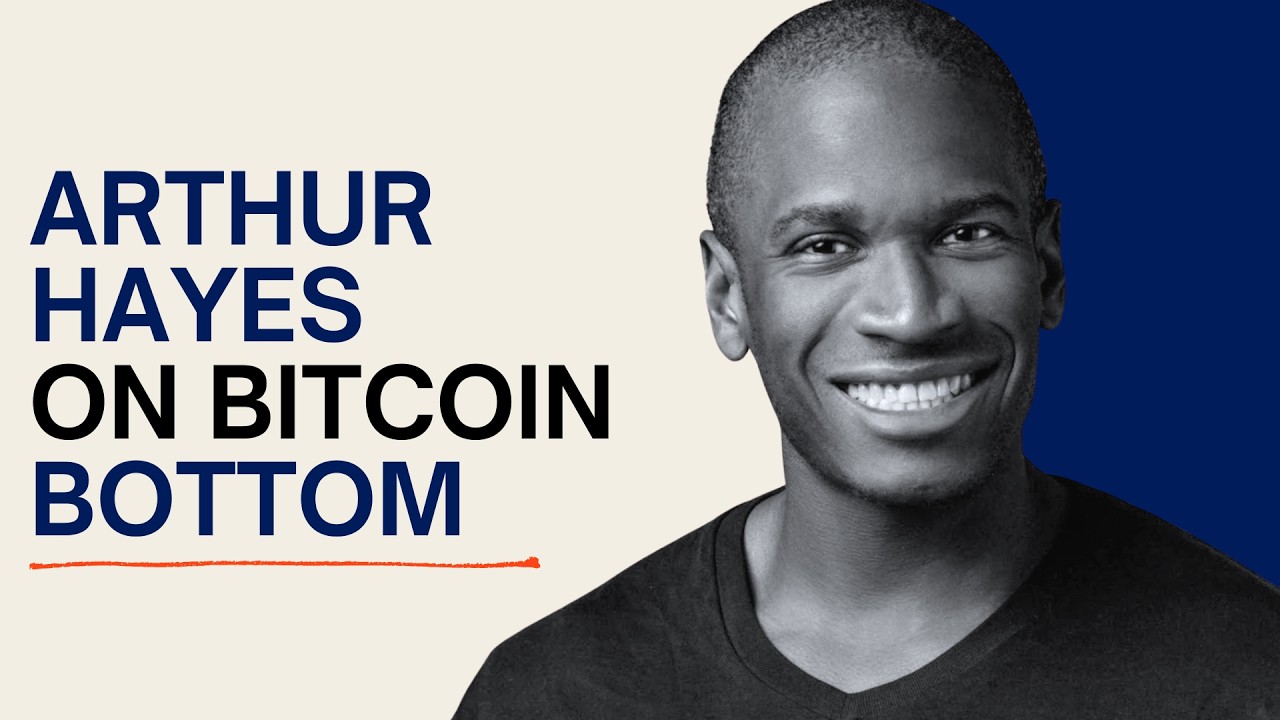 Bitcoin’s Biggest Risk Isn’t Iran, It’s AI: Arthur Hayes2026-04
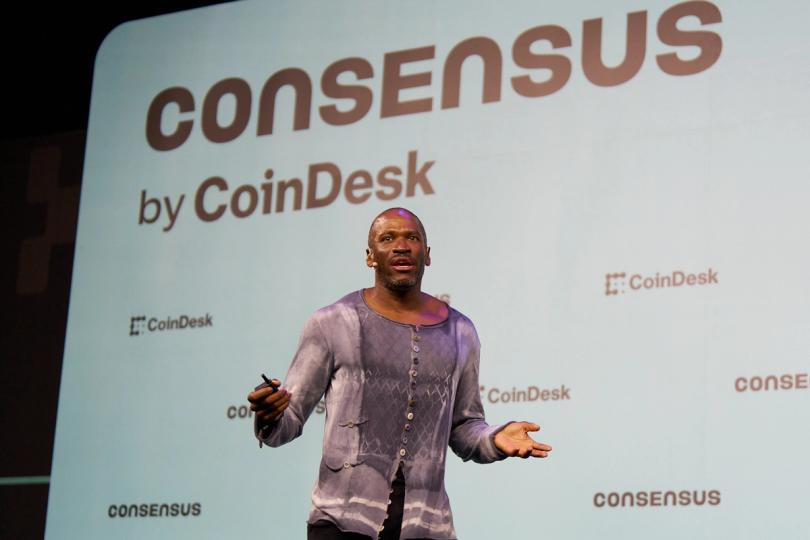 BitMEX co-founder Arthur Hayes dumped his Zcash holdings following disclosure of an Orchard Pool flaw, saying he may revisit the asset if concerns about a potential exploit are disproven2026-06
 Arthur Hayes theorizes the Fed will print money to stabilize Japanese bond markets, expanding its balance sheet and mechanically lifting bitcoin. Crypto traders should await confirmation via the Fed's H.4.1 report before adding risk.2026-01
 This is fine: Arthur Hayes's essay on why BTC is predicting an AI-adoption driven financial crisis which will be solved with printed money.2026-02
 California Governor Gavin Newsom launched a website criticizing Trump’s presidential pardons, naming crypto figures like CZ, Ross Ulbricht, and Arthur Hayes. Democrats say the moves highlight growing ties between Trump and crypto interests.2025-12
 Frowny cloud. This article by Arthur Hayes questioned why Bitcoin struggled in 2025 while assets like gold and the Nasdaq continued to rise. His answer was straightforward: liquidity. Without an expanding supply of dollars, Bitcoin lacks the fuel needed to outperform. Dollar liquidity must expand for that to happen, Hayes said, adding that he expects those conditions to materialize in 2026.2026-01
Arthur Hayes is the co-founder of the BitMEX derivatives exchange and managing partner of the crypto investment firm Maelstrom, known for combining macro-economic analysis with high-conviction, publicly disclosed trades across Bitcoin, altcoins, and emerging technology sectors.
Who Is Arthur Hayes
Born in Buffalo, New York, Hayes built his early career in equity derivatives at Deutsche Bank and Citigroup in Hong Kong before founding BitMEX (Bitcoin Mercantile Exchange) in 2014 alongside Ben Delo and Samuel Reed. The exchange pioneered the perpetual swap contract — a derivative instrument now central to crypto liquidity — and at its peak processed billions of dollars in daily volume.
In 2020, the U.S. Department of Justice charged Hayes, Delo, and Reed with violating the Bank Secrecy Act by failing to implement adequate anti-money-laundering controls at BitMEX. Hayes pleaded guilty in 2022 and was sentenced to two years of probation and a $10 million fine. He was neither imprisoned nor barred from the industry, and his public profile in crypto markets has, if anything, grown larger since.
Today Hayes runs Maelstrom, a family office and venture fund that deploys capital across crypto protocols and early-stage projects. His Substack — "Crypto Trader Digest" — is one of the most widely read macro-meets-crypto publications in the industry, and his on-chain wallet movements are tracked in near-real time by thousands of retail traders.

Arthur Hayes argues AI 'Safety First' narrative masks slowing demand and risks $1 trillion in debt
The Macro Liquidity Framework
Hayes's investment thesis is primarily driven by global dollar liquidity: how much new money is being created, where it is flowing, and which risk assets are best positioned to capture it. He views Bitcoin as the purest expression of an escape valve from fiat debasement, and he sizes most of his portfolio around that conviction — reportedly keeping roughly 90% of his net worth in Bitcoin despite market volatility.
His analytical framework, which he has called a "reality test," watches for shifts in the liquidity tide between asset classes. When dollar liquidity contracts or rotates into competing narratives, he expects altcoins to suffer disproportionately. His recent writing has argued that artificial intelligence spending is absorbing a meaningful share of newly created dollar liquidity that might otherwise flow into crypto. In his assessment, AI infrastructure investment — data centers, chip procurement, model training — has effectively competed with Bitcoin for the same pool of speculative capital, which he believes explains why Bitcoin failed to rally as sharply as past cycles suggested it should.
Readers engage Hayes not as a price caller but as a macro-to-crypto translation layer — the highest-clicked headlines are all about his framework for why fiat stress (Japan, tariffs, Fed balance sheet) mechanically forces money printing and therefore Bitcoin appreciation, making his macro logic the real product, not the price targets.
Bitcoin Price Calls: Revised Downward
Hayes has been consistently bullish on Bitcoin over a multi-year horizon but has recalibrated his short-term targets more than once. After originally calling for a $500,000 peak in the current cycle, he cut that forecast significantly — to a range around $125,000–$126,000 — citing the AI liquidity drain and macro uncertainty including the possibility of a U.S.-Iran military conflict, which he flagged as an underpriced tail risk capable of triggering sudden de-risking across all speculative assets.
He has said he believes Bitcoin bottomed near $60,000 and expects a grind higher as dollar liquidity conditions improve, but he has been explicit that the path is no longer as clean as early-cycle optimism suggested. His revised outlook is less about abandoning Bitcoin and more about acknowledging that macro headwinds — trade policy uncertainty under the Trump administration, AI-driven labor displacement, and tight credit conditions — create a less favorable backdrop for parabolic moves in the near term.
AI as Deflationary Force
One of Hayes's most distinctive positions in 2025–2026 has been his treatment of AI not as a bullish catalyst for crypto but as a deflationary economic threat. Speaking at the Bitcoin 2026 conference, he argued that AI is triggering something analogous to a new subprime crisis: the mass displacement of high-earning knowledge workers by AI systems will devastate traditional software-as-a-service business models and damage consumer spending power among the demographic most likely to own financial assets.
This framing sits in tension with how much of the crypto industry discusses AI — typically as a source of new use cases, token narratives, and cross-sector investment. Hayes's view is more structural: AI destroys high-margin jobs, compresses corporate earnings, and ultimately forces central banks to print more money to compensate, which is where Bitcoin re-enters the thesis as a monetary escape valve. The chain of causation matters to him: deflation first, then fiscal response, then inflation hedge demand for Bitcoin.
He has acknowledged that this macro uncertainty led Maelstrom to make "almost no transactions" in Q1 2026, with only gold and HYPE (Hyperliquid's native token) among the assets he was willing to increase exposure to.
Privacy Bets: NEAR, Zcash, and the Orchard Pool Exit
Hayes has been publicly interested in the privacy narrative in crypto — the idea that as surveillance infrastructure expands globally, demand for genuinely private financial rails will grow. He discussed what he called a "Privacy Renaissance" alongside NEAR Protocol co-founder Illia Polosukhin, and Maelstrom had exposure to both NEAR and Zcash (ZEC) as expressions of that thesis.
His Zcash exit, however, illustrates the discipline — or controversy — in his approach. After disclosure of a flaw in Zcash's Orchard Pool — a privacy-focused shielded transaction protocol — Hayes sold his entire ZEC position, stating publicly that he could no longer verify the integrity of the token supply. His concern was specific: an undetected exploit in a shielded pool could allow counterfeiting of ZEC without any on-chain evidence, making fundamental analysis of the asset impossible. Zcash's price fell more than 50% in the aftermath of his exit. Hayes said he might revisit ZEC if the concerns were definitively disproven.
Similarly, he sold his Worldcoin (WLD) holdings shortly after Maelstrom issued a warning about AI IPO risk, and exited NEAR despite having publicly projected a potential 20x appreciation in NEAR's token price. On-chain investigator ZachXBT publicly questioned how much "exit liquidity" Hayes's public disclosures generated for him at the expense of followers who bought on his recommendations before the sells — a tension that has followed Hayes throughout this cycle.
- 01US money-printing macro thesis
Hayes's argument that Japanese bond stress, US tariffs, and Treasury dynamics all converge on Fed balance sheet expansion — and therefore Bitcoin — gave readers an actionable framework, not just a prediction.
- 02Bitcoin price extremes
Readers tracked both his $1M bull case and his $70K bear flip, treating the spread as a live signal about his conviction and the macro regime.
- 03DeFi portfolio exit signals
His $9.6M GMX sale and post-crash dumps of ETH and ENA were read as informed insider rotation, not just personal finance.
- 04AI adopting Bitcoin as currency
His thesis that autonomous AI agents will denominate economic activity in Bitcoin introduced a novel demand vector that readers hadn't seen framed that way before.
- 05Stablecoins as dollarization weapon
His essay exposing the geopolitical quid pro quo behind USD stablecoin dominance reframed a seemingly benign product as a sovereignty trade-off.
- 06Censorship and platform independence
Medium removing his essay made the content itself a story, driving clicks as readers sought the banned material on Substack.
HYPE: A Case Study in Public Portfolio Management
Hyperliquid's native token HYPE has been Hayes's most closely watched trade of the current cycle. He publicly called for HYPE to reach $150 by August, citing the protocol's revenue model and the fact that, unlike most crypto projects, Hyperliquid returns economic value to token holders — a principle Hayes has repeatedly said most protocols fail to honor.
His actual trading record around HYPE has been more complicated. On-chain data shows a wallet linked to Hayes deposited approximately 115,000 HYPE (worth around $6.3 million) into a protocol at roughly $54.81, then withdrew a smaller amount at $62.69 — a pattern some observers described as selling low and buying back high after the price had recovered. Earlier in the cycle he had reportedly sold HYPE above $72 before re-entering with a $2.09 million buy at lower prices.
The HYPE episode reflects a broader challenge with Hayes's public profile: his disclosed trades move markets because of his audience, which means the gap between his stated thesis and his actual execution creates friction. When he sold WLD and ZEC, prices fell sharply — giving him better prices on any repurchase but inflicting losses on those who followed his initial bullish commentary.
Token Economics: Why Most Altcoins Fail
In a May 2026 appearance on the What Bitcoin Did podcast, Hayes offered a clear statement of why he thinks most altcoin projects eventually fail: they capture economic value at the protocol level but do not return it to token holders. Instead, revenue accrues to foundations, early venture capital backers, or is recycled into ecosystem grants that benefit insiders. The token, in this reading, is a marketing instrument rather than an equity-like claim on the project's cash flows.
Hayes has argued that 99% of altcoins will eventually go to zero, but that the survivors — projects that genuinely distribute protocol revenue to holders and build durable network effects — will massively outperform. His investment criteria at Maelstrom appear to filter heavily for this: he has been publicly critical of the VC funding model in crypto, in which early investors receive tokens at steep discounts to retail, then have structured incentives to exit into public market demand regardless of protocol health.
Regulatory Views: Against the CLARITY Act
Hayes's legal history has not made him pro-regulation. In a May 2026 interview, he argued that Trump should veto the CLARITY Act — the U.S. legislation aimed at creating a clearer regulatory framework for digital assets. His argument was characteristically blunt: if Bitcoin and crypto require regulatory legitimacy to survive, they are "not worth a penny." He contends that the value proposition of decentralized money is its resistance to state control, and that welcoming regulatory frameworks invites incumbents — specifically, banks — to capture the industry.
This puts him at odds with much of the institutional crypto lobby, which has spent years seeking regulatory clarity as a precondition for broader adoption. Hayes's counterargument is that clarity benefits the intermediaries more than the protocols, and that Bitcoin's value is inversely related to how comfortable governments are with its existence.
- 2014-01launch
Co-founds BitMEX
- 2020-10regulatory
CFTC and DOJ charge BitMEX and Hayes with AML violations
- 2020-10governance
Hayes steps down as BitMEX CEO
- 2022-04regulatory
Hayes surrenders to US authorities in Hawaii
- 2022-05regulatory
Pleads guilty to Bank Secrecy Act violation; sentenced to probation and fine
- 2023-01milestone
Launches Maelstrom family office; begins active DeFi investing and public essay cadence
- 2024-06milestone
Medium censors essay; Hayes migrates publishing to Substack
- 2025-01milestone
Sells $9.6M of GMX citing point-system protocols eating market share
Controversy and On-Chain Accountability
The ZachXBT criticism following Hayes's WLD exit crystallized a recurring debate about his role in the market. Hayes is careful to disclose positions when he sells — a practice more transparent than many influencers — but critics argue that the sequence of public promotion followed by on-chain exit is structurally problematic regardless of disclosure timing. When an account with Hayes's reach publishes a bullish thesis, retail buyers move. When he then sells, they absorb the selling pressure.
Hayes has not responded substantively to these criticisms in public forums. The question of whether disclosed exits constitute appropriate conduct — or whether the promotion-then-exit pattern is a form of market manipulation even with disclosure — remains unresolved and is likely to become more relevant as regulators in the U.S. and Europe examine crypto influencer conduct.
Outlook
Hayes's near-term framework centers on whether dollar liquidity conditions improve enough to reignite Bitcoin's move toward his revised $125,000–$126,000 target. He has flagged geopolitical risk — particularly Iran — and AI-driven economic disruption as the two variables most likely to delay that move or force further position reductions. His long-term bet remains structural: fiat debasement is inevitable, Bitcoin is the clearest beneficiary, and the current cycle's choppiness is noise against a multi-decade monetary transition.
His influence on altcoin price discovery — through both his writing and his on-chain footprint — shows no sign of diminishing. Whether that influence is ultimately beneficial to retail participants is a separate question that the market continues to answer trade by trade.
Latest Arthur Hayes news
Community notes
Spot something off or out of date? Drop a note. Editors review topic notes daily and roll accepted fixes into the explainer — contributors are recognized in the monthly $SQUID drop.
Loading notes…
Help improve this topic
Have a story or tip about this topic? Submit it. See something missing? Leave a note. Editors review daily; accepted submissions and fixes count toward the monthly $SQUID drop.