
Macro forces—inflation, interest rates, liquidity cycles, and geopolitical shocks—drive crypto price action at every time frame. This explainer maps how Bitcoin, Ethereum, and stablecoins respond to the global macro environment.
+14 sources across the wider coverage universe
 Bitcoin sheds 24% in Q1, posting worst first-quarter return since 2018 as macro headwinds mount2026-04
 Crypto IPO activity has stalled as investor capital shifts to AI while macro uncertainty and tighter funding conditions delay public listings2026-07
 Crypto bulls suffered $563M in liquidations as macro fears triggered sharp sell-offs across bitcoin and ether, wiping out leveraged rally bets2026-05
 Fundstrat’s Tom Lee says surging oil prices are Ethereum’s biggest macro headwind, with ETH facing record inverse correlation against crude markets2026-05
 BIS Bulletin 125 shows CEX pay stablecoin holders using reserve returns or market income, with reserve-based yields tracking policy rates while activity-based yields are volatile, potentially shaping future macro-financial implications as stablecoins become bank deposit substitutes or funding for exchanges' risky activities.2026-06
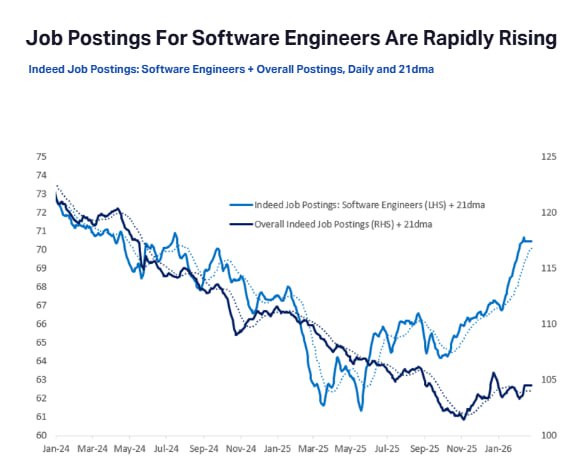 Citadel Securities published a rebuttal to the Citrini7 piece, arguing in “The 2026 Global Intelligence Crisis” that fears of imminent mass AI-driven job loss and macro collapse are overstated given current adoption, labor, and investment data.2026-02
"Macro" — shorthand for macroeconomic conditions — refers to the broad set of monetary policy decisions, inflation data, liquidity cycles, and geopolitical forces that shape the price of risk assets globally, including cryptocurrencies.
Global financial conditions long predate digital assets, but crypto markets have become increasingly entangled with them. Understanding the macro environment is no longer optional for anyone holding Bitcoin, Ethereum, or stablecoins. Price action that looks random on a five-minute chart often makes complete sense when placed against a backdrop of central bank policy, inflation prints, and cross-asset capital flows. This explainer maps the relationship between macroeconomics and crypto, defines the terms traders use, and explains why these forces matter more than ever as digital assets mature into a recognized asset class.
What "Macro" Means in a Crypto Context
In traditional finance, "macro" describes economy-wide variables: interest rates set by central banks, inflation measured by indexes like the U.S. Consumer Price Index (CPI), gross domestic product (GDP) growth, unemployment, and currency valuations. When investors talk about macro conditions being "risk-on," they mean confidence is high and capital flows toward higher-yielding, higher-risk assets — equities, commodities, and increasingly crypto. "Risk-off" describes the reverse: fear dominates, capital retreats to cash, Treasuries, and gold.
Crypto has been absorbed into the risk-on/risk-off framework largely because institutional investors — who manage the largest pools of capital — treat it that way. A hedge fund running a global macro strategy does not compartmentalize Bitcoin from Nasdaq futures; it sizes them together against the same interest-rate outlook.

Bitcoin sheds 24% in Q1, posting worst first-quarter return since 2018 as macro headwinds mount

😬😬Q1 hasn't really been so good all round. But, we keep fighting 💪🏾
Key Macro Indicators That Move Crypto
Consumer Price Index (CPI): The single most market-moving data release for crypto in recent cycles. When the U.S. CPI print exceeds expectations, it signals persistent inflation, which forces the Federal Reserve to keep interest rates elevated. Higher rates increase the opportunity cost of holding non-yielding assets and drain liquidity from speculative markets. Conversely, a softer-than-expected CPI opens the door for rate cuts, loosening financial conditions. In May 2026, U.S. CPI came in hotter than expected — 3.8% YoY against a 3.7% estimate, with core CPI month-over-month at 0.4% versus a 0.2% forecast — triggering immediate pressure on crypto prices. Analysts at BlackRock warned that a subsequent June print forecast at 4.2% YoY, potentially the highest since April 2023, could reflect an energy shock feeding into already-sticky inflation.
Federal Reserve and ECB Rate Decisions: Central bank policy meetings set the rate environment for months at a time. Alongside U.S. Federal Reserve meetings, the European Central Bank (ECB) has become a relevant data point. When the ECB moved its rate from 2.00% to an expected 2.25% in June 2026, it signaled continued European tightening — a drag on global liquidity conditions.
Global Liquidity (M2): Central banks expanding their balance sheets injects money into the financial system. Historically, periods of rapid M2 growth correlate with Bitcoin bull runs as surplus capital searches for returns. When liquidity contracts — through quantitative tightening or rate hikes — Bitcoin and altcoins tend to correct.
Bond Markets and Fixed-Income Flows: Rising yields on government bonds compete directly with crypto for investor capital. When 10-year Treasury yields spike, institutional allocators often reduce risk exposure. Crypto traders watch "fixed-income outflows" as a potential support signal for Bitcoin — money leaving bonds doesn't always go to equities; some finds its way into digital assets.
Geopolitical Events: Wars, sanctions, and supply shocks feed into inflation expectations and risk appetite simultaneously. The U.S.-Iran energy shock in 2026 illustrated this: rising crude oil prices translated into inflation pressure, which in turn created a headwind for Ethereum specifically. Fundstrat's Tom Lee noted that ETH was showing record inverse correlation against crude markets during this period — a reminder that macro channels are not always intuitive.
Leviathan readers treat macro not as background context but as the primary trading signal — they click hardest when a named analyst translates a specific macro variable (USDJPY, Fed timing, oil prices, liquidity cycles) directly into a Bitcoin price call, revealing that the audience wants actionable macro-to-crypto translation, not general market commentary.
Bitcoin as the Macro Bellwether
Bitcoin occupies a unique position: it behaves simultaneously as a speculative risk asset and, to a growing minority of institutional holders, as a macro hedge similar to gold. In practice, its behavior shifts depending on the prevailing narrative and market phase.
During 2025–2026, Bitcoin remained heavily macro-driven even as altcoins began showing idiosyncratic price behavior. BTC's correlation with the Nasdaq and S&P 500 remained elevated during stress events — when macro fears triggered sharp sell-offs, $563 million in crypto liquidations swept through the market, with Bitcoin and Ether absorbing the bulk of forced selling.
Halving cycles add a second layer of macro analysis unique to Bitcoin. Roughly every four years, the block reward paid to miners is cut in half, reducing new supply issuance. These events have historically preceded major bull runs, though the timing and magnitude depend heavily on where the halving lands in the macroeconomic cycle. A halving coinciding with restrictive monetary policy faces a meaningful headwind that a halving in an easy-money environment does not. Coinbase executives have publicly flagged this intersection — halving cycles and macro headwinds raise distinct analytical challenges for bottom-calling.
One widely-circulated 2026 analysis suggested Bitcoin could find a Q3 macro bottom near $50,000, citing a liquidity grab cycle that would precede fresh institutional accumulation. Whether or not any specific price target proves accurate, the analytical framework — grounding a BTC bottom call in liquidity cycle analysis rather than purely technical chart patterns — illustrates how macro thinking has been absorbed into crypto investment practice.
Crypto IPO activity has stalled as investor capital shifts to AI while macro uncertainty and tighter funding conditions delay public listings
Ethereum and Macro Sensitivity
Ethereum's relationship with macro conditions is more complex than Bitcoin's. As a programmable blockchain that underpins DeFi protocols, NFT markets, stablecoin settlement, and Layer 2 rollups, ETH's price is influenced both by broad macro conditions and by its own ecosystem dynamics.
During the 2026 cycle, Ethereum fell below $1,800 following cascading liquidations tied to macro capital rotations. Elevated borrowing costs constrain the DeFi yield environment, reducing the economic appeal of holding ETH as productive collateral. Meanwhile, high-beta behavior — ETH tends to amplify Bitcoin's moves, both up and down — makes it particularly sensitive to macro inflection points.
Institutional research during this period flagged Ethereum as "high-beta rocket fuel" ahead of macro data releases, meaning large traders expected it to outperform if data came in favorable. That framing captures the dual nature of ETH's macro relationship: it can be both more punished in risk-off conditions and more rewarded in risk-on rotations.
The broader sector rotation dynamic also matters. During periods of macro uncertainty, capital often consolidates into Bitcoin — perceived as the lower-risk crypto — and flows back into Ethereum and altcoins once macro clouds begin to clear. This pattern of "dispersion," where BTC holds while altcoins diverge, has become a standard diagnostic tool for macro-aware crypto investors.
- 01Arthur Hayes macro thesis
Hayes repeatedly anchored Bitcoin price calls to specific macro variables like USDJPY and treasury trends, giving readers a named, high-conviction framework to follow or challenge.
- 02Bitcoin as liquidity proxy
Multiple analysts framing Bitcoin's returns as driven by global liquidity cycles rather than internal crypto catalysts resonated with readers seeking a macro explanation for prolonged underperformance.
- 03Fed rate path and crypto
The direct link between Fed rate decisions, stablecoin revenue models like Circle's, and risk-asset appetite gave readers a concrete transmission mechanism between TradFi policy and crypto prices.
- 04Geopolitical oil shock risk
The Hormuz crisis breakdown and Iran war oil spike forcing a Fed hold connected energy market disruption directly to crypto risk-off scenarios that readers found immediately actionable.
- 05Private credit fund gating
BlackRock, Blackstone, and Blue Owl freezing redemptions signaled systemic TradFi stress that readers interpreted as a leading indicator for broader risk asset contagion.
- 06Asian capital flows reversing
The questioning of $7.5 trillion in Asian investment in American assets touched on dollar reserve status and capital reallocation narratives that underpin Bitcoin's macro hedge thesis.
Stablecoins as a Macro Bridge
Stablecoins sit at an unusual intersection of crypto and macro finance. Pegged to fiat currencies — predominantly the U.S. dollar — they serve as the settlement rail and risk-off haven within crypto markets. When traders want to reduce exposure without exiting crypto infrastructure entirely, they convert to stablecoins.
The macro implications extend further, however. A 2025 Bank for International Settlements (BIS) Bulletin No. 125 examined how centralized exchange operators pay stablecoin holders using either reserve income or market-making activity revenue. Reserve-based yields track policy rates directly, meaning that as the Federal Reserve raises rates, the income generated by stablecoin reserves rises in parallel — creating a yield product that competes structurally with bank deposits.
The BIS analysis flagged two potential systemic implications: stablecoins could increasingly substitute for traditional bank deposits, affecting monetary policy transmission, or the income from reserves could fund exchanges' higher-risk activities, creating a feedback loop between macro policy and crypto market liquidity. Neither outcome is inevitable, but both illustrate why regulators and central bankers increasingly treat stablecoins as a macro-relevant variable, not a niche instrument.
Legislative clarity — including the U.S. GENIUS Act and the CLARITY Act that advanced through Senate debate in June 2026 — has begun to formalize stablecoins' position within the broader financial system, which will only deepen their macro entanglement.
Crypto bulls suffered $563M in liquidations as macro fears triggered sharp sell-offs across bitcoin and ether, wiping out leveraged rally bets
Institutional Capital and Macro Rotation
The entry of institutional capital has mechanically strengthened the link between crypto and macro. Spot Bitcoin ETFs approved in the U.S. in early 2024 created a direct channel between traditional finance and BTC prices. Inflows and outflows from these products now register as measurable macro signals: a $649 million single-session outflow from spot ETFs early in one 2026 trading week ranked as the third-largest single session on record and directly preceded BTC drifting lower.
Coinbase Derivatives launching futures for Binance Coin (BNB) and Hyperliquid (HYPE) in mid-2026 reflects the same institutionalization trend — regulated derivatives allow macro traders to express views on crypto sector rotation using familiar instruments, within a regulated framework.
Capital does not move from macro to crypto in a uniform wave. The "dispersion dominates" framework describes what actually happens: BTC remains macro-correlated while individual altcoins reprice based on idiosyncratic factors — security incidents, tokenomics changes, protocol revenue, and ecosystem development. Analysts tracking this divergence note that it signals a maturation of crypto markets rather than a decoupling from macro.
Tokenized real-world assets (RWAs) represent the next frontier of macro integration. Platforms bringing billions in tokenized equities and fixed-income instruments onto Ethereum create on-chain instruments directly responsive to interest rates, credit conditions, and economic cycles. As RWA volumes on Ethereum grow, the blockchain's own activity metrics become partially a function of traditional macro conditions.
- 2025-12milestone
Pantera Capital flags extreme altcoin dispersion vs Bitcoin in 2025
- 2026-01launch
World Liberty Financial unveils Macro Strategy token reserve
- 2026-01milestone
Arthur Hayes publishes 'The Easy Button' on USDJPY as key macro variable
- 2026-03milestone
Bitcoin posts worst Q1 return since 2018, down 24%
- 2026-03milestone
Arthur Hayes turns bearish, targets $70K Bitcoin on macro risks
- 2026-05regulatory
BlackRock gates $26B private credit fund at 9.3% redemptions
- 2026-06milestone
Hormuz crisis erupts: EU diesel +50%, $200 oil scenario priced in
- 2026-06launch
Circle S-1 filed; IPO proceeds amid stablecoin competitive threat from corporate America
Navigating Macro Volatility
For active crypto participants, macro events define the highest-risk windows in the trading calendar. CPI releases, Fed meeting outcomes, and geopolitical developments tend to spike volatility across both equities and crypto simultaneously, and crypto's 24/7 market structure means positions can be hit at hours when traditional market risk management is offline.
Practical considerations for macro-aware crypto trading include:
- Position sizing before data releases: Major macro prints (CPI, PCE, non-farm payrolls) historically cause outsized moves in leveraged crypto positions. Reducing leverage exposure before scheduled releases limits the damage from unexpected outcomes.
- Monitoring order book depth: Deep liquidity absorbs macro-driven price spikes without triggering cascading stop-losses. Thin order books during off-hours amplify moves when macro news breaks unexpectedly.
- Cross-asset signals: Bitcoin's behavior relative to gold and the U.S. dollar index (DXY) often signals which narrative is dominant — macro flight-to-safety or crypto-specific selling.
- Stablecoin yield environment: When risk-free yields on stablecoin deposits rise alongside policy rates, the opportunity cost of holding volatile assets increases. This is a background variable that compounds macro headwinds.
Outlook
The integration between macroeconomics and crypto markets is deepening, not fading. As spot ETFs, institutional derivatives, regulated stablecoins, and tokenized real-world assets extend crypto's connections to traditional financial plumbing, the asset class will increasingly move with — and sometimes against — global liquidity cycles in predictable ways.
What remains unsettled is whether Bitcoin will solidify its gold-like macro hedge narrative or remain primarily a high-beta risk asset. Ethereum's macro sensitivity will likely evolve as its role in tokenizing traditional finance grows. And stablecoins, as the BIS research signals, are on a trajectory toward genuine macro-financial relevance — subject to the same regulatory and monetary policy scrutiny as any significant component of the money supply.
For anyone operating in crypto markets, understanding macro is no longer a secondary consideration. It is the water the entire ecosystem swims in.
Latest Macro news
Bitcoin sheds 24% in Q1, posting worst first-quarter return since 2018 as macro headwinds mountCrypto IPO activity has stalled as investor capital shifts to AI while macro uncertainty and tighter funding conditions delay public listingsCrypto bulls suffered $563M in liquidations as macro fears triggered sharp sell-offs across bitcoin and ether, wiping out leveraged rally betsFundstrat’s Tom Lee says surging oil prices are Ethereum’s biggest macro headwind, with ETH facing record inverse correlation against crude marketsBIS Bulletin 125 shows CEX pay stablecoin holders using reserve returns or market income, with reserve-based yields tracking policy rates while activity-based yields are volatile, potentially shaping future macro-financial implications as stablecoins become bank deposit substitutes or funding for exchanges' risky activities.Citadel Securities published a rebuttal to the Citrini7 piece, arguing in “The 2026 Global Intelligence Crisis” that fears of imminent mass AI-driven job loss and macro collapse are overstated given current adoption, labor, and investment data.Community notes
Spot something off or out of date? Drop a note. Editors review topic notes daily and roll accepted fixes into the explainer — contributors are recognized in the monthly $SQUID drop.
Loading notes…
Help improve this topic
Have a story or tip about this topic? Submit it. See something missing? Leave a note. Editors review daily; accepted submissions and fixes count toward the monthly $SQUID drop.