
Gold as a monetary asset, safe-haven benchmark, and on-chain token — covering tokenized gold, the Bitcoin comparison, DeFi integration, Tether's aUSDT shutdown, and what 25x gold leverage on crypto platforms signals about converging markets.
+47 sources across the wider coverage universe
 Coinbase and MarketVector launch volatility-weighted Bitcoin-gold index, backtested at 31% CAGR since 20162026-04
 Bitwise CIO: Bitcoin's addressable market could surpass gold's $34T as Iran conflict cements its dual currency role2026-04
 Tezos backs Metals platform bringing gold, uranium, and rare earth assets onchain, enabling investors to access critical materials driving AI and industrial growth2026-04
 ITCEN Global-backed KorDA launches $KGLD as one of Asia's first tokenized gold assets on LayerZero2026-04
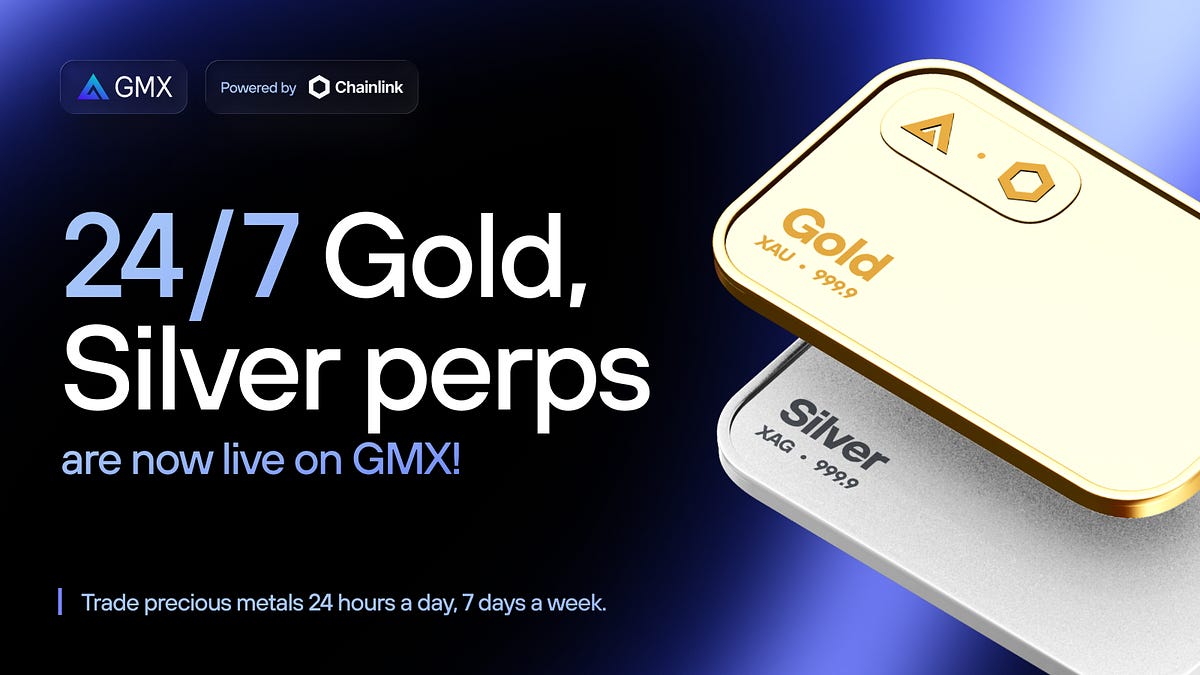 GMX launches 24/7 gold and silver perps with up to 100x leverage, powered by Chainlink2026-04
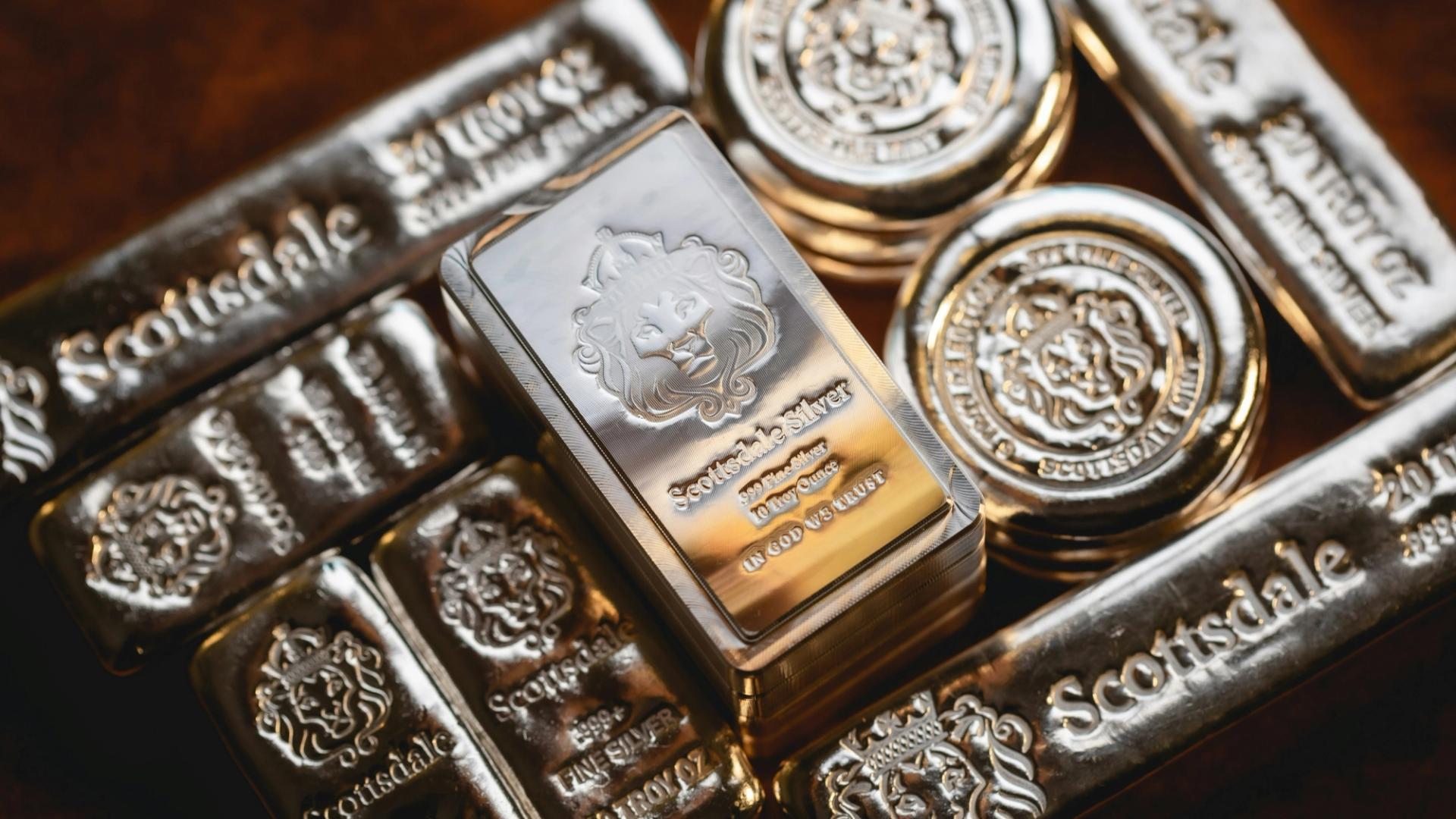 Binance launches USDT-settled gold and silver options as metals perps each top $7B in peak daily volume2026-07
Gold is a monetary metal with roughly 5,000 years of recorded use as a store of value, now experiencing a second digital life as on-chain tokens, futures collateral, and a benchmark against which Bitcoin's own safe-haven credentials are constantly measured.
What Makes Gold a Monetary Asset
Gold's monetary properties are physical: it is scarce, chemically inert, divisible, and globally recognizable. Unlike fiat currencies, no central bank can print more of it. Unlike most commodities, its industrial consumption is a small fraction of total demand — the majority of above-ground gold (~210,000 tonnes as of 2024, per the World Gold Council) is held as jewelry, investment bars, or central-bank reserves.
That baseline scarcity is why economists from different traditions keep returning to it. Central banks added over 1,000 tonnes of gold to reserves in both 2022 and 2023, the highest two-year run since the collapse of Bretton Woods. Emerging-market central banks — China, Poland, India, Turkey — have been the dominant buyers, partly as a hedge against US dollar settlement risk.

Paxos launches PAXGy, bringing tokenized gold lending onchain via OKX, Uniswap, X Layer, 0x and ether.fi

Gold's Price Cycle and the Rate-Cut Calculus
Gold is priced in dollars, so its purchasing power moves inversely to real (inflation-adjusted) US interest rates. When real rates are negative or falling, the opportunity cost of holding a zero-yield asset disappears, and gold rallies. When rates rise, gold typically sells off.
This relationship drove gold to an all-time nominal high above $3,500/oz in early 2026 as markets priced in Federal Reserve cuts. The subsequent repricing has been sharp: Goldman Sachs recently cut its year-end gold price target by $500 after reassessing the pace of rate reductions. Gold and silver have since erased all of their year-to-date gains, falling from a peak near $5,600 to the $4,100–$4,200 range according to TradingView data — a reminder that even a structurally bullish asset can suffer painful drawdowns when the macro narrative shifts.
For crypto traders accustomed to 24/7 markets and leverage, gold's sensitivity to Fed language is one of its most important behavioral traits. A single FOMC statement or CPI print can move the metal several percent overnight — the same catalysts that move Bitcoin.
Readers aren't clicking gold-in-crypto stories for the metal itself — they're clicking because gold is the collateral layer underpinning a new class of yield-bearing stablecoins, and they want to know whether that collateral is real, solvent, and redeemable before allocating.
Gold vs. Bitcoin: The Safe-Haven Competition
The comparison between gold and Bitcoin has become a fixture of financial commentary, and the debate has matured past simple analogies. Both are scarce, both are outside any single government's balance sheet, and both attract capital during episodes of geopolitical or monetary stress. But they behave differently.
Gold's volatility is typically 15–20% annualized. Bitcoin's volatility regularly exceeds 60–80%. That alone disqualifies Bitcoin as a reserve asset for most institutional and sovereign actors, even as it makes BTC more attractive to traders seeking asymmetric return profiles. Prominent Bitcoin advocates — including Mexican billionaire Ricardo Salinas, who has publicly described fiat as "a fraud" and recounted discovering Bitcoin in 2013 — argue Bitcoin simply does gold better by being more portable, auditable, and seizure-resistant. Gold's counterargument is 5,000 years of precedent and the physical irreducibility of the metal.
In practice, the two assets have increasingly traded together during risk-off episodes (elevated geopolitical tension, banking stress, dollar weakness) and sold off together during genuine liquidity crunches. The "new safe-haven playbook," as several analysts have framed it, involves holding a basket rather than making a binary choice — with gold providing stability and Bitcoin providing convexity.
When Jim Cramer called both BTC and gold "bad money" in contrast to equities like Nvidia and Apple, the contrarian signal was not lost on crypto Twitter. Historically, dismissals of gold by equity bulls have tended to precede periods of outperformance.
Tokenized Gold: Bringing Bullion On-Chain
The most direct intersection of gold and crypto is tokenized gold — digital tokens where each unit is redeemable for, or backed 1:1 by, a specific quantity of physical metal held in an audited vault.
The two largest by market cap are Tether Gold (XAUT) and PAX Gold (PAXG). XAUT is issued by Tether, the same entity behind the USDT stablecoin; each XAUT represents one fine troy ounce of gold on a London Good Delivery bar. Collectively, tokenized gold instruments have been approaching 17% of the broader tokenized commodities market — meaningful but still a fraction of the $13 trillion+ total gold market.
Recent months have seen tokenized gold infrastructure expand rapidly:
- DBS Bank in Singapore announced retail customers can now hold DBS-issued gold tokens backed 1:1 by physical gold stored in Singapore vaults — a significant step given DBS is one of Asia's largest banks and brings regulatory credibility to the product category.
- Matrixdock's XAUm has launched on AnomaPay, enabling privacy-preserving tokenized gold payments. The pitch is that users can transfer gold-backed value the way they would send a stablecoin, without the counterparty needing to handle physical metal.
- Lista's $slisXAUE is positioning itself as a yield-bearing gold token, accepting XAUt deposits and targeting gold-denominated APY through Xaue Protocol strategies — an attempt to solve gold's zero-yield problem within DeFi.
- Ledn, a crypto lending firm, has added Tether Gold (XAUT) as accepted collateral for USDT and USD-pegged loans. Borrowers can pledge tokenized gold and receive dollar-denominated liquidity without selling their metal.
- Xaue has pushed further into consumer spending with tokenized gold gift cards, raising pointed questions from regulators about whether everyday commerce in gold-backed tokens requires a different compliance framework than stablecoin spending.
The common thread across these launches is that tokenized gold is graduating from a niche DeFi experiment into an infrastructure layer for savings, lending, and payments — particularly in markets where currency risk is elevated.
- 01Gold-backed stablecoin race
Multiple competing gold-backed stablecoins (pmUSD, aUSD₮, XAU1, thUSD) launched in close succession, forcing readers to evaluate which issuer's custody and solvency claims held up.
- 02Tether gold reserve depth
Tether's self-custody gold vault, $6.8B equity buffer solvency math, and abandoned HSBC hires raised concrete questions about whether XAU₮ backing is as robust as claimed.
- 03Gold vs Bitcoin macro divergence
Gold outperforming Bitcoin by ~40% in a single year while ETF flows crossed in opposite directions made readers reassess the 'digital gold' narrative they'd accepted for years.
- 04Tokenized gold yield strategies
Looping gold as USDC collateral for 22% APR and Bybit's 11-12% APR XAUT savings products showed readers a concrete new income stream they could act on.
- 05Macro reserve rotation signal
China dumping Treasuries for record gold tonnage and the dollar falling on Powell ouster talk framed gold accumulation as a sovereign-level bet readers wanted to front-run.
- 06RWA tokenization legitimacy
HSBC's bank-backed gold token, RAAC's Financial Times pickup, and Bhutan's sovereign gold token on Solana collectively tested whether institutional tokenized gold could escape the 'crypto gimmick' label.
The aUSDT Shutdown: A Lesson in Product-Market Fit
Not every gold-backed crypto product has found traction. Tether recently shut down Alloy (aUSDT), its gold-backed derivative stablecoin, citing weak adoption. The product had attempted to combine gold's store-of-value properties with a dollar-pegged unit of account — a synthetic that was overcollateralized by XAUT. Tether is redirecting those engineering resources toward XAUT directly and higher-growth product lines.
The failure is instructive. Crypto users who want gold exposure generally prefer a token that actually tracks gold's price, not one that synthesizes dollar stability from gold reserves. The demand is for gold-denominated savings, not for another dollar stablecoin with a novel collateral stack. Tether's pivot acknowledges that XAUT has a clearer use case: hold gold digitally, use it as collateral, send it internationally.
ARU goes public with a token backed by allocated physical metals, including gold, silver, copper and platinum-group metals, held in Swiss custody, issued on Arbitrum and redeemable in kind

Gold in Crypto Trading Infrastructure
Beyond tokenized ownership, gold is increasingly embedded in the trading infrastructure that crypto natives already use:
- Coinbase has opened US-regulated gold and silver futures to 24/7 trading — extending the always-on market model that crypto traders expect into traditional commodity markets. Oil contracts are expected next.
- OKX has expanded its perpetuals offering in Europe to include gold and oil futures alongside the Magnificent 7 tech stocks, blurring the line between crypto exchange and multi-asset derivatives venue.
- Tria (via DecibelTrade) has raised gold leverage limits to 25x on its platform, alongside raised limits on NVDA and major crypto pairs — signaling that gold is now treated as a peer asset class in the same risk framework as crypto and equities.
- Hyperliquid has attracted gold speculation from prominent on-chain traders: James Wynn, known for large leveraged crypto positions, opened a 25x long on gold at $43K notional — his first gold trade on the platform.
The convergence of gold and crypto markets on shared infrastructure is accelerating because crypto exchanges have already solved 24/7 liquidity, permissionless access, and global settlement. Gold's traditional trading hours and settlement friction look increasingly archaic by comparison.
Geopolitical Dimensions: Iran, Sanctions, and Hard Assets
Gold has always functioned as a sanctions-resistant asset, and that property is more relevant today than at any point since the Cold War. Countries under financial sanctions — Iran being the clearest current example — cannot easily access dollar-denominated systems but can hold, transact, and export gold. Tokenized gold on public blockchains raises a question regulators have not yet answered: does a KYC'd gold token issued in Singapore become subject to sanctions screening the moment it touches a sanctioned wallet address?
The same logic applies to Bitcoin. Both assets are watched closely as potential channels for sanctions circumvention, and the two sometimes trade in tandem when geopolitical risk spikes. Understanding gold's role in the global financial system means understanding that its value is partly derived from its independence from any single government's permission structure — a property it shares with BTC, though the mechanisms differ entirely.
- 2024-06launch
Tether launches Alloy (aUSD₮) over-collateralized by XAU₮
- 2024-07launch
HSBC launches Gold Token for retail investors in Hong Kong
- 2024-12launch
RAAC launches gold-backed pmUSD stablecoin via Apebond bond sale
- 2025-01milestone
Gold collateral USDC looping strategy generates ~22% APR amid Bitcoin drop
- 2025-03milestone
Bybit launches Tether Gold futures and options; tokenized gold market tops $6B
- 2025-03milestone
Gold ETFs shed $2.9B while Bitcoin ETFs gain $1.3B in same month
- 2025-04milestone
Gold hits all-time high on Powell ouster talk and Treasury selloff
- 2025-04milestone
Tether reveals self-operated Swiss gold vault holding ~$8B in physical gold
Risks and Structural Criticisms
Gold is not without critics from within the crypto community. The zero-yield critique is genuine: an asset that produces no cash flow must be valued entirely on the belief that future buyers will pay more — the same criticism leveled at Bitcoin. For long-duration holders this is manageable, but for institutional treasurers comparing gold to TIPS or high-grade bonds, the carrying cost matters.
Storage and insurance add cost. Tokenized gold addresses portability but introduces custodian risk — the holder must trust that the vault operator actually holds the metal, that audits are accurate, and that redemption will be honored under stress. The gold-to-token peg has never been tested in a systemic liquidity crisis of the kind that could pressure custodians simultaneously.
Leverage trading in gold, now available at 25x on multiple crypto-adjacent platforms, amplifies these risks. Gold's reputation as a stable store of value is built on un-leveraged long-term holding; a 4% intraday move at 25x leverage wipes the position.
Outlook
Gold's structural case — central bank demand, geopolitical hedging, dollar diversification — remains intact even after the 2026 drawdown. The more interesting development for crypto audiences is the maturation of tokenized gold infrastructure: regulated retail access via banks like DBS, DeFi-native yield strategies, and integration as collateral in crypto lending. The competition with Bitcoin for safe-haven flows will continue, with neither asset "winning" — sophisticated portfolios are likely to hold both, for different reasons. The failure of gold-backed derivative stablecoins like aUSDT, however, suggests that trying to paper over gold's price volatility with synthetic dollar pegs does not resonate with users who would rather just own the underlying.
Latest Gold news
Community notes
Spot something off or out of date? Drop a note. Editors review topic notes daily and roll accepted fixes into the explainer — contributors are recognized in the monthly $SQUID drop.
Loading notes…
Help improve this topic
Have a story or tip about this topic? Submit it. See something missing? Leave a note. Editors review daily; accepted submissions and fixes count toward the monthly $SQUID drop.