
Deep dive explainer on RAAC’s gold- and real-estate-backed DeFi stack, covering pmUSD’s IONau collateral, RWf(x) mechanics, Curve and Frax integrations, RAACLend and iREET, community tools like RAAC Bots and Squid Pass, and the key risks and outlook for this RWA-first protocol.
 RAAC opens $1.135M bond for tokenized real estate token $IREET, with 45-day lockup timed to RAACLend debut2026-04
 Leviathan Atlas is now charting RAAC, from gold-backed pmUSD to tokenized real estate2026-08
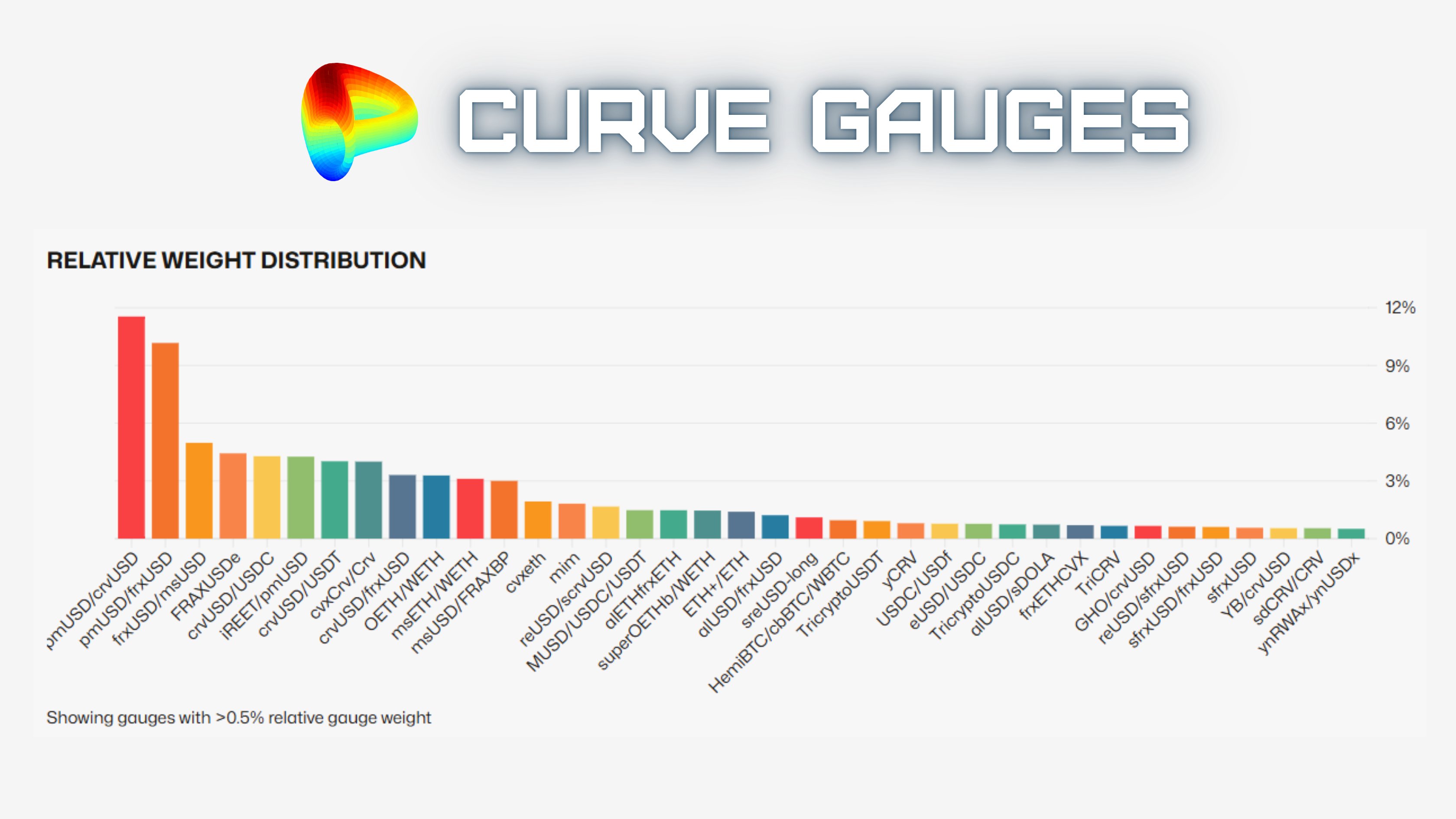 Curve Finance gauge vote live: RAAC allocates to pmUSD gauge with veCRV, vlCVX, sdCRV holders eligible to vote.2026-04
 $iREET launches, enabling up to 25%+ $CRV APR on tokenized real estate via RAAC protocol2026-04
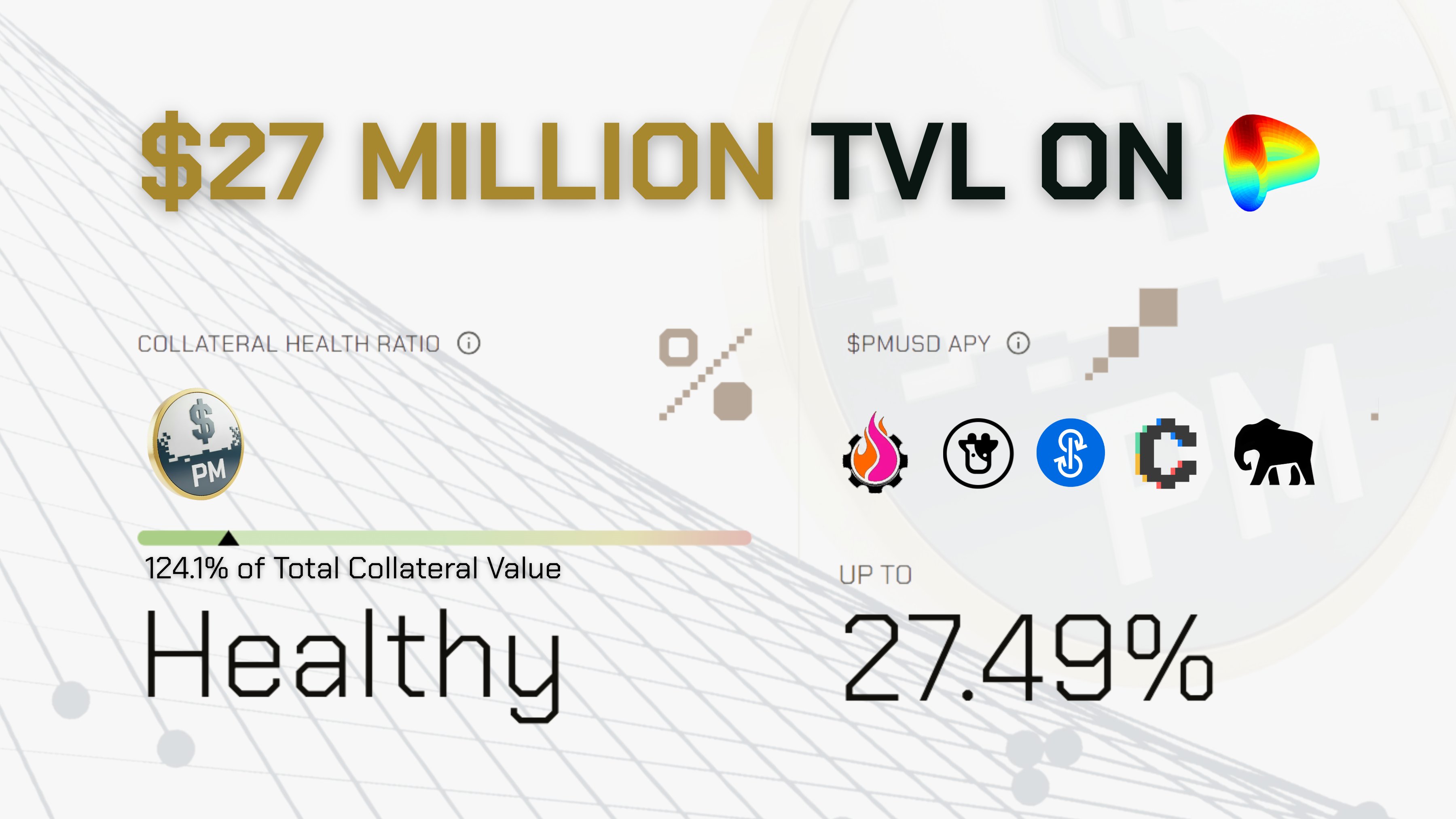 RAAC's gold-backed stablecoin doing up to 27% APR while the rest of crypto argues about altseasons and still focuses on speculation...
$pmUSD on Curve: $27M TVL in less than 2 months, and growing.2026-02
RAAC's gold-backed stablecoin doing up to 27% APR while the rest of crypto argues about altseasons and still focuses on speculation...
$pmUSD on Curve: $27M TVL in less than 2 months, and growing.2026-02 RAAC announces tentative agreement with a physical gold exchange provider to facilitate pmUSD redemptions, which is expected to begin the first week of July or even sooner.2026-05
RAAC: Gold, Real Estate, and the DeFi RWA Stack
Real Asset Acquisition Corp (RAAC) is a decentralized finance ecosystem that brings tokenized real-world assets, starting with in-situ gold reserves and U.S. real estate, on-chain to support stablecoins, lending markets, and structured products. Its two product tracks have different roles. RWf(x) mints stablecoins against commodity collateral, while RAACLend supports borrowing against tokenized real estate. RAAC routes liquidity through Curve, including a live pmUSD/frxUSD pool.
What RAAC Is Trying To Build
RAAC describes itself as a DeFi lending and borrowing ecosystem that opens participation in tokenized real-world assets (RWAs) to a broad on-chain audience. The core idea is to transform traditionally illiquid or institutional-only assets—such as gold reserves or subsidized U.S. rental housing—into programmable collateral that can support stablecoins, liquidity pools, and credit markets on public blockchains. Instead of treating RWAs as a niche add-on, RAAC makes them the primary source of backing for its products, beginning with the Precious Metal USD (pmUSD) stablecoin and expanding into tokenized real estate through RAACLend and the iREET asset. This design attempts to marry the perceived stability of physical assets with the composability and capital efficiency of DeFi.
At a high level, RAAC’s architecture has two flagship verticals. The first is RWf(x), a fork of the f(x) Protocol that mints stablecoins against tokenized commodities such as gold and other precious metals. Within RWf(x), pmUSD is the first production stablecoin, backed by tokenized in-situ gold reserves supplied by I-ON Digital Corp via its ION.au digital security. The second vertical is RAACLend, a protocol for on-chain borrowing against tokenized real estate and other low-volatility assets represented as NFTs, with exposure initially focused on U.S. properties participating in the Housing Choice Voucher Program (HCVP). These verticals are coordinated and incentivized by a broader RAAC ecosystem that includes the RAAC token (for governance and value capture), the iREET real-estate-linked token, and community access tools such as RAAC Bots NFTs and a points program used to track campaign participation alongside plans for a governance token.
The project is built around a network of institutional partners. RAAC works with I-ON Digital Corp, a listed tokenized-gold provider, to source and tokenize large in-situ gold reserves that become the underlying collateral for pmUSD. I-ON’s ION.au token is designed as an institutional-grade, legally compliant digital security that represents fractional claims on audited gold reserves and is priced against the London Bullion Market Association (LBMA) spot gold rate. RAAC also collaborates with Curve Finance to deploy liquidity pools for pmUSD and related assets, making Curve the core routing layer for its stablecoin ecosystem, and has joined the Chainlink BUILD program to use Chainlink’s Proof of Reserve (PoR) infrastructure for collateral attestations. A pmUSD/frxUSD Curve pool is live, but pmUSD is not currently integrated with FraxSwap or FraxLend.
RAAC’s strategy is unapologetically yield-focused but attempts to root that yield in off-chain economic activity rather than purely reflexive token incentives. Rental income from subsidized housing, discounted gold reserves, and traditional fixed-income instruments are all envisaged as the ultimate sources of cash flows that can support stable coin yields and lending returns. To bootstrap usage and liquidity, RAAC has used mechanisms familiar to DeFi veterans—bond sales via ApeBond, Curve gauge incentives, wallet eligibility campaigns, and a points program—but the stated long-term ambition is to have pmUSD and iREET yields anchored in real-world income streams rather than solely protocol emissions. In this sense, RAAC can be understood as part of the broader RWA movement in DeFi, but with a relatively concentrated initial bet on gold and U.S. real estate as foundational pillars.

Curve Finance gauge vote live: RAAC allocates to pmUSD gauge with veCRV, vlCVX, sdCRV holders eligible to vote.
Tokenizing Gold: ION.au, RWf(x), and pmUSD
The ION.au Gold Rail
The most distinctive building block in RAAC’s design is its integration with I-ON Digital Corp, a regulated provider of tokenized gold claims whose flagship product, ION.au, is a gold-backed digital security secured by in-situ mineral reserves. I-ON pioneered a model in which audited gold reserves still in the ground are digitized into securities, offering fractional ownership with institutional-grade compliance and custody frameworks. Each IONau token is secured by five troy ounces of verified in-situ gold reserves, while its value is benchmarked to one troy ounce of gold at the daily LBMA price. The idea is to transform what would otherwise be dormant geological value into on-chain capital, usable as collateral for a variety of financial structures, including stablecoins and collateralized borrowing.
For RAAC, IONau serves as the underlying commodity reference that feeds into its RWf(x) tokenization system. The flow is roughly: physical in-situ gold reserves are audited and structured into ION.au digital securities; those securities are then bridged into TokenBlender contracts, which mint a base token representing claims on the IONau collateral; and RWf(x) uses that base token as collateral to mint pmUSD. RAAC’s own materials often describe this path using the “Instruxi tokenization engine,” an architecture that takes gold and other commodities, wraps them into ERC‑20 tokens, and then routes them into RAAC’s vaults as eligible collateral. While much of this infrastructure is behind-the-scenes from the average user’s perspective, it is critical in determining the legal and risk profile of pmUSD, because any failure in the chain from physical reserves to digital securities to tokenized claims ultimately impacts pmUSD’s solvency.
IONau is positioned as more than a static gold representation; I-ON promotes it as a “next-generation digital gold instrument” that can generate yield, provide liquidity, and power stablecoin issuance across a variety of DeFi integrations, including RAAC’s pmUSD and other gold-backed stablecoins such as Goldfish’s GGBR. The company emphasizes that its architecture enables scalable minting, transparent collateralization, and revenue-producing deployment strategies, with real-time connectivity between TradFi capital and DeFi liquidity rails. For pmUSD holders, this means that the token they are using is indirectly backed by regulated gold securities rather than unregulated gold tokens or purely off-chain claims, although the fact that the reserves are in-situ, rather than vaulted bullion, introduces a different risk profile than physically deliverable tokenized gold.
pmUSD: A Gold-Backed, USD-Pegged Stablecoin
RAAC’s flagship stablecoin, Precious Metals USD (pmUSD), is built on top of the IONau collateral rail and is designed as a gold-referenced, USD-pegged digital dollar. pmUSD is minted by RAAC’s RWf(x) module as the fToken in a fork of the f(x) Protocol, using tokenized gold collateral as backing. RAAC describes pmUSD as “the original gold-backed dollar brought on-chain,” aiming to provide a more conservative collateral base than fiat-backed or fund-backed DeFi stablecoins while still maintaining composability with DeFi protocols. The stablecoin is intended to hold a soft peg of 1 pmUSD to 1 USD, while the collateral is denominated in discounted gold value to provide a margin of safety.
RAAC’s current collateral materials distinguish two layers. At the IONau layer, I-ON says five ounces of verified in-situ gold reserves support each token, while one IONau is valued against one ounce of gold. pmUSD is then minted against IONau-linked collateral inside RWf(x). The 5:1 figure therefore describes the reserve backing behind IONau. It is not a 5:1 ratio between spot gold value and pmUSD supply. That reserve buffer is intended to account for extraction costs and uncertainty in the in-situ collateral, but pmUSD’s own collateralization and liquidity risks must be assessed separately.
The pmUSD system is designed so that the net 1x long exposure to gold is split into two components: the stablecoin pmUSD and a leveraged gold position (in the original f(x) design, xGOLD) that absorbs most of the gold price volatility. RAAC’s twist is that, rather than offering that leveraged gold exposure to the public as a separate token, it internalizes the position, keeping the volatility-bearing side of the structure within the protocol. The goal is to present pmUSD as a relatively stable, USD-linked asset, while RAAC itself manages the risk associated with changes in collateral value. Minting pmUSD is not permissionless; it is controlled via manager-only silo multisigs, reflecting the protocol’s current centralized governance model for collateral management and system operations.
RWf(x), Peg Defense, and Proof of Reserves
pmUSD’s stability mechanics combine the RWf(x) collateral structure with a reserve-limited Peg Stability Module (PSM) funded by sUSDS deposits. The PSM provides a one-way route from pmUSD to sUSDS and is separate from the collateral-minting engine. In the RWf(x) silo, pmUSD is minted against TokenBlender base tokens linked to IONau collateral, while a corresponding xPM-like position, analogous to the leveraged gold token in f(x), absorbs changes in collateral price. The design aims to keep pmUSD closer to a dollar target even though its backing ultimately derives from gold reserves.
One peg-support mechanism is the PSM, which lets arbitrageurs swap pmUSD into sUSDS at an internal rate of 1 USD when pmUSD trades at a discount on-chain. Buying discounted pmUSD on Curve and routing it through the PSM creates buy pressure in the Curve pool. The submitted pmUSD accumulates in the module rather than being burned, so the swap does not shrink total pmUSD supply. Swap capacity is finite and pauses when the sUSDS reserve reaches its configured floor. RAAC says the accumulated pmUSD can be rebalanced into sUSDS over time. The finite reserve makes broader liquidity and redemption routes important, while dependence on sUSDS still exposes this part of the peg system to Sky Protocol risk.
To address transparency concerns, RAAC uses real-time Proof of Reserves via Chainlink’s PoR framework and data sourced from Instruxi to track collateral backing pmUSD. The pmUSD static profile on Pharos notes that Chainlink PoR and Instruxi Reserve data are used to attest to the presence of TokenBlender base tokens and underlying IONau holdings in RAAC’s RWf(x) treasury. This is augmented by I-ON’s own claims that IONau operates within a regulated custody framework and provides daily LBMA-based pricing. In principle, this combination should allow independent observers to verify both that pmUSD is sufficiently collateralized by tokenized gold claims and that those claims correspond to audited in-situ reserves, although practical verification still requires trust in I-ON’s audits and the correctness of the PoR feeds.
Liquidity, Curve Integration, and Yield
From launch, RAAC has prioritized deep on-chain liquidity for pmUSD, primarily through a strategic collaboration with Curve Finance. RAAC has announced that it is deploying over 100 million dollars’ worth of pmUSD liquidity to Curve and positioning Curve as the core infrastructure layer for its stablecoin and RWA ecosystem, using Curve’s factory pools and gauge system to route much of pmUSD’s trading volume and yield opportunities. A dedicated Curve pool hosts pmUSD liquidity, and a gauge proposal has been introduced and passed to add a gauge for an iREET/pmUSD pool on Ethereum mainnet, enabling tokens associated with RAAC’s real estate strategy to earn Curve incentives alongside pmUSD. The combination of pmUSD pools and iREET/pmUSD pools creates a network of routes through which users can move between gold-backed stablecoins, real estate exposure, and other DeFi assets.
A public Dune dashboard tracking pmUSD shows total pmUSD assets peaked at roughly 41 million dollars in 2026, while the associated Curve pools offered double-digit APRs driven by trading fees, CRV emissions, and external incentives from RAAC and partner protocols. Reports of yields in the 11–33% APR range on pmUSD liquidity provision have circulated in DeFi communities, particularly during the early phase of RAAC’s liquidity mining campaigns. RAAC has also run bond sales via ApeBond, offering pmUSD at a discount or with bonus rewards to early participants, with one flagship one-million-dollar pmUSD bond reportedly selling out and delivering a 5% bonus to depositors after a lockup period. These programs also awarded multipliers in RAAC’s points campaign. RAAC’s public materials linked that campaign to a planned token generation event, but they did not guarantee that points would convert into token allocations.
The live pmUSD/frxUSD pool on Curve gives pmUSD a direct liquidity route to frxUSD. pmUSD is not currently deployed on FraxSwap or FraxLend, and the Curve pool alone does not establish a broader multi-product integration.
pmUSD Risk Profile and Market Behavior
Despite the overcollateralization and peg-defense mechanics, pmUSD is not risk-free. Pharos Watch classifies pmUSD as a centrally governed, real-world-asset-backed stablecoin with manager-only minting and system operations controlled via authorized silo multisigs. The protocol’s contracts allow for issuer or admin freeze controls, and Pharos notes that pmUSD’s peg defense is meaningfully dependent on external systems such as the sUSDS-based PSM and the Sky Protocol’s health. This centralized control structure may be necessary for handling regulated collateral and complex RWA arrangements, but it introduces governance and counterparty risk that differs from more decentralized crypto-backed stablecoins.
Market behavior has underscored some of these risks. Public price data from aggregators such as CoinGecko have shown pmUSD trading below its intended 1 USD peg during periods of stress, including episodes where the token traded around 0.76 USD, far beneath its target. While such deviations may reflect temporary liquidity imbalances, confidence shocks, or friction in the arbitrage mechanisms, they indicate that pmUSD does not yet behave like a fully hardened, fiat-backed stablecoin in all conditions. For a gold-backed stablecoin whose raison d’être is stability grounded in hard assets, sustained or repeated depegs would be particularly problematic, since they would erode the core value proposition of combining real-asset backing with DeFi composability.
The nature of the underlying collateral also raises unique issues. In-situ gold reserves are less liquid than vaulted bullion or cash equivalents, making recovery in extreme scenarios more complex even when legal rights are well defined. IONau’s five ounces of reserve backing per token provides a buffer against extraction costs and reserve uncertainty before the token enters pmUSD’s collateral chain. It does not make in-situ reserves as liquid or directly redeemable as vaulted bullion, and it does not establish a 5:1 ratio between gold value and pmUSD supply. Users must therefore consider pmUSD a structured product backed by gold-linked securities, governance processes, and external providers rather than a direct claim on deliverable gold.
A simplified comparison with other asset-backed tokens helps illustrate where pmUSD sits in the landscape:
| Feature | pmUSD (RAAC) | Fiat-backed stablecoin (e.g., USDC) | Gold token (e.g., PAXG) |
|---|---|---|---|
| Primary backing | Tokenized in-situ gold (IONau via TokenBlender) | Cash and cash equivalents in regulated accounts | Allocated vaulted bullion |
| Target unit | 1 USD peg, gold-referenced | 1 USD peg | 1 troy ounce or fraction of gold |
| Peg mechanism | RWf(x) structure plus sUSDS-based PSM | Direct redemption and arbitrage via issuers | Direct gold redemption (fees apply) |
| Governance | Centralized, manager-only minting, admin controls | Centralized corporate issuer | Centralized issuer, gold custodian |
| On-chain composability | Designed for DeFi pools and lending | Widely integrated across DeFi | Moderate; often less integrated |
| Regulatory exposure | RWA securities plus DeFi protocol risk | Fiat regulation, money transmitter regimes | Commodities and securities considerations |
This table is schematic rather than exhaustive, but it illustrates pmUSD’s hybrid nature: it combines elements of RWA securitization, gold-linked exposure, centralized governance, and DeFi-native peg mechanics in a way that is distinct from both traditional fiat-backed stablecoins and pure gold tokens.
Leviathan Atlas is now charting RAAC, from gold-backed pmUSD to tokenized real estate
Real Estate On-Chain: RAACLend, iREET, and Tokenized Property Income
RAACLend’s Real Estate Thesis
Parallel to its gold-backed stablecoin vertical, RAAC is building RAACLend as a protocol for on-chain borrowing against tokenized real estate and other low-volatility assets. RAACLend focuses initially on U.S. rental properties participating in the Housing Choice Voucher Program (HCVP), a federal subsidy program that provides government-backed rental payments to landlords on behalf of eligible tenants. Because rental income in HCVP is partially or largely backed by the U.S. government, such properties can exhibit relatively stable cash flows, making them attractive as a foundation for income-generating, RWA-backed crypto products. RAACLend’s goal is to translate these stable, off-chain rental flows into tokenized instruments that can support DeFi lending, yield strategies, and portfolio diversification.
According to RAAC’s current documentation, RAACLend is designed to use tokenized real estate and other RWA NFTs as collateral for borrowing, with crvUSD as the loan asset. It does not mint a real-estate-backed stablecoin. RWf(x) is the separate product that uses commodity ERC-20 collateral to mint stablecoins such as pmUSD. In the real estate system, properties are represented by REET NFTs, while iREET is an index token linked to the net asset value of REET NFTs deposited in the index.
By emphasizing properties in the HCVP, RAACLend aims to anchor returns in revenues that are less tied to crypto market cycles, because rent is partly supported by a government subsidy rather than only market-rate tenant demand. RAAC’s whitepaper routes rental-income-related revenue through the real estate system and its liquidity incentives after property expenses and protocol allocations. That structure does not guarantee a stable yield. The challenge is to route off-chain cash flows into on-chain instruments without creating regulatory vulnerabilities or operational bottlenecks.
iREET: Real Estate Exposure and Bonds
iREET is an index token that references the pro rata net asset value of REET NFTs in RAAC’s real estate index. Holding it provides diversified value exposure without requiring a user to manage an individual property. The token can be paired in liquidity pools and is designed for use as collateral in RAACLend. It also has a redemption route: a holder can burn enough iREET to receive a randomly selected, available REET NFT from the index. Eligible REET NFT holders can then use a separate redemption process to pursue the associated property title. The eligibility rules, queue mechanics, and legal transfer conditions still matter, so this route should not be confused with an instant claim on a chosen building.
RAAC’s whitepaper says that when a REET NFT is added to the index, the depositor receives iREET based on the property NFT’s value relative to the index NAV, and 2% of the newly minted iREET is allocated to the RAAC treasury. This is an issuance fee on new iREET supply, not a borrowing fee. RAACLend has separate revenue and fee mechanics for lending activity. The issuance fee aligns the treasury with growth of the property index, but it does not make iREET a protocol risk-absorption token.
RAAC has used bond offerings to bootstrap liquidity and distribution for iREET. One of the notable initiatives has been the opening of a roughly 1.135 million dollar bond for iREET, structured with a 45-day lockup period aligned with the planned debut of RAACLend’s mainnet lending platform. In this setup, users deposit stablecoins or other accepted assets into a bond contract, receive iREET at a discount or with a bonus after the lockup, and thereby finance the acquisition or refinancing of underlying properties while gaining leveraged exposure to the RAACLend thesis. The bond design closely mirrors the pmUSD bond structure RAAC used for its gold-backed stablecoin, which had a one-million-dollar cap and rewarded depositors with a 5% bonus after a lockup, and which reportedly sold out, delivering an extra 10% in rewards to RAAC Bot NFT holders as an additional incentive.
Curve Finance again plays a central role in making iREET liquid. A gauge proposal on Curve’s DAO has been advanced and accepted to add a gauge for an iREET/pmUSD pool on Ethereum mainnet, which enables liquidity providers in that pool to earn CRV emissions and potentially other stacked incentives from RAAC and partner protocols. RAAC has promoted opportunities for veCRV, vlCVX, and sdCRV holders to vote on allocations to pmUSD and iREET pools, shaping the emissions that flow to these pairs and potentially boosting yields into the 20–25% APR range for early participants, depending on CRV prices and bribe dynamics. By pairing iREET with pmUSD, RAAC effectively builds a “real assets square” on Curve, where a gold-backed stablecoin trades directly against a real estate-linked token, with CRV incentives rewarding users who take both sides of the trade.
Real Estate Risk and the HCVP Angle
Tokenizing real estate introduces a different constellation of risks than tokenizing gold. While gold prices are volatile but globally observable and liquid, real estate valuations depend on appraisals, local market conditions, and property-specific factors. RAACLend attempts to mitigate some of this by focusing on properties participating in the Housing Choice Voucher Program, where government vouchers support part of the rental income. Property management risk, maintenance costs, vacancies, housing-policy changes, and interest rates can still affect net operating income and valuations. Those changes can affect iREET’s NAV, market liquidity, and the safety of loans made against iREET or other real-estate-backed collateral.
iREET’s redemption path makes a pure synthetic description inaccurate, but it does not erase the legal complexity. Users redeem enough iREET for an available, randomly selected REET NFT. Eligible NFT holders then complete a separate process to exercise the contractual rights associated with that NFT and pursue property title. The exact holding entities, jurisdictional rules, securities treatment, and eligibility requirements remain important due diligence questions.
Another important dimension is liquidity. Even if iREET trades actively on Curve and other DEXs, the underlying real estate is highly illiquid. If a large number of token holders sought to exit at once, secondary market liquidity could dry up long before properties could be sold or refinanced, potentially leading to sharp discounts to net asset value. In that sense, DeFi’s instant exit option and real estate’s slow exit reality are structurally in tension. RAAC’s approach of starting with bond-like lockups and controlled distribution may alleviate some of the immediate liquidity mismatch, but over time, systemic risk could emerge if leverage builds against iREET or if large positions are concentrated in a few wallets.
On the other hand, if RAACLend can successfully route HCVP-backed rental income into iREET yield streams, it would represent a meaningful step toward making subsidized housing cash flows investable via DeFi rails, which is a novel and potentially socially impactful use case. In such a scenario, iREET would not only reflect property values but also function as a conduit for predictable, policy-driven rental income into decentralized capital markets.

$iREET launches, enabling up to 25%+ $CRV APR on tokenized real estate via RAAC protocol
RAAC In The DeFi Stack: Curve, Squid Pass, and Community Infrastructure
Curve Finance as Liquidity Backbone
Curve Finance has emerged as the central liquidity backbone for RAAC’s ecosystem. RAAC has announced a long-term strategic collaboration with Curve, committing to deploy over 100 million dollars in pmUSD liquidity and to make Curve its core infrastructure layer for stablecoin routing and RWA integrations. This manifests in multiple pools: stable pools for pmUSD versus other dollar-pegged assets, metapools where pmUSD inherits liquidity from established stablecoin baskets, and mixed-asset pools such as iREET/pmUSD that link real estate exposure with gold-backed liquidity. For RAAC, Curve’s dominance in stablecoin swaps and its gauge system for directing CRV emissions make it an ideal platform to bootstrap deep liquidity and attract sophisticated DeFi participants.
The Curve DAO’s governance process plays a key role in determining how attractive pmUSD and iREET pools will be for liquidity providers. Gauge proposals must be submitted and approved before pools earn CRV emissions; one such proposal for an iREET/pmUSD pool achieved quorum and unanimous support, indicating initial community openness to RAAC-linked assets. Once a gauge is active, veCRV, vlCVX, and sdCRV holders can vote on how much weight to allocate to pmUSD and iREET pools. RAAC’s current documentation says CRV and CVX holdings are a key part of its treasury incentive strategy, although it does not quantify those positions on the cited page. This interaction between protocol teams and Curve governance is central to RAAC’s liquidity strategy.
For users, the result is a set of opportunities to earn yield by providing liquidity to pmUSD pools and related pairs. In periods of strong incentives, APRs on pmUSD liquidity provision have been reported in the double digits, sometimes exceeding 25% when stacking CRV, partner incentives, and protocol-specific rewards such as RAAC points. However, these yields are partly a function of token incentives and gauge wars, which are inherently volatile and subject to governance dynamics, emissions schedules, and token price action. Over the long term, RAAC’s challenge will be to transition from “subsidized” Curve yields to sustainable, cash-flow-backed yields derived from gold and real estate income, without losing liquidity depth or community interest.
The pmUSD/frxUSD Curve Pool
A live Curve pool and gauge pair pmUSD with frxUSD, creating a swap route and an incentive market for liquidity providers. That is the verified Frax-linked integration today. pmUSD has no current deployment on FraxSwap or FraxLend. The Curve pool does not by itself establish a broader Frax product-suite integration or a composite stablecoin stack.
Media, Community, RAAC Bots, Llama Party, and Squid Pass
RAAC’s growth strategy is not purely technical; it also leans heavily on community-building, media partnerships, and access NFTs. One of the more distinctive elements is the introduction of RAAC Bots, a limited, free-mint membership NFT genesis collection that functions as more than a digital collectible. Holders of RAAC Bots have been given privileged access to early pmUSD bond sales on ApeBond, higher reward multipliers, and additional bonuses such as extra percentages on bond payouts when funding caps are filled. The RAAC Bots collection has been listed on the MagicEden launchpad with a formal mint date, underlining RAAC’s attempt to bridge the NFT and DeFi communities with a membership token that confers ongoing benefits in the RAAC ecosystem.
This membership layer is intertwined with a broader points strategy. RAAC has used wallet eligibility checkers and points to track participation by early pmUSD liquidity providers and bond-sale participants. Its public campaign materials described points multipliers and a planned token generation event, but they did not promise a fixed conversion from points into token allocations. Integrations with Curve, Convex, StakeDAO, Yearn, and Gearbox have been presented as places where users could participate in RAAC-linked yield activity. Live community events such as Llama Party streams have been used to announce milestones and explain the ecosystem.
RAAC has also partnered with decentralized media infrastructure, integrating a Leviathan News headline feed directly into its Discord server and experimenting with $SQUID-powered headline streaming to keep its community informed about DeFi developments. This has overlapped with the use of Squid Pass credentials and related tools in some RAAC-aligned communities, connecting access to RAAC content, events, or rewards with broader on-chain media and reputation systems. In this configuration, RAAC is not just building financial primitives but is participating in an emerging stack that combines RWAs, DeFi protocols, NFT-based memberships, and decentralized news distribution.
At the same time, reliance on Discord and other centralized social platforms introduces attack surfaces. RAAC’s Discord server was reportedly compromised, leading to warnings not to interact with suspicious links or announcements until verified. RAAC says the incident was contained quickly and that no members lost money. The statement remains attributed because the absence of losses is not independently verifiable from the cited public record. The broader security lesson remains: even projects with strong on-chain systems can have their communities targeted through off-chain channels.
In sum, RAAC’s community stack blends financial incentives, NFT memberships, points systems, media integrations, and social events into a cohesive, if complex, growth engine. Whether this engine ultimately converts early speculative energy into durable, RWA-backed usage will depend on how well RAAC can deliver on its gold and real estate theses while maintaining trust and security in both its on-chain and off-chain interfaces.
Reader engagement concentrated on concrete yield figures and live Curve integrations rather than general RWA positioning.
Risk, Regulation, and Operational Considerations
Market and Collateral Risks: Gold and Real Estate
RAAC’s choice of gold and U.S. real estate introduces both diversification benefits and new risks. Gold is commonly treated as a store of value, but its price can be volatile, and the specific form backing pmUSD adds risks tied to extraction feasibility, jurisdiction, and geological uncertainty. IONau’s five ounces of in-situ reserve backing per token provides a buffer before IONau enters pmUSD’s collateral chain. That 5:1 ratio belongs to the IONau reserve layer, not to pmUSD supply. Severe gold-price declines, legal disputes over reserve ownership, or operational failures in I-ON’s tokenization could still stress the system, especially during broader DeFi turmoil.
Real estate collateral in RAACLend and iREET structures has a different risk set. Interest-rate cycles can affect capitalization rates, borrowing costs, and property valuations, while local policy changes can influence housing demand and landlord obligations. RAAC’s focus on properties in the Housing Choice Voucher Program depends partly on the stability of U.S. federal housing subsidies. Changes in budgets, program rules, or administration could affect rental payments. Property management, maintenance costs, and neighborhood conditions can also affect net operating income, iREET’s NAV, and the safety of loans made against real-estate-backed collateral.
Correlation between gold and real estate is not necessarily low in macro stress scenarios. A sharp rise in real yields, for instance, could simultaneously weigh on gold prices and compress real estate valuations, hitting both pillars of RAAC’s collateral stack at once. While RAAC’s structures may be overcollateralized and diversified at the protocol level, users who hold concentrated positions in pmUSD and iREET could find themselves exposed to a complex mix of commodity, interest rate, and housing market risk that is not always transparent in token price charts. For institutional users, this may be acceptable as part of a broader allocation strategy, but for retail users seeking “stable” yield, it demands a level of macro awareness that is not always prevalent in DeFi.
Smart Contract, Oracle, and Counterparty Risk
Beyond market risk, RAAC’s architecture is exposed to the usual spectrum of smart contract and oracle vulnerabilities that accompany any complex DeFi protocol. The RWf(x) implementation is a fork of the f(x) Protocol 1.0, with modifications such as internalizing the leveraged gold position (xGOLD) rather than offering it to the public. Forking a mature protocol can bring battle-tested code but also the risk of misconfigurations or unanticipated interactions in the new environment. Given that pmUSD minting, PSM operations, and collateral accounting are all heavily on-chain, any bug, mispriced oracle, or permissioning error could have systemic consequences for the stablecoin’s solvency and peg.
Oracle risk is particularly salient. Gold prices and IONau valuations must be accurately reflected in on-chain positions for RAAC’s reserve and leverage calculations to remain correct. I-ON’s IONau instruments rely on daily LBMA spot pricing, while RAAC uses Chainlink Proof of Reserve and Instruxi Reserve data to attest to collateral holdings. If either the LBMA price feeds or the Chainlink PoR mechanisms were to be compromised, manipulated, or delayed, pmUSD could become either undercollateralized or unnecessarily constrained, leading to loss of confidence or missed opportunities. Similarly, in RAACLend, real estate valuations and rental income assumptions must be translated into token economics via models that are only as good as their inputs.
Counterparty risk extends to I-ON Digital Corp, custodians, legal entities holding real estate, and any off-chain service providers involved in tokenization, custody, or compliance. While I-ON emphasizes that IONau is an institutional-grade security with a regulated custody framework, holders of pmUSD ultimately rely on I-ON’s continued solvency and regulatory compliance, as well as RAAC’s ability to enforce claims against IONau collateral in adverse conditions. In the real estate vertical, RAACLend must trust property managers, valuation agents, and legal counsel to maintain assets and contracts in good standing. This web of off-chain counterparties is intrinsic to any RWA protocol but can be at odds with DeFi’s aspirations for trust minimization.
Governance, Centralization, and Regulatory Questions
Pharos Watch’s assessment that pmUSD uses a centralized governance model, with manager-only minting and admin freeze controls, points to a deliberate design choice by RAAC to prioritize managed risk over permissionless expansion. While this may be necessary for handling regulated collateral and complex RWA structures, it creates a single point of governance failure and raises questions about how power will be distributed once RAAC’s own governance token is fully launched. RAAC’s whitepaper notes that the $RAAC token will coordinate components such as RWf(x), the RAACLend index, and distributions, indicating an intent to layer in protocol-level governance. However, the path and timeline toward meaningful decentralization remain unclear, and in the interim, users must accept a high degree of trust in the current operators.
Regulatory considerations loom large over RAAC’s model. IONau is explicitly described as a digital security, with fractional ownership rights in gold reserves and institutional-grade compliance. This implies that, at least on the gold side, RAAC’s collateral base is squarely within securities law frameworks, even if pmUSD itself is presented as a stablecoin. Depending on jurisdiction, regulators may view pmUSD as a derivative of a security, a form of deposit-like instrument, or something else entirely. The involvement of real estate, including HCVP-backed properties, adds another layer of potential regulatory scrutiny related to securities, investment company rules, and tax treatment.
RAAC’s founder has publicly called for DeFi to collaborate with “suitcoiners”—a shorthand for traditional finance actors entering the space—while maintaining core decentralization principles. This encapsulates RAAC’s balancing act: it seeks to work with regulated entities like I-ON and engage traditional housing markets, yet it operates through smart contracts, yield farming, and NFT-based membership systems that are native to DeFi culture. The more deeply RAAC integrates with TradFi, the more it may face demands for KYC, restrictions on access for certain jurisdictions, and constraints on how its tokens can be marketed or used. How RAAC navigates this tension will significantly shape its long-term viability.
Security Hygiene: Discord Compromises and User Protection
As noted earlier, RAAC’s reported Discord compromise illustrates a risk vector that smart contract audits do not cover. The incident prompted warnings not to engage with links, DMs, or announcements that had not been verified through official channels. Similar attacks are common in DeFi, where adversaries try to hijack server permissions, impersonate team members, or exploit bots to distribute malicious links.
These project-specific incidents take place against a broader backdrop of platform-level vulnerabilities. Discord has experienced security breaches via third-party support vendors, exposing names, Discord usernames, email addresses, IP addresses, and even images of government IDs for users who had appealed age determinations or undergone identity verification. Victims of such breaches can face increased risk of phishing, SIM swapping, and targeted social engineering, especially in crypto communities where wallet addresses, investment activity, and social graphs are often public. For RAAC users, this means that protecting their accounts and being skeptical of unsolicited messages is as important as understanding on-chain risk.
Best practices in this context include never signing transactions or approvals from links received via DMs, always verifying contract addresses through official websites or reputable aggregators, and using hardware wallets to isolate high-value assets. When interacting with RAAC’s pmUSD bonds, iREET offerings, or liquidity pools, users should rely on URLs announced through verified channels and double-check on-chain addresses against multiple sources, including RAAC’s documentation and well-known DeFi dashboards. Given the complexity of RAAC’s structures and the relatively high yields on offer, the protocol is likely to be an attractive target for both smart contract exploits and social engineering campaigns, making multi-layered operational security essential.
- 01pmUSD gold stablecoin yield↗
Concrete yield figures around a gold-backed stablecoin gave readers a physical-asset story expressed through familiar DeFi markets.
- 02Curve gauge and veCRV integration↗
Gauge votes involving veCRV, vlCVX, and sdCRV connected pmUSD and iREET to the existing Curve incentive market.
- 03iREET tokenized real estate↗
The iREET bond and planned RAACLend collateral use gave readers a concrete real estate product to evaluate.
- 04ION partnership and gold collateral↗
I-ON's in-situ reserve structure gave pmUSD a distinct collateral model and a correspondingly distinct risk profile.
- 05pmUSD/frxUSD Curve pool↗
The live Curve pool gives pmUSD a direct route to frxUSD. It does not show deployments on FraxSwap or FraxLend.
- 06RAAC Bots membership↗
RAAC Bots linked NFT membership to early product access and campaign multipliers.
Outlook
RAAC sits at the intersection of several trends in crypto: real-world assets as collateral, stablecoin engineering, Curve liquidity markets, and the convergence of DeFi with tokenized property. Its gold-backed stablecoin pmUSD uses I-ON’s IONau digital security as a collateral rail inside RWf(x), adds a reserve-limited PSM, and trades through Curve pools including pmUSD/frxUSD. RAACLend and iREET pursue a separate route for bringing U.S. real estate exposure and borrowing on-chain. If both product tracks operate at scale, RAAC could become a significant RWA protocol.
At the same time, RAAC’s trajectory is far from riskless. pmUSD has already exhibited peg volatility, and its structure introduces dependencies on gold prices, I-ON’s tokenization apparatus, Chainlink PoR, the Sky Protocol’s sUSDS, and RAAC’s own centralized governance. Real estate tokenization via iREET and RAACLend confronts the perennial challenges of property management, valuation, liquidity, and complex legal structuring, all while being layered into an on-chain environment that expects instant settlement and composability. Community growth mechanisms such as RAAC Bots, points campaigns, Squid-powered media feeds, and Llama Party events can help bootstrap usage, but speculation about future token distributions can distract from sustainable, RWA-backed demand.
Looking forward, several milestones will be important to watch for anyone following or participating in RAAC’s ecosystem. On the gold side, the move from purely on-chain pmUSD markets to facilitated redemptions through physical gold exchange providers—an initiative RAAC has signaled through tentative agreements—will be a critical test of how directly pmUSD connects to tangible metal. If users can reliably convert pmUSD into deliverable gold or gold-linked financial products, the token’s positioning as a “gold-backed dollar” will be substantially strengthened. On the real estate side, the full launch of RAACLend, the scaling of iREET issuance, and the demonstration of consistent, rental-income-backed yields will determine whether RAAC can make good on its promise to channel stable off-chain cash flows into DeFi.
Finally, RAAC’s integration into the broader DeFi stack through Curve gauges, the pmUSD/frxUSD pool, and possible future lending-market listings will influence its systemic importance and risk profile. Wider use can improve capital efficiency while also increasing contagion risk if the collateral, peg, or governance fails. RAAC is an ambitious attempt to connect gold, real estate, and DeFi in one RWA platform. Its long-term outcome will depend on execution, transparency, and sustained economic and social trust.
RAAC and I-ON announced plans to bring $200 million of tokenized gold collateral into DeFi.
pmUSD launched with an ApeBond campaign and Curve liquidity strategy.
Frax announced the pmUSD/frxUSD pairing. The verified live integration is the Curve pool, not FraxSwap or FraxLend.
RAAC opened a $1.135 million iREET bond campaign and described iREET's real estate index exposure.
RAAC launched its reserve-limited pmUSD Price Stability Module using sUSDS.
RAAC announced conditional agreements with APMEX and Kitco for pmUSD redemption services.
Latest RAAC news
Curve Finance gauge vote live: RAAC allocates to pmUSD gauge with veCRV, vlCVX, sdCRV holders eligible to vote.Leviathan Atlas is now charting RAAC, from gold-backed pmUSD to tokenized real estate$iREET launches, enabling up to 25%+ $CRV APR on tokenized real estate via RAAC protocolRAAC announces tentative agreement with a physical gold exchange provider to facilitate pmUSD redemptions, which is expected to begin the first week of July or even sooner. This Thursday December 18th, RAAC is officially launching its gold-backed stablecoin $pmUSD!
The launch is via a bond sale on Apebond, where $1M pmUSD will be available with a reward going from 2 to 5%!
This means: for every $1 USDT / USDC you deposit, you receive up to $1.05 pmUSD after the locking period. On top of that, this sale also marks the start of the RAAC points program, and participating in this sale will grant the biggest point multiplier of the program!
Finally, this sale is private for the RAAC Bots holder, the Llamas and the ApeBond premium users!
Follow RAAC on X for additional details!
This Thursday December 18th, RAAC is officially launching its gold-backed stablecoin $pmUSD!
The launch is via a bond sale on Apebond, where $1M pmUSD will be available with a reward going from 2 to 5%!
This means: for every $1 USDT / USDC you deposit, you receive up to $1.05 pmUSD after the locking period. On top of that, this sale also marks the start of the RAAC points program, and participating in this sale will grant the biggest point multiplier of the program!
Finally, this sale is private for the RAAC Bots holder, the Llamas and the ApeBond premium users!
Follow RAAC on X for additional details! RAAC and Frax have formed a strategic partnership to establish deep T-bill and RWA-backed stablecoin pools in DeFi, with pmUSD paired as a core route alongside frxUSD. This collaboration aims to reinforce a liquidity flywheel and expand pmUSD's utility across Frax's product suite, including FraxSwap and FraxLend.
Sources
20 records from 12 domains
pmusd.raac.io
raac.io
iondigitalcorp.com
curve.finance
x.com
- x.com· DeFi_Dad / status / 2039752707829813547
- x.com· fraxfinance / status / 2016534107778400619
- x.com· leviathan_news / status / 1950785418737119645
- x.com· thedefiedge / status / 2027414495602086273
- x.com· Raacfi / status / 2003094392890953992
- x.com· Raacfi
- x.com· RegnumAurum / status / 1937903906035769557
- x.com· LlamaQuestNFTs
youtube.com
coingecko.com
blog.raac.io
pharos.watch
ngntipkolamrenang.twstalker.com
docs.raac.io
dune.com
Community notes
Spot something off or out of date? Drop a note. Editors review topic notes daily and roll accepted fixes into the explainer — contributors are recognized in the monthly $SQUID drop.
Loading notes…
Help improve this topic
Have a story or tip about this topic? Submit it. See something missing? Leave a note. Editors review daily; accepted submissions and fixes count toward the monthly $SQUID drop.