
Llama Party is Leviathan News's weekly DeFi livestream mixing protocol news, live governance events, and guest interviews — covering Curve, Yield Basis, SQUID auctions, and more.
 Leviathan Livestream: Llama Party Christmas Special "HEROES OF AIRULE"2025-12
 Leviathan Livestream! Llama Party feat. Cap Money2026-01
 Squiddos... just a few hours to vote in the monthly snapshot, and participate in the weekly Squid Pass auction, both of which to conclude live on this the upcoming Llama Party2025-12
 Leviathan Livestream: Llama Party feat. Deo Brands introducing STAK2026-01
 Leviathan Livestream: Llama Party2026-01
 Leviathan Livestream: Llama Party devs debate who will win, AI or DeFi? +FXSwap ZCHF2025-12
A recurring DeFi livestream produced by Leviathan News, Llama Party is an open-format show that blends breaking protocol news, community governance, and live guest interviews into a weekly broadcast for the decentralized finance audience.
What Is Llama Party?
Llama Party is Leviathan News's flagship livestream series, published and broadcast on a roughly weekly cadence. Each episode functions as a rolling news desk — hosts recap the most significant DeFi developments of the preceding days, then bring in protocol builders, researchers, and community figures for extended conversation. The format sits somewhere between a roundtable podcast and a live town hall, deliberately unscripted in a way that mirrors the spontaneous energy of on-chain governance itself.
The show's name carries a dual resonance familiar to crypto natives. "Llama" is shorthand for Llamasoft and the broader Curve ecosystem developer culture — Michael Egorov, Curve's founder, has long been associated with llama imagery, and the term has attached itself to a cohort of DeFi builders orbiting that ecosystem. "Party" reflects the communal, slightly irreverent register the show cultivates: it is not a formal press briefing, but it takes the underlying technical substance seriously.
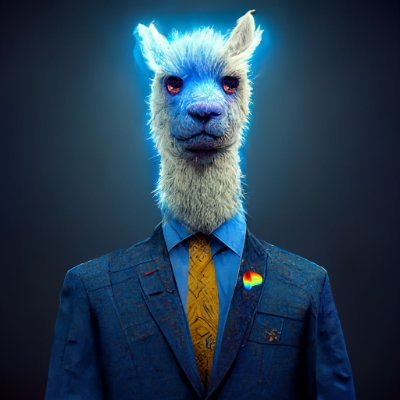
Leviathan Livestream: Llama Party Christmas Special "HEROES OF AIRULE"

The game is much harder than I was expecting, I was getting messed up by the octoroks!
The Leviathan News Context
To understand Llama Party, it helps to understand Leviathan News. Leviathan is a decentralized, crowdsourced news platform built around the $SQUID token economy. Contributors submit and curate cryptocurrency and Web3 news, earning SQUID for editorial work. Governance decisions — including monthly SQUID token distributions and weekly Squid Pass auction outcomes — are made on-chain or through community votes on Snapshot.
Llama Party is, in part, the editorial voice of that community made audible. Where the Leviathan platform surfaces written news items, the livestream surfaces the people and arguments behind those items. The show has served as a venue for announcing community-relevant outcomes: monthly Snapshot votes and weekly Squid Pass auctions have concluded live on air, with results discussed in real time as the community watches. This creates a feedback loop between written editorial coverage and live community deliberation that is relatively unusual in crypto media.
Readers click Llama Party most decisively when the guest carries institutional DeFi risk credibility — Llama Risk's two appearances combined for 1,529 clicks, outpacing every other guest category — revealing the audience is using the show as a credibility checkpoint for the Curve ecosystem, not purely as entertainment.
Format and Recurring Elements
A typical Llama Party episode runs between one and two hours. The opening segment generally recaps the week's most significant DeFi headlines — protocol updates, governance proposals, exploits, macro developments — with hosts adding editorial commentary rather than reading copy neutrally. This is closer to desk commentary than wire service.
Guest segments constitute a significant portion of most episodes. Guests have ranged from independent researchers to protocol founders to community organizers. Notable appearances in the show's recent history include:
- Logarithmic Rex of the Signalling Theory Podcast, bringing a mechanism-design lens to governance discussions
- Cap Money, a community builder in the broader DeFi ecosystem
- Deo Brands, who used a Llama Party episode to introduce STAK, a new protocol concept
- Deo of Yieldnest, appearing specifically to rebut allegations of impropriety — an example of Llama Party functioning as a live accountability forum rather than purely promotional space
- JoeWait of Pangaea, discussing cross-chain and liquidity infrastructure
- CurveCap, who has appeared for "vibe building" sessions and co-hosted Squid Pass auction coverage
The show also maintains thematic episodes. A Halloween "DeFi Costume" edition and a Christmas Special subtitled "HEROES OF AIRULE" demonstrate an appetite for seasonal programming that builds audience ritual around the calendar. Llama Party has broadcast live from conferences, including from the Rare Evo event floor, extending its reach into in-person gathering contexts.
Protocol Coverage: Curve and Yield Basis
If any single protocol thread runs most consistently through Llama Party's history, it is Curve Finance and its adjacent ecosystem. Curve — the automated market maker originally specialized in stablecoin and pegged-asset swaps — has been a recurring subject across dozens of episodes. Topics have included Curve's fifth birthday recap, debates about whether Curve should reduce its Layer 2 presence, the evolution of crvUSD (Curve's native stablecoin), and governance proposals at various stages of the on-chain lifecycle.
Yield Basis has emerged as a closely tracked sub-topic. Yield Basis is a protocol designed to generate yield on liquidity provider positions, particularly within the Curve ecosystem. Llama Party has covered the governance proposal stage of Yield Basis, its eventual launch, and ongoing performance updates. The show's coverage treated Yield Basis as a case study in how DeFi governance proposals move from forum debate to on-chain vote to live deployment — a timeline that can stretch across multiple episodes and months.
The Curve and Yield Basis thread also illustrates how Llama Party integrates the crvUSD governance ecosystem into regular coverage. Discussions of the crvUSD Yield Basis governance proposal aired on the show at a time when the proposal was live on Curve's governance forum, making the broadcast timely rather than retrospective.
Leviathan Livestream! Llama Party feat. Cap Money
RAAC: A Protocol Launched on Air
One of the more notable events in Llama Party's history was the live introduction of RAAC — Real Asset Acquisition Corp — during a dedicated episode. RAAC represents an effort to bring real-world asset acquisition into a decentralized corporate structure, operating at the intersection of on-chain governance and off-chain asset management. The choice to launch on Llama Party rather than through a conventional press release or token event reflects the show's positioning as a venue for DeFi-adjacent project debuts that want community exposure and live Q&A over manufactured hype.
Real asset protocols occupy a contested space in DeFi. Critics argue that tokenizing off-chain assets reintroduces the trust assumptions that decentralized finance was designed to eliminate; proponents argue that bringing real-world yield on-chain expands the addressable market for DeFi capital. By hosting the RAAC launch, Llama Party implicitly positioned itself as a space where that debate could happen in public, with the founding team present.
- 01Llama Risk credibility signal
Llama Risk's independent risk-assessment reputation made their appearances the show's two highest-traffic events, suggesting readers treat these episodes as a vetting layer for Curve-adjacent protocols.
- 02Curve ecosystem guest circuit
Multiple high-click episodes featured Curve insiders (Alberto Centonze, Resupply/Boz, crvUSD updates), indicating a Curve-native reader base tracking protocol developments through trusted on-show voices rather than official announcements.
- 03$SQUID auction guest access
An anon wallet's on-chain bid for a guest slot and a separate March auction announcement pulled nearly 400 combined clicks, showing readers are as curious about community participation mechanics as about the content itself.
- 04Protocol controversy and accountability
YieldNest rebutting public allegations of impropriety and the Prisma hack recap drew clicks specifically because they promised accountability narratives rather than promotional appearances.
- 05Privacy and infrastructure spotlights
Railgun and Commit-Boost episodes attracted strong engagement, suggesting readers use the show as an early-discovery surface for infrastructure and privacy-layer projects before mainstream coverage catches up.
- 06IRL access gated by token holdings
Tying ETHDenver ticket access to 1,000,000 Leviathan Points fused community loyalty mechanics with real-world exclusivity, driving clicks from readers curious whether they qualified.
Zuitzerland, FXSwap, and the Cross-Border DeFi Thread
An episode pairing AI-versus-DeFi debate with coverage of FXSwap and ZCHF illustrates the show's range. ZCHF (the Swiss Franc stablecoin from Frankencoin/FXSwap) and the broader Zuitzerland concept — loosely, a vision of Switzerland-adjacent, crypto-friendly regulatory and financial infrastructure — represent a strand of DeFi that engages with fiat pegs and cross-border monetary policy rather than purely on-chain primitives.
The Zuitzerland framing matters because it situates some DeFi building activity in a geographically and legally specific context: Swiss financial regulation, franc-denominated stability mechanisms, and the attempt to build compliant-but-decentralized financial infrastructure. Llama Party's willingness to cover this alongside more familiar Ethereum-native topics reflects an editorial perspective that DeFi cannot be understood in isolation from the regulatory and monetary environments it operates within.
The SQUID Pass Auction
A structurally distinctive feature of some Llama Party episodes is the live coverage — and sometimes conclusion — of the Squid Pass auction. The Squid Pass is a recurring auction within the Leviathan ecosystem that grants holders specific platform benefits: elevated visibility, governance weight, or access to premium features, depending on the auction period's terms.
Holding a Squid Pass live auction finish on air serves multiple community functions. It creates a shared event around what would otherwise be a silent on-chain transaction. It allows the community to discuss the value proposition of the Pass in real time — who is bidding, at what price, and why — and it anchors Llama Party to the economic life of the Leviathan platform itself rather than treating the show as purely editorial. In this sense the auction segment is not merely promotion; it is a governance and economics event that happens to be broadcast.
The monthly Snapshot vote, through which the Leviathan community allocates SQUID token distributions across categories like news contributors, editors, social contributors, and DAO participants, has similarly concluded on air. This makes Llama Party one of the few crypto media properties where the show's editorial infrastructure and its community's economic decisions visibly intersect.
Squiddos... just a few hours to vote in the monthly snapshot, and participate in the weekly Squid Pass auction, both of which to conclude live on this the upcoming Llama Party

Would have wished to join but well, painful I missed this
The AI vs. DeFi Debate
An episode framed as "devs debate who will win, AI or DeFi?" points to a recurring philosophical tension Llama Party has engaged with directly. The question is not merely rhetorical. As large language models and AI agents become capable of writing code, auditing contracts, and executing on-chain transactions, the relationship between artificial intelligence and decentralized finance becomes substantive: Will AI agents become the primary liquidity providers? Will smart contract security be AI-verified? Does the proliferation of AI agents on-chain change the game-theoretic assumptions that DeFi protocols are built on?
Llama Party's willingness to host this debate — rather than treating it as off-topic or futuristic — reflects the show's editorial positioning as a space for DeFi's harder questions, not just its market updates.
- 2024-04exploit
Prisma Finance hack; 'Hooves 4 Hope' recap episode with Noah Seidman and Wavey0x
- 2024-12milestone
Christmas Special 'Heroes of Airule' livestream episode
- 2025-02milestone
Llama Party IRL at ETHDenver; access gated by 1,000,000 Leviathan Points
- 2025-03governance
March guest slot auctioned on-chain via $SQUID bid; anon wallet 0x9D6b… placed visible bid
- 2025-03governance
Alberto Centonze (Curve) episode removed then reuploaded, signaling platform content control incident
- 2025-06governance
YieldNest's DeoBrands returns to rebut public allegations of impropriety on-air
Role in the Broader DeFi Media Landscape
Crypto media has historically bifurcated between high-frequency news aggregation (fast, commodity-like, competitive on timeliness) and long-form research (slow, analytical, competitive on depth). Livestreamed shows occupy an awkward middle — they are live and therefore perishable in some sense, but their recorded archive accumulates as a body of commentary that traces the evolution of DeFi thinking over time.
Llama Party fits this middle space deliberately. Its connection to Leviathan News means it operates adjacent to a written news platform with its own editorial standards and community governance. The livestream is not an orphaned marketing channel; it is the spoken layer of a written publication that is itself governed on-chain. This structural coherence distinguishes it from many crypto YouTube channels that exist primarily to build personal brand around market speculation.
The show's recurring coverage of protocols like Curve, Aave, and Resupply — combined with accountability segments where project founders appear to address controversy — suggests an editorial ambition that extends beyond bulletin-board recap into something closer to investigative community journalism.
Outlook
Llama Party's format — live, community-embedded, governance-adjacent — is well-suited to the direction DeFi itself is moving. As protocols grow more complex and governance more consequential, the demand for forums where that governance can be watched, questioned, and debated in real time will grow alongside it. The show's integration of Leviathan's SQUID economy — auctions on air, Snapshot votes concluded live — creates a model where media production and community governance reinforce each other rather than operating in separate silos. Whether that model scales, or whether it remains most effective as a tight community touchpoint for the Curve-adjacent and Leviathan-native audience, will depend on how both the platform and its protocol coverage evolve.
Latest Llama Party news
Leviathan Livestream: Llama Party Christmas Special "HEROES OF AIRULE"Leviathan Livestream! Llama Party feat. Cap MoneySquiddos... just a few hours to vote in the monthly snapshot, and participate in the weekly Squid Pass auction, both of which to conclude live on this the upcoming Llama PartyLeviathan Livestream: Llama Party feat. Deo Brands introducing STAKLeviathan Livestream: Llama PartyLeviathan Livestream: Llama Party devs debate who will win, AI or DeFi? +FXSwap ZCHFCommunity notes
Spot something off or out of date? Drop a note. Editors review topic notes daily and roll accepted fixes into the explainer — contributors are recognized in the monthly $SQUID drop.
Loading notes…
Help improve this topic
Have a story or tip about this topic? Submit it. See something missing? Leave a note. Editors review daily; accepted submissions and fixes count toward the monthly $SQUID drop.