
In‑depth explainer on how livestreams power crypto: from DeFi governance, trading and stablecoin education to gaming, fandom and DAOs, plus Web2 vs Web3 streaming infrastructure, NFT/POAP monetization and the future of real‑time onchain media.
+7 sources across the wider coverage universe
 Orbs launches DAO to hand protocol governance and multi-million dollar revenue stream to token holders, introducing seasonal onchain decision-making for its Layer-3 network2026-04
 Polkadot Products Devnet launch is live now.2026-07
 Onchain privacy project on Solana, Invisible's public devnet is live now.2026-05
 Aave V4 integrates Chainlink SVR feeds to redirect liquidation MEV back to the DAO, expanding a revenue stream that has already returned $11M since 20252026-05
 Shinzō testnet is live, unlocking verifiable data revenue streams for blockchain networks2026-07
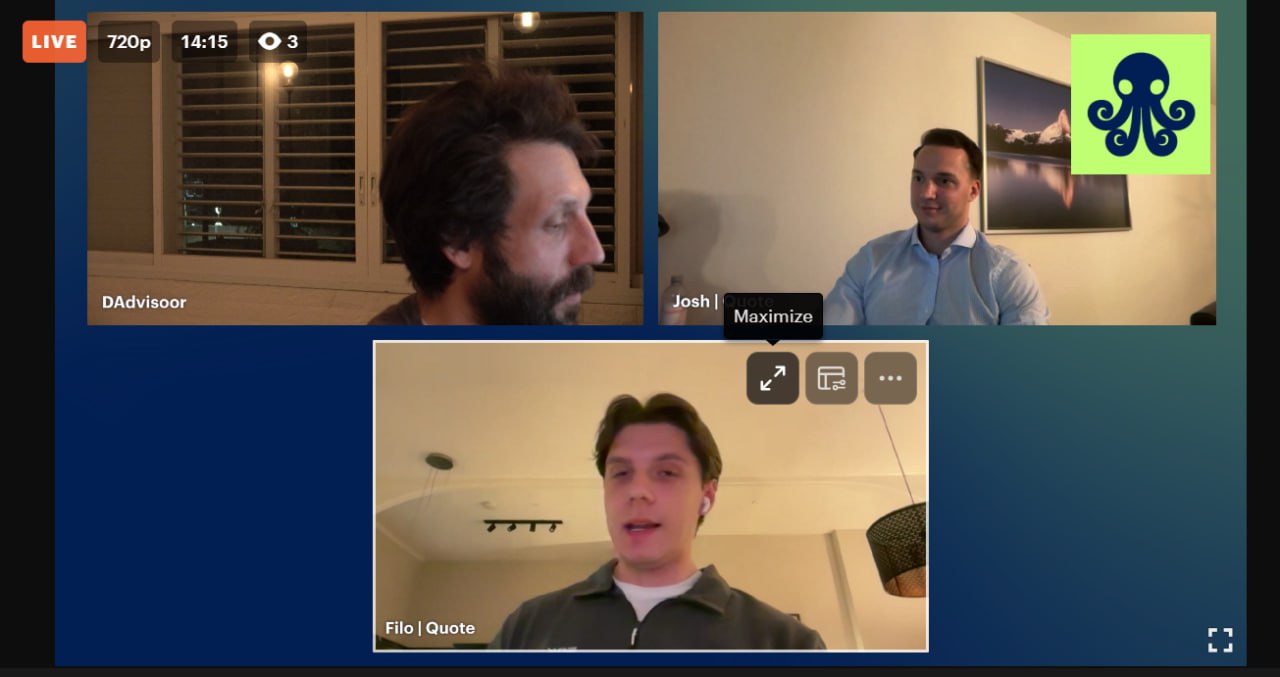 Solving What You Didn't Know Need SolvingQuote, the permissionless trading desk on Hyperliquid2026-03
Livestreams in Crypto: Real-Time Media for Onchain Communities
Real-time video broadcasts over the internet, often called livestreams, have evolved into a core medium for how crypto ecosystems inform, govern, trade, play, and build culture together, turning what was once one‑way broadcasting into a dense, interactive layer of onchain community life. In this explainer, we unpack what livestreams are, how they work under the hood, why they matter to DeFi, NFTs, and DAOs, and how emerging Web3 video infrastructure could reshape creator monetization and protocol governance for years to come.
Introduction: Why Livestreams Matter To Crypto
In its most basic sense, a live stream is a broadcast streamed over the internet for live viewing, rather than a pre‑recorded video that audiences watch on demand later. This deceptively simple definition hides a great deal of nuance, especially once you bring crypto into the picture, because latency, interactivity, and composability with onchain actions all change what “live” can mean. Livestreams created an expectation that audiences can not only watch but also chat, vote, tip, and otherwise influence what happens in real time, which mirrors the peer‑to‑peer ethos of decentralized finance and Web3. Crypto markets themselves operate around the clock, and livestreams have become one of the most natural interfaces for communities to keep up with that always‑on environment. As a result, livestreaming has moved from a marketing afterthought to a primary communication channel for many protocols, creators, and trading communities.
The link between crypto and livestreams became clear around major technical milestones, such as when community media outlets live streamed Ethereum’s Goerli testnet merge, inviting stakers, developers, and market commentators onto a public broadcast to narrate the transition as it unfolded. Events like this showed that livestreams could function as both documentation and celebration of complex protocol upgrades, giving viewers a chance to ask questions in real time and watch metrics update as blocks finalized. Those same affordances apply when new DeFi primitives launch, when risk parameters are debated, or when a protocol navigates an exploit and needs to communicate quickly to users. In each case, the “liveness” of the stream becomes a way to signal transparency and to reduce information asymmetry across a global, fragmented holder base.
At the same time, regulators and policymakers have realized that DeFi and crypto are easier to understand when they are discussed in public forums that anyone can watch and replay, which is one reason congressional and agency hearings about decentralized finance are now routinely streamed online. A widely viewed hearing on “Decoding DeFi,” for example, walked through how decentralized protocols let users retain custody of assets while interacting with code‑based financial rules, and it was streamed so that builders, lawyers, and ordinary token holders could follow every statement rather than relying solely on second‑hand summaries. When oversight and criticism of DeFi are delivered via livestream, they become part of the same attention economy that protocol teams, traders, and educators already inhabit. This blurs the line between “official” and community discourse, but it also anchors crypto in broader public debate.
Beyond governance and policy, livestreams have become integral to crypto‑adjacent subcultures such as blockchain gaming and metaverse worlds. Competitive scenes like Axie Origins Elite tournaments are streamed so fans can watch top players battle for seasonal crowns and token prizes, with multi‑platform tools allowing the same broadcast to reach audiences across dozens of destinations at once. In those events, commentators discuss meta shifts and economic incentives inside the game, while in‑stream overlays remind viewers about upcoming token launches, NFT drops, or new gameplay features. That constant interplay between entertainment and economic information is characteristic of crypto livestreams, where the line between spectator and market participant is often thin.
Livestreaming has also become a preferred channel for more traditional brands that are experimenting with digital exclusivity, sometimes without yet touching tokens directly. A notable example comes from the golf world, where a “Club Life” series offers behind‑the‑scenes access to high‑end courses and hospitality, streamed exclusively through a dedicated app for members of a well‑known club network. While this particular implementation uses Web2 access controls, the underlying idea—exclusive video content as part of a membership experience—maps neatly onto token‑gated media and NFT‑based clubs that crypto projects are building. As those models converge, the distinction between mainstream “premium content” and Web3‑native membership experiences will likely blur.
Within the crypto‑native media sphere, recurring livestream shows have emerged as a central format. Leviathan News, for instance, runs stablecoin‑focused programs like “Stable Talk with Pharos,” where hosts such as DAdvisoor and fellow DeFi educators unpack the mechanics and risks of different stablecoin designs in live episodes that can be watched on demand afterwards. That structure—a recurring series, recognizable hosts, real‑time chat, and post‑stream replay—mirrors traditional financial news, but the emphasis on DeFi protocols, governance proposals, and stablecoin dashboards reflects the specific informational needs of onchain users. Similar shows and segments, from market‑focused content to more informal vibe‑building sessions, make livestreams a core part of how crypto audiences learn and socialize.
Against this backdrop, this explainer aims to function as an evergreen reference for what “livestream” means in a crypto context and why it matters. We will begin with precise definitions and technical building blocks, then examine how different segments of the crypto ecosystem use livestreams, from protocol teams and DAOs to gamers and idols. From there, we will explore the emerging Web3 video infrastructure that seeks to decentralize streaming itself, discuss monetization and creator economy dynamics, and close with practical design considerations and a forward‑looking outlook. Throughout, we will reference current examples such as DeSci conferences, Litecoin and Ethereum ecosystem events, Axie tournaments, and DeFi talk shows, while anchoring the discussion in broader trends around blockchain‑based video streaming.

Orbs launches DAO to hand protocol governance and multi-million dollar revenue stream to token holders, introducing seasonal onchain decision-making for its Layer-3 network
Defining Livestreams: From Broadcast to Interactive Crypto Medium
Basic definition and characteristics
A live stream, in the dictionary sense, is a broadcast that is streamed over the internet for live viewing, which distinguishes it from content that is pre‑recorded, edited, and only later made available for playback. This definition emphasizes simultaneity between production and consumption: viewers watch as events unfold, subject only to the slight delays introduced by encoding, network transmission, and decoding. It does not, on its face, require interactivity, but in practice most modern livestream platforms include chat, reactions, polls, and other mechanisms for audiences to respond in real time. Those feedback loops are important when thinking about how crypto communities use livestreams, because the ability to ask questions about a governance proposal or signal concern about a parameter change during a call can influence outcomes.
In contrast to traditional broadcast television, livestreams are typically accessible over open internet protocols and can be embedded in webpages, mobile apps, or even directly inside crypto dashboards and wallets. This makes them composable with the rest of the Web3 stack: a DeFi dashboard might show a protocol’s key metrics alongside an embedded livestream of the team’s risk call, while a wallet might surface a link to a live town hall for a DAO whose token a user holds. Even when the underlying streaming infrastructure is still centralized, this embeddedness in crypto interfaces makes livestreams feel like part of the onchain experience rather than something separate. The dictionary also notes that “live stream” functions as a verb, meaning to broadcast an event for live viewing or to watch such a stream, which reflects how the term has entered everyday language as both a technical and cultural concept.
One reason the distinction between live and non‑live content matters is risk. Markets move continuously in crypto, and information about exploits, governance votes, or new launches can have immediate price impact. When a protocol announces an emergency risk call via a livestream, the timing of that broadcast relative to onchain events—and who learns about it first—can shape who wins and loses economically. That is why many teams work to ensure that links to important livestreams are distributed broadly and quickly, and why some community members push for recordings to be posted immediately after the stream ends. The expectation is that live video is part of an ongoing disclosure process within open, permissionless systems.
In crypto, the word “stream” also carries other connotations: token emissions, protocol revenue, and even real‑time wage payments are often described as “streams.” When we talk about livestreams here, we are focusing specifically on real‑time audiovisual broadcasting, but it is useful to remember that crypto users are already primed to think of value, data, and communication flowing continuously rather than in discrete bursts. That mindset makes adopting live video more natural, and it helps explain why so many DeFi and NFT communities have gravitated toward regular shows, AMAs, and event coverage as core parts of their communication stack.
Technical building blocks of live video
Under the hood, a livestream involves capturing audio and video, encoding it into a digital format, packaging it into small chunks, and delivering those chunks over the internet to viewers who decode and display them. While specific protocols vary, a common flow uses RTMP or similar for ingest, then HTTP‑based streaming formats such as HLS or DASH for delivery. Streaming platforms or networks handle transcoding, which means converting the incoming stream into multiple resolutions and bitrates so viewers on different devices and network conditions can watch without buffering. Latency—the delay between real‑world events and what viewers see—is a key parameter, with lower latency improving interactivity but often demanding more sophisticated infrastructure.
In the traditional, centralized model, this infrastructure is provided by platforms like YouTube and Twitch, which operate massive server farms and content delivery networks to handle ingest, transcoding, and distribution. Crypto livestreams today still rely heavily on these Web2 platforms, as seen in Ethereum and DeFi event coverage, congressional hearings like “Decoding DeFi,” and many protocol‑run shows that stream to YouTube channels or similar destinations. The platform manages everything from encoding to chat moderation tools, and creators agree to its terms of service and monetization policies. Even gaming events like Axie Origins Elite tournaments rely on these centralized services for global reach, with organizers often embedding the player from YouTube or another site into their own webpages.
Multi‑streaming tools such as Restream add another layer to this stack by letting creators send a single encoded stream to a service that then redistributes it simultaneously to many platforms, including YouTube, Twitch, and niche destinations. This is particularly useful in crypto, where audiences are fragmented across ecosystems and social networks, and where protocol teams may want redundancy in case one platform throttles or suspends their content. Axie’s tournament broadcasts, for example, have been distributed to more than thirty platforms at once using such multi‑streaming tools, ensuring that fans can tune in from their preferred environment and reducing dependence on any single venue. For DeFi talk shows and governance calls, multi‑streaming can similarly widen reach while allowing communities to co‑host or restream content under their own brands.
While this largely Web2 infrastructure has served crypto well for initial adoption, it also introduces concerns about censorship, deplatforming, and opaque monetization policies. Crypto communities that are explicitly focused on decentralization find it jarring when their main communication channel depends on a centralized intermediary that can unilaterally demonetize a channel or remove content. These tensions have driven interest in Web3 video streaming, where encoding, transcoding, and delivery are provided by decentralized networks of nodes rather than a single corporate entity. Understanding those newer systems requires looking more closely at how livestream data flows and where blockchain or peer‑to‑peer technologies can be inserted.
Live versus “real‑time” in crypto contexts
Crypto users routinely interact with real‑time dashboards for prices, volumes, and onchain activity, even when no video is involved. Sites like Live Coin Watch, for example, provide fast cryptocurrency price and portfolio tracking with continuously updating charts, order book data, and liquidity metrics across exchanges. That kind of experience creates a baseline expectation that information in crypto will be fresh, streaming into the interface as blocks are mined or validated. When livestreams are added to that environment, they become another layer of real‑time data—this time social and narrative rather than purely numerical. The difference is that while dashboards update autonomously from onchain data feeds, livestreams depend on human schedulers and hosts.
Distinguishing between “live video” and “real‑time data” is important because they carry different risks and affordances. A data stream from a price oracle or indexer can be automatically consumed by smart contracts or trading bots, whereas a livestream typically requires human interpretation before actions are triggered. However, as AI and real‑time video inference networks like Livepeer evolve, it becomes possible to automatically interpret aspects of live video—such as sentiment, topics, or even visual cues—and feed that into onchain logic or analytics. That could blur boundaries between audiovisual and numerical streams, especially if market participants begin reacting not just to what is said in a livestream, but to algorithmic summaries, transcripts, or sentiment indices produced in near real time.
Within crypto communities, the term “livestream” is also sometimes used metaphorically for ongoing, asynchronous text conversations on platforms like Discord or Farcaster, where multiple participants post messages around the clock. For clarity, this explainer focuses on audiovisual livestreams, but it is helpful to see them as part of a broader spectrum of real‑time communication tools, from text chats to data feeds. The common thread is that crypto audiences expect to be able to follow protocol and market developments as they happen, not merely through curated reports after the fact. Livestreams are uniquely suited to meeting that expectation because they combine immediacy with the ability to see and hear the humans behind onchain addresses and governance proposals.
Readers click livestreams not for entertainment but for real-time accountability — the highest-traffic streams are founder crisis responses and emergency protocol briefings, revealing that in DeFi, going live is a trust-repair mechanism as much as a communication format.
Use Cases: How Crypto Communities Use Livestreams
Protocol governance and research transparency
One of the most consequential uses of livestreams in crypto is to increase transparency around protocol governance and research. Governance forums and proposal texts provide important documentation, but they are static and often dense. Live calls where core contributors, risk analysts, and community delegates discuss upcoming changes can make complex topics more accessible, especially when they are live streamed with Q&A and archived for later viewing. DeFi protocols regularly hold such calls to walk through risk parameter updates, interest rate model changes, or integrations with new collateral types, and livestreaming these sessions helps ensure that information reaches beyond a small circle of forum regulars.
These governance‑adjacent livestreams sit within a broader trend of recognizing that DAOs are not just code but socio‑technical systems that rely on communication, negotiation, and shared norms. Research on DAO governance has highlighted that effective decentralization depends on transparent deliberative processes as much as on onchain voting mechanisms, and livestreamed town halls or working group meetings are one way to operationalize that insight. By broadcasting these meetings, DAOs give token holders a window into how decisions are made, who is influencing them, and what trade‑offs are being considered. This visibility can build trust but also invites scrutiny, as viewers may challenge perceived conflicts of interest or question risk frameworks in real time.
Livestreams are particularly valuable during contentious or high‑impact decisions, such as responding to an exploit, changing collateral standards, or approving large treasury allocations. In such moments, a protocol might schedule an emergency livestream to outline the situation, share forensic findings, and explain next steps, inviting questions from the community to be addressed on air. Some teams have announced upcoming live sessions to discuss exploits, explicitly asking users to submit questions via the platform where the stream will be hosted, which underscores how these broadcasts function both as information dissemination and as two‑way communication channels. The ability to see core contributors under pressure, answering unscripted questions, can significantly affect community perceptions of competence and integrity.
Livestreams also intersect with decentralized science (DeSci) and research ecosystems that use blockchains for funding and data sharing. Conferences focused on DeSci topics, such as new funding models for biotech or encrypted longevity data, increasingly offer livestreamed talks so global audiences can watch presentations on real‑time experimentation and the legal dimensions of “self‑driving science” without needing to be physically present. For crypto audiences, these events are relevant not only because they may involve tokenized research DAOs or data markets, but also because they showcase how scientific governance and crypto governance face parallel questions about openness, incentives, and control. When such conferences stream their sessions, they become part of the same media environment as DeFi news and protocol updates.
Market commentary and stablecoin education
Another major category of crypto livestreams centers on markets, trading, and especially stablecoins. Because stablecoins sit at the heart of many DeFi strategies and payment flows, users are hungry for timely information about their designs, collateral, regulatory status, and potential risks. Livestream shows like Leviathan’s “Stable Talk with Pharos,” which has featured DAdvisoor discussing stablecoins and dashboards in episodes such as “Stable or Not?”, exemplify how DeFi‑native media brands are turning livestreams into recurring educational programming. Over the course of an hour or more, hosts walk through stablecoin mechanics, show onchain data visualizations, and respond to questions from chat, helping viewers interpret market signals and regulatory developments.
These programs often sit at the intersection of technical analysis, risk education, and community building. For example, a stablecoin‑focused stream might begin by discussing how newer stable assets integrate with lending markets or real‑world assets, then pivot to an overview of dashboards that track peg stability, liquidity depth, and collateral composition. Throughout, hosts can bring in guests from protocol teams, risk DAOs, or analytical platforms, enriching the discussion with multiple perspectives. Because the content is live, hosts can adjust the focus based on viewer questions and breaking news, which is particularly important in times of market stress when rumors about depegs or regulatory actions are flying across social media.
Livestreams are also a venue for broader financial literacy around topics like self‑custody, fiat on‑ramps, and stablecoin payments in consumer apps. When a mainstream platform integrates stablecoin transfers—for instance, enabling users to send and receive USDC with low or no fees—community educators may host live sessions walking through how to use the feature safely, what onchain networks it taps into, and how users should think about privacy and tax considerations. These broadcasts act as a bridge between Web2 user interfaces and Web3 settlement layers, helping newcomers understand that beneath the smooth app experience lies a set of protocols with their own trust and risk profiles.
Finally, market‑focused livestreams serve as social hubs for traders and analysts. Live reaction streams to major macro events, Federal Reserve announcements, or large token unlocks combine chat, charting, and commentary in a way that makes the experience more communal. Hosts might bring up real‑time price data from services analogous to Live Coin Watch, exploring liquidity, order books, and volume as they evolve during the event. Crypto audiences value this combination of data‑rich visuals and conversational analysis, and the live format lets viewers feel they are part of a shared moment rather than alone at their terminals.
Gaming, metaverse, esports, and raffles
Livestreams are deeply embedded in the culture of blockchain gaming, metaverse experiences, and NFT‑powered fandom. Competitive events such as Axie Origins Elite tournaments exemplify how games use live broadcasts to showcase high‑level play, distribute rewards, and build narrative around seasons and patches. In one such series, elite players competed for a substantial AXS prize pool and rare collectible Axies, with the finals streamed to more than thirty platforms simultaneously using a multi‑streaming service. Commentary during these events covers not only gameplay mechanics but also tokenomics, marketplace trends, and upcoming features like new land systems, tying together entertainment and economic information.
Virtual worlds and metaverse projects similarly rely on livestreams to spotlight community‑created experiences. For example, a weekly show in a sci‑fi metaverse might highlight games like drone racing built by external studios, walking through gameplay and interviewing creators about how they integrated onchain assets and DAOs into their experiences. Livestreams let these emergent sub‑communities reach the broader ecosystem, and they allow project teams to demonstrate that their platforms are not just static roadmaps but living, evolving spaces shaped by users. In some cases, live events inside the metaverse are themselves streamed out to external platforms, creating a loop where in‑world avatars watch a concert or match that is also being broadcast to viewers on traditional screens.
Raffles, airdrops, and interactive giveaways are common features of gaming and metaverse livestreams. Organizers may open time‑limited raffles during a stream, offering prizes such as match‑day experiences, signed merchandise, or special in‑game items, and announce winners live to build suspense. While such mechanics have long existed in traditional gaming streams, Web3 adds the ability to tie entries and prizes to onchain addresses, NFTs, or POAPs, enabling verifiable distribution and secondary markets. In some sports‑themed crypto projects, grand finale events have been streamed from iconic stadiums, with raffles for training ground visits, match‑day packages, and signed shirts unfolding during the broadcast, blending legacy sports culture with Web3‑style digital collectibles.
Idols, fandom, and brand storytelling
Crypto livestreams do not exist in a vacuum; they intersect with broader fandoms, especially in East Asian idol cultures and global entertainment brands. Idol groups that experiment with tokenized voting or Web3 fan engagement tools may host special livestreams where members interact with fans, perform, and reveal results of onchain or app‑based votes. When popular members of a group like CGT‑style collectives host dedicated streams around phases of a voting process, the live format amplifies the emotional stakes for fans who have participated in voting and who may hold digital collectibles linked to the event. These broadcasts show how livestreams can serve as focal points for fan‑driven economies that might, over time, integrate more deeply with tokenized governance and rewards.
Traditional luxury and lifestyle brands, as noted earlier, have adopted livestreams as part of their storytelling and exclusivity strategies. The “Club Life” series associated with a well‑known golf network, for instance, offers an all‑access look inside properties and teams, streaming episodes exclusively through a proprietary app for members. While this implementation uses centralized infrastructure and membership, it demonstrates how brands think about live video as a way to deepen loyalty and justify premium status. In a Web3 context, the same logic can be applied to token‑gated livestreams where NFT or token holders are granted access to behind‑the‑scenes content, Q&As with founders, or real‑world event coverage, turning tokens into keys for media experiences.
Crypto‑native brands and creators often blend educational content with vibe‑driven community shows. Alongside technically dense streams about stablecoins or governance, you may find more informal programs dedicated to “vibe building,” where hosts, including personalities like JohnnyOnline, cultivate a sense of shared culture, memes, and inside jokes. Other series with names like SQUID, Llama Party, Launch, or Flex may focus on specific niches—early‑stage project discovery, NFT art, or social coordination—using the live format to create a sense of presence and co‑creation. These shows rarely revolve around a single protocol; instead, they operate as connective tissue across the broader crypto landscape, making livestreams as much about culture as about any one token.
Security incidents and emergency communication
A less glamorous but vital use of livestreams in crypto involves incident response and crisis communication. When a protocol suffers an exploit, governance attack, or critical bug, time is of the essence, and text updates can lag behind community anxiety and rumor. In such situations, teams may schedule prompt livestreams—sometimes within hours of discovering the issue—to explain what happened, what steps have been taken to mitigate damage, and what users should do next. These broadcasts can run in parallel with written post‑mortems and onchain actions such as pausing contracts or initiating white‑hat recovery operations.
Livestreams in this context serve several functions. They humanize the team at a moment when trust is fragile, showing that real people are grappling with the incident and taking responsibility. They also allow for dynamic Q&A, although teams must balance openness with legal and security constraints, especially if law enforcement or exploit negotiations are ongoing. Viewers can ask specific questions about their positions—whether they should unwind loans, withdraw liquidity, or expect compensation—and hosts can provide nuanced answers that would be difficult to capture in a static FAQ. In some cases, protocols have explicitly directed users to a YouTube livestream as the venue for asking questions, acknowledging that chat in other platforms may not be visible to the team in real time.
Emergency streams also highlight the interplay between live communication and onchain transparency. Even while a team explains an exploit on video, independent researchers may be tracing transactions on block explorers, posting their findings in chat or on social media. Livestream hosts can integrate these external analyses into the conversation, correcting or amplifying them as appropriate. Over time, recordings of these sessions become part of the protocol’s historical record, analogous to traditional companies’ earnings calls or press conferences after crises. For an asset class that prides itself on radical transparency, livestreamed incident responses are likely to remain an important norm.
Turnkey Earn integrates Morpho Vaults, letting products embed curated onchain yield markets, set fees on deposits and unlock new revenue streams
Infrastructure: Web2 Platforms versus Web3 Streaming Networks
Centralized streaming platforms in crypto
Despite the Web3 aspirations of many crypto communities, the vast majority of crypto livestreams today run on centralized platforms such as YouTube, Twitch, X, and Kick. Ethereum ecosystem events like the Goerli Merge livestream were hosted on YouTube channels operated by media collectives such as Bankless, which leveraged the platform’s existing subscriber base, discovery algorithms, and chat infrastructure to reach audiences. Regulatory hearings on DeFi, including “Decoding DeFi: Breaking Down the Future of Decentralized Finance,” have been streamed via official channels on mainstream video platforms, making them accessible to both crypto natives and policymakers. DeFi talk shows like Leviathan’s stablecoin series and gaming tournaments like Axie Origins Elite likewise rely heavily on YouTube for distribution.
These platforms are attractive because they solve hard engineering problems at scale, from global content delivery to adaptive bitrate streaming and chat moderation. They also integrate tightly with social graphs: subscribers are notified when a channel goes live, recommendation systems surface relevant streams to new viewers, and creators can monetize via ads, channel memberships, and sponsorships. For crypto projects that want to focus on building protocols rather than video infrastructure, using Web2 platforms can be the most pragmatic choice, even if it feels philosophically discordant. Moreover, regulators and mainstream journalists are already comfortable consuming content via YouTube or similar services, which matters for institutional credibility.
However, there are significant downsides to depending on centralized livestream platforms. Content about crypto trading, token launches, or “get rich quick” schemes may run afoul of platform policies designed to protect consumers, leading to demonetization or bans even when the content is educational or responsible. Algorithms that detect “risky” keywords can misclassify nuanced DeFi or governance content, chilling speech or forcing creators to bend their language to avoid flags. For communities that have experienced deplatforming, the prospect of building critical governance or educational workflows on centralized video infrastructure can feel precarious. These concerns motivate interest in decentralized alternatives that more closely align with crypto’s ethos of permissionless access and censorship resistance.
Multi‑streaming services add another layer to this picture. Tools like Restream allow creators to send a single encoded livestream to a service that then distributes it to multiple platforms simultaneously, including YouTube and smaller or region‑specific sites. This setup offers a form of redundancy: if one platform temporarily blocks or throttles a stream, others may remain available. It also reflects the fragmentation of crypto audiences; traders might prefer YouTube or Twitch, while regional communities favor local platforms, and decentralized communities may eventually adopt Web3 video frontends. Gaming events like Axie tournaments exemplify this approach, with organizers leveraging Restream to broadcast to more than thirty platforms at once. While this does not eliminate reliance on centralized infrastructure, it distributes risk and expands reach.
Decentralized livestream infrastructure: AIOZ, Livepeer, Theta, and IPFS
In parallel with the continued dominance of Web2 platforms, a growing set of projects is attempting to build decentralized infrastructure for video streaming, including livestreams. One such project is AIOZ Network, which describes Web3 video streaming as a new paradigm that leverages blockchain technology, decentralized networks, and real‑time delivery to reshape how media is distributed. AIOZ Stream, the network’s streaming infrastructure, is positioned as foundational infrastructure for decentralized video streaming on the internet, providing tools and technologies for developers to build their own streaming dApps and services. Rather than relying on a centralized data center, AIOZ uses a network of distributed nodes to handle tasks like storage, transcoding, and delivery, with incentives coordinated via blockchain.
Livepeer offers a complementary approach focused on harnessing decentralized GPU resources for real‑time video processing, including AI‑driven tasks. It describes itself as an open network for real‑time AI video, enabling developers to generate, transform, and interpret live video streams on a permissionless GPU network optimized for real‑time inference. In practice, this means video creators can tap into a marketplace of nodes that perform compute‑intensive operations like transcoding, object detection, or style transfer, paying with tokens rather than owning hardware. For crypto livestreams, this opens the possibility of real‑time onchain analytics overlays, automated moderation, or multilingual captioning powered by decentralized AI running alongside the stream.
Theta Network, meanwhile, has built video services and an “edge cloud” powered by user‑run nodes that contribute bandwidth and storage in exchange for token rewards. Its video services can be used to host and deliver streaming content, and the broader ecosystem aims to reduce costs and improve resilience by distributing video delivery workloads across a global network of edge nodes. While Theta’s design and focus differ from AIOZ and Livepeer, all three projects share the goal of decentralizing parts of the video streaming stack traditionally controlled by a few large companies. For crypto communities concerned about censorship and central points of failure, such networks offer a potential pathway to more sovereign media infrastructure.
Developers interested in building decentralized livestreaming sites often use IPFS (InterPlanetary File System) as part of their stack, particularly for storing and distributing recorded content. IPFS provides a content‑addressed, peer‑to‑peer file system where files are retrieved based on their hashes rather than fixed server locations, enabling more resilient and distributed storage. While real‑time streaming on top of IPFS is technically challenging, some developers have experimented with architectures that use WebRTC or other protocols for the live portion, then pin recordings to IPFS for censorship‑resistant archival. Community discussions on IPFS forums reflect both enthusiasm for fully decentralized livestreaming and recognition of the engineering hurdles, including latency, bandwidth variability, and the need for incentive mechanisms.
Blockchain itself typically does not carry the video payload, which would be prohibitively large and expensive, but it can serve as a coordination layer for payments, access control, and metadata. Smart contracts can handle subscriptions, pay‑per‑view access, or micropayments to nodes that provide transcoding and delivery services, while NFTs or tokens can represent rights to view, restream, or remix content. The result is a hybrid architecture where video data flows through peer‑to‑peer networks like AIOZ, Livepeer, Theta, or IPFS, while blockchains manage economic incentives and authorization. For crypto livestreams, this composability opens the door to integrating viewing rights with onchain identity, DAO governance, and cross‑platform interoperability.
Storage, distribution, and composability
A key advantage of Web3 video infrastructure is the potential for composability. Once recorded streams are stored on decentralized storage systems like IPFS, they can be referenced by other smart contracts, embedded in diverse frontends, and remixed by new applications without the permission of a central platform. This stands in contrast to traditional platforms, where access to streams and recordings is governed by proprietary APIs and terms of service, limiting how other applications can build on top of them. For DAOs and protocols that view their governance calls or educational content as public goods, storing recordings in decentralized networks ensures that those assets remain accessible even if the original hosting entity disappears.
Distribution is another frontier. Decentralized content delivery networks harness nodes distributed around the world to cache and serve video segments, reducing load times for viewers while rewarding node operators with tokens. This aligns well with crypto’s global user base, where viewers may be spread across regions with varying connectivity and regulatory environments. Moreover, because these networks are open, crypto projects can integrate them directly into their own dApps and wallets, embedding livestream or replay functionality without ceding control to centralized platforms. Over time, we may see crypto dashboards that default to Web3 streaming backends while still offering fallbacks to YouTube or similar services for maximum compatibility.
Composability also extends to identity and attendance. Protocols like POAP (Proof of Attendance Protocol) let organizers mint digital mementos for people who participate in events, turning presence at a livestreamed conference talk or governance meeting into a collectible. These tokens, which encode information about the event and are distributed to attendees, can later be used for gating access, rewarding loyalty, or simply commemorating shared experiences. When combined with decentralized streaming infrastructure, POAPs and similar tools create a rich layer of verifiable participation data atop the media itself. For DeFi projects and creators, this can inform everything from targeted airdrops to decisions about where to invest in future programming.
Comparative view: Web2 and Web3 livestream stacks
The contrast between Web2 and Web3 livestream infrastructure can be summarized along several dimensions, including control, cost, censorship resistance, monetization, and composability. The following table sketches a high‑level comparison relevant to crypto use cases.
| Dimension | Web2 livestream platforms (e.g., YouTube) | Web3 streaming networks (e.g., AIOZ, Livepeer, Theta) |
|---|---|---|
| Control | Centralized company controls hosting, moderation, and monetization policies | Decentralized networks with protocol‑defined rules and token‑based incentives |
| Infrastructure | Proprietary data centers and CDNs managed by a single provider | Distributed nodes provide storage, transcoding, and delivery in exchange for tokens |
| Censorship | Content subject to platform policies and potentially to government pressure | More resistant to unilateral takedowns, though frontends can still impose their own policies |
| Monetization | Ads, channel memberships, sponsorships, platform‑specific tipping | Onchain payments, NFTs, programmable access tokens, and protocol‑level rewards for nodes |
| Composability | Limited; APIs and embeds controlled by platform, data often siloed | High; content and metadata can be integrated into dApps, DAOs, and other protocols via open standards |
| Latency & Quality | Highly optimized, low latency, high reliability at global scale | Improving rapidly but still catching up in UX and tooling in many contexts |
For crypto creators and protocols, the short‑term reality is that Web2 platforms still provide unmatched reach and convenience, while Web3 streaming networks offer new possibilities for sovereignty, novel monetization, and deeper composability with onchain systems. The strategic question is not whether to abandon Web2 entirely, but how to progressively integrate Web3 infrastructure where it adds clear value and aligns with community priorities.
- 01Founder crisis response streams
ByBit CEO Ben Zhou going live after the ETH wallet incident drew the most clicks, showing readers treat unscripted founder livestreams as the primary transparency surface when large sums are at risk.
- 02Llama Party protocol interviews
Leviathan's recurring Llama Party format — featuring Curve, Commit-Boost, Resupply, and DeFi builders — generated sustained click volume, indicating readers treat structured interview streams as a reliable signal-discovery channel for emerging protocol positioning.
- 03NFT yield streaming mechanics
The Llamas' plan to stream treasury yields directly to NFT holders attracted high engagement, as readers are drawn to the novel primitive of programmable real-time distributions rather than periodic drops.
- 04Emergency protocol briefings
The crvUSD Emergency Livestream and similar crisis-driven streams show readers specifically seek live-format communication when protocol stability is in question, treating them as faster and less curated than post-mortems.
- 05Legislative and regulatory hearings
Coverage of the House Committee on Financial Services stream on digital-asset securities law drew significant clicks, reflecting reader appetite for primary-source regulatory signal rather than secondhand reporting.
- 06Pump.fun harmful-content controversy
Pump.fun's livestream feature attracted clicks focused on the platform's failure to moderate harmful content, surfacing the reputational and regulatory risk of permissionless video layers attached to token-launch infrastructure.
Monetization and Token Design Around Livestreams
Traditional models and their limits in crypto
Traditional livestream monetization models revolve around advertising, subscriptions, and sponsorship. Platforms like YouTube share ad revenue with creators, offer channel memberships with perks like custom emojis, and integrate sponsor promotions into streams. For brand‑driven series like the “Club Life” golf show, monetization is indirect: the content itself is exclusive to app users, and the value lies in deepening loyalty and justifying premium membership fees rather than selling ads. These models can work for crypto content too, especially when shows attract audiences beyond hardcore DeFi users and appeal to broader investing or tech‑curious demographics.
However, there are specific limits when applying these models to crypto livestreams. Platform policies may restrict or demonetize content that discusses trading strategies, token sales, or high‑risk financial products, even when the goal is education rather than promotion. Creators may find that their most in‑depth DeFi breakdowns or protocol analyses are the least monetized through traditional ads because of perceived brand safety issues. Moreover, ad‑driven models misalign incentives in communities that emphasize public goods: the more niche and technically valuable a stream is—for example, a detailed deep dive on DAO governance mechanics—the less likely it is to attract the scale of views advertisers want, even though it may be crucial to a protocol’s health.
Subscriptions and sponsorships partially address these issues, but they can create their own tensions. Relying on centralized platform memberships means that creator–audience relationships are mediated by the platform, which controls pricing and takes a cut. Sponsorships, particularly from protocols or token projects, raise questions about independence and disclosure: if a DeFi talk show is sponsored by a stablecoin protocol, how does that shape coverage of stablecoin risks? Crypto audiences, sensitive to conflicts of interest, may demand onchain transparency about such relationships. These frictions create fertile ground for onchain monetization approaches that align more naturally with crypto’s transparency and programmability.
NFTs, access tokens, and live content
One of the clearest Web3‑native monetization approaches for livestreams uses non‑fungible tokens (NFTs) as access passes, collectibles, or bundles of rights tied to live content. Research on blockchain‑enabled livestream monetization has highlighted how NFTs can create additional layers of value around streams by turning viewership or participation into ownable digital assets. Instead of relying solely on ads or off‑platform subscriptions, creators can mint limited‑edition NFTs that grant holders access to private livestreams, backstage Q&As, or voting power over future topics. Because these tokens can be traded in secondary markets, they introduce dynamic pricing and discovery of what access to a particular creator’s live presence is worth.
NFTs tied to specific streams can also function as cultural artifacts, similar to ticket stubs or commemorative posters. For a landmark event—a protocol’s mainnet launch, a DAO’s first onchain conference, or a legendary gaming final—organizers might mint event‑specific NFTs, granting holders early access to replays, exclusive highlight reels, or even a share of future monetization from those assets. In this model, fans who believe an event will be historically significant can invest in its future cultural value by acquiring NFTs ahead of time, while creators gain upfront funding. The challenge is designing token mechanics that balance scarcity, accessibility, and regulatory considerations, especially if tokens are framed as pure collectibles rather than investment instruments.
Beyond NFTs that gate access or commemorate events, fungible access tokens can be used to meter viewership or tip in a granular way. Viewers might pay per minute or per episode using stablecoins or protocol tokens, with smart contracts splitting revenue automatically between hosts, guests, and underlying infrastructure providers. Blockchain streaming trends analyses suggest that micropayments and tokenization enable more direct and transparent monetization, reducing reliance on intermediaries and enabling new business models for creators and platforms alike. For DeFi‑native projects, integrating these payment flows into their existing token economies can further align incentives: for example, a protocol might accept its own governance token as payment for premium governance calls, then burn or redistribute a portion to token holders.
POAPs, attendance, and gamified loyalty
A particularly distinctive Web3 tool for livestream engagement is POAP, the Proof of Attendance Protocol, which lets organizers mint digital mementos for people who share a memory at an event. POAPs are NFTs that encode information about the event and can be given to attendees as souvenirs, badges of participation, or keys to future experiences. In livestream contexts, organizers might display a claim link or secret code during the broadcast, allowing viewers who are actually present to mint a POAP representing their attendance. Over time, a viewer’s wallet can accumulate a rich history of events attended, from weekly DeFi calls to special launches.
These attendance tokens can then power gamified loyalty systems. A protocol might run raffles exclusively for wallets that hold POAPs from multiple governance meetings, rewarding long‑term, engaged participants with airdrops, delegation rights, or access to in‑person gatherings. Creators might offer tiered benefits based on how many of their show’s POAPs a viewer has collected. Because POAPs are standard NFTs, they can also serve identity and reputation functions across ecosystems: for instance, DAO voting power could be adjusted based on demonstrated participation in prior deliberations, as evidenced by POAP holdings. This ties livestream engagement directly into governance and community design.
Technically, distributing POAPs for livestreams requires only that organizers coordinate issuance and make claim instructions available during the event, which can be done via overlays, chat messages, or companion websites. Because POAPs are minted and managed on chain, they remain accessible even if the original streaming platform changes or recordings move. For DeFi talk shows, gaming tournaments, and research conferences alike, POAPs offer a lightweight but powerful way to transform ephemeral viewership into persistent, verifiable participation data.
Creator economy platforms and brand integrations
Livestream monetization in crypto is also influenced by broader shifts in the creator economy. Events like Creator Economy Live position themselves as hubs for brands and creators to connect around influencer marketing and new monetization strategies, reflecting the fact that creators increasingly function as mini‑media companies. For crypto creators and DeFi‑native media brands, these trends mean that negotiable sponsorships, cross‑platform campaigns, and co‑branded content are part of the toolkit, alongside onchain methods. Brands that want exposure to crypto audiences may prefer sponsoring an established DeFi livestream over running banner ads, especially if the show’s hosts have credibility with sophisticated users.
On the flip side, crypto protocols themselves act as “brands” that may commission or sponsor livestreams. A protocol launching a major upgrade, like a new version of a lending market or a significant integration, might fund a multi‑episode series explaining the changes and their impact on users. For example, a community call discussing a new architecture for a lending protocol, highlighting improvements in modularity and reduced governance overhead, may be live streamed with core developers and community members, then repurposed into shorter clips for wider distribution. While such streams can be funded from treasuries, communities may demand transparency and governance oversight to ensure that media spending aligns with protocol goals and does not become a form of unchecked marketing.
The interplay between off‑chain creator economy trends and onchain monetization tools suggests that future crypto livestreams will likely mix both. A DeFi talk show might monetize through traditional sponsorships while also offering NFT memberships, distributing POAPs, and integrating token‑gated chat. Gaming events may be sponsored by exchanges or wallets while using tokenized raffles and onchain revenue sharing with players. Conferences like those in the DeSci or fintech space may sell both fiat tickets and NFT passes that bundle access to livestreams, recordings, and side events. Rather than displacing existing models, Web3 tools add new layers of granularity and programmability.
Protocol and DAO funding loops
An underexplored but promising dynamic is the way protocol revenue streams can fund public‑goods media, including livestreams. As DeFi protocols mature, many generate ongoing revenues from sources like trading fees, interest spreads, or sophisticated mechanisms such as redirecting MEV (miner or maximal extractable value) flows back to DAOs. Some lending protocols, for example, have integrated oracle and sequencing solutions that capture liquidation‑related MEV and send a portion to the protocol treasury, creating new revenue for token holders. When such mechanisms are in place, communities can choose to allocate part of those funds to education, research, and communication, recognizing that informed users and robust governance are themselves valuable public goods.
Livestreams are natural candidates for this kind of funding because they directly support transparency and community engagement. DAOs might budget for recurring governance calls, risk deep dives, and office hours, ensuring that they are professionally produced, archived, and made accessible across time zones. Research has emphasized that effective DAO governance requires more than code; it requires sustained investment in communication and community infrastructure. By dedicating protocol revenues to high‑quality livestream content, DAOs operationalize that insight, treating media as critical infrastructure rather than optional marketing.
DeFi‑native media brands like Leviathan operate at the intersection of these trends. Their shows blend protocol‑level discussions, stablecoin risk analysis, and community interviews, sometimes supported by ecosystem partners and sometimes driven by independent editorial choices. Future experiments may see DAOs and media brands co‑govern content strategies, with token‑gated feedback from viewers influencing what topics are covered and how. In all cases, the ability to track engagement and participation on chain—through POAPs, NFT access passes, and wallet analytics—will give communities richer data to guide funding decisions and to ensure that public‑goods media investments deliver real value.

Aero unveils Predictive Allocation to stream rewards and revenue across liquidity pools in real time

Designing Effective Crypto Livestreams
Aligning format with community goals
Designing a livestream for a crypto audience begins with choosing a format aligned to the community’s goals. A protocol governance call has very different requirements from a vibe‑driven community hangout or a fast‑paced trading show. Governance and research streams typically benefit from structured agendas, clear presentation materials, and robust Q&A segments, emphasizing clarity and documentation. Shows like Leviathan’s stablecoin‑focused episodes exemplify how technical content can be made accessible through careful pacing, visual aids, and responsiveness to chat questions. In contrast, more informal shows such as those centered on culture, memes, or early‑stage project discovery may prioritize spontaneity, music, and audience participation over slide decks.
For communities experimenting with multiple shows—market deep dives, NFT art showcases, metaverse tours, and more—it can be helpful to differentiate them with distinct branding, recurring segments, and host lineups. This is where series names like SQUID, Llama Party, Launch, Vibe Building with JohnnyOnline, or Flex come into play, signaling to viewers what kind of experience to expect. A “Launch” series might focus on new protocols and token releases, featuring founders and early users, while a “Llama Party” show might lean into playful DeFi culture and community game nights. The live format allows these shows to adapt over time based on feedback, but having clear conceptual anchors ensures that viewers can quickly decide which streams align with their interests on any given day.
Crypto livestream designers must also consider time zones and accessibility. Global audiences mean that scheduling a stream at a convenient time for North America may disadvantage Europe or Asia, and vice versa. Some communities address this by rotating call times or hosting regional variants of the same show, while making recordings and transcripts available promptly for those who cannot join live. Translating key segments or offering subtitles—potentially powered by AI video inference networks like Livepeer’s—can further broaden reach, although such features require careful moderation to avoid misinterpretations. For high‑stakes governance streams, providing written summaries alongside recordings helps ensure that critical information reaches delegates and token holders regardless of language barriers or scheduling conflicts.
Technical quality and redundancy
Viewers are more forgiving of low production values in crypto than in mainstream entertainment, but only to a point. Poor audio, unstable connections, or illegible slides can quickly undermine the perceived professionalism of a protocol or media brand. At a minimum, creators should invest in solid microphones, stable network connections, and basic lighting. For teams running recurring governance or product streams, standardizing on a set of tools and layouts can help maintain consistency and reduce friction. Beyond these basics, technical sophistication can be scaled up gradually, introducing screen overlays, scene switching, and integrated onchain data visuals as resources permit.
Redundancy is particularly important in crypto, where streams may cover price‑sensitive or time‑critical information. Using a multi‑streaming service like Restream allows a single broadcast to reach multiple platforms simultaneously, ensuring that if one platform experiences issues, others remain available. This strategy is common in gaming events like Axie Origins tournaments, where organizers simultaneously stream to dozens of destinations to reach fragmented fan bases and mitigate platform risk. DeFi protocols and DAOs can adopt similar strategies for governance and research calls, multi‑streaming to YouTube, decentralized frontends, and community‑run mirrors to ensure resilience.
As Web3 streaming infrastructure matures, technical design decisions will involve choosing how to blend centralized and decentralized components. A protocol might use a Web3 video network like AIOZ or Theta for primary delivery while offering a YouTube mirror as a fallback. Alternatively, teams may start by recording streams on centralized platforms and pinning recordings to IPFS for long‑term archival, gradually integrating live delivery through decentralized nodes as tooling improves. These hybrid strategies allow communities to experiment with Web3 infrastructure without sacrificing reliability during high‑stakes events.
Moderation, safety, and compliance
Live interactivity is one of livestreams’ greatest strengths, but it also introduces risks. Unmoderated chat can quickly fill with spam, phishing links, or abusive messages, especially in crypto, where scammers actively target high‑traffic events. Teams should establish moderation policies and tools, whether by assigning community moderators, enabling slow mode, or restricting chat to verified or token‑gated participants. For public governance calls, some communities opt to restrict live chat but provide structured question submission channels elsewhere, balancing openness with safety.
Compliance considerations are equally important. Hosts must avoid inadvertently giving personalized financial advice, especially when discussing high‑risk DeFi products or tokens. Clear disclaimers, both at the beginning of streams and in video descriptions, help set expectations, though they are not a panacea. Protocol teams should coordinate with legal counsel when discussing sensitive topics such as ongoing investigations, potential regulatory inquiries, or unannounced token‑related changes. Regulatory hearings like “Decoding DeFi” demonstrate how careful language around decentralized protocols is, and crypto livestreams that reach similar or larger audiences must be equally deliberate.
Operational security (opsec) is another critical aspect. Screen sharing during a livestream can inadvertently expose sensitive information such as private dashboards, API keys, or even wallet seed phrases if hosts are careless. Teams should use dedicated, hardened setups for streaming, with separate accounts and minimal access to production systems. Before going live, test screens and overlays to ensure that only intended content is visible. For creators who trade live or display wallet activity, using separate, low‑risk accounts for streaming helps prevent catastrophic losses if any information leaks.
Integrating onchain actions and interactivity
One of the most exciting frontiers for crypto livestreams is tighter integration with onchain actions. Today, most streams treat onchain events as external; hosts may display dashboards showing onchain metrics, but viewers interact only through chat or off‑stream transactions. In the future, we are likely to see streams where viewers can trigger onchain actions directly through the interface, such as voting in polls whose results are recorded on chain, tipping hosts with tokens that immediately appear on screen, or collectively steering a DAO’s funding decisions in real time. Decentralized streaming networks and programmable overlays create the technical basis for such experiences.
Attendance tracking via POAPs is an early example of this integration. Viewers who mint POAPs during a stream can later use them to prove participation in governance proposals, gain access to follow‑up sessions, or qualify for targeted airdrops. Similarly, NFTs sold as “stream passes” can grant holders priority in Q&A queues, access to private channels, or the ability to propose topics for future episodes. Smart contracts can automate these relationships, reducing administrative overhead for creators and DAOs and making the viewer experience more seamless.
Gamification is a natural extension. Livestreams can feature mini‑games whose outcomes influence onchain states, such as unlocking new features in a protocol’s interface based on viewer milestones, or distributing experiment budgets to promising research proposals based on live votes. In gaming streams, viewers might collectively choose in‑game strategies or quests by committing tokens to options, turning the stream into a form of onchain crowd play. As decentralized GPU and AI networks like Livepeer’s become more capable, we may even see streams where AI agents mediate these interactions, summarizing chat sentiment, flagging abusive behavior, or visualizing onchain outcomes in real time.
Measuring success and iterating
As with any product or media endeavor, success metrics are essential for refining crypto livestream strategies. Traditional metrics include concurrent viewers, total watch time, average view duration, chat participation, and subscriber growth. For crypto‑specific streams, additional dimensions matter, such as the number of POAPs claimed, onchain actions taken during or immediately after the stream (e.g., participation in governance votes, mints of related NFTs), and wallet diversity among viewers. Combining platform analytics with onchain data yields a richer picture of engagement, but it also raises privacy considerations that must be handled thoughtfully.
Experimentation and iteration are crucial. Communities may test different formats—short daily updates versus longer weekly deep dives, solo hosts versus panels, highly produced segments versus looser discussions—and measure how each affects engagement and learning outcomes. Feedback loops can be built directly into streams, with polls asking viewers what they found helpful, confusing, or missing. Research on DAO governance emphasizes that processes must evolve in response to community needs and that communication channels are core components of those processes. Livestream strategies should similarly be treated as living systems, subject to regular review and refinement.
Finally, sustainability matters. Producing high‑quality livestreams is time‑consuming and can be emotionally taxing for hosts, especially when dealing with controversial topics or market downturns. DAOs and media brands should plan for succession, training new hosts, and supporting contributors who play critical roles in public communication. Onchain funding, diversified monetization, and clear role definitions can help ensure that livestream efforts do not depend on a single individual or short‑term hype cycle but instead become durable fixtures of the crypto information ecosystem.
Livepeer mainnet launch — decentralized video transcoding network goes live
AIOZ Network launches decentralized content-delivery infrastructure targeting Web3 streaming
- 2024-10launch
Pump.fun introduces integrated livestream feature for token launches
- 2024-11governance
Pump.fun livestream feature draws widespread criticism over harmful and illegal content broadcast alongside live token sales
- 2025-02exploit
ByBit CEO Ben Zhou livestreams real-time response to ~$1.5B ETH wallet exploit, setting viewership record for a founder crisis stream
- 2025-03regulatory
US House Committee on Financial Services streams hearing on adapting securities law for digital assets — first major crypto-regulatory session with significant DeFi-native viewership
Livestreams, DAOs, and Community Governance
Livestreams occupy a central place in the governance life of many DAOs, even when not formally recognized in constitutions or charters. Academic analyses of DAOs emphasize that effective governance is “not just code” but a combination of smart contracts, human institutions, and shared norms that evolve over time. Live meetings—whether held via audio, video, or virtual worlds—are where many of these norms are negotiated, where conflicts are surfaced and resolved, and where complex proposals are explained in detail before onchain votes. When these meetings are livestreamed and archived, they become part of the DAO’s institutional memory, accessible to current and future members.
Livestreamed governance sessions can cover a wide range of topics: budget approvals, working group updates, dispute resolution, parameter changes, new protocol integrations, or meta‑governance about the DAO’s own processes. Some DAOs treat these calls as mostly informational, with decisions still made asynchronously in forums and onchain voting systems. Others incorporate real‑time deliberation more deeply, using the live sessions to reach rough consensus that is later ratified on chain. In both cases, livestreams allow large, geographically dispersed communities to observe and, where appropriate, participate in governance in ways that purely text‑based channels may not fully support.
There is also a regulatory and legitimacy dimension. Hearings like “Decoding DeFi” reflect growing recognition by policymakers that decentralized protocols need frameworks for accountability, even when no single company or CEO is in charge. For DAOs seeking to be seen as legitimate actors in the eyes of regulators, investors, and users, transparent livestreamed governance can demonstrate seriousness about risk management, compliance, and community stewardship. Conversely, DAOs that operate entirely in opaque, private channels may face greater skepticism or scrutiny, especially when managing large treasuries or systemically important protocols. Livestreams, then, function as both internal governance tools and external signaling mechanisms.
At the same time, livestreams introduce challenges for inclusivity and power dynamics. Not all members can attend live sessions due to time zones or accessibility needs, and those who are able to speak fluently in the live format may wield disproportionate influence compared to quieter but equally informed contributors. Recordings and transcripts can mitigate some of this by allowing asynchronous review, but DAOs must consciously design governance processes to ensure that livestreams complement rather than dominate formal decision‑making. Techniques such as rotating facilitators, pre‑published agendas, and structured feedback channels can help balance the immediacy of live deliberation with the need for broad, equitable participation.
Finally, DAOs can leverage livestreams to build cross‑community bridges. Joint sessions between different DAOs, or between DAOs and traditional institutions, can model collaboration and mutual learning. Livestreams that bring together DeFi protocol delegates, NFT artists, DeSci researchers, and policymakers around shared topics—such as privacy, risk, or public goods funding—create spaces where diverse perspectives can be heard. Recorded archives of such sessions, stored on decentralized infrastructure, can become valuable educational resources for the broader Web3 ecosystem and beyond.
Outlook
Livestreams and crypto are likely to become even more intertwined in the coming years as both technologies and norms evolve. On the infrastructure side, decentralized streaming networks like AIOZ, Livepeer, and Theta are poised to close UX and performance gaps with Web2 platforms while offering stronger guarantees of censorship resistance and composability. As more dApps and wallets integrate native support for Web3 video, we may see governance calls, product launches, and community shows streamed directly inside crypto interfaces, with minimal reliance on external platforms. Hybrid models will persist, but the balance of power may gradually shift toward networks governed by open protocols and token‑aligned communities.
Artificial intelligence will play a significant role in this transition. Networks like Livepeer, which focus on real‑time AI video inference, hint at a future where livestreams are automatically transcribed, translated, summarized, and analyzed on the fly. For crypto audiences, this could mean real‑time detection of important announcements in long governance calls, automatic generation of multilingual subtitles for global participants, and intelligent moderation that filters spam and abuse while preserving legitimate criticism. It could also enable new interactive formats, such as AI co‑hosts that answer basic questions in chat, freeing human hosts to focus on deeper discussions. However, these capabilities raise questions about privacy, surveillance, and potential manipulation that communities will need to navigate carefully.
On the cultural and economic fronts, we should expect continued experimentation with tokenized access, NFT‑based memberships, and attendance proofs like POAPs layered on top of livestream experiences. DeFi‑native media brands and community shows—from technically dense series like “Stable Talk with Pharos” to more social programs under banners like SQUID, Llama Party, Launch, Vibe Building with JohnnyOnline, and Flex—will keep exploring how to balance accessibility, sustainability, and independence. Protocols and DAOs will increasingly treat high‑quality livestream content as governance and educational infrastructure worthy of treasury funding, especially as revenue streams from MEV capture and protocol fees grow. In parallel, mainstream brands and entertainment franchises will continue to borrow from Web3 playbooks, experimenting with token‑like access, digital collectibles, and interactive live formats even if they do not label them as such.
For crypto participants—whether protocol builders, DAO contributors, traders, gamers, or fans—the practical implication is clear: understanding and leveraging livestreams is no longer optional. Real‑time video is where key announcements are made, where governance debates are aired, where stablecoin designs are scrutinized, where games and metaverses showcase their evolving worlds, and where communities forge shared culture. As infrastructure matures and onchain integration deepens, the line between “watching a stream” and “participating in a protocol” will continue to blur, making livestreams one of the most important interfaces in the evolving Web3 stack.
Latest Livestream news
Orbs launches DAO to hand protocol governance and multi-million dollar revenue stream to token holders, introducing seasonal onchain decision-making for its Layer-3 networkTurnkey Earn integrates Morpho Vaults, letting products embed curated onchain yield markets, set fees on deposits and unlock new revenue streamsAero unveils Predictive Allocation to stream rewards and revenue across liquidity pools in real timeOnchain privacy project on Solana, Invisible's public devnet is live now.Aave V4 integrates Chainlink SVR feeds to redirect liquidation MEV back to the DAO, expanding a revenue stream that has already returned $11M since 2025 Tempo’s new “Off-Hours Cash” report proposes a 48-hour stablecoin window for banks, helping institutions meet weekend demand while creating a potential new revenue stream
Sources
18 records from 15 domains
merriam-webster.com
livecoinwatch.com
aioz.network
livepeer.org
thetaedgecloud.com
trembit.com
youtube.com
trumpnationaldc.com
discuss.ipfs.tech
fb.vnu.edu.tw
poap.xyz
frontiersin.org
creatoreconomylive.com
docs.aioz.network
restream.io
Community notes
Spot something off or out of date? Drop a note. Editors review topic notes daily and roll accepted fixes into the explainer — contributors are recognized in the monthly $SQUID drop.
Loading notes…
Help improve this topic
Have a story or tip about this topic? Submit it. See something missing? Leave a note. Editors review daily; accepted submissions and fixes count toward the monthly $SQUID drop.