
How video became load-bearing infrastructure for crypto launches, DeFi governance, and community trust — and what AI-generated video means for authenticity, deepfakes, and on-chain provenance.
+20 sources across the wider coverage universe
 WLFI co-founder Zach Witkoff faces scrutiny after 2022 arrest video resurfaces, as Justin Sun lawsuit over frozen tokens adds pressure on DeFi project2026-04
 Solana sparks speculation after mentioning XRP in new video, fueling rumors of potential collaboration between two major blockchain ecosystems2026-04
 Disney Invests $1 Billion in OpenAI, Opening Sora to 200+ Disney, Marvel, Pixar, and Star Wars Characters for AI-Generated Video Content2025-12
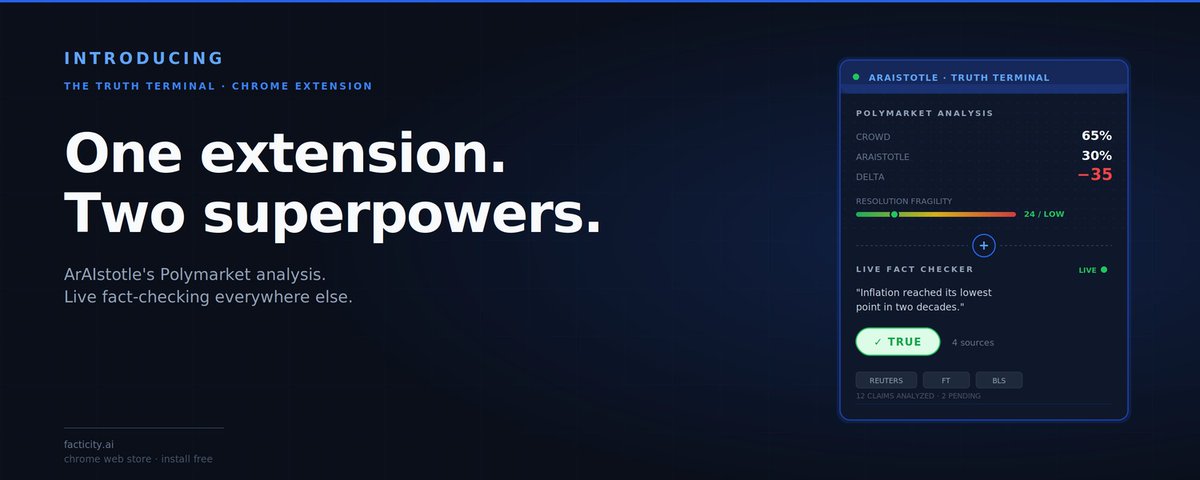 ArAIstotle's Polymarket analysis on every market plus live fact-checking on every video, podcast, and article you watch or read. Same extension, two superpowers.2026-06
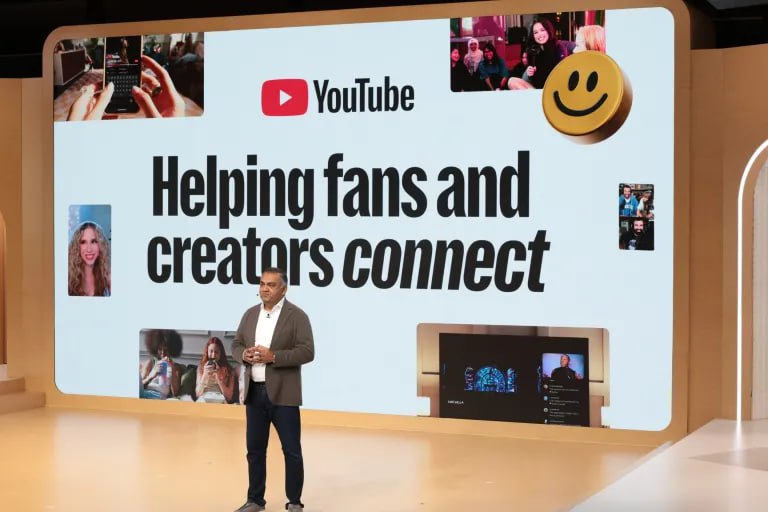 YouTube launches option for U.S. creators to receive stablecoin payouts through PayPal. A spokesperson for Google, which owns YouTube, confirmed the video site has added payouts for creators in PayPal’s stablecoin but declined to comment further.2025-12
 In Wall Street Journal video interview, Coinbase CEO Brian Armstrong says he'll fight the SEC for the good of the crypto industry.2023-06
Recorded and generated video has become one of crypto's primary communication layers — serving simultaneously as product announcement medium, community trust signal, educational scaffold, and, increasingly, an AI-generated asset class in its own right.
Why Video Matters in Crypto
Blockchain projects operate without traditional corporate communications infrastructure. There are no quarterly earnings calls with mandated disclosures, no press offices with on-the-record spokespeople, and no regulated broadcast windows. Into that vacuum, video has filled a structural role: it is how protocols introduce themselves to users, how founders establish credibility (or destroy it), and how communities form around shared narratives.
This is not incidental. Crypto is global, pseudonymous, and high-stakes. A two-minute explainer about how a new DeFi lending curve works, or a live EthCC keynote clipped and reshared across Telegram channels, carries weight that a whitepaper alone cannot. When Vitalik Buterin used a 2025 EthCC speech video to warn that the crypto ecosystem must not follow OpenAI's path — trading openness for control — that clip circulated as evidence, argument, and rallying point simultaneously. Video collapses the distance between technical claim and emotional reception.

Franklin Templeton Digital Assets touts borderless, instant, trusted finance in new video
The Anatomy of a Crypto Launch Video
Protocol launches, token generation events, and product releases almost universally include a launch video. The format has become so standardized that its absence is now conspicuous. What goes into one, and why, reveals a lot about the ecosystem's communication norms.
Founder presence is the primary trust mechanism in an environment without physical offices or verified legal entities. A face on camera carries social proof weight that a pseudonymous Twitter account cannot easily replicate. This creates pressure — and sometimes manipulation — since video can be edited, voiced over, or entirely synthetic.
Technical demonstration has become a proxy for product readiness. Showing a working UI, a contract deployment, or a live transaction lowers the perceived risk for early users. Projects that release only static screenshots or diagrams face skepticism from communities trained to watch for vaporware. The Fable AI announcement — where a launch video was generated entirely from code and tool calls with no human video editor — signals that this demonstration layer is itself being automated.
Narrative framing sets the competitive context. Launch videos typically position a protocol against incumbents: faster than X, cheaper than Y, more decentralized than Z. The Curve Finance ecosystem, for example, has developed complex narratives around its bonding curve mechanics and ve-tokenomics that require careful video explanation to reach a non-technical audience.
Readers click 'video' headlines not because they want to watch something, but because video in crypto functions as irrefutable public record — of regulatory defiance (Armstrong, Pertsev), of scam trails (ZachXBT), of historical precedent (Hal Finney), and of community power (SQUID auction granting editorial control over a creator's video) — making format the receipt, not the content.
AI and Generative Video: A New Frontier
The most significant structural shift currently underway is the entry of AI-generated video into crypto's communications stack. Multiple development lines are converging:
Text-to-video on chain-adjacent platforms. Qtum has deployed a text-to-video generation tool accessible via MetaMask Snap authentication, requiring no subscription or queue. Users submit a prompt and a first frame, and receive generated video with synchronized audio. This is a small but meaningful signal: on-chain identity infrastructure (wallet auth) is being used to gate access to AI creative tools, collapsing two previously separate stacks.
Multimodal AI agents. Venice's Agentic Chat launch integrates text, images, video generation, file analysis, and web search into a single conversational interface. Xona, a creative AI agent platform, has partnered with research services to combine image and video generation with token intelligence and social AI. The direction is toward unified agents that can produce video as one output among many, rather than dedicated video tools requiring separate workflows.
Decentralized GPU infrastructure. Aethir Claw has launched Designer AI agents that generate blog visuals, social media content, and video via decentralized GPU fleets. This is the DeFi-native path to AI video compute: rather than routing inference through centralized cloud providers, the compute layer is tokenized and distributed. The economics here are still unproven at scale, but the architecture mirrors what the broader DeFi stack has done to financial intermediation — removing the central counterparty.
Cost compression. Alibaba's Qwen3.7-Plus supports video and image inputs at $0.4/$1.6 per million tokens. Alibaba Cloud has also backed AI video startup ShengShu with $293M. The cost curve for inference is falling fast, which will commoditize the generation layer and shift competitive advantage to fine-tuning, distribution, and community integration.
Clearpool shares video teasing progress on XRP Ledger institutional lending project

Real-Time Video vs. Pre-Generated: A Category Distinction
An important distinction is emerging between two modes of AI video that are often conflated:
Pre-generated video — where a prompt produces a finished clip — is a tool. It automates production work. The output is a static artifact that can be reviewed, edited, and published like any other piece of content.
Real-time AI video — where a model responds to a user live via video — is a different category entirely. It is closer to a collaborator or agent. The latency requirements, model architecture, and use cases diverge substantially. As one recent analysis noted, "generating a video from a prompt and having AI respond to you live are two completely different things, even though both technically produce video."
For crypto specifically, real-time AI video opens questions about live customer support, on-chain identity verification via video proof, and AI-represented DAOs that can speak on behalf of protocol treasuries. None of these are fully realized yet, but the infrastructure is arriving.
Deepfakes, Manipulation, and the Trust Problem
The same capabilities that enable legitimate AI video production also enable fraud. This is not a hypothetical risk in crypto — it is an active attack surface.
Grok's new video capabilities have raised documented concerns about deepfakes and AI misuse. Resurfaced footage — such as the 2022 arrest video that created scrutiny around World Liberty Finance co-founder Zach Witkoff, combined with ongoing legal pressure from Justin Sun over frozen tokens — demonstrates that video evidence, authentic or fabricated, can move markets and destroy reputations.
The crypto ecosystem has specific vulnerabilities:
- Fake founder videos used in rug pulls or to establish false legitimacy for new projects
- Clipped or decontextualized footage of real figures (Robert Kiyosaki on Bitcoin, Vitalik on decentralization) misrepresented to serve opposing narratives
- Synthetic product demos that show functionality that does not exist at launch
- Social engineering via deepfakes targeting high-net-worth holders, a vector that compounds the physical safety risks already associated with public Bitcoin wealth disclosure — as crypto journalist Joe Nakamoto warned in a recent video advising against publicly flaunting holdings
The Vyper smart contract language and similar infrastructure auditing tools have no video-layer equivalent. There is currently no reliable on-chain mechanism to cryptographically attest that a video is authentic, unedited, or produced by who it claims to be produced by. Several projects are working on this (C2PA metadata standards, blockchain-anchored provenance), but adoption remains thin.
TxFlow teases cryptic video with message "the date is set
Video as a DeFi Communication Layer
Beyond launch announcements, video has taken on a persistent role in DeFi governance and community coordination:
Protocol upgrade explanations. Complex DeFi mechanisms — liquidity curves, gauge weights, collateralization ratios, ve-token locking schedules — are difficult to communicate in text alone. Video walkthroughs of Curve's bonding mechanics or explanations of a new Vyper-based contract release reach a broader audience than technical documentation, and informed token holders make better governance voters.
Senate and voting context. DAOs are increasingly using video to provide context before major governance votes. A five-minute explainer from a core contributor carries different weight than a forum post, particularly for protocol changes that affect token value.
Security disclosures. Post-mortems and exploit explanations are now commonly released as video alongside written reports. The 2023 Curve Finance exploit related to Vyper compiler vulnerabilities, for instance, generated extensive video analysis from independent researchers that helped the broader community understand the attack vector faster than text alone.
Leviathan and community media. Crypto-native media projects like Leviathan News are building infrastructure where video content is surfaced alongside editorial coverage — recognizing that community-produced video commentary is now part of the primary information flow, not a secondary channel.
- 01Regulatory battle on camera
Founders and convicted builders using public video as their courtroom of last resort — Armstrong challenging the SEC, Pertsev appealing to supporters, Ver narrating government persecution — turns legal drama into appointment viewing.
- 02AI video meets on-chain stakes
Sora's launch, Disney's $1B OpenAI deal unlocking Marvel/Pixar/Star Wars AI video, Google Veo 3.1, and a $293M Alibaba-backed rival signal that AI-generated video is concentrating in Big Tech hands, with crypto readers tracking IP, monetization, and censorship implications.
- 03Community-staked editorial control
The SQUID whale vs. shrimp auction for directorial influence over a creator's video is a live experiment in token-gated editorial governance that readers followed as a bellwether for decentralized media power.
- 04Scam exposure as forensic video
ZachXBT's 31-minute takedown of phishing scammer 'vkevin' and the XRP theft traced partly through a viral video show readers treating investigative video content as on-chain accountability infrastructure.
- 05Developer education deep-dives
A 31-hour Python/Vyper/algorithmic-trading tutorial, an ETH restaking airdrop explainer, a CDP stablecoin Berachain walkthrough, and a Liquity v2 redemptions video reveal readers actively seeking long-form technical upskilling packaged as video.
- 06Crypto history unearthed on tape
A 25-year-old Hal Finney lecture on zero-knowledge proofs surfacing from Crypto '98 attracted strong clicks because archival video provides provenance for ideas the market is now pricing — ZKPs aren't new, and readers want the receipts.
Captions, Accessibility, and Silent Scroll
A practical note that analytics data consistently confirms: most mobile video is consumed without audio. Engagement data shows captioned video performing significantly better than uncaptioned across social platforms. For crypto content specifically — which skews toward technical claims that require precision — captioning is not an accessibility add-on but a communication necessity. A misparsed basis point in a DeFi yield explanation costs credibility.
Native caption tooling is improving across platforms, but the discipline of building captions into production rather than adding them post hoc remains uneven in the space.
Legal and Regulatory Context
Video creates regulatory surface area that text often does not. An unlabeled video testimonial from a paid influencer promoting a token violates FTC guidelines in the US. A video claiming specific yield projections may constitute an unregistered securities offering. Several enforcement actions have cited promotional videos as evidence in cases against DeFi protocols.
The SEC and CFTC have both demonstrated willingness to treat video content as material in their investigative record. As the regulatory environment for crypto firms hardens globally, the documentation trail created by video — especially informal social media content — is increasingly consequential.
- 1998-08milestone
Hal Finney presents ZKP talk at Crypto '98 — video later resurfaces in crypto community
- 2023-06regulatory
Coinbase CEO Armstrong defies SEC in WSJ video interview
- 2024-05regulatory
Alexey Pertsev sentenced; releases video calling for public support ahead of appeal
- 2024-08launch
Soneium (Sony Ethereum L2) releases video with anticipated launch date
- 2024-12launch
OpenAI launches Sora video generator publicly
- 2025-05milestone
Disney invests $1B in OpenAI, unlocking Sora for Marvel, Pixar, and Star Wars AI video
- 2025-06launch
Google debuts Veo 3.1 Lite, cutting AI video generation costs by over 50%
- 2025-06milestone
Alibaba Cloud backs AI video startup ShengShu with $293M amid China generative video race
Outlook
Video is not a peripheral channel for crypto — it is load-bearing infrastructure for how the ecosystem communicates, launches products, builds community, and argues about governance. The current wave of AI-generated video will accelerate production while simultaneously degrading the signal value of any individual clip, since provenance will become harder to establish without cryptographic attestation.
The protocols and media projects that will carry influence over the next cycle are those that solve for trust at the video layer: combining authentic founder presence, technically accurate content, proper attribution, and — where AI generation is used — transparent disclosure. The tooling for this is nascent. The demand is not.
Latest Video news
Franklin Templeton Digital Assets touts borderless, instant, trusted finance in new videoClearpool shares video teasing progress on XRP Ledger institutional lending projectTxFlow teases cryptic video with message "the date is set World teases announcement with video saying "you asked, we answer, it's time, 10.6.26
Community notes
Spot something off or out of date? Drop a note. Editors review topic notes daily and roll accepted fixes into the explainer — contributors are recognized in the monthly $SQUID drop.
Loading notes…
Help improve this topic
Have a story or tip about this topic? Submit it. See something missing? Leave a note. Editors review daily; accepted submissions and fixes count toward the monthly $SQUID drop.