
Vitalik Buterin co-founded Ethereum at 19, driving its evolution from a 2013 whitepaper to the world's leading programmable blockchain, while shaping DeFi, ZK privacy, and decentralized governance debates.
+10 sources across the wider coverage universe
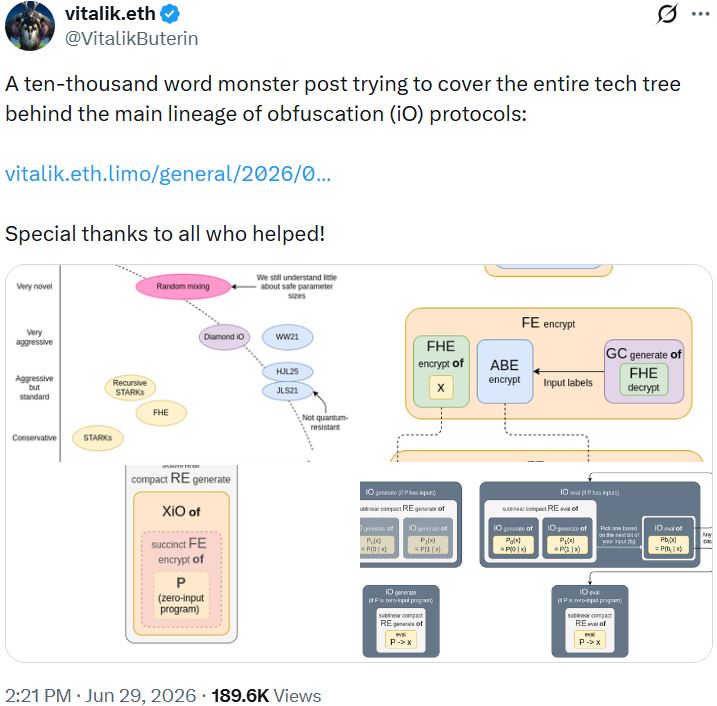 Vitalik maps the obfuscation tech tree, charting cryptography’s ‘final boss’ in a deep-dive essay on indistinguishability iO.2026-06
 Vitalik’s new post explains how obfuscation could hide a program’s inner logic while still letting it run, then walks through the layered cryptography needed to build it.2026-06
 Ethereum founder Vitalik Buterin warns of DNS attack on eth.limo, urging users to avoid accessing eth.limo domains while directing traffic to IPFS-based blog mirror2026-04
 Vitalik Buterin proposes options-based DeFi without debt or liquidations. Users deposit 1 ETH to mint P and N tokens, redeemable for the full ETH at maturity based on a slow oracle's index check.2026-06
 Vitalik's option-based stablecoin proposal reignites debate on DeFi options, leveraging ETH upside buyers to create stability without debt, liquidations, or funding rates2026-06
 Ethereum Maxirealist argues Vitalik Buterin's sci-fi novel is a blueprint for crypto's future, embedding 17 governance, identity and privacy mechanisms beneath its fictional narrative2026-06
Co-founder of Ethereum and one of the most influential thinkers in the cryptocurrency industry, Vitalik Buterin has shaped the technical and philosophical direction of decentralized computing since he first described a programmable blockchain in a 2013 whitepaper written at age 19.
Origins: From Bitcoin Forums to Ethereum
Vitalik Buterin was born on January 31, 1994, in Kolomna, Russia, and moved to Canada with his family at age six. His father, Dmitry, was a computer scientist — an early influence that steered him toward mathematics, programming, and economics from childhood. By third grade he had been placed in a class for gifted students in Toronto.
His entry into crypto came through writing, not trading. In 2011, at 17, he began contributing articles to Bitcoin Weekly, initially paid in bitcoin at roughly $0.70 per coin. That work led him to co-found Bitcoin Magazine the same year, one of the first serious publications devoted to the nascent field. Buterin spent two years as a deep reader of the bitcoin ecosystem — attending meetups, traveling to meet developers, and absorbing the limitations of a system that could only transfer value but not generalize computation.
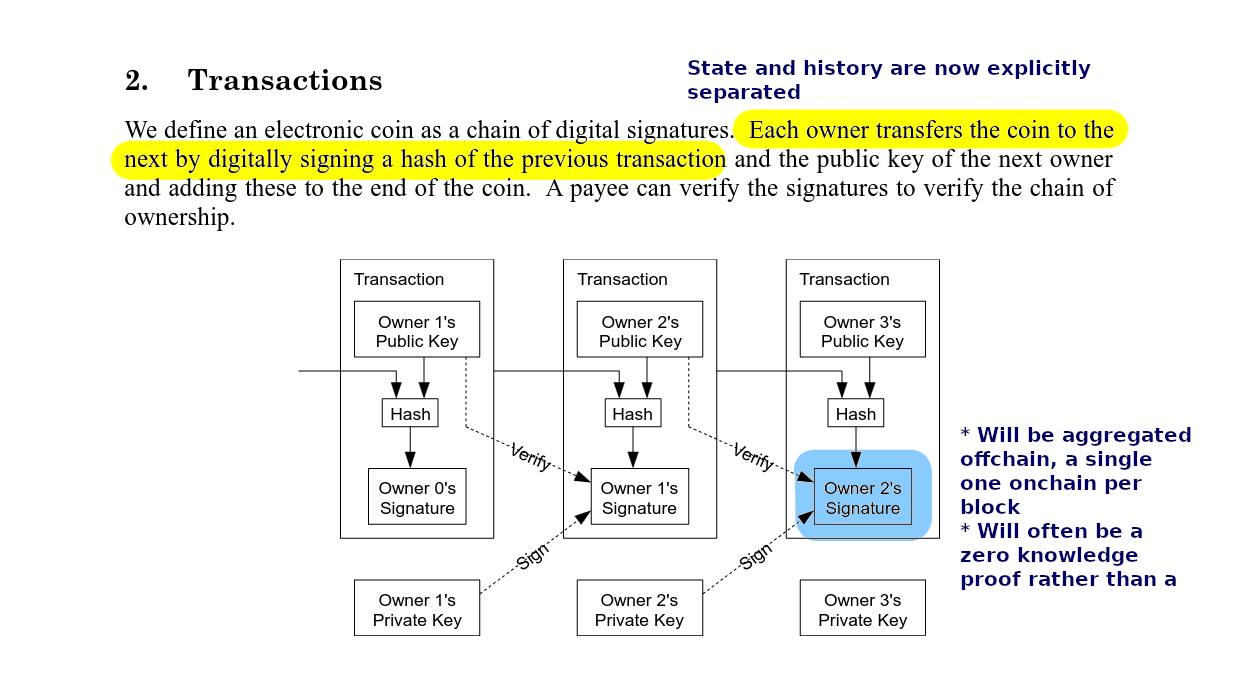
By late 2013, he had circulated a white paper proposing something different: a blockchain with a built-in Turing-complete scripting language that could express arbitrary state transitions — smart contracts, decentralized applications, and digital assets — without requiring a new chain for every use case. He was 19. The paper was titled simply Ethereum.

Vitalik Buterin says Ethereum is evolving beyond the blockchain label
Building Ethereum
Buterin announced the project publicly at the North American Bitcoin Conference in Miami on January 26, 2014. That year he received a $100,000 Thiel Fellowship — a program funded by Peter Thiel that pays young people to leave university and build companies — and dropped out of the University of Waterloo to work on Ethereum full-time.
The project launched in July 2015 as "Frontier," a live mainnet, co-deployed with Gavin Wood (who co-authored the Yellow Paper formalizing Ethereum's execution environment), Charles Hoskinson, Anthony Di Iorio, Joseph Lubin, and several others. The initial network was intentionally bare-bones: a working blockchain for developers, not end users.
What followed was a decade-long compounding of capabilities. The 2016 DAO hack — in which $60 million in ETH was drained from a smart contract — produced the first major governance crisis and the Ethereum / Ethereum Classic split. Buterin led the controversial but ultimately successful hard fork that reversed the theft and set the precedent that developer consensus could act decisively even on live chains. Critics called it a bailout; supporters called it crisis management.
The transition from proof-of-work to proof-of-stake — internally called "The Merge" — had been on Buterin's roadmap since at least 2015 but only completed in September 2022. It reduced Ethereum's energy consumption by roughly 99.95 percent and eliminated the miner constituency that had complicated prior governance decisions. By most measures it was the most technically complex upgrade ever executed on a live public blockchain with hundreds of billions of dollars at stake.
Readers click Vitalik content most when his abstract philosophy collides with concrete, personal action — depositing his own ETH into a protocol, buying a Milady, donating to a jailed dev — because those moments test whether his ideals are performative or real.
Technical Vision: The Endgame Roadmap
Buterin's roadmap thinking has consistently outrun Ethereum's current capabilities. He publishes frequently on his personal blog at vitalik.eth.limo — long, technically dense essays that often preview ideas years before they become proposals or code.
The active roadmap as of 2025–2026 is organized around several tracks: the "Surge" (scaling throughput via rollups and data availability), the "Scourge" (censorship resistance and MEV mitigation), the "Verge" (stateless clients via Verkle trees), the "Purge" (simplifying the protocol), and the "Splurge" (everything else). Underlying all of it is a philosophical commitment to not optimizing exclusively for raw throughput: Buterin has been explicit that Ethereum should not "race on raw speed and TPS alone" and that CROPS values — censorship resistance, openness, privacy, and security — define what the protocol is for.
Zero-knowledge proofs occupy a central position in that vision. Buterin has argued that ZK-SNARKs and related constructions, once the province of academic cryptography, are now mature enough to serve as privacy infrastructure for everyday users. In October 2025 he elevated privacy to a top priority, invoking a comparison originally made by Zcash founder Zooko Wilcox: current public blockchains, Buterin warned, function like "Twitter for your bank account" — every transaction visible to the world. ZK proofs enable selective disclosure: users can prove they meet a criterion (sufficient balance, eligible status, valid credential) without exposing the underlying data. Buterin has pointed specifically to ZK payments as the likely default for autonomous AI agents that transact on users' behalf — a convergence of privacy infrastructure and AI that he views as one of crypto's most important near-term frontiers.
On verification, he has updated a longstanding position: he now argues that ZK proofs allow trustless chain verification without re-executing every transaction, a capability he once considered too expensive to be practical. That shift has implications for light clients, mobile wallets, and eventually browser-native Ethereum access.
DeFi Rethinking: The Options-Based Stablecoin Proposal
In mid-2026, Buterin published a research post on the Ethereum Research forum titled "Building index-tracking assets on top of options instead of debt," which reignited debate about the foundations of decentralized finance. The proposal targets a structural vulnerability in existing collateralized debt position (CDP) stablecoins: their dependence on real-time oracles to trigger liquidations when collateral value falls below a threshold.
The design is elegant in concept. A user deposits one ETH and receives two tokens: P (a "protected" token that tracks the stable value) and N (a leveraged exposure token that absorbs ETH's upside and volatility). The two tokens always sum to exactly one ETH and can be merged back at any time. At a set maturity date, a slow oracle — the kind used in prediction markets rather than the fast feeds used by protocols like Aave or MakerDAO — reads an index value and splits the ETH between P and N accordingly. Because the positions are fully collateralized and redeem against a single ETH pot, no position can be force-liquidated.
The claim from teams already experimenting with the design is that peg drift can be kept below 1 percent under realistic market conditions. Buterin himself noted on Farcaster that implementations were already appearing in parallel, while urging that any mainnet deployment undergo formal verification first. The proposal is not a stablecoin in the traditional sense — the P token tracks an index, which could be a dollar reference, an inflation index, or a basket — making it a generalized framework for synthetic price exposure without debt.
Whether the design can hold under a real market crash remains unproven, and the theoretical risks of slow-oracle latency and quadratic index drift are acknowledged trade-offs. But the proposal reflects a recurring pattern in Buterin's work: identifying a systemic fragility in an existing primitive and proposing a cleaner alternative that eliminates the failure mode at the cost of added complexity.
- 01Vitalik's personal on-chain moves
His 1,900 ETH Aave deposit dwarfed all other clicks because readers treat his wallet activity as the ultimate signal of conviction versus hypocrisy.
- 02Ethereum protocol overhaul proposals
Replacing the EVM with RISC-V, Rainbow Staking, and The Verge posts drew consistent engagement because readers track whether Ethereum can reinvent itself fast enough to stay relevant.
- 03Privacy roadmap and d/acc philosophy
Readers engaged with his privacy posts and d/acc follow-ups as a coherent ideological project, not just a technical spec.
- 04L2 tensions and tariff politics
His 'reciprocal tariffs on L2s' framing and Soneium commentary tapped into reader anxiety that L2s are extracting value from Ethereum mainnet rather than growing it.
- 05Vitalik versus crypto orthodoxy
His 'batshit insane' rebuke of Saylor and his MakerDAO exit showed readers a willingness to publicly break with powerful aligned actors, which consistently drives clicks.
- 06Crypto-AI intersection bets
His blog posts and investments at the crypto-AI boundary attracted readers positioning ahead of the next narrative cycle.
The Ethereum Foundation: A Leaner Model
The Ethereum Foundation (EF), incorporated in Switzerland, was established to fund Ethereum's development and act as a neutral steward of the protocol. Buterin holds no formal executive role — he has described his influence as persuasive rather than managerial — but in practice his public positions set the tone for the organization's priorities.
In May 2026, after months of visible turbulence, Buterin published an extended post on X addressing the EF's direction directly. At least nine senior contributors had departed over the preceding months, including protocol researcher Barnabé Monnot, process lead Tim Beiko, and others who had been central to Ethereum's development culture. The departures came alongside leadership changes at the top: Tomasz Stańczak stepped back and was replaced on an interim basis by Bastian Aue.
Buterin's framing was deliberate: he described the EF as choosing to become a "smaller ship" rather than a platform for broad institutional expansion. The foundation, which holds approximately $408 million in ETH, would sell less ETH going forward, reducing its market footprint and extending the runway for the treasury. The focus would narrow to activities directly serving CROPS — the codified framework for what Ethereum is supposed to protect — rather than funding adjacent ecosystem work that could be done by external teams. He reaffirmed the EF's neutrality explicitly, rejecting suggestions that the foundation should use its treasury to support the ETH price or take sides in ecosystem debates.
The framing was Buterin's personal perspective, not a board statement, but that distinction reflects the unusual nature of his role: influential enough that his posts move markets and set organizational direction, yet structurally outside the governance chain.
AI, Governance, and Science Fiction
Buterin's intellectual interests have consistently extended beyond protocol design. At EthCC in July 2025 he warned that the crypto industry must not repeat what he characterized as OpenAI's trajectory: an organization that began with commitments to openness and safety and progressively abandoned both. He has argued that decentralized systems offer a different path — where transparency, open source, and distributed governance substitute for institutional trust — but only if the ecosystem resists the economic pressure to centralize.
On governance, he has moved some of his thinking into a new medium. In early 2026, he announced on Farcaster that he was pausing his typical long-form technical essays to write a science fiction novel about decentralized governance. Chapters posted to his personal site embed ideas drawn from his years of technical writing — coordination problems, identity, voting mechanisms, power distribution — into a speculative narrative form. Observers have noted that the fictional frame allows him to explore second- and third-order consequences of governance designs that would be too speculative for a research post.
The move is consistent with a broader pattern: Buterin has long been more willing than most protocol architects to publish ideas that are half-formed, directionally suggestive, or deliberately provocative — treating public writing as a thinking tool rather than a finished product.
- 2023-05milestone
Vitalik buys Milady NFT, changes X profile picture
- 2023-07governance
Vitalik sells MakerDAO stake after Rune's Solana-fork NewChain proposal
- 2023-11milestone
Vitalik publishes d/acc (defensive accelerationism) essay
- 2024-05milestone
Polymarket raises $45M with Vitalik among investors
- 2024-05regulatory
Vitalik donates 50 ETH to Alexey Pertsev (Tornado Cash) legal defense fund
- 2024-12milestone
Vitalik publishes 'Possible Futures of the Ethereum Protocol' series including The Verge and The Scourge
- 2025-04governance
Vitalik proposes replacing Ethereum EVM with RISC-V architecture
Outlook
The next phase of Ethereum's technical roadmap is oriented around making the protocol's security assumptions more accessible: stateless clients, ZK-based light verification, and on-chain privacy that doesn't require users to interact with specialized mixers or privacy chains. Buterin has been explicit that these are not optional refinements but prerequisites for Ethereum to function as infrastructure rather than a tool for sophisticated users.
The Ethereum Foundation's restructuring, painful as it has been in terms of departures, signals a deliberate narrowing of mandate rather than organizational failure. A leaner foundation that sells less of its treasury and focuses exclusively on CROPS-relevant work is a different bet than one that tries to fund the entire ecosystem — one that depends on external teams, rollup operators, and application developers filling the gap.
Whether Buterin's influence remains as decisive as the protocol matures — governance becoming more distributed, more contentious, and less deferential to any single voice — is the underlying governance question his own science fiction is starting to explore.
Latest Vitalik Buterin news
Community notes
Spot something off or out of date? Drop a note. Editors review topic notes daily and roll accepted fixes into the explainer — contributors are recognized in the monthly $SQUID drop.
Loading notes…
Help improve this topic
Have a story or tip about this topic? Submit it. See something missing? Leave a note. Editors review daily; accepted submissions and fixes count toward the monthly $SQUID drop.