
In‑depth explainer on how crypto conferences—from Bitcoin weeks and Paris Blockchain Week to academic tokenomics and political Mar‑a‑Lago events—shape narratives, regulation, DeFi, stablecoins and AI, and how builders, traders and policymakers should navigate them.
+20 sources across the wider coverage universe
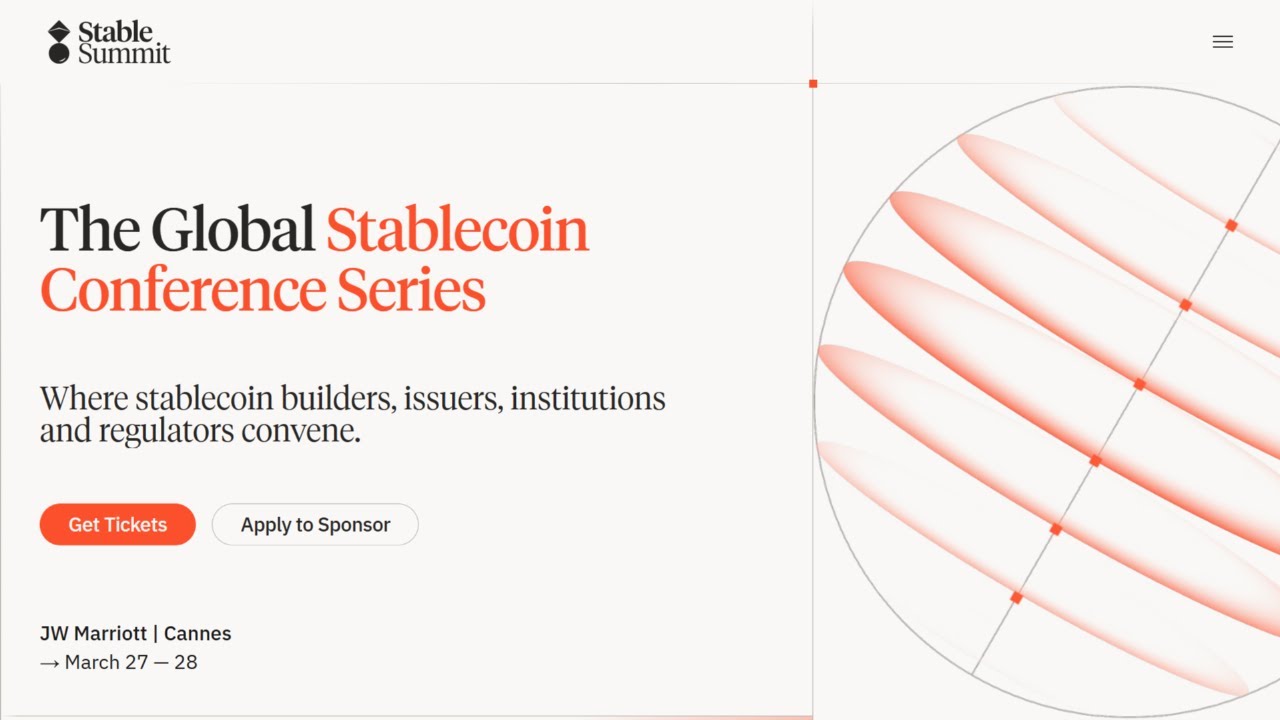 "The Stablest Crypto Conference"
Stable Summit is starting this Friday, and Zach, the CEO of Party Action People, the team behind Stable Summit, and others, is with DAdvisoor to tell us all about it!
Live in a few minutes!
Enjoy!2026-03
"The Stablest Crypto Conference"
Stable Summit is starting this Friday, and Zach, the CEO of Party Action People, the team behind Stable Summit, and others, is with DAdvisoor to tell us all about it!
Live in a few minutes!
Enjoy!2026-03 Phantom Prediction Markets have entered the chat, powered by Kalshi. The new feature was announced at Solana's Breakpoint conference in Abu Dhabi.2025-12
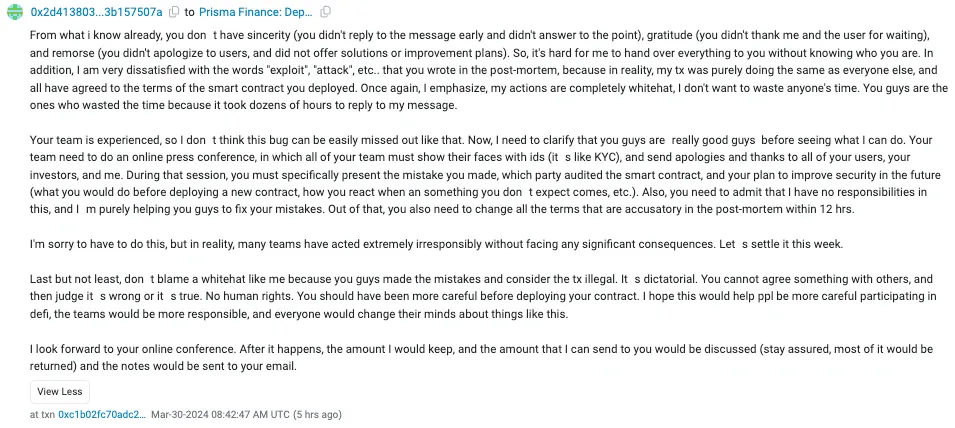 Terms presented to Prisma: "Your team need to do an online press conference, in which all of your team must show their faces with ids (its like KYC), and send apologies and thanks to all of your users, your investors, and me."2024-03
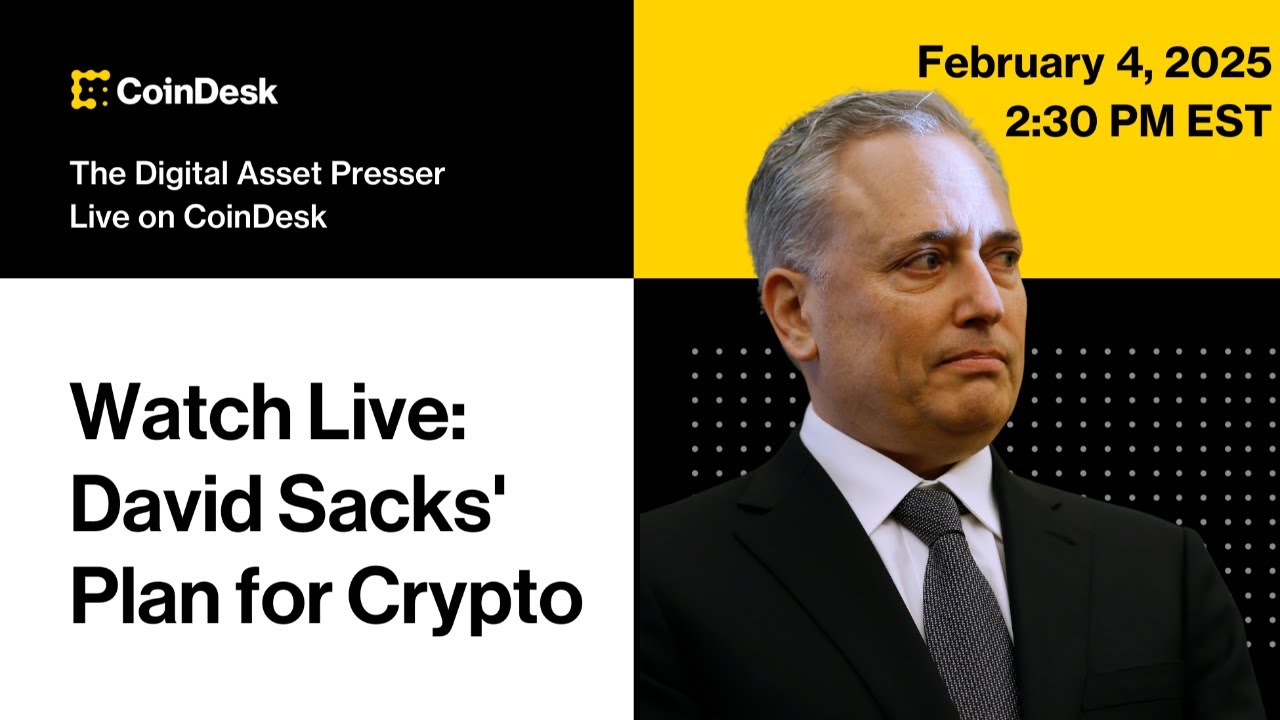 "Stablecoins really have the potential to ensure American Dollar dominance internationally" - Digital assets press conference by David Sacks2025-02
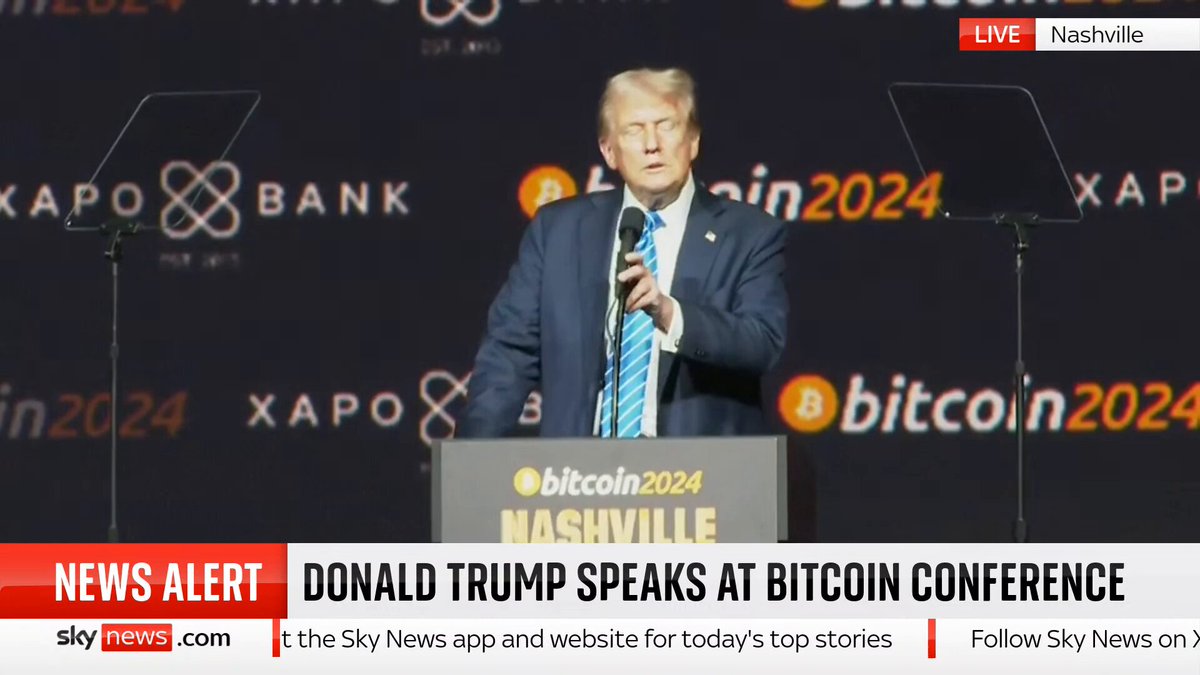 Trump speech at the Bitcoin Conference addresses creating a national stockpile, firing Gary Gensler, and commuting the sentence of Ross Ulbricht2024-07
 Week ahead: Coinbase's legal battle with SEC, $150 Million in tokens unlock, World Economic Forum conference in Davos.2024-01
Conferences in Crypto: What They Are, Why They Matter, and How They Shape the Ecosystem
In the crypto world, a conference is a structured gathering where developers, investors, institutions, policymakers, and enthusiasts converge to exchange information, strike deals, and negotiate the future of digital assets and blockchain networks. Unlike casual meetups, these events are dense coordination points that can influence narratives, regulation, market structure, and even token prices long after the stages go dark.
Conferences have become one of the primary ways the crypto industry organizes itself, tells its story to the outside world, and works through the technical, economic, and political questions around Bitcoin, DeFi, tokenization, and stablecoins. Industry guides from analytics firms and DeFi platforms now track a global circuit of Web3, DeFi, NFT, and Bitcoin events stretching from New York and Las Vegas to Paris, Prague, Toronto, and Singapore, underscoring how central conferences have become for networking and trend-spotting in a fast‑moving sector. At one end of the spectrum, highly curated events at institutions such as Stanford and Toulouse subject blockchain research to rigorous peer review; at the other, political and promotional gatherings in venues like Mar‑a‑Lago use the language and aesthetics of conferences to blend campaigning, fundraising, and crypto marketing. This explainer sets out what “conference” really means in a crypto context, how different varieties of events function, what role they play in Bitcoin and broader blockchain adoption, and how readers can use them more critically and productively.
Understanding Conferences in Crypto
A conference, in its simplest sense, is a planned, time‑bound event where people convene around a shared theme to present information, debate ideas, and build relationships. In crypto, the theme is not just “blockchain” in the abstract but an evolving mix of monetary experiments, decentralized finance, cryptographic infrastructure, regulatory frameworks, and speculative culture. While local meetups or online spaces can support ongoing communities, conferences compress months of interaction into a few days of keynotes, panels, workshops, and informal hallway conversations. This compression is particularly valuable in an ecosystem where teams are globally distributed, pseudonymous identities are common, and much of the work happens asynchronously.
The modern crypto conference landscape is remarkably diverse. Some events focus narrowly on a single protocol or asset, such as Bitcoin‑only gatherings that emphasize monetary sovereignty and censorship resistance. Others are industry‑wide, pitched as “blockchain weeks” or “Web3 summits” that combine institutional finance, DeFi, NFTs, gaming, and infrastructure within the same program. There are also academic conferences that treat blockchains as objects of scientific study rather than products to promote, with rigorous selection processes and published proceedings. Finally, there are corporate, banking, and political conferences where crypto is one track among many, reflecting how digital assets are being absorbed into broader conversations about markets, media, or public policy.
The term “conference” in crypto thus does not describe a single format but rather a spectrum of organizational models and incentives. A Bitcoin investor conference in New York, an institutional payments forum in Barcelona, and a tokenomics workshop in Toulouse all call themselves conferences, yet they differ in audience, rigor, and objectives. Understanding those differences is critical for anyone trying to interpret what is said on stage, whether they are trading on the back of a bullish remark by an exchange executive or evaluating the seriousness of a new tokenization proposal presented to regulators.

"The Stablest Crypto Conference" Stable Summit is starting this Friday, and Zach, the CEO of Party Action People, the team behind Stable Summit, and others, is with DAdvisoor to tell us all about it! Live in a few minutes! Enjoy!
The Evolution of Crypto Conferences
From grassroots Bitcoin meetups to global blockchain weeks
In the early days of Bitcoin, most in‑person gatherings were small, informal meetups in major cities, often held in coworking spaces or bars, with a mix of coders, libertarians, and curious technologists. As the asset’s price rose and startups formed around exchanges and wallets, more formal Bitcoin conferences emerged, typically centered on infrastructure, merchant adoption, and the ethics of peer‑to‑peer money. This phase established a pattern that persists today: core protocol developers and cypherpunks sharing space, sometimes uneasily, with entrepreneurs and venture capitalists.
Over the past decade, the conference circuit has professionalized and expanded alongside the industry. Today, guides published by data and DeFi platforms present annual calendars of “top blockchain and crypto conferences,” covering everything from specialized Bitcoin summits to multi‑chain Web3 festivals and institutional finance forums. These guides emphasize that conferences are not just educational events; they are also critical for networking, fundraising, and spotting emerging narratives in areas like DeFi, NFTs, and real‑world asset tokenization. The growth in both the number and size of events reflects a maturing sector that now touches payments, securities, art, and gaming, and requires venues where these constituencies can interact.
The rebranding of many events from “Bitcoin conferences” to “blockchain weeks” and “digital asset summits” tracks the broadening of the ecosystem. Events such as Paris Blockchain Week, billed as a European forum for the future of digital finance and drawing around 10,000 decision‑makers to the Louvre, symbolize this shift from monolithic Bitcoin focus to multi‑asset and multi‑sector engagement. Similar branding can be seen in Toronto’s Blockchain Futurist Conference, which markets itself around the future of Web3 and frequently features high‑profile protocol founders like Vitalik Buterin, highlighting how Ethereum and smart‑contract platforms have pulled conferences toward programmable finance and applications beyond money.
Hybrid formats and post‑pandemic experimentation
The pandemic forced conferences across industries to experiment with virtual formats, and crypto was no exception. Remote‑only events initially relied on video calls and chat platforms, but over time organizers experimented with virtual networking lounges, token‑gated streams, and on‑chain ticketing. As travel restrictions eased, many high‑profile conferences adopted hybrid models, allowing participants to attend in person or watch online, often for different price tiers. AI and crypto gatherings in San Francisco, for example, have been advertised as offering both in‑person attendance and full online access, reflecting a recognition that global developer communities cannot always travel on short notice.
Hybridization also changed conference economics and access. Organizers can now reach a larger audience with lower marginal cost per additional viewer, while still charging a premium for in‑person experiences. This is particularly relevant in crypto, where communities are global and income disparities significant. At the same time, many participants still ascribe higher value to physical attendance, both for serendipitous encounters and for the social signaling of “being in the room” when announcements are made.
Crypto conferences have also embraced ancillary digital products tied to the live event. Exclusive recorded keynotes or panel sessions may be token‑gated or bundled as NFTs, creating a secondary market in conference content. The TRUMP Coin Club, for instance, promotes exclusive video access to an invitation‑only conference held at Mar‑a‑Lago that is “never shown online before” in open channels, but accessible through the token community, blending political branding, crypto tokens, and event media into a single product. This convergence of content, community, and coins shows how the meaning of “conference” has expanded beyond a time‑limited gathering into an ongoing media and marketing asset.
Readers click crypto conference stories not for panels or networking — they click when a conference becomes the stage for a power assertion: a presidential candidate's policy declaration, a hack victim's public shaming of an anonymous team, or a regulator's coordinated enforcement announcement.
A Taxonomy of Crypto and Blockchain Conferences
Bitcoin‑focused gatherings
Bitcoin‑only conferences cater to an audience that sees Bitcoin as fundamentally distinct from other cryptoassets. These events prioritize topics such as monetary policy, self‑custody, mining, and layer‑two scaling, often deemphasizing or excluding NFTs and altcoin projects. Bitcoin Investor Week in New York City offers a contemporary example. Scheduled as a week‑long series of forums, discussions, and networking events, it brings together investors and industry leaders to discuss Bitcoin’s investment case, market infrastructure, and regulatory outlook, with main stage programming structured around VIP and general‑admission days at Manhattan’s Chelsea Piers. The focus on investor education and institutional dialogue reflects how Bitcoin is increasingly framed as a macro asset and portfolio component.
In Europe, BTC Prague has emerged as a prominent Bitcoin‑specific conference. Travel platform Travala highlights its role as an “official travel partner” for Bitcoin Prague 2026 and promotes discounts on both travel and event passes, illustrating how ancillary industries now position themselves around major Bitcoin events. Marketing material for BTC Prague emphasizes its status as a leading European Bitcoin gathering, underscoring the continuing appeal of single‑asset conferences even as the broader industry has diversified. These Bitcoin‑centric events often serve as rallying points for communities skeptical of DeFi and tokenization, reinforcing ideological distinctions within the broader crypto space.
Multi‑chain and industry‑wide summits
At the other end of the spectrum are large multi‑chain conferences and “blockchain weeks” that bring together projects, exchanges, investors, and regulators across the crypto spectrum. Paris Blockchain Week, held at the Carrousel du Louvre, describes itself as a power forum for the future of digital finance, convening around 10,000 decision‑makers, including founders, policy officials, and institutional allocators. The event includes main‑stage keynotes, side conferences, and specialized tracks on topics such as Web3, DeFi, and institutional adoption, making it a microcosm of the entire industry rather than a single‑protocol gathering.
Similarly, the Blockchain Futurist Conference in Toronto positions itself as a forward‑looking Web3 event and features influential figures such as Ethereum founder Vitalik Buterin among its speakers. These conferences often act as hubs for announcements by major protocols, infrastructure providers, and exchanges, as well as venues for side events hosted by DAOs and venture funds. Strategy World 2026 in Las Vegas adds another dimension by explicitly combining data, artificial intelligence, business intelligence, and Bitcoin into a single program, bringing together communities that might otherwise attend separate tech and finance conferences. This convergence demonstrates how crypto has become entangled with adjacent domains like AI, both technically and narratively.
Industry guides from companies such as Splunk and Bleap reflect the dominance of these multi‑chain events, cataloging “blockchain conferences, Bitcoin summits, Ethereum gatherings, Web3 festivals, and crypto networking events” worldwide and emphasizing their role in showcasing trends across DeFi, NFTs, and digital identity. For participants, the challenge is selecting which of these large, loosely focused events align with their goals, given the risk that breadth can come at the expense of depth on any given topic.
Academic and research‑oriented conferences
A distinct class of conferences treats blockchain technology as a subject of scientific inquiry. These events apply the norms of academic disciplines like cryptography, economics, and computer science, with peer‑reviewed submissions and low acceptance rates. The Stanford Blockchain Conference is illustrative. Aptos Labs noted that two of its research papers were accepted to the 2026 edition out of 256 submissions, implying an acceptance rate of roughly 13 percent and positioning the event as a rigorous venue for contributions to what it calls “the full stack for markets and machines.” Such conferences attract protocol researchers, PhD students, and formal verification experts, and discussions often center on consensus algorithms, security proofs, and mechanism design rather than token price movements.
The Tokenomics Conference, organized by the Toulouse School of Economics, explicitly brands itself as an international forum for the theory, design, analysis, implementation, and applications of blockchains and smart contracts. Its focus connects crypto to formal economic modeling and market design, giving a home to a growing body of work on incentive structures, governance, and auction mechanisms in decentralized systems. By framing blockchain research in terms of “tokenomics,” the conference helps institutionalize a term that began as industry jargon into an academic subfield.
Bridging academia and industry is the goal of events like the Penn Blockchain Conference. Organized in 2026 as a two‑day gathering in Philadelphia, the conference defines itself as a venue for bridging the gap between academia and industry, hosting both researchers and practitioners. Panels such as one featuring Adrian Wall of the Digital Sovereignty Alliance, who spoke on tokenization, explore practical use cases, regulatory considerations, and the conditions required for tokenized systems to transition from pilots to large‑scale deployment. Hackathons attached to such conferences, sometimes supported by major protocols, further blur the line between academic exploration and product development.
Corporate, banking, and media conferences
Crypto and blockchain are increasingly present at generalist conferences organized by banks, brokers, and media or research firms. Coinbase’s participation in the J.P. Morgan Global Technology, Media and Communications Conference illustrates how large exchanges now feature alongside traditional tech and media companies in institutional investor programs. Such conferences are typically closed‑door or invitation‑only, with one‑on‑one investor meetings and fireside chats rather than open hackathons, and they tend to focus on revenue models, regulatory risk, and public‑market valuations.
Traditional finance conferences have also become stages for significant crypto‑related commentary. At the Bernstein Conference, Intercontinental Exchange (ICE) CEO Jeff Sprecher reportedly described decentralized derivatives platform Hyperliquid as “bigger than Nasdaq” on some metrics despite having a team of just 11 people, praising the team as “very, very smart” and noting multiple meetings with them. Even if such comparisons are context‑dependent, remarks made in this forum can influence perceptions of DeFi’s scale and competitiveness when amplified on social media and in financial press coverage.
Banking conferences present another channel through which blockchain topics intersect with traditional payment systems. At a recent Digital Banking Conference in Barcelona, for example, a senior SWIFT product executive highlighted that most cross‑border payments already arrive in minutes, arguing that speed “is no longer enough” and framing debates around “old vs new,” correspondent banking versus blockchain, and digital currencies. Although stablecoins may not have been named explicitly in that snippet, the framing reflects a larger industry discussion about whether token‑based systems and blockchain rails will complement or replace existing networks, particularly for cross‑border settlements.
Earnings calls and investor days also function as de facto mini‑conferences for listed crypto firms. DMG Blockchain Solutions, a public mining and infrastructure company, scheduled a conference call to discuss its second‑quarter 2026 earnings and provide a broader corporate update, inviting participants to dial in at a fixed time. While these are not conferences in the sense of multi‑day events, they share the core characteristics of structured presentations to a defined audience with Q&A and can introduce news that shapes market expectations.
Political and promotional events
The aesthetics and language of conferences have also been adopted in explicitly political and promotional contexts. At the national level, the term “conference” is embedded in US politics through bodies like the House Republican Conference, whose leadership positions are often highlighted in endorsements and campaign communications. Donald Trump, for example, has publicly praised candidates serving as vice chair of that conference as key allies in advancing his policy agenda, albeit in a context removed from crypto itself.
More directly relevant are events where Trump’s political brand intersects with crypto promotion. Marketing for a Mar‑a‑Lago “Crypto & Business Conference” emphasized a limited‑time leaderboard competition, where top participants could win travel to attend the conference and gala luncheon featuring Trump, blending gamified digital campaigns with offline access.[Newsroom] Separate announcements highlighted the addition of high‑profile speakers like Chi‑Hyung Song, the billionaire founder of Korean exchange Upbit, as “superstar” guests at the same event, demonstrating how political figures, exchange executives, and crypto influencers are brought together under the banner of a conference.[Newsroom]
The TRUMP Coin Club further extends this model by offering exclusive video access from an invitation‑only conference held at Mar‑a‑Lago on April 25, 2026, framed as content “never shown online before” to the general public. Access is positioned as a benefit of belonging to a crypto‑themed community, effectively turning conference footage into a token‑gated perk. While these examples sit at the promotional end of the spectrum, they demonstrate how the concept of a conference can be deployed as a tool of political branding, fundraising, and community management, raising questions about transparency and investor protection when investment narratives are wrapped in political spectacle.
Functions and Impact of Conferences in the Crypto Ecosystem
Information flow, narratives, and price discovery
Conferences serve as dense information hubs where new data, narratives, and expectations are produced and transmitted. Announcements of protocol upgrades, exchange listings, or strategic partnerships made on stage can quickly propagate through social media and media outlets, influencing market sentiment. The ICE CEO’s remarks at the Bernstein Conference about Hyperliquid being “bigger than Nasdaq” despite its tiny team are a prime example of how a single soundbite from a traditional finance executive can reframe how a DeFi platform is perceived by institutional audiences. When such comments are amplified by influential crypto accounts, they can also affect retail traders’ perceptions, potentially impacting liquidity and valuations.
Academic conferences contribute to information flow in a more structured but equally important way. When a research lab announces that its papers have been accepted to a highly selective conference like the Stanford Blockchain Conference, with an acceptance rate around 13 percent, it signals that specific protocol designs or security assumptions have passed a meaningful peer‑review threshold. These signals are taken seriously by technically sophisticated investors and developers, who may adjust their assessments of different chains’ robustness or prioritize certain design patterns based on emerging academic consensus.
Conferences can also act as narrative launchpads, where new buzzwords and conceptual framings are introduced. For instance, the elevation of “tokenomics” from industry jargon to the organizing theme of an academic conference has helped solidify the idea that token design is a serious field of economic study rather than purely a marketing exercise. Similarly, the presentation of a “Systematization of Knowledge” (SoK) on decentralized AI at a top security and machine learning venue, as referenced in recent coverage, suggests that concepts once confined to crypto Twitter are entering mainstream technical discourse, potentially influencing both research and investment in DeAI projects.
Regulatory dialogue and policy influence
Regulation is one of the defining constraints on crypto adoption, and conferences have become key venues where policymakers, lawyers, and industry representatives negotiate narratives and specific policy proposals. At the Penn Blockchain Conference, a tokenization panel featuring Adrian Wall and others delved into practical use cases, regulatory considerations, and what it would take for tokenized systems to move beyond pilot projects into large‑scale, regulated deployments. Discussions at such panels help regulators gauge industry priorities and technical feasibility while giving projects insight into how supervisors think about risks and compliance.
Banking and payments conferences play a similar role for cross‑border settlement and stablecoins. At the Digital Banking Conference in Barcelona, SWIFT’s chief product officer emphasized that most cross‑border payments already clear in minutes, arguing that speed alone does not justify new systems and pointing to an ongoing debate between correspondent banking and blockchain‑based alternatives, including digital currencies. Although the snippet does not specify which digital currencies were discussed, this framing mirrors broader policy conversations about whether token‑based stablecoins or central bank digital currencies should coexist with or replace existing rails, and under what conditions. When such statements are made on public stages, they both reflect and shape how market participants evaluate the probability and timing of regulatory change.
Political and promotional conferences featuring figures like Trump add another layer of complexity. When crypto is discussed in a partisan context, there is a risk that regulatory questions are reframed as culture‑war issues rather than technical or economic questions. While such events can amplify crypto’s visibility and potentially accelerate political support for Bitcoin or specific tokens, they can also polarize opinion and increase regulatory uncertainty if policy positions become entangled with electoral strategy.
Network building, capital formation, and deal‑making
Networking is perhaps the most obvious function of conferences, but its implications for crypto markets are often underappreciated. Large events such as Paris Blockchain Week, which advertises attendance by around 10,000 decision‑makers, function as dense marketplaces where founders solicit investment, funds source deals, and service providers meet clients. Investor‑oriented events like Bitcoin Investor Week foreground this role, framing the week as a series of forums and networking opportunities tailored to capital allocators and project leaders. Side events and private dinners at such conferences can secure seed funding, exchange listings, or liquidity commitments that never appear explicitly in the public program.
Hackathons and builder‑focused tracks also catalyze new projects. At the Penn Blockchain Conference, for example, an associated hackathon, supported by major protocols such as TRON according to recent coverage, convened students and developers to build new applications, with mentorship from industry participants.[Newsroom] Winning projects often receive funding or incubation offers, effectively turning the hackathon into a deal‑sourcing mechanism for venture capital. In the DeFi space, early‑stage protocols sometimes time their token launches or governance proposals to coincide with conference presentations in order to maximize visibility and community engagement.
Corporate and banking conferences, as well as microcap showcases like LD Micro’s invitational events, play a complementary role for publicly traded or soon‑to‑list blockchain firms.[Newsroom] Presentations at these events can attract institutional investors who would not attend crypto‑native conferences, broadening the shareholder base and influencing access to capital. Earnings calls such as DMG Blockchain Solutions’ scheduled quarterly conference call, in which management provides updates and answers questions, similarly shape investors’ understanding of a company’s strategy and risk profile. Together, these various conference formats constitute a fabric of interpersonal and informational connections through which capital flows into and within the crypto ecosystem.
Technical standards, security, and research progress
Finally, conferences are crucial for the development and dissemination of technical standards and security practices. At academic events like the Stanford Blockchain Conference and Tokenomics, researchers present new consensus protocols, cryptographic constructions, and economic models that may eventually be implemented in production systems. The peer‑review process serves as a quality filter, and discussions at the conference can lead to revisions that improve security or performance. Over time, best practices emerging from these venues filter into industry, influencing how wallets handle keys, how layer‑two rollups manage data availability, or how DeFi protocols design liquidation mechanisms.
Security‑focused conferences in adjacent fields, such as the IEEE Conference on Secure and Trustworthy Machine Learning (SaTML), have begun to incorporate decentralized AI topics, as with the presentation of a SoK on blockchain‑based DeAI referenced in recent coverage.[Newsroom] This cross‑pollination indicates a growing recognition that blockchain is not just a financial technology but also a security and governance tool for distributed AI systems. Conferences thus act as interfaces between crypto and other domains, allowing technical standards to evolve in response to broader developments in computing.
In sum, conferences are not mere social gatherings; they are critical infrastructure for information flow, regulatory dialogue, capital formation, and technical progress across the crypto stack.

Phantom Prediction Markets have entered the chat, powered by Kalshi. The new feature was announced at Solana's Breakpoint conference in Abu Dhabi.

Let's fuckin go🔥
Anatomy of a Modern Crypto Conference
Stakeholders and incentives
A typical crypto conference brings together multiple stakeholder groups with overlapping but distinct incentives. Organizers, which may be private companies, university departments, student societies, or DAOs, are responsible for curating the agenda, securing venues, and balancing budgets. Sponsors, often exchanges, protocols, infrastructure providers, or trading firms, supply funding in exchange for brand visibility, speaking slots, and access to attendee data. Speakers include founders, researchers, regulators, and sometimes celebrities, who may be motivated by a mix of reputation building, product promotion, and policy influence.
Attendees range from developers and traders to institutional investors, policymakers, journalists, and service providers. Each group approaches the conference with different expectations: developers may look for technical workshops and hackathons, investors for deal flow and signal, policymakers for structured dialogue, and media for quotable content and story leads. Recognizing these differing incentives helps explain why conference programs often blend deeply technical sessions with high‑level panels and why some conferences lean more toward substance while others feel closer to trade shows or campaign rallies.
Program structure and content formats
Conference programs are usually structured around plenary sessions (keynotes and main panels) and parallel tracks or workshops. Bitcoin Investor Week’s scheduling, which divides the week into a VIP day and two general‑admission days at New York’s Chelsea Piers, illustrates the layering of access levels and content. VIP days may feature smaller rooms with high‑profile speakers and more investor‑oriented discussion, while general days offer broader programming and exhibitions. Paris Blockchain Week, meanwhile, spans multiple days and incorporates not just a main conference but also spin‑off events such as The Odds Conference, which launched during the 2026 edition and illustrates how specialized sub‑conferences can be nested within larger industry gatherings.
Hackathons, pitch competitions, and workshops create more interactive spaces within these programs. At Penn Blockchain, the hackathon ran alongside the conference and was supported by ecosystem players like TRON, attracting students and developers to build and present new projects.[Newsroom] Technical tutorials might cover topics like zero‑knowledge proofs or stablecoin integration, while policy workshops focus on compliance frameworks or regulatory sandboxes. The overall result is a layered environment where different communities can find content tailored to their interests, even if they rarely overlap in the same rooms.
Business models, tickets, and travel partnerships
Financially, conferences typically rely on a mix of ticket sales, sponsorship, and sometimes government or institutional support. Tiered ticketing is common, with cheaper early‑bird passes, standard rates, and premium VIP packages that include lounge access, private meetings, or exclusive dinners. Some organizers also offer discount codes or referral programs. Travala’s partnership with Bitcoin Prague is a clear example of how travel platforms integrate into this model, offering up to approximately 100 dollars off travel bookings for the conference and promo codes that reduce event pass prices. These arrangements benefit both the conference, which gains marketing reach, and the travel partner, which gains commissionable bookings.
Token‑based models are also emerging. The TRUMP Coin Club’s promise of exclusive conference video access to token community members is one such experiment, effectively using the conference as content to drive token value and engagement. Some DAOs issue non‑transferable “soulbound” tokens as proof of attendance, while others use governance tokens to decide location or program themes. These practices blur the line between conference participation and on‑chain community governance, though they also raise questions about regulatory classification when tokens confer financial benefits.
Geography, venues, and host cities
Crypto conferences cluster in cities that combine strong tech communities, favorable regulations, good infrastructure, and symbolic value. New York hosts investor‑heavy events such as Bitcoin Investor Week, leveraging its status as a global financial hub. Paris, through Paris Blockchain Week at the Louvre, positions itself as Europe’s meeting point for digital finance, signaling cultural prestige and regulatory ambition. Prague, as host of BTC Prague, benefits from its reputation as a central European tech hub and its historical connection to early Bitcoin adoption.
North America continues to be a major locus. Toronto’s Blockchain Futurist Conference reflects Canada’s active crypto ecosystem, while Las Vegas’s Strategy World conference illustrates how destination cities known for entertainment and conventions are tapping into demand from data, AI, and Bitcoin communities. In the United States, Las Vegas conference venues also benefit from a long history of hosting gaming and technology events, and the city’s brand of spectacle resonates with parts of speculative crypto culture, though serious institutional participants may prefer cities like New York, San Francisco, or Washington, DC for policy engagement.
European banking and academic centers also feature prominently. Barcelona hosts digital banking conferences where fintech and blockchain debates intersect with established payments infrastructures, while Toulouse’s Tokenomics Conference connects blockchain researchers with economists in a university setting. Philadelphia and San Francisco, as homes to Ivy League and West Coast universities, host events like Penn Blockchain and AI‑and‑crypto conferences that emphasize research and academic rigor. The global distribution of conferences thus mirrors the distribution of both capital and intellectual resources in the broader tech and finance landscape.
- 01Exploit accountability press conference demands
The top story by a factor of five involved hack victims publicly demanding Prisma's team unmask themselves with ID on camera — readers are drawn to moments when anonymous DeFi teams are forced into real-world accountability.
- 02Political keynotes at Bitcoin Conference
Trump's Bitcoin stockpile/Gensler/Ulbricht speech, Harris campaign flirtation, and Ulbricht's first public appearance collectively show readers treat the annual Bitcoin conference as a barometer of where U.S. political power stands on crypto.
- 03Stablecoin policy announcements↗
David Sacks' dollar-dominance press conference, Stable Summit in Paris, Frax at Bitcoin Conference, and U.S. Bancorp's Morgan Stanley reveal show readers tracking how stablecoins are moving from niche DeFi to official monetary policy terrain.
- 04Regulatory enforcement press conferences
The CFTC/FBI/SEC/SDNY joint announcement on Celsius and the FOMC Powell watch both drew clicks, revealing readers monitor enforcement press conferences as leading indicators of legal risk across crypto.
- 05Ethereum ecosystem conference milestones
EthCC Cannes institutional embrace (BlackRock, Deutsche Bank), Devcon 7 Bangkok, Devconnect Argentina, and ETHDenver recaps show a sustained reader appetite for Ethereum's conference-driven narrative of legitimization.
- 06Protocol launches announced at conferences
Jump's Frankendancer going live at Solana Breakpoint and Phantom Prediction Markets at Breakpoint Abu Dhabi show readers use conference announcements as the authoritative signal for when major technical milestones are real.
Thematic Strands: Bitcoin, DeFi, Tokenomics, and Stablecoins
Bitcoin’s monetary narrative
Bitcoin remains a central organizing theme for many conferences, particularly those focused on macroeconomics, monetary policy, and digital gold narratives. Bitcoin‑only gatherings often emphasize topics such as inflation hedging, state resistance, and energy use in mining, and they attract a mix of libertarians, institutional investors, miners, and technologists. Bitcoin Investor Week in New York positions itself explicitly around the investment dimension, bringing together “investors and leaders” for a week of focused forums. Discussions likely cover topics such as ETF flows, mining economics, and regulatory developments affecting Bitcoin markets, though the event’s investor framing already signals a particular vantage point.
In Europe, BTC Prague promotes itself as one of the continent’s leading Bitcoin conferences, with Travala highlighting its significance by entering into an official travel partnership and offering promotions tied to the event. The fact that a travel platform allocates marketing budget specifically to a Bitcoin conference indicates both the size of the audience and the spending power associated with such gatherings. Bitcoin‑specific conferences also serve a community‑building function, reinforcing ideological commitments to Bitcoin as distinct from “crypto” writ large and sometimes explicitly distancing themselves from DeFi or tokenomic experimentation.
DeFi, tokenization, and the rise of tokenomics
Decentralized finance and tokenization introduce new themes that cut across technical, legal, and economic questions. Panels like the tokenization discussion at the Penn Blockchain Conference, where Adrian Wall participated, focus on how real‑world assets—such as securities, real estate, or commodities—can be represented on blockchains while complying with regulatory requirements. These conversations often address questions about legal ownership, settlement finality, KYC/AML obligations, and the role of intermediaries in tokenized markets. The panel’s emphasis on conditions required for tokenized systems to move beyond small‑scale pilots suggests a recognition that technical feasibility alone is not enough; regulatory clarity and institutional buy‑in are also necessary.
Tokenomics, meanwhile, has evolved from a marketing buzzword to a research area, culminating in dedicated conferences like the Tokenomics Conference organized by the Toulouse School of Economics. This event frames tokenomics as encompassing theory, design, analysis, implementation, and applications of blockchains and smart contracts, indicating a broad scope that includes mechanism design, governance, and economic incentives. Presentations at such conferences may analyze how to align incentives for liquidity provision, prevent governance attacks, or discourage harmful MEV extraction, topics that have direct implications for DeFi protocol design.
DeFi’s growth has also pushed institutional players to pay attention. At events like Strategy World, where AI, BI, and Bitcoin communities mix, DeFi infrastructure is discussed alongside data and analytics tools. The ICE CEO’s public praise of Hyperliquid, a derivatives DEX, at the Bernstein Conference further shows that established market operators are now assessing DeFi venues as potential competitors or partners, rather than dismissing them as curiosities. These interactions at conferences can accelerate the integration of DeFi into broader financial market structures, while also raising questions about the centralization of liquidity and governance.
Stablecoins, payments, and banking
Stablecoins sit at the intersection of crypto and traditional payments, making them a recurring topic at banking and fintech conferences. The comment from SWIFT’s chief product officer at the Digital Banking Conference in Barcelona—that most cross‑border payments already arrive within minutes and that speed alone is no longer sufficient—captures a key point in the policy debate. If traditional rails can achieve comparable performance on speed, proponents of blockchain‑based stablecoin systems must emphasize other benefits, such as 24/7 settlement, programmability, transparency, or reduced reliance on correspondent banks. Conferences provide a venue where these arguments can be tested against skeptical audiences and refined.
Stablecoin design also raises regulatory and tokenomic questions that fit naturally within conference agendas. Issues such as reserve transparency, custody, redemption rights, and the interaction between stablecoins and bank deposits are frequent topics in panels featuring regulators and industry representatives. Multi‑chain conferences like Paris Blockchain Week, which frame themselves as forums for digital finance, are likely to host dedicated tracks or roundtables on stablecoins and central bank digital currencies, reflecting their centrality to both DeFi and institutional adoption. For corporate treasurers or payment providers attending these events, conference discussions may influence how they evaluate integrating stablecoins into their operations.
In parallel, developer‑oriented conferences and hackathons experiment with new stablecoin mechanisms, including algorithmic or partially collateralized designs, though the failures of several high‑profile projects have made these discussions more cautious. Academic conferences such as Tokenomics are well‑suited to scrutinize these mechanisms under formal economic models, potentially identifying vulnerabilities before they lead to systemic failures in deployed systems. The interplay between practice and theory in conference settings can thus have real consequences for the stability and safety of stablecoin ecosystems.
Case Studies: The 2026 Conference Landscape
Global flagship events
The 2026 calendar illustrates how diverse flagship crypto conferences have become. In February, Bitcoin Investor Week in New York is scheduled to bring together investors and leaders for a week of Bitcoin‑focused programming, with a structure that includes a VIP day and two general admission days at Chelsea Piers, blending exclusivity with broader access. Later that month, Strategy World 2026 in Las Vegas plans to convene a global community spanning data, AI, business intelligence, and Bitcoin for four days, highlighting the cross‑disciplinary nature of contemporary tech and finance conversations. The Las Vegas setting underscores the city’s continued role as a convention hub for industries that mix high stakes, innovation, and spectacle.
April sees Paris Blockchain Week at the Carrousel du Louvre, which positions itself as a European power forum for digital finance and expects around 10,000 decision‑makers over two days. The launch of The Odds Conference at Paris Blockchain Week in 2026 signals a trend toward more specialized sub‑events within large conferences, potentially focusing on niche topics like prediction markets, derivatives, or risk. In June, BTC Prague offers a European Bitcoin‑specific alternative, with travel partner Travala offering discounts on travel and event passes, illustrating how conference ecosystems now involve airlines, hotels, and booking platforms. Toronto’s Blockchain Futurist Conference, scheduled for July, continues to attract high‑profile speakers such as Ethereum’s Vitalik Buterin and positions itself as a key North American hub for Web3 discussions.
Industry content platforms and analytics companies increasingly produce comparative guides to these events. Splunk’s overview of top blockchain and crypto conferences in 2026 and Bleap’s guide to the “best crypto events in the world” both highlight how conferences now cover a range of themes, including Web3, DeFi, NFTs, and institutional blockchain adoption, and emphasize factors such as location, audience, and thematic focus to help readers decide which events to attend. This meta‑layer of conference coverage reflects the sector’s maturity and the need for curation in a crowded event market.
Academic hubs and research gatherings
On the academic side, the Stanford Blockchain Conference remains a premier venue for blockchain research. Aptos Labs’ note that two of its submissions were accepted to the 2026 conference, out of 256 submissions and with an acceptance rate of roughly 13 percent, underscores the event’s selectivity. The conference’s framing as contributing to the “full stack for markets and machines” indicates a broad view that treats blockchain not just as a financial tool but as part of a technical substrate for algorithmic markets and automated agents. Discussions at this conference can influence design choices in both L1 and L2 protocols and can filter into industry best practices.
The Tokenomics Conference in Toulouse plays a complementary role by emphasizing economic and incentive‑design questions. By describing itself as an international forum for theory, design, analysis, implementation, and applications of blockchains and smart contracts, it bridges the gap between economic modeling and computer science, providing a venue for interdisciplinary work on governance, mechanism design, and market microstructure in tokenized systems. Frank dialogue at such conferences can help temper overly optimistic narratives about token incentives and highlight game‑theoretic vulnerabilities before they manifest in attacks on live protocols.
The Penn Blockchain Conference, bridging academia and industry, serves as a hybrid model. Its 2026 edition, held at the Penn Museum, hosted panels on topics such as tokenization, with participants like Adrian Wall discussing regulatory and practical constraints, and included a hackathon supported by ecosystem players like TRON, according to recent coverage.[Newsroom] This format allows students and researchers to engage directly with industry practitioners and regulators, fostering talent pipelines and cross‑pollination. Meanwhile, security and AI conferences such as SaTML’s 2026 edition, which featured a Systematization of Knowledge paper on blockchain‑based decentralized AI, show that blockchain topics are being integrated into broader security and machine learning discourse.[Newsroom] Together, these conferences shape the research frontier on which future crypto infrastructure will be built.
Institutional, banking, and media conferences
Beyond crypto‑native events, 2026 features a variety of institutional, banking, and media conferences where crypto is one of several focus areas. Coinbase’s participation in the J.P. Morgan Global Technology, Media and Communications Conference illustrates how crypto exchanges now take part in blue‑chip investor conferences alongside traditional tech giants. Such appearances give institutional investors opportunities to question management on regulatory risk, compliance strategies, and revenue diversification, and they serve as recognition that crypto firms are part of the mainstream tech and financial landscape.
The Bernstein Conference, where ICE’s Jeff Sprecher commented on Hyperliquid’s scale relative to Nasdaq, shows how Wall Street events can become venues for significant crypto‑related commentary. Even if such remarks are partly rhetorical, they can drive narratives about the competitiveness of DeFi markets and the potential for future integration with traditional exchanges. Meanwhile, the Digital Banking Conference in Barcelona, featuring SWIFT’s Thomas Delaet discussing cross‑border payments and the trade‑offs between correspondent banking and blockchain‑based solutions, demonstrates that banking conferences are grappling seriously with the implications of digital currencies and blockchain rails.
Microcap investor conferences such as LD Micro’s invitational events, which have featured blockchain companies according to recent coverage, give smaller public crypto firms a stage to present to specialized investors focused on microcap equities.[Newsroom] Similarly, DMG Blockchain Solutions’ earnings conference call scheduled for late May 2026 functions as a targeted forum for providing performance updates and strategic guidance to investors in a mining and infrastructure company. These diverse institutional events illustrate how crypto now permeates multiple layers of the financial conference ecosystem, from blue‑chip investor days to sector‑specific microcap showcases.
Political and promotional venues
Political and promotional conferences round out the landscape. The Mar‑a‑Lago Crypto & Business Conference, promoted through time‑limited campaigns urging supporters to climb a leaderboard for a chance to “sail” to the event and attend a gala luncheon with Donald Trump, exemplifies how conference branding can be used to energize political bases and promote crypto narratives simultaneously.[Newsroom] Announcements highlighting newly added “superstar speakers” such as Upbit founder Chi‑Hyung Song illustrate the blending of political figures, international crypto executives, and domestic business interests in a single event.[Newsroom]
The TRUMP Coin Club site’s emphasis on exclusive video access from an invitation‑only conference also underscores how political brands can leverage token‑gated conference content as a tool for fundraising and community engagement. These events tend to be tightly choreographed, with less emphasis on open debate and more on message discipline and loyalty. For market participants, they may matter less as venues for technical insight and more as indicators of how crypto is being woven into political identity and campaign messaging, with potential downstream effects on regulatory posture.

The Federal Reserve is expected to cut rates by 25 basis points for a second straight meeting, balancing the risks of inflation and a weakening labor market as the government shutdown clouds economic data ahead of Powell’s policy statement and press conference Wednesday.

Conferences, Media, and Public Narrative
Crypto media as interpreters and amplifiers
Specialist crypto news outlets and analytics platforms play an important role in filtering conference content for broader audiences. They decide which panels to cover, which quotes to foreground, and how to contextualize announcements. A comment by a regulator at a policy panel might be framed as signaling a “crackdown” or as a routine reiteration of existing guidance, depending on editorial judgment. When guides to “top conferences” are published by firms like Splunk or Bleap, they also shape which events are perceived as must‑attend and which are relegated to the margins. This selection effect can concentrate attention and sponsorship on a subset of conferences, reinforcing their prominence.
Media coverage also affects how different themes—such as Bitcoin, DeFi, NFTs, or tokenized real‑world assets—are perceived as ascendant or declining. Extensive reporting on DeFi hackathon winners or AI‑and‑crypto panels at conferences like Strategy World can amplify narratives about convergence between AI and blockchain, while sparse coverage of stablecoin risk panels may leave important warnings underreported. Crypto media’s presence in conference rooms, hallways, and private events thus acts as both a mirror and a magnifier of industry priorities.
Mainstream finance and general media
Mainstream financial and general news outlets increasingly cover crypto‑relevant conference content, especially when it involves large financial institutions, regulators, or well‑known personalities. ICE CEO Jeff Sprecher’s comparison of Hyperliquid to Nasdaq at the Bernstein Conference has been widely shared through social media posts and could easily become a talking point in broader coverage of DeFi’s threat to traditional exchanges. Similarly, high‑profile appearances by CEOs of major exchanges at conferences organized by banks, such as Coinbase at the J.P. Morgan event, are often covered in the context of earnings and regulatory risk rather than as purely technological stories.
This media framing influences public understanding of crypto’s legitimacy and risk. Conferences that include AI and public health, such as the AGI conferences or public health EIS conferences mentioned in recent coverage, show how blockchain topics may appear in broader narratives about emerging technologies or data governance. When crypto is one thread among many, how much airtime it receives and how it is described—whether as speculative, innovative, or systemic risk—matters for political and investor sentiment.
Social media and real‑time discourse
Platforms like X play a distinctive role in connecting conference rooms to the broader crypto community. Many of the sources discussed here—such as the Swift Community’s summary of remarks at the Digital Banking Conference in Barcelona or Aptos Labs’ announcement of its Stanford Blockchain Conference papers—are directly drawn from posts on social media. This real‑time dissemination means that the boundary between “in the room” and “watching from afar” is increasingly porous. Tweets highlighting a single remark can overshadow entire panels, and selective clipping can distort nuance.
Social media also enables meta‑commentary about conferences themselves. Participants may critique the diversity of speaker lineups, the quality of organization, or perceived conflicts of interest when sponsors dominate panels. Conversely, well‑received panels or workshops can enhance a conference’s reputation and attract stronger speakers in subsequent years. The interplay between conferences and social media thus creates a feedback loop that shapes which events thrive, which narratives gain traction, and which concerns—such as token security or regulatory capture—receive sustained attention.
- 1998-08milestone
Hal Finney presents zero-knowledge proofs at Crypto '98
- 2024-02milestone
ETHDenver 2024 draws 21 cited community takeaways
- 2024-07regulatory
Trump Bitcoin Conference Nashville speech: stockpile, Gensler, Ulbricht
- 2024-11milestone
Devcon 7 held in Bangkok, Thailand
- 2025-05milestone
Bitcoin 2025 Las Vegas: Ross Ulbricht first public appearance
Stable Summit Paris stablecoin conference, July 15–16
- 2025-07milestone
EthCC Cannes: BlackRock, Robinhood, Deutsche Bank signal institutional Ethereum embrace
- 2025-11launch
El Salvador hosts Bitcoin Histórico, first government-sponsored Bitcoin conference
Navigating Conferences as a Crypto Participant
Builders and developers
For builders and developers, conferences can be both an inspiration and a distraction. Hackathons and technical workshops at events like Penn Blockchain, Tokenomics, or Stanford Blockchain provide opportunities to learn about cutting‑edge research, connect with mentors, and find collaborators. However, the temptation to chase conference appearances at the expense of shipping code is real, particularly for early‑stage teams under pressure to demonstrate traction. Developers should prioritize events where they can gain concrete skills or feedback—such as code review sessions, security workshops, or research tracks—over purely promotional stages.
Conferences also offer a venue for open‑source contributors and protocol teams to coordinate on standards and roadmaps. Side meetings during large events like Paris Blockchain Week or Strategy World can be invaluable for aligning cross‑chain bridge maintainers, or for harmonizing APIs between wallets and dApps. Builders should be aware, however, that many critical discussions happen in small, off‑program gatherings rather than on stage, and attending a conference does not guarantee access to those circles. Being intentional about which side events to attend and which communities to engage with is therefore important.
Traders and investors
Traders and investors often look to conferences for signals that could inform market positioning. Yet the signal‑to‑noise ratio can be low. Bullish comments by executives, partnerships announced without clear commercial terms, or vague references to forthcoming regulatory clarity are frequent. The ICE CEO’s comparison of Hyperliquid to Nasdaq illustrates how a strong soundbite can catalyze enthusiasm even when underlying metrics are not fully specified. Investors should treat such remarks as prompts for further research rather than as standalone investment theses.
More substantive signals may come from the types of sessions included in conference programs and from who attends. For example, a surge in stablecoin and tokenized‑asset panels at banking conferences could indicate growing institutional interest in using blockchain rails for settlement, while the presence of regulators at DeFi‑focused events may suggest evolving openness to engagement. Academic conference acceptances, such as the Stanford Blockchain Conference’s selective inclusion of certain protocol research papers, can indicate where the most serious work is being done and may inform long‑term bets on infrastructure. Investors should focus on these structural indicators rather than on short‑term price reactions to conference headlines.
Policymakers and regulators
For policymakers and regulators, conferences are an opportunity to engage with industry without the constraints of formal hearings. Panels at events like Penn Blockchain, Tokenomics, and Paris Blockchain Week provide a setting where regulators can outline concerns, test ideas, and hear directly from technologists and market participants. For supervisors concerned about stablecoin risk or consumer protection in DeFi, listening to technical debates about oracle design, MEV, or tokenomics can clarify what is realistically enforceable.
At the same time, regulators must guard against capture. Conferences sponsored by industry actors may present a curated view of risk and emphasize self‑regulation, potentially underplaying consumer harms or systemic vulnerabilities. Political conferences that blend crypto with partisan messaging, such as those featuring Trump at Mar‑a‑Lago, can further complicate the picture by framing regulatory questions in ideological terms.[Newsroom] Policymakers should therefore seek a balanced mix of inputs, including academic conferences that have less direct commercial stake in particular token ecosystems.
Journalists and researchers
Journalists and independent researchers use conferences as both reporting venues and field sites. Conferences offer the chance to interview multiple stakeholders in one place, to observe how narratives are framed, and to detect mismatches between on‑stage rhetoric and back‑channel conversations. For example, a conference program may trumpet decentralization, while private discussions reveal concentrated control of key infrastructure or treasury decisions. Academic conferences such as Tokenomics or Stanford Blockchain can also be fertile ground for story ideas about emerging research that may later impact mainstream crypto markets.
However, reporters and researchers must navigate potential conflicts of interest, including travel sponsorships, VIP access offered in exchange for favorable coverage, or pressures to amplify certain talking points. Maintaining independence may require declining certain perks or clearly disclosing them. For those studying the political economy of crypto, promotional conferences at venues like Mar‑a‑Lago or partisan endorsements referencing the House Republican Conference provide rich material for analyzing how crypto is mobilized in contemporary politics, but they also demand careful separation of descriptive analysis from normative endorsement.
Risks, Critiques, and the Future of Conferences
Commercialization, conflicts of interest, and hype
The rapid growth of crypto conferences has inevitable downsides. Heavy reliance on sponsorship can skew programming toward projects with large marketing budgets rather than those with the most robust technology or governance. Pay‑to‑speak arrangements, where sponsors receive guaranteed panel slots, can blur the line between editorial and advertising. For attendees, this raises the risk of mistaking promotional content for impartial analysis, particularly when panels are labeled as “expert discussions” without clear disclosure of financial relationships.
Promotional conferences that intertwine political branding, speculative tokens, and exclusive experiences, such as the Mar‑a‑Lago Crypto & Business Conference and the TRUMP Coin Club’s token‑gated content, intensify these concerns.[Newsroom] Attendees may conflate political loyalty or celebrity association with due diligence on underlying projects. The gamified nature of certain promotional campaigns—for example, leaderboards determining conference access—can create additional psychological pressure, exploiting FOMO and social signaling.
Critics also point out that conference culture can contribute to hype cycles. When every major event becomes an occasion for “big announcements,” there is an incentive for projects to overpromise or to announce vague “partnerships” that lack substance. Investors and journalists therefore need to cultivate skepticism and focus on follow‑through: do protocols ship code after splashy conference reveals, and do regulators’ conference statements translate into concrete policy changes?
Environmental, accessibility, and inclusion concerns
Large in‑person conferences have environmental and accessibility implications. International travel to events in New York, Paris, Las Vegas, or Prague generates significant carbon emissions. For an industry that sometimes touts energy efficiency or climate‑aligned finance, the growth of conference tourism raises questions about consistency between rhetoric and practice. Organizers can mitigate impact by choosing venues with strong public transport, offering robust virtual attendance options, and being transparent about their own sustainability measures.
Accessibility is another concern. High ticket prices and the cost of travel and accommodation can exclude participants from lower‑income regions or underrepresented groups, skewing conference demographics toward well‑funded teams and wealthy investors. While some conferences offer scholarships or student discounts, these are often limited. Hybrid formats and online streaming can democratize access to content, but they rarely replicate the networking benefits of in‑person attendance. The design of conferences thus has implications for whose voices are heard in shaping the future of crypto.
Inclusion also extends to speaker lineups and representation across gender, race, and geography. Media coverage and social media often call out conferences that feature overwhelmingly homogenous panels, prompting some organizers to commit to diversity targets or to open calls for speakers rather than relying solely on existing networks. For an industry that prides itself on openness and permissionless participation, the composition of conference stages is a visible test of how seriously it takes those values.
AI, DeAI, and the virtualization of conferences
Artificial intelligence is shaping the future of conferences both as a topic and as a tool. Events like Strategy World explicitly bring together AI, BI, and Bitcoin communities, reflecting the growing overlap between algorithmic trading, machine learning, and blockchain infrastructure. Academic conferences such as AGI gatherings and security venues like SaTML, which now include papers on blockchain‑based decentralized AI, indicate that the technical convergence between AI and crypto is accelerating.[Newsroom] Discussions at these conferences may influence how compute markets, model ownership, and data governance are structured in decentralized AI systems.
AI tools also transform how participants experience and interpret conferences. Automated transcription and summarization can make sessions accessible to those who cannot attend live, while recommendation systems can help attendees prioritize which talks to watch. Virtual conference platforms may incorporate AI‑driven matchmaking to connect participants with similar interests, potentially enhancing networking for remote attendees. At the same time, generative AI can flood social media with low‑effort recaps and commentary, making it harder to distinguish original analysis from recycled talking points.
These trends suggest a future in which the boundary between physical and virtual conferences continues to blur. Token‑gated access, NFTs representing tickets or proofs of attendance, AI‑assisted networking, and on‑chain governance of conference agendas are all experiments underway in different corners of the ecosystem. Whether these innovations improve or undermine the core functions of conferences—serious debate, high‑quality information exchange, and meaningful relationship‑building—will depend on how thoughtfully they are implemented.
Outlook
Conferences have evolved from niche meetups for early Bitcoin enthusiasts into a complex global infrastructure through which the crypto ecosystem organizes itself, negotiates with regulators, and interfaces with traditional finance and politics. The 2026 calendar, with Bitcoin Investor Week in New York, Paris Blockchain Week at the Louvre, BTC Prague in Europe, Strategy World in Las Vegas, Penn Blockchain in Philadelphia, Tokenomics in Toulouse, and crypto‑focused tracks at major banking and investor conferences, reflects the breadth of that infrastructure. These events collectively shape narratives about Bitcoin’s monetary role, DeFi’s competitiveness, tokenization’s feasibility, and stablecoins’ place in global payments.
Over the coming years, several trends are likely to define the conference landscape. First, the boundary between crypto‑native and traditional finance conferences will continue to erode as exchanges, stablecoin issuers, and DeFi teams appear on stages organized by banks, asset managers, and technology firms, and as traditional institutions host their own blockchain and digital asset tracks. Second, academic and research conferences will gain importance as the complexity of crypto systems grows and as policymakers and investors look for rigorous analysis to cut through marketing claims. Third, political and promotional conferences will continue to intertwine crypto narratives with partisan agendas and celebrity branding, requiring heightened media literacy from participants and observers.[Newsroom]
Finally, the interplay between AI, DeAI, and blockchain will likely become a central theme at both technical and industry conferences, reflecting the convergence of algorithmic markets, decentralized infrastructure, and intelligent agents.[Newsroom] As conferences experiment with hybrid formats, token‑gated content, and AI‑assisted networking, participants should remain clear‑eyed about their objectives: to learn, to build, to regulate responsibly, or to invest wisely. Used thoughtfully, conferences can be powerful tools for advancing understanding and coordination in crypto. Treated uncritically, they can amplify hype, obscure risk, and entangle digital assets in political and promotional cycles that do little to improve the underlying technology or its real‑world usefulness.
Latest Conference news
"The Stablest Crypto Conference"
Stable Summit is starting this Friday, and Zach, the CEO of Party Action People, the team behind Stable Summit, and others, is with DAdvisoor to tell us all about it!
Live in a few minutes!
Enjoy!Phantom Prediction Markets have entered the chat, powered by Kalshi. The new feature was announced at Solana's Breakpoint conference in Abu Dhabi.The Federal Reserve is expected to cut rates by 25 basis points for a second straight meeting, balancing the risks of inflation and a weakening labor market as the government shutdown clouds economic data ahead of Powell’s policy statement and press conference Wednesday. Dunamu, the parent company behind South Korean's largest crypto exchange Upbit, launches its Ethereum Layer 2 chain named Giwa on testnet. On Tuesday, at Upbit D Conference (UDC) 2025, Dunamu CEO Oh Kyung-seok said in his speech that Giwa will be a blockchain providing utility for the financial sector, and it will support a local currency stablecoin, according to a report from local news outlet Bloomingbit. Upbit quietly released an enigmatic “Giwa” website with a live countdown, stirring up a lot of attention, but remained extremely tight-lipped about revealing additional details of Giwa.
 US Federal Reserve to hold conference with focus on stablecoins, tokenization. The conference will take place Oct. 21 and bring together a range of parties to discuss how to innovate and improve the payments system.
 El Salvador to host world’s first government-sponsored bitcoin conference, Bitcoin Histórico, in November 2025 in San Salvador.
Sources
18 records from 16 domains
splunk.com
bitcoininvestorweek.com
travala.com
newsfilecorp.com
gettrumpmemes.com
parisblockchainweek.com
x.com
futuristconference.com
bleap.finance
strategy.com
tse-fr.eu
otcmarkets.com
ldmicro.com
pennblockchain.com
chainwire.org
investor.coinbase.com
Community notes
Spot something off or out of date? Drop a note. Editors review topic notes daily and roll accepted fixes into the explainer — contributors are recognized in the monthly $SQUID drop.
Loading notes…
Help improve this topic
Have a story or tip about this topic? Submit it. See something missing? Leave a note. Editors review daily; accepted submissions and fixes count toward the monthly $SQUID drop.