
Deep dive on Europe’s crypto landscape, from MiCA and stablecoins to exchanges, custody, tokenisation and the digital euro, explaining how regulation, markets and sovereignty debates shape opportunities for builders and investors.
+36 sources across the wider coverage universe
 OKX Card data reveals crypto spending in Europe is dominated by groceries and dining, signaling shift from luxury use cases to everyday payments across the EEA2026-05
 Europe’s unlicensed crypto firms face a rough tide as MiCA deadline nears2026-06
 ClearBank Europe becomes first Dutch credit institution to complete MiCAR notification, adds EURC and USDC2026-04
 UniCredit warns Europe could struggle to contain a crypto-linked banking crisis under MiCA as stablecoin reserve risks outgrow EU deposit protections2026-05
 Amundi, Europe’s largest asset manager with €2.4T AUM, partners with Spiko to launch a UCITS fund on Solana in major TradFi-onchain expansion2026-05
 Bybit EU taps ClearBank Europe for fiat ramps and safeguarding as EMI licence push continues2026-06
Europe in Crypto: Regulation, Markets and Digital Sovereignty
The European crypto landscape is defined by an ambitious attempt to combine innovation, investor protection and monetary sovereignty through a dense but increasingly coherent regulatory framework centered on the Markets in Crypto‑Assets Regulation (MiCA). For builders, traders and institutions, “Europe” now effectively means a single ruleset for most crypto activity, with stablecoins, exchanges and tokenisation projects all being reshaped by this new regime.
Why Europe Matters in Crypto
In digital assets, Europe is less a single country than a regulatory block: a set of 27 EU member states plus associated European Economic Area (EEA) countries that increasingly share one framework for crypto markets, financial supervision and operational resilience. The introduction of MiCA marked the first time a major economic area adopted comprehensive, horizontal legislation for crypto‑assets that are not already captured by existing securities or banking law. This makes the region a reference point for policymakers worldwide who are still debating whether to regulate crypto through patchwork guidance or a dedicated law. For market participants, it transforms Europe from a collection of national registration regimes into a genuine single market where one license can, in principle, unlock cross‑border access to tens of millions of users.
The European approach is shaped by its institutional architecture. Legislative power sits largely with the European Parliament and Council, while implementation and technical standards are driven by supervisory agencies such as the European Securities and Markets Authority (ESMA), the European Banking Authority (EBA) and the European Central Bank (ECB). ESMA, in particular, has spent recent years overseeing some of the biggest regulatory changes in European finance, including the rollout of MiCA, reforms to capital markets rules and work on new technologies such as artificial intelligence and distributed ledger technology. National competent authorities in each member state, from Germany’s BaFin to Austria’s FMA, then supervise individual crypto‑asset service providers under a common rulebook. This multilayered structure can appear complex to outsiders, but it is central to how Europe coordinates financial regulation across multiple sovereign states.
Europe’s crypto activity is not limited to the EU. Important markets such as the United Kingdom and Switzerland sit outside MiCA but are deeply interconnected with EU users and infrastructure. Nonetheless, for most exchanges, wallet providers and stablecoin issuers, winning access to “Europe” increasingly means winning authorization under MiCA and related EU law. That is why global firms, from large offshore exchanges to stablecoin issuers like those behind USDC, are restructuring their European operations to fit within the CASP (crypto‑asset service provider) and e‑money token regimes rather than operating solely under legacy national licenses. The region’s size, regulatory clarity and relatively high levels of institutional engagement combine to make it one of the most strategically important theatres in the global crypto industry.
At the same time, Europe is trying to align its digital‑assets strategy with broader goals around capital markets integration, technological sovereignty and climate policy. ESMA’s 2025 Annual Report framed its priorities as a three‑way balancing act: expanding oversight into new areas such as crypto‑assets and AI, simplifying existing reporting requirements, and improving the competitiveness of European capital markets. Crypto regulation is not being developed in isolation but alongside initiatives like T+1 settlement, consolidated tape providers for market data, and the Digital Operational Resilience Act (DORA), which imposes cyber‑risk standards on critical ICT providers serving financial firms. For crypto projects choosing where to launch or expand, this means “Europe” is less about short‑term regulatory arbitrage and more about plugging into a long‑term, multi‑dimensional policy agenda.

OKX launches Shield across Europe with payback protection up to €100,000, or €500,000 for VIPs

MiCA and the New European Crypto Rulebook
The Markets in Crypto‑Assets Regulation, usually abbreviated as MiCA or MiCAR, is the cornerstone of Europe’s attempt to standardise the treatment of crypto across the single market. MiCA covers crypto‑assets that are not already regulated as financial instruments, deposits or funds under existing EU financial services legislation, closing a gap that left many tokens and service providers in a grey zone. It creates a taxonomy that distinguishes between asset‑referenced tokens (ARTs), which are backed by baskets of assets, e‑money tokens (EMTs), which aim to maintain a stable value by referencing a single official currency, and other crypto‑assets such as typical utility tokens. Issuers of each category face specific obligations around white papers, governance, reserve management and redemption rights, with additional requirements for tokens deemed “significant” by regulators.
MiCA’s objectives are explicitly twofold: support innovation and fair competition while safeguarding consumer protection and financial stability. To that end, it imposes mandatory disclosure rules for public offerings of crypto‑assets, requiring issuers to publish a detailed, standardised white paper that describes the project, associated rights and risks. It also subjects crypto‑asset service providers—covering activities such as custody, exchange, execution of orders, portfolio management and advice—to authorization and ongoing supervision, similar in spirit to MiFID investment firms. Under MiCA, these CASPs must meet prudential, organisational and conduct standards, including safeguarding client assets, managing conflicts of interest and implementing robust systems for complaints, governance and IT security. The idea is to bring the crypto industry into the orbit of mainstream financial regulation without forcing every token into the mould of traditional securities.
A key feature of MiCA is passporting. Once a firm has obtained authorization as a CASP in one member state, it can offer its services across the EU and wider EEA, subject to notification procedures rather than fresh licensing in each country. This principle is already visible in cases such as WB‑Shield Innovations GmbH, operating as WhiteBIT EU, which has obtained authorization under MiCA from the Austrian Financial Market Authority. That license allows WhiteBIT EU to provide regulated crypto‑asset services to eligible users across the EEA, effectively consolidating prior local registrations under a single regulatory framework and supporting the launch of a dedicated MiCA‑compliant platform for European users. For exchanges and custodians that previously navigated a patchwork of national VASP registrations, the promise of one license for the single market is a substantial incentive to embrace the new regime.
MiCA’s rollout is staggered, with some provisions—especially around stablecoins—taking effect earlier than others. In practice, this has created a transition period during which legacy national VASP regimes are expiring or being phased out in favour of MiCA authorization. Firms that built their businesses around lighter registration requirements now face the choice of applying for full CASP authorization, narrowing their business models, or partnering with already regulated infrastructure. BitGo Europe GmbH, for example, has positioned its MiCA‑compliant Crypto‑as‑a‑Service platform as a way for other virtual asset service providers, fintechs and trading venues to offer digital asset services without building an entire regulated stack themselves. Its CaaS solution provides custody, wallet, onboarding, trading and settlement infrastructure, allowing partners such as Bielik.io in Poland to migrate from national VASP frameworks while keeping a consistent user experience for deposits, trading and custody across more than forty supported digital assets.
MiCA does not operate in isolation. ESMA, the EBA and national regulators are issuing regulatory technical standards on issues ranging from crypto reporting templates to market surveillance requirements and white paper formats. In parallel, other horizontal laws such as DORA and the forthcoming AI Act will affect crypto firms that use third‑party cloud services or deploy machine learning in trading or compliance functions. ESMA’s recent work programme highlights that crypto is one of its most significant projects, alongside the selection of consolidated tape providers, the push towards T+1 settlement and increased scrutiny of AI in financial markets. For crypto businesses, this means MiCA compliance is necessary but not sufficient: they must also fit within a broader European framework that treats digital assets as part of a highly interconnected financial and technological system.
Readers engage most when Europe's crypto story is squeezed from both ends — macro shocks (oil prices, ECB policy traps, LNG disruption) threatening the continent's fiscal stability while MiCA-compliant institutions race to plant regulatory flags before the window closes, revealing that the real European crypto story is a race between institutional legitimacy and deteriorating macro conditions.
Stablecoins, USDC and the Digital Euro
Stablecoins sit at the heart of Europe’s regulatory experiment because they directly challenge traditional definitions of money and payment systems. Under MiCA, most fiat‑pegged stablecoins will be classified either as e‑money tokens, referencing a single official currency such as the euro, or as asset‑referenced tokens if they rely on a broader basket of assets. Issuers of these tokens must not only publish clear white papers and redemption policies but also comply with stringent reserve, governance and risk‑management requirements overseen by the EBA and national authorities. The ECB has emphasised that the regulation requires stablecoin issuers to hold at least 30% of their reserve assets with credit institutions, rising to 60% for significant issuers, in order to mitigate liquidity and run risks and to ensure that reserves are not entirely parked in opaque or unsupervised instruments. These requirements are designed to address the vulnerabilities revealed by past stablecoin de‑peggings while anchoring the system more firmly within regulated banking.
For global stablecoin brands like USDC, MiCA presents both constraints and opportunities. On one hand, offering a euro‑denominated stablecoin to EU users now clearly falls under the e‑money token regime, requiring an EU e‑money or credit institution license, robust governance and tight control over reserves. On the other, this clarity removes much of the legal uncertainty that has surrounded the use of stablecoins in European payments, trading and decentralized finance. MiCA also contemplates quantitative limits for stablecoins that become widely used as a means of payment, effectively imposing caps on transaction volumes for so‑called “significant” tokens, reflecting fears that a private stablecoin could one day perform a quasi‑sovereign monetary role. As issuers adjust their structures, some are considering region‑specific products and partnerships with European banks to ensure that reserve assets and legal accountability are firmly rooted in the EU rather than in offshore jurisdictions.
The political sensitivity of stablecoins in Europe is evident in public remarks by ECB President Christine Lagarde. In speeches on the future of money, Lagarde has repeatedly warned that foreign stablecoins may seek to exploit gaps in European payments markets, at a time when around 60% of card transactions in the EU are processed by non‑European schemes. This raises concerns that both data and monetary power could drift further away from the euro area if US‑dollar stablecoins, or even dollar‑denominated tokens like USDC, became dominant in everyday European transactions. Against that backdrop, reports that Lagarde reportedly moved to block Binance’s MiCA approval as Europe prepares for the digital euro—whether or not ultimately borne out—illustrate how licensing decisions for major crypto intermediaries are increasingly entangled with debates over monetary sovereignty and competition with public money.
The digital euro project is Europe’s direct response to these challenges. The ECB has moved from an investigation phase into a preparation phase for a potential digital euro, with European leaders calling for accelerated progress on its design, testing and legal framework. The vision is not to replace cash but to offer a form of central bank money suitable for the digital age, usable for everyday payments, and interoperable with private solutions including MiCA‑regulated stablecoins. Key design questions include how to protect user privacy, how to limit disintermediation of commercial banks, and how to integrate the digital euro with existing payment systems at point‑of‑sale and online. Whatever form it ultimately takes, the digital euro will coexist with private crypto‑assets and stablecoins that are themselves subject to MiCA, creating a layered ecosystem of public and private digital money inside the European financial system.
The ECB has hinted at a broader conceptual shift: separating the functions of money—store of value, medium of exchange, unit of account—from the institutions that provide them, whether central banks, commercial banks or new‑style stablecoin issuers. MiCA’s treatment of e‑money tokens and asset‑referenced tokens reflects this approach by focusing on redemption, stability and risk management rather than on the technology used to issue or transfer tokens. In parallel, European asset managers are experimenting with tokenised treasury and money‑market funds that offer both stability and yield, creating what some describe as a third category of on‑chain “cash‑equivalent” alongside zero‑yield stablecoins and volatile cryptocurrencies. Amundi, for example, has argued that tokenised treasury funds can deliver both stability and income, in contrast to stablecoins that offer no yield and crypto assets such as Bitcoin and Ethereum that remain highly volatile. The interplay between stablecoins, tokenised funds and a potential digital euro is likely to shape how Europeans hold and move value on‑chain over the coming decade.
- 01MiCA compliance race↗
Multiple exchanges and banks (ClearBank, SwissBorg, Bybit, Binance, Blockchain.com) rushing for MiCAR notifications and licenses created a running scoreboard readers tracked as a proxy for who survives the regulated era.
- 02TradFi tokenization firsts↗
Europe's first onchain IPO and Amundi's tokenized UCITS fund on Solana signaled that the largest traditional institutions had crossed the line from experiment to live product, making these milestone-clicks rather than hype-clicks.
- 03Macro shock meets ECB trap↗
Oil-driven bond yield spikes and LNG supply disruption from Iran strikes framed Europe's monetary policy dilemma in ways that directly threatened the macro backdrop for any crypto or DeFi growth on the continent.
- 04Stablecoin sovereignty threat↗
Lagarde's warning that foreign schemes handle 60% of EU card volume and UniCredit's MiCA stablecoin reserve critique exposed a structural vulnerability that readers interpreted as an existential question for European financial autonomy.
- 05Regulated infrastructure buildout↗
Coinbase rolling out futures across 26 EU countries, IG Europe tapping Bitpanda, and OKX expanding derivatives signaled that the post-MiCA distribution layer was being assembled in real time.
- 06Bitcoin credit products for Europe↗
Capital B's STRC-style bitcoin credit product targeting European investors with double-digit yields flagged that Saylor-style corporate bitcoin treasury strategies were being adapted for EU regulatory and market constraints.
Market Structure and Key Players in European Crypto
Europe’s crypto market is characterised by a mix of regional champions, global platforms seeking MiCA authorization and specialised infrastructure providers that sit behind the scenes. Exchanges and brokers are among the most visible actors. The authorization of WhiteBIT EU under MiCA by Austria’s FMA exemplifies how firms are now re‑engineering their European strategies around a single regulatory hub. With its MiCA license, WhiteBIT EU can operate a dedicated platform for EEA users, offering trading and related services in a fully regulated environment and replacing a patchwork of national registrations with a consolidated framework. Similar strategies are being pursued by other exchanges and trading venues that view MiCA authorization as a prerequisite for scaling across the region, especially for onboarding retail users and institutional clients that demand regulatory clarity.
Custody and back‑end infrastructure are another critical layer. BitGo Europe GmbH, a subsidiary of the listed digital asset infrastructure company BitGo, has obtained authorization from BaFin and is promoting its Crypto‑as‑a‑Service solution as a MiCA‑compliant foundation for other businesses. Through this infrastructure, partners like Bielik.io—a Warsaw‑based crypto trading platform—can integrate BitGo Europe’s custody, wallet, onboarding, trading and settlement capabilities directly into their own products. Bielik.io’s users can fund accounts using multiple payment methods, buy and sell more than forty digital assets including certain stablecoins where available, and hold those assets in institutional‑grade custody managed by BitGo Europe. This model allows Bielik.io to transition from Poland’s legacy VASP framework to the MiCA environment while outsourcing most of the heavy lifting in terms of regulated operations and safe storage, a proposition that BitGo Europe has framed as a “regulated path forward” for crypto businesses as national VASP regimes expire.
Derivatives and structured products are also expanding within a European regulatory perimeter. OKX, for instance, has rolled out X‑Perps expiry futures tied to the “Magnificent 7” US tech stocks, major equity ETFs like SPY and QQQ, and key commodity benchmarks for European retail customers. Although MiCA itself focuses on spot crypto‑assets rather than derivatives, these products sit at the intersection of EU derivatives law, investor‑protection rules and national product‑governance regimes. Regulators are closely watching whether complex leverage and cross‑asset exposures fit within the risk appetite they consider appropriate for retail investors. This highlights an important nuance of “Europe” for crypto markets: even with MiCA in place, firms must still navigate a mosaic of rules governing derivatives, securities and consumer credit whenever they step beyond straightforward spot trading.
Fiat on‑ and off‑ramps are increasingly being provided by traditional financial institutions operating within the EU’s banking and payments frameworks. Several large exchanges and crypto brokers have sought partnerships with European EMI and banking providers to secure reliable euro payment rails and safeguarded client money accounts. Recent moves such as Bybit EU’s collaboration with ClearBank Europe around fiat ramps and safeguarding—while pursuing its own EMI license—illustrate how crypto platforms are aligning themselves with regulated financial market infrastructures rather than building standalone banking capabilities from scratch. This approach dovetails with MiCA’s insistence that client funds and crypto assets be segregated, safeguarded and subject to rigorous operational risk management.
Institutional adoption is another defining feature of Europe’s crypto markets, particularly in the field of tokenisation. Asset managers, banks and market‑infrastructure providers are piloting tokenised funds, bonds and collateral that leverage blockchain rails while remaining squarely within existing securities law. Amundi’s research on cryptocurrencies and tokenised treasury funds, for example, frames tokenisation as a way to combine the programmability of crypto‑assets with the risk‑return profile of traditional money‑market instruments, offering both stability and yield in contrast with non‑yielding stablecoins or volatile native crypto. In parallel, new products are emerging that blur the lines between credit, yield and digital assets. Capital B, a Paris‑listed treasury firm focused on Bitcoin, has been preparing a digital credit product for Europe that draws on the blueprint of MicroStrategy’s STRC, marketed as a “digital credit” instrument with double‑digit yields and sub‑10% volatility. While such products will largely fall under traditional securities and lending rules rather than MiCA, they show how Europe’s regulated capital markets are starting to internalise crypto exposures as a mainstream asset class.
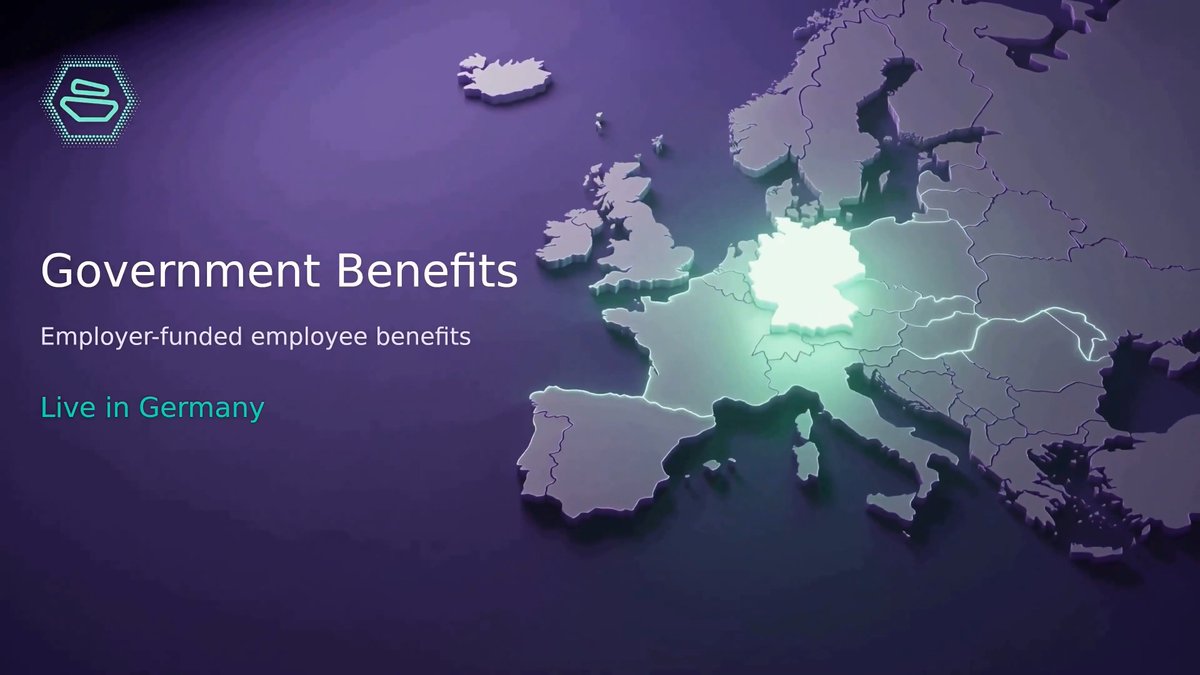
Germany’s government-defined employee benefits move onchain in Europe-first rollout powered by Zebec, AllUnity Stable and Stellar
Sovereignty, Risk and Competitiveness: Europe’s Strategic Debates
Behind the technical provisions of MiCA lies a set of strategic debates about Europe’s digital sovereignty and its role in global finance. A detailed analysis of European discourse around cross‑border financial innovation found that blockchain‑adjacent topics dominated roughly 35% of regional discussions, reflecting a growing concern over who will control the next generation of financial infrastructure. Policymakers worry that if Europe fails to develop its own robust, interoperable digital rails—whether for payments, securities settlement or data storage—it could become permanently dependent on foreign technologies and standards. Crypto‑assets and public blockchains are seen simultaneously as an opportunity to build open, cross‑border systems and as a potential vector for foreign influence if key platforms, stablecoins or custodians are controlled by non‑European actors.
Europe’s regulatory philosophy towards crypto is often described as functional and technology‑neutral. Academic work examining the EU’s search for regulatory answers to crypto‑assets argues that policymakers have tried to evaluate tokens based on their economic function—whether they behave like securities, e‑money, commodities or something else—rather than their technical form. MiCA is a manifestation of this approach: by carving out crypto‑assets that are not already covered by MiFID, the Electronic Money Directive or banking rules, it aims to fill gaps without duplicating existing regimes. At the same time, the EU has been careful to stress that regulation should not endorse any specific technological stack; it seeks to treat distributed ledger technology as one possible infrastructure among many, subject to the same risk‑based principles that apply to legacy systems. This conceptual stance is important for crypto builders, because it means that how a token is marketed and used may matter more than whether it runs on a particular chain or smart‑contract platform.
Financial‑stability risks are a major concern as crypto increasingly intersects with the banking system. A UniCredit director has warned that Europe may struggle to contain a financial shock tied to crypto firms and banks because its crisis‑management tools are more limited than those available in the United States. Whereas US authorities have shown a willingness to deploy extraordinary measures to stabilise specific banks or money‑market funds, the EU framework relies more heavily on pre‑defined resolution and deposit‑guarantee mechanisms, which may not fully cover novel entities such as stablecoin issuers. The fear is that if a large stablecoin with significant reserves parked in bank deposits or short‑term securities were to experience a run, the resulting stress on its reserve banks could propagate through the financial system in ways that existing safeguards are not designed to absorb. MiCA’s requirements that stablecoin issuers hold a substantial share of reserves with credit institutions and maintain high‑quality, liquid assets are meant to mitigate these risks, but they also create new concentration points and regulatory dependencies.
Privacy and data protection are another area where Europe is taking an assertive stance. As anti‑money‑laundering and counter‑terrorist‑financing standards tighten, fully private coins such as Zcash are facing growing pressure, especially in Europe. Commentators have noted that these assets are becoming increasingly risky to invest in as governments continue to restrict or discourage privacy‑focused cryptocurrencies, both through direct prohibitions and through requirements that exchanges delist tokens that cannot meet travel‑rule and traceability standards. Combined with the EU’s broader data‑protection regime and its interest in traceable digital payments, this trend suggests that anonymity‑enhancing features will be heavily constrained in mainstream European crypto markets. Projects that value user privacy are therefore exploring alternative designs that balance privacy‑preserving techniques with regulatory expectations for selective disclosure and compliance‑friendly architectures.
Competitiveness remains a persistent tension. ESMA’s 2025 Annual Report underscores that even as the authority expands oversight into crypto‑assets, AI and digital resilience, it is also trying to reduce complexity and improve the attractiveness of European capital markets. Initiatives such as simplifying reporting requirements, implementing a consolidated tape for bonds, shares and ETFs, and preparing for a T+1 settlement cycle are meant to make Europe a more efficient venue for both traditional and tokenised securities. In crypto, the promise of a single MiCA license and a harmonised market is a clear advantage, but some industry participants worry that heavy‑handed rules could drive high‑growth projects to more permissive jurisdictions. Debates under the banner of “making Europe’s crypto markets more competitive” centre on how to calibrate prudential and consumer‑protection requirements so that systemic risks are managed without stifling experimentation or driving liquidity offshore.
The politics of supervision can also be delicate. Reports that ECB President Christine Lagarde sought to block Binance’s MiCA approval as Europe pushes ahead with its digital euro project highlight the potential conflict between regulating large private platforms and promoting public digital money. While details remain fluid, the episode illustrates how decisions about authorizing systemically important crypto intermediaries can be influenced by broader policy concerns about market power, monetary control and consumer protection. It also signals to other global exchanges and stablecoin issuers that MiCA authorization is not merely a technical compliance exercise but a politically salient process that will be scrutinised at the highest levels of European policymaking.
To capture some of these differences in approach, it is useful to contrast Europe with the United States:
| Aspect | European Union | United States |
|---|---|---|
| Core crypto framework | Dedicated regulation (MiCA) for crypto‑assets not covered by existing financial law. | No single federal framework; regulation via existing securities, commodities and banking laws. |
| Stablecoin treatment | Specific categories (EMT, ART) with reserve, governance and issuance rules under MiCA. | Multiple proposals; current oversight split between banking regulators, SEC, CFTC and state regimes. |
| Single‑market passporting | CASP authorization enables cross‑border services across EU/EEA. | Fragmented by state money‑transmitter rules and differing interpretations of federal law. |
| Digital central bank money | Active digital euro project in preparation phase. | Fed exploring CBDC conceptually but with no committed development roadmap. |
| Crisis‑management capacity | Concerns about limited tools to contain crypto‑linked bank shocks. | More discretionary scope for emergency interventions in financial crises. |
This comparison underscores why many global crypto firms view Europe both as a strategic beachhead—thanks to its clear rules and passporting—and as a demanding jurisdiction that may set de facto global standards.
MiCA regulation fully applicable across EU
ECB publishes digital euro progress report
ECB speech flags US stablecoin dominance over EU card payments
- 2026-06regulatory
ClearBank Europe becomes first Dutch credit institution to complete MiCAR notification
- 2026-06milestone
France's Lise completes Europe's first onchain IPO for ST Group
Amundi and Spiko launch tokenized UCITS fund (SAFO) on Solana via Chainlink
- 2026-06launch
Coinbase rolls out regulated futures in 26 EU countries under MiCA
UniCredit warns MiCA stablecoin reserve rules insufficient to prevent EU banking contagion
Navigating Europe as a Crypto Builder or Investor
For crypto startups and established platforms alike, entering or scaling within Europe now requires a deliberate regulatory and product strategy. One core decision is whether to pursue full CASP authorization in a chosen member state or to build on top of already regulated infrastructure. The former approach offers maximum control and direct relationships with regulators but demands substantial investments in compliance, risk management, capital and governance. The latter is exemplified by firms that integrate BitGo Europe’s MiCA‑compliant CaaS infrastructure, allowing them to focus on user experience, product development and marketing while outsourcing custody, wallet management, onboarding and settlement to a BaFin‑authorized provider. As legacy national VASP regimes expire, this type of partnership model is likely to proliferate, especially among smaller platforms that would struggle to meet the full spectrum of MiCA requirements on their own.
Product design choices are equally influenced by Europe’s regulatory landscape. Stablecoin issuers must decide whether to structure tokens as e‑money under MiCA, potentially in cooperation with European credit institutions, or to limit their offerings to unregulated algorithmic mechanisms that carry more market risk and less regulatory acceptance. Asset‑management and DeFi projects may opt to tokenise traditional securities such as money‑market funds and treasuries, thereby falling under established securities law rather than MiCA, as suggested by analyses from firms like Amundi. Others, such as the Holo ecosystem, are experimenting with non‑custodial architectures explicitly designed to align with the highest standards of regulatory compliance across multiple jurisdictions, recognising that European rules increasingly shape global expectations for digital‑asset platforms. For engineers and protocol designers, understanding how custody, control and governance are defined in EU law can be as important as choosing a consensus algorithm.
For stablecoin providers such as the issuers behind USDC, Europe represents both a regulatory hurdle and a market opportunity. The region’s large card and e‑commerce markets, coupled with gaps in instant retail payments, make it an attractive target for dollar‑ and euro‑denominated stablecoins that can settle 24/7 and integrate with on‑chain finance. Yet comments from policymakers, including Lagarde’s warning that US stablecoins are targeting European payments gaps, signal that any large‑scale expansion will be scrutinised for its implications for monetary sovereignty and financial stability. In practice, this may accelerate the development of fully MiCA‑compliant, Europe‑specific stablecoins with clear legal structures, transparent reserves and explicit limits on their use as general‑purpose money. Projects that can demonstrate strong alignment with European banks, payment providers and oversight bodies are likely to find a more receptive regulatory environment than those that rely on opaque offshore structures.
For traders, funds and corporates looking to allocate to crypto, Europe offers a blend of regulated exposure and on‑chain innovation. Regulated venues such as MiCA‑licensed exchanges and custodians provide a framework for trading major crypto‑assets, accessing stablecoins, and participating in derivatives markets such as the OKX X‑Perps suite of futures tied to equities and commodities for European retail clients. Institutional investors can increasingly access tokenised versions of familiar instruments, from treasury funds to structured credit products like Capital B’s planned “digital credit” tied to Bitcoin with double‑digit yields. At the same time, participants must navigate tax rules, reporting obligations and suitability requirements that vary by member state even within the broader MiCA framework. Understanding the interplay between EU‑level rules and national implementation remains critical for anyone seeking to launch products, market them to retail investors or integrate crypto into corporate treasury strategies.
Finally, developers working on decentralized protocols and Web3 infrastructure should recognise that Europe’s regulatory attention extends beyond centralized intermediaries. ESMA and other authorities are actively studying decentralized finance, AI‑driven trading and new forms of tokenisation and data storage. Initiatives in adjacent domains—such as building AI data centers in France, deploying quantum computers in Italy, or exploring decentralised storage networks to reduce data‑egress costs—signal that Europe sees digital infrastructure, including blockchain, as part of a broader strategic investment in technological capacity. Projects that can position themselves as contributors to European goals around innovation, resilience, sustainability and sovereignty may find opportunities for public‑private partnerships, research collaborations and regulatory sandboxes, even as they navigate the constraints of MiCA, DORA and future EU frameworks.
Outlook
Europe has moved from debating whether to regulate crypto to grappling with the consequences of having done so first. As MiCA’s provisions are fully implemented, national VASP regimes are retired and stablecoin rules bite, the region will test whether a comprehensive, risk‑based framework can support vibrant crypto markets without compromising financial stability or monetary sovereignty. The development of a digital euro, the rise of tokenised funds, and the growing intertwining of crypto with banking, payments and AI infrastructure will ensure that Europe remains a central arena for the evolution of digital assets. For builders and investors, treating “Europe” not just as a vast market but as a coherent, if demanding, regulatory environment will be key to capturing its opportunities while managing its risks.
Latest Europe news
Sources
18 records from 15 domains
esma.europa.eu
eco.com
ecb.europa.eu
markets.businessinsider.com
lasvegassun.com
businesswire.com
bitcoinfoundation.org
sciencedirect.com
research-center.amundi.com
financefeeds.com
thefintechtimes.com
x.com
cryptonews.net
tradingview.com
blockhead.co
Community notes
Spot something off or out of date? Drop a note. Editors review topic notes daily and roll accepted fixes into the explainer — contributors are recognized in the monthly $SQUID drop.
Loading notes…
Help improve this topic
Have a story or tip about this topic? Submit it. See something missing? Leave a note. Editors review daily; accepted submissions and fixes count toward the monthly $SQUID drop.