
The EU regulates crypto as a layered market spanning licensing, financial crime, sanctions, and settlement infrastructure. MiCA supplies the passport, but national supervisors, the ECB, ESMA, and future AML rules determine what that passport is worth.
+87 sources across the wider coverage universe
 ECB backs plan to shift EU crypto firm oversight from national regulators to ESMA2026-04
 The EU adds HTX to its Russia sanctions list, banning EU individuals and companies from transacting with the crypto exchange starting August 232026-07
 Telegram CEO Pavel Durov warns EU age-verification app risks mass surveillance, citing security flaws and potential expansion into broader identity tracking2026-04
 Movement pivots toward global payments and remittances, securing licensed rails across the US, Canada and EU while repurchasing 19% of investor-allocated tokens in a major strategic shift2026-06
 EU sanctions 14 crypto platforms helping Russia evade restrictions, adds first-ever third-country crypto ban tool2026-07
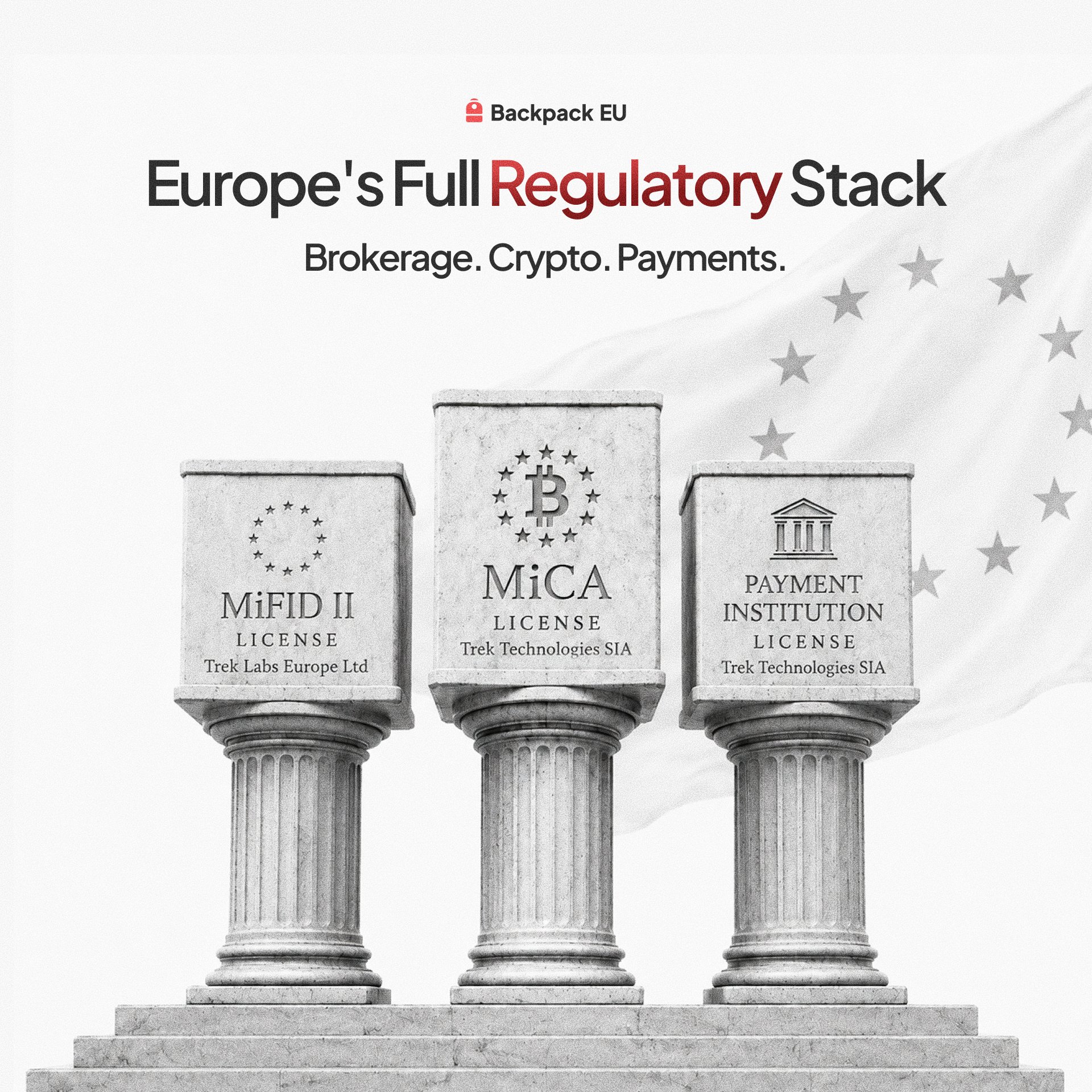 Backpack EU secures MiCA and Payment Institution Licenses from Bank of Latvia, completing Tri-License status with MiFID II.2026-07
The European Union has emerged as the world’s most consequential jurisdiction for crypto regulation, building a layered framework that covers licensing, anti-money laundering, market integrity, and sanctions enforcement across 27 member states and roughly 450 million potential users.
Its importance comes from structure as much as policy. A regulation adopted at the EU level can become directly applicable across the bloc without requiring 27 separate national statutes. For a crypto business, Europe is therefore neither one regulator nor 27 wholly independent markets. It is a shared legal framework administered through national authorities, EU institutions, and increasingly coordinated enforcement.
What the EU’s Role in Crypto Actually Means
Most jurisdictions regulate crypto reactively—one agency, one rule, often one asset class at a time. The EU operates differently. A crypto exchange seeking European retail customers must address the bloc’s common framework even when it chooses one member state as its licensing base.
The result is a multi-layer architecture touching firms at every operational level: how they obtain authorization, hold customer assets, screen transactions, market products, and decide which counterparties they cannot serve. MiCA is the foundation, but it is not the whole building.
That distinction matters because an EU authorization is not merely a badge issued by a friendly national regulator. It is an entry point into a system in which national competent authorities, ESMA, the European Banking Authority, the ECB, and sanctions authorities exercise different forms of power. The gain is access to a large market through a common rulebook; the cost is that a weakness identified in one part of the system can restrict activity across the bloc.

EU banking authority calls for crypto lending rules in MiCA review

MiCA: The Foundation Layer
The Markets in Crypto-Assets Regulation, formally Regulation (EU) 2023/1114, is the cornerstone of the EU’s crypto framework. It entered into force in June 2023 and rolled out in two principal tranches: rules for e-money tokens and asset-referenced tokens applied from June 30, 2024, while the broader crypto-asset service provider requirements applied from December 30, 2024.
MiCA combines several functions that previous EU rules did not place in one crypto-specific instrument:
- Passporting: A crypto-asset service provider authorized in one member state can use that authorization to operate across the European Economic Area, rather than completing a full licensing process in every national market.
- Consumer protection: The framework imposes requirements around custody, customer assets, disclosures, conflicts of interest, and conduct of business.
- Token issuance: It establishes disclosure rules for crypto assets and a more demanding regime for asset-referenced and e-money tokens.
- Stablecoin oversight: Issuers face reserve, governance, and redemption requirements, with a larger role for EU-level authorities when a token becomes significant.
Passporting is MiCA’s central commercial bargain. A firm accepts a demanding authorization process in exchange for scalable access to the bloc. This shifts European crypto licensing from a collection of local registrations toward something closer to the single-market model already used by banks and investment firms.
The bargain cuts both ways. Passporting reduces duplicative applications and makes cross-border expansion easier, but it also turns the authorization decision of one national authority into a matter with bloc-wide consequences. That creates pressure on EU institutions to prevent firms from selecting a member state solely because its supervision appears less demanding.
Transitional arrangements allowed some firms operating under earlier national regimes to continue temporarily while the MiCA system took effect. The standing industry concern around the July 1, 2025 milestone reflected the end of relevant transition periods for some businesses: firms unable to secure authorization faced the loss of their previous legal route to customers.
WhiteBIT obtained MiCA authorization from Austria’s Financial Market Authority, making Austria one of the jurisdictions used as a licensing base. VeChain, meanwhile, pointed to the recording of VET and VTHO on ESMA’s official register as evidence of an early compliance strategy. These examples demonstrate the practical value of appearing inside the regulated perimeter, but registration or authorization establishes a legal status—not the quality, liquidity, or investment merits of the underlying product.
EU crypto readers click most when regulation turns abstract policy into concrete market consequences — license grants, forced delistings, and wallet restrictions reveal that MiCA is actively redistributing market power in real time, not just setting future rules.
The Binance Problem: Authorization and Market Access Are Not the Same Thing
Binance’s licensing difficulties have provided the clearest stress test of MiCA’s promise. The exchange filed a MiCA application in Greece, and reporting in June 2026 indicated that rejection by the Hellenic Capital Market Commission was expected. At the same time, Binance maintained publicly that it met applicable requirements and considered itself compliant.
The episode exposed the discretion embedded inside a harmonized regime. MiCA supplies common rules, but the national authority handling an application still evaluates governance, fitness, controls, and the reliability of the applicant. A single passport creates EU-wide reach once granted; before it is granted, the national gatekeeper has correspondingly large leverage.
That is the correct category for the Binance dispute: not simply a quarrel over paperwork, but a test of whether a common European license can act as a meaningful barrier to entry for the largest global platforms. The system becomes credible only if authorization depends on satisfying supervisory judgments rather than on finding the least resistant jurisdiction.
Competitors have treated that uncertainty as an opening. BitGo Europe GmbH positioned its services as a regulated route for businesses whose earlier virtual-asset registrations had expired, offering MiCA-oriented sub-custodial accounts. The commercial trade-off is straightforward: regulated infrastructure can reduce a client’s licensing and custody uncertainty, but it also concentrates dependence on the authorized provider’s controls and continued regulatory standing.
AML Rules: A Separate Enforcement Layer
MiCA governs market structure, authorization, and conduct. Financial-crime controls sit alongside it rather than underneath it. Regulation (EU) 2024/1624 adds another compliance layer applying from July 2027.
Among its provisions are a €10,000 bloc-wide ceiling on cash payments for goods and services, tighter customer-identification expectations for crypto-asset service providers, and a larger role for the EU’s Anti-Money Laundering Authority. AMLA is designed to supervise selected high-risk financial entities directly instead of leaving every important case solely to national authorities.
For crypto firms, the sequence matters. MiCA authorization answers whether a provider may operate; AML rules govern how it must identify customers, monitor activity, and respond to financial-crime risk once operating. A license therefore does not settle compliance. It admits the firm into a continuing supervisory relationship.
The July 2027 application date gives firms time to adapt systems after the initial MiCA transition, but it also means the regulatory stack is still evolving. Businesses that treat MiCA approval as the finish line may discover that transaction monitoring, customer data, and escalation processes require another substantial rebuild.
Tax reporting adds a related operational pressure. The more information that platforms must collect and associate with customers, the less sustainable the old model of fragmented accounts and lightly documented cross-border activity becomes. The policy direction is toward traceability across licensing, AML, tax, and sanctions systems rather than isolated compliance checks.

ECB and EU central banks push to dump MiCA’s 60% bank-deposit mandate for stablecoins, calling short-dated liquid assets a safer reserve mix that won’t leave banks holding flighty cash.

ESMA’s Expanding Mandate
The European Securities and Markets Authority historically focused on securities markets, but MiCA gives it major crypto responsibilities. ESMA maintains public registers, coordinates national authorities, and issues guidance that shapes how common provisions are interpreted.
Its role matters in three ways. First, it can identify differences in national supervision that might enable regulatory arbitrage. Second, its guidelines and question-and-answer materials translate broad legislative language into operating expectations. Third, it provides a coordination layer when cross-border activity creates disputes or gaps between national authorities.
This makes ESMA less like a single licensing counter and more like the referee of the passporting system. National authorities still make many frontline decisions, but the value of a common authorization depends on consistent interpretation. If identical conduct is acceptable in one member state and prohibited in another, the passport becomes unstable.
Malta’s examination of whether certain decentralized-finance services should fall within EU crypto rules illustrates the perimeter problem. DeFi is difficult not because its economic functions are necessarily unfamiliar, but because responsibility can be distributed among developers, governance participants, interface operators, and users. Regulation built around an identifiable service provider struggles when no single entity performs every role.
- 01MiCA compliance race
Readers tracked which firms secured licenses, which stablecoins got delisted, and how 27-nation passporting reshapes the competitive map — MiCA as live market-sorting event, not abstract law.
- 02Custodial wallet ban
The EU Parliament committee vote to ban crypto transactions through custodial wallets hit a nerve because it directly threatened how most retail users hold and move crypto.
- 03Stablecoin sovereignty fight
ECB fears of US stablecoins draining EU capital, Tether CEO calling MiCA rules 'very dangerous,' and Kraken reviewing Tether support framed stablecoins as a geopolitical battleground.
- 04US–EU regulatory competition
Trump tariffs on the EU and the DAMS-vs-MiCA comparison gave readers a horse race framing — which jurisdiction wins crypto firms and sets the global standard.
- 05Self-custody address treatment
The Transfer of Funds Regulation's treatment of self-hosted wallets raised existential questions about whether non-custodial crypto remains viable for EU users.
- 06Licensing arbitrage and passporting
France's pushback on firms licensed in lenient jurisdictions and uneven MiCA enforcement exposed the gap between a single rulebook and 27 different regulators applying it.
The ECB, Stablecoins, and Public Settlement Infrastructure
The European Central Bank is not the everyday supervisor of every crypto provider, but its influence runs through the system. Stablecoins linked to the euro or capable of affecting monetary policy and payment systems bring central-bank interests directly into authorization and oversight.
The ECB’s concern is structural. A privately issued token can look like a narrow crypto product at small scale, yet become payment infrastructure if widely used. That changes the relevant question from whether customers understand the token to whether its reserves, redemption mechanics, and settlement role could transmit stress into banks or payment markets.
The digital euro project belongs to the other side of the same debate. A central bank digital currency would be public money in digital form, distinct from privately issued stablecoins. The strategic question is therefore not simply which token offers the better consumer interface. It is who supplies the settlement asset and which institution carries the risk.
This is a familiar public-versus-private infrastructure trade-off. Private issuers can innovate quickly and distribute products through existing crypto markets; central-bank money offers a different claim structure and public governance but moves through a slower institutional process. Stablecoin policy will increasingly be shaped by that competition over settlement, not only by token disclosure rules.
Sanctions: From Customer Screening to Network Screening
The EU’s crypto agenda also extends beyond market regulation. Successive sanctions packages targeting Russia have addressed crypto platforms and transaction channels alongside banks and other financial actors.
The mechanism differs from licensing. Authorization determines whether a provider may offer regulated services; sanctions prohibit dealings with designated counterparties. A firm can satisfy MiCA and still violate sanctions if its monitoring fails to identify a prohibited platform, customer, or transaction route.
That difference became operationally visible in Binance’s own implementation notice. Binance’s support announcement stated the result directly: Binance halts transactions involving HTX, EXMO and nine other EU-sanctioned platforms from August 23.
The deeper shift is from screening people to screening networks. A regulated exchange must consider not only who its direct customer is, but where assets came from, where they are going, and whether an intermediary is subject to restrictions. The benefit is greater resistance to sanctions evasion; the cost is more false positives, operational friction, and dependence on reliable attribution data.
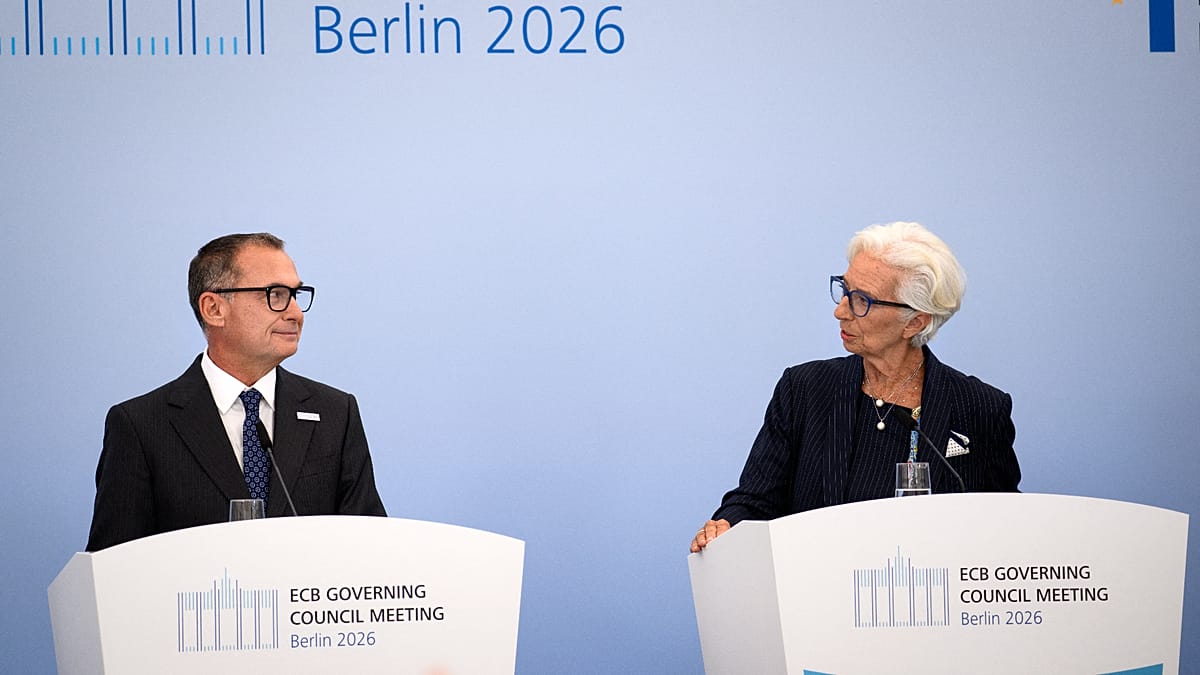
ECB urges EU to tighten crypto rules, widen stablecoin interest ban
Member-State Variation Inside a Common Framework
MiCA applies across the bloc, but supervision is not mechanically uniform. Poland, Hungary, and Austria illustrate how national politics and administrative capacity still affect the experience of a common regulation.
Poland’s president vetoed domestic crypto legislation for a third time in 2026, creating uncertainty around complementary national arrangements even though MiCA itself remained directly applicable. Hungary moved to decriminalize crypto trading after backlash and reported EU pressure. Austria developed a visible role as a licensing hub through the FMA’s handling of applications including WhiteBIT’s.
These differences do not negate harmonization. They show its limit. Brussels can establish the common legal perimeter, but national institutions still determine application speed, supervisory tone, enforcement resources, and the treatment of matters left to domestic law.
For firms choosing a home authority, this creates a legitimate strategic decision—but not a permanent escape hatch. A faster or clearer process can be commercially valuable, while EU coordination is designed to stop procedural differences from becoming wholesale differences in regulatory substance.
- 2023-04regulatory
EU Parliament formally adopts MiCA regulation
- 2024-06regulatory
MiCA stablecoin and e-money token titles enter force
- 2024-12regulatory
MiCA fully applicable; Transfer of Funds Regulation travel-rule active for self-hosted wallets
- 2025-01milestone
Coinbase and Binance begin phasing out non-MiCA stablecoins for EU users
- 2025-03regulatory
Bitpanda secures BaFin MiCA license, first to unlock 27-nation CASP passporting
- 2025-04regulatory
Trump announces 20% reciprocal tariff on EU, escalating US–EU economic tensions affecting crypto policy alignment
- 2025-05governance
ECB publicly warns Trump pro-crypto stance risks destabilizing EU financial system; Lagarde calls for urgent MiCA reforms
- 2025-06launch
MetaMask card EU/UK pilot launches, enabling on-chain-to-Mastercard spending for retail users
What MiCA Does Not Cover Yet
MiCA deliberately left important questions unresolved, particularly around genuinely decentralized finance and non-fungible tokens that do not fall within existing financial-instrument rules. Both categories resist simple treatment because labels reveal less than economic function.
An NFT may represent a unique collectible, but a large series sold and traded like a fungible investment can raise different concerns. A DeFi protocol may operate without a conventional intermediary, while its interface, governance, or development process still contains identifiable points of control.
The useful test is not whether a product calls itself decentralized or non-fungible. It is whether someone provides a service, controls access, makes promises to users, or manages risks that regulation normally assigns to an accountable institution. Future EU policy is likely to turn on those observable functions.
Outlook
The next phase of EU crypto regulation will be decided less by the existence of MiCA than by how its layers interact. Licensing outcomes will show whether passporting is a genuine quality threshold. AMLA’s implementation will show how far direct EU supervision reaches. Stablecoin decisions will reveal how the ECB balances private issuance against public settlement infrastructure. DeFi and NFT policy will test whether activity-based rules can work without forcing every protocol into the mold of a centralized exchange.
The EU has effectively divided the market between firms inside the authorized perimeter and those relying on narrower, temporary, or uncertain routes. That can reward early investment in compliance, but it also raises the stakes of national supervisory decisions and encourages consolidation around providers able to absorb fixed regulatory costs.
The framework’s durability now depends on three tests: whether national authorities apply MiCA consistently, whether AML and sanctions controls work across transaction networks rather than only at account opening, and whether new rules classify products by economic function instead of branding. If those conditions hold, the EU’s framework will operate as genuine market infrastructure. If they do not, a common rulebook may still produce fragmented supervision.
Latest EU news
EU banking authority calls for crypto lending rules in MiCA reviewECB and EU central banks push to dump MiCA’s 60% bank-deposit mandate for stablecoins, calling short-dated liquid assets a safer reserve mix that won’t leave banks holding flighty cash.ECB urges EU to tighten crypto rules, widen stablecoin interest ban EU financial watchdogs warn quantum computing poses an imminent threat to blockchain encryption before commercial use
 EU financial regulator ESMA will make AI and tokenization a supervisory priority in 2027, mapping firms’ use of both technologies and launching targeted checks
 Relai raises $2.5M at $90M valuation to fund EU expansion, AI and security push
Sources
1 records from 1 domain
Community notes
Spot something off or out of date? Drop a note. Editors review topic notes daily and roll accepted fixes into the explainer — contributors are recognized in the monthly $SQUID drop.
Loading notes…
Help improve this topic
Have a story or tip about this topic? Submit it. See something missing? Leave a note. Editors review daily; accepted submissions and fixes count toward the monthly $SQUID drop.