
Euro stablecoins, MiCA regulation, the ECB's digital euro, and institutional adoption explained for crypto audiences — covering EURC, Qivalis, Lagarde's warnings, and what's at stake in 2026.
+40 sources across the wider coverage universe
 Twelve European banks advance Qivalis euro stablecoin with MiCA compliance, targeting H2 2026 launch with 24/7 redemption2026-03
 Euro stablecoins command 80% of $1.2B non-dollar stablecoin market, Visa-commissioned report finds2026-03
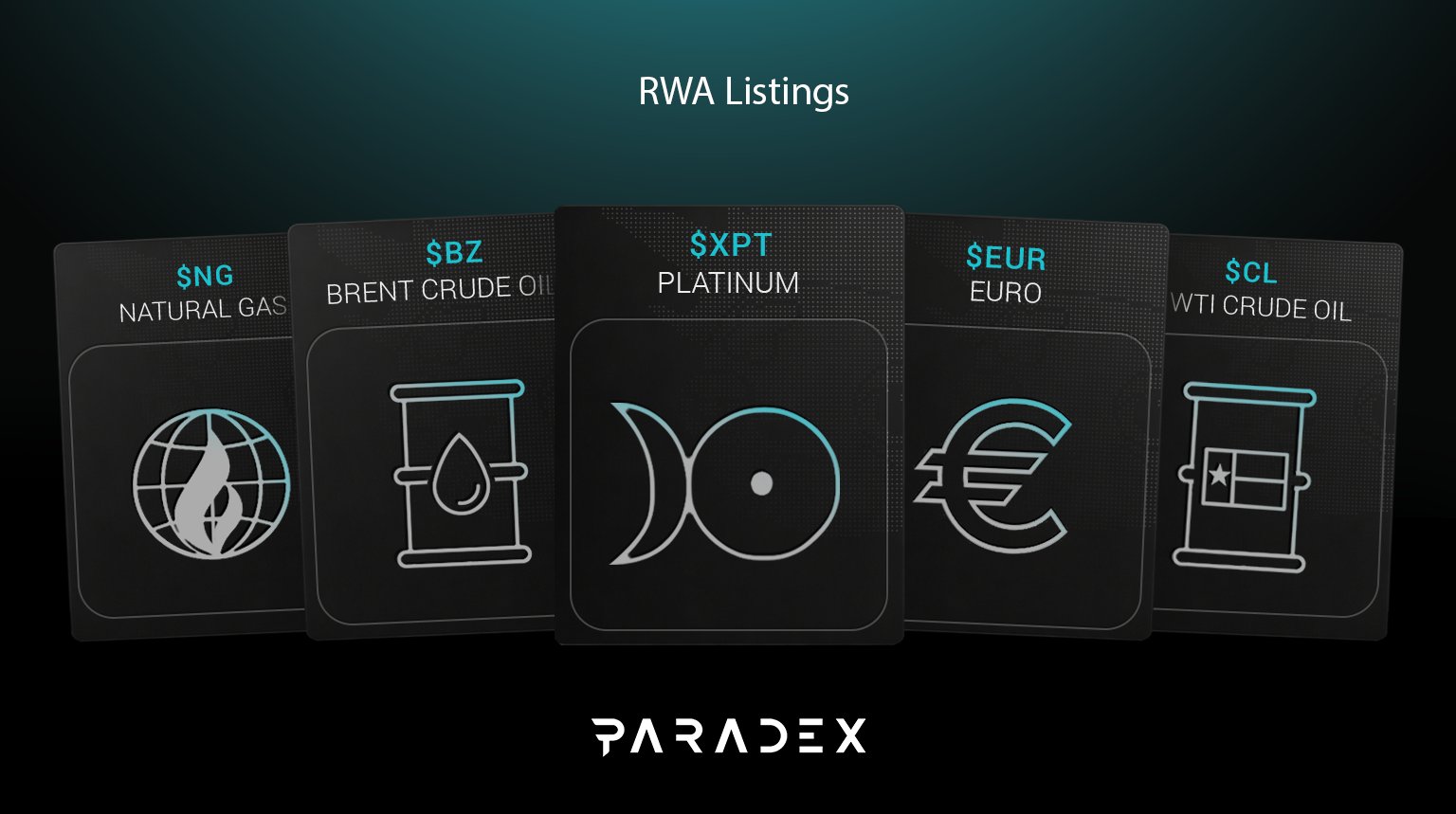 Paradex launches TradFi perpetuals: trade silver, platinum, oil, nat gas and euro 24/72026-04
 ECB Confirms Blockchain-Based Settlements in Central Bank Money by 2026 as Digital Euro Privacy Debate Intensifies2025-12
 KuCoin advances its global regulatory standing with fresh approvals across Europe and Australia, signaling how major exchanges are adapting to a stricter compliance-first era as crypto oversight becomes a baseline, not a differentiator.2025-12
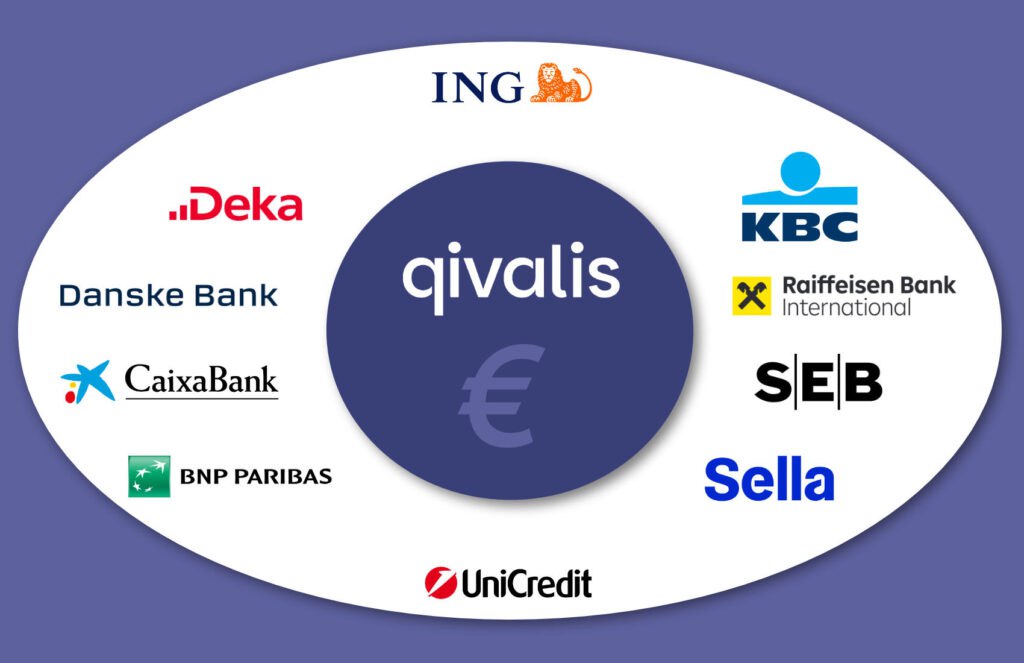 Ten major EU banks including BNP Paribas, ING, and UniCredit—are forming Qivalis to launch a MiCA-compliant euro stablecoin by 2026, aiming to challenge the dollar’s 99% dominance in the global stablecoin market.2025-12
The euro is the official currency of the 20-nation eurozone and, increasingly, a contested frontier in the global race to bring fiat money on-chain — via regulated stablecoins, tokenized deposits, and a prospective central-bank digital currency.
Why the Euro Matters in Crypto
The dollar has long dominated the stablecoin market, accounting for roughly 99% of all stablecoin supply by some measures. That asymmetry has real consequences: European businesses settling cross-border trades in crypto, DeFi protocols pricing liquidity, and tokenized-asset platforms all operate in de facto dollar terms even when their underlying exposure is in euros. Closing that gap has become both a commercial opportunity and, for European regulators, something closer to a sovereignty question.
That framing explains why so much of the euro's crypto story in 2025–2026 is happening simultaneously at three distinct layers: the private stablecoin market, a consortium-banking effort to issue a MiCA-compliant euro stablecoin, and the European Central Bank's own digital euro project.

Twelve European banks advance Qivalis euro stablecoin with MiCA compliance, targeting H2 2026 launch with 24/7 redemption
The Euro Stablecoin Market Today
Despite the dollar's dominance, euro-denominated stablecoins have quietly built meaningful traction. A Visa-commissioned report published in 2025 found that euro stablecoins command approximately 80% of the non-dollar stablecoin market — a segment valued at roughly $1.2 billion at the time of the report. That share is growing: issuance has accelerated as MiCA (the EU's Markets in Crypto-Assets regulation) created a licensing pathway that gave institutional issuers the legal certainty they needed to proceed.
The best-known euro stablecoin is EURC, issued by Circle — the same company behind USDC. Circle obtained an Electronic Money Institution (EMI) license under MiCA, and EURC has expanded aggressively: it is now live on World Chain (an OP Stack Layer-2), and Circle markets it as the largest euro stablecoin by issuance. Société Générale's crypto subsidiary SG-FORGE operates a competing product, EURCV (EUR CoinVertible), which has deployed on Stellar and is accessible through structured DeFi vaults offering EUR-denominated yield in self-custody.
These tokens share the same basic architecture as dollar stablecoins: each unit is backed 1:1 by euro-denominated reserves (cash and short-term government securities), redeemable on demand. The critical difference from an investor's perspective is that euro interest rates — while no longer negative as they were for much of the 2010s — remain lower than US rates, which compresses the yield spread that stablecoin issuers use to fund operations. That margin pressure is one reason euro stablecoins scaled more slowly than their dollar counterparts even when the regulatory path opened up.
Depeg risk is real, not theoretical. A $2.8 million exploit of the StablR protocol in 2025 caused a brief wobble in euro stablecoin prices, underscoring that on-chain euro exposure carries smart-contract risk layered on top of the underlying issuer risk — the same dynamics that have produced periodic dollar stablecoin incidents.
Readers aren't clicking euro stablecoin stories for the technology — they're tracking a gap story: why the euro, despite dominating 80% of non-dollar stablecoin volume, commands less than 0.2% of total stablecoin market cap, and whether MiCA compliance is the catalyst or just another obstacle.
Qivalis: The Banking Consortium Play
The most structurally significant development in euro stablecoins may be Qivalis, a consortium of ten major European banks — including BNP Paribas, ING, and UniCredit — working toward a jointly issued MiCA-compliant euro stablecoin. A subsequent expansion brought twelve banks into the effort, with a target launch in H2 2026 and a design spec that includes 24/7 redemption windows.
Qivalis is notable for several reasons. First, it brings the institutions that actually hold European deposit base into the stablecoin market, rather than leaving it to fintech issuers or US-based companies. Second, it is being built explicitly around MiCA compliance from the ground up, which should simplify distribution across EU member states. Third, the involvement of French, Dutch, and Italian megabanks gives it the distribution rails — existing customer relationships, payment networks, and balance-sheet credibility — that pure-play crypto issuers lack.
The political backdrop matters here too. French financial authorities have been pushing banks to engage with tokenized deposits and euro stablecoins rather than ceding the space to US issuers. A French minister explicitly urged banks toward these instruments even as warnings about run risk and deposit flight circulated — a tension that reflects the competing pressures European policymakers face.

Euro stablecoins command 80% of $1.2B non-dollar stablecoin market, Visa-commissioned report finds

After the dollar, euro is usually the next big thing. So I'm not surprised
MiCA: The Regulatory Framework
MiCA (Markets in Crypto-Assets Regulation) is the EU's comprehensive crypto regulatory framework, fully in force since December 2024. For stablecoins specifically, it creates two categories: Asset-Referenced Tokens (ARTs) and Electronic Money Tokens (EMTs). Euro stablecoins backed 1:1 by fiat fall under the EMT classification and must be issued by licensed EMIs or credit institutions.
MiCA imposes reserve requirements (assets must be held in segregated, low-risk instruments), redemption rights (holders can redeem at par on request), and — critically — caps on daily transaction volume for "significant" stablecoins. The significance thresholds have generated industry concern: a stablecoin that crosses 1 million transactions per day or €200 million in daily value faces heightened supervisory requirements and potential volume caps, which could structurally limit the utility of any widely adopted euro stablecoin.
The Lagarde dimension adds another layer of complexity. ECB President Christine Lagarde was reportedly involved in efforts to block Binance's MiCA approval, a move that illustrated how central-bank concerns can intersect with what is nominally a securities and payments licensing process. Lagarde has been consistently skeptical of private euro stablecoins, warning publicly about "structural weaknesses" and the risk that broad issuance could reduce bank lending capacity and complicate interest-rate transmission — the mechanism by which ECB rate decisions filter into the broader economy.
The ECB's formal position, as reported by Reuters, is that looser stablecoin rules would be counterproductive: if euro stablecoins siphon deposits away from commercial banks, those banks have less capacity to make loans, which weakens the credit channel through which monetary policy operates. That concern is not unique to the ECB — the Federal Reserve and Bank of England have raised analogous arguments about dollar stablecoins — but it carries particular weight in a eurozone context because the ECB is simultaneously developing its own digital alternative.
- 01SocGen EURCV adoption failure
A major bank launching the first bank-issued euro stablecoin, then recording only $692 in trades, made readers confront the gap between institutional ambition and actual DeFi market demand.
- 02MiCA compliance as moat
Readers tracked whether MiCA licensing requirements would crown compliant issuers or effectively ban DeFi frontends, making regulatory positioning the defining competitive variable for euro crypto infrastructure.
- 03TradFi bank euro stablecoin launches
Deutsche Bank's DWS/Galaxy/Flow Traders venture and Société Générale's pivot to Solana signaled that legacy banks were serious contenders in euro-denominated digital settlement, pulling readers who follow institutional crypto.
- 04Euro stablecoin custodial risk
Anchored Coins warning customers of potential losses after FlowBank's bankruptcy exposed how euro stablecoin holders face counterparty risk from the underlying banking infrastructure, not just smart contracts.
- 05JPMorgan blockchain euro payments
JPM Coin's euro-denominated corporate settlement layer and Alibaba's adoption signaled that permissioned blockchain euro rails were advancing faster than public DeFi equivalents.
- 06Euro crypto onramps and access
Binance Apple/Google Pay euro deposits, Mastercard/Mercuryo debit cards, and Circle's euro-to-USDC onramp drew clicks from readers focused on practical euro fiat entry and exit infrastructure.
The Digital Euro
The ECB has been running preparatory work on a digital euro since 2021. By 2026, the project is at a pivotal juncture: the ECB has declared the system technically ready and has confirmed that blockchain-based settlements in central bank money will be live by 2026. What it lacks is political authorization — a legislative framework from the European Parliament and Council that would give the digital euro legal tender status and define its design parameters.
The design debate has been contentious. Privacy advocates have pushed for a digital euro that offers cash-like anonymity for small transactions; commercial banks have lobbied to ensure the ECB doesn't become a direct competitor for retail deposits; and member states have disagreed on how much control should vest in national authorities versus the ECB. A vote on the enabling legislation was expected in 2026, with deployment targeting 2028–2029 if approved.
The ECB frames the digital euro as a complement to cash, not a replacement — a public-sector anchor in a payment system that is otherwise rapidly privatizing. Whether that framing survives contact with political reality remains to be seen. Some member-state governments have been lukewarm, and the privacy debate has intensified as civil-society groups compare the design to the surveillance-enabling potential of Chinese CBDC architecture.
Blockchain-based settlement in central bank money — distinct from the retail digital euro — is moving faster. The ECB confirmed interoperability trials with distributed-ledger platforms, allowing securities settlement to occur in central bank euros rather than commercial bank money. That is significant for the tokenized-asset market: it removes counterparty risk from the settlement leg of tokenized bond and fund trades.

Paradex launches TradFi perpetuals: trade silver, platinum, oil, nat gas and euro 24/7
Who could ever have thought there will be a day tradfi operates 24/7🤔
Institutional and Cross-Chain Expansion
Beyond the headline issuers, euro-denominated exposure is spreading across the on-chain stack in ways that reflect broader institutional adoption of crypto infrastructure.
Alibaba announced it would use JPMorgan's blockchain for tokenized dollar and euro payments — an enterprise deployment that routes around stablecoins entirely in favor of bank-issued digital tokens, chosen for regulatory and operational clarity. That distinction matters: tokenized deposits, unlike stablecoins, remain on the issuing bank's balance sheet and are subject to deposit insurance frameworks, making them more palatable to risk-averse corporate treasurers.
Perpetuals platform Paradex launched euro as a tradeable underlying alongside silver, platinum, oil, and natural gas — positioning euro as a macro instrument for on-chain traders who want exposure to euro/dollar movements without leaving the DeFi ecosystem.
Crypto.com secured an EU financial license, expanding its capacity to offer euro-denominated services across member states. KuCoin advanced its European regulatory standing through fresh approvals. The pattern is consistent: major exchanges are treating MiCA compliance as a baseline cost of operating in the EU rather than a differentiator.
- 2023-06regulatory
FlowBank bankruptcy triggers Anchored Coins customer loss warnings
- 2023-11launch
Société Générale lists EURCV as first major bank euro stablecoin
- 2024-01launch
JPMorgan launches euro-denominated JPM Coin for corporate blockchain payments
- 2024-06regulatory
MiCA regulations drive surge in euro-centric crypto trading per Kaiko data
- 2024-07launch
DWS, Galaxy Digital, and Flow Traders form AllUnity for MiCA-compliant euro stablecoin
- 2024-10milestone
SocGen pivots EURCV from Ethereum to Solana citing speed and cost advantages
- 2025-01launch
Schuman Financial EURØP becomes first MiCA-compliant euro stablecoin on XRP Ledger
- 2026-02launch
Twelve European banks advance Qivalis euro stablecoin targeting H2 2026 launch
Currency Fundamentals and the Crypto Hedge Thesis
It is worth noting what brought many crypto investors into this conversation in the first place. Since 2000, the euro has lost approximately 74% of its purchasing power in real terms — a significant decline, though less severe than the dollar's roughly 79% loss or the yen's approximately 51% loss over the same period (Japanese yen comparisons are complicated by deflation dynamics). Those figures are routinely cited in crypto-adjacent media as evidence that fiat currencies are structurally inflationary and that hard-capped assets like Bitcoin offer a genuine store-of-value alternative.
The argument is not unique to the euro, but it reappears in euro stablecoin debates in a specific way: critics of the ECB's skepticism toward private stablecoins argue that institutions already comfortable holding euros have little reason to switch to a euro stablecoin unless it offers programmability, 24/7 settlement, or DeFi composability that the traditional system cannot match. Proponents of the digital euro counter that only a public-sector issuer can provide the unconditional convertibility and systemic trust that a reserve currency requires.
Outlook
The euro's trajectory in crypto is shaped by a three-way tension that will not resolve quickly. Private issuers — Circle, SG-FORGE, and the Qivalis consortium — are building market share under MiCA's licensing framework. The ECB is pressing to retain monetary authority, both by blocking policy-threatening stablecoin expansion and by accelerating the digital euro. And underlying it all, the structural case for on-chain euro infrastructure is strengthening as tokenized assets, cross-border DeFi, and institutional settlement all need a euro leg.
The next eighteen months will be decisive: Qivalis is targeting H2 2026 for launch, the digital euro legislation faces a vote the same year, and MiCA's significance thresholds will start to bite if euro stablecoin adoption continues at its current pace. The question is not whether the euro goes on-chain — it already has — but who controls it, on what terms, and whether the ECB's warnings about banking system stability prove prescient or overstated.
Latest Euro news
Twelve European banks advance Qivalis euro stablecoin with MiCA compliance, targeting H2 2026 launch with 24/7 redemptionEuro stablecoins command 80% of $1.2B non-dollar stablecoin market, Visa-commissioned report findsParadex launches TradFi perpetuals: trade silver, platinum, oil, nat gas and euro 24/7ECB Confirms Blockchain-Based Settlements in Central Bank Money by 2026 as Digital Euro Privacy Debate IntensifiesKuCoin advances its global regulatory standing with fresh approvals across Europe and Australia, signaling how major exchanges are adapting to a stricter compliance-first era as crypto oversight becomes a baseline, not a differentiator.Ten major EU banks including BNP Paribas, ING, and UniCredit—are forming Qivalis to launch a MiCA-compliant euro stablecoin by 2026, aiming to challenge the dollar’s 99% dominance in the global stablecoin market.Community notes
Spot something off or out of date? Drop a note. Editors review topic notes daily and roll accepted fixes into the explainer — contributors are recognized in the monthly $SQUID drop.
Loading notes…
Help improve this topic
Have a story or tip about this topic? Submit it. See something missing? Leave a note. Editors review daily; accepted submissions and fixes count toward the monthly $SQUID drop.