
The digital euro is the ECB’s planned retail CBDC, designed as a free, privacy‑preserving digital cash to anchor the euro in a tokenised world, reshape European payments, and counter the rise of dollar stablecoins and Big Tech money.
+6 sources across the wider coverage universe
 ECB board member Isabel Schnabel says a digital euro is essential to counter stablecoin risks, warning dollar-backed tokens could strengthen U.S. monetary dominance2026-06
 ECB partners ECPC, Nexo, and Berlin Group to reuse open payment standards, slashing digital euro integration costs ahead of 2027 pilot and targeted 2029 rollout2026-04
 MEPs advance digital euro in 43-14 vote with zero-knowledge privacy rules and holding caps2026-06
 ECB taps 36 payment providers for year-long digital euro pilot starting in H2 20272026-07
 The EU’s planned digital euro will be a politically constrained, bank-protecting CBDC that cannot compete with more useful and open dollar stablecoins.2026-01
 ECB Confirms Blockchain-Based Settlements in Central Bank Money by 2026 as Digital Euro Privacy Debate Intensifies2025-12
Understanding the Digital Euro: Europe’s CBDC for a Digital, Multi‑Polar Money System
Europe’s planned central bank digital currency, the digital euro, is designed as a free, universally accessible electronic version of cash issued by the European Central Bank (ECB), meant to complement banknotes and coins rather than replace them, and to anchor the euro in an increasingly digital and geopolitically contested monetary system. For crypto users and stablecoin issuers, it represents both a potential on‑chain settlement backbone and a politically constrained competitor to private euro tokens, with the outcome shaped by EU legislation, ECB technical choices, and a volatile debate over privacy, bank disintermediation, and Europe’s dependence on dollar stablecoins.
What Is the Digital Euro?
The ECB defines the digital euro as a central bank digital currency, or CBDC, that would function as a digital form of cash denominated in euro and accessible to everyone in the euro area. In other words, it would be a direct claim on the Eurosystem—the ECB and the national central banks—rather than on a commercial bank or fintech, just as physical euro banknotes are today. Unlike a typical euro stablecoin issued by a private company and backed by reserves, the digital euro would be central bank money in digital form, available for electronic payments in shops, online, and from person to person across the euro area. The ECB stresses that it would not be a “crypto‑asset” and would be redeemable at par into cash, thereby sidestepping the volatility and redemption risks associated with many private tokens.
From a user perspective, the digital euro is being designed to look and feel like a mainstream payment instrument rather than an experimental crypto token. Individuals and businesses would access it through accounts or wallets provided by banks and other regulated payment service providers, using familiar front‑ends such as mobile banking apps, cards, or potentially wearables, with the option to pay both online and offline. The ECB has also said it will build a dedicated digital euro app that anyone in the euro area can use as a fallback, allowing users to switch providers easily and ensuring continuity if a particular bank or payment company suffers an outage. Importantly, basic use for consumers is expected to be free, mirroring the zero‑fee nature of cash and aligning with the ECB’s framing of the digital euro as a public good rather than a commercial product.
Legally, the digital euro is envisioned as legal tender, much like physical euro notes, which would mean that in principle merchants across the euro area must accept it, subject to limited exceptions yet to be finalized in legislation. The proposal is being developed as part of a package that also includes a regulation reinforcing the legal tender status of cash, an intentional signal from policymakers that the digital euro is an addition, not a replacement, and that citizens will remain free to use banknotes and coins. This “two‑sides‑of‑the‑same‑coin” narrative is important for political and social acceptance, given widespread fears—especially among cash‑reliant and privacy‑conscious groups—that CBDCs could be a Trojan horse for a cashless society. ECB officials repeatedly underline their ongoing commitment to cash, including a redesign of euro banknotes, to underscore that the digital euro and physical cash are meant to coexist as complementary forms of the same sovereign money.
For a crypto audience, it is useful to think of the digital euro as a non‑programmable, centrally managed base layer, with programmability and value‑added services expected to be provided at the periphery by banks, fintechs, and possibly regulated crypto intermediaries. Unlike permissionless crypto assets, the digital euro will live inside a heavily regulated ecosystem, subject to stringent anti‑money‑laundering (AML) rules and full‑stack compliance with EU law. The ECB’s explicit aim is to preserve the existing two‑tier monetary system, in which the central bank provides risk‑free money to the public while commercial banks provide credit and payment services, and to translate that architecture into the digital realm without creating a parallel financial system.

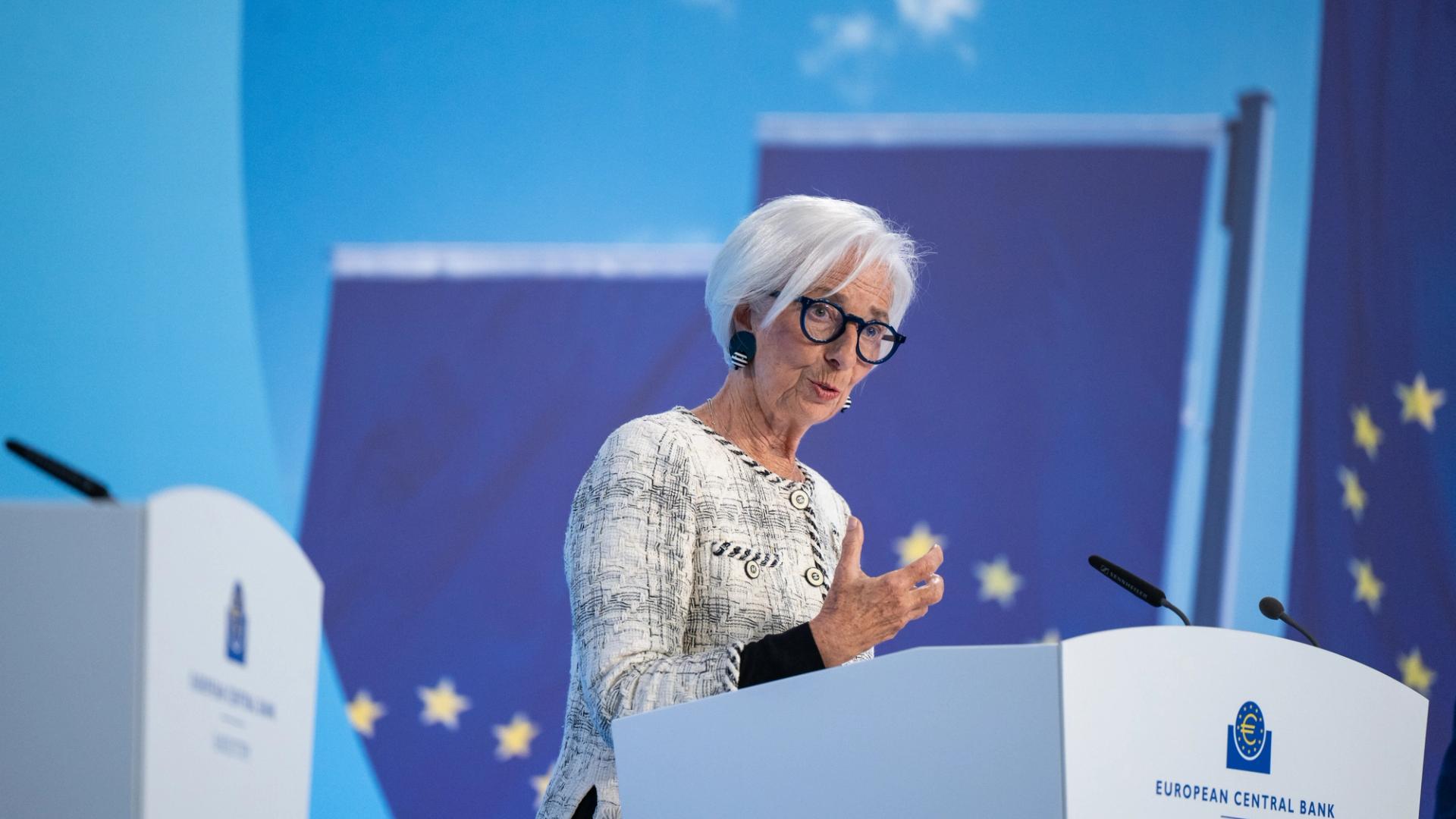
European Central Bank calls on merchants to join its digital euro pilot, testing online, mobile, in-store and peer-to-peer payments over 12 months
Why the ECB Wants a Digital Euro
The digital euro project is driven by a combination of structural trends, geopolitical pressures, and defensive concerns about private money—especially stablecoins—gaining too much influence in the European payment landscape. At the domestic level, cash use is declining in many euro‑area countries, and there is currently no single European digital payment option that works seamlessly across all member states. The ECB notes that 13 of the 20 euro‑area countries rely heavily on international card schemes—primarily US‑based networks—for card payments, exposing Europe’s retail payment system to foreign corporate decision‑making, potential extraterritorial sanctions, and platform lock‑in by Big Tech digital wallets. A digital euro, accepted everywhere in the euro area and based on European infrastructure and standards, is intended to offer a sovereign alternative and to prevent the fragmentation of payment rails along national or corporate lines.
There is also a strategic and geopolitical dimension. The European Stability Mechanism (ESM) has argued that the euro is at a “strategic inflection point,” as the international monetary system appears to be shifting toward a more multipolar regime in which the dollar, euro, and possibly other currencies compete as safe assets and settlement media. In this context, a digital euro is seen as a way to strengthen the euro’s role as a global financial anchor by enhancing its usability in the emerging digital financial ecosystem and reducing reliance on dollar‑denominated stablecoins. The ESM suggests that a savings and investments union, combined with a digital euro and robust euro‑denominated stablecoins under the EU’s Markets in Crypto‑Assets (MiCA) regulation, could expand the supply of euro safe assets and make the currency more attractive as both a store of value and a transaction medium. For European policymakers worried about the US crypto push and the rise of dollar stablecoins like USDT and USDC, this is not just about technology but about monetary autonomy and the long‑term bargaining power of the euro.
Crucially for the crypto ecosystem, ECB officials increasingly frame the digital euro as a counterweight to privately issued stablecoins, which they see as subject to runs, governance failures, and foreign monetary influence. In a speech on lessons from money market funds and stablecoins, ECB Executive Board member Isabel Schnabel highlighted the risk of runs arising from liquidity mismatches and loss of trust in the underlying assets backing stablecoins, drawing explicit parallels to money market funds that required central bank support during past crises. She and other policymakers warn that widespread adoption of dollar‑backed stablecoins in the euro area could undermine monetary sovereignty by importing another jurisdiction’s monetary policy and regulatory choices into European payments. From this vantage point, a digital euro is not just a convenience but a way to ensure that the anchor of the euro area’s monetary and financial system remains public, robust, and directly controlled by European institutions.
At the same time, the ECB emphasises resilience and inclusion as core policy motivations. ECB Board member Piero Cipollone has argued that the digital euro would provide additional payment rails on top of existing private solutions, ensuring that “spare capacity” exists in the system and that citizens can always access a free, universally accepted digital means of payment, even in the event of major disruptions. The infrastructure is being designed with distributed processing across at least three different regions, each with multiple servers, so that transactions can be automatically rerouted in case of a regional outage or cyberattack. Offline functionality, including the ability to make small payments without internet connectivity, is intended to provide another layer of resilience, especially during natural disasters or power cuts when cash may be hard to access. This resilience narrative directly addresses concerns raised by recent cyber incidents and highlights a difference with many stablecoins, which rely on a combination of private custodians, blockchains, and exchanges that may not be designed as public utilities.
Inclusion is the other side of this argument. The ECB envisions the digital euro as a public good that guarantees access for all citizens, regardless of income, location, or digital skills. The design work includes ensuring that people without smartphones, for example, can still use the digital euro through physical cards or other devices, and that non‑banked or underbanked individuals can onboard easily via basic accounts offered by banks or other intermediaries. For the ECB, preserving universal access to central bank money in an era of declining cash use is essential not only for fairness but also for maintaining trust in the currency and anchoring the overall system. For crypto advocates, this emphasis on inclusion echoes some of the rhetoric around open blockchain networks, though the mechanisms and trust assumptions are very different.
Readers click the digital euro primarily as a geopolitical alarm story — the ECB defending Europe's monetary turf against US dollar stablecoins — not as a payments-innovation story, revealing that credibility of the threat, not the CBDC's own merits, is the real editorial driver.
Timeline, Governance, and the EU Legislative Process
The digital euro project has progressed through several formal phases, each involving extensive technical, legal, and political work. The first major step was the ECB’s 2020 “Report on a digital euro,” which laid out high‑level design options and the rationale for a potential euro‑area CBDC. In July 2021, the ECB’s Governing Council decided to launch an investigation phase to explore these options in detail, working closely with EU policymakers, national central banks, and market participants such as banks, payment firms, and consumer groups. This investigation phase ran from October 2021 to October 2023 and focused on examining potential design features, distribution models, privacy safeguards, and the interaction with existing payment systems and regulations.
Based on the findings of that investigation, the Eurosystem launched a preparation phase in November 2023. During this phase, which concluded successfully in late 2025, the ECB and national central banks worked on drafting a rulebook for the digital euro scheme, selecting providers to help build the digital euro platform, conducting experimentation and user research, and deepening technical analysis on key design aspects. The draft rulebook sets out common rules, standards, and procedures to ensure that digital euro payments function consistently across the euro area, covering aspects such as transaction processing, user protection, and inclusion requirements. The ECB has emphasised that this rulebook is being developed with flexibility so it can be updated as the legislative process evolves and as new technologies and use cases emerge.
In October 2025, the ECB’s Governing Council decided that the Eurosystem would move to the next phase of the digital euro project, concentrating on technical readiness and deeper engagement with market participants while continuing to support EU legislators. The ECB estimates that if EU lawmakers adopt the regulation establishing the digital euro during 2026, a pilot exercise could begin around mid‑2027 and the Eurosystem should be ready for a potential first issuance during 2029. The total development cost until first issuance is projected at around \(€1.3\) billion, including internal and external components, with annual operating costs of roughly \(€320\) million thereafter, all borne by the Eurosystem as part of its mandate to provide public money. For context, the ECB also estimates that the banking sector would face one‑off investment costs of approximately \(€4\) to \(5.8\) billion to integrate and offer digital euro services, although shared infrastructure and reuse of existing solutions could significantly reduce individual banks’ outlays.
Crucially, the decision on whether to actually issue a digital euro will only be taken once the EU legislative process has concluded. The European Commission has proposed a regulation establishing the digital euro, alongside separate legislation reinforcing the legal tender of cash, and these proposals are now the subject of negotiations between the European Parliament and the Council in the usual “trilogue” format. The digital euro has become one of Brussels’ most politically charged dossiers, with some lawmakers and member states strongly supportive and others sceptical or outright hostile, often on grounds of privacy, fiscal conservatism, or concern for the traditional banking model. ECB representatives, including board members and national central bank governors, regularly appear before the Parliament’s economic and monetary affairs committee to explain the project and respond to questions, as seen in hearings where Piero Cipollone has stressed that cash and the digital euro are being treated as a single package to underline their complementarity.
The ECB is also actively involving market participants in governance and technical work, particularly through the Rulebook Development Group and its associated workstreams. In early 2026, for instance, the ECB opened calls for experts to join workstreams focusing on implementation specifications for ATMs and payment terminals and on a certification and approval framework for digital euro payment and acceptance solutions. These workstreams, made up of representatives from consumers, retailers, payment service providers, and the Eurosystem, are tasked with translating high‑level design choices into practical, interoperable standards that can be implemented by hardware manufacturers, software providers, and financial institutions. This collaborative governance model is intended both to ensure that the digital euro will “fit smoothly into the existing payments ecosystem,” as the ECB puts it, and to pre‑empt accusations that the project is being imposed top‑down without industry input.
For crypto participants used to fast‑moving protocol upgrades or DAO governance, the EU’s legislative and institutional process can feel glacial and heavily procedural. However, the digital euro’s eventual form—including its programmability, privacy guarantees, and potential for on‑chain integration—will be determined as much by this political process as by technical capability. The 2026 vote in Parliament and Council is widely seen as a pivotal moment that will either unlock a 2027 pilot and 2029 rollout or significantly delay, dilute, or even derail the project.
ECB board member Isabel Schnabel says a digital euro is essential to counter stablecoin risks, warning dollar-backed tokens could strengthen U.S. monetary dominance
How the Digital Euro Would Work in Practice
While many design details remain subject to legislation and further testing, the ECB has outlined a fairly clear operational model for the digital euro. The Eurosystem would build and operate the core infrastructure, including the settlement engine that records digital euro holdings and processes transactions, while banks and other regulated payment service providers would handle distribution, customer onboarding, and user interfaces. Users would hold digital euro in an account or wallet managed by their bank or another intermediary, similar to how they currently access online banking, but the underlying units would be direct claims on the central bank rather than on the intermediary. For day‑to‑day payments, users could pay with digital euro either online or offline using their phone or a card, in shops, on websites, or peer‑to‑peer, with usage designed to be intuitive and similar to existing digital payments.
One distinctive feature is the commitment to offline functionality, which aims to replicate some of the anonymity and resilience of cash in a digital environment. Offline payments would be stored locally on a secure element in a device or card and transferred directly between payer and payee without an internet connection, with transaction details known only to those two parties. This design would allow cash‑like privacy for low‑value offline transactions and ensure that people can keep paying even when connectivity is disrupted, for example during network outages or in remote areas. The ECB has argued that legislation should make it easy for citizens to access offline digital euro, including the possibility of setting offline payments as the default in some contexts and enabling automatic funding of offline holdings from online balances. For crypto users, this is conceptually similar to hardware wallets or off‑chain payment channels, though implemented within a tightly controlled, centrally managed system.
To maximize interoperability and minimise costs, the ECB is deliberately reusing existing open technical standards widely used in Europe’s card and payment ecosystems. In April 2026, the ECB signed agreements with the European Card Payment Cooperation (ECPC), nexo standards, and the Berlin Group to reuse their open standards—such as CPACE—for processing digital euro online payments. These standards underpin contactless card payments, terminal communications, and other aspects of the current payments infrastructure, and reusing them means that payment terminals, cards, and banking systems will not need to be completely redesigned to handle the digital euro. ECB officials describe this as creating a “uniform open standard” that ensures that cards, phones, and terminals “speak the same European language,” and note that European providers will be free to use these standards not only for digital euro transactions but also for payments in commercial bank money. This approach is meant both to lower integration costs and to foster competition by making it easier for new providers to enter the market with interoperable solutions.
The ECB is also working on integrating the digital euro into ATMs and card terminals, a crucial step for real‑world usability. The dedicated workstream on ATMs and terminals is tasked with specifying how digital euro will be dispensed, loaded, and accepted across different hardware, including support for offline integration and various communication technologies. At the same time, another workstream is focused on a certification and approval framework, ensuring that payment and acceptance devices used by payment service providers in the digital euro ecosystem meet security, interoperability, and performance requirements. For crypto audiences, this highlights a key difference with permissionless systems: rather than any node or wallet developer being able to connect by following an open protocol, access to the digital euro infrastructure will be mediated through certified, regulated intermediaries and devices.
A practical concern is the cost for banks and payment providers to adapt their systems. The ECB estimates that the euro‑area banking sector would need to invest between \(€4\) and \(5.8\) billion to implement the digital euro, including adapting back‑office systems, upgrading terminals, and developing new customer interfaces. However, a detailed ECB analysis suggests that extensive synergies and cost mutualisation are possible if banks rely on shared solutions—for example, common processing platforms or jointly developed software—rather than each building their own stack from scratch. Italy’s banking association has broadly backed the digital euro but has urged that implementation costs be spread over time and supported by shared infrastructure to avoid overburdening individual institutions, a stance echoed by other industry bodies seeking clarity on cost allocation and commercial opportunities.
For a crypto‑savvy audience, a central question is whether the digital euro will be blockchain‑based. The ECB has been careful not to commit publicly to a specific technology stack, instead emphasising functional requirements such as scalability, security, and offline capability. In parallel, however, the ECB is exploring the use of distributed ledger technology (DLT) for settling transactions in tokenised central bank money, particularly for wholesale applications like securities settlement and tokenised deposits, with a goal of enabling such settlements by around 2026. While this wholesale experimentation may or may not use public blockchains, officials have generally signalled a preference for permissioned infrastructures under central bank or consortium control, citing privacy, governance, and finality concerns when discussing public networks like Ethereum or Solana. For the retail digital euro, the current baseline is that it will run on a robust, centrally orchestrated infrastructure with APIs for intermediaries, rather than on a public blockchain, although debates continue within EU circles about whether and how to provide bridges to tokenised asset ecosystems.
To clarify the differences between the digital euro, euro stablecoins, and traditional bank deposits in a way that resonates with crypto readers, the following table provides a high‑level comparison.
| Feature | Digital euro (planned) | Euro stablecoin (e.g., EURe) | Commercial bank deposit |
|---|---|---|---|
| Issuer | Eurosystem (ECB + national central banks) | Private company or e‑money institution | Commercial bank |
| Legal nature | Direct claim on central bank; legal tender (planned) | Claim on issuer’s reserves; not legal tender | Claim on bank; not legal tender |
| Backing / risk | Backed by central bank balance sheet; no credit risk | Backed by reserves (cash, T‑bills, etc.); run risk | Subject to bank solvency and deposit insurance |
| Access | All euro‑area residents and businesses via intermediaries | Typically global, subject to KYC and geography | Customers of the bank |
| Technology | Centralised infrastructure; offline capability | On‑chain (Ethereum, L2s, etc.) | Centralised bank ledger |
| Privacy | High for offline; pseudonymised online; GDPR‑compliant | Varies by issuer and chain; on‑chain traceability | Bank secrecy and GDPR, but no cash‑like mode |
| Programmability | Limited at base layer; via intermediaries at higher layers | High; smart contracts and DeFi integration | Limited; APIs and banking rails |
| Regulation | Dedicated EU regulation; central bank oversight | MiCA and e‑money rules in EU; varied globally | Banking regulation and payment services law |
This comparison underscores why the ECB views the digital euro as both complementary to and a potential stabilising anchor for euro stablecoins, while crypto users see clear trade‑offs in programmability, openness, and governance.
- 01US stablecoin threat to eurozone sovereignty↗
The top-clicked headline framed the digital euro as a defensive move against Trump-era dollar-backed crypto eating European bank revenues, making geopolitical stakes concrete and personal for readers.
- 02Privacy and surveillance fears↗
Multiple high-performing headlines tied the digital euro to data-protection risks, national sovereignty loss, and ECB monitoring of citizens' spending, tapping a deep distrust of state-controlled digital money.
- 03Legislative stalling and 2029 timeline uncertainty↗
The bill-stall headline exposing a €1.2 billion project in political limbo drew strong clicks, as readers tracked whether Brussels could actually legislate this into existence before dollar stablecoins made it irrelevant.
- 04Bank industry resistance and cost burden↗
Readers engaged with the tension between the ECB mandating costly CBDC integration and banks lobbying to distribute or delay those costs, framing it as a fight over who pays for Europe's monetary ambition.
- 05CBDC vs open stablecoin competitiveness↗
Headlines featuring Tether's CEO and critics arguing the digital euro is a politically neutered product that cannot match dollar stablecoins on utility drew readers who wanted a verdict on which instrument wins.
- 06Public blockchain architecture debate↗
The question of whether the ECB would build on Ethereum, Solana, or a private ledger attracted readers focused on whether the digital euro would be genuinely open or a closed state system dressed as crypto.
Privacy, Surveillance Fears, and Design Safeguards
Few aspects of the digital euro generate as much debate—especially in crypto circles—as privacy. Critics worry that a CBDC could give the state unprecedented visibility into individual financial lives, enabling fine‑grained surveillance or even direct control over spending, particularly if future governments become more authoritarian. ECB President Christine Lagarde has praised China’s digital yuan pilot as “of service to all citizens,” which some commentators interpret as signalling an admiration for aspects of Beijing’s approach that they fear might be imported into Europe. At the same time, US policymakers have moved in the opposite direction by effectively banning a Federal Reserve retail CBDC and focusing instead on a regulated stablecoin framework, prompting Lagarde and others to argue that Europe should not simply “copy the US stablecoin model” but follow its own path centred on a public digital currency. These contrasting models sharpen anxieties among those who see CBDCs as potential tools for financial control.
In response, the ECB has repeatedly pledged that the digital euro will offer the highest privacy standards of any electronic payment option, within the constraints of EU law. The design explicitly distinguishes between offline and online payments. For offline payments, transaction details would be known only to the payer and the recipient, with no centralised recording of individual transaction data, delivering a level of confidentiality close to that of cash. For online payments, the Eurosystem would only have access to pseudonymised data that does not allow it to identify users or to link them to specific transactions, and it would be prohibited from using any data for commercial purposes. Banks and other intermediaries would see only the minimal data necessary to comply with legal obligations such as AML and counter‑terrorist financing rules, and they would need explicit user consent to use personal data for commercial activities like targeted marketing.
The ECB insists that the digital euro will be fully compliant with EU data protection law, including the General Data Protection Regulation (GDPR), which is often described as one of the strongest privacy frameworks in the world. Independent data protection authorities at both the EU and national levels would supervise the ECB’s handling of digital euro data, and any misuse or overreach could be subject to legal challenge. At the technical level, the ECB is exploring privacy‑enhancing technologies that can allow compliance checks and risk management without exposing full transaction histories, though details remain sparse. This could involve techniques such as cryptographic pseudonymisation or controlled disclosure, but the ECB avoids using the kind of zero‑knowledge language familiar to crypto developers, likely to keep expectations realistic and to avoid over‑promising on untested methods at scale.
Despite these assurances, scepticism persists. Civil liberties groups, some privacy‑focused crypto communities, and political actors in France, Germany, and elsewhere argue that even pseudonymised data can be deanonymised under certain conditions, especially when combined with other datasets. They fear that the digital euro could lower the technical and legal friction needed to monitor financial flows, with potential mission creep over time, for example through expanding AML rules, tax enforcement, or security measures. Some lawmakers have gone as far as to propose banning CBDCs altogether and instead embracing decentralized alternatives like Bitcoin, a stance that resonates with parts of the crypto community but is hard to reconcile with the EU’s broader regulatory and monetary policy framework. The resulting politics are volatile: while proponents frame the digital euro as a trust‑enhancing continuation of cash in the digital era, opponents warn that once the infrastructure exists, future policymakers may use it for less benign purposes.
The ECB is aware of the trust deficit and has launched a public outreach campaign to explain the digital euro’s features, solicit feedback, and counter what it sees as misconceptions and conspiracy theories. Critics, including some crypto commentators, view this outreach as calculated public relations rather than genuine consultation, arguing that key decisions—particularly the choice to build a centrally controlled system—are already baked in, and that privacy concessions are limited by AML and financial surveillance regimes. The tug‑of‑war between these narratives will likely intensify as the legislative vote approaches. For crypto users, the key question is not whether the digital euro will be more privacy‑preserving than mainstream card payments—it almost certainly will—but whether it can ever approximate the pseudonymity of cash or the self‑custodial control of on‑chain assets, especially once large‑value and online thresholds are considered.
In this respect, offline small‑value transactions may be the closest the digital euro comes to a cash‑like experience. The ECB has hinted that there could be thresholds below which offline payments enjoy near‑complete privacy, with only aggregate risk metrics monitored at a system level, while higher‑value or suspicious patterns could trigger more scrutiny via intermediaries. Even so, the need to prevent offline double‑spending and fraud means that some reconciliation with the central ledger will be required, and the balance between convenience, privacy, and security will be delicate. From a crypto standpoint, this can be seen as a centrally managed analogue to off‑chain or Layer 2 systems, where local state and global state need periodic alignment, but with the crucial difference that the central bank—not a decentralized consensus mechanism—ultimately defines validity and can impose legal constraints.
ECB says digital euro will provide more transaction privacy than standard bank transfers

The Digital Euro, Stablecoins, and Tokenised Euros
For the crypto ecosystem, perhaps the most consequential aspect of the digital euro is its relationship with stablecoins and other forms of tokenised euros. The EU’s MiCA regulation provides a comprehensive framework for crypto‑assets, including specific rules for asset‑referenced tokens and e‑money tokens, categories that cover most fiat‑backed stablecoins. Under MiCA, issuers of euro‑denominated stablecoins must be authorised, maintain adequate and appropriately segregated reserves, provide redemption at par, and comply with strict disclosure and governance requirements, while non‑euro “significant” stablecoins face additional caps and obligations. This framework is intended to make regulated stablecoins safer and more transparent within the EU, but it also raises barriers to entry and operational burdens that some global issuers, such as Tether, have publicly criticised as “very dangerous” for the industry.
The ECB and other European institutions see the digital euro as a public anchor around which private forms of digital euro can safely develop. In the ESM’s view, the optimal outcome is not a monopoly of public money but a mixed ecosystem in which the digital euro coexists with regulated euro stablecoins, tokenised deposits, and traditional bank money, all anchored by a robust central bank liability. This would, in principle, reduce the risk that a private issuer—especially one based outside the EU—could become so dominant that its failure or policy choices would threaten financial stability or monetary sovereignty. Schnabel’s comparison of stablecoins to money market funds, with their susceptibility to runs due to liquidity mismatches and questions about asset quality, reinforces the message that private tokens should not be the sole foundation of a digital money system.
At the same time, Europe is acutely aware that the US dollar currently dominates the stablecoin market, including in euro‑area DeFi and cross‑border crypto flows. If left unchecked, this could entrench US monetary influence in new digital channels even as cash and bank transfers remain denominated in euro. The ESM explicitly warns that Europe must prepare to confront the challenge posed by stablecoins, currently largely dollar‑denominated, and suggests strengthening MiCA to avoid potential runs, deposit shifts affecting bank liquidity, and broad adoption that could weaken the effectiveness of the ECB’s monetary policy. From this perspective, a digital euro, combined with a robust regime for euro‑denominated stablecoins, is seen as a necessary counterweight to the growth of dollar stablecoins and the broader “US crypto push,” which some European officials fear could jeopardize Europe’s monetary autonomy.
Within this landscape, euro stablecoin projects continue to evolve. Regulated e‑money tokens such as Monerium’s digital euro (EURe), which has gone live on networks like Arbitrum, demonstrate how on‑chain representations of euros can be issued under existing e‑money and MiCA‑aligned frameworks, offering programmability and integration with DeFi while remaining claims on private issuers. For crypto users, these tokens provide many of the practical benefits of a hypothetical on‑chain digital euro, including composability with smart contracts and global transferability, albeit with different risk and governance profiles. The EU’s intent is not to shut down such projects but to channel them into a regulated perimeter where their systemic impact can be monitored and, if necessary, constrained.
The politics around large platforms amplify these tensions. Reports have circulated that Christine Lagarde reportedly moved to block Binance’s MiCA approval as Europe prepares the digital euro, highlighting concerns about dominant crypto exchanges and their influence over euro‑denominated tokens and payments. While such reports remain unconfirmed by the ECB and should be treated cautiously, they reflect anxiety among some policymakers that if major private actors gain a commanding position in euro‑stablecoin markets before the digital euro is launched, the public project could be overshadowed or undermined. At the same time, industry leaders like Tether’s CEO warn that the digital euro and MiCA together could concentrate power in the hands of regulators and large banks, squeezing out more open or innovative uses of stablecoins and DeFi.
A separate but related development is the exploration of tokenised central bank money for wholesale use, in particular for settling securities and interbank transactions on DLT platforms. The ECB has indicated that it is working on providing central bank money in tokenised form and expects to have solutions in place by around 2026, prior to any retail digital euro issuance. This could involve the issuance of “wholesale CBDC” or other settlement instruments that interoperate with tokenised securities and deposits on permissioned blockchains run by financial consortia. For crypto and DeFi builders, these wholesale experiments may be a more immediate touchpoint than the retail digital euro, as they could determine how easily banks and regulated market infrastructures connect to tokenised asset networks and whether bridges to public chains are encouraged or restricted.
Finally, the question of whether the digital euro itself might one day be issued or mirrored on public blockchains remains open but politically sensitive. Some EU officials and external experts have floated the idea of building part of the digital euro infrastructure on public networks like Ethereum or Solana, or at least allowing regulated intermediaries to wrap digital euro holdings into on‑chain tokens for use in DeFi, subject to strong identity and compliance layers. Others warn that this would raise insurmountable challenges in terms of privacy, governance, and control, effectively outsourcing parts of Europe’s monetary infrastructure to global, permissionless networks. For now, the ECB’s public stance is cautious: it is experimenting with DLT where it makes sense but prioritising a controllable, secure infrastructure for the retail digital euro, with any on‑chain exposure likely to be indirect and mediated by supervised entities.
ECB launches digital euro investigation phase
ECB moves to two-year preparation phase
ECB board member Schnabel warns dollar stablecoins threaten EU monetary dominance
ECB publishes preparation-phase progress report; declares digital euro technically ready
ECB partners with ECPC, Nexo, and Berlin Group to reuse open payment standards, cutting integration costs
ECB confirms blockchain-based central bank money settlements targeted for 2026
ECB publishes speech reinforcing digital euro as answer to US stablecoin competitive threat
Banks, Payments, and Monetary Policy: Who Wins and Who Loses?
A central concern in the digital euro debate is its impact on banks and the broader financial system. Commercial banks fear that if households and firms can hold large amounts of risk‑free central bank money in digital form, they may shift deposits out of bank accounts, especially in times of stress, potentially destabilising bank funding and credit supply. ECB officials have repeatedly stressed that they do not intend to open retail accounts at the central bank or to give the digital euro unfair advantages over bank deposits. Banque de France Governor François Villeroy de Galhau, for example, has emphasised that the digital euro will be offered in partnership with commercial banks and that the ECB does not intend to provide direct customer accounts, nor to make the digital euro more attractive than bank deposits; instead, it aims to offer citizens a freedom of choice between public currency and private bank money, just as they already choose between cash and commercial bank money today.
To address disintermediation risks, the ECB is considering design features such as holding limits for individuals and non‑bank users, non‑interest‑bearing balances, and possibly tiered remuneration that discourages large digital euro hoards while preserving its usefulness for everyday payments. While specific thresholds and mechanisms have not been finalised or codified in law, the direction of travel is clear: the digital euro is meant to be a means of payment, not a high‑yield savings instrument, and its design will reflect that priority. This aligns with the ECB’s narrative that the project is not about shrinking the banking sector but about keeping central bank money relevant in a digital environment, ensuring that the public continues to have access to a safe anchor for private money.
From a payments industry perspective, the digital euro presents both a threat and an opportunity. On the one hand, existing card schemes and Big Tech wallets could face new competition from a European, public‑money payment option that is free for basic use and widely accepted. On the other hand, the ECB’s decision to base digital euro payments on open standards like CPACE and to make these standards freely available for commercial bank money payments as well enables European payment providers to build new services on a common, interoperable foundation. This could reduce dependence on US‑based card networks and digital wallets and foster a more competitive European payments landscape, with fintechs and banks alike integrating digital euro rails into their offerings. For merchants, the hope is that more competition will eventually translate into lower fees and more choice, though the detailed fee structures for digital euro acceptance are still subject to negotiation among regulators, banks, and retailers.
In terms of monetary policy, the digital euro reinforces the role of central bank money as the anchor of the financial system, but it also raises questions about how policy transmission might change. In theory, if large shares of the public hold digital euro, changes in the remuneration (even if set at zero) could have more direct effects on money demand and bank funding costs, though the ECB has signalled it does not plan to use the digital euro as a primary monetary policy instrument. Conversely, by supporting a robust ecosystem of euro‑denominated digital instruments—stablecoins, tokenised deposits, and others—anchored in a public liability, the digital euro could help stabilise expectations and reduce the risk that instability in private digital money markets spills over into the real economy. This is especially relevant as tokenisation and programmable finance expand, potentially creating new forms of liquidity and leverage outside traditional regulatory perimeters.
For resilience and crisis management, the digital euro is explicitly framed as a tool for business continuity. Cipollone has argued that by providing additional payment rails and a European, publicly governed infrastructure, the digital euro would help ensure that critical payments can continue during crises, including cyberattacks on banks or payment processors. The distributed technical set‑up, with multiple regions and servers, and the ECB’s own digital euro app as a fallback, are designed to prevent single points of failure. Offline capability further supports this objective, allowing transactions to continue even when networks or power grids are disrupted. For crypto advocates who prize censorship resistance and permissionless access, this resilience model is different in nature—it relies on institutional redundancy rather than decentralised consensus—but it responds to some of the same concerns about concentration and fragility in existing payment systems.
The distribution of costs and benefits remains contentious. Banks and payment providers worry about bearing significant implementation costs while potentially losing some transaction fee revenue if digital euro payments are priced cheaply at the point of sale. Some policymakers and economists counter that the public benefits of a more resilient, inclusive, and sovereign payment system justify these costs, and that banks will be able to develop new value‑added services on top of digital euro rails. Italy’s banks, for instance, support the project in principle but stress the importance of phased investment and shared infrastructure to keep the burden manageable. For crypto businesses, the key question is whether they will be allowed to plug into the digital euro ecosystem as regulated intermediaries or whether access will be de facto limited to traditional banks and payment institutions, potentially closing off avenues for innovation in DeFi and Web3‑native finance.
The ECB retains full control over issuance and transaction visibility, and no zero-knowledge privacy architecture has been mandated in finalised legislation, leaving holders exposed to programmable spending restrictions or monitoring.
The digital euro bill was stalled in the European Parliament as of the most recent reports, leaving the €1.2 billion preparation-phase investment without a legal foundation and the 2029 rollout target in serious doubt.
Dollar-backed stablecoins operating under the US GENIUS Act offer permissionless global access and DeFi composability that a politically constrained ECB CBDC with holding caps cannot match, risking irrelevance at launch.
Holding caps and the mandate that banks act as distribution intermediaries partially shield commercial banks from disintermediation, but integration costs remain contested and could strain smaller eurozone lenders.
The ECB confirmed the digital euro is technically ready and began recruiting for ATM and card-terminal integration, but offline payment infrastructure requiring a dedicated $1.3 billion budget slice remains unproven at scale.
Without the digital euro, declining cash usage and rising penetration of US card networks and Big Tech wallets gradually shift European retail payment infrastructure to non-European operators, but the risk materialises slowly.
What It Means for Crypto Users and DeFi Builders
For crypto users, traders, and DeFi builders, the digital euro is not just another payment option; it is a structural change in the fiat layer that interfaces with on‑chain finance. In the near term, the digital euro will likely be accessible primarily through banks and licensed payment providers, with usage confined to regulated channels such as bank apps, merchant terminals, and possibly integrated fintech wallets. It is highly unlikely that the initial rollout will include a native on‑chain representation of the digital euro on public blockchains like Ethereum or Solana. Instead, any on‑chain exposure is more likely to come indirectly, either via regulated euro stablecoins backed by reserves that include digital euro or via tokenised deposits pegged to digital euro balances held by banks under strict conditions.
This layered architecture has important implications for DeFi composability. If digital euro cannot circulate freely on public networks, euro‑denominated DeFi will continue to rely primarily on privately issued stablecoins and tokenised deposits, with their attendant counterparty and regulatory risks. The digital euro could still influence this ecosystem indirectly by setting a benchmark for safety and usability, encouraging regulators to favour euro‑backed stablecoins that are tightly linked to central bank money and discouraging offshore or unregulated tokens. Projects like Monerium’s EURe, which operate under e‑money rules and aim to align with MiCA, illustrate one path in which on‑chain euros exist within a regulatory perimeter that is at least conceptually compatible with the digital euro’s role as an anchor. For DeFi protocols, supporting such tokens may become a way to demonstrate regulatory compatibility and to attract users who value legal certainty and redemption guarantees.
At the same time, there is a risk that the combination of a digital euro and stringent MiCA rules could constrain more open or experimental forms of euro‑denominated finance. Some critics argue that the digital euro will be a “politically constrained, bank‑protecting CBDC” that cannot compete with more useful and open dollar stablecoins, especially on public chains where USDT and USDC dominate liquidity and integrations. If the digital euro is unavailable on‑chain and euro stablecoin issuance is limited by strict caps, capital requirements, or other constraints, Europe’s DeFi ecosystem may remain overshadowed by dollar‑based activity, with implications for the euro’s cultural and technological relevance even if its macroeconomic role remains strong. Crypto businesses building in Europe will need to navigate this tension, balancing regulatory compliance and access to the digital euro’s mainstream payment rails against the desire for permissionless composability and global liquidity.
On the user experience side, the digital euro could make fiat on‑ and off‑ramps smoother and more reliable for European crypto users. If banks are mandated or strongly encouraged to support digital euro services and to integrate them into their existing infrastructure, depositing and withdrawing euros from exchanges or brokerages could become faster and more standardised, with fewer points of failure related to proprietary payment schemes. In times of crisis, having access to a state‑backed digital payment instrument might also reduce the risk of funds being trapped in failing banks or halted payment networks, even if crypto exchanges themselves remain subject to platform risk. However, the digital euro will not change the fact that crypto‑fiat interfaces in Europe are heavily regulated, and it may in fact make it easier for authorities to monitor flows and enforce rules, given that all digital euro intermediaries must comply with AML, MiCA, and other EU regulations.
For builders, the digital euro presents both constraints and collaboration opportunities. Payment startups, wallet providers, and even some crypto firms could seek to become digital euro intermediaries or integrators, offering user‑friendly interfaces and innovative features on top of the core rails, much as neobanks built slick mobile apps on top of traditional bank infrastructure. The ECB’s reliance on open standards and reuse of existing payment protocols could lower barriers for technically capable firms that can meet regulatory requirements. On the other hand, DeFi protocols that rely on self‑custody, anonymity, or cross‑border liquidity may find limited room to interact with the digital euro directly, unless they pivot toward regulated models such as permissioned DeFi, institutional pools, or tokenised assets managed under clear legal frameworks.
In the longer term, the digital euro may influence global debates about the future of money and the alignment between CBDCs and crypto. If Europe manages to launch a privacy‑respecting, resilient, and inclusive digital euro that coexists smoothly with regulated euro stablecoins and tokenised assets, it could offer a model for other jurisdictions seeking to balance innovation, sovereignty, and financial stability. Conversely, if the project is hamstrung by political opposition, technical missteps, or misaligned incentives for banks and users, it may reinforce the perception that CBDCs are unwieldy and unattractive compared with agile, market‑driven stablecoins. For the crypto community, staying informed and engaged as the EU’s legislative and technical choices crystallise will be critical, not only for anticipating regulatory shifts but also for identifying niches where digital euro infrastructure intersects productively with open, programmable finance.
Outlook
The digital euro sits at the intersection of public money, private innovation, and geopolitical competition, and its trajectory will shape the environment in which euro‑denominated crypto and DeFi evolve. Over the next few years, the key milestones are clear: EU co‑legislators must decide whether to adopt the digital euro regulation, the ECB will continue building and testing its technical platform and rulebook, and a pilot phase could begin as early as 2027, with a potential full rollout around 2029 if political support holds. Throughout this period, debates over privacy, bank disintermediation, and the balance between public and private digital euros will intensify, with strong lobbying from banks, retailers, civil society, and crypto interests.
For Europe’s crypto ecosystem, the digital euro is unlikely to be a silver bullet that suddenly makes euros as programmable and composable as dollar stablecoins on public chains. Instead, it will function as a stable, regulated base layer that provides a safer anchor for regulated euro tokens, improves fiat rails, and reinforces the euro’s role in a digital, multipolar monetary system, while leaving much of the open innovation in DeFi to private actors operating under MiCA and other regulations. Whether this results in a vibrant, euro‑centric on‑chain economy or in continued dominance of dollar stablecoins will depend on how flexibly the EU implements its rules, how effectively the digital euro is integrated with tokenised assets and wholesale DLT systems, and how attractive euro‑denominated financial products become under the planned savings and investment union.
Ultimately, the digital euro is less a competitor to crypto in general than a statement about how Europe intends to wield its monetary sovereignty in the digital age. For builders and users, the challenge is to understand this new layer, anticipate where it creates friction or opportunity, and design products that can bridge the gap between a highly regulated, public digital currency and the permissionless, global financial primitives that continue to emerge on blockchains.
Latest Digital Euro news
European Central Bank calls on merchants to join its digital euro pilot, testing online, mobile, in-store and peer-to-peer payments over 12 monthsECB board member Isabel Schnabel says a digital euro is essential to counter stablecoin risks, warning dollar-backed tokens could strengthen U.S. monetary dominanceECB says digital euro will provide more transaction privacy than standard bank transfersECB partners ECPC, Nexo, and Berlin Group to reuse open payment standards, slashing digital euro integration costs ahead of 2027 pilot and targeted 2029 rolloutMEPs advance digital euro in 43-14 vote with zero-knowledge privacy rules and holding capsECB taps 36 payment providers for year-long digital euro pilot starting in H2 2027Sources
17 records from 6 domains
ecb.europa.eu
- ecb.europa.eu· euro / digital_euro / html / index.en.html
- ecb.europa.eu· euro / digital_euro / progress / html / index.en.html
- ecb.europa.eu· euro / digital_euro / faqs / html / ecb.faq_digital_euro.en.html
- ecb.europa.eu· press / key / date / 2026 / html / ecb.sp260601~38dffe5ec5.en.html
- ecb.europa.eu· press / pr / date / 2025 / html / ecb.pr251030~8c5b5beef0.en.html
- ecb.europa.eu· press / pr / date / 2026 / html / ecb.pr260424~202f9d832b.en.html
- ecb.europa.eu· euro / digital_euro / timeline / profuse / shared / pdf / ecb.deprep251010_a_view…
- ecb.europa.eu· press / intro / news / html / ecb.mipnews260318.en.html
- ecb.europa.eu· press / key / date / 2025 / html / ecb.sp250904~70ab593276.en.html
- ecb.europa.eu· euro / digital_euro / features / privacy / html / index.en.html
- ecb.europa.eu· euro / digital_euro / progress / html / ecb.deprp202510.en.html
youtube.com
x.com
instagram.com
esm.europa.eu
reply.com
Community notes
Spot something off or out of date? Drop a note. Editors review topic notes daily and roll accepted fixes into the explainer — contributors are recognized in the monthly $SQUID drop.
Loading notes…
Help improve this topic
Have a story or tip about this topic? Submit it. See something missing? Leave a note. Editors review daily; accepted submissions and fixes count toward the monthly $SQUID drop.