
Central banks shape crypto through interest rates, licensing regimes, stablecoin rules, and CBDC development. From the ECB's pushback on euro stablecoins to BIS tokenization pilots, here's how monetary institutions are redefining digital finance.
+15 sources across the wider coverage universe
 South Korea’s central bank nominee supports CBDC-first approach, limiting stablecoin role and prioritizing compliance, oversight, and anti-money laundering frameworks2026-04
 Zimbabwe requires crypto firms to register with central bank under $500 licensing regime2026-06
 The Philippines’ central bank says Binance and its local partner lack the licenses required to operate in the country, adding another hurdle to the exchange’s regional expansion plans2026-06
 CoinEx becomes Iranian sanctions rail after $3.84B in flows tied to IRGC and central bank2026-06
 Brazil central bank bans crypto use in regulated cross-border eFX payment rails, forcing providers to rely on FX transactions and tightening control over stablecoin flows2026-05
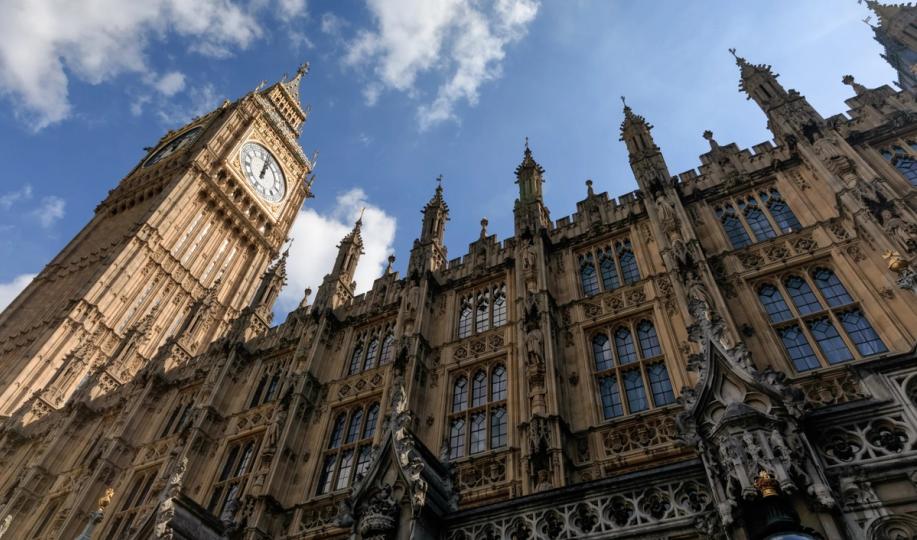 UK House of Lords committee tells Bank of England to drop £20K retail stablecoin cap and 40% central bank backing rule2026-06
A central bank is a public financial institution that manages a nation's monetary policy, issues currency, and acts as a lender of last resort to the commercial banking system — and increasingly, as the primary gatekeeper determining how digital assets interact with the formal economy.
What Central Banks Actually Do
Central banks sit at the apex of national financial systems. Their core mandates vary by charter, but most share four broad responsibilities: controlling the money supply and setting benchmark interest rates, maintaining price stability (typically targeting around 2% annual inflation), supervising commercial banks, and managing foreign exchange reserves.
The U.S. Federal Reserve, the European Central Bank (ECB), the Bank of England, and the Bank of Japan are among the most systemically influential. Their policy decisions — rate hikes, quantitative easing, reserve requirements — ripple across global asset markets within minutes, including crypto markets. When the Fed tightened aggressively in 2022–2023, bitcoin fell in tandem with equities as risk appetite compressed.
Fed Chair Kevin Warsh recently acknowledged that the institution has "missed for five years and we're going to fix that," a rare public admission of forecasting failure that underscores the political pressure central banks face when inflation runs hot.

South Korea’s central bank nominee supports CBDC-first approach, limiting stablecoin role and prioritizing compliance, oversight, and anti-money laundering frameworks

Shin Hyun-song spent 12 years at BIS literally writing the unified ledger playbook that Project Hangang now implements — so this isn't a policy preference, it's the architect returning to build his own blueprint. KRW1 already launched in February under the bank-led model he's pushing, and Hangang phase 2 is live with 9 banks. The contested piece isn't CBDC vs stablecoin — it's the BOK's proposed 51% bank consortium ownership requirement for stablecoin issuance, which the FSC is pushing back on as a fintech killswitch. Korea's building the rails either way; the fight is over who gets to run trains on them.
The Traditional Stance on Crypto
For most of the last decade, central banks ranged from skeptical to openly hostile toward cryptocurrencies. The concern was straightforward: decentralized digital assets operating outside the regulated financial perimeter threatened monetary sovereignty, enabled capital flight, and complicated interest-rate transmission.
That skepticism has hardened into active gatekeeping in several jurisdictions. In Mexico, billionaire Ricardo Salinas disclosed that banks operate under standing orders from Banco de México to avoid crypto entirely — "we cannot integrate that into our bank, period, end of story" — illustrating how informal central bank guidance can wall off entire national banking systems from the sector. Russia's central bank has proposed limiting non-professional retail investors to trading only bitcoin, ether, and USDT, with no plans to expand the permitted list, even as Moscow uses crypto to route some international trade under sanctions pressure.
Brazil's central bank took a more surgical approach, banning crypto use within its regulated cross-border eFX payment rails, forcing stablecoin flows back through traditional foreign-exchange transactions — tightening monetary control without prohibiting crypto outright.
Readers are not clicking on CBDCs as a curiosity — they are clicking on a sovereignty battle: central banks racing to digitize fiat and tokenize wholesale systems precisely because dollar-backed private stablecoins are already eating their monetary turf, especially in the Eurozone.
Licensing and Registration: A New Regulatory Mode
Rather than outright bans, a growing number of central banks are shifting to a licensing and registration model that brings crypto firms inside the regulatory perimeter while preserving supervisory authority.
Zimbabwe enacted a $500 licensing regime requiring crypto firms to register with the Reserve Bank of Zimbabwe — a low barrier to entry by global standards, but a formal acknowledgment that the sector exists and must be supervised. The Philippines' Bangko Sentral ng Pilipinas (BSP) tightened Virtual Asset Service Provider (VASP) rules and publicly named Binance and its local partner as lacking the required licenses, adding regulatory teeth to what had previously been guidance. Pakistan's State Bank reversed course more dramatically, lifting a seven-year ban on banking access for crypto firms and authorizing commercial banks to open accounts for PVARA-licensed VASPs with immediate effect — one of the sharper regulatory pivots of 2025–2026.
The UAE has moved in a similar direction: Crypto.com secured the first UAE Central Bank Stored Value Facility (SVF) license, enabling cryptocurrency payments for government services — a sign that Gulf central banks are willing to integrate crypto into public-sector payment infrastructure.

Standard Reserve publishes whitepaper for experimental onchain central bank, using a Uniswap v4 pool to track ETH flows and adjust its operations.
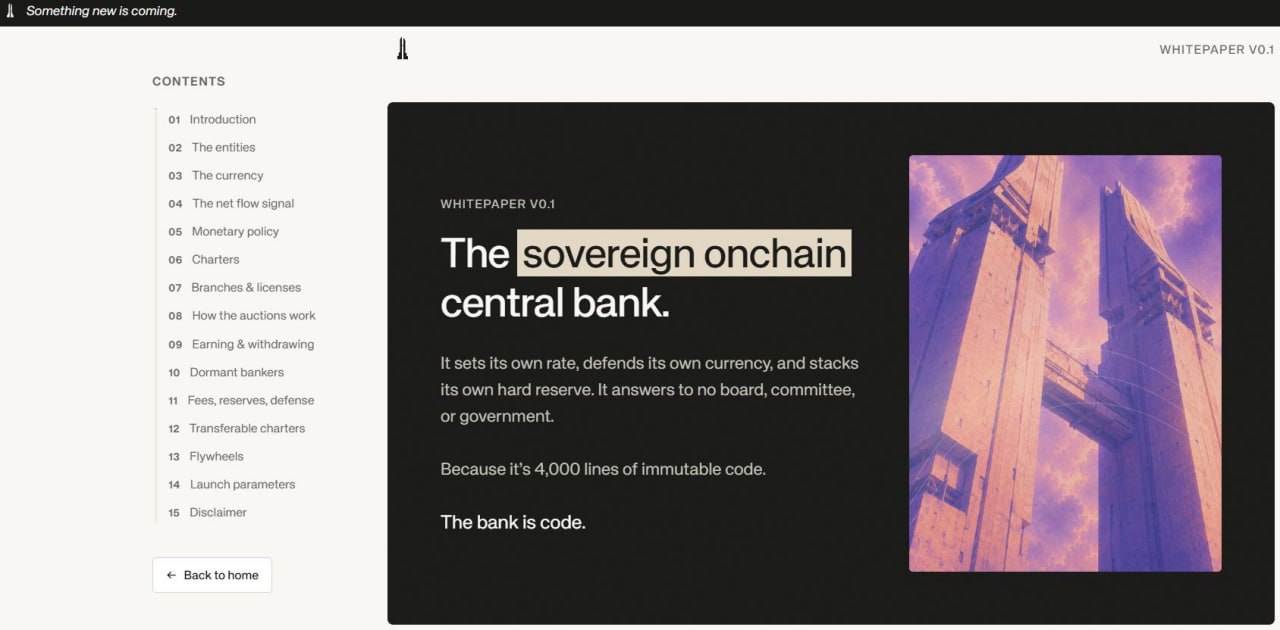

The first onchain flag, '08, was flown to gut the central banks — and now Standard Reserve hoists a 'central bank' on a Uniswap v4 pool than tracks its own ETH tide. An experimental reserve that steers by its own flow: that be quicksand settin' its own danger signs. 🦑
Stablecoins: Where the Tension Is Sharpest
Stablecoins — tokens pegged to fiat currencies, typically the U.S. dollar — sit at the sharpest edge of the central bank–crypto debate because they most directly replicate the function of bank deposits and potentially disintermediate commercial lending.
The ECB has pushed back hard. The European Central Bank warned EU finance ministers against further issuance of euro stablecoins, arguing that large-scale adoption could reduce bank lending capacity and make interest-rate policy harder to transmit through the economy. Central bankers, including ECB representatives, cited the risk of deposit flight from supervised banks into uninsured stablecoin reserves. The ECB's Pontes project is exploring tokenized finance anchored in central bank money — the institution's preferred architecture, where it, not private issuers, anchors the digital monetary system.
The Bank of England faces a version of the same debate domestically. A UK House of Lords committee recommended that the Bank drop its proposed £20,000 retail stablecoin holding cap and a 40% central bank backing requirement — arguing the rules were too restrictive to allow a viable stablecoin market to develop in Britain at all.
The tension reflects a genuine policy dilemma: central banks want to preserve monetary sovereignty and financial stability, but overly restrictive rules push stablecoin activity offshore or into unregulated channels.
On the margins, more idiosyncratic arrangements are emerging. The Republic of Georgia reportedly tapped Tether — issuer of USDT, the world's largest stablecoin by volume — for an "official" stablecoin arrangement with central bank blessing, illustrating how smaller economies may pragmatically adopt existing dollar-pegged instruments rather than building sovereign alternatives from scratch.
South Korea's stablecoin market saw deposits and withdrawals paused amid central bank risk warnings, a reminder that regulatory signals alone — without formal rules — can move market behavior.
- 01CBDC global adoption race
The sheer scale — 134 countries, 98% of global GDP, 94% of central banks engaged — made this feel like a tipping point readers had to understand before it passed them by.
- 02Digital euro vs dollar stablecoins
The ECB framing this as an existential threat to Eurozone banks from Trump-era dollar stablecoin dominance gave readers a geopolitical hook beyond technicality.
- 03Central bank Bitcoin reserve bets
Concrete proposals like the Czech governor's 5% BTC allocation and the BIS 2% rule gave readers a quantifiable signal that sovereign balance sheets were actually moving.
- 04Tokenization of wholesale money
BIS G20 Brasil report and Project Agorá showed central banks treating tokenization as infrastructure reform, not experimentation — readers tracked which institutions were already inside.
- 05Country-specific crypto reversals
Nigeria reversing its crypto ban and Russia proposing legalization after years of hostility signaled that regulatory absolutism was collapsing under economic pressure.
- 06Stablecoin regulatory capture risk
The GENIUS vs STABLE Act showdown and Canada's redemption-at-par rules revealed that central banks are using stablecoin legislation as a soft CBDC on-ramp.
CBDCs: Central Banks' Digital Answer
Central Bank Digital Currencies (CBDCs) represent the institutional response to private digital money: state-issued digital currency running on central-bank liability, preserving monetary control while modernizing payment infrastructure.
The Bank for International Settlements (BIS) acts as the research and coordination hub for global CBDC efforts. Its recently concluded Project Agorá found that tokenized central bank reserves could make cross-border payments faster and safer. The New York Fed, Bank of England, and Bank of Japan are now moving toward real-value testing on blockchain rails — a meaningful escalation from proof-of-concept to live settlement. This matters because cross-border payments remain slow, expensive, and opaque; correspondent banking adds layers of friction that blockchain-based settlement could, in principle, compress.
The ECB's digital euro project remains the highest-profile retail CBDC initiative in advanced economies, though it has moved cautiously given political sensitivities around surveillance and financial privacy. China's digital yuan (e-CNY) is the most advanced large-economy retail CBDC deployment, with millions of users and integration into domestic payment rails, though international adoption remains limited.
Kazakhstan has been an active participant in CBDC pilots in Central Asia, reflecting a broader pattern where emerging-market central banks see CBDCs as levers for financial inclusion and reduced dependence on dollar-denominated correspondent networks.
Brazil's central bank orders exchanges to delay large crypto transfers abroad for up to 24 hours

Enforcement: When Central Banks Use Market Surveillance
The Iran case illustrates a less visible dimension of central bank power: enforcement through financial intelligence. Blockchain analytics firm Arkham exposed a wallet network linked to the Central Bank of Iran following the freezing of $344 million in USDT by Tether — demonstrating that on-chain transparency can cut both ways, enabling third parties to map state-controlled financial flows that would be opaque in the traditional banking system.
Russia's central bank separately tightened crypto declaration rules, requiring residents to disclose holdings — an enforcement mechanism that stops short of prohibition while building a surveillance infrastructure around the sector.
These moves reflect the increasing sophistication of central bank engagement with on-chain data. What began as regulatory skepticism has evolved into active monitoring, with some institutions now tracking public blockchains as part of financial supervision.
- 2022-12regulatory
BIS Basel Committee publishes prudential crypto reserve rules, capping central bank crypto holdings at 2% of reserves effective January 2025
- 2023-12milestone
BIS annual survey finds 94% of central banks engaged in CBDC work during 2023
- 2024-01launch
Brazil's central bank selects 14 CBDC pilot participants including Visa and Microsoft
- 2024-06regulatory
BIS publishes tokenization report to G20 Brasil, warning of impacts on central bank monetary policy roles
- 2024-09milestone
Project Agorá reaches milestone with 40+ financial firms and central banks exploring tokenized cross-border payments
- 2025-01regulatory
BIS 2% crypto reserve limit for central banks takes effect
- 2025-03governance
Czech Central Bank Governor proposes allocating 5% of $146B reserves to Bitcoin
- 2025-06regulatory
ECB grants non-bank payment service providers access to Eurosystem central bank accounts, expanding digital euro infrastructure
Why This Matters for Crypto Markets
Central bank decisions shape the crypto market through multiple channels:
Interest rates and risk appetite. When central banks tighten monetary policy, the cost of holding speculative assets rises and liquidity contracts. The 2022 crypto bear market was closely correlated with Fed rate hikes; the 2023–2024 recovery tracked the pivot toward easing.
Regulatory legitimacy. A central bank licensing regime — even a light-touch one — confers a form of legitimacy that unlocks banking access, attracts institutional capital, and reduces legal risk for operators. Pakistan's reversal on banking access is a concrete example of how a single central bank decision can reopen an entire market.
Stablecoin infrastructure. Most crypto trading and DeFi activity is denominated in dollar stablecoins. Central bank rules governing stablecoin reserves, backing requirements, and redemption rights directly affect the stability and availability of the sector's de facto settlement layer.
CBDC competition. If CBDCs achieve widespread adoption for retail and cross-border payments, they could reduce demand for private stablecoins and shift the infrastructure debate toward public-sector rails — or, conversely, they could normalize digital-native money and accelerate adoption of the broader ecosystem.
Outlook
The relationship between central banks and the crypto sector is converging toward structured engagement rather than mutual avoidance. Prohibition has largely failed where it was tried; pure laissez-faire creates systemic risks that central banks are constitutionally unable to ignore. What is emerging — unevenly, across dozens of jurisdictions — is a licensing-and-supervision model that brings digital asset intermediaries inside the regulatory perimeter without resolving deeper questions about monetary sovereignty, stablecoin risk, and the long-term role of CBDCs.
The BIS cross-border tokenization work, the ECB's digital euro, and the Fed's posture on dollar stablecoin legislation will be the three most consequential threads to watch over the next two to three years. How they resolve will determine whether blockchain infrastructure becomes a layer within the existing monetary system or remains a parallel one running alongside it.
Latest Central Bank news
South Korea’s central bank nominee supports CBDC-first approach, limiting stablecoin role and prioritizing compliance, oversight, and anti-money laundering frameworksStandard Reserve publishes whitepaper for experimental onchain central bank, using a Uniswap v4 pool to track ETH flows and adjust its operations.Brazil's central bank orders exchanges to delay large crypto transfers abroad for up to 24 hoursZimbabwe requires crypto firms to register with central bank under $500 licensing regimeThe Philippines’ central bank says Binance and its local partner lack the licenses required to operate in the country, adding another hurdle to the exchange’s regional expansion plans Ant International receives payment institution licence from Brazil's central bank
Community notes
Spot something off or out of date? Drop a note. Editors review topic notes daily and roll accepted fixes into the explainer — contributors are recognized in the monthly $SQUID drop.
Loading notes…
Help improve this topic
Have a story or tip about this topic? Submit it. See something missing? Leave a note. Editors review daily; accepted submissions and fixes count toward the monthly $SQUID drop.