
Crypto payments have matured from experiment to infrastructure. This explainer covers stablecoins, AI agent payments, compliance requirements, network selection, and how incumbents like Mastercard and Coinbase are integrating blockchain rails.
+72 sources across the wider coverage universe
 Visa launches Intelligent Commerce Connect for AI agent payments, Sei-based Sumvin among pilot partners2026-04
 Alchemy's AgentPay bridges Coinbase, Stripe, Visa, and Circle AI payment rails into single merchant integration2026-04
 Crypto card usage surges to $600M monthly volume, tripling YoY as stablecoins power everyday payments and reduce reliance on traditional off-ramps2026-04
 MoneyGram partners with NALA to enable stablecoin-powered cross-border payouts, settling in digital dollars and delivering local currencies2026-04
 MoonPay partners WalletConnect and Ingenico to enable stablecoin payments at retail, using Virtual Accounts for instant fiat settlement at checkout without merchants holding crypto2026-04
 South Korea to pilot blockchain-based deposit tokens replacing government expense cards, targeting full rollout by Q4 as public sector payments go onchain2026-04
The movement of value from one party to another sits at the center of every economy — and cryptographic networks are fundamentally rewriting how that movement works, who can participate, and what rules govern it.
What "Crypto Payments" Actually Means
At its core, a crypto payment is a transfer of digital value — denominated in a cryptocurrency or tokenized asset — settled on a blockchain rather than routed through a correspondent-banking network. The practical implications are significant: settlement can be near-instant and final, fees can be a fraction of a cent on modern networks, and the payment can carry programmable logic that a wire transfer cannot.
The category is broad. It spans a tourist paying for a hotel room with USDC, an AI agent autonomously purchasing compute credits, a Filipino migrant worker sending remittances home via stablecoin, and a Fortune 500 treasury settling a supplier invoice on-chain. What unifies them is the substitution of shared, permissionless ledger state for the bilateral trust relationships that traditional payment rails depend on.

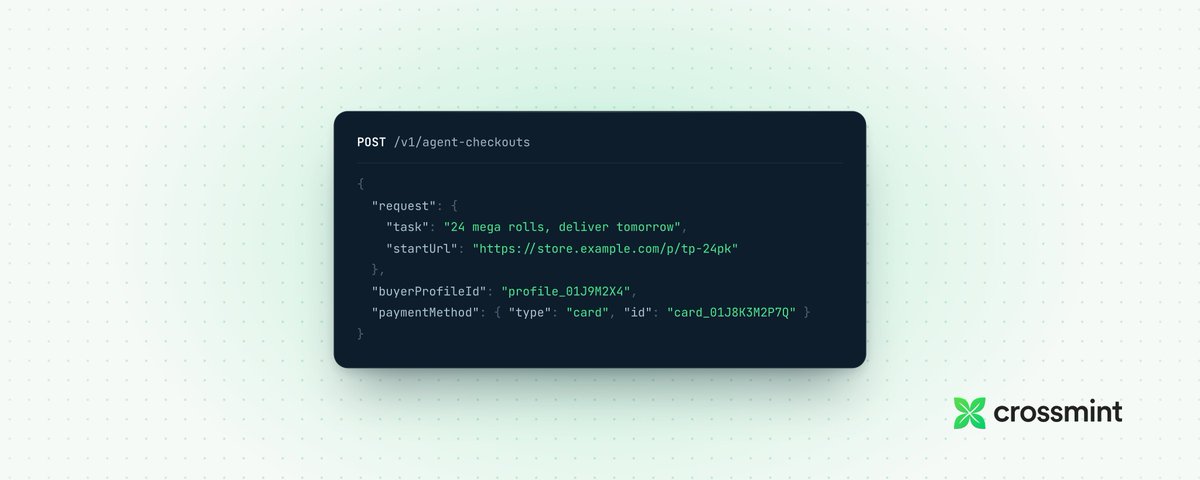
Crossmint launches Agent Checkouts, letting AI agents buy from online stores through one API that handles checkout, payment, and automation
The Stablecoin Layer
Volatility is payments' enemy. A merchant who quotes a price in BTC and receives payment thirty seconds later may find the exchange rate has moved against them. That friction pushed the industry toward stablecoins — tokens pegged to fiat currencies, most commonly the US dollar — as the practical unit of account for crypto payments.
USDC, issued by Circle, has become the dominant infrastructure-grade stablecoin for institutional and developer use. Its appeal is regulatory posture: Circle publishes monthly reserve attestations, holds assets in segregated accounts at regulated custodians, and has explicitly positioned USDC as a compliance-first instrument. That matters for a payment processor in a regulated market far more than yield or decentralization.
The category is expanding. Zelle — the P2P payments brand built by America's largest banks — announced its own stablecoin, Zelle USD, targeting international payments. The move is notable because it signals that incumbent payment networks are no longer waiting to see what happens; they are issuing tokens themselves. OSL Group recently secured an Australian Financial Services Licence specifically covering wholesale stablecoin payments, custody, and OTC trading, underscoring that regulated stablecoin infrastructure is being built jurisdiction by jurisdiction. Separately, satUSD launched on Melon Cash to target everyday spending, and AnomaPay added XAUm, a tokenized gold stablecoin backed 1:1 by physical bullion, for users who want payment collateral that isn't fiat-denominated.
Readers click payments stories not for the technology but for the institutional moment of reckoning — a license revoked, a settlement enforced, a partnership with Visa, or a creditor finally paid — revealing that the real story is legacy finance either absorbing or dismantling crypto payment rails.
Speed and Chain Selection Matter
Not every blockchain is suited for payments. A 12-second block time and unpredictable gas fees make a network a poor checkout experience, regardless of its decentralization. The market has been unsentimental about this: payment-focused builders are routing volume to chains that offer sub-second finality and fee predictability.
Avalanche has leaned hard into this positioning. Its Payments Collective launched with 28 major firms aiming to enable crypto payments across 150 countries, 96 currencies, and "billions of endpoints" — language that signals infrastructure ambition, not a niche experiment. Ethereum's long-term supporters, meanwhile, largely concede that ETH's role is not retail checkout but global settlement: a base layer securing identity, assets, AI coordination, and value flows that other networks settle against.
The practical division is real. High-throughput Layer 2 networks and purpose-built payment chains handle the transaction volume; Ethereum (and to some extent Bitcoin) act as the canonical settlement and custody layer beneath them.
Cardano joins Solana and XRP Ledger in AI agent payments race as x402 kit adds ADA support for apps and agents

Bitcoin Enters Commerce
Bitcoin's design — deliberately slow, deliberately expensive as a security trade-off — has historically made it impractical for point-of-sale commerce. The Lightning Network has improved this, but merchant adoption remained thin. GoMining is attempting to change the equation from a different angle: its GoBTC Pay SDK and API let merchants accept BTC for real-world purchases, positioning it explicitly as competition for Square's merchant services stack. Whether Bitcoin can capture meaningful commerce share against USDC-denominated stablecoin payments remains an open question, but the tooling is now available.
AI Agents as Payment Initiators
One of the more structurally novel developments in crypto payments is the emergence of AI agents that need to transact autonomously. An AI agent booking travel, purchasing API calls, or bidding in a real-time market needs a payment method it can use without human approval for each transaction — and traditional payment rails, which require card networks, account credentials, and fraud review systems designed for humans, are a poor fit.
Crypto provides a natural answer. Alchemy's AgentCard, built on Visa's Intelligent Commerce infrastructure, is a payments and identity platform built specifically for AI agents. Billions, a startup building agentic economy infrastructure, has gone "all in" on AI payments, implementing gasless agent payments, EIP-7702 execution, and Trust Receipts — a cryptographic primitive that proves a payment happened without revealing its full context. A collaboration between Kite and a joint venture of SMBC Nikko and Hatapro in Japan demonstrated agentic payments for travel: an AI agent discovered, reserved, and paid for local experiences within user-defined spending rules, settling the entire flow on-chain without a human touching a keyboard.
This is early infrastructure, but its implications are significant. If AI agents become common economic actors — and current trajectory suggests they will — they will need payment primitives suited to machine-to-machine commerce. Crypto, specifically stablecoins on fast networks with programmable execution, is the only existing infrastructure that fits.
Circle Foundation supports UNDP and WFP initiatives advancing digital payments and financial infrastructure for development and humanitarian efforts

The Compliance Wall
The harder the payment problem, the more compliance matters. Cross-border stablecoin payments touch sanctions law, anti-money laundering regulations, and know-your-customer requirements simultaneously — and the regulatory environment is tightening.
From July 2027, the EU's Anti-Money Laundering Regulation (Regulation 2024/1624) will apply a bloc-wide €10,000 cap on cash payments for goods and services, while also tightening crypto-asset KYC requirements. In the United States, five federal regulators jointly proposed customer identification requirements for payment stablecoin issuers, modeled on existing bank rules and framed as part of the GENIUS Act's AML framework. The direction of travel is clear: stablecoin issuers will be expected to operate under rules comparable to those governing banks.
For payment infrastructure builders, this creates a genuine design challenge. Banks cannot scale stablecoin payment rails without sanctions screening, fund-freeze capabilities, and AML controls, as Tempo's Jevgenijs Kazanins argued as on-chain stablecoin volume passed $390 billion. Pre-settlement sanctions screening is now available via WalletConnect Pay, which checks counterparty addresses against sanctions lists before a transaction is broadcast — a compliance control that mirrors what correspondent banks perform, applied at the blockchain layer.
The implication is that the winning stablecoin payment infrastructure won't be the most permissionless; it will be the most compliance-capable. That shifts competitive advantage toward teams with legal and regulatory expertise, not just engineering capability.
- 01TradFi-crypto rail partnerships
Visa, JPMorgan, Barclays, and DBS partnering with crypto payment infrastructure signaled institutional legitimacy readers had been waiting to see formalized.
- 02Regulatory license and shutdown actions
RBI's hard revocation of Paytm's banking license was the single most-clicked story, showing readers are acutely alert to how regulators can instantly destroy a payments business.
- 03CBDC and tokenization institutional rollouts
The ECB, BIS G20 report, UK Regulated Liability Network, and Barclays digital pound experiments collectively showed readers that state-backed digital money was moving from theory to budget line.
- 04Creditor settlement and missed payment events
FTX's $12.7B CFTC settlement, Mount Gox distributions beginning, and DCG missing its Genesis payment all resolved long-running 'will they actually pay?' suspense for readers holding those outcomes.
- 05Stablecoin payments going invisible
USDC reaching Brazil and Mexico via local real-time rails, and StraitsX's 83x card surge, showed readers stablecoin payments quietly achieving consumer-grade invisibility without crypto UX friction.
- 06AI agent and machine payment protocols
Visa's Intelligent Commerce, Coinbase's x402 ERC-20 gasless layer, and Tempo's Machine Payments Protocol opened a forward-looking thread on non-human autonomous payment actors.
How to Build on This Infrastructure
Developers integrating stablecoin payments into a product face a more mature toolkit than existed two years ago. The basic integration pattern involves:
1. Choosing a stablecoin: USDC is the default for dollar-denominated payments given its regulatory posture, reserve transparency, and liquidity across chains. 2. Selecting a network: Network choice should be driven by target user geography, fee tolerance, and finality requirements. Avalanche, Base, Solana, and Polygon are common choices for high-throughput payment use cases. 3. Handling fiat on/off ramps: End-to-end crypto payment UX requires users to be able to enter and exit the stablecoin with minimal friction. Several platforms now support debit/credit card and Apple Pay/Google Pay checkout as entry points directly into USDC positions. 4. Implementing compliance controls: For any volume above trivial thresholds, pre-settlement sanctions screening and KYC are not optional. WalletConnect Pay, Chainalysis, and TRM Labs offer APIs for this. 5. Supporting programmability: Smart-contract-based payment logic — escrow, milestone releases, recurring subscriptions — is available on EVM-compatible chains and should be considered for B2B use cases where payment terms matter.
Platforms like FV Bank are building unified fintech infrastructure that combines stablecoin custody, payments, and programmable finance in a single interface, which reduces the integration surface area for businesses that don't want to assemble these components themselves. LINE NEXT and Danal's MOU to bring JPYC payments to Korean merchants through Unifi illustrates another model: regional stablecoin ecosystems creating local payment acceptance networks that plug into global infrastructure.
Mastercard, Coinbase, and the Incumbent Integration
Traditional payment networks are not standing aside. Mastercard's SVP of Digital Assets and Blockchain, Christian Rau, has publicly argued that the future of payments is hybrid — crypto rails for settlement efficiency, traditional network scale and trust for consumer-facing acceptance. Mastercard has been building crypto-settlement capabilities into its existing acceptance network rather than building a separate blockchain product.
Coinbase's contribution is infrastructure for builders: Base (its Layer 2 network), USDC (co-issued with Circle), and a developer platform that connects traditional fintech developers to on-chain payments primitives. The Coinbase stack is positioned to be the easiest path for a payment company moving from ACH or card rails to stablecoin rails — lower switching costs, familiar compliance posture, US-regulated counterparty.
The competitive picture is therefore not crypto versus traditional finance but a spectrum of integrations: pure crypto infrastructure on one end, hybrid settlement on another, and traditional rails with blockchain settlement rails underneath on the third.
- 2023-11milestone
Gnosis Pay / Visa partnership announced
- 2024-01regulatory
RBI revokes Paytm Payments Bank license
- 2024-05regulatory
BIS G20 tokenization report flags CBDC monetary-policy risks
- 2024-07milestone
Mount Gox creditor Bitcoin distributions begin
- 2024-08regulatory
FTX and CFTC agree $12.7B settlement
- 2024-10milestone
UK Regulated Liability Network tokenization pilot concludes
- 2025-01launch
Elon Musk's X partners with Visa to launch X Money Account
- 2025-04launch
Coinbase x402 protocol adds universal ERC-20 gasless payment support
Outlook
Crypto payments are moving from experimental to infrastructural. The combination of regulatory clarity (slow but arriving), stablecoin volume at scale, and AI agent demand for programmable money creates a convergence that is unlikely to reverse. The open questions are which compliance regimes will win (US GENIUS Act versus EU MiCA versus bespoke jurisdictional frameworks), which chains will dominate payment throughput, and whether bitcoin can carve out a commerce role or cedes that ground entirely to stablecoins. What is no longer in question is whether on-chain payments can work at scale. They already do — the infrastructure race now is for the rails that carry the next trillion dollars.
Latest Payments news
Crossmint launches Agent Checkouts, letting AI agents buy from online stores through one API that handles checkout, payment, and automationCardano joins Solana and XRP Ledger in AI agent payments race as x402 kit adds ADA support for apps and agentsCircle Foundation supports UNDP and WFP initiatives advancing digital payments and financial infrastructure for development and humanitarian efforts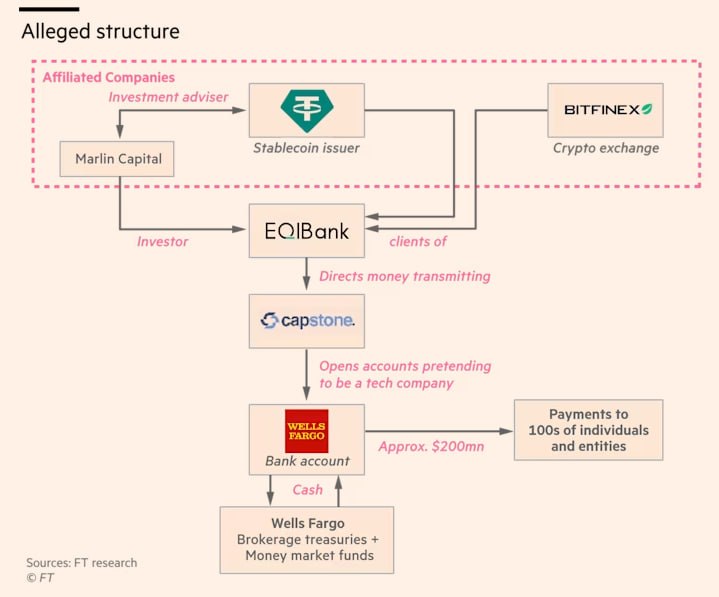 US freezes $84 million tied to Tether and Bitfinex-linked payments firm Capstone, accused of posing as a tech services company.
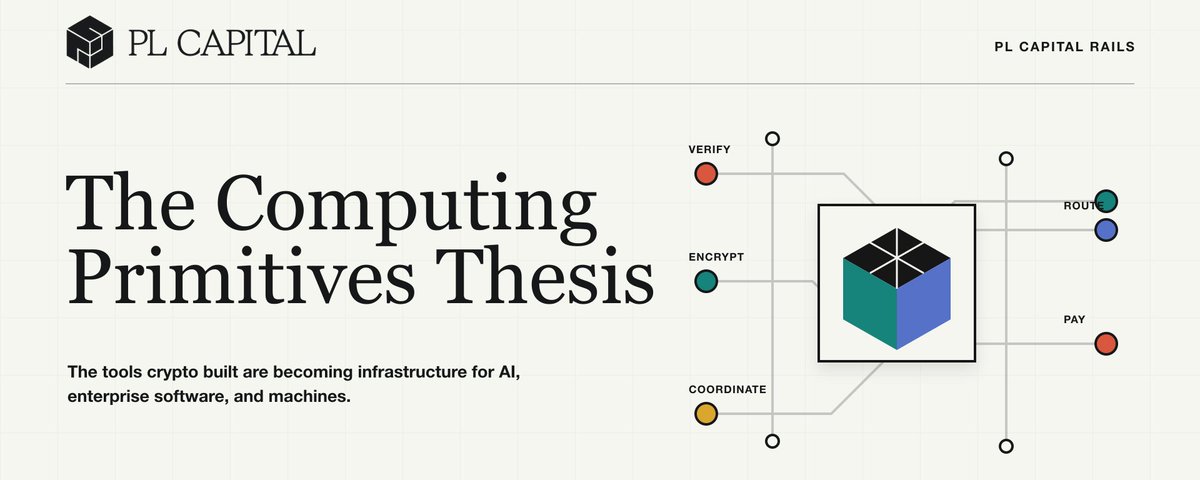 PL Capital backs crypto primitives as core infrastructure for AI and machine payments
 Canada's Big Six banks to pilot tokenized deposits for interbank payments
Community notes
Spot something off or out of date? Drop a note. Editors review topic notes daily and roll accepted fixes into the explainer — contributors are recognized in the monthly $SQUID drop.
Loading notes…
Help improve this topic
Have a story or tip about this topic? Submit it. See something missing? Leave a note. Editors review daily; accepted submissions and fixes count toward the monthly $SQUID drop.