
Crypto fees span network gas costs, protocol revenue, DEX trading charges, and bridge tolls. This guide explains how each type works, how they're evolving, and why fee generation is becoming the key metric for evaluating blockchain sustainability.
+33 sources across the wider coverage universe
 Polygon introduces sPOL to boost staking rewards, distributing priority fees to delegators while enabling liquidity and composability across DeFi ecosystem2026-04
 Polymarket introduces pUSD, a USDC-backed ERC-20 collateral token on Polygon, improving reliability, lowering gas fees, and eliminating failed trades in its upgraded protocol2026-04
 Aerodrome ships flashblock-optimized fees, anti-MEV gauges, and cross-chain metaswaps ahead of July Aero launch2026-04
 Bank of Italy research finds stablecoin remittances aren't always cheaper, with fees, FX spreads and banking rails eroding cost advantages2026-08
 137 SPAR supermarkets in Switzerland accept ADA via DFX.swiss Open Crypto Pay, cutting processing fees by two-thirds2026-04
 New Curve Letters paper just dropped
They prove LvR doesn’t actually hurt LPs and derive an SDE linking volatility and fees to arb volume, giving a clean framework for dynamic fees and LP/arb profitability.2026-05
New Curve Letters paper just dropped
They prove LvR doesn’t actually hurt LPs and derive an SDE linking volatility and fees to arb volume, giving a clean framework for dynamic fees and LP/arb profitability.2026-05
Arr, settin' me quill to the page for ye, cap'n! Here be the pillar page on Fees, shipshape and ready to sail:
Every blockchain interaction has a price. Fees are the economic lifeblood of crypto networks — the payments users make to compensate validators, liquidity providers, and protocol treasuries for the resources they consume.
What Crypto Fees Actually Are
At the most basic level, a fee in crypto is a charge attached to any on-chain action: sending tokens, swapping assets, borrowing funds, bridging between networks, or interacting with a smart contract. Unlike traditional finance, where fee structures are set by institutions and often opaque, crypto fees are typically determined by open market dynamics, protocol governance, or algorithm-driven mechanisms — and are visible to anyone on a block explorer.
There are several distinct categories of fees that matter to participants in crypto markets:
- Network (transaction) fees — paid to miners or validators to include a transaction in a block
- Protocol fees — charged by decentralized applications (dApps) for using their services
- Bridge fees — levied when moving assets across blockchains
- Exchange fees — charged by centralized exchanges (CEXs) like Coinbase or by decentralized exchanges (DEXs)
- Gas fees — Ethereum's specific term for the cost of computation, denominated in ETH
Understanding which type of fee applies in any situation is the first step to managing costs and evaluating whether a protocol is economically sustainable.

Sharplink CEO says AI agents could cut financial fees by $1.4T annually by 2035

Network Transaction Fees: Bitcoin and Ethereum
Bitcoin's fee market is straightforward by design. Users attach a fee denominated in satoshis-per-byte to incentivize miners to include their transaction in the next block. Because Bitcoin's block space is finite and deliberately constrained, fees rise sharply during periods of high demand — the 2021 bull run and the Ordinals inscription craze of 2023 both saw fees spike to levels that priced out small transactions.
This mechanism becomes existentially important as Bitcoin approaches its fixed 21 million coin supply cap. New bitcoin issuance (the block subsidy) falls roughly every four years via the halving. By approximately 2140, no new bitcoin will be minted at all — at that point, transaction fees will become the sole incentive for miners to continue securing the network. Whether fees alone will sustain Bitcoin's security budget is one of the most debated long-term questions in the space.
Ethereum operates a more sophisticated fee structure introduced by EIP-1559 in 2021. Every transaction pays a base fee that is algorithmically set by the network based on block utilization and is burned (removed from circulation permanently), plus an optional priority fee (tip) that goes directly to validators. When Ethereum is busy, the burn rate can exceed new ETH issuance, making ETH deflationary. This dynamic has turned fees from a pure cost into a fundamental component of ETH's monetary policy.
Layer 2 networks — Arbitrum, Optimism, Base, and others — dramatically reduce per-transaction costs by batching many transactions together and posting compressed proofs to Ethereum mainnet. Users on L2s often pay fees measured in fractions of a cent rather than dollars, though they still indirectly pay for L1 settlement through the rollup's own economics.
Readers click fee stories not for the mechanics of fee calculation, but for the political economy underneath — who captures fees, who proposes pausing or redirecting them, and whether insiders are extracting value that should flow to the ecosystem.
Protocol Fees: The Revenue Question
Beyond network-level costs, most DeFi protocols charge their own fees on top of base transaction costs. A decentralized exchange like Uniswap charges a percentage of each swap (typically 0.05% to 1% depending on the pool), which historically went entirely to liquidity providers. The question of whether some portion should flow to a protocol treasury or token holders — the "fee switch" debate — has become one of the defining governance battles of DeFi.
Solana Foundation researchers have argued that onchain fee generation is emerging as crypto's most important fundamental metric, warning that chains and protocols that fail to generate real revenue risk losing capital, builders, and long-term relevance. This framing — fees as the crypto analogue of corporate revenue — is increasingly how institutional analysts evaluate blockchain projects.
The trend toward fee redistribution is accelerating. Hyperliquid, the decentralized perpetuals exchange, directs more than 90% of platform fees to its Assistance Fund, which repurchases its native HYPE token on the open market. According to research from Citrini, Hyperliquid accounted for nearly half of all crypto token buybacks in 2025 — a remarkable concentration of protocol-level capital return. Aave, Uniswap, and Jupiter have similarly introduced or expanded fee-to-holder mechanisms.
The pattern is clear: protocols that generate genuine fees and return them to participants are winning the capital allocation game over those that rely purely on token inflation.
Binance Wallet now lets users pay gas fees with USDT on BNB Chain, Ethereum, Solana and TRON
Fee Switches and Governance
One of the most consequential protocol decisions any project can make is activating a "fee switch" — changing where protocol revenue flows. On June 20, 2026, LayerZero token holders voted on exactly this: whether to activate a protocol-level fee on the cross-chain messaging infrastructure, with proceeds earmarked for ZRO buybacks and burns. The vote illustrates how fee policy has become a core governance mechanism rather than a technical afterthought.
Fee switches matter because they crystallize the question of value accrual: does owning a governance token entitle you to a share of protocol revenue? Securities regulators in multiple jurisdictions have scrutinized this question, and some protocols have deliberately delayed or avoided fee switches to reduce regulatory surface area. As regulatory clarity improves in the US and EU, expect more projects to activate fee flows that were previously dormant for legal reasons.
Aster, a DeFi platform, took an aggressive stance by directing 99% of daily platform fees to ASTER token buybacks, simultaneously burning an equal amount of ASTER from reserves — a dual-compression mechanism designed to reduce circulating supply as usage grows.
Exchange and Trading Fees
Centralized exchanges remain the dominant on-ramp for most retail crypto users, and their fee structures vary widely. Coinbase, the largest US-listed crypto exchange, charges maker/taker fees that decrease at higher trading volumes, plus spread-based fees on its simpler consumer product. Fee competition among CEXs has intensified significantly, particularly for institutional clients who can negotiate custom rate tiers.
The ETF market has introduced a new fee battleground. Morgan Stanley filed amendments for both Ethereum and Solana ETF products in mid-2026, disclosing some of the lowest management fees in the market — a direct bid to capture institutional flows that might otherwise go to higher-cost competitors. The race to the bottom on ETF fees mirrors what happened in traditional equity ETFs over the past two decades, where expense ratios compressed from hundreds of basis points to near zero.
For DEX traders, the fee landscape is more complex. In automated market maker (AMM) pools, the fee tier you choose affects both what you pay as a trader and what you earn as a liquidity provider. Projects like RiverSwap have experimented with dynamic fee models that auction the right to set fees — an attempt to make liquidity provision more capital-efficient by letting market participants price volatility rather than relying on static tiers that bleed LPs to arbitrage bots.
XRP Ledger retries permission delegation upgrade after flaw drained fees from unsigned transactions

Cross-Chain and Stablecoin Transfer Fees
Moving assets between blockchains adds another fee layer. Most bridges charge a percentage of the transferred amount plus gas on both the source and destination chain. For USDC specifically, Circle's cross-chain transfer protocol (CCTP) and its Gateway forwarding service have attempted to abstract away destination-chain gas costs entirely, letting developers move USDC across chains without managing gas tokens on each network.
Stablecoin payment infrastructure built for emerging markets — where remittance costs are existentially important — has made low fees a primary design constraint. Partnerships like DPTPay's stablecoin rails in Africa explicitly lead with fee reduction as their value proposition, since traditional international transfers can cost 5-10% or more, while stablecoin transfers on high-throughput chains can settle for fractions of a cent.
New L1s and L2s competing for user adoption often subsidize fees aggressively at launch to drive volume. Oku's real-world asset platform launched with zero trading fees as an acquisition mechanism — a common playbook in the early phases of a new market.
- 01Protocol fee governance fights
The top headline by a wide margin was Prisma proposing to pause all fees — readers are drawn to governance moments where fee policy itself becomes the crisis.
- 02Sequencer fee extraction centralization
Andre Cronje's expose of Coinbase routing Base sequencer fees to itself rather than the ecosystem hit a nerve about who really benefits from L2 infrastructure.
- 03Ethereum gas as inflation signal
Multiple high-click headlines tied falling or rising gas fees to ETH's ultrasound-money narrative, with readers tracking whether low fees undermine the deflationary thesis.
- 04Insider fee capture at scale
The Trump/World Liberty headline — insiders claiming 75% of token sale earnings and $400M in fees — shows readers scrutinize fee distribution as a proxy for insider extraction.
- 05Zero-fee and fee-abstraction UX
yBOLD's zero withdrawal fees and Rabby's USDC gas payment both earned significant clicks, signaling readers respond to products that make fees disappear or hide them.
- 06Fee revenue as protocol health signal
Hyperliquid surpassing Ethereum in 24-hour fees and dYdX distributing $5M to stakers positioned fee generation as the clearest measure of real protocol adoption.
Fee Economics for Validators and Miners
From the supply side, fees are income. Ethereum validators — who stake 32 ETH to participate in consensus — earn both newly issued ETH (staking rewards) and priority fees from transactions. As Ethereum's issuance rate has dropped post-merge and may decrease further with future upgrades, the priority fee component of validator income becomes proportionally more significant.
On Solana, fees are split between validators and a burn mechanism, though the fee market dynamics differ from Ethereum's because Solana's throughput is much higher and per-transaction costs are structurally lower. The network has introduced localized fee markets (priority fees that apply only to accounts involved in congested programs) to prevent global fee spikes from affecting unrelated activity.
For Bitcoin miners, the halvings create a step-function increase in fee dependency. After the April 2024 halving cut the block subsidy to 3.125 BTC, and with the next halving scheduled for 2028, the market is closely watching whether Bitcoin's fee revenue trend is sufficient to underwrite network security at current hash rates over multi-decade time horizons.
Hidden and Indirect Fees
Not all fees are labeled as such. Spread in DEX trades — the gap between the quoted price and execution price — is an indirect cost that compounds slippage for large trades. MEV (Maximal Extractable Value) represents value extracted from users by block producers or sophisticated bots who reorder transactions, effectively an invisible fee often paid by retail traders to arbitrageurs.
Funding rates on perpetual futures contracts are another fee that many traders underestimate. Paid every 8 hours between long and short position holders, funding rates on a trending market can erode returns significantly — a cost that experienced traders actively factor into position sizing and holding period decisions.
- 2023-10launch
Uniswap Labs launches 0.15% front-end fee
- 2024-02milestone
ERC-404 frenzy spikes Ethereum gas to 8-month high
- 2024-03milestone
Ethereum Dencun upgrade cuts L2 fees, ETH turns inflationary
- 2024-04governance
Prisma Finance proposes pausing all protocol fees
- 2024-06governance
Jupiter announces 50% of protocol fees directed to JUP buybacks
- 2024-12launch
Sonic Labs launches Fee Monetization (FeeM), builders earn 90% of fees generated
- 2025-01milestone
Hyperliquid 24h fee revenue surpasses Ethereum
- 2025-03launch
Yearn yBOLD launches with zero withdrawal fees and auto-compounding
Outlook
Fees are maturing from a friction metric into a fundamental signal about protocol health and token economics. The next phase will likely see fee structures become more precise and dynamic — AI-driven fee optimization, auction-based fee-setting, and governance-controlled distribution to stakers are all early-stage experiments that are gaining traction. As regulatory frameworks solidify around token economics, the fee switch debate will intensify: protocols will face pressure to demonstrate real revenue rather than relying on token emission to subsidize activity. Networks that can demonstrate growing fee generation — whether Bitcoin's long-run security model, Ethereum's burn mechanism, or DeFi protocols routing fees to holders — will have a structural advantage in attracting both capital and long-term builders.
Latest Fees news
Sharplink CEO says AI agents could cut financial fees by $1.4T annually by 2035Binance Wallet now lets users pay gas fees with USDT on BNB Chain, Ethereum, Solana and TRONXRP Ledger retries permission delegation upgrade after flaw drained fees from unsigned transactions BitMEX officially ends exchange operations on Sept. 23, urges users to withdraw funds as fees now apply
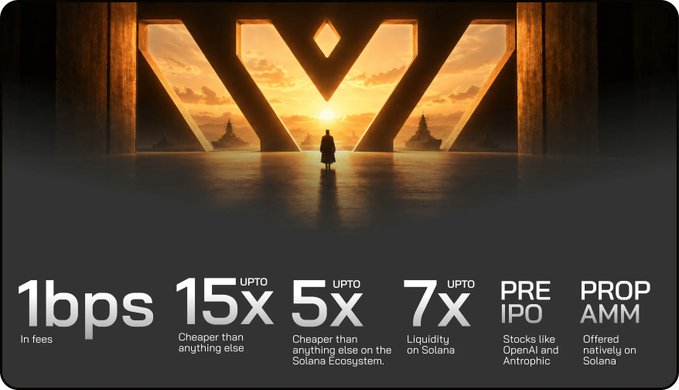 Imperial unveils Armada, a Solana perps AMM with 1 bp execution fees and off-chain hedging
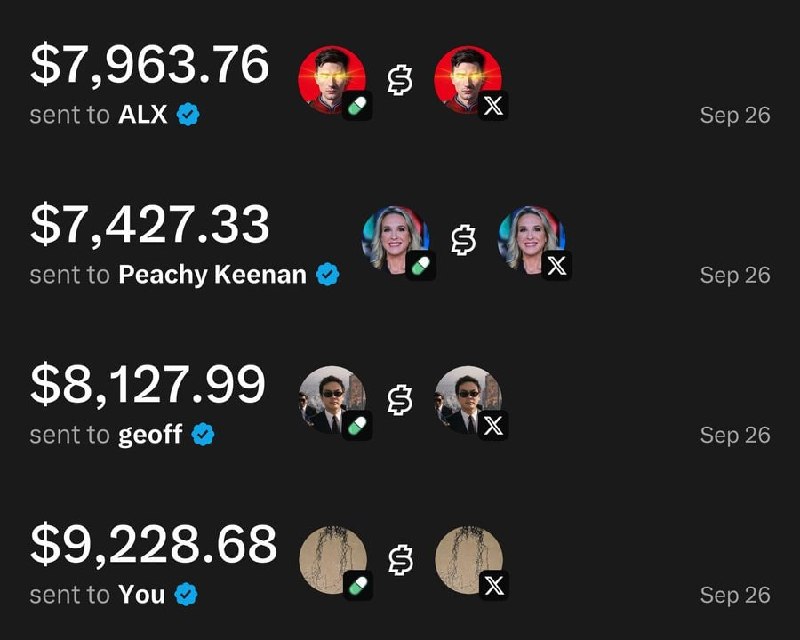 UsePaid routes $1.44M in creator fees to X handles, burning 20% as $PAID hits $50M. $PAID drew both praise for innovation and concerns over spam and opt-outs.
Community notes
Spot something off or out of date? Drop a note. Editors review topic notes daily and roll accepted fixes into the explainer — contributors are recognized in the monthly $SQUID drop.
Loading notes…
Help improve this topic
Have a story or tip about this topic? Submit it. See something missing? Leave a note. Editors review daily; accepted submissions and fixes count toward the monthly $SQUID drop.