
In‑depth explainer on Base Chain, Coinbase’s Ethereum Layer 2. Covers architecture, fees, DeFi and stablecoin ecosystem, institutional use cases like JPM Coin and Bermuda, and how Base compares to Arbitrum and Optimism.
+1 sources across the wider coverage universe
 Base launches Verify Onchain, enabling smart contracts to enforce one real person, one claim for airdrops, governance, and token sales without exposing user data2026-07
 Kite Passport routes x402 payments across Base, Tempo, and Solana without manual bridging2026-07
 Base, Optimism, Coinbase and WalletConnect launch Native Account Abstraction (EIP-8130), cutting transaction costs by over 2x and bringing smarter wallets to EVM chains2026-07
 Cobie takes over Base app as Coinbase Jesse Pollak pivots chain toward trading, stablecoin payments and AI agents2026-07
 Leviathan News launches first AI-native advertising network with SerenAI x402 on Base2025-12
 CZ’s YZi backs Genius in multi-8-figure deal to win the terminal wars. Genius, a cross‑chain terminal, aims to unify that chaos. Instead of juggling interfaces, traders use one terminal to access liquidity across 10+ blockchains, including BNB, Solana, Ethereum, Hyperliquid, Base, Avalanche, and Sui–no bridging, no switching wallets, and no public signaling of strategy.2026-01
Base Chain: Coinbase’s Ethereum Layer 2 for Global Onchain Finance
Base Chain is an Ethereum Layer 2 network developed by Coinbase that aims to serve as a low-cost, high-throughput settlement layer for everything from retail DeFi to institutional payment rails. Built to inherit Ethereum’s security while offering near‑zero fees, Base is increasingly positioned as the default infrastructure for Coinbase’s “everything exchange” strategy and a broader wave of onchain finance spanning USDC, tokenized deposits, and national‑scale experiments in digital economies.
What Is Base Chain?
Base is a smart contract blockchain that operates as an Ethereum Layer 2, meaning it batches user transactions off the Ethereum mainnet and periodically settles them back to Ethereum for finality and security. In practical terms, applications deploy on Base using the same Ethereum Virtual Machine (EVM) tooling as they would on mainnet, but users see faster confirmations and much lower fees because most computation and data storage occurs on the Layer 2 rather than directly on Layer 1. Coinbase describes Base as “the blockchain for global finance,” reflecting an ambition that goes beyond a generic scaling network toward serving as a shared transaction layer for both crypto‑native protocols and heavily regulated financial institutions. Crucially, Base is designed to be permissionless and open to any developer or user, despite being incubated by a centralized, publicly listed exchange.
The project was incubated inside Coinbase with an explicit mandate to provide a secure, low‑cost environment for decentralized applications that could tap directly into Coinbase’s large user base. At launch, Base integrated deeply with Coinbase’s product suite, allowing users to move assets from Coinbase into the Layer 2 with minimal friction and to access DeFi, NFTs, and other onchain experiences without managing complex bridging flows themselves. When Base mainnet opened to everyone, more than one hundred decentralized applications and service providers were already live or integrated, reflecting an ecosystem strategy that tried to bootstrap liquidity and utility from day one. Over time, this positioning has evolved: rather than being just “Coinbase’s L2,” Base is increasingly framed as a general‑purpose public infrastructure layer where both Coinbase and external actors — from J.P. Morgan to independent DeFi teams — build side by side.
From its inception, Base has been closely associated with Optimism, the team behind the OP Stack rollup framework. The initial version of Base was built on the OP Stack, which allowed Coinbase to launch quickly on a battle‑tested optimistic rollup design while contributing engineering resources back to the open‑source codebase. That alignment also tied Base into the broader “Superchain” narrative of interoperable OP Stack rollups, even as Coinbase emphasized that Base would remain a neutral platform open to all developers and users. In parallel, Coinbase has presented Base as a central pillar of its long‑term strategy to transition from a pure exchange to what it calls an “Everything Exchange,” in which trading, payments, tokenization, and AI‑driven experiences are all ultimately settled on crypto rails. Within that vision, Base is not a side project but the onchain substrate on which much of Coinbase’s future product roadmap is expected to land.
As the network has matured, Base’s branding has shifted from a launch‑era focus on consumer‑facing campaigns like “Onchain Summer” to a broader positioning as infrastructure for global finance. Early marketing emphasized fun, culture, and mass‑market minting, but the subsequent adoption by institutions such as J.P. Morgan for its JPM Coin deposit token signaled a parallel track focused on high‑value, regulated financial flows. Likewise, experiments such as Bermuda’s push to become the world’s first fully onchain national economy, powered in part by USDC and infrastructure from Coinbase and Circle, highlight Base’s role as a potential settlement layer for public‑sector and quasi‑sovereign use cases. The result is a dual identity: Base remains a permissionless DeFi and creator ecosystem while quietly becoming a preferred public chain for enterprises that need Ethereum security but also expect strong compliance practices and familiarity with traditional finance.
In the broader Layer 2 landscape, Base competes and collaborates with other Ethereum scaling solutions like Arbitrum and Optimism, as well as emerging rollups from centralized exchanges and institutions. What differentiates Base is not primarily a radically novel technical design, but rather its distribution channel and integrator role: Coinbase can route retail users, corporate treasuries, and institutional counterparties into Base, and then expose them to a curated catalog of onchain services. At the same time, Base positions itself as credibly neutral infrastructure by being open‑source aligned and, historically, participating in open governance conversations around the OP Stack ecosystem. This tension between corporate stewardship and public‑chain neutrality runs through much of the debate about Base’s long‑term role in the crypto ecosystem.

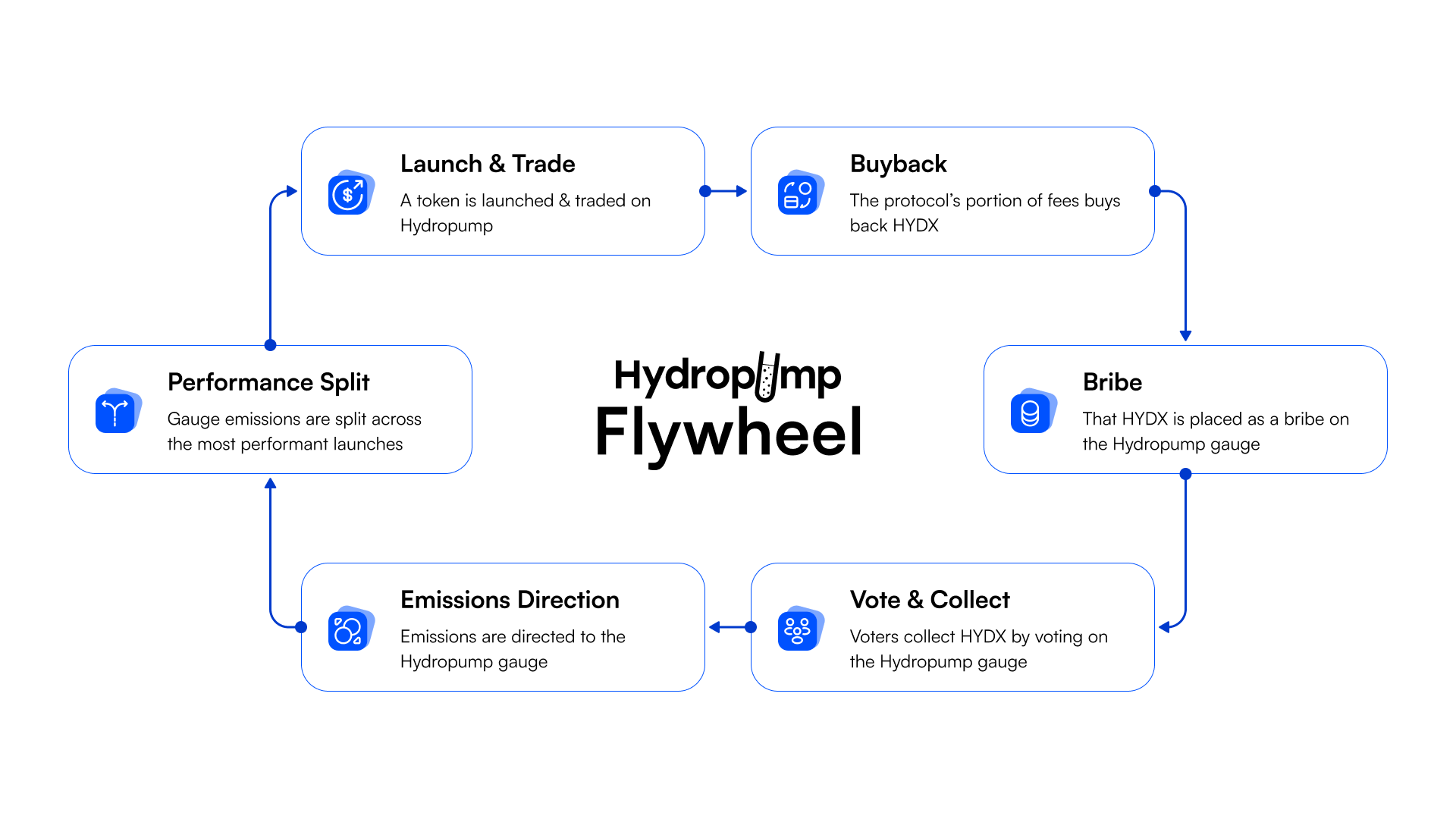
Hydrex to launch Hydropump flywheel on Base starting Monday
Architecture and Technology
Base’s architecture is grounded in the optimistic rollup model, in which most transactions execute off‑chain while Ethereum serves as a secure settlement and data availability layer. In a typical flow, users send transactions to Base’s sequencer, which orders them into blocks and provides rapid confirmations, creating the user experience of a fast, low‑fee chain. At intervals, these batches are compressed and posted to Ethereum alongside state commitments, where they can be challenged via fraud proofs if any invalid state transitions occur. This design allows Base to inherit Ethereum’s security assumptions for final settlement while achieving throughput and fee levels that would be impossible on the Ethereum mainnet alone.
Data availability has emerged as a central bottleneck and cost driver for rollups, and Ethereum’s roadmap has increasingly focused on solving this through upgrades such as proto‑danksharding and blobspace. A recent Ethereum fork raised the network’s blob target to 14 and the blob limit to 21 per block, expanding the capacity available for Layer 2s like Base, Optimism, Arbitrum, and Mantle to publish their transaction data at lower marginal cost. Blobs are a special data type optimized for rollups that can be pruned over time, significantly reducing the burden on full nodes compared with traditional calldata storage. For Base, expanded blob capacity translates into continued room to lower transaction fees or support higher throughput as user demand grows, while still anchoring to Ethereum for security. On‑chain telemetry has shown that blob utilization remains well below this new capacity, suggesting headroom for further Layer 2 activity before congestion pressures re‑emerge.
Initially, Base was implemented on the OP Stack, a modular rollup framework developed by Optimism that standardizes components like the execution engine, derivation pipeline, and proof system. Building on OP Stack allowed Coinbase to leverage a shared, audited codebase and benefit from improvements driven by the broader Superchain community, such as fault‑proof upgrades and EVM equivalence refinements. However, Base has since announced plans to evolve toward a unified, Base‑operated stack in order to accelerate innovation in scaling and security. According to the Base engineering team, this shift away from the OP Stack as the foundational layer is not a repudiation of Optimism but rather a move to consolidate the underlying software and reduce complexity, while continuing to engage with Optimism as a client of the OP Enterprise offering. In practice, this means Base will control more of its low‑level infrastructure, even as it maintains compatibility with Ethereum and interoperates with other rollups.
This evolution toward a unified stack is technically and politically significant. On the technical side, it gives Base more freedom to experiment with new proving systems, data compression techniques, and sequencing architectures without being constrained by the OP Stack’s release cadence. On the governance side, it potentially loosens the coupling between Base and the Optimism‑governed Superchain, placing more responsibility on Coinbase and the Base core team to manage upgrades and security processes. Coinbase has indicated that it will continue to support Optimism through OP Enterprise and shared initiatives, so the relationship is better understood as diversification rather than outright fragmentation. Still, developers and users will be watching closely to see how Base balances the benefits of a tailored stack against the advantages of ecosystem‑wide standardization in Layer 2 designs.
Base’s security model rests on the combination of Ethereum as a settlement layer and a centralized sequencer operated by Coinbase or its delegates. The use of a centralized sequencer is common across major optimistic rollups today, as it simplifies transaction ordering and enables fast confirmations, but it also introduces potential concerns around censorship, MEV allocation, and liveness dependencies on a single operator. Base’s earlier public roadmap, aligned with Optimism, described a path toward “Stage 2 rollup” status, implying a more decentralized fault‑proof system and reduced trust in the sequencer over time. With the shift to a unified stack, the specifics of that decentralization roadmap may change, but the underlying challenge remains: to preserve the operational reliability and regulatory comfort that institutions expect, while providing credible assurances that the chain cannot be arbitrarily halted or censored by any single party.
Fee dynamics on Base are shaped by both Ethereum’s gas market and the Layer 2’s internal parameters. Because Base must pay Ethereum for data availability in blobs or calldata, its minimum fee floor is tied to L1 gas prices, but efficient batching and compression can reduce the per‑transaction cost dramatically. In practice, median fees for simple transfers have been on the order of a few cents; one comparative analysis reported that Base and World Chain both recorded a median fee of about 0.02 USD for a USDC transfer in April 2026. DefiLlama and other analytics platforms show that Base captures millions of dollars in cumulative fees, with a portion flowing to the chain as revenue and the rest covering L1 posting costs. These economics matter both to end users, who care about predictably low fees, and to the chain’s sustainability, since a healthy fee market is one of the few organic revenue streams available to public infrastructure networks.
Performance comparisons with peers illustrate where Base sits in the Layer 2 design space. Chainspect data, for example, indicates that Arbitrum’s realized transactions per second (TPS) are significantly lower than Base’s, with Arbitrum’s observed TPS about 82.82% lower and its maximum TPS approximately 19.04% below Base’s reported peak. At the same time, Arbitrum’s average transaction fee is modestly lower than Base’s by around 3.47%, suggesting that trade‑offs between throughput and cost can differ even among optimistic rollups. These numbers should be treated as indicative snapshots rather than absolute rankings, since they depend on network load, measurement methodology, and continuous protocol upgrades. Nevertheless, they underscore that Base is operating at a scale and efficiency level comparable to the leading Ethereum Layer 2s, and that its performance envelope is heavily influenced by Ethereum’s own ongoing improvements in data availability and execution parallelism.
Looking ahead, Ethereum’s roadmap includes further upgrades such as the so‑called Glamsterdam hard fork, which is expected to increase the gas limit and introduce more advanced forms of transaction parallelization. For Layer 2s like Base, these changes should expand the effective capacity and reduce costs for posting rollup data, especially when combined with maturing blob markets and potentially more sophisticated compression schemes. As Ethereum becomes more explicitly optimized as a “Layer 2 base layer,” the design space for rollups widens, and Base’s move to a unified stack can be seen as a way to position itself to take advantage of these improvements more aggressively. In that sense, Base’s architecture is not static but deeply intertwined with the multi‑year evolution of Ethereum itself.
Base readers click hardest on value extraction and control questions — who captures the sequencer fees, which single protocol colonizes the chain state, and which projects vanish with funds — revealing that Coinbase's custodianship of Base is itself the persistent trust question underneath every other story.
Ecosystem and Use Cases on Base
Base’s ecosystem has grown rapidly from a launch cohort of around one hundred applications to a diverse set of DeFi, consumer, creator, and institutional projects. DefiLlama data shows billions of dollars in total value locked (TVL) on Base, with DeFi TVL exceeding 4.3 billion USD and a stablecoin market capitalization of roughly 4.16 billion USD. Strikingly, USDC accounts for the overwhelming majority of that stablecoin float, with a dominance share of about 89%, reflecting both Coinbase’s close relationship with Circle and the central role of USDC in Base‑native liquidity pools and payment flows. This concentration positions Base as one of the most USDC‑centric ecosystems in the crypto landscape, which has implications for both risk and opportunity in its DeFi markets.
Across lending markets, decentralized exchanges (DEXs), and derivatives platforms, Base offers the familiar suite of EVM‑based DeFi primitives that have emerged on other networks. However, its integration with Coinbase’s user base and fiat on‑ramps gives Base‑native protocols access to a relatively large pool of retail and institutional capital that may be less familiar with self‑custody but comfortable with Coinbase as a brand. This dynamic is further amplified by the proliferation of cross‑chain front ends and aggregators that treat Base as one of several default liquidity venues. Genius Terminal, for example, is a non‑custodial on‑chain trading interface that lets users access spot and perpetual markets across multiple chains, including Solana, Ethereum, Base, BNB Chain, Arbitrum, Avalanche, Optimism, Polygon, and Sonic, without manually bridging or switching wallets. By abstracting the underlying chains behind an “intent‑based” trading flow and using its Genius Bridge Protocol to orchestrate liquidity, the platform can route orders to Base whenever it offers the best combination of price, depth, and fees. In this way, Base participates in a broader cross‑chain liquidity fabric rather than relying solely on isolated, chain‑native demand.
Stablecoins are arguably the central pillar of Base’s current use cases. USDC in particular has seen rapid global growth, with Circle reporting that USDC in circulation grew more than 78% year over year and that monthly transaction volume reached around one trillion dollars across supported networks. On Ethereum, stablecoin supply has reached new all‑time highs, led primarily by USDC and USDT, and Base acts as a leveraged extension of this trend by concentrating USDC liquidity in its DeFi and payment rails. The dominance of USDC on Base is both a strategic asset and a source of path dependence: it makes the chain a natural venue for dollar‑denominated DeFi markets and corporate treasuries seeking high‑quality liquidity, but it also ties Base’s fortunes to that of a single stablecoin issuer and the regulatory treatment of fiat‑backed tokens.
Institutional onchain finance has emerged as one of the most distinctive aspects of Base’s ecosystem. J.P. Morgan’s Kinexys platform, for example, has deployed JPM Coin as a 1:1 bank‑backed deposit token on Base, using the chain as a Layer 2 infrastructure to move tokenized USD deposits. JPM Coin allows institutional clients to move money, post collateral, and settle transactions on public blockchains, targeting use cases such as cross‑border payments, intraday liquidity transfers, on‑chain collateral posting for securities transactions, and programmable payment execution. Importantly, JPM Coin is legally a deposit token, meaning it is a direct liability of J.P. Morgan, in contrast to USDC, which is a fiat‑backed stablecoin issued by Circle and governed by its own reserve framework. By hosting both a leading fiat‑backed stablecoin like USDC and a major bank’s deposit token, Base has become a live testbed for how different forms of digital dollars coexist and interact on a public chain.
Experiments at a national or quasi‑sovereign scale further illustrate Base’s institutional orientation. The Government of Bermuda has announced plans to transform the jurisdiction into what it describes as the world’s first fully onchain national economy, with support from Circle and Coinbase. The initiative envisions using stablecoins like USDC, along with digital asset infrastructure and enterprise tooling offered by Circle and Coinbase, to move a growing share of economic activity — from payments to government services — onto public blockchain rails. While the technical architecture spans multiple components, Base is positioned as a key settlement and execution layer within this stack, offering low fees and Ethereum‑anchored security suitable for both retail and institutional flows. If successful, Bermuda’s experiment could provide a blueprint for other jurisdictions considering similar moves, cementing Base’s reputation as a chain capable of supporting real‑world economic systems rather than purely speculative trading.
Base also features a vibrant creator and consumer application layer, shaped both by Coinbase’s outreach campaigns and independent builders. Early initiatives like “Onchain Summer” highlighted NFTs, social experiments, and consumer‑facing dapps, and that ethos has continued through partnerships and contests that aim to make onchain activity feel more cultural and less purely financial. Ethos, a project focused on onchain reputation, has announced a Vibeathon contest with tens of thousands of dollars in prizes and large XP incentives, co‑sponsored with the Base team and offering paymaster credits that help users cover gas costs. Open to anyone who uses Ethos’ onchain reputation system, the event underscores how Base is used as a playground for new identity and incentive mechanisms, with infrastructure like paymasters abstracting away gas fees for end users. At the same time, controversies — such as the backlash faced by Base’s public lead Jesse Pollak over the promotion of a Soulja Boy memecoin with a checkered past — highlight the reputational risks of blending creator‑coin experimentation with a chain that also courts institutional trust.
Another emerging area on Base involves AI‑native and advertising‑linked applications. Leviathan News, for instance, has launched an AI‑native advertising network powered by its SerenAI x402 system on Base, positioning the chain as a settlement layer for programmatic, onchain ad markets. In a related move, SerenAI has joined MongoDB’s startup program to facilitate pay‑per‑call x402 payments across MongoDB and Base, using the chain for granular, usage‑based billing for AI services. These projects suggest a future in which Base is not only a venue for canonical DeFi protocols but also a backbone for machine‑to‑machine payments, ad impressions, and micro‑transactions tied to AI agents and data services. That vision intersects with broader narratives about an AI‑first economy, in which agents transact autonomously using stablecoins and other tokens, and it aligns with Coinbase’s interest in AI‑driven products within its Everything Exchange framework.
Cross‑chain and multi‑venue trading further deepen Base’s role in the market structure. Genius Terminal’s cross‑chain trading interface, which has high‑profile backing from investors like YZi Labs, exemplifies how professional traders increasingly see chains like Base as interchangeable liquidity venues abstracted behind a single front end. Genius aggregates both spot and perpetual DEXs, allowing users to scan thousands of token pairs and execute across supported networks without visibly “bridging” in the traditional sense. Behind the scenes, its Genius Bridge Protocol uses a solver architecture to orchestrate modular liquidity and fulfill orders instantly across chains, relying on infrastructure like Base to handle settlement and finality. From Base’s perspective, this means that a growing share of order flow may be driven not by native wallets and UIs but by intent‑based routers that treat Base simply as one leg in a multi‑chain routing graph.
Beyond DeFi and trading, Base is starting to intersect with enterprise tokenization and regulated financial products. Coinbase’s acquisition of The Clearing Company, a prediction markets startup, is one example of how the exchange is integrating event‑based trading into its platform as part of its Everything Exchange push. While the specific deployment details vary, the long‑term trajectory points toward more onchain prediction markets, tokenized real‑world assets, and structured financial products that may use Base as their execution layer, with Coinbase handling fiat on‑ramps, regulatory interfaces, and user experience. Similarly, as public companies and corporate treasuries accumulate ETH — with some estimates suggesting corporate holdings now account for over five percent of total supply — the availability of high‑quality Layer 2 infrastructure like Base becomes a strategic factor in how these entities deploy ETH in staking, DeFi, or collateralization strategies. In that environment, Base’s combination of Ethereum alignment, low fees, and Coinbase stewardship positions it as an attractive venue for institutions that want onchain exposure with familiar counterparties.

Alchemix v3 launches on Base with unrestricted deployment and four-week Transmuter terms

Base vs Other Ethereum Layer 2s
To understand Base’s role in the broader scaling landscape, it is helpful to compare it with other leading Ethereum Layer 2s, especially Arbitrum and Optimism. All three are EVM‑compatible rollups that post data back to Ethereum and aim to offer lower fees and higher throughput than the mainnet, but they differ in ecosystem composition, governance, and strategic positioning. Arbitrum emerged earliest as a DeFi powerhouse, with a large stablecoin TVL and a vibrant ecosystem of derivatives and perpetual futures protocols. Optimism has positioned itself around the OP Stack and the Superchain vision, emphasizing public goods funding and sequencer revenue sharing through its governance token. Base, by contrast, has leaned heavily on Coinbase integration, USDC concentration, and institutional partnerships like JPM Coin and Bermuda’s onchain economy.
From a quantitative perspective, Base and Arbitrum are relatively close in terms of stablecoin TVL, with one comparison in early 2026 noting that Arbitrum’s stablecoin TVL was around 4.2 billion USD while Base’s was roughly 3.9 billion USD, and that together they accounted for about 64% of stablecoin TVL across Ethereum Layer 2s. More recent DefiLlama figures show Base’s DeFi TVL above 4.3 billion USD and stablecoin capitalization around 4.16 billion USD, which implies continued growth and suggests that Base is now one of the leading L2s in both categories. However, these numbers are highly dynamic and subject to market cycles, protocol launches, incentives, and stablecoin issuance trends. The salient point is that Base has rapidly climbed into the top tier of Ethereum L2s by liquidity, despite launching later than Arbitrum and Optimism, largely on the strength of Coinbase’s funnel and USDC’s prominence.
Fee and performance comparisons also reveal nuanced differences. As noted earlier, Chainspect data indicates that Arbitrum’s realized TPS is materially lower than Base’s, while its average transaction fees are slightly cheaper. Eco’s comparative analysis of L2s reported that Base and World Chain shared a median fee of about 0.02 USD for USDC transfers, with Arbitrum slightly below that and other networks varying depending on congestion and design. These distinctions may matter to high‑frequency traders or applications with extremely tight fee constraints, but for most users, all three L2s feel dramatically cheaper and faster than Ethereum mainnet. Where Base stands apart is not in being the absolute cheapest network, but in offering a performance envelope that is “good enough” for most use cases while integrating natively into Coinbase’s exchange and custody infrastructure.
The relationship between Base and Optimism is particularly interesting because of their shared history around the OP Stack. Base launched as an OP Stack chain and aligned itself with Optimism’s roadmap toward Stage 2 rollup status, which emphasizes minimized trust and stronger decentralization in fraud proofs and fault dispute resolution. This alignment was framed as part of a broader Superchain vision, where multiple OP Stack chains interoperate, share upgrades, and potentially coordinate around shared standards for governance and security. However, Base’s recent decision to move toward a unified, Base‑operated stack changes the nature of that relationship, reducing its dependence on the OP Stack as a foundational layer while maintaining a commercial link via OP Enterprise. For developers, the key question is how much divergence this creates in practice: if Base maintains EVM equivalence and broadly similar APIs, it may remain straightforward to deploy cross‑chain on both Optimism and Base, even if the underlying node software increasingly differs.
Base also competes indirectly with non‑Ethereum ecosystems and alternative scaling approaches. Solana, for instance, offers a high‑throughput monolithic chain architecture that attracts DeFi and consumer applications with low fees and fast finality, while BNB Chain, Avalanche, and others provide EVM‑compatible but separate base layers. In that context, Base’s differentiation lies in its combination of Ethereum security, EVM compatibility, Coinbase integration, and institutional credentials. Cross‑chain terminals like Genius treat Base and Solana as interchangeable liquidity venues, so user preference may be driven less by chain brand and more by where the deepest liquidity and best prices are available at a given moment. At the same time, the rise of modular designs and Layer 3s means that some teams may deploy application‑specific rollups that settle on Base itself or on other L2s, further complicating the competitive map. Base’s challenge is to be not just another L2, but the place where both regulated finance and crypto‑native innovation can coexist without either crowding out the other.
Governance, Economics, and Regulation
Base’s governance structure is unusual among public chains because it sits at the intersection of a centralized corporation and a permissionless ecosystem. Coinbase is a publicly traded company subject to extensive regulatory oversight in multiple jurisdictions, with compliance departments, internal controls, and fiduciary duties to shareholders. At the same time, Base is marketed as an open, permissionless network where anyone can deploy smart contracts and transact without centralized approval. In practice, this means that while the protocol itself is open, key operational levers — such as sequencer operation, software upgrades, and integration into Coinbase’s user interfaces — are controlled or heavily influenced by Coinbase and the Base core team. This arrangement can be framed as either a feature or a bug, depending on one’s priorities.
On the economic side, Base’s revenue model is anchored in transaction fees and, potentially, MEV capture or sequencer revenue sharing. Rollup chains collect fees from users for transaction inclusion and then pay a portion of those fees to Ethereum for data availability and settlement. The residual — after covering posting costs and operating expenses — can be treated as protocol revenue, which in Base’s case may accrue to Coinbase, to a dedicated Base entity, or to some combination depending on internal structuring and any future community mechanisms. Analytics from platforms like DefiLlama show that Base generates tens of thousands of dollars in daily chain fees, with a similar order of magnitude in net chain revenue after L1 costs, alongside much larger revenues at the application level across DeFi protocols. As the network matures, questions about how this revenue is allocated, whether sequencer profits are shared with the community, and how MEV is mitigated or redistributed are likely to grow more prominent.
Regulatory considerations loom especially large for Base because of Coinbase’s profile and the chain’s role in institutional use cases. The broader regulatory environment is moving toward stricter, more standardized oversight of exchanges and digital asset intermediaries, as illustrated by major exchanges like KuCoin and Binance seeking or obtaining licenses in multiple jurisdictions and by public debates around frameworks such as Hong Kong’s crypto‑related insurance rules and the European Central Bank’s digital euro initiative. In this context, Coinbase’s decision to build on a public Layer 2 rather than a permissioned consortium chain is notable: it signals a bet that public blockchain rails can be made compatible with regulatory demands through robust compliance at the edge, rather than by restricting the base protocol itself. At the same time, enforcement actions such as the SEC’s stance that certain third‑party Bitcoin mining services constitute securities offerings demonstrate that regulators are willing to treat novel crypto business models as regulated financial products, raising the stakes for any large institution building on public chains.
For Base, this means navigating a delicate balance between openness and risk management. On the one hand, allowing permissionless deployment unlocks innovation, attracts independent developers, and makes Base feel like a “real” public blockchain rather than an intranet for Coinbase and its partners. On the other hand, the presence of memecoins, high‑leverage DeFi, and experimental protocols on the same chain that hosts bank‑backed deposit tokens and national‑level projects inevitably poses reputational and regulatory challenges. Coinbase and the Base team have some levers to shape the ecosystem, such as choosing which applications to highlight in official interfaces, allocating grants, or offering sponsorships like the Ethos Vibeathon, which aligns Base with projects focused on reputation and safety rather than pure speculation. However, they cannot fully prevent risky or dubious projects from deploying at the protocol level without compromising the permissionless ethos.
Stablecoin policy is a particularly important regulatory frontier for Base. As noted earlier, USDC dominates Base’s stablecoin landscape, and Circle’s reserve practices and regulatory interactions consequently have an outsized impact on the chain’s risk profile. At the same time, new entrants like Ripple’s RLUSD stablecoin, which plans to expand to Ethereum Layer 2 networks including Base, and experiments with bank‑issued deposit tokens like JPM Coin introduce a more diverse mix of tokenized fiat instruments. Policymakers in jurisdictions like Hong Kong have begun differentiating between unbacked crypto assets and regulated stablecoins in capital frameworks, imposing high capital charges on the former and more nuanced treatment of the latter depending on the quality of fiat backing and regulatory oversight. As more of these instruments come to Base, the chain could become a case study in how different flavors of digital money coexist on a public ledger and how traditional financial regulation adapts to that reality.
Coinbase’s own strategic direction further intertwines Base with regulatory and market forces. The company’s “brand refresh” into an Everything Exchange includes plans to offer AI agents, stocks, perpetual futures, prediction markets, regulated token sales, B2B stablecoin services, SocialFi features, and curated DeFi, all running on crypto rails. Many of these capabilities are natural fits for a Layer 2 environment like Base, where low fees and composability make it easier to build complex, multi‑asset workflows. Coinbase Institutional’s research outlook for 2026 highlights themes such as technological transformation, stablecoin and tokenization growth, clearer regulation, and new privacy and AI‑crypto use cases as key drivers of the next phase of the crypto market. If that thesis plays out, Base is likely to be one of the primary venues through which Coinbase operationalizes it, making the chain’s governance and economic model an increasingly strategic concern for the company and its stakeholders.
City Protocol brings onchain token portfolios to Base, enabling one-click Coinbase tokenized stocks buys via Aerodrome

Risks, Criticisms, and Open Questions
Despite its rapid growth and high‑profile partnerships, Base faces a number of risks and unresolved questions that are important for users and builders to understand. At the technical level, Base inherits many of the generic risks associated with optimistic rollups, including potential vulnerabilities in its fault‑proof systems, bridge contracts, and sequencing logic. While the use of Ethereum as a settlement layer provides strong guarantees against final state corruption, bugs in the L2’s smart contracts or infrastructure could still lead to loss of funds, multi‑day downtime, or censorship, particularly as long as the sequencer remains centralized. The planned move to a unified stack increases Coinbase’s control over the codebase but may also reduce the diversity of external eyes reviewing core components, at least relative to the more communal OP Stack model. These trade‑offs are not unique to Base, but they are heightened by the chain’s ambition to host large institutional flows and national‑level experiments.
Centralization is a recurring theme in critiques of Base. The chain’s sequencer is operated by entities associated with Coinbase, and there is no on‑chain governance token or decentralized validator set with direct control over the protocol. While Ethereum finality limits the scope of potential abuse, the sequencer nonetheless has substantial short‑term power over transaction ordering, inclusion, and MEV extraction, and Coinbase’s role as both a major application operator and the infrastructure provider raises questions about conflicts of interest. Some critics worry that this concentration of power, combined with Coinbase’s regulatory exposures, could lead to censorship of certain addresses or activities under regulatory pressure, especially as public authorities gain more tools to monitor and intervene in crypto flows. Others argue that Coinbase’s track record, legal obligations, and desire to maintain users’ trust make egregious abuses unlikely, and that a centralized sequencer is a reasonable temporary compromise on the path to greater decentralization.
Ecosystem composition presents another set of tensions. Base’s willingness to host both serious institutional experiments and highly speculative memecoins is a double‑edged sword. On the positive side, the presence of vibrant retail trading activity and experimental projects can bootstrap liquidity and cultural relevance, making Base more attractive as a venue for all kinds of applications. On the negative side, episodes like the Soulja Boy memecoin controversy — in which an artist with a history of questionable token promotions launched yet another coin on Base, sparking backlash and reputational blowback for the chain’s leadership — highlight the difficulty of curating culture on a permissionless network without sliding into gatekeeping. For institutions considering whether to deploy on Base, the coexistence of “degen” culture and regulated finance can be disorienting, especially when headlines focus on scams or rug pulls rather than on mainstream experiments like Bermuda’s onchain economy or JPM Coin.
Interoperability and fragmentation also pose challenges. While cross‑chain bridges, aggregators, and terminals are making it easier to treat Base as one venue among many, the proliferation of rollups and sidechains risks diluting liquidity and developer attention. Projects like Genius Terminal mask this complexity from end users, but behind the scenes, they depend on a patchwork of bridges, messaging layers, and settlement mechanisms that introduce their own risks and latencies. Base’s decision to move away from the OP Stack may contribute to this fragmentation if the unified stack diverges materially from common standards, although Coinbase has signaled an intent to remain interoperable and supportive of shared ecosystems like the Superchain. The success of Base as a long‑term platform may hinge on how effectively it can participate in, and help shape, emerging interoperability standards, rather than on winning a zero‑sum competition against other L2s.
Regulatory developments add a layer of uncertainty. While many regulators are increasingly comfortable with fiat‑backed stablecoins and tokenized deposits under certain conditions, there is still significant debate over the appropriate treatment of DeFi, non‑custodial wallets, and novel constructs like prediction markets or AI agents executing transactions autonomously. Enforcement actions that classify certain crypto services as unregistered securities, or new frameworks that impose heavy capital charges on unbacked tokens, could indirectly affect Base by altering which applications are viable or how institutions are allowed to interact with the chain. At the same time, moves like the ECB’s exploration of blockchain‑based settlement in central bank money, and national‑level experiments such as Bermuda’s, suggest that public chains like Base could end up playing a central role in future financial infrastructure rather than being relegated to the margins.
Finally, there is a broader strategic question about how much of Base’s success is tied to Coinbase and whether the chain can develop an identity and resilience independent of its corporate sponsor. Coinbase’s distribution, regulatory posture, and engineering resources are powerful advantages, but they also create a dependency: if Coinbase were to shift strategic direction, face regulatory constraints, or deprioritize Base, the chain would need a sufficiently robust community and ecosystem to sustain itself. The presence of independent projects, cross‑chain infrastructure, and non‑Coinbase institutional users like J.P. Morgan and Leviathan suggests that such a community is emerging, but its ultimate durability remains to be tested.
- 01Coinbase sequencer fee extraction↗
Andre Cronje's accusation that Coinbase routes sequencer revenue off-chain to itself — leaving nothing inside Base's ecosystem — crystallizes the core tension between Base's 'open' branding and its centralized fee capture.
- 02Single-protocol state concentration↗
The revelation that ~68% of Base chain state is controlled by one protocol of questionable utility alarmed readers who expected a diverse ecosystem, not a de facto monopoly.
- 03Aave lending dominance↗
Aave's emergence as the top lending protocol validated Base as a serious DeFi destination, signaling that blue-chip protocols were choosing it over rival L2s.
- 04Rug pulls and unaudited exploits
Back-to-back incidents — BaseBros Fi vanishing via an unaudited contract and the Grand Base exploit draining funds on April 15 — showed readers that Base's permissionless growth came with commensurate predatory risk.
- 05RWA and institutional asset expansion↗
Backed Finance bringing tokenized US Treasuries and Coinbase launching cbBTC onto Base signaled institutional legitimacy, pulling readers tracking whether real capital would follow retail.
- 06Base infrastructure outages↗
A public incident report attributing a one-hour block production halt to infrastructure weakness raised serious questions about the reliability guarantees of a Coinbase-operated sequencer.
How Base Fits into the Future of Onchain Finance
To situate Base within broader macro and technological trends, it is helpful to consider the directions highlighted by both market observers and participants. Coinbase Institutional’s outlook emphasizes themes such as macroeconomic uncertainty, the maturation of tokenization and stablecoins, regulatory progress, and the rise of AI‑crypto interactions as key drivers for the next phase of digital asset adoption. Each of these themes intersects directly with Base’s positioning. On the tokenization and stablecoin front, the growth of USDC, the emergence of bank‑issued deposit tokens like JPM Coin, and plans from entities like Ripple to extend their stablecoins to Ethereum Layer 2s including Base all reinforce the idea that public blockchains will host a diverse menagerie of digital dollars. Base’s concentration of USDC liquidity and early adoption by major financial institutions position it as a core venue for that activity.
On the regulatory progress front, the gradual normalization of crypto within existing financial frameworks — from licensing regimes for exchanges to differentiated capital treatment for stablecoins versus unbacked tokens — makes it more plausible for large institutions to transact directly on public chains. Here, Coinbase’s compliance‑first posture and public listing provide a bridge between traditional finance and onchain infrastructure, and Base serves as the technical substrate that can meet both user experience and regulatory requirements. Experiments like Bermuda’s onchain national economy are early, but they represent a class of use cases in which public chains like Base become embedded in policy decisions and public service delivery, blurring the line between “crypto” and mainstream financial plumbing.
The rise of AI‑crypto hybrids and agent‑based systems is another front where Base may play an outsized role. Leviathan’s AI‑native advertising network and SerenAI’s pay‑per‑call infrastructure are early examples of how AI services can be tightly coupled with onchain micropayments on Base, enabling granular billing and programmable incentives for machine‑to‑machine interactions. Broader initiatives from AI projects like Fetch.ai, which envision agents capable of completing payments via credit cards, stablecoins, and native tokens, suggest that stablecoin‑enabled chains will be central to an AI‑first economy. Base’s low fees, predictable environment, and integration with Coinbase’s product suite make it a natural candidate to host AI agents that need to transact frequently in small denominations using assets like USDC or deposit tokens, especially in enterprise contexts where compliance and auditability are paramount.
At the same time, Bitcoin‑centric initiatives that aim to add programmability and complex financial logic to the Bitcoin base layer, such as projects building dedicated VMs to orchestrate lending, credit, and payouts without leaving Bitcoin, illustrate an alternative vision in which Ethereum‑style smart contract platforms are not the only locus of future financial innovation. Base exists within an Ethereum ecosystem that is itself competing with such alternative visions, and its success will depend on Ethereum’s ability to maintain its position as the primary settlement and composability hub for programmable finance. Ethereum’s continued upgrades — including higher blob limits, increased gas capacity, and more parallel processing — are designed to keep it ahead in this competition and to ensure that Layer 2s like Base remain attractive platforms for both DeFi and institutional finance.
Conclusion
Base Chain occupies a distinctive and increasingly important niche in the evolving crypto landscape. Technically, it is a high‑performance optimistic rollup anchored to Ethereum, capable of offering low fees and high throughput by leveraging Ethereum’s data availability and security while executing most activity off‑chain. Economically, it has rapidly accumulated billions of dollars in DeFi TVL and stablecoin liquidity, with a particularly strong concentration of USDC that reflects its tight integration with Coinbase and Circle’s broader stablecoin strategy. Institutionally, Base has attracted marquee projects like JPM Coin and is a foundational piece of ambitious experiments like Bermuda’s effort to build a fully onchain national economy, indicating that large financial actors view it as a credible and compliant venue for serious capital flows.
Yet Base is also a playground for culture, experimentation, and sometimes controversy. From events like Ethos’ Vibeathon, which explores onchain reputation and novel incentive models, to memecoins and creators seeking to leverage Coinbase’s distribution, the chain hosts a wide range of activities that do not fit neatly into traditional financial categories. Cross‑chain trading terminals, AI‑native advertising networks, and pay‑per‑call infrastructure for AI services further diversify the use‑case landscape, making Base a microcosm of the broader collision between crypto, AI, and digital media. This heterogeneity is both a strength and a challenge, as it makes Base an exciting environment for builders while complicating the task of governance, risk management, and regulatory navigation.
The chain’s future will depend not only on its technical roadmap — including the successful transition to a unified Base‑operated stack and ongoing performance improvements tied to Ethereum upgrades — but also on how it manages issues of centralization, interoperability, and ecosystem curation. Coinbase’s role as both steward and major beneficiary of Base’s growth brings advantages in terms of resources and compliance but also creates expectations about accountability and neutrality. As public companies, banks, and even governments experiment with Base as a settlement layer, the stakes of those expectations will rise. Whether Base can remain a credibly open, permissionless platform while satisfying the risk tolerances of its most conservative users is perhaps the central question that will define its trajectory.
Base mainnet launches publicly
Aerodrome DEX launches on Base
- 2024-04exploit
Grand Base exploit drains user funds
Basenames go live on Base
Coinbase launches cbBTC on Base and Ethereum
Base publishes 2025 roadmap: 25M users, $100B TVL targets
Uniswap v4 launches across Base and 9 other chains
Outlook
Looking ahead, Base appears well positioned to remain a key pillar of Ethereum’s Layer 2 ecosystem and a central venue for onchain finance more broadly. The structural drivers behind its growth — the expansion of fiat‑backed stablecoins like USDC, the tokenization of bank deposits through instruments such as JPM Coin, and the desire of exchanges like Coinbase to embed onchain rails into every aspect of their business — are unlikely to reverse in the near term. As Ethereum continues to scale its data availability through higher blob limits and more efficient execution, Base should be able to accommodate greater transaction volumes at stable or lower fees, preserving its appeal for both retail users and high‑frequency institutional flows.
At the same time, Base will face intensifying competition from other Ethereum L2s, alternative Layer 1s, and specialized application chains, all vying to host the next wave of DeFi, tokenization, and AI‑driven applications. Its differentiation will hinge less on raw technical metrics and more on the unique combination of Coinbase integration, institutional trust, and a growing track record of real‑world deployments like Bermuda’s onchain economy and J.P. Morgan’s deposit tokenization. If Base can continue to cultivate an open, innovative ecosystem while responsibly managing centralization risks and regulatory expectations, it is likely to remain one of the most important public chains at the intersection of crypto‑native experimentation and mainstream financial infrastructure.
Latest Base Chain news
Hydrex to launch Hydropump flywheel on Base starting MondayAlchemix v3 launches on Base with unrestricted deployment and four-week Transmuter termsCity Protocol brings onchain token portfolios to Base, enabling one-click Coinbase tokenized stocks buys via Aerodrome Trueo is migrating its prediction market from Base to Ethereum mainnet, citing network effects and oracle goals
 Aave V4 on Base adds Coinbase tokenized stocks as collateral for USDC loans
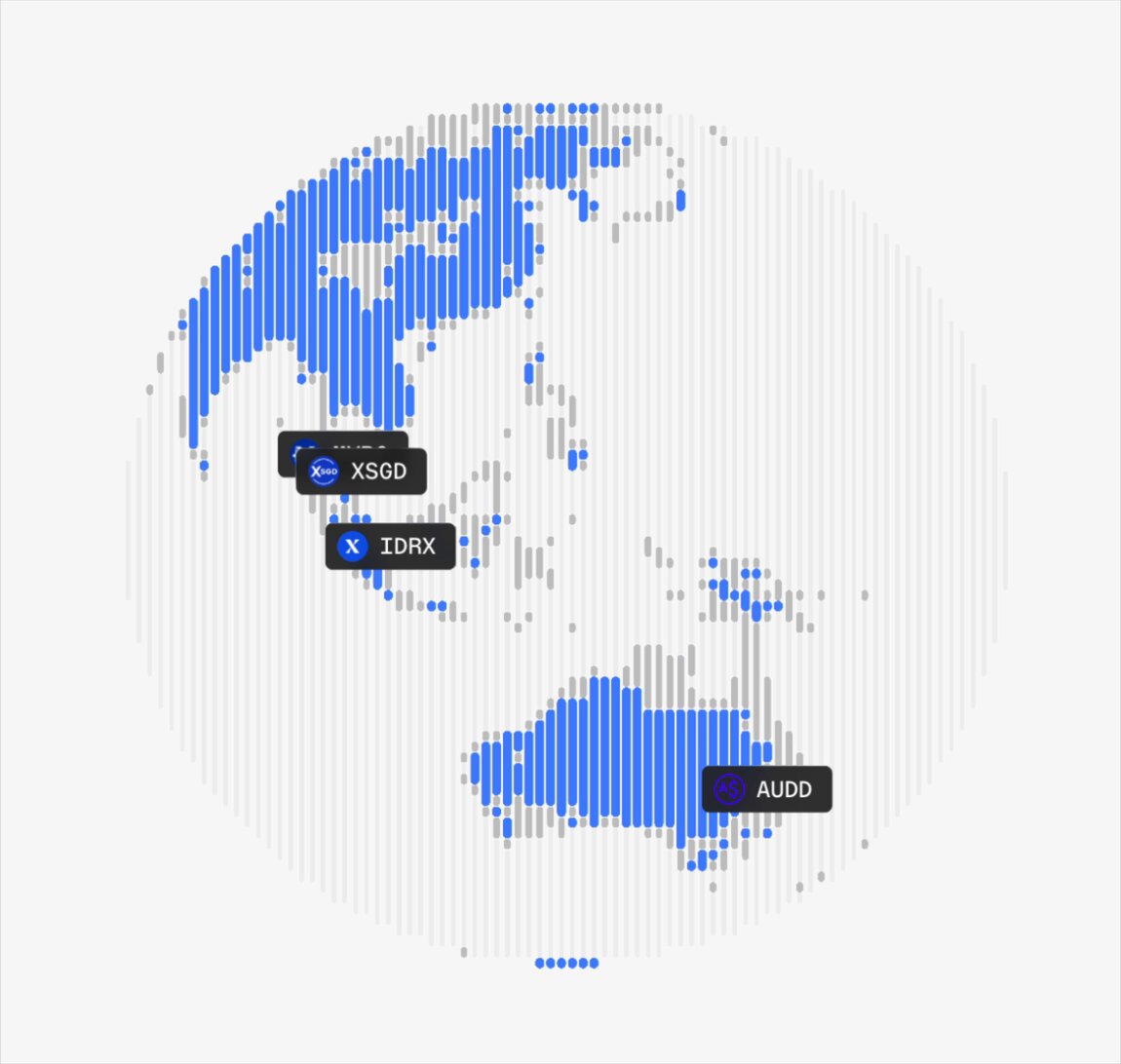 Base expands local stablecoin lineup as stablecoins go global, with backers citing lower friction and skeptics noting modest volumes
Sources
18 records from 13 domains
base.org
blog.base.dev
blog.base.org
defillama.com
circle.com
jpmorgan.com
x.com
weex.com
chainspect.app
tradingview.com
coinbase.com
bitcoinfoundation.org
eco.com
Community notes
Spot something off or out of date? Drop a note. Editors review topic notes daily and roll accepted fixes into the explainer — contributors are recognized in the monthly $SQUID drop.
Loading notes…
Help improve this topic
Have a story or tip about this topic? Submit it. See something missing? Leave a note. Editors review daily; accepted submissions and fixes count toward the monthly $SQUID drop.