
In-depth explainer on Ethereum L2s—what they are, how rollups work, key ecosystems (Arbitrum, Optimism, Base, Polygon, Starknet, zkSync, Ink, Metal, HPP), security risks, governance, and how L2 scaling reshapes crypto’s economics and user experience.
- x.com56
- theblock.co6
- coindesk.com3
- blog.ethereum.org3
- vitalik.eth.limo2
- cointelegraph.com2
- cryptonews.com2
+20 sources across the wider coverage universe
 Lattice, creator of MUD autonomous worlds engine and Redstone L2, winds down operations2026-04
 Metal L2 unveils $MTL subnet on Metal Blockchain, advancing migration from Optimism2026-07
 Ethereum's next growth wave will be driven by real businesses choosing Ethereum L1+L2 over standalone chains, with Robinhood cited as the blueprint for onchain adoption2026-07
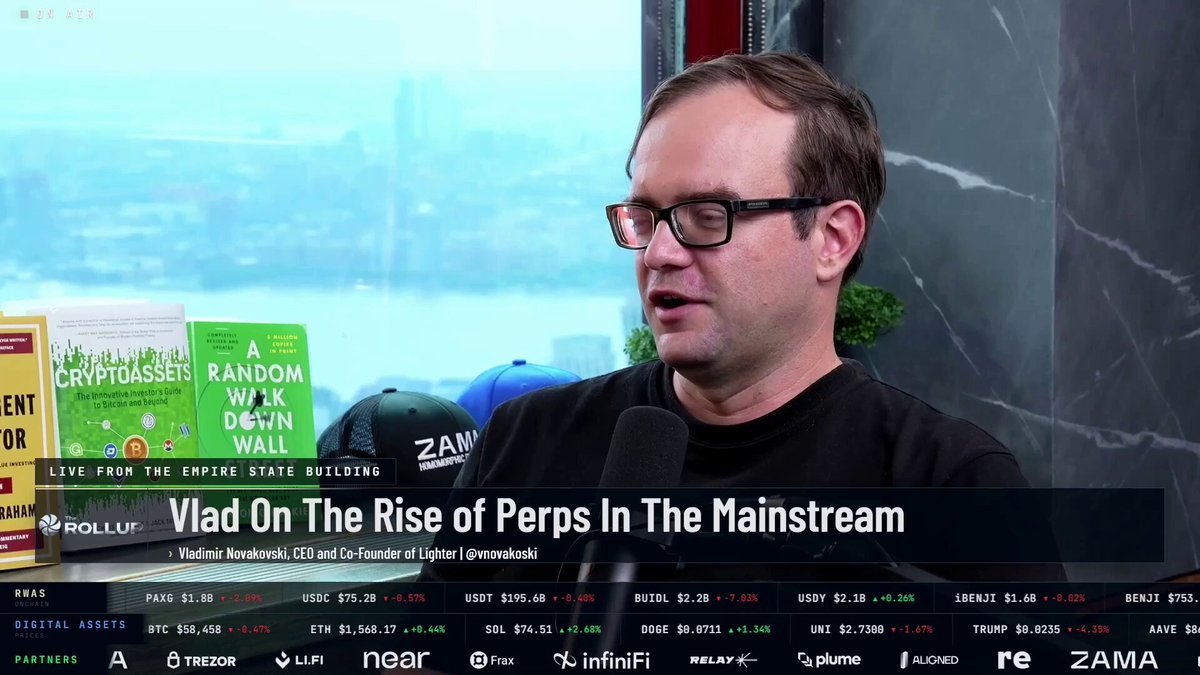 Lighter CEO explains why Robinhood Chain chose Ethereum L2 for its infrastructure2026-07
 Coinbase-backed Base activates Azul mainnet upgrade, introducing multiproof (TEE + ZK) system to push Ethereum L2 toward Stage 2 decentralization and faster withdrawals.2026-05
 rsETH Incident Report by LlamaRisk
Aave details the rsETH bridge exploit, models up to $230M in potential bad debt across L1/L2 scenarios, and outlines freezes, rate changes, and coverage plans to contain protocol risk and protect users.2026-04
rsETH Incident Report by LlamaRisk
Aave details the rsETH bridge exploit, models up to $230M in potential bad debt across L1/L2 scenarios, and outlines freezes, rate changes, and coverage plans to contain protocol risk and protect users.2026-04
Layer 2 (L2) Networks: How Ethereum’s Scaling Stack is Reshaping Crypto
Layer 2, or L2, refers to protocols built on top of a base blockchain like Ethereum that process transactions off-chain while ultimately settling and securing them on the underlying L1 network. In practice, L2s aim to deliver much higher throughput and lower fees without sacrificing the core security and decentralization guarantees of Ethereum, making them a central pillar of the ecosystem’s long‑term scaling roadmap.
L2 networks have moved from theory and testnets into production infrastructure underpinning major segments of decentralized finance, payments, gaming, and emerging institutional use cases. They play a central role in Ethereum’s “rollup-centric” roadmap, where most user activity migrates onto L2 while the base layer focuses on security, data availability, and settlement. This transition is not purely technical; it has economic, governance, and cultural implications that are now visible in debates over ETH’s tokenomics, protocol roadmaps, and the balance between decentralization and usability. At the same time, the L2 landscape has diversified into multiple architectures—optimistic rollups, ZK‑rollups, and hybrid designs—along with a growing constellation of ecosystem-specific chains like Arbitrum, Optimism’s Superchain, Coinbase’s Base, Polygon’s evolving stack, Starknet, zkSync, Kraken’s Ink, Metal L2, House Party Protocol, and more. These networks are in constant motion, shipping upgrades such as Base’s Azul and Beryl, Starknet v0.14.3, and Metal’s Karst, while large centralized exchanges, wallets, and even AI platforms begin to build directly on L2 rails. Understanding what “L2” really means—technically, economically, and politically—has become essential for anyone following Ethereum and the broader crypto markets.
What “L2” Means in Crypto
In the context of blockchains, Layer 2 denotes a protocol that sits “on top” of a base layer, or Layer 1 (L1), such as Ethereum. An L2 executes transactions off the main chain but periodically posts compressed transaction data and state commitments back to L1, which serves as the ultimate source of truth. Because L2s anchor their security to the base chain, users rely on Ethereum consensus and data availability rather than on the L2 operator’s honesty alone. This is what distinguishes a true L2 from a simple sidechain or independent L1: an L2’s safety depends on Ethereum continuing to function correctly, not on starting a separate trust system. In practice, the most prominent L2s today are rollups—protocols that “roll up” many user transactions into batches, execute them off-chain, and post succinct summaries and proofs to L1 for verification.
This architecture matters because blockchains like Ethereum are constrained by the so‑called scalability trilemma: trying to maximize decentralization, security, and scalability at the same time is extremely difficult. Ethereum has deliberately prioritized security and decentralization, which limits its transaction throughput and causes fees to spike during demand surges. L2s address this by moving computation and transaction ordering off-chain, while using Ethereum solely to verify correctness and maintain data availability. In other words, they behave like “execution shards” that outsource expensive work from the base layer, without compromising its security model. When designed as rollups, L2s publish enough data on Ethereum for anyone to recompute the L2 state independently, ensuring trustless exit even if the L2 operator disappears or turns malicious.
It is important to distinguish L2s from other structures that sometimes share similar branding. Sidechains such as the original Polygon PoS chain are independent networks that bridge to Ethereum but operate with their own validator sets and security assumptions. Appchains built with Cosmos SDK or Substrate, and high‑throughput L1s like Solana, are separate base layers rather than L2s in the strict sense. By contrast, Arbitrum, Optimism, Base, Starknet, zkSync, and similar networks are designed as Ethereum L2s because they post their transaction data and proofs back to Ethereum and allow users to fall back to L1 security in worst‑case scenarios. Marketing language sometimes stretches the term “L2” to describe systems that do not fully inherit Ethereum’s security, so understanding the underlying architecture is crucial for risk assessment.
The term “L2” is also used outside of blockchains, which can cause confusion. For example, adtech initiatives such as Nexxen and L2 Data’s VoterMatch product, which aims to improve the precision and transparency of political advertising, use “L2” as a brand name rather than as a reference to Ethereum scaling. Similarly, “L2” can refer to second‑level cache or network layers in traditional computer science. In this explainer, L2 will specifically mean blockchain layer‑two networks anchoring to Ethereum, while acknowledging that the same label appears in very different contexts. For crypto users, the key takeaway is that an Ethereum L2 is defined not by branding but by how tightly it is cryptographically coupled to Ethereum’s security and data availability.

Nillion begins Blacklight node migration from its L2 to Ethereum L1, with operators moving ahead of the Blacklight L1 mainnet launch on October 5
Why Ethereum Needed Layer 2 Scaling
Ethereum’s success exposed its scalability limits. During DeFi and NFT booms, users routinely paid tens or even hundreds of dollars in gas fees to interact with smart contracts, with blockspace becoming a scarce resource auctions off to the highest bidders. The network’s design deliberately restricts throughput to keep full-node requirements manageable and protect decentralization, but this also means that global-scale applications cannot reasonably live entirely on L1. The resulting congestion hampered user experience and made many smaller transactions uneconomical, especially for users in emerging markets. Ethereum’s core developers responded by articulating a “rollup-centric” roadmap: instead of scaling monolithically, Ethereum would become a secure settlement and data availability layer, with most execution moving to L2 rollups.
A crucial step in this roadmap was the Dencun upgrade, whose centerpiece is Ethereum Improvement Proposal 4844, nicknamed Proto‑Danksharding. Before EIP‑4844, rollups stored their transaction batches as calldata, which is permanently recorded on Ethereum and priced accordingly. This made rollup operation expensive and limited the extent to which L2 could reduce end‑user fees. Proto‑Danksharding introduced blob-carrying transactions, which attach large, fixed‑size data “blobs” to Ethereum transactions. Blobs are designed for temporary data availability rather than permanent storage: Ethereum nodes hold blob data for roughly 18 days, which is sufficient for rollups to prove and finalize their state transitions. Because blobs are not retained as part of Ethereum’s long‑term execution history and are handled by a distinct pricing mechanism, they are significantly cheaper than calldata on a per‑byte basis.
This architectural change directly benefits L2s by giving them a dedicated, cost-effective data availability layer. Instead of squeezing transaction batches into expensive calldata, rollups can publish their compressed state updates into blobs, drastically lowering operational costs and allowing them to pass savings on to users. Ethereum enforces a fixed blob limit per block—currently a target of three and a maximum of six—to protect network resources and create a predictable fee market. As demand for blob space rises, blob fees adjust dynamically, much like gas prices, but overall the system shifts large parts of the scaling problem from execution to data availability. These changes underpin the recent drop in L2 fees that has made micro‑transactions, gaming, and high‑frequency DeFi strategies more practical.
However, the L2‑centric roadmap also interacts with Ethereum’s monetary policy and social contracts in ways that not everyone welcomes. Some commentators argue that by prioritizing L2 scaling and the Dencun/EIP‑4844 roadmap over ETH tokenomics and the “ultrasound money” thesis, Ethereum’s leadership has neglected the economic dimension of the protocol. According to this critique, moving much of the transaction load—and therefore fee revenue—to L2s could reduce ETH fee burn and weaken its narrative as a deflationary store of value, while rival ecosystems aggressively optimize for token price and market share. Proponents counter that robust scaling via L2s will increase Ethereum’s long‑term value by enabling more use cases and driving greater aggregate demand for blockspace and blob space. This ongoing debate highlights that L2s are not just technical solutions; they are central to Ethereum’s economic identity and competitive positioning.
Regardless of these debates, usage patterns clearly show that L2s are becoming integral to Ethereum’s role in the programmable economy. DeFi protocols, stablecoin issuers, and even traditional fintechs are increasingly routing volume through L2 networks. Arbitrum, for example, has emerged as a major hub for stablecoins: it recently reported reaching around 10 million stablecoin holders and becoming the busiest L2 route for USDT by volume, with over 6.4 billion dollars moved across roughly thirty thousand transactions in a given reporting period. Cash App’s enablement of send and receive USDC payments directly on Arbitrum underscores how mainstream payment applications are beginning to embrace L2 rails for cheaper and faster settlement. This is emblematic of a broader shift, where Ethereum L1 serves primarily as a secure anchor, while everyday activity migrates to L2s that can handle consumer-scale throughput.
Readers click L2 news not to understand scaling technology but to track territorial sovereignty moves — when a credible DeFi protocol or named founder announces their own L2, clicks spike regardless of technical merit, revealing the L2 landscape is read as a land-grab competition, not an infrastructure story.
How L2s Work: Rollups, Proofs, and Bridges
Core Architecture: Execute Off‑Chain, Settle On‑Chain
At a high level, most Ethereum L2s follow a similar transaction lifecycle. Users submit transactions to the L2 via wallets or dapps, often paying gas fees denominated in ETH or the L2’s native token. These transactions are received by a sequencer, an off‑chain service responsible for ordering transactions and producing L2 blocks. The L2’s execution environment—often an EVM-compatible virtual machine—processes these ordered transactions, updating the L2 state (account balances, contract storage, etc.) just as on Ethereum L1. Periodically, the L2 aggregates many transactions into a batch and posts a compressed representation of the new state, plus some associated data, back to Ethereum.
This process is what makes L2s “rollups.” They roll up many user transactions into a compact summary that can be verified on L1, rather than executing every transaction directly on the base chain. The OP Stack, which powers Optimism, Base, Metal, and other networks, provides a canonical reference architecture for this pattern. It defines modules for transaction sequencing, state execution, batch posting to Ethereum, fault‑proof systems, and L1‑to‑L2 bridges, among other components. In this model, the L2 is responsible for liveness and UX—fast confirmations, smooth dapp interaction, fee markets—while Ethereum is responsible for finality and security, enforcing a canonical view of the L2 state once proofs and data availability conditions are met.
Bridges sit at the boundary between L1 and L2, enabling users to deposit assets from Ethereum into the L2 and withdraw them back. When a user deposits, they typically lock funds in a canonical bridge contract on Ethereum, which then credits the corresponding assets on the L2. Withdrawals reverse this process: the user burns or locks funds on L2 and provides proof to the bridge contract on L1, which releases the underlying assets once the L2 transition is deemed final. The precise mechanics depend on the type of rollup (optimistic or ZK) and the status of its proof system, but in all cases, the security of the bridge ultimately hinges on Ethereum’s ability to enforce correct execution and data availability for the L2.
Optimistic Rollups vs ZK‑Rollups
Within Ethereum L2 design, two main rollup families dominate: optimistic rollups and zero‑knowledge (ZK) rollups. Optimistic rollups assume, by default, that the batches posted by the sequencer are valid. They do not immediately prove correctness to Ethereum; instead, they provide a window—often on the order of days—during which anyone can submit a fraud proof if they detect an invalid state transition. If a fraud proof succeeds, the incorrect batch is rolled back and the party that posted it may be penalized. This structure allows optimistic rollups to be relatively simple and EVM‑compatible, but it introduces latency for withdrawals to L1, since Ethereum needs to wait through the challenge period before treating the L2 state as final.
ZK‑rollups take a different approach. Rather than relying on game‑theoretic fraud proofs and challenge periods, they generate cryptographic validity proofs—for example, zk‑SNARKs or zk‑STARKs—that attest to the correctness of each batch of transactions. These proofs are verified by a smart contract on Ethereum, which only accepts new L2 state roots if the corresponding proof checks out. Because validity proofs provide immediate assurance of correctness, ZK‑rollups can often finalize withdrawals to L1 much faster than optimistic rollups. However, generating these proofs is computationally intensive and historically required non‑EVM execution environments or sophisticated compilation pipelines. Projects like Starknet and zkSync have invested heavily in custom languages and proof systems to make ZK rollups practical at scale.
From a user’s perspective, both designs aim to reduce fees and increase throughput, but they involve different trade‑offs in complexity, latency, and ecosystem compatibility. Optimistic rollups such as Arbitrum, Optimism, Base, and Metal L2 have leveraged their EVM compatibility and simpler proof systems to bootstrap rich DeFi and application ecosystems quickly. ZK‑rollups like Starknet and zkSync, along with earlier efforts such as Polygon zkEVM, have pushed the frontier of cryptographic scaling but often required more specialized tooling or operated initially in “beta” modes. Polygon zkEVM, for example, launched in 2023 as an EVM‑compatible ZK rollup with a “Mainnet Beta” label and a centralized sequencer; Polygon later announced plans to sunset this chain’s sequencer by July 1, 2026 as part of a shift in its broader protocol roadmap. This highlights how quickly the design space and product strategies can evolve.
The emerging trend is toward hybrid designs that borrow strengths from both camps. Coinbase’s Base Azul upgrade, for instance, introduces a multiproof system combining trusted execution environments (TEEs) and zero‑knowledge proofs to satisfy a core technical requirement of “Stage 2” L2 security, while unlocking faster withdrawals and better capital efficiency. By layering cryptographic proofs over hardware‑based security and tying them into the OP Stack’s fault‑proof framework, such systems aim to provide stronger assurances than pure optimistic rollups without incurring the full proving costs of monolithic ZK designs. As hardware and proving technology improve, the line between optimistic and ZK rollups is likely to blur further, making the simple dichotomy less meaningful over time.
To illustrate some of these distinctions, it is useful to summarize the core differences in a compact form.
| Property | Optimistic Rollups | ZK‑Rollups |
|---|---|---|
| Security model | Assume validity; challenge via fraud proofs | Prove validity upfront via cryptographic proofs |
| Withdrawal latency | Typically days (fraud‑proof window) | Potentially minutes to hours (after proof verification) |
| EVM compatibility | Often high; reuses existing EVM tooling | Historically more complex; improving with zkEVM implementations |
| Prover complexity | Lower; no heavy cryptographic proofs per batch | Higher; requires expensive proof generation |
| Maturity in DeFi (today) | Larger ecosystems: Arbitrum, Optimism, Base, Metal, etc. | Growing ecosystems: Starknet, zkSync, Polygon zkEVM legacy, etc. |
Data Availability and Proto‑Danksharding
Data availability—the guarantee that enough data is accessible for anyone to reconstruct the L2 state—is a central pillar of rollup security. If a rollup operator could post only state roots without underlying transaction data, users would have no way to verify their balances or exit safely. Before EIP‑4844, Ethereum L2s used calldata to ensure data availability: transaction batches were embedded directly into Ethereum transactions, permanently stored by the network, and made available to anyone running a full node. This approach was secure but costly, because calldata competes for the same blockspace used by regular Ethereum transactions.
Proto‑Danksharding fundamentally restructured this process by introducing blob‑carrying transactions. A blob is a large, fixed‑size chunk of data attached to an Ethereum transaction, designed explicitly for temporary storage. Ethereum nodes are required to make blob data available for a certain period—on the order of 18 days—after which it can be pruned. Crucially, blob data is not part of Ethereum’s permanent execution history; contracts cannot directly read blobs, and they are priced through a separate fee mechanism. Under the Proto‑Danksharding model, rollups post their batched transaction data into these blobs instead of into calldata, substantially reducing their cost per byte.
Ethereum enforces a fixed limit on blob usage per block, with a target of three blobs and a maximum of six, to prevent excessive resource consumption and to maintain predictable network performance. As demand for blob space rises, the blob fee increases, encouraging rollups to optimize their compression and batching strategies. The overall effect is to create a specialized, cost‑effective data availability layer tailored to rollups, while freeing general‑purpose calldata for other uses. This change has allowed many L2s to slash transaction fees to cents or fractions of a cent, enabling higher‑frequency applications and making Ethereum more competitive with alternative high‑throughput chains.
Sequencers, Decentralization, and “Stage 2” L2s
While rollups anchor their security to Ethereum, their internal operation often starts out centralized. In many deployments, a single sequencer—run by the core team or a designated entity—controls transaction ordering and block production, which introduces potential risks of censorship, MEV extraction, and downtime. The rollup’s smart contracts on Ethereum typically include upgradeable logic and escape hatches controlled by a multisig or governance body, allowing rapid iteration but also concentrating power. Over time, the goal is to replace these ad hoc trust assumptions with robust, permissionless fault‑proof systems and decentralized sequencing.
The OP Stack community has popularized a staging model to describe this progression. In early stages, L2s may not have fully permissionless fraud proofs or live fault‑proof systems, relying instead on social or multisig guarantees. A “Stage 2” rollup, by contrast, is expected to provide permissionless verification and trustless escape routes such that users can always exit to Ethereum even if all L2 operators collude. Coinbase’s Base Azul upgrade is illustrative: it is framed as the network’s first independent upgrade and is explicitly designed to satisfy a core Stage 2 requirement by deploying an independent multiproof system that does not rely solely on Optimism’s infrastructure. Azul aims to unlock faster withdrawals and better capital efficiency by reducing reliance on long challenge windows and by distributing verification responsibilities more widely.
Base is not alone in this trajectory. Its planned Beryl upgrade, already deployed to the Base Sepolia testnet, introduces a B20 native token standard alongside improvements in withdrawal ergonomics and other protocol refinements. Meanwhile, Metal L2—a network built on the OP Stack—has scheduled its Upgrade 19 (“Karst”) for mainnet activation on July 8, 2026, specifically to keep the chain aligned with the latest OP Stack improvements as it prepares for a larger migration dubbed “Homecoming.” These iterative upgrades reflect a broader industry push to harden L2s’ trust models, reduce reliance on centralized sequencers, and move closer to the ideal of permissionless verification and escape.
ZK‑focused networks are similarly tuning their internals. Starknet’s v0.14.3 release introduces dynamic L2 gas base fee adjustments indexed to the STRK token price, faster block production, a lower target gas per block while keeping the maximum block size unchanged, and deprecates an older RPC version. By adjusting gas parameters and block cadence, Starknet aims to provide more predictable fees and better performance, which are essential for user adoption and dapp reliability. Across both optimistic and ZK camps, the throughline is clear: L2s are moving from “beta” experiments to production networks that must balance decentralization, performance, and developer agility in a transparent, governance‑driven way.
The Major L2 Ecosystems on Ethereum
Arbitrum: High‑Liquidity DeFi Hub
Arbitrum is one of the most mature and widely used optimistic rollups in the Ethereum ecosystem. Designed to be fully EVM‑compatible, it has attracted a deep pool of DeFi liquidity and a broad range of applications, from decentralized exchanges and lending platforms to gaming and NFT projects. Analyses that compare Ethereum L2s on dimensions such as TVL, user adoption, and security maturity often rank Arbitrum One as a leading network, noting its extensive protocol integrations and robust technical posture as a rollup. Its architecture focuses on efficient batching and fraud proofs to minimize L1 data costs and deliver lower fees than on Ethereum itself.
Recent milestones underscore Arbitrum’s growing role in the programmable economy. The network reported reaching around 10 million stablecoin holders, positioning it as a key hub for dollar‑pegged assets in the Ethereum ecosystem. It also became the busiest L2 route for USDT by volume within a given period, moving approximately 6.4 billion dollars across about 30,947 transactions, which signals both institutional and retail usage at scale. Perhaps more significantly for mainstream adoption, Cash App enabled send and receive USDC payments directly on Arbitrum, allowing users to take advantage of L2’s low fees and fast confirmation times while abstracting away the underlying complexity. This integration illustrates how L2s can act as invisible infrastructure beneath familiar fintech interfaces.
Arbitrum’s path highlights some of the broader dynamics in L2 evolution. Its optimistic rollup design, coupled with EVM compatibility, made it easy for existing Ethereum dapps to deploy and for users to migrate liquidity. At the same time, Arbitrum has needed to manage the usual trade‑offs around sequencer centralization, fraud‑proof design, and upgrade governance. As EIP‑4844 and similar enhancements reduce rollup data costs, Arbitrum and comparable networks can in principle pass further fee reductions on to users, thereby reinforcing their position as default venues for DeFi activity. Nevertheless, they face growing competition from other L2s and from alternative L1s vying for liquidity and attention, making ecosystem strategy and governance as important as technical scaling.
Optimism, OP Stack, and the Superchain
Optimism began as a single optimistic rollup, OP Mainnet, but has evolved into a broader vision centered on the OP Stack and the Optimism Superchain. The OP Stack is an open‑source software stack for running Ethereum L2s, maintained by OP Labs and the wider Optimism Collective. It includes modules for transaction sequencing, state execution, batch posting to Ethereum, fault‑proofs, and the canonical L1‑to‑L2 bridge, effectively serving as a shared operating system for rollups. This modular design allows new L2s to launch more quickly by reusing battle‑tested components rather than building everything from scratch.
The Optimism Superchain extends this modularity into a federated network of OP Stack chains that opt into shared security, communication, and governance arrangements. As of April 2026, the Superchain had grown from a single chain (OP Mainnet) to roughly a dozen production chains, including Base, World Chain, Zora, Mode, and Unichain. In this framework, the Superchain is a set of L2s that enter into a common governance contract, share security through the same fault‑proof system, and route a portion of revenue through the Optimism Collective in accordance with a “Law of Chains” agreement. Joining the Superchain is voluntary; a chain can run the OP Stack without joining, but it forgoes the benefits of shared upgrade authority, fault‑proof infrastructure, and revenue pooling.
Each Superchain member remains an independent L2 with its own state, sequencer, and total value locked (TVL). This means that user balances and applications are not automatically interoperable across all Superchain members, but the shared technical foundation and governance reduce friction for cross‑chain communication and coordinated upgrades. Metal L2, for example, is an OP Stack‑based network that recently passed governance for its Upgrade 19 (“Karst”), scheduled for mainnet activation on July 8, 2026. The Metal community has emphasized that this upgrade keeps Metal L2 aligned with the latest OP Stack improvements as it prepares for a broader “Homecoming” migration, underscoring how OP Stack chains coordinate their roadmap with upstream changes. Similar coordination patterns emerge around fault‑proof implementations, censorship resistance mechanisms, and parameter tuning.
The OP Stack and Superchain model illustrate a key trend in L2 evolution: commoditization of L2 infrastructure and consolidation around shared stacks. Rather than every team maintaining its own bespoke rollup implementation, shared stacks like OP Stack reduce duplication and enable network effects in tooling, auditing, and security research. At the same time, the Superchain’s governance and revenue‑sharing frameworks introduce new meta‑political layers, where decisions about one chain’s behavior can impact others through shared contracts and social expectations. This interplay between technical standardization and federated governance will shape how diverse and interoperable the L2 landscape remains over time.
Base: Coinbase’s L2 Bet
Base is an Ethereum L2 incubated by Coinbase and built on the OP Stack. It aims to serve as both a developer platform and a consumer‑facing network deeply integrated into Coinbase’s exchange and wallet products. By offering direct on‑ramps from Coinbase accounts to Base, the project lowers the friction for non‑expert users to interact with onchain applications, while providing developers access to a large potential user base familiar with Coinbase’s brand. Base’s strategy exemplifies how centralized exchanges are leveraging L2s to extend their footprint into onchain ecosystems without operating standalone L1 chains.
Technically and governance-wise, Base has been moving quickly along the L2 maturation curve. The Base Azul upgrade, described as the network’s first independent network upgrade, targets mainnet activation around mid‑May 2026 and introduces a multiproof system combining TEEs and zero‑knowledge proofs. This design is explicitly aimed at satisfying a core technical requirement of “Stage 2” rollup security: the ability to operate with an independent proof system that enhances decentralization and reduces reliance on centralized trust. Azul is expected to unlock faster withdrawals and improved capital efficiency for users by tightening the link between L2 state transitions and verifiable proofs on Ethereum. It also demonstrates Base’s willingness to innovate beyond the baseline OP Stack feature set while still remaining part of the broader Superchain ecosystem.
Base is concurrently preparing for the Beryl upgrade, which has already been deployed to the Base Sepolia testnet. Beryl introduces a native B20 token standard, designed to support more efficient and flexible token implementations on Base, along with additional improvements to withdrawal infrastructure and network performance. By offering a specialized token standard at the L2 layer, Base can tailor features such as gas efficiency or compliance hooks to its expected user base, which includes both DeFi users and more regulated institutional counterparts. Together, Azul and Beryl show how an L2 can differentiate through upgrades while still benefiting from shared infrastructure like the OP Stack and Superchain governance.
In addition to core protocol work, Base has experimented with novel application paradigms on L2. One notable initiative is the MCP (Multi‑Chain Protocol) integration, which allows AI agents like ChatGPT and Claude to interact with Base accounts on users’ behalf. By linking Base accounts directly to popular AI platforms, MCP enables “agentic” workflows where AI systems can initiate transactions, manage positions, or interact with dapps within user‑defined permissions. This points toward a future where L2s are not merely cheaper copies of L1 but environments where new forms of human‑AI‑protocol interaction are tested and refined, again with Ethereum serving as the secure base layer.
Polygon’s L2 Journey and zkEVM Sunset
Polygon’s trajectory illustrates both the opportunities and the risks of rapid innovation in scaling technology. After establishing the Polygon PoS chain as a popular sidechain connected to Ethereum, Polygon invested heavily in a suite of scaling solutions, including the Polygon zkEVM—a zero‑knowledge rollup advertised as the first zk scaling solution fully compatible with the Ethereum Virtual Machine. Polygon zkEVM allowed developers to deploy existing Solidity contracts and use familiar tools while benefiting from validity proofs and lower fees associated with ZK rollups. It launched as “Polygon zkEVM Mainnet Beta,” with a centralized sequencer and an explicit beta designation signaling ongoing technical and economic experimentation.
In June 2025, Polygon communicated that the zkEVM Mainnet Beta sequencer would be sunset after twelve months, and by mid‑2026 the network announced that the Polygon zkEVM chain will officially sunset on July 1, 2026. Quickswap, a major DEX on Polygon, has advised users that the zkEVM chain will cease operations on that date, providing instructions and interfaces for users to bridge assets back to Ethereum. According to Polygon, users can claim their assets on Ethereum via a specified interface that will remain available until December 31, 2027, after which unclaimed funds will be considered abandoned. This structured off‑ramp underscores a key risk for users: L2s, especially those launched as experimental betas, can change direction or shut down, requiring timely action to avoid asset loss.
Polygon’s decision to sunset zkEVM Mainnet Beta appears tied to a broader strategic shift, including the development of new chains and standards under the Polygon 2.0 umbrella, although details extend beyond the provided sources. What is clear from the zkEVM case is that L2s are not guaranteed to be permanent fixtures. Users must monitor official communications from protocol teams and major dapps to understand lifecycle risks, especially when using networks labeled as beta or testnet. At the same time, the zkEVM experiment contributed to the broader field by demonstrating the feasibility of EVM‑compatible ZK rollups and by forcing the ecosystem to grapple with practical questions about user migration, asset recovery, and end‑of‑life procedures for rollup chains.
Starknet and zkSync: ZK‑Native Ecosystems
Starknet and zkSync represent the vanguard of ZK‑rollup‑native ecosystems on Ethereum. Starknet, developed by StarkWare, uses zk‑STARK proofs and a custom programming language, Cairo, designed to facilitate efficient proof generation for complex computations. Its focus has been on building a scalable, general‑purpose L2 that emphasizes security and performance. The upcoming Starknet v0.14.3 upgrade reflects this emphasis: it introduces dynamic L2 gas base fee adjustments based on the STRK token price to improve fee predictability, speeds up block production, lowers target L2 gas per block while keeping the maximum block size unchanged, and deprecates an older RPC version. These changes are intended to smooth the user experience by making gas costs more stable and transaction inclusion more responsive.
zkSync, built by Matter Labs, has focused on combining ZK proofs with an EVM‑like environment to ease developer onboarding. Its official positioning increasingly targets institutional and enterprise use cases. The zkSync website describes the protocol as a way for banks and companies to future‑proof finance and expand into global digital assets with built‑in privacy and compliance. zkSync emphasizes privacy‑preserving transactions and configurable compliance features that might appeal to regulated financial institutions wary of fully public chains. Reporting has highlighted zkSync’s cautious course from a public L2 toward more private, institutional waters, framing this as a bet on “unproven seas” where regulatory requirements and commercial demands could reshape traditional crypto assumptions.
Together, Starknet and zkSync demonstrate that ZK‑rollups are not merely technical alternatives to optimistic rollups; they are distinctive ecosystems with their own languages, execution environments, and target user bases. Starknet’s work on dynamic fee markets and protocol upgrades like v0.14.3 reveals a path toward optimizing ZK‑rollups for grassroots users and developers. zkSync’s orientation toward banks and enterprises indicates a parallel path where ZK technology becomes a compliance and privacy layer for traditional finance. Both paths raise complex issues around decentralization, censorship, and access, which will become more salient as these ecosystems mature and their governance structures solidify.
Emerging L2s: Ink, Etherlink, House Party Protocol and Others
A growing wave of new L2s illustrates how specialized these networks can become. Kraken’s Ink L2, for example, is positioned as the exchange’s native liquidity layer, designed to integrate DeFi functionality directly into Kraken’s product suite. Ink leverages Aave to launch a lending platform called Tydro, which, according to Ink, will integrate into Kraken’s products to give users seamless access to DeFi within the Kraken interface. This allows Kraken to offer onchain lending and borrowing with the familiarity of a centralized exchange UX, while using an L2 to keep transaction fees low and settlement times fast. Ink’s design also reflects lessons from earlier DeFi cycles, in which off‑exchange yield strategies often required complex bridging and risk assessments that intimidated mainstream users.
Data infrastructure is critical for such L2‑based DeFi. RedStone, an oracle provider, announced that it became the official oracle provider for Kraken’s Ink, again emphasizing Ink’s role as a DeFi platform rather than a mere internal ledger. Oracles supply price feeds and other external data necessary for lending protocols and derivatives; choosing and integrating them carefully is essential for security and resilience. By standardizing on a specific oracle provider, Ink commits to a particular risk and performance profile, which needs to be understood alongside its choice of Rollup stack and settlement layer.
Another emerging L2 is House Party Protocol (HPP), which has been unlocked through a token migration from AERGO (AERGO) to HPP supported by KuCoin. KuCoin announced that it would support the AERGO to HPP token swap and rebranding, automatically completing the swap for AERGO holders on its platform. The move is framed as unlocking House Party Protocol L2 mainnet opportunities for HPP holders, indicating that HPP’s L2 is either live or in the process of launching as a new execution environment. This kind of token swap highlights both the potential for new L2 ecosystems to originate from existing communities and the associated risks around bridges, contract correctness, and user education during migrations.
Other L2s, such as Etherlink, position themselves as EVM‑compatible L2s integrated with analytics platforms like Dune Analytics, facilitating data‑driven development and transparency. Meanwhile, region-specific initiatives like Dunamu’s Giwa program on Korea’s Ethereum L2 demonstrate how local ecosystems are nurturing builders to launch from idea to mainnet over defined cohorts, with tools like SODAX supporting cross‑network execution for teams participating in incubation. Taken together, these examples show that L2s are evolving into a diverse set of specialized environments: some geared toward DeFi on centralized exchanges, some toward analytics and programmability, and others toward localized or thematic communities.
- 01Protocol-native L2 land grabs↗
Uniswap's Unichain, Frax's Fraxtal, CoW Swap on Arbitrum, Polynomial splitting from Synthetix, and Fraxtal announcements all ranked top-10, showing readers treat established DeFi protocols launching their own L2 as a competitive power play worth tracking.
- 02Vitalik's L2 thesis and satire
Four separate Vitalik posts — cross-L2 wallet reads, the global scaling vision, Soneium commentary, and the 'reciprocal tariffs' joke — all cracked the top-20 clicks, signaling readers use his framing as the baseline for judging every L2 announcement.
- 03Bridge and key management exploits
The Profanity-tool DAI deployer compromise (affecting all chains except Optimism and Arbitrum) and Shibarium's permanent $1.7M bridge loss both ranked high, showing readers treat L2 security failures as concrete financial events, not theoretical risk.
- 04L2 proliferation skepticism
Curve's $1,500/day total L2 returns, the BTC L2 failure thesis, MEV bots dominating L1 gas over L2s, and Vitalik's tariff satire clustered into a readable anti-L2 counter-narrative that drew consistent clicks from readers skeptical of endless rollup sprawl.
- 05ZK technology race↗
The $900K Ethereum Foundation ZK grants initiative, Starknet and zkSync user-growth surge, Fhenix's $15M confidentiality L2 raise, and OKX's rumored Polygon zkEVM collaboration formed a sub-story about which ZK approach captures the next cycle.
- 06Corporate and institutional L2 bets↗
Sony's Soneium paired with a Sony Bank JPY stablecoin, Blast backed by Paradigm and Standard Crypto, and Polygon pitching a $200K/year white-label L2 to ApeCoin pulled readers tracking when large non-native institutions enter the rollup territory race.
Using L2 Day to Day: Wallets, Bridges, and Fees
Getting On and Off L2
For users, the practical question is how to move assets between Ethereum L1 and L2s and among different L2s. The canonical path is through the L2’s official bridge, which typically locks assets on Ethereum and mints or credits corresponding assets on the L2. To deposit, users select the L2 network in their wallet or on a bridge interface, specify the token and amount, and confirm a transaction on Ethereum. Once the transaction is finalized on L1 and recognized by the L2, the user can transact on the L2 with much lower fees and faster confirmation times. To withdraw, they initiate a withdrawal on the L2, which burns or locks the L2 representation of the asset and triggers a proof process back to Ethereum; after the appropriate finality or challenge period, the underlying assets become available on L1.
The exact experience varies by rollup design. On optimistic rollups like Arbitrum and Optimism, withdrawing directly to Ethereum may involve waiting through a multi‑day challenge window, though many L2s offer fast‑exit services through liquidity providers willing to front the withdrawal for a fee. As L2s implement more advanced proof systems and as upgrades like Base Azul roll out, some of these delays may shrink, enabling faster native withdrawals with fewer trust assumptions. ZK‑rollups like Starknet and zkSync can often achieve faster finality on withdrawals because they rely on validity proofs rather than extended challenge periods, but their bridges may be more complex to use or support fewer asset types in early stages.
Bridging is particularly critical during lifecycle events such as network sunsets or migrations. The Polygon zkEVM sunset illustrates this vividly: users are instructed to visit a specific interface, connect the same wallet they used on zkEVM Mainnet Beta, and claim their assets back on Ethereum. The interface will remain available until December 31, 2027, after which unclaimed funds will be considered abandoned. Similarly, token migrations like the AERGO to HPP swap, which unlock House Party Protocol L2 opportunities, involve careful coordination between exchanges, users, and onchain bridge contracts. In both cases, failing to follow migration instructions or misusing bridges can result in irreversible losses, underscoring the need for caution and reliance on official sources.
Wallet Support and App UX
The rapid proliferation of L2s has pushed wallets, browsers, and dapps to evolve into multi‑chain and multi‑network experiences. Modern wallets typically allow users to add custom RPC endpoints or select from a list of supported L2s, enabling seamless switching between Ethereum, Arbitrum, Optimism, Base, Starknet, zkSync, and others within a single interface. Mobile clients and messaging apps, such as Status, increasingly integrate L2 networks into their browser and wallet stacks to provide faster, cheaper transactions and improved dapp responsiveness. Recent Status updates, for example, have highlighted support for new L2 networks, private notifications, and performance enhancements, showing how end‑user software is adapting to L2‑centric usage patterns.
From a UX standpoint, the goal is to obscure much of the complexity behind network selection and gas configuration. Users may simply select a network name, with the wallet handling chain IDs, RPC endpoints, and fee estimation. Gas fee prediction and display are especially important on L2s, where fees can be extremely low but variable depending on blob prices and internal gas markets. Starknet’s v0.14.3 upgrade, which introduces dynamic L2 gas base fee adjustments based on STRK price, is a case in point: by tying gas parameters to the native token price, the network aims to stabilize fees and offer more predictable costs as market conditions fluctuate. Wallets that surface these dynamics clearly and safely for users will play a key role in L2 adoption.
Dapps are also adjusting their UX to account for L2 behavior. Bridging flows, network detection, and cross‑L2 routing are increasingly built into frontends, sometimes with helper modules that recommend cheaper or more congested networks based on real‑time data. Guides such as “How to Bridge to Unichain” or tutorials for exiting Polygon zkEVM via QuickSwap aim to translate protocol details into user-friendly steps. Over time, better abstractions may hide the distinction between L1 and L2 entirely, presenting users with a unified Ethereum experience where routing and settlement details are handled behind the scenes.
Fees, Gas Tokens, and L2 Economics
One of the main attractions of L2s is lower transaction fees. Because they execute transactions off-chain and utilize cheaper blob space for data availability, rollups can offer transactions that cost orders of magnitude less than on Ethereum L1. Users still pay gas, usually denominated in ETH, but the cost is typically in cents or fractions of a cent for simple transfers and modest for complex DeFi interactions. Some L2s also experiment with paying gas in their native tokens or in stablecoins, but ETH remains a common denominator given its central role in Ethereum’s economic design.
Proto‑Danksharding has amplified these savings by separating L2 data from Ethereum’s permanent execution history and pricing it through blobs. Rollups that adopt blob‑based data availability no longer need to compete with regular Ethereum transactions for calldata space, allowing them to batch more aggressively and reduce per‑transaction data costs. As more rollups integrate EIP‑4844 support and optimize their compression schemes, average L2 fees have trended downward, making micro‑payments, gaming, and higher‑frequency trading strategies more feasible. At the same time, the blob fee market introduces its own volatility, and users may still see spikes when multiple L2s compete for limited blob slots in the same block.
These economic dynamics feed directly into market narratives about L2 tokens and Ethereum itself. Commentary such as WOO X’s “Daily Market Insights” on navigating macro headwinds and L2 sector rotation reflects how traders increasingly treat L2 tokens as a sub‑sector within the broader crypto market, sensitive to macro conditions and protocol‑specific news. Upgrades like Base’s Azul and Beryl, Starknet’s v0.14.3, Metal’s Karst, or evolving revenue‑sharing arrangements in the Optimism Superchain can shift expectations about fee capture, token value accrual, and risk. Meanwhile, some critics worry that pushing most activity to L2 will reduce fee burn on Ethereum L1 and weaken ETH’s “ultrasound money” narrative, arguing that the Ethereum Foundation has prioritized ideology and L2 scaling over ETH tokenomics and community goodwill.
The reality is more nuanced. While moving activity to L2 does reduce direct competition for L1 blockspace in some cases, L2s also depend on Ethereum for blob space and settlement, generating new forms of demand. Moreover, if L2s bring large volumes of real‑world and institutional activity onchain, they may expand Ethereum’s economic footprint far beyond what a monolithic, L1‑only approach could achieve. How much of this value accrues to L2 tokens vs ETH, and how governance structures divide fee revenue, remains a central strategic question for both protocol designers and investors.

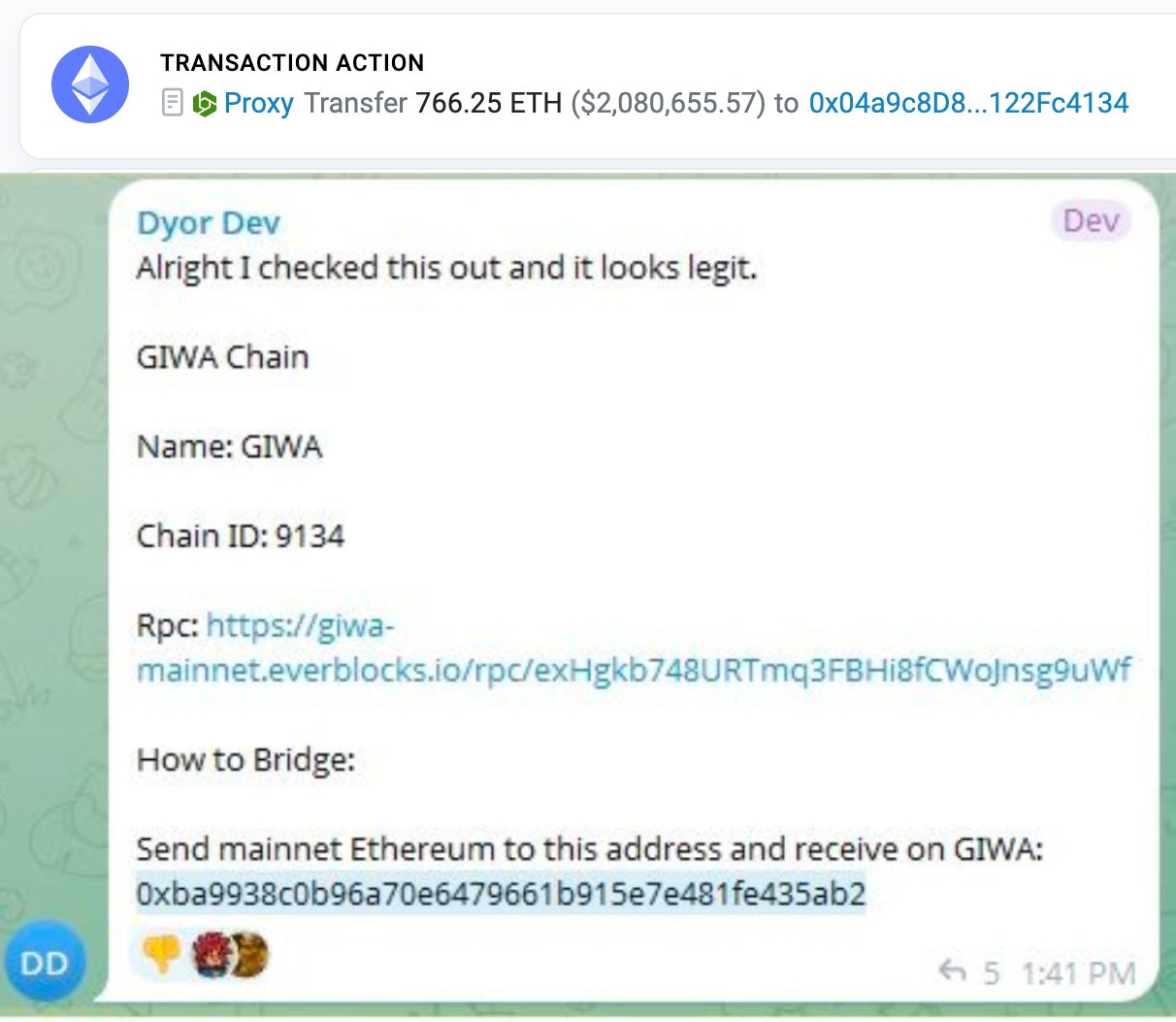
Fake GIWA mainnet RPC and bridge drain over $2M in suspected first fake-L2 scam
Security, Risk, and Governance on L2
Smart Contract and Bridge Risk
Security on L2s is a multi‑layered challenge. In addition to inheriting Ethereum’s base security, each L2 introduces its own smart contracts, proof systems, sequencer infrastructure, and bridge logic. Bugs or misconfigurations at any of these layers can lead to asset loss or prolonged downtime. Bridges are particularly sensitive, as they hold significant locked value and are attractive targets for attackers. While canonical L2 bridges benefit from robust audits and battle‑tested designs, newer or third‑party bridges may not have the same assurances, and even canonical bridges can be exposed to novel attack surfaces, especially during upgrades.
Migrating tokens or networks compounds these risks. The AERGO to HPP token swap and rebranding, handled automatically for holders on KuCoin, exemplifies how centralized exchanges can shield users from some of the complexity by managing swaps and ensuring that onchain contracts work as intended. However, users moving assets manually between L1 and L2 or across exchanges can still misroute funds or interact with malicious contracts. MEXC’s completion of the HPP migration, accompanied by warnings for traders to beware of L1/L2 transfer losses during the process, reinforces how human error and insufficient UX can lead to irrecoverable problems even in non‑exploit scenarios. These examples underline the importance of using official bridges, verifying contract addresses, and following documented migration paths.
The Ethereum community has recognized that L2 security demands dedicated research and funding. Initiatives like the Ethereum Security quadratic funding round, which allocates a 500 ETH matching pool to support projects focused on improving Ethereum and L2 security, signal a commitment to strengthening this layer of the stack. The round, with a total of around one million dollars in funding, invites applications from teams working on tools, audits, monitoring, and educational resources targeting both Ethereum and its rollup ecosystem. By funding defensive work, the community hopes to reduce systemic risks from bugs in rollup contracts, bridge logic, and proof systems, which could otherwise undermine confidence in L2s as a whole.
Oracles form another critical element in L2 security. Kraken’s Ink L2, for instance, relies on RedStone as its official oracle provider to supply price feeds and other data necessary for DeFi operations like lending and derivatives on the Tydro platform. Oracle manipulation has been a source of major exploits in DeFi, and any vulnerability or misconfiguration in oracle integration could lead to cascading failures even if the rollup itself works correctly. As L2s host more complex financial products, the interplay between oracles, rollup security, and Ethereum settlement becomes even more intricate.
Sequencer Censorship and Downtime
Centralized sequencers and upgrade authorities pose more subtle but equally important risks. When a single entity controls transaction ordering, it can, in principle, censor transactions, reorder them for profit (MEV extraction), or halt the chain. Many L2s mitigate these concerns by publishing clear policies, implementing monitoring tools, and committing to decentralization roadmaps, but until sequencers are meaningfully decentralized, users must accept some trust in operators. Outages or congestion in the sequencer infrastructure can translate into stalled dapps and delayed bridging, even if Ethereum itself remains fully operational.
The move toward Stage 2 rollups and decentralized sequencing aims to reduce these risks. The OP Stack’s fault‑proof and governance frameworks are designed to gradually move L2s from centralized, upgradeable systems to more permissionless ones where anyone can submit proofs and where sequencer roles are either open or subject to transparent rotation. Base’s Azul upgrade, as noted, seeks to satisfy core Stage 2 requirements by deploying an independent multiproof system, thereby reducing reliance on any single entity for correctness guarantees. Metal L2’s Karst upgrade likewise keeps it aligned with the latest OP Stack improvements, which likely includes enhancements to fault‑proof code and governance hooks. As these upgrades roll out, they should make it harder for sequencers to censor or halt networks without detection and remediation.
Nevertheless, until decentralized sequencing and proof submission are widely implemented and battle‑tested, L2 users must factor sequencer risk into their threat models. In extreme scenarios, even if Ethereum ultimately enforces correct final state, temporary censorship or halts can disrupt trading, cause liquidation cascades, or undermine confidence. Evaluating an L2’s sequencer architecture, fallback mechanisms, and decentralization roadmap is therefore as important as checking its fee levels and application ecosystem.
Governance, Tokens, and Community Debates
Governance on L2s encompasses protocol upgrades, parameter tuning, and allocation of revenue and incentives. Many L2s use governance tokens and DAOs to involve communities in decision‑making, although real power may reside in smaller multisigs or core teams, especially in early stages. Decisions about when to deploy new proof systems, how to structure revenue sharing (for example, between the L2 and Ethereum or between different chains in a federation), and how to allocate treasury funds can materially affect user experience and token value.
The Optimism Superchain provides a concrete example of federated governance. Chains that join the Superchain agree to route revenue through the Optimism Collective according to the Law of Chains, and to share security and upgrades via a common governance contract. This means that governance decisions on OP Mainnet or within the Collective can ripple outward to Base, World Chain, Zora, Mode, Unichain, and other members, making governance both a coordination boon and a source of potential contention. Similarly, Metal L2’s community voting on Upgrade 19 (“Karst”) illustrates how token holders can influence alignment with upstream OP Stack changes and the network’s own migration plans.
At a broader level, L2 governance interacts with Ethereum’s own governance and social consensus. The criticisms voiced by some community members—that Ethereum is losing talent and goodwill because the Ethereum Foundation prioritized ideology and the L2/Dencun roadmap over ETH tokenomics and the ultrasound money thesis—reflect deeper disagreements about priorities. Supporters of rapid L2 development see it as essential for Ethereum’s long‑term competitiveness and utility, while skeptics worry about dilution of ETH’s economic role and perceived neglect of simpler monetary narratives. These debates are likely to intensify as L2s capture more transaction flow and as cross‑chain ecosystems like the Superchain or Base’s AI integrations introduce new forms of power concentration and platform risk.
Beyond DeFi: L2s for AI, Advertising, and Real‑World Use
AI Agents and Onchain Execution
One of the more novel frontiers for L2s is their integration with AI agents and automation platforms. Coinbase’s Base MCP initiative exemplifies this trend: it enables users to link their Base accounts directly to AI platforms such as ChatGPT and Claude, allowing those agents to perform onchain interactions on the user’s behalf. In practice, this means a user could instruct an AI assistant to execute a trade, manage a DeFi position, or interact with an NFT contract, with the AI handling the transaction construction and submission via the Base network. L2’s low fees and fast confirmation times make such automated workflows practical in a way that would be prohibitively expensive on Ethereum L1.
This convergence raises new questions about security, consent, and UX. Users must define clear permission boundaries for AI agents—what contracts they can call, what spending limits apply, how they should handle errors—and protocols must design safe abstractions for agentic activity. Misconfigured or malicious agents could cause significant losses, and the asynchronous, probabilistic nature of blockchain execution complicates standard AI safety models. Nevertheless, the underlying logic is compelling: if smart contracts are programmable money, and AI agents are programmable decision‑makers, L2s provide the execution substrate where both can interact cheaply and at high frequency.
Advertising, Data, and Voter Targeting
The use of “L2” as a brand in non‑blockchain contexts, such as Nexxen and L2 Data’s VoterMatch, underscores the broader trend of data‑driven applications seeking greater precision and transparency. VoterMatch is described as a product that brings greater precision, transparency, and performance to political advertising, leveraging data to match messaging to voter segments more effectively. Although this L2 Data is not an Ethereum L2, its goals—enhanced transparency, accountability, and performance in a high‑stakes domain—mirror some of the ambitions of blockchain‑based systems.
It is easy to imagine future convergence points. Ethereum L2s could host transparent ledgers of political ad spending, enforce spending caps via smart contracts, or record cryptographic proofs of message delivery, while preserving voter privacy through zero‑knowledge techniques. ZK‑rollups like zkSync, which already highlight privacy and compliance features for institutional finance, could in principle support privacy‑preserving public-interest applications as well. However, these possibilities remain speculative, and the current VoterMatch implementation operates more in the realm of traditional data science and adtech than onchain governance. For crypto users, the key is not to conflate L2 as used in this context with Ethereum’s layer‑two networks, while recognizing thematic overlaps in concerns about transparency and trust.
DeFi, CEXs, and Consumer Apps
L2s also underpin an expanding array of real‑world and consumer‑facing applications beyond traditional DeFi. Kraken’s Ink L2 and its Tydro lending platform show how centralized exchanges are embedding onchain financial primitives into familiar interfaces. By leveraging Aave and RedStone on an L2, Kraken can offer yield‑bearing products, collateralized loans, and possibly other DeFi services with lower friction than asking users to manage external wallets and bridges. Similarly, stablecoin payment flows on L2s—such as Cash App enabling send and receive USDC on Arbitrum—demonstrate that everyday payments can be routed through rollups without users needing to understand the underlying architecture.
Consumer messaging and browsing apps, such as Status, are integrating L2s to deliver faster transaction confirmations and lower fees, enabling features like in‑app tipping, NFT interactions, and DAO participation to feel more like conventional web interactions. Gaming and social applications can exploit L2s’ speed to support in‑game economies, digital collectibles, and user‑generated content without incurring prohibitive costs. As more of these applications deploy across multiple L2s, cross‑network standards and UX conventions will become increasingly important, further blurring the lines between individual chains in users’ minds.
- 2022-09exploit
Profanity vanity-address tool vulnerability exposed; L2 DAI deployer compromised across all chains except Optimism and Arbitrum
- 2023-08exploit
$1.7M permanently lost in Shibarium L2 bridge at network launch
- 2023-11launch
Blast L2 announced with Paradigm and Standard Crypto backing, offering native ETH and stablecoin yield
- 2024-02launch
Frax launches Fraxtal L2
EIP-4844 (proto-danksharding / blobs) activates on Ethereum mainnet, reshaping L2 data-fee economics
- 2024-05launch
Taiko L2 mainnet launches with DEX, bridge, and gaming ecosystem live at launch
- 2024-08launch
Sony proposes Soneium L2 with Sony Bank JPY stablecoin integration
Unichain mainnet goes live as a Superchain L2, targeting cross-chain DeFi liquidity consolidation
How to Evaluate an L2
For users and builders, evaluating an L2 involves more than just checking current gas fees or the number of live dapps. Security, decentralization, governance, ecosystem maturity, and roadmap credibility all matter. On the security front, one should ask whether the L2 is a true rollup with data published on Ethereum, or whether it relies on external data availability solutions that introduce additional trust. Understanding the proof system—optimistic with fraud proofs, ZK with validity proofs, or hybrids like Base’s multiproof Azul design—helps in assessing both correctness guarantees and withdrawal latency.
Lifecycle and upgrade risk are equally critical. The Polygon zkEVM sunset demonstrates that even well‑known teams may deprecate L2s launched in beta, requiring users to follow carefully choreographed withdrawal processes and adhere to deadlines, such as the December 31, 2027 cutoff for claiming assets in Polygon’s case. Similarly, token migrations like AERGO to HPP highlight how protocol rebranding and L2 launches can expose users to bridge risks and UX pitfalls, especially when multiple exchanges and contracts are involved. Evaluating an L2 means examining not only its current status but also its history of communication, support for previous migrations, and clarity around potential sunsets.
Roadmaps and governance structures matter too. L2s that regularly ship upgrades—such as Base’s Azul and Beryl, Starknet’s 0.14.3, and Metal’s Karst—demonstrate active development and responsiveness to user needs, but they also require robust governance and upgrade processes to avoid introducing regressions. The presence of transparent governance (for instance, community voting on Metal L2’s upgrades) and clear documentation can be a positive signal. In federated ecosystems like the Optimism Superchain, the interplay between local and collective governance should be considered: joining the Superchain brings benefits in terms of security and revenue sharing but also binds the L2 to broader policy decisions.
Finally, ecosystem integrations, especially for DeFi, are a key indicator of maturity. Networks that attract major protocols like Aave, Chainlink, and established oracle providers such as RedStone, and that integrate with analytics platforms and major wallets, are more likely to offer resilient infrastructure and risk frameworks. Conversely, thin ecosystems with limited tooling, few audits, or poor observability may expose users to greater operational risk even if their raw fee metrics look attractive. As the L2 sector matures and rotations in market attention continue, frameworks and dashboards for comparing L2s on these dimensions will become increasingly important for informed participation.
Outlook
L2s have moved from experimental scaling hacks to core infrastructure for Ethereum and, by extension, for a significant share of the crypto economy. Rollups like Arbitrum, Optimism, and Base now host deep DeFi liquidity and mainstream payment rails, while ZK‑rollups such as Starknet and zkSync explore both grassroots developer ecosystems and institutional financial rails. Shared stacks like the OP Stack and federations like the Optimism Superchain are pushing the ecosystem toward standardization, enabling rapid L2 launches while layering on complex governance and revenue‑sharing arrangements. At the same time, high‑profile sunsets like Polygon zkEVM’s sequencer shutdown remind users that not all L2s are permanent, and that migration and bridge risks must be managed proactively.
Over the coming years, several trends are likely to shape the L2 landscape. First, competition and consolidation will intensify: not every L2 will achieve critical mass, and some may merge, pivot, or wind down, while a handful of dominant platforms capture most liquidity and users. Second, decentralization of sequencers and proof systems will advance, with more L2s achieving Stage 2‑level guarantees and experimenting with shared or decentralized sequencing. Third, new use cases—agentic AI execution, privacy‑preserving finance, localized or sector‑specific chains—will test how flexible and inclusive the L2 model can be. Finally, debates over ETH tokenomics, governance, and the appropriate balance between L1 minimalism and L2 experimentation will continue, influencing both protocol design and market narratives.
For crypto users and observers, the key is to understand L2s not as a single homogeneous category but as a spectrum of architectures and ecosystems, all anchored to Ethereum yet differentiated by security models, governance, and target use cases. The programmable economy is increasingly an L2 economy, and the networks that manage to combine robust security, low fees, vibrant ecosystems, and credible governance are likely to define the next chapter of onchain finance and applications.
Latest L2 news
Sources
19 records from 13 domains
youtube.com
coinbureau.com
blog.base.dev
crowdfundinsider.com
aave.com
x.com
zksync.io
chain.link
eco.com
polygon.technology
kucoin.com
ethdaily.io
blog.redstone.finance
Community notes
Spot something off or out of date? Drop a note. Editors review topic notes daily and roll accepted fixes into the explainer — contributors are recognized in the monthly $SQUID drop.
Loading notes…
Help improve this topic
Have a story or tip about this topic? Submit it. See something missing? Leave a note. Editors review daily; accepted submissions and fixes count toward the monthly $SQUID drop.