
Comprehensive explainer on OP, the governance token behind OP Mainnet and the OP Stack Superchain. Covers technology, tokenomics, governance, TVL, institutional use, reserved blockspace, stake-based ordering, and long-term outlook.
+94 sources across the wider coverage universe
 OP Mainnet logs largest TVL surge in history as Etherfi migrates $200M, bringing 70K cards and 300K users to Optimism to scale real-world crypto payments2026-04
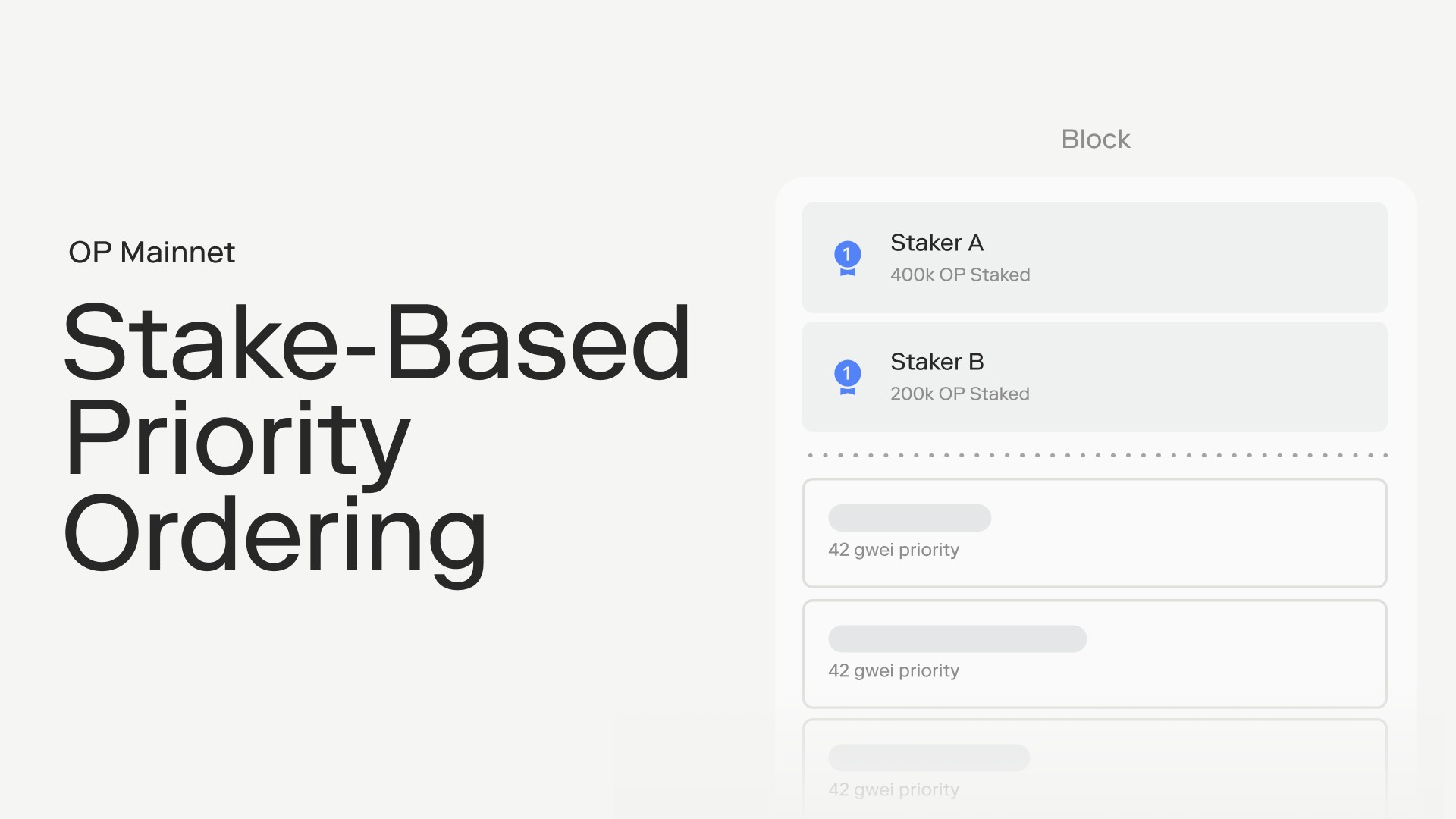 Optimism launches stake-based transaction ordering on OP Mainnet, with 100,000 OP staked unlocking priority block access2026-04
 Mitsui launches yield-bearing Zipangcoin on OP Mainnet, backed by physical gold, silver, and platinum2026-04
 EtherFi proposes Aave V4 hub on OP Mainnet for EtherFi Cash with up to $175M in assets and 20% DAO revenue share2026-07
 Curve deploys Llamalend v2 on Optimism with a 250K OP grant, expanding lending beyond crvUSD pairs and enabling LP tokens as collateral2026-06
 Base, Optimism, Coinbase and WalletConnect launch Native Account Abstraction (EIP-8130), cutting transaction costs by over 2x and bringing smarter wallets to EVM chains2026-07
OP (Optimism) Token and OP Mainnet: An Evergreen Guide
The OP token is the native governance asset of the Optimism Collective and OP Mainnet, a leading Ethereum Layer 2 network that uses optimistic rollups and the OP Stack to deliver cheaper, faster transactions while inheriting Ethereum’s security. As the coordination and incentive layer for a growing “Superchain” of OP Stack rollups, OP sits at the intersection of Ethereum scaling, protocol governance, onchain finance, and institutional adoption.
Origins of Optimism, OP Mainnet and the OP Token
Optimism emerged from a simple but pressing problem: Ethereum’s base layer, while secure and decentralized, struggles to process high volumes of transactions at low cost when demand spikes. Developers working on Optimism set out to build a scaling solution that would extend Ethereum’s security guarantees while offloading most computation and data handling to a secondary layer. The result was a Layer 2 network based on optimistic rollups, where transactions are executed off-chain on a separate chain but periodically batched and committed to Ethereum. This architecture allows Optimism to offer Ethereum-like functionality—smart contracts, DeFi, NFTs—at significantly lower fees and with higher throughput, without requiring users or developers to abandon Ethereum’s tooling and security model.
Over time, the project that users initially knew simply as “Optimism” evolved into what is now formally called OP Mainnet, reflecting its role as the flagship chain in a broader OP Stack and Superchain ecosystem. OP Mainnet remains a Layer 2 rollup that posts its transaction data to Ethereum and relies on Ethereum for finality, but it is no longer envisioned as a standalone network in isolation. Instead, it is one hub in a network of OP Stack-based chains that share similar architecture and potentially tighter interoperability. This conceptual shift from a single L2 to a family of aligned chains has important implications for the OP token, which increasingly serves as a governance and coordination asset not only for OP Mainnet but for the wider Superchain vision.
The OP token itself was introduced as part of this broader governance and ecosystem strategy. It is an ERC‑20 token with an initial total supply of 4,294,967,296 OP and a defined inflation rate of 2% per year. Unlike a pure utility token designed primarily for paying gas or fees, OP is explicitly framed as the governance token of the Optimism Collective, used to steer protocol development, allocate ecosystem incentives, and guide the evolution of the OP Stack. Over time, circulating supply has grown to more than 2.15 billion OP, reflecting token unlocks and distributions, while the total supply remains capped at the initial 4.29 billion plus the scheduled inflation.
From the outset, the project emphasized open-source values and alignment with Ethereum’s roadmap. OP Mainnet’s codebase is MIT-licensed and designed for EVM equivalence, meaning that contracts and tooling that work on Ethereum typically work on OP Mainnet with minimal modification. This EVM-equivalent design, combined with Optimism’s role in funding Ethereum-aligned public goods, helped attract an early community of builders and users who saw OP not just as another token, but as an instrument for scaling Ethereum in a way that remained true to its ethos.

KB Securities partners with Optimism and Securitize to bring tokenized bonds to OP Mainnet
OP Mainnet Technology: How the Layer 2 Works
At its core, OP Mainnet is a rollup: a separate blockchain that executes transactions off of Ethereum, rolls them up into batches, and posts compressed transaction data back to Ethereum for security and finality. In an optimistic rollup, the default assumption is that all batched transactions are valid unless someone proves otherwise. This is the “optimistic” part of Optimism’s design: the system favors fast execution and cheap verification, while allowing for dispute resolution via fraud proofs if a malicious or incorrect batch slips through.
When a user submits a transaction on OP Mainnet, it is first received by the Layer 2 sequencer, which orders transactions and produces blocks on the L2 chain. These transactions are executed off-chain according to Ethereum’s state transition rules, since OP Mainnet aims for full EVM equivalence. The sequencer creates blocks much like a Layer 1 miner or validator would, but without having to contend with the limited blockspace and higher costs of Ethereum mainnet. This yields a smoother user experience, with low latency and predictable inclusion in most normal conditions.
Periodically, the sequencer bundles a large number of L2 transactions, compresses the data, and submits this batch to Ethereum as a single transaction. That batch contains sufficient information for anyone to reconstruct the L2 state and verify the correctness of the sequencer’s computations. Once the batch is posted, a challenge period (commonly on the order of seven days) begins. During this window, any participant can submit a fraud proof if they detect that the sequencer has included invalid state transitions. If the fraud proof is correct, the offending batch is reverted and the sequencer can be penalized, ensuring economic alignment with honest behavior.
This architecture has three broad consequences that help explain OP Mainnet’s role in the ecosystem. First, it enables substantially lower fees: instead of paying for individual transactions on Ethereum, users effectively share the cost of a single batch, resulting in per-transaction fees that can be an order of magnitude cheaper than L1. Second, it preserves Ethereum’s security model and data availability, since all L2 transaction data is ultimately posted to Ethereum, and anyone can verify or reconstruct the chain state from L1 data. Third, it retains compatibility with Ethereum tooling and contracts, reducing friction for developers and users migrating from mainnet. These attributes are key to Optimism’s positioning as a pragmatic, Ethereum-aligned scaling solution rather than an independent competing smart-contract platform.
Transaction Lifecycle and Fraud-Proof Model
The transaction lifecycle on OP Mainnet can be broken into several stages that illustrate how the optimistic design works in practice. When a user submits a transaction using an OP-compatible wallet or dapp, it is first validated locally and then transmitted to the OP Mainnet sequencer, which plays a similar role to a block builder on Ethereum but with centralized control in the current design. The sequencer maintains a transaction mempool, orders transactions, and assembles them into L2 blocks, generally prioritizing based on gas price and other policy rules.
Once an L2 block is produced, the new state is immediately visible to users and dapps connected to OP Mainnet nodes. From a user’s perspective, the transaction appears “confirmed” as soon as it is included in an L2 block, typically within a second or two. However, this confirmation is economic and probabilistic rather than final, because the corresponding batch has not yet been posted to Ethereum and the challenge period has not elapsed. For most everyday use cases, such as swapping tokens on a decentralized exchange or interacting with DeFi protocols, users treat L2 confirmations as effectively final due to the high cost and low likelihood of fraud proofs being triggered.
The sequencer periodically aggregates many L2 blocks into a batch and posts the batch’s data to Ethereum via a special contract that tracks the L2 chain. This Ethereum transaction records a compressed representation of the L2 transaction data and state roots, ensuring that the data is available on-chain for anyone to reconstruct and verify. From this point forward, the batch is subject to a challenge window during which any party can submit a fraud proof if they believe the batch contains invalid transactions or incorrect state transitions. Fraud proofs typically involve re-executing the disputed segment of the chain and demonstrating a divergence between the sequencer’s claimed state and the correct EVM execution.
If a fraud proof succeeds, Ethereum’s rollup contracts can revert the offending batch and any dependent L2 state changes, rolling the state back to the last known-good root. This process can be complex and disruptive, but its mere existence is meant to dissuade sequencer misbehavior by raising the economic cost of fraud. If no valid fraud proof is submitted within the challenge window, the batch is considered finalized, and the L2 state becomes economically anchored to Ethereum. At that point, users can safely withdraw assets from OP Mainnet back to Ethereum, knowing that their balances reflect finalized state.
In practice, optimistic rollups like OP Mainnet are gradually moving toward more decentralized and robust fraud-proof systems, with multiple independent actors capable of monitoring, challenging, and proposing state updates. The OP Stack’s architecture is designed to accommodate these improvements over time, allowing OP Mainnet and other OP Stack chains to evolve their fault-proof infrastructure without sacrificing compatibility. This evolution is particularly relevant as OP Stack chains increasingly power institutional and high-value applications, where assumptions about trust and fault tolerance are scrutinized more closely.
OP Stack, Superchain and Architectural Modularity
The OP Stack is the modular, open-source framework that underpins OP Mainnet and a growing family of other Layer 2 chains. It provides standardized components for execution, settlement, data availability, and governance, enabling different projects to launch their own OP Stack-based chains with varying configurations while sharing a common codebase and ecosystem. In this sense, the OP Stack plays a similar role for Ethereum rollups that frameworks like the Cosmos SDK or Substrate play for their respective ecosystems, but with a deliberate focus on Ethereum alignment and EVM equivalence.
OP Mainnet is the canonical example of an OP Stack chain, but it is not alone. Base, a Layer 2 developed with Coinbase, is described as a secure, low-cost, builder-friendly chain built on the Superchain and powered by the OP Stack. The Superchain concept refers to a network of closely aligned OP Stack chains that share technology, potentially coordinate on governance, and benefit from common standards around security, interoperability, and upgrades. In this model, OP Mainnet is one chain in a constellation that also includes other public L2s and, increasingly, institutional or enterprise-focused rollups.
This modular approach has real-world consequences for how upgrades and experiments are deployed. Because OP Stack chains share core components, improvements made for OP Mainnet—such as new fault-proof systems, block-building strategies, or governance hooks—can often be adopted by other chains with relatively modest integration work. Conversely, requirements from institutional partners or specialized rollups can flow back into the OP Stack roadmap, influencing the evolution of the shared framework. The OP token, as the governance and incentive asset for the Optimism Collective, becomes a key coordination tool in this multi-chain setting.
Readers click OP for token distribution mechanics — who controls the flow of OP tokens (Foundation sales, VC allocations, L2 incentive grants) matters more to them than price or yield, revealing that trust in Optimism's governance is the real product being evaluated.
Reserved Blockspace and Stake-Based Transaction Ordering
One of the most notable recent developments on OP Mainnet is the introduction of reserved blockspace, a block-building framework that allows an OP Stack chain to set aside a configurable share of each block for specific classes of transactions. In a standard Ethereum-style block, all transactions compete for inclusion based primarily on the gas price or priority fee they are willing to pay, which can lead to congestion and unpredictable latency for time-sensitive applications. Reserved blockspace modifies this by splitting each block into tiers. A Reserved tier sits at the top of the block and can consume up to a configurable percentage of the block’s gas, but it is open only to transactions that meet an eligibility rule set by the chain operator or governance. Below it, a General tier operates much like a normal block, open to all transactions ordered by priority fee.
The goal of this design is to give latency-sensitive or critical transactions a more predictable path to inclusion under congestion, without permanently wasting blockspace when demand is low. When there are few eligible transactions for the Reserved tier, unused gas capacity spills down into the General tier, so blocks remain fully utilized and overall throughput is not sacrificed. Conversely, when demand from eligible transactions is high, the Reserved tier provides a protected lane where those transactions can be included with more deterministic latency, as long as they satisfy the eligibility rule and stay within the configured gas cap. This is particularly relevant for applications like real-world payments, high-frequency DeFi strategies, or infrastructure protocols that require timely updates.
Reserved blockspace on OP Mainnet is closely tied to another experiment: stake-based transaction ordering. In this model, participants can stake OP into an audited smart contract, such as PolicyEngineStaking, in order to receive preferential access to the top of each block for their transactions. Instead of relying solely on gas price to determine transaction ordering, the sequencer consults the stake-based policy engine, which prioritizes transactions from stakers according to a defined rule. The initial rollout includes a flat first-in-first-out (FIFO) tier, evolving toward a stake-weighted multiplier model where higher OP stakes can translate into stronger prioritization, within configured limits.
By integrating stake-based ordering with reserved blockspace, OP Mainnet effectively creates a new class of “service-level agreements” for blockspace, where entities willing to stake OP can secure more predictable transaction inclusion even during periods of network stress. This is an important shift from purely fee-based prioritization and illustrates how OP’s token economics and protocol design can intertwine. It also raises complex questions about fairness, MEV (miner or maximal extractable value), and market structure: while some users gain more predictable service by staking OP, others remain in the General tier and rely on fees to compete for block inclusion. Over time, governance will need to evaluate how these mechanisms affect user experience, decentralization, and the distribution of power among different types of network participants.
From an evergreen perspective, reserved blockspace and stake-based ordering are best understood as experiments in programmable blockspace markets. They exemplify how Layer 2 networks like OP Mainnet can iterate on block-building rules more quickly than Ethereum itself, while still inheriting Ethereum’s security and settlement. If successful, such mechanisms could become templates for other OP Stack chains and even influence future L1 or cross-rollup designs.
OP Token Basics: Supply, Inflation and Market Profile
The OP token is an ERC‑20 asset with a clearly specified initial supply and inflation schedule. The initial supply was set at 4,294,967,296 OP, with an annual inflation rate of 2%. According to token tracking and analytics, the circulating supply has grown to over 2.15 billion OP, reflecting the gradual unlocking of allocations to community members, ecosystem funds, and other stakeholders, while the total supply remains fixed at the initial cap, subject only to the programmed inflation. OP’s design thus combines a large initial issuance with modest ongoing inflation, contrasting with some Ethereum L2 tokens that rely solely on a fixed supply or more aggressive emissions.
In terms of market presence, OP is widely listed on major centralized exchanges, including Binance, Coinbase, Huobi, KuCoin, Gate.io, Bybit and others. This breadth of listing enhances liquidity and accessibility, making it relatively straightforward for both retail and institutional participants to acquire or dispose of OP. On-chain, OP trades on decentralized exchanges deployed to OP Mainnet and other EVM chains, benefiting from Optimism’s low fees and increasing DeFi infrastructure. OP is also integrated into cross-network routing tools and SDKs such as SODAX, where it is listed alongside wrapped bitcoin liquidity on Optimism, making it accessible to users across multiple integrated networks and adding another layer to its liquidity profile.
The token’s price history, like that of most cryptoassets, is volatile and driven by a combination of factors including broader market conditions, Layer 2 competition, protocol-specific developments, and the perceived value of OP’s governance and incentive functions. While specific price points change over time, OP’s role as a governance token and coordination asset remains central to its long-term thesis. Market participants typically evaluate OP not only on speculative grounds but also on how effectively the Optimism Collective uses the token to grow the OP Stack ecosystem, allocate incentives, and align stakeholders.
A concise way to capture OP’s monetary characteristics is through a simple comparative table. The following table illustrates some core metrics that tend to remain stable over time, derived from on-chain and market data providers:
| Metric | Value / Description |
|---|---|
| Initial total supply | 4,294,967,296 OP |
| Inflation rate | 2% annually |
| Current circulating supply | ≈2,159,485,520 OP (subject to change over time) |
| Maximum supply (excluding inf.) | 4,294,967,296 OP (initial design cap) |
| Primary role | Governance token of the Optimism Collective and OP Mainnet ecosystem |
| Exchange availability | Listed on major CEXs such as Binance, Coinbase, KuCoin, Gate.io, Huobi, Bybit etc. |
These metrics do not by themselves determine OP’s value, but they frame the token’s economic parameters and help contextualize discussions about future utility, governance rights, and potential adjustments to emissions or usage.
- 01Foundation token sales and control↗
The top-clicked headline (Foundation selling 119M tokens) and the a16z private sale piece show readers scrutinizing whether the Optimism Foundation allocates tokens to insiders versus the broader community.
- 02OP Stack ecosystem expansion↗
Headlines on Mode, Kraken's Inkonchain, World Chain, BNBChain, Bitpanda, and Superchain L3 support show readers tracking how many chains are adopting OP Stack as a competitive moat measure.
- 03Fault proofs launch and vulnerabilities↗
Two separate 190-click stories — the multi-year Fault Proofs rewrite and the immediate disclosure of serious vulnerabilities in them — show readers followed this as both a technical milestone and a live security risk.
- 04L2 TVL competition and rankings↗
Readers engaged with Optimism's second-place TVL position behind Arbitrum as a scorecard, with EtherFi's $200M migration later reinforcing that rankings are contested in real time.
- 05Governance disputes over OP allocation↗
The community split over 30M OP going to VC-backed projects versus non-funded contributors crystallized reader concern that Optimism's stated decentralization ethos conflicts with its actual distribution choices.
- 06DeFi protocol incentives on Optimism↗
Curve OP distributions and Clearpool's undercollateralized lending launch on Optimism attracted readers watching how token incentives bootstrap DeFi liquidity on the network.
Governance Tokens and the Optimism Collective
OP is best understood as a governance token, a type of cryptocurrency that allows holders to participate in the decision-making process of a blockchain project. Governance tokens grant voting rights over key protocol parameters, treasury allocations, upgrade proposals, and sometimes broader ecosystem initiatives. At a basic level, each governance token often corresponds to one vote, though variations exist, including delegated voting or quadratic schemes. Governance tokens are especially common in DeFi protocols and DAOs, where they are used to decentralize control and align incentives among users, developers, and investors.
The Optimism Collective uses OP to coordinate governance over OP Mainnet, the OP Stack roadmap, and ecosystem funding programs. Holders can vote—directly or via delegates—on proposals that affect everything from technical upgrades, such as sequencer configurations and fault-proof systems, to economic policies like incentive programs and grant allocations. The existence of OP-funded grants is evident in recent initiatives such as the 250,000 OP token grant supporting upgrades like Curve’s Llamalend v2 deployment on Optimism, which expands lending beyond crvUSD pairs and enables LP tokens as collateral. These types of grants are designed to attract high-quality protocols and deepen OP Mainnet’s DeFi stack, while also distributing OP into the hands of active ecosystem participants.
Governance tokens differ from pure utility tokens in that their primary explicit function is to confer decision-making power rather than access to a service. For Optimism, this distinction has been both a strength and a source of debate. On one hand, OP’s governance focus aligns with the project’s ethos of collective decision-making and long-term protocol stewardship. On the other, some community members have expressed concern that OP’s role is too narrowly confined to governance, with insufficient direct economic utility tied to protocol usage. This tension is visible in governance forum posts that explicitly call for “real utility for OP—something beyond governance,” suggesting mechanisms such as staking, fee sharing, or deeper integration into the core economic activity of the network.
The Optimism Collective has begun to experiment with such mechanisms. Stake-based transaction ordering on OP Mainnet, for instance, gives OP holders the ability to stake their tokens in return for priority blockspace access, directly tying OP ownership to a concrete network-level service. While this does not yet represent a complete overhaul of OP’s utility model, it signals a willingness to embed OP more deeply into the functioning of the network, blurring the line between pure governance token and an asset that secures or prioritizes access to critical infrastructure. The long-term equilibrium between governance-based and utility-based demand for OP remains an open question that governance itself will likely revisit.
Using OP Mainnet: DeFi, NFTs and Real-World Payments
For everyday users and developers, OP Mainnet offers an environment where the core Ethereum experience—transferring ETH, interacting with DeFi protocols, trading on DEXes, minting NFTs—can be replicated at significantly lower cost. Because OP Mainnet is EVM-equivalent, developers can deploy existing Ethereum smart contracts with minimal changes, and users can connect using familiar wallets. Coinbase describes Optimism as an extension to Ethereum that enables users and developers to benefit from Ethereum’s security while being cheaper and faster, noting that Optimism allows users to interact with DeFi applications, buy and sell tokens, and mint or trade NFTs at roughly one-tenth the cost of doing so on mainnet under typical conditions.
Fee comparisons highlight this cost differential. As of early May 2026, fee tracking services listed OP Mainnet at around 0.09 USD to send ETH and 0.18 USD to swap tokens, compared with approximately 1.10 USD and 5.48 USD respectively on Ethereum mainnet, though these figures fluctuate with network conditions. This difference can be summarized as follows:
| Action | Typical fee on OP Mainnet | Typical fee on Ethereum mainnet |
|---|---|---|
| Send ETH | ≈$0.09 | ≈$1.10 |
| Swap tokens via DEX | ≈$0.18 | ≈$5.48 |
Lower fees materially change which use cases are viable. On OP Mainnet, micro-sized DeFi positions, frequent rebalancing, and low-value NFT trades become economically feasible, whereas on mainnet they might be consumed entirely by gas costs. This has helped OP Mainnet attract a broad set of DeFi protocols. CoinMarketCap notes that Optimism is home to dozens of protocols, including major projects such as Synthetix, a derivatives platform; Uniswap, a leading decentralized exchange; and Velodrome, a specialized automated market maker, among many others.
OP Mainnet is also increasingly relevant for real-world payments and onchain finance infrastructure. A prominent example is Ether.fi’s migration of more than 200 million USD in TVL, 70,000 active crypto payment cards, and 300,000 accounts to OP Mainnet. This migration has been described as the largest single TVL event in OP Mainnet’s history, and it effectively brings a large base of day-to-day payment activity onto the network. With Ether.fi’s cards now settling on OP Mainnet, a significant volume of merchant and consumer transactions may flow through the rollup, testing its capacity to handle consistent, real-world payment flows while maintaining low fees and reliable performance.
Other real-world and institutional use cases are emerging as well. Institutional asset managers and enterprises are experimenting with issuing structured products, tokenized commodities, and yield-bearing vaults on OP Mainnet, exemplified by initiatives such as Mitsui’s Zipangcoin—an asset backed by physical gold, silver, and platinum—and euro-denominated liquid vault strategies deploying on the chain. These developments align with a broader trend where OP Mainnet is positioned not just as a retail DeFi playground, but as a piece of core onchain finance infrastructure capable of handling compliant, institutionally-oriented products alongside open DeFi.
The common thread across these applications is OP Mainnet’s ability to provide a low-cost, EVM-compatible environment that inherits Ethereum’s security guarantees. For end users, the main difference between interacting with Ethereum and OP Mainnet is the network setting in their wallet and the gas price they see; for developers, the main difference is the deployment endpoint and the need to consider cross-chain liquidity and bridges. In the background, OP’s governance and incentive structure aims to ensure that OP Mainnet continues to evolve in ways that support these diverse use cases.
Optimism mainnet launched
OP governance token launched via airdrop
OP Stack open-sourced; Superchain vision announced
Delta hardfork cuts fees across OP Stack chains
Fault Proofs deployed to OP Mainnet after full system rewrite
Two serious Fault Proofs vulnerabilities publicly disclosed
Superchain gains Layer 3 chain support via OP Stack
OP Foundation sells 119M tokens; a16z buys $90M in private sale
Accessing OP and Bridging to OP Mainnet
Acquiring OP is straightforward due to its presence on major exchanges and support in popular wallets. Users can purchase OP directly on centralized exchanges such as Coinbase, then withdraw it to an EVM-compatible wallet or bridge it to OP Mainnet. Coinbase explicitly notes that the OP token is used for governance and can be bought or sold through its platform, reflecting its status as a mainstream, exchange-listed asset. Once in a self-custodial wallet, OP can participate in governance, be staked in experiments like stake-based ordering, or be used within DeFi protocols on OP Mainnet.
Bridging funds to OP Mainnet can be done in several ways, including direct Layer 1 to Layer 2 transfers and cross-chain bridges through other networks. One common pattern involves using Coinbase Wallet or a similar self-custodial wallet to move assets from a Coinbase account onto OP Mainnet. Coinbase describes a process in which users select an asset to send from their Coinbase account, specify a recipient address in their Coinbase Wallet, and critically set the network to “Optimism” instead of Ethereum before confirming the transaction. This ensures the assets arrive on OP Mainnet rather than L1.
Alternatively, users can bridge assets from Ethereum mainnet using the official Optimism Bridge. Within Coinbase Wallet’s browser, for instance, users can navigate to the Optimism Bridge interface, specify the amount of ETH or tokens to deposit, and confirm a bridging transaction from Ethereum to OP Mainnet. The bridge then locks or escrows the asset on L1 and credits the corresponding representation on L2 after the transaction is confirmed, a process that can take several minutes as Ethereum block confirmations and batching workflows proceed. Once funds arrive on OP Mainnet, users can interact with dapps much as they would on Ethereum, but with lower costs.
Because OP Mainnet is EVM-equivalent, a user’s Ethereum address doubles as their OP Mainnet address, simplifying UX. When transferring assets already on the Optimism network from another wallet, a user can simply copy their Ethereum/Optimism address from Coinbase Wallet or another compatible wallet and paste it into the sender’s interface, again ensuring that the network is set to Optimism. This shared addressing scheme is a subtle but important factor in reducing cognitive overhead for users, especially those juggling multiple Layer 2 networks and sidechains.
As OP Mainnet becomes more enmeshed in a multi-chain environment, routing and bridge risk become important considerations. Cross-network liquidity tools such as SODAX now support trading OP and WBTC on Optimism from across more than a dozen integrated networks, streamlining access while also introducing new risk surfaces around bridge security and liquidity fragmentation. For long-term users, best practice involves understanding which bridges and routing protocols they rely on, the trust assumptions each one entails, and how those assumptions interact with OP Mainnet’s own security model anchored in Ethereum.
Institutional Thesis, OP Stack Adoption and Onchain Finance
A notable narrative around the OP ecosystem in recent years has been the institutional thesis: the idea that OP Stack chains, including OP Mainnet, will serve as key infrastructure for institutional onchain finance. This thesis received an implicit endorsement when research firms like FalconX and Messari independently analyzed the OP Stack and concluded that the institutional infrastructure thesis is working, noting that OP Stack chains processed over 40% of all Layer 2 activity in the first quarter of 2026. While these analyses are subject to revision as the landscape evolves, they underscore the scale and relevance of the OP Stack in the broader L2 market.
OP Stack’s appeal to institutions lies partly in its modularity and the ability to launch custom rollups with tailored compliance, privacy, and performance characteristics, while still integrating with Ethereum and the Superchain. Enterprise-focused chains such as Bitpanda’s Vision Chain, aimed at European institutional DeFi, and Dunamu’s GIWA Chain, associated with Upbit, have chosen OP Enterprise as the foundation for their infrastructure, further validating this use case. These chains benefit from the shared development of the OP Stack and can coordinate upgrades with OP Mainnet, contributing to a network effect that is both technical and governance-driven.
At the same time, existing crypto projects are migrating from more siloed architectures to OP Stack-based L2s. Ronin, originally launched as a gaming sidechain, is transitioning to an Ethereum Layer 2 based on the OP Stack, ending its operation as a standalone sidechain in favor of inheriting Ethereum’s security model. In a related vein, Horizen has evolved into an OP Stack blockchain on Base, coupling compliant privacy infrastructure and confidential compute with EVM composability. These moves highlight how projects originally designed as independent chains or sidechains are converging on a rollup-centric model, with OP Stack as a leading implementation.
Celo’s upgrade of its OP-Succinct Lite implementation on mainnet to use SP1 Hypercube for fault proofs, targeting significantly lower proof latency and cost, illustrates another dimension of OP Stack’s institutional and technical trajectory. While Celo’s stack emphasizes zk-based fault proofs and distinct cryptographic primitives, its collaboration with OP-stack-aligned components reflects a broader pattern: institutions and advanced projects gravitating toward shared, extensible rollup frameworks that can integrate cutting-edge proving systems.
In aggregate, these developments portray OP and the OP Stack not just as one more scaling solution, but as a platform for platforms: a base that institutions, enterprises, and projects can build on, with OP governance and incentives providing the connective tissue among an increasingly diverse set of chains. This multi-chain, institutional-facing role is central to the long-term thesis for OP’s value accrual and governance importance.
Two serious vulnerabilities were disclosed in OP Stack's Fault Proofs system shortly after their mainnet release, exposing the bridging security model to real exploit risk.
The Optimism Foundation unilaterally sold 119M tokens and allocated 25M to Kraken for L2 selection, demonstrating that token distribution remains heavily Foundation-controlled despite a stated bicameral governance model.
Community opposition to VC-favored OP allocations and layoffs at OP Labs signal internal tension between growth-at-all-costs incentives and the public goods mission the protocol was founded on.
OP Mainnet holds roughly $7.88B TVL versus Arbitrum's $19.3B, and its position is contested by Base (also OP Stack), meaning ecosystem growth does not automatically accrue to the OP token or mainnet.
OP was listed among August unlocks exceeding $900M collectively, and ongoing Foundation sales add persistent sell-side pressure independent of market conditions.
OP's governance token structure and its use as a grant/incentive instrument rather than a yield-bearing security has so far avoided direct regulatory action, though token sales by the Foundation could attract scrutiny.
Token Utility, Community Concerns and Economic Debates
Despite OP’s centrality to governance and experimentation, the token’s economic utility has been a source of debate within the community. On the Optimism governance forum, a widely read post titled “Is Optimism Dying? A Long-Time Supporter’s Concerns” crystallized several worries: persistent sell pressure from token emissions and grants, a perception that OP lacks compelling utility beyond governance, and anxiety that the ecosystem might not sustain long-term growth without stronger demand drivers for the token. The author and respondents called for clearer pathways to “real utility” for OP, such as staking mechanisms, revenue or fee sharing, or deeper integration into network-level operations.
At a conceptual level, these concerns reflect broader challenges faced by governance tokens. While governance rights have intrinsic value for some stakeholders, especially those with strategic or ideological commitments to a protocol, the market often demands more tangible or cash-flow-like features to justify long-term holding. Without such features, governance tokens can be susceptible to downward price pressure if large allocations are distributed as incentives without corresponding increases in organic demand. OP is not unique in this regard; many DeFi and DAO tokens face similar questions. However, the stakes are higher given OP’s role in coordinating a multi-chain ecosystem and funding public goods.
Optimism’s recent technical experiments can be interpreted in part as responses to these debates. Stake-based transaction ordering directly ties OP ownership and staking to a valuable network service—priority blockspace—creating a potential source of non-speculative demand from users and infrastructure providers that need low-latency, predictable inclusion. Reserved blockspace, when used in conjunction with OP-based eligibility criteria, can further embed the token into block-building policy. Over time, these mechanisms might evolve into a more comprehensive token utility model, potentially including revenue sharing, safety staking, or other arrangements that link OP holding with protocol-level rewards or responsibilities.
At the same time, OP’s extensive use in grant programs and ecosystem incentives represents a double-edged sword. On one hand, grants like the 250,000 OP subsidy for Llamalend v2, as well as various liquidity mining and builder incentives, have played real roles in seeding OP Mainnet’s DeFi ecosystem and attracting marquee applications. On the other, each grant increases circulating supply and may contribute to sell pressure if recipients liquidate a portion of their tokens. The governance challenge is to calibrate incentive programs so that the long-term value of the network and the token—in the form of additional users, TVL, and applications—outweighs the short-term dilution and potential price impact.
This debate is unlikely to resolve quickly, and it is an essential part of OP’s maturation as an asset. For long-term observers, the key question is whether OP governance can iteratively refine token utility and incentive structures to create a self-reinforcing loop where OP’s role in securing, governing, and accessing the OP Stack ecosystem justifies sustained demand, even as more tokens enter circulation.
TVL, Liquidity and Competitive Position in the L2 Landscape
Total value locked (TVL) and liquidity metrics provide a partial, though imperfect, snapshot of OP Mainnet’s adoption and competitiveness. Historically, OP Mainnet has attracted hundreds of millions of dollars in TVL across DeFi protocols, with CoinMarketCap noting more than 500 million USD in value at various points, driven by activity in derivatives, DEXs, and lending. More recently, the migration of Ether.fi’s more than 200 million USD in TVL has produced the largest single TVL event in the network’s history, temporarily boosting aggregate TVL figures and highlighting the network’s growing appeal to large-scale applications.
However, L2 competition is fierce, with other optimistic and zk-rollup networks vying for liquidity, users, and protocol deployments. Base, built on the OP Stack but closely associated with Coinbase, has emerged as a strong rival in terms of TVL and user activity, benefiting from Coinbase’s distribution and branding. This sets up a nuanced dynamic in which OP Mainnet both collaborates with and competes against other OP Stack chains, including Base. On one hand, all OP Stack chains benefit from shared infrastructure and cross-ecosystem improvements. On the other, they compete for protocol deployments, liquidity mining campaigns, and narrative dominance, particularly in high-profile sectors like DeFi and gaming.
In this context, OP’s role as the governance token of the broader Optimism Collective rather than a single chain becomes strategically important. If OP governance successfully coordinates upgrades, cross-chain standards, and shared incentives across the Superchain, OP Mainnet’s success will be only one among several drivers of OP’s long-term relevance. Adoption by institutional OP Stack chains, enterprise rollups, and specialized L2s can all contribute to OP’s governance reach and potential value accrual, even if particular chains like Base or others temporarily outpace OP Mainnet in certain metrics.
From a user and builder perspective, OP Mainnet’s competitive position is anchored by four features: EVM equivalence, low fees, deep DeFi infrastructure, and a rapidly evolving blockspace market with reserved blockspace and stake-based ordering. When combined with Ethereum’s security and the network effects of the broader OP Stack, these features position OP Mainnet as one of the core venues for onchain finance and experimentation. The exact ranking among L2s will fluctuate with market cycles, incentives, and new technology, but OP Mainnet’s centrality to the OP Stack and Superchain gives it a durable strategic role beyond raw TVL numbers at any given moment.
Conclusion
OP and OP Mainnet together represent a distinctive synthesis of Ethereum-aligned scaling technology, governance token economics, and multi-chain infrastructure strategy. Technically, OP Mainnet’s optimistic rollup architecture delivers cheaper and faster transactions while remaining anchored in Ethereum’s security and data availability, and the OP Stack’s modular design allows this architecture to be replicated and customized across a growing Superchain of Layer 2s. Economically and politically, the OP token functions as the governance and coordination asset of the Optimism Collective, steering protocol upgrades, ecosystem grants, and cross-chain standards while increasingly being woven into network-level mechanisms like stake-based transaction ordering.
The network’s evolution illustrates both the potential and challenges of governance-centric tokens in the L2 era. On one side, OP-funded grants and incentives have catalyzed a rich DeFi ecosystem on OP Mainnet, attracted institutional and real-world payment flows such as Ether.fi’s migration, and supported the expansion of OP Stack chains for enterprises and existing crypto projects. On the other side, community concerns about token utility, sell pressure, and long-term sustainability underscore the need to continually refine OP’s role beyond abstract governance rights, ensuring that token demand is anchored in concrete network services and security functions.
From an industry standpoint, OP is now deeply entangled with the broader story of Ethereum scaling and onchain finance. FalconX and Messari’s analyses pointing to OP Stack chains processing a large share of L2 activity, institutional rollups launching on OP Enterprise, and the migration of projects like Ronin and Horizen to OP Stack-based architectures all attest to the framework’s emergent status as a backbone for onchain infrastructure. How OP governance navigates this growth, manages trade-offs between decentralization and performance, and balances ecosystem-wide priorities with the specific needs of OP Mainnet will shape not only the token’s trajectory but also the design patterns of future rollups and Superchain participants.
Outlook
Looking ahead, the OP ecosystem is likely to be defined by three interlocking trends: deeper token integration, more sophisticated blockspace markets, and continued institutionalization of the OP Stack. On the token side, experiments like stake-based transaction ordering and reserved blockspace create footholds for OP to become more than a passive governance asset, offering priority access and potentially other forms of utility tied to network usage and security. If these experiments prove successful and are extended or complemented by additional mechanisms—such as safety staking, protocol revenue sharing, or cross-chain governance hooks—OP could evolve into a more multifaceted asset whose value reflects not only voting rights but also the quality and reliability of services provided across the Superchain.
On the infrastructure and market-structure side, OP Mainnet’s reserved blockspace and stake-based ordering trials will likely inform how other OP Stack chains design their block-building policies. These mechanisms may usher in a new era of programmable blockspace markets where different classes of transactions—retail, institutional, infrastructure-level—secure differentiated access guarantees in exchange for fees, stakes, or governance commitments. The challenge will be to ensure that such stratification does not unduly disadvantage ordinary users or concentrate power in the hands of a few large stakers or institutions. Governance will have to weigh the benefits of predictability and service-level guarantees against the risks of fragmentation and inequity.
Finally, the institutional thesis around the OP Stack appears poised to deepen, with more enterprises, financial institutions, and established crypto projects exploring OP Stack rollups for specialized use cases. As more value and critical infrastructure move onto OP-based chains, the importance of OP governance and the resilience of OP Mainnet’s security assumptions will only grow. Whether OP ultimately captures a significant share of the value generated by this expansion will depend on governance decisions made today: how token utility is structured, how incentives are aligned across chains, and how the project balances rapid innovation with the stability that institutional users demand.
For crypto news readers and long-term observers, OP is thus both a token to analyze and an ecosystem to watch. Its trajectory will illuminate not just the future of one Layer 2, but the broader evolution of Ethereum’s scaling stack, onchain finance infrastructure, and the role of governance tokens in coordinating complex, multi-chain systems.
Latest OP news
Sources
18 records from 14 domains
coinmarketcap.com
coinbase.com
optimistic.etherscan.io
docs.optimism.io
youtube.com
optimism.io
ether.fi
tokenomist.ai
x.com
coinbureau.com
bitget.com
gov.optimism.io
chain.link
superchain.eco
Community notes
Spot something off or out of date? Drop a note. Editors review topic notes daily and roll accepted fixes into the explainer — contributors are recognized in the monthly $SQUID drop.
Loading notes…
Help improve this topic
Have a story or tip about this topic? Submit it. See something missing? Leave a note. Editors review daily; accepted submissions and fixes count toward the monthly $SQUID drop.