
Deep explainer on Optimism’s Superchain: how OP Stack L2s like Base, Ink, Unichain and Silent Data scale Ethereum, the role of OP governance and Law of Chains, DeFi use cases, incentives, and key risks for a multi-chain future.
- x.com9
- optimism.mirror.xyz2
- coindesk.com1
- medium.com1
- uniswapfoundation.mirror.xyz1
- archive.ph1
- crypto.news1
+1 sources across the wider coverage universe
 Kraken’s Ink emerges as one of the fastest-growing Optimism Superchain L2s, using exchange-native apps to funnel millions of users directly into DeFi.2026-02
 Velodrome announces rollout of Superchain Beta over the next few weeks, starting with Mode2024-05
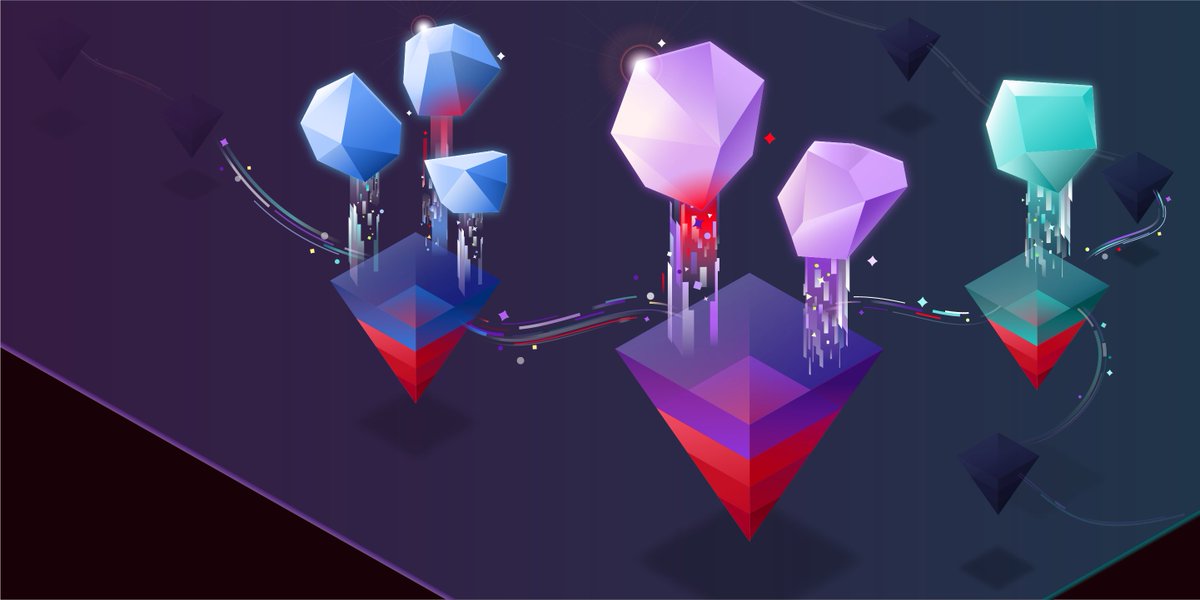 Optimism’s Superchain now supports Layer 3 chains via OP Stack.2024-05
 Today Unichain mainnet is live, unlocking a powerful new platform for DeFi builders. Unichain is a Superchain L2 that’s built to be the home for liquidity across chains: enabling fast blocks, cheaper execution, and cross-chain interoperability.2025-02
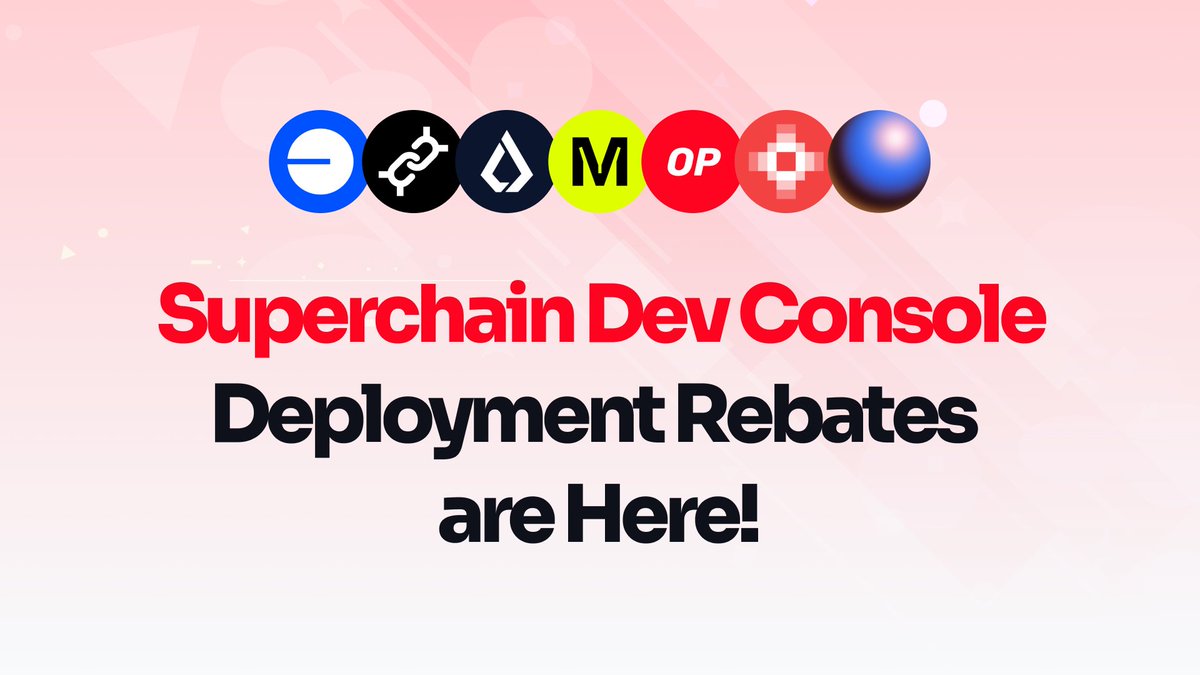 Optimism introducing the Deployment Rebate: It allows you to launch your app on the Superchain effectively free2024-05
 OP Foundation gave Kraken 25 million OP tokens to choose the superchain for its recently announced L22024-10
Understanding the Superchain: Optimism’s Multi‑Chain Vision for Ethereum
In Optimism’s ecosystem, the term Superchain describes a network of Ethereum Layer 2 rollups built on a shared open-source framework, the OP Stack, that aims to combine independent chain sovereignty with common governance, standards, and interoperability. Rather than a single blockchain, it is a coordinated architecture and political project that seeks to scale Ethereum to “internet-level” usage while preserving decentralization, credible neutrality, and a sustainable economic model for public goods.
Ethereum’s Scaling Problem and the Rise of Layer 2
Any explanation of the Superchain starts with Ethereum’s fundamental scaling constraints. Ethereum’s base layer was deliberately designed to prioritize security and decentralization over raw throughput, which limits the number of transactions per second and drives up fees when demand spikes. This trade-off became especially painful during DeFi and NFT booms, where routine on-chain actions—swaps, mints, governance votes—could cost tens or even hundreds of dollars. The industry-wide response has been to push more activity off the base layer while keeping Ethereum as the settlement and security anchor, a strategy that led to the rise of Layer 2 networks.
Layer 2s (L2s) are separate blockchains that bundle transactions and post compressed data to Ethereum, inheriting its security guarantees while offering higher throughput and lower fees. Optimistic rollups, such as Optimism’s OP Mainnet and other OP Stack chains, assume transactions are valid by default but allow a fraud-proof window during which incorrect state transitions can be challenged on Ethereum. This model lets L2s execute transactions cheaply and quickly while still falling back on Ethereum’s consensus if something goes wrong. The result is a layered architecture in which Ethereum becomes a settlement and data-availability layer, with execution increasingly pushed to L2s.
However, simply adding more L2s does not automatically solve fragmentation. Each rollup can come with different tooling, bridges, sequencer designs, and governance structures, which in turn fragments liquidity and user experience. A trader might need to bridge assets across three or four rollups just to reach the liquidity pool they want, while developers must port or rewrite integrations for each environment. The long-term challenge is no longer just “How do we make Ethereum faster?” but “How do we make a multi-rollup world feel like one coherent network for users and developers?”
Optimism’s answer to this fragmentation risk is the Superchain. Instead of treating each new rollup as a completely separate ecosystem, the Superchain vision proposes a shared stack, shared governance norms, and eventually shared tooling to make multiple chains work together more like shards of a single network. In this framework, OP Mainnet is only one chain in a broader constellation, and the real product is the combination of OP Stack code, Optimism Collective governance, and a common set of social and technical rules—captured in documents like the Law of Chains—that coordinate how these chains evolve.
Kraken’s Ink emerges as one of the fastest-growing Optimism Superchain L2s, using exchange-native apps to funnel millions of users directly into DeFi.
Kraken is really trying when it comes to the features enhancement....I hope they can gain ground like the major big players
What the Superchain Actually Is
At its core, the Superchain is a network of networks built on the OP Stack, Optimism’s modular rollup framework. Optimism explicitly describes the Superchain as a collection of chains that retain their own sovereignty—meaning they can set local parameters and have their own tokens and governance processes—yet remain united by the overarching governance of the Optimism Collective. This is not just marketing language; it encodes a particular vision of how power, economic value, and technical decision-making should be distributed in a multi-chain world.
Technically, each Superchain member is an Ethereum L2 (or, increasingly, even a Layer 3) that uses the OP Stack as its base code, including the rollup infrastructure, EVM execution layer, and interfaces for bridging to Ethereum. Because they share a common stack, these chains can more easily adopt new features in parallel—such as upgrades to the fraud-proof system, new sequencing designs, or improved account abstraction—without each team reinventing core infrastructure. The OP Stack also aims to be sufficiently modular that projects can customize parts of the system, such as data availability or sequencing, while still staying compatible with the rest of the Superchain.
Conceptually, the Superchain emphasizes horizontal scaling, where many chains run in parallel rather than one chain trying to scale vertically to handle all activity. This is analogous to scaling the internet by adding more servers and paths rather than endlessly optimizing a single mainframe. A video explainer from Optimism and Coinbase frames the Superchain as a horizontally-scaled collection of L2 networks built on Ethereum, with Coinbase’s Base and OP Mainnet positioned as the first two examples. In that framing, new chains like Kraken’s Ink, Uniswap’s Unichain, or privacy-focused Silent Data are additional “lanes” in a multi-lane highway, each serving specific use cases but connected by common rules and infrastructure.
Crucially, the Superchain is as much a governance and neutrality project as a technical one. This is where the Optimism Collective and the Law of Chains come in. Instead of allowing every OP Stack fork to diverge in arbitrary ways that could compromise user safety or decentralization, Optimism proposes shared principles to guide acceptable behavior, such as not ruggedly changing withdrawal rules, preserving user exit options, and maintaining credible neutrality across chains. In this view, the Superchain is not a closed club but an “open neutrality framework” that other OP Stack chains can opt into by aligning with those principles and with Optimism governance.
Economically, the Superchain aspires to align incentives across chains rather than encourage zero-sum competition. For example, Optimism’s OP token and its governance structures channel a portion of Sequencer revenues and other proceeds into a “public goods” model, funding infrastructure and ecosystem development that benefits multiple chains. OP Stack chains such as Base, Mode, and others are described as part of an ecosystem that already numbers over forty chains, all leveraging the same codebase and, to varying degrees, participating in this shared value system. Incentive programs like Onchain Summer, which allocated 600,000 OP tokens to creators and builders to showcase onchain projects on the Superchain, illustrate how OP-based rewards can be used to stimulate activity across many different L2s rather than just on OP Mainnet.
From the user’s perspective, the ideal end-state of the Superchain is that interacting with one OP Stack L2 feels similar to interacting with another. Wallets and bridges should understand Superchain standards by default. Transaction semantics and security assumptions should be predictable. And developers should be able to treat the Superchain as a broad addressable market, deploying contracts across multiple chains with minimal adaptation. The Superchain is therefore both a concrete implementation—the OP Stack plus participating chains—and an evolving target state that is still being built through technical upgrades, governance experiments, and ecosystem partnerships.
Readers click Superchain stories almost entirely to track which high-value protocols and exchanges are committing real liquidity and users to the ecosystem — Velodrome's 709-click lead shows that DeFi protocol migration announcements dwarf technical architecture news in reader interest.
The OP Stack: Technical Foundation of the Superchain
The OP Stack is the software substrate that makes the Superchain possible. Optimism describes it as an open-source rollup framework powering Base, Mode, and dozens of other chains in the Superchain. Conceptually, the OP Stack breaks a rollup into layered components: a consensus and data-availability layer (Ethereum), an execution engine that is EVM-equivalent, and protocol glue that handles sequencing, batching, and proof submission. By standardizing these layers in modular form, the OP Stack allows new L2s to launch more quickly and with fewer bespoke engineering choices, while still leaving room for configuration.
As an optimistic rollup framework, the OP Stack assumes submitted transaction batches are valid unless challenged within a dispute window. Transactions are executed on the L2, and a compressed representation of state changes or calldata is posted to Ethereum, where fraud proofs can be used to re-execute and verify contentious transactions. Projects can fine-tune certain parameters, such as gas pricing, block times, and withdrawal delays, but the fundamental security model hinges on Ethereum’s consensus and the ability to submit and contest proofs on L1. For OP Stack chains like Kraken’s Ink, this means they can offer one-second blocks and sub-cent transaction fees while still promising Ethereum-backed security for final settlement.
The OP Stack is not static; it is evolving in tandem with the Superchain roadmap. A key example is Upgrade 16a, a safety-focused maintenance release that Optimism scheduled for deployment on a Superchain Sepolia testnet and then on mainnet, pending governance approval. This upgrade removes unused interoperability withdrawal-proving code and introduces system-level feature toggles to make development and future upgrades safer and more flexible, without changing user-facing behavior or withdrawal semantics. To smooth adoption, Optimism also updated the OP Contracts Manager so that chains on the previous Upgrade 15 could move directly to 16a, while chains already on Upgrade 16 could migrate seamlessly, in both cases reaffirming the goal that core-stack improvements should not disrupt end users.
Another major OP Stack evolution is in the sequencing layer. Optimism has partnered with Flashbots, a research and development group known for building Ethereum’s block-building pipeline, to introduce verifiable, fast, and configurable sequencing across the Superchain. The initiative, dubbed Flashblocks, aims to roll out to OP Mainnet and other chains, targeting near-instant 200 millisecond block times and customizable transaction ordering while preserving transparency and resistance to abusive MEV. Bringing Flashbots’ expertise into the OP Stack’s sequencing module underscores how the Superchain architecture can absorb specialized improvements in one area and propagate them across many chains using the same stack.
The OP Stack is also extending upwards. Optimism has announced that the Superchain now supports Layer 3 (L3) chains via the OP Stack, allowing teams to build application-specific or domain-specific networks on top of existing L2s. In this model, an L2 such as OP Mainnet, Base, or Ink could host L3 rollups focused on particular verticals—gaming, high-frequency DeFi, or privacy—while reusing the same tooling and governance patterns. L3 support effectively turns the Superchain into a multi-layered hierarchy rather than a simple two-tier L1–L2 structure, further reinforcing the idea that the “stack” is a general-purpose rollup framework rather than a single network.
Tooling around the OP Stack increasingly focuses on developer ergonomics and composability. For instance, account abstraction support via Alchemy for OP Stack chains like Zora and Fraxtal adds smart account capabilities that can reduce user friction, enable gas subsidies, and support embedded wallets in mainstream apps. Because Zora and Fraxtal are part of the Optimism Superchain ecosystem, improvements in account abstraction for them can serve as a template for broader adoption across other OP Stack chains. Meanwhile, Optimism’s Deployment Rebate program, which allows applications to launch on the Superchain with substantially reduced or effectively free infrastructure costs, further demonstrates how the stack plus governance can be used to catalyze new deployments.
In combination, these features position the OP Stack not just as Optimism’s internal codebase but as a shared infrastructure layer that underpins the entire Superchain. Each addition—Upgrade 16a’s safety toggles, Flashblocks’ low-latency sequencing, L3 support, account abstraction tooling—pushes the stack closer to a generalized rollup operating system. This in turn lowers the barrier for exchanges, DeFi protocols, and application teams to launch their own chains while still benefiting from shared standards, shared security assumptions, and shared governance mechanisms.
- 01DeFi protocol chain migration↗
Velodrome's phased Superchain rollout starting with Mode signaled that established DeFi liquidity venues were choosing the ecosystem, making this the highest-engagement story by a wide margin.
- 02Exchange-native L2 buildout↗
Kraken receiving a 25M OP grant and then shipping Ink as one of the fastest-growing Superchain L2s turned exchange-owned chains into a distinct and closely watched sub-narrative.
- 03Unichain liquidity consolidation↗
Uniswap launching its own Superchain L2 explicitly to unify cross-chain liquidity raised the stakes for every other DeFi protocol's chain strategy.
- 04Developer cost subsidies↗
The Deployment Rebate making launches effectively free, combined with 600K OP in Onchain Summer incentives, pulled readers tracking where subsidized builder activity would concentrate next.
- 05Law of Chains governance rules↗
The Law of Chains framed who actually controls shared infrastructure across forks, making it the foundational governance story readers returned to as more chains joined.
- 06Infrastructure layer expansion↗
Native Layer 3 support via OP Stack and Alchemy's account abstraction rollout signaled that the Superchain was maturing into a platform capable of hosting full application stacks, not just base L2s.
Governance, Neutrality, and the Law of Chains
If the OP Stack is the Superchain’s technical foundation, the Law of Chains is its political and ethical blueprint. Optimism’s Law of Chains v0.1 is described as an open neutrality framework that establishes protections for participants in the Superchain ecosystem. It aims to promote core principles of user protection, decentralization, and economic autonomy as the foundations for a growing multi-chain network. Rather than attempting to specify exact procedures for every governance decision, it provides high-level guardrails to ensure that different OP Stack chains remain aligned on key values and do not undercut each other in ways that harm users or the broader ecosystem.
The Law of Chains is explicitly framed as a “living document,” intended to evolve over time as protocol innovation and the Superchain itself advance. It is not a legal contract enforceable by courts, but guidance meant to be enforced socially through Optimism Governance, which can pass resolutions and use its influence over OP Stack upgrades, shared infrastructure, and incentive programs to encourage compliance. If adopted, the Law of Chains is appended as an addendum to Optimism’s Working Constitution, tying it directly into the governance architecture that oversees OP Mainnet and key components of the Superchain. This integration matters because it turns abstract principles into something that can concretely inform upgrade decisions, funding allocations, and the onboarding of new chains.
One of the key themes in the Law of Chains is neutrality. In a world where many OP Stack chains may be operated or heavily influenced by centralized entities such as exchanges, DeFi protocols, or corporations, the risk is that chain operators could prioritize their own business interests over user rights or over the health of the ecosystem. Neutrality in this context means not discriminating between applications for arbitrary reasons, not using sequencing power to advantage proprietary products unfairly, and preserving credible exit options for users, such as the ability to withdraw to Ethereum without facing arbitrary delays or policy changes. While the Law of Chains does not implement these guarantees technically, it articulates them as norms that Superchain participants are expected to uphold.
The enforcement mechanism is deliberately “soft.” The Law of Chains states that it is intended to be enforced solely through resolutions of Optimism Governance and is not a procedural playbook for governance in a multi-chain context. Instead, it is meant to inform governance decisions reliably and consistently, allowing Optimism tokenholders and delegates to refer back to shared principles when evaluating proposals about upgrades, partnerships, or conflict resolution between chains. In practice, this means that if an OP Stack chain were to adopt policies widely considered hostile to users or decentralization, Optimism governance could respond by adjusting incentives, limiting official support, or in extreme cases removing the chain from official Superchain branding and shared infrastructure.
This structure reflects a broader trend in crypto governance toward “constitutional” frameworks that blend explicit on-chain mechanisms with softer social norms and reputational enforcement. For the Superchain, the Law of Chains is the mechanism that tries to reconcile local sovereignty—each chain can set its own economics, compliance posture, and feature roadmap—with global coherence around security, neutrality, and user rights. It is also a recognition that, in a multi-chain ecosystem tied together by a shared stack and shared token, failures on one chain can have reputational and systemic consequences for others.
Optimism will deploy its Superchain Upgrade 16a to testnet on Sept. 22 and mainnet on Oct. 2, pending governance approval. The safety-focused update removes unused withdrawal code and adds system-level feature toggles for more flexible, secure development without affecting users.
dont like OP, think its a failed project, ARB 10000000000000000000000000000000000000000000000000000 million times better
Key Superchain Participants and Use Cases
The Superchain is no longer just a theoretical construct; it already encompasses a diverse set of L2s with distinct operators, business models, and technical priorities. Many of these chains share common traits—EVM compatibility, OP Stack infrastructure, Ethereum settlement—while targeting different user segments or verticals. A simplified snapshot of some notable participants helps illustrate how the ecosystem is taking shape.
| Chain / Project | Operator / Origin | Primary Focus | Notable Features |
|---|---|---|---|
| OP Mainnet | Optimism | General-purpose DeFi, NFTs, public goods | First OP Stack chain; governance anchor of the Superchain |
| Base | Coinbase | Consumer apps, onramping CEX users | OP Stack L2; aims to bring Coinbase’s large user base onchain |
| Ink | Kraken | Exchange-native DeFi gateway | OP Stack L2; 1-second blocks, sub-cent fees; ETH gas; INK utility token |
| Unichain | Uniswap Labs | DeFi and cross-chain liquidity hub | Superchain L2 designed as home for DeFi and liquidity across chains |
| Silent Data | Applied Blockchain | Programmable privacy and compliance | First privacy-focused L2 to join the Superchain; OP Stack-based |
| Superseed | Independent team | CDP lending and fee redistribution | OP Stack rollup with protocol-level CDP platform and fee sharing |
| Metal L2 (pre‑migration) | Metal DAO | TradFi–DeFi bridge, stablecoin XMD | OP Stack L2 integrating reserve-backed XMD and retail-facing features |
OP Mainnet and Base: Early Pillars of the Superchain
OP Mainnet, originally known simply as Optimism, was the first major OP Stack L2 and serves as the Superchain’s reference implementation and governance anchor. It hosts a broad range of DeFi protocols, NFT projects, and infrastructure services, benefiting from Optimism’s early adoption of EVM equivalence and tight integration with Ethereum tooling. Revenue from OP Mainnet’s sequencer feeds into Optimism’s public goods funding model, and decisions about OP Stack upgrades and Superchain governance are heavily shaped by OP tokenholders and their delegates.
Base, launched by Coinbase, is a high-profile example of a corporate-operated OP Stack chain in the Superchain. Coinbase and Optimism have presented Base and OP Mainnet as the first two L2 networks in the envisioned Superchain, showcasing how an exchange’s customer base can be funneled into a shared rollup ecosystem rather than a siloed proprietary chain. Coinbase has publicly discussed using Base to bring tens of millions of existing exchange customers onchain over time, leveraging the familiarity of the Coinbase interface and brand while exposing users to permissionless DeFi and other onchain applications. Because Base uses the OP Stack and aligns with Optimism governance, its growth feeds into the broader Superchain narrative rather than competing directly with OP Mainnet.
The synergy between OP Mainnet and Base illustrates the Superchain’s multi-stakeholder nature. Optimism, as a protocol collective, and Coinbase, as a publicly traded exchange, have different priorities and constraints. Yet by sharing the OP Stack and aligning with the Law of Chains, they can build interoperable chains that share security assumptions and ecosystem tooling. Users can bridge assets and contracts between OP Mainnet and Base, and protocols can deploy on both, leveraging Base’s exchange adjacency and OP Mainnet’s public goods funding to reach different segments of the market.
Kraken’s Ink: Exchange-Native DeFi on the Superchain
Kraken’s Ink chain (often referred to as Inkonchain) is a prominent example of a Superchain L2 aimed at bridging centralized exchange users directly into DeFi. Ink is a Layer 2 blockchain built by Kraken on Optimism’s OP Stack, with the explicit goal of moving Kraken’s more than ten million users onchain by eliminating the wallet setup and gas confusion that have historically made DeFi intimidating. It launched on Ethereum mainnet in late 2024 and quickly grew in total value locked, leveraging Kraken’s existing user base and integrations.
From a technical standpoint, Ink offers one-second block times from launch, with sub-second block times under active development, and transaction fees typically below one cent. The chain is fully EVM-compatible, meaning Solidity contracts that run on Ethereum or other EVM chains can be deployed on Ink without modification. Notably, Ink uses ETH as the gas token rather than a proprietary token, simplifying the user experience: Kraken users can withdraw ETH directly from the exchange to Ink at zero fee via a dedicated wallet integration, and the same ETH pays for transactions on-chain.
Governance over the chain’s core protocol remains with Kraken and its infrastructure, but the economic layer is being diversified through the introduction of the INK token by the independent Ink Foundation. The INK token is designed as a utility token with a fixed supply of one billion, focused on incentivizing liquidity provision and DeFi participation on Ink rather than serving as a governance token for the L2 itself. Distribution is planned through Kraken Drops, Kraken’s existing rewards program, and separate airdrops to ecosystem participants, with a token generation event anticipated in the mid-2020s. This separation of protocol governance and ecosystem incentives reflects a cautious approach to regulatory risk while still aligning users, protocols, and builders around a native token.
Ink’s integration with the Superchain extends beyond technology. The OP Foundation allocated a substantial OP token grant to Kraken to support Ink’s development, reflecting Optimism’s strategy of using OP-based incentives to attract high-impact partners into the Superchain. Ink’s growth trajectory demonstrates how exchange-operated L2s can quickly bootstrap usage and liquidity by offering a path from custodial accounts to onchain activity that feels familiar to mainstream users but ultimately lives on public, EVM-compatible infrastructure. At the same time, its design raises important questions about centralization and neutrality that the Law of Chains and Flashbots-powered sequencing aim to address across the ecosystem.
Silent Data and the Superchain’s Privacy Layer
While many L2s focus on throughput and low fees, privacy is increasingly recognized as essential for more sophisticated financial and enterprise use cases. Silent Data, developed by Applied Blockchain, is notable as the first privacy-focused Layer 2 to join Ethereum’s Superchain. Built using the OP Stack, Silent Data offers fully programmable data privacy, compliance features, and high performance, positioning itself as suitable for a broad range of blockchain applications that require confidentiality and regulatory alignment.
Silent Data’s architecture emphasizes the ability to verify computations on private data without revealing the underlying information on-chain. This is relevant for use cases such as credit scoring, institutional DeFi, or enterprise supply chain management, where certain data must remain confidential but still anchor to public infrastructure for auditability and interoperability. By joining the Superchain as an OP Stack L2, Silent Data can interoperate with other OP Stack chains and share tooling, while giving developers a way to build applications that span public and private environments.
The emergence of privacy layers like Silent Data also intersects with developments outside the immediate OP Stack ecosystem. For example, Secret Network’s partnership with MoonCat AI to run sensitive components of an AI liquidity optimizer inside its privacy-preserving SecretVM illustrates a growing convergence between confidential computing and DeFi. Although Secret Network is a separate ecosystem, the conceptual overlap underscores how the Superchain’s openness to specialized OP Stack chains can make it a natural home for privacy-enhanced DeFi and AI applications that need both compliance and composability.
Unichain and the DeFi-Native Superchain Thesis
Uniswap’s Unichain adds a different angle to the Superchain story by positioning itself as an Ethereum L2 specifically designed for DeFi and liquidity. Uniswap describes Unichain as a fast, decentralized Superchain L2 built to be the home for DeFi and cross-chain liquidity, aiming to aggregate trading and liquidity experiences across multiple networks. Because Unichain is built on the OP Stack and integrated into the Superchain, it can plug into shared infrastructure and interoperability standards while focusing on the particular needs of automated market makers, aggregators, and onchain order flow.
One of Unichain’s core value propositions is to lower transaction costs dramatically compared to Ethereum L1, with estimates of roughly a 95% reduction in the short term and potentially more over time as Ethereum’s own scaling roadmap advances. For active DeFi traders and protocols, this cost reduction can be decisive, enabling more granular arbitrage, more frequent rebalancing, and innovative designs such as onchain limit order books or RFQ systems that would be prohibitively expensive on L1. Because Unichain is part of the Superchain, liquidity routed through it can more easily interact with other OP Stack chains, creating a network effect where DeFi activity on one chain reinforces the others.
Unichain’s launch also underscores a broader pattern: major DeFi protocols are increasingly moving from being tenants on other chains to being operators of their own L2s. By running a Superchain L2, Uniswap can align incentives more tightly, capture a share of sequencer revenue, and customize the environment to optimize for its particular form of onchain finance, all while relying on shared OP Stack infrastructure and the Law of Chains for baseline standards and interoperability.
Emerging Protocol L2s: Superseed, Mode, and Beyond
Beyond exchange and protocol-branded chains, the Superchain includes a growing number of specialized L2s experimenting with novel economics and product designs. Superseed, for example, is an Optimistic Rollup built on the OP Stack that integrates a collateralized debt position (CDP) lending platform directly into the protocol and redistributes a portion of Layer 2 fees back to its users. This “enshrined DeFi” approach blurs the line between base layer and application, using protocol-level primitives to build lending and fee-sharing into the chain itself rather than relying entirely on external dApps.
Similarly, Mode is another OP Stack chain focused on DeFi and growth hacking, and its ecosystem is tightly interwoven with protocols such as Velodrome. Velodrome, a prominent Optimism-native DEX, has announced a Superchain expansion with its first deployment of Velodrome Superchain (Beta) on Mode’s launch day. This kind of multi-chain deployment strategy reflects how DeFi protocols increasingly view the Superchain as a contiguous addressable market, where deploying on one OP Stack chain can be a stepping stone to launching across several with consistent tooling and user experience.
On the infrastructure side, account abstraction support on OP Stack chains like Zora and Fraxtal, delivered via Alchemy, illustrates another dimension of specialization. Zora targets the creator economy and NFTs, while Fraxtal is closely tied to the Frax protocol’s stablecoin and DeFi suite; both chains benefit from smart-account capabilities that can hide gas-management complexity from mainstream users. Because they are Superchain members, improvements in account abstraction and wallet UX on these chains can influence emerging best practices across the entire ecosystem.
Stablecoins, Metal L2, and the “Homecoming” to a Sovereign Chain
Metal L2 offers an instructive case study in both the appeal and the limits of the Superchain model. Initially launched as an OP Stack L2 in the Optimism Superchain, Metal L2 aimed to bridge traditional finance and DeFi through its Metal Dollar (XMD) stablecoin and integration with the Metal DAO’s broader ecosystem. XMD is described as a reserve-backed stablecoin supported by a basket including USDC, PYUSD, USDP, and RLUSD, governed by holders of the MTL token. Bringing XMD and MTL into a Superchain L2 allowed Metal to tap into standard EVM tooling, Optimism-aligned DeFi protocols, and broader Ethereum liquidity.
In April 2026, however, Metal DAO introduced MIP‑002: Homecoming, a proposal to migrate Metal L2 from the Optimism Superchain to a sovereign Metal Blockchain subnet. If approved, this migration would make MTL the native gas token for every transaction on the new L2, provide sub-second finality through Metal Blockchain’s Snow consensus (with approximately 0.5-second finality), grant full sovereignty over upgrade cadence and chain parameters, and embed “banking-ready” compliance features like native KYC integration, policy controls, and asset-freeze functionality. Metal’s argument is that a sovereign subnet better aligns with its regulatory and business needs while still preserving full EVM compatibility and retaining the existing Metal Dollar design and governance.
The migration plan is designed to be phased and non-disruptive, with both the OP Stack chain and the new subnet operating in parallel for a time, exchanges shifting support gradually, and wallet and dApp integrations preserved wherever possible. Throughout the transition, XMD remains governed by MTL holders and maintains its reserve structure; the key change is that the execution environment moves from an OP Stack rollup settled on Ethereum to a Metal-native subnet chain. This case highlights that while the Superchain offers shared tooling, security assumptions, and incentive alignment, some projects may still prefer full sovereignty over infrastructure and compliance features that go beyond what the OP Stack and Law of Chains prescribe.
From a Superchain perspective, Metal’s “Homecoming” emphasizes that participation is voluntary and reversible. The OP Stack makes it easy to launch a chain and plug into the Superchain’s shared ecosystem, but it does not lock projects in if their strategic priorities evolve. This flexibility is a double-edged sword: it can attract experimentation and new launches, but it also means that Optimism governance and the broader Superchain community must continually offer compelling reasons—technical, economic, and philosophical—for ambitious projects to remain aligned.
Law of Chains v0 published
Velodrome Superchain Beta rollout announced, starting with Mode
Alchemy launches account abstraction on Zora and Fraxtal
Onchain Summer: 600K OP allocated for Superchain creator incentives
- 2024-10milestone
Superchain Upgrade 16a deployed to mainnet
Unichain announced as Superchain L2 liquidity hub
Kraken launches Ink (Inkonchain) on Superchain via OP Stack
Optimism partners with Flashbots to overhaul OP Stack sequencing
Developer and User Experience in a Superchain World
For developers, the Superchain promises a blend of scalability, composability, and economic support. Using the OP Stack, teams can launch new chains or deploy to existing ones with familiar EVM tooling, minimizing the learning curve and code changes required to expand beyond Ethereum L1. Because OP Stack chains share a common architecture, infrastructure providers, indexers, and wallets can more easily support multiple chains, reducing integration friction. Programs like Optimism’s Deployment Rebate, which allows apps to effectively launch on the Superchain at minimal cost by subsidizing their initial onchain footprint, further lower the barrier to entry.
Incentives play a significant role in shaping developer and user behavior. The Onchain Summer campaign, for example, allocated 600,000 OP tokens to creators and builders showcasing onchain projects across the Superchain, encouraging experimentation with NFTs, DeFi, and other applications on OP Stack L2s. By directing OP rewards toward activity that spans multiple chains rather than concentrating them on a single network, Optimism reinforces the idea of the Superchain as a cohesive ecosystem. Similarly, OP token grants to major partners like Coinbase and Kraken signal that launching an OP Stack chain and aligning with the Law of Chains can unlock substantial governance-aligned funding.
The Superchain’s evolving feature set also directly impacts user experience. Flashbots-powered sequencing aims to bring block times down to the 200 millisecond range across OP Stack chains, making transactions feel near-instant for many use cases. Faster block times, combined with sub-cent gas costs on chains like Ink and Unichain, shrink the perceived gap between Web2 and Web3, especially for trading, gaming, or social interactions where latency is noticeable. Account abstraction on chains like Zora and Fraxtal, meanwhile, enables smart accounts that can abstract away seed phrases, automate gas top-ups, and support recovery mechanisms more familiar to mainstream users.
Layer 3 support introduces another dimension to the user experience. With OP Stack-based L3s, an application team can spin up its own micro-rollup on top of an existing OP Stack chain, tailoring parameters for its user base while inheriting interoperability and tooling from the parent L2. For example, a high-frequency derivatives protocol might opt for its own L3 with aggressive block times and specialized risk controls, while still allowing users to easily move collateral in and out via the underlying L2 and across the Superchain. This approach can mitigate congestion on general-purpose L2s and offer a spectrum of UX trade-offs that users can choose among.
At the same time, the proliferation of chains raises UX challenges. Users must understand which chain they are on, how bridges work, and what the security assumptions are when moving assets between L2s and L3s. Optimism’s vision is that Superchain standards and tools will increasingly hide this complexity, presenting chain selection in a way similar to choosing a server region in a Web2 application rather than forcing users to reason about bridges and rollup architectures directly. Inter-chain messaging, standardized bridges, and ecosystem-wide branding are all part of this effort to make a multi-chain Superchain feel like a single coherent environment over time.
For power users and DeFi professionals, the Superchain model offers both opportunities and risks. Aggregators and cross-chain protocols can arbitrage and route liquidity across multiple OP Stack chains, taking advantage of diverse fee markets and user populations. Protocols like Velodrome, which are expanding to multiple Superchain L2s starting with Mode, illustrate how this can play out in practice. Yet the increased surface area also brings more smart contract risk, bridge risk, and governance complexity. Monitoring the health of many chains and understanding how their incentives interlock becomes a prerequisite for sophisticated onchain strategy.
The Optimism Foundation unilaterally authors the Law of Chains and controls sequencer governance across member chains; no chain can exit the governance framework without forking off the shared upgrade path.
A critical vulnerability in the shared OP Stack codebase could simultaneously affect all 30+ Superchain member networks, concentrating blast radius in a way isolated L2s do not face.
Despite cross-chain interoperability goals, liquidity remains siloed per chain until native bridging matures; Unichain's pitch as a liquidity hub implicitly acknowledges this fragmentation problem.
Kraken, a regulated US exchange, building Ink on the Superchain and receiving 25M OP tokens from the Foundation creates a direct link between a compliance-scrutinized entity and the ecosystem's tokenomics.
Large OP token grants to attract chains (25M to Kraken alone) create persistent sell-side pressure and raise questions about whether ecosystem growth metrics reflect genuine demand or subsidized onboarding.
Metal L2's MIP-002 proposal to migrate away from the Superchain to a sovereign subnet demonstrates that governance friction can drive member chains toward exit, fragmenting the shared security model.
Risks, Trade-Offs, and Critiques
Despite its ambitious design, the Superchain faces several structural risks and trade-offs that are important for a crypto-native audience to understand. One major concern is centralization at the sequencer and governance levels. Many OP Stack chains, including exchange-operated ones like Base and Ink, rely on centralized sequencers controlled by a single operator or small group, at least in the early stages. This can create censorship or reordering risks, particularly for high-value DeFi transactions, and may concentrate economic power in the hands of a few large entities. Optimism’s partnership with Flashbots and its push toward verifiable, configurable sequencing is partly a response to this concern, but a fully decentralized, shared-sequencer model remains an open research and implementation challenge.
Governance centralization is another point of tension. The Superchain’s neutrality framework is enforced via Optimism Governance, which is controlled by OP tokenholders and delegates. As more value and activity shift to OP Stack chains, the stakes of governance decisions—about upgrades, resource allocation, or how to respond to misbehaving chains—increase. Critics may argue that this creates a meta-level “governance monoculture” where too much influence resides with a single token community, even as individual chains maintain local sovereignty. Balancing the benefits of shared principles and coordination against the risks of over-centralized meta-governance will be an ongoing challenge.
Economic fragmentation and composability risks also loom large. While the Superchain tries to mitigate fragmentation by standardizing on the OP Stack, liquidity is still spread across multiple L2s, each with their own tokens, incentive programs, and fee markets. DeFi protocols must decide where to deploy first and how to prioritize expansion; liquidity mining campaigns may end up pulling users back and forth between chains in search of yield. Projects like Unichain that explicitly aim to centralize DeFi and liquidity on a Superchain L2 address part of this problem, but they do not eliminate the underlying complexity. Cross-chain coordination remains a hard technical and economic problem, and the Superchain is more an attempt to make it tractable than a complete solution.
Regulatory and compliance pressures further complicate the picture. Chains like Silent Data and Metal L2 explicitly emphasize compliance features, privacy controls, and KYC integration, reflecting a bet that regulatory alignment is necessary for institutional adoption. At the same time, privacy-enhancing technologies and censorship resistance are core values for many in the crypto space. The Superchain’s open neutrality framework must accommodate both permissionless DeFi chains and compliance-heavy institutional environments, which may occasionally produce conflicting demands. The Metal L2 “Homecoming” migration underscores that some projects may ultimately prioritize full infrastructure control and bespoke compliance tooling over the benefits of staying within the Superchain.
Finally, there are technical and security risks inherent in optimistic rollups. Fraud-proof systems must be robust, and the existence of challenge windows means that certain operations, such as withdrawals to Ethereum, can require waiting periods measured in days. While UX workarounds like liquidity bridges and fast exits mitigate this for many users, they introduce additional trust assumptions and smart contract risk. Alternative designs, such as zero-knowledge rollups, make different trade-offs in terms of proof systems and latency. The Superchain’s reliance on the OP Stack’s optimistic architecture means it must continuously invest in proof-system security, monitoring, and the safe rollout of upgrades like 16a to maintain long-term user trust.

Silent Data developed by Applied Blockchain becomes first privacy-focused layer 2 to Join Ethereum’s Superchain. The project is one of over 30 layer-2 networks working to scale Ethereum.

The Superchain in the Broader L2 Landscape
The Superchain exists within a competitive and rapidly evolving L2 landscape. Other ecosystems, such as Arbitrum Orbit, Polygon CDK, zkSync Hyperchains, and various rollup-as-a-service platforms, are pursuing similar visions of modular, programmable rollup stacks that can power many application-specific or ecosystem-specific chains. What differentiates the Superchain is its combination of open-source OP Stack tooling, explicit governance and neutrality frameworks, and early adoption by systemically important actors like Coinbase, Kraken, and Uniswap.
Technologically, the OP Stack positions itself as a pragmatic, production-hardened optimistic rollup framework with a clear path to incremental improvements such as 16a’s safety tweaks, Flashbots-powered sequencing, and L3 support. It leans into Ethereum alignment rather than pursuing more experimental or bespoke architectures. Economically, OP token-based governance and incentive programs provide a coherent funding and coordination mechanism that spans multiple chains, with public goods funding as a central theme. This contrasts with more siloed ecosystems where each rollup or app-chain is largely responsible for its own token economics and incentive schemes.
Strategically, the Superchain’s partnerships with exchanges and major DeFi protocols represent a bet that the next wave of onchain adoption will be funneled through familiar brands and products. Base, Ink, and Unichain exemplify how the Superchain attempts to route mainstream users into a shared, open infrastructure layer rather than into walled gardens. At the same time, the presence of specialized chains like Silent Data, Zora, Fraxtal, and Superseed suggests that the Superchain is not just an exchange playground but a general-purpose framework for a wide variety of onchain experiments.
For Ethereum itself, the Superchain is one among several scaling visions. It competes and collaborates with other L2 frameworks, contributes to infrastructure like fraud proofs and sequencing research, and ultimately ties its fate to Ethereum’s ability to remain the settlement and data-availability layer of choice for high-value activity. If Ethereum’s own roadmap—such as danksharding and further data-availability improvements—succeeds, OP Stack chains might see their costs fall further and their capacity rise, making the Superchain an increasingly attractive platform for both DeFi and non-financial applications.
Outlook
Looking ahead, the Superchain’s trajectory is likely to be shaped by three broad forces: consolidation around common standards, diversification of chain types, and the politics of governance and neutrality. On the technical side, continued OP Stack upgrades, wider adoption of Flashbots-style verifiable sequencing, and maturation of L3 infrastructure should make Superchain chains faster, cheaper, and more customizable, while preserving Ethereum’s security guarantees. As more infrastructure providers, wallets, and developer tools treat the OP Stack as a first-class target, the marginal cost of adding new chains or expanding existing deployments should fall.
At the same time, the variety of chains in the Superchain is almost certain to increase. Exchange-run L2s like Base and Ink, DeFi-native L2s like Unichain, privacy and compliance-focused chains like Silent Data, and protocol-level experiments like Superseed each represent different bets on what the next wave of onchain demand will look like. Some will succeed and become long-lived pillars of the ecosystem; others may pivot, merge, or, as in the case of Metal L2, choose to exit the Superchain for sovereign alternatives. This diversity is both a strength and a source of operational complexity for the Superchain as a whole.
On the governance front, the Law of Chains and Optimism’s constitutional experiments will be stress-tested as more value flows through the Superchain and as conflicts inevitably arise over upgrades, neutrality, and resource allocation. Whether the Superchain can maintain credible neutrality, accommodate both permissionless and compliance-heavy environments, and evolve its governance without succumbing to centralization or political gridlock will be key questions for investors, builders, and users. For now, the Superchain represents one of the most ambitious attempts to turn Ethereum’s many rollups into something more like a cohesive, governed network of networks—an experiment whose outcomes will inform multi-chain designs far beyond the Optimism ecosystem.
Conclusion
The Superchain is best understood not as a single blockchain or product, but as a coordinated effort to turn a fragmented landscape of Ethereum rollups into a coherent, scalable, and values-aligned ecosystem. Technically, it is anchored by the OP Stack, an open-source optimistic rollup framework used by OP Mainnet, Base, Ink, Unichain, Silent Data, Superseed, and many others. Politically and economically, it is guided by the Optimism Collective, the Law of Chains, and OP token governance, which together aim to enforce neutrality, fund public goods, and align incentives across chains. In practice, it is already being shaped by real-world deployments and trade-offs, from Kraken’s exchange-native Ink chain and Uniswap’s DeFi-focused Unichain to Metal L2’s proposed migration to a sovereign subnet.
For a crypto news audience tracking the evolution of Ethereum scaling, the Superchain offers a lens into how rollup technology, governance experiments, and business strategy intersect. Exchange-run L2s, privacy-preserving chains, and DeFi-native networks are all converging on the OP Stack, even as they pursue divergent goals and regulatory postures. The success or failure of the Superchain model will hinge on its ability to keep these actors interoperable, neutral, and collectively beneficial, rather than allowing them to devolve into isolated fiefdoms.
Ultimately, the Superchain is an ongoing experiment in multi-chain coordination. It does not eliminate the underlying challenges of cross-chain liquidity, security, governance, or UX, but it does provide a structured framework for addressing them at scale. As Ethereum’s L2 ecosystem matures and as more capital and users move onchain, the Superchain’s combination of shared stack, shared governance, and shared incentives is likely to remain a central story in how the next era of decentralized finance and onchain applications takes shape.
Latest Superchain news
Kraken’s Ink emerges as one of the fastest-growing Optimism Superchain L2s, using exchange-native apps to funnel millions of users directly into DeFi.Optimism will deploy its Superchain Upgrade 16a to testnet on Sept. 22 and mainnet on Oct. 2, pending governance approval. The safety-focused update removes unused withdrawal code and adds system-level feature toggles for more flexible, secure development without affecting users.Silent Data developed by Applied Blockchain becomes first privacy-focused layer 2 to Join Ethereum’s Superchain. The project is one of over 30 layer-2 networks working to scale Ethereum. Optimism has partnered with Flashbots to overhaul sequencing across the OP Stack, promising near-instant confirmations and customizable transaction ordering. The move aims to speed up Ethereum’s top L2s as Flashbots brings its block-building power to the Superchain.
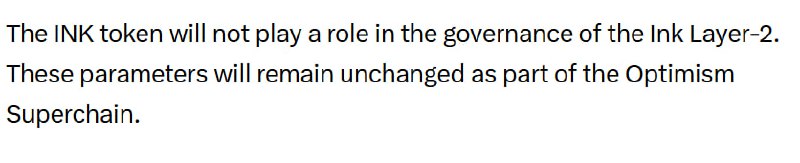 Ink foundation to launch $INK token to incentivize ecosystem growth, the token will not be the governance token of the Inkchain L2
 Superseed publishes a date, launch coming next week?
Sources
18 records from 13 domains
superchain.eco
gov.optimism.io
youtube.com
binance.com
optimism.io
eco.com
x.com
metall2.com
gov.uniswap.org
silentdata.com
blog.uniswap.org
alchemy.com
l2beat.com
Community notes
Spot something off or out of date? Drop a note. Editors review topic notes daily and roll accepted fixes into the explainer — contributors are recognized in the monthly $SQUID drop.
Loading notes…
Help improve this topic
Have a story or tip about this topic? Submit it. See something missing? Leave a note. Editors review daily; accepted submissions and fixes count toward the monthly $SQUID drop.