
Comprehensive explainer on scaling in crypto, covering Ethereum rollups, Bitcoin rollups, sharded L1s, onchain prediction markets, privacy tech, AI agents, and governance trade-offs, with a critical look at risks, metrics and long-term roadmaps.
+27 sources across the wider coverage universe
 Introducing Polaris - a self-scaling stablecoin operating system2026-01
 North Korea is now using banned NVIDIA GPUs to supercharge AI-driven crypto theft. Deepfakes, tracking, and automated attacks mean hacks are scaling fast — November alone saw $172M lost.2025-12
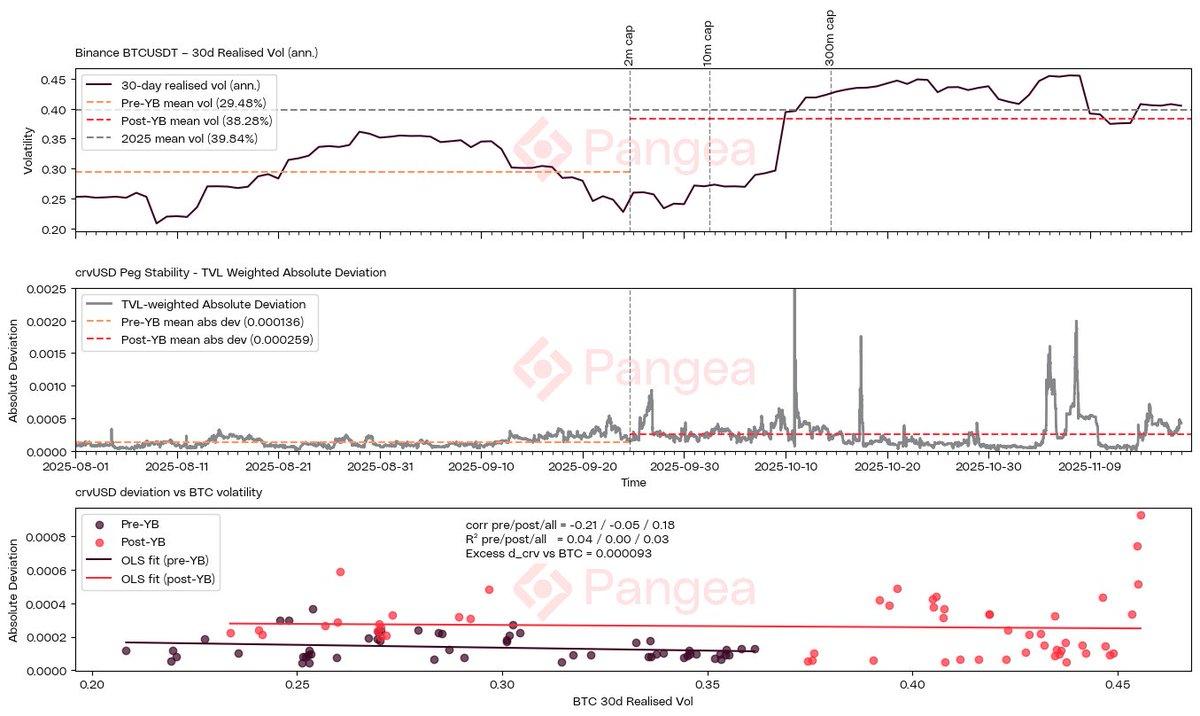 Pangea publishes research showing that structural flows from YieldBasis tightly couple the crvUSD system to BTC price movements. In partnership with LlamaRisk, they are working on recommendations to support Curve and YieldBasis in scaling to the $1bn credit line currently being voted on.2025-12
 Perp DEX farmers underperform by entering late, misreading metrics, and overspending on points. Outperformance comes from early-but-informed entry, testing before scaling, focusing on few protocols, tracking real demand, and treating farming like a business—not a hype chase.2025-12
 HashKey has passed its HKEX listing hearing, bringing its Hong Kong IPO a step closer. The exchange isn’t profitable yet but is scaling fast with global expansion and tech upgrades ahead.2025-12
 Fractal Bitcoin, backed by Unisat, goes live on mainnet with a scaling solution built on Bitcoin's core codebase, led by core contributors Unisat and Block Space Force.2024-09
Scaling In Crypto: How Blockchains, AI, And Onchain Systems Grow
Scaling in crypto is the process of allowing blockchains and related systems to handle more users, more transactions, and more complex applications without breaking their core guarantees of security, decentralization, and usability. In practice, scaling today spans far beyond increasing raw throughput: it includes new architectures like Ethereum rollups, sharded chains like NEAR, Bitcoin rollups, privacy-preserving computation, multi-agent AI systems, and the human infrastructure of support, governance, and trust that must expand in parallel.
What Scaling Means In Crypto, AI, And Finance
In technical terms, scaling is about how system performance changes as load increases. A blockchain that can process a thousand transactions per second in a lab but grinds to a halt once millions of users arrive is not truly scalable. Chainlink’s definition captures the core idea for blockchains: scalability is the ability to process transactions, store data, and reach consensus as more users join the network. That definition is deliberately multi-dimensional, because processing, storage, and consensus each introduce different bottlenecks and trade‑offs.
In the last decade, the crypto industry has borrowed heavily from broader computer science and AI when it talks about scaling. In large language models, for example, “scaling laws” refer to empirically observed relationships between model size, data, compute, and performance, allowing researchers to predict how much a model will improve if they spend more on training. Those laws gave builders confidence that simply making models larger and feeding them more data would reliably yield better capabilities, at least over a certain range. Something similar happened in crypto: early on, many believed that block size increases or faster consensus alone would straightforwardly translate into linearly better user experience.
Reality has turned out to be more nuanced in both domains. Recent debates in AI research highlight that scaling laws may be approaching limits, with diminishing returns and potential harms from simply adding more data or parameters. In crypto, raw throughput measured in transactions per second has proven to be a shallow metric when taken out of context. A chain can advertise very high TPS by relaxing decentralization, by pushing work to off-chain servers, or by counting trivial internal operations as “transactions,” while still offering a fragile user experience during real-world load spikes. The emerging view treats scaling as a systemic property that includes reliability, economic sustainability, and user safety, not just speed.
Scaling is also a social and economic phenomenon. As onchain prediction markets, lending protocols, and NFT or gaming platforms attract more capital and more diverse participants, they must scale customer support, compliance, and dispute resolution alongside their smart contracts. Newsroom coverage of fintech outsourcing in the Philippines, which emphasizes 24/7 online trading support for the “Polymarket era,” illustrates that human operations must keep pace with technical scaling so that high-volume onchain markets remain accessible to ordinary users in different time zones. Similarly, credential and identity systems confront a “trust scaling” problem: onboarding large numbers of issuers and verifiers without routing trust through a single gatekeeper is at least as hard as writing the wallet software itself.
These parallels across blockchains, AI, and financial infrastructure matter because they increasingly converge. New projects explicitly position themselves at the intersection of scaling AI agents and onchain coordination, as seen in initiatives around multi-agent “swarms,” large-scale simulations, and the upcoming Scaling Summit in Hong Kong that pairs BitTorrent’s peer-to-peer heritage with AI agent horizons. Understanding crypto scaling today therefore requires a holistic lens that spans technical architecture, privacy and trust, economic incentives, and the way AI-driven systems will interact with blockchains at scale.

Introducing Polaris - a self-scaling stablecoin operating system

TL;DR: Polaris is pitching a stablecoin operating system that avoids the usual trade-offs: no T-bills, no CEXs, and no yield compression. Instead of external yield sources, it monetizes volatility itself via a bonding curve. The system uses three tokens (pUSD, pETH, POLAR), with yield generated internally from protocol activity—meaning adoption increases yield rather than diluting it. The core claim: scalable, onchain, uncorrelated yield without the usual compromises.
The Mechanics Of Blockchain Scalability
At a protocol level, blockchain scalability can be unpacked into three intertwined dimensions: execution, storage, and consensus. Execution is the computation required to validate and run transactions and smart contracts. Storage is the data that must be kept available—historical blocks, state, logs, and proofs. Consensus is the process by which nodes agree on the canonical history. Each dimension consumes resources, and each has different scaling strategies and corresponding risks.
Execution scaling is often the most intuitive. If more transactions need to be processed per second, either each node must perform more computation in the same time, or the system must parallelize work across more nodes. High‑performance monolithic chains push this frontier by optimizing virtual machines, exploiting hardware acceleration, and allowing greater parallelism in transaction processing. However, if every full node must execute all transactions, the hardware demands for honest participation grow over time, potentially centralizing the network in the hands of well‑resourced validators or specialized data centers. This is why Ethereum’s base layer has remained relatively conservative in its per‑block gas limits despite hardware advances, preferring to push most scaling into layer‑2 systems.
Storage scaling concerns both the volume of data written to the chain and how long that data must be retained in readily accessible form. Historically, Ethereum kept rollup data permanently on-chain, which proved expensive because each byte competes for scarce block space and must be stored by every full node. The proto‑danksharding upgrade, introduced in the Cancun‑Deneb (Dencun) hard fork in early 2024, added a new concept of “blobs,” or transient data spaces that rollups can use cheaply, with weaker long‑term storage requirements. By moving rollup data into blobs that are available for a limited time for verification but do not need to be stored forever by every node, Ethereum improves the scalability of storage without completely abandoning its security model.
Consensus scaling is about how quickly and efficiently nodes can agree on the state of the chain, and how that agreement remains secure as the validator set and transaction load grow. Proof‑of‑stake systems like Ethereum and many newer chains rely on a large number of validators, but not all validators participate in every block’s consensus. Instead, subsets of validators are sampled to propose and attest to blocks, with cryptographic aggregation techniques making it possible to process many signatures efficiently. However, as throughput grows, so does the amount of consensus data that must be gossiped across the network, which can introduce latency and raise the bar for reliable network connectivity. Consensus algorithms must balance strong safety guarantees with the need to finalize blocks fast enough for a good user experience.
These technical dimensions sit within a broader “scalability trilemma” that has animated much of crypto’s design debate. The trilemma posits that blockchains cannot simultaneously maximize decentralization, security, and scalability; improving one dimension usually comes at the expense of another. High‑throughput chains can reduce participation requirements by centralizing block production or relying on small validator sets. Extremely conservative chains like Bitcoin’s base layer preserve strong decentralization and security but leave many higher‑volume use cases impractical without additional layers. Ethereum’s trajectory, heavily influenced by Vitalik Buterin’s thinking, has been to accept this trilemma and design a modular, layered architecture that aims for secure decentralization at the base, while allowing more aggressive optimizations on top via rollups and sidechains.
The way we measure scalability needs to reflect this complexity. Transactions per second (TPS) is easy to communicate but can be misleading. A rollup that batches thousands of low‑value transfers into a single commitment on Ethereum may achieve high effective TPS while relying on Ethereum’s security, but the data behind that TPS is compressed and moved into a different fee market. A sharded chain like NEAR, which has demonstrated the ability to handle one million TPS across many shards using code on consumer hardware, showcases the promise of parallelization but also raises questions about cross‑shard communication and state complexity. Latency to finality, fee stability under stress, resilience to denial‑of‑service attacks, and long‑term data availability all matter at least as much as headline TPS numbers when comparing scaling approaches.
Execution, Storage, And Consensus Bottlenecks
Execution bottlenecks emerge when the computational cost of verifying and running transactions overwhelms the capacity of nodes. This can happen during NFT mints, memecoin trading frenzies, or liquidations cascades in DeFi. Optimizing execution can involve better compilers, more efficient virtual machines, or offloading certain computations to specialized proofs, as in zero‑knowledge rollups. zk‑VM projects, such as those experimenting with zkMemory to extend the capabilities of zk virtual machines, aim to allow expressive smart contracts to be proven succinctly off‑chain and verified cheaply on-chain. In principle, this allows complex computation to be moved off the critical path of consensus while preserving verifiability, though generating the proofs themselves remains resource‑intensive.
Storage bottlenecks tend to grow more slowly but have profound implications. A chain that retains full transaction history and state indefinitely will see its archive nodes balloon in size, limiting who can run them and raising coordination costs for new validators. Proto‑danksharding’s blob design illustrates one path forward by recognizing that not all data must be treated equally: some data is needed only temporarily for fraud or validity proofs, and can be pruned after a safe window. Other chains take different approaches, such as NEAR’s dynamic sharding where state is split across shards that can scale up or down based on demand, or specialized data availability layers that provide verifiable data without hosting general‑purpose smart contracts.
Consensus bottlenecks become visible in network latency, reorganization risk, and the ability of a system to maintain liveness under adversarial conditions. As more applications and higher‑value transactions rely on a chain, the cost of even short reorgs increases. Rollup architectures change the shape of consensus bottlenecks by moving much of the execution to layer 2, but the base layer still carries the responsibility of ordering and securing rollup commitments. Ethereum’s roadmap explicitly calls out the need to distribute responsibility for running sequencers and provers across more participants as the next critical step, emphasizing that centralization at these points can become a single point of failure even if the base layer remains decentralized.
Because these bottlenecks interact, successful scaling strategies must be multi‑pronged. A chain that optimizes execution but ignores storage will eventually impose archive burdens that only large operators can meet. A system that offloads execution to rollups but keeps sequencer control in a handful of entities may create systemic risk reminiscent of too‑big‑to‑fail banks. The contemporary scaling debate in crypto is therefore increasingly about system design and governance as much as raw engineering.
The Scalability Trilemma Revisited
The scalability trilemma remains a useful mental model, but experience has revealed that its trade‑offs are not static. Ethereum’s move from proof‑of‑work to proof‑of‑stake has changed the cost structure and security assumptions of the base layer, while rollups and data availability sampling promise to expand capacity without proportionally increasing resource requirements for each full node. Modular architectures suggest that decentralization can be concentrated where it matters most—at the consensus layer—while higher layers adopt more flexible, sometimes more centralized designs that can still inherit base‑layer security.
At the same time, new categories of trade‑offs have emerged, particularly around privacy, regulation, and AI. Privacy‑preserving techniques like zero‑knowledge proofs and fully homomorphic encryption allow computation on encrypted data, which can mitigate some scaling challenges by reducing the need to broadcast raw data to everyone. However, these techniques introduce their own scalability constraints, since generating proofs is computationally expensive and often requires specialized hardware or cloud infrastructure. Scaling privacy, as explored in tokenomics updates from projects like COTI, means not only making privacy features available, but making them performant and economically viable enough that users will adopt them by default.
The trilemma now arguably includes a fourth dimension: composability at scale. A highly scalable chain with isolated app‑specific shards may struggle to support the kind of synchronous composability that made early DeFi on Ethereum so powerful. Conversely, a tightly coupled ecosystem of smart contracts can create congestion if too many protocols rely on the same shared liquidity or oracle feeds. Balancing throughput, decentralization, security, privacy, and composability is the emerging frontier of scaling research and practice.
Readers click scaling stories not for the technology itself but for the credibility tension: the same week Fractal Bitcoin launches a mainnet scaling solution, Galaxy Research warns that Bitcoin L2 rollups are structurally unsustainable — and Vitalik keeps publishing the corrections to Ethereum's own trajectory, signaling that no chain has scaling definitively figured out.
Layer‑1 Scaling: Bigger Blocks, Shards, And High‑Performance Chains
Layer‑1 (L1) scaling refers to changes within the base blockchain protocol itself to handle more transactions directly. The simplest conceptual approach is to increase block size or reduce block time so that more transactions can fit into the base chain. Bitcoin’s block size debates in the mid‑2010s crystallized the social and technical tensions around this strategy: larger blocks can support more throughput but make it harder for users with modest hardware and bandwidth to run full nodes, potentially undermining decentralization and censorship resistance. Bitcoin has since remained conservative on L1 scaling, instead encouraging off-chain solutions and, more recently, exploring rollup designs that use Bitcoin as a settlement and security layer.
Ethereum’s base layer has similarly adopted a cautious stance on raw L1 throughput, maintaining relatively modest gas limits even after its transition to proof‑of‑stake. Instead, its roadmap has embraced sharding and data availability improvements like proto‑danksharding, while delegating most execution scaling to rollups. The goal is to make Ethereum a robust “data and security engine” that many different L2 systems can build on, rather than turning the L1 into a high‑throughput smart contract chain that does everything itself.
Other ecosystems have taken more aggressive L1‑centric approaches. BNB Chain markets itself as a high‑performance, EVM‑compatible chain with fast block times and low fees, and recent data on onchain prediction markets shows that it has attracted significant volume, with cumulative prediction market volume hitting 30 billion dollars and growing by ten billion in just two months. That growth reflects user demand for low‑cost trading of event markets, but it also tests the limits of BNB Chain’s architecture and validator decentralization as more liquidity and attention flows through a relatively small validator set.
NEAR Protocol offers another path with its focus on dynamic sharding. A recent analytics report noted that NEAR demonstrated a one million TPS feat using actual code on consumer hardware across seventy shards, and that the live shard count has expanded with full dynamic management. Sharding splits the state and transaction load across multiple subnetworks that can process transactions in parallel, coordinating only when cross‑shard interactions occur. If implemented well, this can yield near‑linear scaling as more shards are added, but ensuring seamless developer experience and avoiding cross‑shard congestion remains challenging. NEAR’s experiments, along with intent‑based execution models highlighted in the same report, point toward a future where users specify high‑level goals and the system routes them across shards, hiding complexity.
Moonbeam, an Ethereum‑compatible smart contract platform in the Polkadot ecosystem, sits somewhere between pure L1 scaling and modular design. Its 2026 roadmap emphasizes a “clear path to scale” for the next generation of Web3 applications, building on a mature base and leveraging Polkadot’s shared security. The idea is that by combining cross‑chain interoperability with a focused execution environment, Moonbeam can support more complex apps without each chain reinventing core security mechanisms.
These examples reflect a broader spectrum of L1 strategies. Some prioritize raw throughput with tolerance for more centralized hardware requirements, others pursue parallelization through sharding, and still others focus on interoperability and shared security. Each choice shapes what kinds of applications are practical and what risks users must tolerate.
Ethereum’s Base Layer And The Limits Of Monolithic Scaling
Ethereum’s early years resembled a monolithic smart contract chain: all transactions, from simple transfers to complex DeFi bundles, were executed and stored on the same L1. As usage exploded, gas prices spiked and block space became a scarce resource, pricing out many retail users. Vitalik Buterin and Ethereum researchers responded by articulating a long‑term roadmap that reimagined Ethereum as a modular platform, with scaling delegated to L2 rollups and the L1 optimized for data availability and consensus.
The shift to proof‑of‑stake and the Beacon Chain, culminating in the Merge, reduced energy consumption and opened the door to more flexible consensus mechanisms, but did not in itself dramatically boost TPS. Instead, Ethereum’s focus turned to proto‑danksharding and EIP‑4844, which introduced blob‑carrying transactions that rollups can use much more cheaply than traditional call data. The Ethereum.org roadmap notes that today’s rollups are roughly five to twenty times cheaper than L1 transactions, with ZK‑rollups expected to lower fees by forty to one hundred times as proving and verification costs fall, and that further roadmap items could yield another hundred to thousand times of effective scaling over time.
These numbers are not guarantees but directional indicators of how much capacity can be unlocked when computation and data are moved off the base layer while still anchored to its security. Importantly, Ethereum’s roadmap highlights that scaling is not only about throughput and cost; it also calls out the need to decentralize sequencers and provers so that the rollup ecosystem does not recreate single points of control. As rollups become the de facto execution environment for many users, the governance and operator distributions of these L2s will be as important as the base layer’s validator set in determining the network’s overall decentralization.
Sharded And Parallel Chains: NEAR, BNB Chain, And Others
Sharding and parallel execution approaches take a different route by keeping most activity on the L1 but splitting it into many coordinated parts. NEAR’s ability to run code at a claimed one million TPS across seventy shards using consumer hardware suggests that horizontal scaling is more than a theory; it can be demonstrated in controlled tests. The live network currently uses a smaller number of shards, but with dynamic sharding in place, the system can adjust as demand grows, allocating more shards to busy workloads. This allows NEAR to maintain a more unified user and developer experience than a multi‑L2 approach while still distributing load.
BNB Chain, though not sharded in the same way, pursues parallelism through its multi‑chain architecture and optimized block production. Its success in hosting fast‑growing categories like onchain prediction markets suggests that users value low fees and quick confirmations, especially for speculative and time‑sensitive activities. However, the concentration of validator power and the influence of centralized exchanges over BNB staking raise questions about long‑term resilience under political or regulatory pressure.
Other ecosystems such as Solana (though not in the provided sources) also exemplify monolithic high‑throughput designs. Their experiences with congestion during NFT mints and bot attacks underscore that high TPS benchmarks in normal conditions do not automatically translate into robustness under adversarial or peak loads. The trade‑offs in hardware requirements, network design, and client implementations remain active areas of refinement.
Layer‑1 scaling is therefore not a settled matter. Different chains continue to experiment, and competitive pressure from rollup‑centric architectures and Bitcoin‑anchored solutions means that L1s must justify their complexity and risk profiles to developers and users.
Layer‑2 And Modular Scaling: Rollups, Sidechains, And Data Availability
Layer‑2 scaling solutions build on top of an existing L1, inheriting its security properties while executing transactions elsewhere. Ethereum’s ecosystem has embraced this model most fully, with a proliferation of optimistic rollups, ZK‑rollups, validium‑style systems, and sidechains. In a typical rollup, transactions are executed off‑chain on a separate chain or virtual machine, and their data is compressed and posted periodically to the base chain, which acts as a data availability and dispute resolution layer. This allows the rollup to scale computation and, depending on the design, storage, while still relying on the L1’s consensus for security.
Sidechains like Polygon PoS offer a more independent but still connected approach. Polygon PoS is an efficient Ethereum‑scaling protocol that supports high‑throughput applications with sub‑cent transaction fees, making it attractive for businesses that need to lower payment costs and improve margins as they scale. While it uses a separate validator set and does not inherit Ethereum’s security as directly as a rollup, tight bridges and EVM compatibility make it feel integrated to users and developers. Many consumer apps and NFT projects have adopted Polygon PoS precisely because it offers a pragmatic balance between low fees and adequate security for their use cases.
Celo’s migration to an Ethereum L2 architecture in the past year exemplifies the trend of previously independent L1s choosing to become rollups or closely integrated L2s. The Celo team highlighted that the move, supported by more than one hundred day‑one partners, marked a new era of scaling programmable rails for global finance by aligning directly with Ethereum’s security and liquidity while customizing performance and features for mobile‑first, emerging‑market use cases. This reflects a broader thesis: as Ethereum becomes a neutral security layer with rich liquidity, it may be more advantageous for many ecosystems to join as L2s than to remain separate L1s competing for attention.
Ethereum’s Rollup‑Centric Roadmap
Ethereum’s official roadmap explicitly describes a “rollup‑centric” future in which most users interact primarily with layer‑2 chains, while the mainnet focuses on providing data availability, finality, and economic security. Rollups batch many user transactions into a single L1 transaction, reducing per‑user gas costs. According to the roadmap, current rollups are roughly five to twenty times cheaper than performing the same operations directly on L1, and forthcoming improvements in ZK‑proving and EVM compatibility are expected to deliver another order of magnitude in fee reductions.
Proto‑danksharding is central to this vision. By introducing blob‑carrying transactions, Ethereum created a special data lane that rollups can use at much lower cost than normal call data, because blobs are designed to be available for verification but not necessarily stored forever. In effect, the network acknowledges that the data required to reconstruct and challenge rollup state is important for a limited time window, after which its archival can be delegated to specialized services or pruned entirely. This reduces the long‑term storage obligations of full nodes while giving rollups the bandwidth they need to scale.
Rollup design choices also affect how scaling plays out. Optimistic rollups assume correctness by default and allow fraud proofs to contest invalid batches during a challenge period, which delays withdrawals but allows more straightforward compatibility with existing EVM smart contracts. ZK‑rollups, by contrast, generate validity proofs for each batch, allowing near‑instant finality and faster exits at the cost of more complex proving systems. Ethereum.org and educational resources frequently note that ZK‑rollups are likely to deliver forty to one hundred times cost reductions compared to L1, once proving costs fall and hardware and software stacks mature. This is why many teams are building zkEVMs and zkVMs optimized for different cost and expressivity trade‑offs.
One key governance challenge in this rollup‑centric model is sequencer decentralization. Today, many major rollups rely on centralized sequencers that order transactions and submit batches to Ethereum. While this allows for faster iteration and simpler fee markets, it introduces censorship and liveness risks. Ethereum’s roadmap stresses that distributing responsibility for running sequencers and provers across more people is crucial to avoid recreating centralized chokepoints. Designs involving shared sequencers, MEV‑aware auctions, and eventually permissionless participation are under active development.
Rollups On Bitcoin And Competing Designs
Bitcoin’s scaling story has traditionally centered on off-chain payment channels and the Lightning Network, but more recent work has explored general‑purpose execution layers anchored to Bitcoin via rollups and meta‑protocols such as Alkanes. A 2025 analysis described how rollups and Alkanes are transforming Bitcoin into a more scalable and programmable platform by allowing L2 systems to process many transactions and post aggregated proofs or commitments to the Bitcoin base layer. These designs aim to achieve thousands of TPS, reduce fees by up to ninety‑nine percent, and bring features like automated market makers to Bitcoin DeFi, all while leveraging Bitcoin’s conservative L1 security model.
In this view, Bitcoin can mirror Ethereum’s modular strategy without fundamentally altering its consensus or block size, sidestepping much of the social resistance that has historically greeted proposals for on‑chain scaling changes. Rollups and sidechains anchored to Bitcoin still face challenges: the base layer’s limited scripting and data capabilities make it harder to implement rich validity and fraud proof schemes, and Bitcoin’s slower block times mean that cross‑layer interactions may be less responsive. Nonetheless, the narrative of “unlocking Bitcoin rollups’ superior scaling edge over Ethereum for massive gains” reflects a growing belief among some builders and investors that Bitcoin’s brand and security could underpin sizable L2 ecosystems if technical and social hurdles are overcome.
These developments also highlight that scaling is competitive. Ethereum’s head start with rollups, its explicit roadmap, and Vitalik Buterin’s public advocacy for modular architectures give it a strong position, but Bitcoin, NEAR, BNB Chain, and others are actively testing alternative designs. Users and developers will ultimately decide which trade‑offs they accept, based on fees, security, ecosystem richness, and the perceived longevity of each base layer.
Sidechains And App‑Specific Chains: Polygon, Celo, Moonbeam
Sidechains like Polygon PoS illustrate a pragmatic approach to scaling. Polygon’s design targets high throughput and very low fees, with the project emphasizing that it supports high‑throughput applications with sub‑cent transaction costs, thereby lowering payment costs and improving margins for businesses as they scale. While Polygon’s validator set is distinct from Ethereum’s, tight integration and bridge infrastructure make it an attractive environment for many consumer and gaming apps, which may not need the full security budget of Ethereum L1 for every transaction.
Celo’s shift to an Ethereum L2 aims to align incentives even more closely. Rather than maintaining a separate validator set and base asset, Celo can increasingly focus on its mission of enabling global, mobile‑first financial rails, leveraging Ethereum’s security and liquidity while customizing its execution environment and products. This reflects a broader trend among L1s that struggled to attain critical mass: becoming an L2 can be a viable way to scale reach and security without fighting uphill for developer mindshare.
Moonbeam, as part of the Polkadot ecosystem, builds on shared security while offering Ethereum compatibility and a clear scaling roadmap for Web3 applications. Its emphasis on interoperability suggests that scaling is not just vertical (more throughput per chain) but horizontal, connecting multiple specialized chains in a way that feels seamless to users. App‑specific chains, whether in Cosmos‑style ecosystems or as rollups dedicated to particular use cases, push this idea further by tailoring throughput, fee models, and governance to a small set of applications. However, this specialization introduces fragmentation: liquidity, users, and developers can be spread thin across many chains, making cross‑chain coordination and security an increasingly central scaling challenge.
North Korea is now using banned NVIDIA GPUs to supercharge AI-driven crypto theft. Deepfakes, tracking, and automated attacks mean hacks are scaling fast — November alone saw $172M lost.
Onchain Applications Hitting Scaling Inflection Points
Scaling discussions can feel abstract until specific applications hit real limits. Onchain prediction markets provide a concrete example. A recent report on BNB Chain highlighted that prediction markets on the network crossed twenty billion dollars in cumulative volume in January and reached thirty billion just two months later, adding ten billion in a short period. The same analysis noted that prediction market trading volume quadrupled in 2025, climbing from 15.8 billion to 63.5 billion dollars, and cited an investment firm’s forecast that total prediction market volume could reach 240 billion in 2026 and one trillion annually by 2030. These figures indicate not just growth, but a potential scaling inflection point: if forecasts are directionally right, onchain markets must be ready to handle orders of magnitude more flow within a few years.
Such growth pressures chains, middleware, and human infrastructure simultaneously. Order books or automated market makers must handle more trades and more complex strategies; oracles must deliver timely, manipulation‑resistant data on a wider variety of events, including macroeconomics, geopolitics, and sports; and customer support must field more disputes and clarify resolution policies. Our newsroom’s coverage of fintech outsourcing in the Philippines, with Cynergy BPO connecting fintech companies to top‑tier service providers to deliver 24/7 online trading support, reflects how scaling onchain markets leads to a search for scalable human support structures as well. The “Polymarket era” shorthand captures a world where prediction markets are always on, global, and sensitive to news, requiring around‑the‑clock responsiveness.
Tokenized assets are another emerging frontier. Surveys indicating that a large majority of operators—such as 86 percent in one recent industry snapshot—believe distribution unlocks tokenized assets’ massive scaling potential highlight that tapping into institutional and retail demand across jurisdictions is as much about regulatory and operational scaling as about TPS. Distribution here means not only the technical distribution of nodes and validators, but also the distribution of custody providers, trading venues, and compliant onramps. Without this broader distribution, tokenized assets risk remaining niche products confined to a small circle of crypto‑native platforms.
Consumer‑facing applications like gaming, NFTs, and social tokens also reveal subtle scaling thresholds. Demand may remain manageable for months, then spike rapidly when a game or collection goes viral. Polygon PoS has become a favored platform for such apps precisely because its low fees and high throughput can absorb sudden bursts of activity without punishing users with prohibitive gas costs. Yet even on high‑throughput chains, coordination points like NFT mint contracts, popular marketplaces, or on‑chain games can become localized hotspots, illustrating that scaling often needs to be application‑aware rather than purely protocol‑level.
Prediction Markets, Tokenized Assets, And 24/7 Markets
Onchain prediction markets are a useful lens on the interplay between throughput and market microstructure. As volumes and open interest rise, traders demand lower fees and faster resolution to support tighter spreads and more complex hedging strategies. BNB Chain’s recent surge in prediction market volume underscores how low fees and quick confirmations can attract such activity, but it also raises questions about fairness, MEV (maximal extractable value), and the role of centralized actors in ordering transactions. Scaling these markets responsibly may require not only throughput improvements but also better auction mechanisms, privacy tools to prevent predatory strategies, and governance frameworks for resolving contentious events.
Tokenized real‑world assets face distinct scaling challenges. Larger institutions may require assurances about legal enforceability, data privacy, and secondary markets before committing meaningful balance‑sheet exposure to onchain tokens. Distribution in this context means convincing a critical mass of custodians, broker‑dealers, and banks to integrate tokenized assets into their systems, something our newsroom’s coverage of operator surveys and distribution‑focused infrastructure projects has emphasized. Scaling tokenization thus involves multi‑layer coordination: the base chain must handle settlement efficiently; L2s or sidechains may host more specialized trading venues; and the off‑chain legal and compliance machinery must be capable of supporting large flows in a crisis.
The globalization of onchain markets is forcing support and compliance functions to scale as well. The article on fintech outsourcing to the Philippines describes how advisory firms like Cynergy BPO connect fintech companies to service providers able to deliver customer service and technical support around the clock. For platforms like Polymarket, where traders may be located in any time zone and markets react instantly to breaking news, having human support that scales with trading volume is as essential as having a performant smart contract architecture. This underscores that scaling is never purely technical.
DeFi, NFTs, And Consumer Apps At Scale
DeFi protocols have long been at the forefront of pushing blockchain limits. Complex positions, composable protocols, and liquidations sensitive to onchain price movements create highly correlated transaction spikes. Ethereum’s rollups and sidechains have absorbed much of this activity, but each wave of innovation—yield strategies, MEV‑driven arbitrage, concentrated liquidity—themselves require more sophisticated infrastructure. Layer‑2s aim to keep per‑transaction costs low enough that micro‑strategy adjustments remain economical, and proto‑danksharding’s blob design further reduces costs for L2s posting data. Yet the resulting ecosystem is more complex and harder for average users to navigate, raising questions about whether the cognitive overhead itself becomes a new kind of scaling bottleneck.
NFT and gaming booms have repeatedly stress‑tested chains. The congestion during popular mints on Ethereum L1 catalyzed migrations to L2s and sidechains, including Polygon PoS, where sub‑cent fees allow games to integrate onchain actions deeply into gameplay without users noticing gas costs in day‑to‑day interactions. However, success at scale raises moderation and IP governance questions. Our newsroom’s coverage of projects like Pengu, which expanded from meme status to tie‑ups with major sports teams and events while exploring Visa‑branded payment rails and broader IP licensing, illustrates how the “IP scaling boom” around popular crypto characters forces teams to build legal, marketing, and community management capacity in parallel with their smart contracts.
Consumer apps also intersect with AI. Recommendation systems, fraud detection, and dynamic pricing engines increasingly rely on machine learning models that themselves have scaling needs. Integrating these into onchain or near‑chain workflows requires careful design to avoid creating centralized oracles of behavioral data. As AI models become more powerful, the cost of mistakes or abuses scales as well, especially when they drive decisions around credit, trading, or content moderation in crypto apps.
- 01Bitcoin L2 rollup viability↗
The combination of Fractal Bitcoin's mainnet launch and Galaxy Research's warning that Bitcoin rollups may not be sustainable created a direct contradiction readers wanted to arbitrate.
- 02Vitalik's Ethereum scaling roadmap↗
Multiple Vitalik posts covering L1 gas efficiency, L2 tradeoffs, EIP-4444, and the three-transitions framework drew sustained clicks across months, treating him as the authoritative corrective voice.
- 03DeFi protocol-level scaling maturity
Headlines around Kamino, crvUSD/Yield Basis expansion, dYdX roadmap updates, and Ethena's Bitcoin collateral addition showed readers tracking how established DeFi protocols are scaling capital and risk structures, not just chains.
- 04Ethereum L2 operational reliability↗
Outages on Linea, Polygon, and Starknet in quick succession turned abstract rollup reliability concerns into a concrete, dated failure pattern readers followed closely.
- 05MEV as the scaling ceiling↗
Flashbots' Bert Miller framing MEV as the dominant structural limit to blockchain scaling reframed what readers thought the bottleneck actually was.
- 06Cross-chain verifiable execution
LayerZero and Succinct's vApps pitch — Rust-based, internet-grade performance on crypto rails — attracted readers looking for scaling approaches that bypass the rollup model entirely.
Privacy, Trust, And Identity: Scaling Beyond Throughput
As activity moves on chain and systems scale, privacy and trust become central constraints. A CoinDesk discussion featuring Pantera Capital and Subzero Labs emphasized that privacy is a “must” for global blockchain adoption, arguing that if data is provided on chain, it needs to be encrypted and combined with advanced cryptographic tools. Technologies like zero‑knowledge proofs, fully homomorphic encryption, multiparty computation, and trusted execution environments allow computation on encrypted data, enabling users to benefit from onchain coordination without revealing sensitive details. However, scaling these technologies to mainstream use is far from trivial.
Zero‑knowledge systems, in particular, sit at the heart of many scaling and privacy proposals. zk‑rollups use succinct validity proofs to show that a batch of transactions was executed correctly without revealing all underlying data to every verifier, compressing both computation and storage requirements. Projects like Orochi Network’s zkDatabase and zkVM initiatives, including zkMemory, aim to build verifiable data infrastructures where queries over large datasets can be proven correct without exposing raw data. Scaling in this context means making proof generation fast and cheap enough to support high‑volume workloads, something that requires advances in algorithms, hardware, and developer tooling.
Credential and identity systems face a different scaling challenge: trust routing. An analysis on the “trust fabric” of credential systems noted that the hardest part is not building the wallet but curating the guest list of issuers and verifiers. Trust must scale without routing everything through one giant gatekeeper; otherwise, the system becomes a centralized choke point masquerading as decentralized. Onboarding more issuers and verifiers—universities, employers, regulators, community groups—requires governance frameworks, dispute resolution mechanisms, and incentives that work across jurisdictions and cultures. As these systems scale, questions of revocation, selective disclosure, and cross‑system interoperability become acute.
Tokenomics and governance updates increasingly emphasize privacy as a core scaling dimension. The COTI ecosystem’s recent tokenomics update, for instance, was framed as “scaling privacy and strengthening value,” signaling that long‑term value capture and competitiveness may hinge on robust privacy features that align with users’ expectations and regulatory requirements. Similarly, newer blockchains that market themselves as solving “transparency scaling” by combining auditable execution with privacy‑preserving data handling explicitly aim to defeat AI‑based deanonymization attacks by making privacy stronger as adoption grows, rather than weaker. In such designs, increased network size adds more noise and anonymity, improving privacy guarantees rather than eroding them.
Why Privacy Becomes Non‑Optional At Scale
Privacy may feel like an optional feature in small experimental systems, but at scale, it becomes a prerequisite. Without privacy, large‑scale onchain activity can expose individuals’ financial histories, business strategies, and political affiliations to anyone with a block explorer and a few AI tools. The rise of deanonymization techniques that combine blockchain data with off‑chain information, including social media and leaked databases, raises the stakes further. Blockchains that do not provide tools to mitigate these risks may find themselves unsuitable for sensitive use cases in finance, healthcare, or identity.
The CoinDesk panel on privacy noted that providing data on chain requires encrypting it and then applying cryptographic methods to allow computation on encrypted data, so that desired computations can be performed while protecting underlying data. This is conceptually similar to how ZK‑rollups scale by compressing proofs rather than exposing each granular step. However, the computational costs and complexity involved mean that these techniques often start in niche, high‑value contexts before diffusing more broadly. Scaling privacy thus involves a pipeline from research to production: new schemes are tested in controlled environments, then gradually adopted in more critical applications as they prove their robustness and performance.
The interplay between privacy and regulation further complicates scaling. Regulators often demand transparency into financial flows and identity verification to combat money laundering and terrorism financing. Privacy‑preserving compliance tools, such as zero‑knowledge proofs of KYC or selective disclosure credentials, aim to reconcile these requirements with user privacy. Scaling such tools requires cooperation among regulators, financial institutions, and crypto projects, as well as standards for what proofs are acceptable in different jurisdictions. The risk is that absent such coordination, systems either scale without adequate privacy, leading to harms, or remain stuck in limited pilots.
ZK Systems, Verifiable Data, And Trust Fabrics
Zero‑knowledge and verifiable computation systems underpin many ambitious scaling plans in both crypto and AI. Orochi Network’s positioning as a “verifiable data infrastructure,” supported by funding and initiatives like the zkDatabase Alliance and zkVM scaling with zkMemory, reflects a belief that future applications will need to prove not only that a transaction happened, but that large computations over complex datasets were performed correctly. In a financial context, this might mean proving that a portfolio’s risk metrics were computed according to agreed rules, without revealing individual positions. In AI, it could mean verifying that a model’s inference followed certified code without leaking training data.
Scaling these systems is partly a hardware problem. Proving large computations efficiently may require specialized accelerators, distributed proving networks, or edge computing infrastructures. Our newsroom’s coverage of Theta EdgeCloud’s role in scaling Arabic NLP research at Cairo University showcases how decentralized compute platforms can accelerate experimentation by allowing researchers to run parallel experiments and iterate faster. Similar infrastructures could underpin decentralized proving networks for ZK systems, distributing workloads across many nodes and reducing latency.
Trust fabrics for credentials and identity add another layer. The Sign article on the trust fabric of credential systems emphasizes that trust has to scale without a single gatekeeper, meaning that onboarding new issuers and verifiers must be as permissionless as possible while preventing spam and fraud. This is analogous to decentralizing sequencers in rollups or validators in L1s: the system must encourage broad participation without collapsing under Sybil attacks or regulatory capture. In practice, this often involves web‑of‑trust models, registries, or governance tokens that can be misused if poorly designed. Getting trust fabrics right is therefore an integral part of scaling secure, privacy‑respecting identity and access management on chain.
AI, Agents, And Crypto: Interlocking Scaling Stories
AI and crypto share a preoccupation with scaling, but the nature of the challenges differs. In AI, scaling laws for large language models observed over the past several years suggested that performance improved predictably as parameters, data, and compute increased, giving investors and labs confidence to bet on massive training runs. The “Scaling Laws for LLMs” discussion notes that these laws help predict the results of larger and more expensive training runs, providing the necessary confidence to continue investing in scale. However, more recent commentary points out that hitting diminishing returns on these laws does not mean new models stop improving, but that the magnitude of improvement per additional unit of compute may shrink. There is also a growing possibility—still considered low probability but with large consequences—that scaling laws may break or hit hard limits, complicating planning.
In crypto, scaling efforts have not enjoyed such neat empirical laws, but they have benefited from iteration across many projects and architectures. The convergence of AI and crypto is creating new composite scaling problems. On one side, AI models are being used to simulate, manage, or attack crypto systems; on the other, blockchains are being proposed as coordination and settlement layers for swarms of AI agents. Projects like Swarms v11, which reportedly unleash new architectures with sixteen‑agent scaling and robust security boosts, and research on decentralized multi‑agent swarms for grid security that emphasize linear scalability—where each agent added to the swarm increases overall capacity—illustrate how multi‑agent systems are designed to scale with the number of agents rather than being bottlenecked by a central controller.
These developments have clear parallels to blockchain validator sets and rollup sequencer networks. In both cases, adding more agents or nodes ideally increases capacity and resilience, but only if coordination overhead grows sub‑linearly and malicious actors are kept in check. Our newsroom’s coverage of agent‑based simulations, from “Stanford AI Town” to more risky “BNB Town”‑style environments, raises ethical concerns about scaling such systems without adequate guardrails. If AI agents gain the ability to interact with financial protocols or governance systems on chain at scale, the risks of emergent behavior, exploitation, or unintended coordination grow as well.
From LLM Scaling Laws To Practical Limits
The Interconnect analysis on what hitting scaling law limits means for US‑China AI competition underscores that scaling laws, once seen as a foregone conclusion, are now themselves an open question. If more data and compute produce less dramatic gains, labs may shift focus from brute‑force scaling to algorithmic improvements, better data curation, or specialized architectures. For crypto, this implies that the AI models integrated into onchain applications may not simply become omnipotent black boxes; instead, they will be bounded agents with strengths and weaknesses that developers must understand.
Practical limits also emerge from safety and ethics. More data can mean more exposure to harmful content, biases, and privacy violations, not just better performance. “AI scaling laws hit limits: more data risks harms, diminishing returns” captures this tension. Integrating such models into trading tools, credit scoring, or automated customer support for crypto platforms introduces systemic risk if their failure modes are not understood and controlled. Scaling AI within financial systems therefore requires not only computational resources but comprehensive evaluation, monitoring, and red‑team exercises.
Theta EdgeCloud’s collaboration with Cairo University on scaling Arabic NLP research provides a positive example of how decentralized compute can support responsible scaling. The Cairo team used EdgeCloud to run parallel experiments across different approaches, iterate faster, and publish work that advances the field. By increasing the diversity of research teams and linguistic coverage, such efforts can make AI more inclusive, which indirectly benefits crypto as it seeks global adoption. However, they also show that access to scaled compute, even via decentralized platforms, becomes a competitive advantage, raising questions about equitable access.
Multi‑Agent Systems, Swarms, And Onchain Agents
Multi‑agent systems are particularly interesting for crypto because they resemble decentralized protocols at a conceptual level. The research on decentralized multi‑agent swarms for autonomous grid security notes that a primary advantage of the swarm architecture is linear scalability: each agent added to the swarm increases overall capacity, suggesting that the system can scale with the number of agents without a central bottleneck. This resonates with the ethos of blockchains, where adding more validators should ideally increase security and decentralization.
Onchain, AI agents may manage portfolios, participate in governance, execute cross‑chain arbitrage, or provide services to users. Quack AI’s Q402 product exemplifies how tooling is evolving to support such agents at scale: it can retrieve a quote and fund an agent wallet’s required source‑chain gas from a user’s “Gas Tank” before executing a bridge, effectively creating a shared gas pool that lets hundreds of agents operate without each one managing its own gas funding manually. This kind of design addresses very concrete scaling friction—how to ensure many agents can transact on chain without constantly failing due to insufficient gas—while raising new questions about shared risk and abuse.
BitTorrent’s role as a core partner for the Scaling Summit in Hong Kong, as reported in our newsroom, and its announcement that client installations have reached over 576 million with BTT staking APYs around 6.93 percent, underscores the importance of robust peer‑to‑peer infrastructure for both content delivery and potentially AI agent coordination. However, coverage also raised concerns about infrastructure reliability risks as BitTorrent takes on a higher‑profile role in scaling initiatives, reminding observers that scaling the user base and stake does not automatically guarantee operational robustness.
The broader picture is one where AI agents and crypto infrastructures are co‑evolving. Scaling one without considering the other may lead to misalignments—for example, highly capable AI agents operating on brittle, congested chains, or highly scalable blockchains being exploited by poorly controlled AI swarms. Thoughtful coordination between AI and crypto communities will be required to ensure that scaling in one domain strengthens rather than destabilizes the other.
Pangea publishes research showing that structural flows from YieldBasis tightly couple the crvUSD system to BTC price movements. In partnership with LlamaRisk, they are working on recommendations to support Curve and YieldBasis in scaling to the $1bn credit line currently being voted on.

"TL:DR YieldBasis flows are becoming an increasingly large portion of crvUSD volume through PegKeeper pools. These flows are skewed to either the sell or buy side depending on whether BTC is pumping or dumping, as this causes large in/outflow of crvUSD from YieldBasis into Curve. These one-sided flows create pressure on the peg. This pressure is being effectively managed by the PegKeepers and dynamic borrowing rates. However, both of these are working overtime to keep crvUSD stable, resulting in increased volatility in borrowing rates, which is undesirable for Curve's lending business. As a result, the stability of the crvUSD system as a whole - which includes not just crvUSD price but also Curve's borrow rates - is becoming tightly coupled to BTC price movements."
Governance, Roadmaps, And The Human Layer Of Scaling
Technical roadmaps and governance processes are themselves vehicles for scaling. Ethereum’s roadmap, often articulated and refined by Vitalik Buterin and core contributors, is a prime example. It sequences major upgrades like the Merge, proto‑danksharding, and eventual full danksharding, while explicitly framing Ethereum’s future as rollup‑centric and modular. This roadmap is not just a list of features; it is a narrative that aligns developers, researchers, investors, and users around a coherent scaling strategy. The ability of Ethereum’s community to debate, refine, and execute on this roadmap is part of its scaling capacity.
Moonbeam’s 2026 roadmap similarly seeks to give its ecosystem a clear path to scale for the next generation of applications, emphasizing a mature foundation, a growing ecosystem, and specific plans for supporting Web3 growth. NEAR’s dynamic sharding rollout and its emphasis on intents‑based user experiences represent another governance‑driven scaling approach, where protocol changes and user abstractions are coordinated to lower friction. Celo’s migration to an Ethereum L2 required coordination among validators, developers, and ecosystem partners, with over a hundred day‑one partners joining to support the new architecture and signal confidence in the shift.
Scaling also involves outsourcing and partnerships. The fintech outsourcing story from the Philippines underlines how advisory firms like Cynergy BPO connect fintechs with service providers that can scale customer service, back‑office operations, and technical support. Crypto platforms increasingly rely on such partnerships to handle regulatory reporting, anti‑fraud operations, and user education, especially as they enter new markets. Scaling governance in this context means setting up processes to vet, monitor, and coordinate with external partners while keeping core mission and values intact.
Vitalik Buterin’s Vision And Ethereum Governance
Vitalik Buterin has been a central figure in articulating Ethereum’s scaling philosophy. He has repeatedly emphasized that Ethereum should scale “in layers,” with the base layer providing security and data availability and higher layers providing specialized execution environments. Ethereum.org’s scaling roadmap reflects this thinking, noting that rollups are already several times cheaper than L1 and projecting further cost reductions and capacity increases as proto‑danksharding and future upgrades are rolled out. Governance decisions such as prioritizing EIP‑4844, deciding how to allocate block space between regular transactions and blobs, and coordinating client implementations all reflect this coherent vision.
Ethereum’s governance is often described as “rough consensus” among multiple stakeholders—core developers, client teams, researchers, dapp builders, and users—rather than on‑chain token voting. This off‑chain, social governance model has scaled reasonably well so far, but pressure will increase as more value flows through L2s and as external actors like regulators and large institutions become more involved. Decisions about sequencer decentralization, cross‑rollup interoperability, and MEV mitigation will test whether the existing governance structures can handle increasingly complex and politically sensitive issues.
The contrast with more centralized chains is informative. Some high‑throughput chains can move quickly because a single company or small foundation controls development and validator relations. This can accelerate early scaling at the cost of resilience: if key people leave, if regulators target the central entity, or if the community loses trust, the chain’s future can be jeopardized. Ethereum’s more diffuse governance may move more deliberately but arguably offers more durability. Scaling governance structures that can handle such tensions may be as important as scaling TPS.
Coordinating Operators, Outsourcing, And Ecosystem Partners
As blockchains scale, the set of operators expands beyond validators and developers. There are node operators, staking providers, wallet teams, data indexers, and customer support organizations. Our newsroom’s coverage of tokenized assets, where a strong majority of operators believe distribution is key to scaling, highlights that a broad, diverse set of operators helps avoid concentration risks but also complicates coordination. Standardization efforts, monitoring tools, and communication channels become essential.
Credential systems and trust fabrics again provide useful analogies. The Sign article explains that building a scalable credential system requires onboarding issuers and verifiers in a way that avoids central gatekeepers. Similarly, scaling DeFi or tokenization requires onboarding banks, asset managers, and fintechs without turning any one of them into a structural choke point. Outsourcing firms like those connecting fintechs with Philippines‑based service providers can help smaller projects access institutional‑grade support, but this also introduces new dependencies and potential points of failure.
BitTorrent’s evolution from a peer‑to‑peer file‑sharing protocol to a core partner in a scaling summit that brings together AI agents and blockchain systems illustrates how legacy infrastructure players become part of the coordination fabric. With over 576 million client installations and a live staking economy around BTT, BitTorrent sits at the intersection of content distribution, storage, and financial incentives. However, as our newsroom has noted, its role in high‑profile events like Scaling Summit HK also raises concerns about infrastructure reliability and centralization of influence. These are precisely the kinds of issues that governance must address as ecosystems scale.
Vitalik publishes 'three transitions' post: L2 scaling, wallet security, privacy
Starknet suffers four-hour outage, raising L2 reliability concerns
Linea and Polygon both experience operational setbacks on Sept. 10
Fractal Bitcoin mainnet goes live with Unisat-backed scaling solution
Galaxy Research publishes warning that Bitcoin L2 rollups are not sustainable long-term
Vitalik outlines L1 scaling vision featuring EIP-4444 and stateless nodes
Flashbots thesis published: MEV identified as dominant structural limit to blockchain scaling
- 2025-06governance
Curve DAO proposals raise crvUSD PegKeeper limits from $108M to $300M and target $1B Yield Basis allocation
Risks, Trade‑Offs, And How To Read Scaling Claims
Every scaling claim carries implicit trade‑offs. When a project advertises “thousands of TPS” or “99 percent fee reductions,” as some analyses of Bitcoin rollups and Alkanes have suggested, it is crucial to ask what assumptions underpin those numbers. Are they measured under idealized conditions or during real‑world congestion? Do they rely on centralized operators, optimistic security assumptions, or unusual definitions of “transactions”? Similarly, when Ethereum’s roadmap speaks of potential hundred‑ to thousand‑fold scaling improvements, these are projections based on expected efficiency gains and usage patterns, not guarantees of linear, painless progress.
Centralization is a recurring risk. High‑throughput chains often require powerful hardware and stable high‑bandwidth connections, which can limit who can participate in consensus. Rollups with centralized sequencers or provers can censor or reorder transactions, potentially extracting MEV in ways that harm users. Sidechains managed by a small validator set introduce additional trust assumptions beyond the base chain. Even AI‑driven systems like swarms can be subtly centralized if they depend on a single platform for coordination or on a narrow group of developers for updates.
Complexity is another issue. Modular architectures with multiple L2s, cross‑chain bridges, and privacy layers offer great flexibility but can be difficult for users and even developers to reason about. This complexity is fertile ground for bugs, misconfigurations, and exploits. Bridges have historically been among the most vulnerable components in multi‑chain systems, and though this article does not catalog specific hacks, the pattern is clear: scaling across chains and layers increases the attack surface. AI integration adds further complexity, as models can introduce opaque decision‑making into critical paths like fraud detection or market making.
Centralization, Complexity, And Security Boundaries
Security boundaries are particularly important in modular systems. A rollup that posts data to Ethereum but uses a centralized sequencer has a different trust profile than one with decentralized sequencing and open‑source clients. Users must understand whether they are protected by the base layer’s security or by weaker assumptions. Ethereum’s call to distribute sequencers and provers reflects recognition that scaling these components safely is essential. Similarly, Bitcoin rollups must grapple with the fact that Bitcoin’s script and block constraints limit how directly they can anchor fraud or validity proofs.
Complexity also complicates incident response. In a monolithic chain, diagnosing and fixing issues may be comparatively straightforward, as all logic runs in a single environment. In a layered system with multiple rollups, bridges, and external oracles, determining the root cause of a problem, coordinating fixes, and compensating affected users can be much harder. Outsourced support, while helpful for user communication, does not change the underlying technical complexity.
AI and multi‑agent systems introduce new security boundaries. Quack AI’s gas funding mechanism for agents, for example, must ensure that malicious agents cannot drain users’ gas tanks or use them in unexpected ways. Scaling this system to hundreds of agents per user amplifies the impact of any design flaw. Swarm architectures that aim for linear scalability with each added agent must ensure that adding more agents does not make coordination protocols brittle or vulnerable to Sybil attacks. As crypto systems incorporate AI more deeply, security reviews and audits will need to encompass AI components as well as smart contracts.
Metrics That Matter: TPS, Finality, And User Experience
To interpret scaling claims intelligently, it helps to focus on metrics that directly affect user experience. TPS can be a useful rough indicator, but latency to finality, fee volatility, and reliability under load are at least as important. Rollups that process many transactions but rely on week‑long challenge periods for withdrawals present a different user experience than ZK‑rollups with near‑instant provable finality. Chains that keep fees predictable under stress are more usable for DeFi and trading than those where fees spike unpredictably.
For prediction markets, the key metrics include time to resolve markets, depth of liquidity, and fairness of execution. BNB Chain’s prediction market boom illustrates that users flock to venues that offer low fees and quick resolution, but any repeated incidents of censorship, oracle failures, or opaque settlement could quickly undermine trust. For tokenized assets, settlement finality, integration with existing finance systems, and regulatory clarity matter more than raw TPS. For consumer apps, the illusion of seamlessness—where users do not have to think about gas or chains at all—is paramount.
The broader message is that scaling is meaningful only to the extent that it improves real user outcomes. Systems can scale in ways that primarily benefit insiders—by enabling more complex MEV strategies or more leverage for sophisticated traders—without making things better for everyday users. Conversely, modest technical scaling combined with thoughtful UX and governance can have outsized impact. Evaluating scaling efforts thus requires a holistic lens.
Conclusion
Scaling in crypto is no longer a single‑dimensional race to maximize TPS. It is a multi‑faceted endeavor that spans execution, storage, consensus, privacy, trust, governance, AI integration, and human operations. Ethereum’s rollup‑centric roadmap, with proto‑danksharding and a focus on decentralizing sequencers and provers, exemplifies a modular approach that treats the base layer as a secure data and settlement engine. Bitcoin’s exploration of rollups and meta‑protocols like Alkanes, sharded chains like NEAR with million‑TPS demos, high‑throughput platforms like BNB Chain, and sidechains and L2 migrations such as Polygon PoS, Celo, and Moonbeam show that there is no single path to scaling.
Onchain applications are reaching scaling inflection points, especially in prediction markets, tokenized assets, and consumer apps. BNB Chain’s thirty‑billion‑dollar prediction market milestone and forecasts of trillion‑dollar annual volumes by 2030 illustrate the scale of demand that infrastructures must prepare for. Human operations—from outsourced support in the Philippines to the onboarding of institutional operators—must scale alongside smart contracts. Privacy and trust, far from being secondary concerns, emerge as central constraints: zero‑knowledge systems, verifiable data infrastructures, and trust fabrics for credentials are essential to make large‑scale onchain activity safe and compliant.
AI adds another layer to this picture. Scaling laws for LLMs have encouraged massive investments but are now facing questions about limits and diminishing returns, while multi‑agent swarms and tools like Quack AI’s gas funding for agents demonstrate how AI systems can be integrated with blockchains at scale. Events like Scaling Summit HK, with BitTorrent as a core partner, symbolize a convergence of peer‑to‑peer networks, AI agents, and onchain coordination, but also draw attention to reliability and governance risks.
Across all these domains, the central thread is that scaling is about sustaining desirable properties as systems grow. Decentralization, security, privacy, composability, and human oversight must be preserved or thoughtfully adapted. The most successful scaling strategies will be those that expand capacity without sacrificing the qualities that made blockchains compelling in the first place.
Outlook
Looking ahead, the most likely future is one of layered, heterogeneous scaling rather than a single dominant architecture. Ethereum’s L2 ecosystem will continue to mature, with ZK‑rollups becoming more capable and cheaper, optimistic rollups decentralizing sequencers, and data availability improvements pushing costs down further. Bitcoin’s rollup experiments and meta‑protocols could, if social consensus allows, unlock meaningful programmability and throughput anchored to its conservative base layer. Sharded and high‑performance chains like NEAR and BNB Chain will keep competing on user experience and specialized niches, from intents‑driven apps to high‑frequency prediction markets.
Privacy‑preserving computation is poised to move from niche to mainstream as zero‑knowledge systems, verifiable data infrastructures, and privacy‑focused tokenomics like COTI’s become more performant and easier to use. Credential systems that scale trust without central gatekeepers will be critical for identity, compliance, and access, shaping how regulators interact with onchain finance. AI integration will deepen, with multi‑agent systems, decentralized compute platforms like Theta EdgeCloud, and tools such as Quack AI’s shared gas tanks enabling rich interactions between AI and blockchains.
At the same time, concerns about centralization, systemic risk, and AI‑driven abuses will intensify. Regulators, developers, and communities will need to collaborate to set norms and guardrails, from MEV mitigation and sequencer decentralization to AI safety practices in financial applications. For a crypto‑savvy audience, the key will be to read scaling narratives critically, looking beyond TPS to ask who controls critical infrastructure, how privacy is protected, how incentives are aligned, and how AI is being used.
In that sense, “scaling” will remain a central theme of crypto coverage—not just as a technical story about more transactions per second, but as a broader narrative about how decentralized systems grow up, integrate with AI and traditional finance, and grapple with the social responsibilities that come with global reach.
Latest Scaling news
Introducing Polaris - a self-scaling stablecoin operating systemNorth Korea is now using banned NVIDIA GPUs to supercharge AI-driven crypto theft. Deepfakes, tracking, and automated attacks mean hacks are scaling fast — November alone saw $172M lost.Pangea publishes research showing that structural flows from YieldBasis tightly couple the crvUSD system to BTC price movements. In partnership with LlamaRisk, they are working on recommendations to support Curve and YieldBasis in scaling to the $1bn credit line currently being voted on.Perp DEX farmers underperform by entering late, misreading metrics, and overspending on points. Outperformance comes from early-but-informed entry, testing before scaling, focusing on few protocols, tracking real demand, and treating farming like a business—not a hype chase.HashKey has passed its HKEX listing hearing, bringing its Hong Kong IPO a step closer. The exchange isn’t profitable yet but is scaling fast with global expansion and tech upgrades ahead.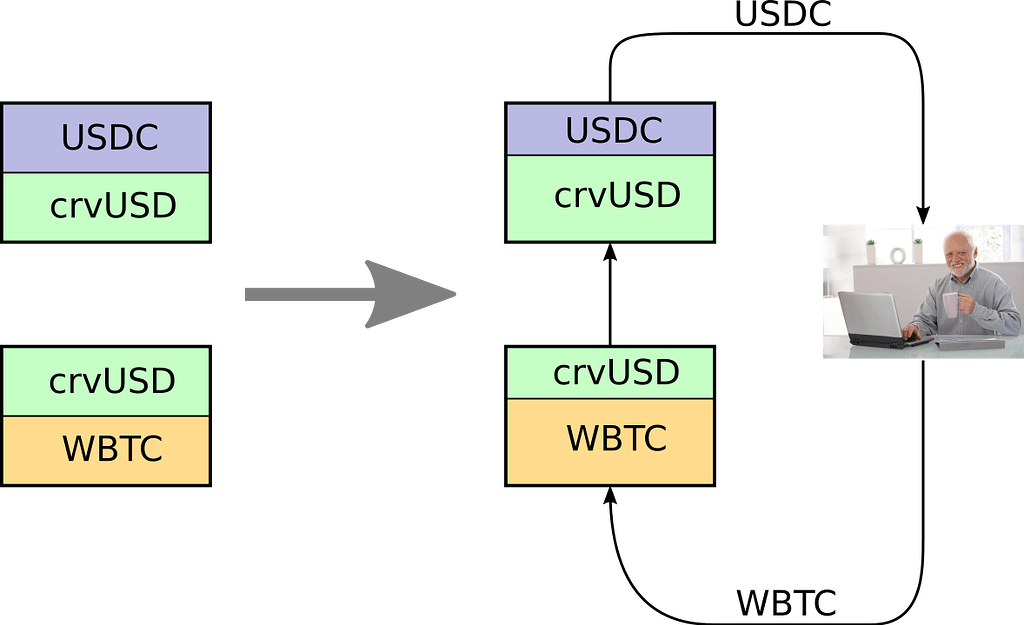 New Proposals Aim to Scale crvUSD and Expand Yield Basis Capacity — Plans include boosting Curve DAO’s YB incentives up to 360K YB/week, raising PegKeeper limits from $108M to $300M, and allocating $1B crvUSD to Yield Basis to unlock $500M capacity, strengthening peg stability and system value ahead of broader scaling.
Sources
19 records from 14 domains
chain.link
ethereum.org
phemex.com
bnbchain.org
polygon.technology
crowdfundinsider.com
x.com
moonbeam.network
youtube.com
cameronrwolfe.substack.com
orochi.network
fintechnews.am
arxiv.org
interconnect.substack.com
Community notes
Spot something off or out of date? Drop a note. Editors review topic notes daily and roll accepted fixes into the explainer — contributors are recognized in the monthly $SQUID drop.
Loading notes…
Help improve this topic
Have a story or tip about this topic? Submit it. See something missing? Leave a note. Editors review daily; accepted submissions and fixes count toward the monthly $SQUID drop.