
Deep dive explainer on Starknet, a STARK-based Ethereum Layer 2 evolving into a shared execution layer for Ethereum and Bitcoin, covering architecture, STRK tokenomics, STRK20 privacy, strkBTC, USDC, security risks and the network’s long-term outlook.
+6 sources across the wider coverage universe
 StarkWare cuts staff and restructures into two units to drive revenue, splitting into applications and Starknet development teams as it pivots beyond infrastructure2026-04
 StarkWare lays out 3-phase quantum-proofing plan for Starknet as Ben-Sasson tells crypto to stop stalling2026-06
 DefiLlama Research highlights how Starknet is reimagining privacy with the release of the STRK20 privacy token standard.2026-06
 Starknet makes viewer keys mandatory for STRK20 deposits, allowing scoped disclosure under lawful requests2026-07
 Starknet opens STRK20 Privacy SDK and Wallet API for private transfers, swaps and DeFi integrations2026-07
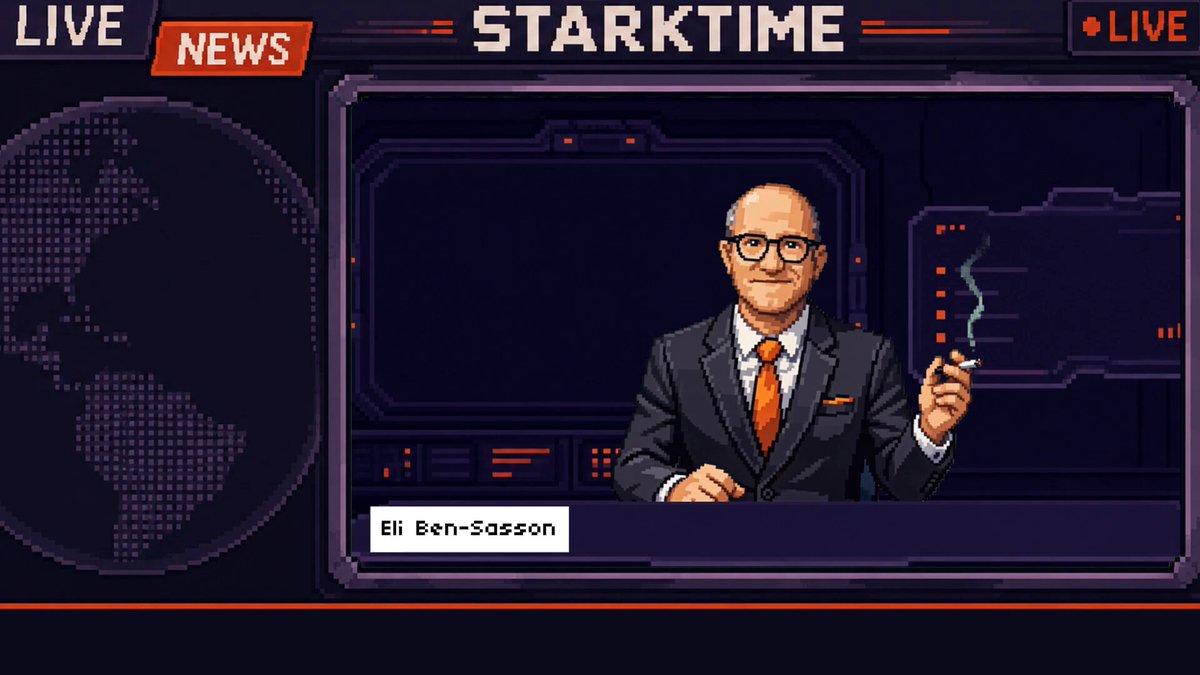 Starknet launches low-fee STRK20s privacy pool on mainnet for all ERC-20s via Ready and Xverse2026-07
Starknet: A ZK Execution Layer for Ethereum and Bitcoin
Built as a zero-knowledge rollup on Ethereum, Starknet is a Layer 2 network that batches transactions off-chain and proves them on-chain using STARK cryptography to deliver higher throughput and lower fees without sacrificing security. It is designed as a validity rollup, meaning every state transition is backed by a cryptographic proof that is verified on Ethereum, rather than relying on fraud proofs and long challenge periods. Over time, the project aims to function as a shared execution layer for both Ethereum and Bitcoin, enabling assets from both ecosystems to flow through a common, programmable environment. Recent upgrades have added native privacy infrastructure, a universal privacy standard for ERC‑20s, and a shielded Bitcoin wrapper, positioning Starknet at the forefront of privacy-preserving DeFi built on mainstream crypto networks. At the same time, the ecosystem is grappling with familiar Web3 challenges—from protocol exploits and bridge risk to governance, decentralization, and regulatory pressure on privacy tools—making Starknet an important case study in the next phase of Layer 2 evolution.
Origins and Architecture
Starknet emerges from years of research into scalable zero-knowledge proofs by StarkWare, the team that helped pioneer STARKs (Scalable Transparent Arguments of Knowledge) and applied them in production via StarkEx, a scaling engine used by early high-throughput applications like dYdX and Immutable X. Building on lessons from these application-specific deployments, StarkWare and the Starknet Foundation launched Starknet mainnet in November 2021 as a general-purpose Layer 2 on Ethereum, capable of running arbitrary smart contracts rather than a single app’s logic. This timing placed Starknet in the first wave of fully programmable Layer 2s, alongside optimistic rollups such as Arbitrum and Optimism and other ZK rollups like zkSync and Polygon’s zkEVM. The motivation was clear: Ethereum’s base layer, while highly secure and decentralized, could not cost-effectively support mass-market use of on-chain trading, gaming, and complex DeFi strategies during periods of high demand. Starknet’s architecture was therefore designed to decouple computation from security, performing heavy workloads off-chain while anchoring final state on Ethereum.
At the core of this architecture is the notion of a validity rollup, often referred to as a ZK-rollup, which differs fundamentally from optimistic rollups in how it guarantees correctness. Instead of assuming transactions are valid unless challenged, Starknet batches many transactions together and generates a succinct STARK proof that attests to the correctness of the resulting state transition. This proof is then posted to Ethereum and verified by a smart contract, which updates Starknet’s canonical state only if the proof validates, ensuring that invalid state transitions cannot be finalized even if the Starknet sequencer misbehaves. Because verification of a STARK proof on-chain is relatively cheap compared to executing each transaction individually on Ethereum, Starknet can offer significantly higher throughput and lower per-transaction fees than Layer 1 while maintaining similar security assumptions for data that is posted on-chain. This design underpins Starknet’s ambition to be more than just a cost-saver; it aims to be a robust execution environment for complex applications that would be impractical or uneconomical to run directly on Ethereum.
Starknet’s architecture is multi-layered. At the bottom sits Ethereum, which acts as the settlement and data-availability layer for the rollup, storing commitments to Starknet’s state and the proofs that justify each update. Above that is the Starknet network itself, composed of sequencers that order and execute transactions, provers that generate STARK proofs, and a virtual machine that runs programs written in Cairo, Starknet’s native smart contract language. Users interact with Starknet smart contracts via wallets that speak Starknet’s API, with transactions eventually making their way into batches whose proofs are submitted to Ethereum using a shared proving system known as SHARP, which amortizes proof costs across many transactions. This separation of roles allows the system to evolve over time—for example by decentralizing sequencers and provers, adjusting fee markets, or integrating additional data-availability options—without changing Ethereum’s base protocol. In effect, Starknet behaves as a programmable “execution shard” anchored to Ethereum, with its own economics and developer ecosystem but security anchored by Layer 1.
From the outset, Starknet has also been framed as more than an Ethereum scaling solution; its roadmap explicitly positions it as the execution layer for both Ethereum and Bitcoin over the long term. Technically, this means extending its settlement surface beyond Ethereum to include Bitcoin, enabling Starknet to process smart contract logic for Bitcoin-denominated assets while still leveraging the security guarantees of Bitcoin’s base layer. Early iterations of this strategy are visible in the design of strkBTC, a wrapped Bitcoin on Starknet that is redeemable for BTC on the Bitcoin main chain via a bridge, and which can opt into Starknet’s privacy features. In parallel, Starknet’s core documentation and roadmap describe a future in which assets from both ecosystems can move seamlessly into Starknet, interact in shared DeFi protocols, and then settle back to their native chains as needed. This cross-L1 orientation distinguishes Starknet from many Layer 2s that are tightly coupled to a single base chain and reflects a broader thesis that long-term crypto infrastructure will feature specialized execution environments serving multiple settlement layers.

Starknet reloads strkBTC faucet as registration window nears close

Core Features: Scaling, Security, and Data Availability
The primary value proposition of Starknet, as with other Ethereum Layer 2s, is to offer cheaper and faster transactions while inheriting Ethereum’s security, but its design choices around proofs and data availability shape how these benefits are realized. Because Starknet performs transaction execution off-chain, the computational cost of sophisticated operations—such as complex DeFi trades, on-chain games, or machine-learning inference in Cairo—is borne mainly by the Starknet prover and sequencer rather than by Ethereum validators. Users pay gas in Starknet’s native token, STRK, to compensate for these resources, and the network batches many transactions into a single proof that is submitted to Ethereum, reducing the effective per-transaction cost. This batching, combined with gas accounting tuned for the Starknet environment, enables lower fees than on Ethereum Layer 1 for most use cases while leaving room for fee differentiation between simple transfers and state-heavy applications. Over time, as proving technology and hardware improve, the marginal cost of additional computation can decrease further, potentially allowing Starknet to support application types that would be prohibitively expensive on-chain elsewhere.
To keep this model sustainable, Starknet has begun to refine its internal gas economy, especially around storage and network congestion. The v0.14.2 upgrade introduced a rebalanced pricing model (codified in SNIP‑37) that increases costs for storage-intensive operations while lowering base Layer 2 gas prices, aiming to ensure that applications that grow the state pay more of the network’s long-term costs. This approach recognizes that state bloat is a key challenge for any rollup, since all full nodes must maintain and update the state even if the data is stored off-chain or in compressed form. The upcoming v0.14.3 release goes further by introducing dynamic L2 gas base fee adjustments based on the STRK price, along with faster block production and a lower target gas per block, so that the network can maintain predictable fees and consistent throughput even as STRK’s market value fluctuates. Aligning gas pricing with the token’s price aims to prevent periods in which high token prices make transactions unexpectedly expensive in dollar terms, a problem observed on other networks that denominate gas in volatile native tokens. All of this reflects a broader shift from merely proving that rollups work to fine-tuning their internal economies for long-term viability.
Data availability is a second critical pillar of Starknet’s design and one that directly affects both security and cost. By default, Starknet operates as a validity rollup, meaning that after computing and proving a batch of state changes, it posts enough data to Ethereum for anyone to reconstruct Starknet’s state independently. This “on-chain data availability” model ensures that even if all Starknet nodes disappeared, an Ethereum user could, in principle, rebuild Starknet’s state from the data and proofs stored on Layer 1, which is why such rollups are often said to inherit Ethereum’s full security guarantees. However, posting large amounts of data to Ethereum is expensive, especially when Ethereum gas prices spike, which can erode the cost advantage of the rollup model. To address this, Starknet is developing a feature called Volition, which allows developers to choose whether each application’s data is stored on Ethereum (L1) or on Starknet (L2), effectively creating a spectrum between full rollup and more lightweight data-availability models. For data that remains on Ethereum, users benefit from Ethereum-grade availability and security; for data retained on L2, users trade some availability guarantees for lower fees, making the approach suitable for use cases where full L1 backing is not critical.
Volition represents Starknet’s attempt to give builders granular control over their security-cost trade-offs without forcing them into a single model. A DeFi protocol handling large balances might choose to keep critical transaction data on Ethereum while relegating less sensitive metadata to Starknet’s own storage, whereas a game might opt for mostly L2-based data to keep costs low for users making frequent microtransactions. Initially, Volition is being rolled out cautiously on testnet, allowing the team and community to evaluate security and UX implications before broad mainnet adoption. Over time, Volition can complement improvements at the Ethereum layer itself, such as EIP‑4844 “proto-danksharding,” which Starknet’s documentation already references as a mechanism enabling cheaper blob data space for rollups. By combining Ethereum’s evolving data-availability tools with its own flexible architecture, Starknet aims to remain cost-competitive while preserving a pathway to strong security guarantees for users who need them.
Security and decentralization extend beyond proofs and data availability to the governance and operation of the network’s core infrastructure. At launch, Starknet relied on a single sequencer operated by StarkWare, which allowed for rapid iteration but created centralization and censorship concerns familiar from early-stage rollups. The Decentralization Roadmap outlines a phased plan to distribute control over sequencing, proving, and governance, culminating in Starknet serving as a credibly neutral execution layer for Ethereum and Bitcoin. A key milestone in this process was the v0.14.0 “Grinta” upgrade, which introduced the foundation for a distributed sequencer layer, including three independent sequencers capable of building blocks, each with its own mempool, and a native fee market to support future operator incentives. The same upgrade improved latency with sub-second pre-confirmations and standardized interfaces for paymasters, which can sponsor transaction fees on behalf of users, aligning the network with modern account abstraction practices. Longer term, Starknet plans to anchor sequencer and prover incentives in a Proof-of-Stake mechanism using STRK, so that operators are economically bonded to honest behavior, though the full PoS system is still under development.
All of these architectural choices combine to make Starknet a complex but powerful environment for building decentralized applications. The reliance on STARK proofs offers advantages like transparency (no trusted setup) and post-quantum security, at the cost of more complex proving circuits and a bespoke programming model in Cairo. The data-availability strategy, anchored by Volition, allows for application-specific tuning but complicates the security analysis, since not all data may live on Ethereum. The decentralization roadmap aspires to reduce reliance on StarkWare and the Starknet Foundation but will take time to fully execute, during which users must trust that governance decisions and infrastructure upgrades align with the broader ecosystem’s interests. For builders and users alike, understanding these layers—proofs, data availability, decentralization—is essential to evaluating Starknet’s trade-offs relative to other Layer 2s and alternative execution environments.
Readers engage Starknet primarily through two economic lenses — whether they personally captured value (airdrop eligibility, fee savings) and whether the token itself is worth holding — while the ZK technology that defines the network attracts clicks only when it produces a concrete new asset or privacy primitive they can use.
Programming Model: Cairo and Native Account Abstraction
One of Starknet’s most distinctive features is its use of Cairo, a custom smart contract language and virtual machine designed from the ground up for zero-knowledge proofs. Unlike Solidity, which was created for the Ethereum Virtual Machine (EVM) without native consideration for provability, Cairo is optimized so that programs can be compiled into execution traces that are efficiently provable using STARKs. This focus allows developers to write “provable programs” that can run either on Starknet or in off-chain proving environments, covering use cases ranging from on-chain gaming and DeFi to verifiable machine learning and cross-chain proofs. Importantly, developers do not need deep expertise in cryptography or proof systems to use Cairo; the language and tooling abstract away much of the complexity, allowing teams to think in terms of high-level logic while the compiler and prover handle low-level proof generation. The trade-off is that Cairo represents a new programming paradigm, which means existing Solidity code bases cannot simply be copy-pasted onto Starknet without translation or a compatibility layer.
Cairo’s design philosophy emphasizes both expressiveness and efficiency, leaning on constructs that work well with STARK trace generation while still being familiar enough for developers coming from Rust or other modern systems languages. The language’s ecosystem includes compilers, testing frameworks, and documentation aimed at easing the onboarding process, along with community-built resources and tutorials. Over time, additional tooling—such as transpilers that convert Solidity to Cairo-like representations, or middle-layer frameworks that abstract away differences—may help bridge the gap between EVM and Starknet development. For now, however, building natively on Starknet usually means embracing the Cairo toolchain and the Starknet-specific contract model, which can be both a barrier to entry and a differentiator for teams seeking to exploit the platform’s unique capabilities. This divergence from the EVM standard is a strategic bet that the benefits of provable computation and STARK-native design will outweigh the costs of forging a separate developer culture.
From the end-user perspective, one of Starknet’s most consequential design decisions is its implementation of native account abstraction (AA) at the protocol level. In Ethereum today, externally owned accounts (EOAs) are controlled directly by private keys, and “smart accounts” with more advanced behavior are achieved via smart contracts that wrap EOAs, leading to fragmented UX and inconsistent support across tools. Starknet, by contrast, treats every user account as a smart contract account by default, enabling features like social recovery, multi-signature security, flexible fee payment, and batched transactions as first-class capabilities. Because account abstraction is built into the core protocol, wallets and dApps can rely on standard interfaces for interacting with accounts, rather than juggling various wallet-specific standards or EOA limitations. This architecture also dovetails with the rollup’s fee model and paymaster interface, so that third parties—such as dApps, relayers, or even protocols like centralized exchanges—can sponsor user transactions or let users pay fees in tokens other than STRK, subject to policy.
Native AA has far-reaching implications for self-custody and usability on Starknet. It enables wallet designs where users can recover access via trusted contacts, hardware devices, or time-locked guardians, without relying solely on a single seed phrase that, if lost, renders funds inaccessible. It also supports session keys and programmable access controls, allowing users to pre-authorize certain actions—like trading within a defined limit or interacting with specific dApps—without signing each transaction individually. These features can make Starknet feel more like a modern fintech app than a traditional blockchain, while preserving the non-custodial nature of user accounts. As with any powerful abstraction, though, implementation details matter: poorly designed account contracts could introduce vulnerabilities or UX pitfalls, and ecosystem standards must evolve to ensure compatibility and security across wallets and dApps. Nonetheless, Starknet’s native AA offers a glimpse of what a post-EOA user experience might look like if widely adopted across the industry.
The broader development ecosystem around Starknet is still maturing, but several components are already visible. Official documentation, tutorials, and SDKs for Cairo and Starknet smart contracts provide the baseline for new developers, while community initiatives add higher-level frameworks, boilerplate templates, and educational content. The network hosts an expanding set of DeFi protocols, NFT projects, games, and infrastructure tools, with community members expressing particular excitement around wallets, bridges, digital identity solutions, and games as areas of growth. On the DeFi side, protocols like mySwap have emerged as core liquidity venues on Starknet, highlighting both the platform’s potential and its risks: a recent exploit involving a fake “EVIL” token drained roughly \$305,000 from the protocol’s Starknet pools, underscoring that application-layer security remains as critical on Layer 2 as on Layer 1. Experimental projects like Deadeye, an early protocol exploring “Distribution Markets” and showcased live on Starknet-focused streams, signal an appetite for novel financial primitives that leverage Starknet’s low fees and provable computation. Meanwhile, infrastructure partners such as wallets (including those focused on Bitcoin, like Xverse) are integrating Starknet support, aligning with the chain’s dual-Ethereum-and-Bitcoin narrative.
As with any new ecosystem, Starknet’s developer community faces a learning curve around best practices, tooling maturity, and composability. The Cairo language and Starknet’s contract model, while powerful, are still consolidating around canonical patterns and libraries, which means early adopters often write foundational components themselves. Security practices must adapt to the specifics of the prover and sequencer architecture, as well as to new features like STRK20-based privacy and strkBTC’s bridging logic, which introduce additional complexity that auditors and protocol designers must understand. Nevertheless, the combination of native account abstraction, a ZK-optimized language, and a clear roadmap for decentralization and multi-chain settlement gives Starknet a distinctive technical identity within the broader Layer 2 landscape. The extent to which that identity translates into durable network effects will depend on how quickly and safely the ecosystem can ship compelling applications that benefit from these unique features.
The STRK Token and Network Economics
The STRK token sits at the center of Starknet’s economic design, serving multiple roles in fees, governance, and future staking. As with many Layer 1 and Layer 2 networks, STRK is used to pay for transaction fees on Starknet, compensating sequencers and provers for executing transactions, maintaining state, and generating proofs. The token is also the primary instrument of on-chain governance: holders can “wrap” STRK into vSTRK, a voting representation, to participate in protocol governance decisions such as upgrades, parameter changes, and funding allocations. Over time, STRK is planned to underpin a Proof-of-Stake system that secures the network’s sequencing and proving layers, with validators staking STRK to earn rewards in exchange for honest behavior. This PoS design is expected to replace or augment the current, more centralized operator model, aligning economic incentives more directly with the network’s long-term health and decentralization goals.
The governance role of STRK is particularly important given the pace of change on Starknet and the complexity of its roadmap. Decisions about upgrades like v0.14.2 and v0.14.3, the introduction of features like STRK20 and Volition, and the parameters of the fee market all have significant implications for users and builders. Community votes, conducted using vSTRK, are increasingly being used to validate and legitimize these changes, as seen in the approval of proposals such as SNIP‑38 and SNIP‑39 that define the architecture and initial signer set for the strkBTC bridge. This governance process must balance the need for rapid iteration in a competitive Layer 2 environment with the desire for stability and predictable rules for application developers and end-users. As the token becomes more widely distributed through airdrops, ecosystem grants, and market activity, governance participation and representation will likely become key metrics for evaluating Starknet’s decentralization in practice.
Distribution of STRK has been an area of significant community attention, particularly around airdrops that sought to reward early users, developers, and ecosystem contributors. While the exact distribution mechanics evolve, community discussions and documents describe point-based systems that reward activities like daily and monthly active use, transaction activity, interactions with multiple contracts, using STRK as gas, staking vSTRK, and holding diverse NFT collections, while penalizing accounts with very low balances or transaction volumes. Such systems aim to balance the desire to reward genuine, engaged users against the risk of Sybil attacks and opportunistic farming, though no distribution model is perfect. Debate has also focused on the timing of airdrops relative to token launch, the impact of sudden token unlocks on price and community sentiment, and the extent to which airdrops should prioritize users versus developers or long-term ecosystem contributors. These questions mirror broader industry debates about fair launches, retroactive rewards, and the role of tokens in bootstrapping decentralized networks.
The design of Starknet’s gas model ties the STRK token directly to user experience and network sustainability. As noted earlier, the v0.14.2 upgrade adjusted the balance between storage costs and base gas prices to ensure that state-intensive applications pay their fair share, while ordinary users benefit from lower baseline fees. This aligns with a growing recognition that long-lived blockchain systems must explicitly price state growth, not just computation, to avoid bloating node requirements and undermining decentralization. Building on that, v0.14.3 introduces dynamic adjustments to the Layer 2 base fee based on STRK’s market price, in an attempt to stabilize effective costs for users in fiat terms even as the underlying token fluctuates. By lowering the target gas per block while keeping the maximum block size unchanged, the upgrade also aims to make transaction inclusion more predictable and reduce congestion spikes, all while enabling faster block production.
From a user’s perspective, these changes should result in more consistent fees and performance, though the actual experience will depend on network load and STRK’s price volatility. For DeFi protocols and other state-heavy applications, the increased storage costs may influence contract design—encouraging more efficient data structures, state pruning strategies, or off-chain storage for certain data via Volition. For sequencer and prover operators, the combination of base fee dynamics, state pricing, and future PoS rewards will define the economic incentives for participation, potentially attracting professional node operators if returns justify the investment. As Starknet evolves, monitoring how these economic levers interact—and whether they produce healthy fee markets without pricing out key use cases—will be critical for assessing the network’s long-term viability.
Beyond Starknet itself, STRK is increasingly integrated into broader crypto market infrastructure. Centralized exchanges and custodians list the token and offer custody solutions, while DeFi protocols on Starknet and other chains explore ways to use STRK as collateral, governance weight, or reward tokens. The introduction of native privacy features via STRK20 raises additional questions about how STRK and STRK-denominated assets will be treated in compliance contexts, particularly if shielded balances or private transfers become common. At the same time, STRK’s governance role means that regulatory or market pressures affecting STRK holders could indirectly influence Starknet’s protocol decisions, underscoring the interconnectedness of token design, network economics, and protocol governance. As with many crypto assets, STRK’s evolution will likely reflect a combination of technical progress, ecosystem growth, and external regulatory and market forces.
- 01STRK airdrop eligibility & farming↗
Readers wanted to know if they qualified, whether the snapshot was gamed, and how 1.3M wallets were selected — personal financial stakes drove the highest click volume on the site.
- 02STRK20 privacy standard rollout↗
A novel primitive letting any ERC-20 gain shielded balances without wrappers generated sustained curiosity across multiple launch and explainer angles.
- 03Dencun fee reduction impact↗
The Ethereum hard fork directly cut Starknet's costs, giving readers a concrete before/after reason to reconsider the network's economics.
- 04L2 competitive growth rankings↗
Performance comparisons showing Starknet and zkSync gaining while others stagnated framed the network as a winner in a crowded field, pulling in readers tracking where to deploy.
- 05Bitcoin dual-scaling narrative↗
Positioning Starknet as infrastructure for both Bitcoin and Ethereum — including governance-approved BTC staking and strkBTC — offered a differentiation story beyond the standard ETH L2 pitch.
- 06STRK post-launch token ROI
The -82% price decline and -50% investor ROI relative to last-round valuation gave readers a harsh benchmark for comparing L2 token launches, validating or indicting their own positions.
Privacy on Starknet: STRK20 and strkBTC
Privacy has long been a missing piece of mainstream blockchains: most activity on networks like Ethereum and Bitcoin is publicly traceable, making transaction histories and balances visible to anyone who cares to analyze them. This radical transparency has benefits for auditability and market integrity but creates significant concerns for users and institutions that do not want their entire financial history exposed on-chain. In DeFi, public mempools and visible positions can also contribute to MEV (maximal extractable value) and front-running, where sophisticated actors exploit transparency for profit at the expense of regular users. Against this backdrop, Starknet’s recent push into native privacy stands out, especially because it is being built on top of a rollup that already relies on zero-knowledge proofs for scalability. Rather than bolting on privacy via mixers or external systems, Starknet is attempting to embed privacy at the protocol and token-standard level while still allowing for compliance-friendly features where needed.
The foundation for this effort is Starknet v0.14.2, sometimes described as the arrival of Starknet’s “privacy engine.” This upgrade introduced core protocol-level changes that enable private, shielded transactions on Starknet, laying the groundwork for private-by-design applications and asset types. Specifically, v0.14.2 added the infrastructure required for a new token framework called STRK20, which defines how ERC‑20‑like tokens can operate in a privacy-preserving mode on Starknet, and for strkBTC, the first asset to launch using this framework. In parallel, the upgrade refined the network’s economic structure through SNIP‑37’s congestion and pricing changes, as discussed earlier, recognizing that privacy features would likely attract additional transaction volume. With v0.14.2 live on mainnet, Starknet now has native support for shielded balances and private transfers at the L2 protocol level, rather than relying solely on application-specific privacy solutions.
Building atop this infrastructure, STRK20 is Starknet’s privacy standard for fungible tokens, designed to bring private balances and transfers to any ERC‑20 deployed on the network. At the heart of STRK20 is the Starknet Privacy Pool, a shared pool into which users can deposit supported tokens, transact privately within the pool, and withdraw when they choose. Crucially, a single privacy pool can support all STRK20-enabled ERC‑20s, meaning users do not need separate privacy systems for each asset they hold. When a user transacts within the pool, the operation is accompanied by a zero-knowledge proof that attests to the correctness of the transaction—such as spending from a valid, unspent note and not double-spending—without revealing sensitive details like the sender, recipient, or exact amount. This design allows STRK20 to offer shielded balances, private transfers, and even private swaps, all backed by validity proofs that ensure the system’s integrity.
STRK20’s integration into Starknet’s architecture and tooling aims to make privacy one-click for both users and developers. For users, wallets and dApps can expose simple toggles or flows—such as sending a token “privately” instead of publicly—while the underlying STRK20 and privacy pool logic handle deposits, shielding, and proof generation. For developers, SDKs and reference implementations lower the barrier to building privacy-aware applications, letting them focus on product design rather than implementing ZK circuits from scratch. Importantly, STRK20 is designed not as an external wrapper but as a native extension of the token standard itself, so that assets like USDC or governance tokens can operate in both public and private modes depending on user needs. This dual-mode capability is particularly relevant for regulated assets: Circle’s native USDC and Cross-Chain Transfer Protocol (CCTP) are now live on Starknet, providing a canonical, redeemable USDC that can participate in DeFi, including, in principle, STRK20-based private DeFi where appropriate. Combining native USDC with STRK20 opens the door to privacy-preserving stablecoin use while preserving the ability to comply with regulatory requirements when needed.
On the Bitcoin side, Starknet’s privacy story centers on strkBTC, a Bitcoin wrapper on Starknet that can opt into shielding via the STRK20 framework. strkBTC allows users to hold, transfer, trade, stake, and deploy BTC across Starknet applications while retaining a claim on native BTC via a bridge architecture defined in community proposals like SNIP‑38 and SNIP‑39. In essence, users deposit BTC into a bridge managed by a federation of signers, receive strkBTC on Starknet, and can then interact with DeFi protocols or use Starknet’s privacy mechanisms to shield their BTC-denominated activity. The asset is designed to be redeemable for native BTC on-chain, anchoring its value in the Bitcoin ecosystem while allowing it to benefit from Starknet’s programmability and low fees. Furthermore, strkBTC is slated to become a stakable asset within Starknet’s future PoS framework, integrating Bitcoin directly into the network’s security and yield-generating opportunities.
However, strkBTC’s design also highlights important trade-offs, particularly around bridge and custody risk. Unlike Ethereum-based rollups, which inherit much of their security from Ethereum itself, Bitcoin is not natively aware of Starknet or strkBTC; the bridge must rely on a federation of signers or an optimistic mechanism to manage BTC deposits and withdrawals. That means users must trust that the bridge operators will not collude, be compromised, or be subject to regulatory or legal interventions that could impact BTC custody. Community discussion and governance votes around SNIP‑38 and SNIP‑39 have emphasized an “optimistic federation” roadmap, in which the system starts with a trusted signer set but aims to evolve toward more trust-minimized designs over time. Newsroom coverage has underscored that while strkBTC opens powerful new possibilities—like private Bitcoin transactions and BTC staking on Starknet—it also exposes users to new vectors of risk that must be weighed against potential rewards.
Beyond individual assets, Starknet’s goal is to enable private DeFi at scale, where complex financial interactions can occur without broadcasting all details to the world. With STRK20 making every ERC‑20 on Starknet eligible for a private state and strkBTC bringing shielded BTC into the mix, developers can design protocols where liquidity provision, trading, and lending are partially or fully shielded, reducing information leakage and front-running opportunities. Recent community events and discussions have focused on what privacy unlocks for DeFi, featuring ecosystem participants from wallets like Xverse and protocols like endurfi, as teams explore UX patterns, compliance strategies, and new product ideas. At the same time, the mySwap incident involving a malicious EVIL token reminds the ecosystem that privacy alone does not solve core security problems; in some cases, shielding can even complicate incident response and forensic analysis if exploited assets move into private pools. Balancing user protection, regulatory requirements, and the genuine need for financial privacy will likely be one of Starknet’s most delicate challenges in the coming years.
Starknet in the Layer 2 Landscape
To understand Starknet’s position in the broader crypto ecosystem, it is useful to compare its approach with that of other leading Ethereum Layer 2s. The L2 landscape includes optimistic rollups like Arbitrum and Optimism, which assume transactions are valid unless challenged and rely on fraud proofs and withdrawal delays, as well as ZK-rollups like zkSync Era and Polygon zkEVM, which, like Starknet, use validity proofs to guarantee correctness. Optimistic rollups have historically enjoyed a head start in EVM compatibility and ecosystem adoption, as their architecture closely mirrors Ethereum’s execution environment, allowing Solidity contracts to migrate with relatively few changes. ZK-rollups, by contrast, faced early technical hurdles due to the complexity of building provable VMs, but they offer benefits like faster finality and more immediate withdrawal times, since validity proofs can be verified without waiting for challenge windows. Starknet sits within this ZK-rollup camp but differentiates itself further via its use of STARKs instead of SNARKs and its non-EVM programming model in Cairo.
A simplified comparison of Starknet and a few other L2s can be expressed as follows:
| Network | Rollup Type | Proof System | VM / Language | Notable Focus |
|---|---|---|---|---|
| Starknet | Validity (ZK) | STARKs | Cairo VM / Cairo | ZK-native, privacy (STRK20), BTC execution |
| zkSync Era | Validity (ZK) | SNARKs | zkEVM-like | EVM-ish, account abstraction |
| Arbitrum One | Optimistic | Fraud proofs | EVM | Deep DeFi liquidity, mature rollup posture |
| Optimism | Optimistic | Fraud proofs | EVM | OP Stack, shared sequencing vision |
| Polygon zkEVM | Validity (ZK) | SNARKs | zkEVM | EVM equivalence, Polygon ecosystem |
As of 2026, all of these networks are live and processing meaningful transaction volumes, with fee levels generally lower than Ethereum Layer 1 but varying based on network design, congestion, and data costs. Price comparisons from market analysis show that many L2s, including zkSync Era, Optimism, Arbitrum One, Starknet, and Polygon zkEVM, cluster within similar fee ranges for simple transactions, though differences emerge for complex operations and under heavy load. However, fee metrics alone do not capture the full picture; factors like developer experience, ecosystem maturity, decentralization, and native features—such as Starknet’s built-in privacy and multi-L1 vision—are increasingly important differentiators. Over time, it is likely that different L2s will specialize: some in generalized EVM compatibility, others in high-throughput gaming, others in regulated financial rails, and others, like Starknet, in ZK-native computation and privacy across multiple base chains.
Within Starknet’s own ecosystem, several verticals are emerging. DeFi is a natural fit given the network’s low fees and growing liquidity, attracting DEXs, lending protocols, stablecoin issuers, and structured product platforms. The addition of native USDC via Circle’s integration and CCTP significantly strengthens Starknet’s position as a hub for dollar-denominated activity, as users and institutions gain access to a canonical, redeemable stablecoin that can move seamlessly across chains. Gaming and NFTs are another area of focus, leveraging Starknet’s ability to handle large numbers of in-game actions or asset transfers without prohibitive costs. On-chain games and experimental protocols, including those showcased in community events like “First Look: Deadeye,” demonstrate how developers are using Cairo to implement novel mechanics that might be too compute-intensive for other environments. Infrastructure projects—such as wallets, bridges, identity systems, and analytics tools—round out the ecosystem, reflecting community enthusiasm for core tooling that makes Starknet accessible to a wider audience.
Against this backdrop, Starknet’s multi-chain execution narrative sets it apart. While most Ethereum rollups focus solely on scaling Ethereum, Starknet explicitly aims to become a unifying Layer 2 that settles on both Ethereum and Bitcoin, enabling “trustless flow of assets and shared prosperity between the two networks.” Practically, this involves not only bridging assets like BTC onto Starknet via wrappers like strkBTC, but also designing the network’s infrastructure and governance to accommodate settlement and finality considerations from both chains. Xverse’s guide to Starknet, for example, emphasizes that Starknet was originally developed for Ethereum but is expanding to support Bitcoin, with BTC staking on Starknet targeted for around 2025 as part of its evolving roadmap. If successful, this approach could make Starknet a key venue for Bitcoin-based DeFi and privacy-preserving BTC usage, complementing Ethereum-native activity and providing a shared environment where assets from both ecosystems interoperate.
Starknet’s role in the L2 ecosystem is also shaped by the broader trend toward modular blockchains, where execution, data availability, and settlement are separated into distinct layers and services. In this vision, rollups like Starknet become specialized execution environments that can plug into various data-availability layers (Ethereum, data-availability committees, restaked systems) and settlement layers (Ethereum, Bitcoin, possibly others) as needed. Features like Volition fit neatly into this modular narrative, as they allow Starknet to adjust its data-availability strategy per application or transaction, potentially integrating with external data layers over time. Starknet’s strong focus on STARK-based proofs and Cairo-based execution also positions it as a provider of “provable computation” services that could be valuable beyond its own network, such as generating proofs for off-chain computations that are verified elsewhere. In this sense, Starknet is not just competing with other L2s but exploring an adjacent space where zero-knowledge computation becomes a general-purpose primitive across the crypto stack.
StarkNet Alpha launches on Ethereum mainnet
STRK token airdrop to 1.3M+ eligible wallets
Ethereum Dencun hard fork cuts Starknet fees
- 2024-09exploit
Starknet suffers four-hour mainnet outage
- 2025-06governance
Governance approves Bitcoin staking for consensus
StarkWare restructures, cuts staff, splits into two units
STRK20 privacy standard goes live; shielded ERC-20 transfers enabled
v0.14.2 ships native privacy with STRK20 and shielded strkBTC
Risks, Challenges, and Critiques
Despite its ambitious design and rapid progress, Starknet faces a range of risks and challenges that will shape its trajectory. Some of these are endemic to all Layer 2s, such as smart contract vulnerabilities, bridge risks, and governance challenges, while others are more specific to Starknet’s choices around privacy, multi-chain settlement, and a non-EVM programming model. A sober assessment of these issues is essential for users, developers, and investors considering whether to build on or hold assets within the Starknet ecosystem.
At the application layer, Starknet is subject to the same kinds of bugs and exploits that have plagued DeFi on Ethereum and other networks. The recent exploit of mySwap’s Starknet deployment, in which an attacker leveraged a malicious EVIL token to drain roughly \$305,000 from protocol coffers, illustrates that even on a validity rollup with robust underlying security, vulnerabilities in token contracts, protocol logic, or integration layers can lead to substantial user losses. While this incident did not implicate Starknet’s core protocol or proving system, it underscores the importance of rigorous auditing, battle-tested libraries, and well-understood standards in a young ecosystem whose tooling and best practices are still evolving. As privacy features like STRK20 and strkBTC become more widely used, incident response may become even more complex, since tracking and freezing stolen funds could be harder if attackers can quickly move assets into shielded pools. Developers and auditors will need to adapt their practices to account for these new primitives, ensuring that privacy does not become a double-edged sword that primarily benefits attackers.
Bridge risk is another major concern, particularly for strkBTC and any future cross-chain assets. Unlike Ethereum-based rollups, whose security model is tightly coupled to Ethereum’s consensus and data-availability guarantees, Bitcoin does not natively support smart contracts or rollups in the same way, which means any bridge between Bitcoin and Starknet necessarily introduces additional trust assumptions. The initial strkBTC design envisions an optimistic federation—a group of signers who collectively control BTC held in custody on the Bitcoin main chain and issue or redeem strkBTC on Starknet. While governance mechanisms and community oversight can mitigate some risks, users must still trust that a majority of signers will not collude, be compromised, or be coerced, and that operational security around keys and infrastructure is robust. Moreover, as strkBTC becomes integrated into staking and DeFi protocols, the systemic impact of a bridge failure or compromise grows: a catastrophic incident could not only impact BTC holders but also destabilize DeFi positions and governance processes that depend on strkBTC’s value.
Regulatory and compliance considerations loom large over Starknet’s privacy ambitions. Global regulators have increasingly scrutinized privacy-enhancing technologies in crypto, from coin mixers to privacy coins, raising questions about how shielded transactions and private DeFi will be treated under anti-money-laundering (AML) and counter-terrorism-financing frameworks. Starknet’s STRK20 standard and privacy pool are designed with the idea of compliant shielding, suggesting mechanisms for selective disclosure or regulated access, but the details of how these will be implemented and enforced remain an open question. For example, regulators may require that wallets, relayers, or dApps involved in STRK20 transactions implement know-your-customer (KYC) checks or retain visibility into user activity under certain conditions, which could complicate the user experience and undermine the perceived benefits of privacy for some users. At the same time, privacy is not solely a tool for illicit activity; it can be essential for commercial confidentiality, personal safety, and basic financial dignity, especially in regions with unstable political or economic environments. Starknet’s challenge will be to articulate and implement a privacy model that can satisfy both user needs and regulatory expectations, without bifurcating its ecosystem into compliant and non-compliant silos.
Decentralization and governance present another set of challenges. While Starknet’s roadmap outlines a path toward distributed sequencers, provers, and PoS-based security, the network remains in a transitional phase where key infrastructure is still operated or heavily influenced by StarkWare and the Starknet Foundation. STRK’s initial distribution, airdrops, and allocations to insiders and early backers raise the possibility of governance capture, where a relatively small group of stakeholders can dominate protocol decisions even as governance processes become more formal. Over time, the dispersion of STRK through market activity and ecosystem incentives may mitigate this risk, but only if governance participation is broad and mechanisms are in place to prevent concentration of voting power. Additionally, decisions around core protocol changes—such as fee model adjustments, privacy defaults, or bridge architectures—will often involve trade-offs where different stakeholder groups (developers, users, operators, regulators) have conflicting interests. Effective governance will require not only robust on-chain voting mechanisms but also transparent off-chain deliberation and a culture of open debate.
Economic sustainability is a final critical lens through which to evaluate Starknet’s future. The network must balance the need to keep user fees low enough to remain competitive with other L2s and alternative chains, while generating enough revenue to compensate sequencers, provers, and stakers in a future PoS model. At the same time, it must manage state growth and data-availability costs, which can become significant as more applications and users join the network, especially if many opt for full rollup security with data posted on Ethereum. Features like Volition, dynamic gas pricing, and differentiated state costs are tools for managing these pressures, but their effectiveness will only become clear with time and real-world usage. If the network fails to attract sufficient high-value activity, incentives for operators and stakers may weaken, potentially impacting liveness or security; conversely, if the network becomes highly successful, it must ensure that fee markets and state management policies prevent congestion and state bloat from eroding user experience and decentralization.
In all of these areas—security, bridging, privacy, governance, and economics—Starknet is navigating uncharted territory alongside its peers in the Layer 2 ecosystem. Its emphasis on STARK-based proofs, a bespoke language, and multi-L1 settlement adds extra dimensions of complexity but also potential upside if the design succeeds in delivering scalable, private, and secure DeFi and smart contract functionality for both Ethereum and Bitcoin. For now, users and builders should approach Starknet with both curiosity and caution, recognizing its innovative potential while remaining clear-eyed about the unresolved risks and the experimental nature of much of its stack.
Outlook
Starknet occupies a distinctive place in the crypto infrastructure landscape: a STARK-powered validity rollup aiming to become a shared execution layer for Ethereum and Bitcoin, with native privacy and account abstraction at its core. Its recent upgrades—introducing STRK20 for universal ERC‑20 privacy, strkBTC for shielded Bitcoin, and a revamped gas model—move the network from a pure scalability solution toward a more opinionated platform for private, programmable finance. As native USDC, emerging DeFi protocols, and cross-chain bridges deepen Starknet’s liquidity and application layer, the network could become a significant venue for users seeking low-cost, privacy-aware alternatives to traditional on-chain activity on Ethereum and Bitcoin.
At the same time, Starknet’s success is far from guaranteed. It must deliver on its decentralization roadmap, manage bridge and privacy risks, and cultivate a robust, security-conscious developer ecosystem in a competitive landscape where other L2s are also innovating rapidly. The interplay between its technical architecture, economic design, and evolving regulatory environment—particularly around privacy and cross-chain activity—will heavily influence its trajectory over the next few years. For now, Starknet is one of the most technically ambitious Layer 2 projects, and its evolution will offer valuable insights into how far zero-knowledge technology and modular blockchain designs can push the scalability, privacy, and functionality of public crypto networks.
Latest Starknet news
Sources
20 records from 8 domains
starknet.io
- starknet.io
- starknet.io· what-is-starknet
- starknet.io· blog / validity-rollups
- starknet.io· blog / starknet-v0-14-2-the-privacy-engine-arrives
- starknet.io· blog / make-all-erc-20-tokens-private-with-strk20
- starknet.io· blog / account-abstraction / native-account-abstraction
- starknet.io· blog / volition-on-starknet
- starknet.io· blog / native-usdc-live-on-starknet
- starknet.io· roadmap
okx.com
community.starknet.io
coinbureau.com
x.com
cairo-lang.org
xverse.app
docs.starknet.io
Community notes
Spot something off or out of date? Drop a note. Editors review topic notes daily and roll accepted fixes into the explainer — contributors are recognized in the monthly $SQUID drop.
Loading notes…
Help improve this topic
Have a story or tip about this topic? Submit it. See something missing? Leave a note. Editors review daily; accepted submissions and fixes count toward the monthly $SQUID drop.