
A comprehensive guide to crypto security covering smart contract exploits, phishing risks, AI-assisted audits, Ethereum's security floor thesis, quantum threats, and protocol upgrade practices for blockchain builders and investors.
+67 sources across the wider coverage universe
 Ethereum’s EIP-8105 proposes encrypted mempool design to hide transaction data until inclusion, aiming to reduce MEV exploitation and improve network fairness2026-04
 Ethereum Foundation Launches Audit Subsidy Program to Lower Security Costs for Developers2026-04
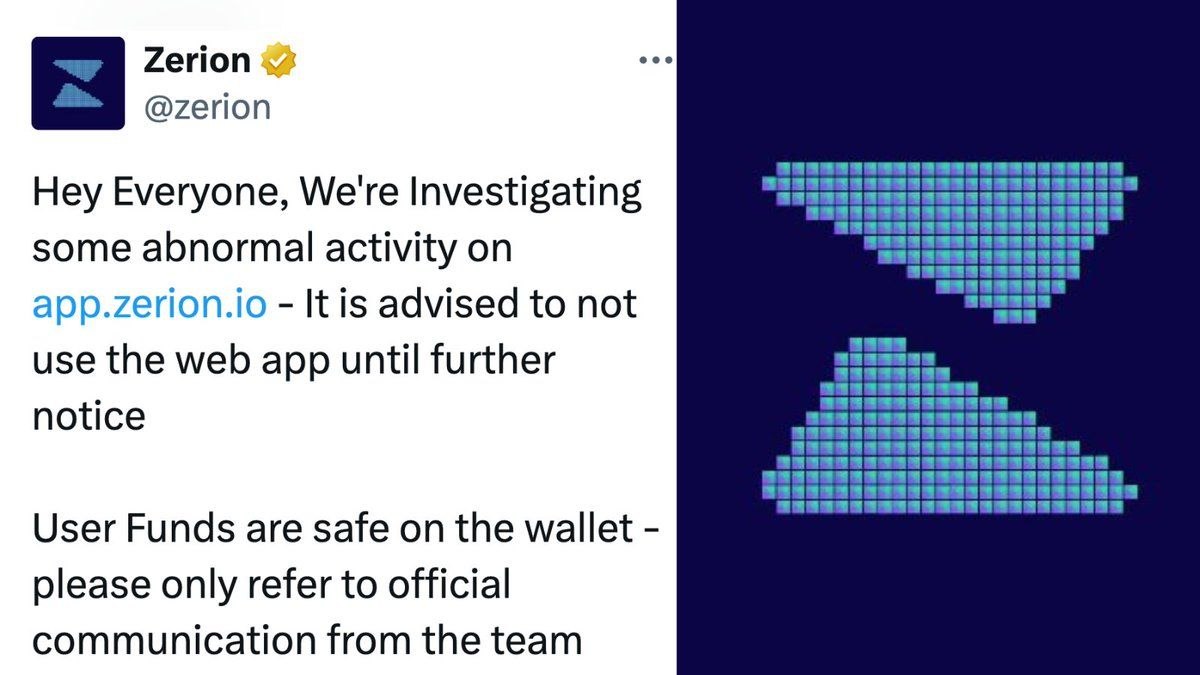 Zerion shuts down web app after detecting suspicious activity, confirms user funds are safe and unaffected across mobile apps and browser extension2026-04
 Security analyst reveals how Lazarus Group uses a macOS malware kit “Mach-O Man,” luring victims via fake Zoom and Google Meet links to execute malicious commands and gain full system access2026-04
 ENS co-founder Nick Johnson blocks Security Council renewal with 82% "no" vote, reigniting concerns over governance centralization and delegate power concentration2026-07
 Security researcher Vladimir S. details how organized crypto hacking gangs exploit email, malware, fake support, and wallet approvals to steal millions through scalable social engineering2026-07
Protecting digital assets requires defending against threats that evolve faster than most protocols can patch — from smart contract exploits and phishing campaigns to the looming disruption of quantum computing.
What Crypto Security Actually Covers
Security in the cryptocurrency and blockchain context is not a single discipline but a stack of overlapping concerns: cryptographic soundness, smart contract correctness, operational practices by teams and users, custody architecture, and the integrity of the infrastructure connecting chains. A failure at any layer can result in total, irreversible loss of funds.
Unlike traditional finance, where fraudulent transactions can sometimes be reversed and insurers absorb losses, on-chain exploits are almost always permanent. The attacker's wallet holds the funds; the protocol holds the liability.
This breadth is why the field has professionalized rapidly. Dedicated firms such as CertiK, Trail of Bits, and Halborn now audit code before launch, monitor chains in real time, and publish monthly threat intelligence. GoPlus Security, for instance, runs automated alert systems that flag cross-chain bridge exploits and phishing wallet addresses within minutes of detection — a meaningful improvement over the days-long lag that characterized earlier incident response.

Ethereum’s EIP-8105 proposes encrypted mempool design to hide transaction data until inclusion, aiming to reduce MEV exploitation and improve network fairness
Smart Contract Exploits: The Persistent Core Risk
The most expensive category of crypto security incidents remains smart contract vulnerabilities — logic errors, reentrancy bugs, oracle manipulation, and flawed access controls baked into immutable code before anyone noticed.
Cross-chain bridges have proven especially hazardous. In a recent incident flagged by GoPlus Security, the cross-chain bridge of the Syscoin scaling network was exploited through a verification flaw in the cross-chain process. The attacker used the vulnerability to generate approximately 5 billion unauthorized $SYS outputs — a classic case of a minting exploit, where the bridge's failure to properly validate state allowed the creation of tokens from nothing.
This pattern repeats across the industry. Bridges aggregate liquidity from multiple chains and often carry more value than any single protocol they connect, making them a high-value target. Their complexity — handling multiple cryptographic schemes, message formats, and finality assumptions — creates a large attack surface that audits can reduce but rarely eliminate.
Protocol teams have responded with layered defenses: formal verification of critical functions, invariant testing, economic security reviews that model attacker incentives, and bug bounty programs that incentivize external researchers to find issues before adversaries do.
Readers treat 'security' as a personal liability audit — the highest-clicked headlines split cleanly between 'how do I protect my own assets' (wallet storage, zero-days, AI drainers) and 'who pays and who gets caught' after a breach (CertIK/Kraken, ByBit, DHS seizures), revealing that abstract protocol risk frameworks generate almost no engagement compared to stories with a named victim or villain.
Phishing and Social Engineering: The Human Layer
Technical hardening of protocols does not protect users who can be deceived into authorizing malicious transactions directly. Social engineering remains one of the most cost-effective attack vectors because it bypasses cryptographic security entirely — the victim's own wallet signs the theft.
GoPlus documented a representative incident: a user lost approximately $316,000 in USDC after signing a malicious Permit2 transaction. The EIP-2612 permit mechanism, designed to improve UX by allowing gasless approvals, also means a single signature grants an attacker permission to drain tokens without any further on-chain interaction from the victim.
Compromised social media accounts compound this risk. In one alert, GoPlus flagged the hijacked X account of a prominent Korean crypto influencer being used to send phishing links to followers via direct message — with multiple secondary accounts already victimized before the alert was issued.
Operational security for Web3 teams has received renewed attention in this context. Former Apple and Amazon security engineer Joe Van Loon has been running practical OpSec workshops for builders, covering topics such as key management, device hygiene, and secure communication channels — reflecting a recognition that team-level mistakes (compromised developer keys, insider threats, supply-chain attacks on dependencies) are as dangerous as protocol bugs.

Ethereum Foundation Launches Audit Subsidy Program to Lower Security Costs for Developers
The Ethereum Foundation is rolling out the "Ethereum Audit Subsidy" program to subsidize security audit fees, directly tackling the cost barrier that leaves smaller teams shipping unaudited code. Applications will be reviewed jointly by Areta — which has managed similar subsidy funds for Arbitrum ($10M), Uniswap ($1.2M), and Solana ($1M) — alongside Nethermind, Chainlink Labs, and other partners. This is a meaningful infrastructure play: professional audits typically run $50K-$500K+, pricing out most early-stage builders and leaving DeFi's long tail dangerously under-reviewed.
AI as Both Tool and Risk Surface
The intersection of AI and crypto security is developing rapidly in both directions.
On the defensive side, AI tools are beginning to assist security researchers in code review at a scale previously impossible. Security engineer Taylor Hornby recently used Anthropic's Claude Opus model to uncover a critical vulnerability in Zcash's privacy protocol — a flaw significant enough to trigger a sharp sell-off in ZEC when disclosed. Hornby subsequently announced he intends to extend this AI-assisted audit approach to Monero and other privacy-focused cryptocurrencies.
This approach does not replace human auditors but extends their reach: AI can surface suspicious patterns across large codebases quickly, letting specialists focus analytical effort where it matters most. Several security firms are integrating similar tooling into their audit pipelines.
The risk side is less discussed but equally real. AI lowers the cost of generating convincing phishing content, fake project documentation, and social engineering scripts. Automated agents operating on-chain raise new questions about who bears liability when an AI-controlled wallet is compromised or exploited. The Aethir network's AI agent platform, for instance, has built a security-first architecture specifically to address the novel trust assumptions introduced when autonomous agents hold and transact funds.
Ethereum's Security Floor Thesis
A distinct argument has emerged in recent months framing Ethereum's native asset, ETH, through a security lens rather than purely as a commodity or currency. The "ETH Security Floor" thesis — gaining traction in institutional research — posits that Ethereum functions as global settlement infrastructure, and that markets may eventually price ETH as scarce collateral required to deter attacks against the trillions of dollars in value secured by the network.
The logic: attacking Ethereum's consensus would require acquiring and staking a large fraction of the ETH supply, which becomes prohibitively expensive as both the price and the total value locked on the network rise. ETH thus functions like a security deposit against malfeasance, and its scarcity provides a form of attack deterrence built into the monetary design.
Whether this thesis becomes a durable valuation framework depends partly on whether institutional adoption deepens enough for "settlement assurance" to command a premium — a question that conferences like The Institutional Stakes: Security and Compliance in Digital Assets have been addressing directly, bringing together family offices and financial leaders to evaluate custody architecture and compliance realities.
Zerion shuts down web app after detecting suspicious activity, confirms user funds are safe and unaffected across mobile apps and browser extension
Zerion being non-custodial means funds were never at risk by design — private keys don't touch their servers — but a web app frontend getting pulled while mobile and extension stay live points to the classic DeFi attack surface: DNS hijack, CDN compromise, or a poisoned frontend dependency slipping malicious transaction prompts to signers. Same vector that hit Curve's DNS in '22 and Balancer's frontend in '23. Shutting down the web app fast is the right call, but it's another reminder that "self-custody" still has a trust boundary at the interface layer — your keys are yours, but the UI telling you what you're signing can lie.
Quantum Computing: The Horizon Threat
The cryptographic primitives underpinning most blockchains — elliptic curve signatures for wallet keys, hash functions for proof-of-work and Merkle trees — are believed to be secure against classical computers for the foreseeable future. Quantum computers capable of running Shor's algorithm at sufficient scale could break elliptic curve cryptography, exposing private keys from public keys.
France has announced plans to phase out non-quantum-resistant encryption in its national infrastructure, explicitly citing Bitcoin security concerns among the motivations. While the timeline for "cryptographically relevant" quantum computers remains contested among researchers — estimates range from a decade to several decades — the policy response is accelerating.
Several initiatives are already addressing this. WISeKey, The Hashgraph Group, and Hedera have launched the QAIT Q-Day Security Assessment Platform on the SEALCOIN Quantum Marketplace, designed to help organizations evaluate their quantum exposure and readiness. CertiK has published research on post-quantum signature schemes applicable to blockchain contexts. The US government's National Security Presidential Memorandum (NSPM-12) outlines federal transition requirements for quantum-resistant cryptography.
For most blockchain users, the practical response remains distant — wallet key formats and signature schemes are protocol-level concerns that require coordinated upgrades. But for long-term holders whose public keys are exposed on-chain, the theoretical risk of future decryption is an argument for migrating to addresses whose public keys have never been revealed.
- 01self-custody wallet protection
Readers wanted concrete, ranked methods for storing crypto across asset types — a rare practical how-to in a feed dominated by incident reporting.
- 02researcher accountability post-breach
The CertIK/Kraken saga — where security researchers allegedly refused to return drained funds and routed them through Tornado Cash — turned a routine disclosure into a moral and legal accountability story.
- 03supply chain and zero-day exploits
Both the Fireblocks multi-wallet zero-day and the npm package hijacking targeting 2.6B weekly downloads showed readers that the attack surface extends far beyond smart contracts into developer infrastructure.
- 04AI-powered attack tooling
An AI-crafted wallet drainer that bypasses existing security scanners signaled a qualitative shift in attacker capability that existing audit tooling cannot yet detect.
- 05law enforcement and compliance seizures
DHS thwarting 500+ ransomware attacks and seizing $4.3B, alongside Tether proactively freezing OFAC wallets with FBI involvement, offered readers rare evidence that state-level enforcement is actually operational in crypto.
- 06on-chain audit standards
ERC-7512's proposal to put audit verification on-chain addressed a long-standing credibility gap — readers clicked because it promised a structural fix rather than another post-mortem.
Protocol-Level Security Upgrades in Practice
Security improvements often ship as hard forks — coordinated upgrades that require node operators to update software by a specific block height or face rejection from the network.
A current example: the Zurich Hard Fork (v0.9.0), scheduled for mainnet rollout on June 25 at approximately 2PM UTC, packages security vulnerability fixes alongside performance updates. This illustrates the standard lifecycle: vulnerability discovered (sometimes through audit, sometimes through a bug report, occasionally through exploitation), patch developed, community signaled, upgrade scheduled, node operators coordinated. The PPGC 43 governance call preceding the Zurich fork covered the specific vulnerabilities addressed and the upgrade steps — the public release notes document approach is now standard practice, balancing transparency with the risk of providing an exploitation roadmap before most nodes have patched.
Chain launch security deserves particular attention. The Caldera team, which provides infrastructure for launching new chains, frames security as one of four foundational pillars alongside customizability, reliability, and support. This reflects an industry-wide shift: security is no longer treated as a post-launch audit checklist item but as an architectural requirement from day one, with security firms embedded in the development process before a single line of production code is deployed.
Consumer-Facing Scams and Regulatory Context
Below the protocol layer, consumer protection represents a distinct security domain. Investment scammers increasingly impersonate crypto platforms, regulatory agencies, and even law enforcement to extract funds or personal information. The manipulation tactics — false urgency, authority impersonation, sunk-cost framing — are identical to traditional financial fraud but with the added complication that crypto transactions are irreversible and pseudonymous.
The US government's engagement with crypto security has broadened beyond consumer protection. Kraken's parent company Payward has joined the US Tech Force initiative, aimed at advancing crypto security practices and blockchain integration in federal technology systems. The National Security Investment Workforce has received new pay authority to attract talent capable of evaluating crypto-related national security implications — a sign that blockchain infrastructure is now considered relevant to strategic concerns, not just retail financial regulation.
- 2023-08milestone
ERC-7512 on-chain audit proposal published
- 2024-01milestone
Fireblocks discloses zero-days across major wallet vendors
- 2024-06exploit
CertIK researchers drain Kraken, refuse refund, route funds via Tornado Cash
- 2024-10exploit
Orbit, Radiant Capital, Gamma Strategies exploited — $90M lost in one week
- 2024-12exploit
npm supply-chain attack hijacks 18 libraries with 2.6B weekly downloads
- 2025-02exploit
ByBit suffers $1.4B exploit confirmed by ZachXBT
- 2025-04launch
Aave v3.1 ships virtual accounting and stateful interest-rate security upgrade
- 2025-06regulatory
Tether proactively freezes all OFAC-sanctioned wallets in coordination with FBI and Secret Service
Outlook
The structural trajectory of crypto security is toward professionalization and institutionalization. More chains are launching with embedded audit processes rather than treating security as a post-hoc concern. AI-assisted code review is expanding the capacity of security researchers. Regulatory frameworks are increasingly specifying security requirements for custodians and issuers, not just anti-money-laundering controls.
The persistent challenges are the ones hardest to systematize: human error, social engineering, and the arms race between auditors who find bugs and adversaries who monetize them. Bridge exploits and phishing drains will continue as long as complexity creates attack surface and irreversibility creates payoff asymmetry. Quantum computing remains a long-horizon risk that demands preparation now precisely because upgrading deployed cryptography is slow.
For builders, the practical implication is clear: security is not a feature added at launch — it is the foundation everything else rests on.
Latest Security news
Ethereum’s EIP-8105 proposes encrypted mempool design to hide transaction data until inclusion, aiming to reduce MEV exploitation and improve network fairnessEthereum Foundation Launches Audit Subsidy Program to Lower Security Costs for DevelopersZerion shuts down web app after detecting suspicious activity, confirms user funds are safe and unaffected across mobile apps and browser extension CoinGecko’s 2026 Crypto Security Report finds $3.63B stolen across 245 incidents, with supply-chain attacks, smart contract exploits and key compromises leading lossesSecurity analyst reveals how Lazarus Group uses a macOS malware kit “Mach-O Man,” luring victims via fake Zoom and Google Meet links to execute malicious commands and gain full system accessENS co-founder Nick Johnson blocks Security Council renewal with 82% "no" vote, reigniting concerns over governance centralization and delegate power concentration
Community notes
Spot something off or out of date? Drop a note. Editors review topic notes daily and roll accepted fixes into the explainer — contributors are recognized in the monthly $SQUID drop.
Loading notes…
Help improve this topic
Have a story or tip about this topic? Submit it. See something missing? Leave a note. Editors review daily; accepted submissions and fixes count toward the monthly $SQUID drop.