
In-depth explainer on crypto hacks covering how attacks work, major case studies (Mt. Gox, Ronin, Drift, Kelp, Verus), stablecoin and censorship issues, North Korean threats, user security, and how DeFi is evolving its defenses.
+14 sources across the wider coverage universe
 Analyst reviews 47 crypto OpSec failures, revealing one common mistake made by 100% of victims, highlighting critical security gaps across wallets, users, and Web3 practices2026-04
 Fake Ledger app on Apple's Mac Store drains G. Love's $420K Bitcoin retirement fund2026-04
 Russian crypto exchange Grinex halts trading after $13M exploit, blaming “foreign special services” in alleged attempt to destabilize financial systems2026-04
 Circle faces lawsuit over alleged role in $280M Drift Protocol hack, accused of failing to freeze stolen funds and aiding illicit transfers2026-04
 U.S. government moves $606K in 2016 Bitfinex hack bitcoin to Coinbase; exchange to redeem all RRTs and burn LEO2026-04
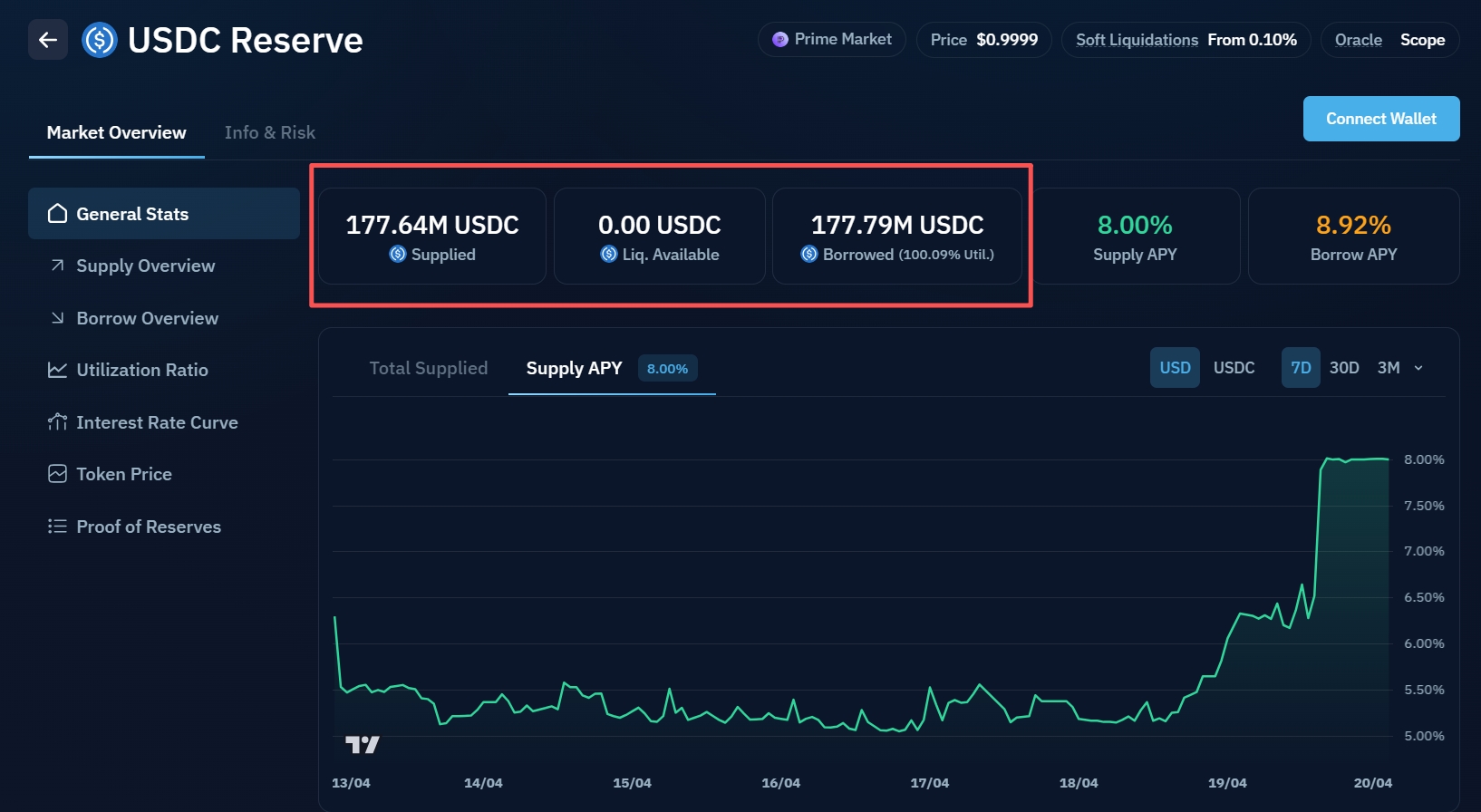 DeFi outflows spill into Solana after KelpDAO rsETH hack, pushing Kamino USDC markets to extreme stress with 100% utilization and zero liquidity in key lending pools2026-04
Crypto Hacks: How Attacks Happen, Who Gets Hit, And What Comes Next
In crypto, a hack is any unauthorized exploitation of software, hardware, or governance that lets attackers seize or destroy digital assets, often in real time on transparent public ledgers. At a time when on‑chain thieves stole roughly \(2.2\) billion dollars in 2024 alone and state-backed groups like North Korea’s Lazarus are repeatedly linked to record-breaking DeFi and exchange breaches, understanding hacks has become as essential to crypto literacy as knowing how to send a transaction.
What Counts As A “Hack” In Crypto?
The word “hack” is used loosely in everyday conversation, but in security it has a more precise meaning. A hack is the successful exploitation of a vulnerability that lets an attacker violate a system’s intended security properties, such as confidentiality, integrity, or availability. In crypto, that usually means finding a way to move, mint, or destroy tokens that the protocol, wallet, or exchange never meant to authorize, whether by tampering with code, abusing governance, or stealing private keys. The key point is that a hack leverages a technical or operational weakness, even if social engineering is the first step that opens the door. This distinguishes hacks from pure frauds like Ponzi schemes, which rely on deception but do not necessarily exploit a technical flaw.
A helpful way to break this down comes from traditional cybersecurity, which distinguishes between vulnerabilities, exploits, and threats. A vulnerability is any weakness in design, implementation, or operation that could be abused, from a missing input check in a smart contract to a developer who stores private keys on an internet‑connected laptop. An exploit is the concrete method or sequence of actions that turns that weakness into a working attack, whether in the form of malicious code, a crafted transaction, or a carefully timed oracle manipulation. A threat is the potential or actual malicious actor who uses the exploit, and the scenario in which they do so, such as a state-backed team draining a cross‑chain bridge or a lone attacker stealing NFTs from compromised wallets. In crypto, all three elements combine on-chain and off-chain in distinctive ways that make hacks unusually visible—and unusually contentious.
Within crypto itself, people also distinguish between different kinds of hacks depending on what is compromised. Exchange hacks target centralized custodians and trading platforms that hold funds on behalf of users, as in the classic case of Mt. Gox. Protocol hacks hit the smart contracts that govern decentralized finance (DeFi) systems, liquidity pools, or NFT marketplaces, manipulating their logic to extract value. Wallet and key‑management hacks focus on the endpoints—users’ devices, browser wallets, or hardware wallets—using phishing or malware to gain control of private keys. There are also cross‑chain bridge hacks, governance takeovers, and stablecoin‑specific attacks, each shaped by the design of the underlying protocol.
It is also important to distinguish hacks from “rug pulls” and insider theft. In a rug pull, developers deploy a project with malicious intent, such as retaining special privileges to drain liquidity or mint infinite tokens, and later exercise those powers. That is fraud, even if the code technically behaves as written. By contrast, a hack typically means an attacker exploited a weakness that the creators did not intend. Reality, however, is messy. Some incidents involve a mix of poor design, excessive trust in privileged roles, and opportunistic outsiders, making it hard even for courts and regulators to draw clean lines.
Finally, in the crypto context the term “exploit” is often used more narrowly than in traditional security discourse. Community members may describe an incident as an “exploit” rather than a “hack” when the attacker abused a flaw in protocol design without apparently breaking any explicit rules of the smart contract. That language sometimes underpins moral debates about whether the attacker actually “stole” funds or merely played by the code’s rules, especially when no private keys or infrastructure were compromised. Yet from a security standpoint, such semantic distinctions matter less than whether users understood and accepted the risk in advance.

Hack VC partner Hsin-Ju Chuang, 37, found dead near remote I-15 off-ramp in Mojave Desert; cause still unknown.

From Mt. Gox To Modular DeFi: How Crypto Hacks Have Evolved
Early Exchange Breaches And The Mt. Gox Collapse
In the early 2010s, most serious crypto hacks targeted centralized exchanges rather than protocols, simply because exchanges were where almost all digital assets were held. The canonical example remains Mt. Gox, once the dominant Bitcoin trading venue, which suffered repeated security incidents between 2011 and 2014. Reports and later investigations suggest the platform was hacked multiple times over those years, culminating in the 2014 revelation that approximately 850,000 BTC were missing, forcing the exchange to suspend withdrawals and file for bankruptcy. Long before that final failure, a compromised Mt. Gox account in June 2011 had already sent Bitcoin into a notorious flash crash, briefly trading around one cent after plunging from roughly \(17.50\) dollars. Those episodes revealed both the fragility of early infrastructure and the systemic risks posed by centralized custodians in a nascent market.
Mt. Gox’s collapse shaped how the industry and regulators think about custody risk. The exchange had poor internal controls, opaque accounting, and weak segregation between user and company funds. Yet from the vantage point of users, Mt. Gox was “the Bitcoin market,” so its failure looked existential, prompting panic threads on early forums asking whether the entire bubble was bursting. As later waves of hacks showed, markets can eventually decouple protocol health from individual platforms, but that conceptual separation did not yet exist in 2011–2014. The episode also left a long tail of legal and political consequences, from bankruptcy proceedings to debates over whether exchanges should be regulated more like banks or broker‑dealers.
As a result, the first generation of crypto security discourse centered on hardening centralized exchanges through better cold storage, withdrawal controls, and internal audits. Multi‑signature wallets, hardware security modules, and proof‑of‑reserves attestations all emerged in part to restore confidence that another Mt. Gox would not easily recur. However, concentrating security efforts on custodians did little to anticipate the very different attack surfaces that would emerge with programmable smart contracts, or the multi‑chain architectures that now dominate DeFi.
The DeFi Era And Protocol Exploits
The launch of Ethereum and the rise of smart contracts opened a new frontier: protocols that hold and move funds according to on‑chain logic rather than human discretion. This shift gave birth to decentralized exchanges, lending platforms, derivatives markets, and complex yield strategies built entirely in code. It also created a massive and highly visible target for hackers. Smart contracts are immutable once deployed, may control hundreds of millions in value, and are often publicly accessible for anyone to probe for weaknesses. As total value locked (TVL) in DeFi swelled, so did the stakes of any bug.
Data from blockchain intelligence firms illustrates how serious this problem became. Chainalysis estimates that in 2024, attackers stole around \(2.2\) billion dollars in crypto, a roughly twenty‑one percent increase over the prior year, even as the number of distinct hacking incidents plateaued. That suggests that while the frequency of successful hacks may have stabilized, the average severity remains high, with a smaller number of large, sophisticated attacks dominating the totals. Another analysis of the 2023–2024 crypto threat landscape emphasizes that DeFi protocols and cross‑chain services have become primary targets as adversaries shift away from heavily regulated exchanges toward permissionless, composable systems. In effect, the attack surface has migrated to where the programmability and capital now reside.
Not all DeFi hacks look alike. Some stem from classic coding errors like unchecked external calls, reentrancy vulnerabilities, or integer overflows. Others exploit emergent behavior in composable systems—such as manipulating price oracles to create artificial collateral for borrowing, then dumping the proceeds before the system rebalances. The growth of flash loans, which let anyone borrow large amounts of liquidity without collateral so long as the loan is repaid within one transaction, has also enabled attackers to mount complex, capital‑intensive strategies with little upfront cost. Meanwhile, the decentralized and often pseudonymous governance of these systems complicates responsibility: when a protocol is governed by a DAO, who exactly is “at fault” for failing to secure it?
Despite these challenges, there is evidence that at least some parts of DeFi are maturing. Recent research argues that modern decentralized lending markets may be safer than their reputation suggests, with exploit losses increasingly concentrated in isolated edge cases rather than systemic failures of core primitives. That aligns with the observation that the total value lost to hacks, while still large, has not grown explosively in recent years despite rising TVL and activity. Yet as a string of high‑profile exploits in 2026 shows, the system remains vulnerable where innovation outpaces security practices.
Cross‑Chain Bridges And Modular Risks
As blockchains proliferated, users and developers sought ways to move assets and messages across chains. Cross‑chain bridges emerged as a key piece of infrastructure, locking tokens on one chain and minting representations on another, or relying on external validators to attest that a transfer occurred. Unfortunately, these mechanisms bundle large honeypots of locked assets with complex verification logic and often centralized trust assumptions, making them a favorite target for sophisticated attackers.
The Ronin Network hack in 2022 epitomized these risks. Ronin, an Ethereum sidechain powering the popular Axie Infinity game, maintained a bridge that held user funds while allowing transfers between chains. Attackers compromised validator keys and crafted transactions that withdrew around 173,600 ETH and 25.5 million dollars in USDC, ultimately stealing roughly 625 million dollars at then‑current prices. Investigators later attributed the breach to North Korea’s Lazarus Group, which allegedly relied on extensive social engineering and malware to infiltrate the validator operators. The incident highlighted how bridges can centralize critical security functions even within ostensibly decentralized ecosystems.
More recently, the Verus‑Ethereum bridge hack in May 2026 showcased a different class of vulnerability: subtle logic errors in cross‑chain validation. The Verus Protocol suffered an approximately 11.6 million dollar loss when an attacker exploited poor validation of bridging data between Verus and Ethereum. On the Ethereum side, a smart contract was tasked with checking notary signatures on a “transfer blob” and then executing payout instructions. However, while both sides of the bridge performed some validation, neither verified that the input amount on Verus matched the output amount on Ethereum. The attacker constructed a blob in which a trivial input—about 0.01 dollars’ worth of the VRSC token on Verus—corresponded to a massively larger payout in ETH, tokenized BTC, and USDC on Ethereum. Because the crucial “checkCCEValues” function failed to enforce that inputs and outputs balanced, the contract executed the unbalanced transfer as if it were legitimate.
What is striking about the Verus incident is that cryptography and signature verification worked exactly as designed. The bridge correctly verified that authorized notaries had signed the transaction data. The flaw lay entirely in business logic: no one encoded the economic invariants needed to ensure that what went in matched what came out. As bridging and modular architectures proliferate, more of crypto’s security hinges on such seemingly mundane but critical checks across multiple codebases and chains. When they fail, the resulting hacks can be both technically simple and financially devastating.
Readers don't click crypto hacks for the exploit mechanics — they click for the resolution triangle: who orchestrated it (Lazarus, rogue insider, whitehat), whether victims get paid back, and whether anyone faces consequences — making attribution and aftermath far more engaging than vulnerability disclosure.
The Anatomy Of A Crypto Hack
Vulnerabilities: Where Systems Go Wrong
Every hack begins with a vulnerability, a weakness in design, implementation, or operation that can be abused to violate security assumptions. In smart contract systems, one common category of vulnerability is logic errors, where the code does not correctly enforce intended rules. The Verus‑Ethereum bridge exploit fell squarely in this category: the smart contracts did everything they were coded to do, but they were not coded to verify that input and output values matched, creating an opportunity for an attacker to construct a pathological transaction. Other logic flaws include misconfigured collateral ratios, incorrect fee calculations, or governance rules that allow a small quorum to seize control of critical parameters.
Another major class of vulnerabilities lies in external dependencies, especially price oracles and cross‑protocol integrations. Many DeFi hacks manipulate oracles to create artificial asset values, as seen in the 2026 exploit of the Solana‑based Drift Protocol. In that case, attackers reportedly shifted admin authority, initialized a fake asset called CVT, manipulated its price via oracle inputs, and then borrowed against the inflated collateral to siphon funds. When protocols rely on the assumption that oracles reflect fair market prices without robust manipulation resistance, attackers can manufacture temporarily distorted conditions that satisfy the code’s checks but violate economic reality.
Operational security, or opsec, forms a third category of vulnerabilities, particularly around private keys and privileged access. The Mt. Gox saga involved not only software weaknesses but also poor internal controls over wallets and keys, enabling attackers and possibly insiders to drain funds over time. More recently, investigations into a large‑scale token theft at Humanity Protocol concluded that malware on a developer’s machine granted attackers root‑level access to at least seven private keys. That access, combined with backups stored on an insecure device during mainnet launch, allowed the thieves to drain tens of millions of dollars’ worth of H tokens without exploiting any smart contract bug. Similar patterns recur across incidents: privileged keys stored on laptops, multi‑sig signers using compromised personal devices, or admins falling for sophisticated phishing campaigns.
Centralized components within ostensibly decentralized systems create further vulnerabilities. Stablecoin issuers, bridge operators, and protocol teams often retain emergency powers, such as the ability to pause contracts, change parameters, or blacklist addresses. When those powers are guarded by weak processes or insufficient multi‑party controls, they become attractive targets for attackers and pressure points for regulators. The Bybit hack, which saw the theft of around 1.5 billion dollars in crypto in what the FBI has described as the largest exchange heist to date, appears to have involved compromise of high‑privilege infrastructure by North Korea’s Lazarus Group. Such incidents underscore that decentralization is not binary; many systems function as hybrids whose security depends on both code and organizational practices.
Finally, user‑level vulnerabilities cannot be ignored. Phishing campaigns, malicious browser extensions, and fake wallet apps all prey on individuals, tricking them into exposing private keys or signing malicious transactions. A case linked to suspected North Korean hackers saw attackers use a fake email impersonating the exchange Bithumb to deliver malware that harvested private keys, draining 141 wallets and stealing roughly 36 million dollars. Attackers are also experimenting with techniques like “EtherHiding,” which use blockchain infrastructure itself to conceal malware payloads and make takedown more difficult. In this sense, crypto inherits all the risks of conventional cybersecurity, but with the added twist that stolen funds can be irreversibly moved in seconds.
Exploits: Turning Weakness Into Theft
Once a vulnerability is identified, an exploit is the concrete method used to take advantage of it. Exploits can range from simple actions—such as reusing a leaked private key to sign withdrawals—to highly complex multi‑transaction sequences that require deep knowledge of protocol internals. In many DeFi hacks, the exploit involves crafting transactions that maneuver protocol state into an unexpected configuration, satisfying all on‑chain checks while producing a profit for the attacker.
The Drift Protocol hack illustrates this dance. According to public incident reports, attackers were able to gain admin‑level control, deploy a fake asset (CVT), and manipulate its price via oracles. They then borrowed real assets against this fictitious, overvalued collateral, effectively tricking the protocol into treating worthless tokens as highly valuable collateral. The exploit chain required understanding not just Drift’s code but also how oracles, collateral calculations, and lending modules interacted, as well as the liquidity environment across the Solana ecosystem. Only once those conditions aligned could the attacker execute the drain.
Cross‑chain exploits often combine logic flaws with signature replay or mis‑routing. In the Verus exploit, the attacker constructed a transfer blob with a negligible input and enormous outputs but ensured that notaries signed the blob and the Ethereum contract trusted that signature. Because no validation compared input and output values, the exploit boiled down to packaging valid signatures with cleverly chosen economic parameters. Similar abuses plague other bridges when message formats, replay protections, or validator thresholds are misconfigured.
Key‑theft exploits, by contrast, are often rooted in social engineering and malware. The Humanity Protocol case, where attackers allegedly gained remote access to a director’s device via phishing and copied wallet data, highlights how a single compromised endpoint can cascade into protocol‑wide loss when that endpoint holds multiple private keys. Likewise, spearphishing campaigns associated with North Korea’s Lazarus Group have repeatedly targeted exchange employees and developers, using tailored job offers, backdoored PDFs, and fake software tools to deploy malware and exfiltrate credentials. In these cases, the exploit is less about clever on‑chain maneuvering and more about quietly obtaining the same capabilities as a trusted insider.
Importantly, the same underlying vulnerability can be exploited in multiple ways. A mispriced oracle might enable both simple arbitrage drains and more complex governance attacks. A weak multi‑sig configuration can be abused for a one‑shot theft or slowly drained over time. That is why security professionals emphasize reducing vulnerabilities at their root rather than only defending against known exploit patterns.
Threat Actors: From Script Kiddies To Nation‑States
The final ingredient in a hack is the threat actor: the individual or group that discovers or purchases an exploit, decides to deploy it, and launders the proceeds. In crypto, these actors span a wide spectrum. At one end are relatively unsophisticated attackers who copy publicly available exploit scripts or front‑run known bugs. At the other are advanced persistent threats (APTs) linked to nation‑states, which may combine zero‑day exploits, long‑term network infiltration, and specialized laundering infrastructure.
North Korea’s Lazarus Group, in particular, has become notorious for targeting crypto. The FBI has publicly attributed a 1.5 billion dollar Bybit exchange hack to Lazarus, describing it as the largest crypto heist to date. Blockchain intelligence firms have also linked the group’s TraderTraitor sub‑unit to the Ronin bridge hack, the 625 million dollar attack on Axie Infinity’s network, and the 2026 Drift Protocol exploit, in which 285 million dollars were stolen. In some cases, the same on‑chain laundering patterns, mixer usage, and network‑level indicators appear across incidents, strengthening the attribution. Separate reports implicate suspected North Korean hackers in a 36 million dollar theft involving EtherHiding malware and fake Bithumb emails. Collectively, these operations suggest a sustained, state‑directed campaign to acquire foreign currency through crypto hacks, bypassing traditional sanctions.
Not all large hacks are state‑linked. Profit‑driven criminal organizations, sometimes loosely coordinated through online communities, also specialize in discovering and selling exploits. Some groups focus on phishing and social engineering, others on code audits and bug hunting for offensive purposes. There is an entire gray market where vulnerabilities in popular DeFi protocols can be sold to the highest bidder, with prices reflecting the perceived potential payout and likelihood of discovery. The increasing sophistication of tools, including AI‑assisted vulnerability scanning, further levels the playing field between small teams and traditional APTs.
At the same time, a sizable minority of “hackers” in crypto act as security researchers or whitehats who discover vulnerabilities and either responsibly disclose them or stage controlled exploits to protect funds before malicious actors can strike. Many protocols run bug bounty programs that reward such behavior, and there have been numerous incidents where attackers who initially drained funds later returned them in part or in full in exchange for a “bounty” and legal assurances. Negotiations between teams and hackers, such as public pleas by high‑profile figures after major exploits, have become a recognizable feature of the post‑hack playbook. The blurred line between whitehat and blackhat, however, sometimes leads to contentious disputes over intent and appropriate compensation.
- 01Whitehat rescue ambiguity
The Prisma Finance story (929 clicks, the top performer) hooked readers by leaving the ethical verdict open — attacker or savior — a framing that generates debate and return visits.
- 02ZachXBT laundering investigations↗
Multiple high-click headlines centered on ZachXBT tracing Bybit and Lazarus Group funds through meme-coin wallets and 920+ addresses, satisfying reader appetite for detective-style follow-the-money threads.
- 03Insider threat / rogue employee
The Ozys security chief allegedly sabotaging his own firewall before the $81.5M Orbit breach reframed hacks as an internal betrayal story, not just an external attack.
- 04High-profile personal wallet compromise
Chris Larsen losing $113M from personal XRP accounts (two separate headlines totaling 539 clicks) showed readers that even co-founders of major protocols are not immune, with the LastPass connection adding a relatable threat vector.
- 05Protocol victim compensation decisions
Curve's $44M CRV compensation vote, Conic Finance recovery investment, and MorphoBlue frontrun recovery generated sustained interest because they pit token holders against treasury solvency in public governance battles.
- 06Bridge and cross-chain drain events↗
Multichain's tens-of-millions drain across Fantom, Moonriver, and Dogechain bridges illustrated how a single cross-chain chokepoint can simultaneously drain multiple ecosystems, a systemic risk readers found alarming.
Case Studies: How Major Crypto Hacks Unfolded
Mt. Gox: The Original Catastrophe
The Mt. Gox collapse remains a defining story in crypto’s collective memory because it combined massive loss, opaque operations, and market‑wide panic. Originally launched as a trading site for Magic: The Gathering cards, Mt. Gox pivoted to Bitcoin and quickly became the dominant exchange in the early 2010s, at one point handling the majority of BTC trading volume. Behind the scenes, however, the platform suffered multiple security incidents between 2011 and 2014, including thefts that went undetected or unreported for long periods. A 2011 breach involving a compromised account triggered a flash crash that briefly pushed Bitcoin’s price from around \(17.50\) dollars to a cent on the exchange, illustrating how thin liquidity and centralized order books could produce extreme volatility.
By early 2014, it became clear that a huge hole had opened in Mt. Gox’s balance sheet. The company halted withdrawals, cited technical issues, and eventually filed for bankruptcy, revealing that approximately 850,000 BTC were missing, though some were later recovered. For many early adopters, this was a searing experience: not only were life‑changing sums wiped out, but trust in centralized exchanges was badly shaken. The episode spurred calls for stronger regulatory oversight, better custodial practices, and more transparency around exchange reserves. It also pushed some users toward the “not your keys, not your coins” ethos, emphasizing self‑custody as a defense against centralized points of failure.
From a security perspective, Mt. Gox exemplified how poor operational practices can be just as dangerous as code‑level vulnerabilities. Reports revealed chaotic wallet management, lack of basic bookkeeping, and inadequate separation between hot and cold storage. Unlike many later DeFi hacks, there was no sophisticated exploit of cryptography or smart contracts; instead, attackers and possibly insiders appear to have taken advantage of a poorly managed centralized honeypot. The lesson remains relevant today: even as attention shifts to smart contract exploits, centralized entities—from exchanges to custodial wallets and stablecoin issuers—still represent critical attack surfaces.
Ronin, Bybit, And The Lazarus Playbook
Fast forward a decade, and the scale and sophistication of crypto hacks had grown dramatically. The Ronin Network hack in 2022 marked a turning point by demonstrating how state‑backed actors could exploit the unique governance and trust assumptions of a cross‑chain gaming ecosystem. Ronin served as a sidechain to Ethereum for Axie Infinity, locking ETH and USDC on Ethereum while issuing corresponding assets on Ronin. The bridge’s security hinged on a small set of validator nodes controlled by Sky Mavis and its partners. Attackers managed to compromise enough validator keys to approve fraudulent withdrawals, ultimately stealing about 173,600 ETH and 25.5 million dollars in USDC—worth roughly 625 million dollars at the time.
Subsequent investigations by blockchain analytics firms and law enforcement agencies linked the hack to North Korea’s Lazarus Group. The attackers allegedly used carefully crafted spearphishing campaigns, including fake job offers and malicious documents, to infiltrate employees’ systems and gain access to validator key material. This combination of traditional espionage techniques with on‑chain attacks illustrates how crypto hacks increasingly blur the lines between cybercrime and geopolitical maneuvering. Ronin’s centralized validator design, intended to optimize performance and user experience, inadvertently amplified the blast radius of a key compromise.
The Bybit hack, which the FBI also attributes to Lazarus, pushed the scale even further. In that incident, attackers stole around 1.5 billion dollars in digital assets from the exchange, making it the largest crypto heist recorded to date. While technical details are still emerging, early analyses suggest that Lazarus may have exploited weaknesses in internal access controls, leveraging compromised credentials or infrastructure to authorize large withdrawals. The pattern echoes earlier Lazarus operations against financial institutions and demonstrates a sustained focus on crypto platforms as a source of hard currency for a sanctioned regime.
Combined with evidence of Lazarus involvement in the 2026 Drift Protocol exploit and possibly the Kelp DAO hack, these cases underscore that some of crypto’s most damaging hacks are not isolated crimes but part of ongoing state‑linked campaigns. For exchanges and protocols, this raises the bar: defending against amateur hackers is no longer sufficient when adversaries include well‑resourced intelligence units willing to invest months in phishing, infiltration, and custom exploit development.
Drift, USDC, And The Stablecoin Question
The 2026 hack of Solana‑based Drift Protocol provides a window into how DeFi exploits intersect with stablecoin infrastructure and censorship debates. On April 1, attackers orchestrated what has become the largest DeFi hack of 2026, stealing approximately 285 million dollars by abusing Drift’s lending mechanisms. They reportedly seized admin privileges, created a fake asset dubbed CVT, manipulated its price via oracle feeds, and then borrowed against the artificially inflated collateral to drain the protocol’s liquidity. Security firms later argued that the sophistication of the exploit and the laundering patterns pointed toward North Korea’s Lazarus Group, potentially marking the eighteenth DPRK‑linked theft of the year and pushing the regime’s 2026 illicit haul over 300 million dollars.
The Drift incident thrust stablecoin issuer Circle into the spotlight because a large portion of the stolen funds involved USDC, including around 230 million dollars that crossed Circle’s proprietary bridge without being frozen. Critics pointed out that just days before the hack, Circle had aggressively frozen assets tied to a sealed U.S. civil case, yet it did not block the flow of clearly stolen USDC while the exploit was unfolding and widely discussed on social media. Blockchain researcher ZachXBT separately highlighted a case in which about 45 million dollars in USDC sat in hacker‑controlled wallets for 30 to 45 minutes after another exploit, during which time the hack was publicly known; Circle did not blacklist those addresses either. These examples fueled accusations that centralized stablecoin issuers apply freezing powers unevenly, sometimes acting rapidly in response to legal demands while proving slower or more cautious when responding to hacks.
From a technical standpoint, USDC’s design allows Circle to blacklist addresses, preventing them from transferring or redeeming tokens. That capability can mitigate the impact of hacks by making stolen funds harder to move or cash out, but it also introduces a censorship vector. The Drift controversy highlighted how the timing and criteria of freezes matter: users and protocols may expect issuers to act quickly to protect victims, yet overuse or inconsistent application of blacklisting can erode trust and raise due process concerns. In the Drift case, some observers argued that Circle faced a genuine dilemma: freezing assets too early based on incomplete information could accidentally trap innocent funds or interfere with law enforcement investigations, while waiting carries reputational risk.
For DeFi users, the episode underscores that integrating centralized stablecoins like USDC brings both advantages and dependencies. On one hand, stablecoins provide essential liquidity and a fiat‑linked unit of account. On the other, they embed the legal and compliance obligations of issuers into on‑chain systems, exposing protocols and users to off‑chain decisions. Debates over Circle’s response to hacks thus sit at the intersection of technical security, business risk, and broader questions about censorship and financial sovereignty.
Kelp DAO, Verus, And The Perils Of Composability
Another cluster of 2026 incidents—centered on Kelp DAO, the Verus bridge, and exotic assets like eBTC—illustrates how DeFi’s composability can propagate and magnify security failures. Kelp DAO, a liquid staking protocol that issues rsETH, suffered a massive exploit in which attackers stole roughly 293 million dollars in tokens, disrupting not only Kelp’s own users but also downstream protocols that integrated rsETH as collateral. The hack affected positions on Aave, a major lending platform, leading to legal entanglements over approximately 71 million dollars in seized ETH and prompting a U.S. court to weigh in on how those funds should be treated. In response, prominent figures like Justin Sun publicly appealed to the hackers to negotiate and return funds, while others scrutinized the protocol’s design and security practices.
The Kelp incident contributed to a broader tally of crypto hacks in 2026. By some estimates, total stolen funds from industry projects had reached around 771 million dollars by the time of the exploit, underscoring how a handful of large attacks can dominate annual statistics. It also coincided with other bridge‑related and synthetic‑asset exploits, such as the Verus‑Ethereum bridge hack and a Monad‑based exploit where attackers minted 1,000 eBTC, deposited a fraction into the Curvance protocol, borrowed WBTC against it, bridged that to Ethereum, swapped for ETH, and deposited the proceeds into another yield platform. These daisy‑chained maneuvers highlight both the efficiency and the fragility of DeFi composability: assets can move rapidly across chains and protocols, but a single compromised link can send shockwaves through the entire system.
Radiant Capital, a lending protocol that reportedly lost around 50 million dollars in a separate hack, ultimately opted to wind down operations rather than attempt a full recovery and reboot. In contrast, Kelp DAO has worked to restore functionality, with rsETH bridges and vaults gradually coming back online after extensive audits and reconfigurations. Verus has analyzed and patched its bridge validation logic. These divergent responses illustrate the range of outcomes after a major hack: some projects treat the incident as an existential blow, others as a painful but survivable security failure that spurs a more mature risk framework.
Operational Security Failures And The Humanity Protocol Breach
Not every major loss in crypto stems from a flaw in smart contracts or protocol logic. Some incidents are fundamentally operational security failures dressed up as “hacks.” Humanity Protocol’s H token incident provides a case in point. In June, attackers drained more than 31 million dollars’ worth of H tokens, sending the token price down over 80 percent and wiping out much of its market capitalization. Subsequent investigation by security firm Quantstamp concluded that the root cause was malware on a developer’s machine that granted attackers full root access. That access, combined with a mismanaged backup process in which multiple private keys were stored on an insecure device during mainnet launch, allowed the thieves to control seven private keys and move approximately 447 million H tokens, of which around 141 million were quickly sold.
Humanity’s team has described the event as an “operational security failure” rather than a protocol hack, emphasizing that the smart contracts behaved exactly as written and that the attackers simply had the same rights as legitimate key holders. From an end‑user perspective, however, the distinction matters little: funds were lost and the token’s value collapsed. The case illustrates how security narratives can become contested after an incident, as teams seek to defend their technical design even as they acknowledge weaknesses in their practices. It also shows how malware and phishing campaigns remain potent threats even in a world of formally verified smart contracts.
For users and investors, the takeaway is straightforward. When evaluating protocol risk, it is not enough to ask whether the code has been audited. One must also examine who holds admin keys, how those keys are stored and rotated, what hardware and operational safeguards exist, and how emergency powers are checked. As long as privileged keys exist—even in the service of upgrades or safety mechanisms—they represent an attack vector that can be exploited through conventional cybercrime methods.
Recovery, Governance, And The THORChain Example
After a hack, the focus shifts from prevention to damage control and recovery. THORChain, a cross‑chain liquidity protocol, offers a window into how decentralized systems can attempt to harden security post‑incident. Following a significant hack, THORChain validators have been asked to approve and prepare for a v3.19.0 upgrade that includes patches to its threshold signature scheme (TSS) and implements an ADR028 proposal designed to mitigate the economic impact of the exploit. The TSS changes aim to strengthen how validator sets collectively control funds on connected chains, while ADR028 adjusts economic parameters to help cover losses and restore solvency.
This process involves not only technical work but also governance decisions, as validators and community members must agree on the right balance between security, performance, and user restitution. Some projects choose to mint new tokens to compensate victims, others implement buyback and burn programs funded from treasury reserves, and still others negotiate directly with attackers. GUA’s decision to pursue a 1.5 percent supply buyback and burn after its own hack, for instance, reflects one approach to shifting the burden of losses and attempting to re‑anchor token value. In more extreme cases like Radiant Capital, teams conclude that the reputational and financial damage is too severe to justify continuation. These varied outcomes highlight that “security” in crypto is as much about economic and governance resilience as it is about preventing the initial breach.

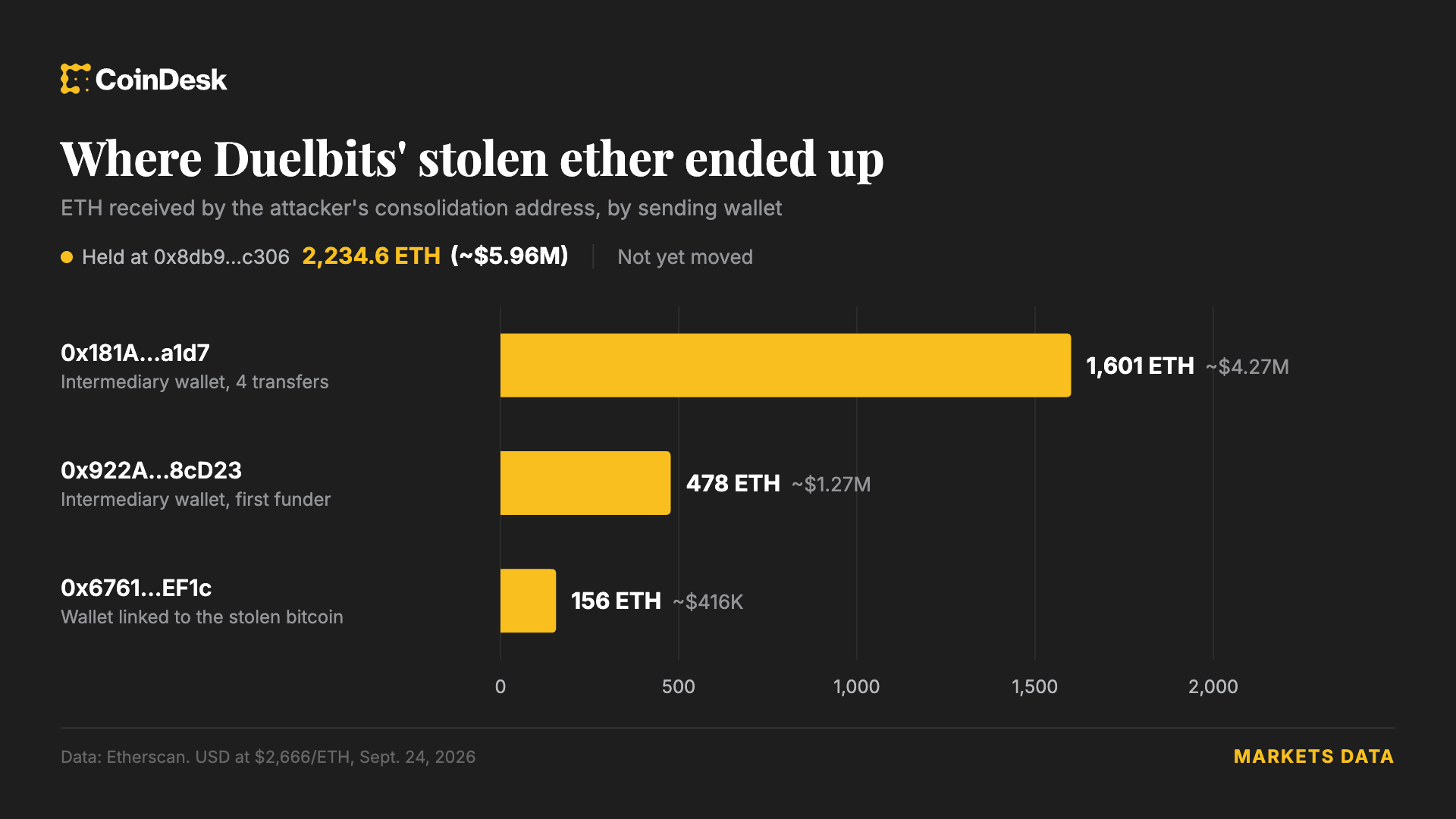
Crypto casino Duelbits goes offline after a $7M hot wallet hack drains funds across four blockchains, with $6M now held in one Ethereum address
Stablecoins, Hacks, And The Censorship Dilemma
How Stablecoins Get Targeted
Stablecoins play a central role in crypto markets by providing a relatively low‑volatility unit of account and a bridge to the traditional financial system. They also introduce distinct security risks depending on how they are issued and managed. Centralized stablecoins like USDC and USDT are backed by off‑chain reserves and controlled by a company that can freeze or blacklist addresses, creating custodial and regulatory risks. Decentralized stablecoins rely instead on on‑chain collateral and algorithmic mechanisms, exposing them to smart contract bugs, oracle failures, and governance exploits.
Attackers target stablecoins in multiple ways. Some hacks directly compromise the contracts that mint, redeem, or manage stablecoin collateral, as seen in various DeFi lending platform exploits where stablecoins are drained as one of several assets. Others involve phishing or malicious wallet software that tricks users into approving transfers of their stablecoin balances. A particularly common tactic is the creation of fake stablecoin tokens that closely mimic legitimate ones by using similar names, tickers, or logos. Users who do not carefully verify contract addresses may inadvertently receive and trade these impostors, which can be used in sophisticated rug pulls or liquidity‑draining schemes.
Because stablecoins sit at the intersection of user wallets, DeFi protocols, and centralized exchanges, they often feature prominently in the aftermath of hacks. For example, the Ronin hack involved the theft of USDC alongside ETH, and the Drift exploit saw large volumes of USDC move through Circle’s proprietary bridge. When stolen assets include centralized stablecoins, issuers have the technical ability to freeze them, but—as discussed in the Drift case—the choice of when and how to do so is fraught with legal and reputational implications. Meanwhile, decentralized stablecoins can sometimes be minted or manipulated as part of protocol‑level exploits, raising questions about whether their designs adequately capture worst‑case scenarios.
For individual users, the key defenses against stablecoin‑related hacks often mirror broader wallet hygiene. Chainalysis emphasizes that users should verify stablecoin token contracts through official channels rather than relying on search bar results or third‑party aggregators, as fake tokens frequently impersonate legitimate ones. Using hardware wallets for substantial holdings and enabling multi‑factor authentication on exchange accounts adds additional layers of protection. Users must also remain vigilant against phishing attempts, especially those involving urgent prompts to authorize transactions or reveal seed phrases. Stablecoins do not inherently make users safer; they simply package different kinds of risk.
Freezing Funds, Blacklists, And The Ratchet Effect
The ability of centralized stablecoin issuers to freeze funds is both a security tool and a censorship mechanism. On the one hand, blacklisting addresses associated with hacks can slow or hinder attackers’ attempts to launder stolen assets, potentially preserving value for victims. On the other, the presence of such controls creates a powerful lever that regulators, courts, or even private litigants can seek to pull, sometimes in ways that do not align with user expectations.
The controversies around Circle’s handling of hacked USDC in the Drift exploit and other incidents highlight this tension. In some cases, Circle has swiftly frozen assets in response to legal orders, including those tied to sealed civil cases that are not publicly explained. In others, such as the hours following widely publicized hacks, the company has opted not to immediately blacklist addresses, perhaps to avoid interfering with law enforcement tracing or to wait for clearer evidence. Critics argue that this inconsistent timing reveals a lack of transparent policy and creates uncertainty for protocols that rely heavily on USDC.
This pattern parallels concerns raised in other domains about what some analysts call the “ratchet effect” of censorship. A report by the U.S. House Judiciary Committee on government pressure on social media companies during the COVID‑19 pandemic documented how platforms were urged to suppress certain types of content, including vaccine skepticism. Even if such interventions are justified in emergency contexts, the worry is that the tools and norms established will persist and expand beyond their original scope. In the crypto context, once stablecoin issuers, DeFi frontends, or wallet providers build robust blacklisting and geofencing capabilities to respond to hacks and sanctions, those same capabilities can be repurposed for broader surveillance and control.
At the same time, regulators and mainstream institutions increasingly expect stablecoin issuers to cooperate in combating illicit finance, including proceeds from hacks. Sanctions lists, know‑your‑customer (KYC) rules, and anti‑money‑laundering (AML) obligations all push issuers toward more active monitoring and intervention. For DeFi users and builders, the challenge is to navigate these pressures while preserving meaningful decentralization where it matters most. Some projects are experimenting with hybrid models that combine censorship‑resistant base layers with opt‑in compliance layers, but the trade‑offs are complex and still evolving.
What is clear is that hacks are forcing stablecoin issuers, regulators, and DeFi protocols to confront tough questions sooner than they might have otherwise. Each high‑profile exploit that touches USDC or similar assets becomes a test case for how far centralized entities should go in policing on‑chain behavior—and for how much dependence truly decentralized systems are willing to tolerate.
Atomic Wallet hack; Lazarus Group drains user funds
Curve Finance $61M Vyper reentrancy exploit
- 2023-07exploit
Multichain bridge drained across Fantom, Moonriver, Dogechain
- 2024-01exploit
Chris Larsen personal XRP accounts drained ($113M); LastPass link established
- 2024-01exploit
Orbit bridge $81.5M breach; ex-security chief accused of firewall sabotage
- 2024-09exploit
Penpie hack; Pendle publishes post-mortem
Radiant Capital hack; post-mortem attributes private key compromise
Bybit $1.4B hack attributed to Lazarus Group; ZachXBT traces laundering across 920 addresses
Measuring The Scale And Impact Of Crypto Hacks
On‑Chain Transparency Versus TradFi Opacity
When news breaks of a major crypto hack, headlines often focus on the raw dollar amount stolen. Figures like “1.5 billion dollar Bybit hack,” “625 million dollar Ronin exploit,” or “285 million dollar Drift attack” make for dramatic copy. Thanks to blockchain transparency, such numbers can often be calculated in near real‑time by observing attacker addresses and on‑chain movements. Chainalysis’ estimate that 2.2 billion dollars in crypto were stolen in 2024, up about 21 percent from the prior year, similarly relies on public data.
This openness creates a perception that crypto is uniquely plagued by hacks. However, as some researchers and venture capitalists like a16z’s Eddy Lazzarin have pointed out, the visibility of losses in crypto contrasts sharply with the opacity of traditional finance, where breaches, frauds, and operational failures are often underreported or discovered long after the fact. In TradFi, internal losses may be absorbed by institutions, buried in balance sheets, or disclosed in vague terms in annual reports. In crypto, a single on‑chain transaction can reveal the exact amount drained, and explorers or analytics dashboards can track the funds in real time.
Regulators and rating agencies are starting to grapple with these dynamics. S&P Global, for example, has emphasized that recent DeFi hacks underscore the importance of robust risk management and operational security for digital asset projects, reflecting that on‑chain systems will be evaluated not only on innovation but also on their ability to withstand and respond to attacks. At the same time, some academic work suggests that core DeFi lending markets may now be safer than their reputation, with losses concentrated in edge cases and exotic protocols. The truth likely lies in between: DeFi’s transparency makes failures more visible and rapid, but it also enables faster collective learning and remediation.
Direct, Indirect, And Systemic Losses
The most obvious impact of a hack is the direct financial loss: the amount of crypto stolen. Yet the indirect and systemic effects can be just as significant. Token prices often plunge in the aftermath of an exploit, especially for governance tokens or native assets associated with the hacked protocol. Humanity Protocol’s H token crash of more than 80 percent following its operational security breach is a recent example, wiping out market value well beyond the 31 million dollars or so directly stolen. Liquidity can dry up as market makers pull out, and users may rush to withdraw or sell related assets, creating contagion.
Legal and regulatory consequences add to the cost. Mt. Gox’s collapse led to years‑long bankruptcy proceedings and litigation across multiple jurisdictions. The Kelp DAO hack has entangled Aave governance with U.S. courts over the disposition of 71 million dollars in ETH connected to the exploit, forcing decentralized communities to reckon with legal obligations and judicial timelines. Insurance arrangements, where they exist, can also be stress‑tested: decentralized coverage protocols must decide when to pay out, how to interpret policy wording, and how to manage the risk of correlated losses across multiple hacks.
Some attacks also reveal or exacerbate systemic vulnerabilities. The Ronin hack highlighted the dangers of concentrating validator control in a small set of entities, especially when those entities are also responsible for a major game economy. The Verus and eBTC‑Curvance exploits underscored how bugs in one bridge or synthetic asset can cascade across multiple chains and protocols. Even when individual users are fully compensated, such incidents can erode trust in whole categories of infrastructure, such as cross‑chain bridges or modular rollups.
Insurance, Risk Management, And User Behavior
One of the more striking patterns in recent years is the gap between users’ awareness of hack risk and their willingness to pay for protection. Coverage protocols and centralized insurers offer products that reimburse users in the event of smart contract exploits or exchange failures. Yet adoption remains limited relative to the total value at risk. Our own coverage and external commentary suggest that many DeFi users prioritize high yields over insurance, effectively self‑insuring in the hope that a hack does not strike the protocols they use. In April 2026 alone, over 600 million dollars were reportedly lost to security events, including the Drift and Kelp DAO hacks, yet uptake of coverage products lagged far behind the sums exposed.
Part of this reluctance stems from the cost of insurance relative to yields. When yield farming returns are high, users may view paying a significant portion of those returns for coverage as unattractive. There is also a trust gap: if insurers can themselves be hacked, mismanaged, or unable to pay out after correlated events, then premiums may feel like throwing good money after bad. Finally, many users lack the tools or knowledge to accurately assess protocol risk, making it hard to judge when coverage is worth buying.
Protocol teams and investors, by contrast, are increasingly treating security as a core component of product‑market fit. Post‑mortems and threat‑landscape analyses emphasize the need for multi‑layered defenses, from audits and formal verification to runtime monitoring and incident response plans. The best‑resourced projects now maintain dedicated security teams, engage multiple external auditors, and run continuous monitoring systems that can flag suspicious transactions in real time. Yet these practices are unevenly distributed across the ecosystem, and attackers tend to gravitate toward protocols where defenses are weaker but TVL is still meaningful.
- 01Private key / access control compromise↗ incident
The Bybit $1.4B breach and Radiant Capital hack both traced to attacker control over signing keys rather than any on-chain code flaw, reflecting a broader 2024 shift to key-targeting by Lazarus Group.
- 02Smart contract compiler vulnerability↗ incident
Curve Finance's July 2023 exploit leveraged a reentrancy bug buried in a specific Vyper compiler release version, a flaw that typical audits would not surface without deep release-history archaeology.
- 03Bridge / cross-chain protocol exploit↗ incident
Multichain's simultaneous drain across three chains and the Orbit bridge breach demonstrated how bridge infrastructure creates single points of catastrophic failure for entire ecosystems.
- 04Oracle / price manipulation
A donation-based price manipulation on Curve LlamaLend forced erroneous sDOLA valuations, triggering mass liquidations of crvUSD borrowers for roughly $240K in losses.
- 05Frontend / phishing exploit
The MorphoBlue $2.6M frontend exploit was frontrun by c0ffeebabe.eth, and CertiK's compromised X account posted a fake Uniswap hack tied to a malicious Revoke Cash phishing link — showing UI-layer attacks as a distinct and underrated vector.
- 06Insider sabotage↗ incident
Ozys filed a lawsuit alleging its former security chief deliberately weakened firewall protections ahead of the $81.5M Orbit bridge breach, marking one of the first major documented insider-enablement incidents in DeFi.
The Defensive Playbook: How Crypto Fights Back
Audits, Formal Verification, And Bounties
Code audits are one of the most widely adopted defenses in crypto. Security firms review smart contracts and infrastructure code, looking for common vulnerability patterns and logic errors. In the wake of the Verus bridge hack, for example, Halborn published a detailed analysis explaining how the missing validation of input and output values enabled the exploit and recommending architectural changes to prevent similar issues. Such post‑mortems not only help the affected project but also serve as educational resources for the wider developer community, highlighting pitfalls that other teams can avoid.
Formal verification takes this a step further by using mathematical methods to prove that certain properties hold for all possible inputs and states of a contract. While still relatively rare due to its complexity and cost, formal verification is increasingly applied to critical components like stablecoin collateral modules, bridges, and core DeFi protocols. When combined with multiple independent audits, fuzz testing, and simulation, it can significantly reduce the space of latent bugs. However, as the Verus case shows, even well‑written and logically consistent code can embed flawed assumptions if the specification itself is incomplete. Verifying that a contract faithfully implements a mistaken business rule still leaves room for hacks.
Bug bounty programs complement audits by incentivizing the broader security community to search for vulnerabilities. Well‑structured bounties can attract whitehat hackers who might otherwise be tempted to exploit bugs for personal gain. Many major protocols now offer tiered rewards based on the severity of reported issues, sometimes paying millions of dollars for critical findings. However, bounties are not a panacea. They depend on the right people finding the right bugs and on project teams promptly acknowledging and fixing reported issues. Moreover, some vulnerabilities—especially those that could yield nine‑figure payouts—may be undervalued by bounty programs relative to what black markets or state actors would pay.
Real‑Time Monitoring, AI, And On‑Chain Response
Beyond static code review, real‑time monitoring and anomaly detection are becoming central to crypto defense. Transaction‑level analytics can flag suspicious patterns, such as large, unexpected transfers from protocol addresses, unusual price movements, or interactions with known malicious addresses. Chainalysis, for instance, offers tools that track risky stablecoin activity and help platforms detect and respond to suspected hacks and frauds involving stablecoins. Exchanges, custodians, and DeFi frontends increasingly subscribe to such services, integrating alerts into their own incident response pipelines.
Artificial intelligence and machine learning are playing a growing role in this space. Models trained on historical hack data can help identify novel attack patterns, cluster related addresses, and estimate the likelihood that a given flow of funds is illicit. On the flip side, attackers are also experimenting with AI to automate phishing campaigns, generate more convincing social engineering lures, or scan open‑source repositories for vulnerabilities at scale. The arms race mirrors developments in broader cybersecurity, but with the added dimension of transparent on‑chain data that can feed both defensive and offensive models.
When an attack is detected, rapid on‑chain responses can sometimes limit damage. Protocols may pause affected contracts, raise margin requirements, disable specific markets, or activate emergency withdrawal modes. Stablecoin issuers might freeze tokens at attacker addresses, as discussed earlier. Cross‑chain bridges might reconfirm or invalidate pending transfers. THORChain’s planned TSS upgrade and economic mitigation via ADR028, approved by validators as part of a coordinated recovery, exemplifies how decentralized governance and technical changes can work together post‑incident. However, such interventions also underscore centralization points: only systems with some form of privileged control can act quickly, while fully immutable contracts must rely on ex ante defenses.
Governance, Upgradability, And Social Recovery
Security in crypto is not purely a technical matter; it is deeply intertwined with governance. Upgradable contracts offer flexibility to patch vulnerabilities and add features, but they concentrate power in whoever controls upgrade keys. Immutable contracts remove that centralized risk but also limit the ability to fix bugs once deployed. Many protocols aim for a middle path, where governance tokens, multi‑sig councils, or time‑locked upgrade processes mediate changes. In practice, these arrangements are complex and can themselves become targets.
After a hack, governance processes are tested under stress. Token holders may debate whether to “socially” reverse an exploit by forking the chain, minting new tokens, or otherwise altering the protocol’s record—options that were famously contentious after the 2016 DAO hack on Ethereum. In more recent cases, projects have tended to avoid chain‑level rollbacks, instead focusing on compensating users through treasury funds, new token issuances, or fee‑sharing mechanisms. GUA’s supply buyback and burn following its hack is one example of a project using tokenomics adjustments as part of its recovery narrative. Others, like Radiant, have chosen to wind down and return remaining funds, concluding that trust cannot be sufficiently rebuilt.
A newer concept in this domain is “social recovery,” where communities, rather than code alone, play a role in restoring access or reversing harm. This can take the form of multisig guardians who help recover lost wallets, DAO votes to compensate victims even when the code’s literal interpretation would deny them, or informal norms that ostracize exploiters who refuse to negotiate. While such practices can mitigate the harshness of purely code‑is‑law outcomes, they also move crypto closer to traditional systems where human judgment and power dynamics shape final outcomes. Hacks, by forcing hard choices in the open, are accelerating this evolution.
Arkham revisits the 2016 DAO hack: how a 3.6M ETH exploit split Ethereum and Ethereum Classic

User‑Level Security: Surviving In A World Of Constant Hacks
Wallet Hygiene And Key Management
For individual crypto users, the most important security frontier is key management. No amount of robust protocol design can save funds if an attacker gains control of a wallet’s private key or seed phrase. Basic hygiene includes generating keys in secure environments, keeping seed phrases offline, and using hardware wallets for significant holdings. Hardware wallets isolate private keys from internet‑connected devices, reducing the risk that malware or browser exploits can sign unauthorized transactions. Multi‑factor authentication on exchange and custodial accounts adds further protection, though it is not a substitute for self‑custody.
Chainalysis and other security firms emphasize that users should treat their wallets like bank accounts, not like casual app logins. That means avoiding reusing passwords, being wary of signing blind transactions, and regularly reviewing connected dApps and token approvals. Many hacks drain funds not by directly stealing keys but by tricking users into granting unlimited spending allowances to malicious contracts, which then act within the permissions the user unknowingly provided. Periodically revoking unnecessary approvals can limit this attack surface.
The Humanity Protocol incident provides a cautionary tale about developer opsec in particular. Backing up multiple private keys to the wrong device, especially during a high‑stakes mainnet launch, created a single point of failure that attackers exploited once malware granted them root access. Development teams should segregate operational keys from development machines, use hardware security modules or multisig wallets for admin functions, and implement strict policies around key generation, storage, and rotation. End‑users, in turn, should be aware that any protocol with highly centralized key control carries elevated risk, regardless of how strong its smart contract audits may be.
Recognizing Phishing And Social Engineering
Phishing remains one of the most effective ways to compromise crypto users and infrastructure. Attackers impersonate exchanges, wallet providers, or DeFi protocols, sending emails or direct messages that prompt users to click malicious links, download infected files, or enter seed phrases into fake websites. The 36 million dollar hack linked to suspected North Korean actors, where attackers used a fake Bithumb email to distribute malware and steal private keys from 141 wallets, illustrates how convincing such lures can be. EtherHiding techniques, which embed malicious code in blockchain transactions or smart contracts, further complicate detection and takedown efforts.
To defend against phishing, users should adopt strict habits. They should never enter seed phrases or private keys into web forms, even if a site claims to be a wallet recovery portal. Official communications from reputable platforms almost never ask for such information. Browser bookmarks for frequently used sites, combined with checking URL certificates, can reduce the risk of landing on typosquatted domains. When in doubt, users should navigate to sites via search engines or known links rather than email prompts, and verify major announcements through official social media channels and community forums.
Developers and exchange staff are also targets of tailored phishing campaigns, especially from groups like Lazarus that invest heavily in social engineering. Fake job offers, conference invitations, and partnership proposals can be used to deliver malware‑laced documents or prompt the installation of backdoored software. Organizations should train employees to be skeptical of unsolicited requests, use sandbox environments for opening attachments, and require hardware tokens or strong multi‑factor authentication for access to production systems. Regular security drills and red‑team exercises can help identify weaknesses before real attackers find them.
Evaluating Protocol Risk: Yield, TVL, And Complexity
Given the proliferation of hacks, users need frameworks for evaluating which protocols to trust. While no checklist can guarantee safety, several factors are informative. Protocols with large TVL that have operated for years without major incidents may be safer than newly launched projects with minimal security disclosures, though survivorship bias and complacency risks still apply. The complexity of a protocol’s architecture—such as reliance on cross‑chain bridges, exotic derivatives, or algorithmic stablecoin mechanisms—also correlates with the likelihood of subtle bugs.
Audits and security reports are crucial but must be interpreted carefully. A single audit from an unknown firm is not equivalent to multiple, independent reviews by respected teams. Some projects publish formal verification results, threat models, or engaged analyses from firms like Halborn or Quantstamp, which provide more concrete assurance. Users should also look for clear documentation of admin powers, upgrade procedures, and emergency controls. Highly centralized admin keys or opaque governance structures increase risk, as do protocols that grant wide‑ranging spending allowances by default.
Ultimately, users face a trade‑off between yield and risk. Our coverage and external commentary indicate that many DeFi participants continue to favor “juicy yields” offered by new or complex protocols over safer but lower‑return options, often without purchasing insurance or diversifying across risk profiles. Hacks serve as brutal reminders that outsized returns often compensate for hidden vulnerabilities. A more mature approach treats yield as one input into a broader risk‑adjusted decision, factoring in code quality, governance, audit history, protocol age, and the potential blast radius of a failure.
Hacks, Regulation, And Geopolitics
State Actors, Sanctions, And Crypto As A Battlefield
The involvement of state‑linked groups like North Korea’s Lazarus in major hacks has elevated crypto security from a niche technical concern to a geopolitical issue. The FBI’s explicit attribution of the 1.5 billion dollar Bybit hack to Lazarus and blockchain intelligence firms’ identification of the same TraderTraitor unit behind the Drift and Ronin attacks underscore that these are not isolated incidents but part of a systematic campaign. Estimates that DPRK‑linked operations have stolen over 300 million dollars in 2026 alone, including the Drift exploit, suggest that crypto hacks may constitute a significant revenue source for a heavily sanctioned regime.
These developments have spurred international responses. Sanctions bodies like the U.S. Treasury’s Office of Foreign Assets Control (OFAC) have blacklisted specific wallet addresses, mixers, and even entire protocols associated with laundering hacked funds. Exchanges and stablecoin issuers face increasing scrutiny to ensure they do not facilitate cash‑outs or transfers for sanctioned entities. For example, when Lazarus‑linked funds move through centralized venues or stablecoin bridges, those platforms may be obligated to freeze assets and report suspicious activity. Failure to do so can result in legal and reputational consequences.
At a broader level, crypto hacks are also entangled with debates over offensive cyber capabilities and AI. Reports that major AI labs are collaborating with intelligence agencies on cyber operations, including efforts to penetrate foreign systems, raise questions about how AI tools might be used to both defend and attack crypto infrastructure. While details remain sparse, it is plausible that nation‑states will increasingly use machine learning to identify vulnerabilities in public smart contract code, fingerprint anonymization patterns, or automate large‑scale phishing campaigns. Conversely, defenders can leverage AI to detect anomalies and trace laundering flows across chains.
Compliance Pressure On Stablecoins And DeFi Frontends
Stablecoin issuers occupy a particularly sensitive position in this landscape. They are often incorporated in major financial jurisdictions, depend on banking relationships, and manage large pools of off‑chain reserves. As hacks and sanctions concerns mount, regulators are pushing for stricter compliance and risk controls. Circle’s handling of hacked USDC, as discussed earlier, sits at the intersection of these pressures: on one side are expectations that issuers will help law enforcement track and freeze illicit funds; on the other are user demands for predictable, principled policies that do not unduly compromise decentralization or user rights.
DeFi frontends and infrastructure providers face similar dilemmas. While the underlying smart contracts may be permissionless and globally accessible, web interfaces, APIs, and ancillary services often operate under specific legal jurisdictions. In response to sanctions or regulatory guidance, some frontends have begun geofencing users from certain countries, blocking wallets associated with high‑risk clusters, or delisting assets linked to hacks or regulatory controversies. This trend is particularly visible in the wake of high‑profile exploits and enforcement actions, as teams seek to pre‑empt scrutiny by demonstrating proactive compliance.
However, such measures can fragment the user experience and create unequal access to protocol functionality. Power users may switch to direct contract interactions or alternative frontends, while less technical users are effectively subject to gatekeeping at the interface layer. Hacks thus indirectly accelerate a kind of de facto regulation by pushing infrastructure providers to adopt more cautious stances. The resulting tug‑of‑war between permissionless base layers and increasingly curated access points is likely to shape the trajectory of DeFi over the coming years.
The Censorship‑Risk Trade‑Off
Underlying many of these debates is a fundamental trade‑off between security, compliance, and censorship resistance. Tools that enable rapid responses to hacks—such as blacklists, kill switches, and admin keys—also enable more invasive forms of control, whether by corporations, regulators, or governments. The “ratchet effect” described in analyses of pandemic‑era social media censorship, where emergency measures persist and expand beyond their original remit, offers a cautionary analogy. Once capabilities to selectively freeze funds or block transactions are built and normalized, it is difficult to confine them to truly exceptional cases.
At the same time, refusing to build any such mechanisms can leave users exposed to catastrophic, irrecoverable losses. Purely immutable contracts with no upgrade paths or emergency powers can embody the strongest vision of censorship resistance, but they also require near‑perfect security from day one, which is unrealistic for complex systems. Many projects therefore aim for controlled, transparent forms of governance and intervention, such as time‑locked upgrades, multi‑sig councils with clear mandates, and narrow, auditable scopes for admin actions.
Hacks bring these tensions into stark relief. Each incident becomes a test of how protocols and issuers wield their powers: Do they act quickly to protect users, even at the cost of freezing funds without full due process? Do they err on the side of non‑intervention, even if it means allowing attackers to escape with millions? How they answer these questions shapes not only their own reputations but also broader norms for what “trustless” finance really means.
Market Narratives And The Role Of Hacks In Crypto’s Maturation
Price Reactions, Volatility, And Resilience
Historically, major hacks have often triggered sharp, if sometimes short‑lived, market reactions. The 2011 Mt. Gox flash crash, driven by a compromised account, briefly sent Bitcoin’s price to a cent on that exchange and fueled widespread fears that the entire experiment was collapsing. In later years, however, markets have shown a growing ability to differentiate between protocol‑level failures and platform‑specific issues. When Ronin was hacked, for instance, the broader Ethereum ecosystem continued to function, and while Axie‑related assets suffered, ETH itself did not experience a Mt. Gox‑style existential shock.
Recent incidents like the Drift and Kelp DAO hacks have similarly tested market resilience. While governance tokens and affected assets often see steep declines, core assets like BTC and ETH have sometimes remained relatively unfazed, with derivatives markets continuing to price in macroeconomic factors and broader adoption trends rather than single‑protocol failures. Coverage that notes Ethereum derivatives markets remaining calm despite a string of DeFi hacks suggests that traders increasingly treat such events as idiosyncratic risks rather than systemic ones, even as debates continue over whether ETH can reach new price targets like 2,600 dollars in the near term.
This gradual decoupling reflects both increased market sophistication and the diversification of crypto’s use cases. While early hacks implicated a large fraction of the entire ecosystem’s infrastructure, today’s exploits more often affect specific verticals—bridges, gaming platforms, or specialized lending markets. That does not minimize the pain for victims, but it does mean that crypto’s overall trajectory is no longer as tightly hitched to the fate of any single platform.
Reputation, Trust, And “Growing Up”
Beyond price, hacks play a crucial role in shaping perceptions of crypto’s maturity. Our newsroom’s coverage has often framed major exploits as forcing DeFi to “grow up,” by imposing real‑world consequences on lax security practices and incomplete risk models. The 293 million dollar Kelp DAO hack, for instance, has accelerated discussions about formal risk frameworks, real‑time monitoring, and clearer disclosures of admin powers across liquid staking protocols. Humanity Protocol’s post‑incident security overhaul, including deeper collaboration with auditors like Quantstamp, similarly reflects a trend toward professionalizing security operations.
External observers like S&P Global echo this narrative, arguing that robust operational security and risk management are essential if digital asset platforms are to be treated as serious financial infrastructure rather than speculative casinos. The emergence of dedicated security‑focused teams, competitions that reward bug findings over yield chasing, and public campaigns that prioritize user safety indicate that at least some parts of the industry are internalizing these lessons. Even marketing slogans that emphasize “fighting against scams, hacks, phishing attempts, and smart contract exploits” signal a shift from growth‑at‑all‑costs to a more balanced focus on resilience and user protection.
Of course, for every project that responds to a hack with introspection and reform, there are others that disappear, rebrand, or minimize their failures. Radiant Capital’s decision to wind down after a 50 million dollar hack reflects one kind of maturity—recognizing when trust cannot be rebuilt—while other cases see teams attempting to move on with minimal changes. Over time, market discipline may reward projects that treat security as a first‑class concern, while punishing those that treat it as an afterthought. Hacks, painful as they are, contribute to this sorting process.
The Media’s Role In Covering Hacks
Crypto media sits at a critical junction between technical experts, affected users, regulators, and the broader public. When hacks occur, there is intense pressure to report quickly, yet facts are often incomplete and narratives contested. Early numbers on funds lost can change as forensic analyses refine estimates; attributions to specific threat actors may be revised as more data emerges; teams may initially describe incidents as “exploits” or “vulnerabilities” rather than “hacks” to manage perceptions. Responsible coverage must balance speed with skepticism, signal with noise.
Our own editorial stance, and that of other reputable outlets, has increasingly emphasized explanatory journalism around hacks. Rather than merely tallying losses, we seek to unpack root causes, trace how exploits unfolded, and highlight both defensive failures and successes. This includes giving space to technical post‑mortems by firms like Halborn and Chainalysis, as well as critical perspectives from independent researchers and on‑chain sleuths. It also means contextualizing incidents within broader trends, such as the rise of DPRK‑linked operations, stablecoin censorship debates, or user behavior around insurance and yield chasing.
In doing so, media can help raise the baseline of security literacy across the ecosystem. Evergreens like this explainer aim to equip readers with conceptual tools—vulnerability, exploit, threat; bridge risk; stablecoin blacklists—that they can apply whenever the next hack hits the headlines. At the same time, coverage must avoid sensationalism that paints crypto as uniquely dangerous while ignoring similar or larger failures in traditional finance. A nuanced approach recognizes that hacks are both a serious and persistent problem and a crucible through which better practices and technologies emerge.
Outlook
Hacks will remain a defining feature of crypto for the foreseeable future. The combination of transparent, high‑value targets; rapid innovation; composable architectures; and global adversaries ensures that vulnerabilities will continue to be discovered and exploited. State‑linked groups like North Korea’s Lazarus, profit‑driven cybercriminals, and opportunistic insiders all have strong incentives to probe DeFi protocols, bridges, and exchanges for weaknesses. At the same time, the tools available to defenders—from formal verification and multi‑layered audits to AI‑assisted monitoring and coordinated incident response—are also improving, raising the cost of successful attacks for would‑be hackers.
For users, the path forward involves a blend of realism and responsibility. Realism means recognizing that no protocol is perfectly safe, that yields often compensate for unpriced risk, and that centralized components like stablecoins and frontends introduce both protections and censorship vectors. Responsibility means practicing robust wallet hygiene, being wary of phishing, diversifying exposure, and supporting projects that invest seriously in security rather than treating it as a checkbox. As crypto continues to integrate with traditional finance and geopolitics, hacks will increasingly be seen not as isolated scandals but as stress tests of the entire experiment in open, programmable money. How the industry learns from each one will play a major role in determining whether that experiment ultimately succeeds.
Latest Hacks news
Hack VC partner Hsin-Ju Chuang, 37, found dead near remote I-15 off-ramp in Mojave Desert; cause still unknown.Crypto casino Duelbits goes offline after a $7M hot wallet hack drains funds across four blockchains, with $6M now held in one Ethereum addressArkham revisits the 2016 DAO hack: how a 3.6M ETH exploit split Ethereum and Ethereum ClassicSources
19 records from 15 domains
chainalysis.com
bakerdatacounsel.com
picussecurity.com
investopedia.com
x.com
dlnews.com
halborn.com
instagram.com
thedailyeconomy.org
youtube.com
rapid7.com
facebook.com
es.tradingview.com
spglobal.com
cryptoslate.com
Community notes
Spot something off or out of date? Drop a note. Editors review topic notes daily and roll accepted fixes into the explainer — contributors are recognized in the monthly $SQUID drop.
Loading notes…
Help improve this topic
Have a story or tip about this topic? Submit it. See something missing? Leave a note. Editors review daily; accepted submissions and fixes count toward the monthly $SQUID drop.