
Crypto vulnerabilities span smart contract logic, cryptographic design, and bridge infrastructure — and AI is reshaping how both attackers and defenders find them, as recent Zcash and DeFi incidents make clear.
- x.com28
- theblock.co4
- medium.com2
- cointelegraph.com1
- ajna-protocol-news.ghost.io1
- 0d.dwalletlabs.com1
- asymmetric.re1
+11 sources across the wider coverage universe
 Civic flags critical OpenClaw security gaps including 40,000 exposed instances, over 1,000 malicious skills, and a 9.9 CVSS vulnerability2026-04
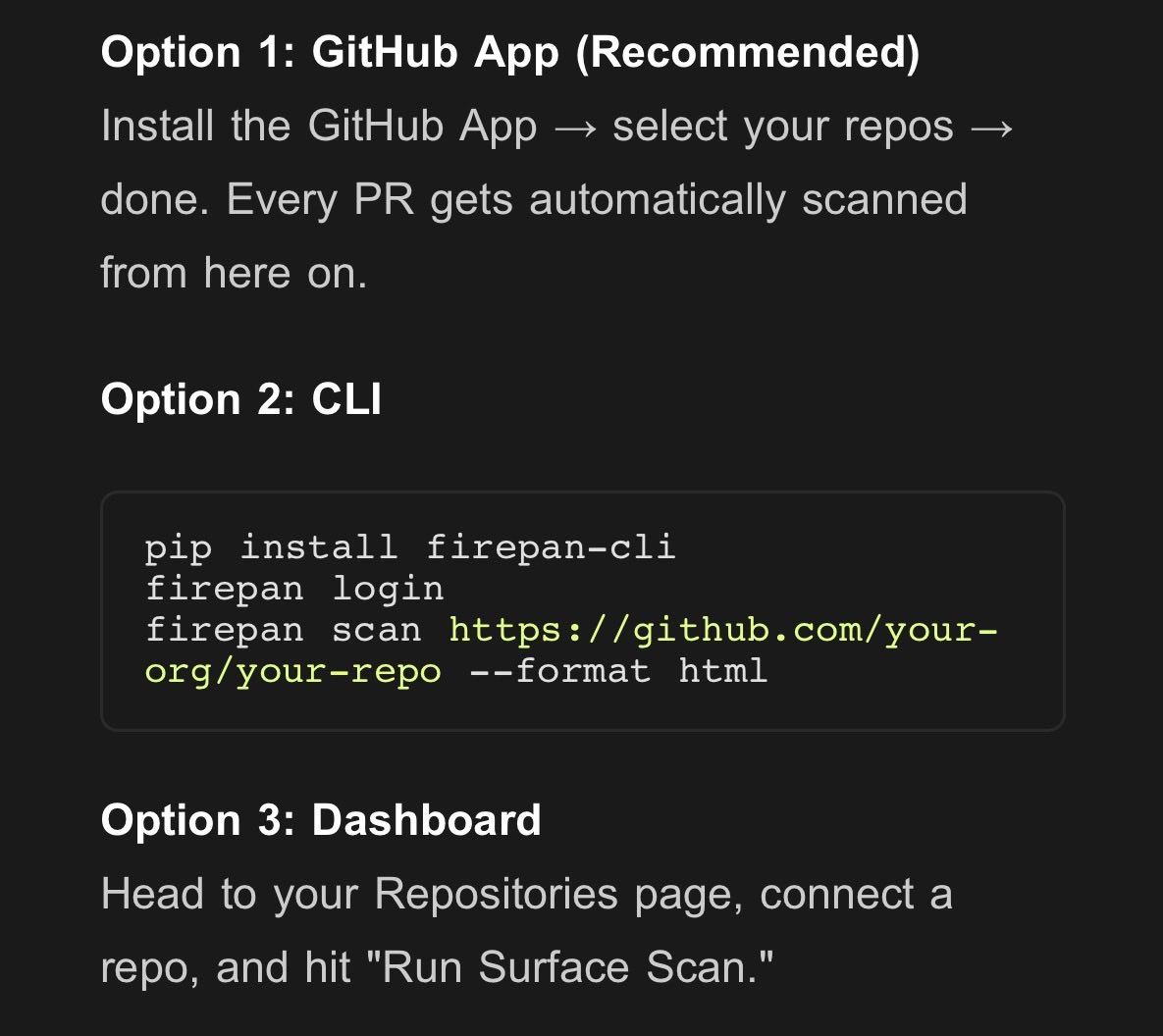 Firepan opens $239/mo DeFi vulnerability scanner for free as AI-powered exploits surge, urging developers to secure codebases before LLM-driven attacks escalate2026-04
 IMF calls Tether's Bitcoin reserves a vulnerability, warns stablecoins susceptible to runs2026-04
 CertiK opens AI Auditor to public testing after internal success hitting 88.6% accuracy across real 2026 exploits, aiming to reduce audit noise and speed up vulnerability detection2026-04
 Aave revamps its bug bounty program, raising critical vulnerability payouts 5x for Aave V4 and Core V3 to strengthen protocol security2026-05
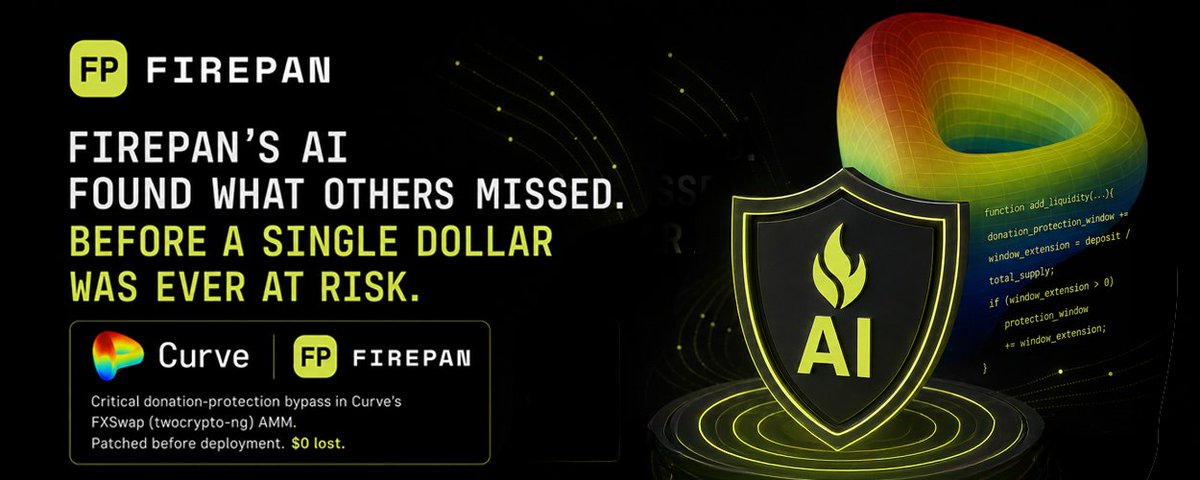 Curve's latest AMM sailed through audits, but Firepan's AI spotted a critical vulnerability before any treasure was lost.2026-06
A vulnerability, in the context of blockchain and decentralized finance, is a flaw in code, cryptographic design, or system architecture that an adversary can exploit to cause unintended behavior — typically the theft or unauthorized creation of assets.
What Makes Crypto Systems Vulnerable
Smart contracts are immutable once deployed. Unlike traditional software, a buggy banking app can be patched silently overnight; a buggy Ethereum contract cannot. The code that governs billions of dollars in value is often frozen at deployment, visible to every adversary on-chain, and executable by anyone with gas fees. This combination — public code, irreversible execution, and high-value targets — creates an attack surface unlike almost anything else in software engineering.
Vulnerabilities arise across several distinct layers:
Smart contract logic flaws are the most common. These include reentrancy bugs (where a contract calls external code before updating its own state), integer overflow or underflow errors, access control misconfigurations, and flawed price oracle dependencies. The DAO hack of 2016 remains the canonical example: an attacker drained 3.6 million ETH — worth approximately $6.26 billion at current prices — by exploiting a reentrancy flaw in a withdrawal function. The vulnerability had been documented and flagged weeks before the attack, but the community governance process had not yet approved a fix when the attacker struck. The resulting crisis forced Ethereum's first contentious hard fork, splitting the chain into Ethereum and Ethereum Classic.
Protocol-level design vulnerabilities sit deeper than any single contract. They can affect how an entire network handles state transitions, consensus rules, or cryptographic proofs. The Zcash Orchard pool vulnerability disclosed in mid-2026 falls into this category: security researcher Taylor Hornby, working with Anthropic's Claude AI model, identified a critical flaw in Zcash's shielded transaction circuit that could have enabled undetectable counterfeiting of ZEC. Unlike a buggy contract that can be frozen, this class of bug lives in the zero-knowledge proof system itself. Zcash founder Zooko Wilcox acknowledged that users cannot independently verify whether the vulnerability was exploited before disclosure. The Ironwood network upgrade was subsequently proposed to restore trustless supply verification — an acknowledgment that the existing architecture left a gap no individual user could audit.
Bridge and cross-chain vulnerabilities have become one of the highest-yield attack vectors. Axelar recently disclosed a $4.67 million exploit targeting assets bridged to Secret Network, with the vulnerability isolated to a Secret-side smart contract rather than the Axelar protocol itself. Similarly, Syscoin's cross-chain bridge was exploited via a verification flaw, allowing an attacker to mint approximately 5 billion unauthorized SYS outputs. Bridges are particularly dangerous because they aggregate assets from multiple chains into a single set of contracts — creating concentrated pools of value with sprawling, often heterogeneous codebases.
Permission and access control bugs are deceptively simple but pervasive. The SquidRouterModule exploit netted roughly $3.07 million from a permission vulnerability that allowed an attacker to compromise an on-chain Safe wallet. The exploited contract was not the official Squid Router itself — a reminder that peripheral or legacy contracts are often the weakest point in an ecosystem.

Civic flags critical OpenClaw security gaps including 40,000 exposed instances, over 1,000 malicious skills, and a 9.9 CVSS vulnerability
The Lifecycle of a Vulnerability
Understanding how vulnerabilities move from existence to exploitation (or remediation) helps clarify why the same bug can lead to very different outcomes.
Discovery is the first phase. A vulnerability may be found by internal auditors, external security researchers, white-hat hackers, or increasingly, AI-assisted analysis tools. The Zcash Orchard bug was found via an AI-assisted audit. Curve Finance's latest AMM sailed through multiple traditional audits before an AI tool flagged a critical flaw before any funds were lost. The Thetanuts Finance legacy vault exploit on June 15, 2026, provides a stark illustration of timing risk: the protocol lost approximately $105,000 to an attacker, and then, about one hour later, a white-hat hacker used the same attack vector to extract additional funds — presumably to return them or demonstrate the exposure.
Disclosure is politically complex in crypto. Responsible disclosure norms borrowed from traditional security research (notify the team privately, give time to patch, then publish) often collide with blockchain's transparency. A researcher who discovers a critical flaw must decide how long to wait, whether affected users should be warned, and whether the disclosure itself creates a race between the dev team and adversaries monitoring for patches. Zcash coordinated an emergency response through the Zcash Open Development Lab after Hornby's discovery, but the market reaction — ZEC fell roughly 38–50% in the days following public disclosure — shows the secondary costs of even well-handled disclosures.
Exploitation does not require sophisticated attackers. The Raydium legacy liquidity pool exploit on Solana in June 2026, which resulted in approximately $1.3 million in losses, involved a relatively mechanical sequence: deploy a custom SPL token, manipulate it to remove liquidity from the pool. The Token of Power (TOP) misconfiguration exploit — $1.5 million in WETH drained — required only that the attacker complete a governance lifecycle (submit, vote, execute) that had been improperly secured. These are not nation-state attacks. They are programmable arbitrage against exposed logic.
Remediation in DeFi is structurally harder than in traditional software. Immutable contracts must be deprecated and replaced, not patched. Upgradeability mechanisms (proxy patterns, admin keys) introduce their own trust and security tradeoffs. For cryptographic vulnerabilities like Zcash's Orchard bug, the remediation requires a network-level upgrade requiring broad social consensus — a process measured in months, not days.

Firepan opens $239/mo DeFi vulnerability scanner for free as AI-powered exploits surge, urging developers to secure codebases before LLM-driven attacks escalate
AI as a Dual-Use Force in Vulnerability Discovery
The same AI capabilities that help defenders find bugs faster are available to adversaries. This asymmetry has prompted some of the most pointed commentary in crypto security circles.
OpenZeppelin co-founder Manuel Aráoz stated publicly that he believes "all of DeFi is unsafe," citing AI coding agents reaching what he described as superhuman capability in vulnerability discovery combined with the asymmetric economics of smart contract security — where finding one exploitable flaw pays far better than defending an entire protocol. The comment reflects a genuine structural shift: AI models can now read large codebases, reason about state transitions, and generate proof-of-concept exploit code faster than most human auditors.
Taylor Hornby's use of Claude Opus 4.8 to discover the Zcash Orchard vulnerability — and his subsequent announcement that he intends to add Monero and other privacy-focused cryptocurrencies to his AI-assisted audit queue — illustrates how AI is changing the economics of defensive research too. A single researcher with the right model and methodology can now conduct audits at a scale that previously required a team. Curve's Firepan AI spotting a critical vulnerability that passed multiple manual audits points in the same direction.
The trajectory suggests that vulnerability discovery will increasingly be an AI-mediated competition. Projects that deploy AI-assisted auditing proactively gain some advantage; projects that don't face adversaries who likely will. Anthropic's reported concerns about Claude Fable 5 and AI-driven DeFi vulnerability discovery — leading to safety constraints on the model at release — indicate that frontier AI labs are themselves grappling with the dual-use implications of models capable enough to find novel security flaws in production cryptographic systems.

IMF calls Tether's Bitcoin reserves a vulnerability, warns stablecoins susceptible to runs
The IMF published a report titled "Making Stablecoins Stable" calling out Tether's Bitcoin reserves as a specific vulnerability, arguing that volatile reserve assets increase the risk of a bank-run scenario if backing falls below redemption value. The report warns that all stablecoins — as privately issued digital money — are inherently susceptible to runs and pose risks to monetary and financial stability without proper regulation. The IMF cites the Terraform Labs/UST collapse as precedent and suggests issuers pursue alternative revenue like central bank interest payments on reserves instead of chasing yield with riskier assets. The warning comes amid growing institutional adoption: Trump signed the GENIUS Act into law, and 12 European banks including UniCredit and BNP Paribas are preparing to launch a euro-denominated stablecoin in 2026.
Stablecoin and Infrastructure Risk
Vulnerabilities do not confine themselves to speculative DeFi protocols. USDC and other dollar-pegged assets depend on infrastructure — bridges, minting contracts, oracle feeds — where flaws carry systemic implications. A counterfeiting vulnerability in a privacy coin like ZEC primarily affects that asset's holders; a similar flaw in a contract governing a widely-used stablecoin or a major bridge could affect liquidity across dozens of protocols simultaneously.
The Axelar-Secret Network incident highlights how cross-chain infrastructure acts as a multiplier: a vulnerability on one side of a bridge can drain assets that originated on an entirely different chain. As more DeFi protocols integrate cross-chain liquidity and multichain USDC issuance, the surface area for this class of risk expands.
Readers click vulnerability stories primarily for the 'act now' shock of urgent permission revocations and LP withdrawals, but the second-highest pull is accountability drama — whether whitehats get paid fairly or get cheated — revealing that the audience treats security as a participant sport, not passive observation.
Defense Layers and Their Limits
Several overlapping defensive approaches exist, none sufficient on its own:
Formal verification uses mathematical proofs to establish that code behaves as specified under all conditions. It is rigorous but expensive and requires precise formal specifications — and a specification error can be just as dangerous as a code error. The Zcash Ironwood proposal incorporates formal verification elements as part of restoring supply trustworthiness.
Audits remain standard practice but have clear limits. Multiple audited protocols appear in recent exploit headlines. Auditors review code at a point in time; protocols evolve, integrate new dependencies, and accrue legacy contracts that fall outside audit scope.
Bug bounties create financial incentives for responsible disclosure. They work when the bounty exceeds the expected value of exploitation — which is not always the case for high-value targets.
Monitoring and circuit breakers can limit damage when exploitation begins. Automated systems that detect abnormal withdrawal patterns or price deviations can pause contracts before a full drain occurs. But monitoring is reactive, and fast attackers (especially those using MEV or flashloans to compress the attack into a single block) can outrun manual response.
Immutability is both a defense and a liability. The inability to modify a deployed contract means attackers cannot alter it either — but it also means developers cannot patch it.
- 01Emergency revoke-and-withdraw alerts
Headlines demanding immediate user action (revoke Paraswap permissions, pull Balancer LPs) convert anxiety directly into clicks because funds feel personally at risk.
- 02Bounty program fairness battles
Stories where whitehats discover critical bugs but receive undersized or disputed payouts expose a structural trust problem that outrages the researcher community and DeFi observers alike.
- 03Arbitrary call exploit mechanics
The Odos arbitrary-call pattern and similar low-level attack vectors attracted readers who want to understand how a single missing access check drains real funds.
- 04Oracle and price manipulation risk
Hyperliquid's TVL-based oracle flaw and Sturdy Finance's price manipulation hack showed readers that even novel on-chain designs inherit classic oracle attack surfaces.
- 05AI-powered audit and detection tools
CertiK's public AI auditor and Firepan's free scanner tapped into reader curiosity about whether machine learning can outpace human auditors before exploits land.
- 06Systemic stablecoin fragility warnings
FSOC and IMF framing Tether's reserves as a systemic vulnerability elevated the topic from protocol-level risk to macro financial contagion, drawing a broader audience.
Outlook
The vulnerability landscape in crypto is worsening in one important dimension: the cost of offensive capability is falling faster than the cost of defensive coverage is rising. AI tools lower the barrier to sophisticated vulnerability discovery, cross-chain complexity multiplies the attack surface, and the value locked in DeFi contracts continues to provide strong economic incentives for adversaries.
The Zcash Orchard disclosure and the resulting Ironwood upgrade proposal mark something meaningful: a major cryptographic vulnerability discovered via AI, remediated at the network level, in a protocol that makes independent supply verification structurally difficult. That combination — AI-assisted discovery, cryptographic depth, and limited user-level auditability — represents a template for future incidents that will be harder to anticipate and harder to communicate to affected users than a straightforward contract exploit.
Short of a fundamental shift toward formally verified, AI-audited codebases deployed with conservative upgrade mechanisms and strong monitoring, the baseline risk across DeFi and connected infrastructure should be treated as elevated. Diversification, conservative allocation to less-audited protocols, and attention to bridge risk remain the most actionable mitigations available to participants who cannot evaluate code directly.
- 2023-06exploit
Sturdy Finance hacked for 1,100 ETH via price manipulation
- 2023-07exploit
Vyper compiler vulnerability hits Curve Finance pools
- 2023-11milestone
Thirdweb discloses critical NFT contract vulnerability; Coinbase NFT and OpenSea respond
- 2023-11milestone
Whitehat finds InfStones flaw putting $1B in staked assets at risk
- 2024-12exploit
Clipper Exchange loses $500K+ in API vulnerability exploit
- 2024-12regulatory
FSOC 2024 report formally flags stablecoin vulnerability and Tether concentration as systemic risk
- 2025-03milestone
Raydium whitehat receives $505K bounty for critical protocol vulnerability
- 2026-05milestone
CertiK opens AI Auditor to public after 88.6% accuracy on real 2026 exploits
Latest vulnerability news
Civic flags critical OpenClaw security gaps including 40,000 exposed instances, over 1,000 malicious skills, and a 9.9 CVSS vulnerabilityFirepan opens $239/mo DeFi vulnerability scanner for free as AI-powered exploits surge, urging developers to secure codebases before LLM-driven attacks escalateIMF calls Tether's Bitcoin reserves a vulnerability, warns stablecoins susceptible to runsCertiK opens AI Auditor to public testing after internal success hitting 88.6% accuracy across real 2026 exploits, aiming to reduce audit noise and speed up vulnerability detectionAave revamps its bug bounty program, raising critical vulnerability payouts 5x for Aave V4 and Core V3 to strengthen protocol security Nesa pauses services after malicious activity exploits Cosmos EVM vulnerability on its L1; exchanges notified as team works on software fix
Community notes
Spot something off or out of date? Drop a note. Editors review topic notes daily and roll accepted fixes into the explainer — contributors are recognized in the monthly $SQUID drop.
Loading notes…
Help improve this topic
Have a story or tip about this topic? Submit it. See something missing? Leave a note. Editors review daily; accepted submissions and fixes count toward the monthly $SQUID drop.