
Deep dive into Immutable as a Web3 gaming stack and the broader idea of immutability in crypto, covering its Polygon-powered zkEVM, Immutable Play ecosystem, legal and DeFi implications, and what it all means for developers and players.
+4 sources across the wider coverage universe
 Amazon and Immutable join forces in a bid to revolutionize Web3 gaming, empowering game studios with generous cloud service coverage worth $100k2023-10
 Smart contracts are often seen as immutable but the hidden 'God Mode' used by developers can undermine the decentralization promises of blockchain.2024-10
- Web3 gaming sees $2.3B inflow in Q3 as Unioverse partners with Immutable and Upland token finds its way to Ethereum; ex-GTA developers collaborate with Brawlers to release game on Epic Games Store.2023-10
 Benjamin and Jae of Cap Labs float the concept of "Type III Stablecoins," representing autonomously enforced systems governed by immutable rules as opposed to subjective human decision making2025-03
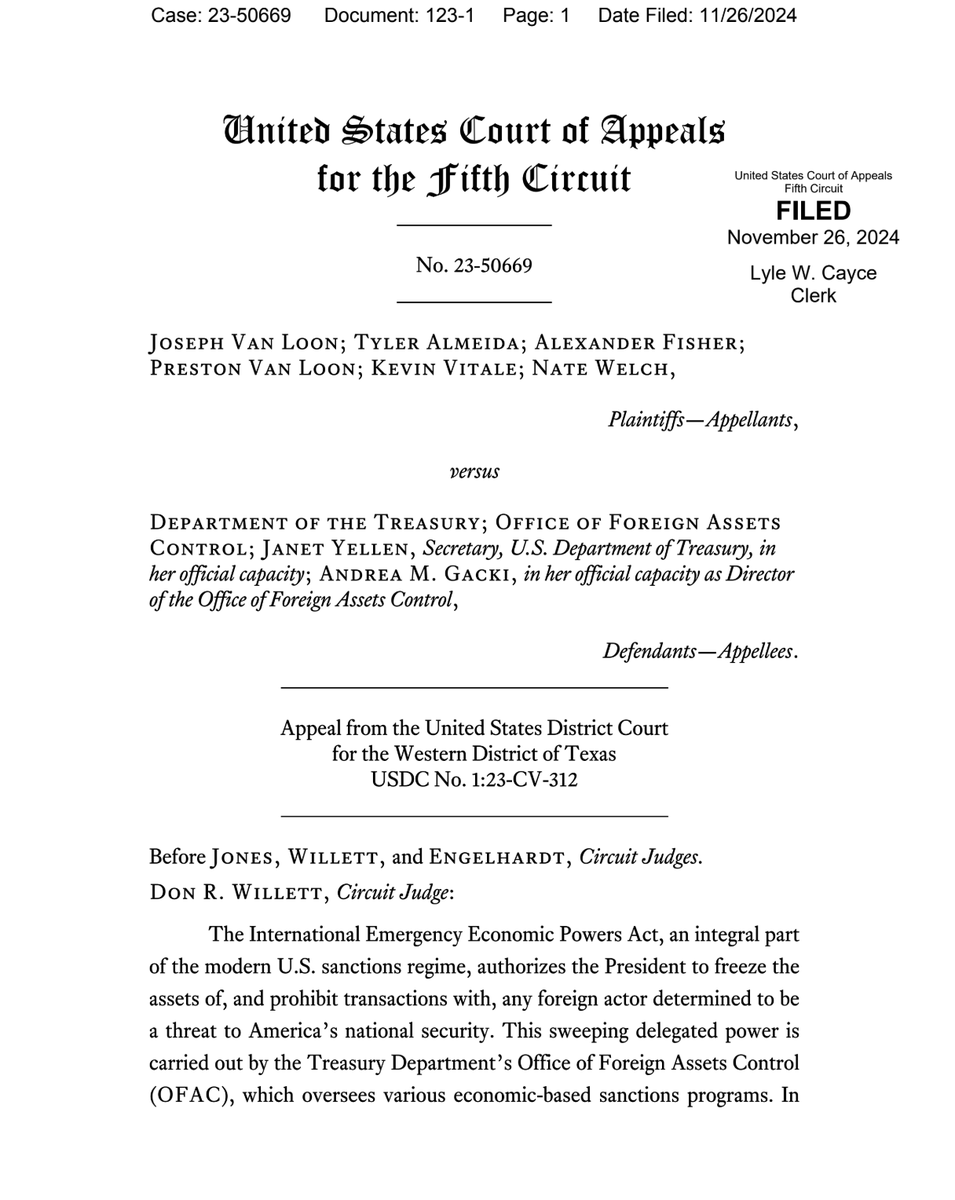 US Federal Court rules that Treasury overstepped its authority when sanctioning Tornado Cash's immutable smart contracts2024-11
 Immutable and Ubisoft partner to revitalise one of the strongest IPs in gaming for its 40th year2025-04
Immutable: Web3 Gaming Stack, On‑Chain Immutability, and Why It Matters
In crypto, “Immutable” usually refers to Immutable, a Sydney-based Web3 gaming company building Ethereum Layer 2 infrastructure and growth tools for games, but it also points to a deeper design ideal: that smart contracts and on‑chain data should be resilient to tampering over time. Understanding both the brand and the broader concept is essential to making sense of Web3 gaming in the Polygon and zkEVM era, the rise of “immutable” DeFi primitives, and the legal and regulatory fights now unfolding around truly irreversible code.
Immutable’s trajectory illustrates how Web3 gaming has evolved from early experiments in NFT trading to fully fledged game platforms with their own chains, questing hubs, and growth tooling aimed at solving some of traditional gaming’s most stubborn business problems, from user acquisition costs to monetization. The company started with Immutable X, a StarkWare-powered Layer 2 focused on gas-free NFT trading, and later partnered with Polygon Labs to launch Immutable zkEVM, an EVM-compatible zero‑knowledge rollup purpose-built for games. Around those chains, Immutable has built out a product suite that includes Immutable Play, a questing and discovery platform positioning itself as a “home” for Web3 titles, along with data‑driven growth and attribution tools pitched at developers who want blockchain benefits while hiding crypto complexity from players. At the same time, the word “immutable” has acquired a life of its own across crypto law, DeFi design, and security analysis—from court arguments about whether immutable Tornado Cash contracts can be “property,” to stablecoin researchers proposing “Type III” designs whose monetary rules are locked into code, to auditors warning that hidden “god mode” admin keys can quietly undo immutability in upgradeable smart contracts.
This explainer unpacks all those threads in one place. It explores Immutable’s technology stack and partnerships with Polygon, Ubisoft, Amazon and others; surveys the growing games ecosystem around Immutable Play and its Polygon Hub; and then zooms out to the wider idea of immutability in smart contracts, stablecoins, and regulation. Along the way it highlights both the opportunities and the pitfalls—for game studios, developers, and players who do not want to end up rekt when the promises of “immutable” code collide with business reality, legal risk, and changing market conditions.
1. From Concept to Company: What “Immutable” Means in Crypto
1.1 Immutability as a core blockchain property
The word immutable predates crypto by centuries, but in the blockchain context it has taken on a specific technical and ideological meaning. Conceptually, an immutable ledger is one where recorded transactions cannot be altered, censored, or retroactively edited except through consensus processes that are themselves extremely costly or practically impossible to subvert. In systems like Bitcoin and Ethereum, this idea is implemented through cryptographic hashing, distributed consensus, and game-theoretic incentives that make rewriting history prohibitively expensive for adversaries.
On smart contract platforms such as Ethereum, the notion of immutability extends from the ledger to the code itself. When developers deploy a non‑upgradeable smart contract, the bytecode stored at that address is intended to remain fixed, and the state transitions it defines become predictable, transparent, and mechanically enforceable so long as the underlying chain continues to operate. This immutability is core to the idea of “code is law,” where users rely on the code’s properties rather than on discretionary human decision-making. The appeal is clear: instead of trusting a company or intermediary, users can audit the contract, understand its logic, and proceed knowing that no centralized actor can arbitrarily change the rules ex post.
In practice, this ideal is tempered by engineering reality and governance needs. Many prominent protocols use upgradeable proxy patterns or governance-controlled parameters, meaning the system is only partially immutable. Admin keys, governance contracts, or multisigs can alter code or parameters, often for good reasons such as patching bugs or evolving features, but at the cost of introducing human discretion back into a supposedly trust‑minimized system. As a result, “immutability” operates on a spectrum: some contracts are truly unchangeable once deployed, others can be upgraded under strict conditions, and still others preserve wide latitude for their developers or DAOs. The term has consequently become contested, and understanding how “immutable” a given system really is has become a key part of crypto risk analysis.
This tension between ideal and reality is now being litigated in court and debated in academic work. In litigation over U.S. sanctions on Tornado Cash, for example, a federal appellate court in the Fifth Circuit examined the status of Tornado’s smart contracts and concluded that the relevant immutable contracts could not be treated as property in the conventional sense because no entity exercised traditional ownership rights over them once they were deployed and beyond modification. At the same time, DeFi researchers have begun classifying stablecoins and other protocols by how immutable their monetary rules are, distinguishing designs enforced fully by code from those that rely on discretionary committees or off‑chain promises. Against this background, the use of “Immutable” as a commercial brand in Web3 gaming is both a promise and a challenge: it signals a commitment to on‑chain ownership, but it also invites scrutiny about where control actually sits in a complex stack of software, governance, and business relationships.
1.2 The rise of Immutable as a Web3 gaming brand
Immutable, the company, emerged in 2018 out of the early NFT and blockchain gaming wave, founded in Sydney by brothers James and Robbie Ferguson and technologist Alex Connolly. The team initially gained prominence through the Ethereum-based trading card game Gods Unchained and soon turned their attention to infrastructure, recognizing that Ethereum’s base layer was too slow and expensive to support high‑volume in‑game item trading at scale. From this insight grew Immutable X, a Layer 2 scaling solution using StarkWare’s zero‑knowledge rollup technology that allowed games to mint and trade NFTs with effectively zero gas fees for end users while inheriting Ethereum’s security.
Over time, Immutable repositioned itself as a broader Web3 gaming platform rather than just a single Layer 2 network. The company built an ecosystem aimed at both developers and players, incorporating infrastructure components, SDKs, and more recently an explicit “growth platform for games” that promises to transform anonymous players into engaged, higher‑value audiences using data and automation. In marketing materials and partner communications, Immutable has consistently framed its mission as bringing “digital ownership” to mainstream gamers by making it safe and straightforward for studios to embed Web3 features like NFTs and on‑chain economies into conventional game experiences.
As the brand grew, it also became entangled with the broader semantic debate around immutability. Immutable’s own smart contracts, governance mechanisms, and business practices operate under the same constraints and trade‑offs as the rest of the industry. While its chains aim to deliver tamper‑resistant ownership of in‑game assets, the platform still must manage upgrades, regulatory compliance, and partnerships with centralized services. The company’s name thus functions as both a technological aspiration and a marketing signal in a space where the promise of immutability is constantly negotiated.
The popularity of the word has also generated some confusion beyond crypto. A recent documentary film titled “Immutable,” for example, examines student debaters’ struggles to find their voices in a turbulent educational environment, a subject that has little to do with blockchains or gaming. That such a film can share a title with a Web3 infrastructure company illustrates how “immutability” has entered the broader cultural lexicon as a metaphor for enduring principles and commitments, even as its technical meaning in crypto remains precise and contested.

Asymmetry Finance launches USDaf, an immutable stablecoin borrowed at user-fixed interest rates
2. Architecture of the Immutable Gaming Stack
2.1 Immutable X: first-generation StarkWare rollup
Immutable X was the company’s first major infrastructural product and an early attempt to make Ethereum-based gaming practical for mainstream audiences. Built using StarkWare’s validity proof technology, Immutable X operates as a Layer 2 rollup where large batches of NFT trades and mints are executed off‑chain and then periodically committed to Ethereum in the form of succinct zero‑knowledge proofs. This architecture allows the system to achieve high throughput and near‑instant transaction finality while dramatically lowering gas costs, because end users do not individually pay for every transaction on Ethereum; instead, the rollup operator amortizes those costs across many operations.
For gamers and developers, one of Immutable X’s signature promises has been gas‑free trading for end users. Marketplace integrations and game UIs built on Immutable X can abstract away gas entirely, letting players list, buy, and sell items without manually signing and funding Ethereum transactions for each action. The platform can do this because it handles gas at the rollup level, sometimes subsidizing costs or passing them on in aggregate through fees, while still keeping the underlying security anchored to Ethereum. From a UX perspective, this is crucial: mainstream players are typically unwilling to deal with wallets, seed phrases, and gas mechanics, so hiding those concepts is a prerequisite for adoption.
Immutable X also introduced a marketplace and API layer that made it easier for developers to integrate NFT functionality without deep protocol expertise. Through REST APIs and SDKs, games could mint, transfer, and trade assets on Immutable X while inheriting standardized royalty enforcement and marketplace discovery. This stood in contrast to earlier NFT ecosystems where each project often built its own contracts and marketplaces from scratch. By centralizing some of that functionality, Immutable X aimed to create network effects between games, with shared liquidity for in‑game assets and unified infrastructure.
At the same time, Immutable X’s architecture had limitations. Because it was not EVM‑compatible in the strict sense, it did not support arbitrary smart contracts in the way that an EVM chain does. Developers could interact with its NFT‑centric APIs and contracts, but they could not deploy complex game logic or DeFi protocols directly to Immutable X using standard Solidity tools. Over time, as the industry converged on EVM compatibility as the default for new chains and rollups, the need for a more flexible, general‑purpose execution environment tailored to gaming became evident, paving the way for Immutable’s next major step: Immutable zkEVM.
2.2 Immutable zkEVM: Polygon-powered gaming chain
Recognizing both the strengths and constraints of Immutable X, the company partnered with Polygon Labs to build Immutable zkEVM, an EVM-compatible zero‑knowledge rollup designed specifically for Web3 games. Polygon had already invested heavily in zkEVM technology as part of its broader strategy to transition from a single sidechain (Polygon PoS) to a portfolio of ZK-powered networks, and Immutable saw an opportunity to combine its gaming specialization with Polygon’s infrastructure expertise.
Immutable zkEVM is positioned as a dedicated “home of gaming in Web3,” using Polygon’s zkEVM stack to provide an execution environment where Solidity contracts can run with minimal changes, while rollup proofs are submitted to Ethereum for security. This EVM compatibility is important because it allows developers to reuse existing tools, libraries, and codebases from the broader Ethereum ecosystem rather than learning a bespoke environment. According to Polygon’s and Immutable’s joint announcements, the goal is to accelerate decentralized game development by giving studios a chain that feels familiar from a development standpoint but is tuned for gaming use cases.
A key part of that tuning is fee structure and performance. Like Immutable X, Immutable zkEVM aims to effectively eliminate gas fees for players by enabling games or the platform itself to subsidize transaction costs, leveraging the low per-transaction cost of zk rollups. BloFin’s coverage of the mainnet “early access” launch emphasized that Immutable zkEVM was being rolled out first to select game studios and ecosystem partners, with a focus on reducing gas fees and making blockchain interactions invisible to mainstream gamers. As a result, games built on Immutable zkEVM can in principle offer near‑instant transactions, low latency, and high throughput, all while preserving Ethereum‑level finality and security.
EVM compatibility also opens the door to a wider range of on‑chain logic than was feasible on Immutable X. Developers can deploy custom smart contracts for in‑game economies, governance, on‑chain crafting systems, or even embedded DeFi features that interact with NFTs. Combined with bridges to Ethereum and other networks, this makes Immutable zkEVM a more flexible hub for game-centric ecosystems that may involve tokens, lending markets, or cross‑game asset interoperability. The trade‑off is added complexity in smart contract security: once arbitrary code is allowed, the attack surface grows, making security audits and careful contract design more critical.
Polygon’s broader evolution adds another layer to this picture. The network is in the process of migrating its native token from MATIC to POL, positioning POL as a “hyperproductive” token for a future multi‑chain ecosystem where many ZK-powered networks, including Immutable zkEVM, may coexist or interoperate. While Immutable zkEVM is its own chain with its own fee markets and potentially its own token economics, it is deeply intertwined with Polygon’s roadmap at the infrastructure layer, meaning changes in Polygon’s token systems and protocols can indirectly affect how Immutable’s chain is secured and integrated into the wider ecosystem.
2.3 Beyond chains: Passport, marketplace, and growth tools
Although the rollup technology is central, Immutable has increasingly framed itself not just as a chain provider but as a full‑stack growth platform for games. On the player side, this includes identity, marketplace, and questing layers that abstract away on‑chain complexity. On the developer side, it encompasses SDKs, analytics, and monetization tools aimed at solving practical problems like user acquisition costs, retention, and revenue optimization rather than just gas fees.
Immutable’s Passport product, for instance, functions as a unified player identity system that can operate across multiple games. While detailed documentation sits outside the search results, the concept, highlighted in public explainer material, is straightforward: instead of forcing each game to onboard users into a separate wallet and account system, Passport creates a single, non‑custodial identity that can log into multiple Immutable ecosystem titles. This allows for cross‑game profiling, rewards, and attribution, letting Immutable and its partner studios treat players as part of a unified audience rather than as siloed user bases.
On the marketplace side, Immutable offers APIs and UI components that let games list, trade, and display NFTs in‑game or on web marketplaces, all leveraging the underlying scalability of Immutable X or Immutable zkEVM. This infrastructure underpins both first‑party experiences and third‑party marketplaces, enabling features like enforced royalties, bundled item sales, and support for game‑specific metadata. The goal is to make NFT trading feel like native item trading inside a traditional game, with blockchain providing authenticity and global liquidity behind the scenes.
The most recent layer—and one that has become especially prominent in Immutable’s own marketing—is the AI-driven growth platform described on its main site. Here, Immutable pitches itself as an “AI growth platform for games” that helps studios acquire players, automate engagement, and drive revenue by transforming anonymous traffic into unified audience profiles. The platform promises to take cold traffic, enrich it with behavioral and on‑chain data, segment users, and then orchestrate targeted campaigns—such as quests, rewards, and cross‑promotions—across games and channels. The company positions this as a response to rising user acquisition costs, privacy-driven signal loss in traditional ad networks, and the difficulty of attributing revenue in games where transactions can happen both on‑chain and off.
To make all of this accessible, Immutable provides SDKs and integration guides for common game engines and tech stacks, along with documentation for its APIs. While the details evolve over time, the essential strategy is clear: build a vertically integrated environment where a studio can launch a Web3 game, onboard users via Passport, run on Immutable zkEVM, list items on marketplaces, run growth campaigns through Immutable’s AI tools, and tap into broader discovery via Immutable Play—without having to stitch together disparate crypto and Web2 services from scratch.
The difference between Immutable X and Immutable zkEVM within this stack can be summarized as follows:
| Component | Underlying tech | Primary focus | Key advantages | Key limitations |
|---|---|---|---|---|
| Immutable X | StarkWare validity rollup (non‑EVM) | High‑volume NFT minting and trading | Gas‑free NFT trades for users; API‑driven NFT integration | Limited arbitrary smart contracts; NFT-centric design |
| Immutable zkEVM | EVM-compatible zk‑rollup via Polygon | Full Web3 gaming and DeFi logic | Solidity support; flexible on‑chain logic; gaming‑optimized | More complex security surface; evolving infrastructure |
This layered approach allows Immutable to support legacy use cases on Immutable X while steering new projects and more complex logic toward Immutable zkEVM, all wrapped in a common identity, marketplace, and growth framework.
The near-tie between the Amazon gaming partnership (226 clicks) and the 'God Mode' backdoor story (211 clicks) reveals that readers track 'Immutable' on two parallel obsessions: the brand's institutional land-grab in Web3 gaming and the growing evidence that 'immutable' is a contested technical promise rather than a guaranteed property of deployed code.
3. Immutable Play, Polygon Hub, and the Games Ecosystem
3.1 Questing platforms and player funnels
Immutable Play is the company’s public-facing destination for players, described as the “largest gaming questing platform” where users can play games and earn rewards through ongoing quests and campaigns. Rather than functioning solely as a storefront or launcher, Immutable Play combines discovery with engagement mechanics: players can browse a catalog of games building on Immutable’s infrastructure, undertake specific in‑game or on‑chain challenges, and earn rewards ranging from NFTs to tokens and cosmetic items. This design reflects a broader trend in Web3 gaming toward questing platforms that double as both marketing funnels and retention tools.
The questing model addresses several problems simultaneously. For emerging games, discovery is difficult: there are tens or hundreds of titles competing for attention, and traditional paid user acquisition on mobile or PC is expensive and increasingly constrained by platform policies. By aggregating quests from many games, Immutable Play acts as a cross‑promotional surface where players attracted by one title may discover others in the ecosystem. For players, quests provide structure and incentives, turning the exploration of new games into a reward-driven activity rather than a random search.
Immutable Play also sits at the intersection of on‑chain and off‑chain behavior. A quest might involve actions such as reaching a certain level in a game, crafting or burning specific NFTs, participating in PvP matches, or completing in‑app purchases. To verify completion, Immutable’s systems must often correlate in‑game data, on‑chain events, and account identities. This is where Immutable’s identity and growth tooling becomes relevant: by tying quests to Passport identities and on‑chain addresses, the company can attribute engagement and spending back to specific marketing campaigns, helping studios understand their return on investment in a way that traditional app store analytics may not fully capture.
Recent campaigns illustrate how Immutable Play’s questing layer has evolved into a significant promotional platform. Seasonal events like Olderfall’s “Season 4: Reforge & Conquer” have been framed around battle passes that unlock exclusive NFT weapons and forge mechanics where players can burn and merge gear, all tied to quests that drive repeat engagement. Similarly, competitive events such as the Immutable x Olderfall leaderboard with a $100,000 wAURE bounty for the top 2,000 players demonstrate how on‑chain rewards and leaderboard mechanics can be used to incentivize sustained play within a Polygon‑powered hub. These campaigns not only attract players but also showcase how Immutable’s infrastructure can support complex, multi‑week liveops in Web3 games.
3.2 Flagship titles: Guild of Guardians, Olderfall, Spludge Wars and beyond
Any platform’s credibility in gaming ultimately hinges on the quality and diversity of the titles it supports. Immutable has sought to anchor its ecosystem with flagship games that can serve as proof‑of‑concepts for different genres and monetization models. One of the most significant is Guild of Guardians, a mobile fantasy RPG developed by Immutable Games in partnership with Mineloader Studios. After a lengthy development and pre‑registration period, Guild of Guardians launched globally on both the Apple App Store and Google Play, positioning itself as a free‑to‑play hero collector game where digital assets and in‑game items can be owned and traded by players through Immutable’s infrastructure.
The launch of Guild of Guardians is notable for several reasons. It demonstrates that a Web3-native studio can navigate the stringent policies of mainstream app stores, which have historically been wary of crypto monetization and NFT trading inside mobile apps. It also provides a high‑visibility showcase for how Web3 economies can coexist with free‑to‑play mechanics, battle passes, and gacha-style hero collection, all familiar to mobile gamers. Through events, esports tie‑ins, and NFT drops, Guild of Guardians serves both as a standalone title and a marketing vehicle for Immutable’s broader suite of tools and infrastructure.
Beyond first‑party titles, Immutable has built partnerships with established studios and emerging developers. Ubisoft’s Strategic Innovation Lab, for example, announced a partnership with Immutable to co‑create new Web3 gaming experiences, leveraging Immutable’s platform and Ubisoft’s longstanding IP. Press materials emphasize the goal of making Web3 gaming “frictionless” for players, with Immutable providing the infrastructure and Ubisoft bringing decades of game design expertise and beloved franchises. As of recent newsroom reporting, Ubisoft’s first Web3 game on Immutable Play is positioned as a marquee launch in what is described as potentially Immutable’s biggest year to date, part of a pipeline that now includes more than 650 funded games and over $2 billion in aggregate funding across ecosystem projects.
Smaller but influential titles illustrate the breadth of genres being explored. Olderfall, a game featured prominently in Immutable Play’s Polygon Hub, runs seasonal content such as the “Reforge & Conquer” season, with battle passes offering exclusive NFT weapons and forging systems that encourage item burning and merging. Spludge Wars, a frenetic competitive shooter developed by Rekt Games, has launched on Immutable Play with “epic quests” and cross‑game promotional events, tapping into both Web3 culture—the studio name implicitly nods to the concept of being “rekt” in trading—and mainstream competitive shooter design. These games join others in genres ranging from MMOs to strategy and casual titles, forming a diverse catalog that aims to prove Web3 gaming is not confined to speculative trading card games.
Immutable’s ecosystem extends outward through partnerships with other Web3 projects and distribution platforms as well. Recent coverage highlights collaborations with Unioverse, a sci‑fi gaming universe, and integration paths for projects like Upland’s token bridging to Ethereum, illustrating how Immutable’s chains can interoperate with broader crypto economies. Web3 gaming funding in a recent quarter was reported at around $2.3 billion, indicating that Immutable operates within a booming, yet competitive and still experimental, subsector of crypto venture investment.
3.3 How many games actually ship?
One of the recurring questions around any Web3 gaming platform is how many of the announced games ever reach full launch. Immutable has at various times highlighted large numbers of games “building” on its platforms, with figures in marketing ranging from hundreds to more than 650 funded or in‑development titles, and some promotional material claiming 700+ funded games in the pipeline. However, a critical look at public data reveals a more nuanced picture, and this nuance is important for readers trying to assess the health and maturity of the ecosystem.
Community researchers and content creators have periodically audited the list of games associated with Immutable, comparing press releases and website listings to actual, playable titles. One such analysis in a YouTube breakdown found that at a certain point Immutable’s website listed around 120–122 game titles, of which perhaps 21 were clearly live and about 42 were marked as playable in some form. The same analyst estimated that roughly 22 of those listed games appeared to be discontinued or inactive, leaving around 89 active or in‑development “proper” projects. When compared to Immutable’s public claims of more than 320 games, this created what the researcher called a “games gap” of approximately 160 titles whose details were not publicly obvious.
These discrepancies are not unique to Immutable; they reflect broader dynamics in both traditional and Web3 game development. Many projects are announced at proof‑of‑concept stage, rebranded, merged, or quietly shelved before or after alpha tests. In Web3, the granularity of funding rounds and NFT presales means projects often become visible to the public earlier than they would in conventional game publishing pipelines, increasing the odds that players hear about games that never ship. For a platform like Immutable, which is incentivized to showcase a large, vibrant ecosystem to attract both developers and investors, there is a natural tension between marketing the size of the pipeline and being transparent about which games have realistically cleared major milestones.
Understanding this context helps interpret claims about “over 650 well‑funded games” or “700+ games” developing on Immutable. Those figures can accurately describe an internal pipeline of signed teams, funded experiments, and intellectual properties touching the ecosystem, while still coexisting with the reality that only a subset will reach full commercial launch or sustained live operations. For players and investors hoping to avoid getting rekt by overexposure to early‑stage projects, it is therefore prudent to complement platform-level marketing claims with bottom‑up due diligence on specific games: checking for playable builds, clear roadmaps, team track records, and evidence of ongoing development beyond initial NFT sales.

Immutable and Ubisoft partner to revitalise one of the strongest IPs in gaming for its 40th year
4. Immutable, Polygon and the POL Era
4.1 Why Immutable chose Polygon tech
The strategic partnership between Immutable and Polygon Labs reflects a broader convergence in Ethereum’s scaling roadmap. Polygon, historically known for its PoS sidechain, has repositioned itself as a “ZK-first” ecosystem, investing heavily in zero‑knowledge rollups, including Polygon zkEVM and a modular CDK (chain development kit) that allows other builders to launch EVM-compatible ZK chains. Immutable, for its part, needed an EVM-compatible, high‑throughput execution environment tuned for gaming, but preferred to leverage existing, battle-tested ZK research rather than building an entire stack in-house.
Polygon’s own blog describes Immutable zkEVM as “the home of gaming in Web3,” emphasizing that Immutable and Polygon Labs are partnering to build a dedicated gaming blockchain using zero‑knowledge technology to accelerate decentralized game development and bring Web3 closer to mass adoption. The partnership is framed as a combination of Immutable’s deep relationships with game studios and Polygon’s infrastructure expertise. For Polygon, this provides a flagship use case that can showcase zkEVM’s performance and EVM equivalence; for Immutable, it offers a path to an industry-standard execution environment without reinventing core cryptography.
From a technical perspective, using Polygon’s zkEVM allows Immutable zkEVM to benefit from a broader ecosystem of tooling and security improvements. As Polygon iterates on proving systems, data availability solutions, and interoperability standards between its various ZK chains and the Ethereum mainnet, Immutable can inherit those improvements with comparatively less engineering effort. On the business side, the partnership aligns incentives: Polygon wants high‑volume, sticky use cases for its ZK stack, and gaming fits that profile; Immutable wants reliable, long‑term infrastructure partners rather than managing its own bespoke stack in isolation.
The choice also reflects competitive dynamics in the Layer 2 space. Immutable initially differentiated itself through Immutable X’s StarkWare integration, but as optimism, Arbitrum, and other general-purpose L2s captured DeFi mindshare, gaming-specific stacks needed a story that went beyond raw TPS. By building atop Polygon’s zkEVM while maintaining its own brand and player-facing layers, Immutable positions itself as a “vertical” within the broader Ethereum rollup universe: a specialized environment optimized for games, plugged into a horizontally scalable ZK infrastructure.
4.2 POL migration and token plumbing
Polygon’s transition from MATIC to POL as its native network token may seem removed from everyday gaming activity, but it is relevant to understanding how Immutable’s stack fits into a future multi‑chain Ethereum ecosystem. Polygon has announced that MATIC has been upgraded to POL across its networks, with POL becoming the native gas and staking token on Polygon PoS and intended to power a broader “Polygon 2.0” architecture of interconnected ZK chains. For users holding MATIC on Polygon PoS, no direct action is required; the token symbol changes at the protocol layer, while balances remain logically equivalent. For MATIC holders on Ethereum mainnet, Polygon provides a portal where users can migrate to POL via an on‑chain upgrade mechanism.
Immutable zkEVM, as an independent chain built with Polygon technology, does not automatically adopt POL as a user-facing token in the same way that Polygon PoS does. Instead, it can be configured with its own native gas token, fee markets, and potentially its own staking or reward mechanisms, often linked to Immutable’s own IMX token. Nevertheless, Polygon’s shift to POL as a cross‑chain coordination token has implications for how liquidity, staking, and governance might eventually operate across an ecosystem that includes Immutable zkEVM. POL is designed to be used by validators and sequencers across multiple Polygon-based chains, providing economic security and aligning incentives across that network of rollups.
For developers and sophisticated users, this means that interactions between Immutable zkEVM and other Polygon-linked chains will increasingly be framed through the lens of POL-based infrastructure. Bridges, shared sequencers, or inter-chain messaging protocols are likely to use POL as a common denominator, even if end‑users on Immutable mostly interact with IMX or in‑game currencies. For players, the impact may remain invisible, particularly if Immutable continues to sponsor gas and abstract away token management. But at the infrastructure and governance layers, the POL era represents a move toward a more unified economic and technical foundation for chains like Immutable zkEVM built on Polygon’s stack.
4.3 Positioning in a crowded gaming-chain landscape
Immutable operates in a competitive field of gaming-focused chains and platforms, including purpose-built networks like Ronin, more generalist L1s and L2s such as Solana, Avalanche, and Arbitrum, and other Polygon-based initiatives. What distinguishes Immutable is not just its infrastructure, but its explicit focus on the full game lifecycle: from funding and developer onboarding to launch support, liveops tooling, and cross‑game discovery through Immutable Play. The partnership with Polygon allows Immutable to outsource much of the low‑level infrastructure competition and instead differentiate on vertical integration and relationships with studios.
In practical terms, this means Immutable positions itself as both a technology provider and something closer to a modern publisher. Recent newsroom coverage notes that Immutable has over 650 well‑funded games in its pipeline, including MMOs, and that the ecosystem has attracted around $2 billion in aggregate funding across these projects. Combined with partnerships with major publishers like Ubisoft and platform-level collaborations with companies like Amazon Web Services, which offers up to $100,000 in cloud service credits per Immutable customer, this positioning aims to reassure studios that Immutable can support large, complex projects over multiyear development cycles.
The Amazon partnership, in particular, underscores how Web3 gaming stacks are converging with mainstream cloud and devops ecosystems. Immutable has announced that game developers building on its platform can access up to $100,000 in AWS cloud credits, effectively subsidizing their server and infrastructure costs during critical launch and growth periods. By tying these credits to Immutable’s platform, AWS and Immutable jointly encourage studios to adopt both AWS services and Immutable’s blockchain stack, integrating Web2 backend infrastructure with Web3 asset ownership and monetization.
Meanwhile, collaborations like the Immutable–Polygon Gaming Hub inside Immutable Play further blur the lines between different ecosystems. That hub is described as a dedicated section within Immutable Play showcasing games that use Polygon infrastructure, combining Polygon’s brand recognition with Immutable’s questing and discovery tools. Seasonal events like Olderfall’s leaderboard campaign, featuring a significant $wAURE prize pool for top performers, highlight how Immutable can serve as a staging ground for Polygon-linked games, reinforcing its role as a cross‑ecosystem gaming portal rather than an isolated chain.
In this crowded landscape, Immutable’s challenge is twofold. First, it must ensure its infrastructure remains performant, secure, and cost‑effective compared with alternative gaming chains. Second, it must continue to deliver tangible value to developers and players beyond what a generic EVM rollup could provide—for example, better user acquisition tooling, more effective cross‑promotion via Immutable Play, and deeper integrations with mainstream publishers and cloud providers. Success on both fronts will determine whether Immutable becomes a lasting pillar of Web3 gaming or one of many specialized chains competing for a finite pool of games and players.
5. Developers on Immutable: Tooling, Incentives, and Challenges
5.1 Solving UA, attribution, and monetization pains
For game studios, blockchain infrastructure is only a small piece of the puzzle. Far more pressing, especially in mobile and free‑to‑play markets, are the challenges of user acquisition, attribution, and monetization in an environment where advertising costs are rising and privacy regulations limit data collection. Immutable has explicitly targeted these pain points with its positioning as an AI‑powered growth platform for games. The company’s core pitch is that by unifying player identity and transaction data across games, and by tying on‑chain activity directly into growth tools, it can help studios identify high‑value users and drive more efficient marketing and monetization campaigns.
On the acquisition side, Immutable’s platform promises to convert “cold traffic” into a unified audience profile by capturing sign‑ups, in‑game behavior, and on‑chain actions under a single identity framework. This allows studios to retarget users who may, for instance, have interacted with NFTs in one Immutable game but lapsed, by promoting similar titles or offering cross‑game rewards. Because Web3 user identities often have persistent on‑chain histories, Immutable can augment traditional user profiles with asset ownership patterns, transaction histories, and participation in quests or events, giving marketers richer segmentation data than conventional mobile SDKs.
Attribution is another area where Immutable argues blockchain can help. In traditional games, purchases may go through app stores, web shops, or third‑party marketplaces, and tracking which campaigns led to which transactions is complicated by platform restrictions and the use of cash or fiat payments. When in‑game assets are minted and traded on Immutable’s chains, however, those transactions are recorded on a transparent ledger, making it possible in principle to attribute downstream asset trading and secondary market activity back to original acquisition cohorts or campaigns. Combined with off‑chain data collected through Immutable Play and Passport, this allows for multi‑touch attribution across both Web2 and Web3 channels.
Monetization, finally, is where Immutable’s infrastructure and growth tooling converge most directly. By enabling studios to sell NFTs, battle passes, and other tokenized items whose ownership persists beyond a single game session, Immutable offers new monetization vectors that complement traditional IAPs (in‑app purchases). Quests and seasonal events can be designed to incentivize the acquisition and use of specific items, while cross‑game campaigns can reward players for holding or using assets across multiple titles. Immutable’s AI growth tools, in this context, aim to help studios identify under-monetized segments, design tailored offers, and optimize pricing based on granular behavioral and ownership data.
These opportunities come with caveats. Overly aggressive monetization, especially when tied to tradable assets, risks pushing games into pay‑to‑win or speculative territory, undermining player trust. Regulatory scrutiny of loot boxes, in‑game gambling, and unregistered securities sales also constrains how far studios can push tokenized monetization without legal risk. Immutable’s growth platform thus operates in a delicate space: it seeks to harness the rich data and programmable economics of Web3 while preserving game design integrity and complying with emerging regulations in different jurisdictions.
5.2 Building on zkEVM: technical implications
From a technical perspective, building a game on Immutable zkEVM looks much like building on any EVM-compatible chain, with some gaming-specific considerations. Developers can write Solidity smart contracts for in‑game items, currencies, crafting, marketplaces, or governance, deploy them to Immutable zkEVM, and interact with them via familiar Web3 libraries or game engine SDKs. The zkEVM environment ensures that contract semantics match Ethereum’s to a high degree, preserving compatibility with existing tooling.
Zero‑knowledge rollups introduce some nuances, however. Transactions are executed on Immutable zkEVM and then compressed into validity proofs that are submitted to Ethereum. This design provides strong security guarantees but involves a distinct lifecycle for transaction finality. While users may see near‑instant confirmations at the rollup level, the time for proofs to be posted and finalized on Ethereum can introduce delays in absolute finality. For most gaming use cases, this is acceptable, but developers must design systems that can gracefully handle reorgs at the rollup level or temporary inconsistencies between locally confirmed state and finalized on‑chain state.
Gas pricing and sponsorship are also key considerations. Immutable’s strategy is to hide gas from players by allowing games or the platform itself to subsidize transaction fees, but under the hood, contract deployments and transaction executions still consume gas on Immutable zkEVM. Developers need to budget for these costs, especially around major events like mints, airdrops, or crafting seasons. Clever contract design—minimizing on‑chain storage writes, batching updates, and using off‑chain computation where appropriate—can reduce gas usage, but at the cost of added engineering complexity.
Security is particularly important in a gaming context, where bugs can lead to duplicated items, broken economies, or exploitable crafting systems that let players mint arbitrary powerful gear. The flexibility of EVM compatibility is both a feature and a risk: it enables sophisticated mechanics but opens the door to common DeFi vulnerabilities such as reentrancy, integer overflows (when not using modern safe math), and flawed access control. Studios building on Immutable zkEVM must therefore adopt rigorous security practices, including audits, testnets, and staged rollouts. Immutable’s own platform offerings, including templates and vetted contract patterns, can mitigate some risks by giving developers a safer starting point, but responsibility ultimately lies with the game teams.
Interoperability with other chains is another layer. Many Web3 projects maintain assets or tokens on Ethereum mainnet, Polygon PoS, or other L2s. Immutable zkEVM, as a separate rollup, requires bridging mechanisms to move assets between chains. These bridges, whether native or third‑party, introduce additional security and UX considerations. For example, moving an NFT from Ethereum mainnet to Immutable zkEVM involves locking or burning it on one chain and minting or unlocking a representation on the other. If this process is not carefully designed and communicated, users may become confused or fear losing their assets. Immutable’s challenge is to provide robust, user-friendly bridging for games that want to reach beyond a single chain without exposing players to undue risk.
5.3 Cloud, funding, and risk management
Beyond code, developers care about hosting, scaling, and costs. Here, Immutable’s partnership with Amazon Web Services plays a central role. The collaboration allows Immutable to offer game studios building on its platform up to $100,000 in AWS cloud credits, significantly offsetting server and infrastructure expenses during early development, beta testing, and launch phases. For startups and indie studios, these credits can mean the difference between running minimal test infrastructure and scaling up to handle larger player loads. For larger studios, the partnership signals that Immutable’s stack fits comfortably within mainstream cloud architectures, easing concerns about exotic or hard‑to‑support backend requirements.
Funding is another aspect of Immutable’s developer appeal. The company has secured backing from major venture investors and, according to press materials, has helped attract considerable funding to its ecosystem projects, with recent reporting citing figures around $2 billion in aggregate funding across games building on Immutable’s infrastructure. While such numbers should be interpreted with caution—funding does not guarantee successful launches—they indicate that investors see Immutable’s stack as a credible foundation for large‑scale, multi‑year game projects. In some cases, Immutable has also participated in ecosystem grants or co‑investment programs, further aligning its interests with those of developers.
Risk management, however, remains a shared challenge. Developers building on Immutable must navigate not only technical risks but also platform and regulatory risks. Platform risk includes the possibility of changes in Immutable’s fee structures, governance policies, or product priorities, which could affect existing games. Regulatory risk touches on everything from securities law (if a game’s tokens are deemed investment contracts) to consumer protection (around loot boxes and gambling) and data privacy (in how player data and on‑chain identities are handled). Immutable’s recent brush with the U.S. Securities and Exchange Commission, which ultimately concluded with the SEC dropping its investigation without enforcement action, underscores both the reality of such risks and the potential for clarity over time.
For developers, this means that adopting Immutable’s stack is not just a technical decision but a strategic one. The benefits—scalable infrastructure, a growing ecosystem, integrated growth tools, and access to partners like AWS and Ubisoft—must be weighed against the dependencies created by building atop a vertically integrated platform in a fast‑moving regulatory environment. Studios that succeed will likely be those that diversify their technical options where possible, design economies that can withstand regulatory scrutiny, and maintain open channels with Immutable to anticipate platform changes.
Benjamin and Jae of Cap Labs float the concept of "Type III Stablecoins," representing autonomously enforced systems governed by immutable rules as opposed to subjective human decision making
6. Immutability, Smart Contracts, and Stablecoins
6.1 How “immutable” are smart contracts in practice?
The term “immutable smart contract” conjures an image of code etched permanently into an unchangeable ledger, but the reality is more complex. On Ethereum and similar platforms, developers can choose to deploy contracts that are not upgradeable, meaning the bytecode at that address will never change, and no privileged keys exist to modify core logic. For simple use cases—such as basic ERC‑20 tokens or NFT collections—this model is common and effective, offering users strong guarantees that rules like total supply caps or royalty structures cannot be arbitrarily altered.
However, most sophisticated protocols and applications, especially in DeFi, rely on upgradeable patterns. The predominant approach uses a proxy contract that holds user funds and state, delegating calls to an implementation contract that can be swapped out by a privileged admin or governance mechanism. This allows developers to patch security vulnerabilities, add features, or adjust parameters without migrating users to new addresses. While upgrades are often controlled by multisigs or DAOs with on‑chain voting, the presence of any upgrade path means the system is not strictly immutable. Users must trust that those who control upgrades will act in their best interests and that governance processes are robust against capture or negligence.
Gaming contracts on platforms like Immutable further complicate the picture. Games are living products that regularly add content, rebalance items, and tweak economies. Fully immutable game logic would be brittle, preventing developers from fixing exploits or adjusting balance issues. As a result, many on‑chain game systems are intentionally designed to be upgradeable or parameterized, with smart contracts reading configuration data that can be updated by developers or community governance. From a player perspective, this means that while the existence of on‑chain ownership and verifiable scarcity is real, the exact game effects of items or currencies may change over time.
The upshot is that “immutability” in smart contracts must be understood contextually. Some aspects of a system, like the authenticity of NFTs or the record of past trades, may be effectively immutable, while other aspects, like game mechanics or interest rate curves, are designed to evolve. Sophisticated users increasingly demand transparency about which parts of a protocol are immutable, which are upgradeable, and who controls those upgrades. Tools that analyze contract bytecode and proxy structures can help, but clear documentation and independent audits remain critical.
6.2 “God mode” and upgradeable proxy hazards
The flexibility of upgradeable contracts comes with an underappreciated risk: the potential for developers or insiders to exercise what security researchers call “god mode” over a protocol. In a detailed analysis, auditing firm Coinspect described how developers with admin access to an upgradeable proxy can create a new, private implementation contract that includes special functions for manipulating contract storage directly, bypassing the intended transparency and immutability of the original design. By briefly upgrading the proxy to this custom implementation, executing state‑changing functions, and then upgrading back to the original implementation, developers can make substantial changes to balances or system state in a very short time frame, sometimes within a single transaction.
This pattern is particularly insidious because it can be hard to detect. On‑chain, observers may see only a sequence of upgrades and calls without realizing that a temporary implementation contained privileged logic not present in the publicly audited contract. Unless users or watchdogs monitor upgrade events in real time and inspect the code of every new implementation, such “god mode” operations can fly under the radar, undermining trust in the system’s purported decentralization and immutability. Coinspect’s analysis emphasizes that while such capabilities can be used benevolently—to revert malicious transactions, restore stolen funds, or correct unintended liquidations—they also grant enormous power to developers and can be abused.
In the context of Web3 gaming and platforms like Immutable, “god mode” risks intersect with both technical and reputational considerations. Players may assume that once an NFT is minted, its attributes, scarcity, or effects are fixed, but if the underlying contracts are upgradeable in ways that permit attribute changes or supply increases, developers could, in theory, nerf items, boost others, or mint additional copies. While some flexibility is necessary for balancing and liveops, undisclosed or poorly governed “god mode” powers can leave players feeling rekt if they discover that rare items can be altered at will. Immutable and other platforms aiming to bring mainstream users into Web3 gaming must therefore strike a careful balance: providing developers with tools to manage live games while encouraging clear disclosure and robust governance structures that constrain and audit the use of upgrade powers.
6.3 Immutable smart contracts in court: Tornado Cash
The legal status of immutable smart contracts has become a focal point in recent regulatory battles, most notably around Tornado Cash, a privacy protocol that uses smart contracts to mix and obfuscate the origin of funds. In 2022, the U.S. Treasury’s Office of Foreign Assets Control (OFAC) sanctioned Tornado Cash, adding certain smart contract addresses to its Specially Designated Nationals (SDN) list. This action prompted legal challenges, including a case in the Fifth Circuit Court of Appeals where plaintiffs argued that OFAC had exceeded its statutory authority by designating decentralized, immutable code as a sanctioned “entity.”
In its opinion, the Fifth Circuit delved into the nature of Tornado Cash’s immutable smart contracts. The court observed that once deployed and renounced, these contracts operated autonomously and could not be controlled, owned, or altered by any person or group, including the original developers. Because no party exercised traditional ownership rights—such as the right to possess, use, or transfer the contracts as property—the court concluded that the contracts themselves could not be treated as property interests in the conventional legal sense. This analysis did not necessarily invalidate OFAC’s actions but raised important questions about how legacy legal categories apply to decentralized code.
The implications of this reasoning extend beyond privacy protocols. If fully immutable smart contracts are not property in the conventional sense, then regulatory frameworks built around property ownership, corporate control, or entity‑based sanctions may need rethinking when applied to autonomous Web3 systems. For platforms like Immutable, which operate largely within more traditional corporate and infrastructure structures, the immediate impact may be limited. Their smart contracts often remain upgradeable or subject to some form of governance, making them easier to map onto existing legal concepts like corporate control or custodial responsibility. Nevertheless, as more gaming and DeFi protocols adopt genuinely immutable components—such as unchangeable NFT contracts or fully autonomous in‑game economies—the legal distinctions highlighted in the Tornado Cash litigation will become increasingly relevant.
The Tornado Cash case also underscores the tension between regulatory objectives and the ethos of immutability. Regulators often seek points of control: entities whose behavior can be modified through orders, penalties, or sanctions. Immutable code resists such interventions by design. The more the Web3 ecosystem leans into immutability as a core property, the more pressure builds on legal systems to either adapt or find workarounds, such as targeting developers, front‑end operators, or centralized infrastructure instead.
6.4 Immutable rules in DeFi: Type III stablecoins and USDaf
Beyond gaming, the concept of immutability plays a central role in debates about stablecoin design and DeFi governance. The Stanford Blockchain Club, for instance, has proposed a taxonomy of “Type III stablecoins,” referring to designs in which the rules governing yield and monetary policy are enforced autonomously on‑chain rather than being subject to human discretion. In their framework, earlier types of stablecoins rely on off‑chain collateral management or centralized governance committees to decide how yield is distributed and how reserves are managed, whereas Type III designs encode these rules directly into immutable smart contracts, reducing reliance on trust in a single operator.
Such Type III stablecoins aim to provide predictability and minimize governance risk by making the rules of the system harder to change. Users can then assess the code and decide whether they are comfortable with the trade‑offs, knowing that future human decisions cannot easily alter the yield distribution model or collateral requirements. However, this rigidity can be a double‑edged sword: if market conditions change, or if unforeseen edge cases emerge, immutable rules may prove suboptimal or even dangerous, and without upgrade mechanisms, the only remedy may be to abandon the system and migrate elsewhere.
The term “immutable” has also been adopted in the branding of specific DeFi products. Asymmetry Finance’s USDaf, for example, is described as a synthetic asset that allows users to open collateralized debt positions (CDPs) with BTC and yield‑bearing stablecoins to borrow fixed‑rate, “immutable” loans. In this context, “immutable” refers less to the loans themselves and more to the fixed‑rate nature of the borrowing terms as enforced by smart contracts. Once a loan is opened, its interest rate and repayment conditions are encoded and cannot be altered by a centralized lender, reducing counterparty risk for borrowers.
These developments highlight a broader trend: immutability is increasingly seen as a differentiator in financial products, not just as a background property of blockchains. Protocols and platforms use the term to signal that rules are encoded and resistant to arbitrary change, appealing to users wary of governance capture or discretionary interventions. At the same time, the persistence of upgradeable contracts and “god mode” patterns shows that immutability remains aspirational in many systems. For users, especially in complex products like stablecoins or gaming economies, the key is to look past labels and understand the specific mechanisms that are, and are not, truly immutable.
- 01Immutable gaming platform partnerships↗
Amazon, Ubisoft, and Unioverse deals signaled that Immutable was winning the infrastructure race for mainstream Web3 gaming, making it a bellwether for the sector's legitimacy.
- 02God Mode smart contract backdoors↗
The revelation that developers routinely embed privileged override functions exposes 'immutable' as a marketing claim that can be silently false, threatening the foundational DeFi promise of trustless code.
- 03Regulatory battles over immutable code↗
The Tornado Cash court ruling and the SEC dropping its Immutable probe together defined the legal frontier: whether governments can sanction or prosecute code that no single party controls.
- 04Truly immutable financial primitives↗
Type III Stablecoins framed autonomously enforced, human-override-free systems as the next ideological frontier, attracting readers who see governance capture as the core DeFi unsolved problem.
- 05zkEVM Layer 2 infrastructure buildout↗
Immutable's Polygon-powered zkEVM offered a concrete technical answer to gas fees and game-studio onboarding, making each launch milestone a proof-of-viability checkpoint for Web3 gaming.
- 06Immutable stablecoin design
USDaf's user-fixed interest and non-upgradeable architecture offered a live test of whether truly immutable financial contracts can compete with governance-flexible rivals.
7. Regulation, Business Model Risk, and Player Protection
7.1 SEC investigation into Immutable and why it matters
Immutable’s own regulatory journey illustrates the environment facing Web3 gaming platforms. The company disclosed that it had been under investigation by the U.S. Securities and Exchange Commission, reportedly related to aspects of its token offerings and operations. In March 2024, however, Immutable announced that the SEC had closed its investigation without taking any enforcement action, a resolution confirmed by firms like Archax and recounted in legal and industry commentary. According to these reports, the matter concluded after a relatively brief exchange of information and a short call with the SEC, with no findings of wrongdoing or penalties.
This outcome is significant for several reasons. First, it provides a relative degree of regulatory clarity for Immutable itself, reducing the overhang of potential enforcement that could have discouraged partners or developers from building on its platform. Second, it suggests that U.S. regulators may be differentiating between Web3 gaming infrastructure and other, more aggressively financialized crypto projects, at least in certain contexts. While this does not amount to blanket approval, it indicates that a Web3 gaming platform can navigate SEC inquiries without automatic classification as an unregistered securities issuer, provided its token structures and disclosures withstand scrutiny.
More broadly, the closure of the investigation has been interpreted by some commentators as a modest signal of a shifting regulatory landscape, where the SEC appears more selective in pursuing cases beyond the highest-profile or most clear‑cut violations. For the Web3 gaming sector, which must balance innovative monetization models with consumer protection and securities law, this could encourage more experimentation, especially if projects emphasize utility, in‑game use, and clear risk disclosures rather than pure token speculation.
At the same time, the episode serves as a reminder that regulatory risk is ever‑present. Even if a specific investigation closes without action, future changes in policy or enforcement priorities could reopen issues. Developers building on Immutable should therefore avoid complacency: token structures, NFT sales strategies, and marketing claims must still be designed with legal advice and jurisdictional differences in mind. Platform‑level clarity reduces some uncertainty but does not eliminate project‑level responsibility.
7.2 Web3 gaming compliance, app stores, and IP
Beyond securities regulation, Web3 games must contend with a thicket of other legal and policy constraints. App store policies are especially salient for mobile titles like Guild of Guardians, which launched on both Apple’s App Store and Google Play. These platforms have historically been cautious about apps that facilitate crypto trading or NFT sales, often requiring that digital goods sold within apps use native in‑app purchase systems and comply with specific rules around gambling and digital content. Immutable and its partners had to design Guild of Guardians’ monetization and NFT systems in ways that satisfy these policies while still delivering on the promise of digital ownership.
Intellectual property (IP) considerations add another layer. Immutable’s partnership with Ubisoft’s Strategic Innovation Lab to build Web3 experiences for a major legacy IP underscores how important it is to align on IP rights, licensing, and community expectations. On one hand, NFTs and in‑game assets can deepen fans’ engagement by giving them verifiable, tradable artifacts tied to their favorite franchises. On the other hand, publishers must ensure that secondary markets, derivative works, and user‑generated content do not infringe on IP rights or create regulatory liabilities, for example by being construed as unlicensed gambling or securities offerings.
Data privacy and consumer protection laws also affect how platforms like Immutable can collect, store, and use player data. Immutable’s growth tools rely on unifying player identity and behavior across games, but this must be reconciled with regulations such as the EU’s GDPR or California’s CCPA, which limit data sharing and require explicit consent and data minimization. While blockchain transaction data is public by design, linking that data to real‑world identities or behavioral analytics systems raises privacy questions that must be handled carefully. Immutable’s positioning as an AI-driven growth platform makes robust privacy compliance and clear opt‑in mechanisms especially important.
Finally, gambling and loot box regulations intersect with tokenized monetization. Many jurisdictions have tightened rules around randomized rewards and betting mechanics, and NFTs that can be traded for real value may fall under gambling frameworks if tied to chance-based acquisition. Web3 games on Immutable that incorporate loot boxes, randomized drops, or battle passes with variable rewards must navigate these rules, sometimes by implementing age gating, disclosure requirements, or design changes that avoid being classified as gambling. Platforms that fail to manage these issues risk app store removal, fines, or reputational damage.
7.3 Speculation, REKT risk, and consumer protection
Web3 gaming sits at the intersection of entertainment and finance, a combination that can easily lead to speculative excess. Many early NFT games were driven more by token price appreciation and secondary market trading than by compelling gameplay, leaving latecomers holding devalued assets when hype cycles reversed. Players unfamiliar with crypto markets can quickly find themselves rekt—suffering severe losses on in‑game assets they assumed would retain or grow in value.
Immutable’s ecosystem, like others, is not immune to these dynamics. While the platform emphasizes gameplay and digital ownership, the presence of liquid secondary markets and the ability to buy and sell items means that speculative behavior is inevitable. Games that tie progression or power too closely to expensive, tradable items risk becoming pay‑to‑win environments where deep‑pocketed players dominate, discouraging broader adoption. Conversely, attempts to cap or restrict trading to preserve game balance can undermine the appeal of digital ownership.
Consumer protection in this context requires both design and disclosure. On the design side, studios can mitigate risk by ensuring that core progression does not require expensive NFT purchases, providing free or low‑cost paths to competitive play, and avoiding mechanics that heavily incentivize players to treat in‑game assets as investments. On the disclosure side, clear communication about the risks of price volatility, the non‑guaranteed nature of returns, and the potential for items or tokens to lose value is essential. Platforms like Immutable, which sit between games and players, can play a role by setting ecosystem standards for transparency, discouraging predatory designs, and promoting best practices.
Security also intersects with consumer protection. Hacks, rug pulls, and exploit-driven collapses can leave players rekt even in well‑designed games. Immutable’s use of Ethereum-based ZK rollups and partnerships with established infrastructure providers reduces some risks, but not all. Smart contract bugs, compromised developer keys, and vulnerabilities in third‑party bridges or wallets can still lead to asset loss. Education about self‑custody, contract risks, and the importance of using reputable clients and wallets thus remains a critical part of protecting players, especially as Web3 gaming reaches more mainstream audiences who may not be versed in crypto security norms.
Conclusion
Immutable, both as a company and as an idea, encapsulates the promise and complexity of Web3’s current phase. As a platform, Immutable has evolved from a single StarkWare-based NFT rollup into a multi‑layered gaming stack anchored by Immutable zkEVM, an EVM-compatible zero‑knowledge rollup built in partnership with Polygon, and surrounded by identity, marketplace, and AI-driven growth tools. Through Immutable Play and its Polygon Gaming Hub, it has positioned itself as a central discovery and engagement layer for a growing ecosystem of Web3 titles, from first‑party projects like Guild of Guardians to third‑party games like Olderfall and Spludge Wars, while collaborating with major publishers such as Ubisoft and infrastructure providers like Amazon Web Services.
At the same time, the broader concept of immutability remains contested. Smart contracts can be immutable in theory but upgradeable in practice, and patterns like “god mode” upgrades show how developer control can quietly override user expectations of tamper‑resistant code. Legal battles over Tornado Cash, academic work on Type III stablecoins, and the branding of “immutable” financial products like USDaf highlight how deeply this concept now penetrates discussions of governance, regulation, and design in crypto. Immutable’s own regulatory experience, notably the SEC investigation that closed without action, underscores both the risks and the potential for constructive engagement with regulators in this evolving landscape.
For developers and studios, Immutable offers a powerful but opinionated stack, combining scalable infrastructure with growth tooling meant to tackle user acquisition, attribution, and monetization challenges in a world where data privacy and app store constraints complicate traditional methods. For players, it promises gas‑free transactions, verifiable ownership, and richer in‑game economies, with the caveat that speculation, contract risk, and regulatory uncertainty remain part of the terrain. Ultimately, whether Immutable fulfills its ambitions will depend not only on its technology and partnerships, but also on its ability—and the ability of its ecosystem—to embrace the ethos of immutability where it matters, while acknowledging and responsibly managing the places where change, governance, and human judgment are both necessary and inevitable.
Polygon x Immutable zkEVM partnership announced
Immutable zkEVM mainnet early access launched
Ubisoft partners with Immutable for Web3 gaming
Guild of Guardians launches globally on iOS and Android
5th Circuit rules Treasury overstepped sanctioning Tornado Cash smart contracts
SEC drops investigation into Immutable, no charges pursued
Amazon and Immutable announce Web3 gaming partnership with $100K cloud credits
Outlook
Looking ahead, Immutable is positioned at a pivotal junction for Web3 gaming. The maturation of Immutable zkEVM’s mainnet, its integration into Polygon’s broader POL‑based ecosystem, and the continued refinement of Immutable Play as a questing and discovery platform will shape how attractive the stack is to both indie and AAA studios. Partnerships with companies like Ubisoft and Amazon, combined with a pipeline of hundreds of funded games and rising Web3 gaming investment, suggest that if any specialized gaming stack can achieve escape velocity, Immutable is a strong contender.
Yet success is not guaranteed. Competition from other gaming chains, the need to balance monetization with player protection, and the evolving regulatory environment will test Immutable’s model. Developers will scrutinize not only its performance and costs but also its governance practices, security track record, and willingness to provide long‑term support. Players, for their part, will judge Web3 games less on their tokenomics and more on whether they are genuinely fun, fair, and respectful of their time and money. In that sense, the future of Immutable—and of immutability as a selling point in crypto—will hinge less on slogans and more on lived experience: whether the rules, rights, and promises encoded in code and contracts hold up when games go live, economies are stress‑tested, and mainstream audiences arrive.
Latest Immutable news
Asymmetry Finance launches USDaf, an immutable stablecoin borrowed at user-fixed interest ratesImmutable and Ubisoft partner to revitalise one of the strongest IPs in gaming for its 40th yearBenjamin and Jae of Cap Labs float the concept of "Type III Stablecoins," representing autonomously enforced systems governed by immutable rules as opposed to subjective human decision making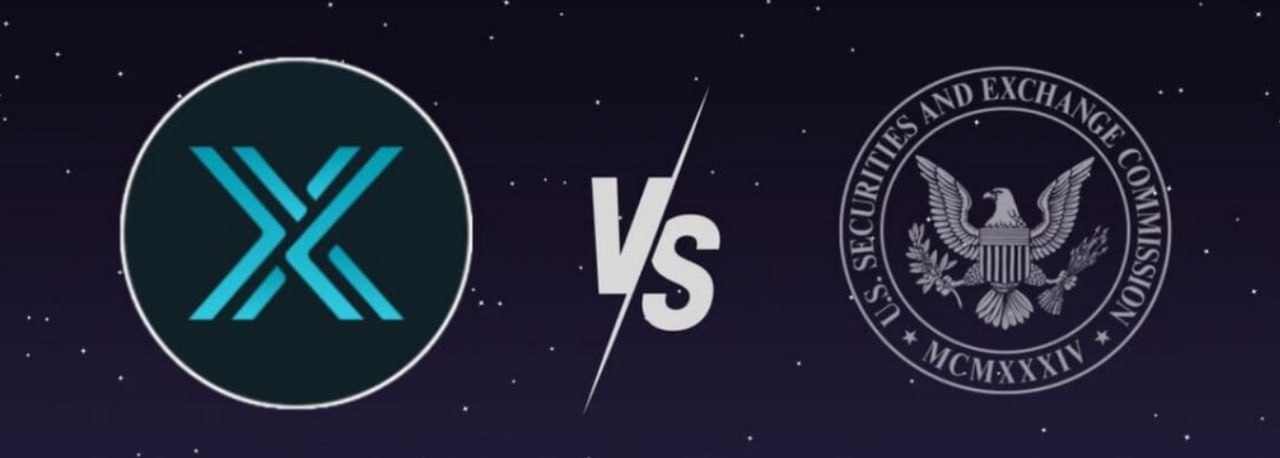 SEC drops probe into Web3 Gaming firm Immutable, will not pursue charges, company confirms Tuesday.US Federal Court rules that Treasury overstepped its authority when sanctioning Tornado Cash's immutable smart contractsSmart contracts are often seen as immutable but the hidden 'God Mode' used by developers can undermine the decentralization promises of blockchain.
Sources
20 records from 14 domains
immutable.com
cryptolinks.com
polygon.technology
play.immutable.com
youtube.com
archax.com
prnewswire.com
x.com
coinspect.com
ca5.uscourts.gov
review.stanfordblockchain.xyz
blofin.com
todaysgeneralcounsel.com
blockworks.com
Community notes
Spot something off or out of date? Drop a note. Editors review topic notes daily and roll accepted fixes into the explainer — contributors are recognized in the monthly $SQUID drop.
Loading notes…
Help improve this topic
Have a story or tip about this topic? Submit it. See something missing? Leave a note. Editors review daily; accepted submissions and fixes count toward the monthly $SQUID drop.