
Crypto gaming spans blockchain asset ownership, token economies, and AI-driven communities. This explainer covers infrastructure (Ronin, Immutable), P2E economics, prediction market regulation, security risks, and the sector's path forward.
+22 sources across the wider coverage universe
 Gaming groups, tribes and unions press Congress to block sports prediction markets in crypto bill2026-06
 Gaming giant Square Enix becomes node validator on the Tezos blockchain2026-03
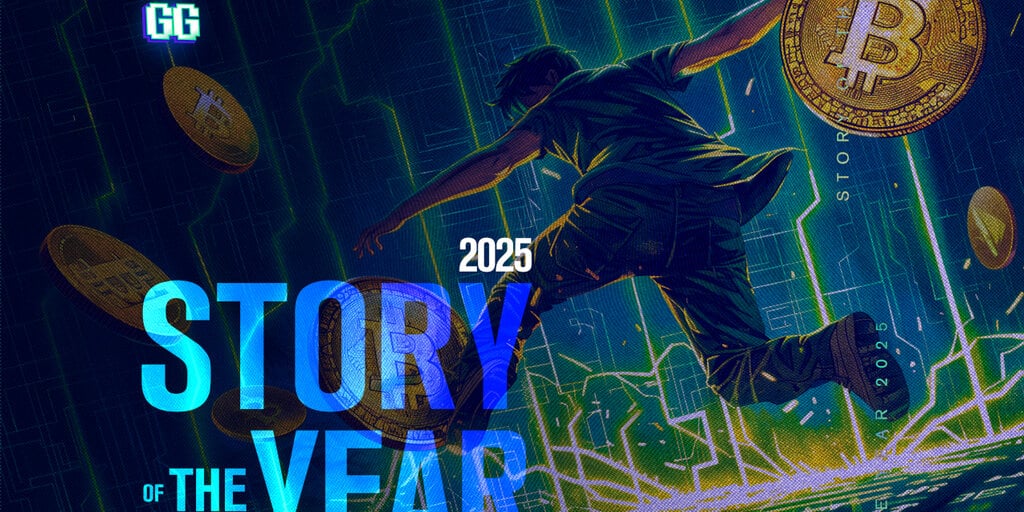 Crypto gaming collapsed in 2025 as venture capital funding dried up, forcing many Web3 games to shut down, abandon communities, and wipe out token value, exposing weak incentives and unsustainable token-first models.2025-12
 A 22-year-old California man has pleaded guilty to laundering millions for a massive $263M crypto theft ring that began as a group of online gaming friends before evolving into a full-scale RICO syndicate targeting hardware-wallet holders and high-value crypto users.2025-12
 Sony Bank is preparing to launch a USD-pegged stablecoin by 2026, aiming to cut payment fees across its gaming and anime ecosystem. Its OCC application faces pushback from U.S. community banks.2025-12
 TON collaborates with Pyth Network to enhance real-time data feeds for gaming and DeFi.2024-08
Blockchain-based gaming sits at the intersection of digital ownership, token economics, and interactive entertainment — a sector that has attracted billions in venture capital, survived a brutal bear market, and is now rebuilding its distribution model from the ground up.
What "Crypto Gaming" Actually Means
The term covers several distinct but overlapping categories. Play-to-earn (P2E) games reward players with tokens or NFTs that can be sold on secondary markets. On-chain games store core game state — item ownership, match outcomes, character progression — on a public blockchain rather than a proprietary server. Web3 gaming platforms provide infrastructure layers (wallets, marketplaces, identity) that traditional games can integrate without rebuilding from scratch.
These categories are not mutually exclusive, and projects frequently combine them. What unites them is the premise that players should have verifiable, transferable ownership over in-game assets, rather than holding a revocable license that disappears when a studio shuts down a server.

Gaming groups, tribes and unions press Congress to block sports prediction markets in crypto bill
The Infrastructure Layer Is Maturing
The most durable progress in crypto gaming over the past two years has been at the infrastructure level, not the game layer itself.
Ronin, originally built by Sky Mavis as a dedicated sidechain for Axie Infinity, migrated to an Ethereum Layer 2 network based on the OP Stack in May 2025. The move ended Ronin's life as a standalone sidechain — a status it held since 2021 — and connected it more tightly to Ethereum's security and liquidity. The migration introduced roughly 30 minutes of downtime during the transition. The significance goes beyond one game: Ronin now shares composability with the broader Ethereum ecosystem, meaning assets can move between Ronin-based games and the wider DeFi stack without custodial bridges.
Immutable, the Ethereum-native gaming chain, deepened its partnership with Polygon Labs to launch a Gaming Hub offering a $100,000 rewards pool for top web3 game developers. Immutable's zkEVM approach aims to provide gasless transactions for players while keeping assets provably on Ethereum — a design tradeoff that prioritizes user experience over pure decentralization.
These infrastructure bets reflect a hard lesson from the 2021–2022 cycle: games that launched directly on congested mainnet Ethereum or on chains with weak tooling suffered from slow transactions and high gas costs that destroyed gameplay loops. The current generation of gaming-specific L2s and appchains is an attempt to fix the plumbing before building the house.
Readers track the full capital accountability cycle in crypto gaming — they clicked both the massive DAO treasury approvals and the subsequent governance clawback proposals when projections failed, revealing that the governance fight over underperforming bets attracts as much attention as the original commitment.
The Distribution Crisis and the AI Pivot
The traditional mobile gaming industry is facing a structural distribution problem that predates crypto. Paid user acquisition (UA) costs have risen sharply while install-to-retention rates have fallen. App stores on both iOS and Android function as "a wall of sameness" — algorithmic surfaces where discoverability is increasingly pay-to-play, and organic discovery has collapsed.
Web3 gaming has its own version of this problem, amplified. Onboarding a new user requires explaining wallets, seed phrases, gas fees, and token volatility before they've played a single level. Conversion rates from curious-visitor to active-wallet-holder have historically been abysmal.
The emerging response from some projects is to replace the ad funnel with what builders are calling synthetic relationships — persistent AI agents that engage players in natural language before, during, and after gameplay. Arena, a competitive gaming platform with over 100,000 players across titles like VALORANT and Garena Free Fire, launched "Tío," a community manager AI agent built with Saga that engages players across Discord and WhatsApp. The framing is that gaming communities are becoming "autonomous" — capable of self-organizing and self-recruiting via AI intermediaries rather than paid ad campaigns.
This is an early experiment, not a proven playbook. But it points to a broader pattern: as AI agents become capable of sustained, contextual conversation, they become a cheaper and more scalable top-of-funnel mechanism than traditional advertising.

Gaming giant Square Enix becomes node validator on the Tezos blockchain
Token Economies: Promise and Peril
Token-based gaming economies remain the most contested element of the sector.
The 2021 P2E boom, led by Axie Infinity, demonstrated that you could bootstrap millions of players using token incentives — and then demonstrated just as clearly that those economies collapse when token prices fall and the influx of new players needed to sustain yields dries up. The "earn" side of play-to-earn turns out to be structurally dependent on perpetual growth.
Post-crash, several design philosophies have emerged:
- Sink-heavy economies: Design tokens so that meaningful gameplay requires burning them, reducing inflationary pressure. This works when the underlying game is enjoyable enough that players want to progress regardless of token price.
- Stablecoin integration: Route rewards through stablecoins rather than volatile native tokens, reducing the casino-like volatility that drove away mainstream players. Stablecoin-denominated rewards create their own risks — ecosystem silos where liquidity fragments across incompatible stablecoin implementations on different chains.
- Jackpot and reward-based structures: Projects like $FUN blend gaming loops with lottery-style token mechanics, combining entertainment value with speculative upside. These structures attract a gambling-adjacent audience and face regulatory scrutiny accordingly.
The stablecoin gamble in gaming economies remains underexplored. Moving rewards onto stablecoins stabilizes purchasing power but removes the asymmetric upside that drew crypto-native players in the first place. Finding a balance between volatility and stability is an unsolved design problem.
Prediction Markets: Gaming's Regulatory Flashpoint
An unexpected collision between crypto and the gaming industry has emerged around prediction markets.
Platforms like Polymarket allow users to bet on outcomes of real-world events, including sports. In June 2025, MLB named Polymarket its official prediction market exchange and signed a memorandum of understanding with the CFTC to establish an information-sharing framework. This crossed a line for established gaming and sports betting operators.
The American Gaming Association, along with tribal gaming groups and labor unions, lobbied Congress to include prediction market restrictions in the CLARITY Act, a crypto regulatory framework bill. Their argument: prediction markets on sports events are, functionally, sports betting — and should be subject to the same state-level licensing requirements that govern sportsbooks.
The 9th Circuit handed them a partial win, ruling that the Nevada Gaming Control Board could pursue action against Kalshi for offering unlicensed sports wagers in the state. The ruling creates circuit-level precedent that sports prediction markets may fall under existing gaming statutes, not the looser regulatory umbrella of commodity derivatives that platforms like Kalshi and Polymarket have argued applies to them.
The conflict matters for crypto broadly. If prediction markets are reclassified as gambling, they become subject to a patchwork of 50-state licensing regimes — the same regulatory complexity that has constrained the traditional online gambling industry for decades. Many crypto prediction platforms operate under CFTC commodity exchange frameworks specifically to avoid that outcome.

Crypto gaming collapsed in 2025 as venture capital funding dried up, forcing many Web3 games to shut down, abandon communities, and wipe out token value, exposing weak incentives and unsustainable token-first models.

The truth is different niches will dip,.more will spring up..it is just a cycle
The Skepticism Wave
Not everyone is bullish on the recovery thesis.
The president of Solana — one of the chains most aggressively courted by gaming studios — publicly declared that crypto gaming is "dead after billions invested." The statement generated significant debate, partly because it came from inside the industry rather than from outside critics. The argument was not that blockchain technology has no role in games, but that the P2E model specifically has failed to produce games that people play for fun rather than profit.
Build Games, a developer accelerator, saw over 2,000 applicants for its most recent funding cohort — and selected only three winners. The selectivity reflects rising scrutiny of game quality and economic sustainability, not just token mechanics. Projects that reached for launch without solving core gameplay loops have largely failed to retain users past the initial token-incentive period.
B3, an on-chain gaming platform, publicly reflected on launching 14 products in 12 months — a velocity that produced some successes but spread resources too thin. The post-mortem is instructive: on-chain gaming's barrier to entry has fallen significantly, which means competition for player attention has intensified even as the total market remains small.
- 01Arbitrum GCP treasury saga
The $215M gaming fund approval followed by a clawback proposal citing 'unsustainably optimistic projections' created a two-act accountability drama readers followed in full.
- 02Big-tech and VC validation
Amazon, Bitkraft, and a16z staking institutional credibility on Web3 gaming gave readers a signal that the sector was beyond speculative — or so it seemed before the 2025 collapse.
- 03L2 and infrastructure buildout
Taiko's day-one gaming ecosystem, TON's Pyth data integration, and SKALE's gas-free model showed readers that technical scaffolding was racing ahead of actual game adoption.
- 04Traditional studios crossing over
Ubisoft's DVN launch, ex-GTA developers partnering with Brawlers, and Square Enix validating Tezos gave readers evidence that mainstream gaming was actively testing on-chain models.
- 05SEC regulatory targeting of gaming tokens
The contrast between Immutable's probe being dropped and CyberKongz receiving a Wells Notice showed readers that regulatory outcomes in gaming tokens are unpredictable and asymmetric.
- 06VC collapse and token-first failure
The 2025 sector collapse crystallized for readers that games built around token incentives rather than gameplay fundamentals were structurally unsustainable.
Security and Platform Risk
As gaming platforms grow their crypto integrations, they also expand their attack surface.
The FBI opened a probe into Steam malware that targeted gaming accounts, with particular concern about wallet-draining scripts disguised as game mods or update packages. The incident is a reminder that the threat model for crypto gaming differs from traditional gaming: in a conventional game, a compromised account loses progress; in a wallet-integrated game, it can lose real monetary value.
Magma 2.0, a Sui-based AI-driven automated market maker with gaming applications, was flagged by security researchers for potential denial-of-service exploits and reward gaming vulnerabilities despite its liquidity claims. The pattern — a novel mechanism launched without sufficient adversarial testing — is common across both DeFi and gaming projects that ship under competitive pressure.
Smart contract audits are table stakes. Social engineering attacks targeting Discord and Telegram communities remain the most effective vector against retail participants in gaming ecosystems.
Key Projects and Chains to Track
| Project / Chain | What it does | Current status |
|---|---|---|
| Ronin | Sky Mavis gaming L2, OP Stack | Migrated from standalone sidechain (May 2025) |
| Immutable | Ethereum gaming zkEVM | Gaming Hub with Polygon Labs, $100K rewards |
| Polymarket | Prediction markets | Official MLB partner; regulatory litigation ongoing |
| Arena | Competitive gaming platform | 100K+ players; AI agent "Tío" live |
| Base Arcade | Coinbase L2 gaming events | 30-day onchain gaming event, $5K+ prize pool |
- 2024-01milestone
a16z names gaming a top 2024 crypto sector focus
- 2024governance
Arbitrum Foundation proposes $400M two-year gaming investment program
- 2024governance
Arbitrum DAO approves $215M Gaming Catalyst Program (225M ARB)
- 2024milestone
Amazon and Immutable partner on $100K cloud credits for Web3 game studios
- 2024regulatory
SEC issues Wells Notice to CyberKongz for gaming token securities violations
- 2025milestone
Crypto gaming sector collapses; VC funding dries up, studios shut down
- 2025regulatory
SEC drops investigation into Immutable, declines to pursue charges
- 2025governance
GFX Labs proposes clawing back 225M ARB from Gaming Catalyst Program
Outlook
The short-term outlook for crypto gaming is defined by bifurcation. Infrastructure — chains, SDKs, wallet UX, AI-driven community tools — is improving faster than games themselves. The studios and projects that survive will likely be those that prioritize gameplay quality first and token mechanics second, using blockchain for asset provenance and interoperability rather than as the primary monetization engine.
Regulatory pressure on prediction markets will reshape which products are viable in which jurisdictions. The CLARITY Act's treatment of sports prediction markets could determine whether crypto-native betting products can operate openly in the U.S. or are pushed into regulatory gray zones.
AI agents represent a genuinely novel acquisition channel that the industry is only beginning to explore. If synthetic relationships can meaningfully reduce the cost and friction of onboarding new players, the distribution problem that has limited crypto gaming's mainstream reach may finally have a tractable solution.
The sector has contracted significantly from its 2021 peak. What remains is smaller, more technically serious, and more focused on building games that players actually want to play — which is, arguably, the correct foundation for a second act.
Latest Gaming news
Gaming groups, tribes and unions press Congress to block sports prediction markets in crypto billGaming giant Square Enix becomes node validator on the Tezos blockchainCrypto gaming collapsed in 2025 as venture capital funding dried up, forcing many Web3 games to shut down, abandon communities, and wipe out token value, exposing weak incentives and unsustainable token-first models.A 22-year-old California man has pleaded guilty to laundering millions for a massive $263M crypto theft ring that began as a group of online gaming friends before evolving into a full-scale RICO syndicate targeting hardware-wallet holders and high-value crypto users.Sony Bank is preparing to launch a USD-pegged stablecoin by 2026, aiming to cut payment fees across its gaming and anime ecosystem. Its OCC application faces pushback from U.S. community banks. Animoca Brands plans to expand beyond gaming in 2026, targeting stablecoins, AI, DePIN, and DeFi as it aims to lead emerging sectors in Web3. Despite diversification, the company says gaming will remain a core priority.
Community notes
Spot something off or out of date? Drop a note. Editors review topic notes daily and roll accepted fixes into the explainer — contributors are recognized in the monthly $SQUID drop.
Loading notes…
Help improve this topic
Have a story or tip about this topic? Submit it. See something missing? Leave a note. Editors review daily; accepted submissions and fixes count toward the monthly $SQUID drop.