
A decentralized cryptocurrency launched in 2016, Zcash is designed to function as **privacy-preserving digital cash**, using zero-knowledge proofs so users can transact without revealing who paid whom or how much, while still allowing optional transparency for auditing and regulation. At a time when public blockchains
+17 sources across the wider coverage universe
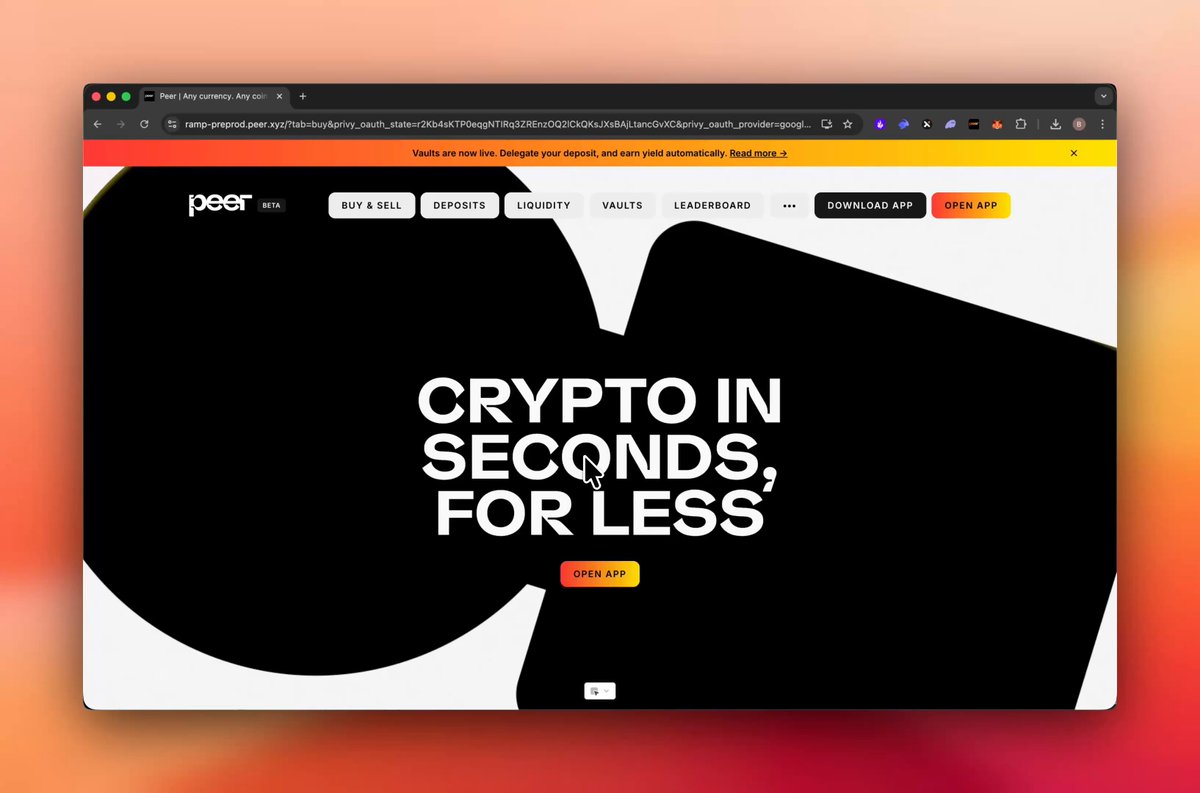 Peer launches direct fiat-to-Zcash onramp without KYC or intermediaries2026-04
 Zcash roadmap targets global-scale encrypted money with Tachyon scaling to 2,200 TPS and quantum recovery features, aiming to future-proof privacy and network resilience2026-04
 Foundry launches institutional Zcash mining pool, already commands 30% of network hashrate2026-04
 Arkham releases ultimate guide to tracking Zcash transactions but with one major catch2026-04
 Barry Silbert-backed Fortitude launches a 12MW Nebraska mining site, slashing Zcash production costs by ~43% as it expands owned power infrastructure2026-07
 Zcash activates Ironwood, sealing its $1.7B Orchard shielded pool and forcing all private ZEC into a new zero-balance pool protected against counterfeit coin withdrawals2026-07
Zcash: A Deep Dive into Crypto’s Flagship Privacy Coin
A decentralized cryptocurrency launched in 2016, Zcash is designed to function as privacy-preserving digital cash, using zero-knowledge proofs so users can transact without revealing who paid whom or how much, while still allowing optional transparency for auditing and regulation. At a time when public blockchains increasingly resemble a permanent financial surveillance ledger, Zcash sits at the center of a live experiment in whether strong cryptography, sound monetary design, and regulatory compatibility can coexist on a global, permissionless network.
What Is Zcash?
Zcash is a decentralized, open-source cryptocurrency focused on privacy and fungibility, created as a fork of the Bitcoin codebase and first released on October 28, 2016. Like Bitcoin, it has a fixed maximum supply of 21 million coins and uses proof-of-work mining to secure the network, but it layers on advanced zero-knowledge cryptography so that transactions can be fully encrypted while still being verifiable by the network. The native asset of the network is ZEC, and the protocol aims to behave like digital cash, offering fast settlement, low fees, and the ability to pay anyone in the world over the internet without intermediaries. In contrast to many “privacy by default” cryptocurrencies, Zcash offers optional privacy, allowing users to choose between transparent transactions similar to Bitcoin and shielded transactions that hide the sender, receiver, and amount on the public blockchain.
On most public blockchains, including Bitcoin and Ethereum, every transaction is publicly visible and traceable, even if addresses are pseudonyms rather than real-world identities. Over time, blockchain analytics, exchange KYC data, and other off-chain signals can be combined to deanonymize users, which is why critics have compared today’s blockchains to “Twitter for your bank account,” where your financial history can be followed and analyzed indefinitely. Zcash was created to address this problem directly by making it possible to transact on-chain without broadcasting transaction details to the entire world, while still allowing the network to enforce rules about double-spending and total supply. This is achieved by using zero-knowledge proofs so that nodes can verify a transaction’s validity without learning its sensitive contents.
The project’s official messaging frames Zcash as “encrypted electronic cash,” emphasizing end-to-end encryption for transactions and memo fields, low transaction fees that are usually a fraction of a cent, and accessibility to anyone with an internet connection. The protocol supports attaching encrypted messages to payments, such as invoices or personal notes, which travel along with the transaction but are visible only to the intended parties. Zcash is supported by a growing ecosystem of wallets, including mobile wallets that default to shielded transactions, hardware wallet integrations, and institutional custody tools that make it more practical for both individuals and organizations to use ZEC in regulated environments.
From a monetary perspective, ZEC inherits many of Bitcoin’s economic properties: a fixed supply cap of 21 million coins, a halving schedule that periodically reduces block rewards, and a deflationary issuance curve that approaches zero over time. Block subsidies are currently 1.5625 ZEC per block following the November 2024 halving, with 80% of that amount going to miners and the balance to development funding. This design aims to combine Bitcoin-like scarcity and predictability with an additional dimension of privacy that is not available on the Bitcoin base layer. At the same time, Zcash has introduced a development fund and governance mechanisms distinct from Bitcoin’s, making its economic and political structure meaningfully different in practice.
Zcash also exists within a broader and controversial category of “privacy coins,” including projects like Monero, that seek to restore financial privacy to digital money but face significant regulatory scrutiny in many jurisdictions. Regulators worry that robust on-chain privacy can be misused for money laundering, sanctions evasion, and other illicit activity, leading to bans and exchange delistings in some markets. Proponents counter that privacy is a fundamental right and that Zcash’s design, with optional transparency and selective disclosure features, is specifically intended to reconcile privacy with regulatory compliance. Understanding Zcash, therefore, requires looking not only at its cryptography and economics, but also at how it fits into evolving debates about surveillance, regulation, and the future of digital cash.

Bitcoin proposal adds Zcash-style shielded privacy without changing protocol rules

Origins, Launch, and Evolution
Zcash emerged from years of academic research into zero-knowledge proofs and the challenge of bringing strong privacy to public blockchains without sacrificing decentralization. While Bitcoin was the first successful cryptocurrency, it was never designed to hide transaction details; instead, it broadcasts all inputs and outputs to every node. Researchers began exploring how to integrate zero-knowledge proofs into Bitcoin-like systems to enable private transactions whose validity could still be verified without revealing underlying data. Zcash represents the first major production deployment of such technology, building on the concept of zk-SNARKs (zero-knowledge succinct non-interactive arguments of knowledge).
Formally launched in October 2016, Zcash initially reused much of Bitcoin’s codebase but replaced parts of the transaction layer with zk-SNARK-based shielded transactions. The project was led by Zooko Wilcox and a team that later became Electric Coin Company (ECC), alongside academic collaborators. Early versions of Zcash required a so-called “trusted setup,” a multi-party ceremony that generated public parameters for the zk-SNARK system. If those parameters had been compromised, it could in theory have allowed undetectable creation of counterfeit coins, though elaborate procedures were put in place to minimize this risk. Over time, both the community and external critics argued that eliminating trusted setup was essential for long-term trustlessness.
A series of major network upgrades followed, each named (e.g., Sapling, Heartwood, Canopy, NU5) and delivered via hard forks agreed upon by the community. The Sapling upgrade significantly improved the efficiency of shielded transactions, making them faster and lighter, while also introducing features like viewing keys for selective disclosure. Later upgrades refined mining parameters, network governance, and developer funding, gradually evolving Zcash from an experimental privacy fork of Bitcoin into a distinct protocol with its own roadmap and institutions.
One of the most consequential milestones was Network Upgrade 5 (NU5), which went live in 2022 and migrated Zcash to the Halo proving system. Halo is a next-generation zero-knowledge proof system that eliminates the need for a trusted setup and supports recursive proof composition, allowing proofs to attest to the validity of other proofs. NU5 also introduced the Orchard shielded protocol, a new shielded pool with improved cryptographic design, and Unified Addresses, which present a single address format that can receive funds into multiple pools under the hood. Together, these changes represented a major modernization of Zcash’s cryptographic stack, positioning it at the forefront of zero-knowledge research while simplifying the user experience.
In parallel with technical evolution, Zcash’s governance and funding models have also shifted. Development funding was formalized through a “dev fund” that channels a portion of block rewards to core development and ecosystem grants, with periodic community discussions about its renewal or modification. In recent years, leadership at what is now the ZODL organization (successor to ECC’s product efforts) has emphasized a pivot from pure research to user adoption, focusing on wallets and tools that ordinary users can actually deploy in daily life. Another major upcoming milestone is the Ironwood upgrade, targeted for activation in late July 2026, which aims to address lessons learned from a critical vulnerability in the Orchard pool and to restore robust, trustless verification of ZEC’s supply. Taken together, these phases show Zcash moving from early experimental privacy tech toward a more mature, user-facing, and security-hardened ecosystem.
Zcash readers click exploits not to watch the protocol fail but to watch institutional capital decide in real time whether to stay — Hayes dumping, Cypherpunk buying, and ZODL raising $25M all within the same vulnerability cycle reveals that Zcash's security surface has become its market-moving narrative.
How Zcash Works: Privacy by Design
Transparent and Shielded Addresses
Zcash’s architecture is built around the coexistence of transparent and shielded addresses, providing a continuum between full transparency and strong privacy. Transparent addresses, often called t-addresses, function similarly to Bitcoin addresses: balances and transaction histories are visible on the public blockchain, and anyone can trace flows of funds between transparent UTXOs. Shielded addresses, known historically as z-addresses and now primarily accessed via Unified Addresses, route funds into shielded pools where the sender, receiver, and amount are encrypted and not publicly visible. This duality allows Zcash to support familiar, Bitcoin-style transactions while also offering powerful on-chain privacy for users who opt into shielded transfers.
Shielded pools are specialized parts of the protocol where notes (analogous to coins) are managed using commitments and zero-knowledge proofs instead of cleartext balances. When someone sends ZEC into a shielded pool from a transparent address, the protocol encrypts the note’s details, and subsequent shielded-to-shielded transfers reveal nothing on-chain about which note was spent or how much was moved. Only the involved parties, and anyone who holds the appropriate viewing keys, can see the full details of such transactions. Zcash supports attaching encrypted memo fields to these transactions, which can carry payment references, human-readable messages, or other metadata; while invisible to the public, these memos can be read by recipients and auditors with access to the appropriate keys.
Unified Addresses (UAs), introduced with NU5, significantly simplify this system from a user perspective. Rather than forcing users to manage separate address types for different pools (transparent, Sapling, Orchard), UAs present a single address that can receive funds into any of the supported pools, depending on how the sender’s wallet chooses to construct the transaction. For example, a UA may contain components for both an Orchard shielded address and a transparent address; when another wallet sends funds, it can default to the Orchard component for maximum privacy, while still retaining compatibility across the ecosystem. Over time, wallet software such as ZODL has increasingly adopted shielded-by-default behavior, so that users who simply “send to an address” are quietly using the privacy-preserving pools under the hood.
The coexistence of transparent and shielded addresses introduces trade-offs. On the one hand, transparent transactions are easy for exchanges, explorers, and regulators to monitor and audit, which can facilitate adoption in regulated environments. On the other hand, the presence of a transparent option can weaken anonymity for users who mix transparent and shielded usage in ways that leak information, and it complicates the mental model for newcomers who must decide which type of transaction to use. Nonetheless, Zcash’s design tries to balance privacy with compatibility, providing a path for gradual migration toward more private usage without forcing it on every participant.
zk-SNARKs, Halo, and Cryptographic Foundations
At the heart of Zcash’s privacy is its use of zk-SNARKs, or zero-knowledge succinct non-interactive arguments of knowledge. A zk-SNARK allows one party (the prover) to convince another (the verifier) that a certain statement is true—such as “this transaction spends existing coins and maintains balance conservation”—without revealing any of the underlying data. In Zcash, each shielded transaction includes a zk-SNARK proof showing that the sender owns the coins being spent, that those coins have not been spent before (as enforced by nullifiers), and that the sums of inputs and outputs match, all without revealing addresses or amounts. Nodes can verify these proofs quickly and cheaply, maintaining consensus without seeing the sensitive details.
Early generations of zk-SNARKs, including those used in Zcash’s original Sprout pool, required a trusted setup: a one-time generation of public parameters based on secret randomness. If the secret randomness had been retained or compromised, an attacker could in theory have generated false proofs that looked valid, allowing undetectable inflation. To mitigate this, Zcash organized elaborate multi-party ceremonies where participants generated parts of the randomness, destroyed their secrets, and publicly documented the process, making collusion extremely unlikely. Even so, the presence of trusted setup remained a philosophical and practical concern, especially for a system whose appeal rests on trust minimization.
The adoption of the Halo proving system in NU5 marked a major shift. Halo enables zk-SNARK-like proofs without a traditional trusted setup, relying instead on cryptographic assumptions that do not require a specific ceremony. It also supports recursion, meaning proofs can attest to the validity of other proofs in a nested fashion, enabling more compact verification of complex computations or batched transactions. By moving Zcash to Halo, NU5 eliminated the need for future trusted setup ceremonies and laid the groundwork for advanced scalability schemes based on recursive proof aggregation. At the same time, it introduced the Orchard shielded pool, which was designed to leverage Halo’s capabilities and modernize the protocol’s cryptographic foundations.
This cryptographic sophistication comes with operational challenges. Implementing zk-SNARK circuits correctly is difficult, and subtle mistakes can undermine soundness, as the Orchard vulnerability later demonstrated. The Zcash ecosystem has therefore invested heavily in audits, formal verification, and, more recently, AI-assisted code review to catch flaws before they reach production. The migration to Halo has been accompanied by ongoing research into both the mathematical security of the system and its resilience to future quantum attacks, as Zcash leaders have begun prioritizing post-quantum readiness. In this sense, Zcash is simultaneously a live monetary system and a front-line testbed for cutting-edge cryptography.
Viewing Keys and Selective Disclosure
One of Zcash’s most distinctive features, especially from a regulatory and institutional perspective, is its support for viewing keys and payment disclosure, which enable selective transparency for shielded addresses and transactions. Viewing keys, as formalized in ZIP 310 and introduced with the Sapling upgrade, allow the holder to see all incoming and outgoing transactions associated with a shielded address, including values, memo fields, and target addresses, without being able to spend any funds. They are derived from the spending key but separated in such a way that sharing a viewing key does not compromise spending authority; only the holder of the private spend key can move coins.
Payment disclosure is a related but more granular mechanism that provides proof that a specific payment was sent to a particular shielded address, again without revealing the full transaction history of the address. This can be useful in disputes between counterparties, for example if a merchant wants to prove they paid an invoice, or if an individual needs to show that they made a particular charitable donation. Both viewing keys and payment disclosure are designed so that there is no central authority controlling access to this data; only the address owner can generate and share these proofs. If a user chooses not to share their viewing key, no third party can obtain it from the blockchain or any protocol-level registry.
These capabilities are central to Zcash’s value proposition as “auditable privacy.” For businesses, exchanges, and custodians, viewing keys make it possible to support fully shielded ZEC deposits and withdrawals while still complying with audit, reporting, and risk management requirements. A custodian could, for example, store shielded ZEC in cold storage and provide auditors with viewing keys that reveal all inflows and outflows but do not allow funds to be spent, satisfying both security and transparency constraints. Regulators or tax authorities, where appropriate and legally mandated, could be given partial or full viewing access, enabling compliance without breaking privacy for everyone else.
From a user perspective, selective disclosure enables a range of nuanced behaviors that are not possible on fully transparent chains. An individual might choose to keep everyday transactions private but share a viewing key with an accountant for tax preparation or with a charity to prove recurring donations. A business might manage multiple shielded addresses with different viewing key policies for internal controls. By separating who can see from who can spend, Zcash’s viewing key architecture attempts to reconcile the confidentiality expectations of cash with the auditability requirements of modern finance. This is a major factor in why some institutions see ZEC as an “institutionally adaptable” privacy asset rather than an unmanageable black box.
Mining, Supply Limit, and Halving Schedule
Economically, Zcash is designed to mirror Bitcoin’s scarcity model while funding development through protocol-level rewards. ZEC is mined via proof-of-work, meaning miners expend computational energy to solve cryptographic puzzles and, in return, create new blocks and receive block subsidies plus transaction fees. The total supply of ZEC is capped at 21 million coins, and the block subsidy is cut in half approximately every four years, following a schedule analogous to Bitcoin’s halving events. This results in a predictable issuance curve that asymptotically approaches zero, with inflation slowing over time and eventually relying solely on transaction fees to reward miners.
Following a halving event on November 23, 2024, Zcash’s block reward decreased to 1.5625 ZEC per block. Of this, 80% (1.25 ZEC) goes to miners, while the remaining 20% is allocated to development funding through the dev fund structure. Under the current arrangement, as described by ecosystem leaders, 8% of block rewards are directed to Zcash Community Grants (ZCG) for ecosystem grants, and 12% are routed into a protocol-controlled treasury governed by community processes. This marks a shift from earlier funding models that allocated specific percentages to entities like ECC and the Zcash Foundation; today, the emphasis is on more decentralized grantmaking and community oversight.
The halving has direct implications for miner revenue and network security. As block rewards fall, miners rely more heavily on price appreciation, transaction fees, or reductions in operating costs to maintain profitability. If ZEC’s price does not rise sufficiently to compensate for lower per-block rewards, some miners may exit, potentially reducing hashrate and making the network more vulnerable to attacks, though in practice networks often rebalance as the least efficient miners leave. This dynamic makes Zcash’s market performance and long-term development prospects relevant not just to investors but to base-layer security.
Industrial-scale mining has become more prominent in Zcash, with the launch of Foundry’s Zcash mining pool as a notable example. Foundry’s pool came online with multiple institutional miners and quickly reached around 30% of the network’s hashrate, positioning it as a major player. The pool is designed for professional mining organizations and public companies that require a US-based, compliance-ready partner, offering features like robust reporting and regulatory alignment. While such institutionalization can bring stability, capital, and regulatory sophistication, it also raises questions about hashrate centralization and geopolitical concentration. As with Bitcoin, Zcash’s long-term security depends on maintaining a competitive, diverse mining landscape while navigating the economics of halving and evolving regulation.
- 01Orchard counterfeiting flaw fallout↗
An AI-assisted researcher exposing an undetectable counterfeiting bug that could undermine ZEC's fixed supply triggered a cascade of institutional position changes and formal governance responses that readers tracked as a live crisis.
- 02Institutional accumulation despite risk↗
Arthur Hayes making ZEC his second-largest holding, Cypherpunk committing to accumulate 5% of all ZEC, and ZODL raising $25M from Paradigm and a16z during an active vulnerability scare created a high-conviction counternarrative readers found compelling.
- 03Privacy infrastructure buildout↗
CipherPay going live, a KYC-free fiat onramp launching, and shielded supply reaching 4.5M ZEC signaled that practical privacy rails are being built now, not theorized, pulling in readers tracking real adoption.
- 04Ironwood upgrade and formal verification↗
The proposal for a second Orchard pool and formal verification as the new security standard after the counterfeiting flaw gave readers a concrete governance-and-engineering story to follow beyond the initial panic.
- 05Quantum resistance roadmap↗
Zooko's commitment to quantum-recoverable wallets within weeks and full quantum-resistant infrastructure by 2027 positioned Zcash as forward-looking on an existential threat that resonates with privacy-focused readers.
- 06EU ban and regulatory pressure fueling demand↗
Readers connected looming EU privacy coin restrictions directly to a 1,000%+ price surge, with a16z, Hayes, and Buterin all publicly citing privacy as crypto's next frontier, making the regulatory threat paradoxically bullish.
Privacy, Regulation, and Real-World Use
Why Financial Privacy Matters
To understand Zcash’s purpose, one must start from the tension between the privacy norms of traditional finance and the radical transparency of public blockchains. In the legacy banking system, individual account details, transaction histories, and balances are not publicly visible; banks, regulators, and sometimes counterparties can see them, but the general public cannot. Physical cash offers even stronger privacy: hand-to-hand transactions leave no direct, easily traceable digital record. In contrast, on Bitcoin or Ethereum, every transaction is broadcast to a global ledger that anyone can inspect forever. Even though addresses are pseudonyms, they can often be linked to identities via exchange records, IP data, and behavioral patterns, creating a rich dataset for surveillance and analytics.
As concerns over surveillance capitalism, data breaches, and state-level monitoring have grown, privacy advocates have argued that this default transparency is neither necessary nor desirable for all forms of money. When everyone’s transaction graph is publicly accessible, competitors can infer business strategies, data brokers can monetize spending profiles, and criminals can target victims who appear to hold large balances. In this context, privacy-focused cryptocurrencies like Zcash and Monero aim to restore a form of cash-like confidentiality to digital transactions, allowing people to pay, save, and donate without exposing their financial lives to the entire world. The pitch, as ByteTree puts it, is not that privacy is about hiding wrongdoing, but that privacy has always been the default for cash and conventional bank accounts.
Zcash’s architecture embodies this philosophy by giving users a credible way to transact without broadcasting every detail while still retaining the ability to comply with laws and audits when necessary. Shielded transactions hide the sender, receiver, and amount from public view, and, crucially, the transaction graph cannot be reconstructed by an outside observer, even one with full access to the blockchain. At the same time, viewing keys and payment disclosures allow users to selectively reveal information to auditors, regulators, or counterparties, preserving privacy against the general public but not against specific, authorized observers. This duality—private by design but auditable by consent—is central to Zcash’s narrative about responsible financial privacy.
Privacy coins tend to attract increased attention during periods when surveillance concerns are particularly salient or when investors seek assets that behave differently from mainstream crypto markets. In the crypto winter of the mid-2020s, ByteTree observed that privacy coins were among the best-performing sectors, with Zcash showing strong relative strength against BTC, USD, and ETH, delivering an approximate 180% return from its yearly lows. This outperformance coincided with rising regulatory crackdowns and deplatforming scares across the industry, strengthening the case that demand for censorship resistance and privacy may rise when trust in institutions falters. At the same time, the Orchard vulnerability reminded everyone that advanced privacy comes with complex technical risks that must be managed carefully.
Regulation, Exchange Support, and Bans
Regulators globally have long expressed concern about cryptocurrencies that make it difficult or impossible to trace funds, particularly in the context of anti-money laundering (AML), combating the financing of terrorism (CFT), and sanctions enforcement. Privacy coins like Zcash, Monero, and others have been singled out in various regulatory actions and guidance documents as presenting elevated risks because they obscure transaction flows by design. In response, some countries and regulators have taken strong measures, including outright bans on privacy coin trading on licensed exchanges. For example, authorities in the Philippines have recently tightened crypto rules and banned privacy coins from regulated exchanges, limiting local access to assets like ZEC and XMR via compliant platforms. Similar moves in other jurisdictions have led to delistings and reduced liquidity.
The result is a patchwork regulatory environment in which Zcash remains available on many global exchanges but has been delisted or restricted in others, particularly in markets with stringent AML rules or cautious regulators. Some exchanges have chosen to maintain support for ZEC by emphasizing its optional transparency and the availability of viewing keys, arguing that these features allow them to meet compliance obligations while still serving customer demand for privacy. Others have found it simpler to avoid the category entirely, given the heightened scrutiny and evolving standards from bodies like the Financial Action Task Force (FATF). For users, this means that the ability to buy, sell, and hold ZEC through mainstream channels depends heavily on jurisdiction, platform, and regulatory mood.
Zcash’s design is explicitly oriented toward regulatory compatibility, at least compared with fully opaque systems. The existence of transparent addresses allows users, exchanges, and institutions to operate in a fully transparent mode if they choose, behaving much like they would on Bitcoin. Viewing keys and payment disclosures provide technical mechanisms for regulated entities to monitor and report shielded flows without necessarily exposing them to the broader public. This has led some proponents to argue that ZEC should be treated differently from privacy coins that offer no such selective disclosure tools, as it can be integrated into compliance workflows in ways that are impossible with purely anonymous protocols. Whether regulators and exchanges ultimately accept this argument remains an open question.
From the perspective of privacy advocates, regulatory pressure on Zcash and its peers raises deeper debates about financial freedom and the appropriate balance between surveillance and privacy. Critics of bans argue that driving privacy coins off regulated exchanges does not eliminate demand; it merely pushes users toward informal markets, decentralized exchanges, or cross-chain bridges, where oversight may be even weaker. Supporters of stricter rules counter that allowing widely accessible, high-liquidity privacy coins could materially hinder law enforcement and enable large-scale illicit finance. Zcash’s attempt to navigate this dilemma—by designing for both privacy and auditability—places it in a unique and contested position in the global regulatory landscape.
Institutional Adoption, Treasury Use, and Mining
Despite regulatory headwinds, Zcash has begun to attract interest from certain institutions, both on the mining side and as a treasury asset. On the mining front, the launch of Foundry’s Zcash pool with multiple institutional miners and around 30% of the network’s hashrate signaled that public mining companies and professional operations see ZEC as viable enough to warrant dedicated infrastructure. Foundry’s positioning as a US-based, compliance-ready mining partner aligns with the needs of publicly listed firms that must satisfy stringent regulatory and reporting standards. The pool’s rapid capture of a significant share of hashrate shows that institutional miners can and do enter privacy coin ecosystems when they perceive economic opportunity and regulatory pathways.
On the treasury side, Reliance Global Group, a Nasdaq-listed holding company in insurance and real estate, publicly disclosed that it had increased its ZEC position as part of its Digital Asset Treasury strategy. The company described ZEC as an “institutionally adaptable and technologically resilient privacy-enabled digital asset” and argued that its dual architecture—combining transparent auditability with optional privacy—supports implementation in regulated environments. Reliance’s leadership highlighted Zcash’s optional transparency and privacy model as aligned with long-term treasury and risk management objectives, suggesting they see ZEC not simply as a speculative trade but as a strategic asset. Their view is that ZEC stands out by combining a privacy model that is deliberate and operationally practical with technological underpinnings they believe are robust.
Some venture investors and crypto funds have expressed similar, though not identical, sentiments. While high-profile traders like Arthur Hayes chose to exit ZEC positions following the Orchard vulnerability due to concerns about unverifiable counterfeiting risk, others have publicly stated that they continue to hold ZEC and to invest in Zcash ecosystem projects such as the ZODL wallet. For example, Dragonfly partner Haseeb Qureshi has reportedly argued that any exploitation of the Orchard bug would have primarily affected shielded ZEC holders rather than transparent ones, and that the protocol and products built on top of it remain compelling. These divergent reactions underscore that institutional engagement with Zcash is nuanced and strongly shaped by each actor’s risk tolerance, regulatory exposure, and conviction in the technology.
Institutional miners and treasury holders also influence Zcash’s governance and long-term direction, directly or indirectly. Large miners participating through pools like Foundry may engage with community discussions on upgrades that affect mining economics or security. Corporate holders may advocate for features that make compliance easier, such as improved viewing key infrastructure or clearer accounting between shielded pools. Meanwhile, independent security researchers, including those using AI tools to audit cryptographic circuits, exert a different kind of influence by revealing vulnerabilities and shaping the perceived risk profile of the asset. Zcash thus sits at the intersection of institutional finance, grassroots privacy activism, and cutting-edge cryptography, a combination that makes its path both promising and precarious.
Everyday Payments, Savings, and DeFi Integrations
Beyond miners and institutions, Zcash is also meant to be used by ordinary people for everyday payments, savings, and donations. The protocol offers relatively fast confirmation times and low fees, with transaction costs typically a fraction of a cent, making small payments economically feasible. Because shielded transactions hide amounts and addresses, users can pay merchants, support causes, or transfer money to family without revealing balances or spending patterns to the broader public. Encrypted memo fields allow invoices, messages, and references to be embedded directly in payments, reducing reliance on off-chain communication for context. Zcash’s global accessibility—anyone with an internet connection and a compatible wallet can use it—aligns with the original vision of cryptocurrencies as open, borderless money.
Realizing this vision in practice has required significant investment in wallets and user experience. In 2024, Zcash’s core product organization, now known as ZODL, reoriented its strategy toward user adoption, prioritizing “world-class private money” in an interface that non-experts can manage. The ZODL wallet (formerly Zashi) launched as a mobile wallet that is shielded by default, supports hardware wallets, and integrates swaps with other tokens, effectively acting as a gateway to Zcash’s privacy features for everyday users. By abstracting away much of the complexity around address types and proof generation, wallets like ZODL try to make private payments as simple as sending a message in a chat app, while still preserving advanced cryptographic protections under the hood.
Zcash is also increasingly integrated into cross-chain and DeFi ecosystems. Protocols like THORChain, which provide decentralized cross-chain swaps, have queued ZEC alongside Monero as assets to be supported once their networks resume trading, enabling users to move value between Zcash and other chains without relying on centralized exchanges. Such integrations can improve liquidity, broaden use cases (for example, swapping ZEC for stablecoins or BTC in a non-custodial way), and reduce dependence on any single jurisdiction’s regulatory posture. At the same time, bridging privacy assets into DeFi raises new questions about how compliance, risk management, and user privacy will be balanced in multi-chain environments.
Despite these advances, everyday Zcash usage still faces obstacles. Regulatory uncertainty can discourage merchants and payment processors from integrating ZEC, especially in regulated industries. Wallet support varies across platforms and regions, and some users struggle with the conceptual difference between transparent and shielded funds, viewing keys, and backup procedures. Nonetheless, for communities and individuals who place a high value on financial privacy—whether for political, personal, or commercial reasons—Zcash offers a unique combination of cash-like confidentiality, open access, and optional auditability that is difficult to replicate with other tools.

Citrea acquires Crest to bring Zcash-style privacy to Bitcoin
Governance, Funding, and Ecosystem Institutions
Core Organizations and Roles
Zcash’s ecosystem is anchored by several key organizations that together drive protocol development, community governance, and ecosystem growth. Electric Coin Company (ECC), founded by Zooko Wilcox and the original development team, has historically served as the primary maintainer of the Zcash protocol and codebase. Over time, ECC’s role has evolved, with a stronger focus on product development, user-facing software, and strategic leadership, culminating in the branding of ZODL as a flagship wallet and gateway into the Zcash ecosystem. ZODL’s team continues to contribute to protocol-level work but with a pronounced emphasis on features that directly enhance user adoption, such as shielded-by-default wallets, hardware integrations, and intuitive interfaces.
The Zcash Foundation is an independent, non-profit organization dedicated to building and supporting the Zcash ecosystem in the public interest. It participates in protocol design, funds grants, and operates infrastructure such as lightwallet servers and community tools, while also acting as a steward of trademarks and governance processes. The Foundation often collaborates with ZODL and other stakeholders on upgrades and research, but it maintains separate governance and funding, providing a degree of decentralization and checks and balances. This dual structure—commercial product organization plus independent foundation—aims to reduce reliance on any single entity and to ensure that protocol evolution aligns with user and community interests.
Zcash Community Grants (ZCG) is a grant committee funded through the dev fund, tasked with allocating resources to independent teams, researchers, and builders working on Zcash-related projects. ZCG supports a broad range of initiatives, including wallet development, infrastructure, UX tooling, research, and community outreach. Members are selected through community governance processes, and their decisions are transparent and publicly documented. The presence of ZCG allows for distributed, bottom-up development, ensuring that not all innovation flows through ECC/ZODL or the Foundation.
Other ecosystem participants include independent labs and companies such as Shielded Labs, Tachyon, and Valar Group, which have taken active roles in security audits, protocol proposals, and upgrades like Ironwood. These organizations bring additional expertise and perspectives, particularly around formal verification, AI-assisted auditing, and consensus rule design. Community figures like DeFi strategists within ZCG also represent Zcash at industry events and in cross-chain collaborations, underscoring that Zcash is not an isolated project but a participant in the broader crypto and Web3 landscape. The net effect is a multi-institutional ecosystem that, while still relatively small compared to giants like Bitcoin and Ethereum, has grown more diverse and resilient over time.
Development Funding and Block Reward Allocation
Unlike Bitcoin, which relies entirely on voluntary contributions and donations for core development, Zcash embeds development funding directly into its block reward structure. In 2020, a new development fund was established for a four-year period, allocating a portion of each block subsidy to support ongoing protocol development and ecosystem grants. The idea was to provide sustainable, predictable funding for work that benefits all ZEC holders, avoiding the fragility of donation-based models and aligning incentives for long-term stewardship. The fund’s terms included provisions for community review and potential changes in future network upgrades.
After the November 2024 halving, the current block reward of 1.5625 ZEC is divided so that 80% (1.25 ZEC) goes to miners, and 20% (0.3125 ZEC) goes toward development funding. According to ecosystem leaders such as Josh Swihart, Network Upgrade 6 (NU6) restructured this dev fund, eliminating direct funding lines to specific organizations and instead routing 8% of block rewards to Zcash Community Grants (ZCG) for ecosystem grants and 12% into a protocol-controlled treasury. This treasury is governed through community mechanisms and is intended to support long-term development and strategic initiatives without concentrating power in a single company or foundation. Miners continue to secure the network and receive the lion’s share of block rewards, but development is explicitly funded as a first-class protocol concern.
The dev fund has been the subject of extensive community debate. Some argue that dedicating a portion of block rewards to development is essential for sustaining a complex, cryptography-heavy protocol like Zcash, which requires continuous research, auditing, and infrastructure work to remain secure and competitive. Others worry that such funding distorts incentives, empowers centralized actors, or places protocol governance at risk of capture by those who control the purse. As the current dev fund term moves toward future renewal or expiry decisions, community discussions have explored what block rewards should look like if the dev fund is allowed to expire or is significantly modified, including scenarios where miners receive 100% of block subsidies and development relies on other funding models.
Regardless of the eventual outcome, Zcash’s funding model is an important differentiator. It provides a built-in mechanism for paying developers, auditors, and contributors across multiple organizations, reducing reliance on periodic fundraising or foundation endowments. At the same time, it requires thoughtful governance to ensure that funds are allocated transparently, with broad community input and alignment with Zcash’s core mission of privacy-preserving financial freedom. The dev fund debates are thus a microcosm of the broader question: how should open, decentralized protocols finance their own ongoing development while remaining truly decentralized?
Community Culture and Ecosystem Growth
Zcash’s community culture is shaped by its origins in academic cryptography, its focus on privacy, and its experience weathering both technical and regulatory challenges. Contributors tend to place a premium on rigorous security, formal proofs, and cautious deployment of new features, an orientation visible in upgrades like NU5 and the forthcoming Ironwood. The ecosystem’s response to the Orchard vulnerability—coordinating an emergency soft fork, rapidly developing a fix, and commissioning additional AI-based audits—demonstrated a willingness to act decisively when core assumptions are threatened, even at the cost of short-term disruption. This combination of idealistic privacy goals and pragmatic, rapid incident response is unusual in the crypto space and has become part of Zcash’s narrative about its own maturity.
Grants and community initiatives have helped expand the ecosystem beyond the initial core developers. Projects funded through ZCG and other channels have improved wallet interfaces, implemented Zcash support in new programming languages and SDKs, built infrastructure for light clients, and sponsored independent security reviews. This has led to a more diverse ecosystem of tools, from command-line wallets for power users to mobile apps for everyday payments. Community forums and governance discussions, including debates about the dev fund and network upgrades, show a high level of engagement from technically sophisticated participants who care deeply about Zcash’s direction.
Narratives also matter. In public commentary, ZODL’s Josh Swihart has compared Zcash’s recent turnaround to the story of Wrexham football club rising through the English leagues, arguing that conviction, hard decisions in 2023–2024, and long-term focus have fueled renewed growth. He points to the combination of reformed governance, improved funding mechanisms, and user-centric products like ZODL as evidence that Zcash has moved beyond its earlier growing pains. Whether one agrees with this optimistic view or not, it reflects a community that sees itself as playing a long game—building “unstoppable private money” over decades rather than chasing short-term price spikes. Such framing resonates with some investors and users who value history and resilience in a sector full of fleeting narratives.
The community is also increasingly outward-facing. Zcash representatives participate in broader crypto events, standards discussions, and cross-chain collaborations, which helps integrate privacy considerations into the wider Web3 discourse. Panels on privacy and security often feature Zcash developers and researchers, and recent events have highlighted the role of AI in discovering vulnerabilities, with Zcash serving as a prominent case study. As the ecosystem grows, maintaining a balance between tight-knit technical collaboration and broad, inclusive community participation will be a continuing challenge.
Zcash mainnet launch with Sprout shielded pool
NU5 upgrade introduces Orchard pool and Halo 2 proving system
Reliance Global Group begins institutional ZEC accumulation strategy
AI-assisted researcher discloses Orchard counterfeiting vulnerability; 6-year-old Sprout proof-skip bug also patched; 200 ZEC bounty paid
Zcash coordinates 24-hour emergency upgrade patching Orchard flaw
Ironwood upgrade proposed: new Orchard pool, legacy pool payment restrictions, formal verification commitment
Foundry institutional Zcash mining pool launches, captures 30% of network hashrate
Shielded supply reaches 4.5M ZEC; ZODL raises $25M from Paradigm, a16z, Winklevoss, Coinbase Ventures
The Orchard Vulnerability, AI Audits, and the Ironwood Upgrade
Anatomy of the Orchard Counterfeiting Bug
The Orchard shielded pool, introduced with NU5 in May 2022, was designed to be Zcash’s most advanced privacy layer, leveraging the Halo proving system for efficient, trustless zero-knowledge proofs. It was meant to succeed earlier shielded pools like Sprout and Sapling, offering better performance and more modern cryptography while simplifying the user experience via Unified Addresses. For several years, Orchard appeared to function as intended, with increasing amounts of ZEC held in the pool and a growing share of transactions using shielded paths.
On May 29, 2026, however, security researcher Taylor Hornby discovered a critical vulnerability in Orchard that cast doubt on one of the protocol’s most fundamental guarantees: the impossibility of undetectable counterfeiting. The bug involved a subtle flaw in the mathematical circuit that enforces the linkage between a coin’s secret key and its public address. Specifically, a step of the computation tying the secret key to the coin’s public address had been omitted, allowing a malicious user to generate a different nullifier for the same coin each time they spent it. Nullifiers are supposed to provide a unique fingerprint for each spent note so the network can detect double-spends; by breaking this link, the bug effectively enabled a note to be spent multiple times without detection, creating counterfeit ZEC inside the Orchard pool.
Hornby discovered the bug using Anthropic’s Claude Opus 4.8 model (described in some reports as part of a custom “audit agent” framework), illustrating the emerging role of AI in security auditing. He reported that what years of human audits had missed, the new AI model helped uncover within about 28 hours of its release. In proof-of-concept testing, Hornby demonstrated that he could repeatedly double a single note’s balance, ultimately reaching a test wallet balance of 10 million ZEC, with all proofs still verifying as valid under the buggy circuit. This dramatic illustration underscored how catastrophic the vulnerability could have been if exploited at scale in the real network.
Because Orchard is a fully shielded pool, detecting actual exploitation was inherently difficult. The design intentionally hides transaction details, including amounts and addresses, meaning there is no simple way to scan the blockchain for anomalies that would definitively indicate counterfeit ZEC. In their disclosures, Zcash developers stated that as of the time of discovery and patching, there was no evidence that the bug had been exploited on mainnet. However, they also acknowledged that, by design, some forms of exploitation might leave no discernible on-chain signature, making it impossible for ordinary users to independently verify that total ZEC supply had not been inflated. This realization would prove central to the subsequent crisis of confidence and to the design of the Ironwood upgrade.
Emergency Response and Temporary Fixes
Once the Orchard counterfeiting vulnerability was confirmed, Zcash developers and ecosystem stakeholders moved quickly to contain the threat. On June 2, 2026, they deployed an emergency soft fork that effectively disabled the Orchard shielded pool, preventing new transactions from being created using the vulnerable circuit. This required swift coordination among node operators, miners, wallets, and exchanges, as everyone needed to upgrade their software and converge on the new consensus rules in order to maintain network stability. The response showcased the ecosystem’s ability to mobilize in a crisis, but it also temporarily limited users’ ability to move funds within Orchard.
The following day, a network upgrade was activated that re-enabled Orchard with a corrected circuit, closing the specific vulnerability that allowed counterfeit ZEC to be created. This upgrade ensured that new Orchard transactions would be generated and verified using the patched, secure math, preventing future exploitation via the same bug. However, it did not resolve the deeper problem that, if any counterfeiting had occurred before the patch, it might be impossible to detect or quantify using on-chain data alone. Zcash founder Zooko Wilcox publicly stated that he believed it was unlikely the vulnerability had been exploited, based on their investigations and the absence of suspicious signs, but he also acknowledged a hard truth: users currently cannot independently verify whether ZEC supply was affected. In a system that aspires to Bitcoin-like trustlessness, that limitation weighs heavily.
To increase confidence that no additional serious vulnerabilities remained after the Orchard fix, the Zcash ecosystem commissioned further AI-assisted audits. Anthropic’s Mythos AI system performed a security review of the Zcash protocol and, according to public statements by Wilcox, found no additional serious vulnerabilities in the circuits. This result was widely reported and seen as a positive signal that, aside from the Orchard bug, the core cryptographic machinery appeared sound. Yet the episode underscored that even the most sophisticated privacy systems are ultimately only as secure as their implementations, and that advanced tools—both human and AI—must be continuously applied to maintain that security.
Auditing Blindspots and the Limits of On-Chain Transparency
The Orchard vulnerability laid bare an uncomfortable reality for privacy-preserving cryptocurrencies: when you hide everything, you may also hide the evidence of your own failures. In transparent systems like Bitcoin, anyone can audit the total supply by summing all unspent outputs and comparing that total to the expected issuance schedule. If a bug or exploit created extra coins, it would typically show up as an inconsistency between observed and expected supply, enabling detection even if the underlying vulnerability remained unknown. In fully shielded pools like Orchard, however, transaction amounts and addresses are encrypted, and the system’s integrity relies on the soundness of the cryptographic proofs rather than on direct observability.
As a result, if a bug undermines the soundness of the proof system—allowing counterfeit coins to be created while still producing valid-looking proofs—there may be no straightforward way to detect or bound the damage by examining the blockchain. This is exactly what the Orchard bug threatened: an attacker could have created counterfeit ZEC within the pool, and those coins would have been indistinguishable from legitimate shielded coins as far as the chain itself was concerned. Even if some statistical anomalies or heuristic signals might hint at suspicious activity, they would not provide the rigorous, trustless verification that many users expect from a public blockchain.
This blindspot is not unique to Zcash; it is a structural feature of any system that aims for strong privacy through encryption and zero-knowledge proofs. For regulators and skeptics, the episode validated longstanding concerns that privacy coins might be impossible to audit in the conventional sense, particularly regarding total supply. For protocol designers, it highlighted the importance of formal verification, exhaustive testing, and multiple layers of defense (including AI and independent auditors) to ensure that the circuits themselves faithfully implement the intended security properties. Zcash’s crisis thus serves as a cautionary tale for all projects pushing the boundaries of on-chain privacy: the more you hide, the more you must be absolutely sure your math is correct.
Ironwood: A New Shielded Pool with Formal Verification
In response to the Orchard crisis, Zcash developers and ecosystem partners have designed the Ironwood upgrade, a comprehensive set of consensus changes aimed at restoring trustless supply verification and strengthening the security of shielded pools. Ironwood is scheduled for activation in late July 2026 and represents a significant evolution in how Zcash handles shielded funds and auditing. Its goals are twofold: to ensure that no counterfeit ZEC created via the Orchard bug can contaminate the system going forward, and to embed stronger guarantees into the protocol itself so similar vulnerabilities are far less likely in the future.
A central feature of Ironwood is the introduction of a new shielded pool based on the Orchard protocol but with circuits that have undergone formal verification and additional independent audits. Formal verification involves using mathematical methods and software tools to prove that a given circuit satisfies certain properties, such as correct enforcement of nullifier uniqueness and balance conservation. By embedding formally verified circuits into consensus rules, Ironwood aims to mathematically guarantee that the new pool cannot produce counterfeit ZEC under the defined assumptions, at least for the specific classes of bugs formalized in the verification. This moves Zcash toward a higher standard of assurance than conventional testing alone can provide.
Ironwood also changes how funds move between shielded pools to create a clearer accounting trail. Under the upgrade, the legacy Orchard pool will be closed to new deposits and internal transactions; funds remaining there will eventually need to pass through designated pathways—such as moving via the new pool or through transparent addresses—before they can circulate freely. By constraining flows in this way, the protocol intends to isolate any hypothetical counterfeit coins that might have been created under the old circuit and prevent them from mixing indistinguishably with funds in the new, formally verified pool. Essentially, Ironwood carves out a controlled environment for legacy funds while steering new activity into a more rigorously secured domain.
The design and implementation of Ironwood have involved multiple organizations, including ZODL, the Zcash Foundation, the Zcash Open Development Lab (ZODL in some contexts), Shielded Labs, Tachyon, and Valar Group. Together, they have finalized consensus rule changes, auditing processes, and migration procedures, with a focus on ensuring that the new system can mathematically prove the absence of counterfeit ZEC in the new pool before activation. Observers have noted that Ironwood is not merely a patch but a significant architectural response to the conceptual challenges posed by fully shielded systems, potentially serving as a template for other privacy protocols facing similar issues.
AI, Security, and the Next Frontiers of Risk
The discovery of the Orchard vulnerability via AI, and the subsequent Mythos AI audit that found no additional serious bugs, highlight a broader shift in how security is practiced in complex cryptographic systems. Hornby’s use of Anthropic’s Claude Opus 4.8 model to audit Zcash’s circuits demonstrated that large language models and AI agents can help reason about code, cryptographic constraints, and protocol logic in ways that complement human experts. In his report, Hornby noted that what years of human audits had missed, the AI-augmented process surfaced in a matter of days, suggesting that AI tools may dramatically change the economics of finding subtle vulnerabilities. Similarly, Mythos AI’s post-fix audit, which reported no additional serious vulnerabilities, showcased AI’s role in verifying the absence of certain classes of flaws across a large codebase.
These developments cut both ways. On the defensive side, AI can serve as a powerful ally, scaling security review efforts, generating test cases, and spotting patterns that humans might overlook. On the offensive side, adversaries may also use AI to search for exploitable bugs, optimize attack strategies, and generate convincing phishing or social engineering campaigns. The Zcash episode has sparked broader conversations about an impending “AI and quantum storm” that could test the resilience of many protocols, not just privacy coins. If AI accelerates discovery of latent vulnerabilities across crypto, projects that proactively embrace AI-assisted auditing and formal verification may fare better than those that do not.
Hornby has indicated that he intends to add Monero and other privacy-focused cryptocurrencies to his AI-assisted audit queue, raising questions about what undiscovered vulnerabilities might lurk in other supposedly battle-hardened systems. This prospect has both alarmed and encouraged communities: alarmed because it suggests no protocol is immune to deep scrutiny, and encouraged because identifying and fixing such bugs before they are exploited strengthens the ecosystem overall. For Zcash, the experience has reinforced the importance of continued investment in security research, AI tooling, and diverse audits as a core part of its development process, rather than as an afterthought.
Market Fallout and Reset
The Orchard vulnerability triggered not just a technical crisis but a market and narrative shock for ZEC. Once news spread that a critical counterfeiting bug had existed in Zcash’s most advanced shielded pool, and that users could not independently verify whether the total supply had been affected, investor confidence wavered. Some traders and funds viewed the risk of undetectable inflation as unacceptable for a monetary asset whose value proposition rests on predictable scarcity, regardless of reassurances that exploitation was unlikely. High-profile investor Arthur Hayes, for instance, publicly announced that he had exited his ZEC position because he could not be sure that the supply had not been compromised, contributing to a sharp price drop of over 50% at one point.
As emergency patches were deployed, and as more information emerged about the nature of the bug and the lack of evidence for exploitation, market sentiment began to stabilize. The rapid coordination of a 24-hour emergency upgrade, followed by a clear plan for Ironwood and renewed AI-based audits, helped some investors see the episode as proof of the ecosystem’s maturity rather than its fragility. ZEC eventually rebounded significantly from its post-crisis lows, with some reports noting that it gained roughly 70% from the bottom as confidence tentatively returned and speculators bet on a “comeback” story. On-chain data suggested that a substantial share of ZEC in the Orchard pool was withdrawn or repositioned as users responded to the new information and prepared for Ironwood’s migration rules, though exact figures are hard to verify publicly due to privacy.
ByteTree’s broader analysis placed Zcash’s volatility in the context of a privacy coin sector that has been among the strongest performers in 2026, despite regulatory and technical headwinds. They argued that investors seeking assets decoupled from mainstream crypto narratives—and increasingly concerned about surveillance—have rotated into privacy coins, even as regulators continue to pressure them. For some, the Orchard episode reinforced the view that frontier technologies like Zcash carry elevated technical risk but also potential outsized rewards if they succeed. Others have shifted to alternative narratives, such as Ethereum-based privacy layers, arguing that Zcash’s challenges demonstrate the dangers of base-layer secrecy. The split between those who see the crisis as disqualifying and those who see it as a crucible that will leave Zcash stronger captures the ongoing debate over the project’s future.
The Orchard counterfeiting vulnerability — discoverable only via AI-assisted formal analysis — and a 6-year-old Sprout proof-verification skip demonstrate that ZKP circuits carry latent flaws that standard audits miss; Ironwood's new pool architecture is a direct response.
Foundry's institutional mining pool immediately captured 30% of network hashrate at launch, concentrating proof-of-work power in a single operator and introducing a single point of regulatory or operational failure.
Proposed EU privacy coin bans and persistent delistings from major exchanges create ongoing liquidity and legal-access risk, even as enforcement pressure is simultaneously driving retail and institutional demand for shielded transactions.
Grayscale's ZCSH trust and Foundry's mining pool expand institutional access, but exchange delistings driven by AML compliance concerns constrain retail on-ramps and create price-impact risk during stress events.
Vitalik Buterin's warning that token voting could introduce a 'dark hand' over protocol direction, combined with the dev fund expiry debate, signals unresolved tension between off-chain governance legitimacy and on-chain treasury control.
A 1,000%+ price surge driven partly by regulatory fear narratives and institutional positioning — not fundamental usage growth — makes ZEC highly sensitive to sentiment reversals, as Hayes' rapid exit on vulnerability disclosure demonstrated.
Zcash Among Bitcoin, Monero, and Ethereum
Contrasting Zcash and Bitcoin
Comparisons between Zcash and Bitcoin are inevitable, given their shared heritage and divergent design choices. Both are proof-of-work cryptocurrencies with a fixed maximum supply of 21 million coins and a halving schedule that reduces issuance roughly every four years, anchoring a narrative of digital scarcity. Both are decentralized networks that rely on global miner participation to secure the chain and validate transactions. In this sense, ZEC and BTC can be seen as siblings with similar monetary genetics but different phenotypes.
The most obvious difference lies in transparency and privacy. Bitcoin’s UTXO model exposes all transaction inputs and outputs on-chain; although addresses are pseudonymous, flows can be traced and analyzed indefinitely. Zcash, by contrast, enables shielded transactions that hide addresses and amounts using zk-SNARKs, making it impossible for outside observers to reconstruct the transaction graph when shielded usage is high. Transparent Zcash transactions behave like Bitcoin transfers, but shielded ones create a parallel economy of private payments. This makes Zcash more cash-like in terms of confidentiality but also more complex from a verification and tooling standpoint.
Zcash also offers faster typical confirmation times and lower fees than Bitcoin, making it more suitable for everyday payments in practice. Bitcoin’s global adoption and security budget are far larger, but its base-layer user experience for small payments can be constrained by fee spikes and slower block times. In principle, Bitcoin’s Lightning Network addresses some of these issues for frequent, small transactions, though it comes with its own UX challenges. Zcash attempts to keep everyday usage simple at the base layer, with shielded-by-default wallets and low fees that make small, private payments straightforward.
From a trust perspective, Bitcoin holds a significant advantage in supply verifiability. Anyone can independently calculate the total number of BTC in existence by summing all unspent transaction outputs and comparing the result to the expected issuance schedule. Zcash, in contrast, relies on the correctness of its cryptographic circuits and the absence of vulnerabilities like Orchard’s; shielded pools do not reveal balances in a way that allows direct, naive supply auditing. Ironwood and formal verification are attempts to close this gap by adding stronger mathematical guarantees, but the fundamental trade-off remains: Bitcoin’s simplicity and transparency versus Zcash’s complexity and privacy. Users and investors must decide which properties they value more.
Zcash and Monero: Different Approaches to Privacy
Within the privacy coin space, comparisons between Zcash and Monero are central to understanding design trade-offs. Monero uses a combination of ring signatures, stealth addresses, and confidential transactions (RingCT) to obfuscate senders, receivers, and amounts by default. Every Monero transaction is private in this sense; there is no transparent mode akin to Zcash’s t-addresses. This has made Monero a go-to asset for users who want strong, always-on privacy and are comfortable with an ecosystem that typically resists selective transparency and regulatory integration.
Zcash takes a different approach by offering optional privacy: users can choose transparent transactions that behave like Bitcoin or shielded transactions that rely on zk-SNARKs for strong privacy. This flexibility is useful for compliance-oriented users who may want some transactions to be fully auditable and others to be private, and it facilitates exchange support in jurisdictions where fully opaque coins may be unacceptable. However, the coexistence of transparent and shielded usage can reduce overall anonymity for shielded users if many participants remain on the transparent side, because the anonymity set is smaller and patterns of movement between pools may leak information. Zcash developers and wallet builders have responded by encouraging shielded-by-default behavior, which increases the size and robustness of the privacy set.
The Orchard vulnerability and subsequent AI audits have also shone a light on both projects’ security postures. Hornby’s plan to add Monero to his AI-assisted audit queue indicates that even long-running privacy systems may harbor undiscovered vulnerabilities. While Monero’s privacy model is different and does not rely on zk-SNARK circuits in the same way, its cryptographic complexity is still high, and any serious bug could damage user privacy or network integrity. Zcash’s experience suggests that relying solely on human audits may be insufficient for such systems and that AI and formal methods will likely become standard components of the security toolkit across the privacy coin landscape.
For users, the choice between Zcash and Monero often comes down to trade-offs among privacy guarantees, regulatory acceptance, and available tooling. Monero offers strong default privacy but limited avenues for selective transparency and tends to face more severe regulatory resistance and exchange delistings. Zcash provides comparable or stronger privacy when shielded transactions are used, along with features like viewing keys that allow for auditable privacy, but it demands more user understanding and, as Orchard showed, has a complex cryptographic attack surface. Both projects have passionate communities and distinct philosophies about the balance between privacy, auditability, and compatibility with existing financial systems.
Ethereum’s Privacy Stack and Competing Narratives
Ethereum occupies a different niche in the privacy debate, as a general-purpose smart contract platform with an increasingly rich ecosystem of zero-knowledge technologies. Rather than embedding privacy into the base asset itself in the same way as Zcash or Monero, Ethereum is seeing the emergence of privacy-preserving applications, layer-2 rollups, and zk-based protocols that run on top of its base chain. Developers are building zk-rollups, private payment systems, and mixers that leverage Ethereum’s programmability while using advanced cryptography to hide details of specific transactions or activities. This “modular privacy” approach contrasts with Zcash’s “monolithic privacy” at the base-layer asset level.
Following the Orchard exploit scare, some Ethereum advocates argued that Ethereum’s growing privacy stack, combined with its deep liquidity and institutional adoption, makes it the natural home for censorship-resistant finance. In their view, Zcash’s crisis demonstrated the perils of embedding opaque cryptography deep in the base protocol, where bugs can affect the entire monetary system. Ethereum’s proponents suggest that privacy should be handled at higher layers, where vulnerabilities can be contained within specific applications or rollups, and where the base asset (ETH) remains fully auditable and transparent.
Zcash proponents counter that a specialized layer-1 focused on privacy remains valuable, both technically and philosophically. They argue that privacy built into the base currency, with full-node level enforcement and no reliance on smart contract platforms, offers a stronger foundation for digital cash than application-layer patches on otherwise transparent chains. They also emphasize Zcash’s accumulated history—nearly a decade of live operation—as a unique asset that newer privacy layers cannot easily replicate. In this narrative, Ethereum’s privacy stack and Zcash’s base-layer privacy are complementary rather than competing, serving different user needs and security assumptions.
In practice, the future is likely to be multi-chain. Users may hold ZEC for private, cash-like payments and long-term savings, use Ethereum-based protocols for programmable finance, and move value between chains via bridges and cross-chain DEXs like THORChain. The Orchard incident and Ironwood response will shape how both communities think about risk and verification, but they are unlikely to eliminate demand for base-layer privacy or application-layer privacy alone. Instead, they underscore that both approaches must grapple with hard questions about security, auditability, and regulatory acceptance.
Regulatory Perceptions Across the Landscape
Regulators tend to categorize cryptocurrencies based on their transparency properties and potential AML risks. Bitcoin and Ethereum, with their fully transparent base layers, are generally viewed as higher risk than traditional financial instruments but lower risk than privacy coins, because transaction flows can be analyzed and traced. Monero, with its default and non-optional privacy, is often considered the most problematic from an AML standpoint and has been delisted from many regulated exchanges. Zcash occupies a middle ground: it has powerful privacy features but also offers optional transparency and selective disclosure that, in principle, can support compliance.
Some regulators and exchanges recognize this nuance and treat ZEC differently from fully opaque assets, particularly when users agree to share viewing keys or when exchanges enforce policies that require transparent withdrawals and deposits. Others view any strong privacy features as unacceptable, regardless of optional disclosure mechanisms. The Philippines’ decision to ban privacy coins from licensed exchanges illustrates the latter approach, lumping ZEC together with other privacy assets despite its compliant-oriented design features. As international standards evolve, Zcash’s fate in regulated markets will depend on whether policymakers differentiate between auditable privacy and non-auditable anonymity.
For Zcash’s developers and community, this regulatory uncertainty is not merely a constraint but a design input. Features like viewing keys, payment disclosures, and transparent pools are technical responses to compliance realities; they aim to preserve user privacy from the general public and malicious actors while giving regulated entities tools to fulfill their obligations. Governance decisions around dev fund funding, Ironwood’s accounting rules, and post-quantum security are similarly shaped by an awareness that Zcash will be evaluated not just by cryptographers and privacy advocates but by regulators, institutional investors, and the broader public. The path forward requires threading a narrow needle: delivering strong, user-centric privacy without being relegated to the fringes of the financial system.
Economics and Market Dynamics of ZEC
Mining Landscape and Hashrate Dynamics
Zcash’s proof-of-work mining ecosystem has evolved from early hobbyist participation toward a more industrial, institutional profile. As ASICs targeted to its hash algorithm proliferated, mining became capital-intensive, with profitability driven by hardware efficiency, electricity prices, and ZEC’s market price. The 2024 halving halved block rewards from 3.125 ZEC to 1.5625 ZEC, directly reducing miner revenue per block and forcing less efficient miners to shut down or upgrade hardware. These dynamics mirror Bitcoin’s halving cycles, where periods of miner distress can give way to consolidation and renewed investment if prices rise sufficiently to offset revenue cuts.
Foundry’s entry into Zcash mining with a dedicated pool represented a major institutionalization moment. By quickly capturing around 30% of the network’s hashrate, Foundry’s pool became a central hub for professional miners, offering services optimized for public companies and large operators, including compliance-ready reporting and risk management tools. This concentration of hashrate in an institutional pool has both benefits and risks: it brings increased professionalism, stability, and regulatory alignment, but it also raises concerns about centralization of block production and potential susceptibility to jurisdictional pressure. Maintaining a diverse mining ecosystem, with multiple pools and geographies, remains critical for Zcash’s censorship resistance and security.
The interplay between mining economics and market cycles is particularly important for Zcash because of its relatively smaller market capitalization compared to Bitcoin and Ethereum. When ZEC’s price is depressed, halving events can severely squeeze miners, potentially reducing security if hashrate drops substantially. Conversely, when ZEC rallies—as it has during parts of 2026—higher prices can restore miner profitability even after halving, incentivizing new hashpower to join the network. ByteTree’s analysis of privacy coins suggests that this sector tends to outperform in periods of broader crypto weakness, which can provide some countercyclical resilience for miners who stay through downturns. Nonetheless, Zcash’s long-term security ultimately depends on sustaining enough value and fee revenue to support a robust mining ecosystem.
Liquidity, Exchange Support, and Cross-Chain Flows
ZEC’s liquidity profile is shaped by its presence on centralized exchanges, its integration into decentralized protocols, and the regulatory environment. Major global exchanges list ZEC for spot trading, and some support margin and derivatives, providing liquidity and price discovery. However, privacy coin delistings in certain jurisdictions, driven by regulatory pressure or risk aversion, have reduced ZEC’s accessibility on some platforms. The result is uneven liquidity across regions, with some markets offering deep pools and others restricting or prohibiting ZEC trading altogether.
Cross-chain protocols like THORChain offer an alternative liquidity pathway by enabling non-custodial swaps between ZEC and other assets across different blockchains. THORChain’s architecture does not require wrapped tokens or centralized custodians; instead, it uses a network of nodes that manage liquidity pools directly on supported chains. By queuing Zcash and Monero for trading resumption alongside other major assets, THORChain signals that user demand for privacy assets in decentralized liquidity venues remains strong. Such integrations can partially mitigate exchange delistings, though they come with their own security and UX challenges.
Compliance remains a key friction point for exchanges and DeFi protocols handling ZEC. The presence of transparent addresses and viewing keys provides a technical basis for Travel Rule compliance, suspicious activity monitoring, and audits, but integrating these features into operational workflows is non-trivial. Exchanges must decide whether to accept shielded deposits, require transparent withdrawals, or mandate sharing of viewing keys under certain circumstances, each choice balancing user privacy against regulatory expectations. DeFi protocols, which often operate without centralized compliance teams, must grapple with the possibility that supporting shielded assets could draw regulatory scrutiny or create unknown legal risks.
Over time, wrapped or synthetic representations of ZEC on other chains may also play a role in liquidity, allowing users to access ZEC exposure within ecosystems like Ethereum or Cosmos while relying on custodial or protocol-level mechanisms. However, such representations reintroduce counterparty risk and may not preserve privacy features, since wrapping often involves transparent contract interactions. For users who value Zcash primarily for its privacy, these trade-offs may be unacceptable, reinforcing the importance of native ZEC liquidity on privacy-aware platforms.
Treasury Strategies and Institutional Flows
Institutional flows into and out of ZEC reflect broader attitudes toward privacy coins, risk management, and portfolio diversification. Reliance Global Group’s decision to increase its ZEC position as part of its Digital Asset Treasury is notable because it comes from a publicly listed company in a highly regulated sector. Reliance cited ZEC’s dual architecture—with transparent auditability and optional privacy—as a key reason for its choice, arguing that this combination makes ZEC suitable for regulated environments while still delivering privacy benefits. The company views Zcash as a technologically resilient asset with a use-case-driven foundation aligned with long-term treasury and risk management goals. This suggests that some corporate treasuries are thinking beyond Bitcoin and Ethereum when considering digital assets.
Venture capital flows also shape Zcash’s trajectory. Funds like Dragonfly have indicated that they continue to hold ZEC and invest in Zcash ecosystem products like the ZODL wallet, even after the Orchard bug was disclosed. Their thesis appears to be that Zcash remains one of the most important privacy networks, with a long history that cannot be easily replicated, and that its recent governance reforms and product focus improve its long-term prospects. Such investors may view the Orchard crisis as a stress test that, once passed via Ironwood and enhanced audits, could leave the ecosystem more robust than before.
In contrast, traders like Arthur Hayes exemplify a more risk-averse stance toward ZEC’s technical uncertainty. Hayes publicly exited his ZEC position, arguing that the inability to independently verify whether the supply had been affected by the Orchard vulnerability was
Latest Zcash news
Sources
20 records from 14 domains
z.cash
coinmarketcap.com
forum.zcashcommunity.com
x.com
morningstar.com
relianceglobalgroup.com
electriccoin.co
bytetree.com
bitcoinfoundation.org
instagram.com
chamath.substack.com
facebook.com
thorchain.org
crowdfundinsider.com
Community notes
Spot something off or out of date? Drop a note. Editors review topic notes daily and roll accepted fixes into the explainer — contributors are recognized in the monthly $SQUID drop.
Loading notes…
Help improve this topic
Have a story or tip about this topic? Submit it. See something missing? Leave a note. Editors review daily; accepted submissions and fixes count toward the monthly $SQUID drop.