
OPEN is a permissionless, equal-weight onchain index of leading DeFi stablecoin networks, built on Reserve Protocol's DTF standard and governed by the vote-locked SQUILL token. A guide to its methodology, rebalances, airdrop, and Curve ties.
- x.com29
- app.reserve.org3
- leviathannews.substack.com2
- snapshot.box2
- coingecko.com1
- curve.finance1
- woolish.gg1
+89 sources across the wider coverage universe
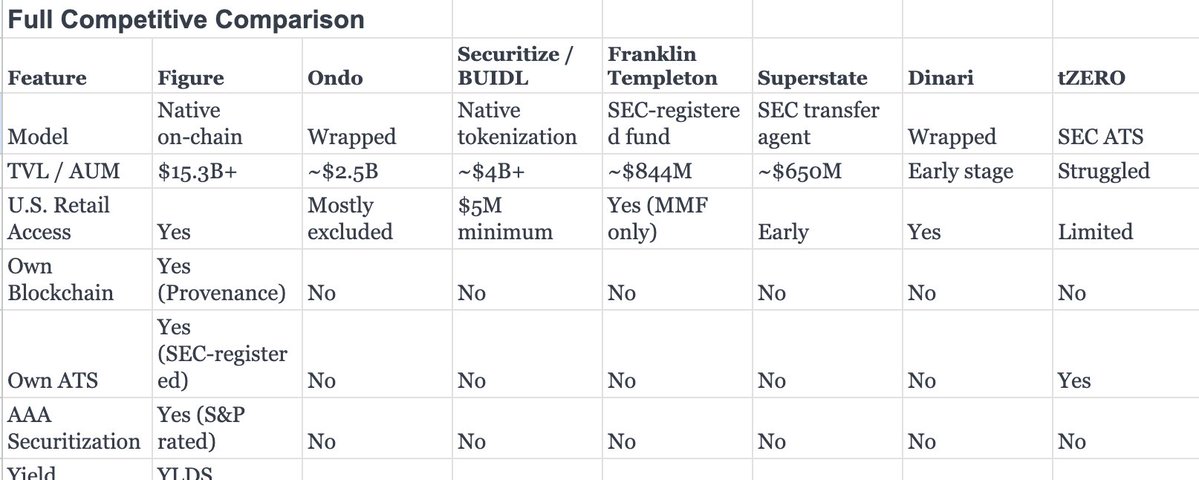 Figure’s OPEN network enables native onchain equity issuance, replacing DTCC-style settlement with T+0 trading and programmable compliance.2026-02
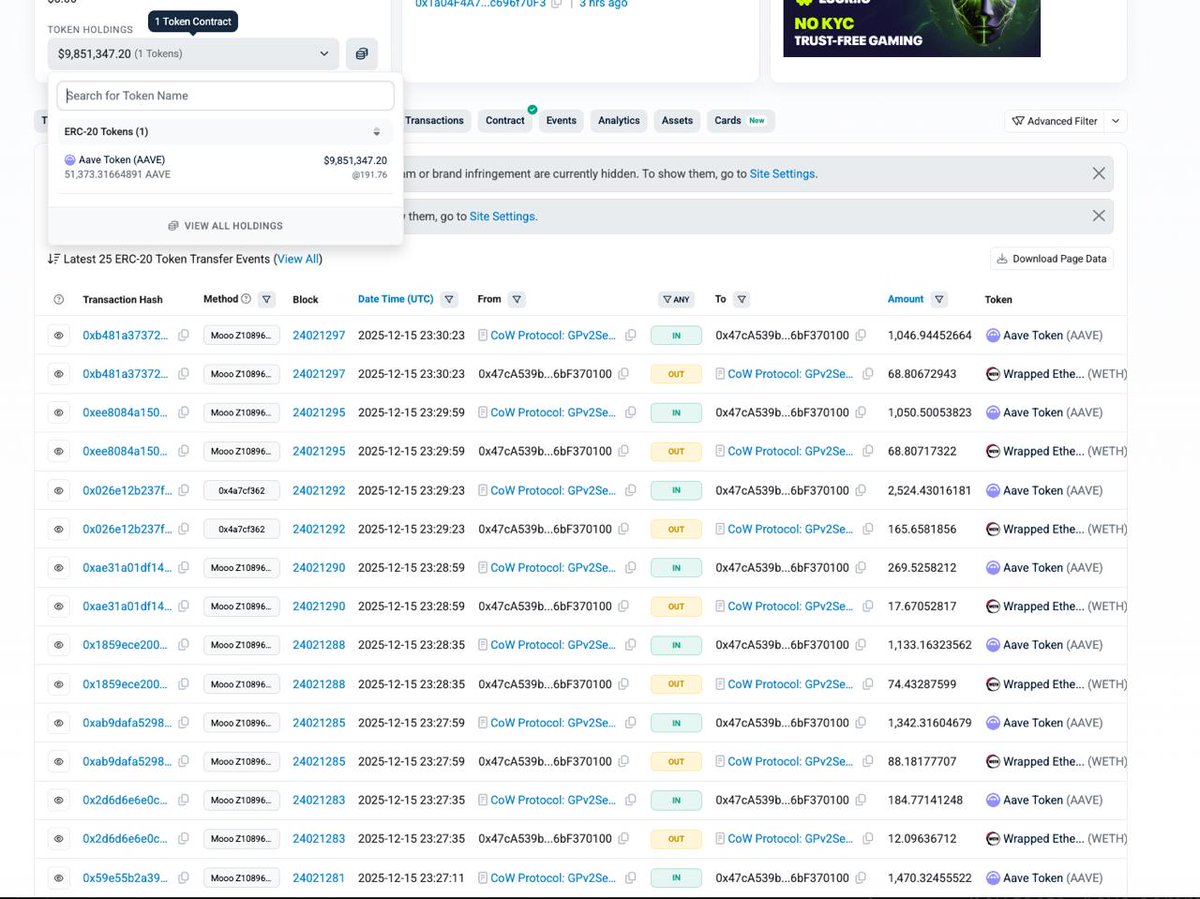 Stani discloses $10MM open market purchase of $AAVE2025-12
 Google has launched Disco, an experimental browser that turns your open tabs into interactive AI-generated dashboards using Gemini 3. The move signals a shift toward AI-driven browsing that could reshape web traffic.2025-12
 Tether releases PearPass, a local password manager, a free peer-to-peer app that stores passwords locally and syncs them encrypted across devices without any central servers. It features a password generator, end-to-end encryption via Libsodium, user-key recovery, and full open-source code on GitHub, plus an independent audit by Secfault Security.2025-12
 Figure announces the on-chain public equity network (OPEN) running on Provenance blockchain. Figure stock will be the first public equity trading native on public blockchain; BitGo, Jump Trading Group sign on to support. Unlike other tokenization efforts, OPEN equities are blockchain registered, not a tokenized version of Depository Trust and Clearing Corporation (DTCC) securities.2026-01
 HIP-3 marks Hyperliquid’s shift toward “programmatic communalization,” moving the platform from a curated venue to a fully open financial layer where staking, slashing, Dutch auctions, oracles, and value capture are all governed by the community.2025-12
The OPEN Stablecoin Index is a permissionless, equal-weight onchain index that bundles the governance tokens of leading DeFi stablecoin networks into a single redeemable ERC-20, built on Reserve Protocol's Decentralized Token Folio (DTF) standard and governed by its own token, SQUILL.
This explainer focuses on that index — the project most crypto readers mean when they say "$OPEN" in a DeFi context. The ticker is reused elsewhere (Figure's onchain public-equity network "OPEN" on Provenance, and unrelated masternode projects), so it is worth stating up front that those are distinct from the subject here. (CoinGecko, Reserve docs)
What OPEN Is
OPEN is an Index DTF deployed on Reserve Protocol on Ethereum mainnet (contract 0x323c...Ce21). A DTF — Decentralized Token Folio — is Reserve's generic name for any onchain, asset-backed index: a single ERC-20 token that is 100% collateralized by a basket of other onchain assets held on the same chain, redeemable at any time for the underlying components without a custodian or intermediary. (Reserve app, Reserve docs)
Where most crypto indices track market-cap leaders or layer-1 tokens, OPEN takes a narrower thesis: it holds the governance and network tokens of stablecoin issuers — the protocols that mint and manage decentralized dollars. The stated framing is an equal-weight basket of "stablecoin networks advancing transparency, composability, and user-led governance." Holding OPEN is therefore a bet on the infrastructure layer beneath stablecoins rather than on any single dollar token. (512m.io, DefiLlama)
Because it is a DTF, OPEN inherits three properties worth understanding:
- Full backing. Every OPEN token is redeemable for its share of the underlying basket. There is no leverage or synthetic exposure at the wrapper level.
- Permissionless mint/redeem. Anyone can mint OPEN by supplying the constituent tokens, or redeem OPEN to receive them, without approval.
- Onchain governance of composition. The basket's contents and weights are set by tokenholder vote rather than by a fund manager. (Reserve docs)

Figure’s OPEN network enables native onchain equity issuance, replacing DTCC-style settlement with T+0 trading and programmable compliance.
T+0 settlement and programmable compliance sounds like crypto is the ultimate solution
The Index Methodology
OPEN targets equal weights across its constituents and rebalances on a quarterly cadence the project brands "ReGenesis." Each quarter, candidate protocols are evaluated against inclusion criteria, the community votes on which assets make the cut, and the basket is reconstituted toward equal weighting. (Reserve forum RFC Q4)
Methodology is itself a live governance topic. The index has opened discussions on refining inclusion criteria and moving toward parameterized weightings rather than strict equal weighting — a sign the framework is still maturing. Constituents rotate meaningfully between quarters: the Q3 reconstitution expanded the basket to ten DeFi stablecoin networks, and the Q4 rebalance pitted eleven protocols against one another for ten slots, with Resupply displacing Sky Protocol (formerly MakerDAO/DAI) in the final basket. (Reserve forum RFC Q3)
Rebalance Auctions
Reconstitution is executed through onchain auctions: when weights change, the protocol auctions the over-weighted assets for the under-weighted ones to bring the basket back to target. This mechanism is the point where index theory meets execution risk. A post-mortem from analytics firm Pangea found roughly 7.5% misallocation in the Q3 rebalance, attributing it to a flawed auction mechanism. That issue was addressed in Reserve Protocol's 4.0.0 upgrade, and subsequent rebalances ran on the corrected mechanism. The episode is a useful reminder that for onchain indices, the rebalance plumbing matters as much as the asset-selection thesis. (Reserve docs — rebalancing)
Readers engage OPEN primarily as a governance participation game — clicks cluster around who controls index composition (rebalance votes, SQUILL drops, quorum mechanics) rather than around yield or stablecoin safety, revealing that the product's real draw is structured DeFi politics, not passive index exposure.
SQUILL: Governance and Fee Capture
OPEN's composition, parameters, and rebalances are controlled by a separate governance token, SQUILL, which is hard-capped at 10,000,000 tokens. SQUILL is not the index itself — it is the steering wheel. (Season 3 drop)
The core mechanic is vote-locking. Holders lock SQUILL into vlSQUILL to gain voting power over the index — which assets are added or removed, how weights are set, and how the methodology evolves — and in exchange earn a share of the protocol's TVL and minting fees. This is a familiar "vote-escrow" design borrowed from Curve's vlCRV/veCRV lineage: lock the governance token, direct the protocol, and receive a cut of the revenue it generates. Governance happens directly on mainnet rather than through an off-chain committee. (Season 3 drop, Reserve forum — governance params)
A notable governance development: ABC Labs, the team behind Reserve Protocol, announced a SQUILL acquisition ahead of the Q4 rebalance — aligning the index's underlying protocol developer with its governance layer. Separately, DefiLlama added OPEN to its Fees & Revenue dashboard, giving the index third-party, transparent revenue tracking rather than self-reported figures. (DefiLlama)
Stani discloses $10MM open market purchase of $AAVE

51,373 AAVE tokens
The SQUILL Airdrop
SQUILL has been distributed primarily through a multi-season airdrop rather than a sale. The early seasons seeded the token among the communities most likely to participate in governance:
- Season 1 targeted contributors to Leviathan News.
- Season 2 expanded to DeFi governance and liquidity contributors.
- Season 3 added roughly 2,000,000 SQUILL to the broader OPEN community, explicitly including Llama lockers, DefiLlama subscribers, GEAR (Gearbox) governors, and Lobster DAO NFT holders — alongside OPEN holders, vote-locked SQUILL holders, and OPEN/WETH and SQUILL/WETH liquidity providers on Curve and Uniswap. (Season 3 drop, squill-drop repo)
The eligibility design is deliberate. By rewarding lockers, LPs, and governance participants of adjacent DeFi protocols, the distribution concentrates SQUILL in hands that already understand vote-escrow systems and stablecoin governance — the cohort most likely to lock into vlSQUILL and steer the index actively. Claims are made directly through an onchain contract within a fixed window, with eligibility verifiable via the project's GitHub or the contract's read functions.
- 01Quarterly rebalance composition battles
Voting rounds that add or eject protocols (Sky displaced, ENA removed, ALCX/OGN/FXN added) create stakes-driven engagement — readers track which stablecoin issuers win or lose index inclusion.
- 02SQUILL airdrop and locking mechanics
Multiple SQUILL drop seasons and the lock-to-govern model created recurring participation events that pulled readers back across seasons 2 and 3.
- 03OPEN index launch and initial basket design
The announcement of an 8-token decentralized stablecoin issuer basket was the single highest-clicked story, indicating strong first-mover curiosity about the concept itself.
- 04Curve gauge and LP yield rates
The gauge proposal and CRV rate spotlight on the OPEN/ETH LP drew readers tracking real yield opportunities on top of governance exposure.
- 05Reserve Protocol governance integration
Using Reserve as the on-chain rebalancing and voting layer added protocol-specific mechanics that readers engaged with as both a technical and governance story.
- 06Figure OPEN network equity rails
Figure's distinct OPEN network for native on-chain equity issuance with T+0 settlement attracted a separate reader cohort interested in tokenized securities infrastructure.
The Leviathan Connection
OPEN and SQUILL sit inside the orbit of Leviathan News, a decentralized crypto-news platform whose native token is $SQUID. The lineage is reflected in the naming (SQUID → SQUILL) and in Season 1's targeting of Leviathan contributors. Leviathan functions as a media and community layer around the index — its livestreams (e.g., the recurring "Llama Party") regularly cover OPEN alongside Curve, Yield Basis, and related DeFi topics, and it runs bounties for "DeFi storytellers" rewarded in SQUILL. (Season 3 drop)
For readers, the practical distinction is: SQUID is the media/community token of Leviathan News; SQUILL is the governance token of the OPEN index; OPEN is the index product itself. They are related by community and origin but serve different functions.
Google has launched Disco, an experimental browser that turns your open tabs into interactive AI-generated dashboards using Gemini 3. The move signals a shift toward AI-driven browsing that could reshape web traffic.
"Disco uses the company’s new Gemini 3 artificial intelligence model to transform a cluster of open tabs into a single, interactive application. The launch marks one of Google’s most aggressive attempts yet to reimagine the web interface that generates the bulk of its ad revenue, signaling a shift away from passive search toward active, AI-driven curation. At the center of the new browser is a feature called GenTabs. Instead of forcing users to toggle between disparate sites, GenTabs analyzes the active research session—flight logs, weather forecasts, and travel blogs—and compiles them into a bespoke dashboard."
Curve Integration
OPEN's economic design leans heavily on Curve. Liquidity for both OPEN and SQUILL is concentrated in Curve pools (OPEN/WETH and SQUILL/WETH), and the project has advanced gauge proposals to bring those pools into Curve's gauge system — which would make them eligible for CRV emissions and the broader Curve incentive flywheel. The vote-escrow model SQUILL uses is itself an adaptation of Curve's veCRV mechanism. This tight coupling means OPEN's liquidity health and SQUILL's governance economics are partly downstream of Curve's incentive markets. (CurveCap on X, Embracing Curve with OPEN arms)
- 2024-Q3launch
OPEN Stablecoin Index launched as 8-token basket
- 2024-Q3milestone
Season 2 SQUILL governance token airdrop
- 2024-Q3governance
Q3 rebalance vote: ALCX, OGN, FXN added; ENA removed
- 2024-Q3governance
Llama bounty posted on Q3 rebalance issues
- 2024-Q4governance
Curve gauge proposal submitted for OPEN/ETH LP
- 2024-Q4governance
Q4 rebalance vote: 11 protocols compete for 10 slots; Sky displaced by Resupply
- 2024-Q4milestone
First OPEN DTF governance vote passes at 839% quorum
- 2025-Q1milestone
Season 3 SQUILL drop expands to Llama lockers, DefiLlama subscribers, GEAR governors, Lobster DAO NFT holders
How OPEN Performs and Why It Might Matter
The investment case for OPEN rests on a structural claim: as more economic activity moves to stablecoins, the protocols that issue decentralized dollars capture value, and an equal-weight basket of them offers diversified exposure to that trend without picking a single winner. The project has circulated a backtest suggesting the index would have outperformed ETH over the measured period — a claim that should be read as a backtest, not a guarantee, and evaluated against the usual caveats about survivorship bias and changing constituents. (512m.io)
Risk factors a reader should weigh:
- Constituent risk. The basket holds governance tokens of stablecoin protocols, which carry the smart-contract, peg, and governance risks of those underlying systems.
- Rebalance execution. As the Q3 misallocation showed, auction mechanics can introduce slippage; the fix in Reserve 4.0.0 mitigates but does not eliminate this category of risk.
- Liquidity dependence. OPEN and SQUILL liquidity is concentrated in a small number of Curve/Uniswap pools and partly reliant on incentive emissions.
- Governance concentration. Vote-escrow systems reward large, long-term lockers, which can centralize decision-making over the index's composition.
Outlook
OPEN is best understood as an experiment in putting an actively governed, fully onchain thematic index into production — and doing it permissionlessly. The near-term signposts to watch are concrete: how the methodology debate resolves (strict equal weighting versus parameterized weights), whether the Curve gauge proposals pass and deepen liquidity, how cleanly post-4.0.0 rebalance auctions execute, and whether DefiLlama-tracked fees grow enough to make vlSQUILL's revenue share materially attractive. ABC Labs' involvement and the steady cadence of quarterly ReGenesis rebalances suggest the project intends to keep iterating rather than ship-and-forget. For now, OPEN occupies a small but instructive niche: a live test of whether onchain index governance can outperform — and outlast — the discretionary fund managers it aims to replace.
Sources:
- Open Stablecoin Index — DefiLlama
- Open Stablecoin Index — Reserve app
- Reserve Docs — Index DTFs
- RFC: $OPEN Stablecoin Index ReGenesis Q4 2025
- RFC: $OPEN Stablecoin Index ReGenesis Q3 2025
- OPEN Governance Parameters Update Q2 2026
- Season 3 SQUILL Drop is OPEN — Leviathan News
- open-stablecoin-index/squill-drop — GitHub
- Open Stable: Capturing the Stablecoin Economy — 512M
- Embracing Curve with OPEN arms — crv.mktcap.eth
- Open Stablecoin Index — CoinGecko
Latest OPEN news
Figure’s OPEN network enables native onchain equity issuance, replacing DTCC-style settlement with T+0 trading and programmable compliance.Stani discloses $10MM open market purchase of $AAVEGoogle has launched Disco, an experimental browser that turns your open tabs into interactive AI-generated dashboards using Gemini 3. The move signals a shift toward AI-driven browsing that could reshape web traffic.Tether releases PearPass, a local password manager, a free peer-to-peer app that stores passwords locally and syncs them encrypted across devices without any central servers. It features a password generator, end-to-end encryption via Libsodium, user-key recovery, and full open-source code on GitHub, plus an independent audit by Secfault Security.Figure announces the on-chain public equity network (OPEN) running on Provenance blockchain. Figure stock will be the first public equity trading native on public blockchain; BitGo, Jump Trading Group sign on to support. Unlike other tokenization efforts, OPEN equities are blockchain registered, not a tokenized version of Depository Trust and Clearing Corporation (DTCC) securities.HIP-3 marks Hyperliquid’s shift toward “programmatic communalization,” moving the platform from a curated venue to a fully open financial layer where staking, slashing, Dutch auctions, oracles, and value capture are all governed by the community.Community notes
Spot something off or out of date? Drop a note. Editors review topic notes daily and roll accepted fixes into the explainer — contributors are recognized in the monthly $SQUID drop.
Loading notes…
Help improve this topic
Have a story or tip about this topic? Submit it. See something missing? Leave a note. Editors review daily; accepted submissions and fixes count toward the monthly $SQUID drop.