
In-depth explainer on crypto governance covering DAOs, DeFi, tokenomics, proposals, on-chain vs off-chain voting, Aave and Ethereum case studies, AI and quantum risks, and how users can evaluate governance models across protocols.
+31 sources across the wider coverage universe
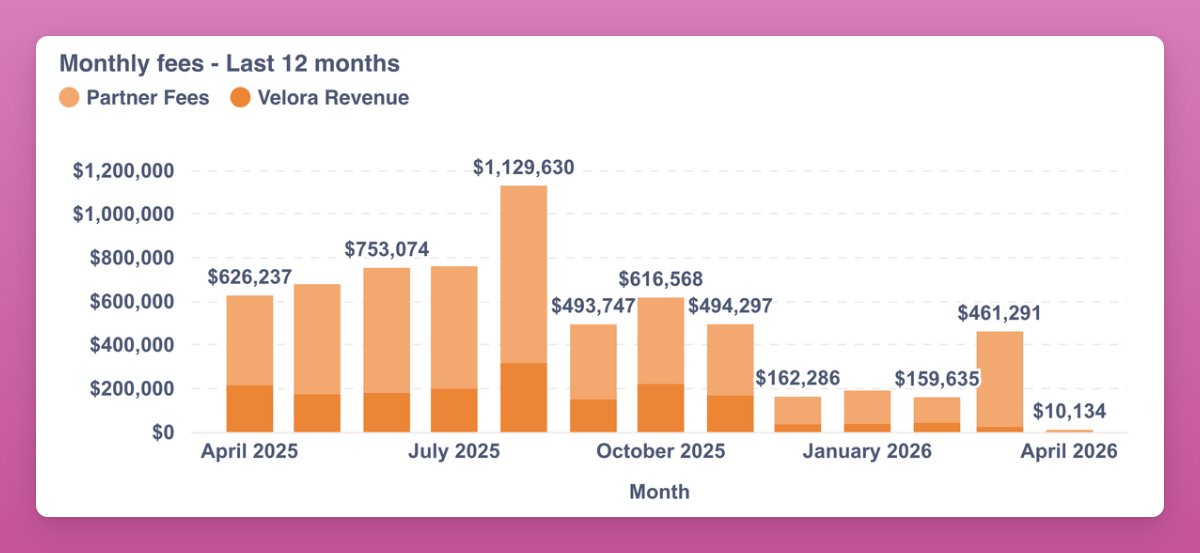 Velora DAO winds down, transferring treasury and operations back to Laita Labs2026-04
 Grayscale says Bitcoin has post-quantum solutions but lacks governance to deploy them2026-04
 Aave founder Stani unveils “Aave Will Win” roadmap after historic proposal passes, outlining strategic direction to scale DeFi dominance and ecosystem expansion2026-04
 Anthropic appoints Vas Narasimhan to board via Long-Term Benefit Trust, strengthening focus on responsible AI in healthcare and life sciences2026-04
 Inside USSD security architecture: Sonic builds resilient stablecoin with controlled issuance, multisig governance, and institutional-backed reserves for long-term liquidity stability2026-04
 Aave Labs unveils Aave Checkpoint, a verification tool that audits governance proposals by cross-referencing onchain data with forum specs before execution2026-04
Governance in Crypto: How Blockchains Decide Their Future
Who gets to decide how a blockchain or protocol evolves, who it serves, and how it responds when things go wrong? In crypto, governance is the set of people, processes, and mechanisms that answer those questions and turn loosely coordinated networks into systems that can change, adapt, and sometimes refuse to change at all.
Governance is not an optional layer bolted onto crypto once the tech is finished; it is part of the core design of every chain, token, DAO, and DeFi protocol. Academic work on blockchain governance increasingly frames it in terms of three dimensions: who holds decision rights, how they are held accountable, and what incentives shape their behavior. In practice, those dimensions play out across a spectrum that ranges from almost entirely off-chain social processes, as in Bitcoin’s conservative core developer culture, to highly automated on-chain voting and execution in DAOs and DeFi systems. The difference between resilient, evolving protocols and those that stagnate or implode often comes down less to code quality and more to how their communities propose changes, resolve conflicts, and handle crises. As recent debates over Ethereum Foundation leadership, Aave’s attempt to reduce governance overhead in its V4 architecture, and quantum security risks for existing chains all show, governance has become one of the central battlegrounds for crypto’s future direction, not a secondary concern. Understanding governance—how it works in theory, how it actually operates in live systems, and where it is heading—is therefore critical for anyone using, trading, or building Web3 infrastructure.
What Governance Means In Crypto
From Corporate Boards to Crypto Communities
The word governance comes with heavy baggage from traditional finance and public policy, where it evokes corporate boards, shareholder meetings, and regulatory oversight. In those settings, governance typically describes the structures and processes that ensure organizations are directed and controlled in a way that balances the interests of owners, managers, employees, and wider stakeholders. In crypto, the basic goals are similar—allocating power, aligning incentives, and providing accountability—but the tools and constraints are radically different. Public blockchains are open, permissionless systems whose participants are often pseudonymous, globally distributed, and free to fork away if they reject collective decisions. That makes classical corporate governance models an imperfect fit, even when crypto projects adopt foundations or companies that look familiar on paper.
Researchers have proposed several frameworks to make sense of these new governance structures. One influential approach looks at three core dimensions: decision rights (who is entitled to make or influence particular choices), accountability (how decision-makers are monitored and sanctioned), and incentives (the rewards or penalties attached to different behaviors). Applied to blockchain systems, decision rights might be embedded in protocol rules (for example, who can submit or approve blocks), vested in token holders (voting on parameter changes or treasury use), or concentrated in a foundation or core team. Accountability can arise from transparent on-chain records, reputational pressures in public communities, or, increasingly, formal legal obligations when protocols interface with regulated institutions. Incentives are woven into tokenomics and protocol design, from validator rewards and slashing to governance token distributions and buybacks. Taken together, these dimensions push analysts to look beyond simple labels like “decentralized” or “community-run” and ask concrete questions about where power actually lies.
Crypto governance also differs from traditional settings in its reliance on code as a constitutive element of rule-making. Smart contracts can automate not just execution of agreed decisions but also the process of decision-making itself, embedding voting rules, quorums, and time delays directly into protocols. At the same time, no blockchain lives purely “on-chain.” Even the most automated governance system depends on off-chain social layers where ideas are developed, legitimacy is negotiated, and users decide whether to keep participating or to exit. This interplay between software-enforced rules and human social processes is one of the defining features of governance in Web3, and it creates both new possibilities and new failure modes that do not map neatly onto corporate or state governance analogies.
Key Actors: Foundations, Token Holders, Builders, and Users
Most live crypto systems distribute governance roles across several types of actors rather than concentrating them in a single body. At one end of the spectrum are foundations and core development teams, which often act as stewards for a protocol’s vision, roadmap, and early funding. The Ethereum Foundation is a prominent example: legally organized as a non-profit, it supports core research, client development, and ecosystem grants, while deliberately avoiding formal control over protocol changes. In 2024–2025 it restructured into a model with co-executive directors and a board whose remit is focused on vision and compliance rather than micromanaging technical decisions, explicitly signaling a separation between day-to-day operations and longer-term strategic governance. Similar foundations or councils exist around other ecosystems, such as Hedera’s Governing Council and the foundations backing networks like Algorand and Cardano.
Token holders form another key governance constituency, especially in DeFi and DAO contexts. Governance tokens like AAVE, COMP, UNI, and ZEN typically confer voting rights over protocol parameters, treasury use, and sometimes major architectural changes. In Horizen’s case, ZEN functions as both the governance and utility token for an ecosystem built around privacy-preserving infrastructure; after its migration to Base as an ERC‑20 token, holders maintain influence over how that ecosystem evolves, even as the technical stack changes. Empirical studies of DAOs suggest that members place particularly high value on mechanisms that allow collective decision-making while preserving transparency, both in the proposals themselves and in how votes and implementations are tracked.
Builders, including independent application developers and integrators, exercise a subtler but important governance influence. Because many protocols are composable, changes in one system can have second-order effects on integrated applications, and vice versa. For example, changes in Aave’s risk parameters or supported assets directly affect those building yield strategies or structured products on top of Aave. The Aave community’s discussion of V4’s architecture—designed in part to reduce governance overhead via reusable “Risk‑Config IDs” for sets of parameters—illustrates how protocol designers and governance participants negotiate trade-offs between flexibility and minimizing the burden on voters. Finally, end users, from retail traders to institutions, wield exit-based power: they can express approval or disapproval of governance choices by allocating liquidity, staking, or migrating to alternative protocols, even if they never vote on a single proposal.

Cosmos Hub validators halt network to contain ATOM losses from Neutron governance exploit

On-Chain and Off-Chain Governance
Off-Chain Social Processes
Before a single on-chain vote is cast, most crypto governance work happens in informal and semi-formal off-chain venues. These include public forums, Discord servers, governance-focused calls, research blogs, and even Twitter threads, where community members propose ideas, refine drafts, and try to build consensus. Algorand’s own analysis of DAO governance emphasizes that this off-chain governance layer consists of the community processes leading up to formal voting rounds, such as open discussion, signaling polls, and iterative revisions of proposals. It is in these spaces that trade-offs are surfaced, stakeholders negotiate compromises, and potential social controversies are aired before they turn into binding protocol changes.
Protocol-specific governance forums illustrate this dynamic clearly. Aave’s governance forum, for example, serves as a hub for presenting new risk policies, listing proposals, and architectural changes, with community members and risk teams debating parameters and reasoning well before the proposals move into on-chain voting. Similar processes operate in networks like Cardano, which hosts regular “Governance Hours” to discuss initiatives such as the proposed Trust Layer, and in token communities like Basic Attention Token (BAT), where ambassadors organize community stake pools on ecosystems such as Cardano to align staking with both governance participation and external causes like environmental cleanup. In these cases, off-chain discussions are not mere chatter; they are where legitimacy is built and where future on-chain decisions are framed.
Off-chain governance also encompasses more formal organizational structures around protocols. Foundations and councils hold board meetings, sign legal contracts, and manage fiat treasuries in ways that are not automatically mirrored on-chain. When the Ethereum Foundation redefined its leadership structure, it did so via a conventional announcement detailing the roles of its management team and board, even though those changes may indirectly shape the ecosystem’s broader governance culture and priorities. Likewise, initiatives like the Arbitrum Foundation’s engagement with the United Nations Development Programme (UNDP) on public-sector digital governance reflect an off-chain strategy that informs how the protocol positions itself in policy and institutional contexts. These decisions may later be ratified or contested informally by the broader community, but they originate in governance arenas that look more like traditional non-profit and corporate management than decentralized voting.
On-Chain Voting and Automated Execution
In contrast to these social processes, on-chain governance refers to the decision-making and voting mechanisms whose records are written directly to the blockchain, often with execution automated by smart contracts. In many DAOs and DeFi protocols, once a proposal has passed the required quorum and threshold, the associated code changes or fund transfers execute trustlessly, without further human intervention. Academic work on DAOs notes that members tend to value these properties of verifiability and deterministic execution, especially when treasuries hold significant assets or when parameter changes can materially affect risk. On-chain governance systems typically encode who can submit proposals, how long voting periods last, what constitutes quorum, and how conflicting outcomes are resolved.
The lifecycle of a governance proposal, although it starts off-chain, is generally formalized once it enters the on-chain phase. A contributor will draft a proposal specifying the action to be taken, such as changing interest rate curves, adding a collateral asset, initiating a token buyback, or conducting a burn. After social review, the proposal is deployed as a transaction interacting with the protocol’s governance contracts. Token holders then cast votes, usually in proportion to their holdings of the relevant governance token (for example, AAVE in Aave governance, ZEN in Horizen’s ecosystem, or specialized tokens like CHIP in newer protocols such as USD.AI). If the vote passes, time-locked execution mechanisms often delay implementation to allow markets and integrators to prepare, as seen in governance systems that schedule burns or parameter changes several hundred thousand blocks after the referendum’s conclusion, effectively creating a buffer of weeks before changes take effect.
On-chain governance provides a high degree of transparency and auditability. Every vote, delegation, and execution step is recorded on the ledger, enabling observers and analytics platforms to produce regular reports on governance activity, voter participation, and treasury movements. Projects increasingly lean into this visibility: weekly on-chain transparency reports that chart network health, staking behavior, fees, tokenomics, and governance decisions are becoming a standard practice in mature ecosystems. Such reports not only inform token holders and users but also contribute to accountability, as teams and DAOs can be scrutinized for how faithfully they implement community mandates. For regulators and institutional partners, this on-chain audit trail can be more granular and timely than traditional corporate disclosures, although it often lacks the standardized formatting and legal framing that mainstream financial markets expect.
Why Both Layers Matter
Although on-chain governance receives disproportionate attention, especially in DAO narratives, experience shows that off-chain and on-chain processes are deeply interdependent. Algorand’s discussion of governance dynamics explicitly emphasizes that both parts are indispensable and generally closely aligned: off-chain deliberation shapes the content and framing of proposals, while on-chain voting crystallizes that deliberation into binding decisions. When the two layers fall out of sync—for example, when a small group can push through technical changes that lack broad social legitimacy, or when social consensus cannot be translated into executable code—governance crises can emerge. These crises may manifest as contentious hard forks, mass user exits, or the erosion of trust in formal governance mechanisms, leading communities to fall back on informal “whales decide” dynamics despite nominally decentralized systems.
The importance of alignment between layers is evident in DeFi incident response. Surveys of DeFi security incidents highlight that beyond pure technical remediation, outcomes are increasingly shaped by governance decisions and the interaction with traditional legal systems. After a protocol suffers an exploit, DAO members must decide whether and how to compensate affected users, whether to negotiate with attackers, and how to adjust parameters or pause operations to prevent further damage. These decisions rarely come from smart-contract logic alone; they are debated in emergency governance calls, forums, and chats before being encoded into on-chain proposals. The perceived fairness and transparency of those off-chain discussions can influence community acceptance of the eventual on-chain actions, especially in borderline cases where some users lose funds while others are made whole.
A practical illustration comes from efforts to reduce governance overhead in complex protocols like Aave. Its V4 design uses “Risk‑Config IDs” to bundle parameters, allowing updates without creating retroactive shocks to existing markets and without requiring an endless stream of granular votes on small adjustments. This architectural choice reflects governance feedback: community members expressed fatigue with frequent parameter proposals and concern about the cognitive load required to vote responsibly on every change. By engineering more modular and reusable configurations, the protocol aims to keep on-chain governance focused on higher-level decisions, while routine adjustments can be handled within pre-approved ranges. In this way, design choices at the smart-contract level shape what governance looks like in practice, and governance experiences feed back into protocol design.
Readers click governance stories not to learn how DAOs work but to watch power contests: the moment when a foundation, lab, or insider acts unilaterally and token holders push back reveals whether governance is real or theater.
Governance Models Across Crypto
Bitcoin and the Ideal of Minimal Governance
Bitcoin is often portrayed as having “no governance” beyond its fixed issuance schedule and proof-of-work consensus. In reality, Bitcoin’s governance is minimalistic and heavily off-chain, but not absent. Changes to the protocol are proposed through Bitcoin Improvement Proposals (BIPs), discussed on mailing lists and developer calls, and implemented in node software maintained by independent teams. There is no formal on-chain voting, and users express preferences primarily by choosing which software version to run and which chains to mine or accept as valid. This model emphasizes rough consensus among technically sophisticated participants and a cultural preference for extreme backward compatibility and protocol ossification.
This minimal-governance approach has both strengths and limitations. On the one hand, it significantly reduces the attack surface associated with governance capture: there are no governance tokens to accumulate, no treasuries to control, and no formal mechanism by which a transient majority can re-write key rules like the supply schedule. On the other hand, contentious changes, such as block size debates or soft-fork activation methods, can lead to prolonged social conflicts precisely because there is no agreed formal process for resolving them. Governance is largely reputational and informal, relying on community norms and the threat of chain splits to constrain actors. While this suits Bitcoin’s aim of being an ultra-conservative monetary base layer, it is less suitable for protocols that need to adapt rapidly, integrate new primitives, or manage complex financial risks.
Ethereum’s Layered Governance
Ethereum adopts a more explicitly layered governance model, balancing formal processes with informal coordination. At the protocol level, changes are framed as Ethereum Improvement Proposals (EIPs), which undergo technical review and community feedback. Core developers and client teams discuss these EIPs on regular calls, and implementation proceeds once rough consensus is reached. There is no binding on-chain vote on EIPs; instead, miners and validators signal acceptance by upgrading their clients, and users by transacting on the resulting chain. This combination of open proposal processes and client diversity is often described as “rough consensus and running code,” echoing internet standards bodies.
Around this technical core sits a web of organizations and communities that influence governance indirectly. The Ethereum Foundation, which recently introduced a clearer leadership model with co-executive directors and a board, plays a prominent but deliberately circumscribed role, focusing on funding, research, and setting broad strategic direction rather than dictating protocol decisions. Independent teams build and maintain clients, rollups, and infrastructure, while DAOs and DeFi protocols on Ethereum’s application layer run their own governance systems. Commentators have argued that Ethereum is increasingly commoditizing institutional capabilities such as settlement, governance, and capital coordination, making these functions accessible as public infrastructure rather than proprietary services. In that view, Ethereum’s governance is not just about changing gas costs or opcodes; it is about defining the rules of a global economic coordination fabric.
Recent debates over Ethereum’s future direction, from scaling priorities to privacy and identity, have highlighted the political nature of these governance choices. Cultural disputes over what Ethereum “should be”—a maximally neutral base layer, a platform for regenerative finance, or a pragmatic settlement network for institutions—intersect with technical decisions about roadmap milestones like danksharding and account abstraction. Even seemingly internal matters, such as the Ethereum Foundation’s leadership structure or its grant-making criteria, have become governance flashpoints, as different factions interpret them as signals about whose vision will shape the ecosystem. These conflicts underline that governance in a credibly neutral protocol is never purely technical; it is an ongoing negotiation about values, trade-offs, and who gets to define them.
DAO Governance: From Token Votes to Futarchy
Decentralized autonomous organizations (DAOs) were conceived as entities whose rules and treasury management are governed by smart contracts, with token holders exercising control through on-chain voting. In practice, DAOs have evolved into a diverse family of governance experiments, ranging from tightly focused protocol DAOs like Aave to broad ecosystem treasuries and social clubs. Empirical research finds that successful DAOs typically combine transparent proposal pipelines, clear voting rules, and robust mechanisms for monitoring execution, aligning with members’ preference for collective decision-making that does not sacrifice accountability. At the same time, many DAOs grapple with low voter participation, concentration of power in a few large holders, and the challenge of translating complex technical or financial decisions into digestible choices for non-experts.
Governance tokens sit at the heart of most DAO models. Aave’s DAO, for instance, uses the AAVE token for on-chain votes over protocol upgrades, risk parameters, and treasury deployments. Horizen’s DAO uses ZEN to steer a privacy-centric ecosystem, while newer projects introduce custom governance frameworks, such as USD.AI’s CHIP governance for allocating protocol revenues and directing development priorities. Community-driven initiatives, such as BAT’s ambassador-led community stake pool on Cardano, weave governance into operational participation: delegators can both earn staking yield and engage with governance processes, in some cases directing a portion of rewards to causes like The Ocean Cleanup. These models blur the line between “passive” token holding and active stewardship, although they also raise questions about how informed individual voters can realistically be.
Beyond simple token-weighted voting, some DAOs experiment with more exotic governance mechanisms. One example is futarchy, the idea that prediction markets on measurable outcomes should guide decisions: “vote on values, bet on beliefs.” Platforms like Futardio position themselves as ownership coin launchpads with built-in governance and treasury controls, where the team cannot access funds without initiating a governance vote, and certain decisions are mediated via markets predicting future performance. Compared to meme coin launch sites without governance, such systems claim to align incentives more sustainably, though they introduce new complexities around designing robust markets and avoiding manipulation. Prediction-market-driven governance has also appeared in projects like SeerDEX, which advertises an AI-guided governance engine that screens on-chain markets for clarity and oracle robustness while letting users create and govern markets via a single token. These experiments remain early, but they illustrate the breadth of governance design space DAOs are exploring.
DeFi Protocol Governance and Tokenomics
DeFi protocols add another layer of governance complexity because their decisions directly affect financial risk, yields, and asset prices. Lending markets like Aave, stablecoin systems, and derivatives platforms must continuously adjust parameters such as collateral factors, interest rate curves, liquidation penalties, and oracle configurations to remain solvent and competitive. Governance bodies thus face a dual mandate: ensuring safety and resilience, while keeping products attractive to users. Research on DeFi governance points out that some of the frictions and shortcomings of traditional finance—such as slow adaptation and opaque risk management—are being mitigated by DeFi systems’ ability to automate changes and publicly record all adjustments and their effects. But it also notes that when governance misjudges risk, the consequences can be swift and severe, as automated liquidations and composability can propagate shocks across protocols.
Tokenomics and governance are tightly intertwined in this context. Tokens often confer both economic rights (such as profit-sharing or fee discounts) and governance rights, and their distribution shapes who actually controls the protocol. Analysis of tokenomics frameworks emphasizes that supply schedules, unlocks, staking mechanisms, buybacks, burns, and airdrops all influence governance dynamics by affecting who holds tokens when and with what incentives. For instance, a protocol that aggressively airdrops governance tokens to early users may achieve broad distribution but low engagement if recipients treat tokens purely as speculative assets. Conversely, a concentrated investor base may lead to more coordinated governance but raises concerns about capture and misaligned priorities. Projects like Lista DAO, which reports weekly on protocol and governance developments and executes recurring buybacks of LISTA tokens funded by protocol revenue, explicitly tie tokenomics decisions to governance outcomes and community transparency.
DeFi security research underscores that governance plays a central role in incident response and in building long-term trust. When a lending protocol or bridge is exploited, governance must decide whether to compensate users from treasuries, pursue legal action, modify protocol rules, or freeze affected markets. These decisions can set precedents that influence users’ expectations and adversaries’ strategies. A protocol that consistently socializes losses may attract risk-seeking behavior, whereas one that refuses to intervene may be seen as unresponsive to systemic threats. DeFi governance thus operates not only through formal votes but also through the pattern of responses it establishes over time.
Absa launches Digital Asset Custody, bringing institutional-grade security, governance and control for digital assets in what it calls a digital first for Africa

Mechanics: Proposals, Voting, and Execution
What a Governance Proposal Is
Despite their diversity, most crypto governance systems revolve around the concept of a proposal: a structured suggestion to change some aspect of a protocol, treasury, or governance process itself. Proposals can vary widely in scope, from minor parameter tweaks to major architecture overhauls or existential questions about protocol direction. In a typical DeFi governance workflow, a proposal begins as an informal idea, perhaps outlined in a forum post or community call. It is then refined through feedback, sometimes passing through non-binding “temperature checks” or off-chain signaling votes, before being formalized into an on-chain proposal contract.
On-chain proposals must specify both the action to be taken and the conditions under which it will execute. For example, a proposal may encode a call to a treasury contract to transfer funds to a grant recipient, or a call to a configuration contract to adjust collateral factors in a lending market. In Aave’s governance, proposals include detailed payloads that interact with protocol contracts, and the Aave V4 roadmap explicitly seeks to modularize risk and configuration logic to make such payloads more predictable and composable. Similarly, some ecosystems design standardized proposal types, such as parameter-change proposals, text-only signaling proposals, and upgrade proposals that deploy entirely new contract versions. DAOs may also schedule delayed execution, where a proposal that has passed waits through a timelock before executing, giving users and integrators time to react or, in some frameworks, to mount a veto.
Time delays around proposals illustrate how governance embeds both technical and social considerations. When a community approves a large token burn—such as a 16.5 million token burn driven by community governance—the execution may be intentionally scheduled many blocks in the future, often corresponding to several weeks. This delay serves multiple purposes: it reduces the risk of rushed decisions, gives traders and liquidity providers time to adjust positions, and allows additional scrutiny for any unintended side effects. Proposals that pass are not simply momentary expressions of token-holder will; they become commitments whose timing and implementation are themselves part of the governance design.
Voting Systems and Participation Challenges
Most crypto governance today relies on token-weighted voting, in which each governance token corresponds to one unit of voting power, possibly modified by delegation or staking. In this model, large token holders—whether individual whales, early investors, or other protocols—wield outsized influence. Research on DAOs underscores that while such voting can promote collective decision-making and transparency, it also raises questions about plutocracy and low participation. Turnout for major proposals often remains in the single-digit percentages of token supply, making outcomes sensitive to a small subset of engaged or concentrated holders. Delegation systems, where token holders assign their voting power to recognized delegates, seek to mitigate this by enabling representation and specialization, but they introduce their own accountability challenges.
Alternative voting systems, such as quadratic voting, conviction voting, or the futarchy-inspired models used by platforms like Futardio, attempt to better align influence with stake while reducing opportunities for simple token accumulation to dominate governance. Quadratic mechanisms, for example, make additional votes progressively more expensive, giving small holders relatively more voice. Prediction-market-driven governance lets participants bet on the outcomes of policy choices, in theory harnessing the wisdom of traders rather than static token balances. However, these mechanisms are complex to design securely, may be vulnerable to collusion or manipulation, and require a higher level of understanding from participants. As a result, many large protocols continue to rely on straightforward one-token-one-vote systems, supplemented by off-chain social norms about what constitutes legitimate use of power.
Transparency around voting is another critical factor. DAO members and analysts increasingly expect real-time, on-chain visibility into who voted, how they voted, and whether there were coordinated blocs or conflicts of interest. External ratings, such as CertiK’s Skynet security scores or RootData’s transparency grades, incorporate governance activity and openness into their assessments of protocol risk. Weekly or monthly transparency reports that summarize voting outcomes, treasury changes, and progress on implementing passed proposals help maintain trust, especially when combined with open-source governance dashboards. Yet transparency alone does not guarantee effective governance. Without meaningful incentives for participation and mechanisms to educate voters about complex topics, token-weighted voting can devolve into governance theater.
Reducing Governance Overhead
As protocols mature, many discover that governance itself can become a bottleneck. If every minor parameter change requires a full governance process, communities may experience “governance fatigue,” where the volume and complexity of proposals overwhelm all but the most dedicated participants. This not only risks low participation but also slows protocol evolution and may encourage governance capture by specialized firms or insiders who can afford to keep up. Designers increasingly treat governance minimization—the principle of reducing the number and scope of decisions requiring token-holder votes—as a design goal, not an afterthought.
Aave’s V4 development provides a concrete example. By introducing Risk‑Config IDs that bundle multiple risk parameters into reusable configurations, the protocol aims to make it possible to apply pre-vetted parameter sets to new assets or markets without forcing the DAO to vote on each parameter for every deployment. Governance still decides on the configurations themselves and on when to apply them, but it does not have to revisit the entire parameter matrix each time. This modular approach maintains community oversight over risk while reducing the cognitive load and transactional friction of governance. Similar efforts appear in automated market makers and stablecoin protocols, where predefined bands or guards for parameters allow delegated managers to operate within limits set by governance, only returning to the DAO when those bounds need adjustment.
In addition to architectural changes, some protocols launch with explicit commitments to temporary centralization followed by progressive decentralization of governance. Early versions may keep upgrade keys or emergency pause powers in the hands of the core team or a multisig, while later versions transition to fully decentralized governance once contracts are battle-tested. DeFi security surveys note that such arrangements can be prudent, especially while protocols are small and still discovering attack vectors, but stress that the transition to decentralized governance must be transparent and credible to avoid permanent “admin key” risks. Protocols that fail to follow through on decentralization plans may face reputational penalties, as users and other DAOs increasingly scrutinize control structures before integrating or depositing funds.
Legal, Regulatory, and Security Dimensions
Crypto governance does not exist in a vacuum; it increasingly intersects with legal frameworks, regulatory expectations, and real-world institutions. DeFi security research highlights that incident response often requires interactions with law enforcement, regulators, and sometimes courts, especially when large sums are at stake or when stolen funds touch centralized exchanges. Governance bodies may need to authorize legal expenditures, cooperate with investigations, or decide whether to comply with sanctions and blacklisting requirements. These decisions can fundamentally shape the protocol’s posture toward regulation and users’ perception of its neutrality or compliance.
Public-private collaborations around blockchain governance further blur these lines. The Arbitrum Foundation’s work with the UNDP on digital governance in the public sector illustrates how layer‑2 ecosystems present themselves as infrastructure for state and multilateral innovation. In parallel, councils like Hedera’s bring together enterprises, insurers, and technology firms to explore governance for AI, tokenized assets, and Web3 data, bridging on-chain and off-chain accountability norms. These initiatives treat blockchain governance not just as an internal technical concern but as an input into broader debates about digital public goods, data sovereignty, and institutional trust.
Security concerns also feed back into governance. Google’s Quantum AI team has warned that advances in quantum computing may reduce the resources needed to break elliptic curve cryptography, including the 256-bit ECDLP used widely in cryptocurrencies, more quickly than previously assumed. Their analysis presents quantum circuits implementing Shor’s algorithm using fewer than roughly 1,200–1,450 logical qubits and tens of millions of Toffoli gates, potentially making attacks feasible on future large-scale quantum computers with fewer than around 500,000 physical qubits. While such computers do not yet exist, the prospect creates governance challenges: who decides when and how to migrate to post-quantum cryptography, and what should be done about “abandoned” coins in addresses with publicly exposed or reused keys? These are not purely cryptographic questions; they require protocols and communities to weigh fairness, property rights, and systemic risk, illustrating how deeply governance and security are intertwined.
- 01Unilateral action vs. DAO approval
USDD quietly removing 12,000 BTC and Uniswap Labs relegating UNI holder rights showed readers that the biggest governance risk is insiders bypassing the DAO entirely, not governance process failures.
- 02Fee switch and revenue distribution battles
Uniswap's defeated fee switch, Frax pivoting to FXB bonds, and Curve's dynamic-fee proposal all circle the same question readers care about: who actually captures protocol revenue.
- 03Governance attacks and capture
The Compound 'Golden Boys' vote routing ~$25M in COMP to an opaque vault raised the alarm that large token holders can weaponize quorum mechanics against a protocol's own treasury.
- 04Risk parameter management on-chain↗
Llama Risk's repeated Curve forum posts on Llama Lend and crvUSD parameters showed readers that active, recurring risk governance — not just launch votes — is where protocol solvency is actually decided.
- 05Cross-chain governance expansion↗
Instadapp Fluid's Arbitrum proposal with 400k ARB incentives and Uniswap's search for a cross-chain governance bridge (Wormhole vs. Axelar) signal that multichain deployment now requires solving coordination across incompatible governance domains.
- 06Governance token utility and staking↗
Arbitrum's ARB staking proposal, Lido's LDO staking governance vote, and SafeDAO's locked-token controversy all reflect reader anxiety about whether governance tokens carry any real economic or decision-making weight.
Governance Tokens, Stablecoins, and Power
Governance and Utility Tokens
Many crypto projects issue tokens that combine governance rights with other utility functions, such as fee discounts, staking rewards, or participation in protocol-specific economies. The AAVE token, for instance, is used both for staking in Aave’s Safety Module and for voting in Aave’s governance, giving holders a direct stake in risk management and protocol direction. Horizen’s ZEN serves as the governance and utility token for an ecosystem built around verifiable privacy and confidential computation, and its migration to Base as an ERC‑20 token illustrates how governance can persist across changes in the underlying execution environment. Governance tokens thus become not only instruments of influence but also signals of alignment with a protocol’s mission.
The distribution and economics of these tokens profoundly affect governance. If a small set of insiders or VCs hold a majority of governance tokens, formal decentralization may mask substantive centralization. Conversely, a highly fragmented distribution with no engaged large holders may suffer from coordination failures and governance inertia. This tension has led to experiments with “ownership coins” that encode not just speculative value but explicit governance and treasury control mechanisms, as seen in platforms that embed treasury guardrails making it impossible for teams to withdraw funds without on-chain votes. In some cases, governance tokens also carry non-binding signaling rights around social or branding decisions, allowing communities to express preferences about partnerships, messaging, or ethical commitments without directly touching protocol logic.
Institutional participation complicates this picture further. Partnerships like Ethena’s collaboration with asset manager Janus Henderson, which includes a strategic investment into Ethena’s governance token and allocations into its synthetic stablecoin USDe, exemplify how traditional finance actors can become significant governance stakeholders. Their presence can bring resources and scrutiny but also raises questions about whether governance outcomes might privilege institutional interests over retail users or DeFi-native values. As governance tokens become vehicles for institutional coordination, not just community signaling, protocols must carefully design voting rights, lockups, and conflict-of-interest policies to preserve legitimacy.
Stablecoins and Off-Chain Governance
Stablecoins provide a different angle on governance because their core promise—the maintenance of a stable value relative to a reference asset like the US dollar—depends heavily on off-chain arrangements. USDC, for example, is issued by Circle and governed through corporate structures, banking relationships, and regulatory oversight. While USDC operates on multiple blockchains via standard token contracts, decisions about reserve management, blacklist policies, and support for new chains remain under Circle’s off-chain governance. This gives USDC a centralized but arguably robust governance model shaped by traditional finance norms and regulatory compliance.
When such centralized stablecoins integrate into decentralized protocols, governance layers collide. A DeFi protocol may govern its own parameters via token-holder voting, but it remains exposed to governance decisions made by stablecoin issuers, such as freezing addresses or altering redemption mechanisms. This has led some communities to debate the extent to which they should rely on centralized stablecoins versus decentralized alternatives, weighing governance risks from each side. At the same time, decentralized or synthetic stablecoins like USDe or algorithmic variants must themselves govern collateral policies, backing asset selection, and response strategies for de-pegs, which can become flashpoints during market stress.
Emerging credit-based protocols like USD.AI illustrate hybrid models. USD.AI issues stable-value instruments backed by GPU collateral and uses an internal governance mechanism, CHIP, to manage protocol parameters, revenue allocation, and risk adjustments. Its governance decisions influence not only protocol health but also the yields available to sUSDai holders and the attractiveness of the protocol to borrowers and liquidity providers. In such systems, tokenomics, collateral management, and governance design form a tightly coupled triad: choices in one area reverberate through the others.
Tokenomics as Embedded Governance
Tokenomics—the design of a token’s supply, distribution, and incentive mechanisms—is often described as the “economic layer” of crypto projects. Yet from a governance perspective, tokenomics is better understood as embedded policy, pre-programmed rules that shape who has power and what behaviors are rewarded. Research primers on tokenomics note that supply schedules, vesting, staking yields, buybacks, burns, and airdrops collectively determine sell pressure, demand drivers, and long-term value accrual. Each of these elements carries governance implications. For example, staking mechanisms that lock governance tokens for extended periods can align voters with long-term health but may also entrench incumbents. Buyback programs that use protocol revenue to repurchase governance tokens can concentrate power over time if not carefully designed.
Real-world protocols increasingly make tokenomic decisions via governance processes and public reporting. Lista DAO publishes weekly recap updates detailing the total value of LISTA tokens bought back from the market, along with transparency metrics like security and governance scores from firms such as CertiK and RootData. These reports demonstrate how governance can operationalize tokenomic policies—approving buyback strategies, adjusting reward emissions, or initiating burns—and then hold itself accountable through on-chain data. Community-driven burn proposals, like the aforementioned 16.5 million token burn, highlight how token holders can collectively decide to alter supply, often with long lead times before execution to mitigate market disruption. Such actions blend monetary policy with direct democracy, albeit mediated by token-weighted voting.
Transparency practices around tokenomics serve as a steady compass for both governance participants and external observers. Weekly on-chain reports that chart network health, staking participation, fee capture, treasury composition, and governance outcomes help demystify complex systems and reduce information asymmetries that could otherwise be exploited by insiders. At the same time, they make it easier for analysts and regulators to scrutinize whether governance is being used to enrich a narrow set of actors or to steward a protocol responsibly over the long term. In this way, tokenomics and transparency reporting function as dual pillars of effective crypto governance.

Transient secures Nasdaq Ventures investment for bank-grade AI governance tools
AI, Quantum Risk, and the Future of Crypto Governance
AI in Governance Processes
Artificial intelligence is beginning to play a role not just as a topic of governance but as a tool within governance itself. Platforms like SeerDEX explicitly integrate AI into their governance engines, claiming to help users create on-chain prediction markets while using AI models to screen proposed markets for clarity, redundancy, and oracle robustness. By automating the vetting of market questions and oracle configurations, such systems aim to improve the quality of governance inputs and reduce the cognitive burden on human participants. AI can also assist by summarizing lengthy forum discussions, extracting key arguments from technical proposals, and even generating initial drafts of governance proposals based on natural-language instructions.
Beyond prediction markets, AI is increasingly relevant for protocol risk management and monitoring. Governance teams can deploy machine learning models to detect anomalous behavior, anticipate liquidity risks, or evaluate the potential impact of parameter changes across integrated protocols. DeFi security research notes that many of the biggest hazards are operational—such as bridge security, custody arrangements, and governance misconfigurations—rather than exotic algorithmic exploits, making them areas where AI-driven monitoring could assist human governance bodies. However, relying on AI brings its own governance challenges: models may be opaque, biased, or vulnerable to adversarial manipulation, and the question of who trains, controls, and audits these models becomes part of the governance agenda.
There is also a more speculative frontier where AI agents could themselves become governance participants. As on-chain environments grow more programmable, autonomous agents with treasuries and objectives might hold tokens, propose changes, or vote in DAOs on behalf of human principals or their own programmed preferences. This raises deep questions about representation, accountability, and the meaning of decentralization when some fraction of governance participants are non-human. Ecosystems like Hedera, where AI governance and Web3 data infrastructure are explicit focus areas for council partners, provide early venues for exploring these issues in a structured way, though most experiments remain at the proof-of-concept stage.
Quantum Threat as a Governance Challenge
Quantum computing presents one of the clearest examples of a risk that cannot be addressed solely by technical means; it is fundamentally a governance problem as well. Cryptographic research led by teams such as Google’s Quantum AI group suggests that large-scale cryptographically relevant quantum computers may be able to break widely used public-key systems, including ECDLP‑256, using far fewer resources than earlier estimates indicated. Their whitepaper outlines quantum circuits implementing Shor’s algorithm for elliptic curve discrete logarithms with fewer than about 1,200 logical qubits and 90 million Toffoli gates, or alternative designs with slightly more qubits and fewer gates, potentially executable in minutes on a future fault-tolerant quantum machine with fewer than around 500,000 physical qubits. Although such machines remain hypothetical, the direction of progress is unmistakable.
For cryptocurrencies and blockchains built on elliptic curve cryptography, the implications are profound. Many addresses, particularly older ones, have exposed public keys on-chain, which would become vulnerable to private key recovery once a sufficiently powerful quantum computer exists. Moreover, coins in long-dormant addresses—such as those associated with early miners or lost keys—may be especially at risk. Technical transitions to post-quantum cryptography (PQC) are possible and indeed underway in some contexts, but deciding when and how to migrate, and how to treat assets whose owners may no longer be reachable, are governance questions. Should protocols implement mandatory migrations? Should they create mechanisms to “rescue” at-risk coins, and if so, who authorizes such actions? How should responsibility be allocated between base layer governance, wallet providers, and users themselves?
Google’s work has emphasized responsible disclosure, including the use of zero-knowledge proofs to substantiate resource estimates without revealing detailed attack circuits, and has offered guidance such as minimizing address reuse in the interim. Yet these efforts can only go so far without governance processes that can coordinate stakeholders across chains, protocols, and jurisdictions. Some commentators have argued that quantum risk is, at root, a test of blockchain governance’s ability to manage slow-burning, systemic threats that do not fit into typical emergency-response frameworks. In this sense, quantum readiness may become a benchmark for the maturity of governance in major networks, from Bitcoin and Ethereum to the many DeFi protocols layered on top.
Public-Sector and Institutional Governance Experiments
As blockchains increasingly intersect with public institutions and large asset managers, governance experimentation is spilling over into domains traditionally governed by law and regulation. Arbitrum’s collaboration with the UNDP to explore blockchain’s role in public-sector innovation and digital governance exemplifies how layer‑2 ecosystems are positioning their technology as infrastructure for state-level services, identity, and public finance. Such partnerships force a dialogue between DAO-style governance—fluid, token-based, and globally distributed—and public-sector governance, which is constrained by democratic mandates, legal frameworks, and political accountability.
Similarly, institutional tokenization initiatives, such as the partnership between Ethena and asset manager Janus Henderson to distribute tokenized tranches of credit products, implicitly tie traditional governance structures to on-chain components. The asset manager’s investment in Ethena’s governance token, and the integration of its tokenized funds into DeFi environments, is not just a technological bridge; it is a governance bridge. Questions about disclosure, voting rights, conflicts of interest, and fiduciary duty arise when regulated entities participate directly in protocol governance or rely on DAO decisions to safeguard tokenized assets.
In parallel, councils like Hedera’s, which include insurers and Web3 data infrastructure firms as strategic partners, are experimenting with hybrid governance where on-chain consensus is combined with off-chain legal agreements and standards-setting for areas like AI governance and tokenized risk-sharing. These arrangements hint at a future where blockchain governance is one layer in a multi-layered governance ecosystem that spans code, contracts, and constitutions. For crypto-native communities accustomed to thinking in terms of permissionless deployment and pseudonymous contributors, adapting to these hybrid models presents a fresh set of governance challenges and opportunities.
- 2024-02governance
Uniswap governance rejects fee switch proposal
- 2024-05governance
Compound 'Golden Boys' vault proposal passes, ~$25M COMP at risk
- 2024-08governance
Vega Protocol votes to shut down its Layer-1 chain
- 2024-09governance
Synthetix passes SIP-2043, eliminating SNX inflation in favor of buybacks
Arbitrum proposes ARB staking to strengthen DAO security
- 2024-12regulatory
ESMA MiCA final guidelines exclude governance tokens from collective-investment rules
Ethereum Foundation restructures to management-team and board-of-directors model
How to Evaluate a Governance System
Transparency, Accountability, and Inclusivity
Given the diversity and complexity of governance models in crypto, users and builders need frameworks to evaluate which systems are likely to be resilient, fair, and aligned with their goals. Academic work on blockchain governance suggests focusing on the interplay of decision rights, accountability, and incentives. Decision rights concern who can propose and approve changes, and under what conditions; accountability concerns how those decisions are monitored and whether there are mechanisms to sanction abuse; incentives concern whether participants are rewarded for acting in ways that promote long-term health rather than short-term extraction.
Transparency is a necessary, but not sufficient, condition for good governance. On-chain recording of votes, treasury movements, and parameter changes provides a rich source of data, and protocols that publish regular, comprehensible reports on governance and tokenomics demonstrate a commitment to accountability. External ratings and audits, such as security scores, transparency grades, and governance risk assessments, can augment internal disclosures by providing independent evaluations of how open and robust a system is. However, transparency without meaningful avenues for participation or recourse can amount to little more than surveillance: users can see what is happening but cannot influence it.
Inclusivity is another key dimension. Token-weighted governance inherently privileges capital, but systems can still strive for more inclusive participation by lowering the barriers to understanding proposals, supporting delegation and representation models, and experimenting with funding for public goods that benefit non-token-holders. Research on DAO governance underscores the importance of aligning governance mechanisms with the values and expectations of members, who, in many cases, prioritize collective decision-making and transparency even at the cost of some efficiency. Protocols whose governance structures are tightly held, opaque, or hostile to dissent may struggle to attract long-term, values-aligned contributors, even if they offer attractive short-term yields.
Ultimately, evaluating governance is as much an art as a science. It requires examining not only formal rules and token distributions but also social culture, track records of incident response, and the alignment between rhetoric and behavior. Projects that handle crises transparently, adjust mechanisms in light of experience, and remain open to constructive criticism often exhibit a resilience that cannot be fully captured in static governance diagrams.
Practical Questions for Users and Builders
For practitioners—traders, DeFi users, builders, and institutional integrators—the abstract principles of governance translate into concrete questions. When considering whether to deposit assets into a protocol or to build on top of it, one might examine how upgrades are decided, who has emergency powers, and whether there is a clear path for addressing bugs or exploits. The presence of a functioning governance forum, documented processes for proposals, and historical precedent for orderly upgrades can inspire more confidence than a nominally decentralized system with little evidence of active stewardship.
Tokenomics analysis becomes part of governance due diligence. Understanding how governance tokens are distributed, vested, and used—whether there are large unlocks ahead, whether major holders are engaged in governance, and whether tokens accrue value from protocol usage—can help anticipate incentives and potential governance shifts. Observing whether treasuries are managed prudently, whether grants and incentives are allocated transparently, and whether buybacks or burns are driven by thoughtful policy rather than reactive hype provides further insight into governance quality. In many cases, the best indicator is a protocol’s behavior over time: how it navigates contentious decisions, integrates feedback, and balances competing stakeholder interests.
For builders launching new protocols or DAOs, governance design is both a technical and social challenge. Choices made early—such as whether to use a foundation, how to structure token distribution, which voting mechanisms to adopt, and how to phase decentralization—can be difficult to reverse. Drawing on accumulated experience, many now aim for systems where governance is minimized at the smart-contract level but robust at the strategic level: core protocol invariants are made as immutable as possible, while parameters, treasury allocations, and ecosystem initiatives remain adjustable via transparent, well-documented processes. Balancing agility with predictability, and decentralization with safety, remains an ongoing art.
Outlook
Crypto started as a technological experiment but has evolved into a sprawling ecosystem where governance is often the real source of innovation and conflict. From Bitcoin’s austere model of rough consensus and ossification to Ethereum’s layered governance and DAOs’ proliferating experiments with voting, prediction markets, and AI-assisted decision-making, Web3 has become a laboratory for new forms of collective coordination. Academic frameworks centered on decision rights, accountability, and incentives provide useful lenses, but they capture only part of the story; the rest unfolds in messy, human processes on forums, calls, and social media.
Looking ahead, three trends seem likely to shape crypto governance. First, governance minimization and modularity will continue, as protocols like Aave refine architectures that reduce the need for constant voting while preserving community control over key parameters. Second, hybrid governance models will proliferate, as protocols integrate with traditional finance and public institutions, inviting new stakeholders into on-chain decision-making while adapting to off-chain legal and regulatory frameworks. Third, emerging risks and technologies—from AI-enabled automation to quantum threats to post-quantum cryptography—will force governance systems to grapple with long-horizon, systemic challenges that cannot be resolved through one-off emergency votes alone.
For users and builders, the core lesson is that governance is not a static checkbox but a living system that must be monitored, questioned, and improved. Transparency, participation, and thoughtful tokenomics can help steer protocols toward sustainable, equitable futures, but they require ongoing effort and critical engagement. As Ethereum, Aave, and countless DAOs continue to iterate on their governance models, and as new experiments like AI-assisted prediction markets and ownership coins emerge, the most resilient systems may be those that treat governance itself as an open-source, evolving technology—subject to review, refinement, and, when necessary, radical redesign.
Latest Governance news
Cosmos Hub validators halt network to contain ATOM losses from Neutron governance exploitAbsa launches Digital Asset Custody, bringing institutional-grade security, governance and control for digital assets in what it calls a digital first for AfricaTransient secures Nasdaq Ventures investment for bank-grade AI governance toolsSources
19 records from 11 domains
sciencedirect.com
arxiv.org
governance.aave.com
algorand.co
circle.com
x.com
horizen.io
research.google
cryptoslate.com
usd.ai
youtube.com
Community notes
Spot something off or out of date? Drop a note. Editors review topic notes daily and roll accepted fixes into the explainer — contributors are recognized in the monthly $SQUID drop.
Loading notes…
Help improve this topic
Have a story or tip about this topic? Submit it. See something missing? Leave a note. Editors review daily; accepted submissions and fixes count toward the monthly $SQUID drop.