
In‑depth explainer on Cardano’s research‑driven proof‑of‑stake blockchain, covering ADA, Ouroboros, governance and treasury, DeFi and stablecoins, founder controversies, and how the ecosystem is evolving amid volatile market cycles.
+13 sources across the wider coverage universe
 Cardano wallet provider SecondFi will shut down after hackers stole $2.4M in ADA by exploiting a transaction-signing flaw that exposed users' private keys2026-07
 UNDP launches 26-member Blockchain Advisory Group with Ethereum, Cardano, Sui and Kraken2026-06
 TapTools begins wind-down after five executive exits leave Cardano analytics platform short on technical expertise2026-06
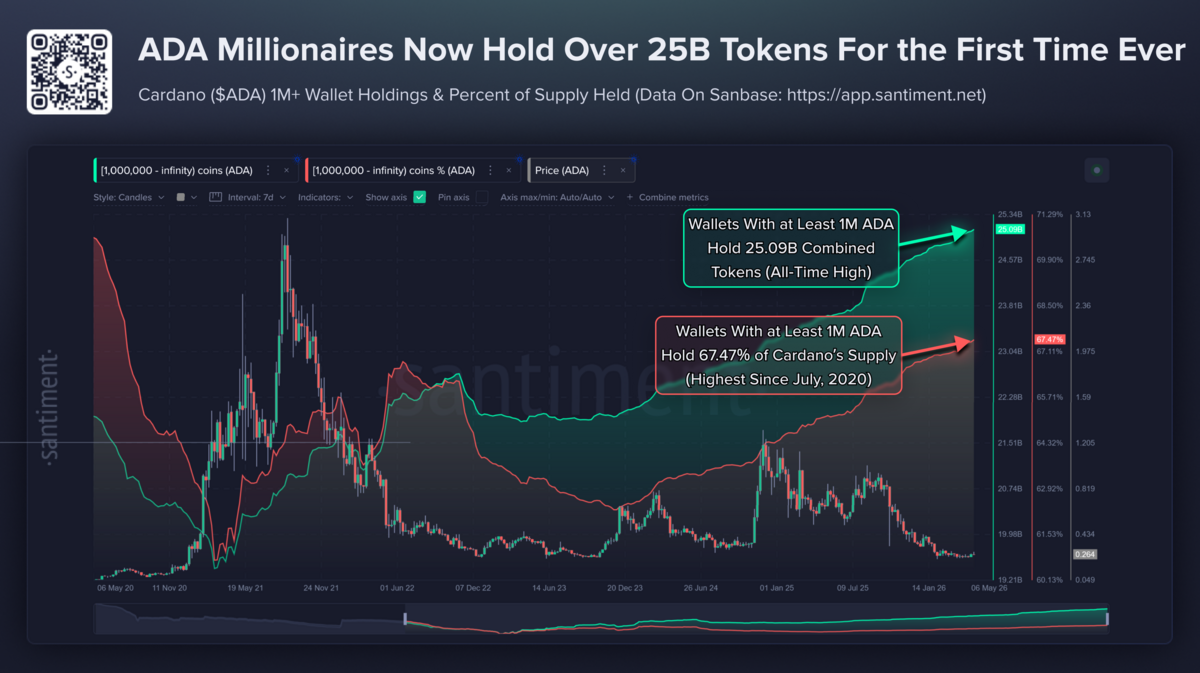 Cardano 1M+ ADA wallets hit 67.47% of supply, their highest share since 20202026-05
 Midnight temporarily suspends Glacier Drop redemptions after SecondFi-linked Cardano wallet security incident2026-06
 SecondFi says users hit by its $2.4M Cardano wallet exploit could recover funds within two weeks as EMURGO finalizes a restoration plan for 374 affected addresses2026-06
Cardano: An Evergreen Guide to the Third-Generation Blockchain
A third‑generation proof‑of‑stake blockchain, Cardano aims to provide a scalable, energy‑efficient base layer for smart contracts, decentralized finance, and digital identity, powered by its native asset ADA. Built around peer‑reviewed research and formal methods, the project positions itself as an infrastructure play for future, mission‑critical financial and governance applications rather than a purely speculative token.
From its earliest days, Cardano has tried to distinguish itself in a crowded layer‑1 landscape by embracing slow, methodical development, formal verification, and academic cryptography instead of the “move fast and break things” ethos common in crypto. Its Ouroboros proof‑of‑stake protocol was the first blockchain consensus mechanism published as peer‑reviewed research claiming security guarantees comparable to proof‑of‑work at a fraction of the energy cost. The platform’s roadmap is laid out in distinct eras—Byron, Shelley, Goguen, Basho, and Voltaire—each focused on specific capabilities such as decentralization, smart contracts, scaling, and governance, with the long‑term goal of supporting large‑scale decentralized applications and on‑chain public infrastructure. Around this base layer sits an increasingly complex ecosystem of wallets, developer tooling, DeFi protocols, NFT projects, and governance structures, funded by both private capital and a native on‑chain treasury. At the same time, Cardano’s history is deeply intertwined with its founder Charles Hoskinson, whose leadership, communication style, and financial decisions have attracted both loyal supporters and sustained controversy, influencing perceptions of the project far beyond its technical merits. Understanding Cardano today therefore requires looking not only at its protocol design, but also at ADA’s role, the evolving governance system, the state of the builder and DeFi ecosystem, and the political economy emerging around its treasury and community.
Origins and Design Philosophy
Cardano began as an open‑source proof‑of‑stake blockchain project in 2015, with work led by Input Output (now Input Output Global, IOG), Emurgo, and the Cardano Foundation, explicitly aiming to address perceived shortcomings in earlier cryptocurrencies. From the outset, the founders argued that first‑generation blockchains like Bitcoin prioritized sound money but lacked programmability, while second‑generation platforms such as Ethereum introduced smart contracts but struggled with scalability, sustainability, and predictable governance. Cardano’s self‑description as a “third‑generation blockchain” reflects an ambition to combine these properties—digital scarcity, expressive programmability, and large‑scale performance—within a more rigorous engineering discipline informed by formal verification and peer review.
The design rationale published by the project emphasizes a desire for a more balanced and sustainable ecosystem that accounts not only for users, but also for other systems seeking integration, such as enterprises and public institutions. This emphasis on interoperability and long‑term sustainability has shaped decisions ranging from the choice of a proof‑of‑stake consensus model to the architecture of its multi‑asset ledger and scripting language. For example, Cardano’s extended UTXO (eUTXO) model seeks to retain the determinism and parallelizability of Bitcoin’s UTXO approach while enabling smart contracts, aiming to simplify reasoning about on‑chain logic and resource usage. These choices, however, come with trade‑offs: they tend to prioritize safety and predictability over rapid feature addition, contributing to Cardano’s reputation for slower shipping compared with some competitors.
Charles Hoskinson, a co‑founder of Ethereum, has been the most visible public face of Cardano, often framing the project as a “clean‑room” rethinking of blockchain architecture based on academic methods. Under his leadership, IOG has supported a broad research program around topics such as proof‑of‑stake security, off‑chain computation, interoperability, and governance, with multiple papers accepted at major cryptography and security conferences. Hoskinson’s emphasis on research‑driven development has helped Cardano stand out for its formal papers and protocols, but it has also created expectations that real‑world deployment should match the ambition of the theory. The tension between research and production has become a recurring theme in the community: proponents argue that this rigor is what will make Cardano suitable for institutional and public‑sector use, while critics contend that it has delayed user‑facing adoption and left Cardano lagging in visible activity during key phases of the market cycle.
Another important design goal has been energy efficiency. By adopting proof‑of‑stake instead of Bitcoin’s energy‑intensive proof‑of‑work, Cardano aims to provide comparable security with drastically reduced energy consumption. Cardano’s documentation emphasizes that Ouroboros offers security guarantees similar to proof‑of‑work while using orders of magnitude less computational power, positioning the network as more compatible with environmental sustainability goals and regulatory scrutiny around climate impact. This framing has become part of the broader narrative of “green” or low‑energy blockchains, especially as institutional investors and public agencies increasingly focus on sustainability criteria.

Cardano joins Solana and XRP Ledger in AI agent payments race as x402 kit adds ADA support for apps and agents

How the Cardano Blockchain Works
Cardano is structured as a multi‑layered system, with a base settlement layer handling ADA transactions and a computational layer hosting smart contracts and more complex logic. At the core, it uses a proof‑of‑stake consensus protocol in which validators, called stake pool operators, produce blocks and secure the network based on the amount of ADA that is staked with them, either from their own holdings or delegated by users. Time on Cardano is divided into epochs and slots, and the protocol pseudorandomly selects slot leaders who have the right to create blocks, with selection probabilities weighted by stake. This structure is designed to achieve consensus with low energy expenditure while still being resistant to various classes of attacks under specified assumptions.
Ouroboros and Proof‑of‑Stake Security
The Ouroboros family of protocols is central to Cardano’s identity as a research‑first blockchain. The original Ouroboros paper introduced a provably secure proof‑of‑stake scheme that was later evolved into versions such as Ouroboros Praos and Ouroboros Genesis to address issues like private leader elections and bootstrapping from a genesis block without trusted checkpoints. Cardano’s developers emphasize that Ouroboros was the first proof‑of‑stake protocol with mathematically proven security properties under the semi‑synchronous network and honest majority assumptions, published through peer review. The protocol’s design uses verifiable random functions to select slot leaders, combined with a chain selection rule and incentives to encourage honest participation.
This research focus matters because proof‑of‑stake changes the security model compared with proof‑of‑work. Instead of expending external resources such as electricity, participants use their financial stake in the system as the basis for consensus, which introduces questions about long‑range attacks, stake grinding, and “nothing at stake” scenarios. Ouroboros addresses these through mechanisms such as epoch boundary randomness and probabilistic guarantees about chain growth and quality, but these guarantees depend on specific threat models and must be translated into robust real‑world implementations. The Cardano team argues that these formal security proofs give greater confidence for institutional and governmental adopters, although skeptics note that proofs are only as strong as their assumptions and that real‑world failures often come from implementation bugs or economic incentives rather than theoretical flaws.
Roadmap Eras: Byron to Voltaire
Cardano’s development is organized into named eras, each capturing a cluster of features and priorities. The Byron era focused on the initial launch, basic ADA transactions, and establishing the core network and infrastructure. Shelley introduced stake delegation and stake pools, allowing the network to move from a federated to a more decentralized validator set by enabling ADA holders to delegate their stake to community‑run pools and earn rewards. Goguen added smart contract capability through the Plutus platform, bringing Cardano into direct competition with other programmable chains by allowing developers to deploy decentralized applications and tokens.
The Basho era centers on scalability and optimization, including techniques such as sidechains and layer‑2 solutions like Hydra, which aims to increase throughput by allowing off‑chain state channels anchored to the main chain. These efforts are intended to support Cardano’s ambition to host “large‑scale, mission‑critical DApps” that require high transaction capacity and low latency. The Voltaire era, meanwhile, is focused on decentralized governance and a self‑sustaining treasury system, giving ADA holders on‑chain tools to propose and vote on protocol changes and funding allocations. While these eras overlap rather than occurring strictly one after another, they provide a conceptual roadmap for Cardano’s evolution from a simple transactional ledger to a full‑featured, self‑governing ecosystem.
Smart Contracts and the eUTXO Model
Smart contracts on Cardano are written primarily in Plutus, a platform based on Haskell that leverages strong typing and functional programming concepts to improve safety and verifiability. The underlying ledger uses an extended UTXO model, where each output can carry arbitrary data and scripts, and transactions must explicitly reference and satisfy these scripts to spend funds. Unlike account‑based models such as Ethereum’s, eUTXO aims to provide deterministic behavior: the validity and resource usage of a transaction can be known in advance, which simplifies both fee estimation and off‑chain simulation. This is particularly valuable for DeFi protocols and dApps that need predictable execution costs and behavior.
However, eUTXO also introduces a different mental model for developers used to account‑based blockchains. Concurrency is handled by designing protocols that split state across multiple UTXOs rather than having a single shared contract state, which can make complex DeFi applications more challenging to build initially but potentially more scalable and parallelizable once patterns are established. Over time, the Cardano ecosystem has seen specialized tooling emerge to ease this learning curve, including higher‑level languages, domain‑specific frameworks, and off‑chain infrastructure that abstracts away some of the raw ledger details. The presence of projects like Dolos, a lightweight data node written in Rust focused on optimizing ledger data access, reflects the ongoing effort to make Cardano’s architecture more accessible and performant for developers who may not be Haskell specialists.
Cardano readers are not clicking for protocol benchmarks — they click whenever institutional trust breaks down: the Foundation account hack, the $6.05M liquidity wipeout, and the $600M treasury allegation all expose the same fear that Cardano's governance and infrastructure are not yet safe enough to hold real money.
ADA: The Native Asset
ADA is the native cryptocurrency of the Cardano blockchain, named after Ada Lovelace, the 19th‑century mathematician often described as one of the first computer programmers. Much like ETH on Ethereum, ADA is used to pay transaction fees, interact with smart contracts, and participate in securing the network through staking. ADA can be bought or sold on major exchanges and used to store value, send payments, or delegate to stake pools, making it both a utility token within the protocol and a speculative asset in broader crypto markets. The design of Cardano’s monetary policy and reward system is intended to align incentives for long‑term network security and development funding, although market dynamics often introduce short‑term volatility that can diverge from these design intentions.
In the proof‑of‑stake model, ADA holders can either run their own stake pool or delegate their holdings to an existing pool to earn a share of block rewards. This delegation mechanism allows users who lack the technical expertise or capital to operate infrastructure to still participate in consensus and earn yield, contributing to decentralization. Over time, Cardano has developed a rich stake pool ecosystem, including community‑oriented pools that support social or environmental causes. For example, the Basic Attention Token (BAT) community has launched a stake pool on Cardano where delegators can participate in governance and direct reward donations to initiatives such as The Ocean Cleanup, illustrating how stake‑based rewards can be tied to broader public goods beyond protocol development. Such arrangements demonstrate the composability of ADA‑denominated incentives with other token communities and philanthropic goals.
The economic role of ADA is also evolving as Cardano’s governance system matures. While ADA is already used for staking and transaction fees, the roadmap envisions it becoming a full governance token, granting holders the ability to vote directly or through delegated representatives (DReps) on protocol changes, treasury spending, and constitutional amendments. This would place ADA at the center of Cardano’s political economy, making its distribution and concentration an important factor in assessing the fairness and resilience of governance outcomes. At the same time, ADA’s market price influences the real purchasing power of staking rewards and treasury funds, which in turn affects the ability of the ecosystem to attract developers, fund infrastructure, and weather downturns.
The volatility of ADA has been a recurring storyline. During bull markets, ADA has experienced rapid appreciation, attracting new investors and attention, while in bear markets it has seen steep drawdowns, including drops back to multi‑year lows. Recent cycles have underscored how price crashes can magnify internal tensions: as ADA fell to levels last seen in 2021, Cardano’s founder warned of a coming wave of failures in the broader DeFi ecosystem and within Cardano itself, framing the downturn as a necessary shakeout that could consolidate stronger projects. Meanwhile, critics have pointed to on‑chain analysis claiming that large ADA sales by insiders during prior peaks may have contributed to later price pressure, raising questions about transparency and alignment. For long‑term observers, these dynamics highlight the dual nature of ADA as both an infrastructure asset and a highly speculative token subject to market narratives and liquidity cycles.
Governance, Treasury, and On‑Chain Politics
Governance is one of the areas where Cardano has devoted significant design effort, culminating in the Voltaire era’s focus on decentralized decision‑making and a formalized on‑chain constitution. The goal is to transition from a system primarily steered by founding entities to one where ADA holders collectively shape protocol upgrades, funding priorities, and ecosystem rules through structured proposals and votes. This vision includes mechanisms for on‑chain voting, a treasury funded from protocol revenues, and a constitutional framework defining the rights and responsibilities of different actors in the system.
Evolution Toward the Voltaire Era
Cardano’s path to full on‑chain governance has been incremental. Early stages relied heavily on off‑chain coordination among IOG, Emurgo, and the Cardano Foundation, with community input gathered through forums, social media, and conferences. Over time, the project introduced on‑chain voting experiments and governance frameworks, leading to the Intersect Member‑Based Organization (MBO) and the development of the Cardano Blockchain Ecosystem Constitution. In early 2026, the Interim Constitutional Committee (ICC) unanimously voted to affirm the constitution as “constitutional,” and it was formally enacted on February 23, marking a milestone in the institutionalization of Cardano’s governance system. This constitution outlines how on‑chain voting, treasury management, and governance bodies should interact, aiming to balance stability with adaptability.
The Voltaire era’s governance architecture draws on ideas from both corporate governance and public law, with distinct roles for constitutional committees, DReps, stake pool operators, and the broader ADA‑holding community. DReps, or Delegated Representatives, are emerging as key actors: ADA holders can delegate voting power to them, enabling more informed participation in complex governance decisions without requiring every holder to study every proposal in depth. At the same time, the constitution and governance processes are designed to remain amendable, recognizing that any initial structure may need to evolve as the ecosystem grows and as real‑world stress tests reveal shortcomings.
Treasury Mechanism and Funding Decisions
A central feature of Cardano’s governance design is its on‑chain treasury, which collects funds from sources such as a portion of staking rewards and transaction fees, and then allocates them to proposals approved through governance. The Cardano Foundation has described this treasury system as a powerful tool for funding development and ensuring long‑term sustainability, with the potential to support not only core protocol work but also community projects, infrastructure, and educational initiatives. Because the treasury is native to the protocol, its spending patterns can be transparent and auditable on chain, unlike ad hoc grant programs managed off‑chain by foundations.
However, actual treasury governance has already produced both successes and controversies. On the positive side, treasury votes have funded work on layer‑2 infrastructure such as a Hydra trading environment, demonstrating community willingness to back scaling and trading use cases that could make Cardano more competitive in DeFi and institutional markets. At the same time, other proposals have failed to meet the required thresholds, showing that access to treasury funds is not guaranteed even for prominent ecosystem institutions. A notable example is the Cardano Foundation’s attempt to secure treasury funding for its annual summit; after a vote among DReps and other stakeholders, the request reportedly fell just short of the necessary approval levels, leading to the cancellation of the 2026 summit despite the Foundation’s central role in the ecosystem. This episode illustrates both the potency and the friction of on‑chain budget politics: a treasury meant to sustain the ecosystem can also constrain organizations that previously relied on expectations of support.
Cardano’s treasury mechanism operates under guidelines that emphasize sustainability and predictability. The Foundation has advocated approaches such as keeping withdrawals limited or within historical patterns to avoid destabilizing markets or depleting funds too quickly. In practice, this means that even popular proposals may be sized or staged to fit within perceived sustainable spending rates, and that large or recurring funding requests must be justified not only on their merits but also in terms of treasury health. As the number of proposals grows—from infrastructure and marketing to research and public goods—this constraint turns treasury governance into a competitive political arena where groups build coalitions, lobby DReps, and use public communication campaigns to influence outcomes.
Community, DReps, and Governance Debates
The emergence of formal governance structures has coincided with increasing public debate and, at times, acrimony in the Cardano community. Cardano Governance Hours, recurring sessions devoted to governance topics, have become venues for deep dives into proposals such as the “Trust Layer,” which seeks to generalize identity and verification capabilities on Cardano. These sessions bring together governance participants like Yoram Ben Zvi and community members to discuss trade‑offs, implementation details, and philosophical questions about trust and decentralization, reflecting the project’s desire to resolve disagreements through structured dialogue. At the same time, heated arguments on social platforms have highlighted the challenges of maintaining constructive governance discourse in a global, pseudonymous community.
In response to what he described as growing “drama, lies, and endless rage” on X (formerly Twitter), Charles Hoskinson announced that much of Cardano’s community activity and his own “ask me anything” (AMA) sessions would migrate to Discord, emphasizing more moderated and topic‑focused channels. He argued that Discord would provide more structured spaces for governance and development discussions, with dedicated channels for topics such as the main Cardano chain, the privacy‑focused Midnight sidechain, and governance initiatives. This move underscores how communication infrastructure itself becomes part of governance: the choice of platforms influences who participates, how information spreads, and how quickly consensus can be built or eroded.
Governance controversies also intersect with questions of transparency and insider behavior. On‑chain analysis and public debates about historical funding, such as the use of 1,096 BTC in 2016–2017 for audits and early Cardano work, feed into broader narratives about whether Cardano’s leadership has appropriately stewarded resources entrusted to them. Hoskinson has defended the use of these funds as necessary for extensive audits and compliance work, positioning the spending as an investment in long‑term ecosystem transparency and security. Skeptics counter that the sums involved were substantial and demand detailed accounting, especially in light of subsequent claims that large ADA sales during bull markets may have enriched early insiders. As Voltaire matures, these issues highlight how on‑chain governance cannot fully escape off‑chain questions of trust, reputation, and historical accountability.
- 01Foundation hack and disinformation
A compromised official account promoting a fraudulent token and then denying ADA's existence hit the highest click count, because readers fear institutional credibility loss more than technical exploits.
- 02DeFi liquidity trap losses↗
A single $6.9M swap that returned only $847K due to thin USDA liquidity made visceral the gap between Cardano's DeFi ambitions and its actual on-chain depth.
- 03Treasury and governance disputes↗
The $600M ADA misconduct allegation against Hoskinson, the cancelled 2026 summit after DRep quorum failed, and the scaled-back treasury proposal all signal that Cardano's on-chain governance experiment is generating more controversy than confidence.
- 04ETF and institutional filing momentum
Grayscale's Delaware entity registrations, CME futures covering 75% of market cap, and leveraged ETF launches signal Wall Street appetite, pulling in readers tracking whether institutional capital will validate or bypass ADA.
- 05Network reliability and chain fork↗
A live chain split triggered by a legacy node bug — with an FBI investigation confirmed by the CEO — raised acute questions about whether Cardano's peer-reviewed approach translates to production-grade resilience.
- 06Competitive TVL displacement by Sui
Sui crossing $593M TVL while surpassing Cardano quantified the ecosystem's struggle to convert its large wallet base into sticky DeFi activity.
Developer and DeFi Ecosystem
Despite its reputation for deliberate pacing, Cardano has developed a significant builder ecosystem spanning DeFi, NFTs, infrastructure, and real‑world use cases. The platform’s ambition is to serve as a robust base for “large‑scale, mission‑critical DApps,” which requires not only smart contract functionality but also performant indexing, data access, and developer support. Over the last several years, investment funds, accelerators, and institutional partnerships have sought to bootstrap this ecosystem, even as the broader crypto market has moved through cycles of exuberance and consolidation.
Smart Contract Tooling and Infrastructure
Plutus, Cardano’s smart contract platform, is grounded in Haskell and functional programming, which offers strong type systems and formal reasoning but poses a steep learning curve for many developers coming from more imperative languages. To bridge this gap, the ecosystem has seen the growth of higher‑level languages, templates, and frameworks that simplify common patterns such as token issuance, decentralized exchanges, and lending protocols. At the infrastructure layer, data access remains a central challenge for any UTXO‑based chain, leading to efforts like Dolos, a lightweight data node written in Rust that seeks to optimize access to ledger data for analytics and dApps. These tools attempt to reduce reliance on heavy full nodes for tasks that primarily require indexed or aggregated information, thereby improving responsiveness and scalability for complex applications.
Layer‑2 solutions are another focus, especially given Cardano’s aspirations for high‑volume DeFi and institutional trading. Hydra, a family of protocols for off‑chain channels anchored to the main chain, aims to support high throughput, low‑latency transactions suitable for trading and gaming, while preserving the security of the base layer. In early 2026, the Cardano Foundation supported funding for a Hydra trading infrastructure budget proposal, indicating that the community sees L2 trading rails as a priority for unlocking Cardano’s potential in high‑frequency and institutional contexts. As with similar efforts on other chains, the utility of these solutions depends not only on protocol design but also on developer adoption, tooling, and user‑friendly interfaces.
Stablecoins, USDCx, and Financial Rails
Stablecoins are a critical component of any DeFi ecosystem, providing a relatively stable unit of account and facilitating trading, lending, and remittances. For much of its history, Cardano lagged some competitors in securing major stablecoin issuers, but recent developments have begun to change that picture. The launch of USDCx on Cardano’s mainnet, a USDC‑backed stablecoin issued through the xReserve infrastructure developed by Circle, marks an important step in strengthening Cardano’s financial rails. USDCx is designed to provide native, USDC‑backed liquidity on Cardano, enabling cross‑chain flows and making it easier for users and protocols to access dollar‑denominated assets without leaving the ecosystem.
The presence of a reputable, fiat‑backed stablecoin like USDCx can have cascading effects. It can improve market depth on decentralized exchanges, allow lending markets to price risk in a stable unit, and give institutional participants more confidence in using Cardano as part of multi‑chain strategies. It also creates opportunities for novel products, such as structured yield instruments or cross‑chain liquidity pools, that rely on robust stablecoin infrastructure. At the same time, reliance on centralized stablecoin issuers introduces external dependencies and regulatory considerations, which Cardano’s governance and risk frameworks will need to account for over time.
Funding Builders: OrionFund, CAP, and Public–Private Mix
Beyond protocol‑level incentives, Cardano’s builder ecosystem increasingly depends on a mix of private capital and public funding from the treasury. The OrionFund, an $80 million fund opened by Draper Dragon for Cardano builders, exemplifies the private side of this equation, offering separate Genesis and Apex tracks to support early‑stage teams and more mature startups. Positioned as a way to “meet builders where they are,” OrionFund aims to attract entrepreneurs who can leverage Cardano’s unique infrastructure strengths while benefiting from experienced venture backing. This kind of external capital can complement on‑chain funding mechanisms by providing longer‑term runway, business development support, and connections to institutional partners.
On the public side, the Cardano Accelerator Program (CAP) has emerged as a key initiative backed by the Cardano Foundation, providing structured mentorship, resources, and potential funding to projects building on Cardano. CAP has issued calls for applications to upcoming cohorts and invitations for subject matter experts to join its mentor network, with a particular focus on themes such as verifying origins and data on Cardano. The program’s emphasis on real‑world data verification and provenance reflects broader interest in using blockchains not just for financial instruments but also for supply chain, identity, and certification use cases. Combined with treasury‑funded initiatives and targeted ecosystem grants, CAP and OrionFund illustrate how Cardano’s builder economy is shaped by overlapping public and private funding streams.
This hybrid funding environment has important implications for governance. Projects may find themselves accountable both to token‑holder voters who approve treasury grants and to venture investors who provide additional capital and strategic guidance. In some cases, political dynamics around treasury proposals—such as debates over whether to fund specific infrastructure or marketing efforts—can influence whether private capital sees Cardano as an attractive platform. Conversely, the presence of major funds can signal confidence and attract more projects to build, potentially making treasury spending more effective by providing a richer base of candidates.
Cross‑Ecosystem Communities and Public Goods
Cardano’s stake‑based architecture has enabled novel public goods and cross‑ecosystem collaborations. The BAT community stake pool is a notable example, where Basic Attention Token supporters use a Cardano stake pool to engage in governance participation while directing part of the rewards to environmental initiatives like The Ocean Cleanup. This model illustrates how staked ADA can create recurring yield streams that fund long‑term public goods without requiring constant new donations, effectively turning economic security incentives into a tool for philanthropy and ecosystem‑bridging.
In parallel, Cardano’s inclusion in broader initiatives such as the United Nations Development Programme’s Blockchain Advisory Group (BAG) underscores its relevance in discussions about blockchain for public good. The UNDP’s BAG brings together stakeholders from Ethereum, Cardano, Sui, Kraken, and others to explore how blockchain technology can serve development goals and public sector needs. Cardano’s participation aligns with its longstanding emphasis on digital identity, supply‑chain tracking, and financial inclusion as key use cases, positioning the network as part of a multi‑chain landscape in which different protocols contribute different strengths.
FC Barcelona launches Barça Fan Lab with Andamio on Cardano, giving fans verifiable credentials and new digital community experiences

Charles Hoskinson, Transparency, and Controversies
Cardano’s narrative is inseparable from that of its most prominent founder, Charles Hoskinson. A former Ethereum co‑founder, Hoskinson has cultivated a large personal following and uses frequent public broadcasts to discuss technical updates, governance debates, and industry trends. Supporters view him as a visionary leader who pushed for a more rigorous, research‑driven approach to blockchain design when such methods were unfashionable. Critics argue that the project has been overly centralized around his personality and that his communication style can escalate conflicts rather than defuse them, especially on social media.
One recurring theme has been transparency around funding and early capital. In 2024 and beyond, disputes emerged about the use of 1,096 BTC during the 2016–2017 period when Cardano was being formed, with some investors questioning whether these funds had been properly disclosed and accounted for. Hoskinson responded by stating that the BTC was used for audit costs and related expenses during Cardano’s formative phase, framing the spending as necessary for ensuring regulatory compliance and long‑term trust in the project. He argued that such investments in audits and legal work are often underappreciated but crucial for building an ecosystem that can attract institutional partners and survive scrutiny.
Another controversy involved on‑chain analysis suggesting that Hoskinson may have sold around 1.5 billion ADA during the 2021 bull market, when ADA reached an all‑time high of roughly $3.09. The analysis traced large ADA flows, including a 925 million ADA transfer and a series of 20 million ADA payments, to entities linked to IOG and related funding sources. While such on‑chain attributions are inherently probabilistic and subject to interpretation, they fueled debate about insider sales and their impact on ADA’s long‑term price trajectory. Hoskinson and his supporters have generally framed any sales as part of normal funding diversification and operational needs, while critics view them as evidence of misaligned incentives between insiders and retail holders.
These controversies intersect with Hoskinson’s evolving role in the ecosystem. At times he has announced periods of stepping back from day‑to‑day engagement or social media debates, citing burnout and the corrosive nature of online arguments, which have coincided with sharp drops in ADA’s price and narratives of Cardano “losing a major pillar.” He has also characterized upcoming periods as potential “DeFi shakeouts” in 2026, predicting a wave of failures as unsustainable projects collapse, but also describing this as an opportunity for consolidation and the emergence of stronger protocols. These dual messages—warning of pain while promising eventual resilience—reflect the balancing act between realism and optimism that leaders of large ecosystems often attempt during bear markets.
Hoskinson’s decision to shift community discussions from X to Discord is emblematic of his approach to managing interpersonal conflict within the ecosystem. By promoting more moderated and structured discussion spaces, he has sought to reduce the influence of what he portrays as bad‑faith actors and to focus attention on governance, development, and long‑term planning. However, any change in communication venues also risks fragmenting the community, as some users may be reluctant to migrate or may perceive increased moderation as gatekeeping. In this sense, Hoskinson’s personal choices about communication platforms and engagement have systemic consequences, shaping who feels included in Cardano’s governance conversations and how information flows across the ecosystem.
Cardano vs Other Major Chains
To understand Cardano’s position in the broader crypto landscape, it is useful to compare its design and trajectory with other major blockchains, particularly Bitcoin and Ethereum. Each of these networks makes different trade‑offs in terms of security, decentralization, energy use, programmability, and governance, leading to distinct niches and risk profiles.
Comparing to Bitcoin
Bitcoin is the archetypal proof‑of‑work blockchain, designed primarily as a censorship‑resistant, fixed‑supply digital currency with extremely conservative governance and minimal scripting capability. Its security derives from miners expending real‑world energy to solve cryptographic puzzles, making attacks costly but also leading to high aggregate energy consumption. Cardano, by contrast, uses the Ouroboros proof‑of‑stake protocol, where consensus is based on staked ADA rather than computational work, significantly reducing energy consumption while aiming to maintain strong security guarantees. Cardano’s documentation emphasizes that Ouroboros provides security properties comparable to Bitcoin’s proof‑of‑work under certain assumptions, but with orders of magnitude less energy use, which aligns with contemporary concerns about environmental impact.
Functionally, Cardano is much more programmable than Bitcoin. While Bitcoin supports basic scripting, it is not designed for complex smart contracts or DeFi protocols at scale. Cardano’s eUTXO model and Plutus platform are explicitly oriented toward building decentralized applications, tokens, and complex financial instruments. This difference is reflected in the role of the native assets: BTC is primarily held as “digital gold” and a macro‑hedge, whereas ADA is both a speculative asset and a utility token for interacting with Cardano’s dApps and governance system. At the same time, Bitcoin’s simpler design and entrenched network effects give it a unique status that Cardano does not aim to replicate; instead, Cardano positions itself more as a base layer for programmable finance and governance, potentially interoperable with Bitcoin through bridges and wrapped assets.
Comparing to Ethereum and Other Smart Contract Platforms
Ethereum is the most direct point of comparison for Cardano, as both are programmable platforms aiming to host DeFi, NFTs, and decentralized applications. Ethereum started as a proof‑of‑work chain but transitioned to proof‑of‑stake through the Merge, significantly reducing its energy consumption and aligning its consensus model more closely with Cardano’s. However, Ethereum’s account‑based architecture and EVM dominance have created a vast, composable ecosystem of dApps, tooling, and L2 rollups that enjoy first‑mover advantage and deep liquidity. Cardano, while offering some unique advantages, has had to work harder to attract developers away from the EVM universe or to persuade new developers to learn its Haskell‑based stack.
One of Cardano’s differentiators is its explicit use of formal methods and peer‑reviewed research in protocol design, which is less central to Ethereum’s development culture. Proponents argue that this gives Cardano a long‑term edge in safety and institutional trust, especially for applications in regulated finance or public sector domains. Ethereum, by contrast, has tended to favor rapid, iterative deployment, with formal verification used more selectively. At the governance level, Ethereum relies heavily on off‑chain social consensus among core developers, client teams, and the broader community, whereas Cardano is building more explicit on‑chain governance mechanisms, including a constitution, DReps, and a treasury with formal voting processes.
Cardano’s inclusion alongside Ethereum and Sui in the UNDP’s Blockchain Advisory Group underscores that major institutions increasingly see the space as multi‑chain, with different platforms offering different strengths and design philosophies. For Cardano, this creates both opportunities and pressures. On one hand, being part of such groups can signal legitimacy and open doors to pilot projects in areas like identity, supply chains, and public registries. On the other hand, Cardano must demonstrate that its distinctive features—such as eUTXO, formal governance, and a research‑driven roadmap—translate into tangible advantages for real‑world deployments, rather than remaining primarily theoretical.
To illustrate some key contrasts, the following table offers a simplified comparison of Bitcoin, Ethereum, and Cardano along select dimensions:
| Feature | Bitcoin | Ethereum (post‑Merge) | Cardano |
|---|---|---|---|
| Consensus | Proof‑of‑Work | Proof‑of‑Stake | Proof‑of‑Stake (Ouroboros) |
| Primary Focus | Digital currency, store of value | General‑purpose smart contracts | Research‑driven smart contracts, governance |
| Ledger Model | UTXO | Account‑based | Extended UTXO (eUTXO) |
| Governance | Informal, off‑chain social consensus | Informal, EIPs and social consensus | Formalizing on‑chain constitution, DReps, treasury |
| Energy Use | High | Low (post‑PoS) | Low |
| Native Token Role | BTC as store of value | ETH as gas and collateral | ADA as gas, staking, and governance |
This table is necessarily simplistic, but it highlights how Cardano’s identity is built around a combination of proof‑of‑stake, a research‑heavy culture, an eUTXO ledger, and a strong emphasis on on‑chain governance and treasury management.
Cardano (Byron) mainnet launch
Shelley hard fork enables staking and decentralization
Alonzo hard fork activates smart contracts via Plutus
Vasil hard fork improves throughput and script efficiency
Chang hard fork begins Voltaire on-chain governance era
Cardano Foundation monthly update highlights treasury and audit activity
2026 Cardano Summit cancelled after 7.8M ADA DRep quorum not met
Risks, Criticisms, and Market Performance
Any evergreen assessment of Cardano must grapple with its risks and criticisms alongside its aspirations. One of the most persistent critiques has been the perceived slowness of delivery. While the roadmap’s eras provide a clear conceptual structure, features such as smart contracts and scaling improvements arrived later than on some rival platforms, leading to a gap between Cardano’s market capitalization at various points and the observable activity on chain. Critics have described this as a mismatch between narrative and reality, suggesting that Cardano benefited from speculative enthusiasm during bull markets without yet matching DeFi or NFT volumes seen on Ethereum, Solana, or other ecosystems.
Technical complexity is another challenge. The reliance on Haskell and the eUTXO model, while offering formal safety benefits, increases the barrier to entry for developers who are used to EVM tooling or more familiar languages. This has required substantial investment in education, frameworks, and higher‑level abstractions, but adoption remains uneven. Cardano’s defenders argue that these short‑term hurdles are the price of long‑term robustness, while detractors worry that tooling fragmentation and a limited talent pool could cap ecosystem growth.
Market performance has periodically amplified these concerns. During recent downturns, ADA has fallen to multi‑year lows, at times underperforming other top‑20 tokens. These drawdowns have coincided with high‑profile setbacks within the ecosystem, such as the wind‑down of prominent analytics platform TapTools after five executive exits left it short on technical expertise, and the cancellation of the Cardano Summit following a failed treasury funding vote. Such events fuel narratives about ecosystem fragility, internal coordination problems, and the difficulty of sustaining complex infrastructure through volatile market cycles. When combined with headlines about the founder stepping back from active engagement or warning of a “wave of failures,” they can shape investor sentiment and developer confidence in ways that extend beyond Cardano’s core technology.
Regulatory and governance risks also loom large. As Cardano’s governance system matures and the treasury becomes a significant allocator of capital, questions arise about the legal status of ADA and whether on‑chain governance and treasury mechanisms could be seen as characteristics of a security under various jurisdictions’ laws. The more ADA holders directly vote on specific funding decisions and protocol changes, the more observers may argue that they resemble shareholders in a common enterprise, even as others contend that decentralized governance mitigates such concerns. How regulators ultimately interpret these dynamics remains unresolved, and Cardano’s trajectory will be influenced by broader policy developments affecting proof‑of‑stake networks and governance tokens.
Finally, social and reputational risks cannot be ignored. Deep online debates, personality conflicts, and public disputes over audits and insider sales can erode trust over time, especially for institutions evaluating long‑term commitments. Cardano’s attempt to codify governance through a constitution and structured processes is, in part, a response to these human factors, seeking to anchor decision‑making in rules rather than personalities. Whether this transition succeeds—moving Cardano from a founder‑centric project to a more pluralistic, resilient ecosystem—will be one of the key determinants of its durability over the coming decade.
How to Use Cardano Today
For users, developers, and institutions encountering Cardano, the practical question is how to engage with the network in its current state. From a user perspective, the entry point typically involves acquiring ADA on exchanges such as Coinbase, where it is listed as one of the larger cryptocurrencies by market capitalization. Once acquired, ADA can be transferred to self‑custodial wallets that support staking, governance participation, and interaction with dApps. Users can delegate their ADA to stake pools to earn rewards and, depending on the wallet and governance tools, cast votes or delegate to DReps in treasury and parameter proposals.
On the application side, Cardano offers a growing suite of DeFi protocols, NFT marketplaces, and real‑world projects. The arrival of USDCx as a USDC‑backed stablecoin on Cardano enables users to hold and transact in a dollar‑pegged asset natively on the network, support liquidity pools, and participate in lending markets without constantly bridging to other chains. For developers, infrastructure like Dolos and other data services offer more efficient access to on‑chain data, while CAP and OrionFund provide potential avenues for funding and mentorship. Participation in governance showcases such as Cardano Governance Hours gives builders a venue to understand evolving rule sets, such as the Trust Layer, and to influence how the underlying protocol will handle identity and verification features.
Community members can also engage through specialized stake pools that align with particular values or cross‑ecosystem interests. The BAT community stake pool demonstrates how ADA staking can be tied to other token communities and public goods funding, allowing participants to simultaneously support Cardano’s security, engage with BAT governance, and donate to environmental initiatives through reward redirection. For organizations exploring blockchain for public goods or institutional use, Cardano’s involvement in bodies like the UNDP’s Blockchain Advisory Group indicates potential pathways to collaborative pilot projects and policy dialogues.
For all these use cases, risk management remains essential. Users and investors must account for ADA’s volatility, the evolving nature of Cardano’s governance mechanisms, smart contract risk within dApps, and broader regulatory uncertainty affecting proof‑of‑stake and DeFi. From a builder’s perspective, choosing Cardano involves weighing the benefits of its formal methods, governance roadmap, and emerging financial rails against the challenges of its tooling and relative ecosystem size. Over time, the success of Cardano will hinge on whether these trade‑offs prove attractive enough for a critical mass of users, developers, and institutions to make it a core part of their multi‑chain strategies.
Outlook
Looking ahead, Cardano’s trajectory will be determined by how well it can translate its research‑heavy foundations and governance ambitions into sustained real‑world usage. The Voltaire era’s constitutional governance and treasury system represent a bold attempt to formalize on‑chain decision‑making, but they also introduce new layers of complexity and politics that must prove workable at scale. Episodes like the Cardano Summit funding vote show that the system is capable of constraining even core institutions, which may enhance long‑term credibility if perceived as fair, but can also create short‑term disruption and reputational risk. Success will depend on whether these mechanisms can deliver not just accountability but also timely, effective support for infrastructure, marketing, and innovation.
On the technical front, the focus on scaling through Basho‑era optimizations and layer‑2 solutions like Hydra will be critical for competitiveness in DeFi and institutional trading. The integration of USDCx and other stablecoin and liquidity initiatives suggests that Cardano is building the financial rails needed to support more complex markets, while funds like OrionFund and programs like CAP indicate a pipeline for new projects to enter the ecosystem. The challenge is to convert these ingredients into visible usage metrics—transaction volumes, total value locked, and real‑world deployments—that demonstrate Cardano is more than a theoretical blueprint.
Socially and politically, the ecosystem is at an inflection point. As Charles Hoskinson steps back at times from active daily engagement and shifts community discussions to more moderated venues, the question becomes whether Cardano’s institutions and broader community can sustain momentum and resolve conflicts without relying so heavily on a single figure. The volatility of ADA, the wind‑down of some high‑profile projects like TapTools, and the broader 2026 “DeFi shakeout” all contribute to a sense of uncertainty, but they may also clear space for more durable, well‑governed protocols to emerge. Cardano’s participation in multi‑chain initiatives such as the UNDP’s Blockchain Advisory Group positions it as part of a broader conversation about blockchain’s role in public goods and development, potentially opening avenues that go beyond pure speculative finance.
For a crypto news audience tracking Cardano over the coming years, the key themes to watch will be the maturation of its on‑chain governance, the evolution of its DeFi and stablecoin infrastructure, the health and diversity of its developer ecosystem, and the project’s ability to weather leadership controversies and market cycles without losing its core identity. If Cardano can align its research‑driven roadmap, treasury‑funded governance, and emerging institutional “trade winds” into a coherent growth story, it may solidify its place as a distinct pillar in the multi‑chain landscape. If not, it risks being remembered as an ambitious experiment whose theoretical elegance outpaced its practical adoption. In either case, Cardano offers one of the most instructive case studies in how blockchain projects grapple with the intertwined challenges of technology, economics, and human governance.
Latest Cardano news
Sources
20 records from 11 domains
cardano.org
coinbase.com
intersectmbo.org
roadmap.cardano.org
youtube.com
cardanofoundation.org
docs.cardano.org
x.com
bitcoinfoundation.org
cryptonews.net
undp.org
Community notes
Spot something off or out of date? Drop a note. Editors review topic notes daily and roll accepted fixes into the explainer — contributors are recognized in the monthly $SQUID drop.
Loading notes…
Help improve this topic
Have a story or tip about this topic? Submit it. See something missing? Leave a note. Editors review daily; accepted submissions and fixes count toward the monthly $SQUID drop.