
Deep dive on Switzerland’s crypto landscape, covering DLT law, FINMA rules, tax, Crypto Valley, SIX–Chainlink data, CBDC and stablecoin pilots, and institutional adoption to explain how the country became Europe’s leading regulated hub for digital assets.
+5 sources across the wider coverage universe
 TON taps Swiss-licensed SCRYPT to open institutional USDT rails for banks and fintechs2026-04
 SIX Group taps Chainlink DataLink to bring Swiss and Spanish equity data onchain2026-04
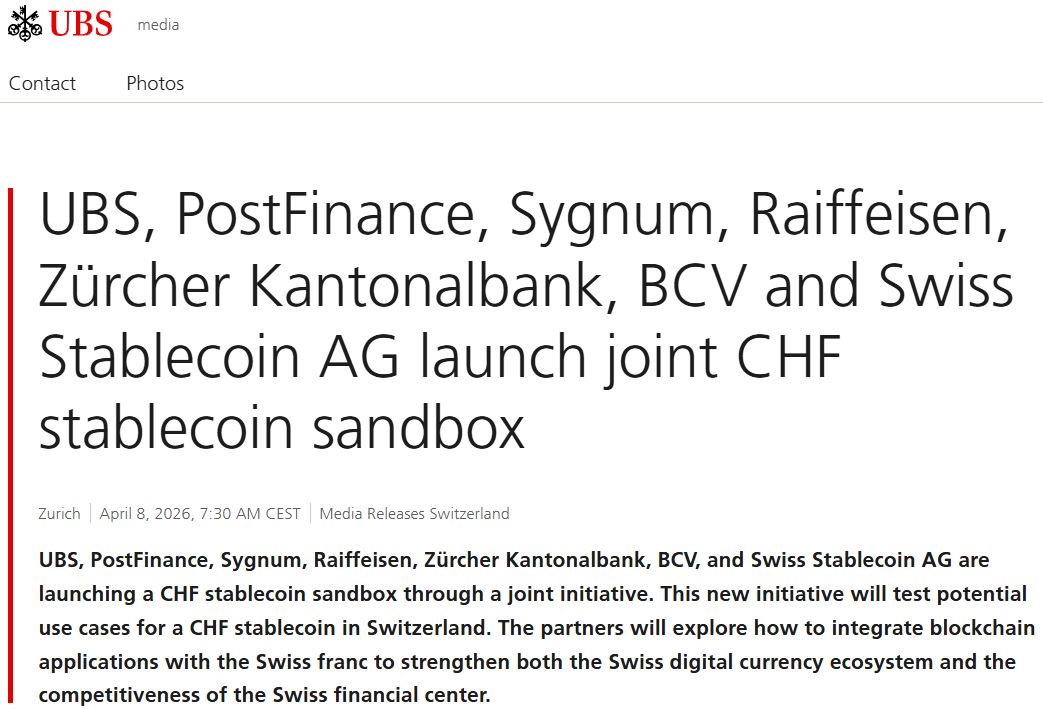 UBS, Raiffeisen, and four Swiss banks launch live sandbox for Swiss franc stablecoin2026-04
 137 SPAR supermarkets in Switzerland accept ADA via DFX.swiss Open Crypto Pay, cutting processing fees by two-thirds2026-04
 Scrypt partners with Franklin Templeton to bring tokenized treasuries to Swiss-regulated infrastructure2026-06
 AllUnity, backed by Deutsche Bank, has launched CHFAU, the first MiCA‑compliant Swiss franc stablecoin for institutional investors, expanding its regulated fiat‑backed stablecoin lineup beyond the euro‑pegged EURAU.2026-02
Crypto in Switzerland: Regulatory Clarity, Institutional Adoption, and the Rise of Crypto Valley
A small Alpine republic has become one of the most influential jurisdictions in the global digital asset landscape, pairing highly developed financial markets with unusually clear rules for blockchain and tokenisation. For crypto companies, investors, and institutions, Switzerland now functions as a living laboratory for how Bitcoin, stablecoins, tokenised securities and onchain data can be integrated into a mature financial system without abandoning prudential safeguards.
Switzerland’s Emerging Role in the Global Crypto Order
Switzerland occupies a distinctive position in the crypto economy because it combines three attributes that rarely appear together: a tradition of financial stability, a political culture that embraces direct democracy and experimentation, and a regulatory apparatus that has moved early to clarify how digital assets fit into existing law. This combination allows the country to attract both early-stage blockchain projects and large financial institutions that want to experiment with tokenisation and digital assets within a familiar rule-of-law environment. Far from being a marginal offshore haven, Switzerland is now a central node in the institutionalisation of crypto, particularly in Europe.
The country’s role is especially visible in what has come to be known as “Crypto Valley,” the cluster of blockchain and Web3 firms concentrated in the canton of Zug and extending across much of German-speaking Switzerland. Reports by Crypto Valley Venture Capital (CV VC) and other analysts describe a dense ecosystem of crypto foundations, protocol teams, custodians, exchanges, and tokenisation platforms, many of which choose Swiss domicile for its legal and tax predictability. A 2025 CV VC Top 50 report highlighted that Switzerland and neighboring Liechtenstein together form one of the world’s most vibrant blockchain ecosystems, with hundreds of firms and a growing roster of regulated institutions participating in digital asset markets. This concentration of talent and capital reinforces Switzerland’s emerging brand as a hub for digital asset wealth management and infrastructure.
At the same time, Switzerland remains a traditional financial powerhouse, with major universal banks, insurance companies, and wealth managers that serve global clientele. Rather than treating crypto as a parallel system, Swiss policymakers have tended to integrate digital assets into the existing regulatory perimeter, especially through the Digital Ledger Technology Act (DLT Act) and detailed guidance from the Swiss Financial Market Supervisory Authority (FINMA). This integration is visible in institutional experiments with wholesale central bank digital currency (CBDC), the launch of tokenised bonds and other securities on regulated platforms, and the growth of regulated crypto banks that bridge fiat and digital markets. The country therefore offers a preview of what “crypto inside the system” looks like when regulators aim for technological neutrality but insist on traditional standards of investor protection and anti-money laundering (AML) compliance.
Switzerland’s broader geopolitical role also shapes its crypto trajectory. The country regularly hosts sensitive diplomatic engagements, such as planned US–Iran talks that were to take place in Switzerland before being abruptly cancelled amid escalating tensions. This longstanding reputation for neutrality and mediation makes Swiss financial and legal infrastructure attractive for international projects that want a jurisdiction perceived as politically stable yet not tightly bound to any single great power. In the digital asset context, that neutrality translates into a jurisdiction where both Western and non-Western firms feel comfortable locating core entities, while still accepting that Swiss law requires high levels of transparency and compliance.
For a crypto-focused audience, understanding Switzerland is therefore less about learning one more jurisdiction’s tax quirks and more about seeing how a sophisticated financial center is gradually absorbing Bitcoin, stablecoins, onchain data and tokenised markets into its mainstream institutional fabric. The following sections unpack the legal foundations, market infrastructure, venture ecosystem, and monetary debates that together define Switzerland’s current and future role in the crypto economy.
ARU goes public with a token backed by allocated physical metals, including gold, silver, copper and platinum-group metals, held in Swiss custody, issued on Arbitrum and redeemable in kind

Legal and Regulatory Foundations for Digital Assets
The DLT Act and the Legal Upgrade for Tokenisation
A key turning point for Switzerland’s digital asset landscape was the adoption of the Federal Act on the Adaptation of Federal Legislation to Developments in Distributed Ledger Technology, widely known as the DLT Act. This law, together with an associated ordinance, entered into force in stages and was fully effective by 1 August 2021, making Switzerland one of the first countries to implement a comprehensive legislative upgrade tailored to blockchain-based assets. The DLT Act did not create an entirely new regulatory universe; instead, it modified existing financial and civil law to recognise new forms of securities and trading infrastructure that rely on distributed ledgers.
One of the core innovations introduced by the DLT Act is the ability to issue securities directly on a blockchain, creating what Swiss law calls “DLT securities.” These are rights—such as claims or membership rights—that are recorded in a digital ledger and can be transferred on that ledger with legal certainty, without the need for traditional paper certificates or centralised registries. By giving DLT securities the same legal status as conventional certificated or book-entry securities, the Act enables tokenised shares, bonds, and other financial instruments to be treated as familiar objects under Swiss private and financial law, which in turn lowers legal risk for issuers and investors. For institutional players looking to tokenize real-world assets (RWAs), that clarity is often a precondition for significant capital allocation.
The DLT Act also created a new category of infrastructure operator called a “DLT trading facility,” essentially a multilateral trading venue for DLT securities that can combine functions typically performed by exchanges, multilateral trading facilities, and central securities depositories. This consolidated model allows trading, clearing, settlement and custody of tokenised assets to take place on a single DLT-based platform, subject to a licensing regime tailored to the specific risks of such arrangements. In practice, this category has enabled platforms like the SIX Digital Exchange (SDX) to operate within a robust regulatory perimeter while experimenting with tokenised bonds and other instruments. Market participants gain the comfort of Swiss financial market law while benefiting from the efficiency of atomic settlement and programmable assets.
Taken together, the DLT Act illustrates Switzerland’s preference for targeted legal adaptation rather than radical disruption. Instead of declaring “crypto is different” and building an entirely novel framework, Swiss legislators have extended existing concepts—such as securities, custody, and trading venues—to cover digital representations and DLT-based operations. This legal continuity is particularly attractive to institutional investors and global issuers considering Switzerland as a base for tokenisation programs, because it reduces uncertainty around issues like investor rights, insolvency treatment, and conflict-of-laws questions.
FINMA’s Technology-Neutral Supervisory Approach
If the DLT Act provides the legislative skeleton for digital assets, FINMA supplies the day-to-day supervisory muscle. The Swiss regulator has consistently emphasised a technology-neutral approach: it does not regulate “blockchain” as such, but rather the financial functions that blockchain-based projects perform. To this end, FINMA maintains a continually updated overview of crypto-related services that have emerged on the market, such as token issuance, trading platforms, wallet providers, custody services, and tokenisation of financial instruments. For each category, FINMA assesses which existing financial market laws apply—banking, securities, collective investment schemes, financial services, or AML—and what licensing or registration obligations may be triggered.
The at-a-glance overview published by FINMA highlights the diversity of business models now operating in the Swiss crypto space and underscores the regulator’s focus on risk-adequate treatment. A token issuer that simply sells utility tokens for future platform access will be assessed differently from a platform that provides custodial wallet services or acts as a DLT trading facility for tokenised securities. At the same time, FINMA is explicit that activities such as deposit-taking, asset management, or running trading venues will not escape existing regulatory categories merely because they involve digital assets rather than traditional financial instruments. For crypto entrepreneurs and institutional players alike, this provides a clear signal: innovation is welcome, but the core obligations of Swiss financial law still apply.
FINMA’s approach is not static. The authority regularly issues guidance to address new phenomena, such as initial coin offerings (ICOs) in the late 2010s and, more recently, stablecoin projects and crypto custody risks. This guidance tends to clarify how existing laws apply rather than create new substantive rules, but in doing so it significantly influences market structure. For instance, FINMA’s position papers have guided issuers toward structuring tokenised instruments as either payment tokens, utility tokens, or asset tokens, each with its own regulatory implications. This classification, while not legally binding in itself, offers a practical toolkit for designing compliant token architectures and has been widely adopted by Swiss projects.
Crucially, FINMA also serves as the licensing authority for institutions that want to combine traditional financial services with digital assets, such as crypto banks and securities firms. In that role, the regulator demonstrates a willingness to authorise novel business models—such as banks whose core business is crypto custody and trading—as long as they meet the same capital, risk management, and conduct standards required of any Swiss financial institution. This stance has enabled Switzerland to host a small but growing cohort of fully regulated crypto banks and securities dealers, reinforcing its image as a jurisdiction where institutional adoption of crypto is not only possible but systematically supervised.
Licensing Categories and the FinTech Licence
Switzerland’s legal architecture for digital assets is built on existing licensing categories, adapted where necessary for new technologies. Traditional full banking licences remain the gold standard for institutions that accept deposits and offer broad financial services, including custody and trading of crypto assets. Several Swiss banks have obtained such licences while focusing heavily on digital assets, positioning themselves as gateways for institutional investors who want exposure to crypto within a regulated banking relationship.
Alongside full banking licences, Switzerland has introduced a more limited “FinTech licence” under Article 1b of the Banking Act (BA), designed for institutions that hold customer funds up to a capped amount without engaging in maturity transformation. This licence category reduces certain regulatory burdens while still ensuring prudential oversight and AML compliance. FINMA has issued detailed guidelines on licensing and changes to licences for FinTech licence holders, reflecting the regulator’s desire to maintain high standards even for lighter-touch regimes. The number of FinTech licences remains small, which in turn makes them a valuable signal of regulatory quality and compliance culture for those who hold them.
One striking example of how such a licence can be leveraged for crypto is the collaboration between wallet provider SafePal and Swiss firm Fiat24. SafePal’s Mastercard product is powered by a Swiss entity operating under a FinTech licence, reportedly one of only five such licences issued in Switzerland, and provides users with a Swiss IBAN account, global Mastercard usage, and institutional-grade compliance and AML controls. In effect, the FinTech licence allows a novel crypto payment product to plug into the regulated Swiss banking system, offering users a hybrid experience that combines the flexibility of a crypto wallet with the guardrails of a Swiss financial institution. For the broader ecosystem, this demonstrates how licensing categories can be used creatively to make crypto payments “boringly compliant” without sacrificing usability.
The DLT trading facility licence created under the DLT Act adds another layer of specificity, targeting platforms that want to offer multilateral trading, clearing, settlement, and custody for DLT securities. While this category is not limited to crypto-native firms—it also appeals to incumbent exchanges—it is particularly important for the tokenisation of bonds, equities, and fund units. As Switzerland moves deeper into real-world asset tokenisation, the interplay between full banking licences, securities dealer licences, FinTech licences, and DLT trading facility approvals will shape the competitive landscape between banks, brokers, custodians, and newcomers.
Stablecoin Regulation and FINMA’s 2024 Guidance
Stablecoins present a special challenge for regulators because they often resemble deposits or money-market instruments in economic substance, even when marketed as mere “payment tokens.” Switzerland is no exception, and FINMA has had to address how stablecoin projects fit within Swiss financial market law. In July 2024, FINMA published a dedicated guidance document on stablecoins that highlights both supervisory expectations and perceived risks. The guidance notes that various stablecoin issuers in Switzerland have used default guarantees from banks to backstop their obligations, which can mean that these projects do not require a separate banking licence under certain interpretations of the law.
However, FINMA warns that this arrangement can create risks for both stablecoin holders and the banks providing the guarantees. If the stablecoin issuer fails or the underlying structure is not properly collateralised, holders might face losses despite the existence of a guarantee, while the bank could be exposed to credit and reputational risks that are not adequately reflected in its risk management frameworks. The guidance therefore clarifies when and how such guarantees affect the licensing requirements of the bank and other market participants, emphasising that economic substance—rather than formal labelling—determines regulatory treatment. For stablecoin issuers and their banking partners, this pushes market structures toward greater transparency and prudential robustness.
The stablecoin guidance also underscores FINMA’s general principle that stablecoins pegged to fiat currencies might fall under deposit-taking, e-money, securities, or collective investment rules depending on their design. Collateralised stablecoins backed by segregated fiat reserves at a bank are likely to trigger different obligations than algorithmic or crypto-collateralised stablecoins, especially around disclosure, reserve management, and redemption rights. In practice, this means Swiss-based stablecoin projects must engage in detailed structural analysis and early dialogue with the regulator to ensure their models are compatible with Swiss law—a process that tends to weed out projects that are unwilling to operate with full transparency.
These regulatory clarifications are particularly relevant as Swiss financial institutions explore the issuance of Swiss franc (CHF) stablecoins for use in payments and capital markets. A 2026 initiative led by major banks such as UBS, PostFinance, Sygnum, Raiffeisen, Zürcher Kantonalbank and Banque Cantonale Vaudoise, in partnership with Swiss Stablecoin AG, aims to test use cases for a CHF stablecoin in a secure “sandbox” environment. The consortium is exploring ways to connect such a stablecoin to existing financial market infrastructure and to digital asset ecosystems, potentially offering a privately issued but institutionally backed digital CHF for settlement and DeFi integration. FINMA’s guidance provides the conceptual and regulatory backdrop against which these experiments must be structured.
Crypto Custody and FINMA’s 2026 Risk Guidance
As crypto assets become mainstream portfolio components, custody has turned into a systemically important function rather than a niche service. Recognising this, FINMA issued new guidance in January 2026 specifically addressing the risks associated with the safekeeping of crypto-based assets such as Bitcoin and tokenised instruments. The document draws attention to the particular vulnerabilities of digital asset custody, including the management of private keys, the potential for irreversible losses due to operational errors or hacking, and the challenges of ensuring clear segregation between client assets and the custodian’s own holdings.
FINMA emphasises that supervised institutions providing custody must implement robust technical and organisational measures, such as secure key generation and storage, rigorous access controls, multi-signature schemes where appropriate, and well-tested procedures for backup and recovery. The guidance also stresses the importance of transparent client information: customers need to understand whether their assets are held on-chain in pooled wallets, in segregated addresses, or through off-chain structures, and what legal claims they have in insolvency scenarios. This level of detail is particularly crucial for institutional clients who must assess counterparty risk and regulatory capital implications when choosing custodians.
The custody guidance interacts closely with Switzerland’s broader framework for tokenisation and digital infrastructure. Platforms that combine trading and custody—like DLT trading facilities or integrated digital asset exchanges—must ensure that their custody functions meet the same standards as standalone custodians, even if they operate under different licences. In this context, FINMA’s guidance acts as a common benchmark, helping to harmonise practices across banks, securities firms, and specialised crypto custodians. For the ecosystem as a whole, the message is clear: custody is not merely a technical service but a regulated activity with risk management expectations on par with traditional securities custody.
Taxation of Crypto: Private Wealth, Income, and Wealth Tax
Switzerland’s tax treatment of crypto assets is another pillar of its appeal, especially for high-net-worth individuals and long-term investors. Under Swiss tax practice, cryptocurrencies are generally treated as movable private wealth, similar to cash or shares, when held by individuals. For those classified as private investors rather than professional traders, capital gains on the sale of crypto assets are typically not subject to income tax, although they must still be declared for purposes of annual wealth tax. This means that an individual who buys Bitcoin or other crypto assets as part of a private investment strategy and later realises a large gain will not pay capital gains tax on that gain, provided they do not cross into the territory of professional trading.
Switzerland does, however, levy an annual wealth tax at the cantonal and municipal levels, and crypto holdings must be declared alongside other assets at their fair market value in Swiss francs at year-end. Wealth tax rates vary by canton but often range between around 0.1% and 1% of net wealth above specified exemption thresholds. For example, some cantons exempt roughly the first CHF 100,000 per person from wealth tax, with progressive rates applying thereafter, though details differ across the country. The presence of wealth tax means that very large crypto holdings can generate non-trivial annual tax liabilities, even if no assets are sold.
Income derived from crypto is generally taxable. Mining is treated as self-employment income and subject to both income tax and social security contributions. Staking rewards, yield from liquidity pools, and similar returns are typically considered income from movable assets and taxed according to progressive income tax rates at the federal and cantonal levels. Airdrops and hard fork receipts are usually taxed as income at their fair market value at the time of receipt, while later gains on subsequent disposals may be relevant for those classified as professional traders. If crypto is received as salary or compensation, it is taxed as employment or self-employment income based on the CHF value at the time of receipt.
For private individuals, losses on crypto investments are not deductible, since capital gains themselves are not taxed; for professional traders, by contrast, both gains and losses are treated as business income and expenses. The classification between private investor and professional trader is made case by case based on factors such as trading frequency, use of debt financing, and the investor’s dependence on trading income. In practice, most retail investors fall into the private category, which, together with Switzerland’s broader reputation for predictable and comparatively moderate tax rates, contributes to its status as a favored domicile for digital asset wealth—provided that taxpayers comply with reporting obligations and maintain adequate records.
Readers click Switzerland stories not for generic 'crypto hub' narratives but for the specific moment when its traditional financial infrastructure — banks, courts, the SNB, the BIS — collides with crypto rails, whether that means a bankruptcy exposing stablecoin risk, a court dismissal hinging on residency, or a central bank quietly buying MicroStrategy shares.
Market Infrastructure and Institutional Adoption
SIX Digital Exchange and the Institutional Digital Asset Stack
Switzerland’s role in crypto is not limited to startups and private investors. Its main financial market infrastructure operator, SIX Group, operates both the traditional Swiss stock exchange and a suite of digital asset services that cater to institutional clients. Through its digital assets offering, SIX provides custody for crypto assets and tokenised securities, supports the issuance and trading of digital bonds, and participates in experiments with wholesale CBDCs and asset fractionalisation. The strategy is to enable “future-ready markets” by integrating digital assets into the same ecosystem that already processes vast volumes of conventional securities.
SIX’s digital custody services allow banks, asset managers, and other institutions to hold crypto assets within a setting that meets Swiss regulatory and operational standards. Beyond mere safekeeping, the platform supports lifecycle management for digital securities, including corporate actions and settlement. One of the most prominent milestones was the issuance of fully regulated digital bonds that are listed and traded on SIX’s digital exchange, demonstrating that tokenised debt instruments can exist within the same legal and economic framework as traditional bonds, yet benefit from faster settlement and potential programmability. For institutional investors, this combination offers a familiar risk profile with incremental technological enhancements rather than a leap into uncharted territory.
The integration of wholesale CBDC experiments into SIX’s infrastructure further underscores Switzerland’s institutional focus. By testing the settlement of tokenised assets using central bank money in digital form, SIX and the Swiss National Bank (SNB) aim to reduce counterparty and settlement risk while preserving the two-tier banking system. In doing so, Switzerland is effectively piloting how tokenised markets might plug into central bank balance sheets without moving to a retail CBDC model. For institutional adoption, this alignment between market infrastructure, central bank policy, and regulatory oversight is crucial.
Cross-Border Wholesale CBDC: The BIS–SNB Experiments
Switzerland’s central bank has taken a cautious stance toward retail cryptocurrencies and stablecoins but has been comparatively proactive in exploring wholesale CBDC for interbank and capital market settlement. In collaboration with the Bank for International Settlements (BIS) and other central banks, the SNB has participated in several experimental projects that use DLT for cross-border and domestic wholesale payments. In 2021, a joint experiment involving the BIS Innovation Hub, the Banque de France and the SNB explored the direct transfer of euro and Swiss franc wholesale CBDCs between French and Swiss commercial banks on a single distributed ledger, with the ledger operated by a third party. The project demonstrated that central bank money in two currencies could be issued and transferred across borders using DLT while meeting legal and operational requirements from both jurisdictions.
Building on these efforts, the SNB launched Project Helvetia, a multi-stage initiative to test the integration of wholesale CBDC into Swiss financial market infrastructure. In a 2024 speech, SNB Chairman Thomas Jordan described “Project Helvetia III,” a pilot that represented what he characterised as the world’s first issuance of a wholesale CBDC on a regulated third-party platform to settle commercial transactions involving tokenised assets. The pilot used digital Swiss francs issued by the SNB to settle transactions on a platform operated by SIX, demonstrating end-to-end settlement in central bank money for tokenised securities within a regulated environment. Although the SNB has not committed to a permanent wholesale CBDC, the pilot shows that such an instrument is technically and legally feasible in the Swiss context.
These experiments are significant for the broader crypto and DeFi community because they indicate how central bank money might one day interact with tokenised real-world assets and onchain financial products. While the SNB’s wholesale CBDC is not accessible to the general public and does not run on permissionless networks, its existence in pilots suggests a path for programmable, risk-free settlement that could eventually connect to tokenised assets traded on DLT platforms. For Switzerland, these projects reinforce its image as a jurisdiction where central bank pragmatism coexists with openness to technological experimentation.
CHF Stablecoins and the Swiss Banking Consortium Sandbox
Alongside central bank initiatives, Swiss private-sector institutions are testing CHF-denominated stablecoins that could be used more broadly across the financial system. In 2026, a consortium including UBS, PostFinance, Sygnum, Raiffeisen, Zürcher Kantonalbank and Banque Cantonale Vaudoise joined forces with Swiss Stablecoin AG to test selected use cases for a CHF stablecoin within a secure digital “sandbox” environment. The group aims to explore how such a stablecoin might facilitate transactions between banks, corporates, and potentially end-users, and how it could be connected to existing financial market infrastructure as well as emerging digital asset platforms.
The initiative reflects Swiss banks’ recognition that tokenised money instruments can complement both traditional payment systems and potential wholesale CBDCs. A CHF stablecoin that is fully backed by bank deposits or other high-quality assets, and issued within a regulated perimeter, could serve as a bridge between onchain markets and the conventional banking system. Potential use cases include onchain settlement for tokenised securities, intraday liquidity management, and eventually retail payments or DeFi applications that demand a Swiss franc-pegged unit of account. FINMA’s stablecoin guidance, with its emphasis on the structural and prudential implications of bank guarantees and reserve management, provides the framework within which such a project must operate.
From a markets perspective, the coexistence of a possible future wholesale CBDC and bank-issued CHF stablecoins would give Switzerland a layered digital money ecosystem. Wholesale CBDC could serve high-value interbank and capital market transactions, while regulated CHF stablecoins could enable programmability and composability in retail-facing or cross-chain contexts. Crypto-native projects looking for a credible CHF stablecoin may find such bank-backed instruments more attractive than unregulated alternatives. For the global crypto industry, the Swiss sandbox offers an early look at how “bankmoney stablecoins” might function when designed by institutions that already sit at the core of a national payment system.
Onchain Market Data: SIX and Chainlink
Reliable onchain data is a critical ingredient for both DeFi and tokenised real-world assets. In 2026, Switzerland’s main exchange operator moved to address this by partnering with Chainlink, a leading decentralized oracle network, to bring reference data for Swiss and Spanish equities onchain. According to a joint media release, SIX and BME (the Spanish exchange group) are making data on equities, indices, exchange-traded funds (ETFs) and other financial instruments—which together represent a combined market value of around €2 trillion—available on blockchain networks via Chainlink’s infrastructure. For the first time, core market data for Swiss and Spanish listed instruments will be accessible in a form that can be consumed by smart contracts in a secure and verifiable way.
This move has far-reaching implications. For DeFi protocols, access to high-quality, regulated-market data opens the door to more sophisticated products that reference traditional equities and indices, such as tokenised index funds, structured products, or derivatives that settle automatically based on onchain price feeds. For tokenisation platforms, it simplifies the process of syncing onchain representations of real-world assets with their off-chain reference prices and corporate actions. By partnering with Chainlink, SIX is effectively setting a standard for how institutional market data can be bridged into decentralised systems without compromising on reliability and legal control.
The collaboration also reinforces Switzerland’s positioning as a hub where traditional finance (TradFi) and decentralized finance (DeFi) can intersect. Rather than viewing oracles as inherently unregulated, Swiss market infrastructure is treating them as components of an extended data distribution architecture subject to commercial agreements and compliance controls. For global markets, the SIX–Chainlink partnership suggests that onchain data provision may become a mainstream business line for exchange groups, particularly those that see value in supporting tokenised assets and cross-chain financial products. Swiss expertise in both financial data and blockchain technology makes the country a natural staging ground for such experiments.
Crypto Banks, Canton Network, and the Institutionalisation of Tokenisation
Switzerland is home to some of the world’s first fully regulated crypto-focused banks. These institutions provide custody, trading, and asset management services for digital assets under the same prudential regime that governs conventional banks, while also pioneering new forms of tokenisation. A notable example of this trend is AMINA Bank, a FINMA-regulated Swiss crypto bank with global reach. In May 2026, AMINA announced that it had become the first bank to support trading and custody of Canton Coin, the native token of the Canton Network, thereby giving institutional clients regulated access to that ecosystem.
The Canton Network is an enterprise-grade, privacy-enabled blockchain network designed for capital markets, developed by a consortium of financial institutions and technology firms. By enabling custody and trading of Canton Coin through a FINMA-supervised bank, AMINA is effectively inserting a regulated gateway between institutional investors and a tokenised capital markets infrastructure. Clients can hold and transact Canton Coin under the governance and risk management frameworks they expect from a Swiss bank, including robust custody controls, AML screening, and regulatory reporting. This illustrates how Switzerland’s regulatory clarity and banking expertise can be leveraged to make even relatively complex, permissioned blockchain ecosystems accessible to institutional capital.
From a broader market perspective, the AMINA–Canton Coin integration exemplifies how tokenisation is moving beyond pilot projects into operational offerings for professional clients. When combined with the DLT Act’s recognition of DLT securities and the SNB’s wholesale CBDC experiments, such initiatives sketch a picture of a future in which traditional securities, tokenised instruments, and digital cash instruments coexist within a unified, regulated infrastructure. Switzerland’s role in this evolution is not merely to host the technology but to ensure that it is embedded in a legal and supervisory framework that institutional investors find credible.
Crypto Valley, Venture Capital, and Deep Tech Synergies
Zug and the Birth of “Crypto Valley”
The canton of Zug has become synonymous with Switzerland’s crypto ecosystem. Originally known for its business-friendly tax regime and proximity to Zurich, Zug began attracting blockchain projects in the mid-2010s, eventually earning the moniker “Crypto Valley.” Local authorities adopted a pragmatic stance, allowing residents to pay some official fees in cryptocurrencies and working closely with industry groups to understand emerging technologies. Over time, the cluster expanded to host not only startups but also the foundations behind major blockchain protocols and a variety of service providers.
The official economic development portal for Zug describes the region’s “Blockchain, Fintech, IT” cluster and notes that Zug has clinched the top position in CoinDesk’s 2023 Crypto Hubs rankings. Factors cited include clear regulations, favourable taxation, and crypto-friendly banking services, which together make Zug an attractive location for both early-stage ventures and established firms. The presence of specialised legal, accounting, and compliance professionals familiar with token offerings, DAO structures, and cross-border regulatory issues further reinforces the cluster’s gravitational pull. For global crypto projects, incorporating in Zug often signals a commitment to regulatory seriousness coupled with technological ambition.
Crypto Valley’s success also relies on Switzerland’s federal structure, which allows cantons like Zug to shape aspects of their tax and economic policies within a broader national framework. While the core financial regulatory regime is set at the federal level and enforced by FINMA, cantonal authorities can streamline administrative processes, support innovation hubs, and build local talent pipelines tailored to emerging industries. This combination of local flexibility and national-level legal certainty gives Crypto Valley a unique competitive profile compared to other hubs that either lack fiscal autonomy or have less developed financial law.
CV VC Reports and Europe’s Crypto Crown
To track the evolution of Switzerland’s blockchain ecosystem, CV VC publishes periodic “Crypto Valley” reports that profile leading companies and summarize funding trends. These reports portray a maturing ecosystem that encompasses infrastructure protocols, DeFi platforms, custodians, exchanges, tokenisation specialists, and adjacent service providers. The “CV VC Top 50 Report 2025,” for example, offers detailed insights into the Swiss and Liechtenstein blockchain ecosystem, highlighting top companies by valuation, sector distribution, and geographical spread within the region. Such analysis underscores the breadth of activity in Crypto Valley and its role as a European nexus for blockchain innovation.
External observers have increasingly recognised Switzerland’s leadership in blockchain venture funding. A 2025 article summarizing the 11th CV VC Top 50 report noted that Crypto Valley attracted around 47% of European blockchain venture capital that year, establishing Switzerland as Europe’s dominant hub for blockchain VC. The same coverage reported that funding for Crypto Valley companies rose by roughly 37% in 2025, even as global markets remained volatile, and highlighted that major projects in ecosystems like TON were among the leading deal recipients. These figures suggest that, within Europe, Switzerland is not just a regulatory reference point but also a primary destination for capital seeking blockchain exposure.
For venture-backed projects, Switzerland’s appeal goes beyond capital availability. The presence of regulated exchanges, crypto banks, and tokenisation platforms means that startups can design products with a relatively clear path to institutional distribution or compliant secondary markets. The DLT Act’s recognition of DLT securities and the existence of licensing categories for digital asset service providers reduce the legal frictions associated with launching tokenised products aimed at professional investors. This symbiosis between regulation, infrastructure, and venture funding is a key reason why Switzerland has earned the informal title of “Europe’s crypto crown” in industry commentary.
Deep Tech Orientation and Cross-Pollination
Switzerland’s strength in crypto is reinforced by its broader orientation toward deep technology sectors. The Swiss Deep Tech Report 2025, as summarised by Deep Tech Nation, notes that Switzerland ranks fourth in Europe for total venture capital investment but records the highest global share of VC flowing into deep tech, with around 60% of Swiss venture capital dedicated to such sectors. Deep tech, as defined in the report, includes areas like advanced materials, artificial intelligence, quantum technologies, and blockchain. This concentration of deep tech investment reflects both the country’s strong research base—rooted in institutions like ETH Zurich and EPFL—and its cultural emphasis on engineering and precision.
For the crypto and blockchain ecosystem, this deep tech orientation means that many Swiss projects are positioned at the intersection of multiple technological domains. For example, blockchain-based identity solutions may integrate advanced cryptography and privacy-preserving machine learning; tokenisation platforms may draw on expertise in financial engineering; and onchain data providers may incorporate sophisticated data science techniques. The presence of investors and advisors who understand these cross-cutting technologies is particularly valuable for projects that aim to serve institutional clients, who demand enterprise-grade security, reliability, and compliance.
This cross-pollination is visible in collaborations like the SIX–Chainlink partnership, where a traditional exchange group leverages a decentralized oracle network to deliver institutional market data onchain. It also manifests in the design of custody solutions, where Swiss firms incorporate advanced hardware security modules, multi-party computation, and other cryptographic techniques to safeguard client assets in line with FINMA’s expectations. The deeper the integration between blockchain and other deep tech fields, the more likely it is that Switzerland will continue to export infrastructure and know-how rather than merely host domiciles for token projects.
Ecosystem Use Cases and Institutional Bridges
Within the Swiss ecosystem, concrete use cases span the full spectrum from core protocol development to consumer payments. Crypto-native protocols continue to base their foundations or associations in Switzerland, attracted by the country’s flexible legal forms and experienced legal counsel. Meanwhile, payment startups experiment with crypto cards and IBAN-linked wallets, as exemplified by the SafePal Mastercard that uses a Swiss FinTech-licensed entity to connect non-custodial wallets with traditional card networks. Tokenisation platforms issue digital bonds and fund units on regulated venues like SIX’s digital exchange, while custodians and crypto banks serve a mix of institutional and high-net-worth clients seeking exposure to Bitcoin, Ether, and a growing array of tokenised assets.
The presence of regulated institutional bridges is particularly important. Banks like AMINA and others use their FINMA licences to offer crypto services that meet institutional compliance standards, including client onboarding, transaction monitoring, and reporting. These banks not only custody assets but also serve as counterparties for trading and as gateways into tokenised ecosystems like the Canton Network. When combined with the prospect of CHF stablecoins issued by major banks and the ongoing wholesale CBDC experiments, the result is a layered institutional architecture where digital assets of various kinds can circulate within a supervised environment that interacts seamlessly with the traditional financial system.
As the ecosystem grows, Switzerland also faces the challenges that accompany cross-border digital finance. Legal disputes involving Swiss investors and offshore exchanges, including cases where investors have pursued claims in foreign courts over delisted tokens and unpaid withdrawals, illustrate the complexity of enforcing rights in a world where trading venues may be located in loosely regulated jurisdictions. Such episodes highlight the value of dealing with Swiss-regulated institutions for those who prioritise legal recourse and prudential oversight, but they also remind policymakers that investor protection remains an ongoing task in a globalised crypto market.
- 01Swiss franc stablecoin race↗
Multiple competing CHF stablecoin projects — Frankencoin's oracle-free auction model, AllUnity's MiCA-compliant CHFAU, and a six-bank sandbox — pulled readers tracking whether a decentralized or institutional version of the franc wins.
- 02Jurisdictional refuge and legal dismissal
The top-clicked headline — a California lawsuit against Curve founder Egorov dismissed because he lived in Switzerland — crystallized the country's real value as a legal safe harbor, not just a regulatory one.
- 03Banking failures and stablecoin contagion↗
FlowBank's bankruptcy cascading into Anchored Coins customer losses showed readers that Swiss banking stability is directly load-bearing for the stablecoins pegged to or custodied within it.
- 04Institutional bitcoin exposure disclosure
UBS disclosing BlackRock ETF shares and the SNB's indirect BTC exposure via Strategy shares revealed that Swiss institutional money is quietly accumulating bitcoin risk while officially staying silent.
- 05CBDC privacy architecture↗
BIS Tourbillon's quantum-safe anonymity design and the France-Singapore-Switzerland cross-border CBDC test on Curve infrastructure attracted readers tracking whether official digital money can be built without surveillance.
- 06Zuitzerland web3 society experiment
The Zuzalu-inspired permanent node in Switzerland drew clicks as a live test of whether crypto-native governance and community design can operate outside digital contexts.
Bitcoin, Stablecoins, and Monetary Policy Debates
The SNB Bitcoin Reserve Campaign and Its Demise
Perhaps uniquely among major financial centers, Switzerland experienced a popular campaign to embed Bitcoin into its central bank’s balance sheet. The so-called “Bitcoin Initiative” sought to amend the Swiss Federal Constitution to require the Swiss National Bank to hold Bitcoin alongside gold as part of its currency reserves. Under Switzerland’s system of direct democracy, such an amendment would have required a popular initiative backed by at least 100,000 valid signatures, followed by a national vote if the signature threshold were met. Proponents argued that holding Bitcoin would diversify the SNB’s reserves and align Switzerland with what they saw as an emerging monetary paradigm.
In practice, the campaign fell short. As Baker McKenzie reported, the initiative failed to gather the required 100,000 signatures within the prescribed collection period, securing only around half that number, and the organisers eventually decided to end the campaign. The outcome means that, for now, there will be no constitutional obligation for the SNB to hold Bitcoin in its reserves, and any such decision would remain within the discretion of the central bank’s leadership. The failure of the initiative underscores both the ambition and the limits of crypto activism in a country where monetary policy is highly respected and cautious.
Nevertheless, the episode is instructive for the crypto community. It shows that in Switzerland, debates over Bitcoin are not confined to social media, but can enter formal political channels when advocates harness instruments of direct democracy. The campaign’s failure may reflect scepticism about Bitcoin’s role in central bank reserves, concerns about volatility, or a simple lack of public awareness. It also highlights the SNB’s conservative stance on digital currencies: while open to experimenting with wholesale CBDC for settlement, the central bank has shown no appetite for adopting Bitcoin as a reserve asset or issuing a retail CBDC that would compete with the private banking sector. For crypto investors, this mix of grassroots activism and institutional caution is an important feature of Switzerland’s policy landscape.
SNB’s Approach to CBDC Versus Private Crypto
The SNB’s participation in projects like Helvetia and cross-border CBDC experiments with the BIS illustrate a pragmatic attitude toward digital money: the central bank wants to understand and possibly adopt technologies that improve settlement efficiency and safety, but without embracing open, permissionless networks for monetary issuance. Wholesale CBDC pilots thus focus on interbank settlements and tokenised securities, leaving retail payments largely to the existing banking and payment systems. This stance reflects the SNB’s mandate to ensure price stability and financial system stability, and its view that radical changes to the monetary architecture could have unintended consequences.
At the same time, the SNB closely watches developments in private cryptocurrencies and stablecoins, particularly where they intersect with financial stability and payment systems. While cryptocurrencies like Bitcoin and Ether trade freely on Swiss and global markets, they are not legal tender and play no formal role in monetary policy. Stablecoins pegged to the Swiss franc or other currencies are subject to FINMA’s oversight when issued or distributed in Switzerland, and the SNB monitors them for potential implications for bank deposits and money market functioning. The coexistence of private stablecoins, tokenised bank liabilities, and potential wholesale CBDC raises complex questions about how different forms of digital money will interact and which will be used for what types of transactions.
For the crypto industry, Switzerland’s approach suggests a future where central bank and private digital monies coexist in a carefully regulated hierarchy. Wholesale CBDC could serve systemically important settlements and central bank operations, while regulated CHF stablecoins and tokenised bank deposits service retail and DeFi-facing use cases. Bitcoin and other non-sovereign cryptocurrencies would continue to function as investment assets, hedges, or collateral in DeFi, but without being integrated into central bank reserves or monetary policy frameworks. This layered approach is consistent with Switzerland’s broader philosophy of incremental, evidence-based adaptation rather than sweeping monetary revolution.
Stablecoins as Swiss Franc Extensions
Within this layered monetary landscape, CHF-denominated stablecoins stand out as a particularly Swiss innovation. Projects like the multi-bank CHF stablecoin sandbox led by UBS and Swiss Stablecoin AG suggest that Swiss institutions see value in creating digital instruments that function as extensions of the Swiss franc in programmable environments. Such stablecoins could be used for cross-border remittances, corporate treasury operations, onchain settlement of tokenised assets, or participation in DeFi protocols that demand a stable unit of account. By anchoring these stablecoins in banks subject to Swiss regulation, issuers aim to offer a stability and transparency profile that distinguishes them from loosely regulated or offshore alternatives.
However, design choices matter. A stablecoin fully backed by segregated cash reserves at Swiss banks, with daily attestations and clear redemption rights, may be treated differently from structures that rely on guarantees or less transparent collateral pools. FINMA’s 2024 guidance makes it clear that the economic substance of these arrangements will determine whether they fall under banking, securities, collective investment, or other regulatory regimes. Banks that provide guarantees or hold reserves must account for the associated risks on their balance sheets, and stablecoin issuers must provide sufficient disclosure for users to understand the instrument’s risk profile. For crypto market participants, that means CHF stablecoins from Swiss-regulated issuers are likely to be conservatively structured and more suitable for institutional use than for speculative yield-seeking.
From a market perspective, the availability of robust CHF stablecoins could solidify Switzerland’s role as a hub for franc-denominated DeFi and tokenised finance. Projects that want to offer yield products, lending protocols, or tokenised funds in CHF could leverage such stablecoins as a base layer, much as USD stablecoins like USDC and USDT undergird much of dollar-based DeFi. The combination of onchain market data from SIX, institutional custody, and bank-backed stablecoins would give Swiss-distributed DeFi products a unique mix of regulatory assurance and technological sophistication.
Compliance, AML, and the Challenge of Crypto Payments
Swiss AML Expectations for Virtual Asset Service Providers
Switzerland’s attractiveness for crypto is inseparable from its reputation for rigorous, though pragmatic, anti-money laundering regulation. Virtual asset service providers (VASPs) operating in Switzerland, such as exchanges, custodians, and payment processors, are typically treated as financial intermediaries under the Anti-Money Laundering Act (AMLA) and associated ordinances. They must conduct know-your-customer (KYC) checks, identify beneficial owners, monitor transactions for suspicious activity, and report to the Money Laundering Reporting Office Switzerland (MROS) when red flags arise. While these requirements are not crypto-specific, they apply fully to digital asset activities.
FINMA’s overview of crypto services highlights that different services can trigger different AML and licensing obligations. An entity that only develops open-source software for self-custody wallets may not be a financial intermediary, whereas a firm that offers custodial wallets or operates a trading platform where it acts as counterparty to clients will be subject to AML rules and may require a licence. Similarly, payment service providers that facilitate crypto payments for merchants must ensure that both the originator and beneficiary of funds are appropriately identified, especially for cross-border transactions. This framework aligns with the Financial Action Task Force (FATF) standards, including the “Travel Rule,” which requires VASPs to transmit originator and beneficiary information when transferring certain amounts.
For crypto businesses, Swiss AML requirements present both a challenge and a competitive advantage. Compliance costs can be significant, demanding robust onboarding processes, transaction monitoring systems, and specialized staff. Yet, meeting these obligations can also serve as a credential when dealing with institutional clients and banking partners. In an environment where regulators worldwide are tightening oversight of crypto activities, Swiss VASPs that adhere to high AML standards may find it easier to maintain correspondent relationships and serve cross-border clients who themselves are under regulatory scrutiny.
Making Crypto Payments Compliant: The SafePal–Fiat24 Example
The friction between crypto’s technical ease of payment and the complexities of AML compliance is well illustrated by the SafePal Mastercard powered by Fiat24. From a user perspective, such a product promises straightforward crypto-enabled payments, offering a Swiss IBAN account and global Mastercard usage that connect directly to a crypto wallet. Behind the scenes, however, this functionality depends on the fact that Fiat24 operates under a Swiss FinTech licence, making it subject to Swiss financial market law and AML requirements. The licence ensures that institutional-grade compliance and risk controls are embedded in the product, including customer identification, transaction monitoring, and cooperation with regulators where necessary.
The SafePal–Fiat24 model demonstrates how crypto-native interfaces can be layered atop regulated financial institutions to deliver user-friendly experiences without bypassing AML rules. Users can hold and manage their assets in non-custodial wallets, while the licensed Swiss entity handles fiat on- and off-ramps, card issuance, and IBAN services. Transactions that cross into the traditional financial system are thus screened and recorded as required, even though the underlying assets may have originated in decentralized networks. From a regulatory standpoint, this arrangement reconciles the demand for compliant crypto payment solutions with the reality that blockchain transactions themselves may be pseudonymous.
For Swiss policymakers and industry players, such products underscore a key point: the main innovation is not simply enabling crypto payments, which are technically trivial, but doing so in a way that respects national and international AML laws. The FinTech licence regime offers a flexible yet supervised framework for such experiments, and successful models may be replicated by other wallet providers or crypto payment platforms seeking to integrate with card networks and IBAN infrastructure. In the broader global debate over “crypto cards” and on-ramps, Switzerland thus provides a case study of how compliance and usability can be jointly optimised.
Retail Adoption, Tax Reporting, and the Everyday User
While much of Switzerland’s crypto narrative centers on institutions and high-net-worth individuals, retail adoption is also increasing, particularly in the realms of trading, investing, and occasional payments. For everyday users, the main interface with Swiss law is often the tax system. As noted earlier, private individuals must declare their crypto holdings as part of their wealth for annual tax purposes, and income from mining, staking, or other remunerative activities is taxable. Using crypto to pay for goods and services is treated as a disposal of an asset; for private investors, the resulting capital gain or loss is generally not taxed, but for professional traders or businesses, such disposals may have income tax implications.
This tax treatment has practical consequences for retail behaviour. Because capital gains themselves are not taxed for private investors, there is no need to track the exact cost basis of each small transaction for tax purposes, so long as the individual is not classified as a professional trader. However, users must still keep sufficient records to accurately report their end-of-year holdings and any income-like receipts, such as staking rewards or airdrops. The proliferation of crypto payment products and merchant acceptance may encourage more people to treat crypto as spending money, but they must be aware that doing so does not exempt them from wealth tax obligations and could, in certain circumstances, affect their classification as private or professional investors.
Moreover, retail users who move funds across borders or interact with foreign exchanges may encounter additional compliance requirements, including source-of-funds explanations when depositing or withdrawing from Swiss bank accounts. Crypto’s traceability on public blockchains can be a double-edged sword: while it enables sophisticated AML analytics, it also means that users’ transaction histories may be scrutinised more closely than those of cash-based transactions. In this context, Switzerland’s emphasis on clear rules and transparent expectations can help users navigate the intersection of personal finance, tax compliance, and everyday crypto usage.
Neutrality, Sanctions, and Cross-Border Risk
Switzerland’s long-standing tradition of political neutrality and its role as a venue for international diplomacy add another dimension to its crypto posture. High-profile events, such as the planned but then halted trip by US Vice President JD Vance to Switzerland for US–Iran talks, and Iran’s accompanying warnings of a “devastating historical defeat,” remind observers that Switzerland often sits at the crossroads of geopolitical tensions. For crypto markets, where sanctions compliance and cross-border flows are under intense scrutiny, Switzerland’s stance is particularly relevant.
Swiss financial institutions are expected to implement international sanctions regimes and prevent their infrastructure from being used to circumvent restrictions, whether via fiat or digital assets. This includes screening clients, monitoring transactions, and reporting suspicious patterns that might indicate sanctions evasion. Crypto-specific concerns, such as the potential use of mixers, privacy coins, or decentralized exchanges to obscure funds, are integrated into broader compliance frameworks. For Swiss-based VASPs and banks, failure to manage these risks could lead to reputational damage, regulatory sanctions, or loss of access to foreign markets.
At the same time, Switzerland’s neutral status and respected legal system make it an attractive location for conflict-sensitive projects that want to avoid being seen as aligned with any particular geopolitical bloc. Crypto firms that serve global user bases may see Switzerland as a jurisdiction where they can operate under robust rule-of-law conditions while maintaining some distance from the most polarised regulatory debates. Balancing neutrality with sanctions compliance is a delicate task, but thus far Switzerland has navigated this tension by aligning its financial integrity standards with those of major international bodies while preserving its diplomatic independence.
BIS unveils Project Tourbillon quantum-safe retail CBDC
- 2023-03regulatory
Swiss government emergency press conference on Credit Suisse rescue
Binance-affiliated FlowBank declared bankrupt; Anchored Coins warns customers of losses
FINMA publishes updated stablecoin regulatory guidance
- 2025-01milestone
MakerDAO RWA investments generate CHF tax revenue for Switzerland
Campaign to amend Swiss constitution to require SNB to hold bitcoin ends without success
AllUnity launches CHFAU, first MiCA-compliant Swiss franc stablecoin for institutions
UBS, Raiffeisen and four Swiss banks launch live CHF stablecoin sandbox
Switzerland in Global Crypto Competition
Comparative Positioning Against the EU, UK, US and Asia
In the global race to define crypto regulation and attract digital asset business, Switzerland competes with larger jurisdictions such as the European Union, the United Kingdom, the United States and various Asian financial centers. Each of these has pursued its own regulatory strategy: the EU through the Markets in Crypto-Assets Regulation (MiCA), the UK via incremental reforms under its Financial Services and Markets Act, and the US through a mix of enforcement actions and partial legislative efforts. Switzerland, by contrast, has relied on the DLT Act and FINMA guidance to adapt existing frameworks rather than creating a standalone crypto regulation.
This approach has both advantages and limitations. On the one hand, Switzerland’s legal certainty around tokenised securities, DLT trading facilities, and the classification of tokens lowers regulatory ambiguity for projects compared to jurisdictions where the status of many tokens remains contested. On the other hand, Switzerland’s relatively small domestic market means that projects targeting mass retail adoption or large-scale trading volumes still need to engage with EU, US, or Asian rules. Nonetheless, for companies whose primary focus is institutional tokenisation, wealth management, or infrastructure, Switzerland’s depth in private banking, asset management and market infrastructure can outweigh its smaller population.
The presence of neighbouring Liechtenstein, with its own comprehensive Blockchain Act (TVTG), further boosts the region’s appeal. CV VC’s reports often treat Switzerland and Liechtenstein as a single “Crypto Valley” ecosystem, reflecting the high degree of economic and legal interconnection between the two. Projects can choose the jurisdiction that best fits their needs while still tapping into a shared pool of talent, service providers and investors. For global firms, this combined offering provides an alternative to centres like Luxembourg or Dublin for fund structuring, or to London and Frankfurt for capital markets activities.
Advantages: Legal Certainty, Tax, Ecosystem, Institutions
Switzerland’s key advantages in the crypto competition can be summarised across four dimensions: legal certainty, tax and wealth structures, ecosystem depth, and institutional participation. The DLT Act’s explicit recognition of DLT securities and trading facilities, combined with FINMA’s detailed guidance on token classification, stablecoins, and custody, give projects clear signposts for compliance. Businesses can structure tokenised instruments and service offerings with a higher degree of confidence than in jurisdictions where regulatory lines are still being drawn.
Tax-wise, the absence of capital gains tax on private crypto investments, combined with a predictable wealth tax regime, is attractive for long-term holders and high-net-worth individuals willing to comply with reporting obligations. Switzerland’s function as a global wealth management hub adds an additional layer: many clients already have relationships with Swiss banks and asset managers, making crypto allocation decisions a matter of extending existing arrangements rather than reinventing them. The presence of regulated crypto banks and custodians who can integrate digital assets into traditional portfolios under familiar regulatory standards reinforces this advantage.
Ecosystem depth, exemplified by Crypto Valley’s share of European blockchain VC and its dense network of service providers, gives projects a supportive environment in which to grow. Legal, tax, and compliance expertise in token offerings, DAOs, and cross-border structures is readily available. Finally, institutional participation—from SIX’s digital asset platforms and Chainlink partnership to the SNB’s wholesale CBDC experiments and the bank consortium CHF stablecoin sandbox—signals that digital assets are not a fringe phenomenon but a strategic area of development for Switzerland’s financial sector.
Challenges and Constraints: Costs, Fragmentation, and Global Uncertainties
Despite its strengths, Switzerland faces significant challenges in sustaining and expanding its role in global crypto markets. The country’s high cost of living and labour can make it expensive to build and scale startups, especially those that require large technical teams. While the depth of local expertise is a selling point, competition for talent with traditional sectors like banking, pharmaceuticals, and precision manufacturing can be intense. For some crypto projects, especially those with limited funding or more retail-oriented models, lower-cost jurisdictions may be more attractive for operational hubs.
Regulatory fragmentation is another issue. Even if Switzerland’s domestic framework is clear, projects that wish to serve EU or US clients must navigate additional layers of regulation and potential conflicts of law. For instance, a tokenised security structure that is fully compliant with Swiss law may still require separate authorisations or prospectuses in EU member states. Similarly, DeFi protocols with Swiss foundations may face enforcement risks in other jurisdictions even if they comply with Swiss regulations. This reality underscores that Switzerland’s role is often to serve as a structuring and governance hub, rather than a complete shield against foreign regulatory action.
Global uncertainties also loom large. The evolving international consensus on DeFi regulation, stablecoin oversight, and cross-border AML standards could alter the relative attractiveness of different jurisdictions. Switzerland’s decision not to pursue a retail CBDC, at least for now, may limit its influence in shaping global retail payment architectures, even as it leads in wholesale experiments. Moreover, the collapse or distress of major offshore exchanges and stablecoin issuers can indirectly affect Swiss-based investors and institutions, necessitating continuous vigilance by regulators and industry alike.
Conclusion
Switzerland’s journey into the digital asset era illustrates how a mature financial center can integrate crypto technologies without abandoning its core principles of stability, prudence, and legal certainty. Through the DLT Act, the country has given tokenised securities and DLT trading facilities a clear legal foundation, enabling issuers and infrastructure providers to experiment with onchain capital markets under well-understood rules. FINMA’s technology-neutral approach, complemented by targeted guidance on stablecoins and crypto custody, ensures that new business models are assessed based on their economic substance and risk profile rather than their technological novelty. For institutional investors and global firms, this environment reduces regulatory uncertainty and simplifies the task of designing compliant products.
Market infrastructure developments, particularly at SIX and within the SNB’s wholesale CBDC experiments, show that digital assets are not confined to the periphery of Swiss finance but are gradually being woven into its core systems. The partnership between SIX and Chainlink to make Swiss and Spanish equity data available onchain exemplifies how traditional market operators can embrace decentralized technologies to serve both DeFi and TradFi clients. Meanwhile, initiatives like the multi-bank CHF stablecoin sandbox and the integration of Canton Coin into regulated banking infrastructure point toward a future in which bank-issued digital francs and tokenised securities coexist within an interoperable, programmable settlement environment.
On the entrepreneurial side, Crypto Valley’s rise as Europe’s leading blockchain hub—capturing a large share of regional venture capital and hosting a dense network of crypto-native and service firms—demonstrates the power of combining cantonal flexibility with federal legal clarity. The broader Swiss emphasis on deep tech, with a majority of VC funding flowing into technically sophisticated sectors, provides fertile ground for blockchain projects that intersect with AI, advanced cryptography, and other cutting-edge fields. For investors and founders, this ecosystem offers not only regulatory predictability but also access to interdisciplinary expertise and capital.
At the same time, Switzerland is not immune to the tensions and uncertainties that characterize global crypto markets. The failed campaign to mandate Bitcoin holdings in the SNB’s reserves shows that while crypto activism can reach the highest levels of political debate, mainstream institutions remain cautious about integrating non-sovereign assets into core monetary policy. Legal disputes involving Swiss investors and offshore exchanges, as well as heightened geopolitical tensions and sanctions enforcement, remind stakeholders that cross-border risk and compliance challenges are endemic to digital finance. Swiss regulators and institutions must continuously adapt to these dynamics to maintain trust and competitiveness.
For the crypto industry, Switzerland offers a compelling but nuanced proposition. It is neither a laissez-faire haven nor a hostile environment; rather, it is a jurisdiction that welcomes innovation while insisting that crypto align with established standards of investor protection, AML compliance, and financial stability. Bitcoin, stablecoins, tokenised assets, and onchain data all have a place in Switzerland’s financial architecture, but that place is carefully circumscribed by law and supervision. As other countries continue to refine their approaches, Switzerland’s experience will remain a key reference point for how to embed digital assets into a sophisticated financial system—and for how far such integration can go without fundamentally reshaping the monetary order.
Latest Switzerland news
Sources
19 records from 15 domains
finma.ch
sif.admin.ch
cvvc.com
deeptechnation.ch
blockchain.bakermckenzie.com
six-group.com
bis.org
bitget.com
economy.zg.ch
aminagroup.com
instagram.com
x.com
foxnews.com
awaken.tax
ubs.com
Community notes
Spot something off or out of date? Drop a note. Editors review topic notes daily and roll accepted fixes into the explainer — contributors are recognized in the monthly $SQUID drop.
Loading notes…
Help improve this topic
Have a story or tip about this topic? Submit it. See something missing? Leave a note. Editors review daily; accepted submissions and fixes count toward the monthly $SQUID drop.