
Onchain data — transactions, protocol metrics, wallet activity recorded on public blockchains — is becoming critical infrastructure for DeFi, institutional finance, AI agents, and real-world asset tokenization. Here's how it works and why it matters.
+7 sources across the wider coverage universe
 $58B inefficiency in corporate actions meets solution as Chainlink and banks use AI plus decentralized oracles to automate, verify, and publish financial data onchain2026-04
 Aave Labs unveils Aave Checkpoint, a verification tool that audits governance proposals by cross-referencing onchain data with forum specs before execution2026-04
 SIX Group taps Chainlink DataLink to bring Swiss and Spanish equity data onchain2026-04
 Predict.fun Adds Memecoin Prediction Markets for Fees, Listings and Market Cap Using Onchain Data2026-04
 Base launches Verify Onchain, enabling smart contracts to enforce one real person, one claim for airdrops, governance, and token sales without exposing user data2026-07
 Tokenized RWAs face critical data gap as offchain inputs drive onchain logic, exposing private credit to systemic risk2026-04
Onchain data refers to any information recorded directly on a blockchain's public ledger — transactions, wallet balances, smart contract interactions, and protocol metrics — that anyone can read, verify, and analyze without trusting a central intermediary.
Blockchains were designed as trust-minimized systems, but that promise only holds if the data flowing through them is equally trustworthy. The explosive growth of decentralized finance, tokenized real-world assets, AI-driven applications, and institutional crypto adoption has turned onchain data from a niche tool for blockchain explorers into foundational infrastructure for an emerging financial system.
What "Onchain Data" Actually Means
Every confirmed transaction on a public blockchain is immutable and publicly auditable. This produces a rich, timestamped ledger of economic activity: who sent what to whom, which smart contracts executed, how much liquidity sat in a given pool at any block height, and which wallets accumulated or distributed assets.
Analysts typically divide this into several categories:
- Transaction data — transfers, fees, gas consumption
- Wallet/address data — holdings, activity history, profit/loss attribution
- Protocol data — total value locked (TVL), liquidity depth, borrowing rates, liquidation events
- Token data — supply, velocity, holder distribution, staking ratios
- Cross-chain data — bridging flows, interoperability metrics
The key distinction from traditional financial data is transparency by default. A trade on a centralized exchange is private until the exchange publishes aggregated reports. An equivalent DeFi swap is on the ledger within seconds, visible to any observer with a node or a block explorer.

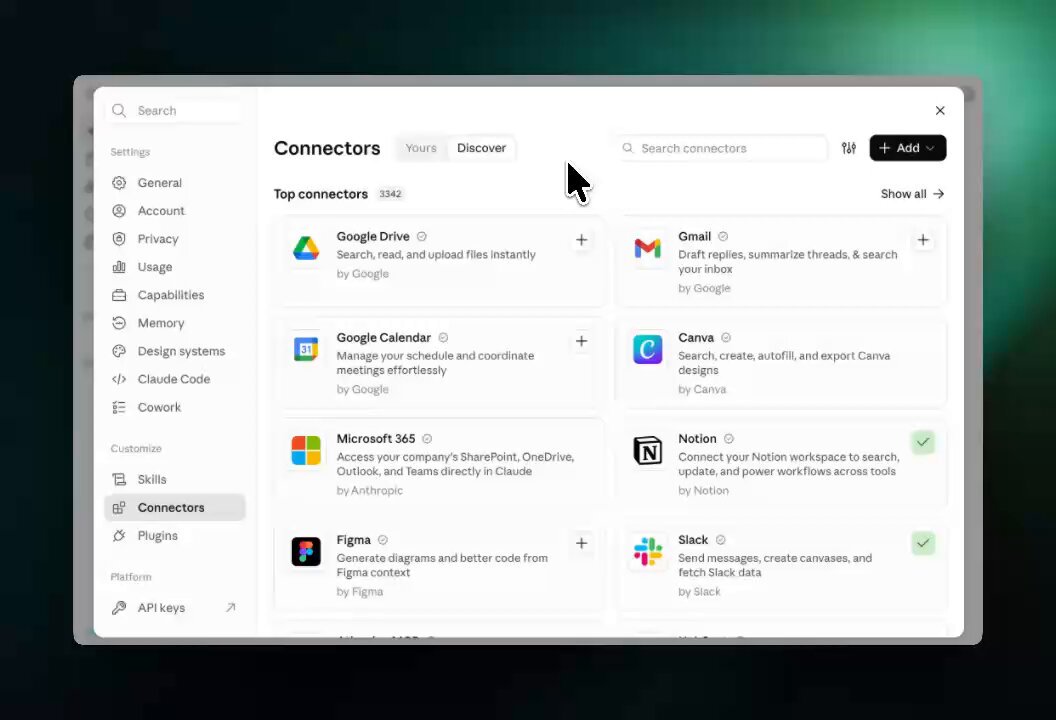
Nansen launches on Claude, bringing smart money and onchain data to users through AI
How Onchain Data Reaches Applications: Oracles and Indexers
Raw ledger data is useful for auditors and researchers, but applications need it formatted, filtered, and sometimes supplemented with off-chain context. Two infrastructure categories have emerged to serve this need.
Oracles bridge external information onto the chain. A decentralized lending protocol needs a current ETH/USD price to calculate collateral ratios; it cannot fetch a website, so an oracle network like Chainlink pushes verified price feeds on-chain. SGX FX recently adopted Chainlink to bring institutional-grade OTC foreign exchange data on-chain, unlocking DeFi currency markets built on the same data feeds that underpin global forex trading. Band Protocol has similarly expanded its price feeds to support the COTI Privacy Portal, providing the data layer for private on-chain assets. RedStone has moved in a complementary direction, bringing Spark's institutional collateral data on-chain to serve the growing market for tokenized real-world collateral.
What unites these projects is the oracle's core mandate: data must arrive on-chain in a form smart contracts can consume, with cryptographic attestations that make manipulation economically costly.
Indexers and data networks tackle the opposite problem — making the enormous volume of raw on-chain data queryable in real time. The Graph Protocol indexes blockchain data and exposes it via GraphQL APIs, allowing developers to query historical events without running their own archive node. As AI applications increasingly need structured blockchain context, The Graph has positioned itself as the data layer connecting autonomous agents to on-chain activity. DIA data similarly runs decentralized oracle feeds as ecosystem data infrastructure for partner networks, with the explicit goal of removing single points of failure from the data supply chain.
Readers click onchain data stories not for dashboards or APIs, but when the data exposes something powerful actors didn't intend to be visible — custody concentration, government wallet movements, and the fragility of offchain inputs controlling onchain money.
Why Verification Matters More Than Volume
The crypto ecosystem now generates more on-chain data than most organizations can process, but volume without verifiability creates a different category of problem. As one recent analysis framed it: "A smart contract can execute perfectly and still act on data it cannot verify." Tokenized assets may sit on-chain while the underlying data — a credit score, a property valuation, a fund NAV — remains off-chain, opaque, and unverifiable by counterparties.
This is the core tension in institutional DeFi. Collateral is on-chain; the data behind that collateral often is not. Projects like zkDatabase are attempting to address this by turning real-world asset data into private, auditable, and verifiable infrastructure — allowing stablecoin issuers, tokenized treasury funds, private credit protocols, and real estate platforms to prove claims about their collateral without exposing confidential information. Zero-knowledge proofs allow a party to demonstrate that off-chain data meets certain criteria without revealing the underlying data itself.
This "verifiable private state" category is likely to be among the more consequential developments in onchain data infrastructure over the next few years. Institutional adoption at scale requires not just that assets be tokenized, but that the data supporting their valuation and risk characteristics be auditable by all parties in real time.
Onchain Data as Market Intelligence
For traders, researchers, and funds, on-chain data functions as an alternative data source that traditional finance cannot easily replicate. Wallet-level activity can reveal accumulation by large holders before price moves. Protocol outflows can signal risk-off positioning before it appears in price. Exchange reserve changes have historically preceded significant price movements.
Galaxy Research's recent analysis of Bitcoin's cycle position illustrates the approach: by examining 13 historical bottom indicators across on-chain and market data, analysts concluded that only four had been triggered, suggesting a base-case floor in the $40,000–$46,000 range in late 2026. This kind of probabilistic inference from on-chain signals has become standard in institutional crypto research.
Onchain data also provides near-real-time visibility into corporate treasury activity that would otherwise require SEC filings or earnings calls. When Bitmine — the firm associated with Tom Lee — acquired $41 million in ETH, on-chain tracking confirmed the transaction before any press release, demonstrating how blockchain transparency compresses the information asymmetry that normally favors insiders.
For security researchers, on-chain data is equally essential. Following the Kelp DAO bridge exploit, on-chain tracking data allowed analysts to attribute the attack to North Korean threat group TraderTraitor and monitor in real time as approximately $220 million in stolen funds moved through laundering infrastructure — ultimately closing the window for recovery.
- 01Chainlink as TradFi data bridge
Multiple major institutions (Fidelity, NYSE-parent ICE, SIX Group, Pyth partners) choosing Chainlink to pipe forex, NAV, and equity data onchain signaled that oracle infrastructure has crossed from DeFi experiment to regulated-finance plumbing.
- 02RWA tokenization data gap
The specific claim that offchain inputs drive onchain logic for private credit — with no on-chain verification — framed tokenized RWAs as carrying a structural systemic risk that readers hadn't seen named so plainly.
- 03Onchain surveillance of large actors
Stories revealing Coinbase's undisclosed 14% BTC custody share, the DOJ Silk Road wallet transfer, and World Liberty's address blacklist all demonstrated that onchain data functions as involuntary public disclosure for powerful entities.
- 04Stablecoin risk transparency scoring
Pharos's per-coin peg scores and safety grades offered a concrete tool for evaluating risk that institutions said was missing, directly answering the fintech infrastructure credibility gap.
- 05AI plus onchain data convergence
Multiple products (SurfAI, Messari, LlamaAI, Stake DAO agent) framed AI reasoning over onchain data as the next analytics layer, attracting readers tracking where crypto research tooling was heading.
- 06Data quality failures costing DeFi
The Graph's explicit warning that faulty onchain pricing data had already cost the industry hundreds of millions — amplified by AI-driven trading — gave readers a named, quantified risk tied to infrastructure they use daily.
Onchain Data and AI
The intersection of AI and on-chain data is moving faster than most infrastructure can accommodate. Autonomous AI agents require data feeds they can trust, because a decision made on corrupted or manipulated input has downstream consequences that may be irreversible on-chain. APRO has positioned itself as a data layer for large-scale AI agent coordination, providing over 1,400 real-time feeds with on-chain verifiability so agent decisions are grounded in reliable state rather than stale or manipulated inputs.
Stake DAO has integrated AI agent functionality with protocol on-chain lending data, allowing agents to read live borrowing rates, utilization, and liquidity conditions before executing strategies. The broader pattern — AI agents that act on verifiable on-chain signals rather than permissioned API calls — points toward a class of applications that would be structurally impossible in traditional finance.
The infrastructure project IO.net has cited on-chain data directly as evidence of its model's differentiation: 4 billion AI tokens served daily and 12 million tokens burned in year one are claims that can be verified by anyone reading the chain, as opposed to company-reported metrics that require trust.
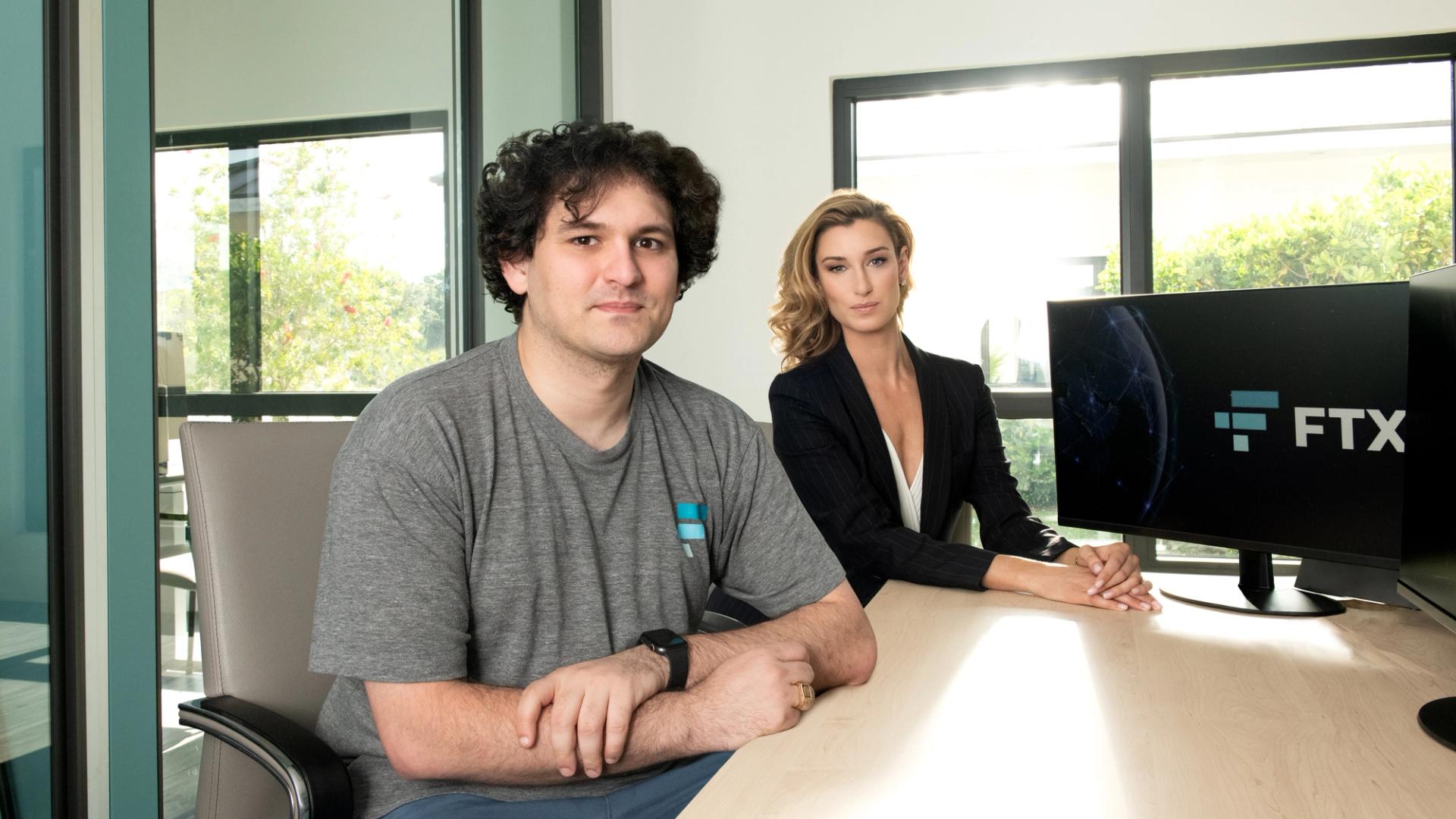
FTX and Alameda-linked wallets sent up to $75 million in ether to Wintermute, onchain data shows
Real-World Assets and the Data Problem
The tokenized real-world asset (RWA) sector — spanning treasuries, private credit, real estate, and commodities — has grown substantially in on-chain TVL over the past two years, but it has exposed a structural data gap. The assets are represented on-chain; the authoritative information about those assets frequently is not.
A tokenized U.S. Treasury has an on-chain representation, but the NAV is typically reported by the issuer and accepted on trust. A tokenized real estate deed lives on a blockchain, but the property valuation, title status, and underlying financials remain in off-chain systems that the smart contract cannot verify. This creates a category of "oracle for real-world data" that is more complex than price feeds: it requires not just timely data delivery but attestations of data provenance, audit trails, and in many cases privacy-preserving verification.
zkDatabase's approach of making RWA data "private, auditable, and verifiable" represents one architecture for this problem. The broader challenge is that onchain data infrastructure built for crypto-native assets must be significantly extended to support the data characteristics of traditional financial instruments.
Blockchain Explorers and Practical Onchain Analysis
For practitioners working directly with on-chain data, block explorers remain the primary entry point. Tools like Etherscan, Solscan, and chain-specific explorers provide transaction lookup, wallet tracking, and contract interaction history without requiring programming knowledge. More advanced users run their own archive nodes or access services that provide raw blockchain data via APIs for analytical workflows.
The standard analytical progression moves from explorers (lookup and verification) to data platforms like Dune Analytics or Nansen (SQL-based querying and visualization) to custom indexing pipelines for institutional-grade analysis. Cross-chain analysis adds complexity, since different chains use different address formats, different block times, and different data availability guarantees.
For trading strategy development, some platforms now allow backtesting against up to 365 days of real historical on-chain price data before going live, including simulation of concentrated liquidity positions and fee tier optimization. This represents the maturation of on-chain data from an audit tool into quantitative infrastructure comparable to what traditional systematic funds use with exchange data.
- 2025-05milestone
Ethereum Pectra fork raises blob target to 14, boosting L2 data availability
- 2025-09launch
Pyth launches onchain data marketplace; Fidelity, Tradeweb, Euronext among first publishers
- 2025-10milestone
NYSE-parent ICE taps Chainlink to bring forex and precious metals data onchain
- 2025-11milestone
Fidelity and Sygnum partner with Chainlink to deliver NAV data onchain
- 2025-12milestone
SIX Group taps Chainlink DataLink for Swiss and Spanish equity data feeds
- 2026-01launch
Pineapple Financial begins migrating $10B mortgage portfolio onchain via Injective
- 2026-03milestone
Etherscan begins surfacing ERC-8004 agent metadata, making onchain AI agents discoverable
- 2026-05regulatory
Grayscale files Chainlink ETF, framing LINK as essential tokenized-finance infrastructure
Privacy, Permanence, and Risk
On-chain data's transparency is simultaneously its strength and a persistent risk surface. Public keys are permanently visible from the moment of a wallet's first transaction — a consideration that becomes significant in discussions of quantum computing, where future cryptographic breaks could expose historical transaction graphs even for wallets long considered abandoned.
For users, the implication is that on-chain data is essentially permanent. Analysts tracking wallet behavior can reconstruct years of activity; KYC-adjacent services can link on-chain addresses to off-chain identities through exchange deposit and withdrawal flows. Privacy-preserving technologies — zero-knowledge proofs, stealth addresses, mixers — exist to mitigate this, but they introduce their own compliance and reputational trade-offs.
Institutional participants are particularly sensitive to this dynamic. A large fund executing a position on-chain may reveal its strategy to competitors before the trade is complete. This has driven interest in private computation environments and ZK-based execution, where the fact of a transaction can be verified without revealing its contents.
Outlook
Onchain data is becoming critical infrastructure — not only for DeFi protocols and crypto traders, but for institutional asset managers, AI developers, and any application that requires verifiable, tamper-resistant records. The next phase of development is likely to be defined by three trends: the expansion of verifiable data coverage to real-world assets, the integration of on-chain data feeds with AI agent frameworks that require machine-readable trust guarantees, and the maturation of privacy-preserving verification techniques that allow sensitive data to be proven without being exposed.
The race is not primarily about data volume — blockchains already generate more data than most systems can consume. It is about verifiability, latency, and the ability to bring the same transparency guarantees that govern on-chain assets to bear on the off-chain information those assets depend on.
Latest Onchain Data news
Community notes
Spot something off or out of date? Drop a note. Editors review topic notes daily and roll accepted fixes into the explainer — contributors are recognized in the monthly $SQUID drop.
Loading notes…
Help improve this topic
Have a story or tip about this topic? Submit it. See something missing? Leave a note. Editors review daily; accepted submissions and fixes count toward the monthly $SQUID drop.