
Crypto adoption spans retail, institutional, and infrastructure layers moving at different speeds. Stablecoins lead real-world uptake; tokenized RWAs hit $43B; disclosure gaps and regulatory uncertainty remain the key structural brakes.
+33 sources across the wider coverage universe
 Grayscale highlights generational shift as 45% of Gen Z and Millennials own crypto vs 18% of older investors, with $110T wealth transfer seen as major adoption tailwind2026-04
 Alchemy integrates with Canton Network, joining 800+ validators and major financial giants to scale $8T+ tokenized asset ecosystem for institutional blockchain adoption2026-04
 Benchmark says just 0.01% of NYSE’s $44T market could significantly scale Securitize, highlighting massive upside for tokenized assets as institutional adoption grows2026-04
 NYSE welcomes Morgan Stanley Investment Management to launch $MSBT, the first spot Bitcoin ETF from a major U.S. bank, marking a milestone in institutional crypto adoption2026-04
 Ethereum enters its second decade following a transformative year marked by Ethereum Foundation leadership changes and accelerating institutional adoption2026-07
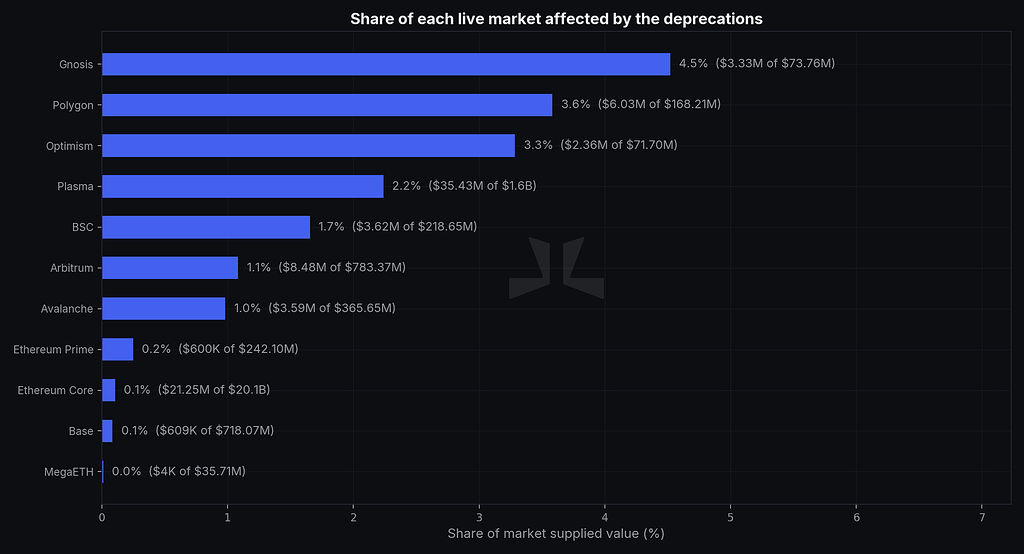 Aave to deprecate 50 low‑adoption assets and wind down multiple chain deployments, cutting risk exposure on $98.1M supply and $15.6M debt under its new risk frameworks.2026-07
Crypto adoption describes the process by which individuals, businesses, institutions, and governments integrate blockchain-based assets and infrastructure into their economic activity—moving digital assets from speculative novelty toward functional financial plumbing.
The word gets used loosely, which is part of the problem. A retail investor buying bitcoin on a mobile app, a central bank piloting a wholesale settlement layer, and a Fortune 500 treasury holding stablecoins for cross-border payroll are all described as "adoption"—but they represent fundamentally different phenomena with different drivers, risks, and timelines. Understanding which layer of adoption is actually advancing at any given moment is more useful than headline metrics alone.
What Adoption Actually Measures
Adoption has several distinct dimensions that often move independently:
User adoption — the number of people who hold, send, or transact with crypto assets. Wallet addresses and exchange accounts are imperfect proxies; many are dormant or duplicated.
Merchant and payment adoption — businesses accepting crypto as a means of exchange. This layer has historically lagged price cycles and remains thin outside specific corridors and demographics.
Institutional adoption — regulated financial entities (banks, asset managers, pension funds, brokerages) integrating crypto into products, balance sheets, or settlement infrastructure.
Protocol-level adoption — developers and applications building on a blockchain, generating genuine on-chain activity rather than speculative trading volume.
Regulatory adoption — governments and supranational bodies recognizing, licensing, or incorporating blockchain-based systems into legal and financial frameworks.
Each layer feeds the others, but not on a simple schedule. Institutional adoption can surge—as it did with bitcoin ETF approvals in the U.S. in early 2024—without meaningfully expanding the merchant acceptance network.

Visa survey: stablecoin adoption intent jumps to 56% when bank-level protections are offered

The Institutional Wave: Real but Uneven
The clearest shift in recent years has been at the institutional layer. Tokenized real-world assets (RWAs) crossed $43 billion in total market value as of mid-2026, with banks, asset managers, and custodians moving past what participants have called the "experimentation phase." DTCC, JPMorgan, and UBS jointly published a five-stage roadmap for tokenized collateral adoption—a signal that the largest post-trade infrastructure providers are treating on-chain settlement as an engineering problem to solve, not a question of whether to engage.
Yet the gap between headline numbers and operational depth is real. Research from Novora found that 62 of the 100 largest crypto assets by market cap lack meaningful investor relations infrastructure—no earnings-equivalent disclosures, no structured communication with institutional holders. That disclosure deficit creates a structural friction: capital allocators bound by fiduciary standards cannot easily hold assets that don't meet minimum transparency requirements, regardless of how liquid the market appears.
The bitcoin lending market illustrates a related tension. New research highlights a collateral gap in bitcoin lending adoption: while banks and fintech lenders are increasingly willing to accept BTC as collateral, valuation haircuts, custody requirements, and the absence of standardized collateral documentation frameworks mean that the effective borrowing capacity remains well below what equivalent liquid assets would command in traditional repo markets.
Privacy is emerging as another institutional friction point. Enterprise DeFi participants—particularly those in regulated industries—need transaction confidentiality for competitive and compliance reasons. But privacy on public blockchains introduces new risk tradeoffs: regulators require auditability, and zero-knowledge approaches that satisfy one constraint can complicate the other. Midnight, a blockchain built specifically for enterprise privacy with predictable tokenomics, is one example of infrastructure designed to resolve this tradeoff. The broader point is that institutional adoption requires infrastructure businesses can actually rely on—not just technically capable, but legally navigable.
Readers click adoption stories hardest when they anchor to a specific operational use case — stablecoins replacing inflation-ravaged cash in Argentina, Solana becoming an institutional settlement rail, or DTCC mapping a five-stage tokenization roadmap — revealing that the question driving engagement is not whether adoption is happening but which infrastructure layer captures real money flows first.
Stablecoins: The Adoption Wedge
If one technology is currently doing the most to advance real-world crypto adoption, it is the stablecoin. Dollar-pegged tokens have become the primary interface between traditional finance and on-chain infrastructure in emerging markets, cross-border commerce, and increasingly, AI-native payment flows.
Africa offers the clearest case study. The continent's stablecoin market has moved beyond the demand-validation stage; regulators, commercial banks, and fintech companies are now competing to build the infrastructure for large-scale adoption. The IMF's 2026 analysis of stablecoin adoption in Nigeria concluded that restricting stablecoins alone won't work—the better policy response involves strengthening regulation, expanding blockchain analytics capacity, and modernizing legacy payment rails. The IMF simultaneously catalogued both benefits (financial inclusion, lower remittance costs, currency stability for holders in high-inflation environments) and risks (capital flow volatility, monetary policy transmission disruption, AML compliance gaps).
The regulatory tailwind in the United States is reshaping the competitive landscape among stablecoin issuers. A notable structural shift involves the role of sponsor banks—the regulated depository institutions that historically backed fintech players like Chime and Cash App with FDIC-insured accounts and payment network access. Research from Tempo suggests these same institutions could become the backbone of stablecoin adoption as licensing frameworks clarify, effectively converting bank-chartered entities into stablecoin reserve custodians and distribution rails.
Not every stablecoin product finds its market, of course. Tether shut down Alloy and its gold-backed aUSDT product in mid-2026 after weak adoption, redirecting capital toward XAUT and faster-growing initiatives. The episode is a reminder that stablecoin demand is heavily concentrated in dollar-denominated instruments; commodity-backed variants have struggled to generate comparable liquidity depth or use-case clarity.

Superteam Italy launches to promote Solana adoption, with founder Gianluca Bruno saying his dream of representing Solana at home has come true.

AI as an Adoption Accelerator
One underappreciated vector for crypto adoption is artificial intelligence—specifically, the intersection of AI agent infrastructure and on-chain payment rails.
USDAI, a project using stablecoins to fund GPU loans for non-crypto AI cloud operators, illustrates the dynamic: the financing need (GPU compute capital for AI workloads) is a real-world problem; the instrument (stablecoin-denominated loans) is simply the most efficient financing mechanism available given settlement speed and global accessibility. This is adoption driven by product-market fit rather than ideology.
At the payment layer, autonomous AI agents increasingly need the ability to transact programmatically—paying for API calls, data, compute, and services without human approval on each transaction. On-chain micropayment infrastructure is a natural fit. Injective has introduced mechanisms for AI agents to pay on-chain; similar integrations are being developed across multiple L1 and L2 ecosystems. The Netomi CEO has argued that a projected $5 trillion AI customer experience market could become a meaningful driver of stablecoin adoption as enterprise AI agents reshape global payment flows.
Citadel Securities' analysis of AI economics adds useful context: cost curves and rising inference bills are pushing enterprises toward "good enough" models rather than frontier alternatives. This cost pressure will intensify demand for efficient micropayment infrastructure—rails where transaction fees don't render small-value AI payments economically irrational.
- 01Stablecoin payments, emerging markets
SurfCash in Argentina and Africa's regulatory buildout drew the highest click totals because readers track where dollar-denominated stablecoin utility is actively displacing broken local payment rails, not merely supplementing them.
- 02Institutional settlement rail race
B2C2 selecting Solana as its primary stablecoin rail and the DTCC/JPMorgan five-stage tokenized collateral roadmap show TradFi placing concrete infrastructure bets, which readers follow as forward indicators of which chains win institutional volume.
- 03RWA tokenization scaling
Pantera's $320B onchain asset count alongside Securitize partnering NYSE signal the market is real, but readers engaged because Pantera simultaneously argued adoption remains early-stage — a tension between headline size and actual maturity.
- 04DeFi protocol revenue diversification
Aave's GHO scaling strategy and Hyperliquid's positioning as a 'financial services juggernaut' drew clicks from readers tracking which DeFi protocols are building durable business models beyond cyclical trading fee revenue.
- 05Stablecoin regulatory fragmentation
MiCA's zero-yield reserve rules capping euro stablecoins below 1% global share and a16z warning on GENIUS Act misalignment pulled readers tracking whether Western regulation enables or structurally kneecaps stablecoin adoption at scale.
- 06Retention as adoption's weak link
The headline on brittle adoption and incentive-dependent user churn named the structural failure point readers sense in every L2 and DeFi app launch cycle but rarely see reported as a systemic thesis.
Infrastructure: The Unglamorous Prerequisite
Adoption curves in technology follow infrastructure readiness, not the other way around. The crypto industry is in the middle of an infrastructure buildout cycle that will determine how much institutional and enterprise adoption is possible in the next five years.
Prediction markets are an illustrative case. Demand is growing rapidly—in 2024 and 2025, prediction markets demonstrated meaningful price discovery on electoral and macroeconomic events. But the next phase of growth requires infrastructure upgrades: oracle reliability, dispute resolution mechanisms, and compliance-ready interfaces for institutional participants. Without those components, sophisticated capital won't allocate at scale regardless of the underlying demand signal.
Decentralized identity (DID) is a similar gap. For institutions to operate on public blockchains—to know their counterparties, meet KYC/AML obligations, and manage permissioned access to specific services—some form of verifiable credential infrastructure is required. DID standards are technically mature but adoption among wallets, applications, and institutional platforms remains fragmented. It is arguably the missing layer for institutional blockchain adoption.
Payment infrastructure at the merchant level is also advancing, if unevenly. ForumPay has expanded its crypto payment infrastructure specifically to serve the adoption push among merchants and hospitality operators, handling the settlement complexity that prevents most businesses from accepting digital assets directly.
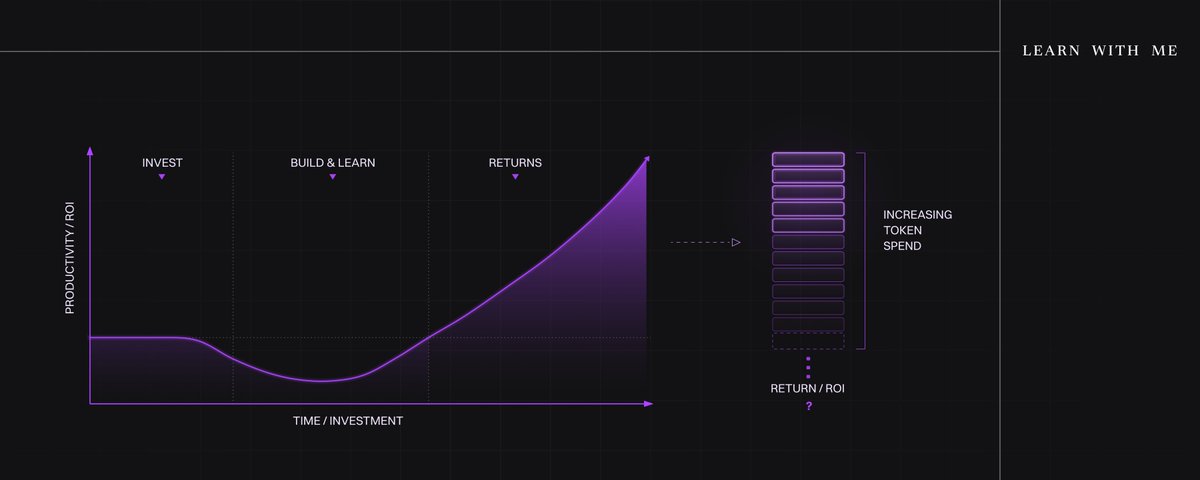
Researcher says AI adoption is booming but productivity lags as companies automate inefficient processes instead of redesigning how work gets done
Mainstream Visibility and Brand Adoption
Institutional adoption and infrastructure build are longer-arc stories. But brand-level adoption—major non-crypto companies partnering with or publicly endorsing the space—matters for normalizing crypto with mass audiences.
Kraken's sponsorship of FIFA World Cup 2026 is a notable example. Sports sponsorships historically function as trust signals and awareness drivers; association with an event of FIFA's scale puts exchange branding in front of a global audience that extends well beyond existing crypto users. This category of adoption doesn't directly generate on-chain activity, but it reduces the social friction that prevents prospective users from engaging at all.
Trading card tokenization represents a different kind of mainstream bridge. The global trading card and physical collectibles market is estimated at $17–27 billion; tokenization allows fractional ownership, verifiable provenance, and liquid secondary markets for assets that previously traded through opaque, dealer-mediated channels. On-chain adoption in this category is still early, but the product logic is coherent and the addressable audience is large and non-crypto-native.
- 2021-09regulatory
El Salvador adopts Bitcoin as legal tender
- 2022-09milestone
Ethereum Merge completes proof-of-stake transition
- 2024-01regulatory
SEC approves U.S. Bitcoin spot ETFs
- 2024-03launch
BlackRock BUIDL fund launches on Ethereum, anchoring institutional RWA market
- 2024-05regulatory
SEC approves U.S. Ethereum spot ETFs
- 2024-11milestone
DTCC, JPMorgan and UBS publish five-stage tokenized collateral adoption roadmap
Key Risks Slowing Adoption
Several structural risks persistently slow adoption:
Regulatory uncertainty. Even as frameworks clarify in some jurisdictions, the absence of harmonized international standards creates compliance burdens for cross-border use cases and discourages institutional commitments that require multi-year investment horizons.
Disclosure and transparency gaps. Novora's finding that the majority of top crypto assets lack institutional-grade disclosure infrastructure is a symptom of an industry that grew up outside capital markets norms. Until protocols invest in investor relations and standardized reporting, fiduciary institutions will remain structurally underweight.
Security and centralization risks in AI-native crypto. AI agents operating autonomously with on-chain payment capabilities introduce novel attack surfaces. Centralization in the AI layer—a single model provider or orchestration platform—creates single points of failure that counteract the resilience properties that make blockchain infrastructure appealing in the first place.
Collateral and liquidity infrastructure. The collateral gap in bitcoin lending, the fragmented DID landscape, and underdeveloped repo markets for digital assets all represent friction points that slow institutional capital formation even when regulatory permission exists.
Privacy versus auditability tradeoffs. Institutional DeFi participants need confidentiality; regulators need auditability. Resolving this without fragmentation (separate private chains that don't interoperate with public liquidity) is an unsolved engineering and governance problem.
Outlook
The current adoption cycle is structurally different from prior ones. Stablecoins have established genuine product-market fit in emerging markets, cross-border commerce, and AI-native payment flows—adoption that is demand-driven rather than speculation-driven. Tokenized RWAs are moving from pilot to operational at the largest financial institutions. Infrastructure layers—identity, privacy, prediction markets, collateral frameworks—are being built now in ways that will enable the next adoption step-change.
The honest assessment from observers including the IMF, DTCC, iExec, and independent researchers is that mass adoption for the most complex use cases (institutional DeFi, RWA markets at scale, cross-border stablecoin settlement) still requires time—not because the technology is fundamentally unready, but because regulatory frameworks, disclosure norms, and institutional risk management practices evolve slowly. The infrastructure being laid today sets the ceiling for adoption in the back half of this decade.
Latest Adoption news
Visa survey: stablecoin adoption intent jumps to 56% when bank-level protections are offeredSuperteam Italy launches to promote Solana adoption, with founder Gianluca Bruno saying his dream of representing Solana at home has come true.Researcher says AI adoption is booming but productivity lags as companies automate inefficient processes instead of redesigning how work gets done BlackRock paper explores how AI adoption could drive new demand across digital assets
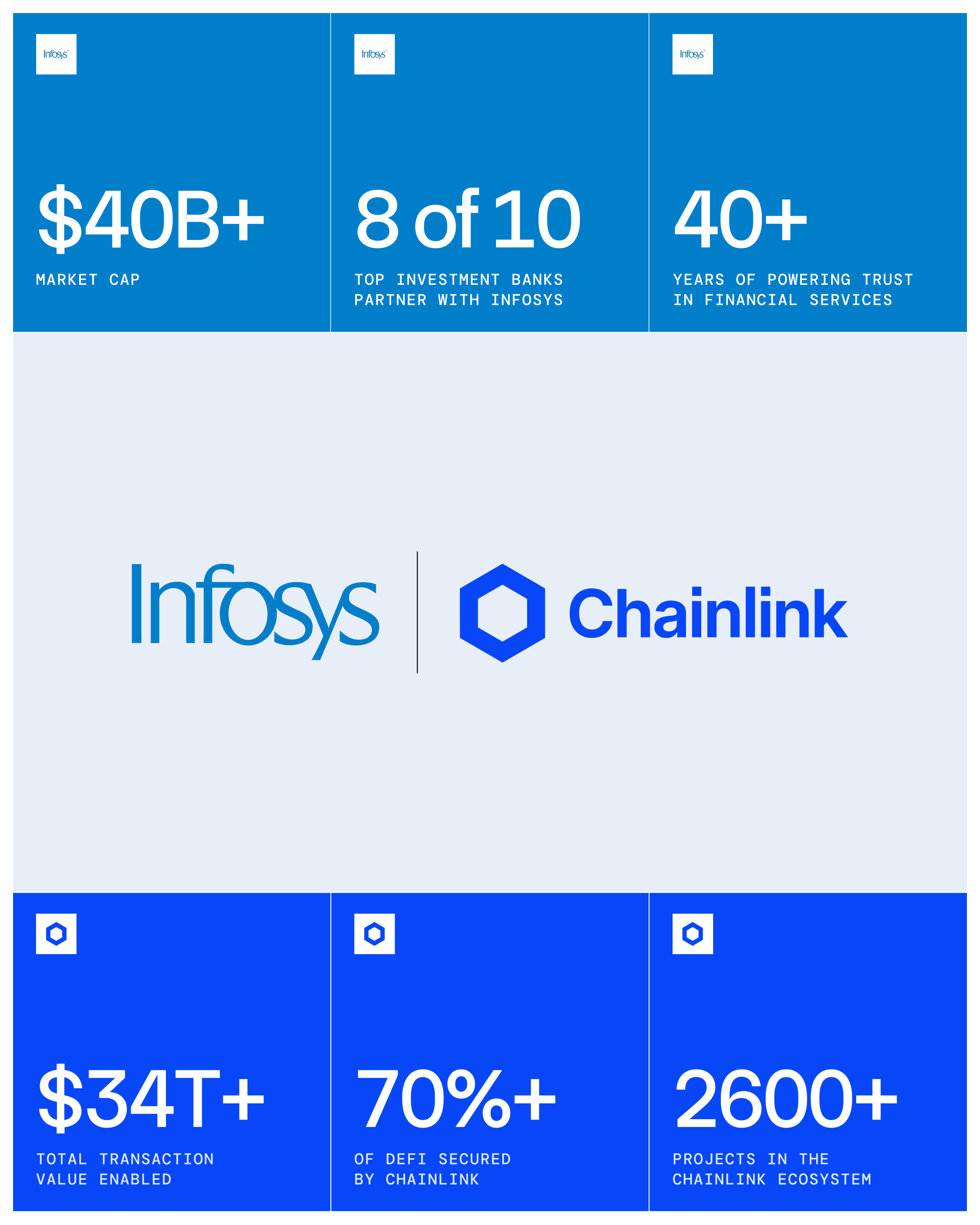 Infosys partners with Chainlink to accelerate institutional onchain finance and standardize adoption of Chainlink’s infrastructure
Community notes
Spot something off or out of date? Drop a note. Editors review topic notes daily and roll accepted fixes into the explainer — contributors are recognized in the monthly $SQUID drop.
Loading notes…
Help improve this topic
Have a story or tip about this topic? Submit it. See something missing? Leave a note. Editors review daily; accepted submissions and fixes count toward the monthly $SQUID drop.