
In-depth explainer on crypto project roadmaps: what they are, how Ethereum, Algorand, XRPL, Coinbase and AI-agent stacks use them, how to read them as an investor, and why scaling, security, quantum risk and AI now shape roadmap design.
+26 sources across the wider coverage universe
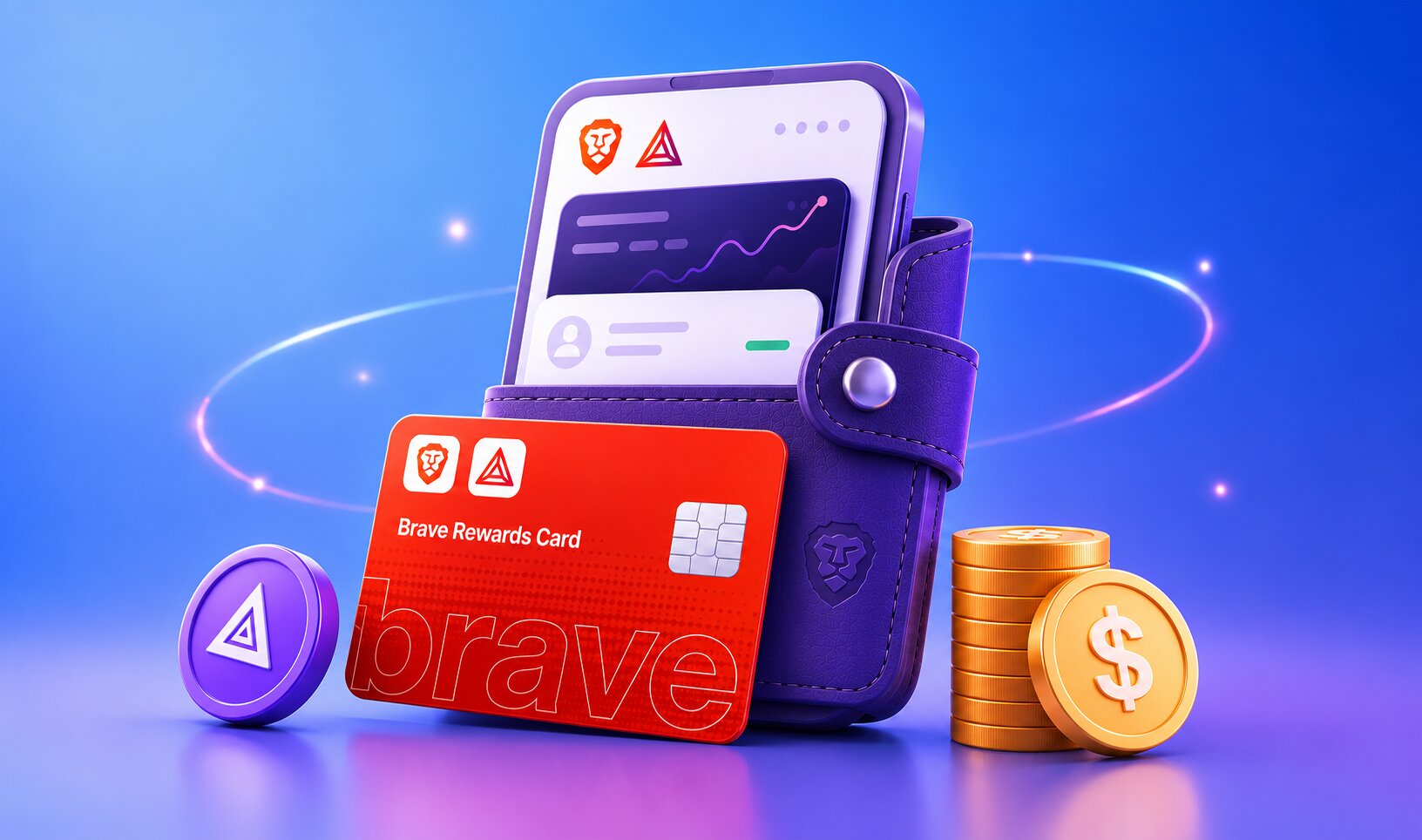 Brave plans BAT buybacks tied to BravePay, Wallet, and Rewards Card revenue in Roadmap 4.02026-07
 L1 Strawmap - Ethereum draft roadmap
By Justin Drake2026-02
L1 Strawmap - Ethereum draft roadmap
By Justin Drake2026-02 Blocmates published a Macro Catalyst Roadmap for 2026, arguing Bitcoin is now a macro-driven asset where liquidity, not cycles, drives returns. Long-term liquidity favors BTC, but short-term tightening calls for patience, timing, and selective risk-taking.2025-12
 Curve Finance founder Michael Egorov has proposed a $6.6M CRV grant (17.45M CRV) to fund long-term ecosystem development. The funds would go to Swiss Stake AG to support its 2026 roadmap, including Llamalend upgrades, infrastructure, security, and continued R&D, with biannual transparency reports and open-source commitments.2025-12
 Resolv publishes its 2026 roadmap2026-02
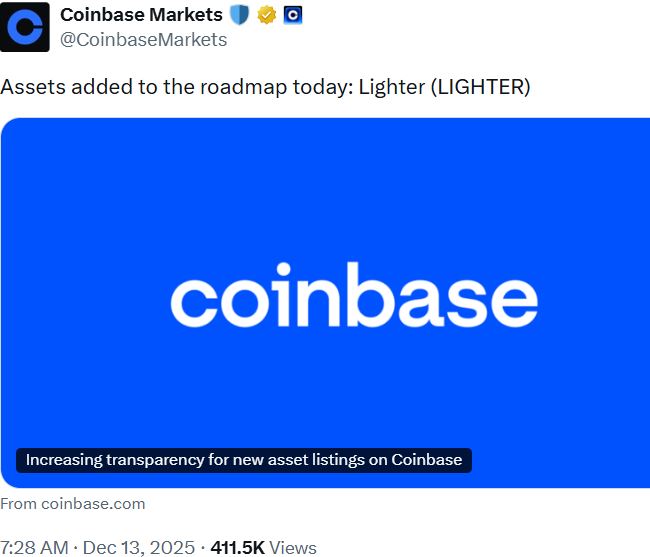 Coinbase adds Lighter token to listing roadmap today.2025-12
Roadmaps in Crypto: How Teams Signal the Future
In crypto, a roadmap is a forward-looking plan that lays out the major milestones a project or network intends to achieve over time, from protocol upgrades and feature launches to security hardening and exchange listings. When done well, a roadmap functions as both a strategic compass for the team and a critical signaling tool for users, investors, and regulators, especially as new themes like AI agents, onchain capital markets, quantum security, and scaling define the industry’s next decade.
What Is a Roadmap in Crypto?
A roadmap in crypto is best understood as a structured narrative of the future: a document, page, or visual timeline that sets out what a project aims to build, in what rough order, and why those milestones matter for its users and token holders. Unlike marketing slogans or one-off announcements, a roadmap is persistent and cumulative; it should show how immediate next steps connect to a longer journey, for example from a testnet launch through mainnet release and then to scaling or security upgrades. Crypto teams use roadmaps to communicate their intentions around protocol changes, new products, cross-chain integrations, or listing ambitions in a context where code and tokens often arrive before fully mature businesses. Because so many projects are open-source and globally distributed, the roadmap becomes a shared reference for engineers, community contributors, and external partners. Even in highly technical networks, a roadmap is meant to be legible to non-experts, turning dense engineering work into a sequence of understandable milestones.
It is important to distinguish a roadmap from other project artifacts that also describe the protocol. A whitepaper or technical specification typically explains the design of a system at a point in time, grounding it in math, cryptography, or economic theory, while a roadmap focuses on change over time and how today’s state is expected to evolve in future releases. A blog post or release note, by contrast, tends to be backward-looking, summarizing what just shipped, whereas a roadmap aggregates what is still in progress or under consideration and groups it into themes or phases. Web3 product roadmaps in particular are structured around features, categories, priorities, statuses, estimated start and completion dates, dependencies, and notes, giving teams a way to coordinate complex development pipelines that span core protocol work, front-end updates, and ecosystem partnerships. In practice, many projects blur these boundaries, but the essential function of a roadmap is to articulate not just what the protocol is, but where it is going.
In blockchains, the scope of a roadmap often extends far beyond user-facing features. Protocol roadmaps can cover consensus transitions, cryptographic upgrades, staking economics, governance processes, data availability, and state management strategies. Ethereum’s public roadmap, for example, frames a multi-year path toward greater scalability, security, and sustainability, with named upgrades such as Paris (the Merge), Shapella, Dencun, Pectra, and Fusaka, followed by in-development forks like Glamsterdam and Hegotá. Each of these is associated with a cluster of technical changes, ranging from the transition to proof of stake to rollup-focused scaling and gas cost refinements. By grouping related Ethereum Improvement Proposals (EIPs) into clearly named forks on a roadmap, the Ethereum ecosystem makes a very complex engineering program intelligible to both developers and the wider market.
The concept of a roadmap is now spreading beyond traditional protocol development into adjacent domains, including AI and security. Google DeepMind, for instance, has proposed an AI Control Roadmap that describes how advanced autonomous agents should be monitored and constrained over time, emphasizing detection, prevention, and response mechanisms. This kind of roadmap deals not with token launches or throughput metrics but with the safe operation of AI agents, including the use of supervisory systems to constantly review an agent’s reasoning and actions. Crypto, AI, and security roadmaps increasingly overlap as blockchains become infrastructure for AI agents and as security roadmaps incorporate both cryptographic resilience and AI-based monitoring. The common thread across all these contexts is that a roadmap is a structured commitment about how a system will evolve and how risks will be managed.

Brave plans BAT buybacks tied to BravePay, Wallet, and Rewards Card revenue in Roadmap 4.0
Why Roadmaps Matter for Crypto Markets
Roadmaps matter in crypto because the industry is built on incomplete information and long feedback cycles. Many tokens are issued long before a network reaches maturity, meaning investors and users must decide whether to allocate capital or attention based on expectations of future progress rather than present-day cash flows. In such an environment, a credible roadmap reduces information asymmetry by revealing what a team thinks is possible, how it plans to get there, and which obstacles it anticipates along the way. Without a roadmap, communities are left to infer direction from scattered tweets, sporadic GitHub commits, and price action, which often leads to overreliance on speculation and rumor. A well-articulated roadmap, by contrast, acts as a benchmark against which progress can be measured.
Roadmaps are particularly impactful around launches and releases, where they shape market narratives and trading behavior. Before a mainnet launch, a roadmap might outline stages such as internal testnets, public testnets, audits, genesis event, and post-launch feature unlocks like staking, perps, or cross-chain bridges. Traders and early adopters use these milestones to time their participation, for example by entering before a staking launch that could reduce circulating supply or before a perps release that may draw new volume. Similarly, exchanges like Coinbase maintain a public asset listing roadmap of tokens under consideration, in part to increase transparency around which assets might be added in future. When new tokens such as DIEM and OpenGradient (OPG), both tied to AI compute and infrastructure, are added to Coinbase’s roadmap, markets often react well before any definitive listing announcement. In this sense, roadmaps themselves become tradable signals.
The impact of roadmaps extends beyond speculative trading to the deeper structure of the ecosystem. Major protocol roadmaps like Ethereum’s influence where developers choose to build, because they reveal how the base layer plans to handle scaling, data availability, and fee markets. The transition to proof of stake via the Merge, the unlocking of staked ETH in Shapella, and the introduction of rollup-friendly data blobs in Dencun each significantly altered the calculus for validators, liquid staking providers, and layer-2 teams, in turn changing how DeFi, NFT, and gaming projects architect their own products. As Ethereum’s roadmap pushes further into rollup-centric scaling and potential stateless clients, developers can position AI agents, onchain games, or RWA platforms to take advantage of cheaper data and higher throughput when those upgrades land. The roadmap thus becomes an input to strategic planning far beyond the core protocol.
For users and institutions, roadmaps help set expectations around the availability of features they care about, such as real-world asset tokenization, regulatory-compliant stablecoin rails, or AI integrations. Kaia’s DeFi ecosystem roadmap, which aims to architect Asia’s onchain capital markets and position the chain as a central engine for institutional settlement, informs banks and asset managers considering whether to treat Kaia as a long-term settlement venue. Similarly, the FUNToken roadmap for 2026–2027, which details an expansion from gaming into AI-powered infrastructure, automation, personal AI agents, cross-chain expansion, and tokenized real-world assets, signals to partners and users that the ecosystem intends to become a more comprehensive digital environment rather than a single-purpose gaming token. In DeFi, roadmaps for protocols like Hyperliquid or sUSD often outline plans to launch new perps, restore pegs, or change collateral mechanisms, helping traders and LPs manage risk around upcoming changes.
Roadmaps also play a governance role in decentralized organizations. DAOs frequently use roadmaps to coordinate grant programs, budget allocations, and protocol upgrades over quarterly or annual cycles. For example, Dash DAO and other governance-heavy ecosystems schedule public “roadmap update” calls where core contributors present progress against prior commitments and discuss upcoming milestones. These sessions effectively socialize roadmap planning into the governance process, allowing token holders to challenge, endorse, or amend the plan before it is executed. In this way, the roadmap is not merely an announcement from the core team but an evolving governance artifact, especially as onchain voting increasingly determines which upgrades are adopted and how treasuries are deployed.
Readers click roadmaps not for feature lists but for existential bets — the highest-performing headlines each signal a protocol staking its identity on a single architectural thesis (rollup-centrism, Endgame consolidation, Singularity) or a founder publicly returning to redefine what a project is for.
Major Categories of Crypto Roadmaps
Because crypto projects span everything from base-layer protocols and DeFi platforms to AI agent stacks and centralized exchange infrastructure, roadmaps come in several distinct but overlapping categories. Some are deeply technical and concern consensus algorithms or cryptographic primitives. Others are product-oriented and describe user-facing features, partner integrations, or geographic expansion. Still others focus on security, regulatory readiness, or market access, such as listing roadmaps. Understanding which category a given roadmap falls into, or how it combines several, is essential to interpreting its claims and implications.
Protocol and Network Upgrade Roadmaps
Protocol and network upgrade roadmaps are the most familiar in the context of major blockchains, because they describe how the base layer itself will change. Ethereum’s roadmap is the canonical example of this category. The Ethereum Foundation frames its current path as one toward greater scalability, security, and sustainability, implemented through a series of named network upgrades such as Paris, Shapella, Dencun, Pectra, and Fusaka, with further forks like Glamsterdam and Hegotá in development for the second half of 2026. Each fork bundles together Ethereum Improvement Proposals that impact different parts of the stack, from consensus rules to execution-layer gas pricing. For instance, Paris in September 2022 executed the Merge, transitioning Ethereum from proof of work to proof of stake, while Shapella in April 2023 enabled validator withdrawals and refined staking economics.
The Dencun upgrade, activated in March 2024, introduced Proto-Danksharding through “blob” transactions designed to significantly lower data availability costs for rollups, which are central to Ethereum’s scaling strategy. Planned upgrades like Pectra and Fusaka continue this trajectory, focusing on improving validator operations, optimizing fee markets, and setting the stage for more advanced data availability schemes such as PeerDAS (peer-to-peer data availability sampling). According to the roadmap, PeerDAS will make running nodes more accessible while maintaining decentralization by enabling nodes to sample data rather than store entire blocks, and Blob Parameter Only forks will allow flexible adjustments to the number of blobs between major upgrades, improving responsiveness to layer-2 scaling needs. Roadmap entries such as “Gas limit and DoS hardening” detail changes to transaction gas limit caps and default gas limits aimed at improving performance and resilience.
A distinctive feature of protocol roadmaps like Ethereum’s is the inclusion of long-term research directions that may not materialize for many years. Stateless clients, for instance, are envisaged as a way for validators to verify new blocks without storing large portions of the state, which would significantly lower hardware costs and facilitate more lightweight nodes. Similarly, the roadmap acknowledges that zero-knowledge proofs may eventually allow validators to verify blocks without re-executing transactions, enabling higher gas limits without raising hardware requirements. However, Ethereum explicitly notes that some upgrades, such as full quantum resistance, are lower priority and unlikely to be implemented in the next five to ten years. This candidness about the horizon and uncertainty of certain milestones is itself a hallmark of mature protocol roadmapping.
Other networks, such as Moonbeam, Avalanche, or various modular stacks, publish their own versions of protocol roadmaps with a strong emphasis on scaling and interoperability, often highlighting features such as chain abstraction, cross-rollup messaging, and specialized data availability layers. These roadmaps typically place scaling at the center, reflecting the industry-wide recognition that throughput and cost remain major bottlenecks for onchain applications and for AI agents that may generate high transaction volumes. In such contexts, protocol roadmaps are not just technical documents but business development tools, since they shape the decision of whether high-volume use cases like perps DEXs, onchain order books, or AI-driven trading agents can safely deploy on a given chain.
Security and Quantum-Readiness Roadmaps
Security-focused roadmaps concentrate on hardening protocols against emerging threats, especially the long-term risk that quantum computers could break classical public-key cryptography. These roadmaps are less about near-term feature releases and more about progressive cryptographic migration. Algorand’s “quantum resilience journey” offers an instructive example of how such a roadmap unfolds. In 2022, Algorand introduced State Proofs, a compact, post-quantum certificate that attests to and compresses the ledger’s state every 256 rounds. These state proofs are signed using Falcon, a post-quantum secure digital signature scheme, meaning that even if classical signatures were compromised in the future, the proofs themselves would remain secure.
Algorand then moved from research to deployment. In 2025, it executed one of the first quantum-resistant transactions on mainnet using Falcon-based signatures, and by November 2025 it had pioneered Falcon-based accounts on the mainnet of a mainstream blockchain network. This step meant that digital assets on the chain, not just the blockchain’s historical state, could now be protected by quantum-resistant cryptography. In June 2026, Algorand announced a roadmap targeting broad quantum resilience by the end of 2027, which includes native PQ accounts with related SDKs and developer tooling, PQ multisignature support for institutions and treasuries, and research into PQ-resilient verifiable random functions and signatures for consensus messaging. An important enhancement in this roadmap is multi-signature accounts that support mixed schemes, allowing access-control policies such as m-of-n quorums to combine classical, pure-Falcon, and hybrid keys across participants, easing the migration path.
Ripple has articulated a similarly detailed roadmap for post-quantum readiness on the XRP Ledger (XRPL), with a target for full readiness by 2028. Ripple’s plan unfolds across four phases. Phase 1 focuses on post-quantum recovery or “Q-Day readiness,” designing a contingency plan that would allow safe migration to PQ accounts if classical cryptography breaks unexpectedly. One approach involves using PQ-based zero-knowledge proofs to prove ownership of existing keys without exposing them, enabling users to move funds even in a compromised cryptographic environment. Phase 2 covers proactive planning and experimentation in the first half of 2026, including a full assessment of quantum risk across the network and performance evaluation of NIST-recommended signature algorithms in realistic XRPL transaction workloads. Phase 3 moves to controlled transition, integrating candidate PQ signature schemes alongside existing elliptic curve signatures on Devnet, and exploring PQ-friendly primitives for zero-knowledge proofs and homomorphic encryption relevant for confidential transfers and compliance features. Finally, Phase 4 envisions a full transition to PQ signatures by 2028 via a new amendment to the XRPL protocol, making PQC production-ready and ensuring validator operators can meet XRPL’s performance requirements.
These quantum-readiness roadmaps sit within a broader context of evolving cyber threats and regulatory expectations. Cybersecurity observers note that threat actors are shifting from pure data exfiltration toward causing operational disruption, and that ransomware groups increasingly leverage public exploits within days of disclosure, compressing defenders’ response windows. Governments are also tightening oversight around cyber risk, with a greater focus on enforcing cybersecurity disclosure rules in financial filings. Against that backdrop, blockchain projects are under pressure to demonstrate long-term resilience both to classical attacks and to future quantum capabilities. Quantum and security roadmaps, such as those from Algorand and XRPL, thus serve a dual role: they guide technical migration and signal to regulators and institutional users that the network is actively managing systemic cryptographic risk.
Product and Ecosystem Roadmaps
Product and ecosystem roadmaps focus on the features, integrations, and business models that sit atop core protocols. In the Web3 world, these roadmaps often resemble traditional software product plans, structured around features, categories, priorities, statuses, and estimated timelines. Product management guidance emphasizes that such roadmaps should align teams and accelerate delivery by connecting each feature to an overarching strategy, rather than being a random collection of ideas. A Web3 product roadmap template might track not only feature descriptions and start/end dates but also dependencies on other modules or external partners, as well as notes about technical or regulatory constraints. This is particularly important in DeFi, where adding a new collateral type, derivatives product, or cross-chain bridge often depends on or affects multiple parts of the stack.
Kaia’s ecosystem planning illustrates how product roadmaps can anchor an entire onchain capital markets strategy. The vision for Kaia centers on building the foundational rails to anchor APAC’s onchain capital markets and act as the central engine for institutional settlement, and its roadmap includes launching Kaia Investment Partners, an institutional-grade investment arm focused on tokenized real-world assets. Through this roadmap, Kaia communicates not just technical upgrades but also the sequence in which it plans to onboard institutional capital, build compliant RWA products, and integrate with custodians and regulated venues. FUNToken’s 2026–2027 roadmap provides a different example: it outlines a transition from being primarily a gaming ecosystem token to becoming part of a fully integrated digital ecosystem encompassing mobile gaming rollouts on iOS and Android, AI-powered infrastructure and automation, personal AI agents, cross-chain expansion, and tokenized assets. This roadmap connects the launch of new games, AI features, and RWA offerings into a cohesive plan for evolving the token’s utility.
Product roadmaps are equally crucial in DeFi, where protocols like perps DEXs or collateralized stablecoins must continuously refine their offerings to stay competitive and secure. For instance, an sUSD peg restoration roadmap might describe how the protocol intends to adjust collateral requirements, buy back undercollateralized positions, or roll out multi-collateral trading, while acknowledging potential risks and timeline uncertainties. Similarly, a perps exchange like Hyperliquid may publish a roadmap detailing when new markets will be listed, how the matching engine will be scaled, or when AI-powered risk management tools will be integrated. These product roadmaps make explicit the trade-offs between speed, complexity, and security, and signal to sophisticated market participants whether the team understands its own constraints.
Listing and Market Access Roadmaps
Listing and market access roadmaps describe how centralized exchanges and other platforms plan to expand the set of supported assets. Coinbase’s approach is a prominent example of this category. The company maintains a public asset listing roadmap that it updates to indicate which assets are being considered for listing, with changes announced via its official X account and blog. Coinbase explicitly frames this roadmap as part of a broader effort to increase transparency for new asset listings and to reduce information asymmetry that might otherwise advantage insiders. The roadmap includes categories such as “added to roadmap,” “launched,” and sometimes removals, and it is accompanied by clear disclaimers that transfers and trading are not supported for roadmap assets until a separate listing announcement is made.
This structure matters because market participants often treat inclusion on Coinbase’s roadmap as a forward signal of liquidity, even though Coinbase stresses that being on the roadmap is not a guarantee of eventual listing. When AI-related tokens like DIEM, an ERC-20 on Base designed to tokenize AI compute as an onchain asset, and OpenGradient (OPG) were added to the roadmap, coverage noted that these additions opened new AI compute opportunities for traders and funds, despite no firm listing date. These additions also reflected a broader thematic focus on AI within Coinbase’s product and asset strategy, aligning with the wider industry’s pivot toward AI infrastructure and agent-centric use cases. The roadmap thus becomes a tool through which Coinbase communicates both tactical asset review decisions and high-level thematic bets.
At the same time, listing roadmaps carry regulatory and market integrity implications. By making its asset consideration process more public, Coinbase aims to address concerns about selective disclosure and to mitigate the risk of employees or close partners front-running listing decisions. But the publication of such a roadmap can itself move markets, creating new responsibilities for accurate, timely updates and robust compliance controls to prevent information leakage. Other exchanges may choose to maintain internal roadmaps for asset support without making them public, trading off transparency against potential volatility and legal risk. In either case, listing roadmaps remind us that not all crypto roadmaps are authored by protocol teams; market infrastructure providers also use roadmaps to shape expectations.
AI and Agent Roadmaps
AI and agent roadmaps are a rapidly emerging category that bridges AI research, crypto infrastructure, and security engineering. Google DeepMind’s AI Control Roadmap provides a foundational example of how one might plan for the safe deployment of advanced autonomous agents. The roadmap outlines a defense-in-depth approach with three core stages: identifying problems through continuous monitoring and detection, managing them via prevention and response mechanisms, and measuring system performance through metrics like coverage (fraction of traffic monitored), recall (fraction of misaligned behaviors caught), and time-to-response. DeepMind uses other, more trusted AI systems as “supervisors” to constantly review an agent’s reasoning, actions, and plans, stepping in to block harmful actions before damage occurs. Although this roadmap is not inherently about blockchains, its emphasis on telemetry, audit trails, and intervention logic aligns closely with what crypto-based agent platforms must build.
Crypto-focused roadmaps are increasingly describing how blockchains can serve as infrastructure for AI agents. a16z Crypto has argued that blockchains can help AI agents in at least five ways, including providing persistent identity for non-human actors, governing AI-run systems, filling gaps in traditional payment systems for AI-native businesses, and enabling markets for compute and data. Projects such as Automata have responded by publishing 2026 roadmaps that brand the year as “the year of the agent,” laying out plans to build an agent-native infrastructure stack composed of layers for attestation, trust, relay, and execution. This stack aims to give agents verifiable identities, access to trust frameworks, reliable relayers for cross-chain operations, and execution environments that respect onchain rules. Roadmaps of this kind explicitly treat agents as first-class participants in the crypto ecosystem, much like wallets or smart contracts.
Ledger’s AI Security Roadmap for 2026 adds a hardware dimension to the agent story. Ledger has announced a comprehensive security stack for AI agents to be rolled out across 2026, with milestones including hardware-anchored Agent Identity and wallet functionality, Ledger command-line interfaces and “Skills” for programmable access to its wallet stack, Agent Intents with human-in-the-loop approval on trusted displays, hardware-enforced Agent Policies that restrict agent actions (for example daily spend limits or whitelisted smart contracts), and a Proof of Human attestation mechanism to verify that a unique individual stands behind agent interactions. The roadmap sequences these capabilities by quarter and ties them to existing products such as Ledger’s device management kit, which already allows agents to leverage hardware for human-in-the-loop approval. Combined with AI control concepts from DeepMind and governance-oriented agent roadmaps like those emerging around AI-native entertainment or onchain games, this illustrates how AI and crypto are converging around shared concerns of control, identity, and transactional safety.

L1 Strawmap - Ethereum draft roadmap By Justin Drake
How Good Roadmaps Are Designed
Designing a good roadmap is not simply a matter of drawing a timeline and scattering buzzwords across it. Effective roadmaps integrate strategic vision, resource constraints, technical realism, and clear communication. In crypto, this challenge is intensified by rapid technological change, uncertain regulation, and the tendency of markets to overreact to any perceived commitment. Teams must therefore design roadmaps that are ambitious enough to inspire, precise enough to guide execution, and flexible enough to adapt.
Strategic Role and Audiences
A roadmap’s first job is to align internal teams around coherent priorities. Product development guidance stresses that a roadmap should serve as the single source of truth for what is being built and why, coordinating engineering, design, marketing, and leadership around shared goals and trade-offs. In crypto, this alignment problem is more complex because the audience includes open-source contributors, governance token holders, validators, and often multiple independent client teams for a single protocol. Ethereum’s roadmap, for instance, must be interpretable and actionable for client implementers, rollup teams, DeFi protocols, and institutional stakeholders, all of whom have different perspectives on what “scalability,” “security,” or “sustainability” mean in practice.
At the same time, roadmaps must be legible to external audiences who may not deeply understand the underlying technology. Web3 product roadmap templates acknowledge this by encouraging teams to categorize features, assign priorities, and describe statuses in plain language, while still capturing technical dependencies and estimated timeframes. A roadmap that only a core engineer can understand may be accurate but fails in its communicative role, while a roadmap that is all marketing and no technical substance may excite but mislead. Good roadmaps strike a balance by providing both high-level themes (such as “onchain capital markets,” “AI agent stack,” or “post-quantum security”) and more granular items (such as “PQ multisig rollout on Devnet” or “PeerDAS testnet launch”) so that different audiences can extract the level of detail they need.
The strategic role of a roadmap also includes setting boundaries around what the project will not do, at least in the near term. Ethereum’s roadmap, by explicitly labeling certain upgrades such as quantum resistance as lower priority and likely more than five years away, sends a clear message that the community should not expect short-term quantum-hardening at layer 1 and may need to explore complementary solutions. Similarly, a DeFi protocol might mark features like self-custodial mobile wallets or cross-chain swaps as out of scope for the coming year, clarifying that its primary focus will remain on core liquidity or perps infrastructure. Explicit negative commitments of this kind are often absent in crypto roadmaps but can be particularly valuable for sophisticated stakeholders who must plan integration timelines and capital allocations.
Key Ingredients of an Effective Roadmap
While there is no single formula for a perfect roadmap, experience in both crypto and traditional product development points to several key ingredients. The first is clarity: each milestone should be described in terms that convey both its purpose and its impact. Galeon’s analysis of crypto roadmaps emphasizes that they should highlight major milestones rather than every minor task and should make it easy for users to follow the project’s trajectory. This requires avoiding vague labels like “improve UX” or “enhance scalability” in favor of specific, testable initiatives such as “roll out Proto-Danksharding to reduce rollup data costs” or “launch AI-assisted support bots integrated with onchain identity.” Ethereum’s practice of naming upgrades after cities while also providing detailed technical descriptions in EIPs exemplifies how a roadmap can be both brandable and precise.
A second ingredient is measurability. Web3 roadmap templates suggest tracking estimated start and completion dates, feature statuses (for example in research, in development, in testing, deployed), and dependencies between tasks. Product management best practices likewise insist that roadmaps should be grounded in clear objectives and key results or similar metrics. In crypto, measurability might include testnet deployment dates, onchain governance proposals, code audits, or TVL and usage thresholds tied to certain features. Without measurable anchors, it becomes difficult for communities to assess whether a roadmap is on track, and hard for teams to prioritize when unexpected issues arise.
A third ingredient is technical and risk transparency. Security and quantum-readiness roadmaps provide a useful model here. Ripple’s XRPL post-quantum roadmap explicitly discusses how different PQ signature schemes might affect transaction performance, storage, bandwidth, and network efficiency, and sets expectations that these impacts will be evaluated under realistic workloads before any final choice is made. Algorand’s PQ roadmap is similarly explicit about the need for research into post-quantum VRFs and signatures for consensus messaging, recognizing that PQ schemes may have larger signatures or higher verification costs and that consensus protocols must be adapted accordingly. By addressing risk and trade-offs directly in the roadmap, these projects build trust and provide a more realistic picture than roadmaps that promise “quantum-safe” security or “AI integration” without details.
Time Horizons and Flexibility
Time is one of the hardest dimensions of roadmapping in crypto. On one hand, communities and investors want to know when major milestones will land; on the other, open research problems and uncertain regulatory trajectories make precise dating hazardous. Ethereum manages this tension by grouping upgrades into named forks without always specifying exact activation dates far in advance, and by distinguishing between upgrades that are in active development and those that are long-term research goals. The roadmap explicitly notes that some upgrades, such as full quantum resistance, are lower priority and may not be implemented for five to ten years, signaling both ambition and caution. Similarly, XRPL’s PQ roadmap sets a target for full transition by 2028 but frames early phases as exploratory and subject to change based on empirical results.
Flexibility is not just a matter of leaving dates vague; it also means designing roadmaps so that they can adapt to shocks. The broader cybersecurity environment in 2026, characterized by rapidly evolving threat groups and an increasing focus on operational resilience, underscores the need for agile security planning. If ransomware actors begin exploiting a new class of vulnerabilities or regulators introduce new disclosure requirements, security-focused roadmaps may need to be accelerated or reoriented. For example, a chain might bring forward DoS hardening or consensus changes in response to observed attacks. Realistic roadmaps therefore include contingency capacity for unplanned work and avoid packing every quarter with tightly coupled features that leave no room for incident response.
In practice, good crypto roadmaps often operate at multiple time horizons. Near-term sections might cover the next two to three quarters with relatively concrete milestones, while mid-term sections describe thematic goals for the next one to two years, and long-term sections outline directional research or aspirational changes. Algorand’s roadmap toward broad quantum resilience by 2027 exemplifies this staging: it sequences clearly scoped deployments of PQ accounts and multisig with more open-ended research into PQ consensus primitives. Ethereum’s segmentation of near-term forks versus long-term ideas like stateless clients and quantum resistance follows a similar pattern. Explicitly separating these horizons helps stakeholders interpret which commitments are firm and which are exploratory.
Governance, Transparency and Legal Context
Roadmaps do not exist in a legal vacuum, and their governance and disclosure context matters. Coinbase’s listing roadmap provides a concrete illustration of how roadmaps intersect with regulatory and market integrity considerations. Coinbase uses the roadmap to increase transparency for new asset listings and updates it alongside public announcements via its official channels, reducing information asymmetries between insiders and the broader market. At the same time, the roadmap is accompanied by disclaimers emphasizing that being on the roadmap does not guarantee a listing and that transfers and trading are unsupported until separate announcements are made. These caveats are designed to manage expectations and reduce the risk that the roadmap could be interpreted as a firm promise.
Regulators are also paying closer attention to cybersecurity and operational resilience disclosures. Commentary on 2026 cyber trends notes that oversight in the information security space is not going away but is evolving toward a more nuanced approach that still emphasizes enforcement of disclosure rules, including around material incidents and cyber strategy. For crypto projects, especially those whose tokens trade on regulated exchanges or whose entities are publicly listed, roadmaps that touch on security or major protocol changes may become part of their broader disclosure obligations. If a roadmap promises a specific security upgrade by a particular date and that upgrade is delayed or materially changed, there may be pressure to explain the deviation in regulatory filings or risk management statements.
In decentralized settings, governance processes themselves influence and are influenced by roadmaps. DAOs often use roadmaps as the basis for budget proposals, development grants, or parameter changes, and may even vote on competing roadmap proposals. This introduces another layer of complexity, as different factions within a community may favor different priorities or timeframes, leading to forks if consensus cannot be reached. In such contexts, transparency around who authors and maintains the roadmap, how it is updated, and how it interacts with formal governance mechanisms is crucial. Otherwise, roadmaps can become tools for political signaling rather than reliable guides to project direction.
Reading a Roadmap: A Framework for Crypto Users and Investors
Given the diversity and complexity of roadmaps in crypto, users and investors need a framework to interpret them critically rather than treating them as guarantees. This involves understanding the technical story the roadmap is telling, assessing the realism of timelines and resource constraints, mapping roadmap items to token value and risk, and scrutinizing claims about AI, agents, and security.
Evaluate the Technical Story
The first step in reading a roadmap is to ask whether the technical story it tells aligns with known challenges and research directions in the domain. Ethereum’s roadmap, for example, is deeply grounded in a rollup-centric scaling strategy that recognizes data availability as the key bottleneck. Upgrades like Dencun’s Proto-Danksharding, the planned PeerDAS mechanism, and Blob Parameter Only forks all directly address the need to provide cheaper, more flexible data storage for rollups while preserving decentralization. Roadmap items such as stateless clients and ZK-verified blocks are logically consistent with long-standing concerns about node resource requirements and verification efficiency. For an investor evaluating Ethereum, the coherence of this technical narrative reinforces confidence that the roadmap is not arbitrary.
By contrast, project roadmaps that bundle together unrelated buzzwords—such as AI, quantum, onchain gaming, and RWAs—without a clear technical rationale should raise questions. Quantum-readiness roadmaps like Algorand’s and XRPL’s stand out because they identify specific signature schemes (Falcon and various NIST-recommended algorithms), describe concrete artifacts such as state proofs and custody prototypes, and acknowledge performance trade-offs. They also situate PQ migration within the broader context of consensus design and state management, rather than treating it as a simple plug-and-play swap. Similarly, AI and agent roadmaps referencing concepts like supervisory models, monitoring coverage, recall, and time-to-response, as in DeepMind’s AI Control Roadmap, give more confidence than those that simply promise “trustless AI agents” with no elaboration.
Evaluating the technical story also means checking for dependency awareness. If a roadmap proposes launching advanced perps or leverage products before robust risk management tooling, or touts full cross-chain composability before basic security audits, this suggests misaligned priorities. In AI contexts, a roadmap that promises fully autonomous agents controlling treasuries without referencing oversight mechanisms, logs, or human-in-the-loop control—such as the human approval flows Ledger emphasizes in its AI security roadmap—is cause for skepticism. Savvy readers should always ask: does the roadmap acknowledge the limitations of current technology, and does it describe plausible paths around them?
Assess Timeline Realism and Execution
Beyond technical coherence, the realism of timelines is crucial. One way to assess this is to examine a project’s track record against past roadmaps. Ethereum’s ability to deliver major milestones like the Merge, Shapella, and Dencun—albeit after years of research and some delays—demonstrates that its roadmap is not purely aspirational. For new projects, such a track record may not exist, but readers can still compare the scope of planned work against the size and experience of the team, the complexity of the underlying technology, and dependencies on external standards or partners.
Timeline realism also depends on external constraints such as security threats and regulatory changes. The increasing speed with which ransomware groups exploit newly disclosed vulnerabilities, often within one to four days, suggests that protocols cannot delay critical security upgrades without incurring substantial risk. Roadmaps that postpone basic hardening of smart contracts, key management, or consensus parameters while prioritizing marketing or tokenomics features may be underestimating this risk. At the same time, security-focused roadmaps that claim to achieve comprehensive quantum resistance or AI control in very short timeframes may be overly optimistic, given the ongoing standardization and evaluation work in these fields.
In reading timelines, it is useful to distinguish between milestones that are within the project’s direct control, such as internal software releases or governance proposals, and those that depend on external actors, such as exchange listings or regulatory approvals. Coinbase’s listing roadmap, for instance, is entirely under Coinbase’s control, but projects often treat inclusion there as an exogenous milestone in their own roadmaps. Conversely, a DeFi protocol’s roadmap might include integration with a particular bank or payment provider, which depends on that partner’s timelines and regulators. Good roadmaps disclose such dependencies and indicate where dates are more tentative as a result.
Map Roadmap Items to Token Value and Risk
From a market perspective, the next step is to map roadmap milestones to their potential impact on token value and risk. Not every roadmap item affects token economics directly, but many have indirect effects. Ethereum’s scaling upgrades, for example, are designed to increase the capacity and lower the cost of rollups that settle on Ethereum, which in turn can drive higher transaction volumes and fee revenue for validators and stakers, potentially increasing ETH’s yield and attractiveness. Security and quantum-readiness upgrades, while not generating immediate revenue, reduce tail risks associated with long-term custody of high-value assets, particularly for institutional participants.
Listing roadmaps have more immediate implications. When Coinbase adds a token to its roadmap, speculative trading in that asset often increases as traders anticipate future liquidity and visibility, even though Coinbase emphasizes that inclusion is not a guarantee of listing and that trading is not yet supported. Projects whose internal roadmaps rely heavily on such external listing events for their success carry higher risk: if a listing is delayed or does not occur, token value may suffer. Similarly, roadmaps that promise aggressive token buybacks, liquidity mining campaigns, or emissions changes to reach certain TVL or peg targets must be evaluated against the protocol’s actual cash flows and reserve positions, as overly ambitious financial engineering can backfire.
Roadmaps can also map to risk in less obvious ways. A roadmap that accelerates AI agent autonomy without corresponding control measures increases operational and reputational risk, especially if agents are allowed to transact onchain without proper supervision. A roadmap that delays PQ migration on a chain heavily used for long-term savings or institutional settlement leaves users exposed to quantum-related key theft longer than competitors. Conversely, roadmaps that prioritize security and control ahead of flashy new products may sacrifice short-term growth but improve long-term resilience, a trade-off that investors with longer horizons may value.
Interpreting AI, Agent and Security Promises
Many of the boldest claims on contemporary crypto roadmaps concern AI agents, autonomous systems, and security. Reading these claims requires extra skepticism because the underlying technologies are complex, fast-moving, and widely misunderstood. DeepMind’s experience with advanced agents shows that most flagged emerging issues arise from misinterpretation or overeagerness on the agent’s part, underscoring that even sophisticated systems can go off track without robust oversight and clear objectives. Roadmaps that promise “self-sovereign AI treasuries” or “agent-native governance” without discussing how misaligned agent behavior will be detected and corrected are leaving out a crucial part of the story.
In this context, Ledger’s AI security roadmap offers a more grounded template. Rather than simply declaring that agents will be given control over wallets, Ledger’s plan emphasizes hardware-anchored identities for agents, programmable access to wallet functions, human-in-the-loop approval for sensitive actions via trusted displays, and hardware-enforced policies that restrict agent behavior. It culminates with a Proof-of-Human attestation system designed to verify that a real, unique individual is behind an agent interaction, which helps prevent bot-driven abuse and multi-accounting. A similar level of specificity is desirable in any roadmap that involves agents taking on financial responsibilities.
Security promises around quantum resistance, confidential computing, or AI-based monitoring should likewise be evaluated against concrete details and external standards. Algorand and XRPL tie their PQ roadmaps to NIST-recommended algorithms and document their experimentation plans, partnership with security firms, and performance evaluations. DeepMind’s AI Control Roadmap introduces measurable control metrics like coverage, recall, and time-to-response. By contrast, projects that simply declare themselves “quantum-safe” or “AI-secured” on their roadmaps without mentioning algorithms, proofs, or evaluation frameworks warrant skepticism. In all these areas, the presence or absence of detail and alignment with broader industry practices can be more telling than the headline itself.

Blocmates published a Macro Catalyst Roadmap for 2026, arguing Bitcoin is now a macro-driven asset where liquidity, not cycles, drives returns. Long-term liquidity favors BTC, but short-term tightening calls for patience, timing, and selective risk-taking.
Case Studies: Roadmaps in Action
Case studies of well-documented roadmaps help illustrate how these principles play out in practice. Ethereum’s upgrade path, Algorand and XRPL’s quantum-readiness plans, DeepMind and Ledger’s AI control and security roadmaps, agent-native infrastructure efforts, and Coinbase’s listing roadmap each show different facets of roadmap design and interpretation.
Ethereum’s Multi-Year Upgrade Path
Ethereum’s roadmap is a paradigmatic example of a protocol-level roadmap that combines ambitious technical goals with staged implementation. The overarching narrative is a path toward greater scalability, security, and sustainability, articulated through a sequence of named network upgrades. The transition to proof of stake, long discussed in the community as a key sustainability milestone, was operationalized via the Beacon Chain and eventually the Merge, executed in the Paris upgrade on September 15, 2022. This upgrade replaced energy-intensive mining with staking-based consensus and reduced Ethereum’s energy consumption by roughly 99.95 percent. The roadmap had flagged this transition for years, and its eventual delivery reshaped staking economics, validator participation, and institutional perceptions of Ethereum’s environmental footprint.
Following Paris, the Shapella upgrade in April 2023 enabled withdrawals for stakers, completing the transition to a fully functional proof-of-stake system by allowing validators to exit and rebalance positions. This upgrade had significant implications for liquid staking protocols, staking-as-a-service providers, and risk models that previously assumed locked stakes. In March 2024, the Dencun upgrade introduced a major scaling improvement via Proto-Danksharding, adding ephemeral “blob” storage that dramatically cut data costs for rollups utilizing EIP-4844-style data blobs. This change aligned with Ethereum’s stated rollup-centric roadmap, providing a more scalable onchain environment for layer-2 solutions that handle the bulk of user transactions.
Looking forward, Ethereum’s roadmap details further upgrades such as Pectra and Fusaka, with benefits ranging from improved validator performance to enhanced fee markets and gas management. In development are forks like Glamsterdam and Hegotá, slated for the second half of 2026, which are expected to introduce features like PeerDAS for efficient data availability and possibly more sophisticated gas limit tuning. Roadmap entries highlight innovations such as enshrined proposer-builder separation, which would separate block agreement from block construction and thereby allow validators to process more data while reducing reliance on external builder software. Block-level access lists are another planned feature, introducing mandatory access lists at the block level instead of individual transactions, which could enable faster syncs, parallel execution, and lower gas for state-heavy applications.
Beyond concrete upgrades, Ethereum’s roadmap also acknowledges long-term research ambitions like stateless clients and quantum resistance. Stateless clients would allow nodes to verify blocks without storing large portions of the state, supporting more lightweight hardware and potentially many more validators. Zero-knowledge proofs could enable validators to verify Ethereum blocks without re-executing transactions, making it possible to raise gas limits without increasing hardware requirements. At the same time, Ethereum notes that some features, including full quantum resistance, are lower priority and unlikely to be implemented for five to ten years. This combination of near-term, mid-term, and long-term elements—coupled with explicit statements about priority and uncertainty—shows a mature approach to roadmapping in a complex, evolving system.
Algorand and XRP Ledger: Planning for a Quantum Future
Algorand’s and XRPL’s quantum-readiness roadmaps demonstrate how public blockchains can plan for cryptographic transitions that may not be urgent today but could become critical over the multi-decade horizons in which financial assets are meant to remain secure. Algorand’s journey began with the introduction of State Proofs in 2022, which provide a compact, post-quantum certificate attesting to the ledger’s state at regular intervals, signed using the Falcon signature scheme. This innovation allowed Algorand to compress the ledger’s history into secure checkpoints that remain valid even if classical cryptography is later compromised.
From there, Algorand executed one of the first quantum-resistant transactions on mainnet using Falcon signatures in 2025 and, in November 2025, extended Falcon use to full accounts on the mainnet, making it one of the first mainstream blockchain networks to support quantum-resistant accounts directly. This move protected not just historical state but live digital assets, demonstrating that PQ signatures could be integrated into a running chain without halting operations. In June 2026, Algorand went further by publishing a roadmap targeting broad quantum resilience by the end of 2027, including native PQ accounts with SDKs and developer tooling, PQ multisig for institutions and high-value operations, and research into PQ-resilient verifiable random functions and consensus messaging signatures. A key enhancement in this roadmap is multi-signature accounts that can mix classical, pure-Falcon, and hybrid keys across signers, enabling flexible access-control policies during transition.
XRPL’s post-quantum roadmap complements Algorand’s by placing strong emphasis on Q-Day readiness, or the ability to recover safely if classical cryptography breaks abruptly. Phase 1 of Ripple’s roadmap focuses on post-quantum recovery, designing a “Quantum-Day” contingency plan in which XRPL could enforce a hard shift away from classical signature standards, requiring funds to move to quantum-safe accounts. To enable safe migration even in a compromised environment, Ripple is exploring the use of PQ-based zero-knowledge proofs that would let users prove ownership of existing keys without exposing them, thereby preserving security despite the theoretical break of elliptic-curve signatures. This approach leverages XRPL’s existing seed-based key generation and aligns with NIST-recommended PQ schemes.
In Phase 2, covering the first half of 2026, Ripple plans proactive planning and experimentation, including full assessment of quantum risk across XRPL and evaluation of how PQC affects transaction performance, storage, and bandwidth. Phase 3, in the second half of 2026, moves to controlled transition by integrating candidate PQ signature schemes alongside existing elliptic-curve signatures on Devnet, enabling developers to test performance and usability without disrupting mainnet. This phase also includes exploration of PQ-friendly primitives for zero-knowledge proofs and homomorphic encryption to enhance XRPL’s privacy and compliance capabilities for tokenization use cases such as confidential transfers for certain token types. Finally, Phase 4 targets a full transition to PQ signatures by 2028 through a new protocol amendment, focusing on making PQC production-ready, minimizing overhead, and ensuring validator operators can meet XRPL’s reliability and deterministic settlement requirements.
Both roadmaps share several patterns: they start with incremental integration of PQ primitives, involve external partners such as Project Eleven for validator testing and custody prototypes, evaluate performance and trade-offs in realistic conditions, and plan for both gradual transition and emergency recovery. They demonstrate that quantum-readiness is not a single switch to flip but a multi-year process requiring careful coordination across software, hardware wallets, custodians, and regulatory frameworks. For users and institutional investors, the presence of such roadmaps signals that a network is taking long-term cryptographic risk seriously, even while acknowledging that quantum attacks may not be imminent.
AI Control and Hardware Security: DeepMind and Ledger
The interaction between AI and crypto is vividly illustrated by comparing DeepMind’s AI Control Roadmap with Ledger’s AI security roadmap. DeepMind’s roadmap is centered on the challenge of managing advanced, potentially misaligned AI agents that could perform complex tasks autonomously. It identifies three core layers. The first is detection: continuous monitoring of an agent’s reasoning, actions, and plans using other, trusted AI systems as supervisors. Monitoring is described as the backbone of AI control, with these supervisors reviewing the agent’s behavior for signs of misinterpretation or harmful intent. The second layer is managing the problem, which includes both prevention—such as blocking certain classes of actions before they are executed—and response mechanisms for when issues escape initial filters. The third layer involves measuring system performance on metrics like coverage (how much of the agent’s behavior is monitored), recall (how many misaligned behaviors are caught), and time-to-response (how quickly interventions occur).
Ledger’s AI Security Roadmap translates some of these principles into the world of hardware wallets and onchain agents. Ledger has announced that throughout 2026 it will roll out a hardware-anchored security stack for AI agents, designed to ensure that autonomous utility does not compromise digital asset security. The roadmap begins with agent identity and tooling, providing hardware-anchored identities and wallets for agents instead of spoofable software strings, and offering programmable access to Ledger’s wallet stack including send, swap, earn, and monitoring capabilities via command-line interfaces and Skills that integrate with AI coding tools. Subsequent phases focus on authorization and governance, introducing agent intents where agents propose actions but humans approve them on trusted displays, with private keys never exposed to the agents themselves, and agent policies enforced inside hardware security modules that define boundaries such as daily spend limits or whitelisted smart contracts. The roadmap culminates with Proof of Human, a progressive attestation mechanism designed to prove that a real, unique individual is behind an agent interaction, which is crucial as AI agents become indistinguishable from humans online.
Taken together, these roadmaps show how AI agent control and crypto security are converging. DeepMind’s emphasis on monitoring, supervision, and performance metrics provides a conceptual framework, while Ledger’s timeline for delivering hardware-anchored identities, human approval flows, and attestation indicates how such controls can be instantiated at the wallet level. For agent-native crypto projects that envision AI agents trading on exchanges, managing DeFi positions, or participating in DAO governance, incorporating similar control mechanisms into their roadmaps is increasingly a baseline expectation. Without them, promises of agent autonomy risk being seen as reckless.
Agent-Native Infrastructure and Onchain Capital Markets
Agent-native infrastructure projects and onchain capital markets initiatives show another dimension of roadmapping, where agents and institutions are simultaneously brought onto blockchains. Automata’s 2026 roadmap, for example, frames the year as a turning point toward an agent-native infrastructure stack composed of layers for attestation, trust, relay, and execution. Even in its concise form, this roadmap conveys a layered architecture: attestation for verifying identities and actions, trust frameworks for reasoning about agent reliability, relay infrastructure to connect agents and chains, and execution environments where agents act under predefined rules. By branding 2026 as the “year of the agent,” Automata’s roadmap signals a strategic focus on making agents first-class citizens in onchain workflows.
This direction aligns with arguments from a16z Crypto that blockchains are well-suited to support AI agents by providing persistent identities, programmable governance, native payment rails, and markets for compute and data. Roadmaps for agent-native infrastructure often include plans for onchain registries of agent identities, standardized intent formats for specifying what an agent wants to do, and settlement layers that can accommodate high volumes of agent-generated transactions. They may also anticipate integration with hardware-based control systems like Ledger’s and AI supervision frameworks akin to DeepMind’s. In these settings, roadmaps are not only about technical milestones but also about articulating how agents will fit into legal and economic frameworks, such as whether agents can sign contracts, pay taxes, or comply with KYC rules.
On the other side of the spectrum, Kaia’s DeFi ecosystem roadmap focuses on architecting Asia’s onchain capital markets, which includes building rails for institutional settlement, RWA tokenization, and compliant DeFi strategies. Kaia Investment Partners, a foundation-owned subsidiary, is positioned within this roadmap as an institutional-grade investment arm that will help bring real-world assets and capital into the Kaia ecosystem. This kind of roadmap is less about AI agents and more about bridging traditional finance and crypto, but as onchain capital markets evolve, agents are likely to play a role in operations such as liquidity provision, arbitrage, and risk management. Over time, we can expect these roadmaps to converge, with agent-native infrastructure stacks providing the technical foundation for institutions to safely deploy agents in onchain capital markets governed by clear policies and controls.
Together, these roadmaps sketch a future in which blockchains host a dense population of AI agents acting within regulated financial environments, executing trades, managing portfolios, and participating in governance under constraints enforced by both software and law. The design and transparency of roadmaps in these domains will play a critical role in determining how quickly and safely that future arrives.
Coinbase’s Asset Listing Roadmap
Coinbase’s asset listing roadmap offers a case study in how a centralized actor can use roadmapping to manage expectations in a volatile and scrutinized environment. The roadmap is structured as a public listing on Coinbase’s website that identifies assets the exchange is considering for future listing, with additions and changes announced via its official channels. Coinbase describes this roadmap as part of its effort to increase transparency for new asset listings, mitigate information asymmetries, and give users a better sense of what might be coming without promising specific dates or outcomes. It is explicitly not a launch schedule; transfers and trading for roadmap assets are not supported until separate announcements, and the exchange retains the right to remove assets from the roadmap.
When Coinbase added DIEM and OpenGradient (OPG) to its roadmap, coverage emphasized that these AI-related tokens represented new opportunities to access onchain AI compute, reflecting a growing AI theme in crypto. DIEM, for example, is described as an ERC-20 token on Base that tokenizes AI compute as an onchain asset, with each token corresponding to a unit of compute. The inclusion of such tokens on Coinbase’s roadmap validates AI infrastructure as a category and signals to projects building in this domain that the exchange is paying attention. At the same time, the roadmap’s caveats serve as a reminder that these signals are not guarantees and that teams and traders should not treat inclusion as a certainty of listing or price appreciation.
The existence of the roadmap also implicates broader issues of compliance and market fairness. By publishing a roadmap and committing to updating it over time, Coinbase aims to reduce the risk that some participants will gain early knowledge of listing plans and trade on that information, a concern that regulators have raised in the context of digital asset markets. However, the roadmap itself can move prices, creating an obligation for Coinbase to maintain internal controls, auditing, and surveillance to prevent leaks and ensure that updates are timely and accurate. For projects, being added to the roadmap becomes a milestone they may mention in their own roadmaps and investor communications, illustrating how roadmaps at different layers of the ecosystem can interact and amplify one another.
- 01Ethereum core protocol evolution↗
Three distinct Ethereum roadmap angles — Vitalik's privacy push, the 2020 rollup-centric vision defense, and Justin Drake's L1 Strawmap — each pulled readers because they reopen settled debates about what Ethereum is optimizing for.
- 02Frax Singularity ecosystem pivot
Multiple Frax headlines (Singularity unveil, UI roadmap, sFRAX yield surge, Sam Kazemian podcast) accumulated the second-largest aggregate click share, indicating readers track Frax as a bellwether for how DeFi protocols survive maturation by consolidating product lines.
- 03DeFi protocol endgame restructuring
MakerDAO's five-phase Endgame plan, Ethena's unified vision, and SKY's 2026 direction drew readers because each announced a structural overhaul — new chain, SubDAO spinouts, or brand reset — not incremental upgrades.
- 04L2 and appchain expansion timelines
Unichain's mainnet roadmap and Fraxtal L3 plans signaled that established DeFi protocols were building sovereign execution environments, making their roadmaps acquisition-of-territory announcements rather than software release schedules.
- 05Founder-led vision moments
Zeus returning to OHM after three years, Stani revealing Arcthena, and Sam Kazemian presenting Singularity live each framed a roadmap as a personal recommitment, giving readers the founder-accountability angle that pure protocol docs lack.
- 06Regulatory and institutional tokenization timelines
G20 unanimous approval of a crypto regulation roadmap and Bank Negara Malaysia's three-year RWA tokenization plan pulled readers because institutional roadmaps carry enforcement deadlines — unlike protocol plans, they are legally binding schedules.
Risks, Pitfalls and Failure Modes
Despite their importance, roadmaps carry risks and can fail in various ways. Overpromising and narrative-driven roadmaps can mislead communities, security-focused roadmaps can inadvertently signal vulnerabilities, and poorly framed forward-looking statements can trigger regulatory challenges. Recognizing these pitfalls helps both teams and users approach roadmaps with appropriate caution.
Overpromising and Narrative-Driven Roadmaps
In bull markets, the temptation to overpromise on roadmaps is strong. Teams often face pressure from investors and communities to present bold visions that touch every hot theme: AI, agents, RWAs, gaming, perps, cross-chain bridges, and more. FUNToken’s legitimate roadmap, which outlines an ambitious expansion beyond gaming into AI-powered infrastructure, personal AI agents, cross-chain expansion, and tokenized assets, is an example of a genuinely multi-pronged strategy. Yet it also illustrates how easily a roadmap can become crowded with initiatives that might outpace a smaller or less experienced team’s capacity if they attempted something similar. When many projects emulate such breadth without adequate resources, the result is a landscape of roadmaps filled with aspirations but thin on follow-through.
Overpromising has tangible consequences. When deadlines slip repeatedly, community trust erodes, and token prices can suffer prolonged drawdowns as earlier investors exit. Developers may become demotivated or leave, further reducing execution capacity. In some cases, teams try to recover by publishing new roadmaps that rebrand old, undelivered promises under fresh names, resulting in “roadmap resets” every year or two. Experienced investors learn to discount such roadmaps heavily and instead focus on demonstrated shipping velocity and code quality. For newer participants, however, such cycles can be confusing and costly.
Narrative-driven roadmaps can also crowd out honest risk disclosure. If all roadmap language is framed around inevitable success—“next-gen scaling,” “guaranteed peg restoration,” “mass adoption”—there may be little room left to acknowledge uncertainties, dependencies, or potential failure modes. This not only misleads communities but also increases legal risk, particularly when tokens have been sold under conditions resembling securities offerings. Projects that emphasize hype on their roadmaps without matching that with measured, realistic planning are more likely to face backlash when reality diverges sharply from expectations.
Security, Adversaries and Unintended Signaling
Security-focused roadmaps pose unique challenges because they can inadvertently inform adversaries about vulnerabilities and upgrade schedules. Cybersecurity analyses suggest that threat groups are increasingly efficient at exploiting newly disclosed vulnerabilities, often within days, and that they are shifting toward attacks that cause operational disruption rather than merely stealing data. In the context of blockchains and DeFi protocols, where even brief disruption can cause cascading liquidations or loss of user funds, broadcasting detailed information about unpatched weaknesses or incomplete mitigations can be dangerous.
On the other hand, withholding all security information undermines user trust and deprives ecosystem partners of critical planning inputs. Algorand and XRPL attempt to strike a balance by being transparent about their long-term PQ migration plans while avoiding disclosure of specific implementation details that could be immediately exploited. They speak at a high level about algorithms, phases, and performance considerations, while leaving fine-grained operational security steps unspecified. Similarly, Ethereum’s roadmap discusses DoS hardening and gas limit adjustments in general terms while relying on separate technical documents and audits for low-level details. This layered approach allows roadmaps to function as strategic security documents without becoming attacker handbooks.
DeFi protocols that have suffered exploits face particular scrutiny when publishing new roadmaps. KyberSwap’s 2026 roadmap, for example, has been met with cautious optimism in part because of its history of security incidents, highlighting a heightened investor focus on how roadmaps address past failures and build in robust testing and audit plans. Projects that promise rapid rollout of complex new features such as cross-chain bridges, leverage, or AI-driven trading without allocating sufficient time for security audits and adversarial testing are viewed skeptically by sophisticated users. Roadmaps in these contexts must communicate not only feature ambitions but also concrete steps to improve security maturity, such as formal verification, bug bounty expansion, or integration with third-party monitoring tools.
Regulatory and Disclosure Risks
Roadmaps also intersect with regulation, especially where they contain forward-looking statements that could be interpreted as material promises to token purchasers or public investors. The evolving cybersecurity regulatory environment, with its emphasis on enforcing disclosure rules for material incidents and cyber strategies, suggests that authorities are increasingly concerned with how organizations describe their future plans and risks. For crypto projects with ties to regulated entities or listed companies, roadmaps that promise specific upgrades or performance improvements by certain dates may need to be reconciled with formal disclosure obligations and risk factors in filings.
Centralized entities like Coinbase must be particularly careful. Their listing roadmap serves a legitimate purpose in improving transparency but also introduces new risks if internal knowledge about roadmap changes leaks or if roadmap statements are later viewed as misleading in legal proceedings. Robust internal controls, compliance checks, and careful language are essential to mitigate such risks. Even DAOs are not necessarily insulated; regulators have shown interest in DAO governance and may view detailed roadmaps that promise financial returns, token buybacks, or specific performance milestones as evidence of collective investment schemes, depending on jurisdiction.
Projects that operate at the intersection of crypto and traditional finance, such as those tokenizing securities or providing stablecoin-based payment networks, face additional layers of scrutiny. Their roadmaps may need to include not just technical milestones but also regulatory approvals, licenses, and compliance frameworks. In this environment, legal counsel should play an active role in roadmap drafting and review, particularly when roadmaps are used in investor presentations, token launches, or fundraising campaigns. Failure to align roadmaps with legal reality can lead to enforcement actions or investor lawsuits if plans are materially misrepresented.
Best Practices for Teams Publishing Roadmaps
Given the risks and complexities described above, what best practices should crypto teams follow when designing and publishing roadmaps? While specifics will vary by project, several principles stand out.
Align with Resources and Ecosystem Dependencies
First, roadmaps should be grounded in a realistic assessment of internal resources and external dependencies. Product management guidance emphasizes that roadmaps must align teams and accelerate delivery, which requires matching planned features to actual engineering capacity, budget, and time. In Web3, such alignment also extends to external actors: client team maintainers, infrastructure providers, integrator projects, auditors, and regulators. Web3 product roadmap templates highlight the importance of mapping dependencies explicitly so that delays in one component do not cascade unpredictably.
For a protocol planning a major scaling upgrade, this might mean coordinating with client teams to ensure that all major implementations are ready for testnet by a certain date, engaging with rollup teams to validate that the new data availability mechanisms meet their needs, and working with indexers and explorers to handle new data types like blobs. For a PQ migration, it might mean lining up hardware wallet integrations, custody provider support, and regulatory guidance on new signature schemes. Teams should avoid populating their roadmaps with milestones that require cooperation from external actors who have not yet committed to the necessary work, or at least clearly flag such dependencies so that stakeholders understand the conditionality.
Communicate Uncertainty and Iterate in Public
Second, roadmaps should explicitly communicate uncertainty and be treated as living documents. Galeon emphasizes that a roadmap should present major milestones while remaining adaptable as circumstances change. Ethereum’s roadmap frames itself as the “current plan” for upgrading Ethereum, acknowledging that some upgrades are lower priority and might not be implemented for many years. XRPL likewise presents its PQ roadmap as a multi-phase plan subject to results from experimentation and performance assessments. This humility in the face of uncertainty is essential in complex systems.
Practically, communicating uncertainty can involve tagging roadmap items with confidence levels, grouping milestones into time windows rather than exact dates, and distinguishing research from implementation commitments. When timelines change, teams should update roadmaps promptly and explain the reasons, whether they involve technical challenges, security discoveries, or regulatory developments. Public calls, blog posts, and community governance forums are effective venues to discuss roadmap revisions, helping to maintain trust even when plans must shift. Projects like Dash DAO, Hyperliquid, and MovieBloc exemplify this pattern by holding regular community sessions that measure progress against roadmap commitments and invite feedback.
Use Onchain Data and AI to Make Roadmaps Verifiable
Finally, teams can increasingly leverage onchain data and AI to make roadmap progress verifiable. Algorand’s State Proofs already demonstrate how a blockchain can compress its state into post-quantum secure certificates at regular intervals, providing cryptographic attestations of ledger evolution. Projects could similarly deploy smart contracts that log the activation of key features, protocol parameter changes, or governance decisions, creating an onchain record that can be compared to roadmap claims. This would allow anyone, including AI agents, to track progress automatically and flag discrepancies.
AI agents themselves can assist in roadmap management. a16z notes that blockchains provide identity and payment rails for AI agents, enabling them to perform tasks autonomously under onchain constraints. Teams could deploy supervisory AI agents that monitor public repositories, testnet deployments, and onchain events, comparing them to roadmap milestones and generating reports or alerts when slippage occurs. DeepMind’s AI Control Roadmap suggests metrics like coverage, recall, and time-to-response for agent oversight, which could be adapted to monitor agent-driven roadmap tracking systems. Ledger’s hardware-anchored identities and Proof-of-Human attestation, meanwhile, could help ensure that actions attributed to human maintainers of a roadmap are genuinely authorized.
As these tools mature, roadmaps may evolve from static documents into interactive systems that integrate planning, execution tracking, and verification. Users and investors could subscribe to agent-curated feeds that track roadmap progress, evaluate security upgrades in near real time, and contextualize delays or deviations. In such a world, the integrity and design of roadmaps will be even more important, because they will feed into automated decision-making by both humans and AI agents.
Ethereum rollup-centric roadmap published
- 2022-05governance
MakerDAO Endgame five-phase plan announced
Ethereum Cancun upgrade activated
Paradigm Reth team publishes Prague EIP roadmap
- 2025-01launch
Unichain public mainnet launched
- 2025-03milestone
Frax Singularity roadmap unveiled by Sam Kazemian
Vitalik publishes Ethereum privacy roadmap
- 2026-01regulatory
G20 Finance Ministers unanimously approve crypto regulation roadmap
Outlook
Roadmaps have become central to how crypto projects communicate, plan, and are evaluated. From Ethereum’s multi-year upgrade path and Algorand’s and XRPL’s quantum-readiness plans to DeepMind’s and Ledger’s AI and agent control roadmaps, the industry is converging on a shared understanding that credible forward-looking commitments are essential for long-lived infrastructure. At the same time, the growing complexity of crypto systems, the rise of AI agents, and tightening regulatory expectations make roadmapping a high-stakes practice that can either build trust or undermine it, depending on execution.
Looking ahead, roadmaps will likely become more multidimensional. Rather than simple linear timelines, we can expect to see layered roadmaps that simultaneously address protocol upgrades, AI agent controls, security hardening, regulatory compliance milestones, and institutional integration steps. These roadmaps will be consumed not only by human stakeholders but also by AI agents tasked with monitoring progress, rebalancing portfolios, or enforcing governance policies. Onchain attestations, PQ-secure signatures, and hardware-anchored identities will increasingly be used to anchor roadmap milestones in verifiable data, reducing reliance on purely narrative claims.
For users and investors, the challenge will be to read these roadmaps with discernment, understanding that they are neither guarantees nor mere marketing, but structured hypotheses about the future. Scrutinizing the technical story, assessing timeline realism, mapping milestones to value and risk, and demanding specificity on AI, security, and quantum claims will remain essential skills. For teams, roadmap design will continue to be an exercise in balancing ambition, honesty, and adaptability. In a crypto landscape defined by rapid innovation and occasional upheaval, the most enduring projects are likely to be those whose roadmaps are not only visionary, but also verifiable, accountable, and resilient to change.
Latest Roadmap news
Brave plans BAT buybacks tied to BravePay, Wallet, and Rewards Card revenue in Roadmap 4.0L1 Strawmap - Ethereum draft roadmap
By Justin DrakeBlocmates published a Macro Catalyst Roadmap for 2026, arguing Bitcoin is now a macro-driven asset where liquidity, not cycles, drives returns. Long-term liquidity favors BTC, but short-term tightening calls for patience, timing, and selective risk-taking.Curve Finance founder Michael Egorov has proposed a $6.6M CRV grant (17.45M CRV) to fund long-term ecosystem development. The funds would go to Swiss Stake AG to support its 2026 roadmap, including Llamalend upgrades, infrastructure, security, and continued R&D, with biannual transparency reports and open-source commitments.Resolv publishes its 2026 roadmapCoinbase adds Lighter token to listing roadmap today.Sources
17 records from 14 domains
atlantis.galeon.care
larksuite.com
ethereum.org
coinbase.com
a16zcrypto.com
deepmind.google
algorand.co
ripple.com
ledger.com
x.com
cybersecuritydive.com
dailyhodl.com
materialplus.io
youtube.com
Community notes
Spot something off or out of date? Drop a note. Editors review topic notes daily and roll accepted fixes into the explainer — contributors are recognized in the monthly $SQUID drop.
Loading notes…
Help improve this topic
Have a story or tip about this topic? Submit it. See something missing? Leave a note. Editors review daily; accepted submissions and fixes count toward the monthly $SQUID drop.